Immigrants


Since teaching senior English is my new teaching assignment, I started reading books I have not read that were short listed for the Man Booker Prize.  The first, which I just finished, is We Need New Names by NoViolet Bulawayo.  I marked two quotes that hold special relevance for me for very different reasons.  The first one:  “And besides, I’ve been getting all As in everything, even maths and science, the subjects I hate, because school is so easy in America even a donkey could pass.”  I laughed out loud when I read this.  Talk to many students born here and you would think school is hopelessly challenging.  Last school year and for many before, I taught math, algebra 1 and geometry mostly.  Half do not know their multiplication tables which makes teaching them how to factor polynomials quite a challenge or at least a lot harder.  Ask something truly simple, “What is 1/3 of 3?”  They stare and shrug.

In the past six years, four exchange students have lived with me, two from Thailand, one from Brazil, and one from Argentina.  They all took math, including AP calculus for one.  For all of them, English was a second or third or fourth language.  One commented that except for trying to read Beowulf and Canterbury Tales (they were all seniors and senior English is British literature), it was quite easy compared to school at home.  Two of them took either AP or honors classes.  Parents here complain that school is too hard, there is too much homework.  Really??  I chat with my friends from countries in Asia, the Middle East, Africa, South America.  I listen to my students and I cannot help but wonder what will become of this country if we do not have immigrants.  Yet, many citizens complain about immigrants.  These same complainers often lack the skills to get the best jobs, to rise upward in part because learning these skills is hard work.

The other quote illustrates just how difficult it is to come here from a war torn or violent or economically depressed country you love but must leave and how angry some who feel stuck there may feel.  “Just tell me one thing.  What are you doing not in your own country right now?  Why did you run off to America…Why did you just leave?  If it’s your country, you have to love it to live in it and not leave it.  You have to fight for it no matter what, to make it right.  Tell me, do you abandon your house because it’s burning or do you find water to put out the fire?  And if you leave it burning, do you expect the flames to turn into water and put themselves out?  You left it…you left the house burning…”

I cannot imagine how to respond, how to feel.  I am from here, have always lived here except for one brief stay elsewhere.  Traveling even with friends and family from another country simply is not the same.  Amarillo is a large refuge center with displaced people from Sudan, Myanmar, Somalia, Iraq, Afghanistan, and many other places. Even those with degrees often must work at horrid menial jobs others rarely want, e.g. killing and butchering livestock.  One of my good friends teaches English at a nearby high school.  She has one class in which only one student is a native English speaker.  Although I can read and speak some Spanish, I think just how difficult it would be to learn history and literature in Spanish.  I look at my house and know 100 % that without immigrant labor, I would not have this house.

If you live in the United States and are not 100 per cent Native American, you are either an immigrant yourself or the child of immigrants. Many have forgotten what their immigrant ancestors knew.  Perhaps they need to remember.


Photos from a late spring evening


After completing the horse chores, I decided to take a walk and photograph the new green.  This time two weeks ago, everything except the juniper trees was brown and dry.  Some of the native bushes had not even shown their usual spring leaves.  Many plants in arid and semi-arid environments lie dormant until the rains come.  Five inches in five days transformed the landscape here.  And it brought out hordes of mosquitoes, but that’s another story.

Image

A wildflower, sundrops, a type of primrose, grows in even dry hard soil as you can see here.

Image

A few sundrops had even come out before the rain, but many more are visible now.

Image

Hard to believe the sudden greenness.  What a difference water makes.

Image

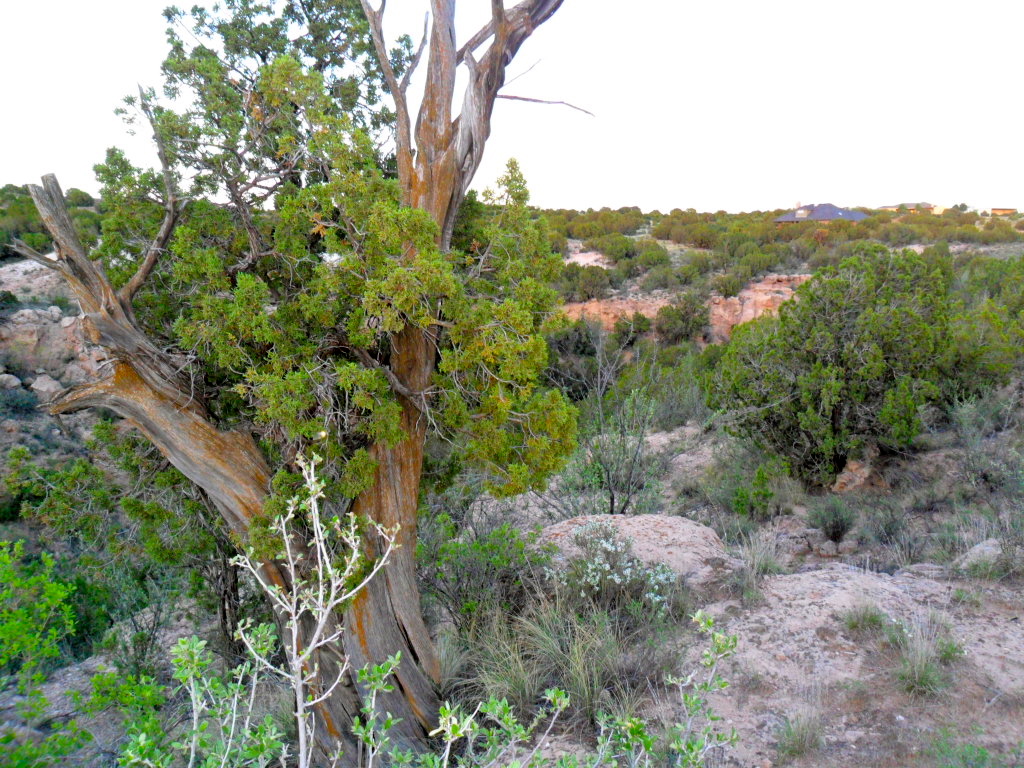
Three species of juniper grow where I live.  Some people have told me these trees are hundreds of years old.

Image

Image

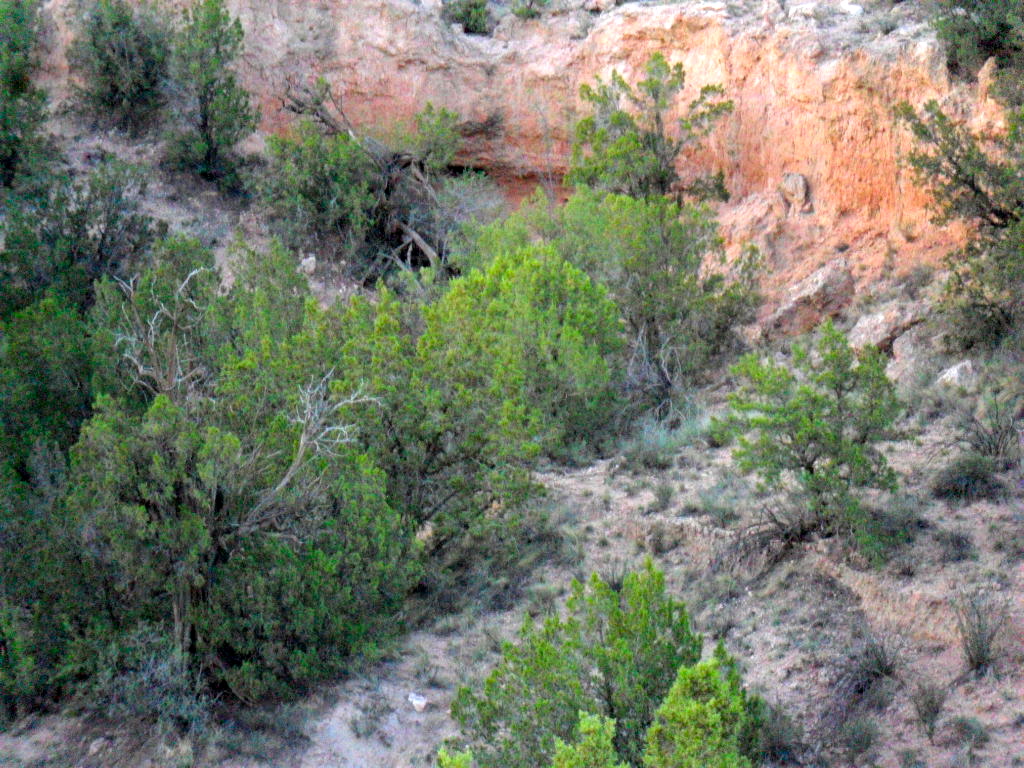
Looking across the canyon from my house I see various cavelike places such as the one here.  Great places for the foxes, coyotes, and bobcats to live.

Image

Blackfoot daisies, tough, drought tolerant, enduring, a favorite because they grow everywhere and anywhere all summer.  When they appear among flowers and bushes I have actually planted, I just leave them there.  They provide a kind of perky joy.

Image

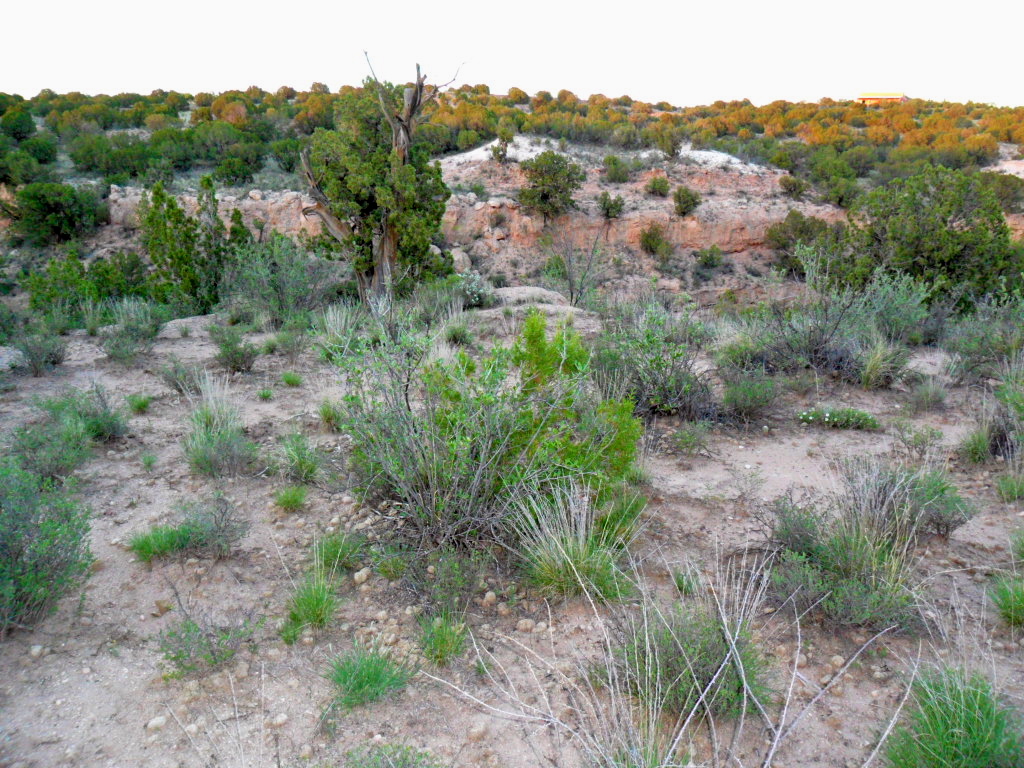
Green everywhere and they predict thunderstorms for the next several days.  At 100 degrees today, the green would not last long without more rain.

Image

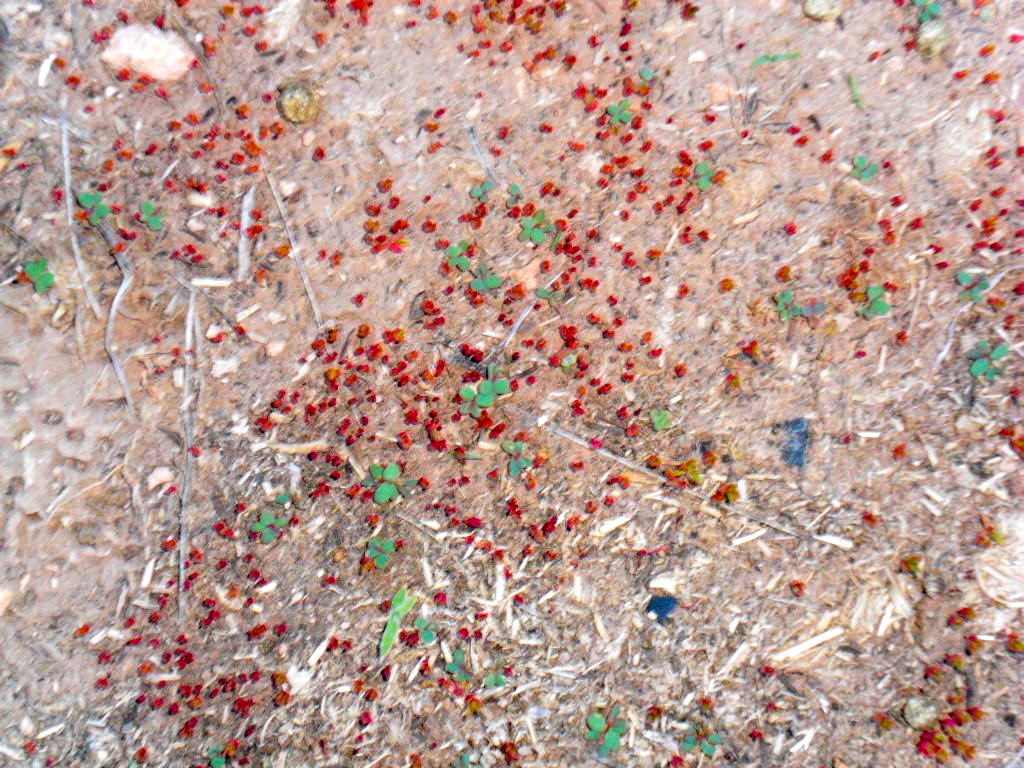
These little red spots appeared in clusters here and there everywhere as I strolled around.  I think they are the beginnings of a plant but I have no idea what.

Image

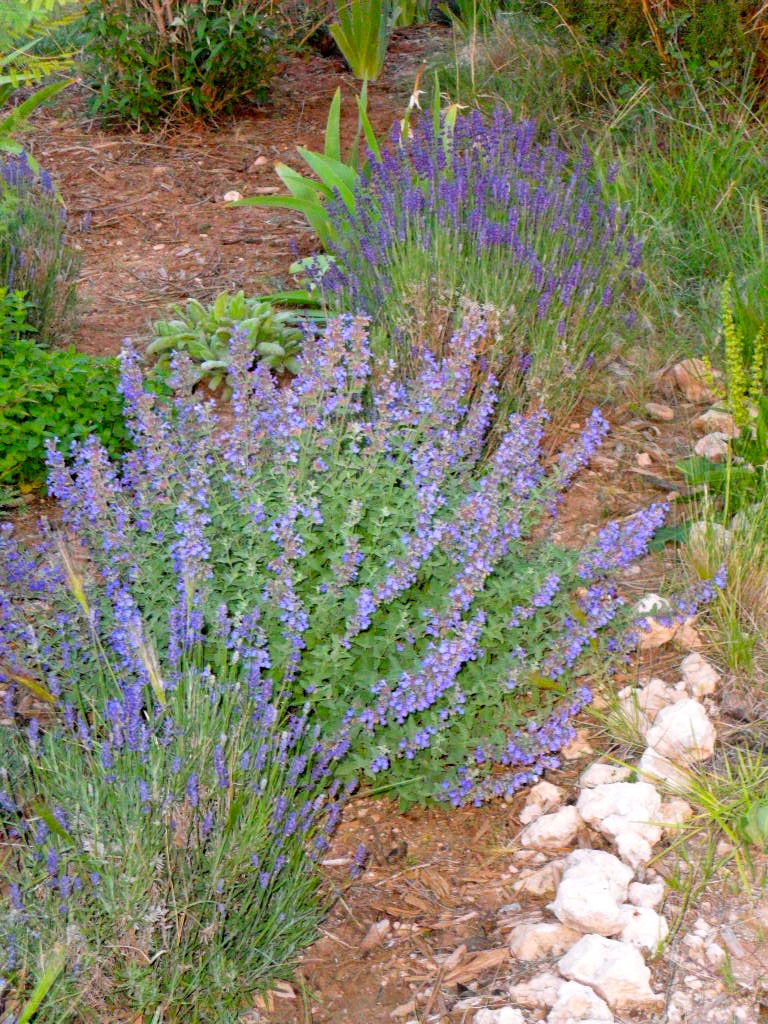
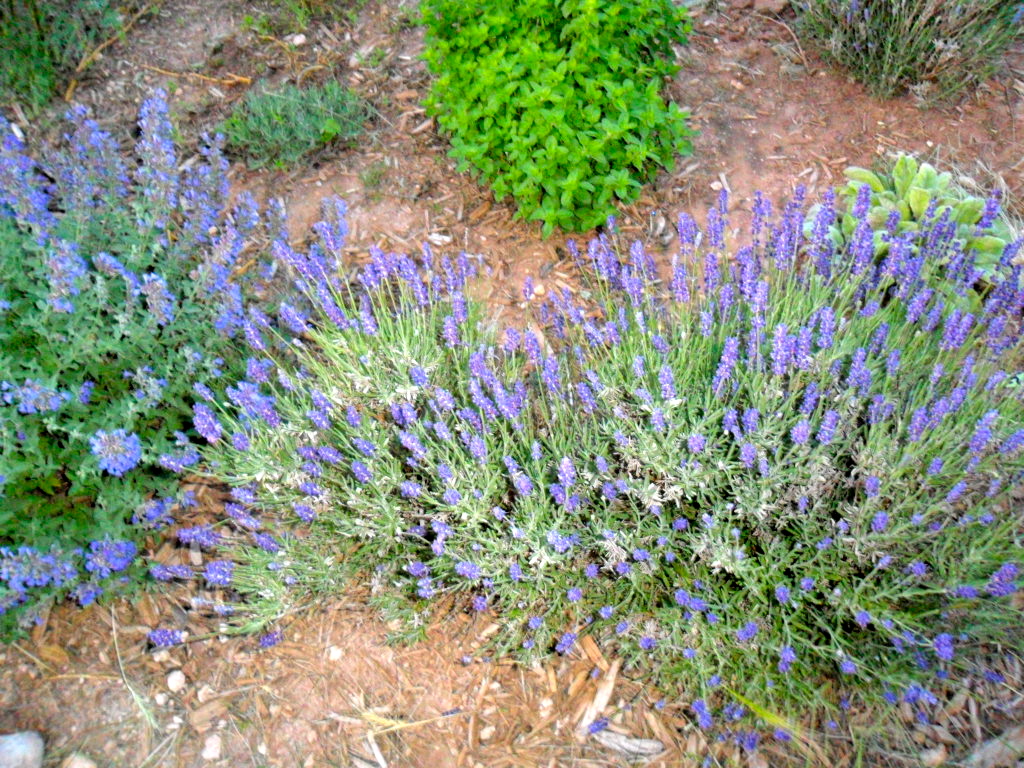
Both lavender and catmint do well here.  In the background last year thyme spread everywhere, but for the first time in several years, it died out over the winter.

Image

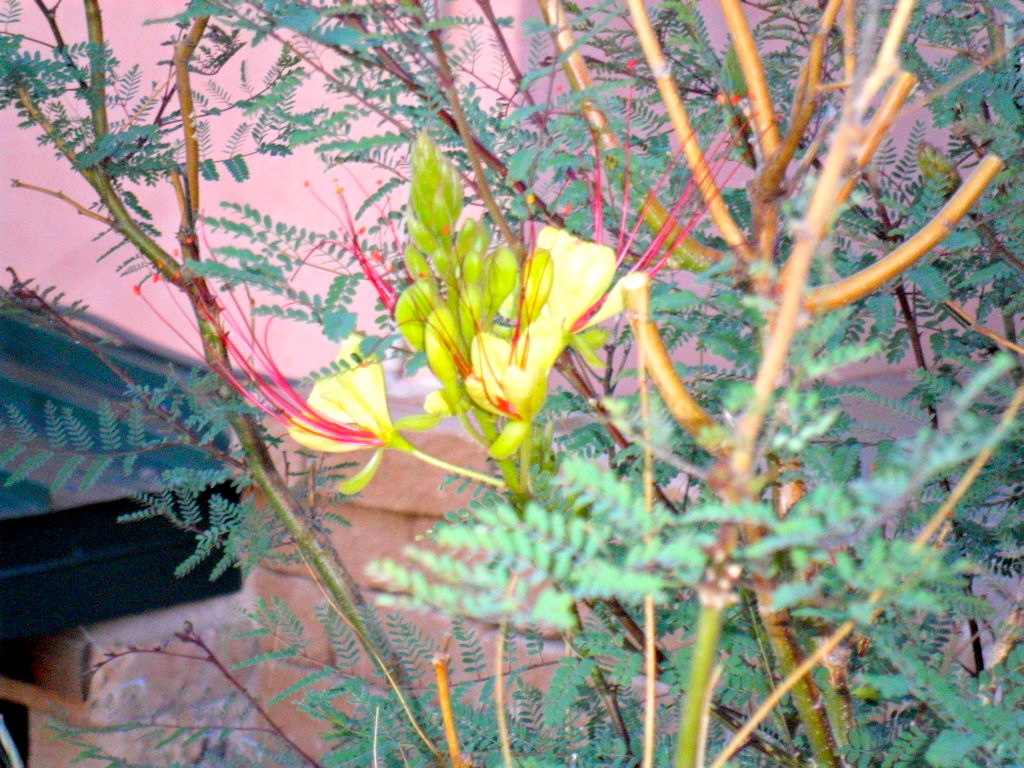
Mexican bird of paradise, also called desert bird of paradise, is one of my favorites.  This is just the beginning of a truly spectacular bloom.

Image

In the background Greek oregano grows.  Along my rock retaining wall Mediterranean plants seem to grow well.

Image

Blackfoot daisies growing in native grass.  All this was brown except for the daisies two weeks ago.

Image

Most of the flowers which do well here or are wild seem to be purple or yellow.  Salvia does well, but it is barely in bloom.

Image

A type of dalea, this very drought tolerant shrub grows everywhere wild around my place.  If there is no rain, it does nothing and looks dead.

Image

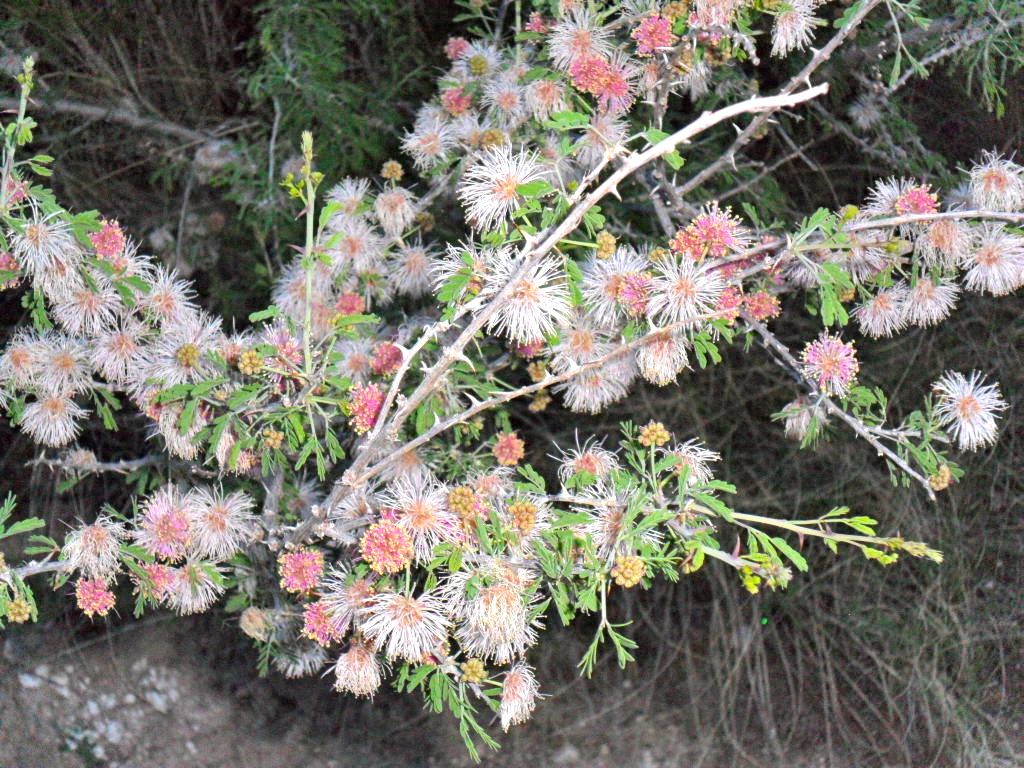
This is another plant that looked dead two weeks ago and then suddenly a couple of day ago came out in full bloom.  I have looked through two wildflower books and still remain uncertain as to the name of this plant.  If some reader out there knows, please email me the name or comment on this post.

Living here on the rim of wonder gives me great joy.

Large Lakes of the Sahara


Who knew?  In the literal middle of nowhere in Chad several large lakes still provide fresh water to the few animals and people who live there.  Salt water lakes reside in many deserts worldwide, but not freshwater lakes.  The May/June 2014 issue of Saudi Aramco World both astonished and enlightened me.  These lakes are not mere oases, but really large lakes, the Lakes of Ounianga.  In 2012, all eighteen of them became part of World Heritage sites.

Each lake remains different, some interconnected, some fresh water, some saline.  They are 500 miles from the nearest large body of water, Lake Chad.  To get there, you must use four wheel drive or ride a camel.  In 2001 and 2002 not far from these lakes, the fossils of extremely ancient hominids were found, hominids who lived seven million years ago, potential precursors to modern humans and chimpanzees.  Here and there camels graze in sand nearly devoid of vegetation. Near these lakes lush foliage grows, green gems in the middle of miles of varying shades of endless brown.  One of the lakes’ water is red from the algae growing in it sometimes several inches thick.  Frogs croak.

Once upon a time long ago, this Sahara grew savanna grass where the wildlife we associate with other parts of Africa lived–elephants, giraffe, hippos, antelopes, and the now extinct auroch.  Lake Boukou holds fresh water, crystalline, pure.  Around this lake one can find ancient stone hammers and scrapers dating from half a million years ago.  Because of evaporation in the dry heat, one would expect these lakes to become increasingly saline.  Only one of the eleven lakes in this area is saline. How is this possible?

Under the Sahara lies the world’s largest fossil-water aquifer beneath the countries of Chad, Sudan, Egypt, and Libya.  The maximum depth is 12,800 feet. This acquifer supplies the Lakes of Ounianga.  The mats of reeds and algae on top of the fresh water lakes keep their evaporation rate low and their water fresh.  Once these lakes covered vast distances.  Researchers use diatomic soil to study the changes in the lakes over centuries.  Diatoms are the remains of microscopic sea creatures that turn into ivory or white soil.  Studying these soils enable scientists to date the age of the lakes to approximately 6000 years ago.  Once researchers thought the Sahara suddenly became a desert about 5000 years ago, but new data reveal a more gradual change to desert taking thousands of years and only becoming the desert we know more recently.  Research around the lakes will prove important to understanding climate change and its causes.

Currently fifteen clans live in Ounianga.  These people believe their ancestors came out of the lakes when they were one giant lake surrounded with date palms.  Core studies (scientists take a core sample of the soil–in this case 16 meters) indicate that date palms came rather late in the area’s millennial history.  They have also found the roots of reeds and even trees dating back to approximately 8000 years ago.  Their goal is to drill even deeper.  Heat (122 degrees F) make this a long, torrid task, but the scientists dedicated to learning the story of these incredible lakes and the Sahara press on.


Notes:  Saudi Aramco World is one of my favorite magazines, filled with fabulous photos, historical articles, recipes, and endless fascinating information.  This issue also included an article about the Muslim Tartars who live in Poland today.  You can subscribe  by adding your name to their free subscription list.

Diatomaceous earth is found in many places.  I feed it to my horses to prevent parasites.  It is used in cleaners and even tooth paste.

Not a Good Day to Die


Not a Good Day to Die.  No, I did not write this but it made me smile, really smile.  I am still smiling.  If you have elderly parents, please read.  If you do not but someday will, please read.


The author is a fellow board member of the Story Circle Network.


Juliana

Teaching English for a change


Years ago, four day before school started, the principal informed me that I was going to teach freshmen English and a special course for all these juniors and seniors who had passed the state test but not one single English class.  The goal–we were on a quarter system then:  teach a year of English per quarter or at least do that for the seniors.  Of course, everyone knew that if I did the traditional curriculum, such a thing would prove impossible.  I took a look at the students.  Smart (at least some of them), rebellious, lazy, unmotivated, potheads probably–some openly admitted it, and various combinations of these sorts of things.  For fun the previous summer, I had taken a week long course on how to teach junior Advanced Placement English–I know, a strange idea of fun, but I loved it.  Four days gave me little time to prepare so I decided I would use the freshman book for the freshmen, but incorporate what I had learned in the AP English course.  For this other special class, I decided to try some really different tactics, including starting with a really different book than any had probably ever read.  Because of the language–swear words in Spanish for starters, and because of the topics, e.g. prison, it seemed necessary to get the permission from the head of the English department.  The book:  A Place to Stand by Jimmy Santiago Baca, one of my all time favorite books and a superb example of figurative language.  The department head gave permission much to my astonishment–she must have taken a look at the students and decided anything was worth a try.  The students actually read ahead, looked the author up online, found out he was giving a reading in Santa Fe and contacted him. We did go to Santa Fe for the reading and actually had lunch with him and his wife and baby–who would now be a teenager or nearly so.  One of the students who went contacted me a couple of months ago to tell me he still had a signed copy of one of Baca’s books.

After that year, I taught math for years–algebra, geometry.  Occasionally, I even cotaught chemistry or remedial science for those who had not passed the state test.  About three weeks ago, the new principal called me in and asked me what I wanted to teach.  I said English.  He asked me how about senior English?!  Next school year I will be teaching British literature.  Now, I am trying to think how to make Beowulf and Canterbury Tales readable and exciting.  I was told I could also incorporate modern British literature so I started looking at the Man Booker (sort of like a British and former British colonies version of the Pulitzer or something of that sort) short list.  Much to my astonishment, I have read a lot of the authors on this list, but mostly those from the colonies like Nigeria and India.  Now I am reading We Need New Names by NoViolet Bulawayo.  This book won the Pen Hemingway and was short listed for the Man Booker.  Probably more familiar authors for many readers would be names like Iris Murdoch, Doris Lessing, Amitav Ghosh, and Kiran Desai.  If any of you who read this blog have others suggestions for modern British literature, send me the names.  The students may be in a temporary  (or longer) state of shock when they find out they really do have to read, but they will get over it and might even discover its fun.

Una Bella Famiglia


Yesterday evening, I felt honored to cook dinner for this wonderful family from the mountains of  Italy.  Lisa, the daughter, has been living with friends as an exchange student.  Lisa had been to my house several times with her host parents and ridden Rosie.  This week her parents, grandparents on her mother’s side, and her younger brother came to see her high school graduation Friday evening.  Last night they all came to my house.  Lisa speaks fluent English, her parents and grandfather some, but her grandmother very little.  They do understand Spanish so I spoke Spanish to her grandmother, some Spanish to everyone else, some English, and, of course, everyone spoke bits and pieces of Italian or all Italian.

Grandfather Corrado smiled and laughed and hugged.  When he was younger, he was ranked fifth in the world in cross country skiing.  He spent much of his life, more than thirty years, in Germany making and selling ice cream.  We did have ice cream for dessert–vanilla with Chambord on top.

SAM_1531


Corrado drinking sangiovese from a local winery, BarZ, with Jeannette, the host mom of Lisa. Later, we had another bottle of sangiovese from a different winery, DiVine Wine.


SAM_1530


They explained they drink wine every day so they felt right at home at my house.  Lisa, in the Abercrombe T-shirt with her dad, Benedetto, next to her.  And yes, that is Corrado smiling down there on the end.


SAM_1533


Benedetto in the white shirt claimed that the sangiovese here seemed stronger than at home.  Claudia, Lisa’s Mom appears to be explaining something, but I do not recall what.  Grandmother Angelina is on her right and younger brother Antonio at the far right edge.  Everyone seems enthralled.  Benedetto is an architect.


SAM_1534


From left to right, Lisa, Benedetto, me, and Claudia.  They felt right at home with my dog Isabella; she has an Italian name.


SAM_1535


Everyone agreed to eat dinner on the patio–and you were thinking all we planned to do is drink wine.  The menu:  brisket, roasted vegetables (red and purple potatoes, brussel sprouts, Anaheim peppers, carrots, onions roasted with lots of olive oil, basil, oregano, and herbes de Provence), green salad and bread with chunks of garlic in it.


There is nothing better than eating and relaxing with friends and family.  And what a beautiful family!!  Laughter, hugs.  How could one not enjoy all the hugs and kisses on both cheeks.


SAM_1537


They had ridden horses in Palo Duro Canyon and hiked there earlier in the day, attended several graduation parties, and played volleyball.  Antonio seemed very tired.  He is 13.


SAM_1539


Richard, the host dad, relaxes in the bar stool while his daughter takes photos with his camera.  A deer eventually showed up across the canyon.

This lovely Italian family lives way in the north of Italy in Cortina d’Ampezzo.  Claudia explained they work seven days a week during the seven month tourist season–it is skiing country, and then they like to travel.  This evening as I write this they have headed to New York City by minivan via St. Louis and Falling Waters–Corrado really wants to see this Frank Lloyd Wright house.  I feel so honored to have met them.  Una bella famiglia–a beautiful family.

Guilty


After posting daily for nearly six weeks, I goofed yesterday and did not.  My excuse–went to a local winery, BarZ, with a friend and stayed longer than I thought we would, came home, and collapsed about 11:45.  Now I feel guilty, really guilty.  To make matters worse, this post will be very, very brief.  Why?  This evening six people from Italy are coming over for dinner.  My friends are hosting an exchange student from there and her parents, grandparents, and brother arrived Wednesday for her graduation.  All of them, plus her host parents and their daughter and a friend arrive at 6.  In the meantime, I must clean my house, go to the grocery store so I can cook to feed them, cook, and get Rosie ready so they can ride her–her mane is a tangled mess.

The menu:  the brisket recipe I posted July 8, 2012, roasted vegetables, salad, bread with garlic, ice cream with Chambord on top.  Since Lisa, the exchange student, loves this hot cheese (mangoes and habanero peppers in it) I get from Market Street, I bought all I could find the other day–it with crackers will be the appetizer plus who knows what else.  Now, off to untangle Rosie’s mane and feed her alfalfa before I take a quick trip to the grocery.

The Sixth Mass Extinction


Off and on the last month, I’ve posted about various issues on climate change and related topics.  Today, Life Science published an article entitled “Extinction Rates Soar to 1,000 Times Normal (But There’s Hope)”.  What causes this enormous spike?  You guessed it.  Humans.

Before recently, the extinction rate was one per every ten million annually.  Now it is 100-1000 every million.  Where do researchers and scientists find hope in this adverse increase?  Let’s look at Earth’s history for a moment before answering that question.  Since life began on our planet, five mass extinctions have occurred, leaving only half of living organisms each time.  Reasons for these extinctions vary from Earth’s shifting axis to asteroids–see previous posts related to effects of changes in the Earth’s axis.  The big question:  how do humans affect the current extinction?       Yes, we caused the demise of the passenger pigeon, the Tasmanian tiger, and the dodo bird.  And human poaching and habitat destruction now endanger elephants, rhinos, and all subspecies of tigers, among others.  One problem in accurately determining human effects is that new species are discovered annually so we are not even sure how many species currently exist.  Using what we do know about current species, DNA, and some rather sophisticated techniques, scientists come up extinction rates.

Where is the hope?  The most endangered species tend to range in small areas in poorer countries lacking resources to protect them.  Modern technology can help, using satellite imagery, biodiversity mapping, as well as other methods.  Drones have been used in Africa to track both animals and poachers.  We can focus efforts on the areas where the most endangered species live.

How can you help?  Become a citizen scientist.  Use your smartphone camera and report your findings to scientific conservation groups.  A site called iNaturalist allows ordinary individuals to upload photos of plants and animals, tagging date, location, etc.  This site links to an international organization that tracks endangered and threatened species.

What else can you do:  don’t buy anything with ivory in it, don’t buy anything with the fur or body parts of endangered animals.  Spread the word.  Become more informed, read articles and books related to these topics.  Care.  This is the only Earth; help save it.


Selling Online–Getting Started


My plan to actually get to bed early and hopefully manage eight hours of sleep flew away rather quickly.  I’ve had a PayPal account for years but today no matter what I tried, including sending that little lost password message, it failed to work. Finally, about an hour ago, I gave up the repeated tries and called them.  Their customer service is excellent if you are willing to wait during what I am guessing is their busiest time, evening.  I waited and woohoo, I think I finished everything except setting up the button to link this blog/website to PayPal itself.  It took far more time than I expected, but it is complete.  By this time tomorrow, if you want to buy my newest book, On the Rim of Wonder, using this blog/website, you can do so.  You can also order it from Amazon, but when you order directly from me, you will receive a signed copy with a personal message.

Last week Hastings on Georgia Street in Amarillo, Texas, set a date for my book signing.  It will occur at 3 in the afternoon of Saturday, June 21.  What a hectic time of year:  high school graduation, graduation parties, weddings, summer vacations starting for some, and on and on it goes.  My friend who is hosting an exchange student from Italy will bring her parents and grandparents and brother (all flew in from Italy today) over for dinner and riding Rosie on Saturday.  Hoping this 2′ by 1′ gaping hole in the ceiling above me will be filled in my then, but somehow I doubt it.  They found the leak cause today after tearing off part of the facia on the roof.  Tomorrow maybe they will finish fixing that and put on the new facia.  At least they have fixed it so if a thunderstorm comes, water won’t be dripping rapidly from the ceiling.

If I plan to feel perky at 5:30 in the morning, this post must end.  Happy Dreams!!

My tractor and me


Yes, I own a tractor.  Last summer I decided I was tired of hiring my neighbor to mow when I needed to get rid of tall grass or cut down some yucca or plow snow or grade my drive which washes terribly in a big rain.  I bought a Kubota, not a big one and not a tiny one, a middle sized one.  I had driven it only once this spring, but after this five inch rain my driveway is less than optimal.

My grandson came home with me tonight because my daughter is working a night shift at the hospital; she is a NICU nurse.  I fixed us dinner–that wonderful organic pasta from Italy, some fish with vegetables for me and cheese topping for him because he is vegetarian.  After I finished the dishes, tractor time arrived.  I backed it out of the barn and started working on the lower part of the drive, the really steep part that goes to the paved area next to the garage.  My tractor saves me considerable work after a big rain.  I used to shovel for hours getting the dirt and gravel off the paved part and hauling it up the steep drive in a wheel barrow to dump elsewhere.  Then I would sweep it.  Tonight with the tractor, it was completed within 1 1/2 hours.  I even had time to sweep the dust out of the area of the barn where the tractor was parked.  If the weather holds sunny like today, tomorrow I will work on the long part that goes nearly to the main road.

As I write this, my grandson writes his third blog post.  He already has followers; he is ten.  His blog title is The Blogging Boy.  I have no idea how long he will continue to blog but he is a quite persistent fellow for a ten year old so maybe he will continue.

If I had considered it earlier, my grandson could have taken a photo of me and my tractor.  For now you will just have to use your imagination.