Adventures in Argentina-Buenos Aires Neighborhoods


Buenos Aires has many neighborhoods, areas with sometimes distinct character.  Our hotel in San Telmo made it easy to see a lot of the city by walking.  Other areas we strolled through include Centro and Recoleta. In the three days we stayed there, we walked 35 miles according to my Fitbit.

IMG_2962

This Starbucks was exactly one block from our hotel.  We went there the first morning for the typical Argentinian breakfast:  coffee and a biscuit (not like the ones here) or a small croissant with some sweet glaze on top.  Starbucks can be found throughout the city.

IMG_2967

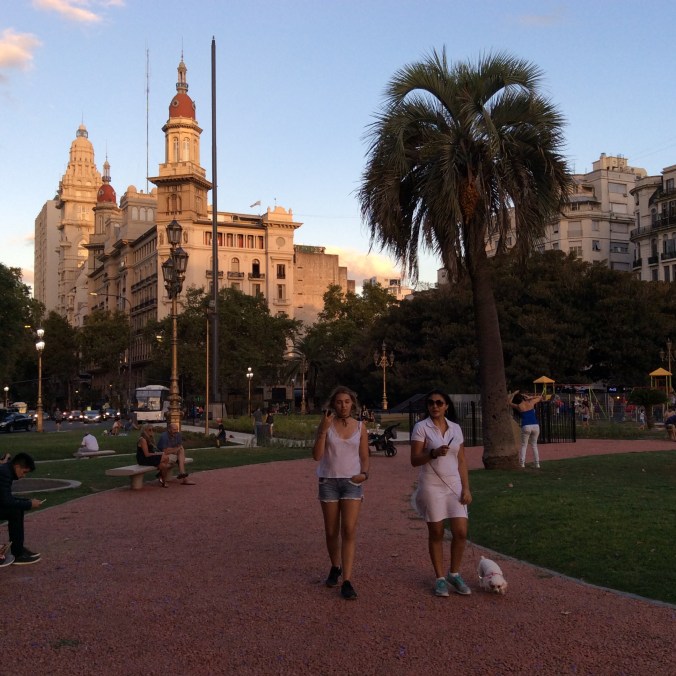
Everywhere you see beautiful parks and people use them for strolling, dog walking, jogging, relaxing, picnicking, hanging out–you name it.  Plus the trees–on all major streets, on side streets, everywhere.  Of course, it was the end of summer.  Perhaps parks receive less use in winter.

IMG_2965

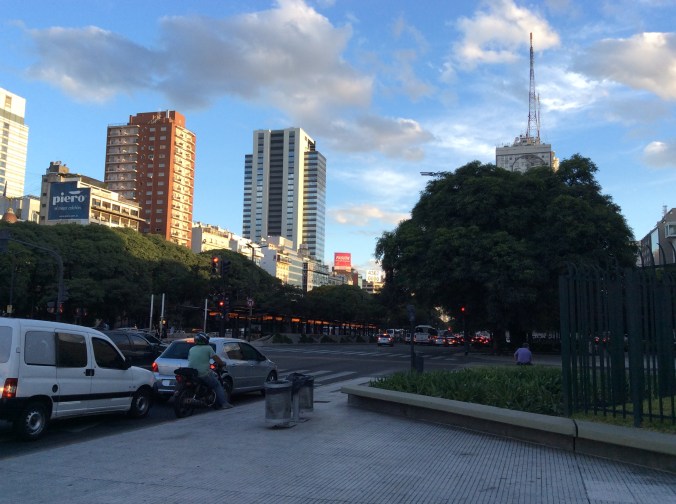
Even on main thorough fares, like this one which is claimed to be the longest street in the world, trees reside on the sides, in the middle, everywhere.
IMG_2959

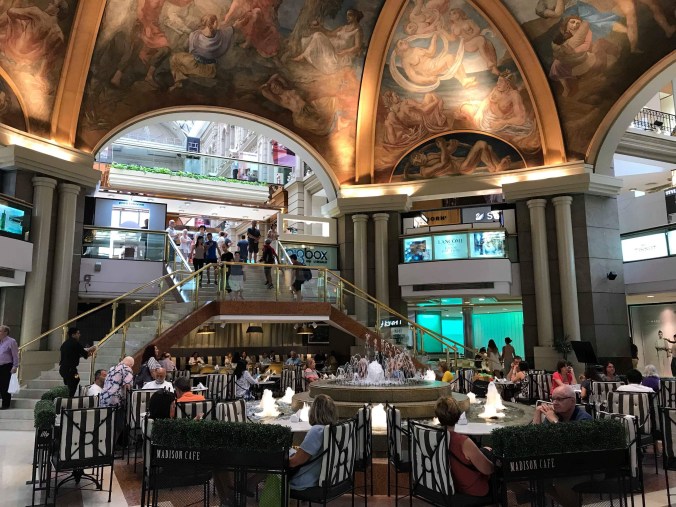
This is a mall, seriously.  We ate a delicious lunch here one day and came back the next day for a drink.  I had coffee; Gaston had a green drink with mint and ginger which was refreshing and delicious.  The ceiling is well–take a look!

IMG_2938

Hard to believe this is a mall.

One day we took the train to its end at the train station. The recently restored train station contains the fanciest Starbucks ever with incredible murals.

IMG_2987

The ceiling is beautiful too.

IMG_2985

From this station it is possible to take a train to various parts of the city but also trains go from here way out into the suburbs.  Reminded me of the subway and train system in New York City and its suburbs where I once lived.

IMG_2978

San Martin, the hero who freed southern South America from Spain, crossed the Andes with mules, not horses–Hugo, Gaston’s dad, gave me lots of history lessons.  However, when I saw this statue, I did not know all the history yet.  This park, filled with huge trees, borders several streets where, like much of Buenos Aires, modern and antique coexist.

IMG_2977

IMG_2982

Suddenly we notice men on horseback riding out of a military area next to San Martin Park.  We rushed across the park to watch, hoping they would ride around the park.  They did not; they headed down a street.

IMG_2973

We never discovered the purpose of this little parade of military personnel on horseback.

IMG_2984

The buildings around the park provide a perfect example of the traditional, the centuries old beside the modern.  The traditional building in the middle houses very exclusive apartments.

IMG_2983

The opposite side of the park from the statue of San Martin overlooks the English Tower, given to Argentina by the English before the little war over the Falkland Islands which both countries claimed.  The English won.

A friend told me to take tea at the Alvear Palace Hotel so we headed to Recoleta area.  We strolled around, did not take tea, but we did have lunch in one of the small restaurants inside the hotel area.

IMG_2989

Next to this restaurant resides a tea store, Tealosophy,  where they sell nothing but tea.  I quit counting at fifty different blends.  In Argentina International Women’s Day was highly celebrated. This tea shop created a special blend just for that event, Mujeres Power.  I bought some; it smells heavenly but have not tried it yet.

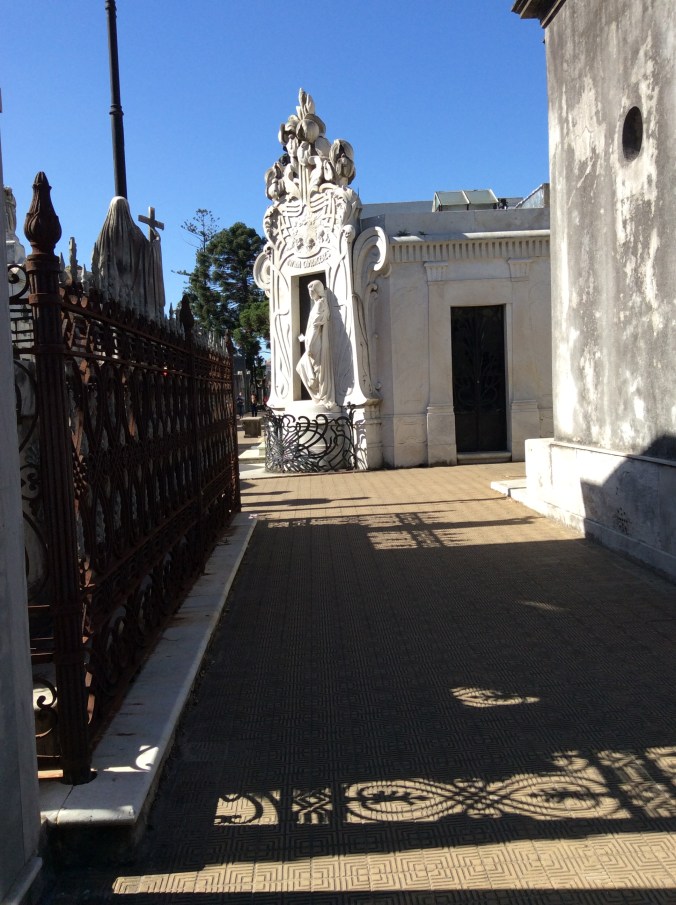
We walked down to another park near the famous cemetery where all the national heroes and important people have been buried for centuries.  Nearby we saw the largest tree I have ever seen.

IMG_2990

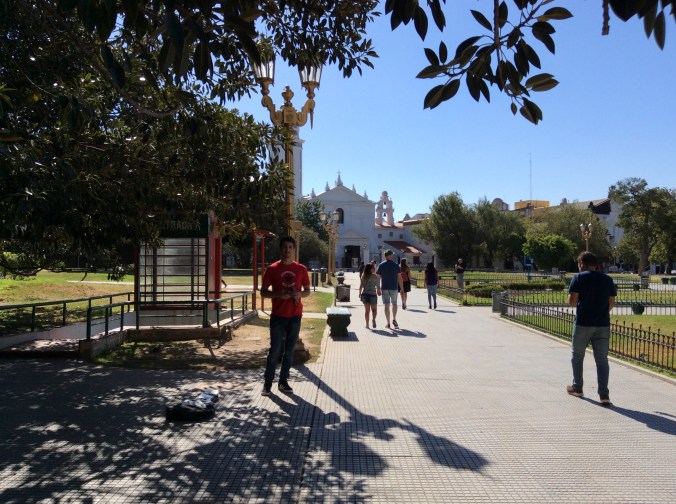
The branches, which were impossible to photo in one picture, extend far and are so heavy they are supported by cement or metal columns.
IMG_2993

The tree is to the left in this photo.  The walk leads to a monastery and the cemetery.

IMG_2994

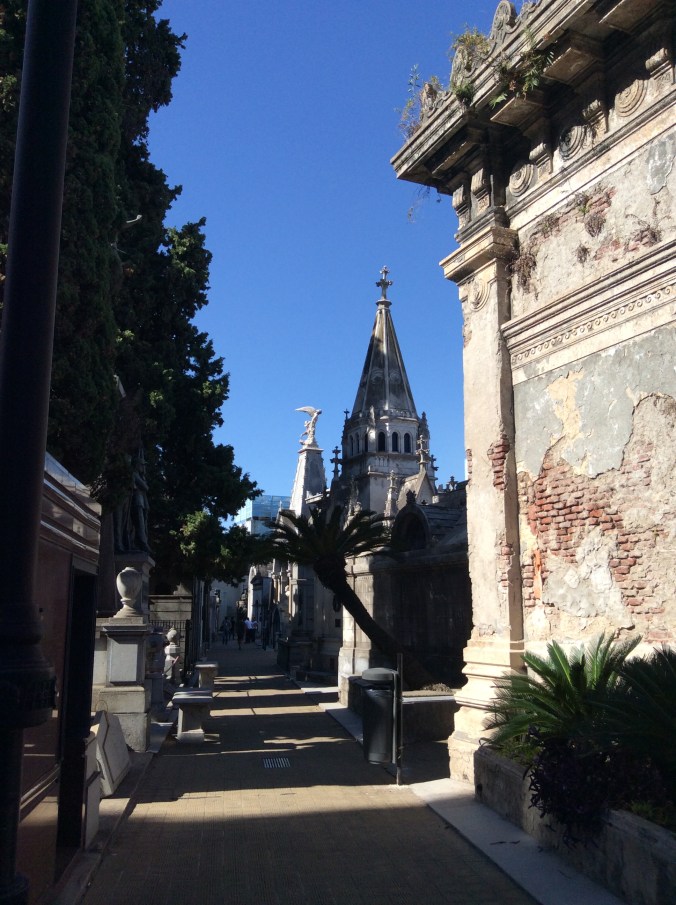
The cemetery was full of people.

IMG_2995

The artwork here speaks for itself.

IMG_2996

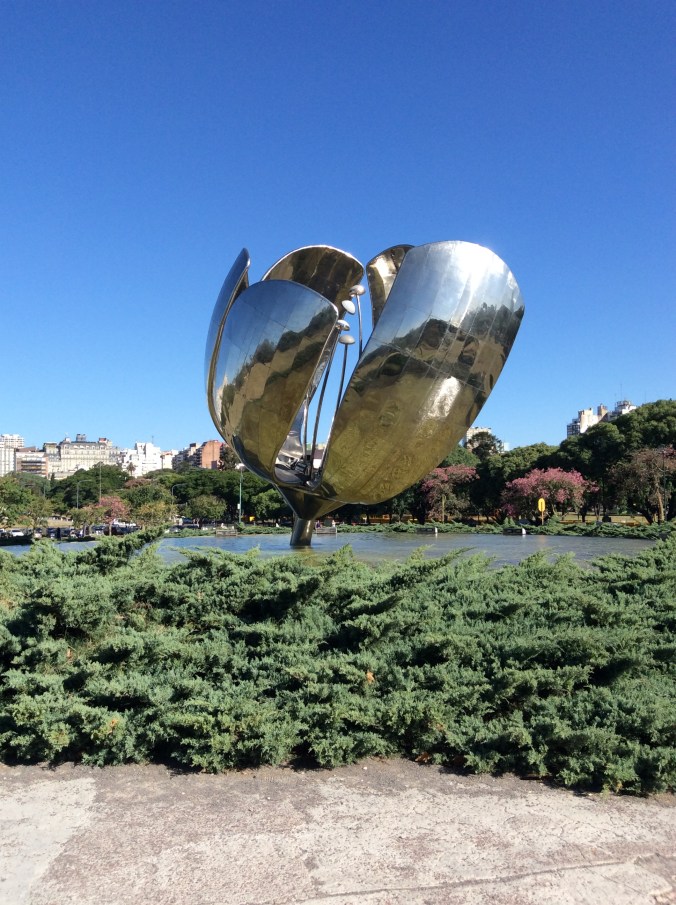
As we walked back we circled this famous piece–a tulip that opens and closes.
IMG_2998

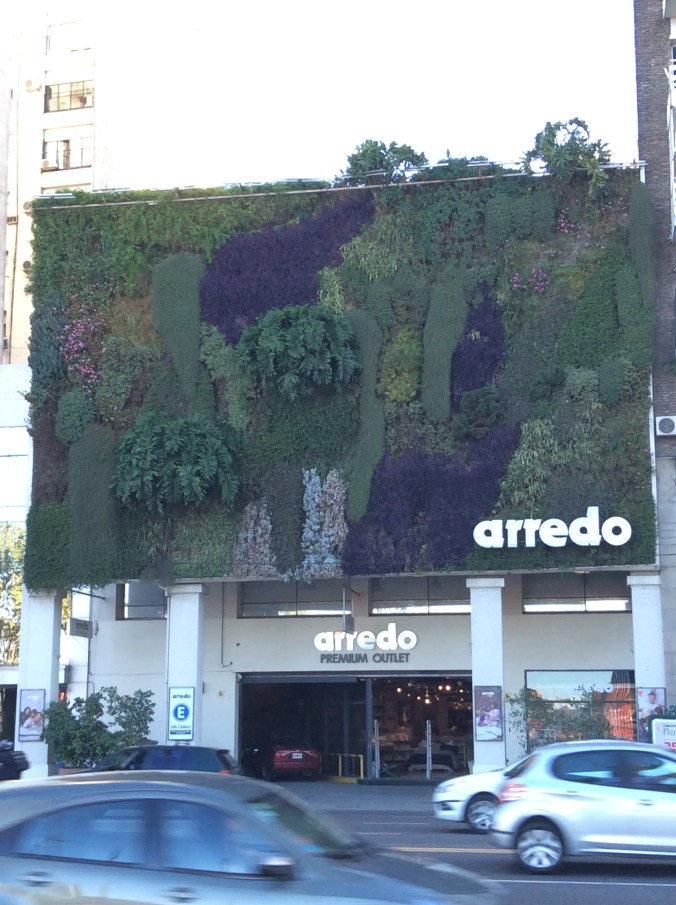
Then farther down the street which is close to the port–we could hear ship sounds, etc.–we saw this living wall.
IMG_3001

Yes, this wall is made of living plants.  I could not help but stop and stare.

IMG_E2972

The building which holds their equivalent of the US Congress.  I continue to wonder how I managed to walk past the Pink House–like US White House–several times and never take a photo.  Perhaps I was distracted by the protesters.  Argentina is used to protests which appear to be legally protected.  In the one we saw one evening, the protestors carried banners of Che Guevara.
IMG_2937

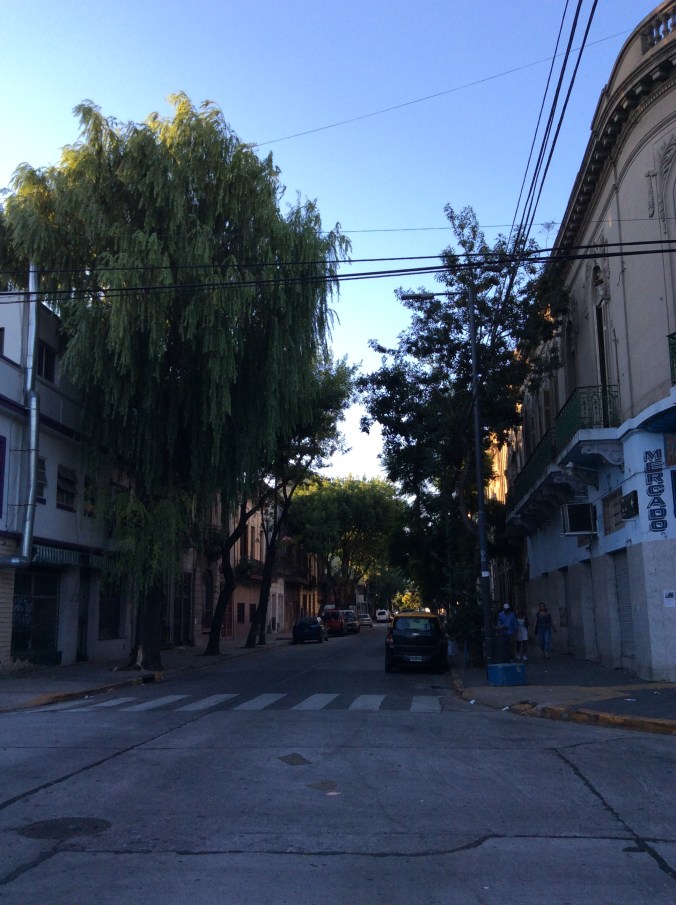
And finally some typical views, this one along a side street.

IMG_2966


Adventure in Argentina–Buenos Aires


On March 4, a little before noon, I arrived in Buenos Aires EZE airport.  Customs was relatively organized, straight forward, and simple.  Once I acquired my luggage, I headed out.  There stood Gaston waiting for me, the reverse of when he came to live with me a little more than eight years ago and I waited for him at the Amarillo airport. One thing remained the same–hugs.  We hailed a cab, loaded my luggage, and headed for the hotel which his dad, Hugo, had arranged.  In spite of the fact that neither of us had managed much sleep the night before (mine was sleep on a ten hour red eye flight and his was a night in the bus from Cordoba), we headed out to find some lunch and explore.

IMG_2923

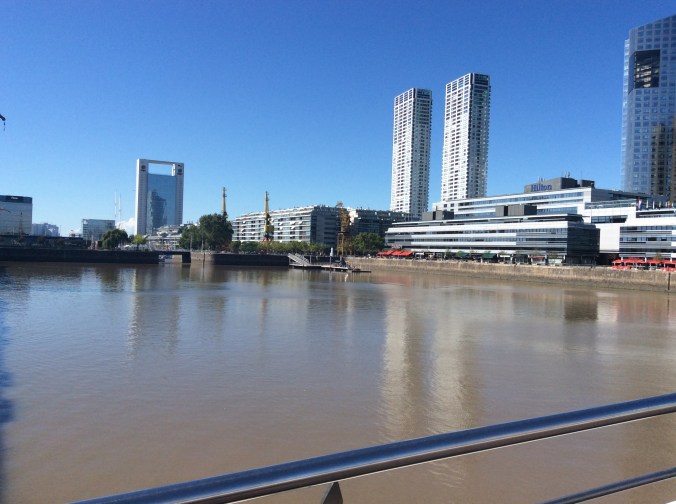
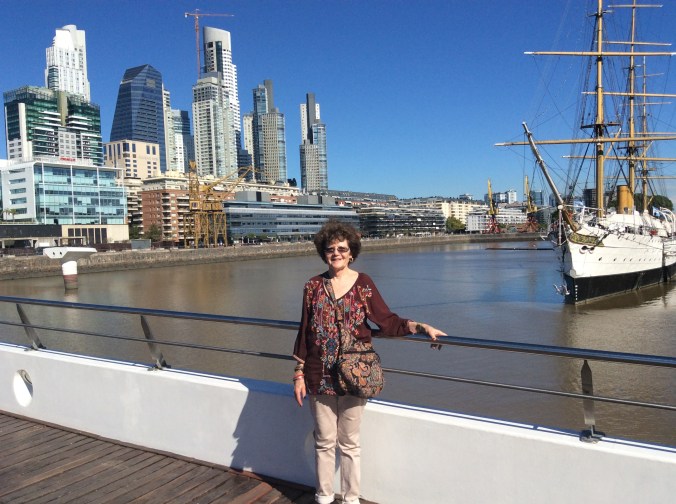
After a long walk (I have a Fitbit and we walked 35 miles in 2 1/2 days before we left Buenos Aires), we arrived here at this very modern business district on the right.  The tall building in the distance is a Chinese bank.

IMG_2925

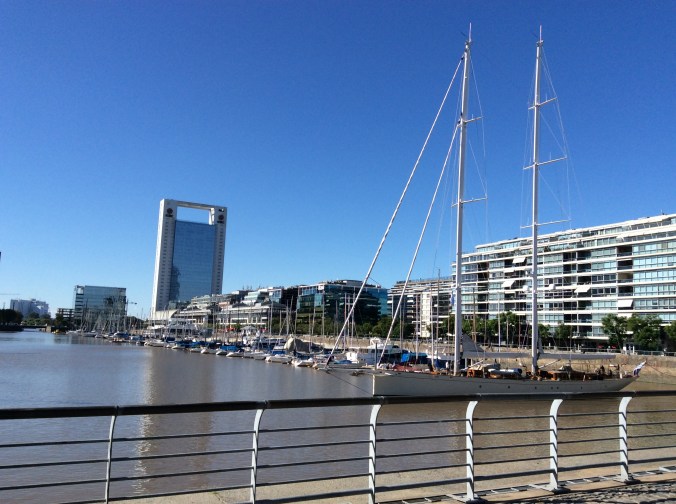
To the left are many old warehouses which have been converted into apartment buildings, restaurants, and shops.  It has become a fashionable place to live.  Several of these sailing vessels floated in the water.  Some could be boarded for a tour.  We just strolled around and enjoyed the views, the weather.

IMG_2931

We crossed the bridge and explored a rather exclusive area.  Buenos Aries is an old city which combines the old and the new.  Many of the sidewalks and streets have not changed in hundreds of years–the original cut stones remain.

We did have to laugh at our first lunch experience.  Although the restaurant appeared to be quite traditional and Argentinian on the outside, the menu was mostly Tex-Mex food.

IMG_2965

One of the longest streets in the world, this one goes from one end of the city to the other.  Note the trees!  Every city I visited contained an astonishing amount of trees.  Except for the most narrow streets, trees lined them.  Later I learned about an Argentinian saying:  there are three things you must do in life, plant a tree, write a book, have a child.  I feel grateful because I have done all three.

IMG_2967

Parks, parks, and more parks–they are everywhere and people use them–children playing, dog walkers, runners exercising, people relaxing on park benches, chatting.

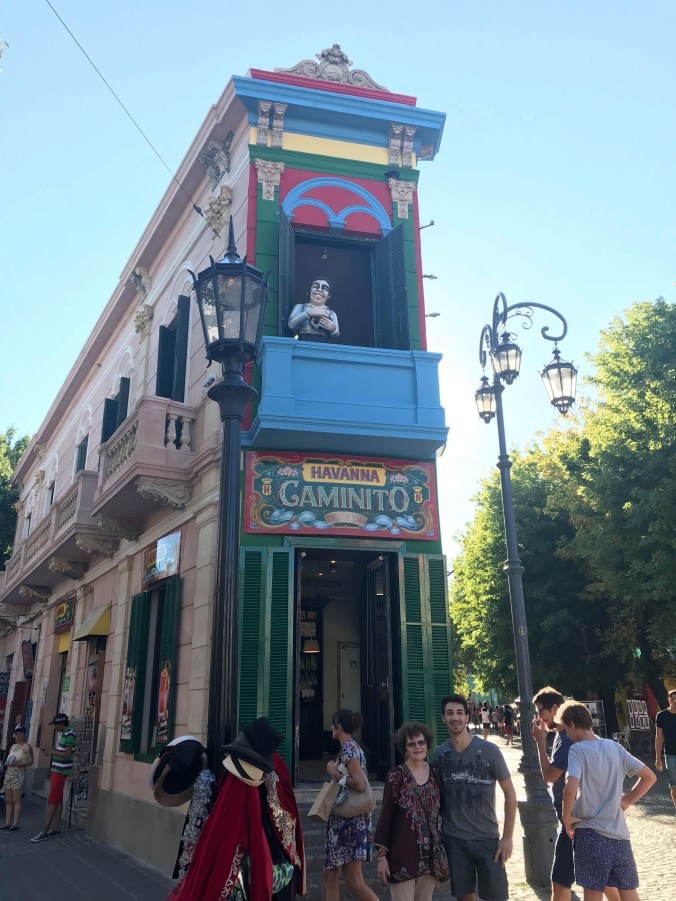
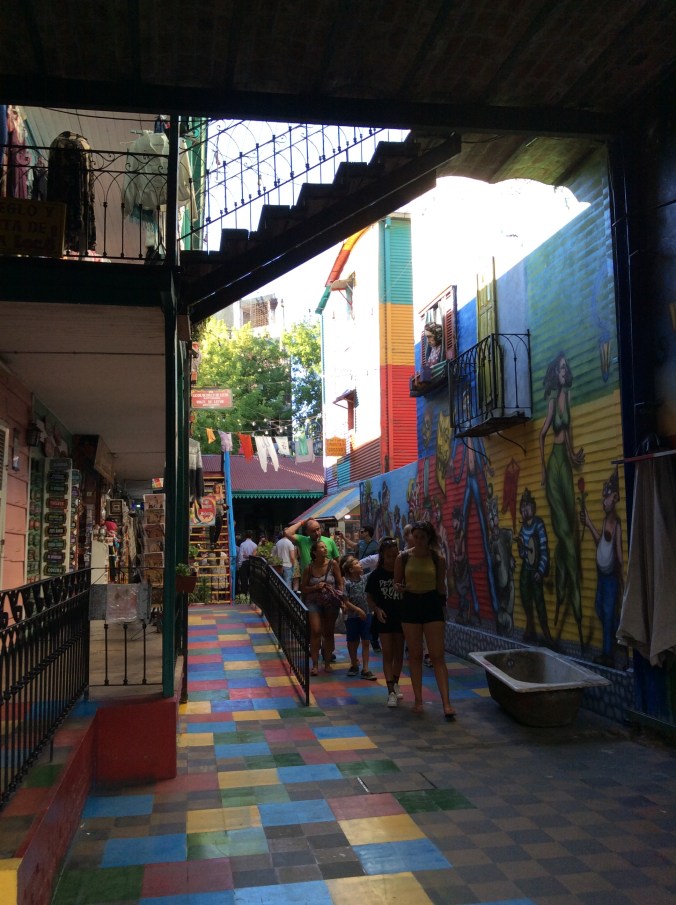
Hugo had given Gaston a list of some places to visit, one of which is an old area with colorful buildings, traditional dancing, e.g. tango, and lots of tourists.  Many of the restaurants this time year–end of summer there–are open air, filled with people enjoying summer’s end.

IMG_2961

We had a coffee (we drank quite a lot of coffee–for breakfast and after dinner almost every day), watched tango and traditional country dancers.  Tango is a Buenos Aires dance tradition.  People in other parts of the country dance the traditional dances, not tango.  We watched while a woman in her 80s left her table and danced perfectly with a young man dressed in traditional clothes–everyone cheered.  People there eat dinner late, 9-10 at night.  One day in Buenos Aires we somehow sort of forgot lunch and were hungry so we went to this special restaurant (they have a very unique way of making a potato dish which Gaston likes) about eight.  The waiters looked at us as if we were crazy.  No one else arrived at the restaurant before nine and most even later.  This suited me fine.  I much rather eat late than early.

IMG_2936


Adventure in Argentina


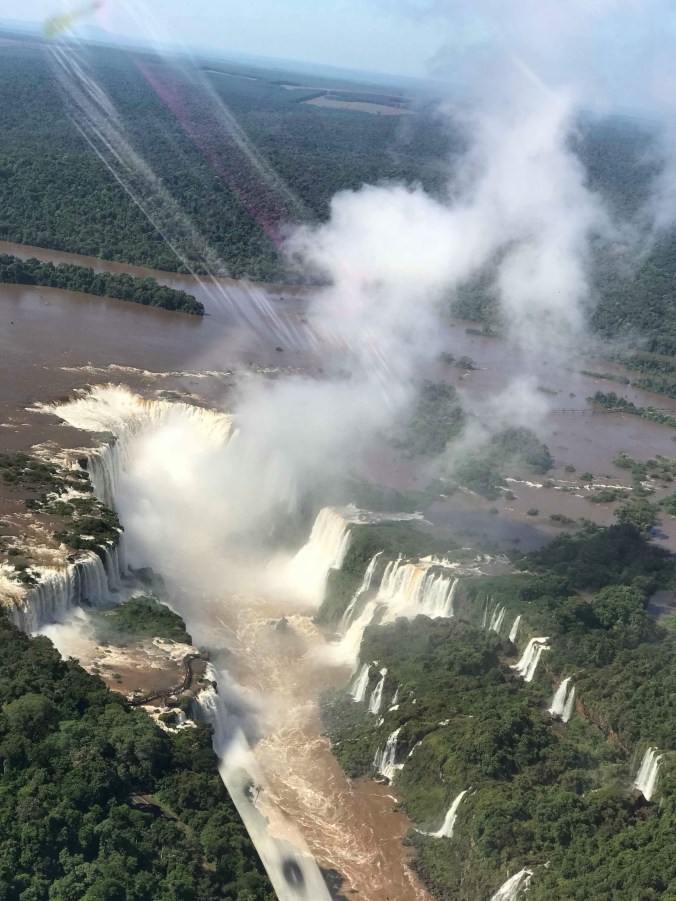
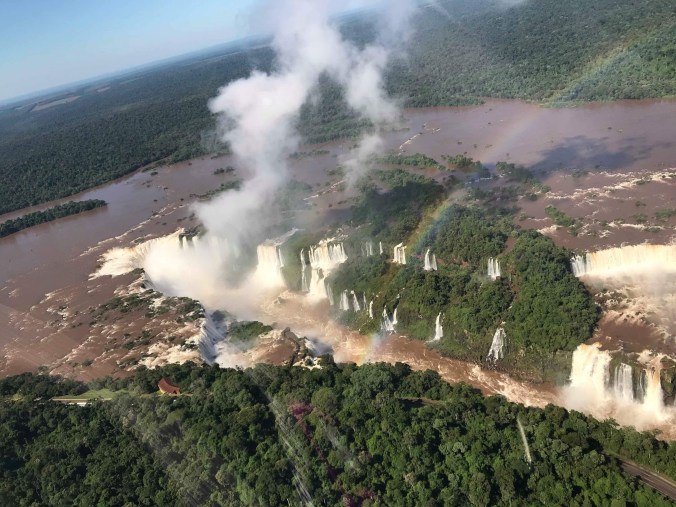
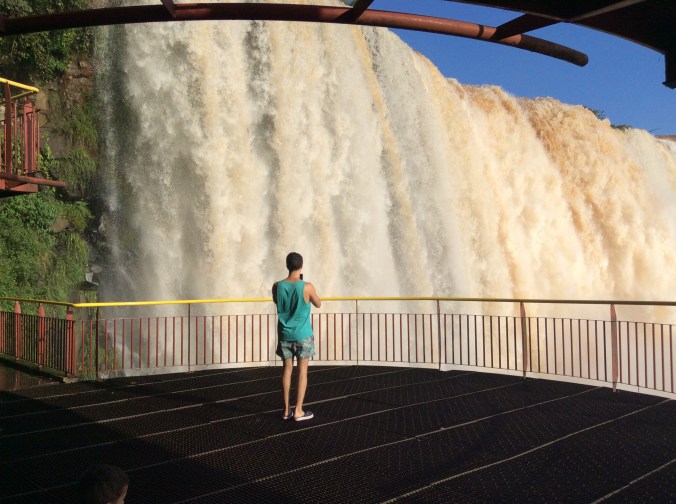
On March 3, I left for a two week trip to Argentina to visit my former exchange student and his family.  On March 4, Gaston met me at EZE airport in Buenos Aires.  I took the red eye from Houston to EZE, ten hours but an easy direct flight.  Little did we expect then that we would be spending a considerable amount of time in an eye clinic in Cordoba, the city where Gaston lives and attends engineering school.  We spent most of three days in Buenos Aires, then flew to Iguassu to see the famous falls. Several days later while waiting on a four hour late plane from there to Cordoba, suddenly I could not see clearly in my left eye; large pieces of black something floated all around and everything was blurry.

At nine the next morning we walked the five blocks from Gaston’s apartment to the most advanced eye clinic in Cordoba, a private clinic open on a Saturday morning. After experiencing multiple eyedrops in both eyes, seeing several doctors,  being subjected to all sorts of modern machines and tests, I found out I could not see because my left eye was quite inflamed with lots of fluid which made it nearly impossible for them to see what they needed to make a definite determination.  They gave me a prescription for the inflammation and told me to return on Monday morning and to be as quiet and calm as possible to facilitate healing.  That nixed the planned road trip Gaston’s parents and I planned to start that same Saturday.

Some blessings are unexpected.  While I would have seen more of Argentina than I did with a longer road trip–ultimately we took a shorter one, I would not have spent a relaxing, fun weekend with the whole family at La Finca, the family place in the country outside of Cordoba–photos later. I became acquainted with family members and friends, lived their typical weekend life, ate Argentinian food, all things I would have missed if we had been able to follow our original plans.

On Monday some of the inflammation had cleared so they could see that I did not have a retinal detachment–my main concern.  The doctors cleared the way for a shorter road trip and told me to come back Thursday morning.  At that time they were able to determine the exact problem and told me to make an appointment with a doctor here in the states because I would not be in Argentina when the final solution needed to occur.

Three trips to the clinic, seeing multiple doctors plus a retinal specialist twice all cost a total of 110 dollars.  Tomorrow morning my left eye receives a laser treatment and then I am told I will be fine; I visited the doctor here on Monday.  He told me exactly what they had told me.  I can only begin to imagine what my Monday trip to this doctor and the laser tomorrow will cost.  At times I wonder if it would not have been better to stay in Cordoba another week, pay the extra flight cost, and receive the laser treatment there.

Tomorrow photos of Buenos Aires and our adventures there will appear after I return from the retinal specialist’s office.

Note:  at a lecture last evening I saw a friend who is originally from Germany.  After she heard my healthcare adventure in Argentina, she informed me that she has to use very expensive eye drops.  They are so much cheaper in Europe that she and her husband, she is in her 80s and her husband 92, fly to Europe regularly to get the drops.  Even with the cost of these flights, they save several thousand dollars each time.

Day 127


Tan grass stretches miles and miles as far as eyes can see.

The water in the indigo bird bath evaporates in one day.

Playa lakes, full last summer, surrounded then in emerald grass, lay waterless.

Thirty-five miles an hour winds create fog-like clouds of dust across the horizon.

Grit, wind hurled, buffets cars and trucks driving down the long, straight highways.

Dust-fed sunrises and sunsets clad skies in orange, hot pink, vermillion, violet, mauve.

Day 127 with no measurable precipitation.

IMG_2879

Note:  I wrote this ten days ago.  That evening it rained .01 inches.  None since then.  We are approaching four months with just that .01 inches, nothing more.  Every time it warms and the winds come, the weather forecast mentions high fire danger.  All counties and state parks near here have burn bans.  March is a windy month.

Crashes and Creativity


Where have I been lately?  Haggling with two insurances companies.  Sixteen days ago, a woman ran a Stop Sign in a residential area while I was taking my grandson to middle school.  She immediately admitted it, the fire trucks were there within minutes (liquid and steam were spewing out of my car); the police showed up shortly as well.  About the time they arrived, a man ran the same sign and the police had to chase him down the street.  Makes one wonder what people are thinking, doing?  Texting perhaps.  Luckily, neither of us were hurt except grandson got a bruise from the seat belt and his glasses flew off.  He actually stepped out of the car and walked to school.

Kudos to my insurance agent, Lacie White of Farmers in Canyon, Texas.  I have never had an accident since I arrived in Texas 26 1/2 years ago so I called her.  She actually drove to the accident site, called the woman’s insurance company, etc.  Then she not only took me to the rental car place, but also to my daughter’s so I could unload luggage and such because we were planning to go to Dallas a few hours later.

The woman who caused the disaster received a citation.  Yesterday, I received a letter from her insurance company, Travelers, saying she might not be at fault.  Really?  She also did not have sufficient insurance to cover the value of my nearly new car, a 2017 which I bought last July.  Now I am haggling with my insurance company over its value.  This all has taken an inordinate amount of my time and energy.  Meanwhile, I have to find another car.

On the bright side, my grandson and I are fine.  I can still go to work, feed horses, and do what I always do.  However, it has delayed creativity, e.g. writing blog posts, working on my next book–already started, and starting my new handiwork project.  My last crochet project is illustrated below.  It is the blanket I made for my grandson.  For those who crochet, here is how I make it.

It is rather a creative, make it up as you go blanket, using some of his favorite colors, black, red, with a bit of grey for contrast.  As you can see I alternated colors to make each stand out.  The stitches used include single, half-double, and double crochet, made into different patterns such as shells, and a pattern where I alternated double and single crochet stitches.  My original inspiration came from patterns I found on Pinterest using many, many colors which I knew he would not like.  The beginning chain was multiples of four. The only downside of this type of pattern of alternating types of stitches is that the edges do not come out totally even and in the end I had to create a border around all four sides.  Probably blocking it would have also helped, but he wanted his blanket right after I finished it so I did not block it.  Ready to start my next project which I think will be making a sweater out of black and white granny squares, with maybe a bit of grey or red thrown in, colors left over from his blanket.


IMG_2914


Blood Quantum: A Poem for Our Time


My grandson cuts himself into 16 equal pieces:

4/16 Urhobo from Africa

3/16 Spanish from Spain

4/16 European–two Swiss German great, great-grandfathers

(Werth and Kaiser), Irish, English and who knows what

3/16 Mexican–whatever mixtures that may be

2/16 Navaho


Who am I? What am I?

Who are you? What are you?

Do we really know?

Who sets the rules?

white men

black

Indian

Native American

Irish

English

German

from where and for whom?


He looks Navaho:

-blue black straight hair

-pale brown skin

-obsidian eyes.

One four year old girl asks him,

“Are you American Indian?”

His six year old self says nothing.

She repeats,

“Are you American Indian?”

He says, “It’s complicated.”


The Navaho won’t claim him, too little blood.

He needs 1/4, not 1/8.

Caddy and Fort Sill Apache allow 1/16, not Navahos.

1/4 blood is for

-Sioux

-Cheyenne

-Kiowa

-Navaho

1/8 works for Comanche and Pawnee.

Some Cherokees only want a Cherokee ancestor.


But he is none of those.

Is he Navaho?

Is he white?

The old South goes by the one drop rule:

one drop of Negro…

Is a person with 99/100 per cent white

and 1/100 black, black?

Who says?

Kids at school ask, “What are you?”

He tells them.

They say, “You’re lying.”


I only know specifically about two ancestors,

the Swiss Germans.

Another great grandfather disappeared during the Civil War.

I don’t even know his name.

Who am I?

Who are you?

I think I’ll get a DNA test.

Then I’ll know how many pieces I need to cut myself into.


Note:  This was originally published in my book “On the Rim of Wonder”.  I had a cousin send me 75 pages of ancestry information.  I looked up more myself.  That one great grandfather remains a mystery.  I had my DNA done.  It did not match what I expected from the ancestry work.

Blood quantum is the term the US government used to determine whether a person would be qualified as an Indian.  Now many Indian Nations use it to decide who can be on the tribal rolls and who cannot.


Sunday Poem–Last Day of 2017


IMG_2908

It’s cold outside, 14.

Horse waterers frozen.

Heat water, hike to barn.

Hope horses drink it fast before it freezes.

Back inside, build a fire,

write, read a novel set in Venice,

drink tea from Ceylon,

message friends in Asia, Africa, South America,

feel grateful for modern technology.

Glad I did not live in those “good ole days”.

Look forward to another year filled with joy and wonder–

my choice.

IMG_2905


Sunday Poem–Gifts


IMG_2903

For many Christmas means gifts.

What are gifts?

Material things–the new toy, new technology,

perfume, clothes.

People spend hours and money

many lack to give gifts.

Yet the most wonderful gifts remain:

joy

love

beauty

birdsong

touch

wonder

peace


Jen Payne’s New Book


Evidence of Flossing, WHAT WE LEAVE BEHIND provides an unexpected metaphor for individual life, culture, and so much more. Nearly all the poems are accompanied with a photograph, often of trash in which lays a dental flosser (yes, one of those instruments with which you floss your teeth) with date and location.  Flossing is supposed to prevent anything from being left behind.  Hence, the title brings up an unusual play on words.

The first section Damage contains more than 20 poems which are a lament about much of modern life–mass shootings, the demise of wildlife, unpleasant changes.  One poem asks the question:  “Would God floss?”  In the second section, Contact, the poems focus on the natural world, walks in the city, the woods, beaches.  The third section, Connection, emphasizes the interconnectedness of everything, especially the relationships between humans and animals and nature.  There are poems about frogs, storms, birds.  One called Evidence of Fairies makes the reader feel the magic of old growth forests with moss and ancient trees.  In the footnote to another poem she discusses the fact that wolf spiders actually create songs to lure lovers. Then, toward the end, the Alice poems appear,  Alice as in “Alice in Wonderland”.  In my favorite poem Payne relates her encounter with a stranger picking oyster mushrooms near a path in the woods.

After reading the poems and comments in this book, I will never view flossing the same way again.  Will I find dental flossers now, something I never even previously thought about?  I use those long strings of floss not flossers.  Apparently the poems and flosser photos affected enough people that some sent Payne photos of flossers they saw here and there on the ground, some of which she has included in the book.

Even if I find no flossers, now I will certainly give a lot more thought to what I and others leave behind.


IMG_2901


About the author:  Jennifer Payne is the owner of Words by Jen, a graphic design and creative services company in Connecticut. She belongs to the Arts Council of Greater New Haven as well as several other arts and poetry organizations.  Her work has been featured in various publications, including The Aurorean, Six Sentences, and the Story Circle Network.  You can read some of her writing on her blog Random Acts of Writing.