months of nothing
six inches below normal
suddenly late afternoon
downpours, flooding
three waterfalls off canyon cliff
double rainbow
birds sing evensongs
and now this


months of nothing
six inches below normal
suddenly late afternoon
downpours, flooding
three waterfalls off canyon cliff
double rainbow
birds sing evensongs
and now this
Usually at the library I checkout and return books. Because my grandson is taking art classes at a nearby college for three hours in the afternoons, I go to read and observe. The same older men show up everyday. Some, acquaintances or friends, quietly chat. They look scruffy with dirty, stringy hair. Are they homeless? Does the library provide an air conditioned refuge? They read, look at magazines.
One man in a tan Alaska cap takes notes from a large book. He appears well groomed, clean, with a sculpted, small beard. Another alternates reading and checking his cell phone. At a separate round oak table a man sits in a dark heavy coat–it said 102 on my car temperature gage when I arrived. He never looks up, concentrates on the black laptop in front of him. The white earbuds stand out against his heavy dark beard. His fingernails are dirty. A white haired man approaches the round table I occupy and asks if he can sit there. I reply, “Sure.” His dark skin shows the heavy creases of outside work and age. His fingernails are clean. He focuses on filling out an application for a commercial driver’s license.
In the several days I have stayed here to read and wait, I have seen only one woman where they allow adults to sit. Do these men, day after day, come here because they have no place else to go?
Today is your birthday, June 6. I cannot wish you Happy Birthday because you fell into a coma a year and 1/2 ago and died several months later. Our daughter came over and over to see you, unconscious, eyes staring into empty space. She drove the five hours back and forth repeatedly. Sometimes I came with her.
What happened to you? Your mahogany hands and arms looked as they did when I first met you decades ago. I looked at the signs of aging on my own; yours seemed so young, ageless. But not your face. I wonder if I would have recognized you on the street. I remember the first time I saw you, sitting on a sofa–fancy, engraved silver tipped cowboy boots, shirt open half way down your chest, and your smile radiating across the room. I knew immediately I had to have you.
What happened to you? How could I have guessed I could be so wrong, decades of believing you just left, no explanation, nothing. Then after you are comatose and I cannot talk to you, I learn a far different truth, a truth that never leaves me, a truth from which I will never totally recover.
What happened to you? Charming, laughing, the man so many loved. That you. Did the other you finally dominate–the sad, disappointed, angry you? The you few knew, the hidden you, the one I often held, tried to protect. Now I talk to your cousin, the one you forbade to tell me the truth I never knew, the friend I thought I had lost forever. Yesterday we talked. Today she left me a message. She and I will never be the same, she filled with irreparable loss, your company, your mutual love, and I with a hole in my heart that can never be filled because I cannot talk to you.
What happened to you? A decade ago when you came to see our daughter, it was like I had seen you only yesterday, in so many ways as if we had never been apart. It haunted me. You could have told me then, the truth. But no, I had to learn it by accident from our daughter. She thought I knew, that you had told me.
What happened to you? I look at photos of us, young, filled with hope and love and promise, smiling brightly toward a camera. I wonder how different my life might have been. I will never know.
Late on a Monday morning, Gaston’s parents and I headed toward Cafayate, a relatively small town at the edge of the sierra which grows some of the best wine grapes in the world. It is a long drive through incredibly varied landscapes.

One of the first towns we drive through is Jesus Maria. As in many Argentianian cities, trees line many streets. Here acequias provide water for the trees.

Except where cleared for farming–giant soybean and corn fields, much of the land through which we drove looks like this.

Taken as we sped along, this photo show soybeans in the distance. Since it seemed relatively dry here, I asked if they were irrigated. Gaston’s father told me no, that they had developed a type of soybeans that require much less water.
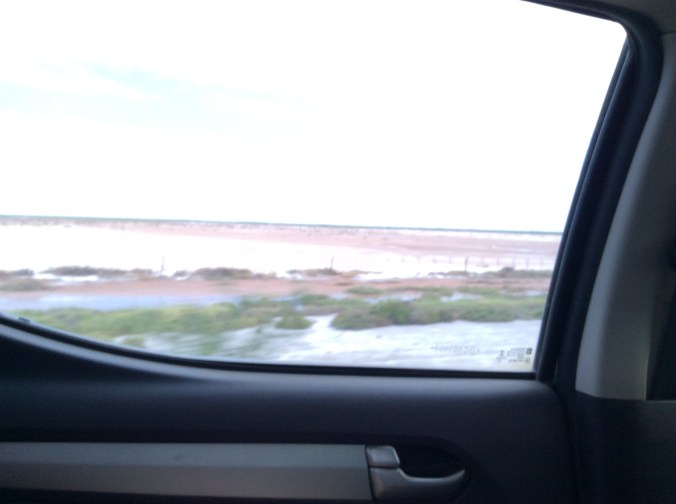
When I first saw this out my window, I thought maybe water, but no, this was the beginning of miles and miles of salt.
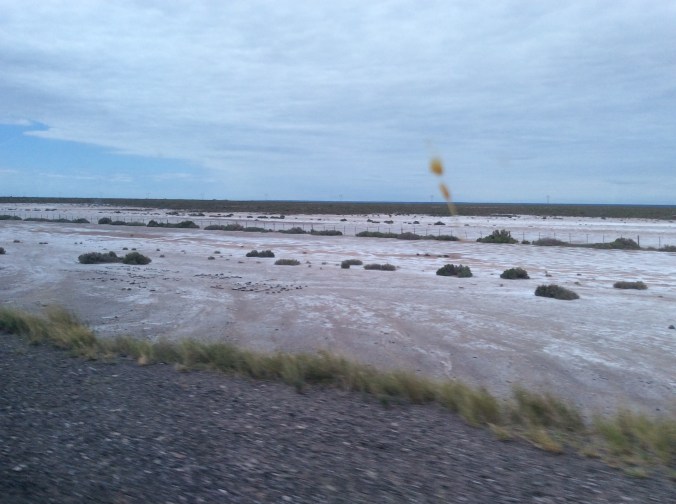
Another photo taken looking through my window.

And then we speed into the cloud forest. I was astonished my whole time here. I had to idea there was such a thing in Argentina.

We climbed higher and higher and stopped at a visitor’s area where displays explained the flora and fauna which live here.


This area is a subtropical jungle.
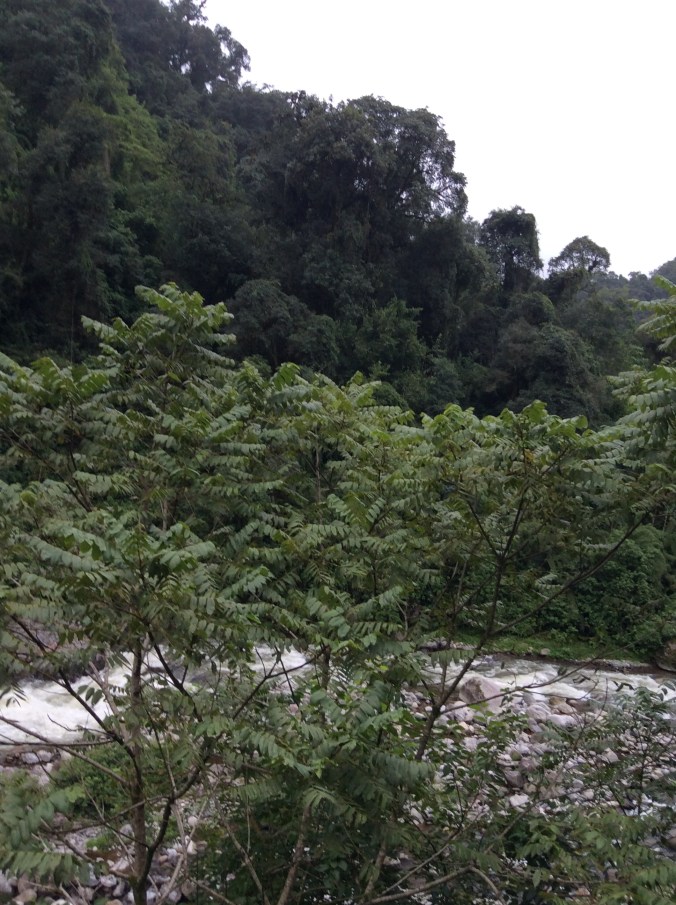
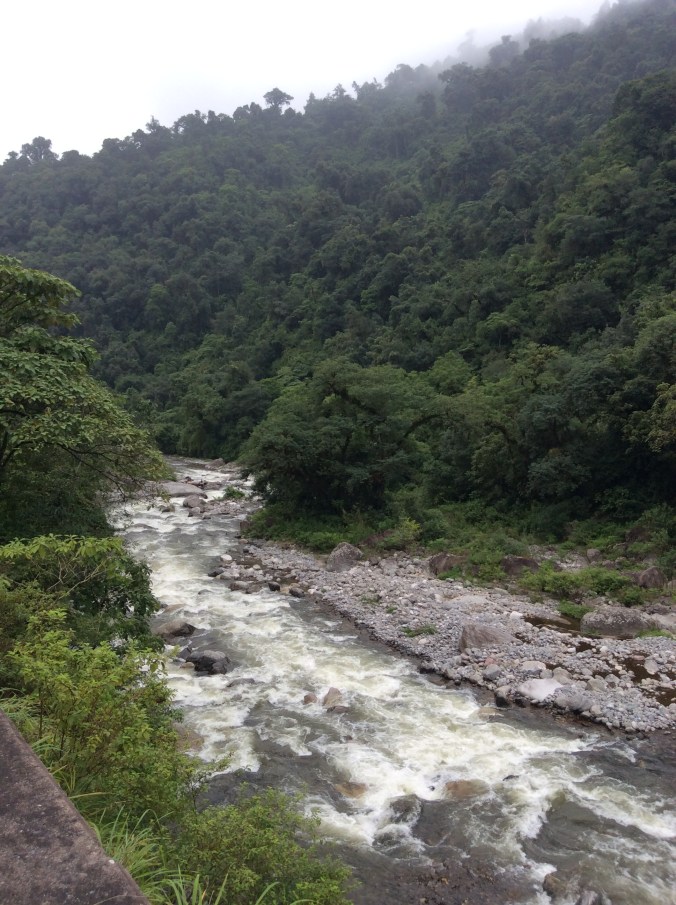
Often we drove through clouds or along the side of rushing mountain rivers. And then as suddenly as we arrived in these mountains, we were on the other side where it was dry. The selva–jungle–stopped almost as suddenly as it began. One side of the mountains lush and green with ocelots, all sorts of other wildlife, and on the other semi-arid country, equally beautiful but so astonishingly different only a few miles away.
While I was growing up, my mom grew peonies by the side of the vegetable garden. Red, pink, white, huge spectacular blooms that always arrived around this time of year just in time for Memorial Day. We would pick many, put them in mason jars and take them to my father’s and her family’s cemetery plots. She has created a metal apparatus to hold them so the wind would not blow them over. We took water to fill the jars. We did this every Memorial Day always.
No one lives close any more. There is no one left to take flowers there.
My mother’s family members are buried in the Mound City, Missouri Cemetery.

My mother’s parents’ gravestone. She was Nellie Narcissus Kaiser before she married rather late for back then–in her late twenties. I never knew my grandfather. He was so much older than she that even though he lived to be 80, he died long before I was born. My great-grandfather Kaiser was born in Switzerland and brought here as a child.
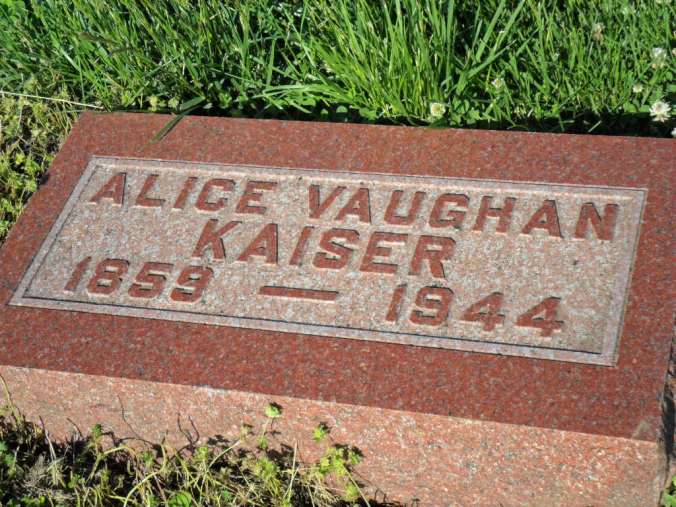
The gravestone of my mother’s grandmother. I know she lived with my grandmother and grandfather a lot of the time from family photos, but I also know that she died in San Diego. No one ever told me how she got there or why.

The gravestone of Aunt Julia, Mother’s sister. She never married, loved fancy antiques and china. I frequently use some of what she left me. She came to see me rather often and we visited antique stores when she visited. To say she was an independent woman is an understatement.

My parents’ gravestone is on the right and Dad’s parents’ on the left–in the cemetery in Fillmore, Missouri. My grandfather, Pleasant Lightle, had walked from Illinois to Missouri as a child according to family stories. My parents met dancing. I always smile when I see the peonies planted at their graves.

This is the gravestone of my great-grandfather, Dad’s mother’s father, who came to the US from Switzerland when he was 18. According to my dad, he did not want to be conscripted into the Swiss army because at that time Swiss soldiers were being hired out as mercenaries. His mother stood on the roof of their house waving until she could see him no longer. They never saw each other again. I grew up on the land he homesteaded in Andrew County, Missouri. Andrew County is filled with descendants of immigrants who came from Switzerland.

The old carriage house near the house where Dad spent the first ten years or so of his 90 years. It is all that is left standing.

The house where Dad lived the last 80 years of his life and where I grew up.
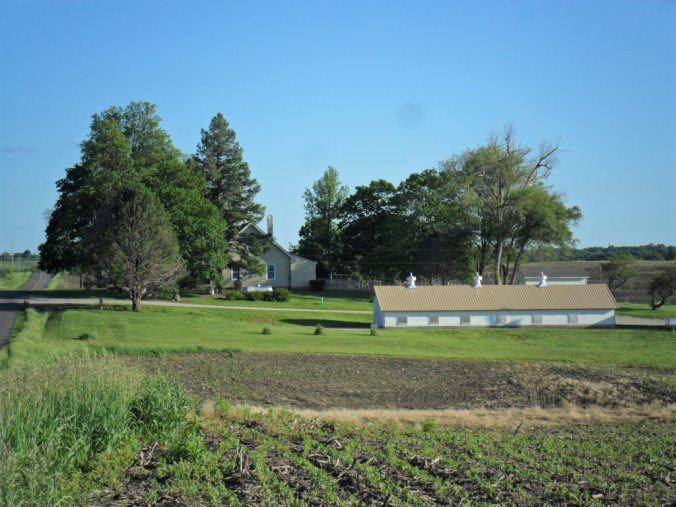
When I was a child, the building in the foreground was used at various times as a farrowing house, once for Rhode Island Red chickens, and to store various farm supplies. When I went to visit Dad after Mom died and we were at the cemetery on Memorial Day, a man came up to Dad and asked if he was Doyle Lightle. They started chatting and I learned that when Dad first built it during Prohibition times, he held dances there. The sheriff would send deputies to watch and make sure no one was drinking. I had lived there and visited there for decades and had never heard this story.
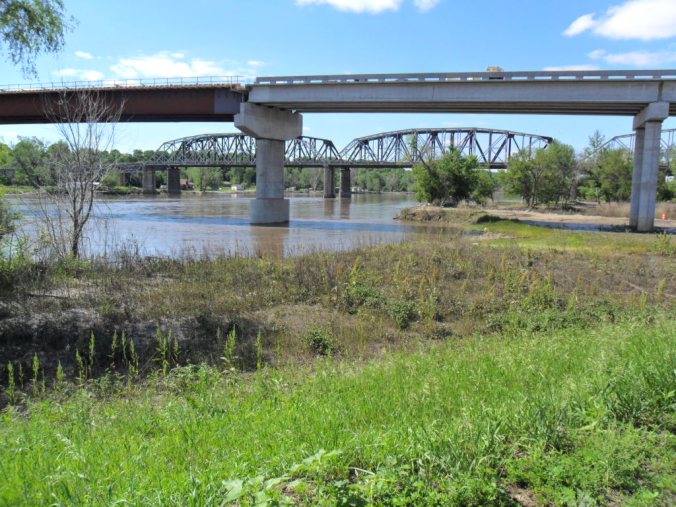
I took this photo standing on the levee next to the Missouri River looking toward the Rulo, Nebraska bridge. This is the land my mother’s family owned. On some Sundays as a treat, we would cross the bridge to a restaurant on the Nebraska side. It was famous for its fried catfish and carp.

This is country with lots of water and trees. This picture was taken near Squaw Creek National Wildlife Refuge. Several times in my life, I have seen flooding from the bluffs on the Missouri side all the way to the bluffs on the Kansas and Nebraska side of the river. When I was a child, my uncle and aunt lived on the river farm until a flood reached half way up the second story of their house. They gave up and moved to town.
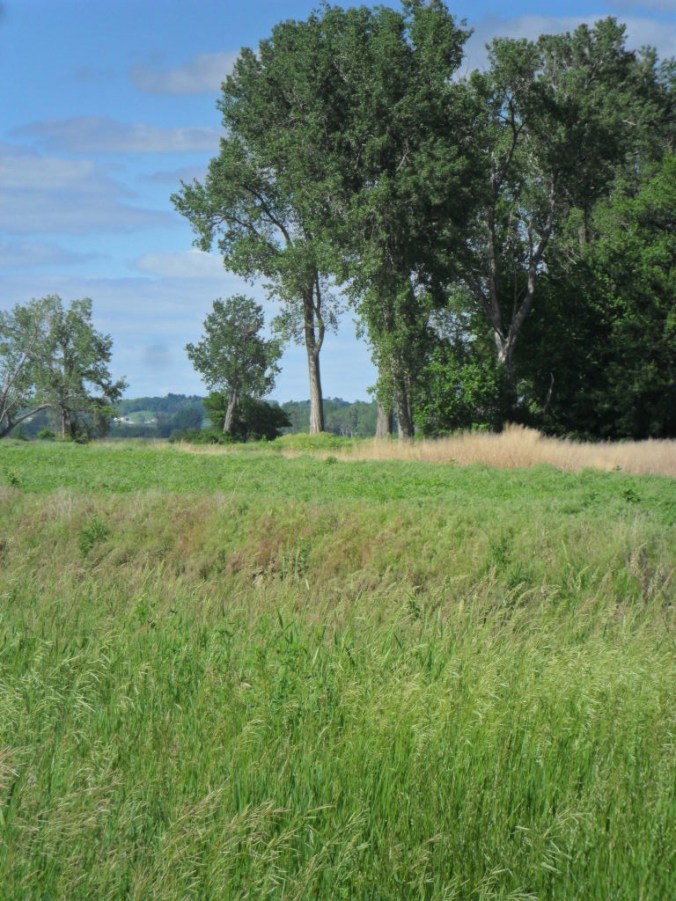
When I was a child, there were trees like this in lots of places on Mom’s family’s farm. About this time of year we would hunt for morels and often pick a bushel basket full. Mom dipped them in egg and cornmeal, then fried them. We practically lived on them for week or two. I was shocked as an adult to go into a fancy market and discover that dried morels were 95 dollars a pound.
After sitting in the airport in Iguazu for four hours because the plane was delayed over and over, we finally arrived in Cordoba around midnight and rushed to La Finca, the family place out in the country, for dinner. Yes, dinner. Gaston’s family, including his 92 year old grandfather, uncles, cousins, aunts, everyone had actually stayed up and waited to meet us. I could hardly believe it.
I know Argentinians are the biggest consumers of beef in the world. We did not have beef; we had leg of lamb grilled over the special grill his father and uncles had built–a separate house just for grilling and eating. It was a warm night and we ate outside. It is a family ritual for everyone to congregate on weekends, but especially Sunday afternoons at La Finca to eat and socialize. Gaston and I went there both Saturday and Sunday.
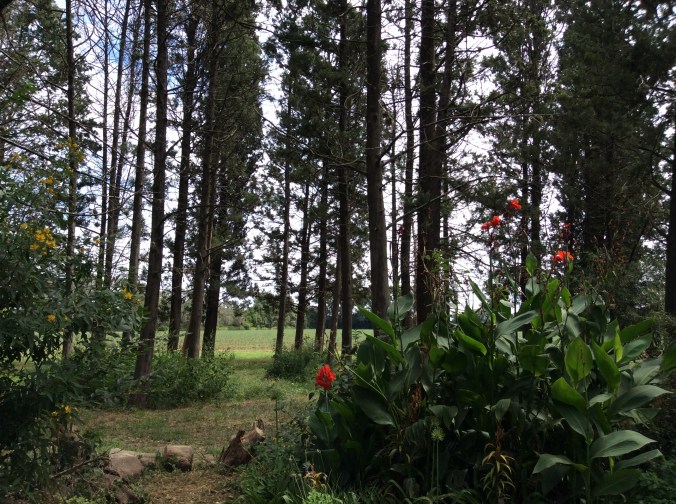
It was the end of summer (Southern Hemisphere in March). The crop in the distance beyond the trees is potatoes. Gaston’s grandfather, who is 92 now, bought this land, planted the trees, created this peaceful get away in the country. Gaston’s uncle and aunt now live there with their college age children.
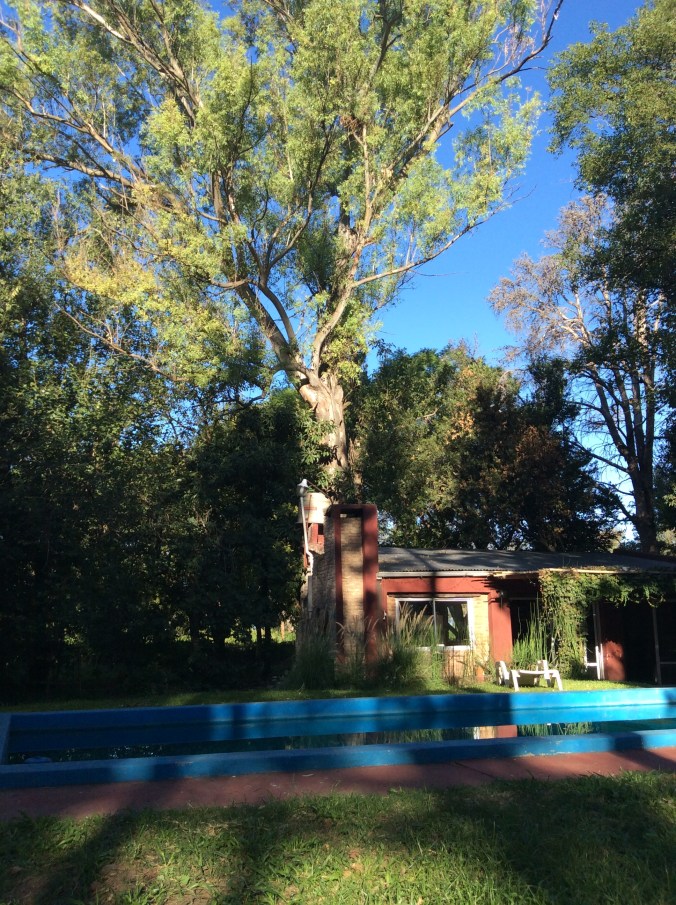
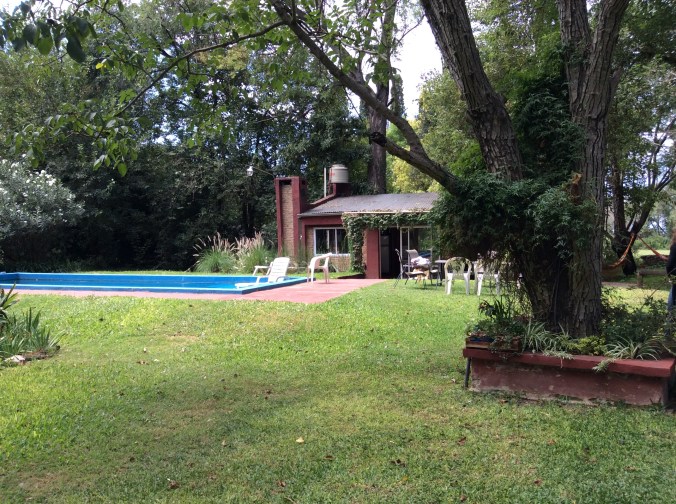
The building in the background houses the grill–chimney on the left–and the dining area I mentioned earlier. We ate inside once around the table that must sit at least twenty. The rest of the time they hauled the tables outside and we ate under the trees.

Gaston’s grandfather and I standing before the trees he planted decades ago.

The same trees upclose. Yes, those are very sharp protuberances sticking out all over the tree. You see these trees in cities too, but there they have cut off all the sharp pieces so people cannot get hurt on them. I could just imagine what would happen if a person pushed another person against one of these.
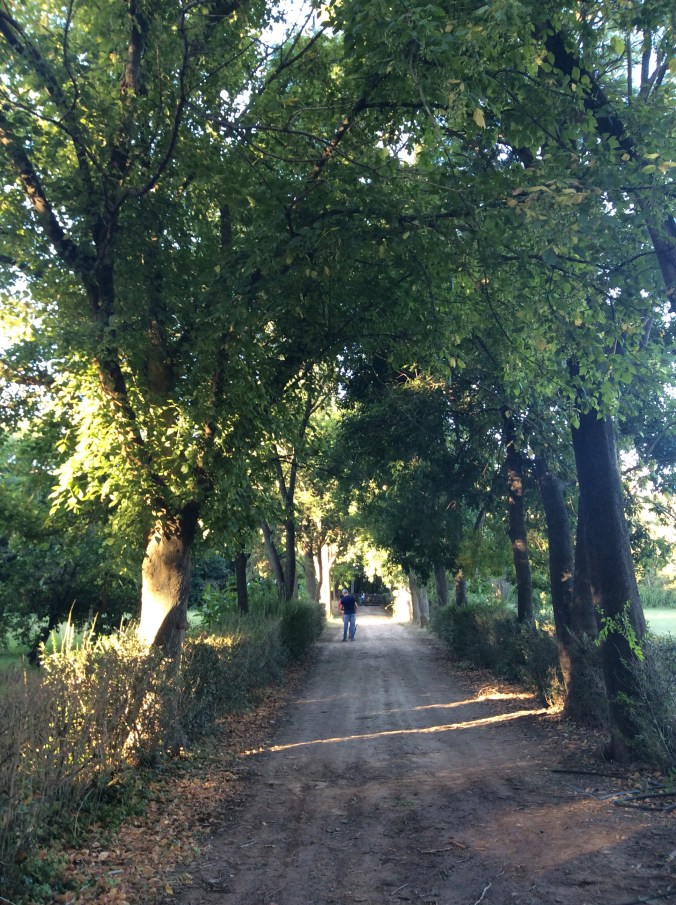
The drive from the main road to La Finca. Sunday afternoon Gaston’s mom and I strolled up and down this drive while Gaston with his dad and uncle and a cousin installed a drip line to water the bushes on each side. Like here, they are suffering a drought. They did not want years of work to die.
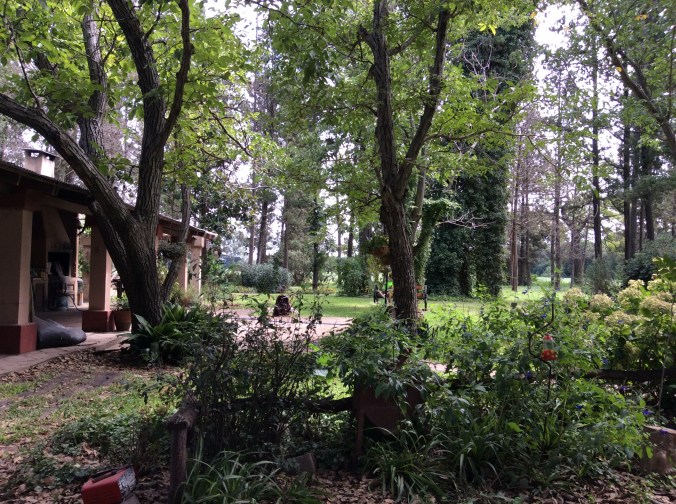
The original house where Gaston’s uncle and his family live is on the left. I loved it here and felt very privileged to spend a weekend with the family doing whatever they do on weekends. On Saturday, the men all went to help someone move while I sat with Gaston’s aunt, her friend, some cousins. We chit chatted, drank mate, took naps, ate pear tart and other desserts, and whiled away an afternoon.
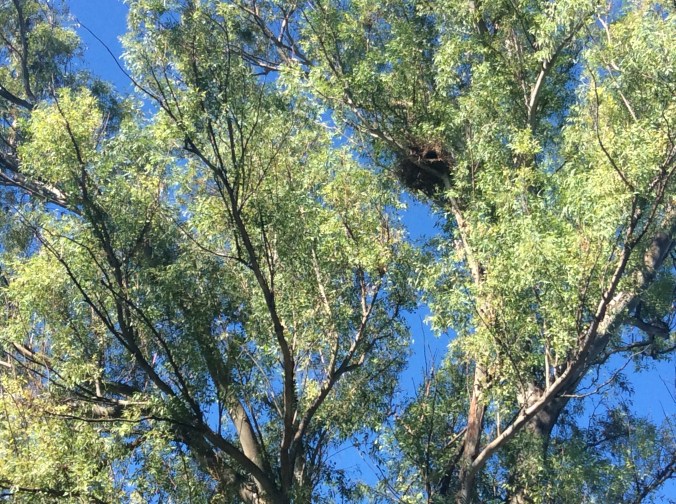
Occasionally the peace was disturbed by the raucous chatter of parakeets. The huge nest in this tree is shared by many parakeets. They do not build individual nests. When they get going, they are really loud.
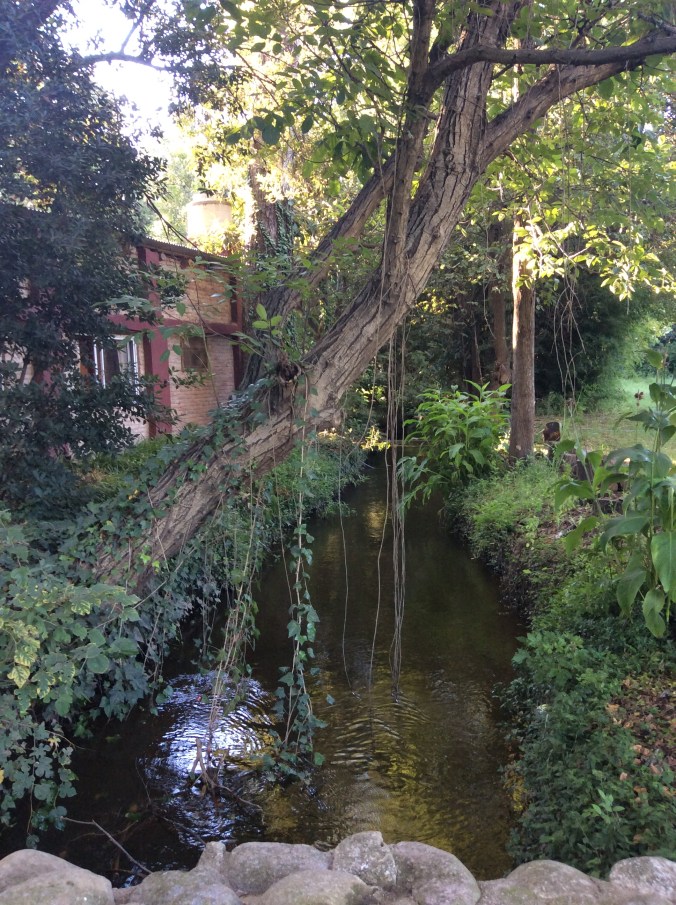
Just as in New Mexico in the US, water comes through acequias. The drive goes over this little bridge in the foreground.
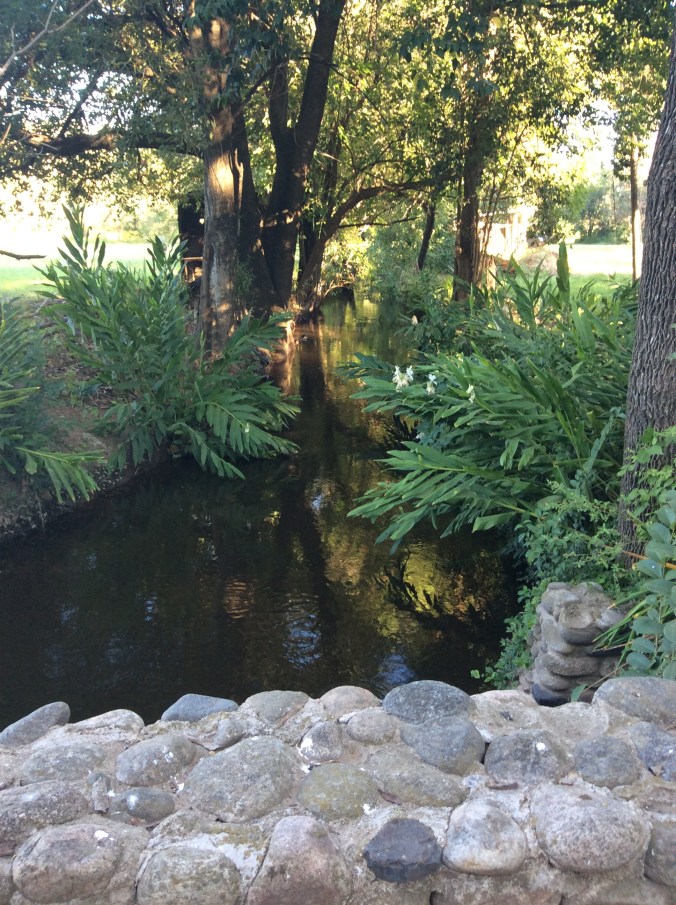
Near this acequia the family grows lemon trees, vegetables, flowers, and other delectables for family use.
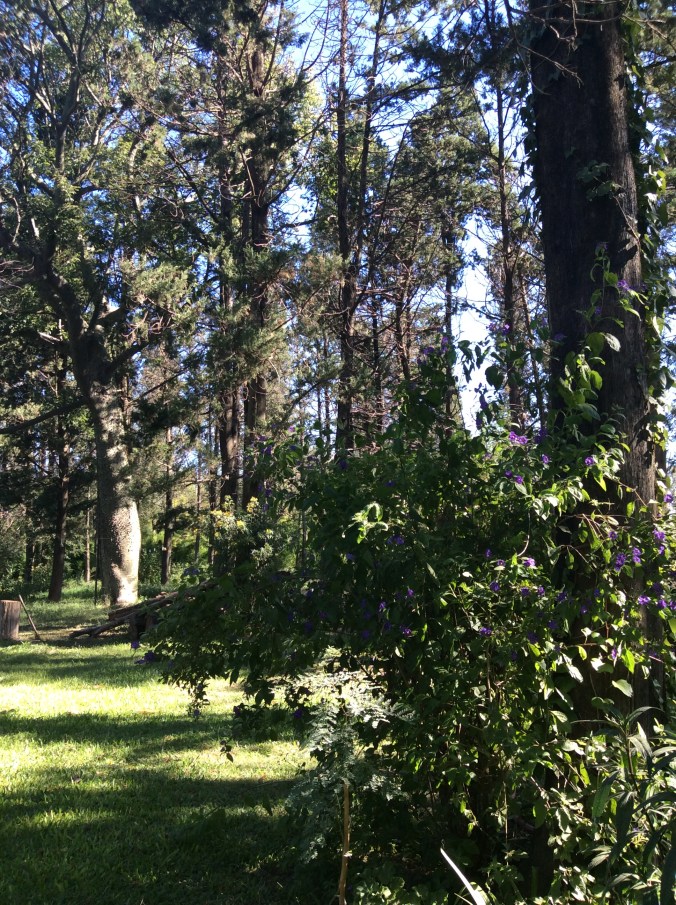
It was so lovely and peaceful here, I did not want to leave.
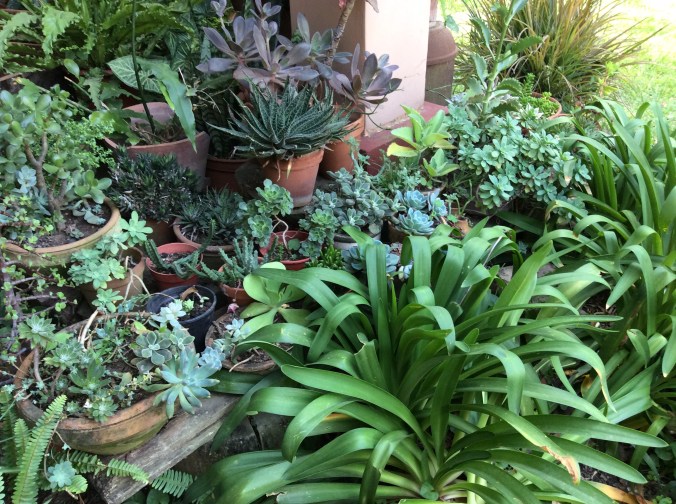
Gaston’s aunt and mother love succulents and flowers. This is only a tiny portion of the plant collection growing everywhere around Gaston’s aunt and uncle’s house. His aunt is very proud of her plant collection. Many of her plants were familiar. Some even have the same names in English and Spanish probably due to their Latin origins.
Last evening I attended a new exhibit at Panhandle-Plains Historical Museum. The exhibit featured moccasins, paintings, and various artifacts made by different Great Plains tribes, including a headdress worn by Quanah Parker. The exhibit also contains many old photographs. A number of Comanches were present including a lady over 100 years old.
After I left the exhibit, I kept thinking about it and wondered how current Comanches might feel when they come to something like this which in many ways honors them but also displays a past that will never return. While contemplating, I wrote this poem about what I saw.
Beaded moccasins,
moons of work.
Ceremonial beauty,
now encased in glass, labelled, dated by someone’s guess,
for strangers who believe in a strange god,
desecrate the land,
waste invaluable water,
kill bears for sport.
Weep
Wait
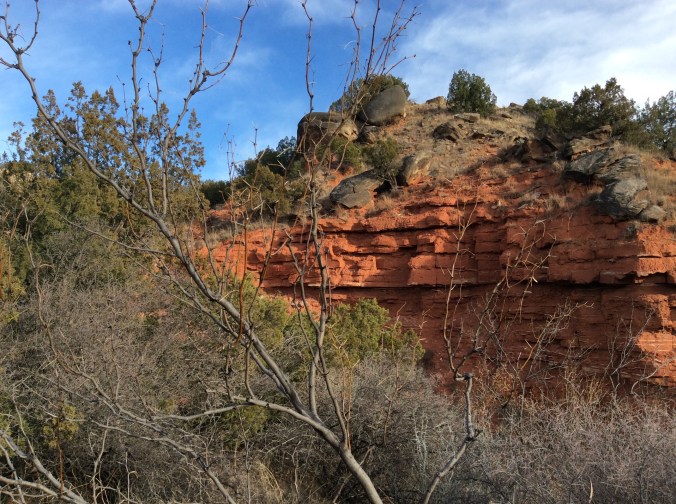
Palo Duro Canyon, Comanche Country, where they made their last stand and were forced to go to a reservation in Oklahoma after federal troops killed over a thousand of their horses.
The largest park is a national park on the Argentinian side. There are upper and lower hiking trails with an ecologically friendly train that takes you to where the trails begin. For those who want to hike more, you can forget the train and hike through the forest/jungle to where the main trails begin. We took the train.

On the upper trail you can cross a portion of the river, cross just above the top of several of the individual falls, and get wet.
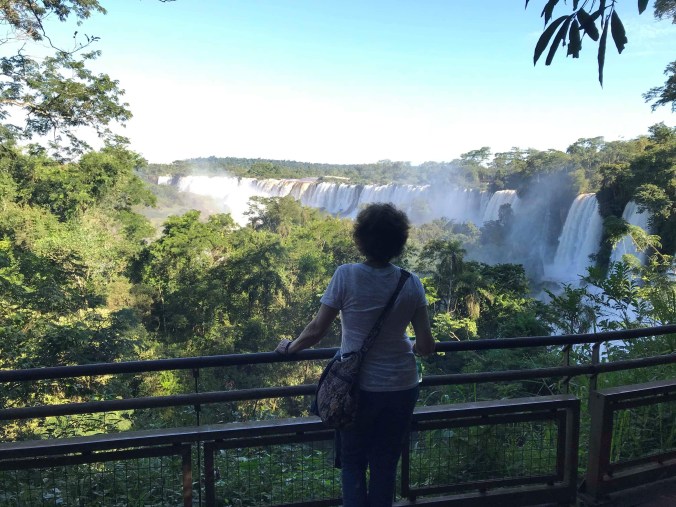
The trails on the Argentinian side are impressive feats of engineering. I kept wondering how they built them in some of the very daunting places, e.g. over tops of large falls, over the rushing river.

I am standing in the middle of the “bridge” with the same distance over the river in both directions.
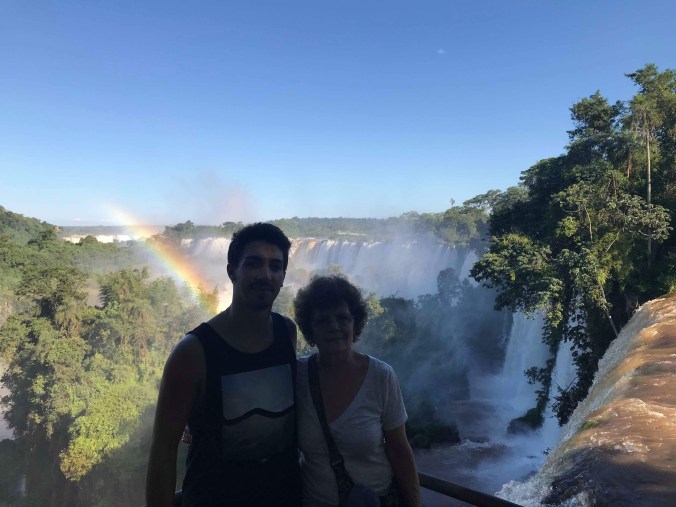
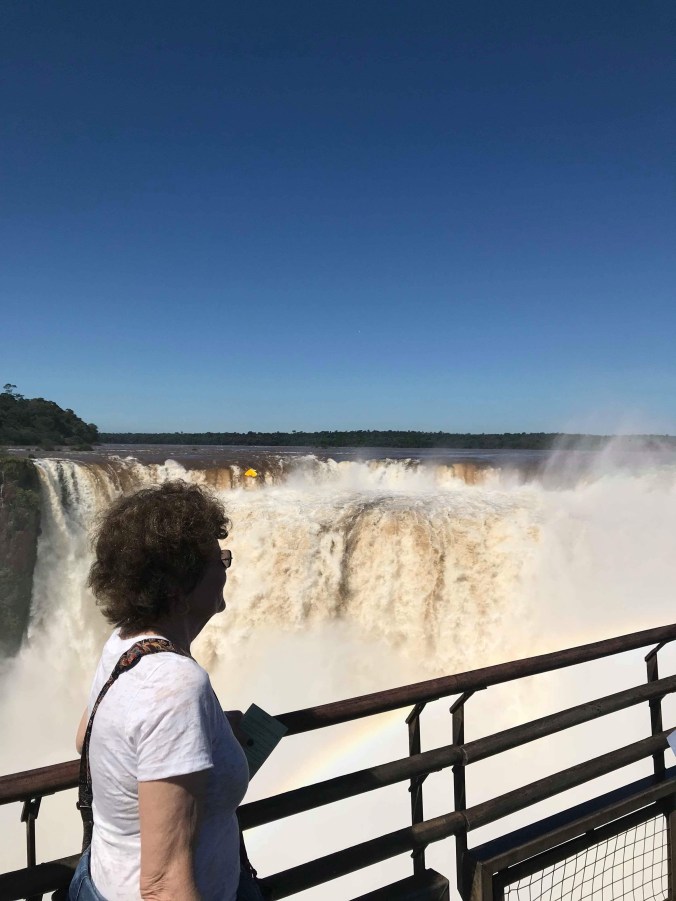
You cannot stay in this location very long without getting quite wet. The falls are so huge and the spray so extensive, a fine mist floats everywhere. Talking normally means no one can hear you because of the roar.
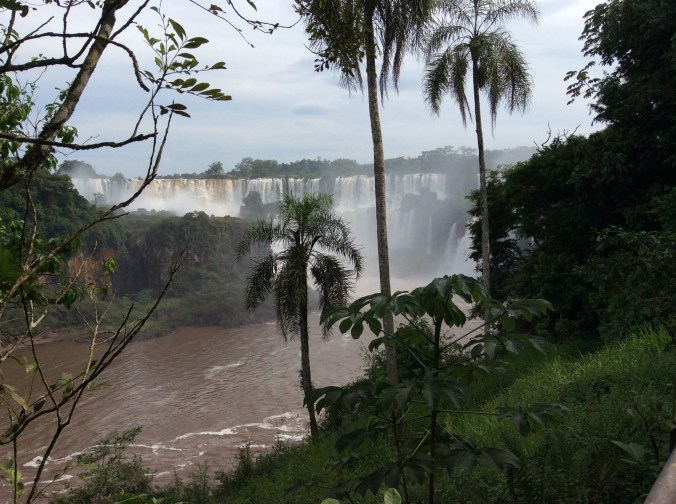
The land to the left is an island. Because it constantly receives a fine mist, the plants look lush, glistening with water droplets. Gaston said it reminded him of the movie Avatar.


After all this hiking we decided to go to the hotel near the falls for a drink. A man and a woman were teaching people how to tango. Before I knew it, the guy had me dancing.

The next day we took the lower trail. One of the first things we saw was a group of monkeys. Although there are signs along the road to please watch out for jaguars because too many get killed at night on the road, we did not see any. It occurred to me several times one could have been 50 feet from me near a trail and I would never have guessed–the jungle is too dense.
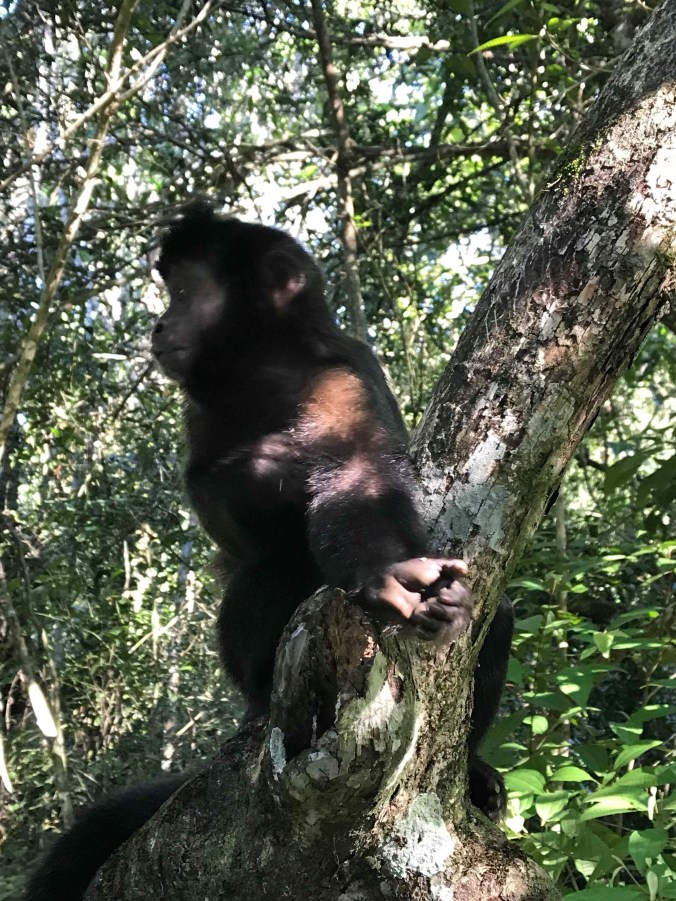

As you can see to the right in this photo, in many places the trail is right at the edge of the falls and sometimes the trail goes over the top so you are walking over where the falls drop to the gorge below.
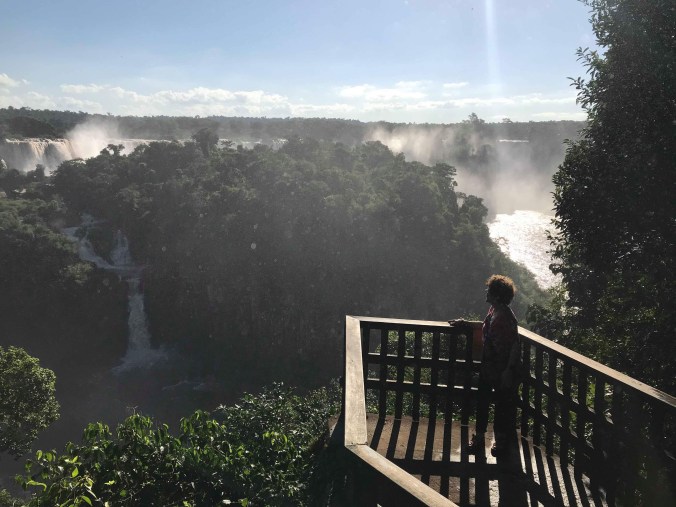

The immensity of the falls, the roar and power of the water, the lush jungle–a magical place which filled us with wonder.
Note: There are several ways to spell the name of the falls, depending on the language. I have used two of the ways. The river which makes the falls is the Parana with an accent over the last a.
Barbara Lewis Duke, pretty petite, blue-eyed and blond, my mother, one fearless, controlling woman. Long after Mother’s death, Dad said, “Barbara was afraid of absolutely no one and nothing.” They married late: 34 and 38. He adored her unconditionally. She filled my life with horses, music, love, cornfields, hay rides, books, ambition. Whatever she felt she had missed, I was going to possess: piano lessons, a college education. Her father, who died long before I was born, loved fancy, fast horses. So did she. During my preschool, croupy years, she quieted my hysterical night coughing with stories of run aways horses pulling her in a wagon. With less than one hundred pounds and lots of determination, she stopped them, a tiny Barbie Doll flying across the Missouri River Bottom, strong, willful, free.
Note: this poem is in my book “On the Rim of Wonder” and was also recently published in “Inside and Out”, a collection of writings by women. It is available on Amazon and published by the Story Circle Network.
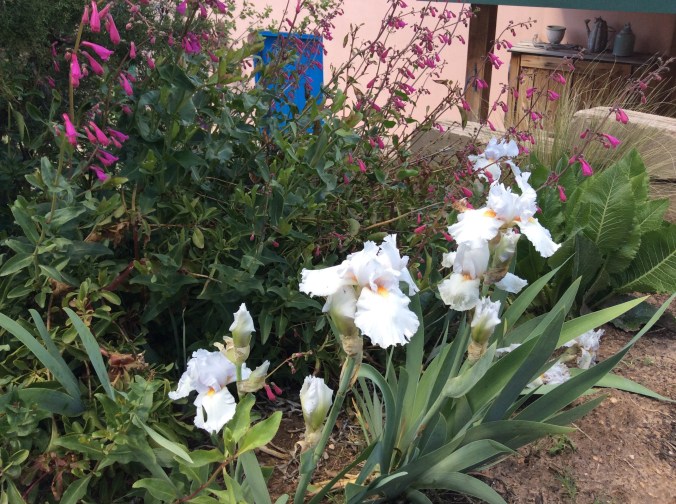
Addendum: My mother loved horses and flowers. When I look at the flowers around my house I think of my mother. And, yes, I have horses. The following photos are dedicated to my mother’s memory.


My mother’s mother and father.
Across the highway from the helicopter business, we visited a surprisedly large bird sanctuary, recommended by our taxi driver/guide. We did not expect anything as lovely as what we found. Most of the birds and flowers there are native to the area. However, a few rarer species from other parts of the world exist there as well.


Surprised, I recalled seeing these exact same flowers on my two trips to Costa Rica. In fact, I found another photo on an older blog post from one of my Costa Rica trips.

Endangered, many countries where these wonderful parrots live do everything they can to save them. They pair for life–we found the evidence amusing and enchanting.
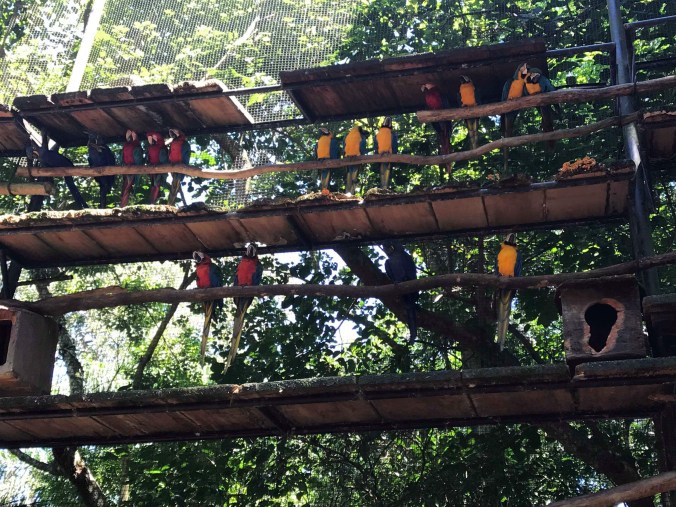
Whenever we saw an uneven number together, we looked elsewhere and found the mate drinking or feeding.

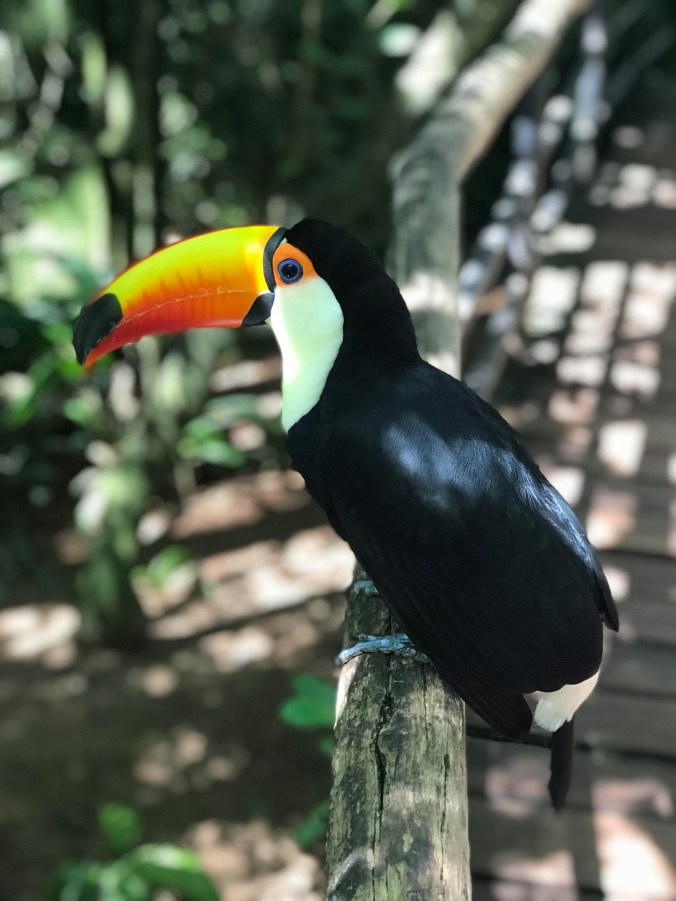
Of course, there has to be toucans. Some even clowned for the tourists. People clustered all around to watch their antics.


Where you have flowers you have butterflies.
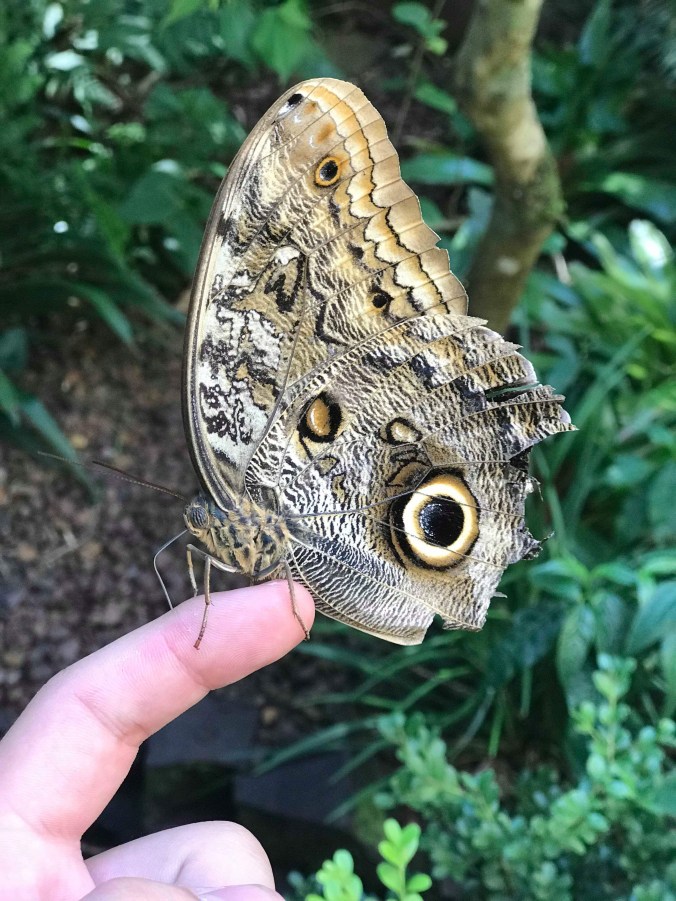
Butterflies love Gaston.
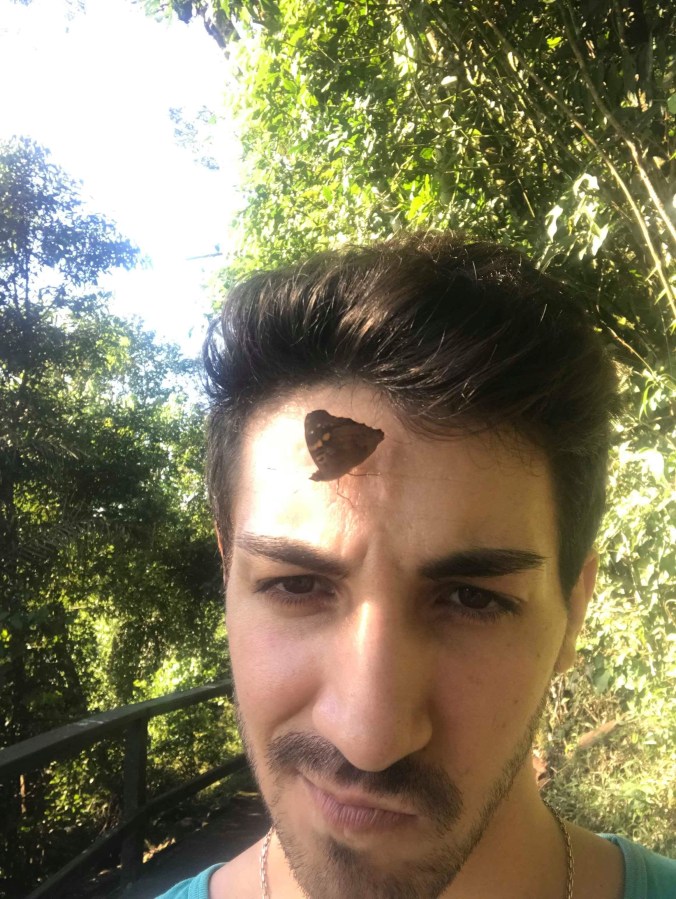
They landed on him, flew to his fingers, let him pick them up without flying away. I tried, but no luck.
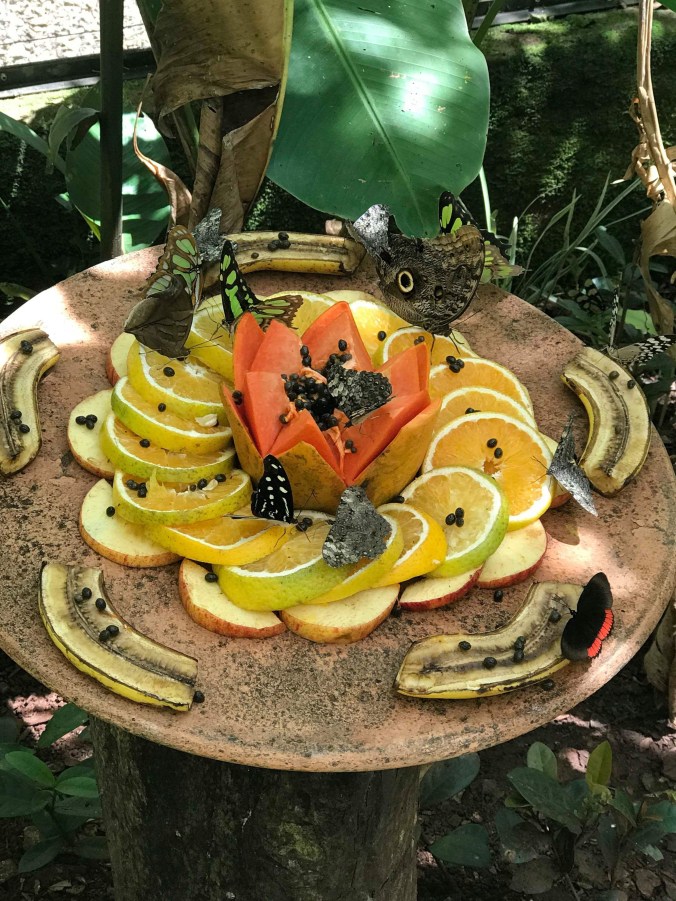

A fabulous morning on the Brazilian side, starting with the helicopter ride and ending here with flowers, birds, and butterflies.
Travel the World 4 Less
A Glimpse into My Life & Passions
Ceto-Magoism, the Whale-guided Way of WE in S/HE
Exploring the F-word in religion at the intersection of scholarship, activism, and community.
ANCESTRAL FOOD. HERBAL WISDOM. MAGICAL COOKERY. SEASONAL CELEBRATION.
inesemjphotography
politics, engineering, parenting, relevant things over coffee.
Food is the best expression of every emotion. Explore through my reviews, recipes, events and more.
Smile! A Site for Friends Wherever You Are!
inspiring personal growth through poetry and writing
Combining atheism with whimsy. This is a Fair and Balanced blog based on opinion unencumbered by fact.
Odds and ends ~ My Life
Original poetry, commentary, and fiction. All copyrights reserved.
bripike@gmail.com
A wildlife filmmaker in Africa
A Geeky Feminist's Musings On Pop Culture
"5 minute walks"

