Top predators like wolves, bears, lions and tigers have declined dramatically around the world over the past century


Some parts of Eastern Europe have worked at figuring out how to balance saving predators and protecting farmers and herders. Spain has programs to reimburse herders.

Rachel Tilseth's avatarWolves of Douglas County Wisconsin Film Company

Conservationists widen toolkit for predator management

Source:Berkeley News
By Brett Israel, 12/13/16

Top predators like wolves, bears, lions and tigers have declined dramatically around the world over the past century. One major driver of these declines is retaliatory killing by people following predator attacks on domestic livestock. This lethal approach to predator management is increasingly controversial not only because of ethical concerns, but also the role predators can play in healthy ecosystems. A new UC Berkeley study shows that many non-lethal methods of predator control can be highly effective in protecting livestock from predators and in turn, saving predators from people.
A tiger drags a cow at Jennie Miller’s study site in India

The Berkeley study examined 66 published, peer-reviewed research papers that measured how four categories of lethal and non-lethal mitigation techniques — preventive livestock husbandry, predator deterrents, predator removal, and indirect management of land or wild prey…

View original post 752 more words

Cougar Stories


As a person more than a bit obsessed with pumas, I just had to share this with others.

Wolf is my Soul's avatarWolf Is My Soul

I’ve become fascinated by cougars. Maybe because they are elusive, secretive, more akin to a ghost than an animal of flesh and blood. Which of course, begs the question: How do you get people to care about and protect an animal that they never see, nor probably will never see in their lifetime?

mom-and-kittenMom and six month old kitten

Visitors to Yellowstone National Park can be almost guaranteed, if they are persistent and patient, to view wolves and bears, elk, bison, and bighorn sheep. But only the rare individual will have the opportunity to see a cougar in the Park. They’ve been spotted at Calcite Springs, hanging on the basalt walls and occasionally through a scope from the Hellroaring overlook. Usually the Park sightings are called in by wolf watchers. Once radioed around, tourists hear about it through the airwaves, then flock to those locations. Sometimes the cat might be hanging…

View original post 678 more words

The Mysterious Connection Between Wolves and Women (Video)


Wolf is my Soul's avatarWolf Is My Soul

October 03, 2016   Source

“Millennia of humans have gathered around fires to hear words that transferred hard-won wisdom and allowed dreams of unlimited possibilities. In a modern world that limits wisdom to ‘facts,’ and women’s access even to those, Dr. Estes has restored the fire-for us all.” Gloria Steinem, author of Revolution from Within.
All strong women who believe the Spirit heals.. who believe in spirituality, myth and medicine of the soul, should read this amazing work. It is a truly profound spiritual testimony to the Wild Wolf Woman within!
….Selkywolf…

A healthy woman is much like a wolf – strong life force, life-giving, territorily aware, intuitive and loyal. Yet separation from her wildish nature causes a woman to become meager, anxious, and fearful.

With the wild nature as ally and teacher, we see not through two eyes only, but through the many eyes of intuition. With intuition we…

View original post 313 more words

Court Mandates New Recovery Plan for Mexican Gray Wolves


For those following the fate of one of sub-species with few left in the wild.

Wolf is my Soul's avatarWolf Is My Soul

October 18,2016 By SUSAN MONTOYA BRYAN, ASSOCIATED PRESS

Federal wildlife officials are now under a court order to update a decades-old recovery plan for the endangered Mexican gray wolf, a predator that has struggled to regain a foothold in the American Southwest despite millions of dollars of investment in reintroduction efforts.

An Arizona judge on Tuesday dismissed the concerns of ranchers and others and signed off on a settlement between environmental groups and the U.S. Fish and Wildlife Service.

Under the agreement, the federal agency must update the recovery plan by November 2017 while providing the court and other parties in the case with regular updates on the planning process.

Environmentalists have long argued that the agency had a legal obligation to adopt a recovery plan that spells out specific goals and milestones for returning the wolves to their historic range.

There are currently about 100 wolves in the wild…

View original post 385 more words

Norway Plans To Kill Most Of Its Wolves


It has always puzzled me why wolves are hated more than other predators. Wolves are a lot like humans. Do we project our worse traits on them? They kill few livestock when compared to deaths due to disease, weather, etc. I am interested in feedback regarding this question.

Wolf is my Soul's avatarWolf Is My Soul

September 21, 2016 Source

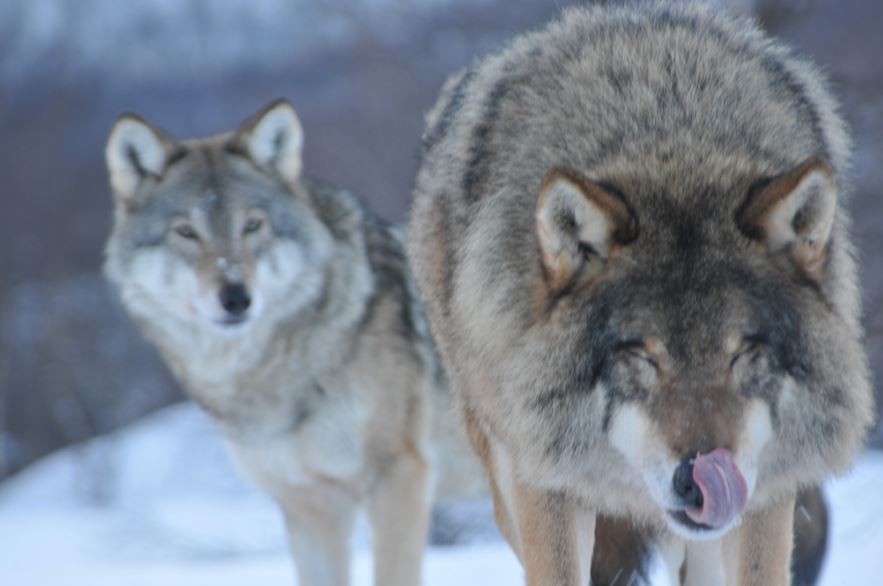
There aren’t many wolves left in the Norwegian wilderness Just 68, in fact.

But Norway’s government has decided even that’s too many. Authorities announced plans this month to kill 47 wolves, or about two-thirds of the remaining population.

FLICKR/BJARNE LOHMANN MADSEN

The move has sparked both intense criticism and praise. Farmers welcome the cull, claiming wolves threaten their livestock, and therefore their livelihood. Conservationists, on the other hand, condemn the move as an attack on a species that’s already on unsteady ground.

“The wolf population is already very small and critically endangered,” Silje Lundberg, a prominent Norwegian environmentalist, told the U.K.’s Express. “To eradicate 70 percent of such a vulnerable species is shocking.”

FLICKR/~RANVEIG MARIE~

In Europe today, there are an estimated 12,000 wolves — a population that has surged in recent years. But only in Norway is the species listed as…

View original post 341 more words

Santa Ana Pueblo, New Mexico


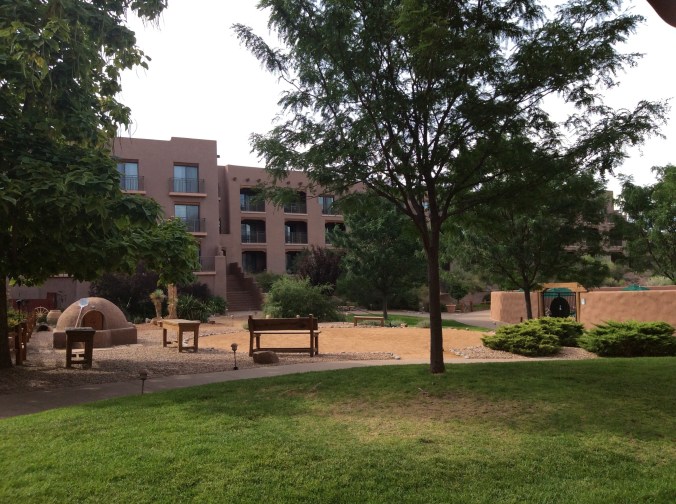
At Tamaya Resort, this past week I attended a regional conference of the Alpha Delta Kappa teachers’ sorority.  Run by Hyatt, this resort resides on Santa Ana Pueblo land near Bernalillo, New Mexico.  Although the word pueblo is Spanish for town, in New Mexico its meaning extends far beyond town.

There are 19 pueblos in New Mexico.  Several are near Albuquerque:  Santa Ana, Santa Domingo, Sandia, and farther to the north, Taos Pueblo near the town which bears its name.  Many  pueblos have been inhabited for many centuries, e.g.Santa Ana since the 1500s and Acoma since the 1200s.  Each pueblo is synonymous with a particular American Indian tribe.

Santa Ana Pueblo land borders the Rio Grande River.  Tribal members number approximately 900.  Their children attend public school in Bernalillo.  The tribe’s income comes primarily from the Tamaya Resort and a casino. Employees at the resort come from all over the United States as well as other countries.  Our waiter at one of the four restaurants came from a small town in Yucatan, Mexico.

IMG_2350

All the buildings show the traditional pueblo style.  The horno–oven–on the left in this photo is actually used.  The courses and activities for guests are extensive, including making bread and baking it in this horno.  Golf, horse back riding, hiking to the Rio Grande, swimming–there are four pools, jewelry making, bike riding, creating your own dream catcher, and many others options keep guests busy.  Their horse rescue center is the largest in New Mexico.

IMG_2351

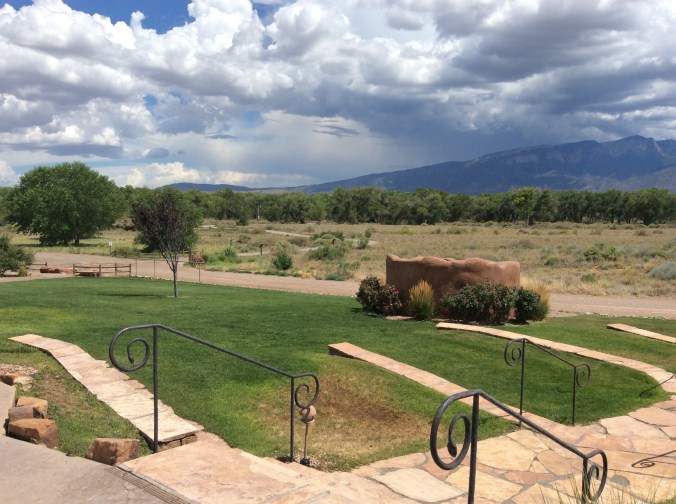
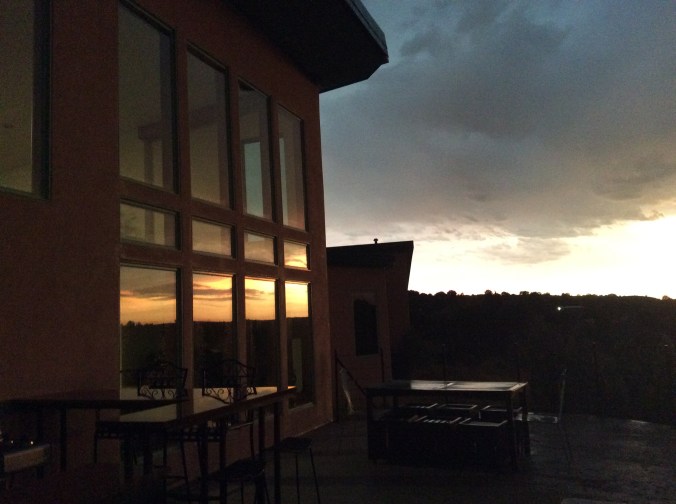
The trail to the bosque and river start just below the lounging and grill area.  Bosque (forest or woods) is another one of those Spanish words, here used specifically in relation to the forested area along the Rio Grande.  Like in most of the West, rain is always welcome.  It rained several times while we were there.

IMG_2353

IMG_2356

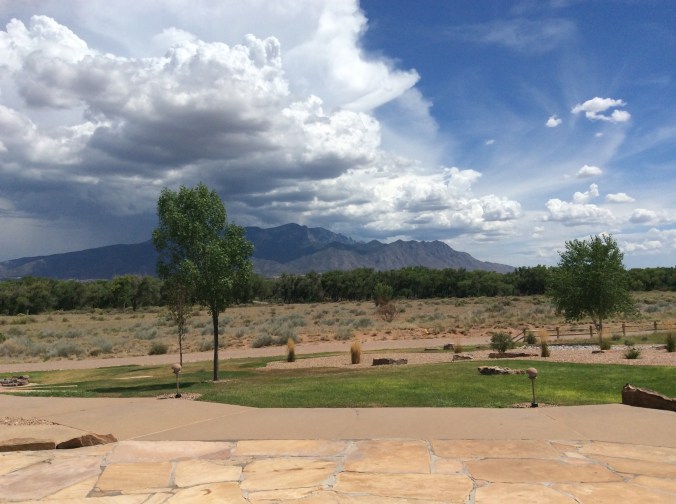
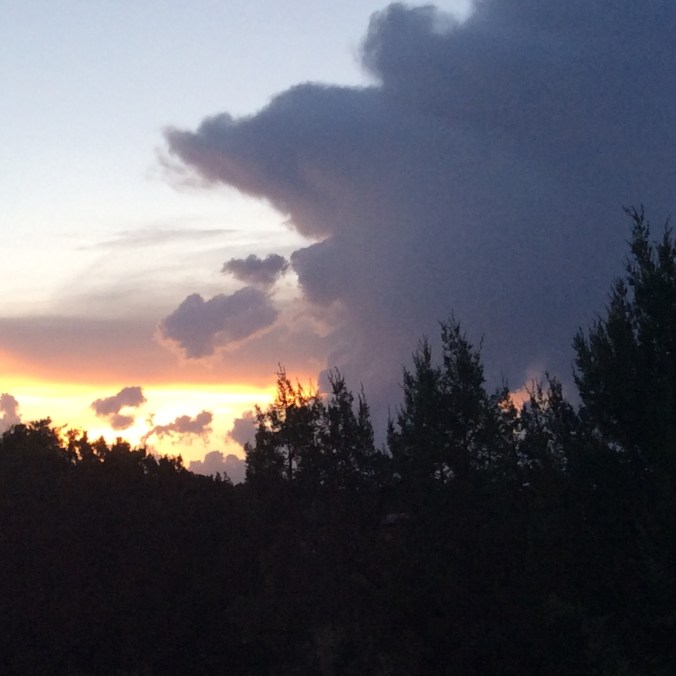
The intense blue of the New Mexico sky mixed with storm clouds make for perfect photos.

IMG_2357

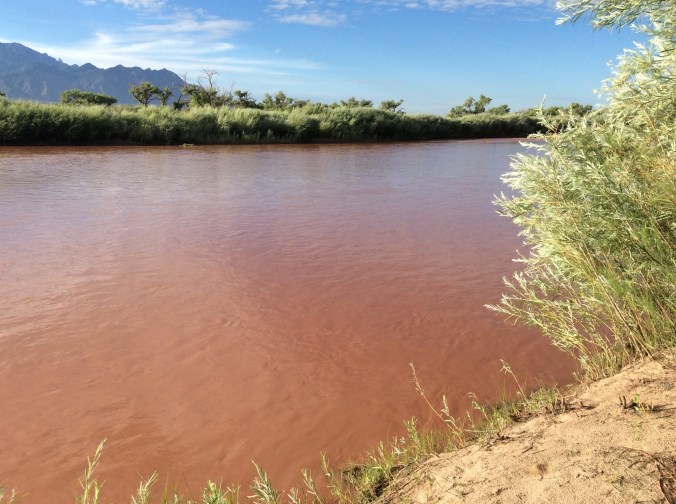
After approximately a mile of walking, the hiker arrives at the Rio Grande.  Because of the rains, it became higher and higher.

IMG_2358

Looking down river.  The river was moving so fast that I could hear it rolling along.

IMG_2359

Looking slightly up river.  Seeing this, it is hard to believe that by the time it arrives at the Gulf of Mexico, it is a mere trickle.

IMG_2360

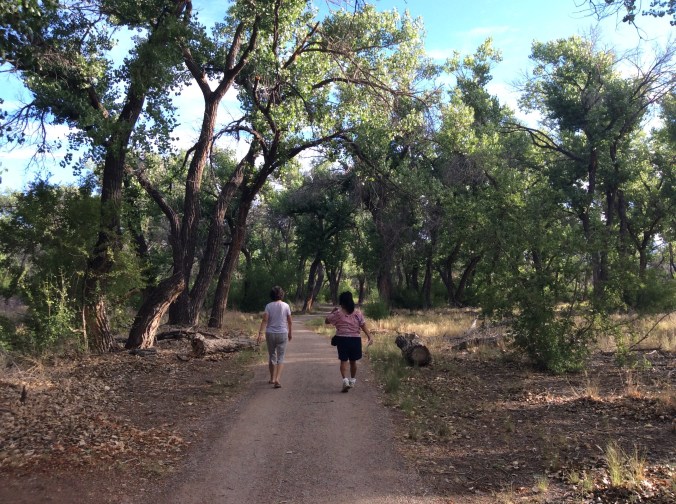
Early morning hikers on the bosque trail.

IMG_2361

While hiking, I looked up and could not help it; I had to photograph the famous New Mexico sky which Georgia O’Keefe loved to paint.

Ethiopian Journey–From Addis Ababa to Debre Birhan


Addis is the second highest capital in the world.  Only La Paz, Bolivia, is higher.  To a large extent, altitude determines climate in Ethiopia.  Addis and the surrounding area, much of which is high altitude farmland, receives a lot of rain this time of year and looks totally unlike what a lot of people think of when they hear the word Ethiopia–not desert but rather miles and miles of green.

IMG_0248

IMG_0249

We had not driven far from Addis when we crossed a river, an area of which is considered healing.  Many people had come for priests to bless them and to experience the healing power of the water.

IMG_0246

I saw only three tractors in ten days of criss crossing farmland.  Why so few?  One reason is rocks.  Many of the fields remain rather full of rocks in spite of many having been removed.

IMG_0258

Therefore, they farm the “old fashioned” way; horses or cattle pulling plows with a human behind.

IMG_0251

Houses in the villages in the farming areas demonstrate old ways alongside new.

IMG_0257

IMG_0259

Winnowing the way we did in the USA a century ago.

IMG_0253

IMG_0261

Much of the farmland is a picturesque patchwork quilt of browns and greens.

IMG_0266

Before dropping down to lower country, we drove by Menelik’s Window.   The drop off here is steep and far.  I did not go near it–I had not yet become used to the endless drop-offs or even realized that I would need to do so.  This is one of four places in Ethiopian where you can see gelada baboons.  They are extinct elsewhere. Menelik was an Ethiopian emperor.  This “window” allows one to look from the high country for miles and miles to the landscape beyond.

IMG_0262

The large tufts of grass provide food for the gelada which are grass eating herbivores, the last of the grass eating primates.  All others are extinct.  This same grass is used by the locals for roofing material so boys stay in these areas all day chasing off the baboons.

IMG_0264

To keep themselves busy they weave woolen baskets and hats to sell which they display in the grass.

IMG_0267

This ten year old boy happily donned the hat he had made.  I bought it for my grandson who was the same age when I took the trip.

IMG_0268

Except for the different vegetation, driving down the mountain looked a lot like driving through Colorado.

IMG_0271

IMG_0272

IMG_0276

Down from the mountain the landscape appears quite different and considerably drier.  We drove through several smaller towns on our way to Debre Birhan where we stayed the first night.

IMG_0279

Driving in Ethiopia requires navigating around animals.  Everyone drives their cattle, camels, horses, all livestock down the road whenever possible.  The roads are generally very good.  Many, built by the Italians, have stood the test of decades.

IMG_0282

Along the road we saw many of these “apples”.  My friend told us how they played with them as a child.  However, the adults all warned the children not to touch their eyes when they did–it will make you blind.  They are called Apples of Sodom–so many things in Ethiopia have symbolic meaning.

IMG_0283

These fruit could be seen all along the road and even on the road.  After driving through this drier area we rose above a huge valley with miles and miles of grass.

IMG_0285

A semi-nomadic group brings their immense herds of cattle here in the rainy season to graze.  When we drove further on above the valley, I saw the first tractor working a field as big as this grazing land.