Funeral Dream


Her mind wanders in the soot filled

dreams when she was eighteen and lost,

tried to commit suicide her first year in

college.  Far from home with a homesick

roommate and people who ate this slimy

looking white stuff –grits–she’d never

heard of or seen.  Crazy people who

thought black peoples’–they called them

colored–only use was playing loud

music to dance to.  Who could adjust to

these southern belles riding horse to

hounds, dancing to music they couldn’t

touch with people they could never love.

In isolation she played piano for hours,

wrote depressing stories no one could read

and swallowed a bottle of bitter.  Changed

her mind, vomited in the infirmary, made

volcanoes in chemistry class, flew around

Washington, D.C. during Kennedy’s

funeral to avoid her own.

Wine tastings and a few favorite things


Arrived home from work and fed Rosie.  Looked at the dry native grass around my house and decided to water a bit of it even though I loathe wasting water.  Green is probably safer than winter brown.  The recent giant wildfire raised my concerns about the fire danger in this drought.  I cannot remember when it rained and the next ten days show no rain in sight.  As soon as I finish writing this or shortly thereafter, I get to run back to town and join probably 100 plus other people at friends’ house to taste the wine and food brought by Market Street.  These friends run a bed and breakfast with a spectacular garden complete with koi pond and just about every kind of flower you can grow in this area.  It’s cool, nearly froze last night, so I will wear the black turtle neck and slacks I wore to work.  It’s hard to believe that it was just above freezing last night and is supposed to hit 100 next Monday–the desert has now reached here apparently.

Thinking about this leads me to think about some of my favorites, especially when it comes to wine:  zinfandels, especially from Lodi, California.  The moderately priced one I buy most often is OVZ.  It frequently goes on sale here which is even better.  I also like  Seven Deadly Zins–unfortunately I have never seen it on sale.  Basically, I love red wines and almost never drink white.  A moderately priced nice blend is Apothic Red.  Market Street had a super sale so I bought several–ten percent off if you buy six at a time.  The best malbec I ever drank came directly in baggage from Argentina, a present to me from my Argentinian exchange student when he arrived.  You can’t get it here and when his mom tried to ship me some, she was not allowed.

The students at school  kept commenting on my black attire today.  They asked if I was going to a funeral or something.  I laughed.  I like black; I look good in black.  It also shows off my turquoise jewelry.  My most favorite color is orange. Turquoise looks good with it too.  Red and green are ok.  Finally after decades I have learned to like hot pink, but really I am not a pink person–see my poem about Hot Pink Toenails–on an old blog.  It remains one of my blog posts that people look at most–I have no clue why.  The one color I really do not like is blue, especially pale blue. Perhaps tomorrow I will post about favorite books.  I really would like readers to comment about their favorites.  It fascinates me what people perceive and feel about this and that.  Often I am the only person I know who reads what I read.

Off to taste some new wines and maybe find a new favorite.

Solar Power and Utility Companies


SAM_1505


SAM_1506


SAM_1504


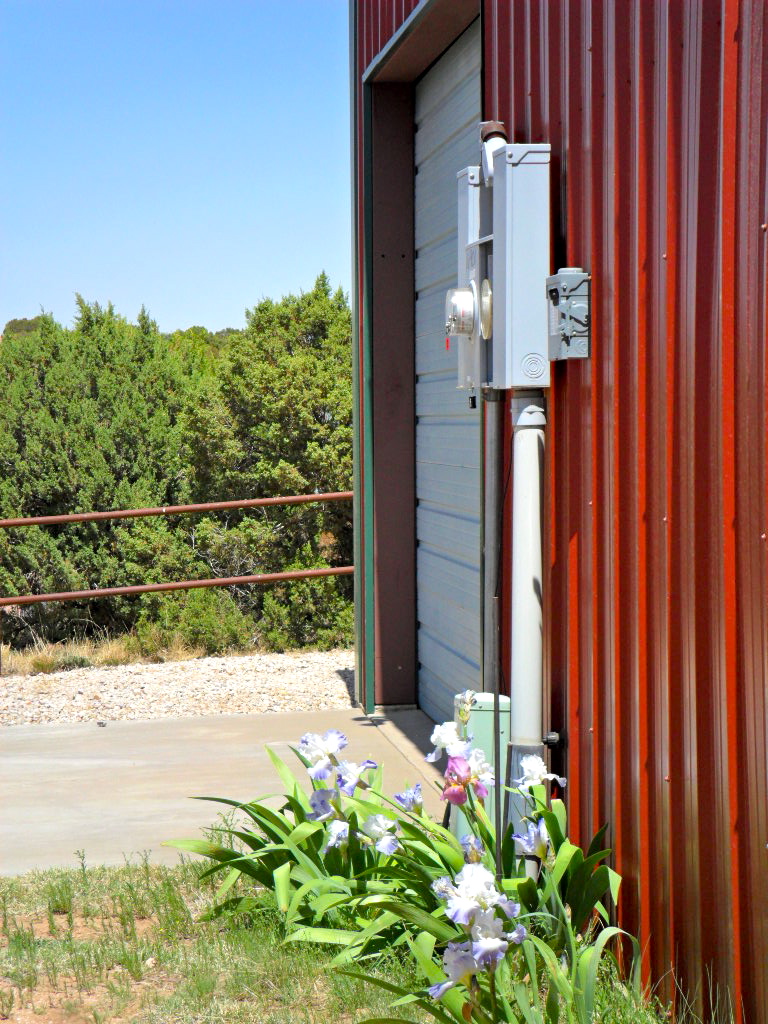
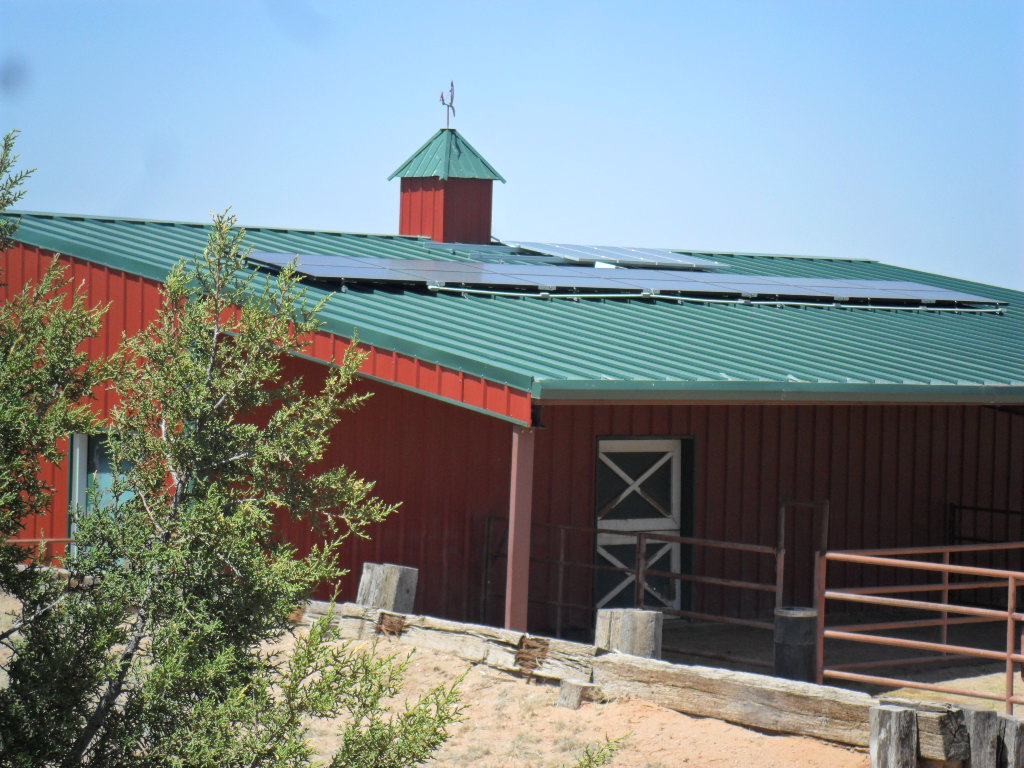
Sixteen solar panels reside on the top of my barn.  Inside an inverter transforms them into energy acceptable to the grid.  I net meter.  On a sunny day, and most are, this time of year my system generates 20 Kw per day.  Recently, I was considering getting more panels since my barn roof could accommodate at least twice as many and maybe more.  After reading about what has occurred in a number of other states, I might just wait and see what happens.

The giant utilities have begun a huge campaign against net metering.  In 2013 Xcel, the company here in the Panhandle of Texas, overtly attacked net metering in Colorado.  After the utility commission there received more that 30,000 comments and 200 protesters marched on Xcel’s Denver office, they backed off.  A poll indicated that more than three quarters of the people in Colorado support net metering.  The commission agreed to preserve net metering.  In Hawaii, a state leading the way with solar, the utility is fighting back, refusing to approve new systems.  Why?  One in ten houses there have solar on rooftops and this individually produced electricity is cutting into the Hawaiian Electric Company’s profits.  Arizona citizens can be added to this list.  Solar makes sense in Arizona with something like 95% of days sunny.  For the 2 per cent of the electric utility customers there with solar, it cuts their bills about 70 per cent.  Last summer the utility company launched a campaign against solar growth and net metering.  What they wanted was to charge customers retail rates while paying solar customers wholesale rates and charge them a monthly fee per Kw hour generated which would, of course, in most cases defeat the purpose of having solar in the first place.  They ran ads telling non solar customers that they had to pay more because of the solar generated by individuals with solar.  These ads were run by the American Legislative Exchange Council, an anti-renewable energy non-profit funded largely by the Koch brothers who own immense oil and gas interests.

I meet more and more people who decide to get off the grid partly for the independence and partly to avoid paying these money hungry utility companies.  Here in the Panhandle, electricity remains relatively cheap.  Even with a large all electric house and weather extremes, my electric bills average less than 350 per month.  If I spend a lot of money on more panels and the rules change here in Texas, it might not be worth the cost.  As I write this, I keep asking myself just how much would total independence from the electric company be worth?


Late at night


Depending on where you are in the world, this may be the morning–like all my friends in Southeast Asia.  Or even a totally different day.  This commitment to write and then blog daily means that sometimes I may be a little less than perfectly coherent, e.g. now.  Just came home from a dinner party for some of us who are connected in some way or another with the Amarillo Opera.  Tomorrow night Amarillo Opera presents the annual Musica Variada performance featuring local Hispanic opera singers, all of whom are studying music at West Texas A & M University and Trio Ellas from Los Angeles–three young women who play traditional Mexican music, e.g. Mariachi and boleros (though I think actually the original boleros are from Cuba) and lots of other things.  The food, catered by a local Mexican restaurant, was not the typical TexMex food.  We imbibed Spanish wine, ate beef to melt in your mouth–coming from someone who rarely cooks beef, imbibed salad with chorizo in the Spanish style–harder and smokier than what one usually gets here in the Panhandle of Texas (part of El Norte).  And more Spanish wine.

Perhaps out of choice or some other reason I do not know, I am always surrounded, except at work, by people from all over the world.  At dinner I sat with friends from Columbia and Peru and my friends from here.  Across the way were my friends with the exquisite garden.  He is from Jordan.  Another young man with whom I spoke chatted about this and that in Spanish and English.  I ascertained he was Cuban; he confirmed.  I also visited with my friend who spends so much time traveling all over this part of the United States with an energy company that I rarely see her.  Tomorrow night I will go to the opera and wish dancing in the aisles was acceptable behavior.  If you want to hear some wonderful music watch videos of Trio Ellas.  You will be dancing in your house.  I promise.

What do people want?


As I looked at my blog statistics a few minutes ago, it dawned on me that apparently few others want what I want in life or care about what I care about.  Either that or most others like me do nor blog or read blogs.  One of my most popular posts over time had been a poem entitled “Hot Pink Toenails”.  My guess is that when individuals search and find this, they are not really looking for a poem about personal identity, the topic of this poem.  Maybe they have a foot fetish or are searching for some new type of nail color or pedicure.  My popular recipe posts I understand.  Who doesn’t want a great recipe for salmon or for tasty vegetarian dishes if you are vegetarian or entertaining vegetarian friends.  But hot pink toenails.  I would not even know what words to put in the search block to pull this up.

Sometimes to see if I can tag better to draw more traffic to my blog, I take a look at what visitors used for search terms.  Lately, “Costa Rica jungle flowers” and “what  did people wear to survive the dust bowl” showed up.  Both these make sense, the latter especially since a mini form of the dust bowl seems to have returned to this area of the country.  Yesterday and today, high winds and blowing dust like brown fog reigned.  It has become rather tiresome and scary, given that we have had no rain in so long I cannot remember when it rained at my house.  Miles of brown grass cover the landscape with the only relief being irrigated wheat fields and lawns.  I do not even want to think about what would happen if someone dropped a cigarette.  With a 45 mile per hour west wind like today, fire fighters would have an exceedingly difficult time.

For those who follow my blog and enjoy my posts about the environment, nature, etc., I won’t stop just because such topics often get fewer viewers.  These are things I passionately care about.  And for all of you who like facts, here are some to add to the fact list:

-80.000 acres of wetlands are lost annually in the US to intensifying coastal storms and sea level rise.

-The forest burn season in the western US has grown 50 per cent longer in the past 40 years.

-The once mighty Colorado River now dries up before it reaches the sea.

-Contrary to popular opinion, carbon emissions from power plants are not regulated.

-Money funneled into efforts to deny global warming and climate change, at least in the US, increasingly follow untraceable avenues.  They use pass through foundations, e.g. Donors Trust.

On a lighter note if you eat salmon and wonder what is safest to eat, here is the latest.  Canned salmon is safe because it is wild caught pink or sockeye salmon from Alaska with high Omega 3s and low mercury.  Most frozen and fresh salmon sold in the US is Atlantic farmed salmon with much higher mercury levels.  Grocery stores and packages indicate the type of salmon and whether wild caught so you can choose.


Poverty


Proofs sent to the library at work–a high school–cannot legally be used on the shelves so they end up in various places.  Somehow I end up where they reside and read them.  My latest, The Boiling Season by Christopher Hebert provides abundant food for hard core thinking.  The setting, a Caribbean island, reeks of political turmoil and the legacy of slavery.  Unless you are totally ignorant of Caribbean history and the various cultures there, it does not take long to figure out the setting is Haiti.  In case you want to read the book, I will give you only a cursory introduction.  The main character grows up in basically what we call here a slum.  His mom dies of malaria when he is quite young and  his dad owns a small store.  He hates it and focuses most of his life on getting out of these circumstances.  He gets a job and a place to live with a senator, meets important people, and eventually discovers an abandoned estate out in the country.  He moves there after it is bought by a wealthy foreign white woman who hires him to restore it.  He absolutely loves the place.  It is an island of beauty and peace in the middle of squalor, poverty, and strife.

The details you can read for yourself.  It’s focus is the dilemma many who grow up poor and want to better themselves face:  if you progress, are you abandoning your roots, to whom do you owe loyalty.  And, indeed, what is progress?  Civil war breaks out and the main character is torn between his desire for peace and a more elegant lifestyle in this beautiful place and the needs of the poverty stricken people who surround it and who at one point work there.  Is he a free person or just a fancier slave for the rich who own the place?  Has he deluded himself into thinking because he worked hard to get where he is that he is better?

Although the book’s setting is a particular place, the theme remains universal.  I think of individuals I personally know who could not cope with success and riches, who felt they must “save” all their relatives and then were left with nothing themselves.  The thinking is this:  if you come into money, you must share it with everyone; to keep it for yourself is morally wrong.  If this is the case, how can the cycle ever break?  This sort of thinking is very difficult for those of use who work hard and save for the future to understand.  We question why we should help them when they hit the bottom.

Yesterday my hard working, single mom, going to graduate school daughter went on a rant about people she knows who get food stamps, Medicaid, etc. while she works and goes to school and gets nothing.  They have fancier cars, better TVs, etc. than she does.  I do understand both viewpoints although I admit I am the frugal without being austere.  I remember a time several years ago when several of my poorer students–I teach at a Title 1 school–wore jeans more expensive than I would ever buy–its jeans.  We got into a discussion about this.  I informed them that all the clothing I had on except for underwear and socks came from a thrift store.  When I take things to the thrift store, I actually shop.  Thrift stores are full of “finds”.  The response of one student was echoed by others, “I would never go into a thrift store.  Someone might see me go in there.”  Because they were poor, they wanted to avoid anyone seeing them do anything they thought might confirm this.

Although fraud exists in programs for the poor, it also exists in high end banking and just about everything.  The solution is to work hard to investigate and prevent it.  I keep wondering what is the solution for the people truly in need?  Do we punish everyone to prevent the fraudulent acts of the few?  And what about the children?  What happens to the dependent young?  Obviously, the world has not found answers.  I wonder if we ever will.

Commitments, Hosting Benefits, and What We Take for Granted


Shortness of post is necessitated by the time.  Why bother?  Nearly three weeks ago, I committed to writing daily.  Blogging seemed like a logical means to accomplish this.  I expect others and myself to follow through on commitments.  So here I am writing in the middle of the night.

Tonight I hosted a fund raiser for the Hilltop Senior Center here in Amarillo.  We tried to sell tickets in advance but not all that many sold.  The Director of the Center and I became a bit worried, but continued with planning, hoping some would show up even if at the last minute.  They did.  We had great Mexican food donated by Braceros on Sixth Avenue, wine, my wonderful well water, cheeses, fruit, and cakes.  Even the silent auction proved to be a great success.  However, nature became the real star of the event, nature and my dog Isabella.  Unlike earlier in the week when the wind shrieked to 6o miles an hour creating several days of endless dust, today the wind laid low, the sun shone, and it was hot.  This morning the heat went on and this afternoon the air conditioning as it rose to past 90.  Thirty degrees difference between night and day is rather typical here and some days, like to day, this difference increases to nearly forty.

At dark the stars seem so much brighter out here in the country.  Many of the guests walked back and forth on the patio, looking for different constellations.  People came inside for a while only to go back out and look at the stars and the crescent moon.  What I take for granted daily, became a wonder for my company.  As I write this, I think about all the things each of us take for granted, things we eat, experience, feel daily.  How often do we really take the time to appreciate these things, to realize that although they may be ordinary for us, for others they would be incomparable blessings.  So now as I finish this, get ready for bed, and snuggle into my cool sheets, I will meditate and give thanks to the universe for the wonder of the stars.


The Sound of Silence


For years I puzzled over what this phrase means.  This evening I discovered the answer.  Unlike the first part of the week, today was sunny, little wind, high 70s, what most consider a perfect day weather wise.  I ran home from work, gave Rosie, my horse, some food, let Isabella, my dog out for a bit, and then ran back to town to see my grandson perform.  He attends Wolflin Elementary School.  The physical education teacher selected a group of students called the SWAT Team who perform at different functions.  The last time I saw them, they performed at a local high school’s basketball tournament.  Today they executed four routines at their school’s annual gala, a fund raiser with games, food, a silent auction, dunking in the water, that sort of thing.  It really astonished me.  I have no idea how much they practiced, but these routines were not short and everything was perfectly choreographed.  First, the boys performed using basketballs to do various tricks and movements in unison to music.  Then  the girls did this complicated sort of dance over these long bamboo poles that other students clicked together.  The only other place where I have seen anything like this is in Thailand at the Rose Garden near Bangkok.  The third routine included both boys and girls and they used this giant circle of multicolored cloth to dance around, in and out, make the cloth into a sort of yurt like shape.  I have no idea how they kept it up like a giant circular tent one minute and flat the next.  Finally, they competed with hoola hoops to see who could keep going the longest.

After I returned home, I hosed off the front entryway, planted some flowers in pots, and watered other flowers, all in preparation for a fund raiser tomorrow night at my house–to raise money for a local senior citizens center.  Rosie is shedding her winter coat and seemed miserable itching so I brushed her.  Now tufts of pale rose colored hair lay everywhere in her corral.  Finally, a bit after eight I came inside for a late dinner.  Then I noticed.  No sounds, no wind, no appliances humming, no coyotes howling, no birds singing, no dogs barking, no sounds at all.  Nothing.  The patio doors are open; I walked outside a few minutes ago.  Nothing.  I sit here before the computer and hear the sounds the keys make when I hit them.  When I stop, nothing.

Rosie


Rosie


SAM_0301


Isabella on the patio in winter.

SAM_0160


They started blooming today.

Friends


This day, like many, has flown by in a whirl wind.  On May 3, I am hosting a benefit for a local senior citizens’ center.  We will have a silent auction, food, and drinks.  Over one hundred invitations have been sent, but only a few have actually bought tickets in spite of the fact that quite a few people have told me they plan to attend.  Customs vary in different parts of the United States.  When I lived east of the Mississippi River, people actually religiously responded to request for an RSVP.  Here in the Texas Panhandle, not so much.  At this juncture, I have no clue how many people will show up.

About two and on half hours ago, my friends showed up with the forks and spoons and plates and wine and auction items.  These items currently reside in one of the guest bedrooms and the garage.  We decided to have some wine and then I dug out cheese and crackers and some more wine and more cheese and crackers.  And we visited.

A downside of United States life for me is the pace.  Everything is done in a huge hurry.  People even gulp their food.  I especially notice the difference when I spend time with people from other cultures who take hours to eat dinner and visit.  When one of my best friends from India lived here and I invited others over, we took hours to eat and visit.  Recently, when a US friend brought his exchange student from Italy over to ride my horse and his daughter and wife showed up as well, we rode, and then fixed dinner.  We cooked, visited, and ate leisurely.  The young woman said she felt so at home because we were spending time, visiting, cooking, everything leisurely.  I frequently cook dinner very late by US standards, e.g. eight o’clock at night.  When my exchange students from South America lived with me, they thought this was normal.  People there eat late by standards here.  My daughter tells me I have become more and more like all these people from other countries with whom I spend time.  I laugh.

Tonight’s experience further validated my belief in the value of friends and time spent with them.  This was not one of those planned, elaborate events.  We just sat, drank, ate, and enjoyed the pleasure of each other’s company.  It was wonderful.


Volunteering at Palo Duro Canyon


424908_2650517636082_1731467384_n

In front of the Visitor’s Center with Eduardo and Gaston, exchange students who lived with me several years ago.


Occasionally, I volunteer in the gift shop at Palo Duro Canyon, the second largest canyon in the United States.  If  individuals drove through Amarillo on I-40 through the endless flat prairie land and never ventured far, they would not even be able to dream up this canyon only twenty miles away.  To get there, you have to drive through more flat land, covered in wheat pasture, corn, milo, and the few remaining pastures of native grass.  You can see for miles; you can even see the taller buildings in Amarillo which are not all that tall.  Then, unexpectedly the land opens up, cliffs appear.  The first time you see it, you feel astonishment.  Nothing you see on the way there prepares you.  Years ago Battelle Memorial Institute sent me on a business trip to Amarillo.  People told me I should go see the big canyon.  I laughed to myself, thinking they must be just talking about a large arroyo.  When I finally did drive down, my mouth gaped in shock.  How could this be?

Palo Duro Canyon is still being created by water erosion.  The Prairie Dog Town Fork of the Red River (no I did not make this name up) runs through it.  Barely a running stream now with the drought, when a big summer thunderstorm blasts it fury, this river can rise ten feet almost immediately.  When it does this, campers remain stranded inside the park until the river calms down because to get into the park, depending how far in you go,  you have to literally cross the river repeatedly.  Because of this, they have decided to build bridges across the five water crossings.  Some of us who love driving through the water find this innovation unacceptable.

Today, I volunteered from 1-5.  People came in from Indiana, Minnesota, Ecuador, south Florida–on a trip to Californian and back, Ohio, Germany–a young woman working as a nanny here.  Usually, I meet even more people from other countries, especially European countries.  When I ask the Germans in particular how they know about this place, they tell me Palo Duro Canyon and its history is featured on the Internet there.  Here come all these people from far away and I have students who live a mere 25 miles away and have never seen it.  The family from Indiana came because their daughter wants to attend West Texas A & M University in Canyon, Texas–named after the canyon of course.  She told me she wants to bring her horse and WT is one of the few universities in the country where you can major in agriculture and participate in an extensive horse program.  She exuded excitement and enthusiasm.

In the midst of chatting with all these visitors, I noticed the unusual behavior of one woman in particular.  She had medium grey hair pulled back in a ponytail with hair a lighter shade of grey framing her face. All her clothes were dark grey.  She walked to the book area–we sell a lot of books, and started flipping slowly through several of them.  She picked them up as if they were delicate flowers or fragile glass.  She held them as if she thought they might break if she held them tight.  When she put one up to look at another, it appeared as if she barely touched them.   She never smiled, just looked and looked and looked.  She did not buy a book.