The Fringe is Our Stronghold by Oxana Poberejnaia


Women and historically other oppressed persons will often create their own spiritual traditions to stay sane, feel valued, survive.

Oxana Poberejnaia's avatarFeminism and Religion

oxanaRecently I have come across several stories of women’s fringe spiritual movements or practices. This made me think about the role of outsiders’ or minority views in religions and society.

Patriarchy pushes women and their issues to the margins of society and religion. It seems that there women sometimes invent their own spiritual practices. These allow women to stand their own ground in religious matters, to preserve self-respect and to keep the hope of the highest spiritual attainment.

Quite often these beliefs and practices seem shocking in their bizarreness and their stubbornness not to accept orthodox norms.

View original post 940 more words

Seed Banks–the Genetic Future


IMG_0877

Most of us think minimally about our food, where it comes from, the seed.  With a rapidly growing world population the genetic diversity of the seed from which we grow food becomes increasingly crucial.

The United States contains 20 gene banks:  three in California, one in each of the following states, Oregon, Washington, Idaho, Colorado, Hawaii, Texas, Iowa, Arkansas, Illinois, Wisconsin, Georgia, Ohio, New York, Maryland, Florida, and Puerto Rico and Washington D.C.  This system holds about 600,000 varieties.  The seed bank in Ames, Iowa, contains 53,000 genetic lines of maize (corn) and other crop seeds–1400 species.  The Illinois bank grows more than 2000 varieties of seeds per year.

Maintaining genetic integrity can be difficult.  Some crops like corn are particularly difficult because corn easily cross pollinates.  Researchers use these seeds to develop certain types of new varieties, e.g. varieties more resistant to disease, to drought.

Gene banks remain crucial to the future of agriculture and food even with the current controversies over GMO.  Some farmers note that any hybrid whether deliberate or by accident is genetically modified.  These modifications have existed since the beginning of agriculture.

A possibly more dire issue is the lack of wild relatives of key crops.  Global gene banks lack many of these.  The online journal, “Nature Plants” notes 1076 wild relatives of 81 crops were insufficiently safe-guarded.  Up to 300 species could not be located in any gene bank.  The lack of tropical crops in gene banks is particularly worrisome.  This is important for the future of agriculture and the world food supply.  Seed banks create safety nets for the future.

Perhaps the most remote and “safe” bank lies in Norway 800 miles from the North Pole.  The Svalbard Global Seed Vault can store seed for 25 years without power.  This vault stores seeds at -18 C and contains 825,000 crop varieties.


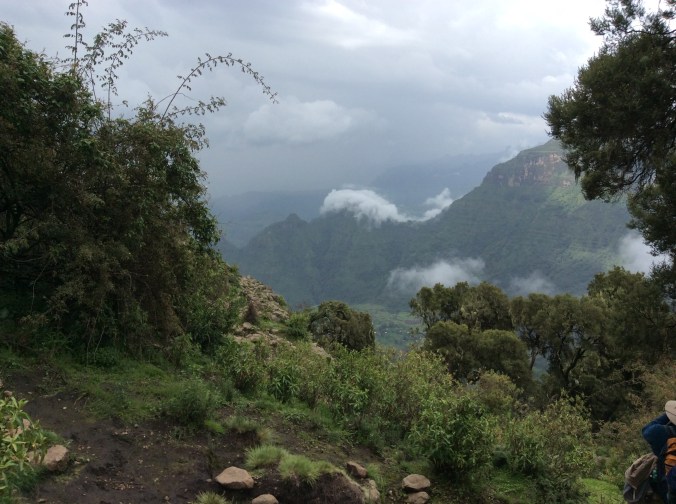
Note:  the photo is corn close to the Nile Falls near Bahir Dahr, Ethiopia


White Privilege: Confessions of a Poor White Girl by Cynthia Garrity-Bond


Worth the read. I am a white mother with a 1/2 Nigerian daughter who is not very dark and who many think is Polynesian because of the way she looks. My grandson’s father is Mexican and Spanish. My grandson also is part Nigerian, Swiss German (from me), a little of other European, and Navaho. He has straight black hair, light skin, and obsidian eyes. When people ask what he is and he answers, they often think he is lying.  I did not grow up in poverty. My daughter is educated. She has a Masters Degree in Nursing and I have a Ph.D. Nevertheless, she has experienced discrimination and people have made comments to me such as, “Your daughter is really doing well for a Black girl”. Seriously!! In this country both class and race matter and get intertwined in all sorts of complex ways. No one says to an educated white woman with a good job, “You are really doing well for a white girl.”

Cynthia Garrity-Bond's avatarFeminism and Religion

cynthia garrity bondRecently FAR contributor Sara Frykenberg posted an article to Facebook that caused me to think again about the now-famous essay by Peggy McIntosh, “White Privilege: Unpacking the Invisible Knapsack.” In “Explaining White Privilege to a Broke White Person,” Gina Crosley-Corcoran does an excellent job of including issues of class, meaning poverty, into the discourse about race and privilege using the theory of intersectionality.  If I am honest, the tensions between race and poverty have made the owning my white privilege challenging.

Like Crosley-Corcoran, I was raised in poverty. After my parents divorced in the early 1960s, our fall into poverty was pronounced.  My mother liked to move, so much so that I attended no less than 15 different schools before high school.  We lived in one house for two years without hot water. I learned early on the stigma of poverty, when even a Catholic school uniform could not…

View original post 818 more words

Religion, Politics, and the RNC: Separation of Church and State Anyone? by Marie Cartier


This blog post provides a number of well thought out issues and arguments to ponder regarding the upcoming election. Somehow a civil discourse needs to occur but sadly seems less and less likely.

Marie Cartier's avatarFeminism and Religion

MarieCartierforKCETa-thumb-300x448-72405When you read this Feminism and Religion community, we will have just finished the televised portion of the Republican National Convention (RNC), which as I write this Wednesday, July 20 has announced that Donald Trump is the presumptive nominee for president of the United States.

Last night the first night of the RNC we witnessed the emerging platform of the party going far to the right.

From the New York Times:

Republicans moved on Tuesday toward adopting a staunchly conservative platform that takes a strict, traditionalist view of the family and child rearing, bars military women from combat, describes coal as a “clean” energy source and declares pornography a “public health crisis.”

The platform demands that lawmakers use religion as a guide when legislating, stipulating “that man-made law must be consistent with God-given, natural rights.”

It also encourages the teaching of the Bible in public schools because, the amendment…

View original post 1,180 more words

Book Review by Mary Sharratt: ESTHER by Rebecca Kanner


I am reblogging this because it fits with my next book project: poems from the viewpoint of the ancient mother goddess and others from the viewpoint of women in the Bible.

Mary Sharratt's avatarFeminism and Religion

esther

We have been lost to each other for so long. My name means nothing to you. My memory is dust. This is not your fault or mine. The chain connecting mother to daughter was broken and the word passed into the keeping of men, who had no way of knowing. That is why I became a footnote, my story a brief detour between the well-known history of my father and the celebrated chronicle of my brother.

-Anita Diamant, The Red Tent

To a large extent, women have been written out of history. Their lives and deeds have become lost to us. To uncover the buried histories of women, we must act as detectives, studying the clues left from ages lost.

At its best, historical fiction can write women back into history and challenge our misconceptions about women in the past. Anita Diamant’s novel, TheRed Tent, became such an…

View original post 777 more words