Learn Something New


After grading 45 essays this weekend, it remains a wonder that I learned anything new.  I did, sadly, once again find a few plagiarizers, but I also read some good essays on which students had obviously spent time.

As a person extremely interested environmental issues, I belong to several environmental organizations and read a lot about related issues.  Here are some of the things I have learned either recently or in the last few days:

-June and July were the warmest June and July on record and the 14th and 15th straight months in which such records have been set.

-Thawing permafrost near the Alaskan Highway has caused it to sink in places.

-In Siberia the same thawing has caused the release of deadly bacteria–anthrax to be specific.

-This past summer, toxic algae affected waterways in states as diverse as California and Utah.  It does not smell all that wonderful either.

-In Alaska so many wolves have been killed that naturalists can no longer research them in their natural state.

-The Republican Platform claims coal is a clean source of energy.

-Hot summers have caused Douglas fir trees to quit growing.


Catrinas


In 1913, Mexican print maker Jose Guadalupe Posada sketched the original Catrina, an elegant, upper class skeleton woman in a ball gown to symbolize the emptiness of the upper classes.  Subsequently, Catrinas have come to be a part of El Dia de los Muertos, Day of the Dead.  None of this has anything to do with Halloween, absolutely nothing.  People sometimes associate the two erroneously, but only because of the dates when they occur.

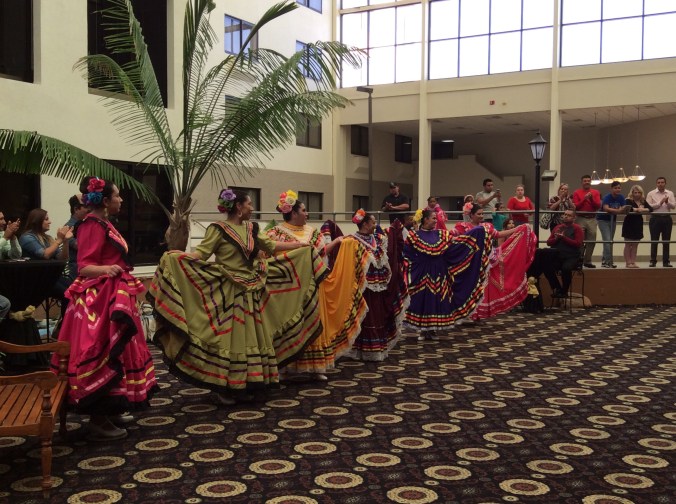
This evening I was privileged to be one of the judges of a Catrina contest.  Before the contest occurred, the evening began with some traditional Mexican dancing.

img_2395


img_2400

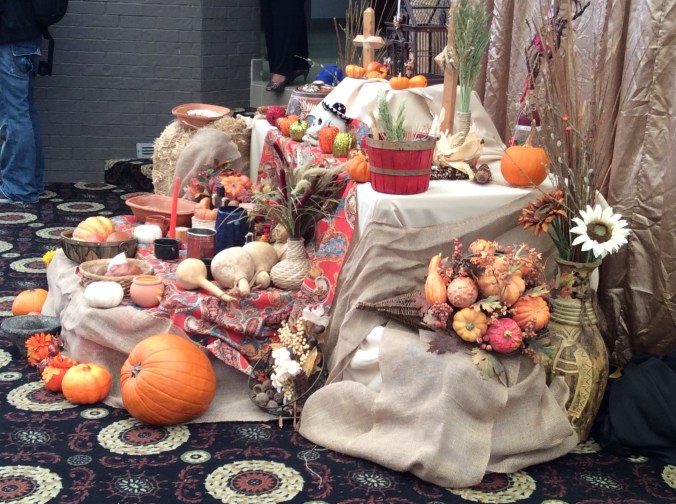
There were also several traditional El Dia de los Muertos  family displays to honor deceased ancestors.  The following was the most elaborate.

img_2399

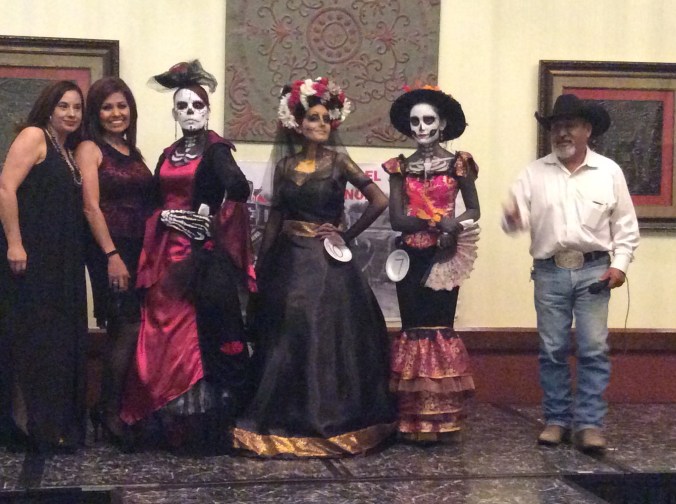
Finally, the Cartrinas were ready.  Ten young women competed.  The following photo shows the top three, judged for originality, costume, and makeup.

img_2406

The young woman on the left never smiled.  The top makeup impressed everyone.  The skeletal bones you see on the young woman on the right were all painted on and a backbone, etc. was painted on her back as well.  The young lady in the center won the costume portion–a bride in a black veil, elegant, empty.


The Community Bardic Exercise Revisited: Body, Land, Tribe Poetry by Kate Brunner


An inspiration to write a poem every day for seven days, release negativity, be yourself no matter what others say or do.

Norway Plans To Kill Most Of Its Wolves


It has always puzzled me why wolves are hated more than other predators. Wolves are a lot like humans. Do we project our worse traits on them? They kill few livestock when compared to deaths due to disease, weather, etc. I am interested in feedback regarding this question.

Wolf is my Soul's avatarWolf Is My Soul

September 21, 2016 Source

There aren’t many wolves left in the Norwegian wilderness Just 68, in fact.

But Norway’s government has decided even that’s too many. Authorities announced plans this month to kill 47 wolves, or about two-thirds of the remaining population.

FLICKR/BJARNE LOHMANN MADSEN

The move has sparked both intense criticism and praise. Farmers welcome the cull, claiming wolves threaten their livestock, and therefore their livelihood. Conservationists, on the other hand, condemn the move as an attack on a species that’s already on unsteady ground.

“The wolf population is already very small and critically endangered,” Silje Lundberg, a prominent Norwegian environmentalist, told the U.K.’s Express. “To eradicate 70 percent of such a vulnerable species is shocking.”

FLICKR/~RANVEIG MARIE~

In Europe today, there are an estimated 12,000 wolves — a population that has surged in recent years. But only in Norway is the species listed as…

View original post 341 more words

Making Peace by Denise Levertov


Maja Todorovic's avatarBusiness in Rhyme

As today we are celebrating a World Peace Day, I thought of sharing this beautiful words by Denise Levertov, “Making Peace” and through poetry take opportunity to first find peace within ourselves and simply let that energy transcend further, around us:

peace_poetry


If you liked this post, please share! And if you are interested in getting more inspiration for your creativity, sign up for our free monthly newsletter.

View original post

Calling on the Muse: A Meditation for Creative Spirits by Mary Sharratt


For my writer friends out there. I have blogged about her books before.

Mary Sharratt's avatarFeminism and Religion

mary sharrattThe world at large might view artists and writers as free spirits rocking la vie bohème, but creative people know that it’s much more complicated than that, especially if we’re striving to earn even a modest living from our work. As a writer, I often fall into the trap of measuring my success or failure on factors completely beyond my control, such as the ups and downs of a fickle book buying market.

I know that I’ve often wrestled with the feeling that I’ll never be enough. Never be big enough, never be a bestseller. Sometimes it’s hard not to succumb to a flailing sense of helplessness—why are any of us doing all this? Worst of all is my fear of creative dryness—that my inspiration will turn to dust and I’ll never write—let alone publish—another book.

woman_writing

View original post 722 more words

Racism: We Still Don’t Get It by Esther Nelson


Sometimes I wonder if it will ever end, the hatred, the racism.

Esther Nelson's avatarFeminism and Religion

esther-nelson

I was in Las Cruces, New Mexico, this summer for several weeks, spending much of my time unpacking boxes the moving van had delivered while simultaneously trying to create an aesthetically-pleasing and comfortable home.  I also went to the Unitarian Universalist church–twice!  (I haven’t attended church or any other place of worship regularly for decades.)  But, moving is a socially-disruptive experience and church is one place you can connect with individual people as well as with the larger community.  So, I decided to visit the local UU congregation.

Unitarian Universalism has a fairly long and circuitous history in the United States.  It’s roots are in liberal Protestant theology and practice, but the institution has branched out from its roots, seeking to be more “inclusive and diverse.”  Some of the historical background and development of the church can be found on Wikipedia.  As fascinating as this history and development…

View original post 901 more words