Nearly everyone lies about an important aspect of US history even historians. School history books avoid the discussion totally, this significant part of US history, much of which explains past and current racism.
Americans pretend that social class does not matter, that anyone can rise to the top given enough effort. This myth depends on the continuation of a very selective historical memory, indeed, a lie.
It began with the British and those who intentionally left there to come here. Even colonists divided the classes with poor people and criminals at the bottom–whores, discharged English soldiers, robbers, highwaymen; the saddest of the lot were the orphans, rounded up, loaded on ships bound for America, sold as indentured servants. Often these contracts were repeatedly resold with no routes for the individuals to escape. The rigid English class conditions continued here. People of higher classes in the colonies referred to the poor as waste, rubbish, and trash.
John Locke, often considered the father of constitutional government, favored slavery and aristocratic society. He endorsed an aristocratic constitutional government and called the poor, landless, lazy lubbers. Because the southern colonies lacked sufficient land lubbers and land owners believed Africans more suitable for hot, humid swamp clearance, they petitioned for slaves–previously illegal in Georgia, for example. These wealthy landowners also viewed poor whites as too lazy to work.
Even the esteemed Ben Franklin believed in the concept of class as inevitable. Both he and Jefferson saw expansion westward as the solution to potential class conflict. Franklin thought the new colonies needed more people and advocated for the freedom of slave women who bred many children and for white women to be allowed to gain property rights for the same. More people would move west and alleviate class conflict. Franklin was not an advocate for the poor, whom he considered lazy, slothful. He even endorsed their forced migration westward and referred to them as “the meaner Sort, i.e. the Mob, or the Rable”.
If this sounds shocking, Jefferson went even further, calling the poor, “rubbish”. He did feel they could improve, given land and education. He did not include slaves in this theory.
If you ever wondered about the origin of the term “cracker”, look back to the era of Andrew Jackson, the era of “squatters” in a log cabin in the thickly forested frontier, people who squatted on land they did not even own. Many saw them in both positive and negative terms: half strong, hard working pioneers and half robbers. Two terms applied to these people, “cracker” and “squatter”, none of whom legally owned the land where they lived, troublemakers with no hope of upward mobility, people who championed crudity, distrust of civil society and city dwellers, and held on to a kind of crude arrogance. Both terms came from England where such people were considered lazy vagrants. The more educated and “civilized” viewed them as degenerate, low class fornicators. These squatters saw Andrew Jackson as their champion and Davy Crockett as their hero.
The phrase “white trash” became common in the 1860s and after. These were the southern poor with dirty faces, ragged clothing, distended bellies without possibility of improvement, who for a brief time were viewed as even lower than slaves. Southern aristocrats pushed the concept of bloodlines for people as well as livestock. They advocated a criteria for human as well as livestock breeding to justify slavery and Anglo-Saxon superiority. Native Indians were a biologically inferior, degraded race, doomed to extinction. Later Texans used similar arguments to deter intermarriage with Mexicans. Sam Houston championed this cause apparently ignoring his own personal history. He had lived with Natives and married two of them. In the long run these beliefs did not help poor whites or raise their status. They lived off the worst land and were continually referred to in derogatory terms, e.g. white trash, sand eaters.
Just before the Civil War some elite Southerners advocated to keep certain classes ignorant. They defended the planter class as having the best bloodlines, whose destiny was to rule over poor whites and black slaves. When they realized they needed poor white support to secede, and that many did not support them, they convinced them the war was necessary to save them from a state worse than slavery. Some were promised land and other rewards. Since most were illiterate, they remained unaware that they were referred to as “perfect drones”, “the swinish multitude”, and other pejorative terms; and that some saw them as trash who contaminated whatever they touched. It was not the Southern elite who died in masses during the Civil War; it was the poor, recruited with Davis’ rhetoric about the superiority of the white race.
Later, during Reconstruction, William Percy wrote a description of poor whites as those who lynch Negroes, lack intelligence, attend religious revivals then fornicate in the bushes afterwards. He also explicitly referred to them as Anglo-Saxons. Teddy Roosevelt saw this a bit differently. He wanted Anglo-Saxons to work, to join the military, and breed, but he excluded poor whites from this group and his plan.
The term “rednecks” came into use in the South during the 1890s. It referred to people who lived in the swamps and mill towns, wore overalls, heckled at political rallies.
The Great Depression exacerbated the situation for poor whites and increased their numbers dramatically. Those who had never been considered white trash joined the ranks of the poor. Many Southern writers went back to discussions about the Civil War and argued about the current poverty and how to solve the problem. One, Jonathan Daniels, even wrote that Rebel pride blindfolded all classes.
Later, one way to overcome the prejudices against the poor was through music and TV shows, e.g. Elvis Presley and “The Beverly Hillbillies”. It allowed the country to feel better about prejudices and pretend they did not exist.
Today this manifests itself through politicians who “pretend” to be white trash and rednecks to gain votes, but in reality live the lifestyle of the upper class.
Note: For those who wish to read more about class and the writings of the individuals mentioned above here is a partial list.
Writings and speeches of Benjamin Franklin and Thomas Jefferson
Sherwood Anderson’s “Poor White”
Writings of John Locke
Works of James Agee
“White Trash: The 400-Year Untold History of Class in America”
Speeches of Jefferson Davis
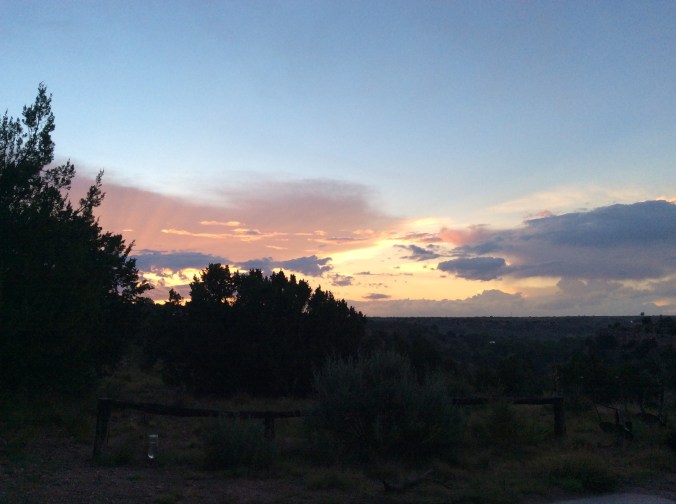
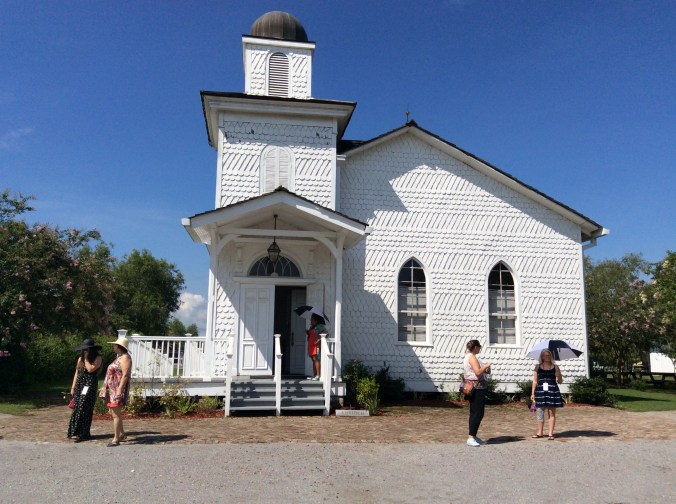
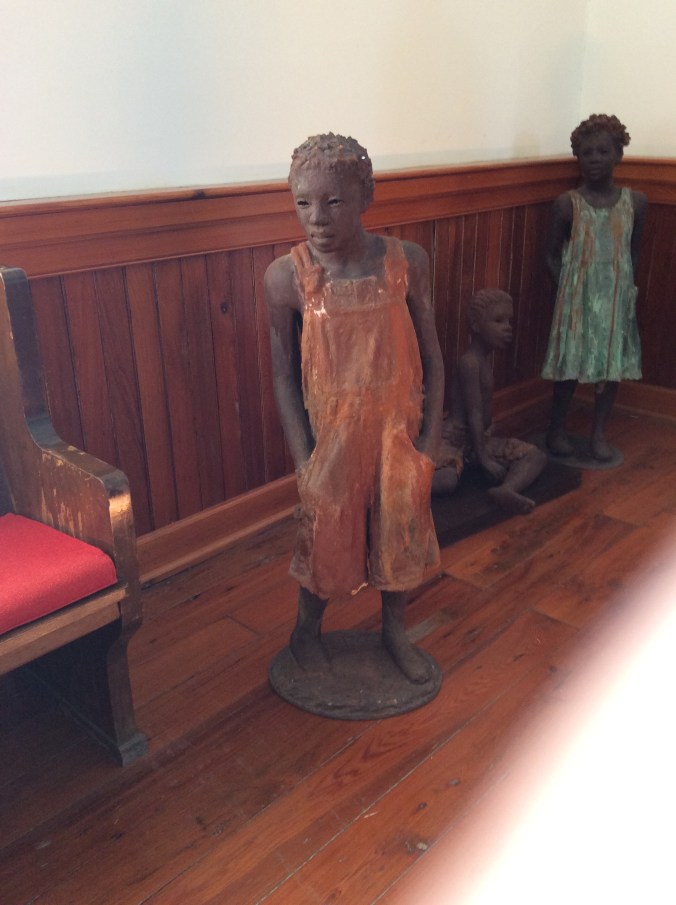
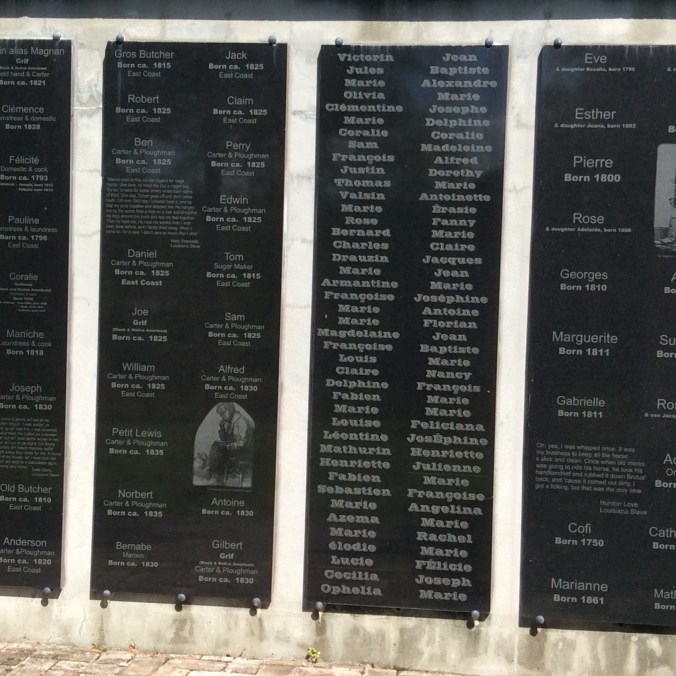
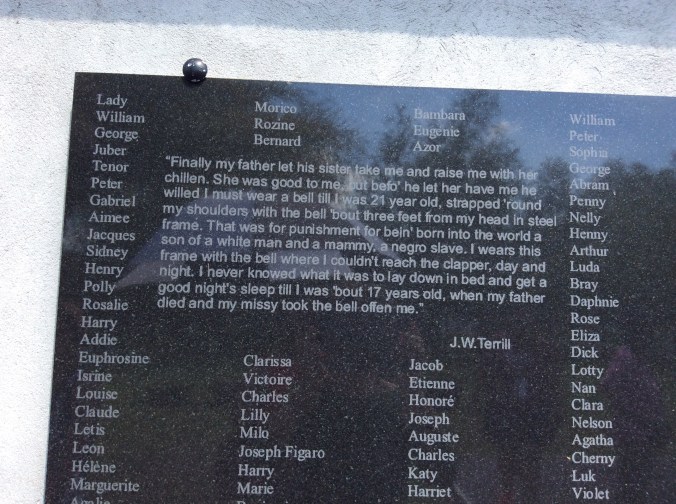
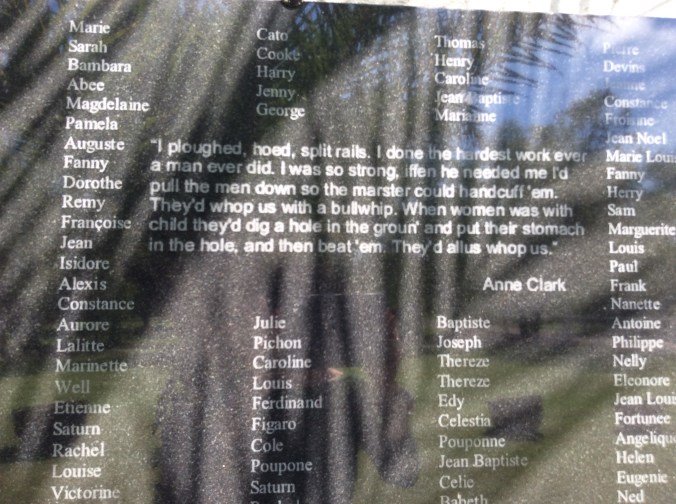
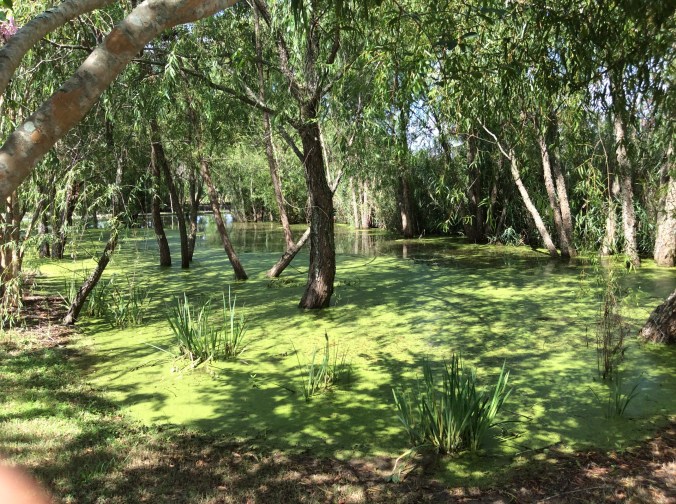 Because the area around New Orleans receives 60 inches of rain a year, the landscape everywhere is lush. This is one of several pools at the plantation.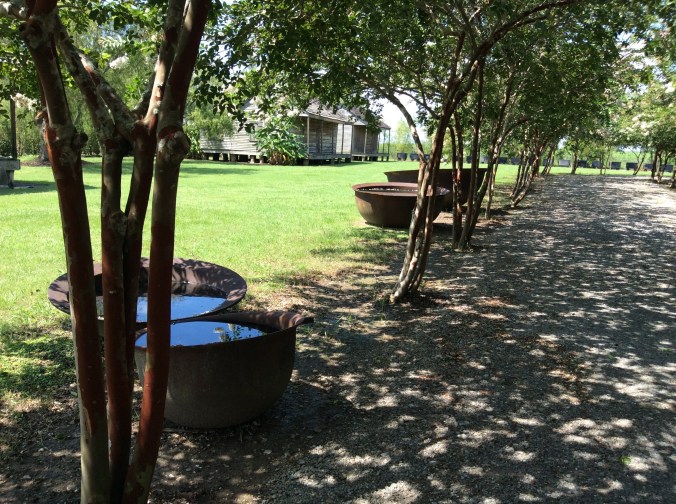

 Doing a recent talk on pioneering woman writers, I like to do the Before Jane Austen test with my audience. Who can name a single woman writer in the English language before Jane Austen? Alas, because woman have been written out of history to such a large extent, most people come up blank. Then we talk about pioneering Renaissance authors, such as Aemilia Bassano Lanier, the subject of my recent novel,
 The raven was standing on the little table in the wicked witch’s private room. Expecting a new kind of feast, he dipped his beak into a bowl of wiggly white worms. And spat them clear across the room. “Great Suffering Succotash!” he exclaimed. “What is this stuff?’