Saturday Night


Read two pages,

“Ghana Must Go”.

The wife’s Nigerian,

Yoruba, Igbo.

She sells flowers,

not in Nigeria.

The author’s name

Ethiopian?

Sip zinfandel

flowered glass.

Take a bite

chocolate filled

peppermint,

lick peppermint

fingers.

Read two pages:

“Africans…the indifference of the abundantly blessed…

who can’t accept, even with evidence, that anything native,

occurring in abundance, is exceptional without effort,

has value.”

Does anyone?


IMG_1584


Four Reasons We Need To Reclaim The Power of the Divine Feminine Now by Mary Petiet


Why is the divine feminine so important? What does it promote that values others, our planet? This says everything I could have said myself.

Guest Contributor's avatarFeminism and Religion

Mary Petiet photo(Spoiler alert:  She’s already here)

The power of the divine feminine taps into the power of life. The power is accessible to everyone as the equal opportunity energy surrounding and connecting all living things. The power is ancient, and meditative practices such as yoga, which in Sanskrit means linking to the divine, can connect us to this power. When we make the connection, we find the balance we need to realize our highest selves, and through that balance we can realize the highest self of the larger society.  To reclaim the divine feminine, we need only remember, and as more and more of us remember, we heal first ourselves, and ultimately the planet.

1. She is the route back to the self.

In her mother aspect the divine feminine offers a route back to the self and She is all-inclusive. She embraces all of creation, men, women and nature, and we…

View original post 501 more words

#ImWithHer: Excuse Me, I’m Listening—to Her by Marie Cartier


This post states about everything I myself could say on this subject. People vote how they vote for a wide variety of reasons. I vote on social issues. Often voters fail to realize that, like it or not, we are intricately part of a global economy. What occurs even in some remote part of the world affects everyone else, economically as well as socially.

Marie Cartier's avatarFeminism and Religion

marie kimMy wife and I attended a panel discussion last Sunday with Chelsea Clinton, the daughter of the Democratic nominee presidential hopeful, Senator Hillary Rodham Clinton. Chelsea was accompanied by the famous and beloved Superstore and former Ugly Betty star, America Ferrera and also uber- television entrepreneurial juggernaut, Lena Dunham , creator and star of Girls. The event was meant to highlight that millennials, particularly female millennials, are supporting Hillary Clinton. Obviously the event was meant to counteract the prevailing media notion that millennials are not supporting Hillary—whether or not they are female. And certainly some millennials are not—but, as this event pointed out, many are.

Ferrera opened and talked about her immigrant parents saying that she would not have been able to receive an arts education if not for someone like Hillary fighting for better public schools. She was one of the children who needed the free lunches, coming…

View original post 1,865 more words

The Haunting of the Mexican Border


If you have any interest whatsoever as to how times have changed along the border, the culture of the people of Sonora and Chihuahua, this is a must read. I need to go visit my friends who live there.

Dawn Wink's avatarDawn Wink: Dewdrops

Cowboy and flowers on grave © Cowboy and flowers on grave © Tim Fuller

coverThe Haunting of the Mexican Border

I had no idea the blessing I was about to receive when I was asked to review The Haunting of the Mexican Border: A Woman’s Journey by Kathryn Ferguson for Story Circle Book Reviews. I said yes, since how could I possible resist that title? I spent the next few weeks savoring the experiences, ideas, and prose of this book. This is not a book that I read fast. I found myself re-reading sentences for the sheer beauty of the prose and scenes for the powerful experiences conveyed.

Mostly, I was taken with the melding of past and present, as my own experiences growing up on a ranch along the San Pedro River, a vein for Mexican migrants coming to the US, sent me reeling between the intimate familiarity of the rhythms of migration in this region…

View original post 2,156 more words

A Way to Live Your Life


I just finished “Slow Man”, the latest book by the Nobel and two times Mann Booker winner, J.M. Coetzee.  How I ever managed to read so many books and miss his remains a mystery to me.  This particular passage stuck me as very instructional and how I hope I have lived and continue to live:

“So that someone, somewhere might put you in a book.  So that someone might want to put you in a book.  Someone, anyone–not just me.  So that you may be worth putting in a book…Live like a hero.  That is what the classics teach us.  Be a main character.  Otherwise what is life for?”

Blank, white paper


Blank, white paper

stares at me,

sitting here eating a

left over Subway sandwich,

reading Sky Bridge by

Laura Pritchett,

avoiding my writing commitment.

This book surprises me,

makes me think of my students,

some poor, trailer housed,

gun toting, hard scrabble,

simultaneously smart and ignorant.

Their idea of rich includes

any house over 2000 square feet,

stylish, elegant clothes, land.

My brain swirls thoughts, images:

What can it all mean, this life?

Joy, a hurting beauty?

Looking out the windows,

listening to the West Texas wind,

I ask myself again:

What can it all mean?

Gratitude


Usually, I plan my posts, write them out carefully, sometimes even proof a couple of times.  Today is Thanksgiving Day here in the United States.  Even though I know all about the historical lies to cover up the truth about the supposed original Thanksgiving, I continue to think this is a useful and fun holiday for several reasons.  Thankfulness, gratitude, remains the primary source of a happy life.  The list of things for which I am thankful seems nearly endless:

-health

-living in a place filled with natural beauty

-my daughter

-my grandson

-my son, even though we talk only occasionally and he lives far away

-teaching

-my students, one of whom posted on Facebook this morning that he is grateful that he had me as a teacher ten years ago

-the friends who took me with them to Ethiopia this past summer

-all my other friends locally and from all over the world

-the exchange students who have lived with me and from whom I receive messages regularly

-my parents for whom I owe eternal gratitude for teaching me values, independence, tolerance, a love of beauty and knowledge, and a sense of wonder

-music

-my ability to sing

-horses

-wildlife, nature–here where I am so fortunate to live

-art

-my ability to write

-all the people who love my book of poetry and tell me they do–I might also include the people, mostly men, who find it shocking

-happiness and the choice I made to be happy all those long years ago

-red wine

-plentiful food

I could go on and on.  However, it seems best to end with this fantabulous morning on my own little rim of wonder and say I am thankful for a life filled with so many astonishing events and experiences I never expected and for which I am endlessly grateful.

SAM_1454

My Ethiopian Adventure–from Addis to Kombolcha


Saying goodbye to Addis at 8 in the morning, we headed northeast and later north toward Kombolcha–spelling differs, depending on whose map you view.  The official Ethiopian map spells the town as Kombolch.  Addis is high, the second highest capital in the world.  We drove northeast all morning across rivers and through green fields.
IMG_0246

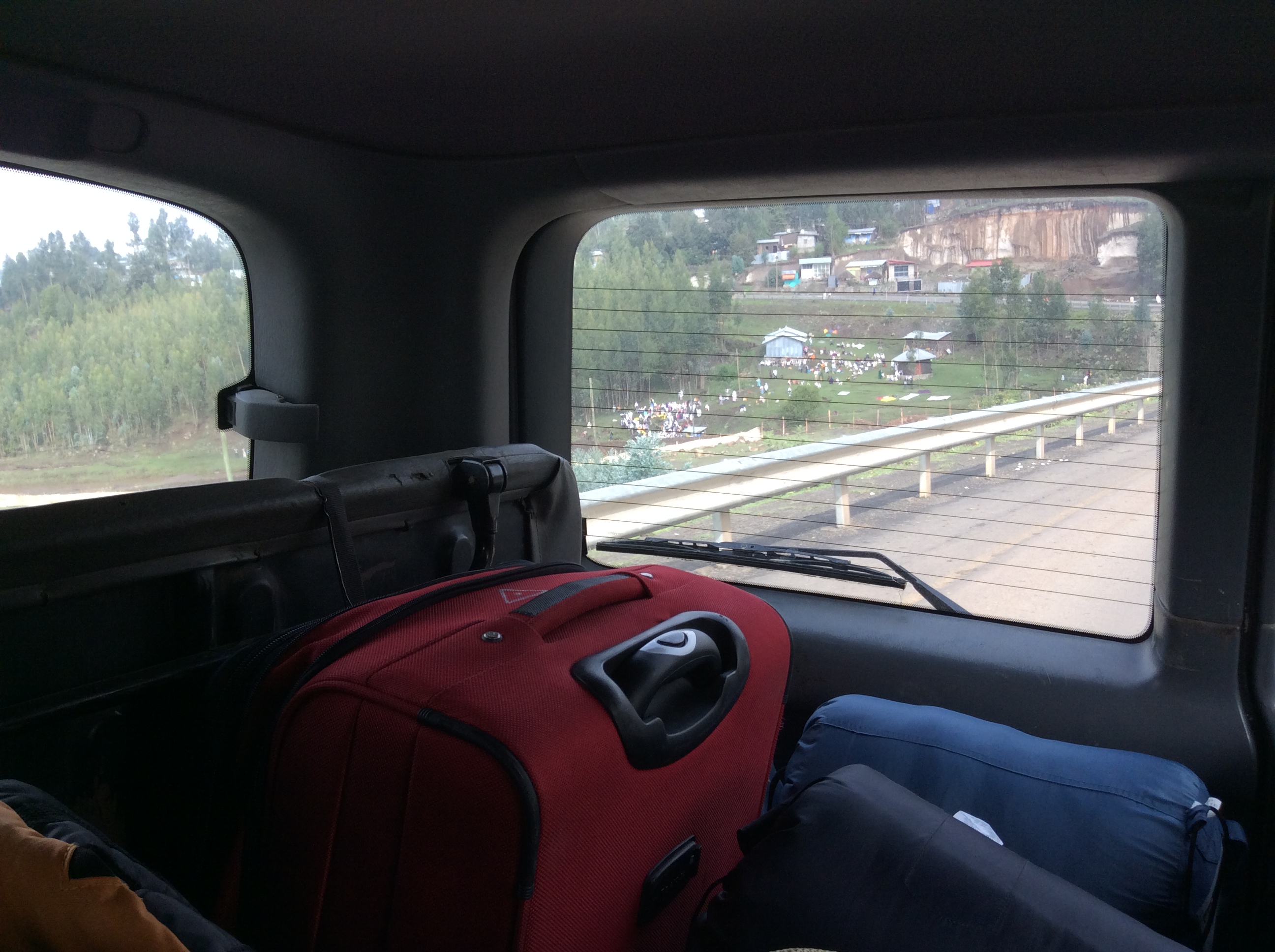
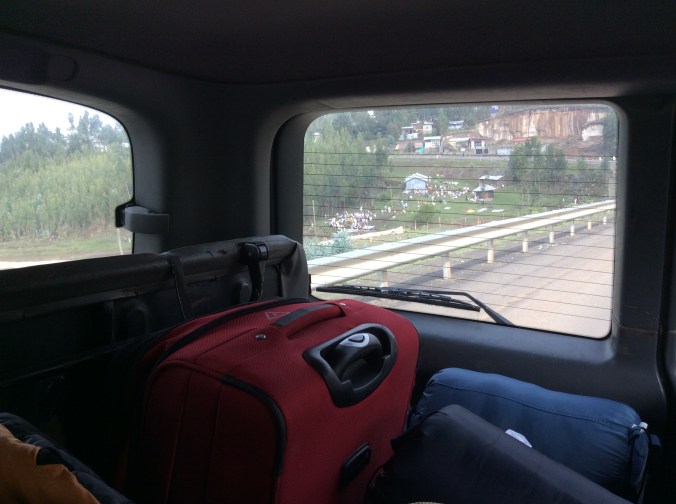
Not far outside Addis we saw this scene, a river with many people near it.  Our driver, Alemu explained this river contains holy, healing water and all those people you see through the window are pilgrims coming to be blessed by the resident priest and hopefully healed by the river waters.

IMG_0249

Who would know this is Ethiopia if no one told you? Not what I expected at all honestly.

IMG_0248

IMG_0250

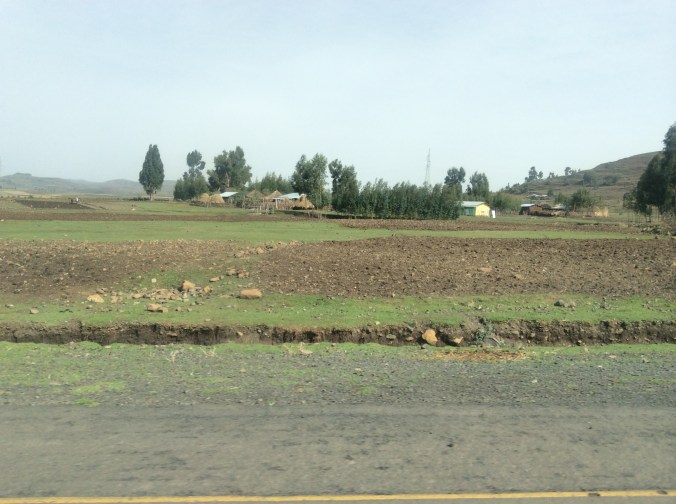
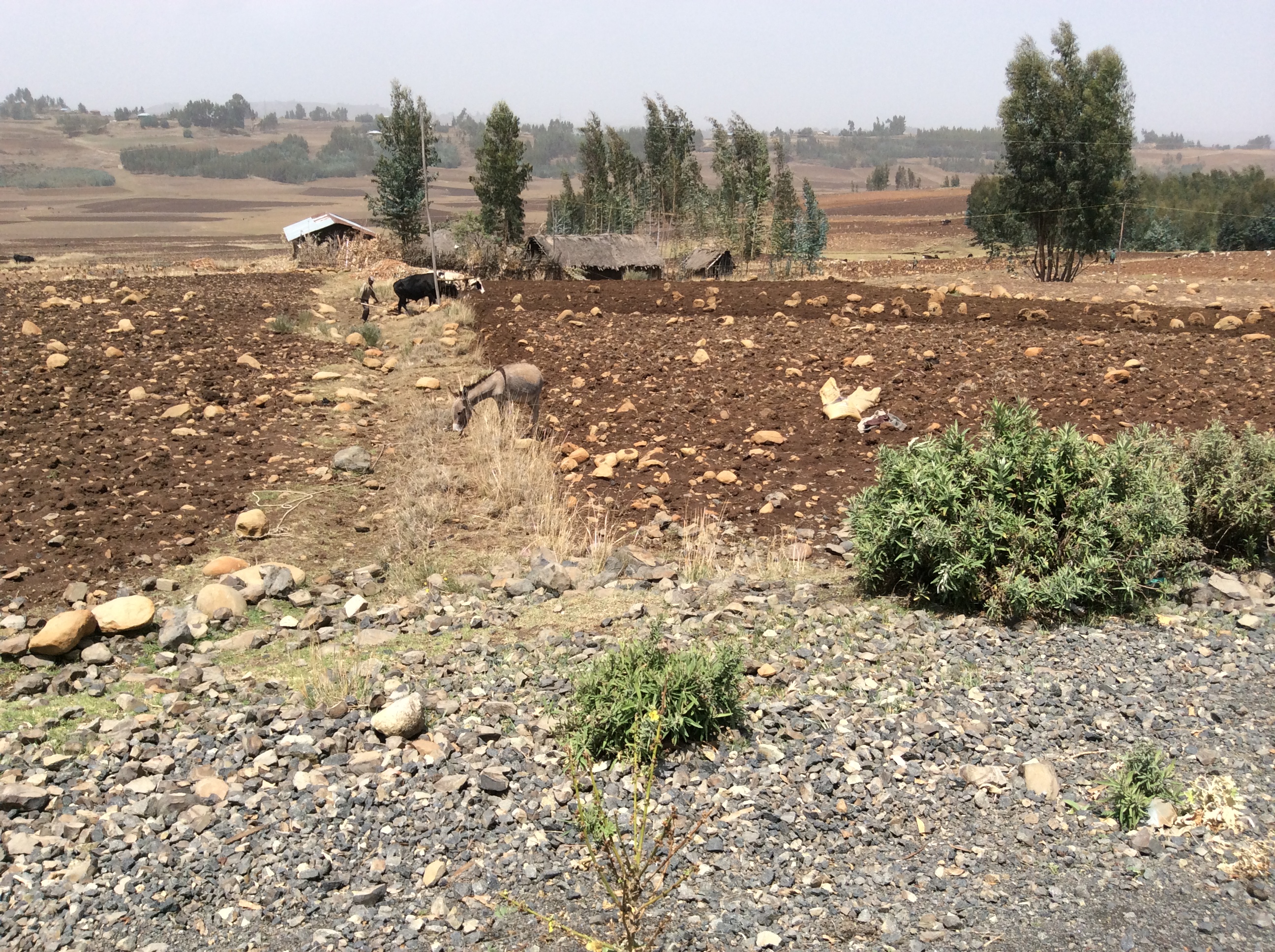
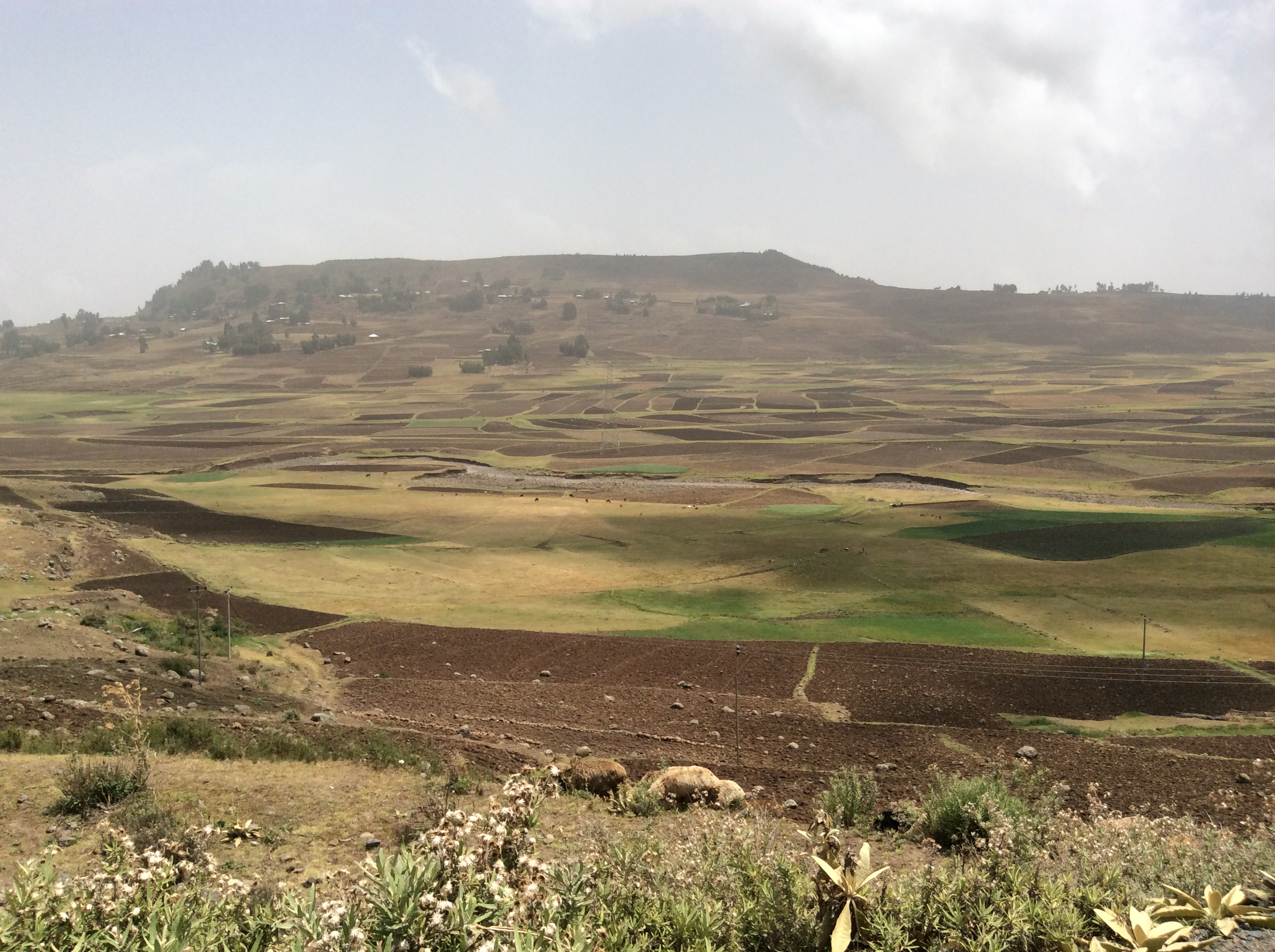
Most of the farmland is very rocky.  Farmers gather rocks, in some places make fences out of them or just pile them up.  Even with these efforts fields remain full of rocks.

IMG_0251

We drove for hours through this type of farmland.
IMG_0257

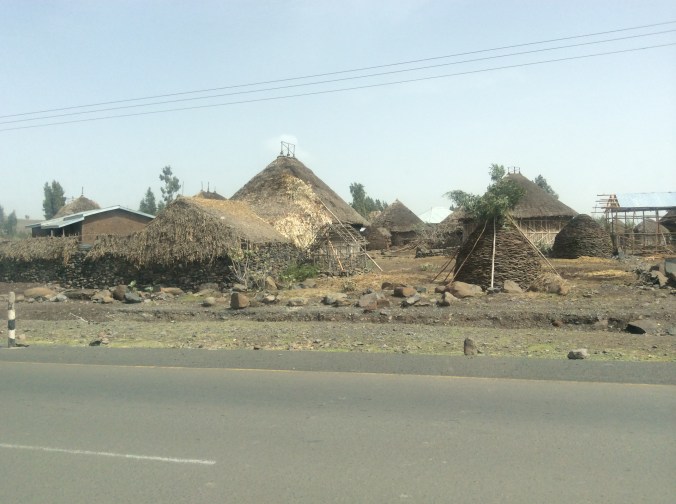
This is a typical country village which appeared off and on continuously along the highway.  Traditional buildings are usually round with thatched roofs.  More and more people have begun to use metal roofs which forces the building shape to rectangular rather than round.  We heard a story about a thatched roof house that caught on fire.  Nothing but the thatch burned because underneath the thatch was a meter of mud.

IMG_0258

Most Ethiopian farming is done the old way:  either horses or cattle pull the plow with a man guiding it usually through a lot of rocks.  I commented about seeing no tractors so then every time we saw one everyone shouted, “Juliana, there’s a tractor.”  I think I saw only five of them in ten days and only one was actually working in a field.  It became obvious rather quickly how totally impractical a tractor and its equipment would be in much of the farmland:  too many rocks and as you will soon see, too steep.  The tractor would fall over.
IMG_0261

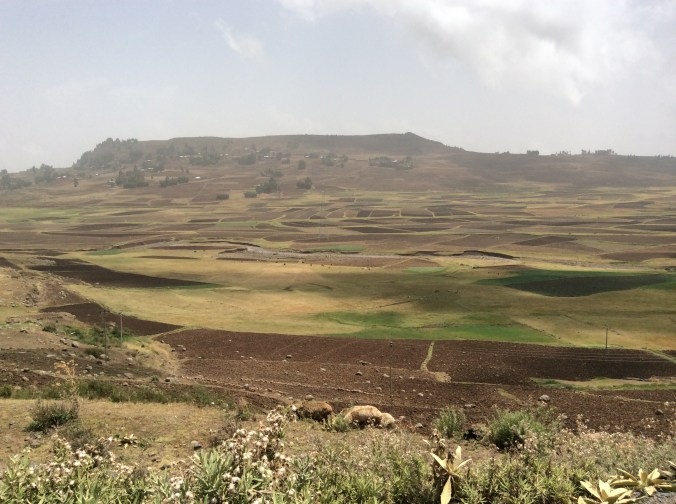
Eventually we started climbing higher and higher.  To the left was one of Ethiopia’s high peaks near or over 4000 meters–13 to 14 thousand feet.

IMG_0262

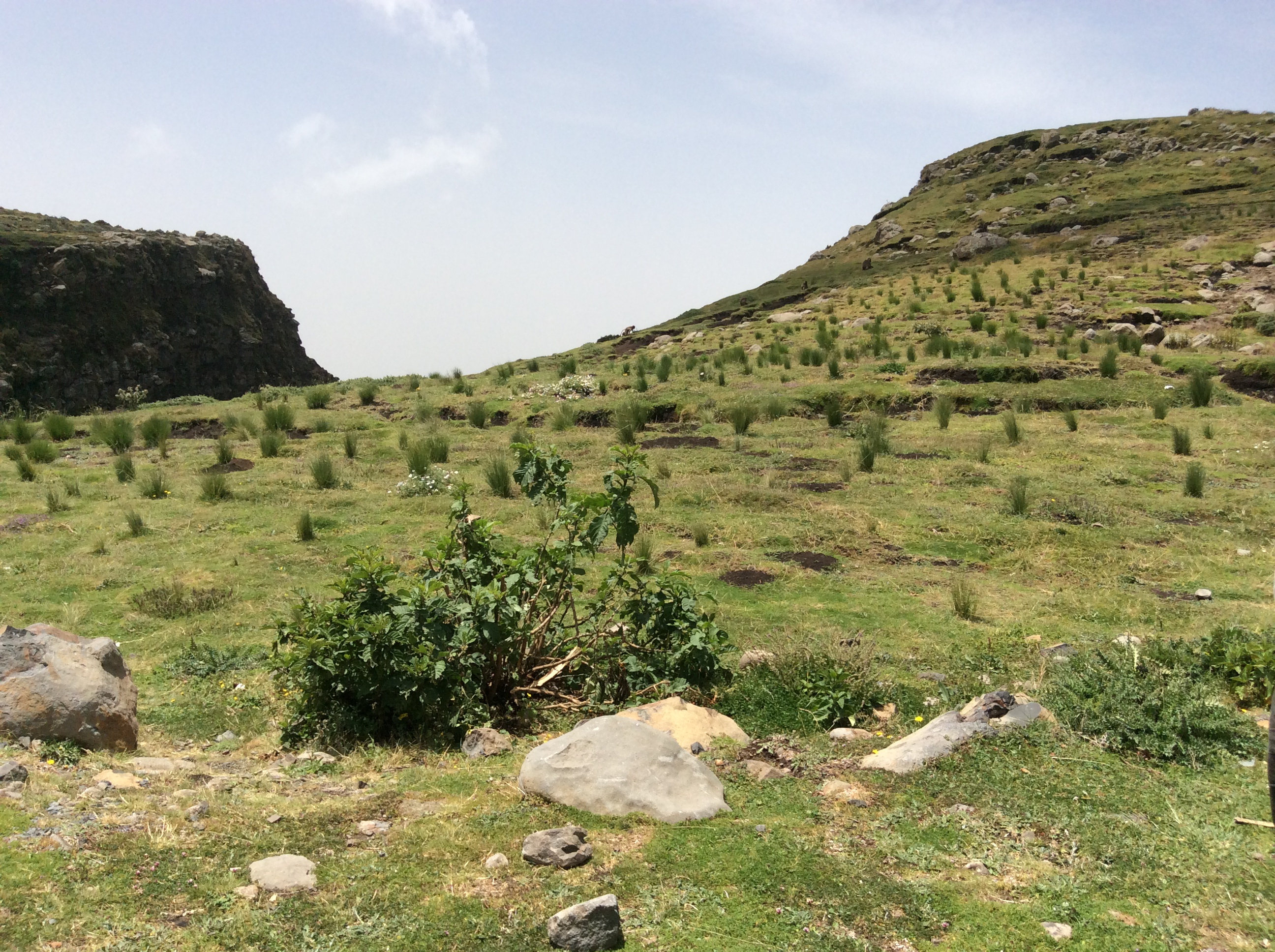
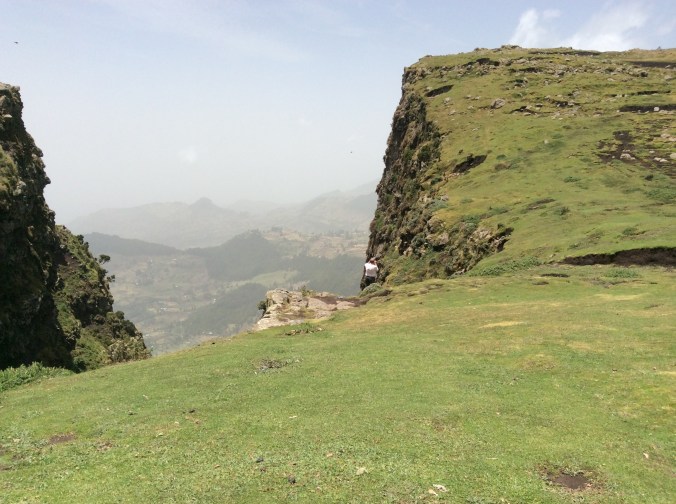
And then, there it was, Menelik’s Window.  This was the first area we saw with numerous gelada baboons.  However, these ran away unlike the ones later in Simien National Park.
IMG_0266

That’s Dino down on the edge.  At this point in the trip, I was still quite horrified by all the steep cliffs and stayed way back.  He was trying to get a good photo of the baboons.  Menelik II, the last Ethiopia leader to be able to claim himself as a direct male descendant of King Solomon, found this place special, a view into the real Ethiopia across miles of mountains. He is known for defeating the Italian invaders, expanding the kingdom, and especially for modernizing Ethiopia.
IMG_0267

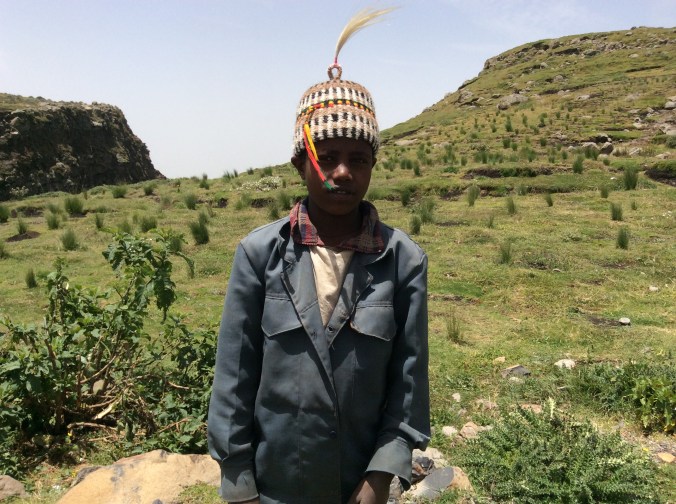
My grandson now owns this hat.  This boy and his friends spend their days chasing the baboons away from the tufts of grass, which their families use to make the thatched roofs, and making hats for sale.
IMG_0264

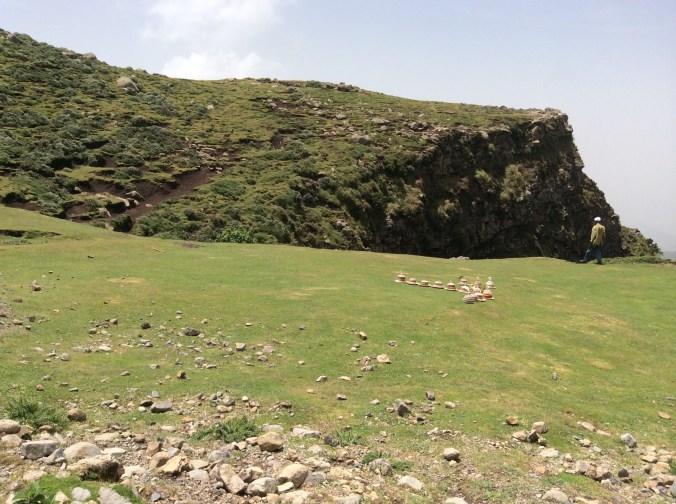
You can see the selection of different styles of hats on display on the grass.  On the mountainside in the back lots of herbs grew, including thyme.  The boys also sold packets of herbs they had gathered and dried.
IMG_0268

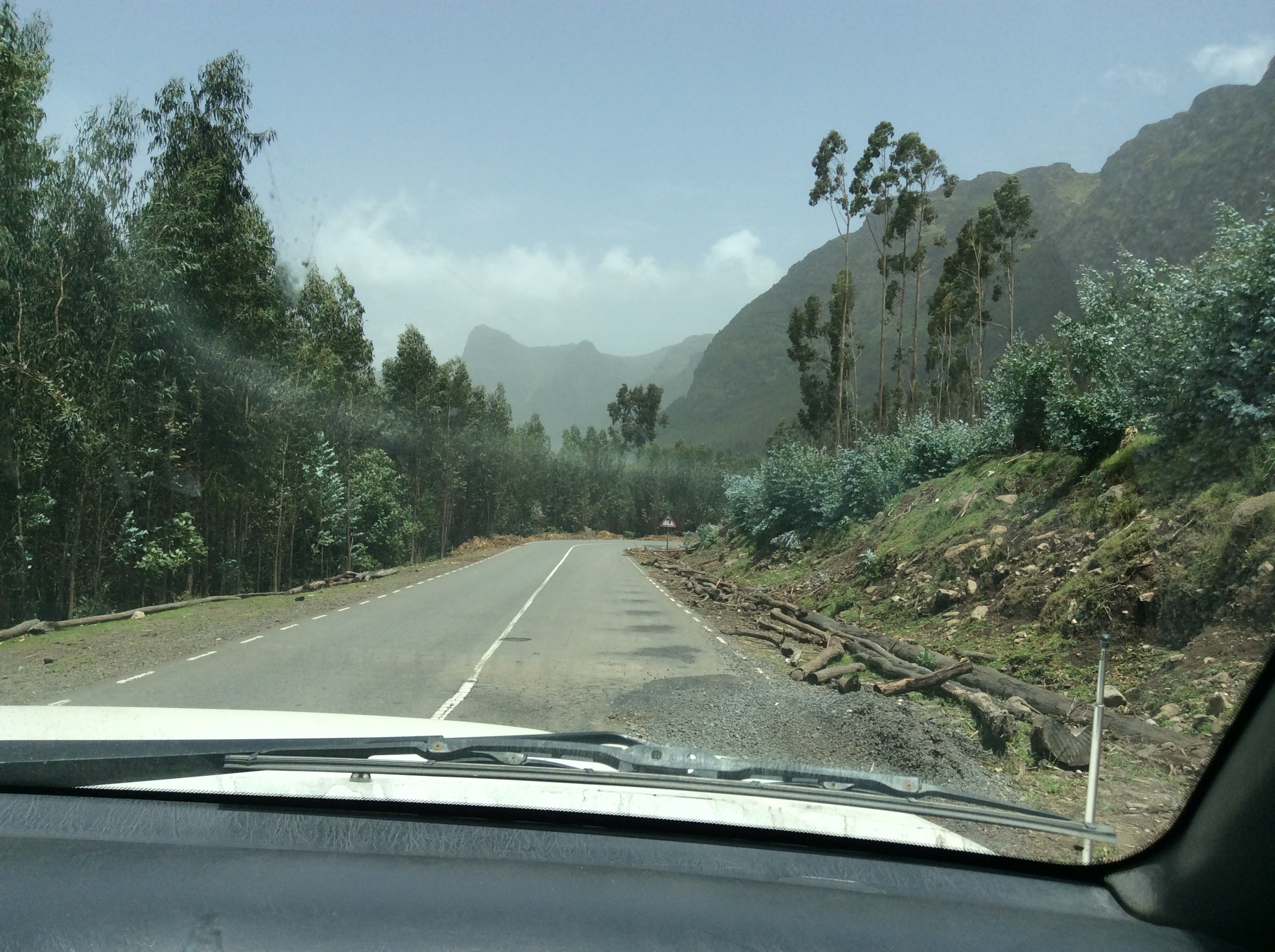
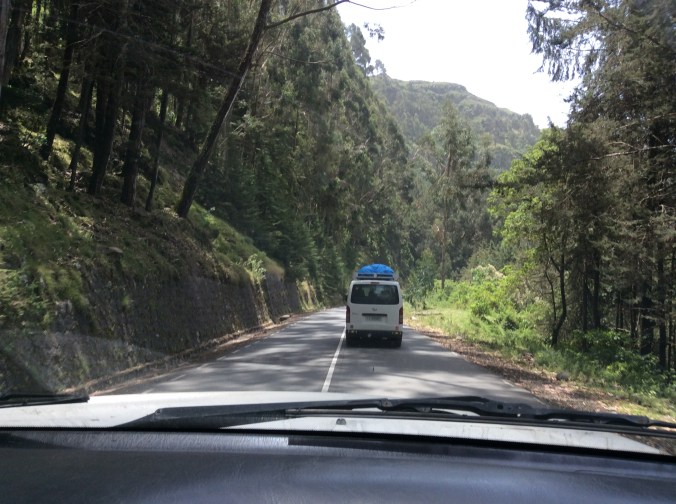
We dropped down on a winding mountain road through eucalyptus forests.  Eucalyptus is not native to Ethiopia, but grows everywhere there.  It is used as a basic material for building their houses, for scaffolding to build tall city buildings, for just about everything.  Several different species grew along the road.

IMG_0271

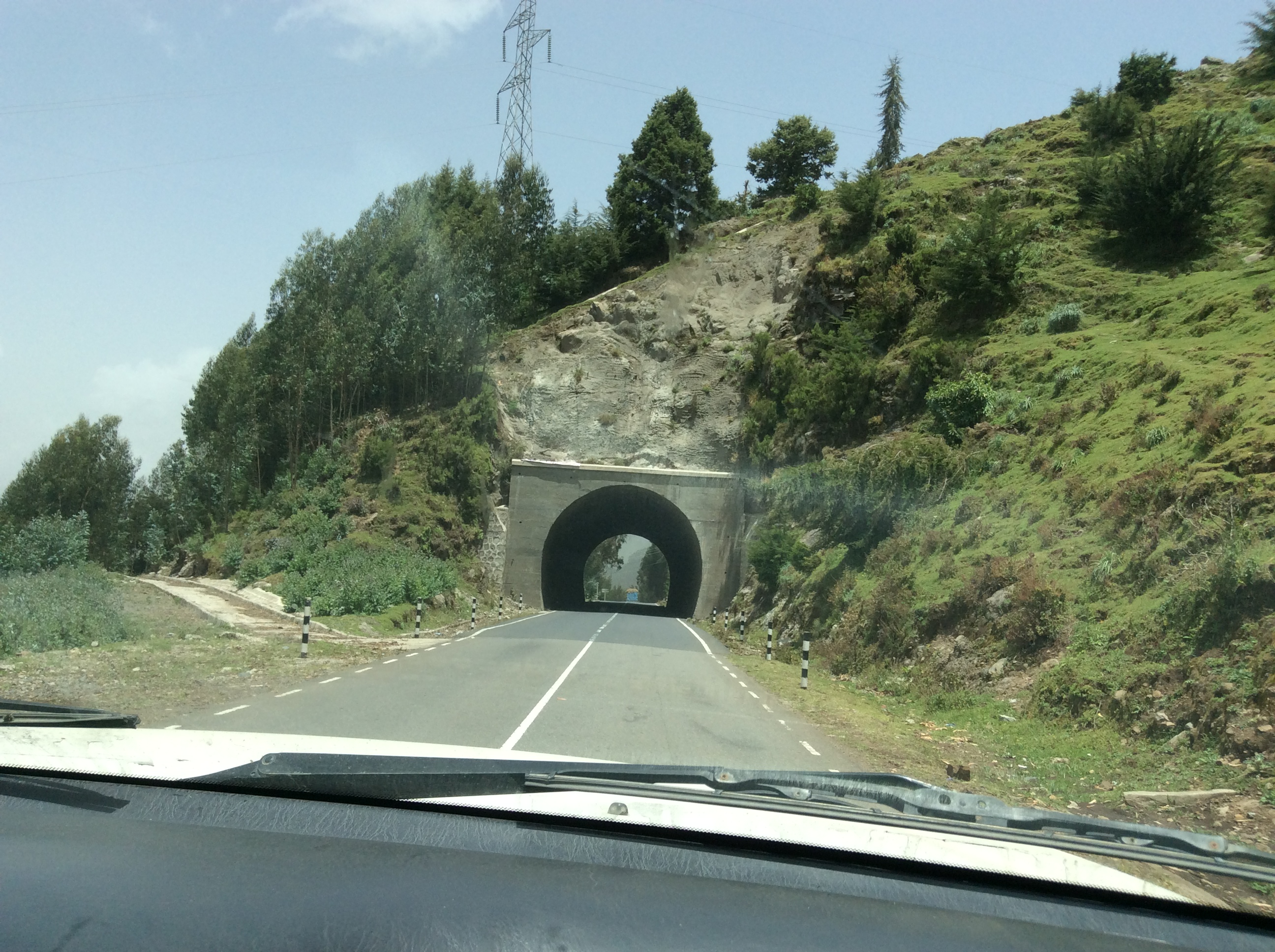
Ethiopia’s main highways are excellent.  Many were built years ago by the Italians, more recent ones by the Chinese.  Ethiopians make jokes about how long the Chinese roads might last.
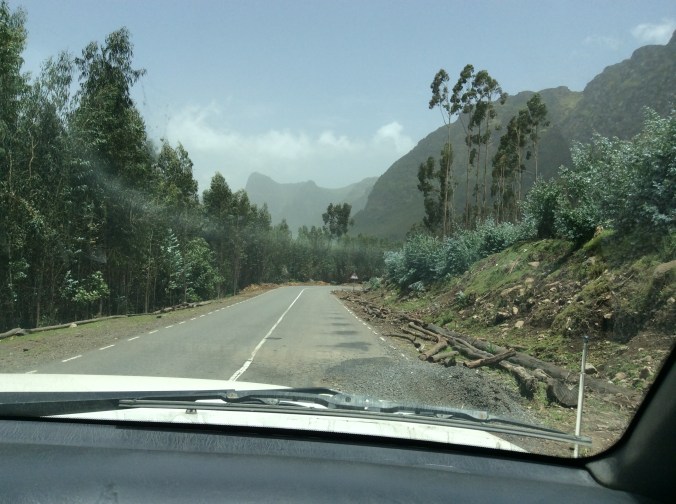
IMG_0272

Eventually, we dropped down out of the mountains into an area that was much drier.
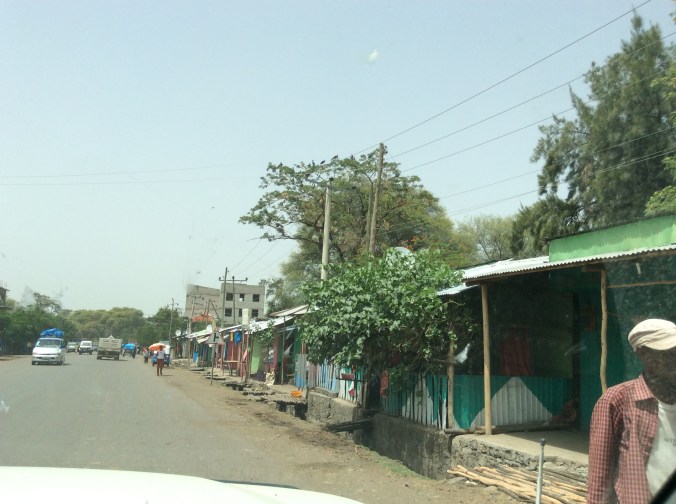
IMG_0276

A typical town with all sorts of shops right along the road.  When driving in Ethiopia, dodging people, cattle, camels, horses, burros, and goats is the norm. Everything it seems likes these good roads.
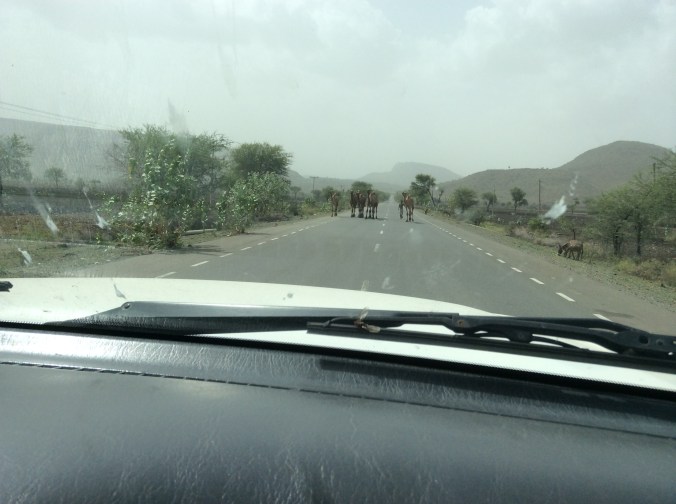
IMG_0279

A boy driving camels down the highway.  Loose animals, like the burro on the right, roam seemingly unattended.  I saw few fences.

IMG_0280

In the small towns in this semi arid area, we saw several totally veiled women, faces covered totally except for their eyes.  Alemu informed us that this was a new thing, not seen until the last few years.  He seemed to think it had become fashionable to copy Saudi women.
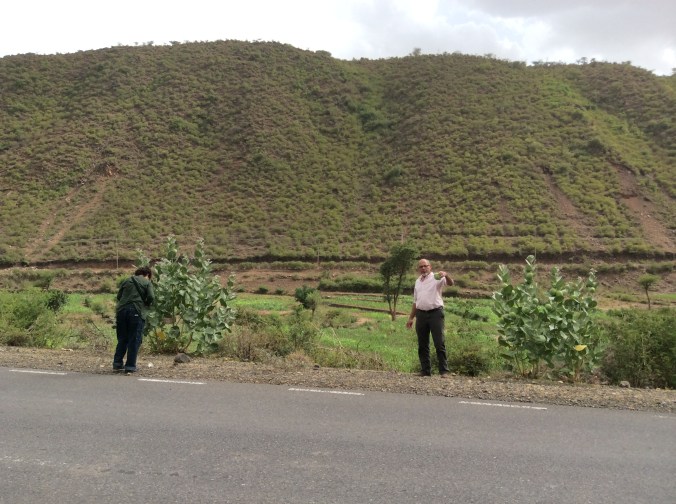
IMG_0281

We stopped to look at certain plants beside the road.

IMG_0282

Dino recalled playing with these pretty green balls as a child with this forewarning,  “Do not eat them, do not touch your eyes or you will go blind.”  They are called the Apples of Sodom.

IMG_0284

At this juncture near the beginning of this adventure, I had not yet realized how everything in Ethiopia possesses symbolic meaning.

IMG_0285

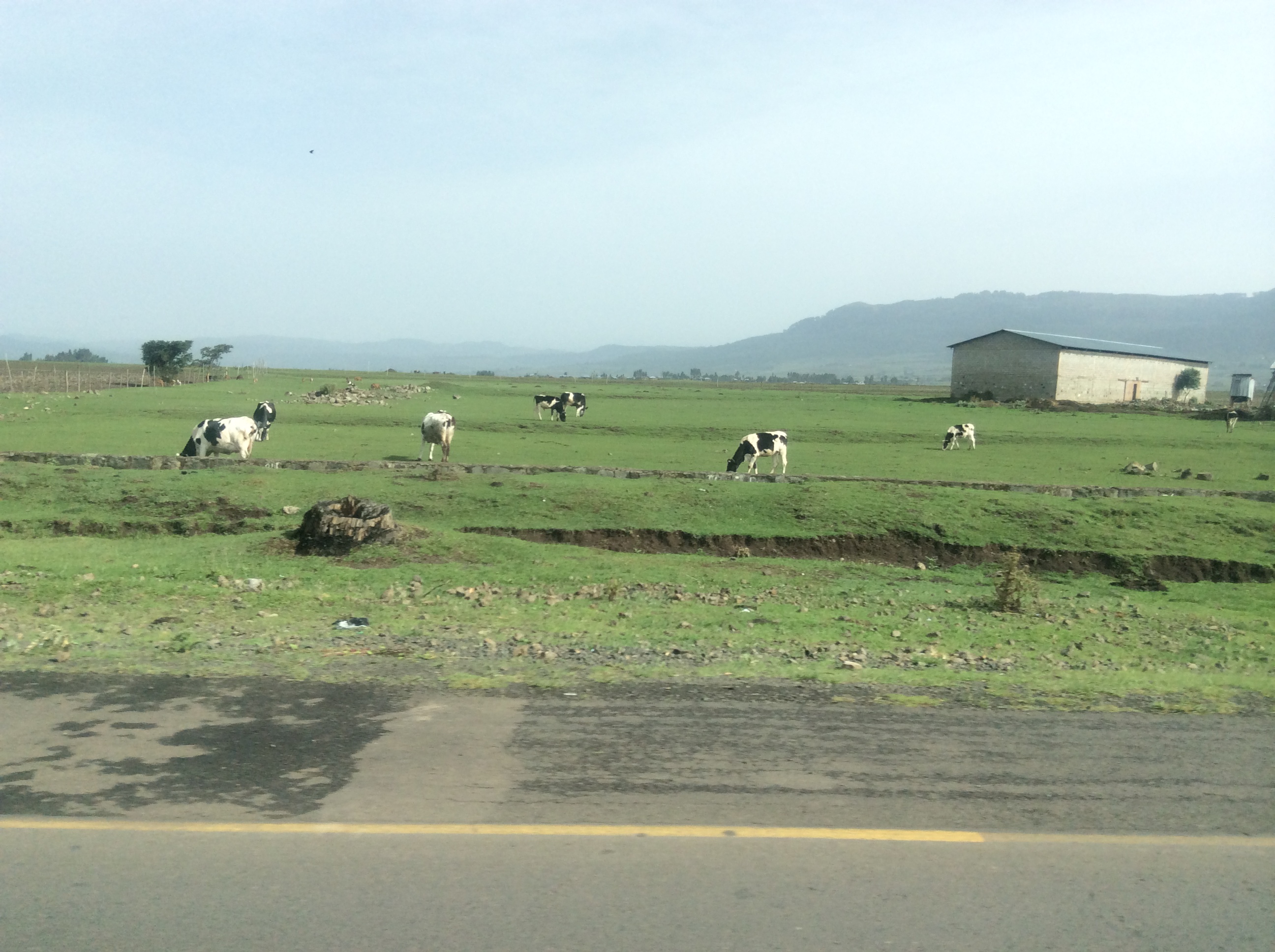
We drove along this immense, lush valley for miles.  Alemu said this huge herd of cattle belonged to a semi nomadic group who brought their cattle here during the rainy season to graze and fatten.  A bit farther down the road the land belonged to one of the richest men in Ethiopia, indeed the world, Al Amoudi.  It was the only place where I saw a tractor actually used in a field.

IMG_0288

Arriving in Kombolcha, we saw this new college in the process of creation.  This became a common sight–new buildings, new schools, construction everywhere.

IMG_0289

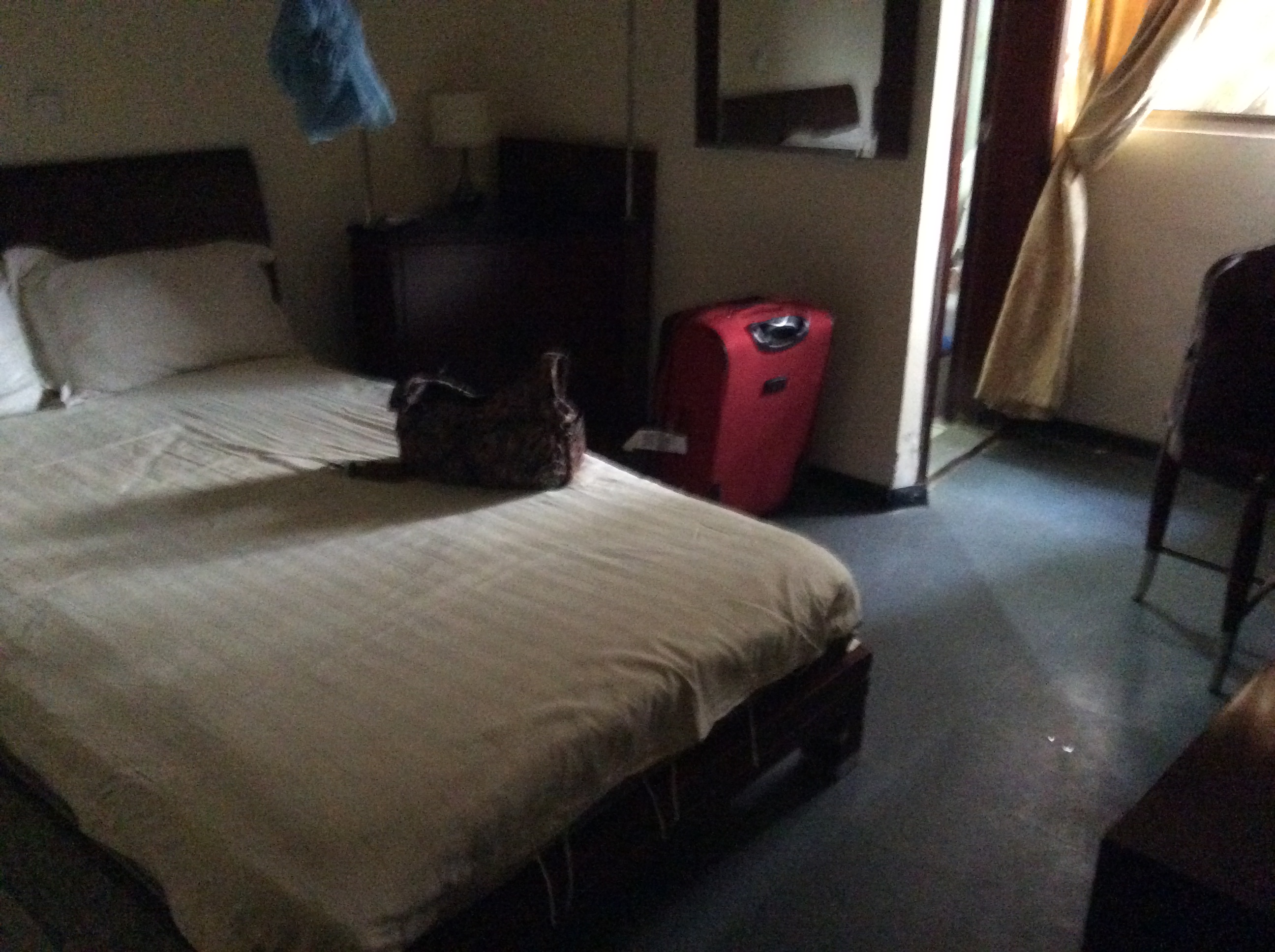
My first hotel room in Ethiopia at the Sunny Side Hotel in Kombolcha complete with mosquito netting–the blue blob above the bed.  At least it had a shower and toilet.  Many places use the style of accommodations one finds in a lot of Asia.  Forget toilets as you know them–just a tiled area with a hole in the ground and the ever present water with which to wash.  We carried our own toilet paper just in case.  However, many places had both so customers could choose.

My Ethiopian Adventure–the Beginning


After leaving the US on July 2, flying 14 hours to Dubai, spending a day there, I finally made it to Addis Ababa (also spelled Abeba) on the 4th.  I remained in Ethiopia until this past Monday when I left Addis late in the afternoon.  Blog posting from Ethiopia was limited because wifi is available only in certain areas and places and there is no 2,3, or 4G anywhere.  For those of you who saw my four posts from Ethiopia, some photos and a few details may be repeated.  My plan is to post photos and detailed information now that I am back which will require a number of posts because not only did we go on a ten day road trip, we also spent time in Addis Ababa and Adama (Nasret).

I went on this trip with two friends, a couple.  Dino is from Ethiopia, having grown up in Dire Dawa.  His parents now live in Adama where his father owns and runs a printing press.  Two of his sisters and one brother live in Addis.  We spent the first few days before our road trip in Addis, staying with his sister, Anna, who owns a painting company.  She imports the paint from Italy and her clients include individuals and businesses.  Her company also paints cars.  Of course, she painted her own house with this paint.  I loved the colors and textures.

IMG_0209

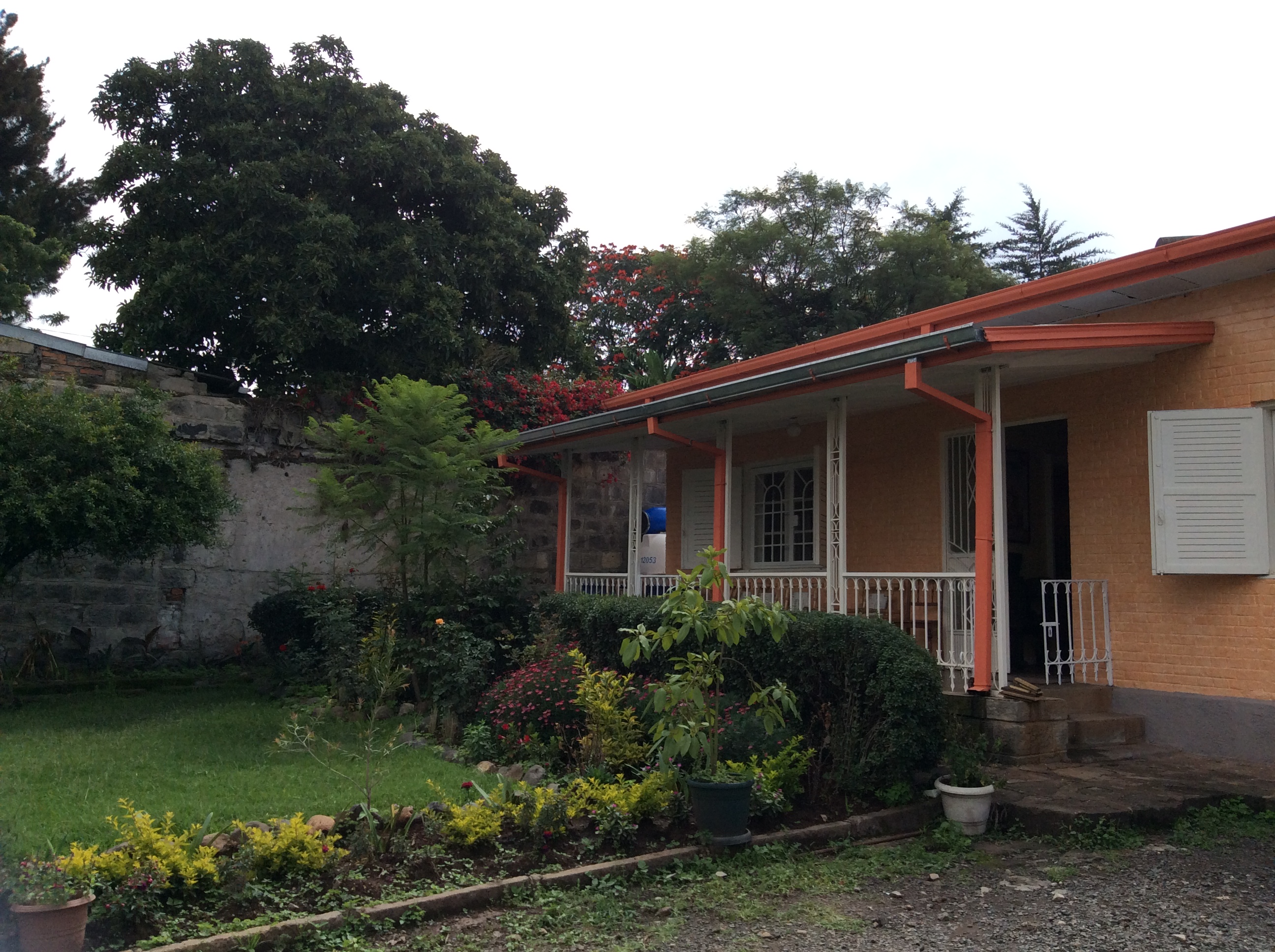
The front of Anna’s lovely house.  It is the rainy season and flowers grow everywhere.

IMG_0206

IMG_0207

IMG_0208

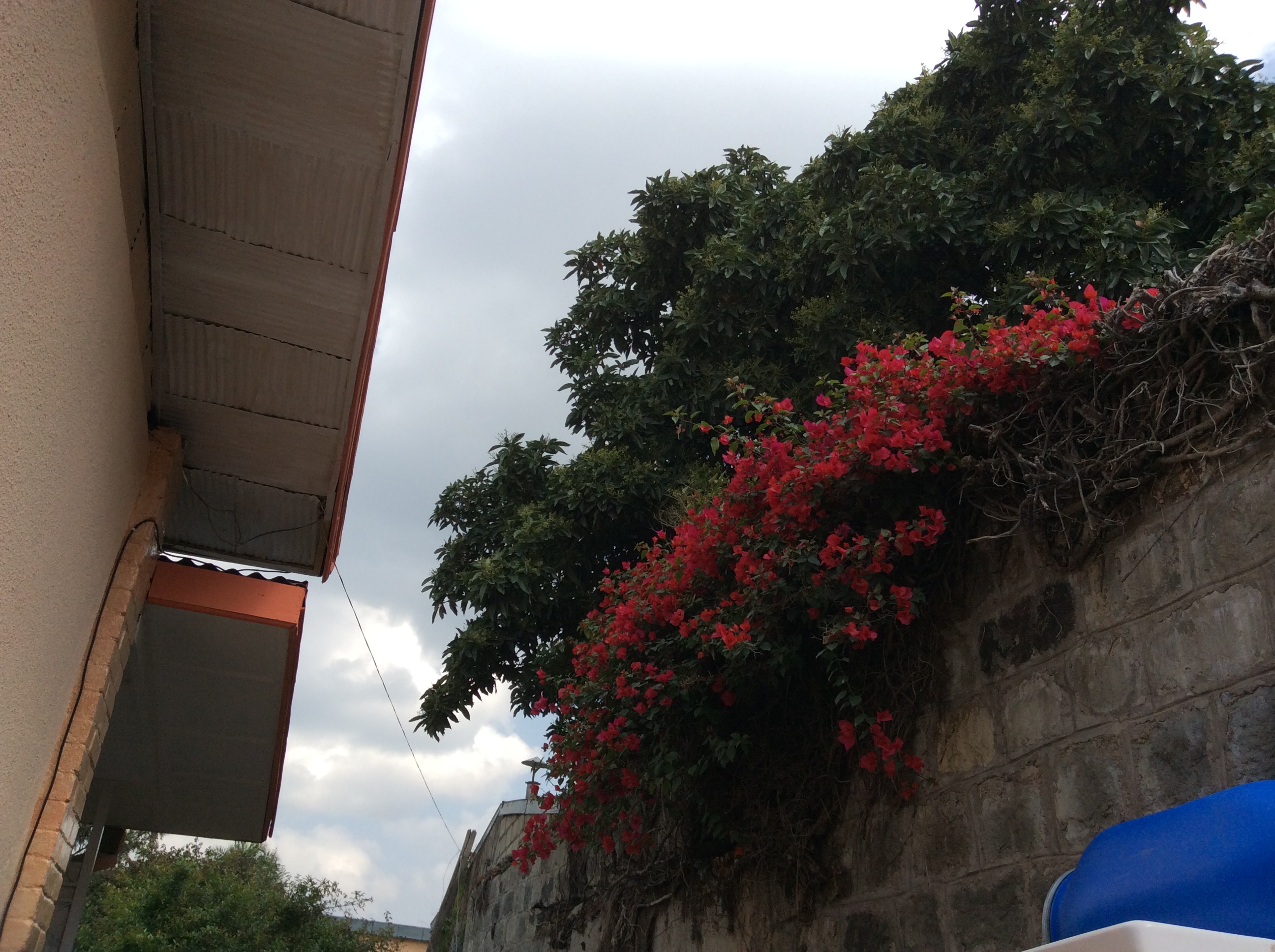
The translation for these orange flowers, which I had never seen before, is flowers of the sun.

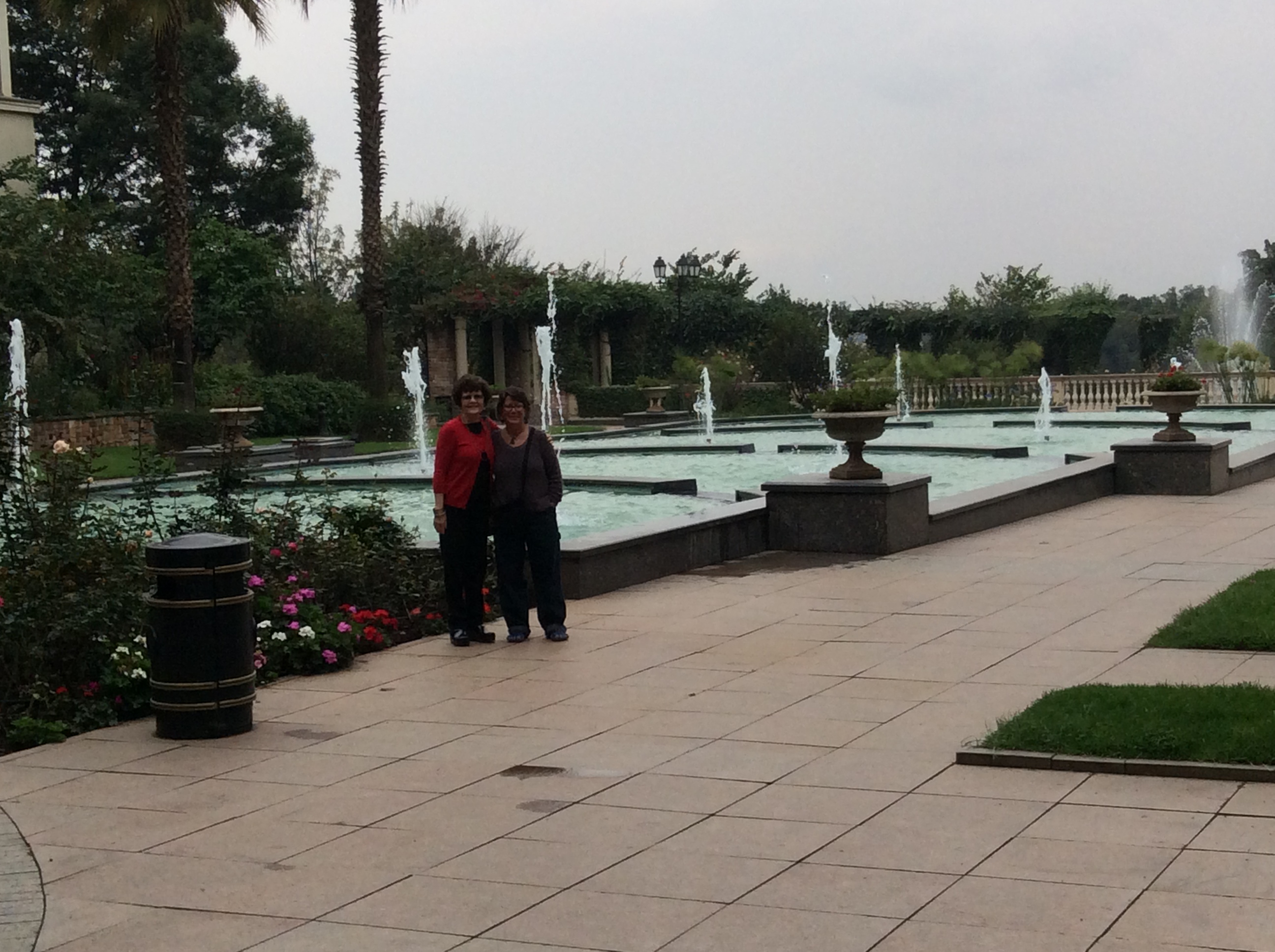
One afternoon four of us decided to take a drive around Addis to see some of the more beautiful spots which mainly included the Addis Hilton Hotel and the Sheraton, which is a five star.  Carlo, Dino’s father drove.  What a remarkable man, in his 80s and still getting to work at 6, driving everywhere.  The Hilton is the older of the two.  The grounds of both display lush greenery.

IMG_0216

IMG_0218

Zuriash and I enjoying the grandeur.

IMG_0219

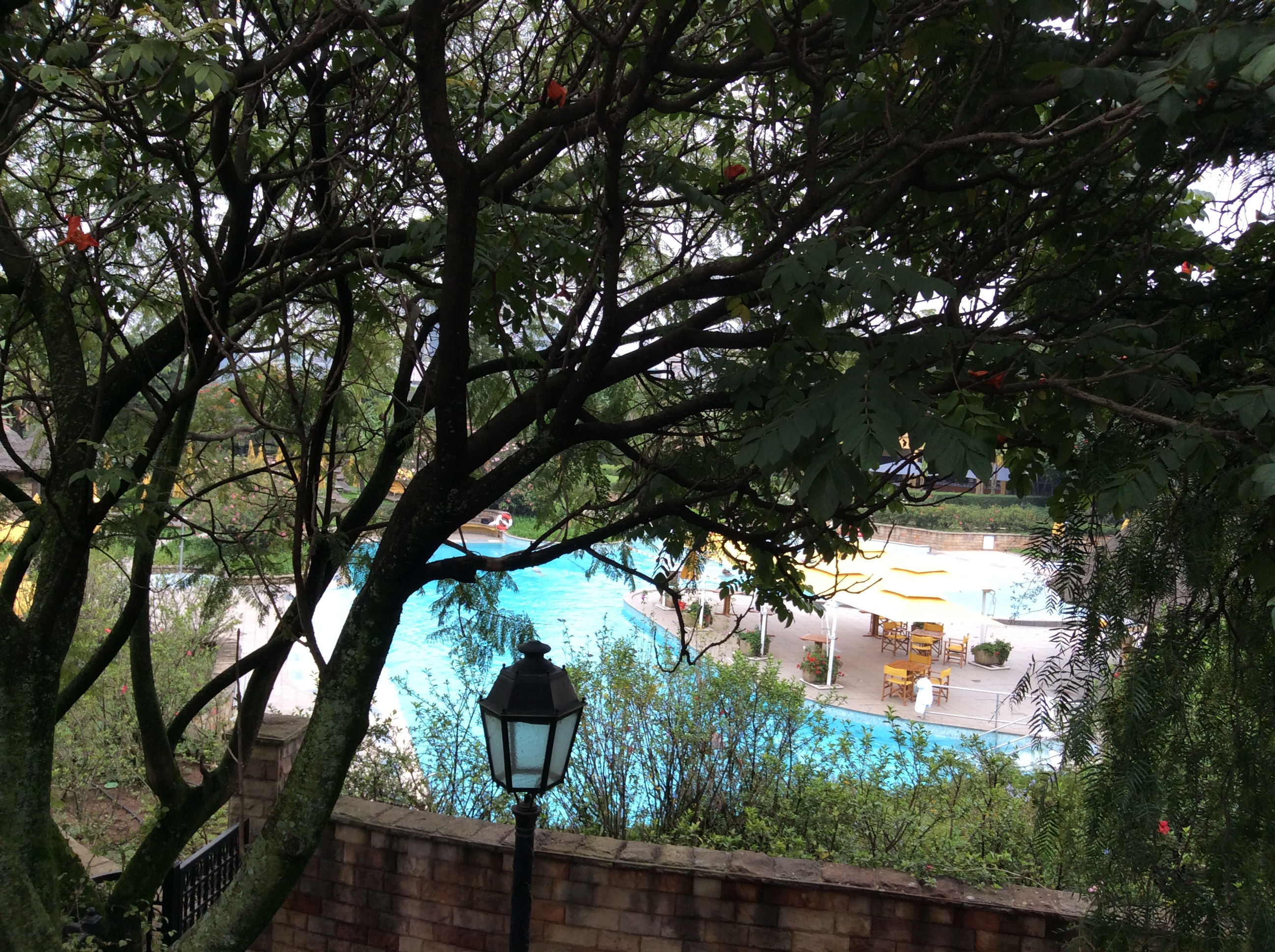
Papyrus by the pool at the Sheraton.

IMG_0224

The swimming pool at the Sheraton.  You cannot use it unless you are staying there.  However, the pool at the Hilton is available on a membership basis–you do not have to stay there to use it.

IMG_0226

The rooms at the Sheraton overlooking the gardens and pool.  Dino and Carlo, son and father, walking down the path to the pool area.  Apparently, many visiting dignitaries stay here.  Inside walls are filled with excellent local art.

IMG_0227

And then there is Addis traffic.  Approximately six million people live there.  In five or so days, riding here and there all over the city, I saw only two traffic lights, neither of which worked.  Most large intersections contain a traffic circle and around and around you go trying to wiggle into a space and get across the intersection.  Take a look.

IMG_0210

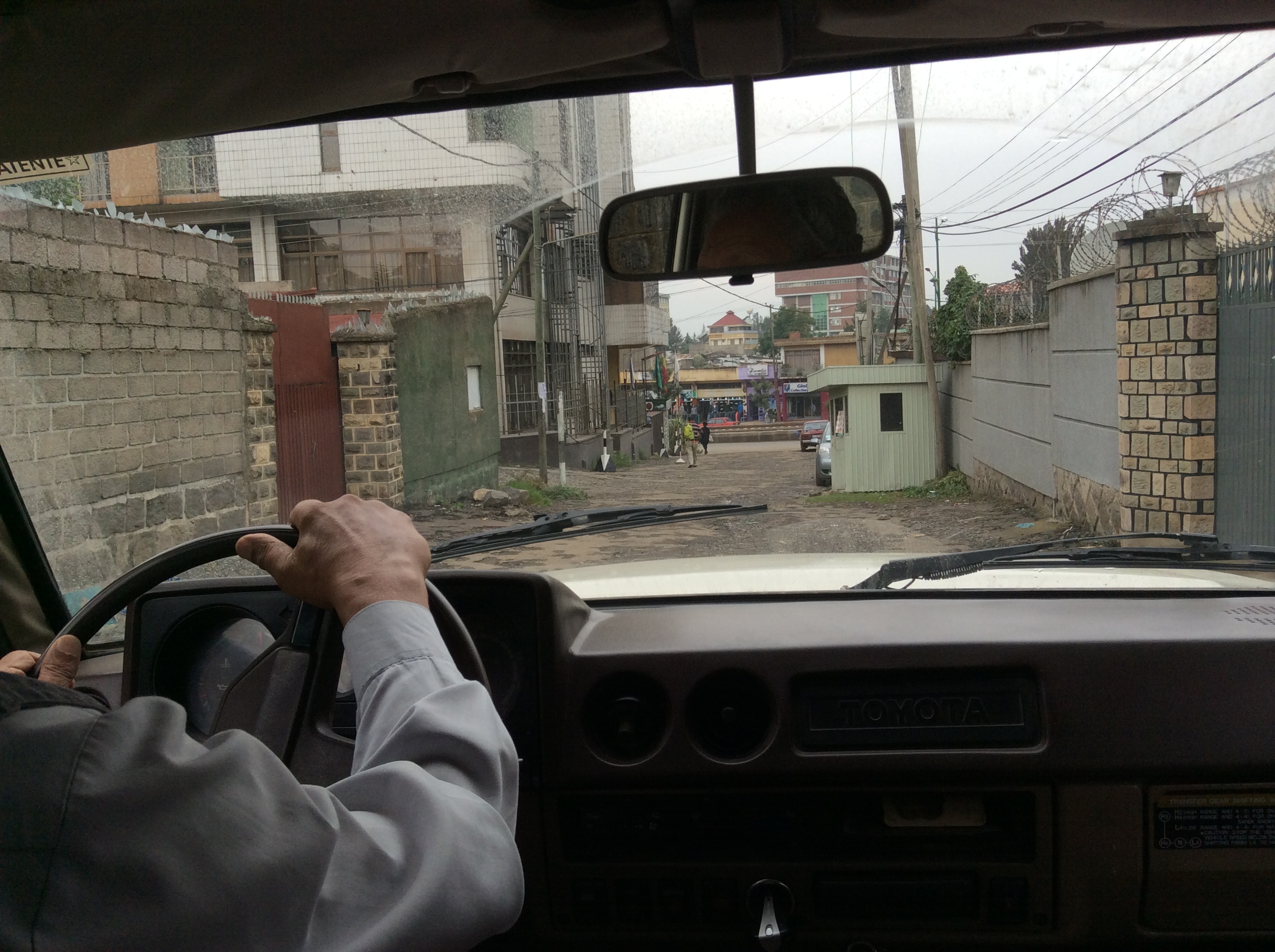
Trying to drive to Guiseppe’s house, Anna driving, we were stuck here.  The big trucks would not let us through.  Finally, a guy in another car, got out, stopped the trucks and waved us on.  It took us 1 1/2 hours to get there.  A couple of days later, he came to Anna’s in twenty minutes.

IMG_0214

In front of Guiseppe’s house.  A typical residential street, sometimes like this one with gates on each end.  People hire someone to watch the gates.  You honk and they are opened and then closed.

IMG_0215

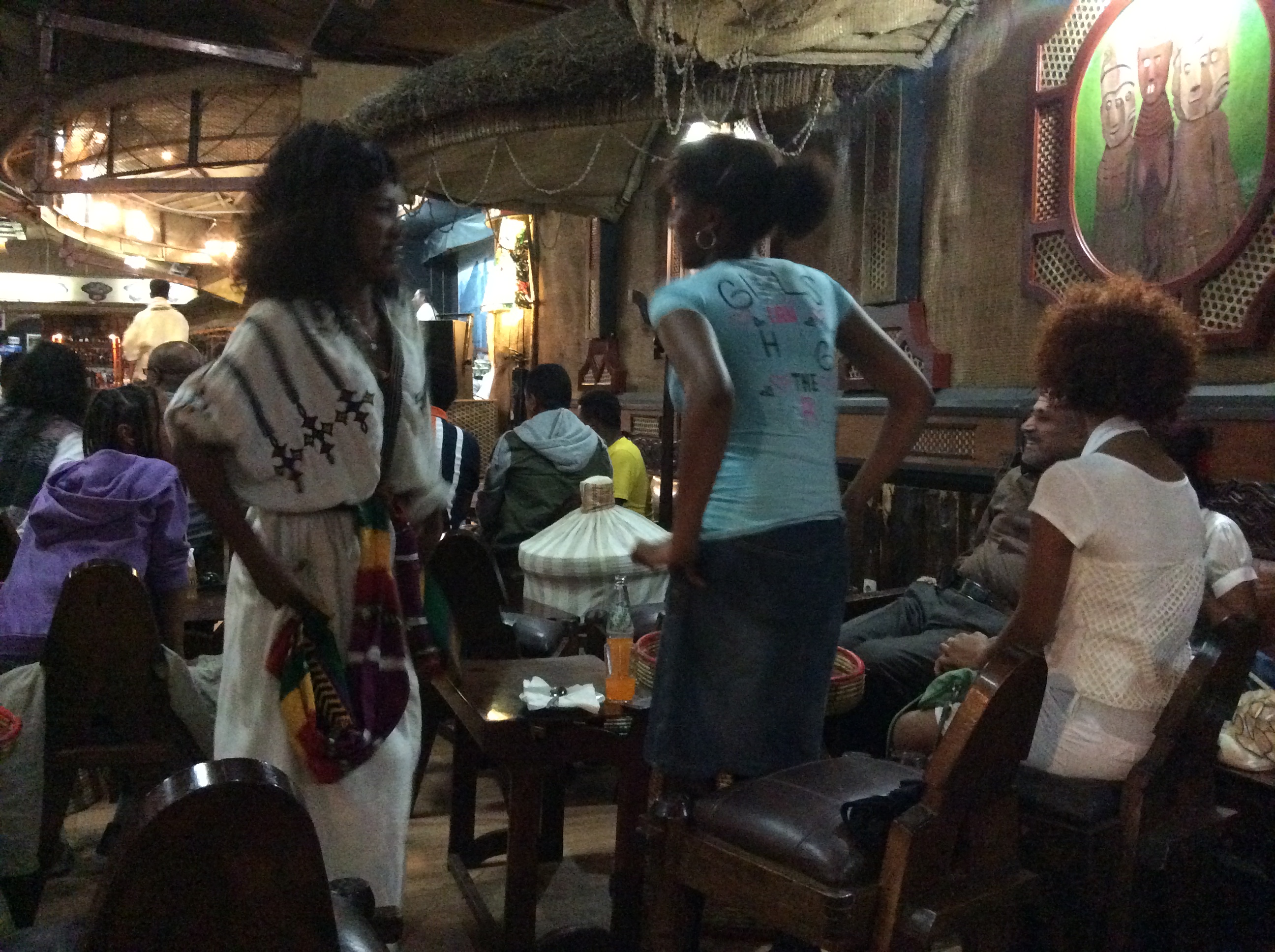
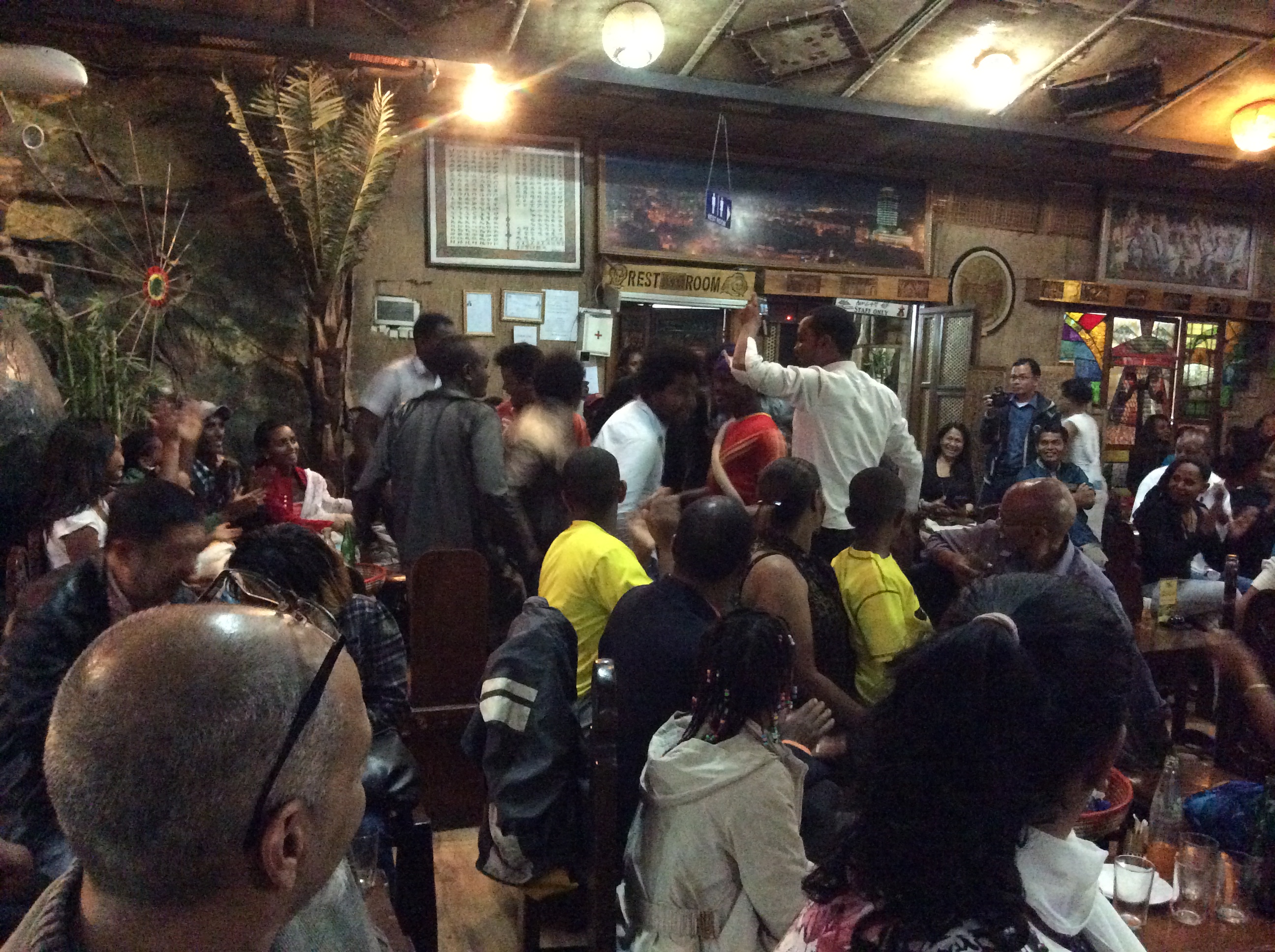
On the last evening before we began our ten day road trip, Anna took us to a cultural restaurant to eat traditional food and watch the dancing from different parts of the country.  I expected it to be just a tourist spot, but no, many locals were there.  During the dancing, locals competed with the professionals to see who could dance the best.

IMG_0242

This dance requires almost no motion except a lot of shoulder action.  I attempted to do it myself when the man behind the girl in white came over and asked me to dance.  I tried but would have to practice forever to get this one right.

IMG_0243

The young men in the background competing.

IMG_0229

Anna and I in front of her house.  She is wearing a traditional Ethiopia dress.