Costa Rica Adventure, Day Four–Part One


People love food.  One of the fun things about travel is exploring the food.  My two favorite, traditional Costa Rican foods are gallo pinto and platanos fritos.  Fruit shows up everywhere too.

IMG_1954

Breakfast at El Establo just before heading down the mountain to the Pan American Highway on the way to Rio Tenorio.  The plate in the background contains gallo pinto and platanos fritos.  I have made gallo pinto three times since I returned.  See recipe at end of post.
IMG_1955

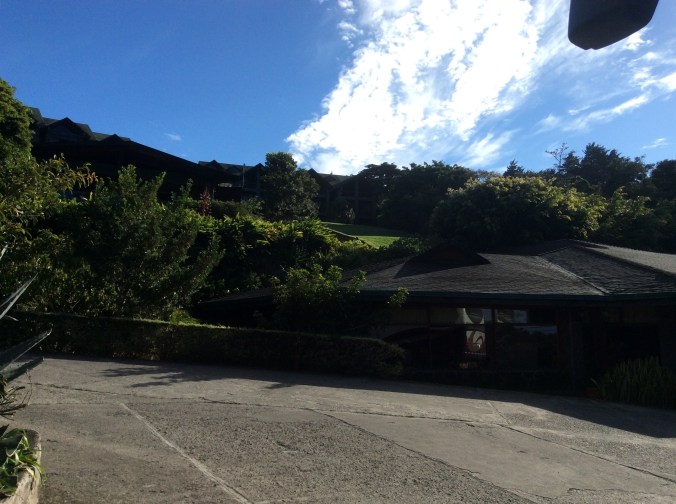
The final view of El Establo as we drove away.

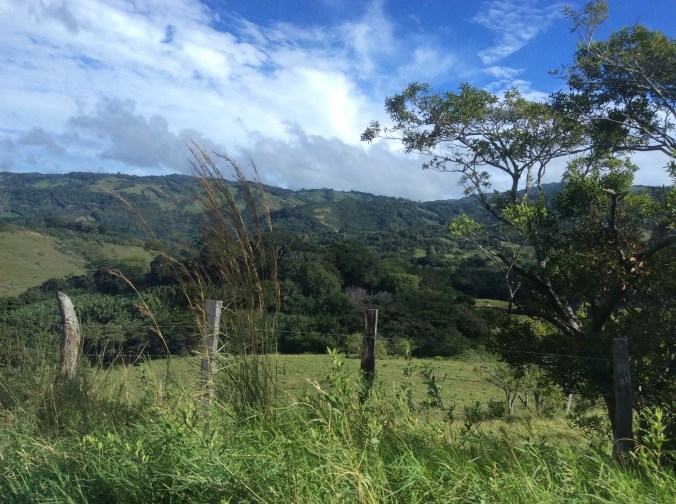
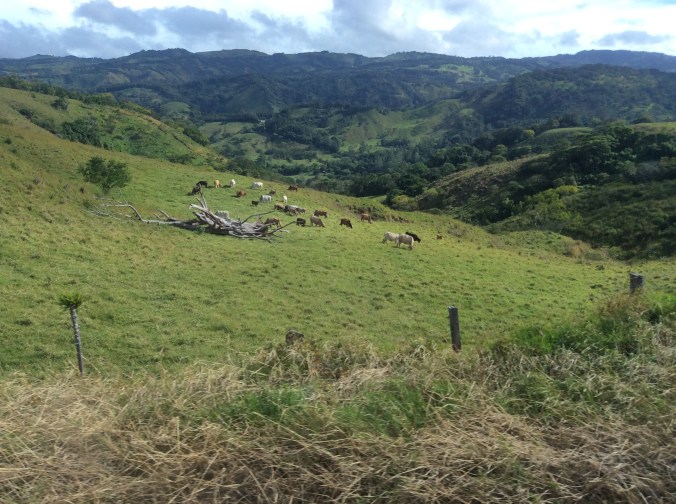
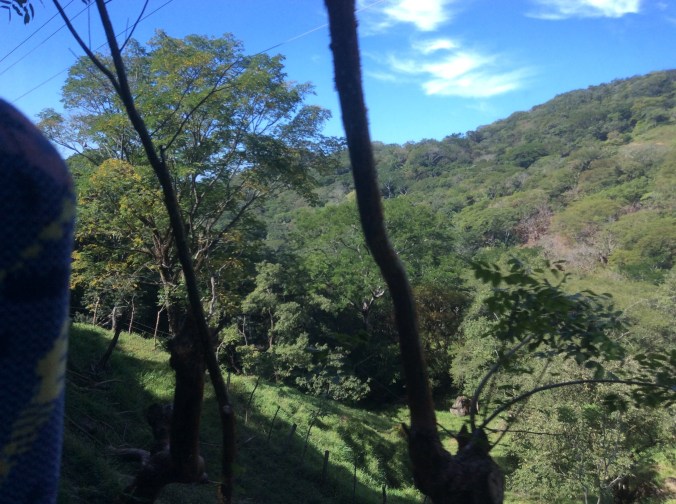
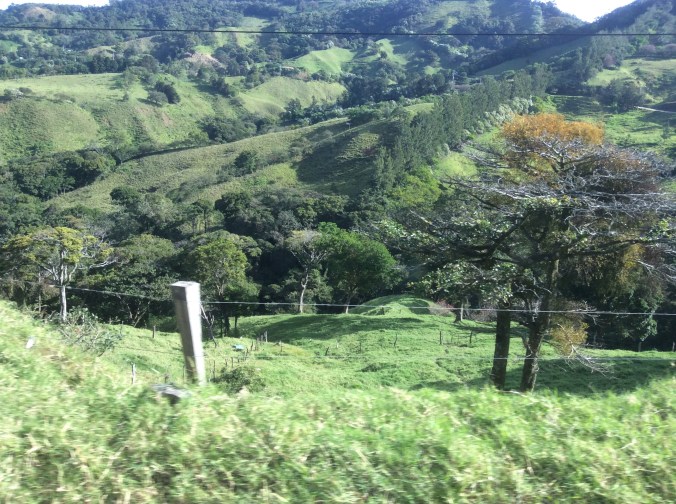
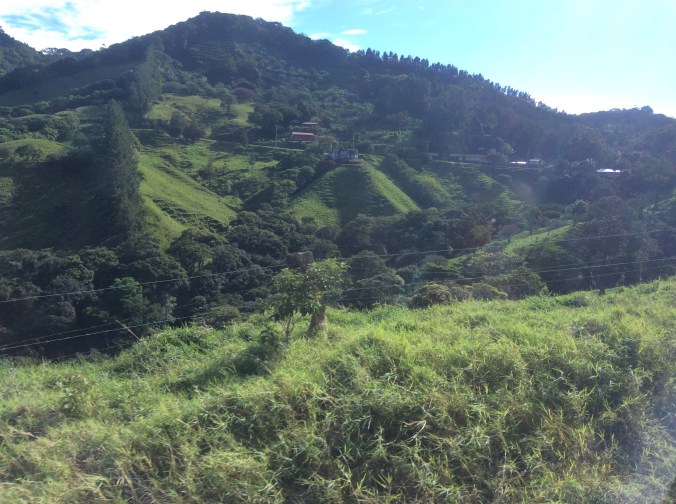
The following photos were all taken riding along the highway, dropping altitude dramatically all the way from Monteverde to the Pan American Highway.  The beauty one passes going to and from Monteverde remains unrivaled anywhere–miles of green vistas, colorful mountain homes, cattle grazing.
IMG_1957


IMG_1958

IMG_1959

IMG_1960

IMG_1961

Typical country houses along the side of the road painted colorful hues.  Even here the houses have electricity and running water. Most of the way the road was gravel.  In spite of all the green in these photos, this is the dry side of the mountains, the Pacific side.

IMG_1962 (1)

IMG_1963 (1)

IMG_1964

IMG_1965

IMG_1966

A lot of Costa Rica is cattle country.  In the lowlands all the cattle have Brahma blood in evidence.  In the high country it varies.  Frequently, they look exactly like the common dairy cattle in the United States.

IMG_1971

IMG_1975

IMG_1977

IMG_1979

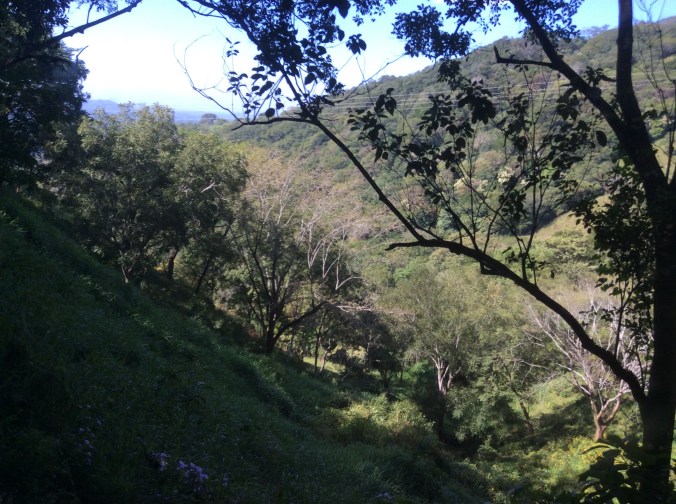
The farther we drove down the mountain, the drier the foliage and grasses became. Finally, we arrived at a paved road and a town.

IMG_1980

IMG_1982

Most places, even small towns, in Costa Rica are clean.  People take pride in the appearance of their houses no matter how small. Flowers bloom brilliantly throughout the country.

IMG_1983

Streams run everywhere even through towns.

IMG_1989

Finally, we headed north on the Pan American Highway.  In all of Costa Rica living fences surround fields.  In this area it appeared the major commercial endeavor is cattle, all distinctively Brahma or at least part Brahma.

IMG_1990

Looking at these photos it seems hard to believe this is the dry season.  We saw large irrigation ditches bringing water all the way from Arenal, a huge lake on the other side of the mountains, a place I visited on my previous trip.

Recipe for gallo pinto:

Enough vegetable oil to lightly cover bottom of a skillet

1 1/2 cups day old, cooked  rice

1 cup day old, cooked, black beans

1 medium onion, finely diced

1 small, sweet red pepper, finely diced

2 Tbls. chopped cilantro (optional)

2 Tbls. salsa (optional)

Add chopped vegetables to the skillet.  Saute until onions are clear.  Then add the beans and salsa.  Finally, add the rice and heat through while stirring constantly.  The mixture should be moist but not wet.  There should be enough juice from the beans to color the rice.  Experiment to see what you prefer.  I use garlic instead of onion and poblano peppers instead of the red.


Costa Rica Adventure, Day Three–Part Two


After the six mile hike through the Cloud Forest and visiting the hummingbirds, we arrived a bit messy and muddy at a local Italian restaurant which surprisingly served some of the best Italian food I have eaten anywhere.  After this leisurely lunch we headed back to hotel to ready ourselves for the afternoon activities.  Some chose zip lining while the rest of us headed to a local organic coffee farm or remained at the hotel.  For me it was no choice really; I love coffee.

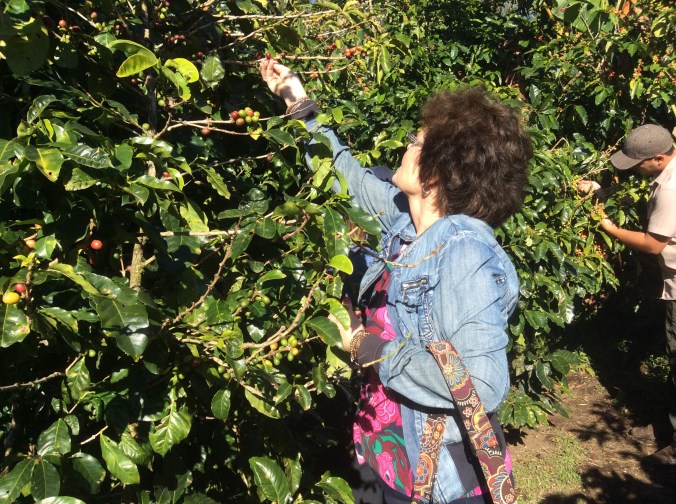
Our guide at the farm had to be one of the most entertaining guides I have experienced anywhere in the world.  He was not only informative but also extremely witty; we chuckled all the way.  After a brief introduction we headed to the coffee plants, tasted raw coffee fruit, and picked coffee.

IMG_1943

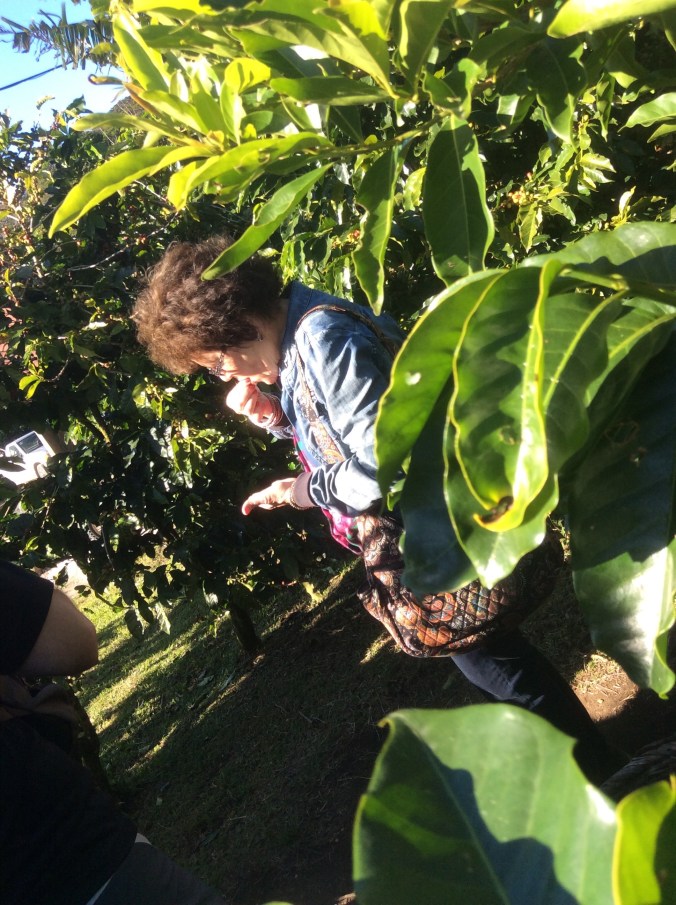
Here I am picking coffee as instructed–only the ripe, red berries.

IMG_1946

He also instructed us to taste them.  They were surprisingly sweet.

IMG_1947

Here is the basket where we all put the berries we picked.  Then we headed to the processing area.

IMG_1951

First he showed us the old way, how they used to get the fruit on the outside off with only the seeds, the beans left to dry.

IMG_1952 (1)

For good coffee, they spread the beans out and sun dry them.  The roof here shelters them but allows natural drying. These beans have just begun the drying process.  When they are ready, they are a darker, more golden color.

IMG_1953

The next part of the tour involved chocolate.  Here he is hand grinding chocolate into relatively fine pieces.  Yes, in a mortar.  He added a little hot water and raw cane sugar, whisked it around, and gave us all a little cup.  Luckily, it was not a big crowd so most of us received seconds.  When I run out of the chocolate I have here at home, I will consider doing it this way myself.  The difference in taste from this and that which we get ready mixed here in the US is remarkable.

They had sugar cane growing here but only ornamentally.  Sugar cane requires heat.  We were too high in the mountains; it was too cold to produce cane for sugar.  Later, near the coast in Guanacaste, we saw mile after mile of commercially grown sugar cane.  He had some and gave us all a taste.  Yes, we sucked on pieces of sugar cane.  I expected to dislike it, to find it excessively sweet.  Actually, it seemed only mildly sweet and quite tasty.

It was a full day.  We returned to the hotel rather late and experienced an even later dinner at the Tree House, a restaurant in Monteverde built around a large tree.  The live band played a lot of reggae music.  Many of the residents of the east coast of Costa Rica are the descendants of Jamaicans who came many, many years ago to help build the railroad.

The last time I visited Monteverde we had time to wander around the town, shop, and eat ice cream.  I sorely missed not having the time to hang out there a bit and especially eat the ice cream.  Both the cheese and ice cream in Monteverde are, well, yummy and different.  I also missed going to the club next to the Tree House where you find people of all ages hanging out and dancing.  Maybe next time.

Costa Rica Adventure, Day Three–Part One


After lunch at the National Theatre we headed to Monteverde, a small town with only one unpaved road in and out.  One big change since I was there three years ago is the road.  It has been widened considerably and apparently plans to pave it are in the works.  The original reason for not paving was to prevent hoards of tourists from invading.  Apparently, that failed; tourists came anyway.

This town’s origination grew out of Costa Rica’s decision to disband its military in 1948, a practice which continues today.  Quakers from Canada moved here for that reason and created Monteverde, now famous for its cheese and, of course, the nearby Cloud Forest.  The hotel, where I have now stayed twice, El Establo, is owned in part by Quakers and serves a favorite of mine, fried cheese.

SAM_0640

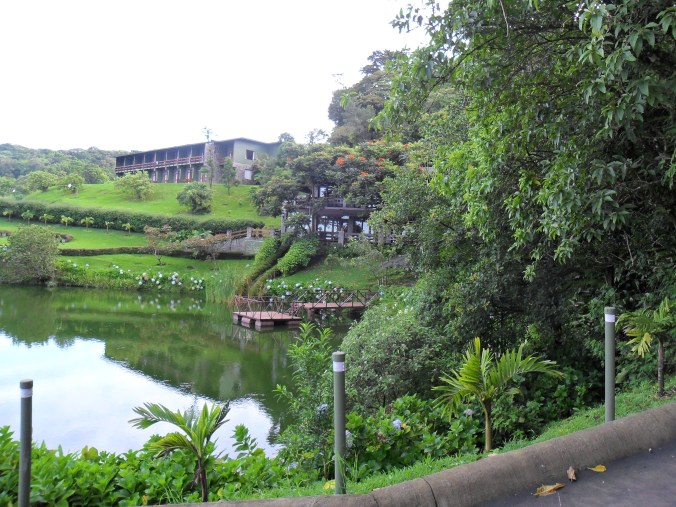
Nine buildings up and down the mountain house rooms.  Previously, I stayed in one of the lower buildings; this time we were near the top way above this lake.

SAM_0641

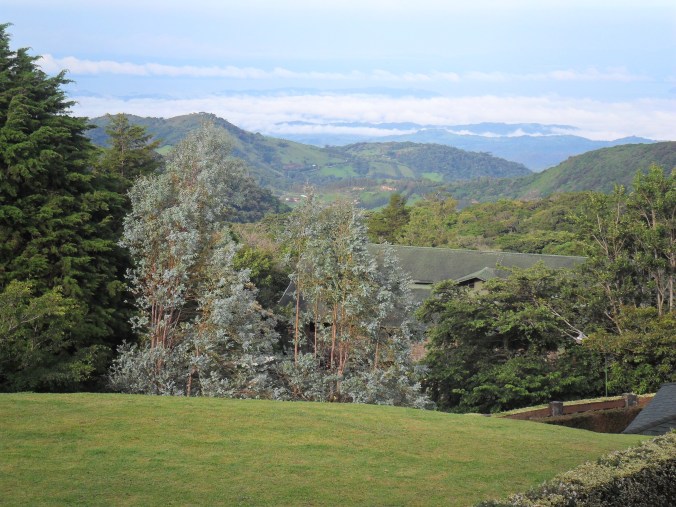
The views from all the rooms provide a vista all the way to Nocoya Bay.  After we put luggage in our rooms, we headed out for a night walk in the forest, the reason we had been instructed to bring flashlights on the tour.  We saw spiders, birds sleeping, a mouse, all sorts of insects, but nothing too exciting.  Probably some of the group members were too scared and too noisy.

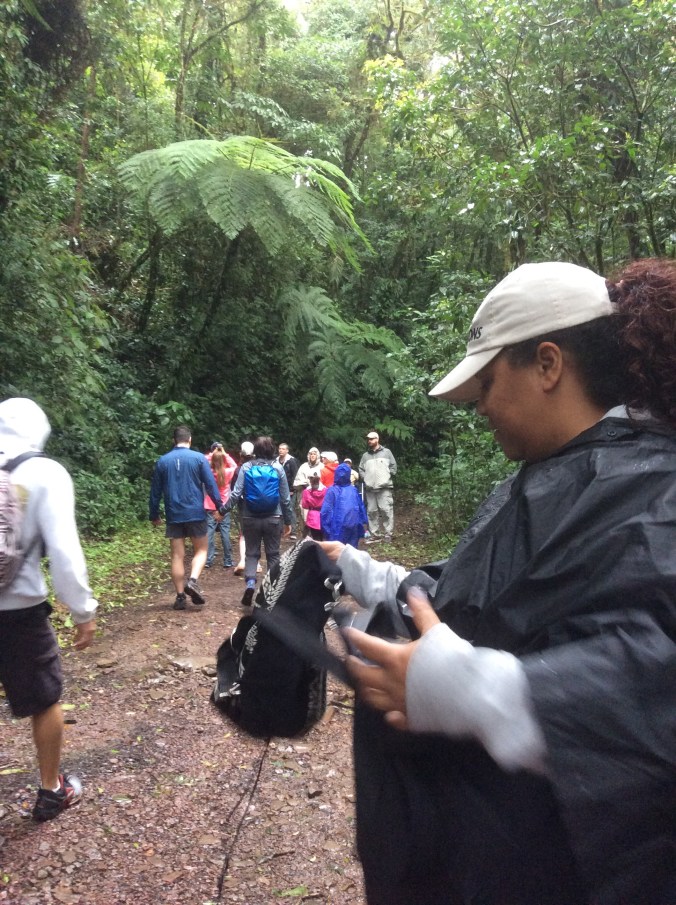
The next day breakfast occurred at 7 just before we took off for the Cloud Forest and a hike to the Continental Divide–all six miles or so.  I had hiked here before but on a different trail and in a huge downpour.  Luckily, it rained only a little.  However, if you are in the clouds, you get wet.

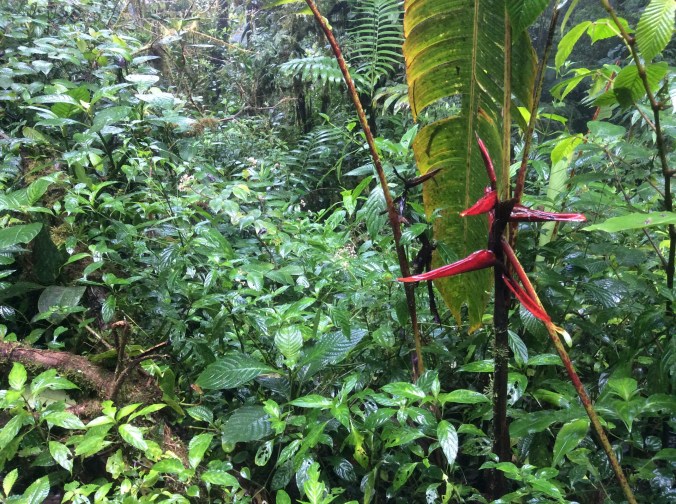
Lush does not even begin to describe the Cloud Forest, a huge reserve with numerous indigenous species of everything from hummingbirds to insects to all sort of plants that exist nowhere else on earth.

IMG_1923

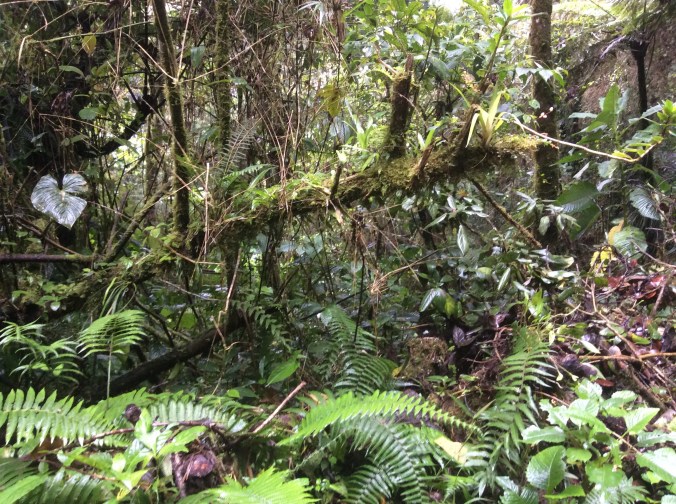
Every tree, branch, every living things is covered with other living things.  This must be botanist heaven.

IMG_1924

IMG_1926

Looking up into the branches of a tree fern.  Yes, that is a fern. So much to see, it is hard to keep up with the guide, a native Quaker whose father was one of the founders of Monteverde.

IMG_1929

IMG_1927

It is difficult to know what photos to take; everything holds some kind of fascination and lots of beauty.

IMG_1931

Another tree fern right by the trail.

IMG_1934

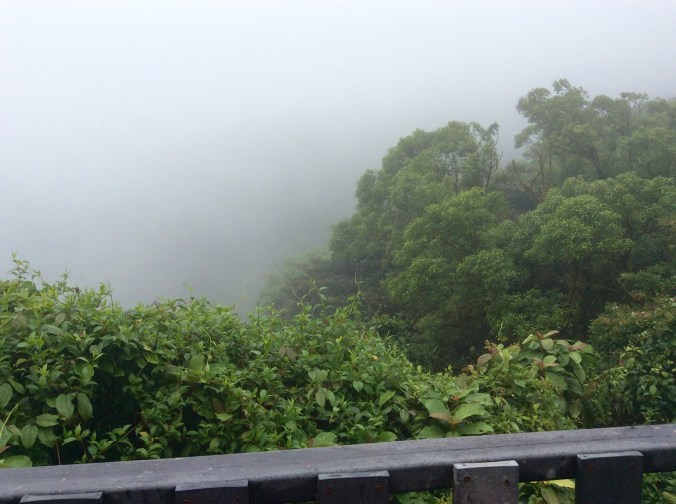
In the clouds at the Continental Divide it’s incredibly windy yet the clouds stay and you get wetter and wetter even though it is not raining.  Water dripped off my slicker, the trail oozed mud and water, it was hard to keep my footing on slopes.

IMG_1935

IMG_1936

On the way back we crossed several streams.  Everywhere in Costa Rica signs in both Spanish and English instruct people to save water.  They made me chuckle.  Streams run everywhere in much of the country, especially on the Caribbean side.  Here I live in a semi-arid environment where I see wasted water running down streets in town and in Costa Rica they conserve water and recycle things I did not even know were recyclable.  Hotels provide recycling bins and some even turn off lights automatically when you are not in the room.

IMG_1937

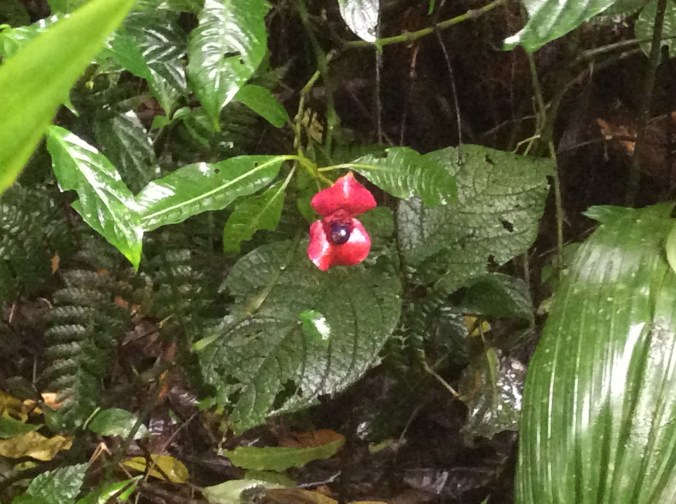
The name for this flower translates from Spanish as hot lips.

IMG_1938

This looks like a tree but it is not.  A giant, parasitic fig plant surrounded the tree, eventually killed it, and this is the result.

After we finished the hike, we walked over to a shop that feeds hummingbirds, hundreds of species of which live in Costa Rica, many only in the Cloud Forest. Took a video of them, but it refuses to upload here.  Some were incredibly iridescent and much larger than any I had ever previously seen.


Costa Rica Adventure, Day Two–Part Two


The problem with tours is that they think you need to get your money’s worth and the best way to do that is to pack as much as possible into the shortest about of time possible.  When some of us complained a bit after a couple of days, we were informed that we should not confuse vacations and tours.  They are not the same thing.  We were on a tour, not a vacation.  Nevertheless, the tour did have some advantages like getting us into places we might have missed or never found on our own.  However, that was not really the case for Day Two.  That whirlwind morning in San Jose not only included the National Theatre and the Gold Museum, but also the Metropolitan Cathedral.  It does not have lighting conducive to photography with a “normal” camera, cell phone, etc.  Therefore, my attempts to photograph the endless and lovely stained glass windows proved futile.  Here is what I was able to photograph.

IMG_1908

This is a large church.  Yes, we were there as tourists, but many others were there praying, sitting silently, worshipping.

IMG_1911

I could not find a place where the chandelier did not interfere with the view where I could take a really good photograph.  Nevertheless, hopefully those of you who read this can get the feeling for this really wonderful place.

On a totally separate but perhaps related note, I watched Public Television for a while tonight about finding ones roots.  I keep thinking somehow my DNA results must be a bit screwy because the places where I feel most at home, the cultures in which I have an interest, the literature I love to read, and the music to which I usually listen have no relationship whatsoever with the places from which the majority of ancestors came.  I have been to Costa Rica twice now and to one particular town (besides San Jose)  twice–others were new this trip.  What concerns me is that all the tourists and people buying up property there who are from Europe, the US, and Canada will totally ruin its values and beauty.

Costa Rican Adventure, Day Two–Part One


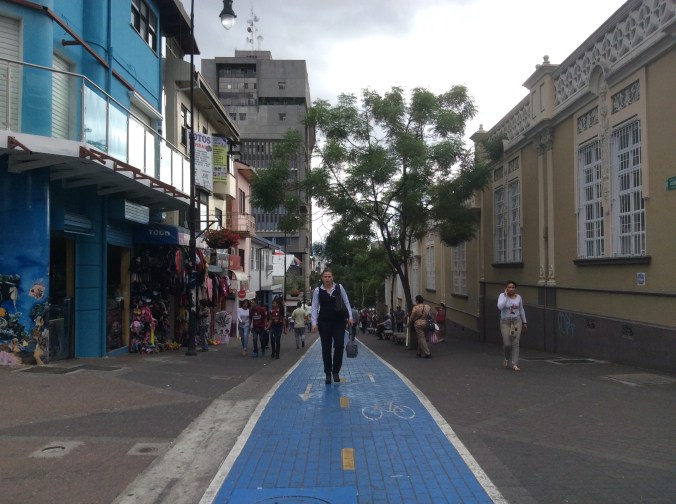
After a buffet breakfast of traditional foods, e.g. gallo pinto and plantanos fritos–my favorites, we headed to the central part of San Jose which is only foot traffic, no vehicles.

IMG_1912

We strolled to El Mercado where my grandson bought a stuffed sloth–I love bargaining so we got it for a good price.  My only disappointment was the rush so we could see everything–the disadvantage of being on a tour. Eventually, we ended up at the National Theatre.

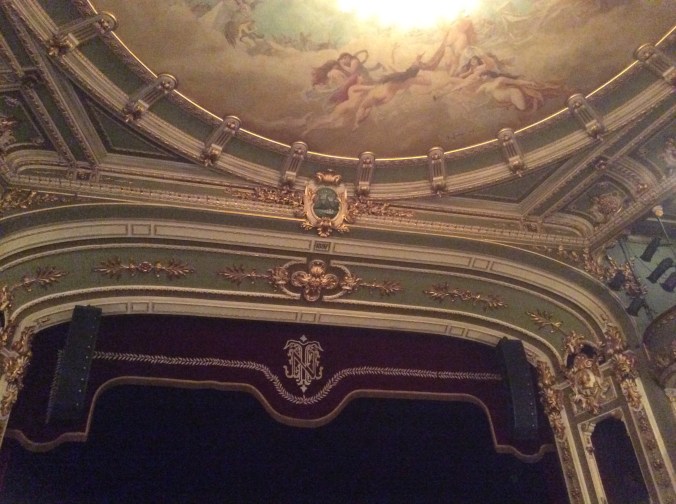
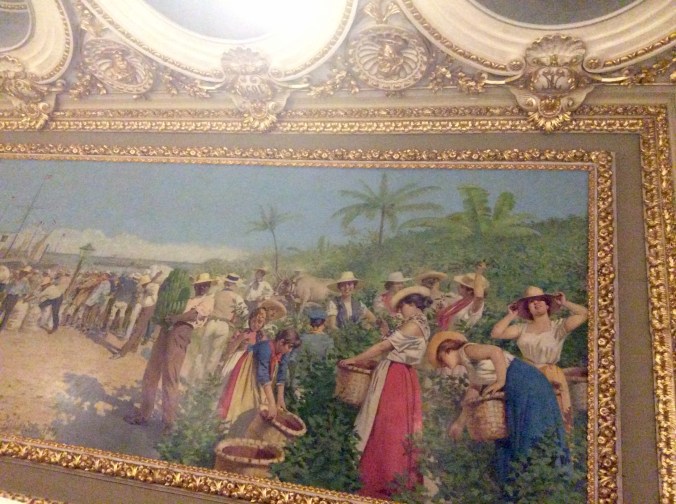
Located in the central section of San Jose, it is considered the finest historical building in the capital and remains relatively unchanged since it was built in 1897–it opened on Oct. 21 of that year.  Most of its opulent furnishing were imported from Europe.  At the time of its opening fewer than 20,000 people inhabited San Jose.  It was financed via a coffee tax which was then and still is the major export and cash crop.

This theatre remains in use today and houses a small, cosy restaurant next to the main lobby.  We ate our first Tico lunch there.

IMG_1913

This and the following photos were taken in the lobby of this theatre.

IMG_1914

IMG_1915

IMG_1916

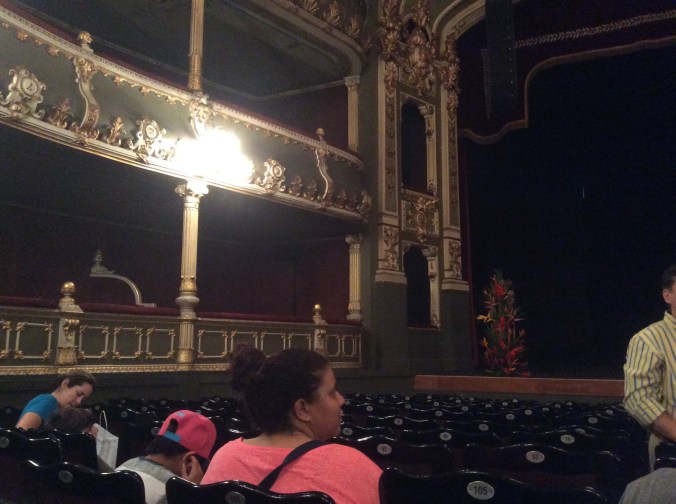
I took this and the following photo while seated in the main seating area looking up to the ornate ceiling.  Originally, the theatre was designed for multipurpose use so the main floor has seating than can be removed and the floor risen to the level of the stage and consequently transformed into a dance floor.  Rarely is this aspect used today.

IMG_1918

We left this area and climbed the stairs to the balcony where the president and cabinet still sit for performances.  Neither the president nor any of the cabinet have body guards.  We were reminded that in 1948, the country disbanded its army and still has no military. The following two photos were taken from the stairwell.

IMG_1919

IMG_1920

IMG_1921

This area is a large reception room across from the balcony level.  The incredibly intricate parquet floor has been covered by carpet for protection  so you can see only portions of it as you walk around.

We also visited what is know as the Gold Museum, my favorite.  It houses a huge collection of pre-Columbian gold artifacts and other antiquities. No cameras, purses, backpacks, iPads, nothing can be taken in so no photos.  It is literally underground.  Visitors are directed to lockers in which to put all these belongings, lock them, take the key with you as you browse the incredible collection.  There is an excellent gift shop where you can purchase copies of these artifacts, painted wood jaguar heads, and other handcrafts.  This is not our typical, touristy gift job.  As a result I now own four jaguars, three heads (two from Mexico and the one I bought here) and an entire jaguar from Mexico for a total of four.


Costa Rican Adventure-Day One


Instead of staying in the US for Christmas, my daughter, grandson, and I went to Costa Rica on a National Geographic Family Adventure for seven days and then rented a car and explored on our own for three additional days.  We arrived in San Jose a little after three in the afternoon, met the other tour members and our two guides, Jose and Josie, and headed for our first hotel, the Intercontinental.

Because the capital, San Jose, is at an altitude between 6 and 7 thousand feet, it is cool.  On the day of our arrival it was also very windy which made the air seem quite chilly.  Altitude and whether you are on the Pacific or Caribbean side are everything in Costa Rica.  High elevations are quite cool, lower elevations tropical and hot.  The Pacific side is drier, especially in the north.  The Caribbean is always wet and rainy especially in the north so the two sides are just the opposite weather wise.  Down the middle runs the cordillera, the mountains, which determine many aspects of the weather.

IMG_1904

On the road to San Jose from the airport.  I know it says San Jose when you make reservations but the airport is not actually in San Jose or even in the same province.

The last time I was in Costa Rica it was summer here and the rainy season there–winter.  In much of the country even though it supposedly was the dry season, it did not seem very dry.  Look at those clouds.

IMG_1905

At the Intercontinental, a large, rather elegant hotel with multiple restaurants and shops, my grandson wanted to buy a plushy sloth in one of the shops.  We convinced him to wait.  The next day we found it nearly 50% less in a shop at El Mercado.

The food we had at the hotel, however, was excellent, the ceviche especially tasty.

IMG_1907

I was quite entranced by this bench, carved out of old wood.  It is illegal in Costa Rica to harvest certain woods considered rare and/or endangered.  This includes rosewood and mahogany.  If you find pieces made from these rarer woods, it is old wood from dead trees or at least that is what it is supposed to be.  You can find beautifully made wood furniture in various parts of the country.

We spent only one night and the next morning through lunch in San Jose.


My Ethiopian Adventure–on the Road to Lalibela, Part One


My Ethiopian Adventure–on the Road to Lalibela, Part One.  A year ago my friends and I started on this adventure.  It still remains a trip of a lifetime in my mind.  To read Day One of this road trip adventure and see more photos,  simply click on the title.  IMG_0343

20 Reasons why Slovenia must be on your travel wishlist for 2015


20 Reasons why Slovenia must be on your travel wishlist for 2015.  I do not usually share a lot of posts, but this one from a blogging friend is a must share.  It includes such incredibly beautiful photos–for all of you out there who like travel.

Gelada Baboons


In response to The Daily Post’s writing prompt: “Wall.”Last summer I spent a couple of days in Simien Mountains National Park, Ethiopia, one of the few places left on earth where these baboons still exist.  In the mist and rain one day, I accidentally walked in the middle of a large group. image

They remained unafraid and basically ignored me.  They are the only remaining grass eating primates.  The rest are all extinct.