“People always remember things the way they want to remember them instead of the way it was….” Mira Ptacin.
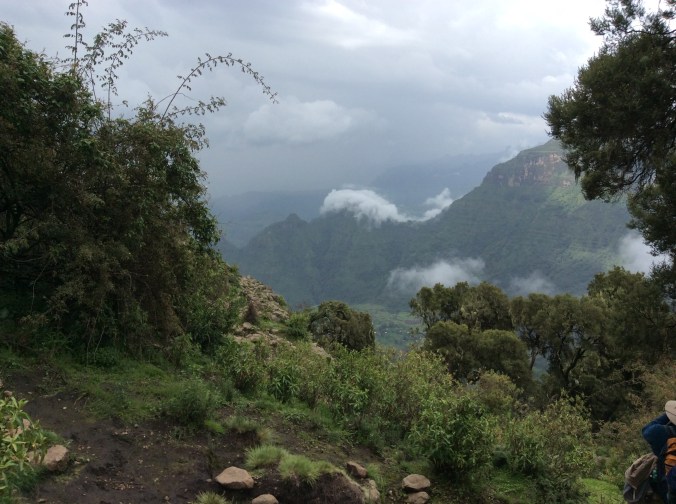
“People always remember things the way they want to remember them instead of the way it was….” Mira Ptacin.
“A dream is a wish your heart makes.”
anonymous child
Sometimes I wonder if it will ever end, the hatred, the racism.

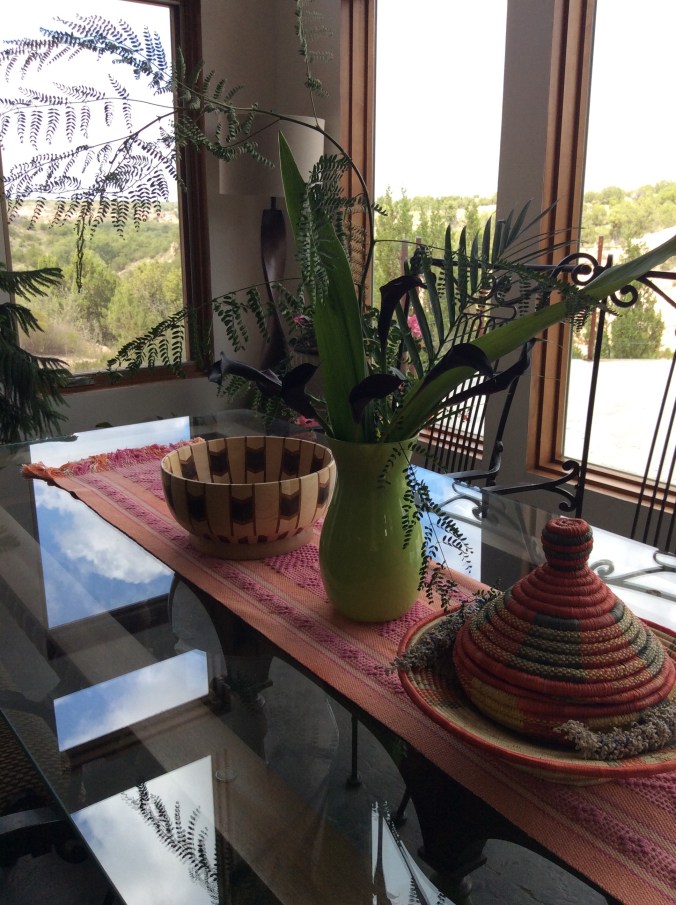
I was in Las Cruces, New Mexico, this summer for several weeks, spending much of my time unpacking boxes the moving van had delivered while simultaneously trying to create an aesthetically-pleasing and comfortable home. I also went to the Unitarian Universalist church–twice! (I haven’t attended church or any other place of worship regularly for decades.) But, moving is a socially-disruptive experience and church is one place you can connect with individual people as well as with the larger community. So, I decided to visit the local UU congregation.
Unitarian Universalism has a fairly long and circuitous history in the United States. It’s roots are in liberal Protestant theology and practice, but the institution has branched out from its roots, seeking to be more “inclusive and diverse.” Some of the historical background and development of the church can be found on Wikipedia. As fascinating as this history and development…
View original post 901 more words
Fifth-three years ago today Martin Luther King, Jr. gave one of the most inspiring and telling speeches ever given by a person from this country. Today I listened to a young man, Patrick Miller, a middle school teacher here in Amarillo, give this same speech totally from memory with no notes. I feel saddened at the extent to which King’s speech still rings true, that although we have progressed tremendously, people of African descent and others of color still experience prejudice at so many levels in their lives, frequently on a daily basis.
Here I offer other quotes from Martin Luther King, Jr.:
Life’s most persistent and urgent questions is, “What are you doing for others?”
We must develop and maintain the capacity to forgive. He who is devoid of the power to forgive is devoid of the power to love. There is some good in the worst of us and some evil in the best of us. When we discover this, we are less prone to hate our enemies.
The ultimate tragedy is not the oppression and cruelty by the bad people but the silence over that by the good people.

Remnants of summer remaining
Sunrise over canyon walls, hoot owl calling
Hints of autumn lurking


When negative sights overwhelm, look at the flowers–sharing this beauty from a blogging friend.
Women and historically other oppressed persons will often create their own spiritual traditions to stay sane, feel valued, survive.
 Recently I have come across several stories of women’s fringe spiritual movements or practices. This made me think about the role of outsiders’ or minority views in religions and society.
Patriarchy pushes women and their issues to the margins of society and religion. It seems that there women sometimes invent their own spiritual practices. These allow women to stand their own ground in religious matters, to preserve self-respect and to keep the hope of the highest spiritual attainment.
Quite often these beliefs and practices seem shocking in their bizarreness and their stubbornness not to accept orthodox norms.
View original post 940 more words

Most of us think minimally about our food, where it comes from, the seed. With a rapidly growing world population the genetic diversity of the seed from which we grow food becomes increasingly crucial.
The United States contains 20 gene banks: three in California, one in each of the following states, Oregon, Washington, Idaho, Colorado, Hawaii, Texas, Iowa, Arkansas, Illinois, Wisconsin, Georgia, Ohio, New York, Maryland, Florida, and Puerto Rico and Washington D.C. This system holds about 600,000 varieties. The seed bank in Ames, Iowa, contains 53,000 genetic lines of maize (corn) and other crop seeds–1400 species. The Illinois bank grows more than 2000 varieties of seeds per year.
Maintaining genetic integrity can be difficult. Some crops like corn are particularly difficult because corn easily cross pollinates. Researchers use these seeds to develop certain types of new varieties, e.g. varieties more resistant to disease, to drought.
Gene banks remain crucial to the future of agriculture and food even with the current controversies over GMO. Some farmers note that any hybrid whether deliberate or by accident is genetically modified. These modifications have existed since the beginning of agriculture.
A possibly more dire issue is the lack of wild relatives of key crops. Global gene banks lack many of these. The online journal, “Nature Plants” notes 1076 wild relatives of 81 crops were insufficiently safe-guarded. Up to 300 species could not be located in any gene bank. The lack of tropical crops in gene banks is particularly worrisome. This is important for the future of agriculture and the world food supply. Seed banks create safety nets for the future.
Perhaps the most remote and “safe” bank lies in Norway 800 miles from the North Pole. The Svalbard Global Seed Vault can store seed for 25 years without power. This vault stores seeds at -18 C and contains 825,000 crop varieties.
Note: the photo is corn close to the Nile Falls near Bahir Dahr, Ethiopia
When my friend told me we were going to visit the Castles of Gondar, I thought he was kidding. It sounded too much like a movie title, plus castles in Ethiopia? Seriously. Then I looked it up and sure enough, there are a lot of them, built by a series of kings, fathers and sons, and a queen. Some remain in reasonably good repair at least on the outside. Others crumble in the rain and humidity. All are in a sort of compound arranged together.

This castle is near the entrance and in rather good condition. Restoration work is most complete here so it is safe to walk to the second floor.

The view from a second floor window. Because of the altitude and moisture–contrary to popular opinion, a large portion of Ethiopia is mountainous and green–especially during the rainy season, upkeep is not easy.

The same castle, looking out the door onto the balcony which can be seen in the first photo. The floors have been restored.

Looking in the opposite direction from the first castle, several castles and the ruins of others show the layout of the compound. Our hotel was near the top of the mountain in the distance. Many locals roamed around when we were here. It is popular to take wedding, anniversary, etc. photos here.

This photo shows the first castle–in the background–from another side.
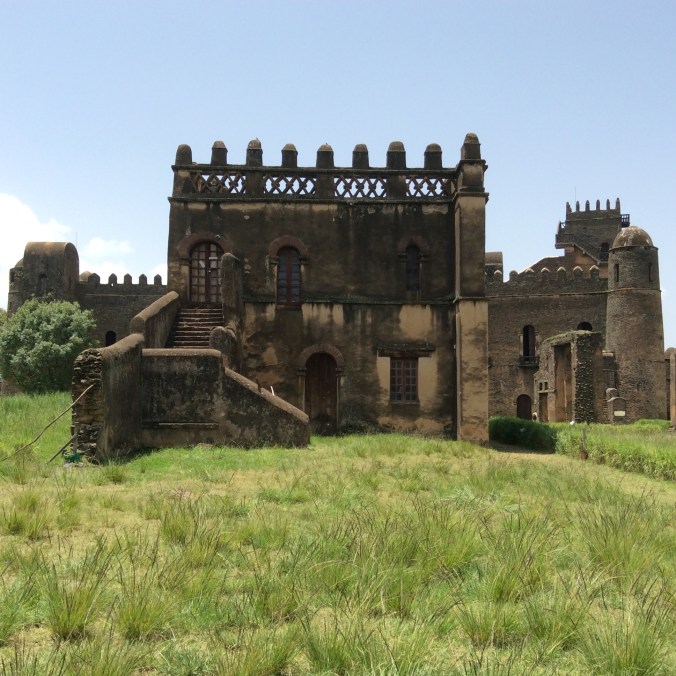
The style of some of the castles, like this one, is more intricate than others.

This building housed the royal lions. Tradition for keeping lions goes back several centuries. The last Ethiopia emperor, Hailie Selassie, was often referred to as the Lion of Judah, the latter referring to the Ethiopia tradition of believing that they are descendants of Solomon and Sheba. Ethiopian lions are a different sub-species than other African lions, smaller with darker, sometimes black, manes and tails.

These castles provide a perfect venue for photography. You can see my friends sitting on the stone wall.
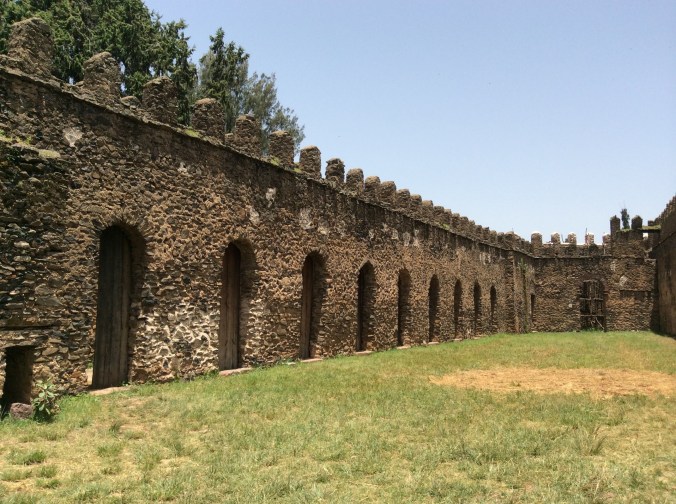
The royal stables obviously housed many horses.

The royal dining hall currently receiving restoration work.

The path to the exit.
The news the last couple of weeks from Gondar has not been pleasant. Many people have been protesting the government which they view as tyrannical and favoring one ethnic group over the others. More than ten protesters were killed during the first protest. Just this past week thousands came out in another peaceful protest.
Gondar (sometimes spelled Gonder) is a business, commercial, and education center. It is a main route for commerce between Ethiopia and Sudan. For more detailed information about Gondar, the castles, and the surrounding area, see my blog posts from Aug-Sept. 2014.
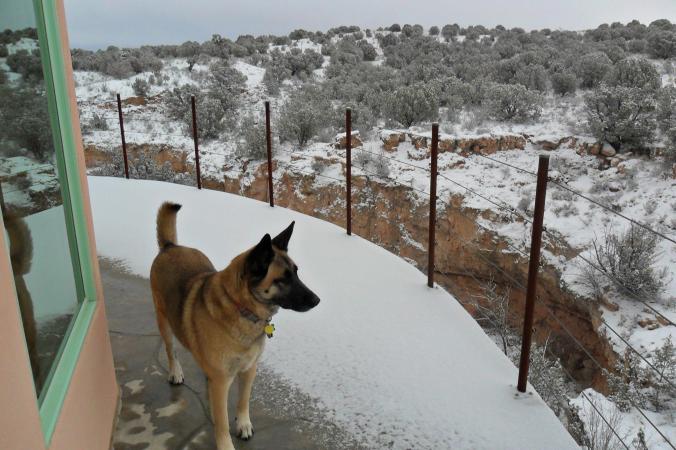
The crematorium handed me the 6″ by 4 ” dark brown wooden box. I knew it would be heavy; Isabella was an eighty pound wolf dog. I thought I was prepared.
Driving home, memories:
March 2006, daughter calls; two year old grandson wants a beta. I drive to PetSmart. Daughter tells me I must see these unusual, incredible seven-week-old puppies. Alert brown eyes look at me. Too big, black ears wiggle. The label says wolf, German Shepard, Blue Heeler. The two remaining puppies look like light colored German Shepherds or Belgium Malinois. I had not planned to get a dog, not yet.
Two years later I move into my new house: canyon edge, horses, bobcats, coyotes, foxes, road runners, mockingbirds, rattlesnakes. Isabella guards her property, sits on the patio where she can check for invaders. She rarely barks, growls. When she does, high alert–I check. Neighbor dogs, coyotes, foxes, chased off–not bobcats. She watches them.
I remember the day she dismembered a skunk, drug the carcass everywhere. After eleven baths at PetSmart, the skunk smell remained. The one day she growled, I shocked, investigated–a man walking down the arroyo toward the house. Growls became increasingly loud. Out on the patio, she stands, the man sees her, turns and runs. I feel safe, Isabella guarding, telling me if something unusual occurs. She’s mixed breed; I think she’ll live long.
Every morning, evening, she completes horse chores with me, chases bunnies, roadrunners. Two months ago, I, mesmerized, watch her catch, gobble two half-grown bunnies in less than one minute–nothing left. Mixed breed; I think she’ll live long.
Friday morning she helps me with chores, chases bunnies. Friday afternoon she can hardly move. At the vet, blood work like a four year old; x-ray shows a little something wrong. They give her two shots, schedule an ultra-sound for Saturday morning at another vet’s. Meds working, Saturday morning she’s her usual lively self, eager to travel in the truck, nose wet and cold.
Ultrasound vet tells me there’s little hope. Shocked, I stand there. “If she were your dog, what would you do?”
“Put her to sleep. She’s not in pain. She has a tumor the size of your small fist on her intestines–might be cancer, hard to operate.”
I look at the vet, frozen.
At 8:00 Wednesday evening, I open the box, take out the bag of Isabella’s steel grey ashes, walk out to her patio spot, the place where she guarded her kingdom, toss a handful of ashes into the wind, watch them float and scatter down into the canyon, tears tracking down my face. I close the bag, walk to the place where our long yearling colt, Star, is buried, dig an eight inch hole, bury another handful of ashes. I take the one tablespoon of ashes left back to the house, put them back in the black velvet bag and into the box with the card with her paw print, the crematorium certificate, the sympathy card signed by all the employees where they euthanized her, place it on top of a stack of old magazines in the Chinese cabinet.
At bedtime, I forget, go to call her in. This morning I find her hairs–she shed so much, wolf undercoat. Evidence of her presence permeates.
It will never end.
Travel the World 4 Less
A Glimpse into My Life & Passions
Ceto-Magoism, the Whale-guided Way of WE in S/HE
Exploring the F-word in religion at the intersection of scholarship, activism, and community.
ANCESTRAL FOOD. HERBAL WISDOM. MAGICAL COOKERY. SEASONAL CELEBRATION.
inesemjphotography
politics, engineering, parenting, relevant things over coffee.
Food is the best expression of every emotion. Explore through my reviews, recipes, events and more.
Smile! A Site for Friends Wherever You Are!
inspiring personal growth through poetry and writing
Combining atheism with whimsy. This is a Fair and Balanced blog based on opinion unencumbered by fact.
Odds and ends ~ My Life
Original poetry, commentary, and fiction. All copyrights reserved.
bripike@gmail.com
A wildlife filmmaker in Africa
A Geeky Feminist's Musings On Pop Culture
"5 minute walks"


 writingontherim