vibrant fall colors
bring joy
in a troubled world

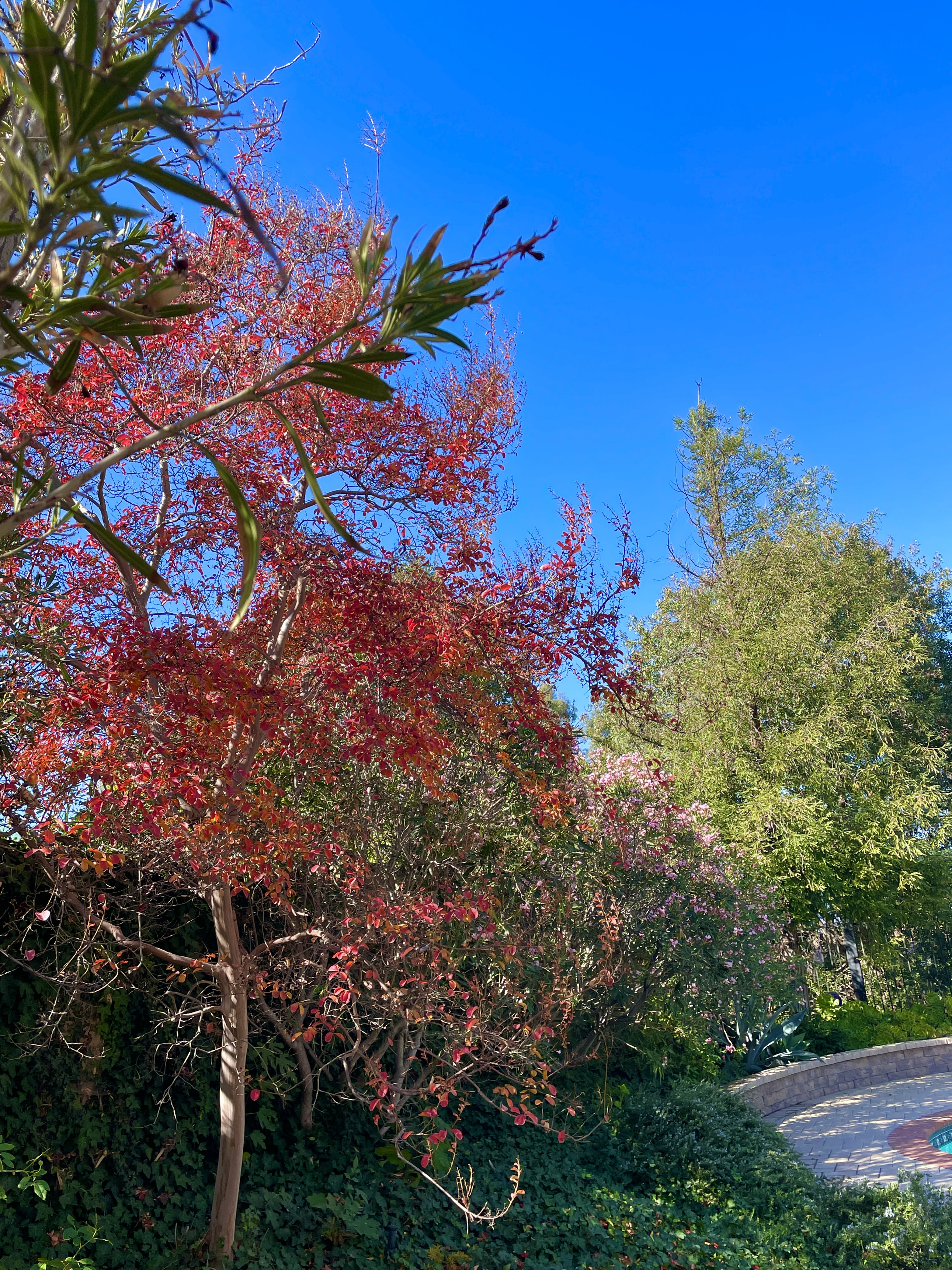
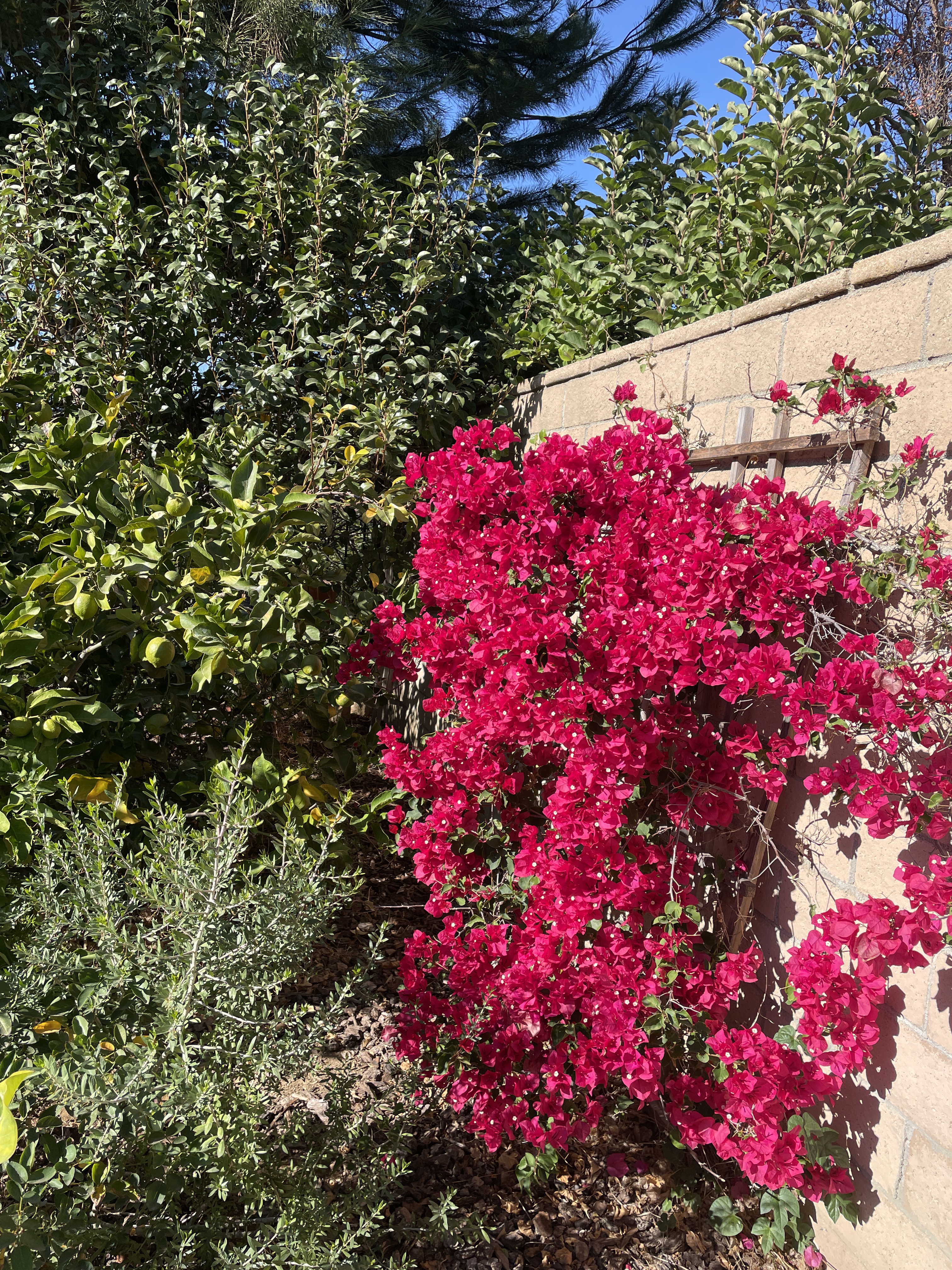


vibrant fall colors
bring joy
in a troubled world
bountiful autumn
pomegranates
scarlet lusciousness
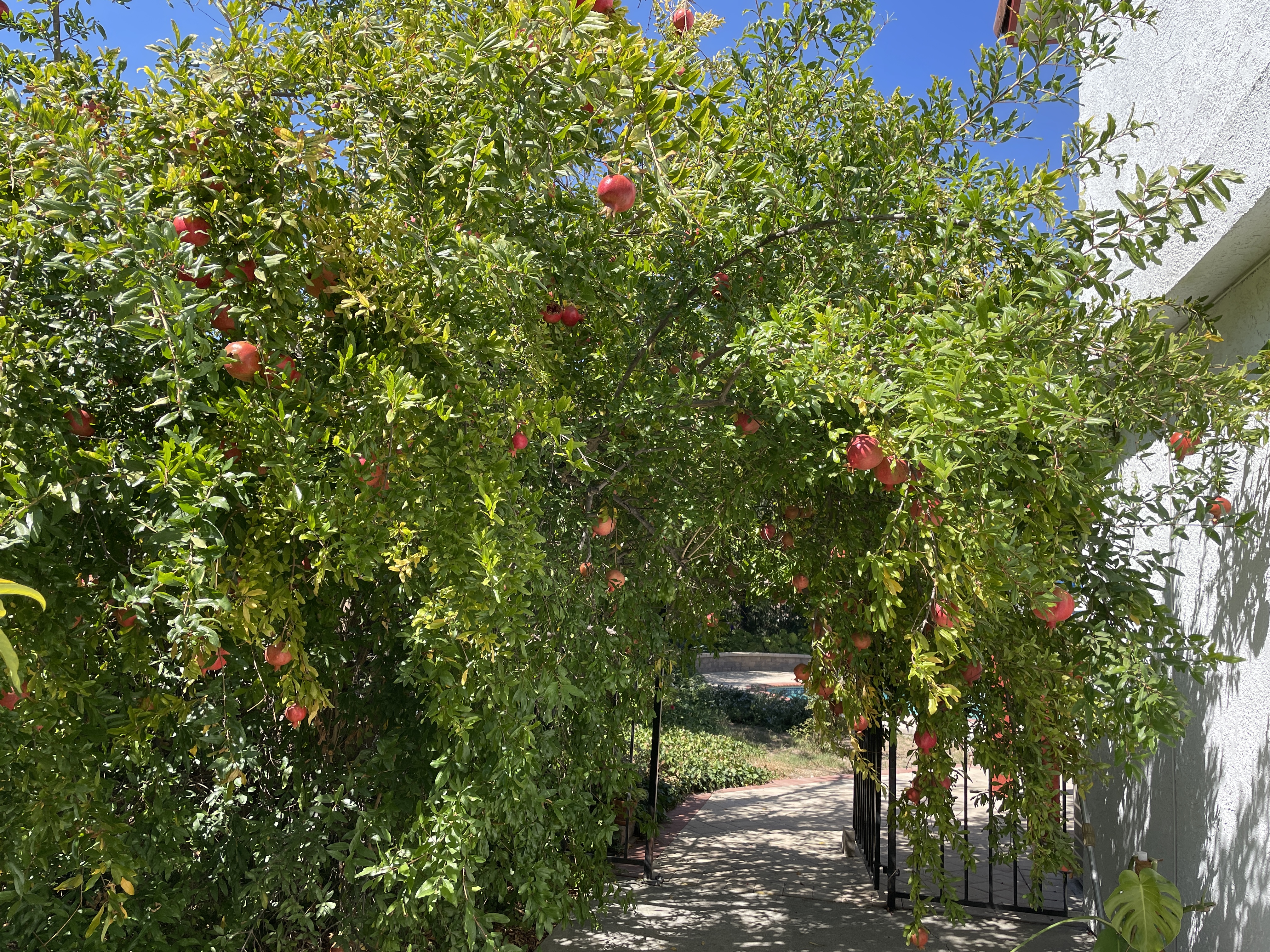
An essence within the heart of trees
allows them to communicate
with other trees to
-aid each other when disturbed
-send secret signals, warnings to other trees
-express pain, sympathy.
The kingdom of trees now cries
worldwide in pain,
watching each other’s murders.
land laid naked, nature destroyed.

Note: I wrote this poem last year. It is published in the anthology, “Writing Through The Apocalypse, Pandemic Poetry and Prose”,
Editor: Marcia Meier
When it first came out in 2018, I read The Overstory by Richard Powell. Finding the Mother Tree: Discovering the Wisdom of the Forest by Suzanne Simard appears to contain the endless years of detailed research and life story behind one of the characters in Powell’s novel. In fact, in her Acknowledgements, Simard thanks Powell for helping to make her life’s research more accessible to the general populace.
Simard’s book is part memoir, part detailed scientific explanations of her research and how a forest works and lives, and part how difficult it is to be taken seriously in the science world if you are female and your research contradicts the norm. She grew up in Canada. Her family made a living cutting down trees. Her family and life was and is intricately interwoven with nature. Even as a child, she was obsessed with tree roots, crawled around on the forest floor to see what lived there. A specific fascination was all the types and colors of fungi that grew just under the surface. Why were they there? What purpose did they serve? Later this became her life’s work, leading her to discover how trees of varying species use these fungi to communicate with and nurture each other. Of special significance are the “mother trees”, older, larger trees who provide nurturance to all the younger trees around them, recognize their kin, favoring them as they nurture all the other trees as well.
Traditionally, loggers and timber companies clear cut, then replanted with seedlings of all the same species of evergreen. It took Simard decades of research to convince them that it was not only the poorest way to grow new trees but also the least economical. For decades they saw her as some nutty woman, laughed at her research, laughed at her, even using epithets to her face. Ultimately, however, her work led to changes in how forestry is practiced.
This book relates her long struggle to save the forests. For those who are science minded, the final pages of the book contain 32 pages of Critical Sources. If you are interest in learning more about “mother trees”, go to http://mothertreeproject.org. It defines the term “mother tree” and explains how trees communicate. It also contains videos.

Buenos Aires has many neighborhoods, areas with sometimes distinct character. Our hotel in San Telmo made it easy to see a lot of the city by walking. Other areas we strolled through include Centro and Recoleta. In the three days we stayed there, we walked 35 miles according to my Fitbit.

This Starbucks was exactly one block from our hotel. We went there the first morning for the typical Argentinian breakfast: coffee and a biscuit (not like the ones here) or a small croissant with some sweet glaze on top. Starbucks can be found throughout the city.
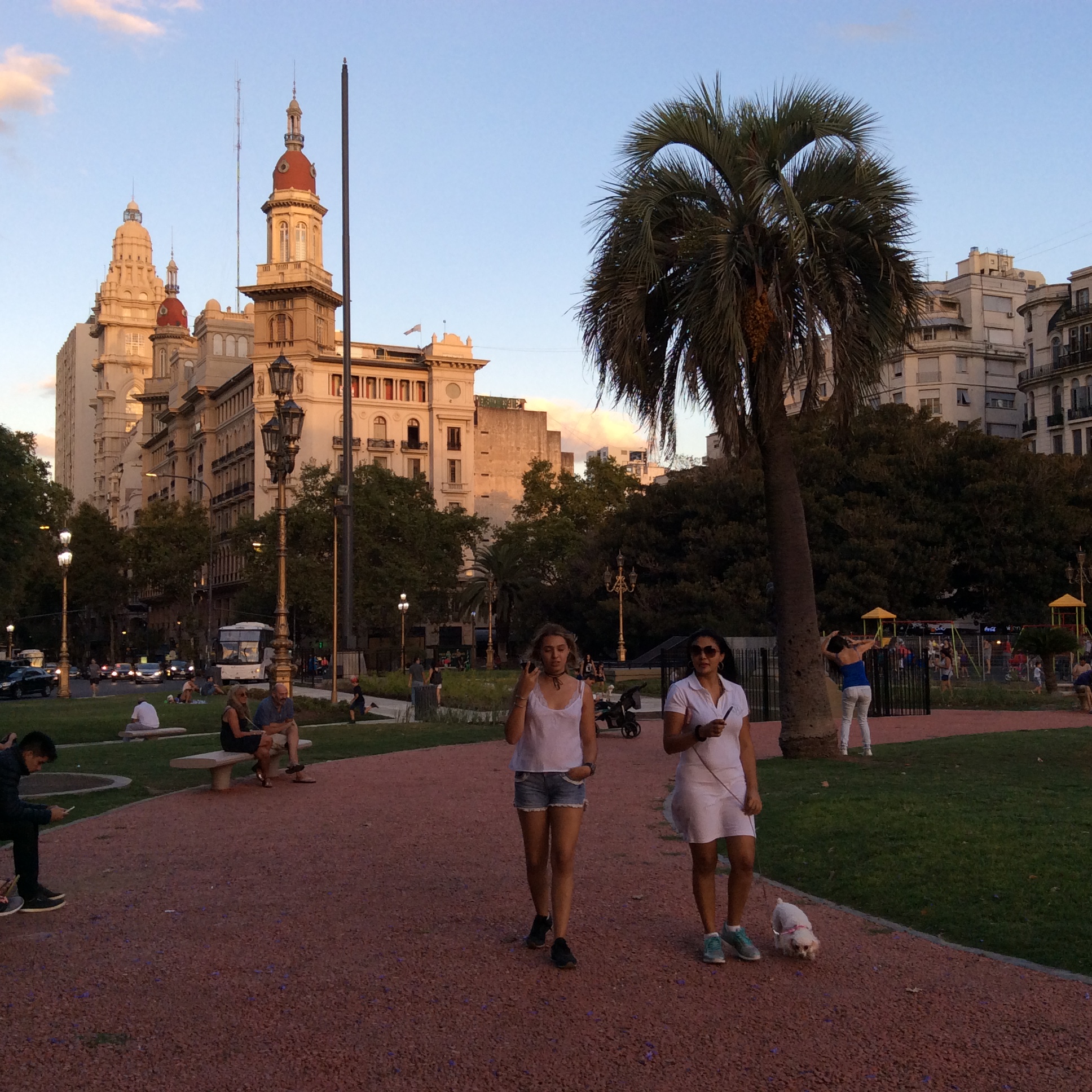
Everywhere you see beautiful parks and people use them for strolling, dog walking, jogging, relaxing, picnicking, hanging out–you name it. Plus the trees–on all major streets, on side streets, everywhere. Of course, it was the end of summer. Perhaps parks receive less use in winter.

Even on main thorough fares, like this one which is claimed to be the longest street in the world, trees reside on the sides, in the middle, everywhere.
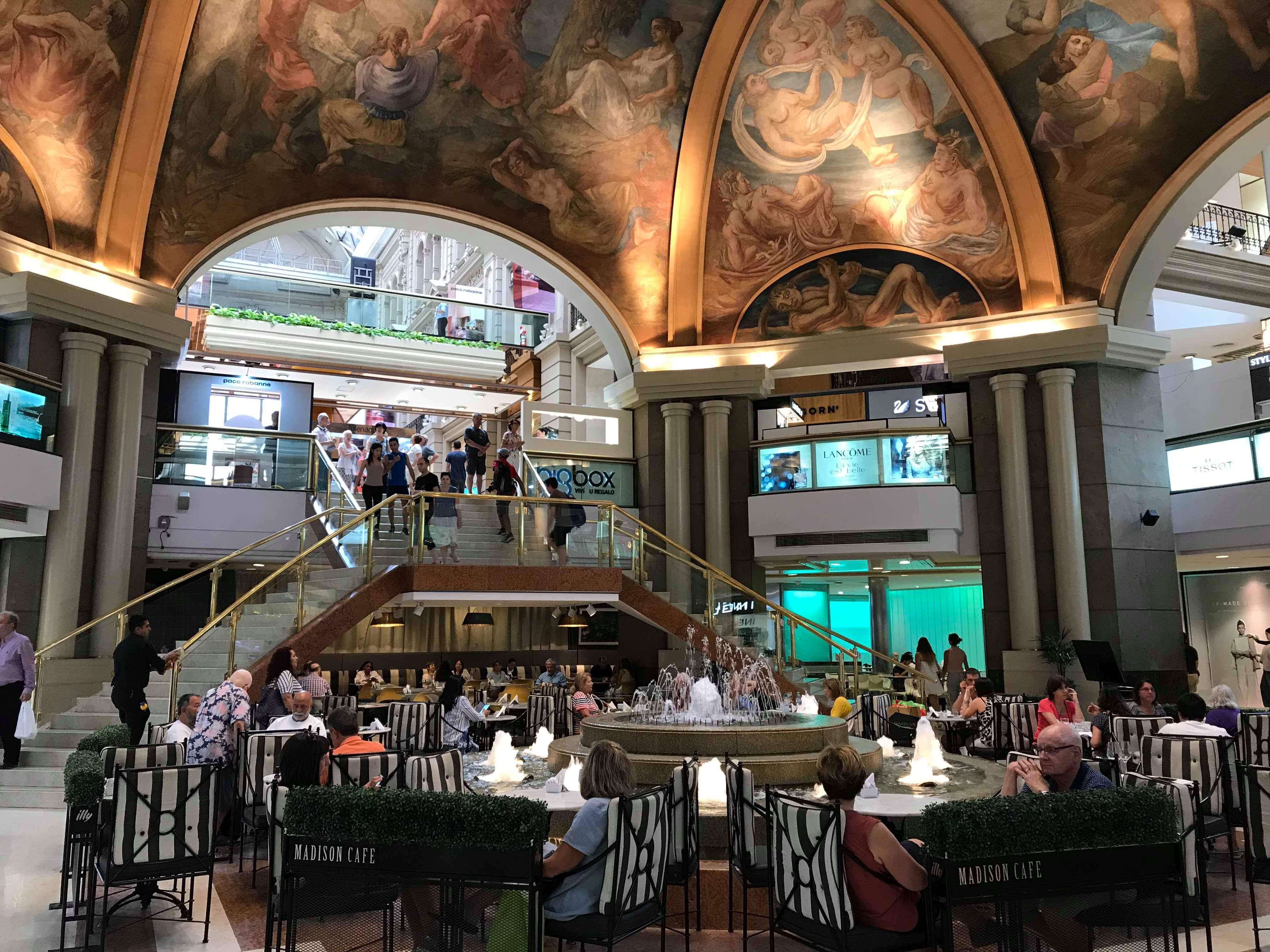
This is a mall, seriously. We ate a delicious lunch here one day and came back the next day for a drink. I had coffee; Gaston had a green drink with mint and ginger which was refreshing and delicious. The ceiling is well–take a look!

Hard to believe this is a mall.
One day we took the train to its end at the train station. The recently restored train station contains the fanciest Starbucks ever with incredible murals.
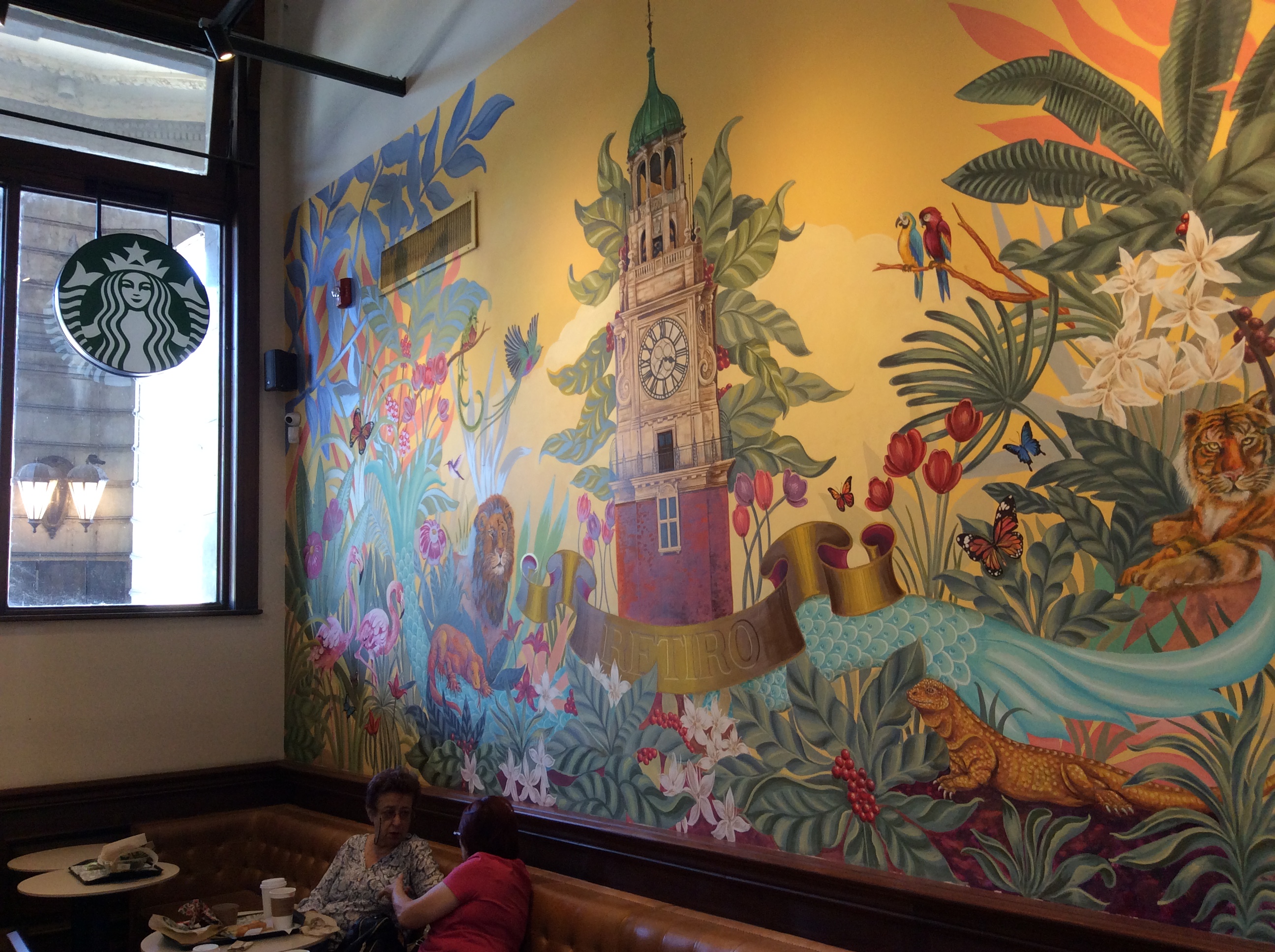
The ceiling is beautiful too.

From this station it is possible to take a train to various parts of the city but also trains go from here way out into the suburbs. Reminded me of the subway and train system in New York City and its suburbs where I once lived.
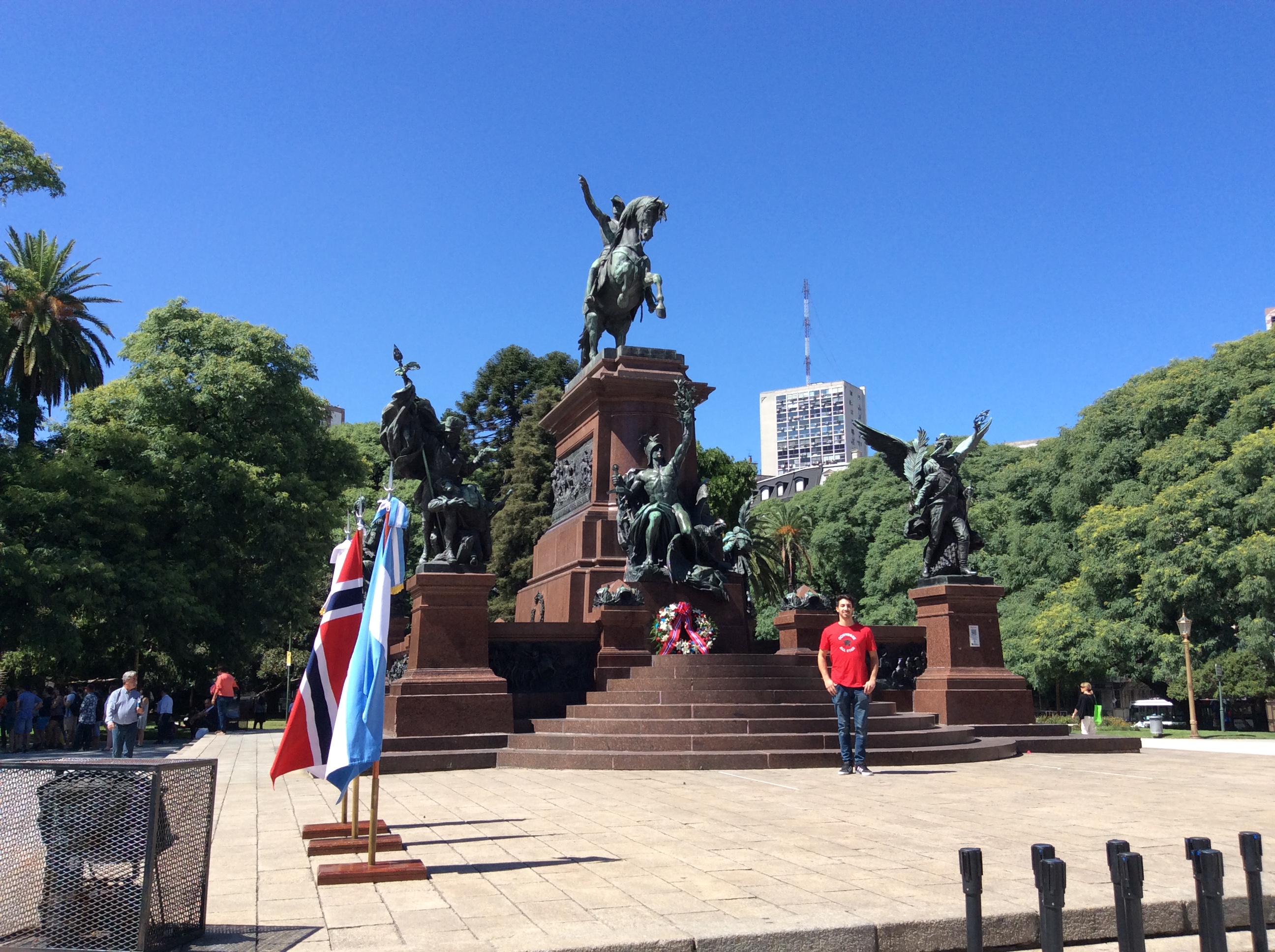
San Martin, the hero who freed southern South America from Spain, crossed the Andes with mules, not horses–Hugo, Gaston’s dad, gave me lots of history lessons. However, when I saw this statue, I did not know all the history yet. This park, filled with huge trees, borders several streets where, like much of Buenos Aires, modern and antique coexist.
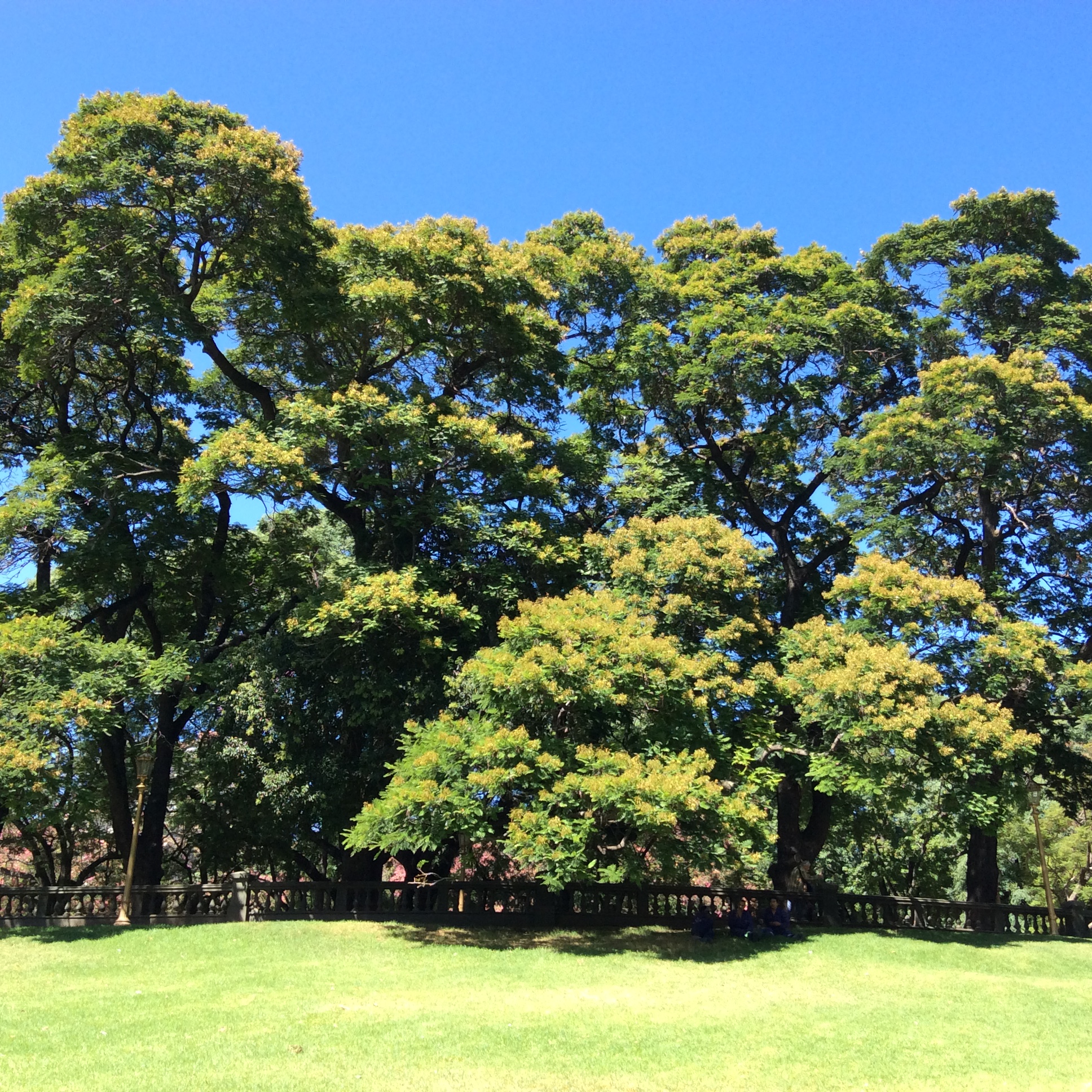

Suddenly we notice men on horseback riding out of a military area next to San Martin Park. We rushed across the park to watch, hoping they would ride around the park. They did not; they headed down a street.

We never discovered the purpose of this little parade of military personnel on horseback.
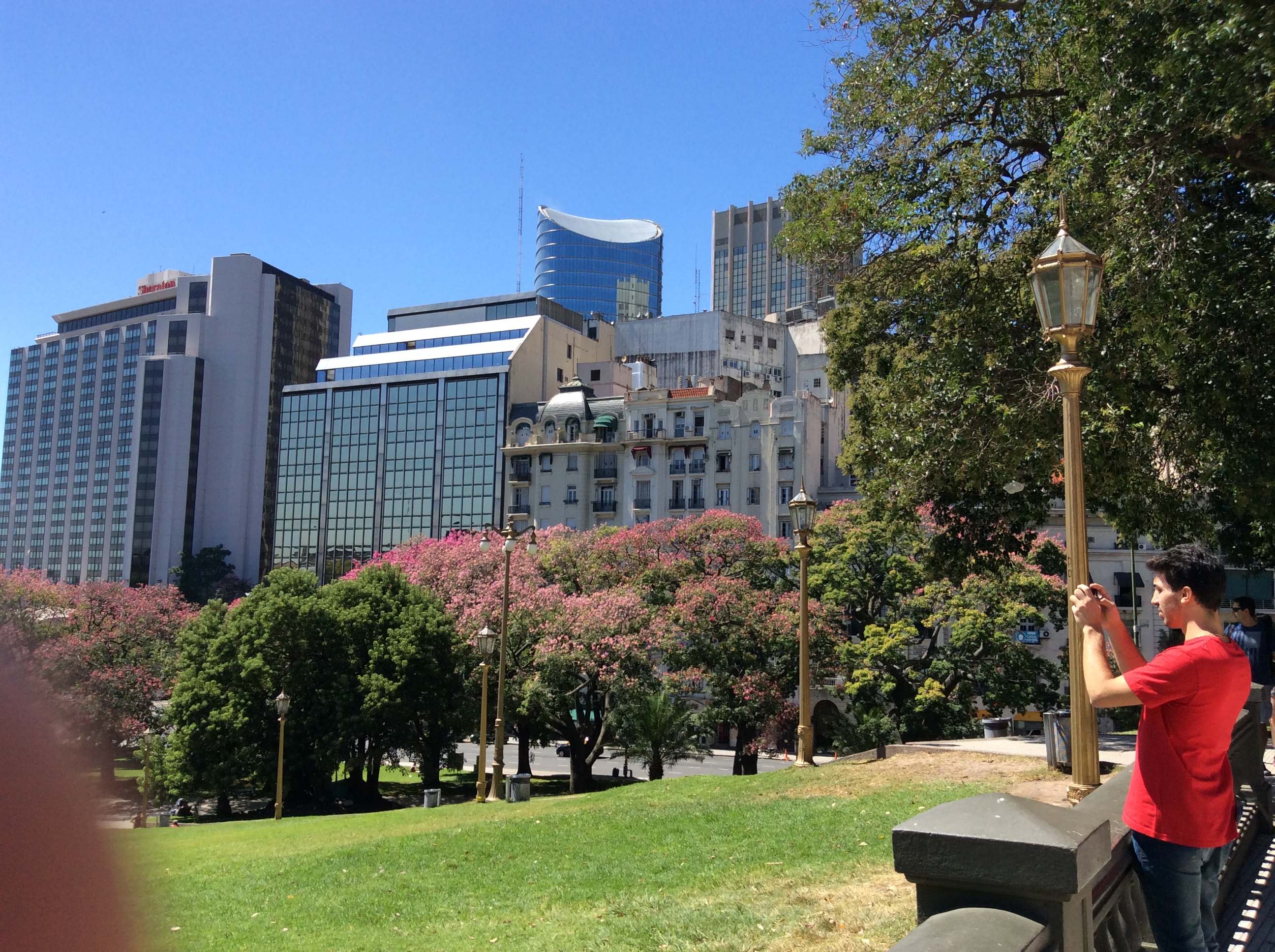
The buildings around the park provide a perfect example of the traditional, the centuries old beside the modern. The traditional building in the middle houses very exclusive apartments.
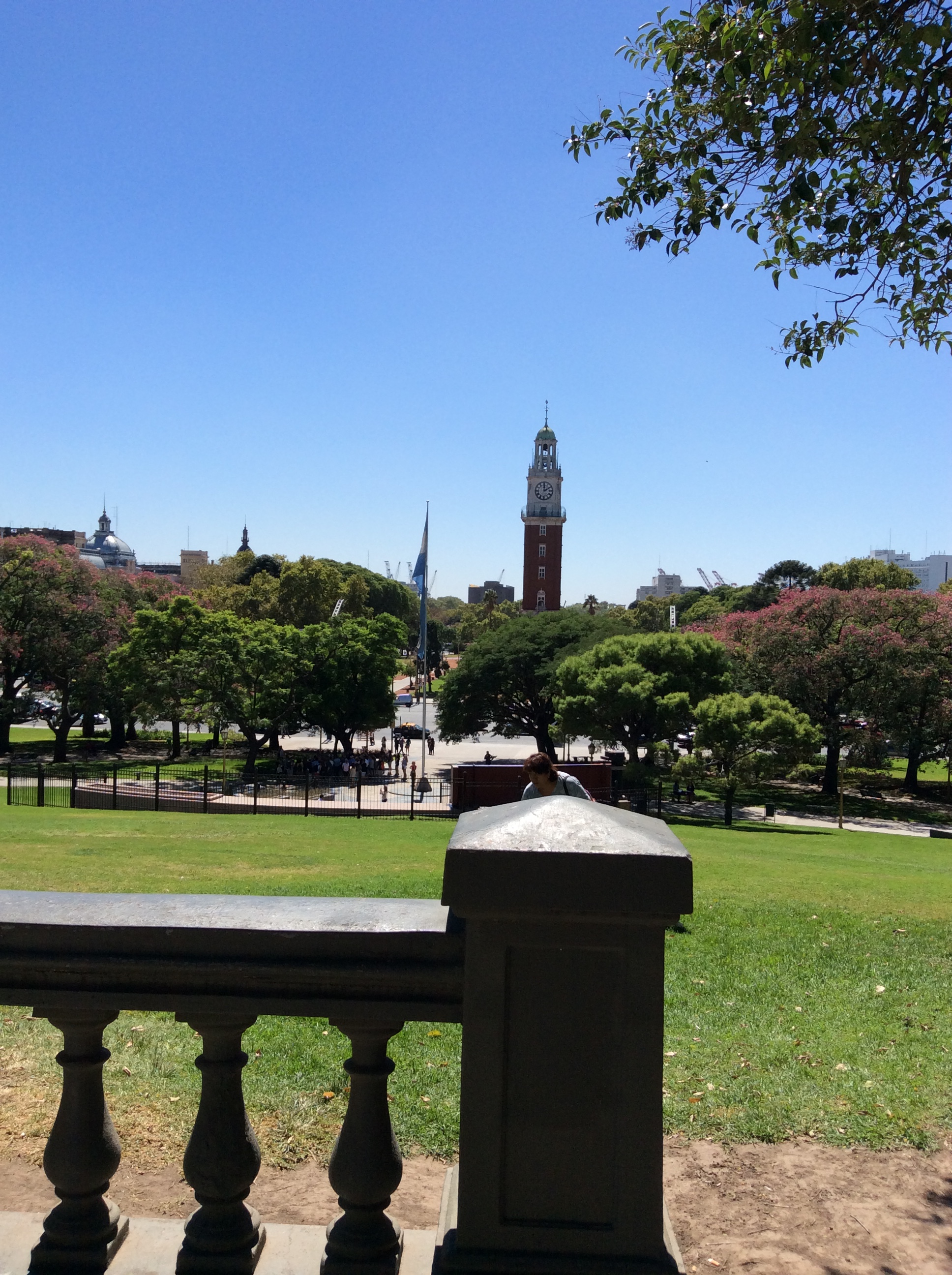
The opposite side of the park from the statue of San Martin overlooks the English Tower, given to Argentina by the English before the little war over the Falkland Islands which both countries claimed. The English won.
A friend told me to take tea at the Alvear Palace Hotel so we headed to Recoleta area. We strolled around, did not take tea, but we did have lunch in one of the small restaurants inside the hotel area.

Next to this restaurant resides a tea store, Tealosophy, where they sell nothing but tea. I quit counting at fifty different blends. In Argentina International Women’s Day was highly celebrated. This tea shop created a special blend just for that event, Mujeres Power. I bought some; it smells heavenly but have not tried it yet.
We walked down to another park near the famous cemetery where all the national heroes and important people have been buried for centuries. Nearby we saw the largest tree I have ever seen.
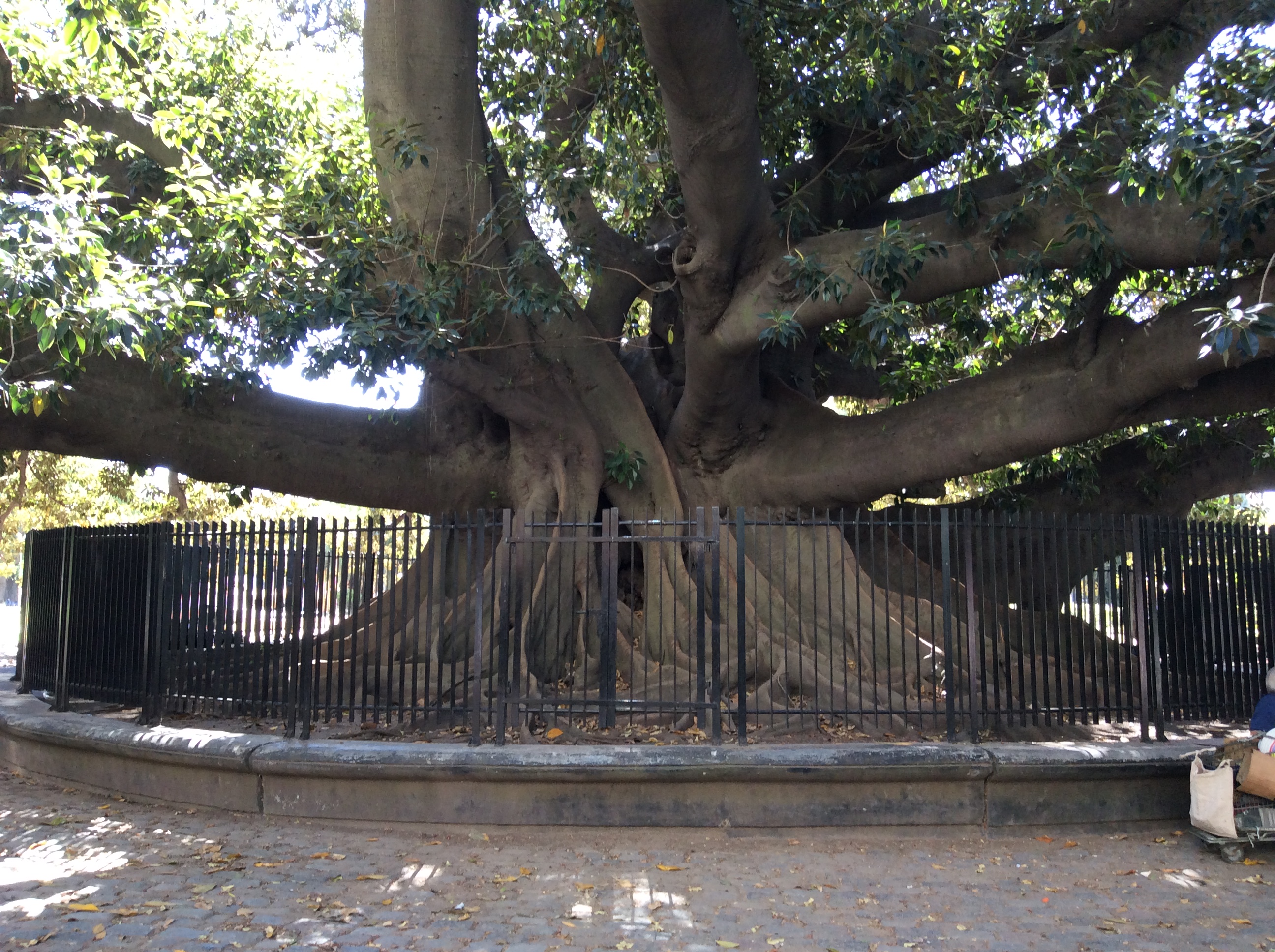
The branches, which were impossible to photo in one picture, extend far and are so heavy they are supported by cement or metal columns.

The tree is to the left in this photo. The walk leads to a monastery and the cemetery.

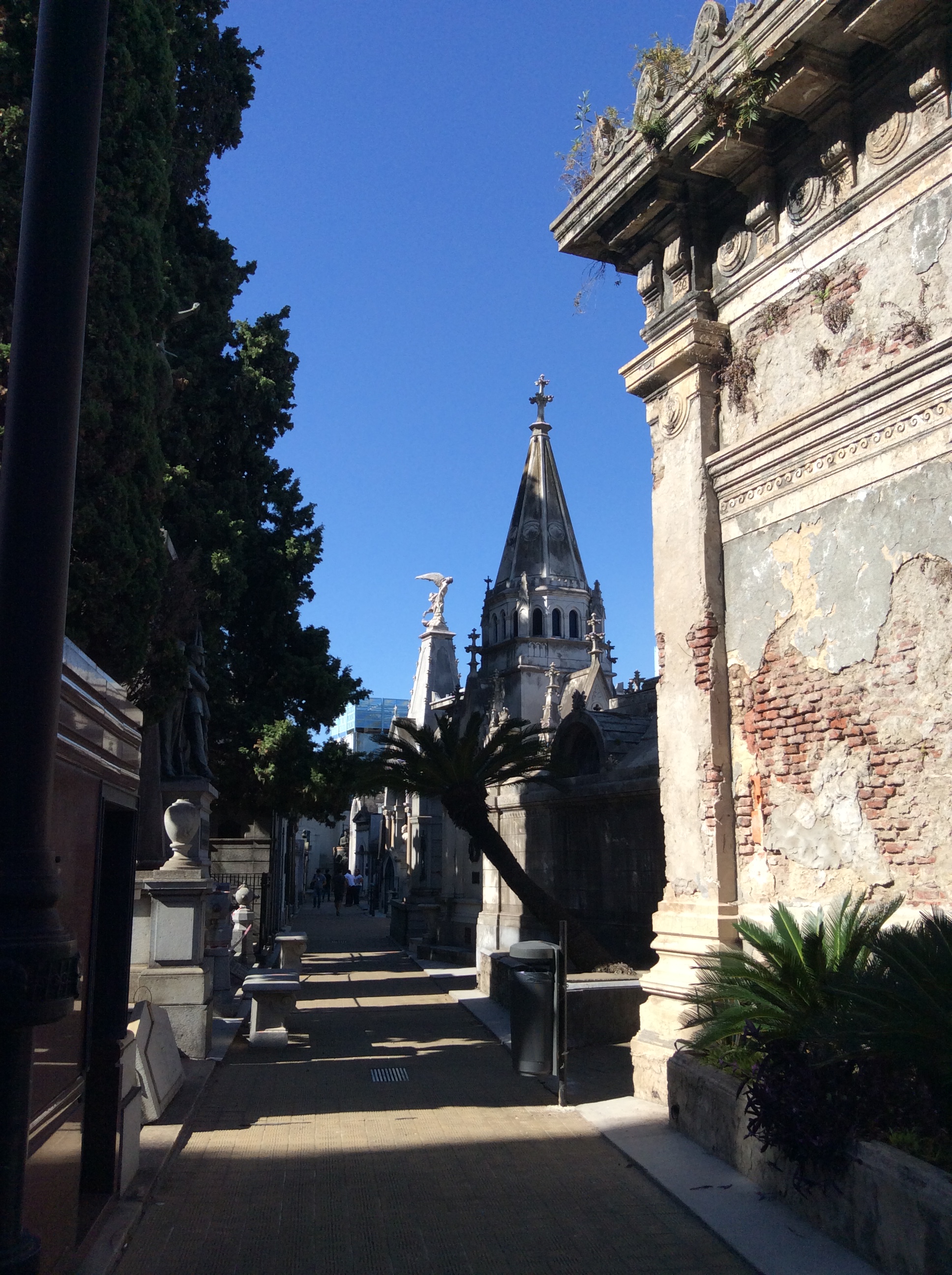
The cemetery was full of people.

The artwork here speaks for itself.
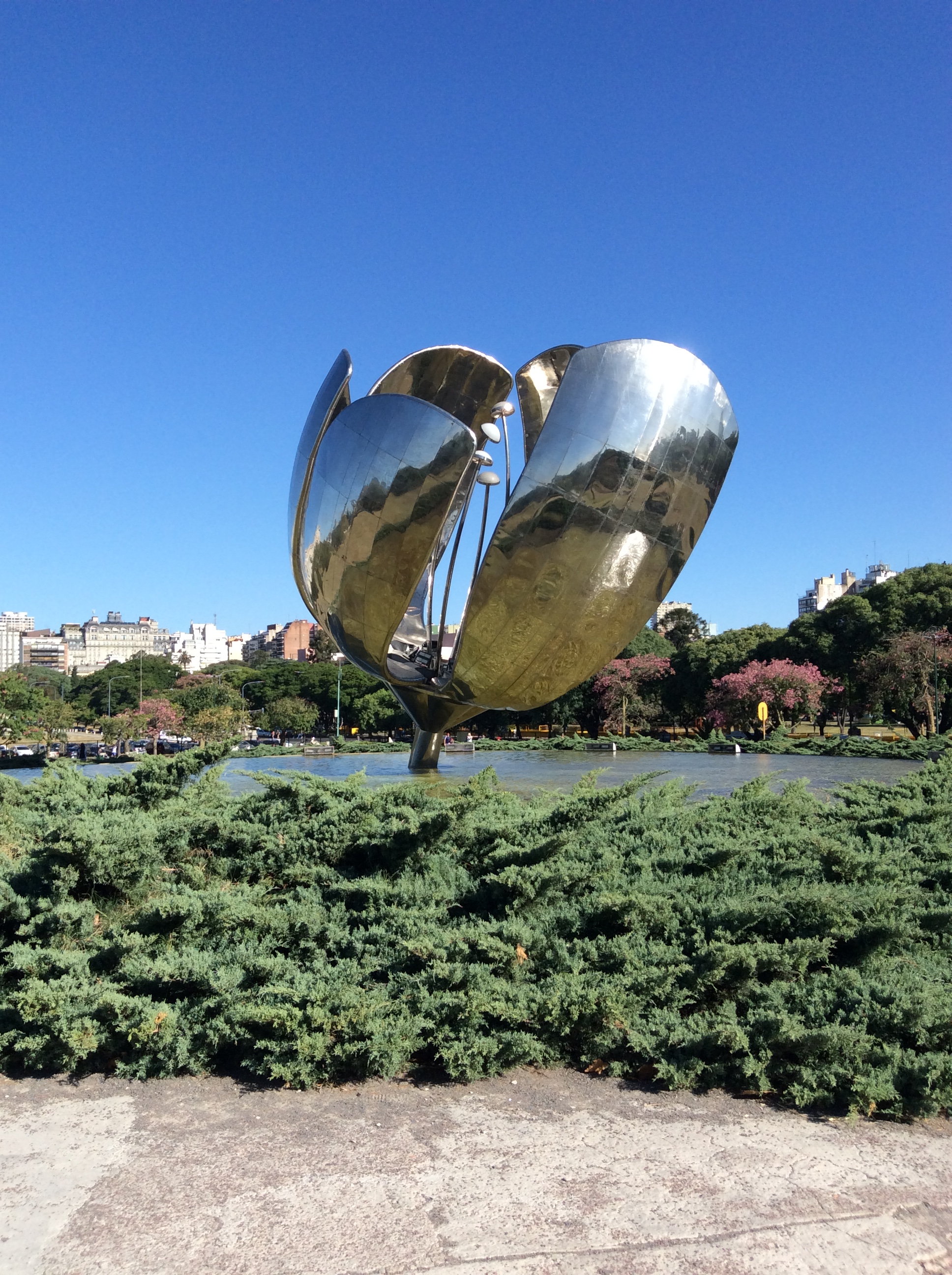
As we walked back we circled this famous piece–a tulip that opens and closes.
Then farther down the street which is close to the port–we could hear ship sounds, etc.–we saw this living wall.
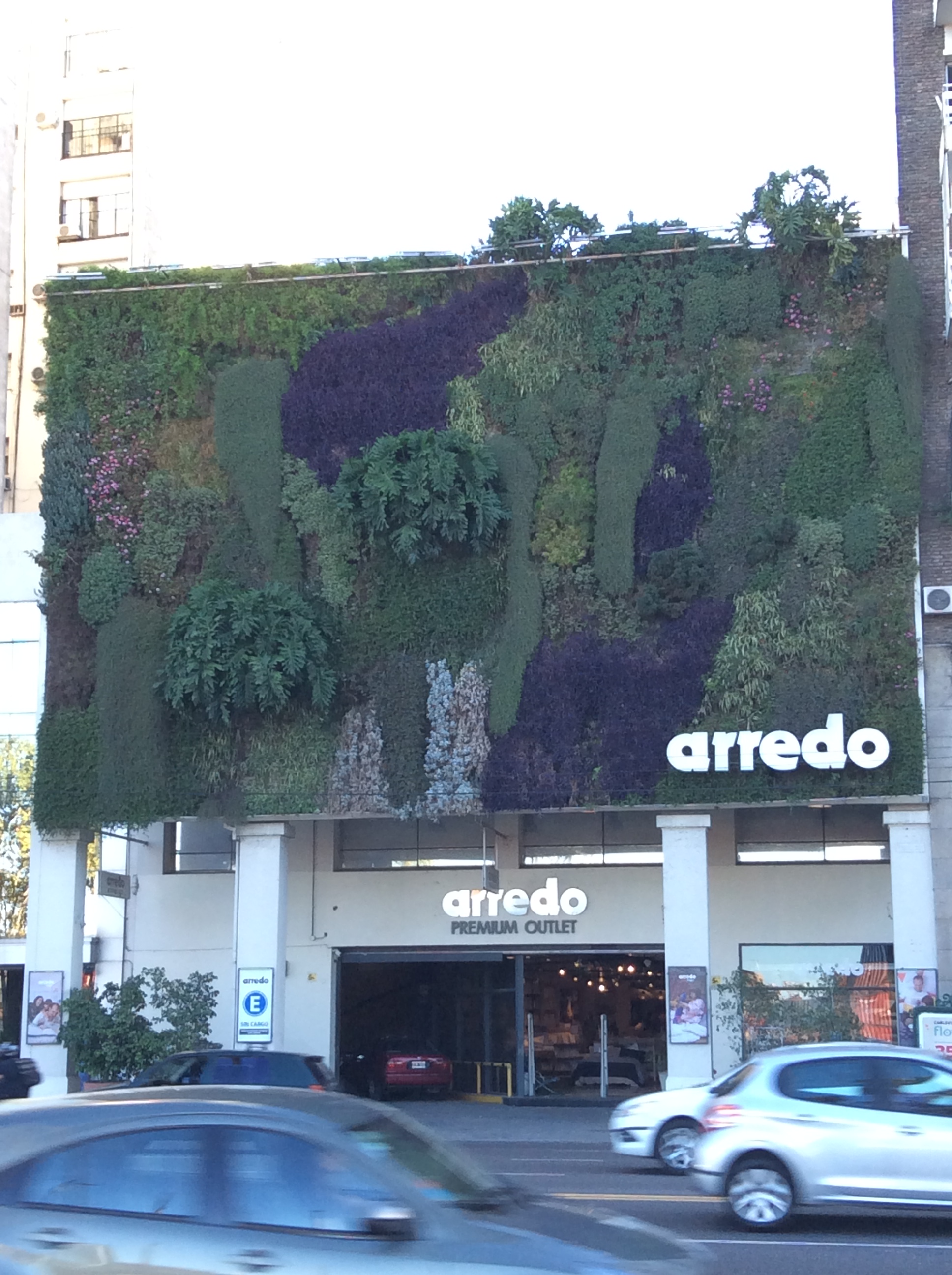
Yes, this wall is made of living plants. I could not help but stop and stare.

The building which holds their equivalent of the US Congress. I continue to wonder how I managed to walk past the Pink House–like US White House–several times and never take a photo. Perhaps I was distracted by the protesters. Argentina is used to protests which appear to be legally protected. In the one we saw one evening, the protestors carried banners of Che Guevara.

And finally some typical views, this one along a side street.

See the paintings. With deforestation affecting so much of the world, the idea of trees as sacred is especially appealing and meaningful.

In a world where humans were small and nature was big, surrounded by forests of trees of immense size and stature, it’s not surprising that the ancient Celts came to hold trees as sacred. Like many others, the Celts revered the World Tree or the Tree of Life as the mythic bridge between heaven and earth. The roots reach down and ground with the Earth while the branches spread their canopy up to the heavens.
View original post 745 more words
Many tell me or believe that one person, him or herself, cannot do much to change the world, to make a difference. This short movie tells about a man in northeastern India who transformed a wasteland into a forest by planting one tree at a time over many years. Now elephants, deer, and even tigers live there. Take a look for yourself. Look for the youtube video called “Forest Man”. The web address is :
It won awards at several different film festivals including Cannes.
Travel the World 4 Less
A Glimpse into My Life & Passions
Ceto-Magoism, the Whale-guided Way of WE in S/HE
Exploring the F-word in religion at the intersection of scholarship, activism, and community.
ANCESTRAL FOOD. HERBAL WISDOM. MAGICAL COOKERY. SEASONAL CELEBRATION.
inesemjphotography
politics, engineering, parenting, relevant things over coffee.
Food is the best expression of every emotion. Explore through my reviews, recipes, events and more.
Smile! A Site for Friends Wherever You Are!
inspiring personal growth through poetry and writing
Combining atheism with whimsy. This is a Fair and Balanced blog based on opinion unencumbered by fact.
Odds and ends ~ My Life
Original poetry, commentary, and fiction. All copyrights reserved.
bripike@gmail.com
A wildlife filmmaker in Africa
A Geeky Feminist's Musings On Pop Culture
"5 minute walks"

 writingontherim