Canyon de Chelley–Part Two: Driving into The Bottom


Canyon de Chelley was named by the Spanish who could not quite pronounce the Diné (Navaho) word for it and hence this name which is pronounced like de shay. It is more than 30 miles long and has a river running through it at least a substantial part of the year. In summer native people live there with sheep, horses, etc. even though fewer and fewer of the younger generation choose to do so. To enter the bottom of the canyon, you must acquire a permit and hire a Navaho driver. This is to protect it from the vandalism that occurred in the past. Canyon de Chelley is jointly managed by the National Park Service and the Navaho Nation.

Canyon de Chelley begins at the edge of Chinle, AZ, near the Holiday Inn which, by the way, serves traditional food such as mutton stew and blue corn fry bread. Yes, I ate both. This photo shows the beginning.
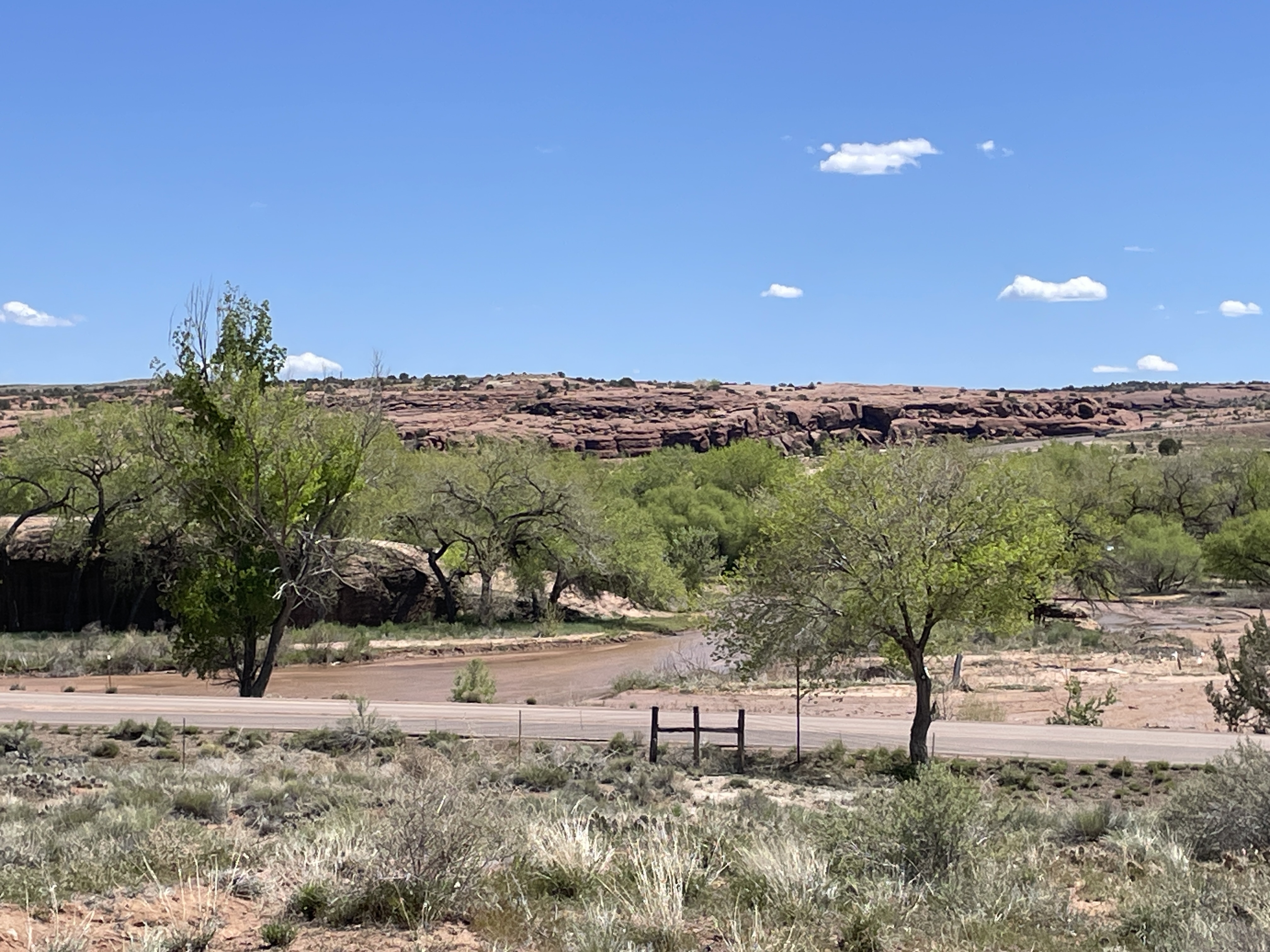
It was quite a trip; I sat between two women in the back of a Jeep with a perfect view of everything right in front of me. Oscar, the driver, knew exactly how to traverse the water, the wash (what they call this stream), run up and down the banks.

Driving right up the middle of the wash.

Petroglyphs can be seen in so many places we stopped that I lost count. Oscar said they are nearly endless and can be found throughout the canyon walls.

A few days previous to our arrival it had snowed so everything was green and lush from snow melt.

In addition to petroglyphs, there are etchings in the rock walls.

In this case an etching/rock carving of horses.

Yes, we drove under this overhanging tree limb.
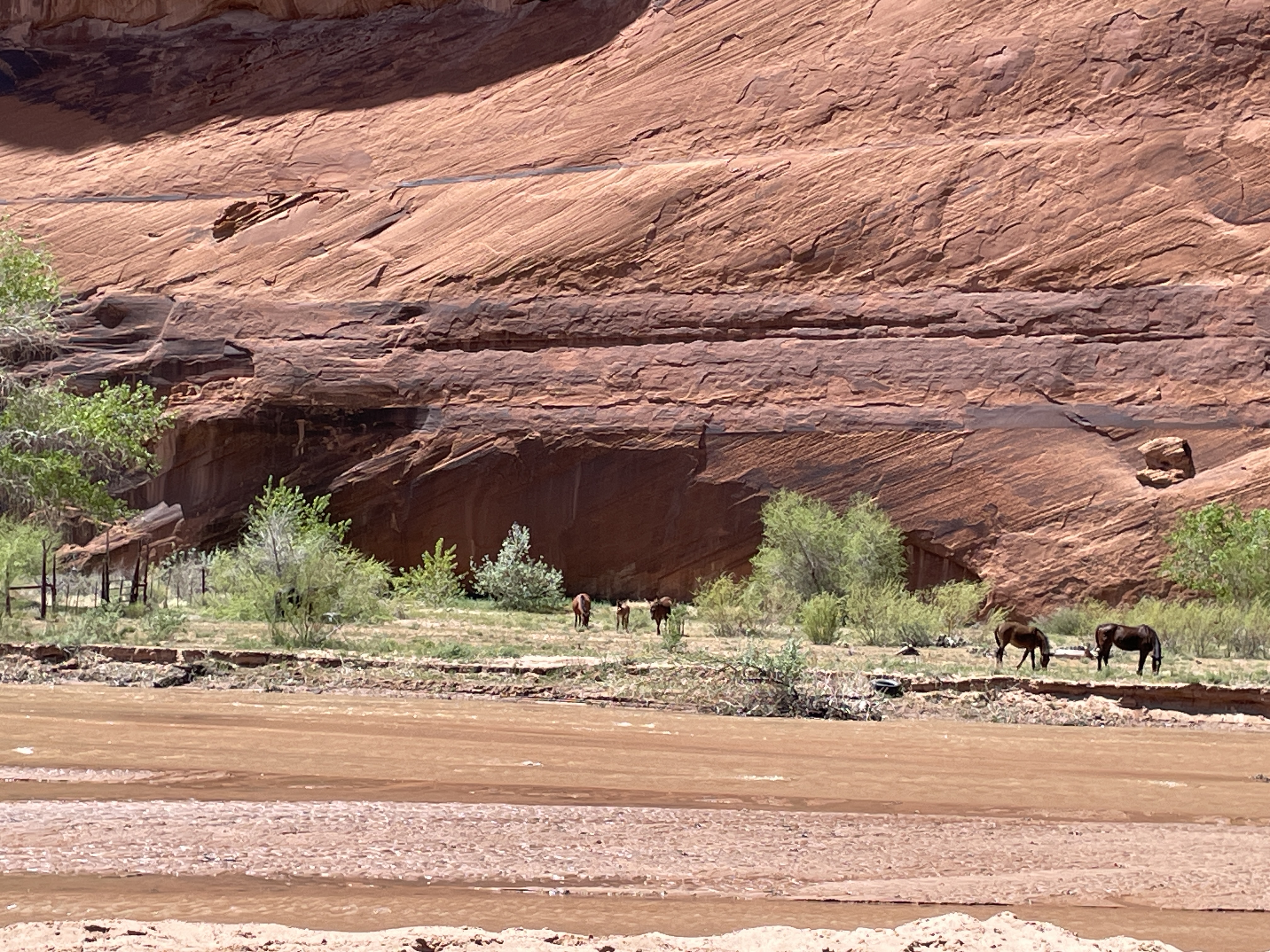
Sometimes the wash was narrower and deeper and we drove up and down steep banks and through deeper water.
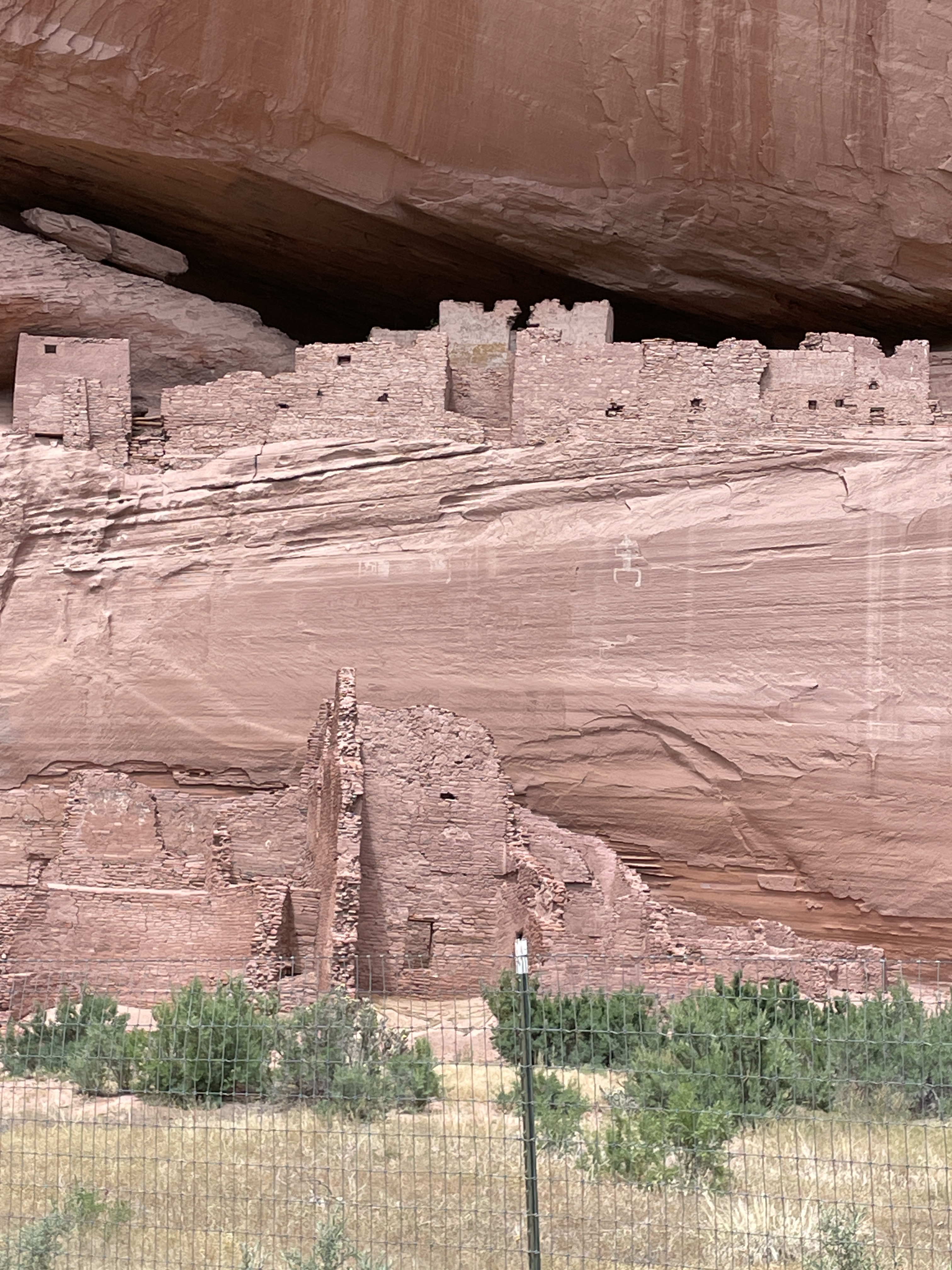
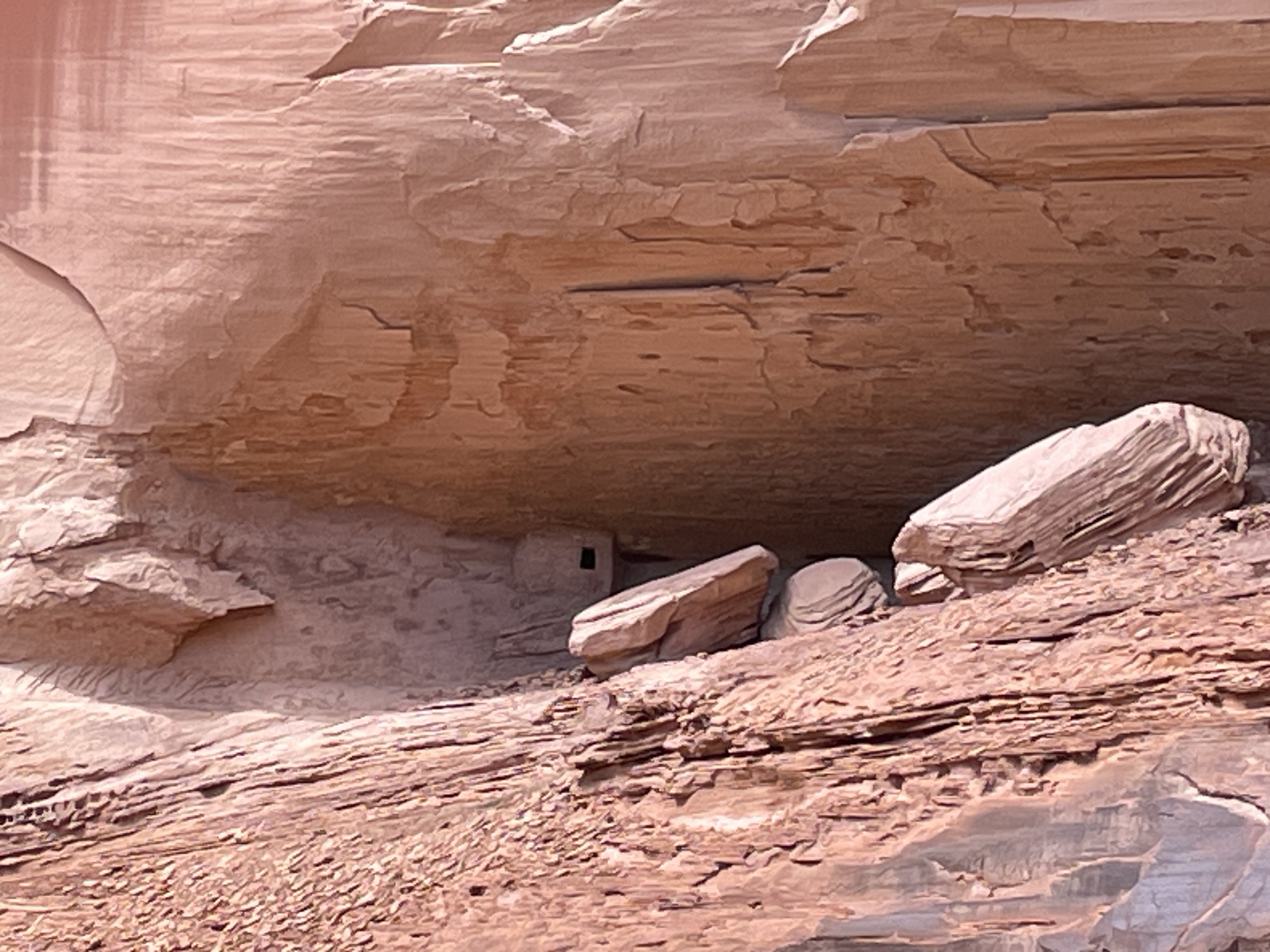
Ancient pueblo people lived here for centuries, some more than 5,000 years ago. This is one of the largest pueblo structures in the canyon (The White House–due to a white washed wall which you cannot see from this vantage point). The fence was built to protect it from vandals. We saw many smaller dwelling places and Oscar said there are hundreds in the canyon.

Headed back down the wash. This was a half day trip so only saw less than half of the canyon. You can hire for an all day trip complete with picnic lunch and go all the way to some of the famous formations that can be seen from the road at the edge of the top. There is also a side canyon called Muerto–due to a massacre of the natives that occurred after the Navaho forced long march.

The Jeep needs a bath after this trip.

Note: With a permit and guides, there is camping and horseback riding trips up the canyon in addition to this type of tour.

Canyon de Chelley–Part One


One of the most famous canyons in the country resides inside the Dine (Navaho) Nation. While administered by the National Park service, it is also the home of several Dine families. You can drive through the roads on the top freely, stop at various viewpoints, take photos, etc. Here are the various views I saw last week while there. The bottom of the canyon is restricted. To go there, you need a permit and a Dine (Navaho) guide. More about that in the next post.

Several families live in the bottom of the canyon, especially during the summer months. You cannot go into the bottom of the canyon without a permit and a Navaho guide.

Weekend Trip to Northern Baja


This past weekend I headed to Mexicali in Northern Baja to visit the town of San Felipe and see a new development about an hour south of there. San Felipe is a small fishing town of approximately 20,000 people where there are no fast food restaurants and no Starbucks. Excellent restaurants and good coffee can be found but not at the places mentioned above. They do not exist there. The town of San Felipe has a long boardwalk right along the Sea of Cortez with restaurants across the street. This past weekend they were holding a ceviche contest and fiesta on a cross street. This is shrimp season and the city is known for its shrimp. Unlike the Pacific side of Baja, there is no large commercial fishing allowed in this part of the Sea of Cortez because it contains many endangered fish and the place where whales come to mate. Locals can fish and you see smaller fishing and shrimp boats in the sea. Not only is the Sea of Cortez protected but so are the plants and animals in the desert. Certain plants, like ironwood trees, are ancient and rare. If you want to build a road, it has to be around them. Many other species are also protected.

Unlike the Pacific side of Baja, the water in San Felipe is safe to drink from the tap. It comes from an aquifer up in the mountains to the west.

We spent most of Sunday at the new green development (it is totally off grid) called Rancho Costa Verde. Solar is used for power and each house has a large underground water tank where water comes from an aquifer up in the mountains. This is a newer development so although many of the lots are already sold, except for beachfront, many houses are just now under construction.

This is a very modern beachfront property with marble floors and a glass wall facing the Sea of Cortez.

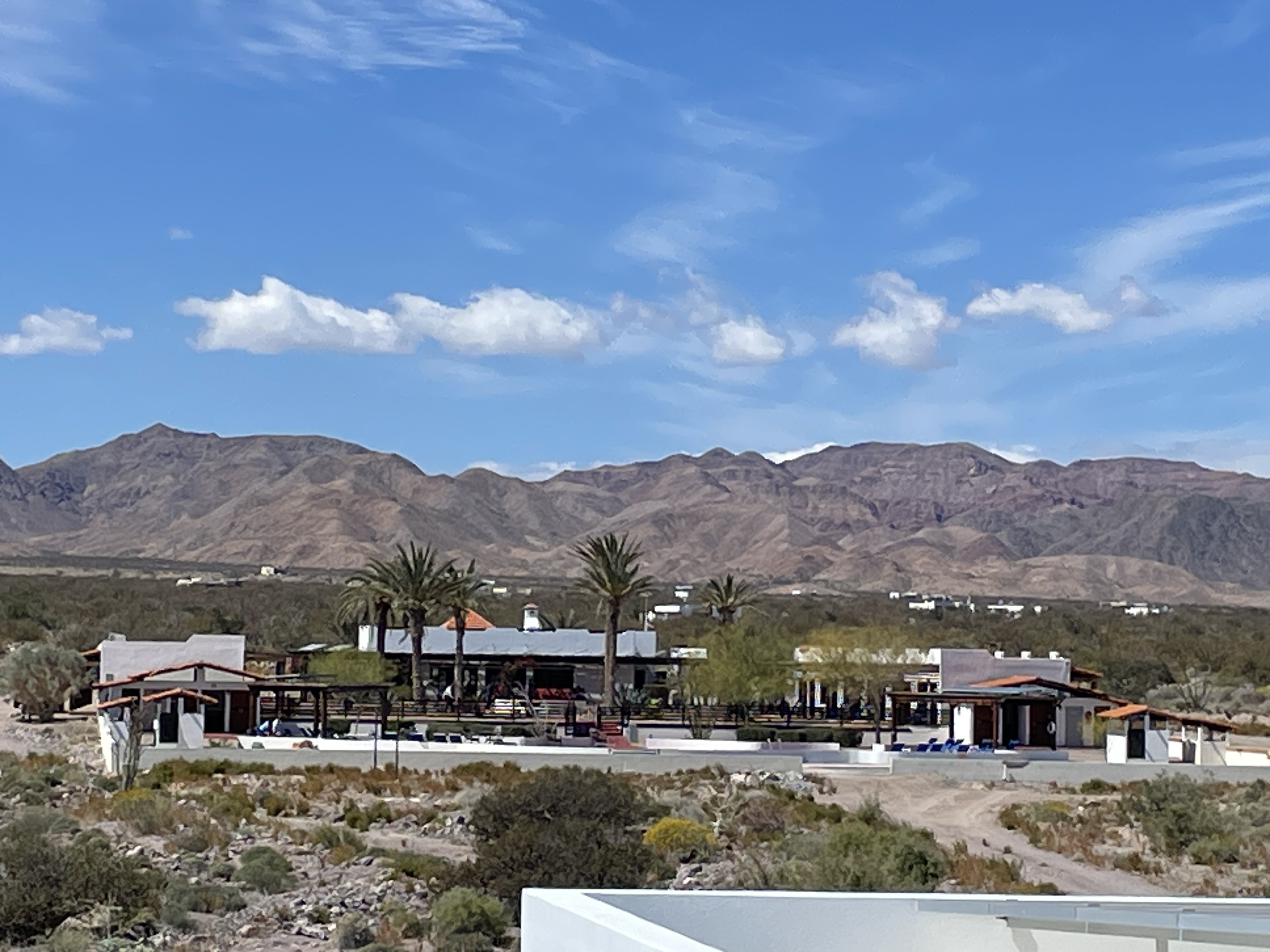
This photo is of the clubhouse and looking the opposite direction toward the mountains. Here I am standing on the roof of the house in the previous photo.

Here I am in front of the pool in front of the clubhouse facing the Sea of Cortez. The house in the first picture is on the left in the distance.

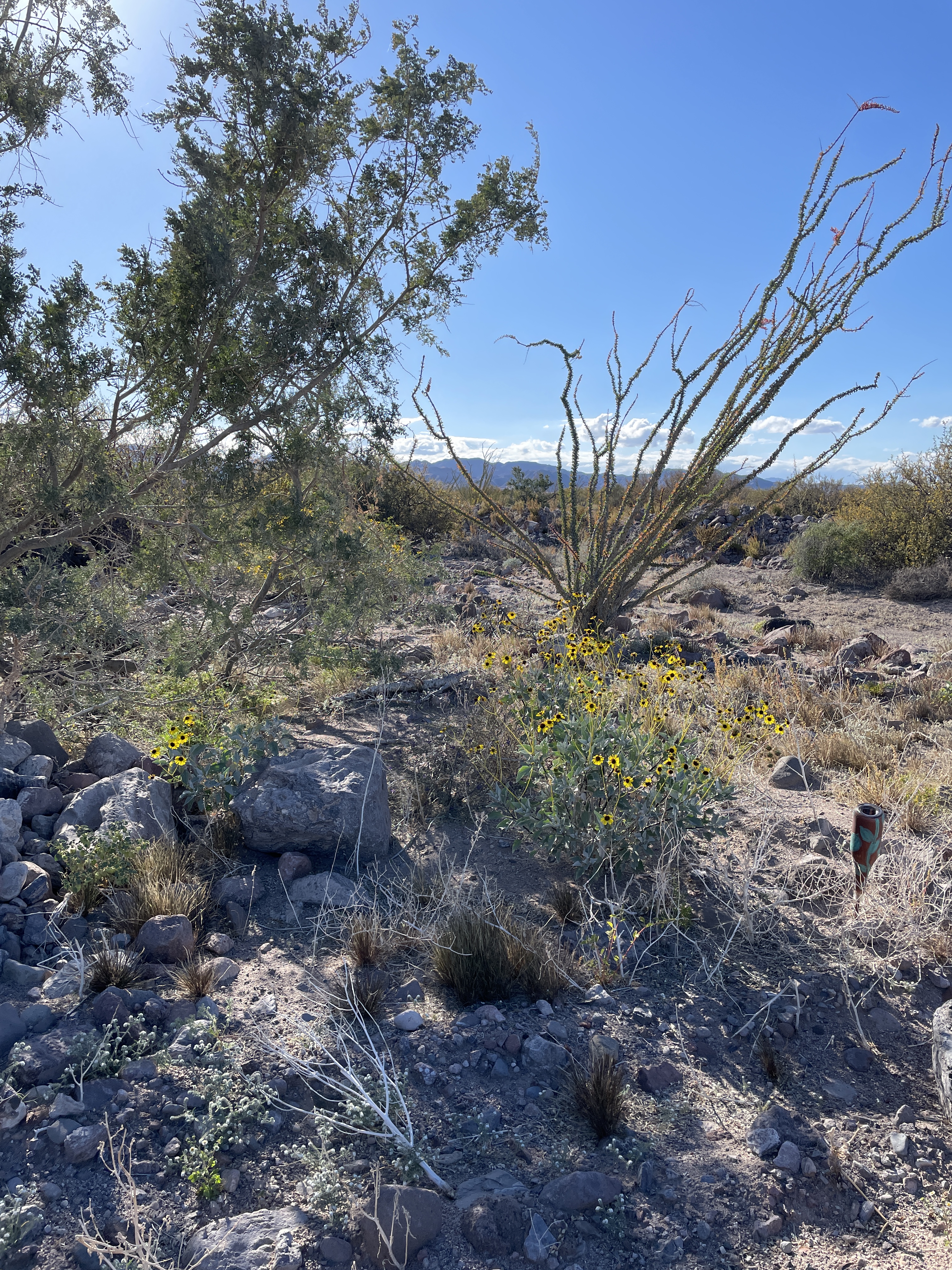
This is desert land where even though it can get hot in summer, the sea breeze keeps it relatively cool.

The plant on the right is ocotillo which is protected. If you are building a house and it is in the way, you have to move it elsewhere. You cannot just get rid of it.

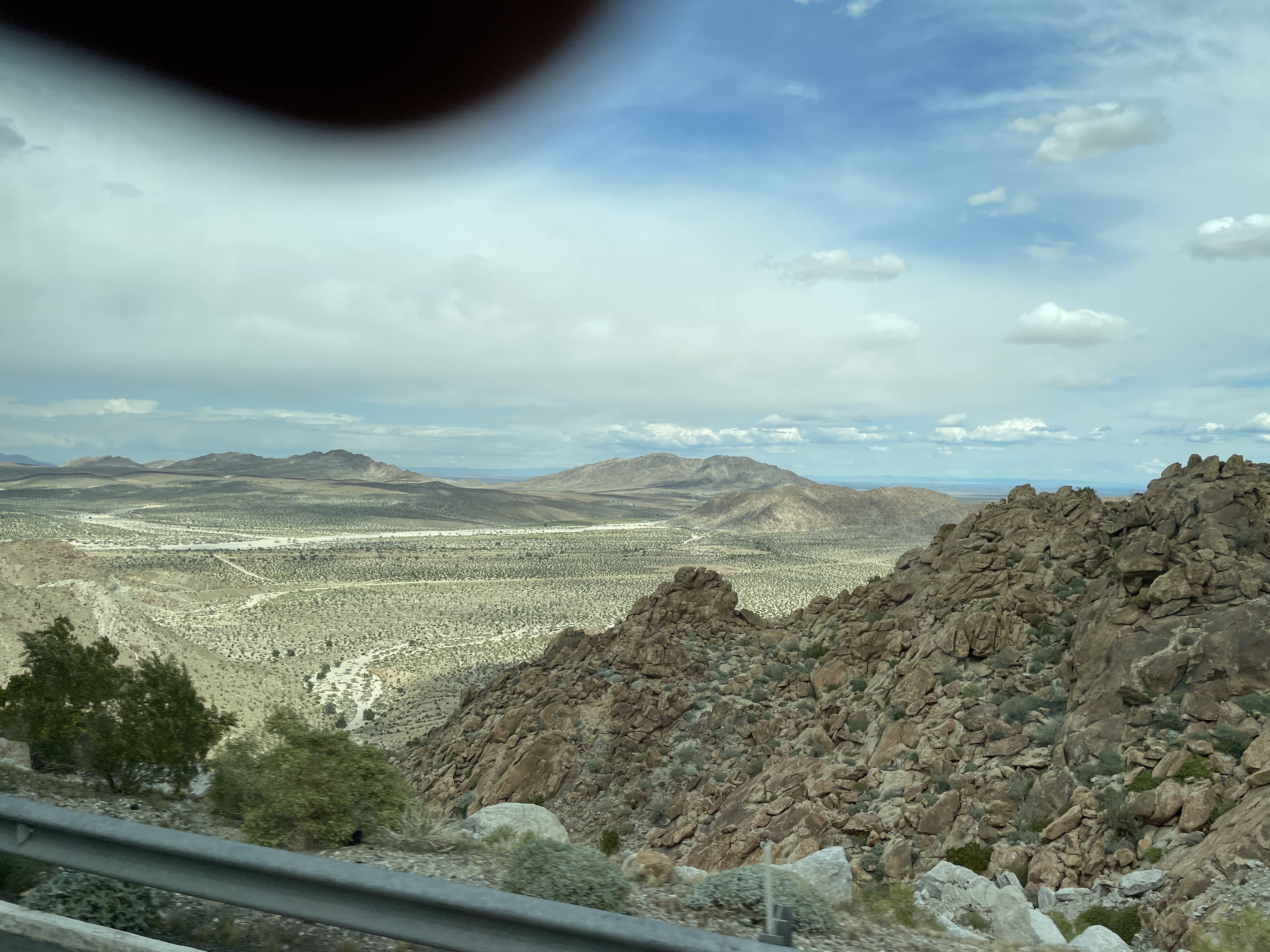
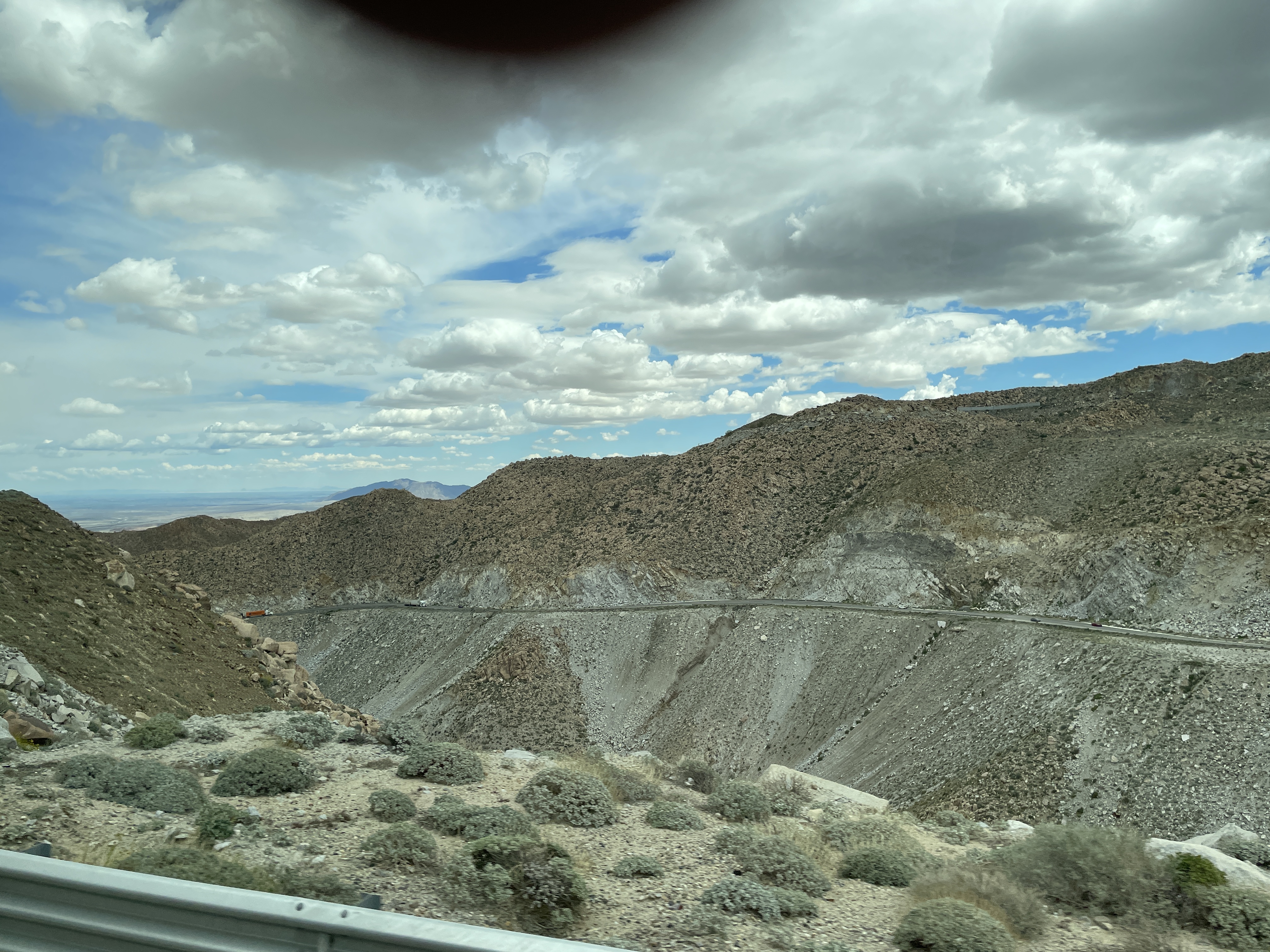
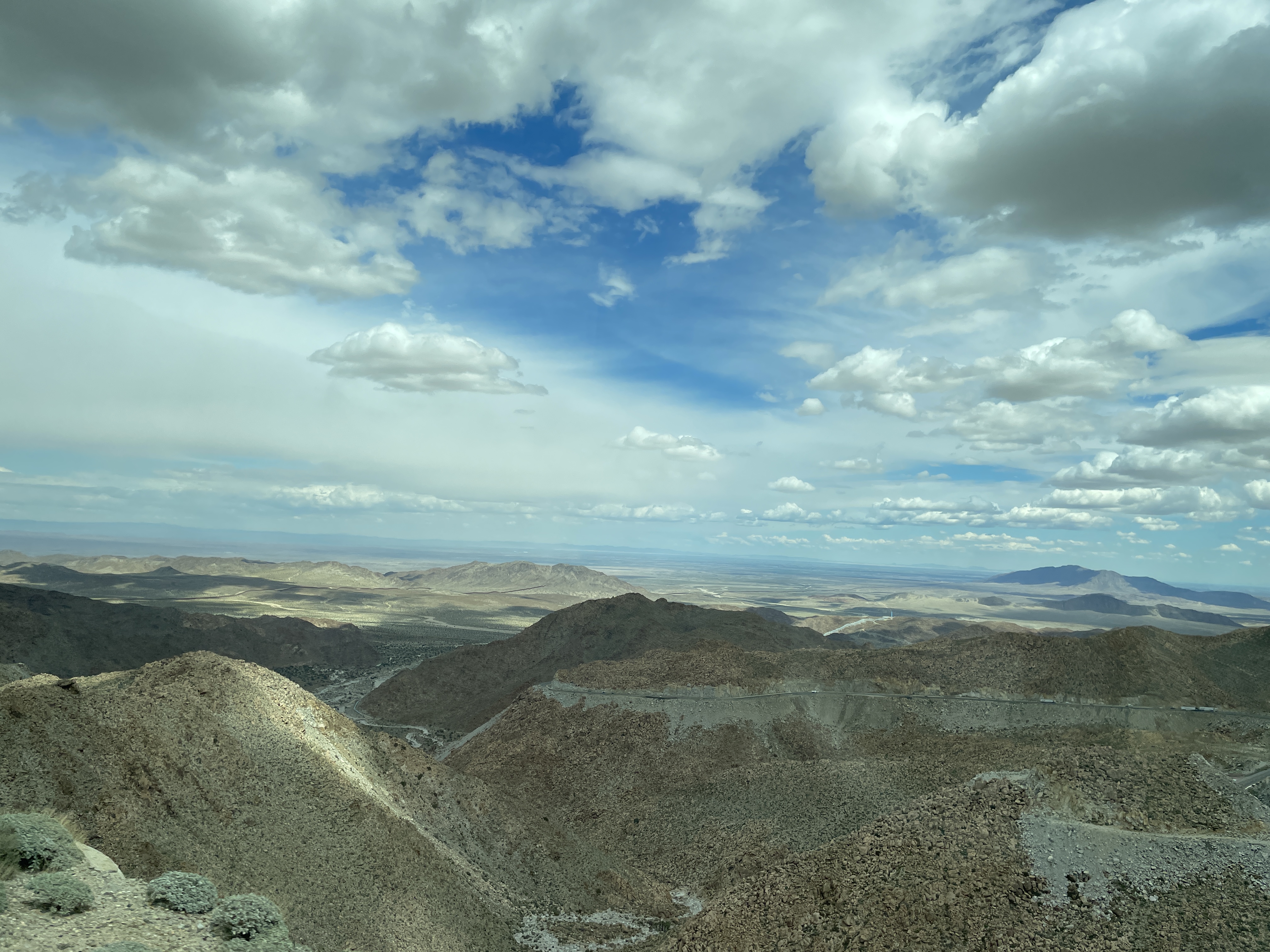
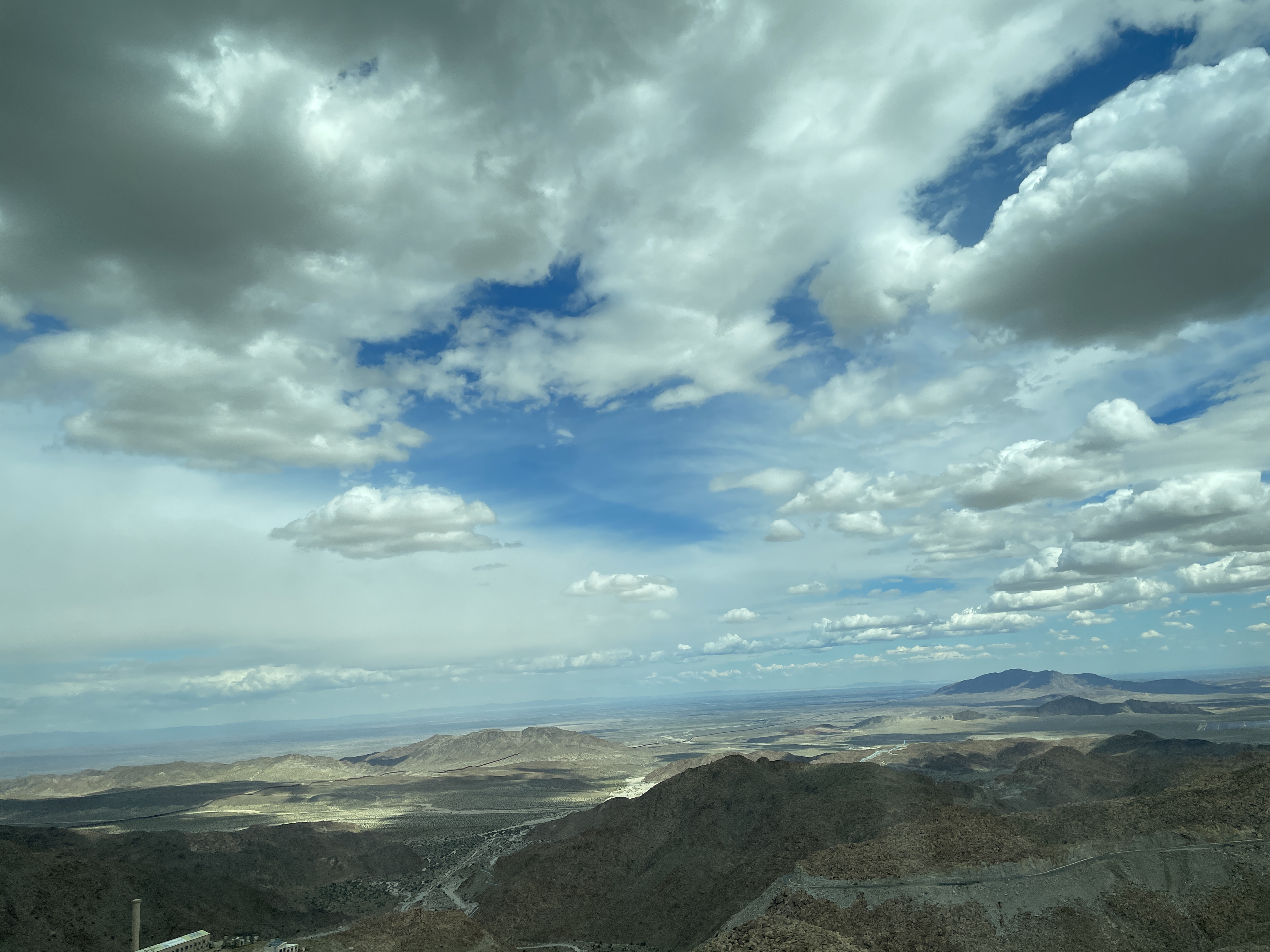
Monday was a big adventure trying to cross the border. We arrived in Mexicali only to discover no busses could cross the border there so we had to take the highway to Tijuana and cross there. To do this you must cross a mountain pass. What a feat of engineering building this road must have been. It is quite incredible and as you climb higher and higher the views go on forever into the far distance. The following are photos I took from the bus window as we drove higher and higher.

These mountains are made of rocks of all sizes that are just stacked on top of each other. Here only these small blue-green plants seem to thrive.

In this photo you can see the highway where we had just traversed.

Here you can see how at this height the mountains are nothing but stacked rocks of all sizes.

After the summit as we went down toward the town of Tecate, it started to rain and it rained most of the way to Tijuana. The Pacific side of this part of Baja gets rain and it was lush green this time of year while the Sea of Cortex side is desert.

I do not recommend crossing at Tijuana in a large bus. Even though we had sent all our passport information in advance, they made the bus sit there for nearly an hour and wait. Meanwhile those on foot and in cars were just zooming along at a rather rapid pace. Then we had to get out of the bus with all our luggage and everything and wait more. I crossed the border (not in a bus) last April and it did not take long at all. I have heard that Tijuana is the busiest port of entry from one country to another in the world but have not verified that. It certainly was busy yesterday.

One Book a Week-55: “The Scribe of Siena”, Melodie Winawer


At the beginning of 2023, my main resolution was to read at least one book a week on average. I exceeded the goal. Now I have to decide whether to continue. I discovered a lot of authors I had never read before and learned many new things.

This last book of the year is perfect for those who love Italy, the Italy of today and medieval Italy because it takes place in both time periods–mostly in the Siena of the 14th century but some in modern Siena as well. It begins in current day New York where Beatrice, the main character, works as a neurosurgeon. Years before, her older brother, a medieval scholar, moved to Siena to investigate the ancient rivalry between Florence and Siena. When her brother suddenly dies, Beatrice discovers she has inherited his house in Siena. When she goes there to settle his estate, she not only discovers his wonderful, centuries old house, but also a manuscript from a fresco artist, Gabriele Accorsi, and one of his paintings where there is an image of a woman who looks exactly like Beatrice herself. This magically leads her to 1347 Siena, a conspiracy over the rivalry between Florence and Siena, the Plague, romance, and so much more. This is a page turner sort of book where the reader also learns a lot about the Plague, medieval Italian customs and life, and Tuscan history.

I find it interesting that the author is a professor of neurology, fluent in several languages, and literate in Latin. This novel has also lead me to explore the actual medieval relationship between the cities of Florence and Siena.

One Book a Week-54: “On A Night Of A Thousand Stars”, Andrea Yaryura Clark


For decades I have been a bit obsessed with Argentina and its history. When the horrible events described in this recent novel occurred during the military dictatorship in the 1970s, I closely watched news and read books about it. Later, I hosted an exchange student from Argentina and visited him and his family. Therefore, when I saw this novel on the new books shelf of the local library, I checked it out.

At a polo match in New York, a wealthy Argentinian diplomat and his wife and daughter meet a woman from his college days. She says things about him and his past that upset him and cause his daughter, Paloma, to wonder about her dad’s past, about which she knows little. When they go to Argentina on a trip related to his diplomatic duties, Paloma decides to investigate. She meets a local university student whose parents had disappeared (as thousands did) during the military dictatorship. He is part of an activist group searching into the disappearance of close family members during the dictatorship. He decides to help her with her research into her dad’s past. This creates a chain of events that upsets everything she knows and endangers her life.

If you want to read a heartbreaking love story, learn more about a brutal period in Argentinian history and some Argentinian customs and lore, this is the book for you. I went back and reread some of it twice.

One Book a Week-53: “The Last Ride of the Pony Express”, Will Grant


Since I was born in St. Joseph, MO, and grew up 30 miles from there, the Pony Express is something I have heard about my entire life. Therefore, when I saw this book at the local library, I decided to read it. What a fun and informative book!! In 2019, Will Grant, who lives in Santa Fe, NM, decided to locate the right horses, transport them to St. Joseph, and ride the route of the Pony Express from there to Sacramento, CA, the other end of the trail. After the sheriff’s department escorted him across the bridge to Kansas, he managed to avoid cities for the most of the 2000 mile trip. This book is his account of the old Pony Express Stations, ranchers, farmers, historians, businessmen, ordinary people, and wild horses he encounters on his 142 day adventure. Although many have written books about the Pony Express, he is the only person who has followed the entire route on horseback.

One Book a Week-51: “The Watch”, Joydeep Roy-Bhattacharya


I could not stop reading this book. The setting is a US military outpost during the Afghan war in the middle of nowhere in the mountains of Kandahar. The weather is brutal–extremes of cold and heat, sand storms, heavy fog early in the mornings. Suddenly, after a brutal battle where they lose some soldiers, a young Afghan woman, Antigone, with stumps for legs shows up pulling a cart. Her brother, who the soldiers think was part of the Taliban, was killed in the battle; she wants her brother’s body for a proper Muslim burial. The soldiers do not know whether she is who she says she is or a suicide bomber. It confuses them even more when she plays hauntingly beautiful music on her rubab every night. All this leads to a lot of confusion over and raises many questions about morality and duty. Each chapter is from a different viewpoint, the young woman and various soldiers in the outpost.

Note: The rubab is a traditional Pashtun 12 string guitar-like instrument. You can find recordings on YouTube.

Baja Trip-7: Tres Mujeres Winery


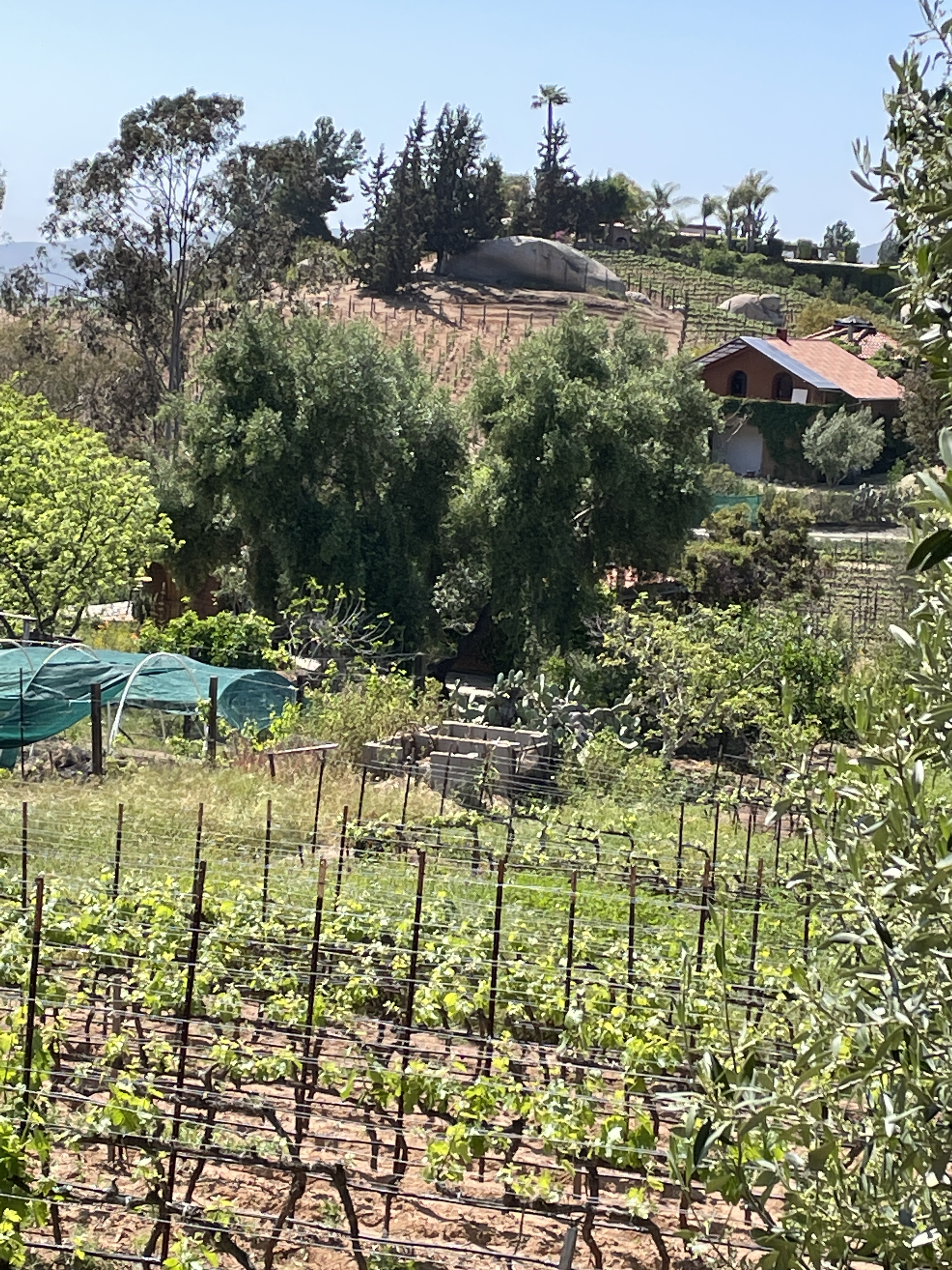
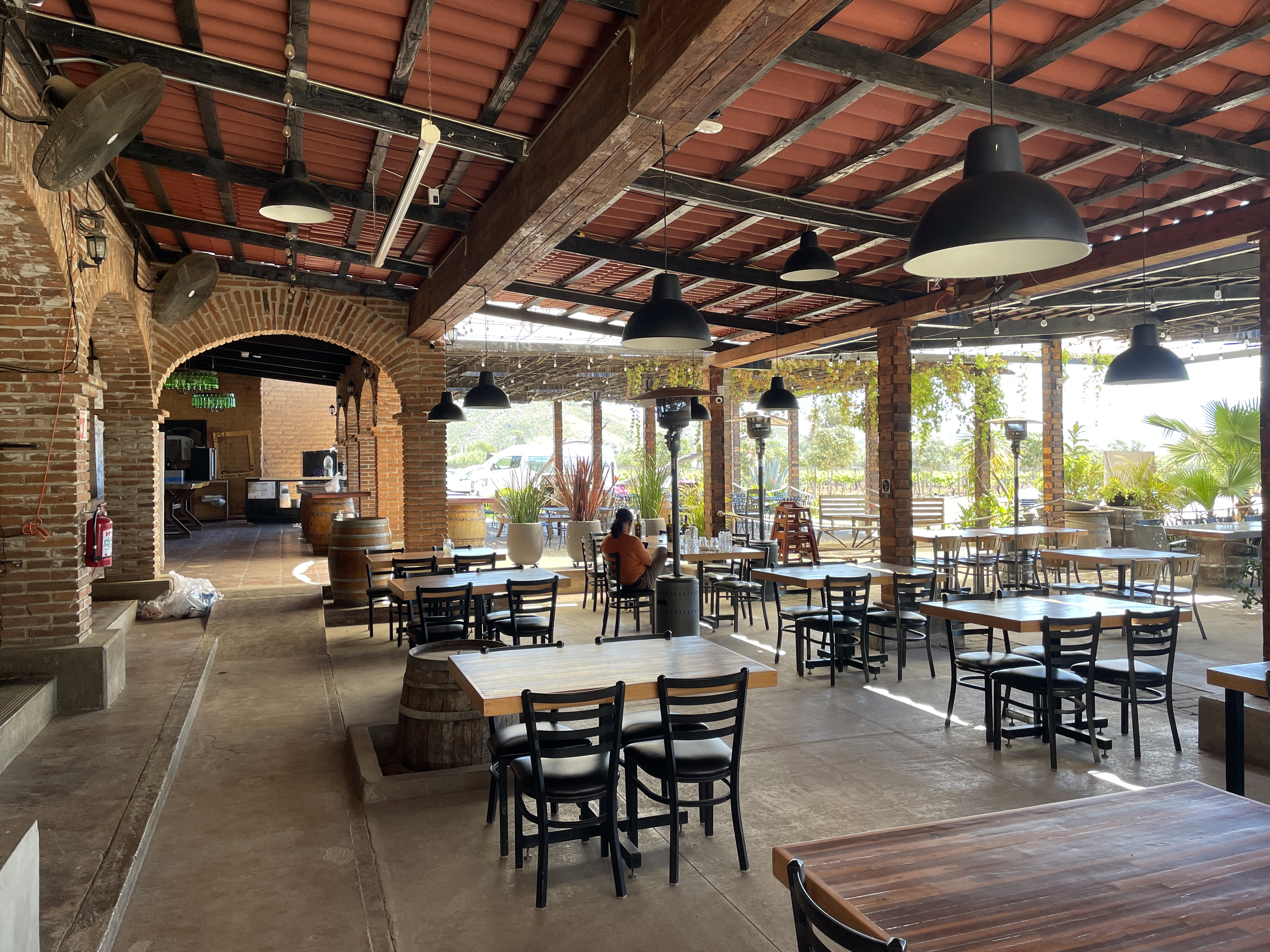
Originally started by three women–see the name, this woman is the only one of the three left as owner. She said she has been doing this for 20 years. The vineyards keep healthy without the use of toxic herbicides or pesticides. She says the breezes from the ocean help with keeping the vines healthy. She also has olive trees and gardens and a small restaurant–outside. The vegetables, flowers, etc. used in the restaurant are grown there. Below is the salad we had for lunch.

Lunch under the trees.

Wine tasting underground. What you notice when you drink all natural wines is that at the bottom of the bottle there is usually a residue.

The path in and out of the tasting room.

Buildings and fences made of local stone and flowers everywhere.

Stones, some quite large, show up everywhere in this part of Valle de Guadalupe. Some buildings, restaurants, other wineries, houses are build around the rocks with rocks as part of the architecture. I took the following photos from Tres Mujeres.

A lot of Valle de Guadalupe reminded me of parts of New Mexico and also the rocky hills around Temecula, California.

Not only are there over 100 vineyards in this valley but also endless olive groves. Locally pressed olive oil can also be purchased at many of the wineries. The other specialty is cheese. We stopped at one shop, the Cremeria Los Globos where they specialized in many cheeses filled with chipotle, black pepper, you name it. Honey is also produced locally and for sale at many wineries. For the most part, everything is all natural.

Baja Trip-4


Off to another winery, Santo Tomas, after visiting the fish market where I glanced at all the fish and saw fish I could not begin to identify. This winery is in a different valley, Santo Tomas Valley, and the second oldest winery in Mexico. Although their official sign says it is 130 years old, it is actually older and originated years before that to produce wine for communion and the Catholic Church.

Rather than have the wine tasting in a building or patio, here they put us on a wagon pulled by an old tractor and transported us to the vineyards where they drove around then stopped to give us various wines to try while we sat on the wagon. Our guides brought along cheese and other goodies for snacks as we tasted the wine.

The main building for production.

Vineyards for miles. They have 800 acres of vineyards mostly in this valley but a few in another area we did not visit.

Baja Trip-2


Day Two we visited several wineries and went to dinner at one of the top 50 restaurants in Latin America, La Laja. The following photos are from the first winery where we not only tasted various wines but also took a tour of their remarkable wine cellar dug deep into solid rock.

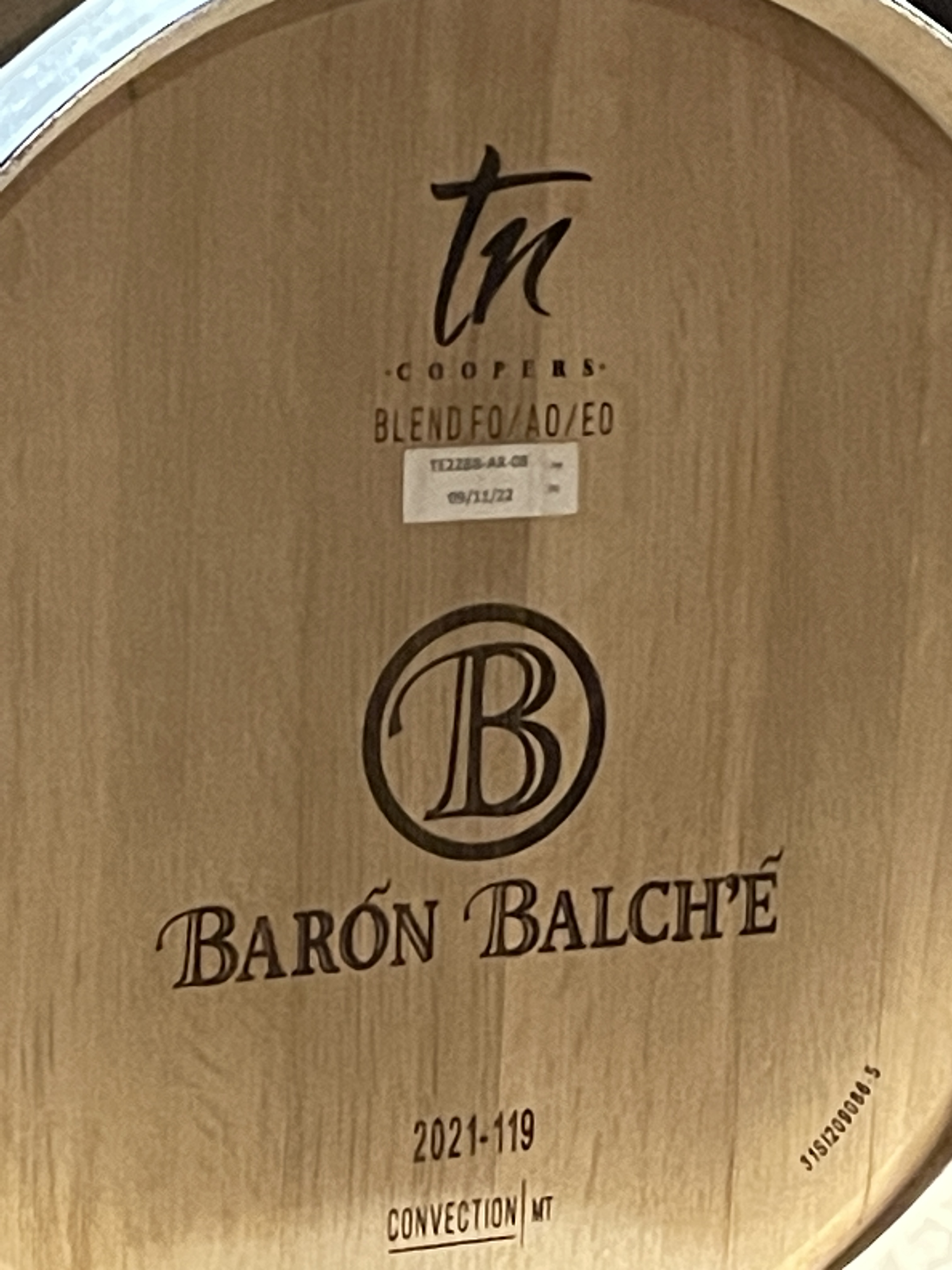
This is the name of the winery and each barrel is marked with varietal, date, etc.

The hills in some part of Valle de Guadalupe reminded me of the hills near Temecula, CA.

Here you can see how the cellar is dug out of the rock. The rock was oozing moisture due to the unusual amount of rain they received this winter.

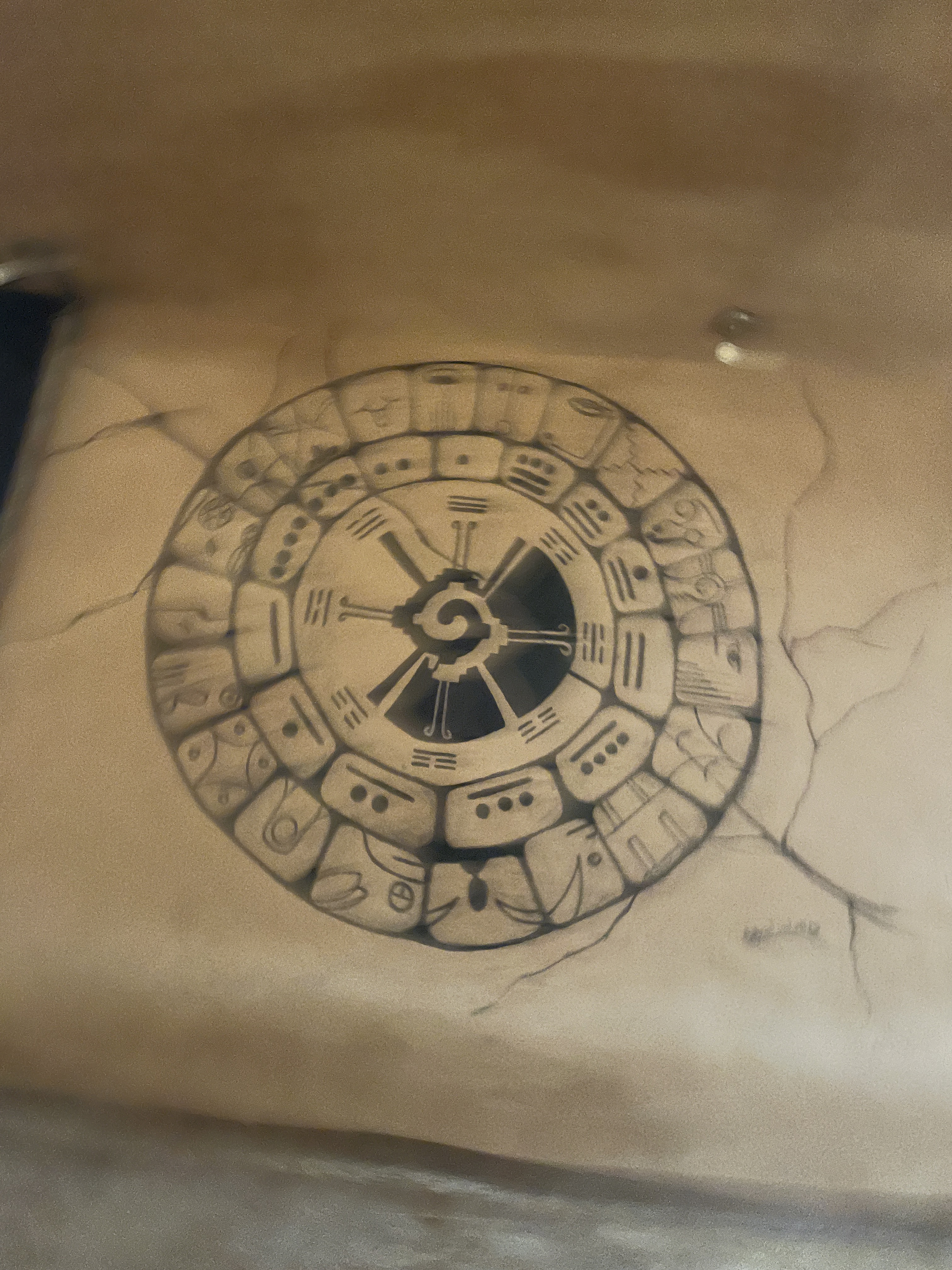
I loved this message so much I had to take a photo of it.

I wish I could find a duplicate to hang outside on one of the empty sides of my house.

The wines here are all natural. Many of the wineries we visited do not use pesticides or herbicides.The sophistication of many of the wineries in Baja is very impressive.