I could not stop reading this book. The setting is a US military outpost during the Afghan war in the middle of nowhere in the mountains of Kandahar. The weather is brutal–extremes of cold and heat, sand storms, heavy fog early in the mornings. Suddenly, after a brutal battle where they lose some soldiers, a young Afghan woman, Antigone, with stumps for legs shows up pulling a cart. Her brother, who the soldiers think was part of the Taliban, was killed in the battle; she wants her brother’s body for a proper Muslim burial. The soldiers do not know whether she is who she says she is or a suicide bomber. It confuses them even more when she plays hauntingly beautiful music on her rubab every night. All this leads to a lot of confusion over and raises many questions about morality and duty. Each chapter is from a different viewpoint, the young woman and various soldiers in the outpost.
Note: The rubab is a traditional Pashtun 12 string guitar-like instrument. You can find recordings on YouTube.
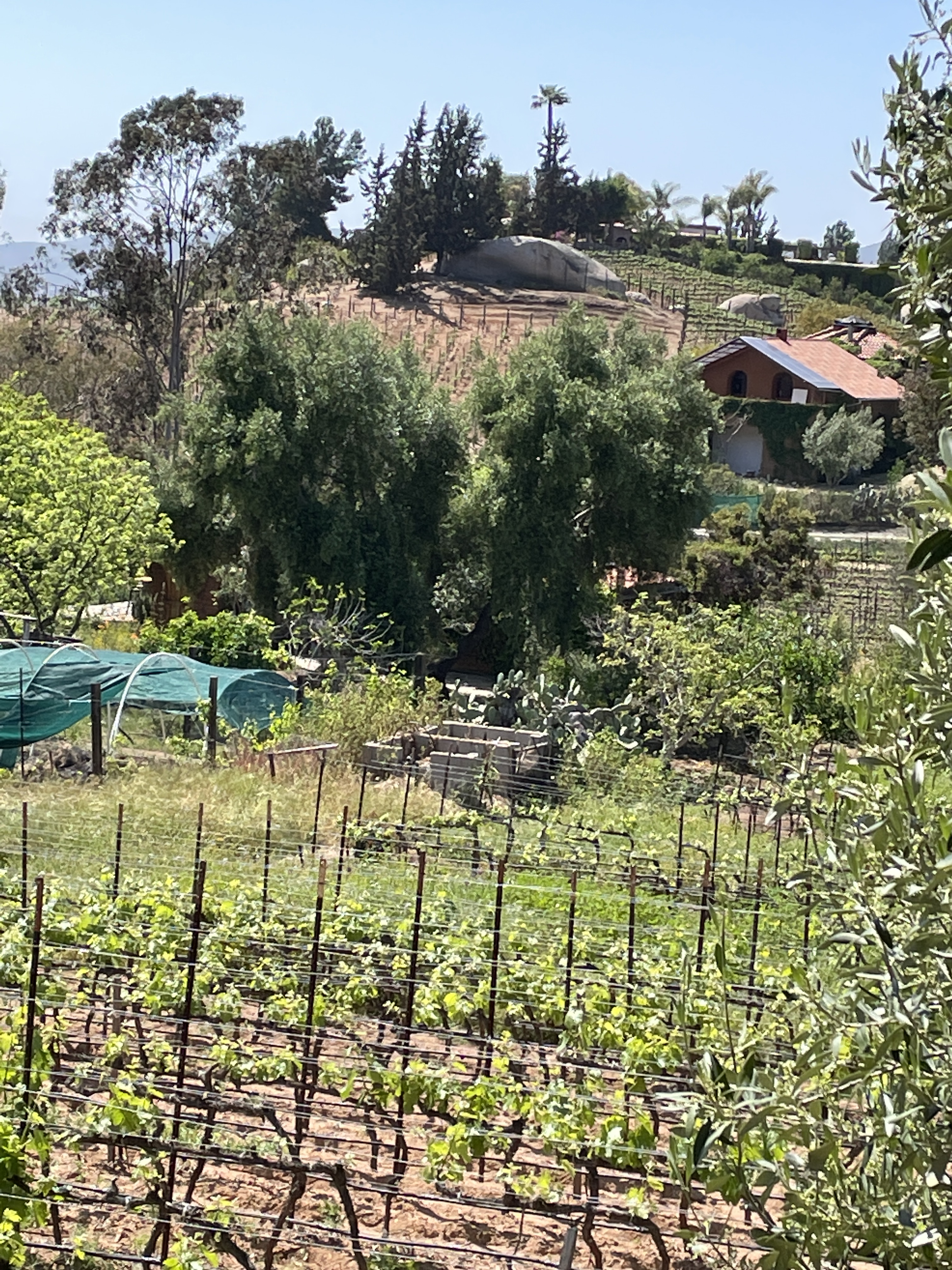
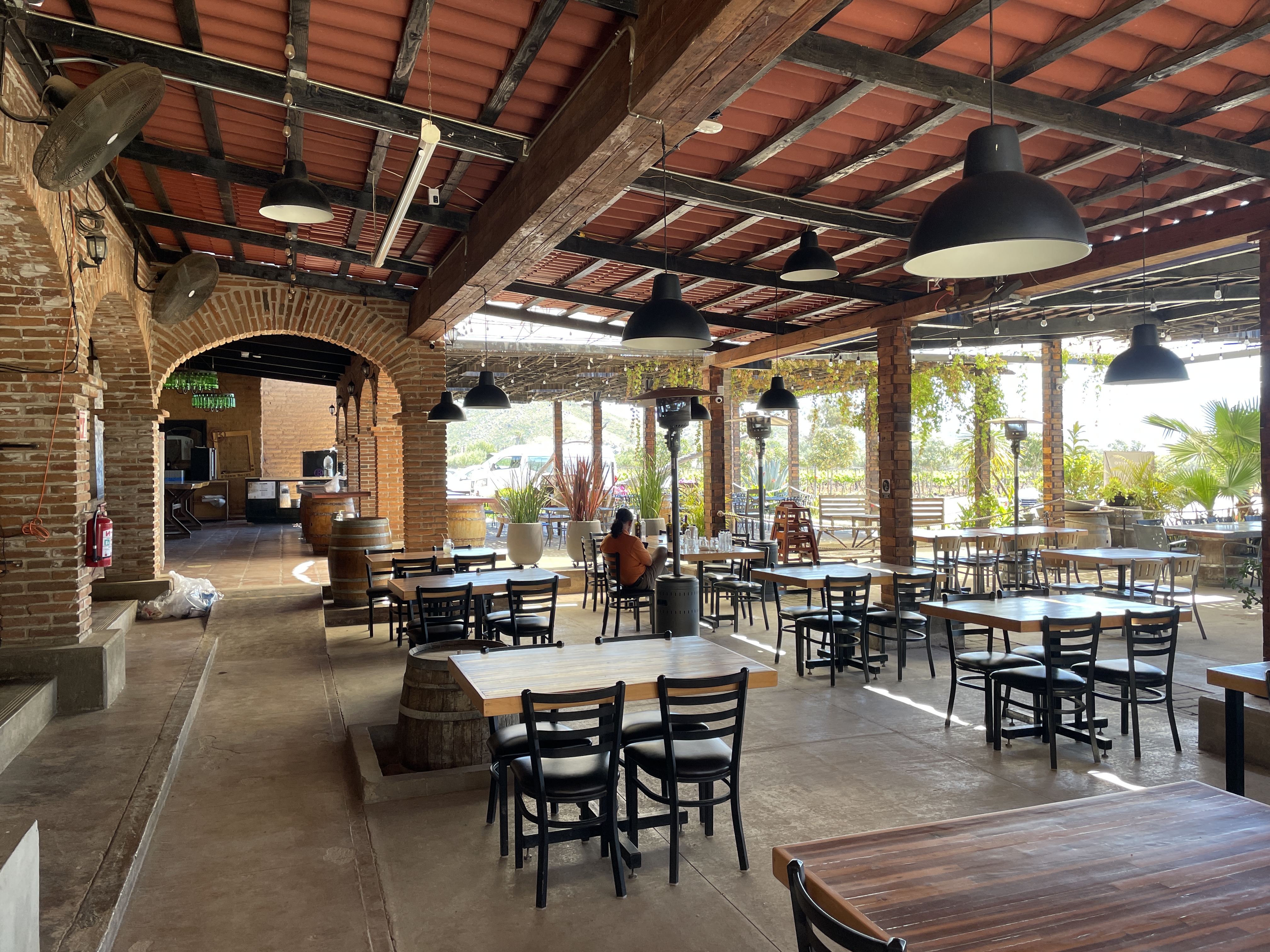
Originally started by three women–see the name, this woman is the only one of the three left as owner. She said she has been doing this for 20 years. The vineyards keep healthy without the use of toxic herbicides or pesticides. She says the breezes from the ocean help with keeping the vines healthy. She also has olive trees and gardens and a small restaurant–outside. The vegetables, flowers, etc. used in the restaurant are grown there. Below is the salad we had for lunch.
Lunch under the trees.
Wine tasting underground. What you notice when you drink all natural wines is that at the bottom of the bottle there is usually a residue.
The path in and out of the tasting room.
Buildings and fences made of local stone and flowers everywhere.
Stones, some quite large, show up everywhere in this part of Valle de Guadalupe. Some buildings, restaurants, other wineries, houses are build around the rocks with rocks as part of the architecture. I took the following photos from Tres Mujeres.
A lot of Valle de Guadalupe reminded me of parts of New Mexico and also the rocky hills around Temecula, California.
Not only are there over 100 vineyards in this valley but also endless olive groves. Locally pressed olive oil can also be purchased at many of the wineries. The other specialty is cheese. We stopped at one shop, the Cremeria Los Globos where they specialized in many cheeses filled with chipotle, black pepper, you name it. Honey is also produced locally and for sale at many wineries. For the most part, everything is all natural.
Off to another winery, Santo Tomas, after visiting the fish market where I glanced at all the fish and saw fish I could not begin to identify. This winery is in a different valley, Santo Tomas Valley, and the second oldest winery in Mexico. Although their official sign says it is 130 years old, it is actually older and originated years before that to produce wine for communion and the Catholic Church.
Rather than have the wine tasting in a building or patio, here they put us on a wagon pulled by an old tractor and transported us to the vineyards where they drove around then stopped to give us various wines to try while we sat on the wagon. Our guides brought along cheese and other goodies for snacks as we tasted the wine.
The main building for production.
Vineyards for miles. They have 800 acres of vineyards mostly in this valley but a few in another area we did not visit.
Day Two we visited several wineries and went to dinner at one of the top 50 restaurants in Latin America, La Laja. The following photos are from the first winery where we not only tasted various wines but also took a tour of their remarkable wine cellar dug deep into solid rock.
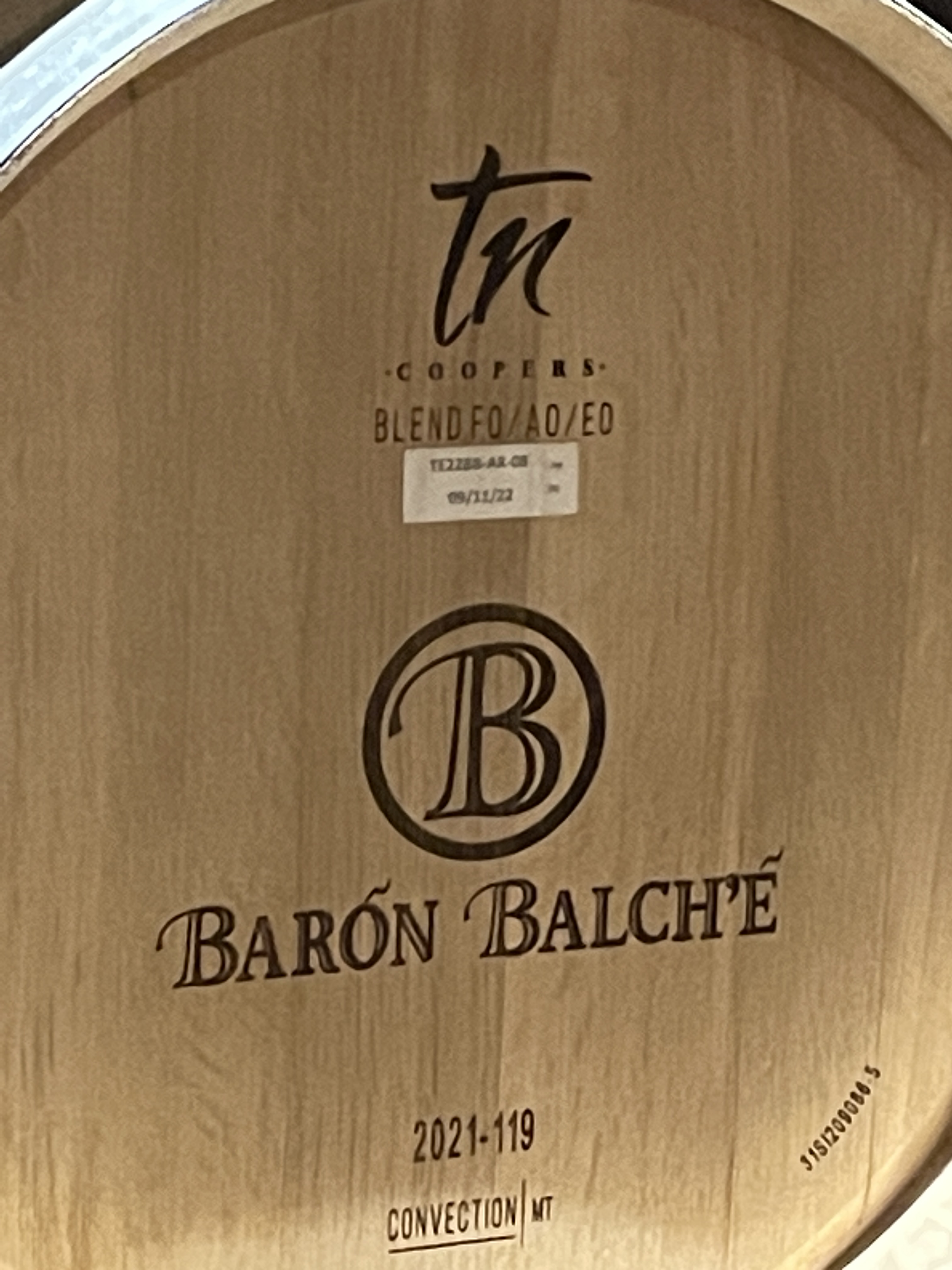
This is the name of the winery and each barrel is marked with varietal, date, etc.
The hills in some part of Valle de Guadalupe reminded me of the hills near Temecula, CA.
Here you can see how the cellar is dug out of the rock. The rock was oozing moisture due to the unusual amount of rain they received this winter.
I loved this message so much I had to take a photo of it.
I wish I could find a duplicate to hang outside on one of the empty sides of my house.
The wines here are all natural. Many of the wineries we visited do not use pesticides or herbicides.The sophistication of many of the wineries in Baja is very impressive.
Day one we drove across border to Tijuana where we visited the incredible La Caja Art Gallery. We viewed a variety of art works, drank delicious Mexican chocolate, and had a sensory experience blind-folded.
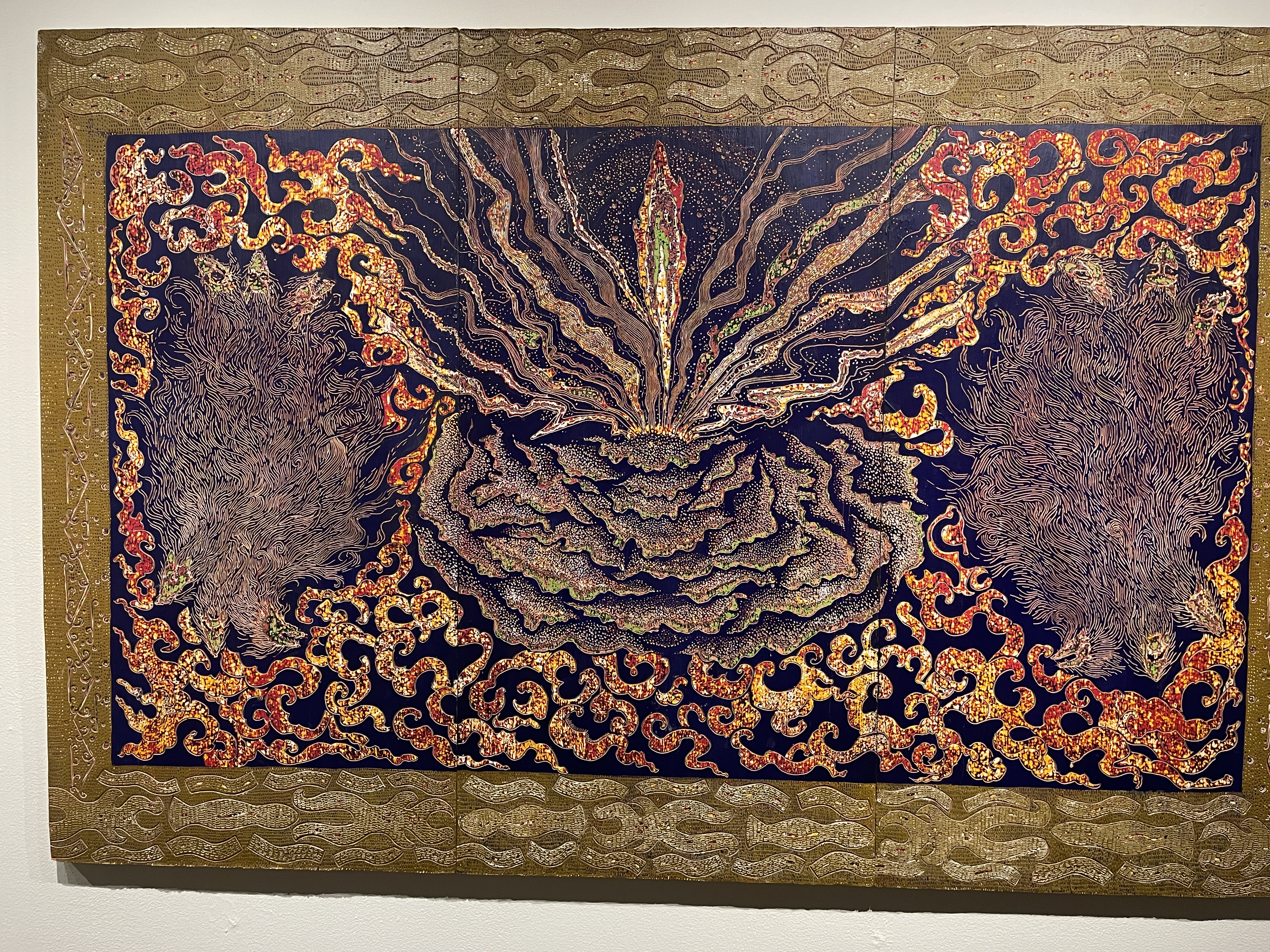
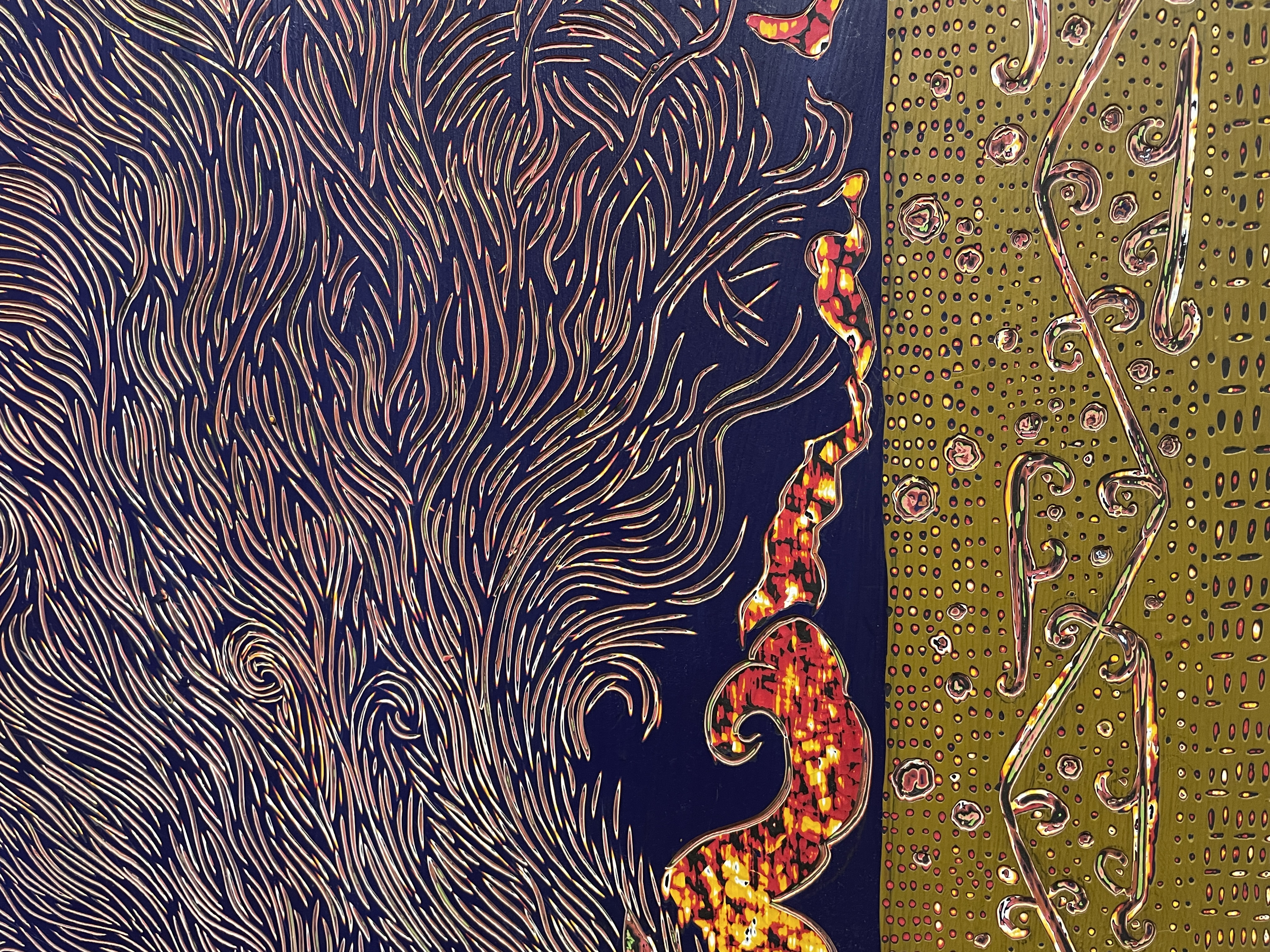
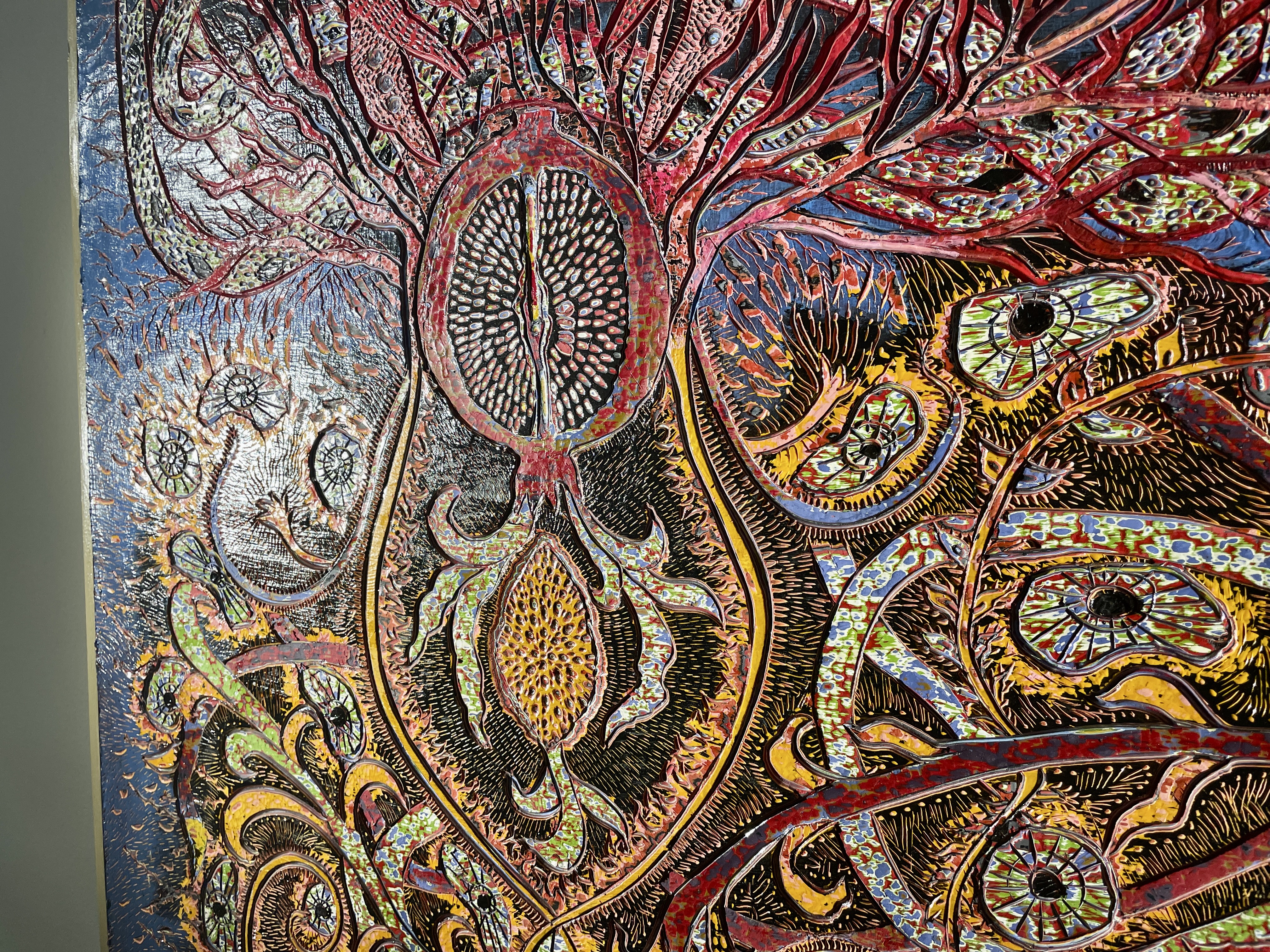
A close up of the previous painting. It consists of not only layers of paint but also carving into the surface.
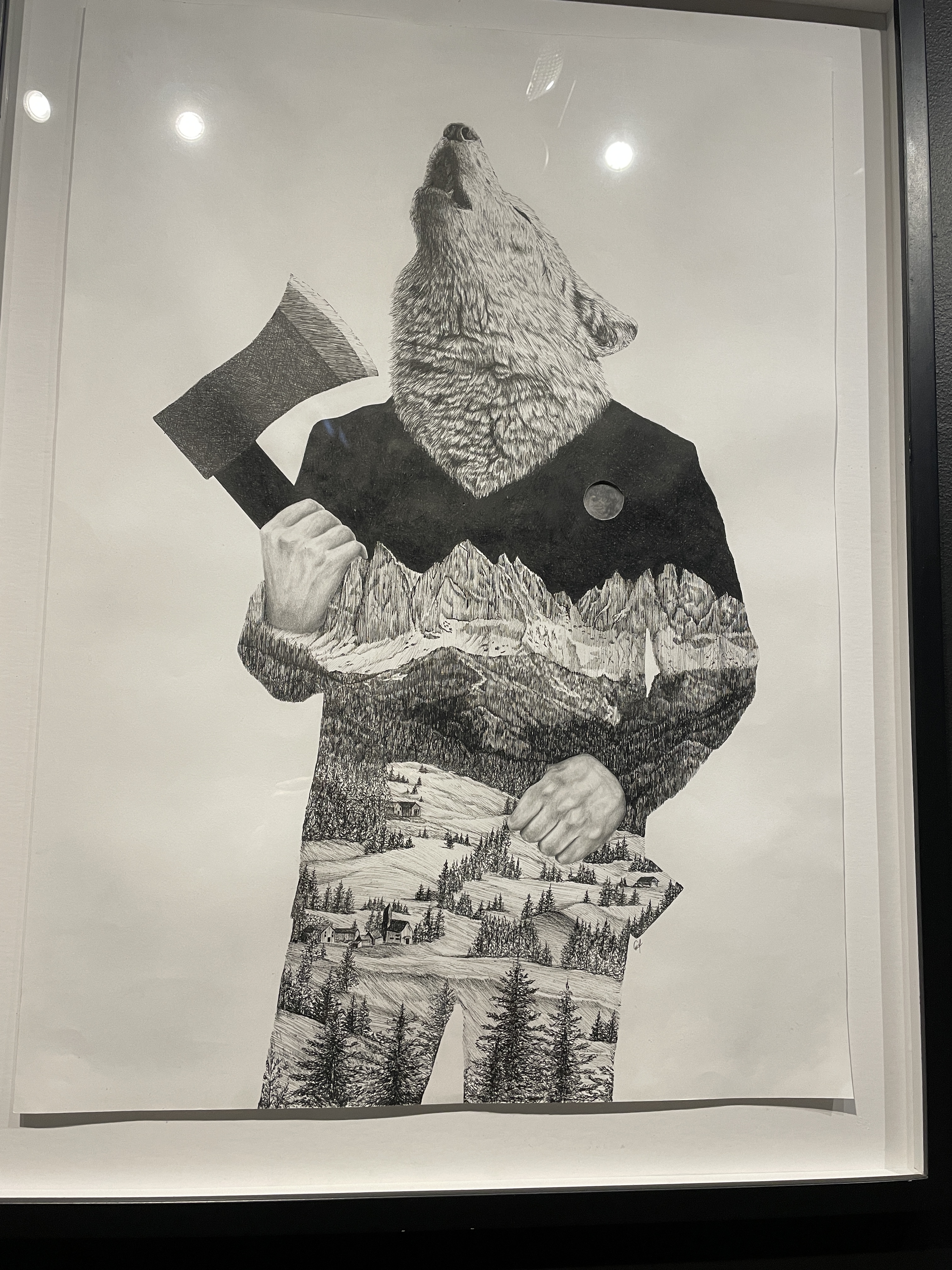
Food for thought.
A different artist for the above and the following.
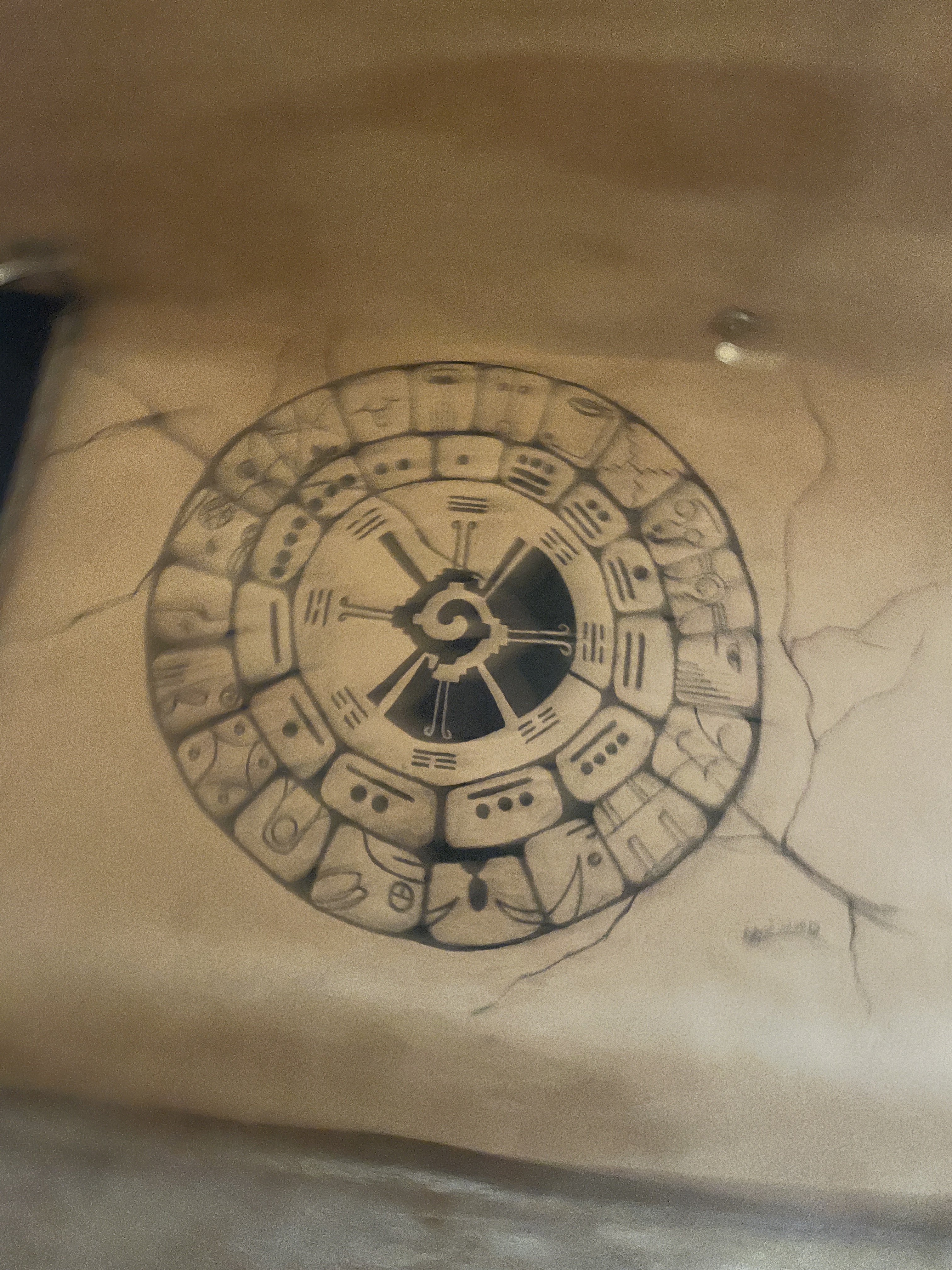
This one was painted directly onto the wall.
Later we experienced lunch at Caesar’s where supposedly (this is contested by some other places in Mexico) the original Caesar Salad was created.
How to describe this unusual novel? Here’s a possible list:
-No over all plot.
-Several stories about individuals scattered throughout, e.g. read about a person and event, then many pages later back to that person and the consequences of the event(s).
-Short philosophical musings/vignettes interspersed here and there. One reviewer counted 116.
-One common theme relates to the title, Flights, in that in most of the “stories” people are traveling or have traveled on quests for “meaning” or escape from a cumbersome reality.
I learned the following from reading this book:
-Per his request Chopin’s heart was taken from his body. His body was buried in Paris but his sister secretly transported his heart in a jar of special preservation liquid back to Poland, the land of his birth.
-A Dutch anatomist discovered the Achilles tendon after dissecting his own amputated leg.
-Plastination is the method used in anatomy to preserve bodies and body parts. Several characters in the book make their living or are obsessed with this process.
This is not a book for those who prefer relaxing reading or for the “faint of heart”.
Note: The author won the Nobel Prize in literature in 2018. This book won the Mann Booker for translated literature from all over earth in 2018. I plan to read another of her books–have now read two of them–but since the other one in English is 1000 pages long rather guess it might take more than a week for me to read it. This is actually the 11th book I have read to date in 2023 but did not start blogging about them so two are missing in the blog posts,
To share beauty and adventure, this past week two friends challenged me to share photos every day for ten days. This is day four. I decided to share some of the photos planned for day four here. The first three days included photos I took in Ethiopia and Italy (where I was this time last year). Today from this venue I will share photos of Costa Rica, a country I have visited twice, once when it was summer here and several years later during Christmas break in the US. Perhaps I will continue the challenge this way, sharing from my blog, but for today here are some of my favorite places in Costa Rica.
Naples is big; it is old; it contains stark extremes. How old? The New Castle was built in the 13th century; yes, that one is the new one. Coming from Sorrento one first sees the ship yards, huge apartment complexes where the less fortunate dwell, industrial areas.
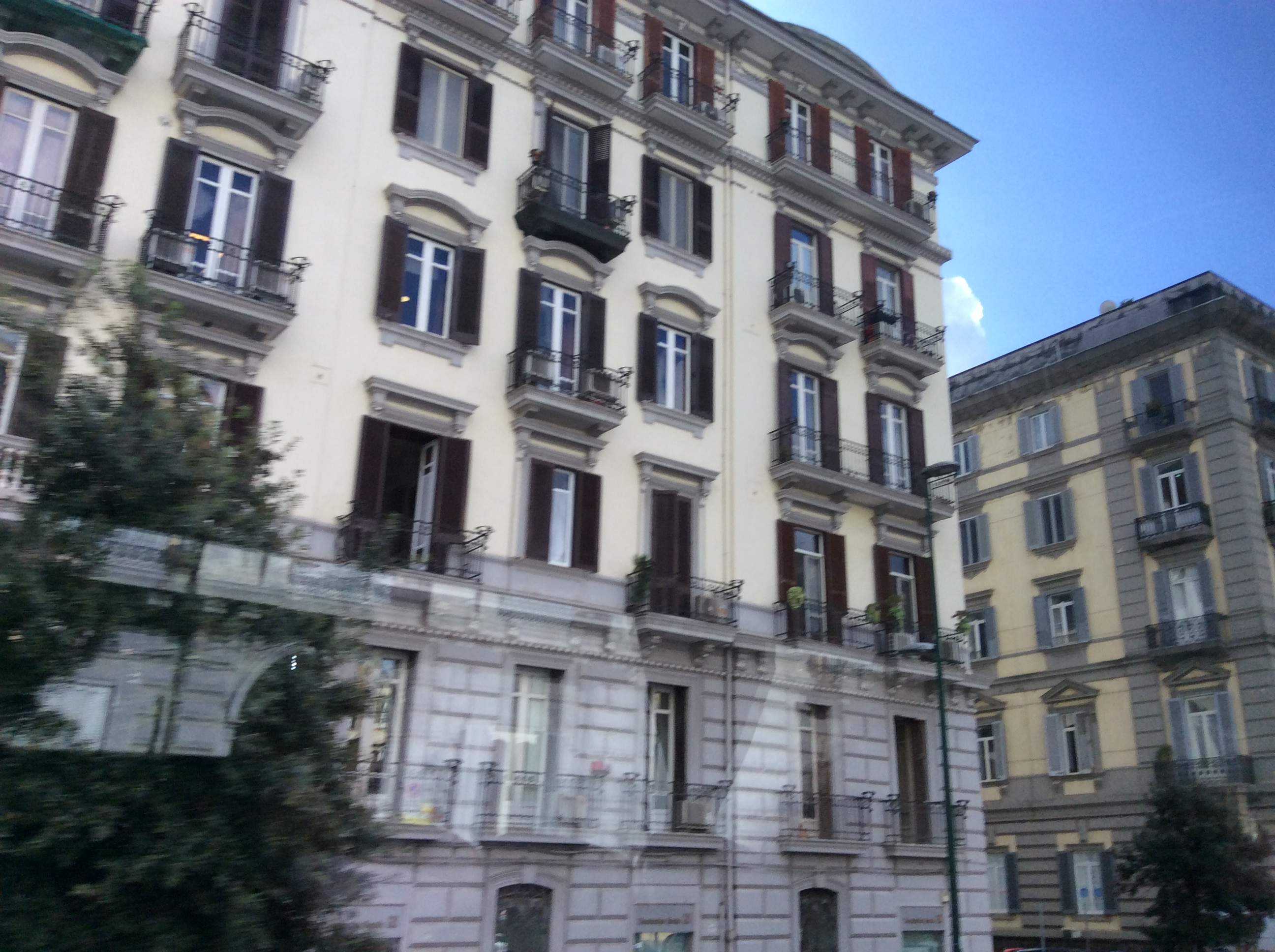
Some said they thought it looked dingy. I laughed to myself. These buildings are old and near the sea. Will anything built in the US last this long?
Then we drove up higher and higher into another part of Naples. You can see Mt. Vesuvius in the background.
The island to the right in the distance is Capri. More on Capri in a later post. In this part of Naples it is obvious that some people live very well there.
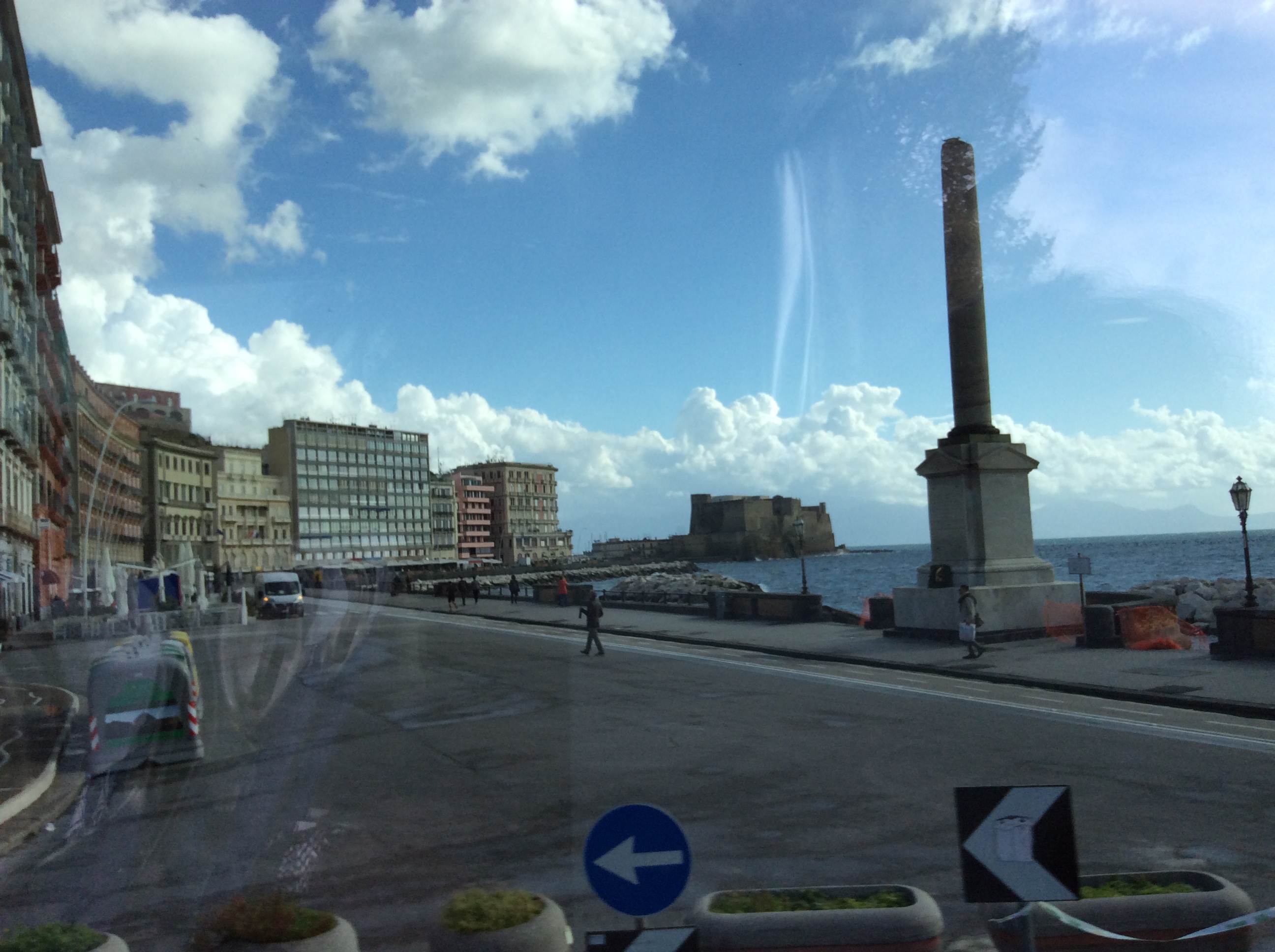
Then we went lower again driving along the seafront and parked where we could walk to the oldest part of Naples.
A very old cathedral in the background to the left. We wanted to go in but it was closed until later in the day. To the right of this photo, a large group of protestors were shouting slogans, etc. through loud speakers. Military were evident in the square.
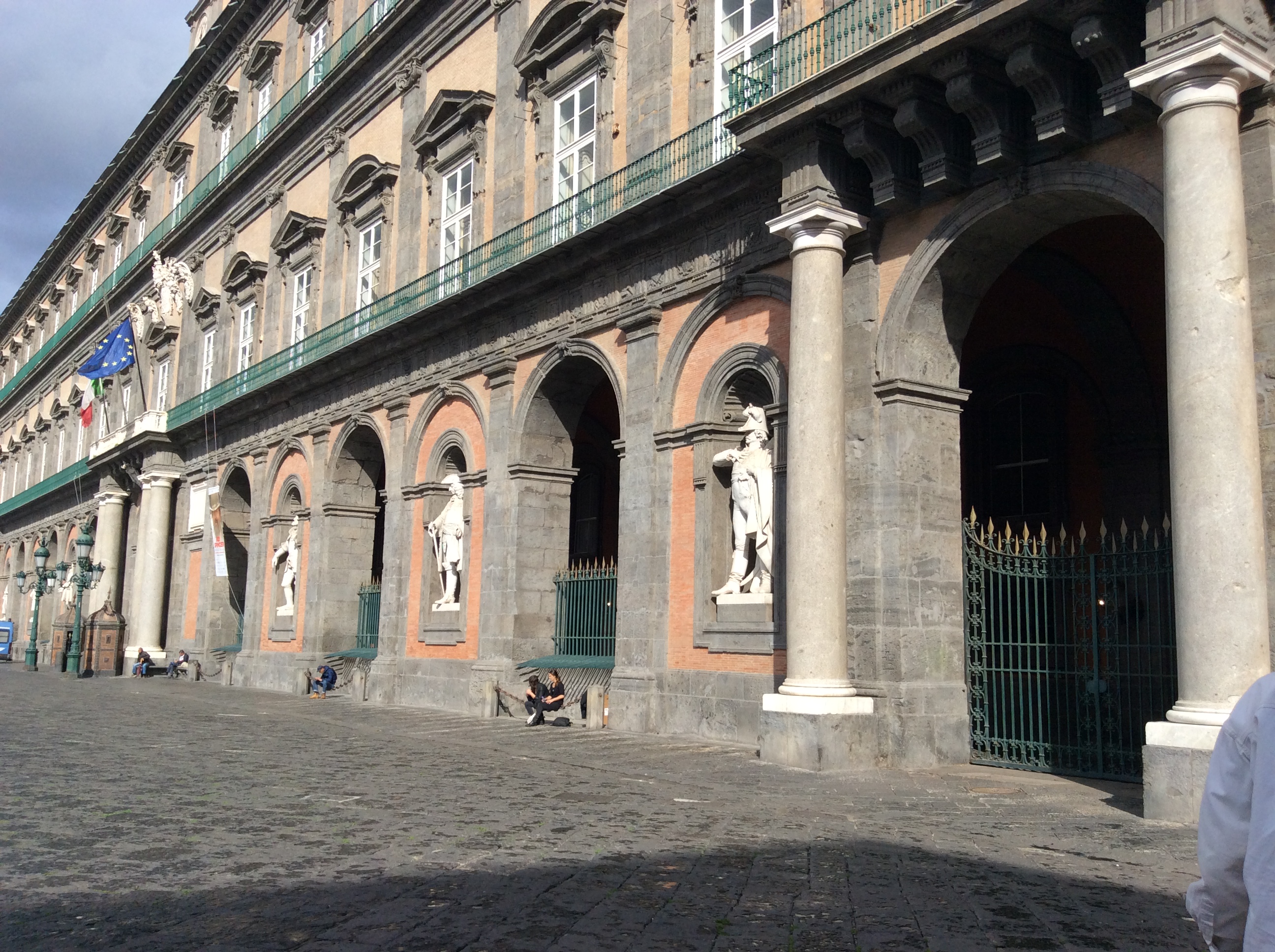
A city government building. The statues are of various famous people in the history of Naples.
Looking across the square from the church steps.
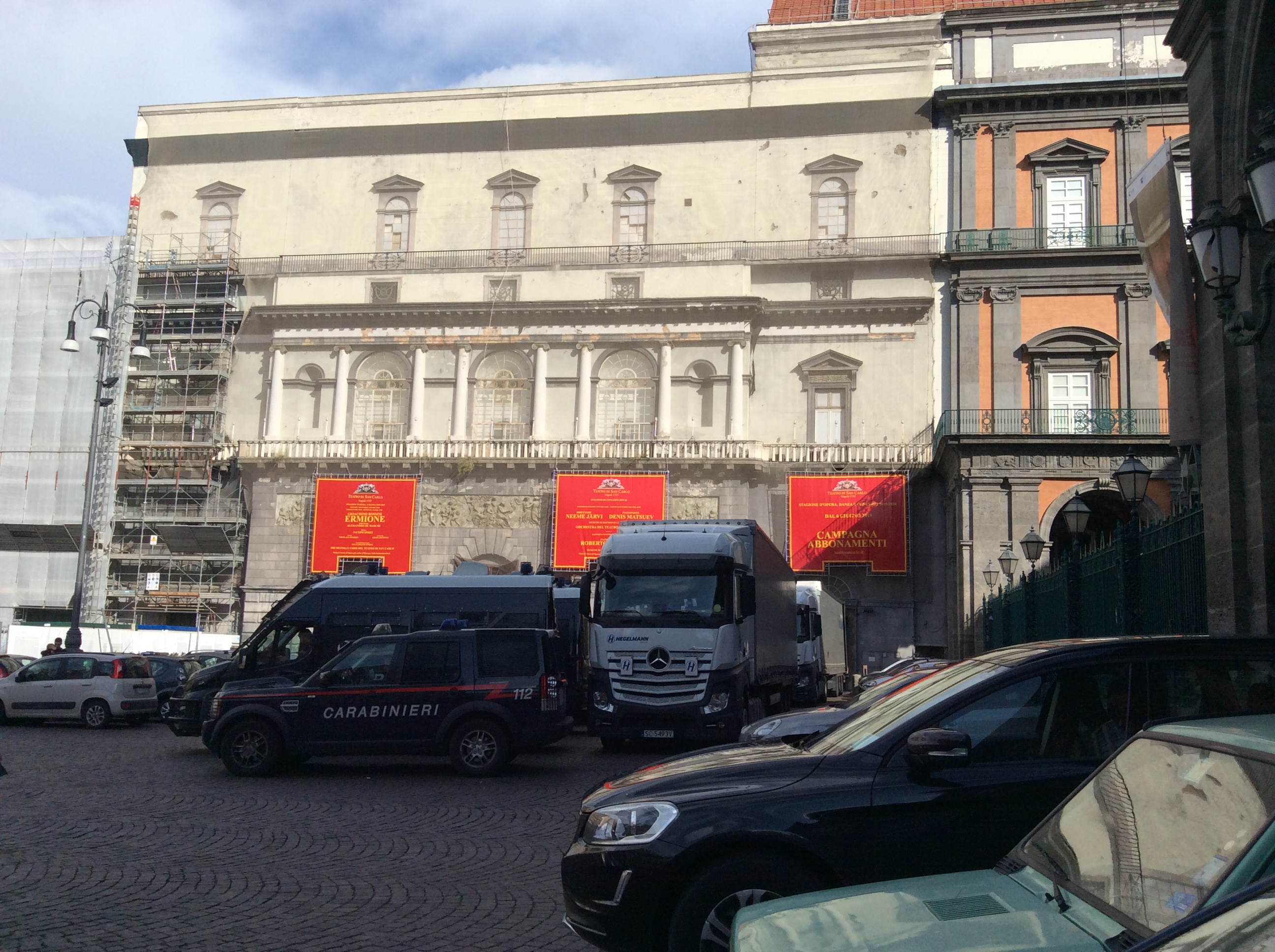
The oldest opera house is in Naples. Operas are still performed here.
We walked to another area and went inside this building which is filled with restaurants and shops, many with very high end clothing.
As we left, I noticed the bay was filled with tiny sailboats. It was very windy and I thought they were very brave. Later, I learned that these tiny boats are training boats, the ones you use when you are first learning to sail. It looks daunting to me. I have only sailed on boats much bigger.
Why do so many people still live so near a non-dormant volcano? Someone asked this question. The response was: Why do people live in Florida, Houston where there are hurricanes rather often. Why do people live where there are tornadoes, earthquakes, mudslides? At least Vesuvius provides a beautiful backdrop.
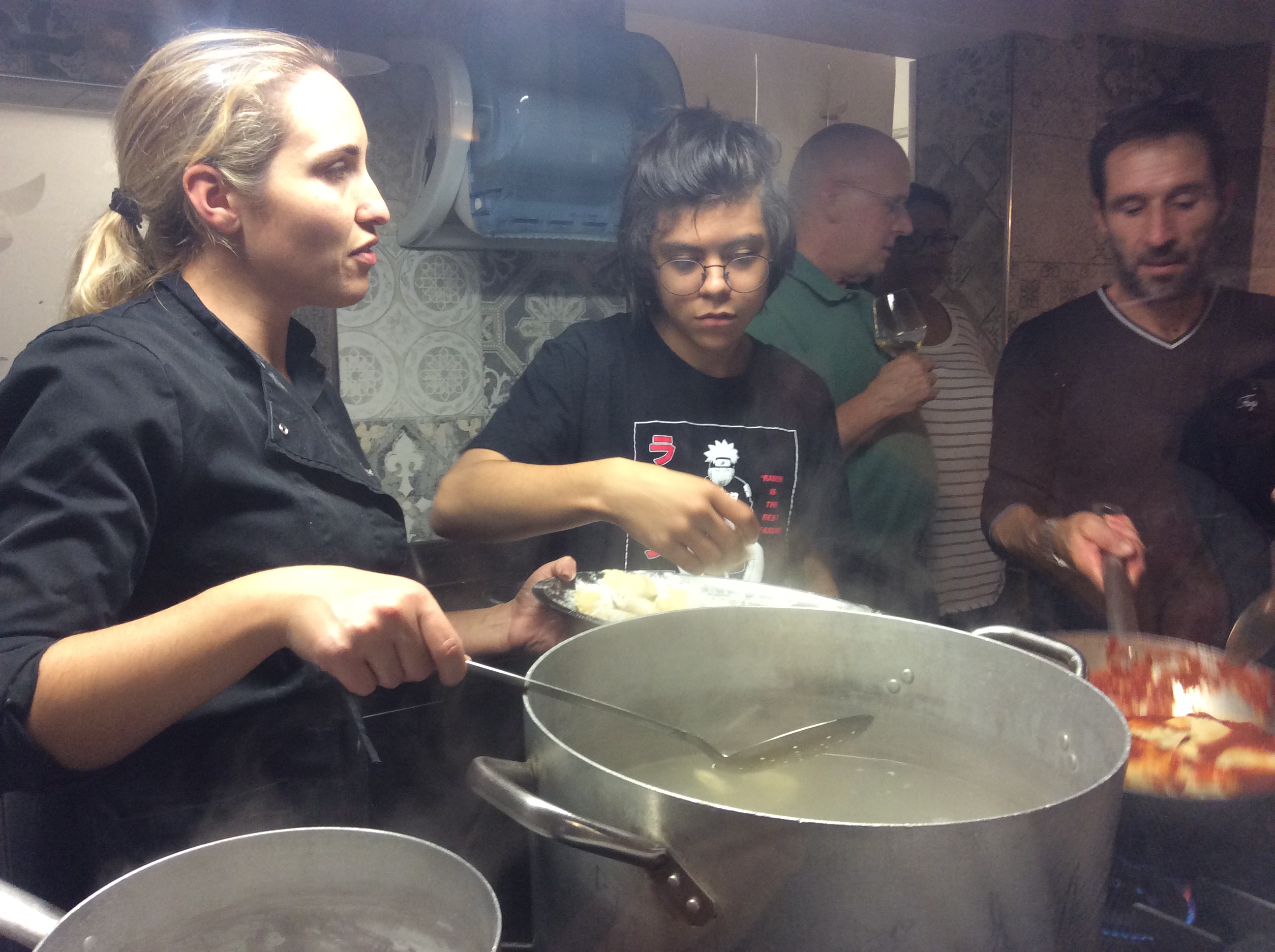
After spending most of the day exploring Pompeii, we rushed back to Sorrento for an evening cooking class up on a mountainside above the main part of the city. We made eggplant parmesan and cheese ravioli. Their take on the eggplant dish was different from any I have seen in the US. They had sliced the eggplant on the diagonal and already cooked it. Each person received several pieces of the already cooked eggplant and a bowl of their homemade mozzarella cheese. We were instructed to place a teaspoon of the cheese in the middle of each piece of eggplant, roll it up, and place it in a small casserole dish with their homemade tomato sauce already in the dish. Instead of layers of eggplant, sauce, and cheese, this was rolls of eggplant filled with cheese atop a tomato sauce in a casserole dish which they baked while we made ravioli.
For making the ravioli, in front of each person they placed a pile of a couple cups of flour and dishes of water and oil. We were instructed to add the oil and a little water to make a stiff dough. Then we were told that the key to really good ravioli dough (and I am guessing any pasta dough) is to knead it a lot. Yes, to do all this, we had to use our hands. After the dough was thoroughly kneaded, we patted it out into an oval and then ran it through a pasta maker several times to make it thin. We laid this rolled dough on the table and then with a ravioli cutter, we cut circles, filled them with mozzarella cheese, but not too much. The key is to get just the right amount of cheese so you have enough but can still fold it over and seal the edges with the cheese inside. It must be sealed thoroughly so it does not fall apart when being boiled in the salty water.
The owner asked my grandson to help cook the ravioli. Here he is working away.
After the ravioli was done, we all sat down and enjoyed the eggplant, the ravioli with their homemade tomato sauce, and their local wines. Making both dishes was much easier than I expected. And fun. The evening was filled with joy, laughter, and good company.
On one of our day trips from Sorrento, we headed down the Amalfi Coast. For years I have seen photos and told myself, “Wow”. No photo can do this coastline justice. The highway is excellent but narrow. On many of the turns, only one vehicle can proceed. A large bus cannot travel this highway. Even with the small ones we took, the driver would often honk as we turned a corner which we could not see around.
We stopped at one of the few turnoffs along the highway and took a short hike down to an overlook. This is the town of Positano. I took the following photos while at this overlook.
I love bougainvillea and all colors grew everywhere.
Looking across the Mediterranean.
The land is rugged with both new and ancient buildings hanging off mountainsides and cliffs.
A closer view of Positano.
Another view across the Mediterranean.
The highway, houses hanging off the edge, olive trees, lushness everywhere.
It was a stormy looking day. We kept thinking it would rain but luckily it did not.
The Amalfi Cathedral in the town of Almalfi. Its design is unique and shows the cultural influence of the Muslim world with whom the town was a major trading center for centuries–arches, gold and green.
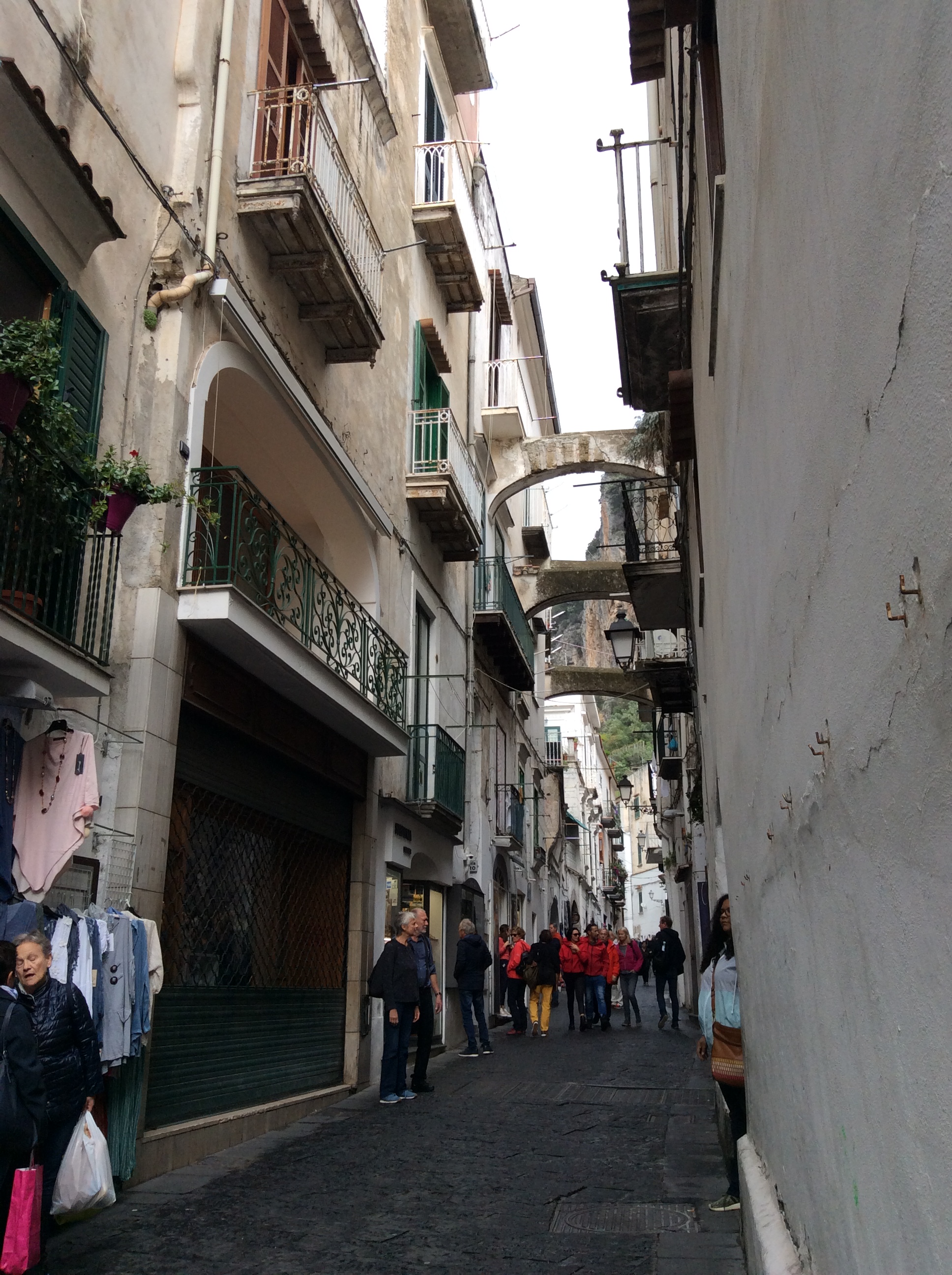
A typical street in Amalfi. We walked all the way up this street to just below the school, found all sorts of delightful shops, and ate our favorite food of the entire trip. My favorite was spaghetti with a lemon creme sauce. Recipe comes later.
Near the sea looking up into the city. The large building up on the slopes is now a cemetery but used to be a monastery.
Same spot as previous photo, just looking the other direction.
We were supposed to take a little boat trip out into the sea but it was too rough. Ema, my daughter, walked all the way out to the end of the pier.
The water was so high I thought perhaps it was high tide. I was told it was not.
Today I asked my daughter and grandson what/where was their favorite in Italy. We all agree, Amalfi. I also loved Capri–more about there later.











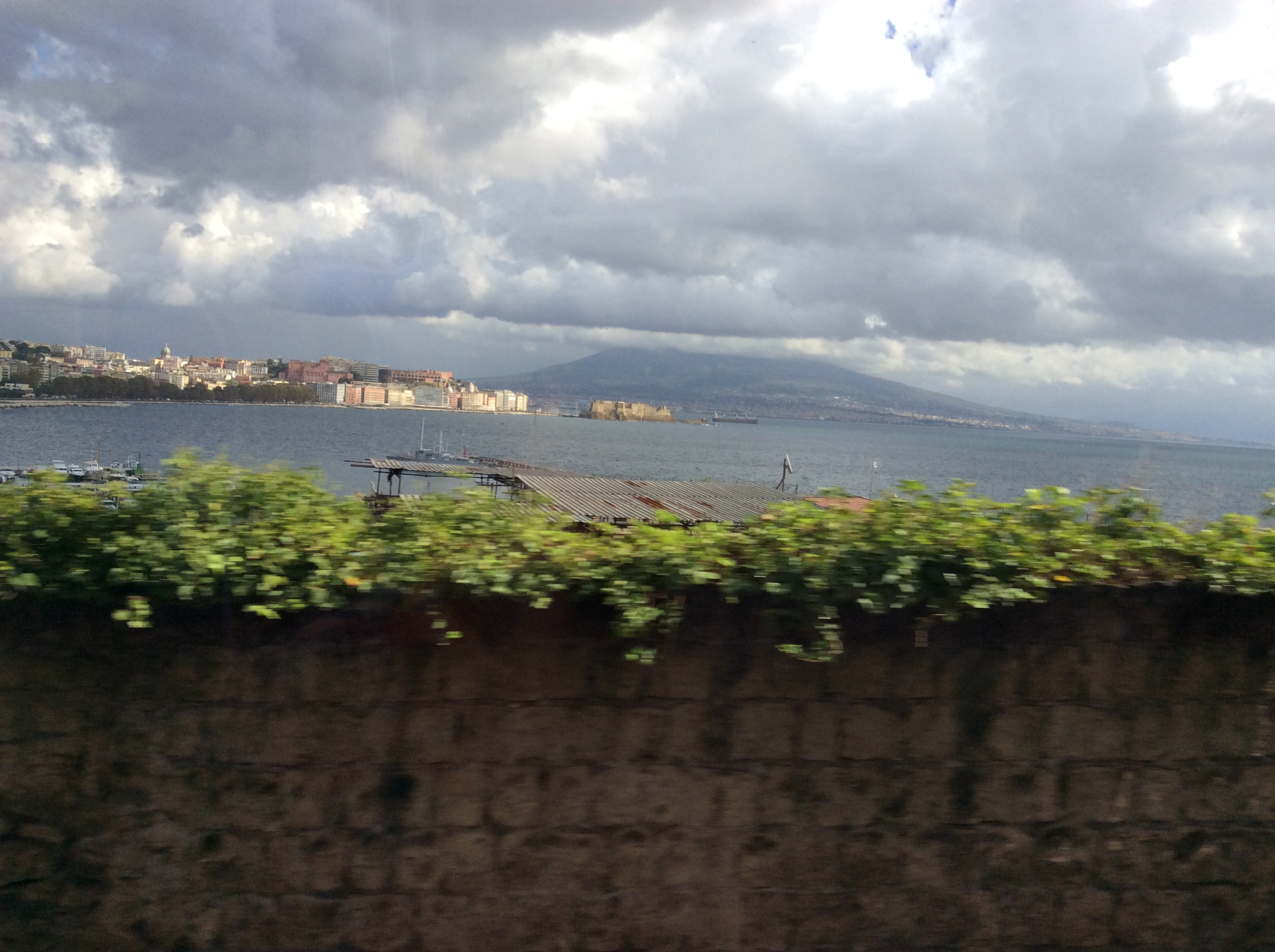 Then we drove up higher and higher into another part of Naples. You can see Mt. Vesuvius in the background.





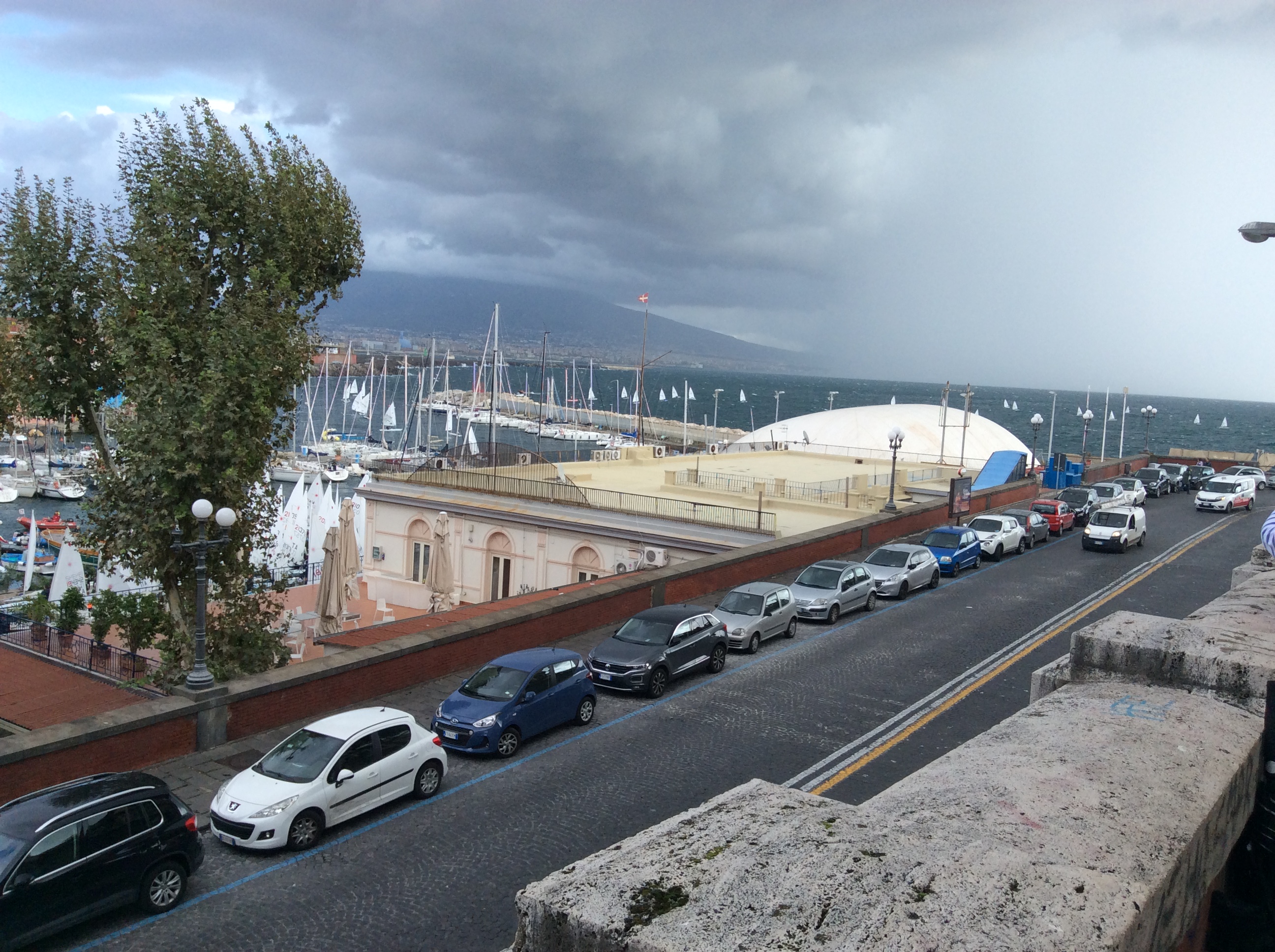 As we left, I noticed the bay was filled with tiny sailboats. It was very windy and I thought they were very brave. Later, I learned that these tiny boats are training boats, the ones you use when you are first learning to sail. It looks daunting to me. I have only sailed on boats much bigger.