reading,
listening to birds
the gurgling of water,
looking up to watch
four hummingbirds challenge
each other at the feeder, and
I notice I’m surrounded by flowers
and the scent of orange blossoms.

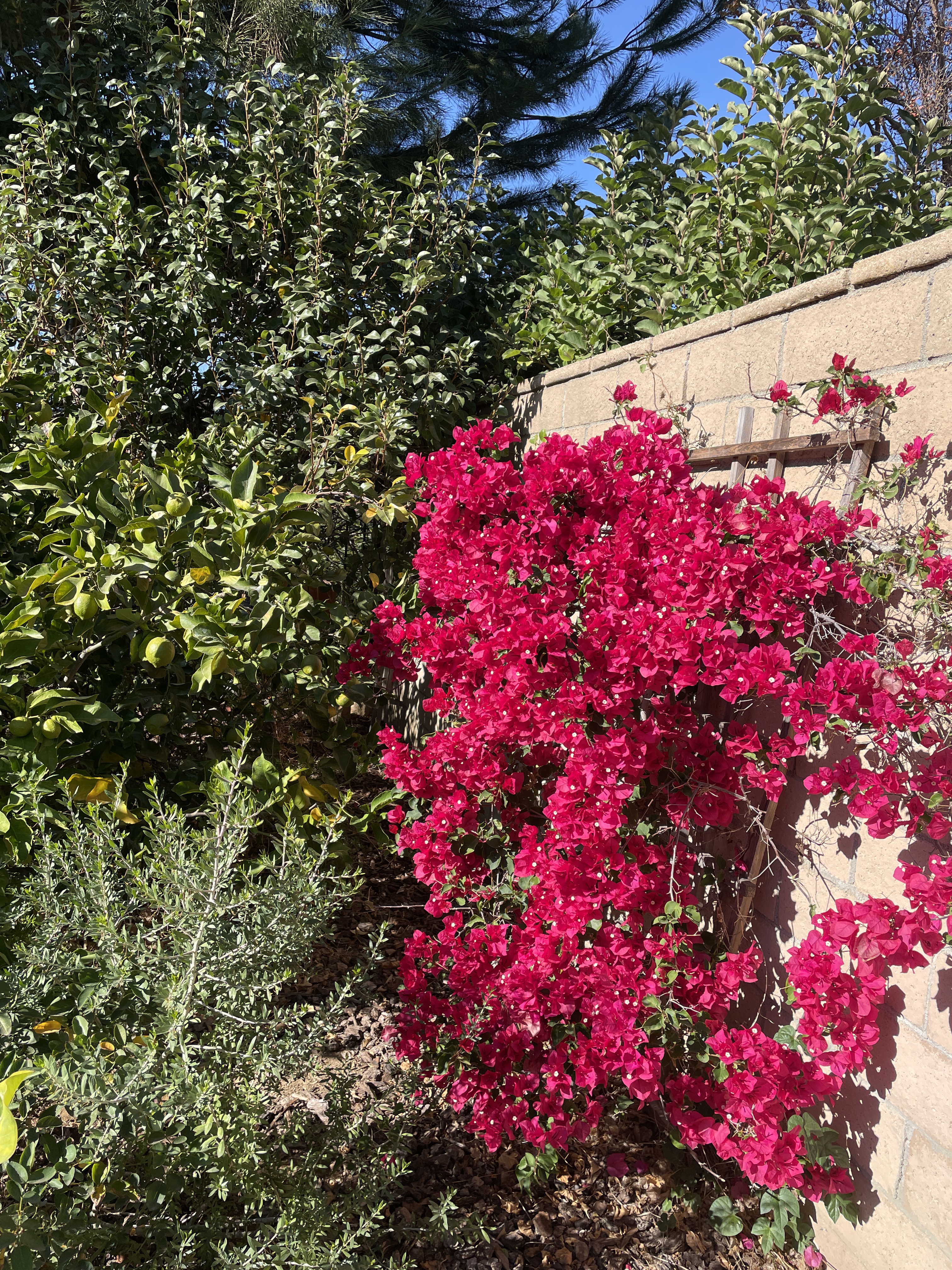

reading,
listening to birds
the gurgling of water,
looking up to watch
four hummingbirds challenge
each other at the feeder, and
I notice I’m surrounded by flowers
and the scent of orange blossoms.
I only acquired this book because the author of “Delights”, Ross Gay, recommended it as one of his favorite books. I almost quit reading it but kept going because I wondered why he loved this book. Perhaps if you watch a lot of movies (I am not a movie person), it would be better because Shields critiques a lot of movies, almost none of which I had ever even heard of. He also seems to prefer non-fiction and critiques a lot of non-fiction essay writers. To be honest even though I read hundreds of books, most of the books he mentions I have never read. His taste apparently differs greatly from mine. I have read Joan Didion, John Cheever, Gertrude Stein, Yeats, as he has and I do agree with him about the essay, “Killing an Elephant”. In this essay George Orwell describes a horrible event he experienced as a young man while working for the British in Burma (now Myanmar). I agree with Shields that this essay describes better the horrors of colonialism and racism better than most books written on those subjects.
What bothers me about this work by Shields is the relentless negativity. I consider myself to be a rather realistic person, often perhaps too blunt for my own good. Nevertheless, I do not view my life or that of others as nearly as hopeless and lonely as Shields seems to view it. Here is a quote from near the end of the book:
“I believe in art as pathology lab, landfill, recycling station, death sentence, aborted suicide note, lunge at redemption. Your art is most alive and dangerous when you use it against yourself. That’s why I pick at my scabs” and four pages later at the end: “I wanted literature to assuage human loneliness, but nothing can assuage human loneliness. Literature doesn’t lie about this–which is what makes it essential.” I know lots of folks talk about the plague of loneliness permeating society these days. He focuses on this relentlessly for 207 pages. Do most people feel this awful a lot of the time? Am I naive? How did I escape it?

Another intriguing novel by an author who has won both the Pulitzer and the National Book Award. Initially the four main characters do not seem to have any interactions with each other. 12 year old Evie’s life is changed forever when her father, the inventor of the first aqualung, makes her submerge in a pool to prove it works. She becomes one of the world’s most famous divers and oceanographers. Ina, an artist, grew up in US naval bases all over the South Pacific and eventually finds herself at a university in Illinois. Rafi, a genius black child, is pushed by his dad to apply to a private Jesuit high school where he meets Todd, a rich kid whose whose family provides scholarships to the school. The two become best friends in spite of different interests. Rafi loves literature and Todd loves computers. They bond over a thousands of years old Chinese game with which they become obsessed. They become roommates at the same university where Ina is a student. The three become best friends.
Decades later all these lives become intertwined on an island in the South Pacific–Makatea in French Polynesia, an island where the harvesting of giant phosphorus deposits nearly ruined it while furnishing the rest of the world with fuel to make planets grows faster and better and feed the world. Because of Evie’s obsession with the sea, I learned enormous amounts about the ocean and the varied animals that live there, some of which I had never heard of before. Because of Todd’s obsession with computers and his invention of an AI game, I learned a lot about how gaming works and how people become addicted. For Rafi, the agony and anger of often being the one left out, the one seen as the smart Black kid, and the only one in many circumstances affect how he views the world and himself and where life eventually takes him. From his character I learned new things about literature and how books and writing affect people and their relationships.
I could not stop reading this book. Years ago, when it first came out, I read the author’s novel, “The Overstay”. While the topics and characters are totally different, in some ways this novel reminded me of that story, of how our lives are often intertwined in all sorts of ways we never expected.
Neftali Ricardo Reyes Basoalto, a country boy who grew up in a remote, rainy, forested area in southern Chile, an area called Araucania, an indigenous name, became Pablo Neruda, a name he created so he could publish poetry without his father’s knowledge. His father and mother, who died less than a month after his birth, originally came from the wine country of central Chile. His father became a conductor for a ballast train in this southern region. His descriptions of his childhood are of a shy boy who loved nature in all its forms and books. Later, he wrote letters to girls for his friends. Yet, he says he wrote his first poem when he had barely learned to read. Overcome with emotion, he wrote a poem to his stepmother, the only mother he knew. When he showed it to his father, his father asked to know what he had copied it from.
Later, he moves to Santiago to attend university, always poor, always wearing black, always carrying books. He joins a Student Federation and becomes acquainted with other young poets. He writes, “I saw a refuge in poetry with the intensity of someone timid.” After he struggled paying for the printing of his first book, he wrote, “…the writer’s task…must be a personal effort for the benefit of all.”
He wins a literary prize at school, his books are popular, and he finds himself acquiring a job at a Chilean consul in Rangoon but to get there he and a friend end up in France and Portugal, then Japan, then Singapore, before finally arriving at his destination. Thus, began his life as a consul official in places all over the world, including Spain just before and at the beginning of Franco’s rise to power.
After witnessing so much poverty, so many conflicts benefiting the rich, he becomes an avid supporter of the Chilean Communist Party–a form of communism unlike what most think of when they think of communism. The communism he and his friends support includes working on behalf of the poor, the common laborer, the disenfranchised against the wealthy elite who controlled most Latin American countries during his lifetime and in many cases still do.
He states, “I want to live in a world where beings are only human with no other title but that, without worrying their heads about rules, a word, a label…I want the great majority, the only majority, everyone, to be able to speak out, read, listen, thrive…I have taken a road because I believe that road leads us all to a lasting brotherhood…an inexhaustible goodness…”
Later, he chose to live at Isla Negra, a sort of hideout especially in winter where he could write. Then he returned to Chile. He helped his friend Salvatore Allende campaign for the presidency of Chile. After Allende became president, he appointed Neruda to be ambassador to France. In 1971, Neruda won the Nobel Prize. In 1972, the US blockaded Chile and Neruda returned and completed the final edit of his memoirs. He was welcomed back with a ceremony at the National Stadium in Santiago with a huge crowd in attendance. In 1973, a military coup, supported by the US, overturned the government and assassinated Allende. Less than one month later, Neruda died. Shortly thereafter, news spread worldwide that his two houses in different parts of Chile had been ransacked and vandalized by the new government and its forces.
People tell me I have a lot of determination. If they know about it, they use this example: I just finished my 659th day of walking at least 10,000 steps per day never missing a day. My average is over 13,000 but it was higher until the rain came. It forced me to dance, jog, and run in place inside my house, not exactly a fun endeavor.
Three years ago as part of a Story Circle Network class, I read about book written by a woman who read a book per day for a year in order to help her deal with her grief over the loss of young family member who died too soon. I figured if she could read a book a day, surely I could read a book per week. First year I made it, second I fell one short, and in 2025 I read 53 and reviewed them all on my blog.
Today, I finished book one off 2026: “We Are Green and Trembling” by the Argentinian writer Gabriela Cabezon Camara. It won the National Book Award for translated literature. A sort of fantastical, historical novel, it portrays the life of a real person, Antonio de Erauso. Now identifying as a man, he writes letters to his aunt who is the prioress of a Basque convent. When a small girl, his parents placed her in the convent hoping she would someday replace the aunt as head of the convent. To flee the narrow confines of such a life, she escapes and disguises herself as a man. Through his narration and letters to his aunt, he tells of all his adventures, including working as a mule skinner, then becoming a conquistador in South America among other endeavors. At the time of the novel, he has escaped the military captain for whom he fought and rescued two native Guarini girls from enslavement along with two monkeys. The smallest girl and the monkeys were in cages and near starvation when he rescued them. Pursued by the military they escaped, they now reside deep in the jungle aided by the natives who live there.
Through this novel, the author manages to criticize colonialism, the tyranny of strict religious beliefs, the treatment of women, and the horrors inflicted on native peoples.
Three books but since one was tiny, “The Strange Library” by Haruki Murakami, and two might not count since I did not read all of them?? At first I thought the Murakami book might be a children’s book until I arrived at the end; it definitely is not a children’s book. This young boy goes to the library to check out books like he usually does and finds a different woman at the circulation desk. She gives him some odd instructions about where to find new books after he returns the books he has already borrowed. He has to walk through a sort of maze, meets some very strange people, and various unpleasant events occur. And the end is terribly sad. The book is short, with a fold up cover and illustrations of all sorts on every other page. The back cover is sort of like a mandala.
Then I tried to read “Yellowface” by R.F. Kuang but only managed to get half way and quit. This is highly unusual behavior for me because if I start a novel, I finish it no matter what. In this case, reading about a woman who steals a dead friend’s unpublished novel and makes it her own which becomes a best seller and then whines when she is attacked because she is white and the friend is Chinese and some question whether is she committing cultural appropriation and is this ok. There is also a lot about the intricacies and unfairness in the publishing industry with so much detail that I gave up. Do I feel guilty? A little.
The third book is “Cheating Death: The New Science of Living Longer and Better” by Dr. Rand McClain. I read most of this nonfiction book, picking and choosing the parts that seem most relevant to my own life and health. I highly recommend this book because it gives useful advice about supplements that can help with sleep, arthritis, diabetes, etc. instead of using some of the usual NSAIDs and some prescription drugs. However, he is not anti-many popular medicines like metformin, for example, so this is not an anti-prescription medicine book. There is a very informative chapter, “Bioidentical Hormone Replacement Therapy”, that details the pros and cons and suggests certain foods to eat, e.g. cruciferous vegetables, to counter some of the negative side effects. This book is useful in many ways. He also discusses some cutting edge therapies that are not available to most people but might be of interest to those searching for what is new and innovative regarding aging.
This book was not quite what I expected. It is somewhat memoir in that she talks about her career as a journalist accompanied by photographers and such which is not really on your own, about her marriage and divorce, the new guy, and actually traveling on her own. However, a large part of it, which is quite fascinating, is the history of the solo women travelers in history starting with the nun Egeria, who wrote about her own travels throughout the Middle East in the years AD 381-384. Centuries later the book, “Itinerarium Eerie”, provides the details of her journeys and her “boundless curiosity”.
The book provides details of the adventures of many women who traveled solo: Emily Hahn, Nellie Bly, Martha Gellhorn–once married to Hemingway, Annie Londenberry, Gertrude Bell–the first woman to ride by camel across the Empty Quarter in Saudi Arabia, Helena Swanwick, Ethel Smyth, Jean Baret–the first woman to circumvent the globe, Isabelle Eberhardt, Elspeth Beard. I realized in reading this I had actually read about one of these women, Sarah Hobson, who rode all over Persia (Iran) on horseback disguised as a man and have read several books about Gertrude Bell. In the 1700s, Jeanne Barat sailed around the world on a scientific expedition disguised as a man. In 1983, Elspeth Beard circumvented the globe on a motorcycle to heal the trauma she had suffered. Others rode bicycles, some used various forms of navigation, but all defied the norms of their time. Many encountered all sort of dangers and nearly died.
Yes, the book does give women advice on how to travel safely alone, what to pack, etc. And toward the end she tells the reader how to find adventures nearby in the countryside or streets where you live, how to open the eyes and ears, all the senses, and notice your surroundings in new ways.

Can you call yourself a creative writer if you have not written a word in months? I have a friend who promotes 20 minutes of writing per day, telling people to just write, forget quality, just write. Really?! I care about quality. Perhaps too much? I make sure to read quality writing 99.99% of the time. Is this just words I am writing here or is it quality or garbage? You tell me!
One thing I can do is read. I’m good at reading. And singing. And gardening. I talk to plants; that’s why they grow for me. I truly care. They bring me peace and joy.
In the last two months, I’ve read three collections of short stories, two by Anthony Doerr and one by Gayle Jones. Normally, I am not a short story reader, but here I am reading these. Talk about different. It’s almost like these two famous writers inhabit different planets. Doerr’s stories seem intensely emotional, often a bit fantastical and heart wrenching with a lush, descriptive, poetic style even though Doerr is not a published poet. Jones is a published poet, yet her stories are blunt, conversational, often first person and sometimes short–one page short.
In many, a character is telling his or her (most of the stories are her) story about where they are, some experience, somebody they knew, what they did or said. In one story the narrator says she’s an angel, explains where she’s been, whom she’s known, and ends up by asking readers if they’ve seen her near the Seine. I doubt anyone mistakes me for an angel.
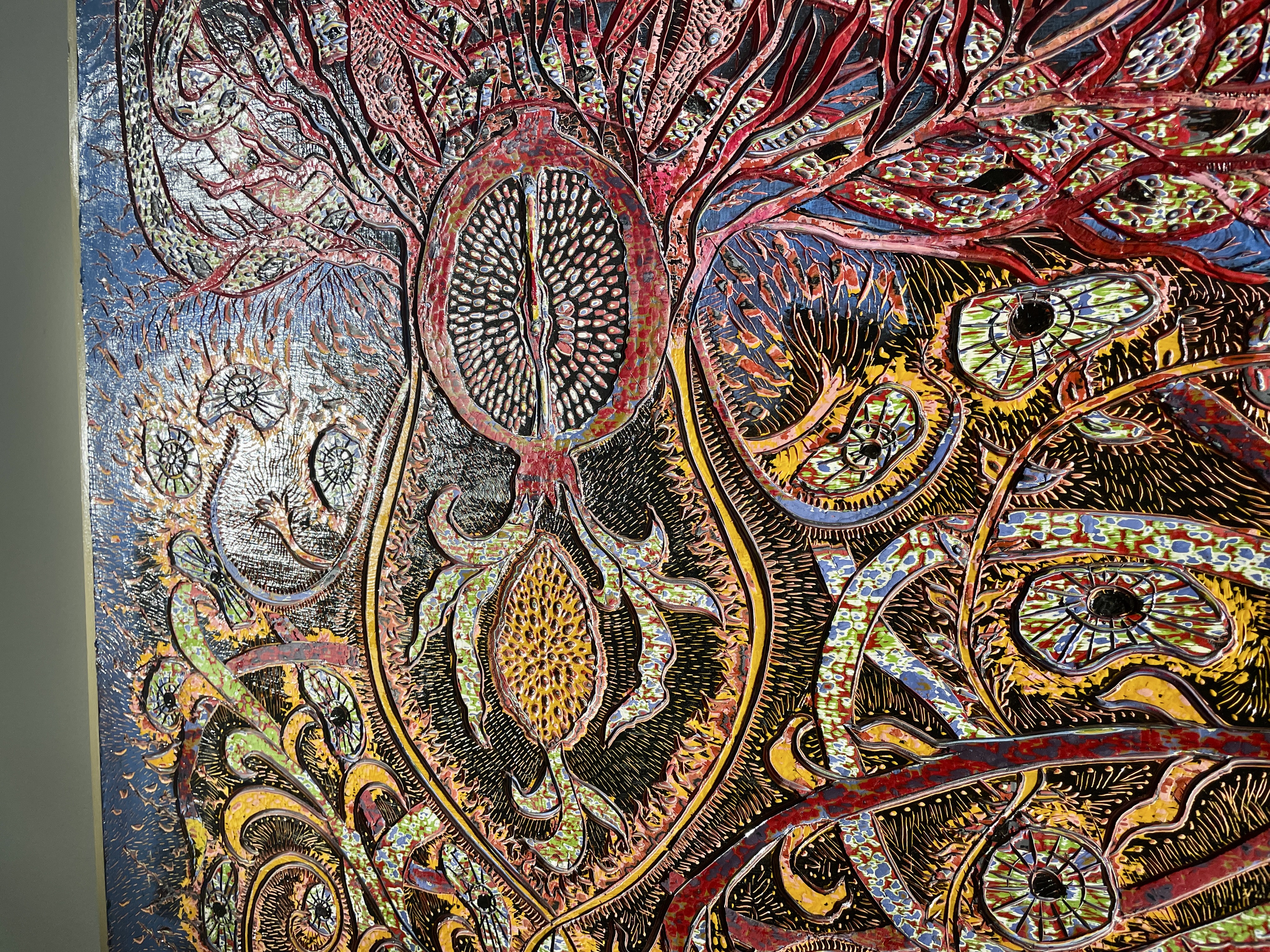
Note: Book 13 for 2025 is “Butter”, Gayle Jones. A collection of short stories.
“She was Christian but American Christian, the kind that believed Jesus just needed a bigger gun”–part of the description of the main character’s rich, not dentist mom rich but oil, trust fund rich, blue-eyed, blond girlfriend. Cyrus, the main character is an Iranian American whose father immigrated to the US when Cyrus was a baby after Cyrus’ mom was killed when the US shot down an Iranian passenger plane thinking it was a bomber (July 1988). His dad acquires a job at a Midwestern chicken farm, counting eggs, but special eggs. This farm breeds chickens to grow faster to get to market faster. He works six days a week, long hours, until Cyrus, who excelled in elementary and high school, becomes a sophomore in college. Suddenly, his dad dies.
Cyrus becomes an addict using alcohol and drugs and writes poetry and eventually finishes college. He becomes obsessed with and researches martyrs throughout history–people like Hypatia of Alexandria, Bhagat Singh, Emily Wilding Davison, the Soulit Women. He gets sober and obsessed with his own past. This eventually leads him to travel to Brooklyn to talk to a famous artist whose last exhibit is herself talking to visitors as she dies of cancer. In researching this woman’s paintings, he discovers a strange painting of a young man dressed as an angel whose job as a soldier is to ride at night with a flashlight through the fields of the dead and dying Iranian soldiers consoling them during the Iran/Iraq War. Cyrus knows that his mom’s brother had this actual job during that war and wonders can there be a possible the connection.
Throughout these events the reader is lead to not only explore Cyrus’ thoughts and beliefs but also those of his father, mother, uncle, and best friend, Zee. It is rare for a novel to be both heart wrenching and funny. Akbar accomplishes this task. One moment I found myself laughing out loud and the next almost in tears. I could not stop reading even though the paperback is long. Perhaps my knowing something about Iranian culture, food, etc. helped me appreciate some of the book more than I might have otherwise. Nevertheless, this is a universal story about love, discovering oneself, relationships, parenthood, human nature. It is definitely worth taking the time to read.
While wandering around in the library, I found this book. His two more recent novels, ” All the Light We Cannot See” and “Cloud Cuckoo Land” remain two of the most touching and fascinating novels I have ever read so decided to try what he started with, short stories. These stories do not disappoint.
The title of the book comes from the first of the stories. It is a combination of science fiction and paleontology. Via an operation to his head a young boy in South Africa possesses the memories of an old woman. Through her memories he learns of a her deceased husband’s interest in rocks and fossils. This allows him to make a discovery that changes lives. In the next story, due to the death of her parents, a young girl in Kansas has to move to Lithuania to live with her grandfather and makes a myth come true. The following story, “Village 113”, won the O. Henry Prize. It details what happens to one woman, a keeper of seeds for an entire village, when the Three Gorges Dam was built in China. Another story tells what happens to a couple in Wyoming when they desperately want a child but cannot conceive. The shortest of the stories, “The Demilitarized Zone”, is well about that–sort of. The final story, like several others, is about memory, in this case the memories of a Holocaust survivor, who like many who survive horrible events when others they know do not, wonders why her.
I liked these stories so much that I ordered his earlier collection of short stories, “The Shell Collector.” He has won the O. Henry Prize for short stories five times and the Pulitzer for “Cloud Cuckoo Land” in 2015. I keep wondering how he knows so much about so many places. His short stories and novels are set in countries all over the world. The research must never end.
Travel the World 4 Less
A Glimpse into My Life & Passions
Ceto-Magoism, the Whale-guided Way of WE in S/HE
Exploring the F-word in religion at the intersection of scholarship, activism, and community.
ANCESTRAL FOOD. HERBAL WISDOM. MAGICAL COOKERY. SEASONAL CELEBRATION.
inesemjphotography
politics, engineering, parenting, relevant things over coffee.
Food is the best expression of every emotion. Explore through my reviews, recipes, events and more.
Smile! A Site for Friends Wherever You Are!
inspiring personal growth through poetry and writing
Combining atheism with whimsy. This is a Fair and Balanced blog based on opinion unencumbered by fact.
Odds and ends ~ My Life
Original poetry, commentary, and fiction. All copyrights reserved.
bripike@gmail.com
A wildlife filmmaker in Africa
A Geeky Feminist's Musings On Pop Culture
"5 minute walks"
 writingontherim