Book 29 for 2024: “The Covenant of Water”, Abraham Verghese


I waited for more than a year to get this book via the library. It stayed on the best seller lists for months and months and has been translated into more than twenty languages. It is the saga of one family from 1900 to 1977. The setting is the Kerala area of India (I have been to India but not this area). It is unique compared to much of India in that Christians, Muslims, and Hindus live in relative peace with each other. Unlike the more arid parts of India, this is a place dominated by water which is a major theme in the book. Several of the main characters in the book suffer from an inherited Condition, as they refer to it. In every generation, at least one person dies from drowning.

The book begins with a 12 year old girl being married off to a 40 some year old widower. She has to travel far from her family via water. He is kind and patient but unlike her, who loves the water, he will travel many extra miles to avoid even traveling by water. He is terrified of water because he has the Condition. Eventually, she becomes the family matriarch, Big Ammachi. This is her story and the story of her descendants, the Christian community in Kerala, and the fate of one British man who remained in India after independence. It is also the story of the progress of medicine (Big Ammachi’s granddaughter is determined to become a doctor and find what causes the Condition) and how one family experiences many hardships to further future generations.

The author, Vice Chair of the Department of Medicine at Stanford, details this fictional family’s history for several generations in 715 pages. It sounds daunting but I kept reading because I wanted to know what happens to all the people. At the same time, I found this to be one of the saddest books I have ever read. Due to the Condition and leprosy, for which there was no cure at the time, many people’s lives are horrendously affected. I did learn a lot about medicine and medical advances, how leprosy destroyed lives, Kerala and, much to my amazement, that many Christians in Kerala continued to follow the Hindu caste system.

Book 28 for 2024: “Gun Island”, Amitav Ghosh


A tale based on a Bengali legend about a merchant called the Gun Merchant, Bonduki Sadagar, this novel not only takes place in the mangrove swamps of the Sundarbans but also in Venice. It has nothing to do with guns but demonstrates how differences in language use among languages and translations can lead to total mistranslation. The narrator is an older, male, Bengali, rare book dealer who grew up in Kolkata but now lives in Brooklyn most of the year and goes back “home” occasionally. When he meets a distant relative by chance at a party, he finds himself enmeshed in the Gun Merchant tale and finds himself in search of a remote shrine where a king cobra lives. His adventure leads him to meet two young men and reconnect with an old friend, an Italian woman who is a famous historian.

What fascinated me most about this novel was learning all about the immense number of historical connections between the Bengali part of India and Venice especially related to trade and persons of Jewish descent. It is also filled with lessons in relationships among languages and history. For example, I learned the origin of the word ghetto. During the 17th century a part of Venice, Getto, was where their large and prosperous Jewish population was forced to live, Venice being one of few European cities where Jews were safe. Thus the word designating a part of the city became the word ghetto.

It is also a story about the risks and dangers of immigrants trying to get to Europe. I learned many Bengalis, mostly from Bangladesh, live in Venice and the numerous historical connections between the Bengali speaking areas of the world and Venice.

Book 10 for 2024: “The Furies: Women, Vengeance, and Justice”, Elizabeth Flock


This book raises these questions: Can women gain true safety and equality without violence? Can we end misogyny without fighting back?

The book details the stories of three women, one from Alabama, a woman from northern India, and a Kurdish fighter in northern Syria. All use a form of violence to overcome abuse and mistreatment they have experienced and see other women experiencing. The author personally interviewed all of these women and others close to them and visited them repeatedly.

The first is Brittany Smith, who shot the man who had raped her and was trying to kill her brother. Her story details how Stand Your Ground laws work for men, but often fail for women, especially in areas of the US South where men are protected by their beliefs in a male Code of Honor.

The second is the story of Angoori Dahariya, a Dalit woman, from Uttar Pradesh, India. Fed up, she creates a group called the Green Gang (they wear green saris) dedicated to defending poor, under caste, female victims of abuse. Note: Dalit refers to the lowest caste.

The third is the story of Cicek Mustafa Zibo, a Kurdish fighter in the female militia that fought ISIS in northern Syria. She and many others follow the teachings of Ocalan, a Kurdish leader imprisoned by the Turks for leading the Kurdish militia who for years have fought the Turks for independence. He teaches equality between men and women and women’s rights, which is anti the general cultural beliefs in this area of the world. Note: Ocalan is labeled a terrorist by many.

Sunday Poem


A few years ago Uno Mundo Press published my second book, a book of poems.  Reviewers say it is a memoir.  Oddly, that was not the plan; in retrospect, it seems apt.  The poems’ topics are not chronological but rather via topic with quotations before each topic as a sort of introduction.  For the foreseeable future, while I continue writing another book, I will post one poem from the book every Sunday.

The book begins with this quotation:

“Do something scandalous to give your descendants something

to talk about when you are gone.”  Vanessa Talbot


The first section begins with this quote by Judith Jameson, the famous dancer and choreographer:

“I always tell my dancers.

You are not defined by your fingertips,

or the top of you head,

or the bottom of your feet.

You are defined by you.

You are the expanse.

You are the infinity.”


The first poem in the book goes like this:

I Have Lived

Depression, sad days, melancholy.

Gone!

At 26, I said, “To hell with this!

You control you life, live it!”


I tried forbidden liaisons, trained horses,

Traveled around the world, a cobra wrapped around my neck,

Walked the Shalimar Gardens in Kashmir,

Stood before the Jama Masjid in Old Delhi,

Watched the Taj Mahal reflected in still waters,

Walked the streets of Katmandu,

Talked to monks at Shwedagon Pagoda,

Bargained with sticks in dirt, math our only common language,

Downed raw turtle eggs in Costa Rica,

Danced on table tops, sang “Adonai”,

Roamed empty roads across the Navaho Nation,

Divorced four times,

Raised two talented children.


I have lived, running on the rim of wonder.

IMG_2675


You, yes, you can make a difference


Many tell me or believe that one person, him or herself, cannot do much to change the world, to make a difference.  This short movie tells about a man in northeastern India who transformed a wasteland into a forest by planting one tree at a time over many years.  Now elephants, deer, and even tigers live there.  Take a look for yourself.  Look for the youtube video called “Forest Man”.  The web address is :

It won awards at several different film festivals including Cannes.


Apocalyptic Planet–Part One


Usually I read only one book at a time.  Lately, I am reading several, one of which is Apocalyptic Planet:  Field Guide to the Future of the Earth by Craig Childs.  Childs is a sort of combined explorer/adventurer/scientist.  He goes to places few go to see what occurs there, the wind, the flora and fauna, the weather, the climate.  The next couple of days I intend to share some of his most pithy observations and ruminations.  We will start with the desert.  He and a friend literally wandered around the most arid and hostile portion of the Sonoran Desert in northwestern Mexico.  This desert has enlarged and become more arid due to an extended drought.

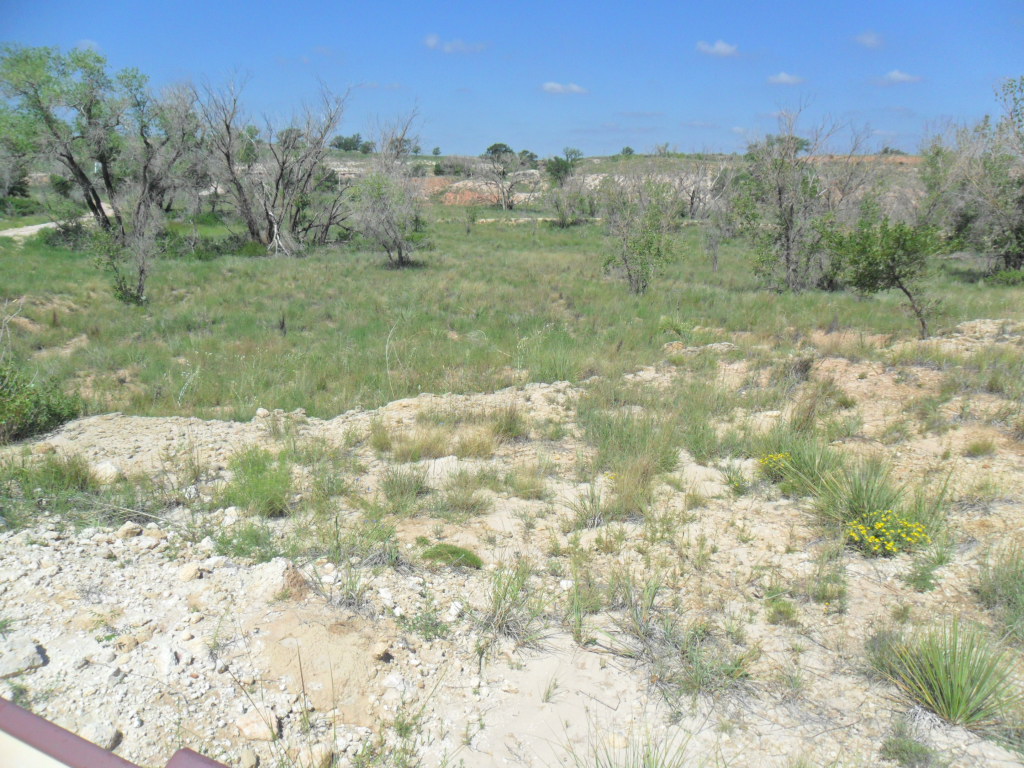
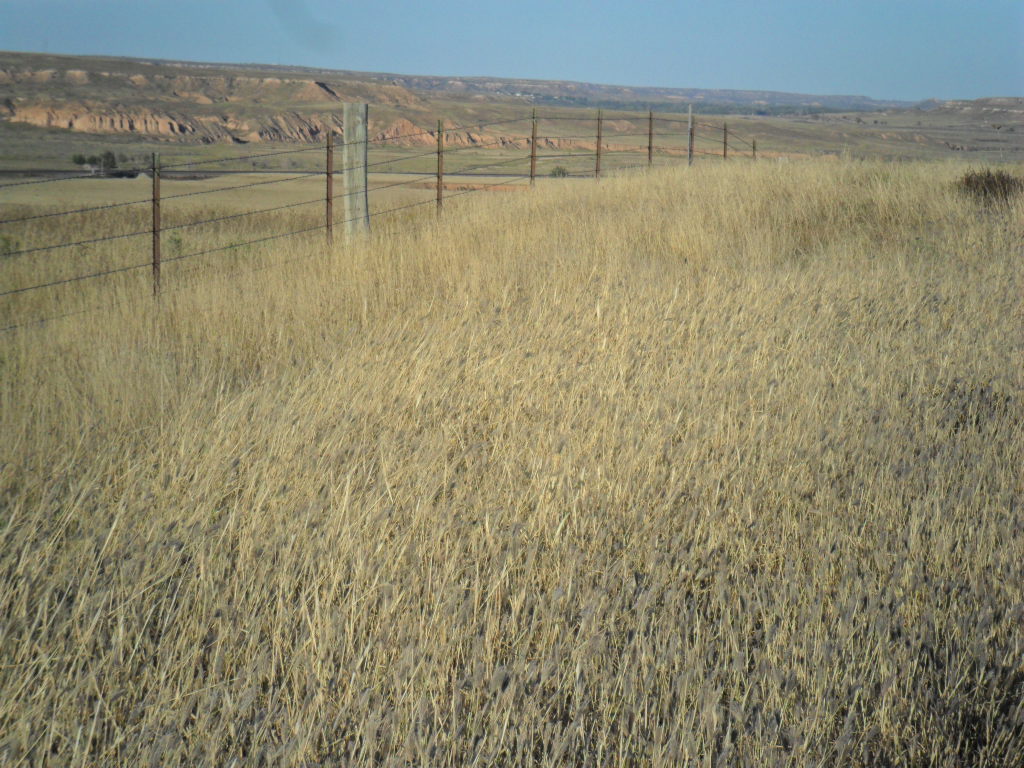
Deserts come and go.  If you live in a lovely lush green landscape, wait long enough and it, too, may become a desert.  Six thousand years ago lakes, marshes, and grassland lay where the Sahara is today.  A slight orbital change in earth’s relation to the sun caused nearby oceans to heat up, changing atmospheric conditions.  Humans living there had no choice but to move.  Forty per cent of the earth’s population lives in semiarid regions.  Even a small drought changes survival chances for the people who live there.  The Sahara, the Gobi, and the Taklimakan are growing, arable farmland decreasing.  Vulnerable areas include southern Spain, Greece, Bolivia, Australia, central Asia, and our own West.  The entire American High Plains (I live in the southern part) sits on top a giant desert.  Without pivot irrigation, only grass grows here.  In the last decade many irrigation wells have dried up or gone too saline.  The giant bulges you see in places like the sand hills of Nebraska are really a sand dune sea covered with grass.  Take away a little rain and here comes the desert.

Childs and his friend carried water with them and buried them with markers in the sand so they could find them later.  As the desert grows in parts of India, women carry water farther and farther, an average of six miles a day, four gallons at a time.  In the Sahel just south of the Sahara a difference in rainfall of just an inch or two can mean the difference between survival and starvation.  Without water, there is no civilization.

What causes these changes?  Human behavior and the increase in greenhouse gases are  part of the reason.  Humans are creating enough changes that we are moving toward more deserts, not fewer.  One climate expert, Jonathan Overpeck, thinks we are seriously underestimating the severity of drought we will face in the not so distant future.  Forget five and seven year droughts and think fifty years.  Hadley cells also affect climate change.  Tomorrow I will explain Hadley cells and how they affect our weather.

SAM_1190


Northern Arizona

SAM_1302


Eastern New Mexico


SAM_1370


Texas Panhandle