Book 20 for 2025: “The Color of Water: A Black Man’s Tribute to His White Mother”, James McBride


I will confess that I read this book before when it first came out decades ago. This past week, I reread it because several women on the street where I live decided to start a book club and this is our first book. McBride’s mother was a remarkable woman who grew up under horrible conditions in the South. Her father, an orthodox rabbi, did not love his crippled wife and made everyone work hard. He was more obsessed with money than religion. Jews were not very welcome where they lived and McBride’s mother found more acceptance and understanding among their Black neighbors. She escapes to NYC, meets and marries a Black, Christian man, converts, and they start a church together. He dies suddenly; she is left with their many children and works hard to make sure her children are successful, sending them off to schools where they are often the only children of color. Then she marries another man and has more children so there are 12 children. This remarkable woman makes sure all of her children go to good schools, go to college, and become successful while she works at what most would consider menial jobs. In this book McBride details not only his own growing up but also the history of his mother and his siblings. It is a remarkable tale of one woman’s determination to keep going, educate her children, and never give up no matter the circumstances.

Celebration in Downtown LA


As a counselor for College Match LA, I joined a group of current students in college and alumni at Perch LA, a restaurant in downtown with a rooftop venue. The views there are fantastic, the finger food yummy, and seeing some of my students delightful–they are at Oxy and loving it. Here are a few photos.

The view after dark.

Ice skating.

Book 33 for 2024: “Three Daughters of Eve”, Elif Shafak


Shafak is a popular Turkish writer. One of my all time favorite books is her novel about the life of Rumi.

“Three Daughters of Eve” takes place one evening in Istanbul in 2016. Peri, one of the daughters from the title, is on her way to a fancy party when a thief snatches her purse out of the back seat of her car which is stalled in traffic. She parks the car and chases him through back alleys. As she fights him for her purse, an old photo falls to the ground. It portrays three young women and their university professor. This photo jars her mind, takes her back to her time at Oxford University when she was a student there in 2000-2002, her childhood in Istanbul in the 1980s and 90s, and her life. She thinks back to her life with her two friends, Shirin, an adventurous Iranian young woman, and Mona, a devout Egyptian Muslim who word a headscarf out of choice. And then there is the famous professor Azur, whose class on God either makes students hate or love him and the scandal that caused Peri to return to Istanbul.

Until her daughter, who was in the car and eventually chases her mother down in the alley, sees the photo, no one, except her husband, seems to have known Peri even went to Oxford. Her daughter mentions it at the party while everyone is arguing about East and West and politics and who has the most money and how they acquired it. Peri tries to deflect questions, changes the subject, and keeps remembering her past: her parents, a father quite irreligious, her mother a devout Muslim, their endless arguments and hostility, her brothers, her childhood and her stint at Oxford.

Through the story of Peri’s life, this novel explores personal identity, East-West history and politics, the meaning of marriage and friendship.

Chinese New Year at the Tzu Chi Campus


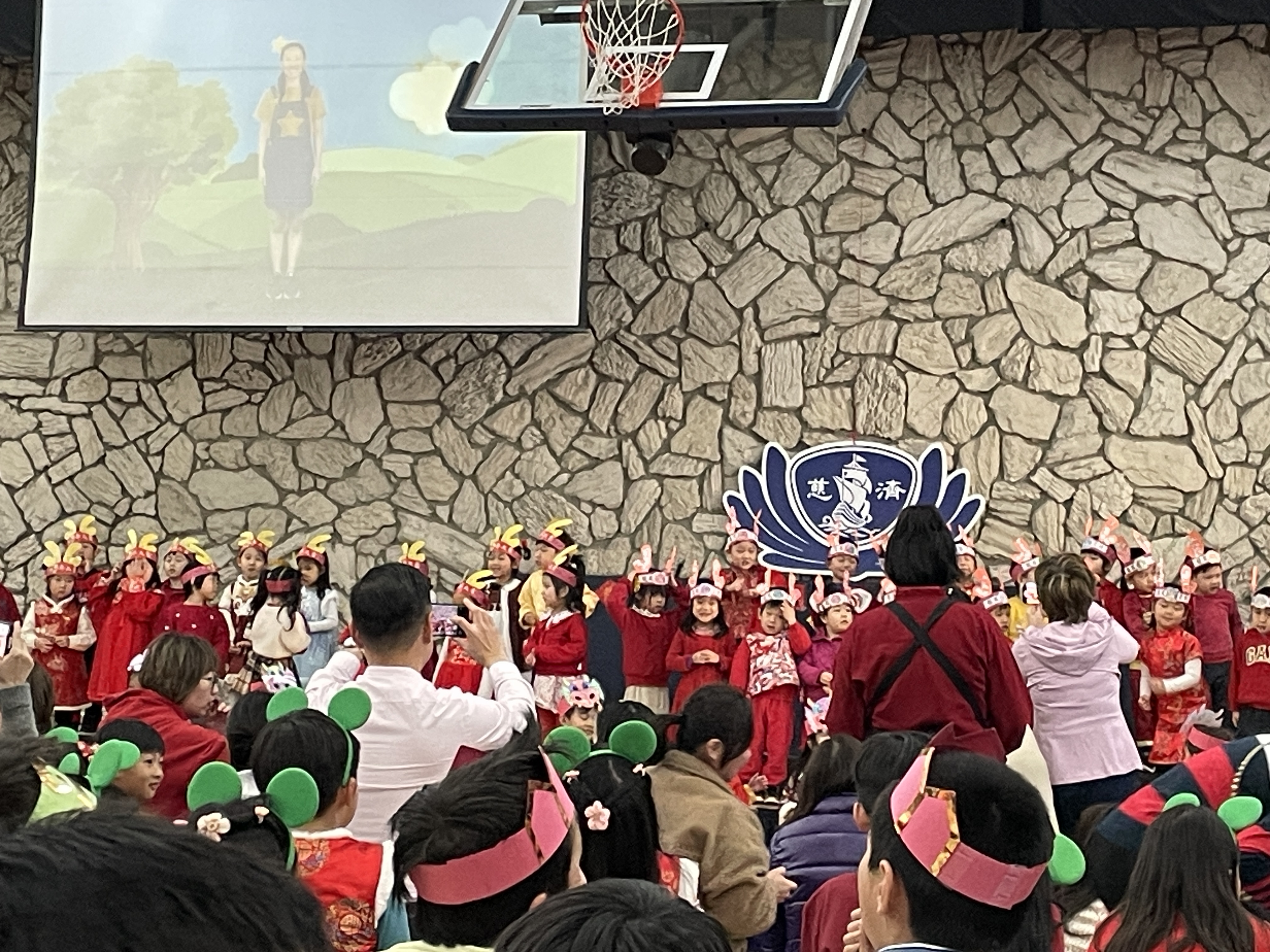
Today I traveled a bit south of where I live to the campus of the Tzu Chi school which I have visited numerous times. First we had a vegetarian lunch–they are Taiwanese Buddhists who advocate a vegetarian, plant based diet as better for the environmental future of Earth. Then all the visitors, who were mostly parents of the children, went to the gym for the program. Various ages wore headdresses to represent the various signs. Some of the youngest children wore dragon headdresses. This is the year of the dragon.

The children sang and danced.

Parents were very enthusiastic about taking photos.

Then after all the students of varying ages finished all their performances, including older students who made a circle around the room and sang plus danced with perfect synchrony, out came the dragon.

It was so much fun to see all the children performing; it was obvious they had worked very hard to accomplish this. It was also enjoyable to see so many happy, enthusiastic parents.

Note: I work with this Buddhist Center teaching character education at local public schools.

One Book A Week-25: “The Daughters of Madurai”, Rajasree Variyar


The first sentence of the book reads: “A girl is a burden. A girl is a curse.”

In India in early 1990s, Janani lives with her abusive mother-in-law and an alcoholic husband who is often absent, chauffeuring people here and there. Although she is allowed to keep daughter number one, the fate of the next daughters is death. She, who is Tamil lower caste, is lucky enough to work for the same higher caste family for whom her mother worked and with whom she spent most of her childhood. They treat her much better than her husband and mother-in-law who hate her for not bearing a boy baby.

The book goes back and forth between this time period and 2019 Australia where the fate of Indian girls and women is far different. The family returns to India for the funeral when the family patriarch dies. Those who know little about their family history learn some shocking revelations.

In the Afterward, the author discusses female infanticide. Although many educated families oppose it and national laws prohibit the practice, it remains so common in parts of rural India that in those places there is a shortage of women for marriage. As a consequence, men resort to kidnapping women from other areas.

I thought it would take me a while to read this 326 page novel. However, I became so engrossed, I finished it in two days while also engaging in several other activities.

The Boy From Honduras


My current writing endeavor is part of a challenge to write 20 minutes per day six days a week. The story I am going to relate now was written as part of that project. The brief introduction here was part of something I wrote the day before I wrote about the boy.

I watched “60 Minutes” on Sunday about German Jewish Americans who volunteered to go behind enemy lines before and after the end of WWII to either spy on or interrogate Nazis, often officers of higher rank. One of them related that he never met a Nazi who had any remorse for atrocities he had committed, who thought what they had done was wrong. How horrifying, to hate anyone, any group so much over religion, ethnicity, sexual preference, status, remains to a great degree beyond my comprehension. Although I may view people like the Nazis as my moral enemies, to hate anyone so much as to torture and murder them seems incomprehensible.

These views also affect my attitude toward immigration. People rarely leave their countries because they want to, they leave because they need or have to in order to survive. Often it is a matter of life or death. Now I will tell you about the boy from Honduras.

Short, straight black hair, obsidian eyes, skin the color of café con leche, he showed up at high school one day absent any knowledge of the English language. His brother, married to a US citizen, lived across the street from the high school secretary. The assistant principal brought him to me. By Texas state law he had to spend at least one period of the day with a certified ESL teacher, me. He came often even from his other classes because everything except Spanish class was in English. Written Spanish helped him only somewhat. In Honduras poor country students only attended school for a few years. The more advanced middle and high schools were in cities and required fees paid.

The counselor claimed he had not been to school at all. I knew better; he knew things that a kid only learns if he or she has gone to school. When I did not understand his Spanish, I asked him to write it down. It took me a while to figure out some of his written Spanish. He sounded it out and so instead of writing habla (h is silent in Spanish), he would write abla. When I really could not understand, I went to the Spanish teachers from Mexico; they could not always understand him either. One, who had travelled all over Mexico, said he spoke a dialect she had never heard. Over time, I learned he had started school at six, attended for four years, then went to work on a coffee plantation. He was 15 when I met him. After I showed him a photo of me picking coffee in Costa Rica, he became very excited.

His father had been murdered; his mother feared for his life so she sent him to his brother in the US. He was cheery, always smiling, played soccer at lunch with the other students, missed home. He told me his family was working with an immigration lawyer so occasionally he traveled to Dallas to meet the lawyer. Then one day he disappeared. We never saw him again. Later one of the Spanish teachers told me he had come, smuggled in a shipping container, had survived this for days. And now he was gone.

Students asked about him; we had no answers. Some who had ranted about illegal immigrants stopped ranting. It was someone they knew, liked, who had left with no answers. He was a kind, funny kid whom everyone liked. Is he in hiding? Is he safe? Is he alive? Who knows?

Covid19–1


Will many record their experiences during this difficult time?  I have no idea.  However, a thought came to me yesterday that I should–not sure why, just that this is something I should do.  Interesting because I am not really into “shoulds.”

Because Martina, the exchange student who lived with me this time last year, lives n Milano, I have realized the seriousness of this for weeks.  She and her family have been quarantined for so long that I have lost track of just how long.  A couple of days ago her mother had to go to the grocery.  It took her four hours to get through the line.  She has a grandfather over 90; they worry about him; he is scared.

Yet, here in the Panhandle of Texas, many fail to realize just how awful this can get.  Until yesterday, when they had no choice due to the statewide mandate, they went out to eat, exercised at the gym, congregated in mass at bars, you name it. Now schools are closed until April 3 when the situation will be re-evaluated.

In the last ten days the only places I have gone are the grocery, the doctor’s office–for an awful allergy attack.  Luckily, I live out in the country, have horses.  They have to be fed twice a day, their runs cleaned.  Today it is 70, the patio doors are open; I might even take a little hike later.  Just me and Athena, my black, standard poodle.

Luckily, it has been spring break so I have had plenty of time to think about what to do with myself as I keep myself quarantined–I am not even going to my daughter and grandson’s house–I really miss seeing them.  What do I do:  have read two books, almost finished crocheting a poncho, worked one warm day in the garden, graded all the papers I brought home and posted them, cared for the horses, cooked, communicated with friends worldwide–Covid19 is everywhere, watched some TV, mostly news and documentaries.  One thing I will do every day is act as if I am actually going somewhere, put on my makeup, get dressed, have a plan for the day.

This morning I went to the grocery.  What did I do when I returned home?  I left the bag outside to air–will disinfect it shortly, I took off my clothes in the laundry room and put them to wash.  Then I took a hot shower.  Why all this you ask?  The virus can stay in your clothes for 24 hours.  There were more people in the store in the morning than I expected.  Are they healthy, virus free?  No idea.  In the county where I live, there have been two cases already.  I do not want to risk it.  Although I am healthy, I am in one of the higher risk categories due to my age.  I do not mind dying, but who wants to die from this?  I don’t.

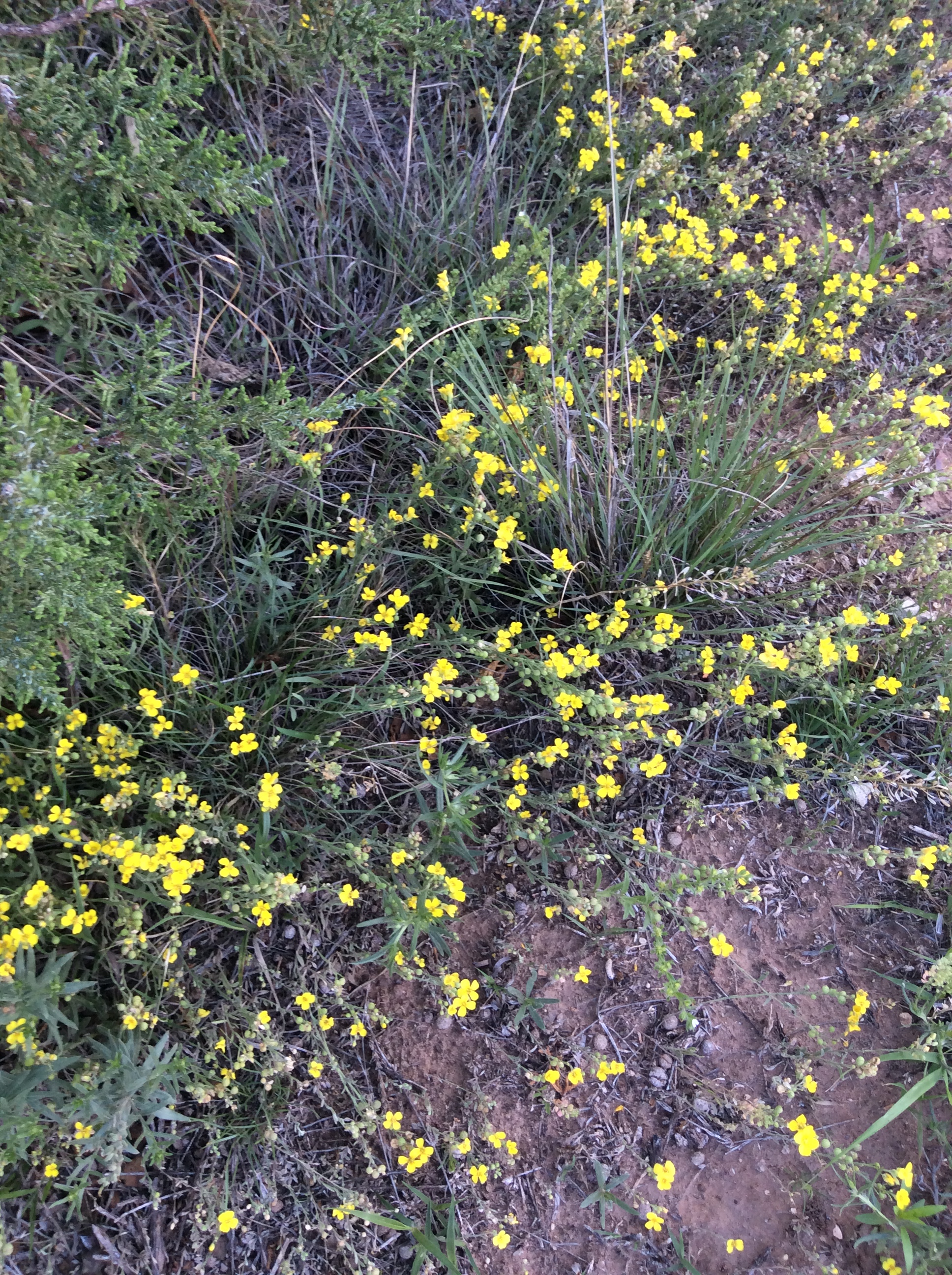
It is a nice spring day outside, the wild flowers are starting to bloom, and I need to relearn how to use Google Classroom because that is how I will be teaching English and Spanish until who knows exactly when.  I have used it before over a year ago.  I need to refresh myself.

Here are a few pictures of the wild flowers around my house.  After this, review Google Classroom and maybe play the piano for a bit.

Take care of yourselves.  Be safe. Be wise.


IMG_3630

IMG_3340

Teacher Tales


Sometimes a teacher’s work seems to never end and, honestly, it keeps me from posting here as often as I might like.  At the same time, it provides me with endless joy and entertainment.  The last couple of days brought lots of laughter.

I teach 8th – junior English and Spanish 1 and 2.  This past Friday, Spanish 1 class became the site for lots of laughter.  We were practicing translating sentences from English to Spanish.  To date they have learned to say what they like, sentences about the weather, write about time, and to use the two “to be” verbs used in Spanish among other things.  Somehow in the process of describing a person using a variety of adjectives they have been taught, one of the students blurted out, ” I think old people are ugly.” I said, “So you think I am ugly?”  This caused a minor uproar with laughter and indignation.  In an attempt to make the situation better, he continued, “No, I mean people over 60.”  I repeated, “So you think I am ugly?”  By this time everyone was laughing, including me, protesting his attitude.  He started to try to wriggle out of that one when I pointed out that it might be better if he kept quiet.  He started to say something about wrinkles but that got shut down by the other students.

Just before all this,  his younger brother came into the classroom.  He is the student who wrote a page-long poem about my hair last year.  He said to his brother, “What is wrong with you?  She is beautiful.”  Then walked out of the room.

E6A29E6C-D58A-44CE-89FA-3B69CC78F2AF

By this time everyone was laughing and talking except the student who made the original remark about old people and a few were shouting at him about his awful attitude.  By the way, in case you do not know, the word for ugly in Spanish is feo or  fea, depending on whether you are describing a male or female.

This weekend I read 50 or so book reports.  One of them included this statement in response to the question, “What did you learn from this book?”  “I learned it is sometimes fun to be bad.” The student was referring to the book, “Tom Sawyer.”

I have no clue how to respond to that remark.


No Offense by Esther Nelson


This blog will be of special interest to university professors and anyone who teachers in a college or public school at a higher level or those concerned about the state and future of education.

Esther Nelson's avatarFeminism and Religion

What a pleasant surprise to become acquainted with Samar Habib when she appeared on my newsfeed the other day.  According to her biography, she “is a writer, researcher and scholar” as well as “[a] tireless advocate of human rights.” She is also “an expert of international standing on Gender and Sexuality in the Arab world, with unparalleled publications on same-sex love and desire among women and the juncture of Islam and homosexuality.”  The Ted Talk I stumbled upon, titled “Let the Scholar Speak, Even if it Scares You,” explores the modern university’s difficulty navigating that murky space between academic freedom (based on scholarship and inquiry) and giving offense (based on fear of decimating a student’s belief system).

Samar is Palestinian, raised in a secular, but nominally Christian, household.  Initially, her research focused on the study of sex and gender in the Arab world and gradually incorporated the more specific…

View original post 912 more words

Why Teachers Suck …


I was going to write a nice little poem for my blog post today but instead decided this was more important to post. As I teacher, I can verify the veracity of this post. In some ways it may be a little easier for me because I teach mostly seniors in high school who are somewhat self sufficient but many still get free or reduced lunches, some are homeless or drift from one friend to another since thrown out of their own house, some work so late they can barely stay awake in class, some self medicate because no one can afford the meds they need. Most graduate in spite of this. How? Because the school and teachers go to great lengths doing everything imaginable to help them succeed, e.g. online programs, extra time, alternative assignments. Why do I continue to teach? I love teenagers; I never have a boring day; I work hard to make a difference; I think public education is the foundation for a working republic, for this country to flourish and succeed.

Bert Fulks's avatarBert Fulks

A friend and I were grousing about ignorance run amok.

“Americans get their information from internet memes,” I laughed.  “And in the true spirit of democracy, dullards who have never cracked a book will cancel the votes of people who actually have a clue. What could go wrong?”

“You know what the problem is?” Tim challenged.  “Our country’s a mess because teachers suck.”

teacher2I bristled.

Although I’ve been out of the classroom for a number of years, once a teacher, always a teacher.  Plus, I have family and friends still slugging it out in the trenches.  I know their battles and the wounds they carry.

“Dude, do you know what teachers endure on a daily basis?” I asked Tim.  I found that, no, he didn’t.  I fear most Americans might be as clueless.

I emailed a former colleague (she’s two years from retirement) and asked one question:  “How has education…

View original post 1,411 more words