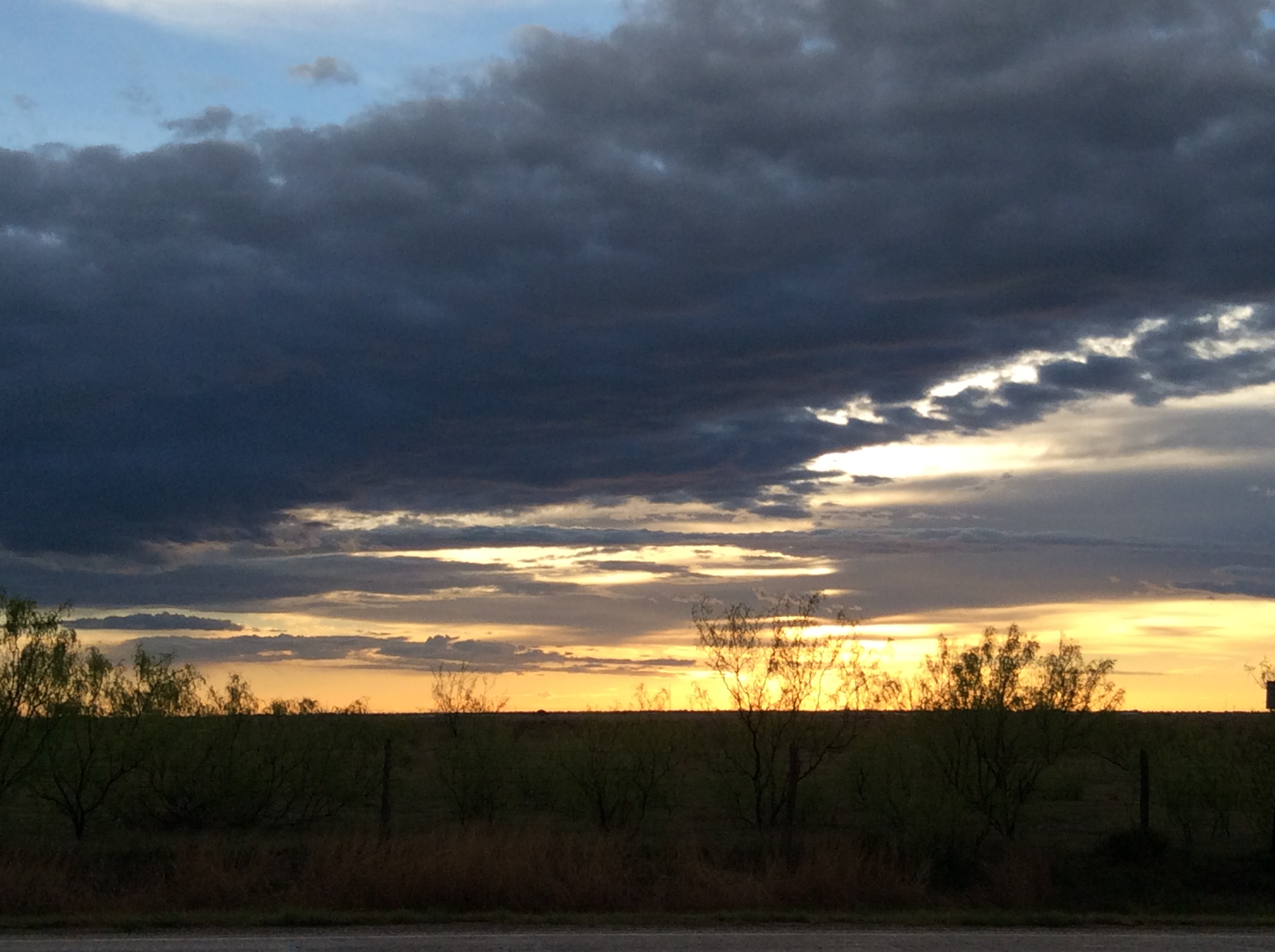
heat shimmers across the endless plains
black clouds rumble rain
coyote howls float in the electrified air
heat shimmers across the endless plains
black clouds rumble rain
coyote howls float in the electrified air
The DNA results came back two days ago; I was surprised, not exactly what I had expected. Considering that my last name traces back to Ireland and a number of relatives on Dad’s side also go back to Ireland or England, I expected I would have a considerable amount of both. Wrong!! Very little: 7 percent Irish and 9 percent English. I have almost as much Caucasus (Iran, Iraq, Syria, Georgia, etc) as I do Irish–4 percent. Once I actually considered that and thought about my haploid group (see previous DNA posting), it made sense. There is a trace of Iberian Peninsula (two per cent) and one of Scandinavian.
I am 77 per cent western European which in ancestry.com terms encompasses, Switzerland, Belgium, France, Germany, Austria, Netherlands, northern Italy (I did find one ancestor from Italy) and some of Denmark. Looking at these results, I went back and looked at what I had learned on Mom’s side since my last DNA post. After hitting repeated dead ends for my great grandfather on her paternal side, I concentrated on the other. My grandmother’s father came from Switzerland in 1844. That makes two great grandfathers from Bern which would give me a certain 25 per cent Swiss even if no one else was from there. I traced more to Alsace and the part of Germany next to Belgium. And then there were the Dutch traced back to New York where they married in the Dutch Reformed Church, Isaac VanDeventer and Saartje Couwenhoven in the early 1700s. I keep coming back, however, to the Swiss and nearby. Once I kept counting all of them, they numbered far more than anything else–names like Kaiser and Werth (the two great grandfathers), Zimmerman, Spainhauer, Fiscus, Rufener, Meyer, Binckele.
Today, a fourth cousin found me through the ancestry site, sent me a message, and the site sent me information on two third cousins. They can actually “match” using family trees.
Although I have discovered the majority of what I wanted to know, I will continue to attempt a search regarding the one great grandfather. While searching, I remembered a story my aunt told me, how she never knew him because the story she was told is this: He went to town one day and never came back, simply disappeared. Eventually, he was declared dead–the ancestry info has a birth date in Tennessee but no recorded date of death. My great grandmother eventually remarried and this husband raised her children by my great grandfather. My aunt even took me to the cemetery where the second husband was buried. I thought I would remember the gravestone, but I could not find it when I returned years later. If I had only written down all my aunt told me.
My Ethiopian Adventure–On the Road to Lalibela, Part Two.
To continue my revisiting the Ethiopian trip from last July, I am reblogging this section, day two on the road to Lalibela. This photo shows the interior of a small farmhouse we visited. Click the green title to see the rest of the photos.

My Ethiopian Adventure–on the Road to Lalibela, Part One. A year ago my friends and I started on this adventure. It still remains a trip of a lifetime in my mind. To read Day One of this road trip adventure and see more photos, simply click on the title. 
pushing mower round and round
exhaustion
flower petals brush my face

In the process of conducting research for another poetry book, I came across this information. Dr. Masaru Emoto authored “The Hidden Messages in Water”. This is a quote of his from a book by Doreen Virtue: “Both love and gratitude together are very powerful, and the union of both vibrations creates the best and most beautiful crystals. I believe that H2O stands for two parts gratitude and one part love. This is the most powerful formula of all.”
When water was shown a photo of a dolphin, the crystals changed. In the middle of the crystals was a shape. It looks like a photo of the pineal gland. For some this is the shape behind the third eye.
My cousin on my father’s side sent me 75 pages of ancestry information. Much of it goes back to the 1600s except for some ancestors from Switzerland. My great grandfather, Gottlieb Werth, was born in Bern on 1832. He married my great grandmother, Elizabeth Townsend, in Andrew County, Missouri, in 1867. Her Townsend ancestry goes back to Rayham, England, in the early 1700s and further back to 2nd Viscount Charles Townsend who was born in Rayham in 1675. Charles married Elizabeth Pelham from Sussex in 1698. Their descendants went to North and South Carolina in the 1700s, but eventually moved to Indiana in the early 1800s. Elizabeth Townsend was my grandmother’s mother. My grandmother was born in Andrew County, Missouri, in 1872. Her name was Lillie Belle Werth. Because my dad was born late in her life and was the youngest child by many years, I never knew her. She is my only grandparent who did not live to at least 80.
Looking at the other side of Elizabeth Townsend’s ancestry, her father married Catherine Zimmerman in Andrew County, Missouri, in 1867. The Zimmerman side of the family goes back to North Carolina in the late 1700s and early 1800s. However, Catherine’s grandfather, Johann Christian Zimmerman, was born in Hof, Nassau-Dillenberg, Germany. From Germany he went to Pennsylvania and died in North Carolina. The record even goes back further, mostly to Bern, Switzerland, and the Meyer name in Germany with no specific place mentioned.
Elizabeth’s grandmother was Catharina Fiscus who was born in Surry County, South Carolina in 1782. Both her parents were from Pennsylvania–York and Lancaster Counties. The Fiscus line goes back to Pfalz, Germany. Catharina’s mother was Anna Elisabeth Spainhour who was born in Pennsylvania in 1762. Her father was born in Basel, Switzerland in 1719, and died in Surry County, North Carolina.
On the Townsend side, Elizabeth’s grandmother was Mary Voyles. She, too, was born in North Carolina. However, her ancestry goes back to Westmeath, Ireland; Ballybrunhill, Carlow, Ireland; two ancestors from Danbighshire, Wales; and one great grandmother born in Italy in 1747. A number of these people finally resided in Cabarrus County, North Carolina, and then in Indiana.
I can never thank my cousin enough for all this. After attempting to start the same task on my mother’s side of the family and spending hours, often hitting dead ends, I cannot even begin to imagine how many hours he spent compiling so much information.
Monday, I mailed in my DNA to ancestry.com. I also provided what little I was able to find to date on Mother’s side of the family. Since I am a woman, all I will be able to get is the results for my mitochondrial DNA. As mentioned in the first ancestry post, my guess is that I will have a lot of Ireland and England as places of DNA origin. However, I have learned from friends and my grandson’s experience that surprises frequently arise.
more than fourteen hours of sunlight
a gentle wind whispers
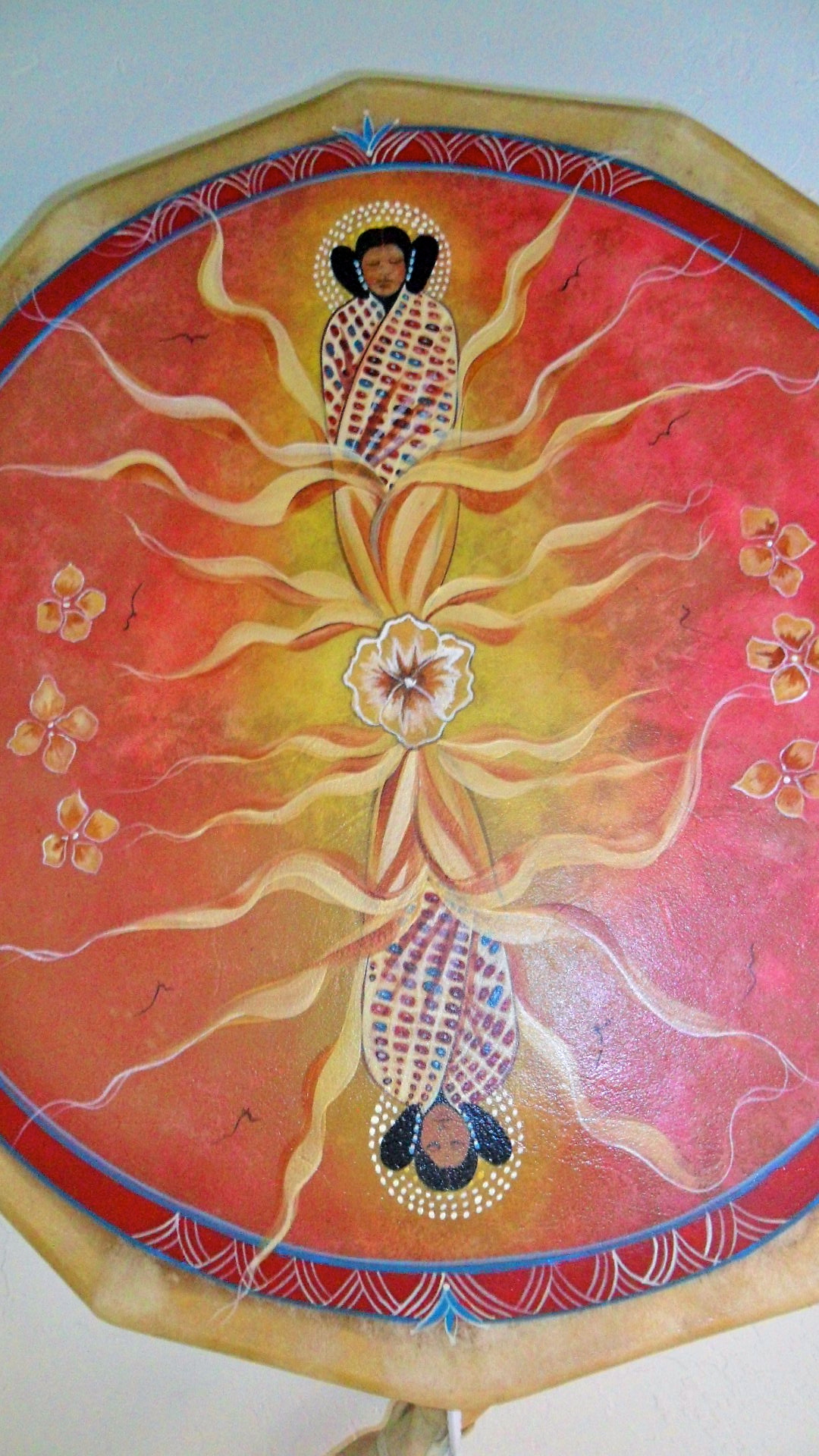
Corn Maiden drum resonates celebration
A couple of years ago my grandson decided he wanted to know more about his ancestry. He joined the National Geographic Genotype Project. Through that I learned my haploid group. The Project separates paternal and maternal information. His maternal haploid–which would be mine–is J1c3b. The J haploid was named for Jasmine, one of the seven daughters of eve from the book by the famous Oxford geneticist, Bryan Sykes. Jasmine lived in the area which presently encompasses parts of Syria, Iraq, and Iran. This group was the last to migrate to Europe. In fact some theorize that they brought agriculture to Europe. Currently Haploid J is found in most of Europe and the Middle East except for the people who live in Lapland. However, the more specific J1c3b is not found in the Middle East any more but mostly in northwestern Europe. www.eupedia.com/europe/Haploidgroup
Since I teach high school and am not teaching summer school, one of my summer projects is to investigate my ancestry more thoroughly. My cousin has extensively investigated my father’s side. Through his investigations, I discovered my last name did not come from where I had thought. Those ancestors are from northern Ireland and left there in the late 1600’s. For some reason after living in the United States, their descendants changed the spelling of their name from Lytle to Lightle, my last name.
Yesterday, I ordered a DNA kit. Given all the information I already have and my haploid group, I am very curious as to what these results will indicate. It will provide no information about my father’s side because women can only trace back generations of mothers. However, since it is my mother’s side about which I know nearly nothing, it will be new information. As I progress on this quest, I will share what I learn here on my blog. Here’s to happy ancestry hunting.
These capsules fascinate me.

The egg-shaped ecocapsule portable house allows the traveller to camp in extreme corners of the world, with the luxury of a hotel room.
This compact home measures 4.5meters (length) 2.4 meters (width) and 2.5 meters (height). It weighs about 1500 kg, and includes a bed, toilet, shower, plus a kitchenett to prepare your hot meals.
The eco capsule doesn’t require an external power source, but relies entirely on a built-in wind turbine and solar panels for energy, with a high capacity battery ensuring sufficient stored energy for times of decreased sunlight and minimal wind activity. It also collects and filters rainwater and dew for drinking and showering.


 ecocapsule.sk
Travel the World 4 Less
A Glimpse into My Life & Passions
Ceto-Magoism, the Whale-guided Way of WE in S/HE
Exploring the F-word in religion at the intersection of scholarship, activism, and community.
ANCESTRAL FOOD. HERBAL WISDOM. MAGICAL COOKERY. SEASONAL CELEBRATION.
inesemjphotography
politics, engineering, parenting, relevant things over coffee.
Food is the best expression of every emotion. Explore through my reviews, recipes, events and more.
Smile! A Site for Friends Wherever You Are!
inspiring personal growth through poetry and writing
Combining atheism with whimsy. This is a Fair and Balanced blog based on opinion unencumbered by fact.
Odds and ends ~ My Life
Original poetry, commentary, and fiction. All copyrights reserved.
bripike@gmail.com
A wildlife filmmaker in Africa
A Geeky Feminist's Musings On Pop Culture
"5 minute walks"


