Respect


Because I teach high school, I am accustomed to teenagers, their loudness and capacity for rude behavior.  Nevertheless, because I live in ranching country with fences and gates, most know you do not go through another person’s fence or leave gates open.  The former is called trespassing.  The latter can thoughtlessly let out livestock and maybe get them killed.  If your neighbor’s dog keeps coming to your property and you call the sheriff’s office, they will simply tell you to shoot it.

Respect applies.  If you do not want people running over your property, obviously do not trespass on another’s.  Have respect for others as you would want them to respect you.

A big party full of teens started at my neighbor’s about five hours ago.  I watched them throwing rocks, running hither and yon,  like caged animals on the loose. A fence exists between my property and hers, a very obvious, country style fence with cedar and T-posts and five strands of wire.  It is not invisible.  I never installed no trespassing signs  because they would face her property and in some places exist at the edge of her back yard.  I would not be able to see them from my house or barn.  After this evening, I will reconsider.

Luckily, I was out feeding horses, doing chores, when several of the teens apparently decided to crawl through the fence and walk toward my house.  Because I was outside, I saw them and was able to tell them to get back across the fence.  If I had not been home, would they have kept walking, what might they have done?  Nothing, hopefully, but with 25 or perhaps more running around, who knows.  I kept thinking surely these young people know better.  Have they not been taught to respect others?  Where were the adults?  Did they even care?

This week I will go buy several no trespassing signs and install them at various places along the fence.  I feel sad to think I find this necessary.

Religion and Politics


The two things some of us were taught never to discuss in social situations.  Reading The Silk Roads, A New History of the World, simply reaffirms why those who wrote the United States Constitution insisted on separating religion and politics.  Mixing the two leads to tyranny, war, misunderstanding, and a host of other ills. When did this mixture start?  Prehistory or at least the early recorded history.

Constantine, the Roman emperor,  converted for political purposes.  The Persians tolerated a wide variety of religions until it was no longer politically expedient; then they decided to persecute Christians and declare Zoastrianism as official.  When the barbarian hoards from the steppes started to overrun both the Roman and Persian Empires, they decided to cooperate–a huge change–and actually built a wall between the Black and Caspian Seas to stop the uncivilized.  Roman soldiers guarded the wall.  This helped Rome little, however, because the Visigoths sacked Rome.  The barbarians won.

And then there was Constantine’s Counsel of Nicea, held in 410, 420, 424.  The “eastern” bishops were not invited.  Therefore, the results applied only to what later became known as Roman Catholicism. Infighting among bishops, arguments over who was right and wrong continued, and on and on.  Eastern bishops saw the western teachings as heresy. The arguments mainly centered on the divinity, or lack thereof, of Jesus.

The western church focused on rooting out unofficial religious views, while the east focused on missionary activity.  The king of Yemen even became a Christian. Rulers converted, shifted allegiances, persecuted or tolerated, according to political expediency.

Little seems to have changed in 1500 years.


Bedtime Reading


A habit I acquired years ago, perhaps even during my childhood, is reading just before I go to sleep.  Picking the right books remains key unless you want to stay up half the night either reading or thinking about something horrifying or depressing you’ve read. Lately, my reading has not been conducive to sweet dreams.  Earlier this week I finished Among the Ruins, an Iranian mystery of sorts, by Ausma Zehanat Khan.  It’s fiction but one of the characters writes letters from prison which are anything but cheery.  Now I am reading the Pulitzer Prize winner, The Return.  Since Hisham Matar never saw his father again after he was captured and hauled off to a Libyan prison, sleep inducing it is not.  Last night I decided perhaps for bedtime I needed to find something not exactly boring but somewhat less stimulating.  It may take me all summer given that The Silk Roads, A New History of the World by Peter Frankopan is 505 pages.  If I get bored with that, I can go back to two books I reread off and on and save for bedtime reading, When Women Were Birds by Terry Tempest Williams and Sor Juana Ines De La Cruz, Selected Works translated by Edith Grossman.  Both inspire reflection and contemplation.  For those who do not know Sor Juana Ines De La Cruz, she lived in Mexico in the 1600s.  She became famous for her intellectual capacity, her poetry, and was referred to as “the Phoenix of Mexico” when women rarely rose to such heights.

What are you reading this summer?


Hazy, Lazy Days


The words and tune to this old song float through my brain.  Summer.  Early morning yoga, coffee, horses fed, flowers watered, a lazy lunch:  salad with feta, black beans with caramelized onions.  Slouched, reading a book (The Return, Hasham Matar) on the sofa, feet crossed on edge of coffee table, patio doors open, I hear birdsong, the whir of black fans in the ceiling sea of white.  Summer. Nap time.  Awaken slowly, eyes watching cotton candy clouds barely move across an azure sky.  Summer.

IMG_2671

Two Kinds of People


The novel I finished yesterday described one of the characters as “the kind of man who would find his place anywhere because of how he interpreted the world.”  He was the kind of man who saw the world not as a system of barriers but rather a place of common ground, a man with an openness to the world, an openness to the unfamiliar, a man who welcomed the unknown.

This made me think of people I know and how they react, to where they want to travel, if at all, to what they desire to explore, to know.  Many of my friends travel little and rarely, if ever, outside the United States.  Others, like me, desire to visit places and cultures totally different, unfamiliar, to “know” the unknown.

This lead me to question how these two different types of people come to be.  In my case perhaps it started with family road trips, the earliest of which occurred when I was three and my dad drove from northwest Missouri all the way to Monterey, Mexico, and back.  I still love road trips.

Which kind of person are you?  Why?  Is it upbringing, heredity, environment?


Success


A couple of days ago a friend posted research regarding success and high school grades on Facebook.  The research cited indicates that there is no correlation between high school grades and success later in life.  The researchers measured success by the amount of money earned.  Admittedly they discussed innovation and creativity and claimed school mainly teaches obedience to cultural norms.  Although to some extent I agree with their discussion of creativity, etc. and cultural norms.  I do not agree that success equates to the amount of money a person earns.

This evening I attended graduation for the seniors I taught this year.  Both the valedictorian and salutatorian were students in my dual credit class.  To my amazement, in her speech the valedictorian discussed this very topic.  She encouraged her classmates to see success as two things.  First, she cited happiness and encouraged them to pursue what they love, that for which they feel a calling, a passion, and if they do not have that feeling yet, to find it because doing what a person loves brings that person happiness.  Second, she encouraged them to help others discover happiness, to serve.  She never once mentioned money.


IMG_1645

Cheating, Stealing


The story that follows keeps running through my mind, disturbing my inner peace.  It occurred several weeks ago while I worked.  As a teacher I take plagiarism seriously.  Repeatedly, I explain that it is cheating and ultimately a form of stealing.  Yes, stealing.  When students cheat, copy another’s work whether from some famous author or from the student by them, they are stealing from that person, and in reality cheating themselves, cheating themselves from learning what may have proven to be valuable information or a needed skill later in life.

Several weeks ago, a former, talented student asked to observe my classes as part of his assignment from a college class.  He sat in on a couple of classes, many of the students already knew him, and I explained his purpose in being there.  At the end of the day, while we chatted about the past and his excellent grades when he attended my English class, he informed me that he frequently writes not only his own papers but also the papers for another student, who was also a former student and perfectly able to write decent papers himself.  He told me that the student for whom he writes these papers pays him either with money or beer.  Too astonished to adequately respond, I kept silent.   However, this continues to haunt me, not only because my opinion of the student plummeted but also because he plans to be a coach and teacher himself.  Will he later realize the unacceptability of his behavior, how unethical and immoral?  Will he change when he becomes a teacher himself?

I also remain unhappy with myself for not saying something to him immediately.  My shock really is not an excuse.  I now promise myself that if I do see him again soon, I will definitely explain my dismay and sadness with his story.  I also wonder why he told me?  Regardless, I worry for the future if this is the type of person who will replace current teachers.  I also wonder how many current teachers find this sort of behavior normal, acceptable.

Unconditional Love


IMG_2222

IMG_2300

IMG_2238

IMG_2180

IMG_1548

img_2385

IMG_2318

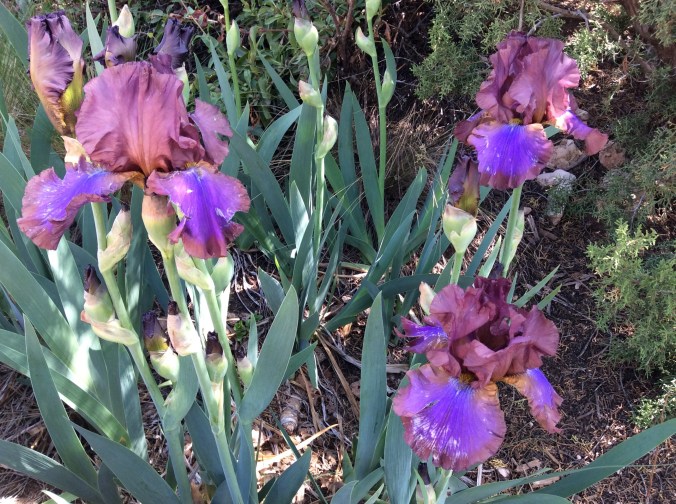
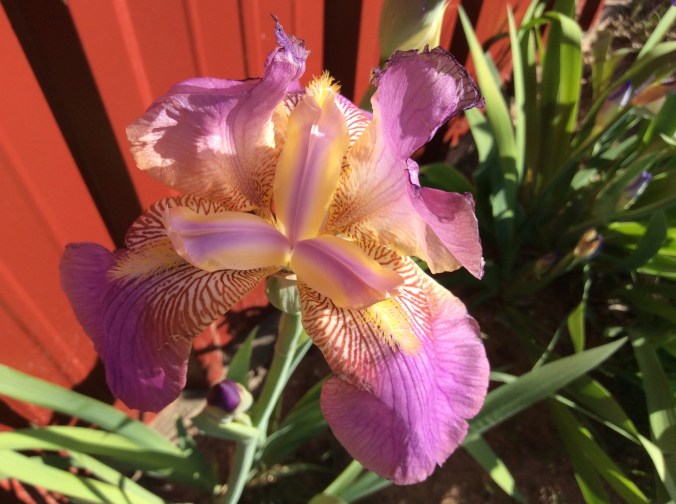
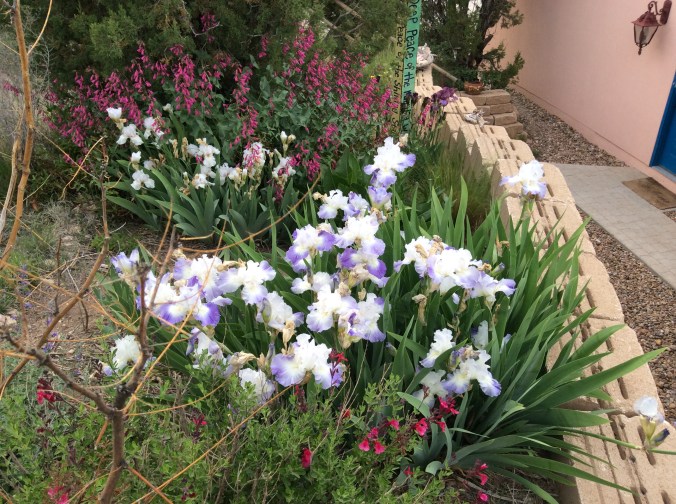
All the beautiful flowers I see today, Mother’s Day 2017, make me think of my mother.  She loved flowers, especially roses, horses, music, beauty.  When I think of her, I also think of unconditional love.  Even when young and I sometimes thought she expected too much of me, I still knew she loved me no matter what the circumstances and always would.  For this I feel unending gratitude.  As a teacher, it has become very clear to me that many children do not experience the kind of love my mother gave me.  She died suddenly many years ago.  Her love will never leave me.  Thank you, Mom, wherever you are!!