Predetermined?


IMG_2676

Today at the bookstore browsing, I picked up a book nestled among the magazines.


This question appeared on page 41:  “If you were given a book on the story of your life,

would you read the end?”


I asked my grandson.  He immediately said, “No!”


I wonder.


Remain unsure.


If I read it, could I change it?


Are lives predetermined, choiceless?


Are we unwittingly predetermined and just victims?


If I read it, could I change it?


Eat something different,

sing a varied song,

laugh more,

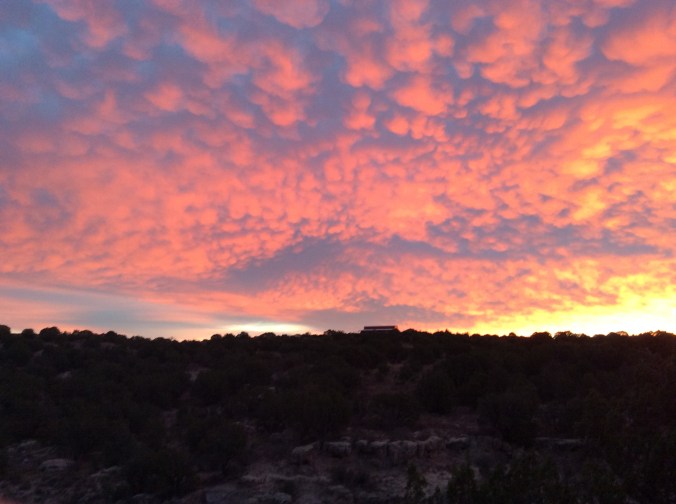
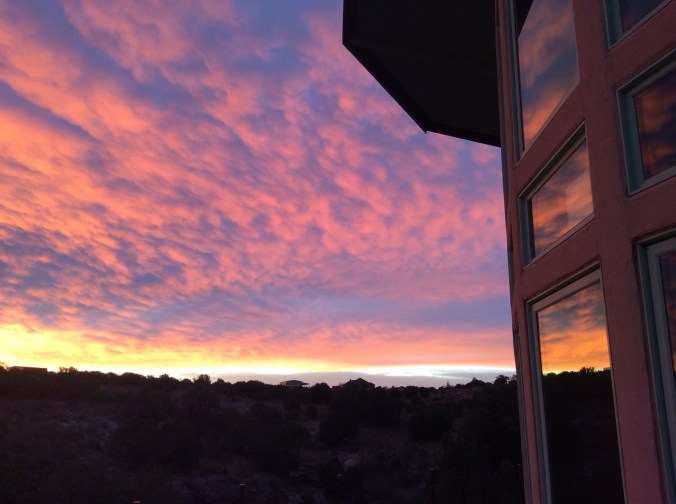
spend more time with sunsets, sunrises,

read less, more,

love someone new,

say words now lost,

write a contrary story,

choose an opposing path,

challenge?


Trip to Honey Island Swamp


On our third day in New Orleans, we headed to Slidell, LA, to visit the swamp.  Many swamp tours exist in the area and some in Lafayette as well.  After reading extensively online about the various tours, I decided to take Dr. Wagner’s Honey Island tour early in the morning.  Depending on traffic, it is about a 3/4 to one hour drive from downtown New Orleans.  For at least half this time, you are driving on a bridge across Lake Pontchartrain.

IMG_2773

This little swampy area is right next to the small cabin where they sell alligator souvenirs and you pick up your ticket.  This place requires cash.

IMG_2747

After boarding the boat which holds about 20 passengers, we headed down the Pearl River.  This view looks upriver.

IMG_2748

Many expensive houses rise above the river banks.  You can see the for sale sign.  According to the boat captain, the fancier ones cost about one million.  However, for all the elegant houses, there are more just the opposite and close by.

IMG_2750

Like this one which appears boarded up.  Some appeared abandoned, some in decent repair, some recently used.  When we asked how high the water rose during Katrina, we were told that it would be above the roof of a house like this.  The tours were abandoned for over a year after the hurricane except for the occasional hurricane cleanup crew who wanted a tour.

IMG_2749

This is one of the nice houses along the river, modern, large, well kept.

IMG_2751

We saw a large blue heron, wings outstretched, sunning itself on a large tree stump.  When the captain tried to get closer, it slowly lifted off and flew away before I could get a photo.

IMG_2757

We turned to the right off the river and began to see alligators of all sizes.  Because of harvesting for skins, meat, etc., few really large ones remain.  More common is 8-10 footers.

IMG_2762

Even the boat captain was astonished at the number of alligators we saw.  They seemed to be everywhere and one exceedingly large male followed us deeper into the swamp.

IMG_2764

Although the water flows rather rapidly on the river, once in the swamp, the water is very quiet.  Many different types of trees live here including cypress.  Most of the trees are deciduous and lose their leaves in the winter.  I was extremely surprised to learn how cold it can get here, below freezing, sometimes even down in the teens.  However, the captain said it always rises above freezing during the day.

IMG_2765

IMG_2766

Most of the really large cypress have been cut down in the past for lumber.  Now this is a reserve.  The tree on the left is really large and a lot of moss hangs from it.

IMG_2767

Hogs, like these, are not native anywhere in the Western Hemisphere.  It seems feral hogs can live anywhere.  We also saw raccoons.  The trees and other vegetation are so dense during the summer, wildlife could be a few feet away and remain unseen.

IMG_2769

IMG_2772

The swamp possesses a wild, magical beauty.


Whitney Plantation Visit


Whitney Plantation resides on the River Road about one hours drive from New Orleans.  A recent visit there provided much enlightening information about the slave trade, crops grown near New Orleans, and the history of this area. Tours can be scheduled all days of the week except Tuesday.  It is unique in that many different types of plantation buildings still exist there, including old slave cabins, a foundry,  and the outside kitchen.

A German immigrant started the plantation in the late 1700s.  At Habitation Haydel, its original name, he grew indigo.  After his death, his youngest son converted the main crop grown to sugar cane, which is still grown there today.  Both indigo and sugar cane required intensive labor for profitability.

Although, according to population data, only ten blacks lived in Louisiana in 1712, by the end of the century slavery was the main source of labor.  In 1795, there were 19,926 slaves in Louisiana.  Under Spanish rule the slave population steadily increased.  Although many were imported from Haiti, those from Africa came from what are now the countries of Senegal, Bissau, and Guinea.  After the initial importation of slaves, the United States imported few compared to islands in the West Indies and Latin America, e.g. Brazil.  The preferred method in the United States to obtain slaves was breeding.  Women and men were forced to breed.  Their owners specifically chose certain people to produce certain types of progeny just like in breeding livestock.  One woman complained of having 16 children by 16 different men.

IMG_2729

After leaving the visitor center, the first building on the tour is the church.  Inside the church are statues of various children who were the products of the breeding program at the plantation.

IMG_2728

The artist created these statues from specific information about the children.  The plantation owners maintained detailed inventories of all slaves and their value.  This particular plantation often owned as many as 100 slaves.

IMG_2731

From this inventory a memorial has been created with the names of the slaves.  Included are various statements made by the slaves themselves as recorded in slave narratives.

IMG_2733

The above tells the story of a child fathered by his owner and one of the slave women and how his father treated him.

IMG_2734

Even pregnant women could not escape beatings.

IMG_2735Because the area around New Orleans receives 60 inches of rain a year, the landscape everywhere is lush.  This is one of several pools at the plantation.

IMG_2736

These containers cooked the sugar cane.  Starting with the largest, the cane was boiled repeatedly until it cooked down and poured into increasingly smaller containers.  This was especially dangerous work due to the fires, the heat, and the boiling sugar cane. Sugar cane production was much more dangerous than cotton which was grown farther north in Louisiana.  The cane itself was cut with large machetes and the edges of the cane are also sharp.  Many people were severely injured.  The life expectancy of a sugar cane slave who worked in the fields or cooking the cane was approximately ten years from the time he or she went to work, often as young as ten. Although field slaves had a much harder life in terms of labor, they had less exposure to their owners and their families and therefore, in some ways, more freedom to talk and interact. House slaves were constantly watched and the women especially subject to sexual abuse.

IMG_2737

Slave cabins like this one contained four rooms.  Like the main plantation house, most buildings were built off the ground.  No levees existed then and the largest plantations were often built within sight of the Mississippi River and thus prone to flooding.

IMG_2738

This building housed the foundry.  Skilled slaves, like blacksmiths, were very valuable and received better treatment, e.g. enough food.  When the movie, “Django Unchained” was filmed, part of the movie was filmed here because the adjoining plantation did not have a blacksmith shop.  The branding portion was filmed at Whitney Plantation.

IMG_2741

The walkway, looking from the front of the main plantation house, is lined with giant oak trees.  Before the levees were built, the Mississippi River could be seen from the house.

IMG_2742

Originally, there was no first floor due to the flooding.  Later, after it will built and used for dining, an office, and a living area, whenever the floods came, the slaves were required to carry everything to the second floor until the water subsided. Then they would clean the first floor of mud and debris and return the furniture there.  Whitney Plantation possesses some unique characteristics, e.g. finely painted European style ceilings.

Cooking was not done inside the main house at any of the plantations due to the heat and fire danger. The cook, another skilled and valuable slave, was required to know how to cook various popular cuisines typical of the area, e.g. creole, European–French, Spanish.

IMG_2743

The various ferns and mosses growing from the limb of this large oak trees demonstrates the lushness and humidity typical of this area and why it is still used for sugar cane production.

IMG_2744

A short distance down the road is Evergreen Plantation where the main portion of “Django Unchained” was filmed.  It, too, still produces sugar cane and a family lives here.  Tours are available as well.


The Motherhood of God by Mary Sharratt


The first woman to write a book in English–in the 1300s.

Mary Sharratt's avatarFeminism and Religion

Doing a recent talk on pioneering woman writers, I like to do the Before Jane Austen test with my audience. Who can name a single woman writer in the English language before Jane Austen? Alas, because woman have been written out of history to such a large extent, most people come up blank. Then we talk about pioneering Renaissance authors, such as Aemilia Bassano Lanier, the subject of my recent novel, THE DARK LADY’S MASK, or her mentor, Anne Locke, the first person of either sex to write a sonnet sequence in the English language.

But my next question takes us even further back into history. Who was the first woman to write a book in English?

The answer is Julian of Norwich, who wrote Revelations of Divine Love.

View original post 679 more words

Make America Great Again?


Although few argue with the spirit of the Declaration of Independence, few look long and hard at the history and life then.  Unless you owned land, were male, were white, nothing for you.  Most of the founding fathers still held, tacitly or openly, to the old English class system.  Many owned slaves even when they claimed to dislike it.  Throughout United States history,  a small group of high status, white men have controlled the country.

More recently during WWII, we imprisoned Japanese Americans but not Germans.  The Japanese were often seen as ruthless, barbaric while the Aryan German remained quite close to the idealized, white, patriotic American ideal.

Today when people read about white men murdering large numbers of people, the news and the comments indicate that most think these people are abnormal, not like the rest of us.  This is a country fascinated with hate.  For many in the last couple of years this has taken the form of hatred of outsiders, refugees, dark people.  This has brought a new wave of tough on crime mentality.  People who think differently, more welcoming, more critical, are seen as subversive, anti-patriotic.  Much of the public sees certain groups, e.g. black men, as criminals, wicked, violent, groups to be feared.  Any research contrary to these prevalent views tends to be hidden, pushed away, unreported.  One example is a report by Homeland Security in 2009 which warned law enforcement agencies about the dangers of right-wing conservatism.  Certain conservative groups demanded the withdrawal of this report and succeeded.

Certain Christian groups push for a return to Christian values not realizing perhaps the origin of some of these values.  The word, evil, provides an excellent example.  This word goes back to Saint Augustine who defined it as a refusal to act morally, a refusal to do good.  While Hitler, the Holocaust, and Nazism have been associated with evil, interestingly fascism has not. Franco in Spain escaped the evil label probably because the Vatican, the US government, and US businesses supported him.  The word evil is rarely used to describe state sanctioned violence as in the US support of the Shah of Iran, Pinochet in Chile.  It appears we pick and choose the evil label to suit certain purposes.  Powerful groups are rarely labeled evil and therefore do not become targets of general hatred.

Fear relates to hate.  People hate what they fear.  Some media play on these fears to incite hate to suit their own goals and philosophies.  Certain talk radio hosts use their rants to further their goals in this manner.  They want people who do not think like they do to incite fear which leads to hate. These media can easily inflame the public fears about crime, refugees, drug usage.  They also rely on the often hidden preexisting prejudices that many deny they have, e.g. racism, fear of outsiders, fear of differences.

The ultimate end of these prejudices is war.  The often popular belief remains:  justice and goodness can be attained via violence, force.  We are good and everyone against us is evil and therefore to be hated.  The war vocabulary remains part of common everyday language:  War on Women, Drug War, War on Poverty.  Our language remains full of these types of communications.  It expresses a common worldview. Problems can be solved by force.  This continues in spite of enormous evidence that it does not work.  The War on Drugs never attained success, our economic and social problems remain.  Even efforts at containment frequently fail, e.g. the current opioid epidemic.  Many schools currently hire police officers and sometimes students are arrested for relatively minor infractions.  Often those arrested are students with certain types of disabilities or from certain minority groups.  Our prison population has increased by 500% over the last thirty years with the increased imprisonment of women double that of men, mainly due to drug related crimes.  Obviously, these “wars” are failing. Because of the “cult” of individuality and freedom, people in the US often see these failures as the result of individuals acting irresponsibly rather than societal failures.  Although these factors do not force an individual to behave in certain ways, they do affect a person’s psychological makeup, opportunities for betterment, and mental and physical health.

We have become a society possessed with fear and hatred caused by a profound mistrust of others.  Contrary to what many wish to believe this nation has a long history of obsession with perceived enemies and evil.  Some see threats everywhere, liberals hate conservatives and vice versa, some fear and hate those with different sexual orientations, the list seems endless.  Many see the solution as one form of war or another either through violence, incarceration, or laws.

Mass rallies on both sides further incite this sort of mass mentality.  History remains full of disastrous consequences of such behavior.  The Nazis came to power this way and killed millions of Jews via such strategies.  The genocide in Rwanda is another example. We see the perpetrators of such as monsters, but common, ordinary men and women made the Holocaust possible.  Good, decent people engage in horrible crimes.  The Ku Klux Klan continues with membership of otherwise ordinary, upstanding citizens. Doctors in Nazi Germany rationalized their help with exterminations and experimentations as part of German nationalism to save their country.

In the US racism is not the sole purview of white bigots.  Just recently someone commented to me about being colorblind.  Such is a form of denial.  When people see another person, they notice how they look, eyes, height, etc.  Most white people in the US today never choose to recall, if alive then, and acknowledge, if not,  the millions of black people (mostly men) lynched, most of whom were raped, tortured and castrated before they were killed.  When someone commits these types of atrocities today, we often refer to him as a monster.  We conveniently forget the long history of atrocities against all people of color in this country, atrocities deemed perfectly normal at the time.

As noted in the examples above, much of the violence and hatred and injustice currently seen in this country has a long history.  We have not been able to even come close to the ideals espoused in the Declaration of Independence. Instead of talking about Making American Great Again, we need to change the conversation into a future vision of making the US like the vision detailed in this document, a place where justice and the hope of equality can be attained by all, regardless of color, ethnicity, gender, sexual preference, religion.


Note:  Recommended readings include “Considering Hate” by Kay Whitlock and Michael Bronski and “White Trash:  the 400-Year Untold History of Class in America” by Nancy Isenberg.


Wickeder and Wickeder by Barbara Ardinger


A tale for our times.

Barbara Ardinger's avatarFeminism and Religion

The raven was standing on the little table in the wicked witch’s private room. Expecting a new kind of feast, he dipped his beak into a bowl of wiggly white worms. And spat them clear across the room. “Great Suffering Succotash!” he exclaimed. “What is this stuff?’

“It’s ramen noodles,” the witch replied calmly. ”They’re cheap. And you know we need to save money. El Presidente’s got men cruising around the country doing whatever they want to obstruct justice. We’re all trying to save money and build up the resistance.”

View original post 1,260 more words

Colorful Cabbage Salad


This bright salad not only looks lovely, it also packs a lot of nutrition, is easy, and can be made in advance.

1 medium head purple cabbage, finely chopped

1 cup thinly sliced baby carrots

1 cup chopped broccoli

handful of rings from leek stalk (optional)

equal amounts of olive oil, sweet chili sauce, and mirin (Japanese sweet cooking rice wine) to fill 1/2 cup measure

Mix all the above ingredients.  Chill.

This is an easy salad to make in smaller or large quantities.  It also keeps well in the refrigerator.

IMG_2714

Today I will serve this with the following:  black beans with caramelized onions, Persian rice, and salmon topped with garlic, olive oil, and bebere.  There will be plenty for vegan and vegetarian guests without the salmon.


Star Tree – Star Goddess by Judith Shaw


See the paintings. With deforestation affecting so much of the world, the idea of trees as sacred is especially appealing and meaningful.

Judith Shaw's avatarFeminism and Religion

judith shaw photo

In a world where humans were small and nature was big, surrounded by forests of trees of immense size and stature, it’s not surprising that the ancient Celts came to hold trees as sacred. Like many others, the Celts revered the World Tree or the Tree of Life as the mythic bridge between heaven and earth. The roots reach down and ground with the Earth while the branches spread their canopy up to the heavens.

View original post 745 more words

Rita Blanca National Grassland


Today, three of us drove up into the northwest corner of the Panhandle of Texas to visit this national grassland which adjoins the Kiowa National Grassland in New Mexico.  The two grasslands together equal more than 200,000 acres.  Originally, created after the Dust Bowl in an attempt by the government to mediate the destruction caused by the giant Dust Bowl storms, the grasslands are now managed by the US Forest Service.  The US acquired much of the land when its owners gave up and left the land owing money to banks.  As a consequence these national grasslands are interspersed with privately owned grassland.  Ranchers, some of whom refer to themselves as grass farmers, can lease this land and graze it along with their adjoining property.  Moderately grazed land often supports a more diverse wildlife and plant population than overgrazed or ungrazed land.

To reach the Rita Blanca we drove past Dalhart, Texas, and turned on a Farm to Market road which led to an area with camping and picnic tables plus restrooms.  Campers and picnickers must bring their own water.  The only trees are those deliberately planted in days long past.  We saw or heard many birds there, including orioles.  Below is the entrance to the Thompson Grove camping and picnic area.

IMG_2719

After a comprehensive briefing from the park ranger, a wildlife biologist, and a range specialist, we took a hike across the grassland.

IMG_2721

While this may look like a boring green sea to some, upon close inspection, this land teams with many species of grasses and flowers.  Flowers I saw today include Fineleaf Woolly-White, which is not white but bright yellow, Prairie Zinnia, Broomweed, Sundrops, Engelmann Daisy, Mexican Hat, Winecup, Tansey Aster, all of which I have at my own place an hour and 1/2 away.  However, I saw two flowers I have never seen before, White Pricklepoppy and a native Morning Glory which has huge hot pink flowers. While the Pricklepoppy has spectacular, large white flowers with gold centers, the plant looks like a very prickly grayish thistle.

Although I knew some of the species of grasses there, I could not identify the others.  However, the park ranger knew them all.  I might remember some with the help of a book.  Many I have around my land but still cannot identify all of them.  I do know blue grama, side oats grama, buffalo grass, and a few others.

Many grassland and wildlife research projects done there produce useful information.  One current project deals with seismic activity.

If you are driving cross country anywhere near Dalhart, Texas, or Clayton, New Mexico, take a short break and head to these grasslands.

IMG_2720


Why Teachers Suck …


I was going to write a nice little poem for my blog post today but instead decided this was more important to post. As I teacher, I can verify the veracity of this post. In some ways it may be a little easier for me because I teach mostly seniors in high school who are somewhat self sufficient but many still get free or reduced lunches, some are homeless or drift from one friend to another since thrown out of their own house, some work so late they can barely stay awake in class, some self medicate because no one can afford the meds they need. Most graduate in spite of this. How? Because the school and teachers go to great lengths doing everything imaginable to help them succeed, e.g. online programs, extra time, alternative assignments. Why do I continue to teach? I love teenagers; I never have a boring day; I work hard to make a difference; I think public education is the foundation for a working republic, for this country to flourish and succeed.

Bert Fulks's avatarBert Fulks

A friend and I were grousing about ignorance run amok.

“Americans get their information from internet memes,” I laughed.  “And in the true spirit of democracy, dullards who have never cracked a book will cancel the votes of people who actually have a clue. What could go wrong?”

“You know what the problem is?” Tim challenged.  “Our country’s a mess because teachers suck.”

teacher2I bristled.

Although I’ve been out of the classroom for a number of years, once a teacher, always a teacher.  Plus, I have family and friends still slugging it out in the trenches.  I know their battles and the wounds they carry.

“Dude, do you know what teachers endure on a daily basis?” I asked Tim.  I found that, no, he didn’t.  I fear most Americans might be as clueless.

I emailed a former colleague (she’s two years from retirement) and asked one question:  “How has education…

View original post 1,411 more words