Publication!


A writing colleague posted this on her blog today. It expresses so much of what I feel about so many things that I just had to reblog it. As soon as I finish this reblog, I am going to look for one of these statues for myself. Here’s to a fabulous today and a creative, adventurous future.

lenleatherwood's avatar20 Minutes a Day

I am pleased to report that my flash fiction piece, “A Brother’s Gift” has been accepted for publication at the Provo Canyon Review, a print literary journal. I am especially pleased about this because I rather impulsively submitted it when I saw the Provo Canyon Review’s Call for Submissions. This is a very short piece, but the editors said they liked the tone and also thought it was “A refreshing and moving look at grief and the true emotional impact of such a loss.”

I am happy. Here it is in case you missed it first time round.

A Brother’s Gift

Mary Lou Holder sank down next to her brother, the one who was dying of cancer, and started pulling on the bright red bow of the gift he had just handed her. “This is sweet, Jake, that you’ve gotten me a present. You know you didn’t have to…”

Jacob…

View original post 491 more words

Gypsies, Deserts, and Random Thoughts on a Cold Sunday Morning


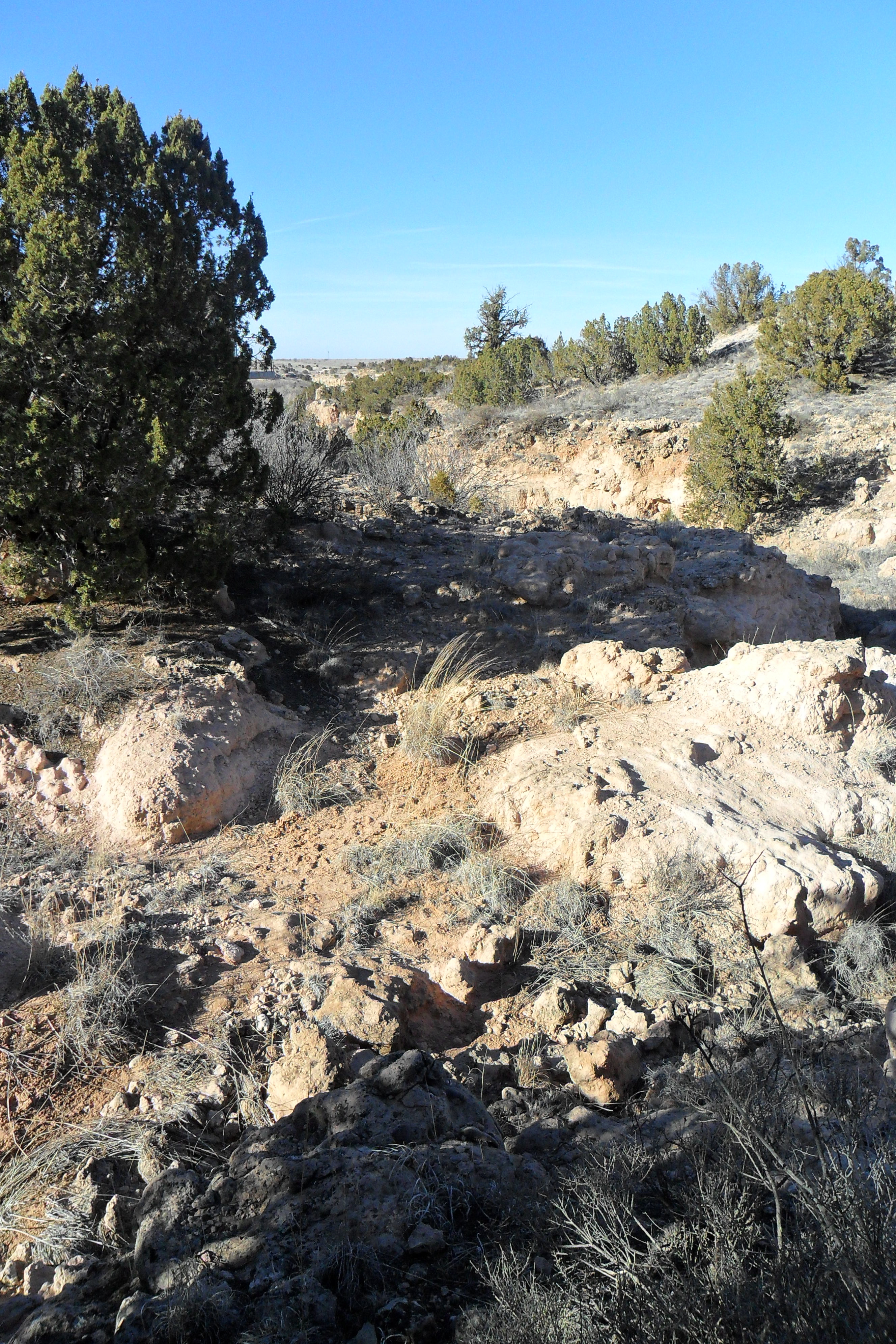
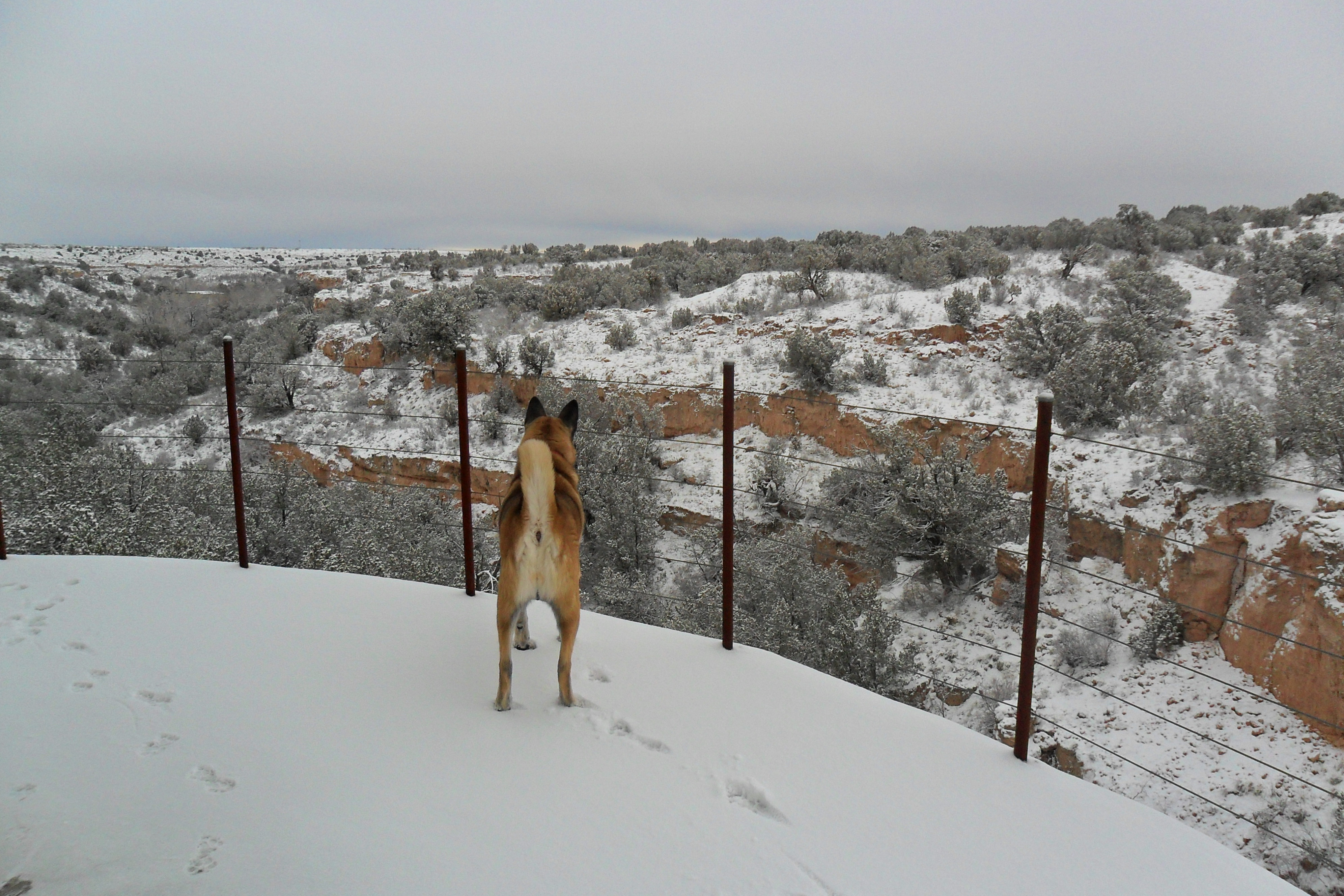
In less than 15 hours, it has dropped from low 70s to 9 here on my canyon rim–one of the joys of living in the Panhandle of Texas where a mere change in wind direction can dictate the weather.  Yesterday afternoon, I was helping my daughter clean her back yard and ready the ground for planting some shrubs and a tree and now 60 degrees colder.  This type of drastic weather change has occurred repeatedly in the last few weeks.  Perhaps it has muddled my brain which keeps hopping back and forth from this to that.  First, the “this”.

Mostly, I read Latin American, American Indian, and Middle Eastern authors.  When I recently stopped by the library, I could find none of these that I had not already read so I picked up a book from a Dutch author of whom I had never previously heard, Margriet de Moor.  The book, a novel, The Duke of Egypt, tells the tale of a Gypsy man who meets this young Dutch woman.  They marry and lead a quite unusual life:  in the winter he lives with her on the family horse farm; in summer he leaves and lives with the Gypsies, wandering around Europe in their caravans.  When he is “home” with her, in the evenings he tells her tales of his Gypsy family and friends, centuries of history.  These tales shocked me:  centuries of discrimination, hangings–even Gypsy women hanged publicly for no other reason than they happened to be Gypsy in the wrong country at the wrong time, sick children whom no doctor would treat, starvation, driven from country to country.  Of course, like many people I have heard stories about Gypsies:  as a child my grandmother telling me that Gypsies stole other people’s children, a friend telling me the police said it was Gypsies when someone stole some silverware from her house, but I never really believed it.  Reading this book caused me to delve a bit more into Gypsy/Roma history only to learn even more tales of horror.  Hitler and his Nazis hated Gypsies almost as much as they hated Jews.  It is estimated that the Nazis sent at least ten per cent of the Gypsy population in Europe to the gas chamber.  On the positive side, I learned that many Gypsies were hired by people who raised horses to help them with their horse care because Gypsies were considered expert horse trainers and traders.  In addition, some hired them for their music to play for social events and festivals.

When several friends came over for dinner, I mentioned the book to them and my shock.  I wondered aloud as to why so many hated the Gypsies.  The general response was this:  Gypsies consistently live as they wish and refuse to follow the social norms of the rest of the population.  They refuse to settle down and live in one place, they enjoy life, dancing, drinking, roaming.  If you refuse to live like everyone else, the rest of the world will  punish you.

Then I moved on to the book I am reading now, Apocalyptic Planet:  Field Guide To The Future Of The Earth.  I am only on page 27 of 327, and already I have learned:  “Deserts generate most of the world’s airborne dust, contributing to a global migration of surface minerals.  Dust blowing from the southern Sahara is the single largest producer of iron for the mineral-poor soils of the Amazon in South America.  Half of this dust originates in the Bodele Depression north of Lake Chad, which produces about one hundred storms a year, each sending 40,000 tons of dust across the Atlantic to South America.”  And a bit further in the book:  much of the fertile High Plains here in the US (Kansas, eastern Colorado, Oklahoma, Nebraska, Texas, basically from Canada to Mexico) sit on top of a desert, e.g. the Sand Hills.  Currently, these sand hills remain stabilized by miles and miles of grass–our native short grass steppe.  It does not take much to imagine what would occur if drought continues and the grass disappears.  Once desertification occurs as it is now occurring in many places in the world, e.g. the Sahel, deserts consume.  Jonathan Overpeck, a leading climate researcher claims, “…we are significantly underestimating the severity of drought we could get in the future.”  He predicts many places now inhabited will become uninhabitable unless we initiate drastic changes in our water management.  People will be forced to move from places of little to no water to places “wherever there is no desert”.  He adds, “We are contributing enough change to the planet that we are moving toward more droughts instead of away from them.”  In the Sahel alone it is estimated that 500 million people will have to move to survive.  I think over this information and about the current drought here and look at the beautiful place where I write and live, wondering will it be habitable in one hundred years.

Now on to the “that”:  grateful I live here in the United States in spite of all our “problems”.  I could have been born in Ukraine, Syria, Central Aftican Republic, any of those places experiencing turmoil, fear, religious hatred, genocide, torture–the list goes on and on.  Instead here I am happy, relatively safe, warm in spite of the 9 degrees outside, well fed–you get the picture.

Two Year Blogging Anniversary–Writing on the Rim


To paraphrase that old adage, “time flies”.  Two years ago last week, I started blogging here at Word Press.  The following is my first blog post.  Blogging has enabled me to “meet” new people and forced me to write more poems with the consequence that within the next two months, my book of poetry will be published.

SAM_0306

976891_563106790378718_1476495689_o

The canyon edge looms out my bedroom windows,

pale adobe, stark.

Fall to death or serious injury!

I will not fall; I love living on the edge.

Raing brings a one hundred foot deluge,

a wall of water, red adobe, cascading, screaming.

Someone said my house is pink; it is not pink:

cold of canyon, worldwide color,

Moroccan, pueblo, Saudi, Mali, Navaho, Timbuktu,

Desert, alive and lovely.

Everywhere.

Three bucks watch me through my bedroom windows.

They see me move; they stare.

Isabella stands rigid, watching…what?

Bobcat casually climbs the canyon wall, impervious.

He marks the cedar tree, walks a deer path, disappears.

Secretive, rarely seen.

The huge hoot owl’s voice echoes down the canyon,

drifting into my dreams.

A young roadrunner calls, scatchy voice,

running across the patio–on the edge.

In the spring the mockingbird sings all night,

“This is my territory,”

I sing all year, full of joy.

I live in beauty on the rim.

SAM_0461

SAM_0894

Writing on the Rim

On a cold winter evening


This post displays my occasional propensity for pensiveness and reflection.  The highest temperature today was 8 degrees.  The weather forecaster predicted a low of zero, very cold for here with more snow.  In  a few months, it is likely we will hit 100.  Who would want to live in such a place?  Yet people do, worldwide.  Some in places much colder and hotter.  How and why did they all get to wherever they are?  Millennia ago we all migrated from Africa and look at us now.  We think we are smarter, better, but are we?  Perhaps technologically, but psychologically??  War rages over differences in ethnicity and religion.  Clashes for thousands of years change little, just the nature of the weapons, the use of advanced technology.  The intent remains the same.

Sunday, I finished a book by the Turkish writer, Elif Shafak.  I have read all her books translated into English.  This, her latest, Honor, details the effects of the belief in honor of above all else.  To paraphrase one of the main characters, a poor man:  rich men possess money, fancy cars, lavish houses, travel, but poor men have nothing but their honor.  Acting on this belief leaves one family devastated.  For those who desire to learn about other cultures and to understand the behavior of the individuals in them, I highly recommend this novel.

Earlier, I donned two pairs of gloves and socks, four layers of clothes, and ventured out.  If you own horses, you have to feed them regardless of the weather.  Unlike me, my dog, Isabella, fares well in this weather.  Her part wolf blood gives her an undercoat perfect for winter extremes.  Inside, I viewed my larder–what to cook on a frigid winter night?  A simple chicken curry with onions, brussels spouts, jalapeño peppers, and chicken with Jasmine rice, red, white, and black.  And a glass of red wine, cabernet franc, from a local winery, the only wine I have ever seen from only this one grape.  It is usually added to blends.  Definitely haram–still thinking about that book.

SAM_1428

As the temperature drops, building a fire in the wood stove seems like a reasonable endeavor.  I love fires but hate to build them.  Nevertheless, sitting in front of the fire reading brings a silent joy, a paradise.  I feel at peace:  chores done, warm house on a frigid winter night, satisfying dinner homemade, and the knowledge that my book of poetry lays in its final stages with the editors and photoshoppers who will make it publication ready.  I feel extremely grateful, looking forward to dazzling dreams on the rim of wonder.

sam_0303.jpg

The Story Circle Network


This month, January 2014, is the anniversary of my becoming a STAR BLOGGER with the Story Circle Network, an organization of women writers from all over the world headquartered in Austin, Texas.  This month, I became a member of their board.  Every other year they hold a conference in Austin, Texas.  This year the conference will be April 11-13 at the Wyndham Hotel in Austin.  You do not have to be a writer to attend the conference.  I attended for the first time nearly two years ago and it changed my life.  Yes, I had published a book previously, a book about preventing sexual harassment, co-authored with an attorney–written years ago when sexual harassment was a particularly “hot” topic in corporate America.  It was even translated into Spanish.  I had been paid to write technical manuals, paid to speak at a technical conference, that sort of thing.  I wanted to write something different, something creative.  This conference lead me to a new writing path for which I am very grateful.

The Story Circle Network provides all sorts of classes as well, memoir writing, travel writing, poetry, flash fiction, blogging, as well as editing services and advertising.  First, I took a blogging course and started this blog–that anniversary will be next month–two years blogging.

Now to the big news:  within the next couple of months my book of poetry, On the Rim of Wonder, will be published.  Some of the poems or versions thereof were first published right here on this blog.  Do you want to become inspired, change your life, meet fantastic women writers, visit Austin?  Attend this conference!!!  You will not regret it.

ad_scnconf

Holiday Break Fun and Recipes


Because of my job, I am on the last day of a two week holiday break.  What a productive and fun time it has been.  Christmas Eve, my friends, my daughter, and my grandson came over.  For the first time ever, I made ham in a big Crock Pot and it melted in our mouths.  They requested I make my signature Refried Black Bean Cassserole and roasted vegetables so I did.  Other food requests included chocolate spiders for dessert–they are cookies.

Ham in the Crock Pot

Cover the bottom of the slow cooker with a 1/2 inch thick layer of brown or turbinado sugar mixed with 2-3 T tapioca. Place ham on top of the sugar.  Cover the top of the ham with preserves of your choice.  I used homemade pineapple/apricot preserves I had made several years previously.  Cook on low for 6-8 hours.  Note:  I used spiral sliced ham precooked.  You do not need to add any liquid, it will make its own.  If you wish, once some liquid has accumulated, you can periodically baste the ham.

SAM_1400

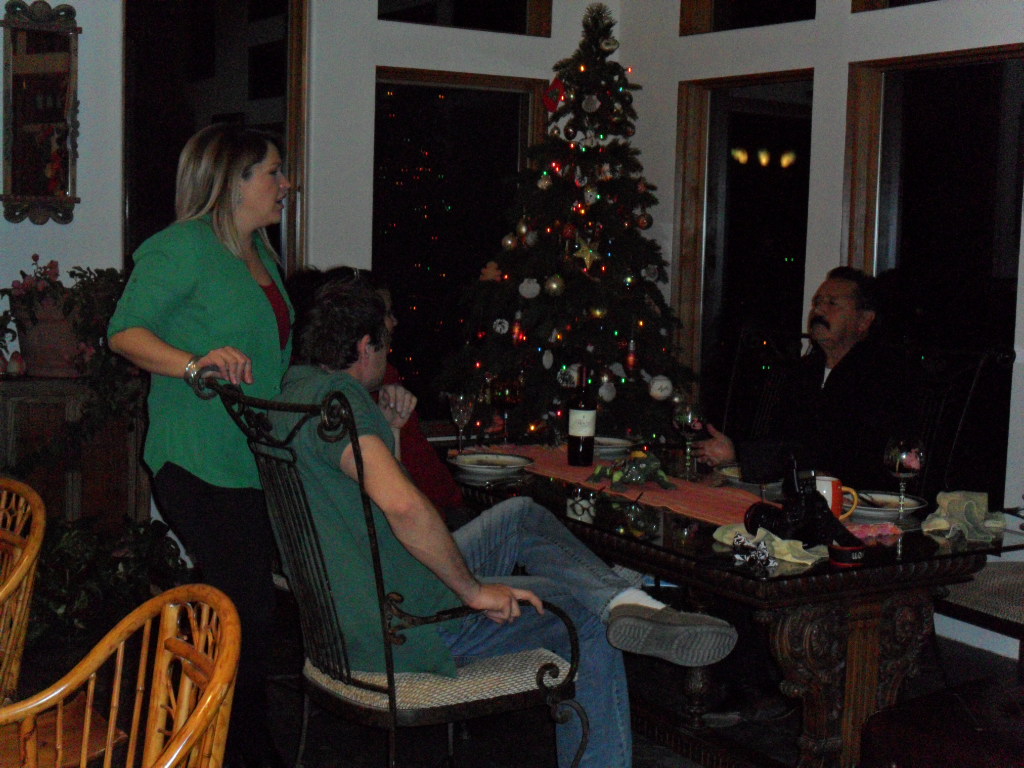
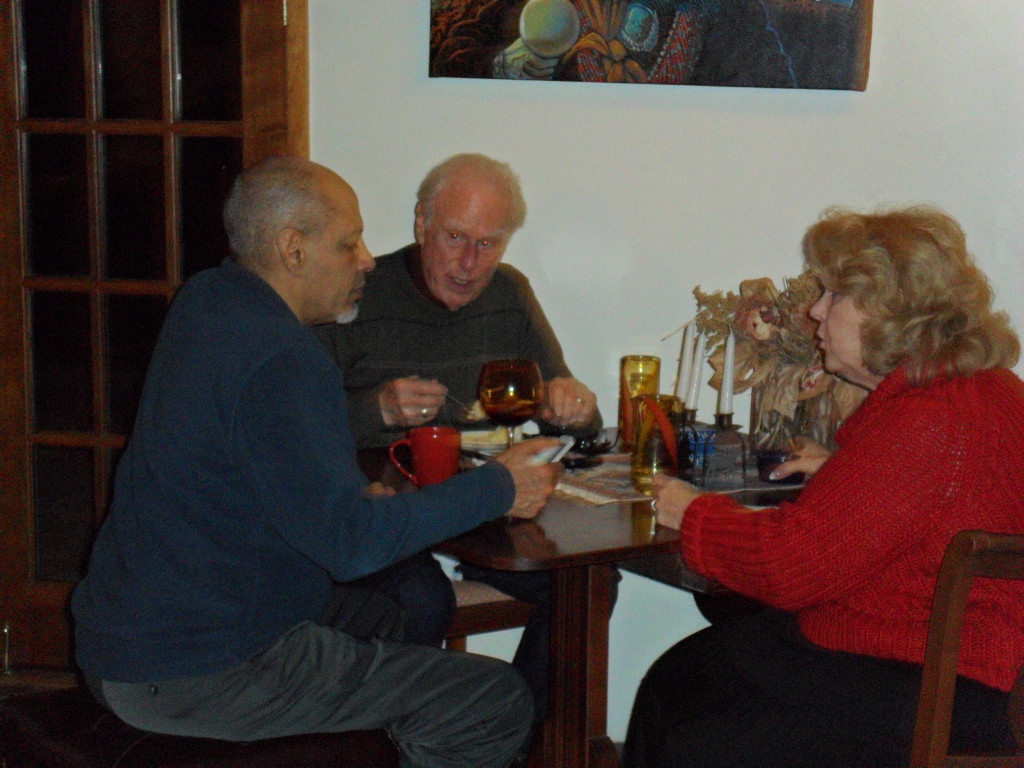
Christmas Eve dinner, eating and relaxing at the dinner table.

SAM_1398

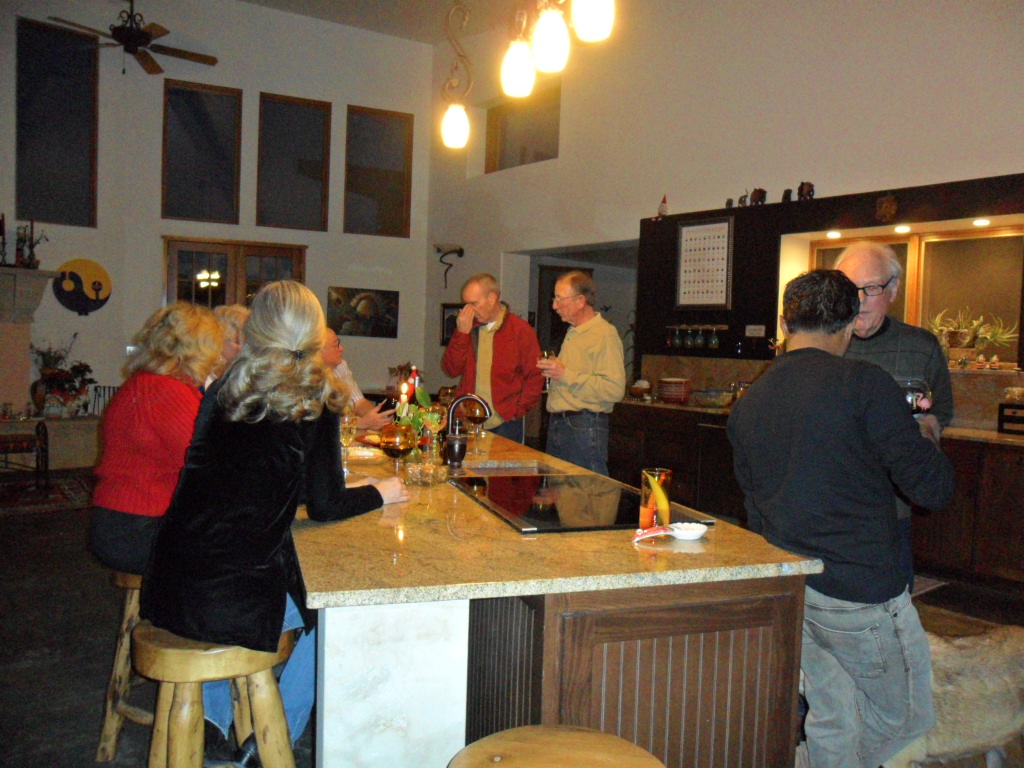
At the bar before dinner while I am still cooking.

SAM_1405

Lingering and relaxing around the dinner table.

These same friends came over about 1 1/2 weeks later.  The special request that time was for another round of Refried Black Bean Casserole.   This is one of those recipes I invented but never measure anything, just make to taste.  This last time I decided to work at paying attention to what I used so I could share.  It may or may not be exactly what I do every time, but it is close.

Refried Black Bean Casserole

2 cans black beans drained

Enough olive oil to cover bottom of large skillet

1/2 red onion, finely chopped

3-4 Tablespoons organic ketchup

3 Tablespoons cumin–add or subtract to suit you taste

Tortillas

Grated white cheese–I usually use monterey jack

Heat oil in skillet and add onions.  Cook until translucent.  Add black beans, one can at a time.  Take a regular table fork and mash beans repeatedly until most of the beans are mashed–I like to leave some not totally mashed to add a bit of texture.  This is easier to do if you only add one can at a time.  Thoroughly mix beans and onions.  Add the cumin and ketchup and stir thoroughly and keep mixing until the mixture it thick and heated through.  Use a round slow cooker or casserole dish.  Oil bottom of dish and place one tortilla in bottom.  Place enough of the black bean mixture on top to cover the tortilla, then sprinkle the grated white cheese on top.  Repeat layers, ending with grated cheese.  You may use any kind of tortilla.  However, I prefer whole wheat flour, but anything works.  Heat through until cheese is melted.  You may also make the bean mixture a day in advance and refrigerate.  If you do this, it will take longer to heat the casserole.

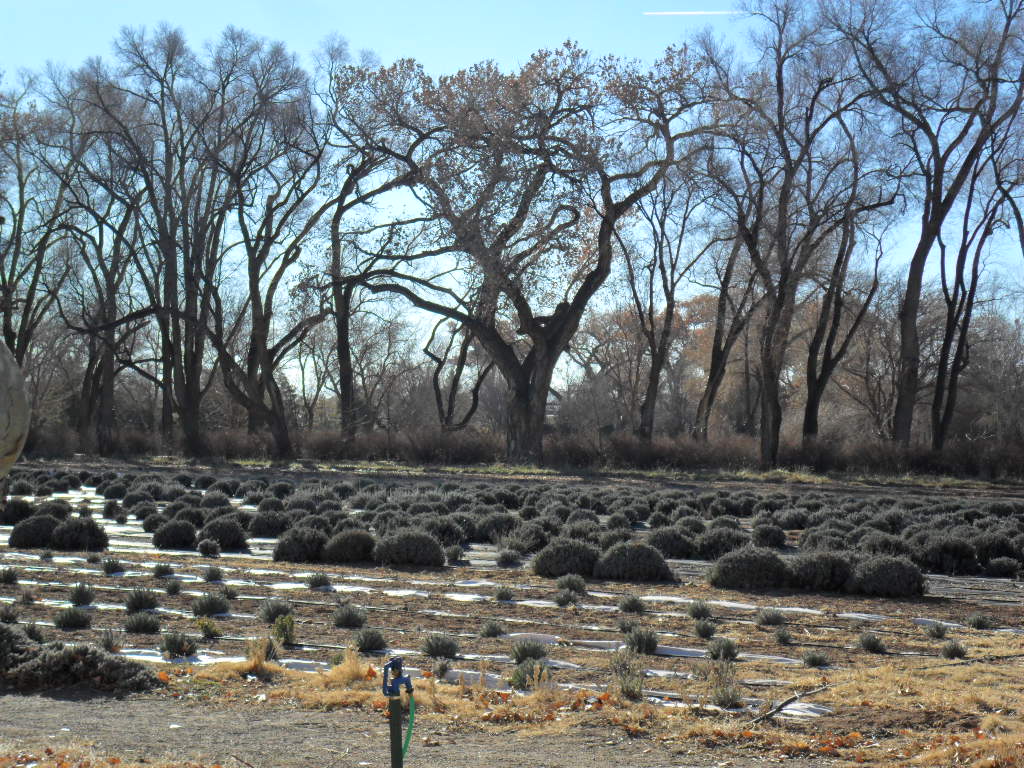
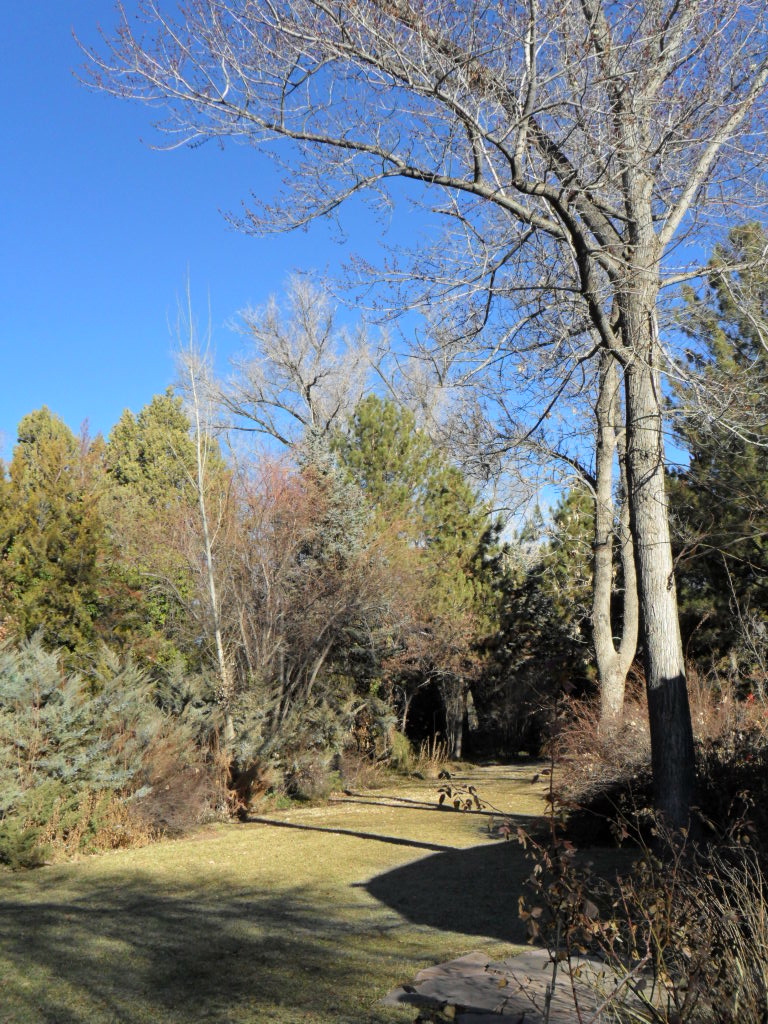
In between cooking adventures, one of my best friends and I decided to take a quick trip to Albuquerque, NM.  We visited our favorites places in Old Town, ate here and there when we felt like it, and stayed someplace new to both of us, Los Poblanos.  We loved this place.  It is located a bit north of downtown and Old Town, off of Rio Grande Blvd. by the river,  and includes 25 acres of lavender fields, a barn, a solar powered swimming pool–not open in the winter, a restaurant, a farm store, an herb garden, paths for strolling here and there, and an impressive tree lined entry drive.

SAM_1421Looking down the entry drive of Los Poblanos.

SAM_1418The barn and other out buildings.

SAM_1420

The lavender field.  They offer many lavender products in the Farm Store as well as balsamic vinegar, cookbooks, and various other items related to what they grow and organic farming and cooking.

SAM_1414

A view of the main house and restaurant area.

SAM_1422

A view near one of the many walking paths.

SAM_1413

The fireplace in our room.

Although I have been to Old Town in Albuquerque many, many times, never before did I go inside the beautiful old church on the square.  They allow photography so I took a photo.  It was all decorated for Christmas with a nearly life sized nativity scene.

SAM_1425

Tomorrow I go back to work.  With friends coming over for Christmas Eve, a trip to the local museum with my friend Roberto Borja, his family coming over for dinner again, the trip to Albuquerque with my friend Zuriash, hanging out with my daughter and grandson, it turned out to be one of the best holiday breaks ever.  Here’s to an equally wonderful 2014.

This Morning


It’s almost gone:

Time.

I must print poems for inspiration

before the website goes down.

The early morning sun filters

through windows, warms my back.

The printer prints.

I smear even complexion mask

over my aging face.

Where did my beautiful skin go?

Can I fix it?

Arid climate, too much suntime, what?

Must I admit to aging?

Must I see grey roots

beneath the dye?

I walk by the photo when I was 37.

What happened to that face?

I want it back!

The printer prints.

I look in the mirror, distressed.

In my family, I can expect

another twenty years.

Twenty years?

If I don’t do something to this face,

in twenty years…

The printer prints.

Fun, Food, and Community with Vegetarian Enchiladas


A couple of weeks ago, one of the blogs I follow, getsetandgo, created a post about “community” with photos of an Indian festival where all sorts of people come together to celebrate–a community.  She requested others post photos of their community events.  After reading her blog post,  I decided to tell about my attempt to start a monthly “community” :

Several months ago, I reached way out of my comfort zone and started a monthly potluck.  When and where I grew up, inviting people over for a potluck was socially unacceptable.  If you invited people over, you cooked everything yourself.  If people wanted to bring something, insisted, well, ok, but otherwise, no, no, no.  Because of work, writing, and singing, I invited a number of friends over only every few months.  In September, I decided it would be far nicer to see people  more often and invited some friends over for potluck.  They asked if we could do this regularly so a monthly ritual began.  More and more friends keep asking to join.  It remains a type of hit and miss thing.  Sometimes 16 people show up, sometimes only five.  My most recent event was a week ago.  Because some of these friends are vegetarian, I invented a recipe, vegetarian enchiladas, just for them.  I also made pork roast and chicken enchiladas.  The vegetarian enchiladas disappeared quickly and everyone wanted the recipe.

Vegetarian Enchiladas

Six tortillas (I used whole wheat)

1/2 purple onion, chopped finely

1 large poblano pepper, chopped finely

1/2 medium sized red bell pepper chopped finely

1 package cream cheese

Olive oil

1 tsp Mexican spice mix

1/2 tsp chipotle pepper, ground (I used Spice Appeal-adjust to hotness desired)

Shredded monterey jack cheese

Red enchilada sauce–I used canned because my cooktop is awaiting repair

Saute onions and pepper in just enough olive oil so they will not stick or become too dry.  Mix in cream cheese and spices until thoroughly blended.  Fill the tortillas, roll up, and place in an 8 inch casserole dish.  Cover with a light layer of enchilada sauce.  Sprinkle enough shredded cheese on top to cover.  Cover with aluminum foil.  Place in a 350 degree oven for 30-40 minutes.

In the spirit of the getsetandgo blog, I took photos of my friends as we talked and ate.  The enchiladas were all gone before it occurred to me that it would be nice to have a photo.

SAM_1385

SAM_1387

SAM_1388

SAM_1392

Additionally, I regretted not taking a photo of three of my women friends with long hair.  Another friend who has spectacular, very dark grey, long hair and just turned 70 recently told me a story about how a mutual acquaintance came up to her and told her no woman over 60 should have long hair.  It annoyed me so much in an odd sort of way that I now wear my hair longer than usual.

Snowbound


This prose poem recently appeared in the latest “Story Circle Journal”.

419367_2650520196146_2132320757_n

They’re young; they’re handsome; they’re mine for six months.

Two seventeen year old South Americans.  The Brazilian has never

seen snow.  It snows two feet in less than twenty-four hours, wind

shrieking along the canyon rim, drifts piling four feet high, roads

closed.  Even the snow plows give up.  We’re house and barn bound.

Horses need food.  We all pitch in, climb through drifts, shovel.

Schools never closed are closed; offices closed.  No lights on the road.

Two days later it takes us an hour rocking back and forth in the green

Off Road 4X4 truck to go the one eighth  mile to the main road.  After school

and work we leave the truck near the road  and trudge down the long hill

to the house.  By flashlight we struggle  back up the next morning, trying

not to fall.  Even boots fill with snow.  That evening, the boys insist

we drive all the way down to the barn.  I start to fix dinner.  They tell me,

“We’ll be back in an hour.  We aren’t going through that again!”

They shovel tracks for the truck all the way from the barn to the main road.

I miss them, especially in winter.

Day Trip to Lake Marvin and Canadian, Texas–Part Two


After eating lunch at the elementary school, two of us decided to go to the museum for which Canadian is famous, The Citadel.  Originally a Baptist Church, it lay in total disrepair until Dr. Abraham and his wife bought it, totally restored and converted it into their residence.  They gave it to the town as a museum and moved into another Victorian house which they totally restored.  The location of The Citadel currently contains the house, a gift shop, and another building which houses an art gallery.  First, you go to the gift shop to purchase tickets.  On this particular Fall Festival weekend, the Abrahams also open their actual residence to the public and take you on a personal tour themselves if you so desire.  Given my limited time, I purchased a ticket only for The Citadel.

SAM_1348

This door is one of the first things you will see if you walk to the entry gates from the south of the house.  Everything remains elegant, ornate and in a style one does not often see in this part of the United States.  Canadian is an exception; fancy, old houses are everywhere.
SAM_1350

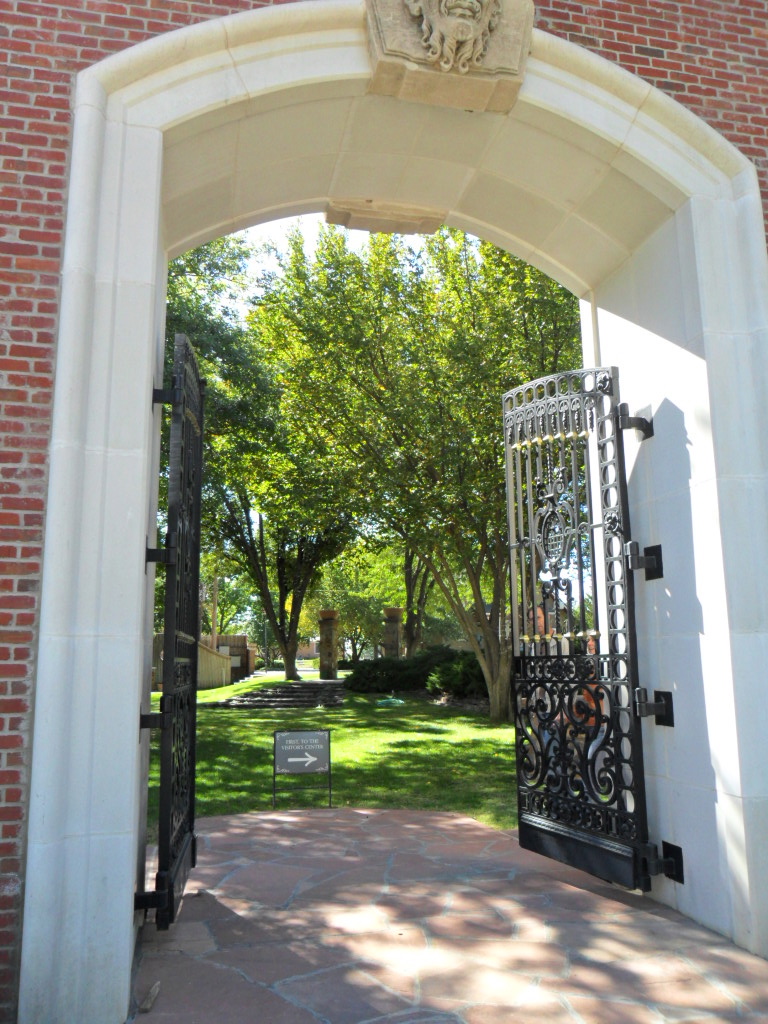
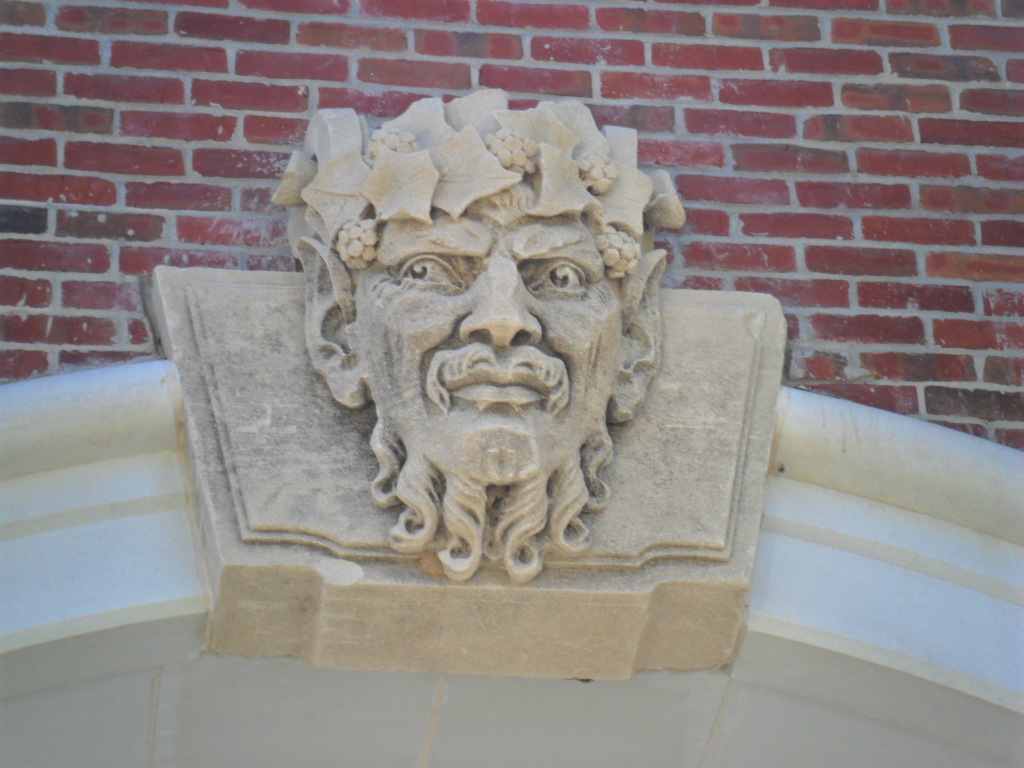
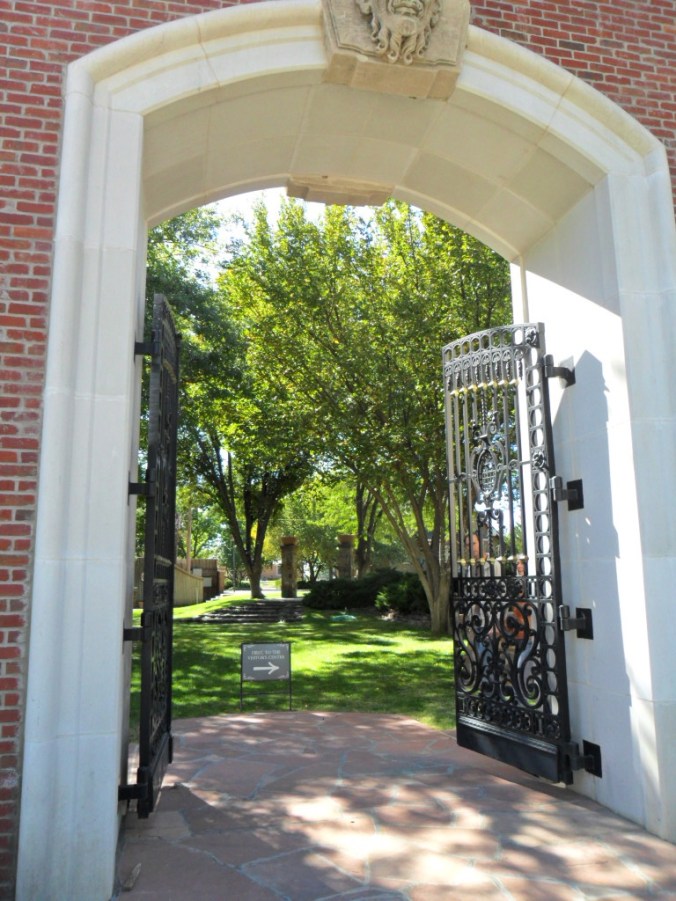
The entry gate, looking across the lawn, provides a view of the property from front to back. Below is the face above the gate.

SAM_1351

SAM_1353

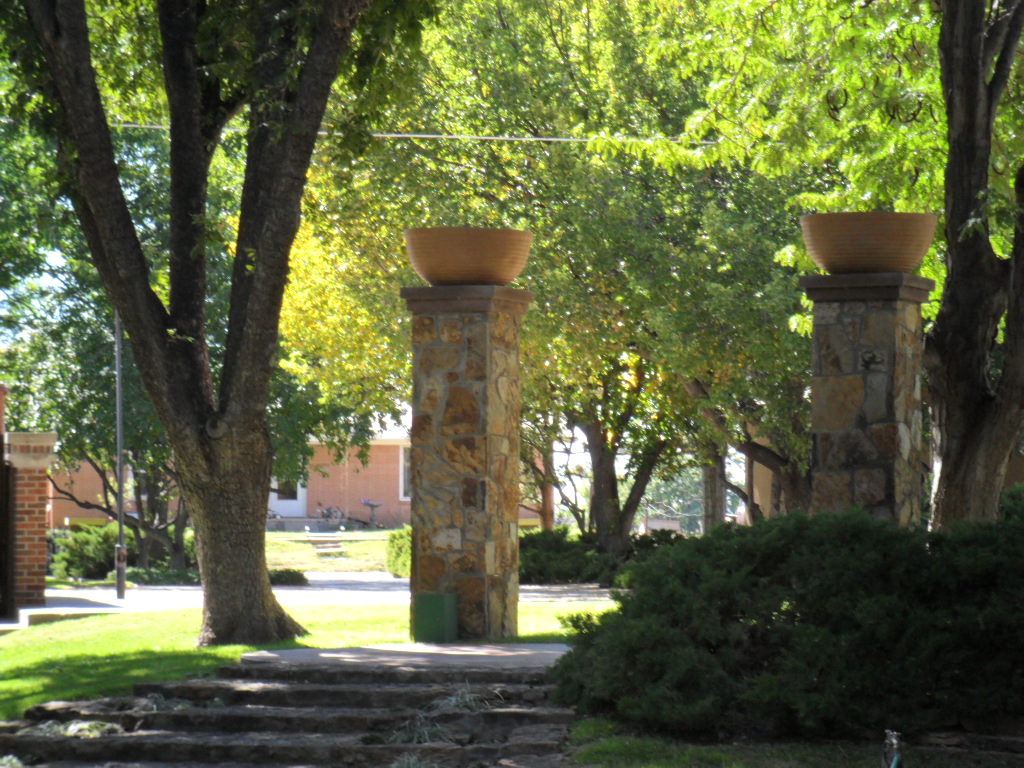
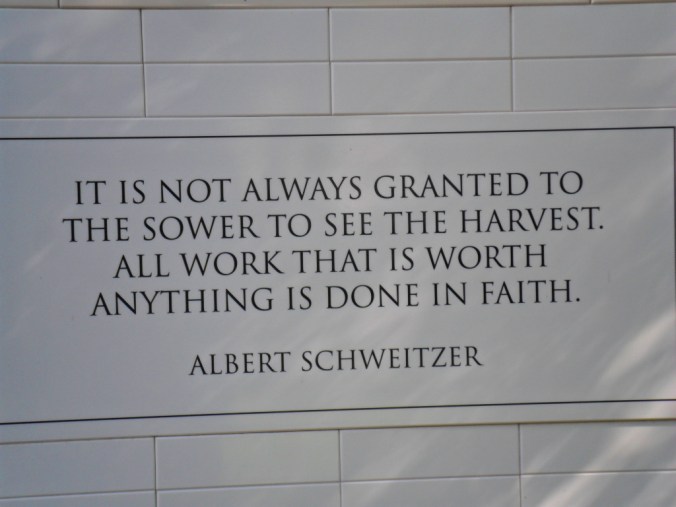
These columns stand one block back from the entry gate.  The property equals one square block.  This quotation is inside the entry gate to the left.
SAM_1352

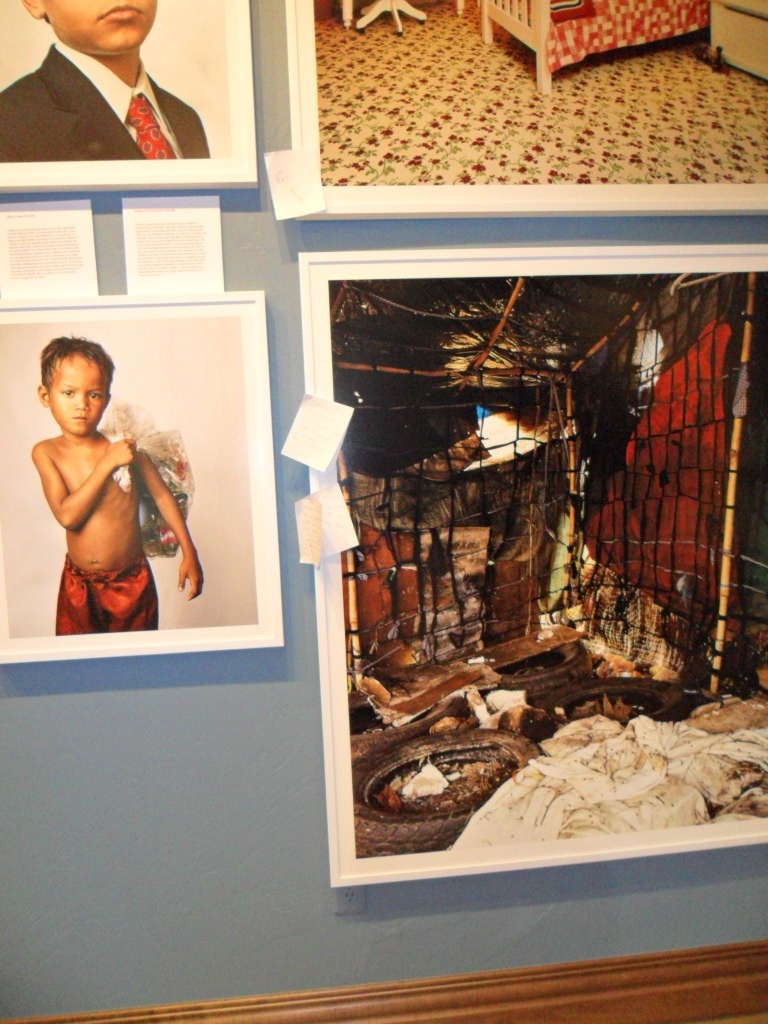
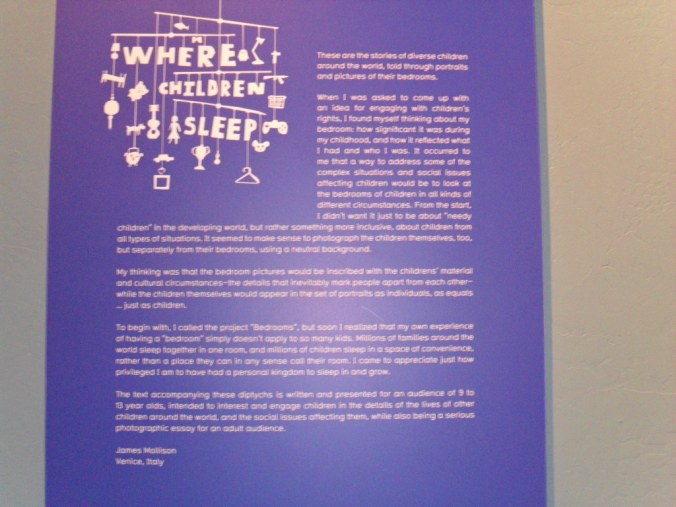
After buying my ticket at the gift shop, I headed to the museum and found the current show astonishing, impressive, and frequently hauntingly sad.  The entire gallery houses the photography of one person, James Mollison.  This young man decided to go to various countries taking photos of children and their bedrooms.  The complete collection was available for purchase in a book with details about the author’s interviews with all the children he photographed.  I bought one for my grandson.
SAM_1361

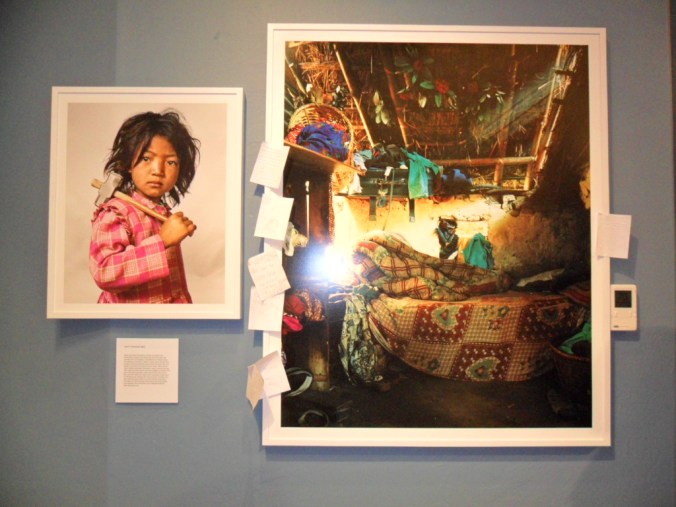
Although some of the photos showed children with beautiful bedrooms, living in relative ease and occasional opulence, most of the children lived in squalor or had no place to live at all except the street.  The boy below lives in Nepal. His entire family live in this room.
SAM_1354

SAM_1356

The boy above lives in Cambodia.  They live in a shack above a river. When it rains a lot or flooding occurs, they have no place to go and everything floods.  The river provides water, food, washing, everything.

SAM_1358

This boy in Brazil lives and sleeps on the street.  If he is lucky, he finds a sofa outside on which to sleep.  To eat, he has to steal.

SAM_1359

Living in Italy remains anything but easy if you are Roma.  Although he has a family, they have no place to live so sleep on this mattress outside, the entire family.  Harassment necessitates frequent moving.  They live in a constant state of fear and desperation.

SAM_1360

From a tribe in the Amazon, this youngster actually lives with family and they do have a place to live.  However, modernization and the drive to harvest the various natural resources there threaten their traditional life and homeland.

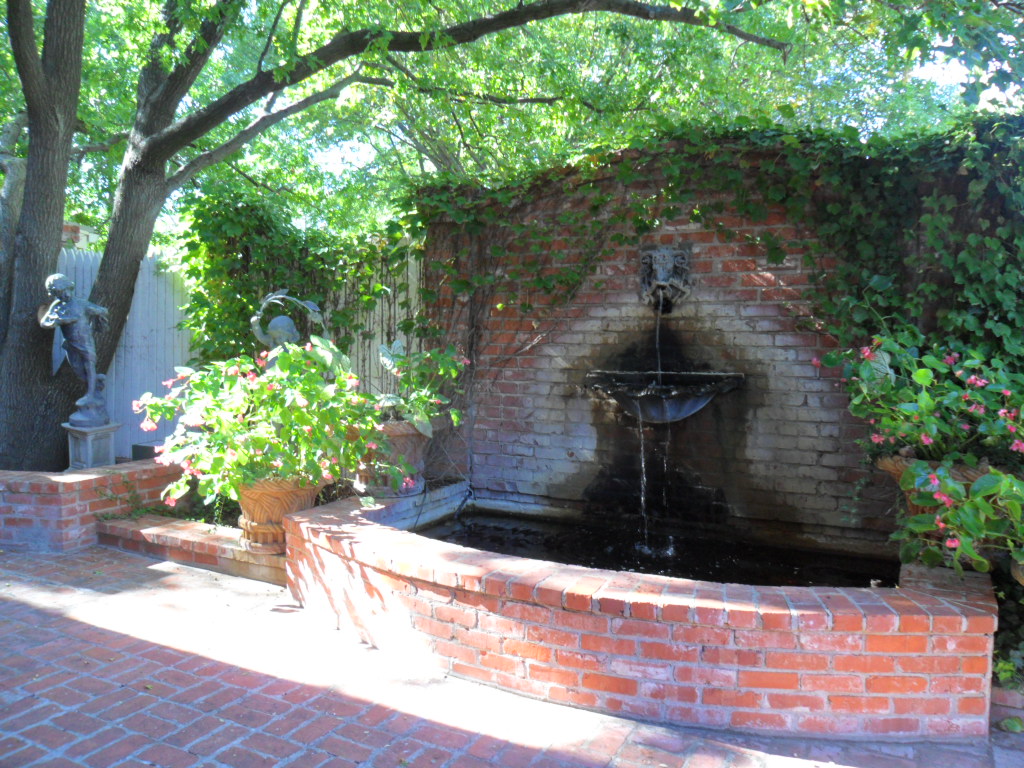
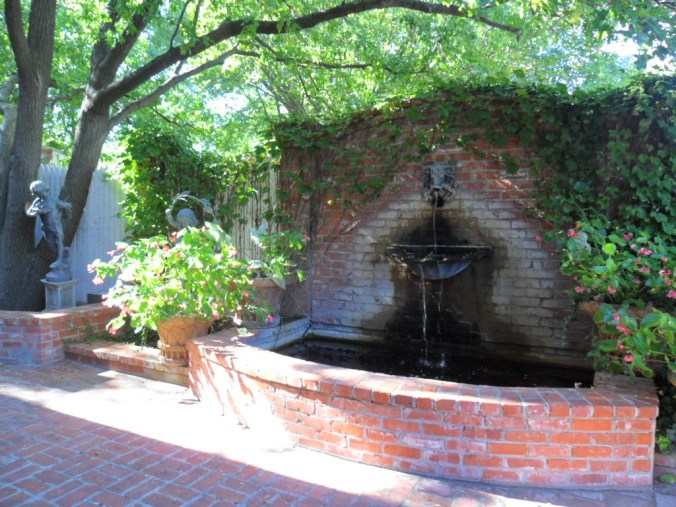
After leaving the art gallery I headed across the lawn to the house, taking photos along the way.  This fountain is in a small side yard, just inside the gate.
SAM_1363

SAM_1365

Once in the house, you can take photos but unfortunately with no flash.  Without a fancy camera, I gave up the idea of photography while in the house and just enjoyed the beauty of the art, the furniture, the exquisite rugs, one of which especially caught my eye.  I love rugs and own a few from Iran, Afghanistan, Egypt, and a couple of Zapotec runners.  I am especially fond of rugs from the Middle East and know a little about them,  sometimes roaming  around rug shops for the joy of rug viewing somewhat like going to a museum to look at the art.  However, never have I seen a rug anything like the one that lay before me.  Entranced, I stared in awe.  First, the rug was huge; it filled the entire master suite.  In the center a shepherd and sheep stood with lions, deer, and various other animals around the border.  I found one of the ladies helping with tours; she knew nothing about the rug and sent me to the lady in the gift shop.  She didn’t either and told me to go down the street five blocks to where Dr. Abraham currently lives and ask him.  I informed her that I did not have a ticket to tour there and tour time was running out.  She told me to go anyway.

Mrs. Abraham provided a warm greeting. I explained I was ticketless and had only come to find out about the rug.  She told me an identical rug had been in the house where her husband grew up. However, the rug at The Citadel was not that rug.  Dr. Abraham’s brother  inherited the original rug when their father died.  She indicated they had bought the rug at an auction.  For more specifics, she instructed me to find Dr. Abraham in the kitchen.  When I found him, he was explaining to others about the tiles. I waited. He seemed delighted with my interest in the rug and told me about it.  His family was originally from Lebanon.  An identical rug was, indeed, in the house where he grew up.  In fact, he and his siblings used the rug for games they invented, hopping around from animal to animal. By the time his father died, the rug had become quite worn from all this use and his brother did inherit it.  Dr. Abraham loved the rug and was delighted when someone told him that they thought a similar, if not identical, rug was to be auctioned off in New Orleans. He went to the auction and purchased the rug which is in much better condition than the one from his childhood. He told me he knew little about rugs, but was quite sure he had been told it was from Damascus.  Since the trip to Canadian, I researched rugs a bit,but cannot find the origin of this rug.  I intend to keep trying.

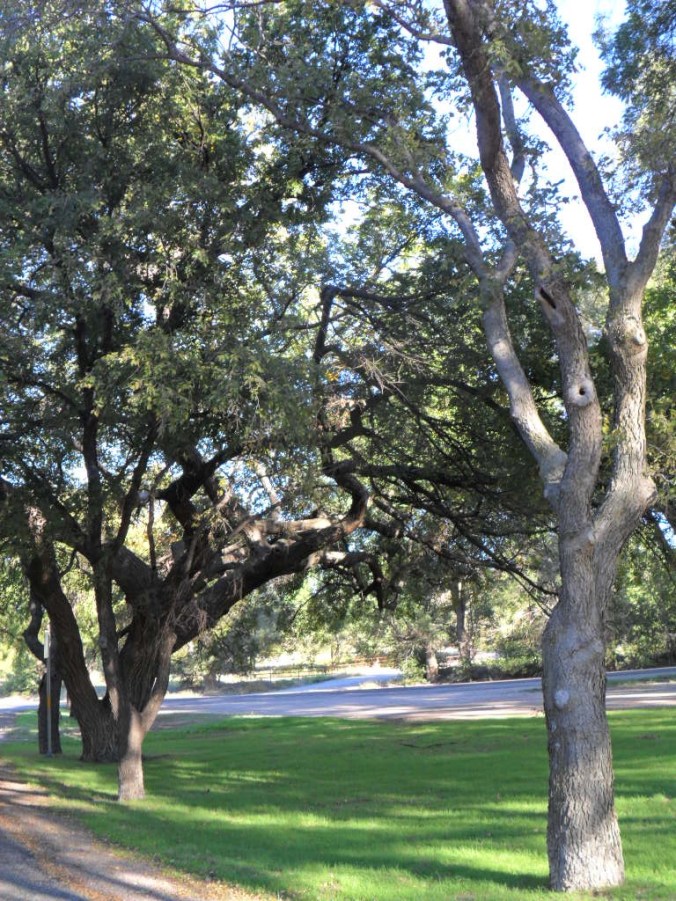
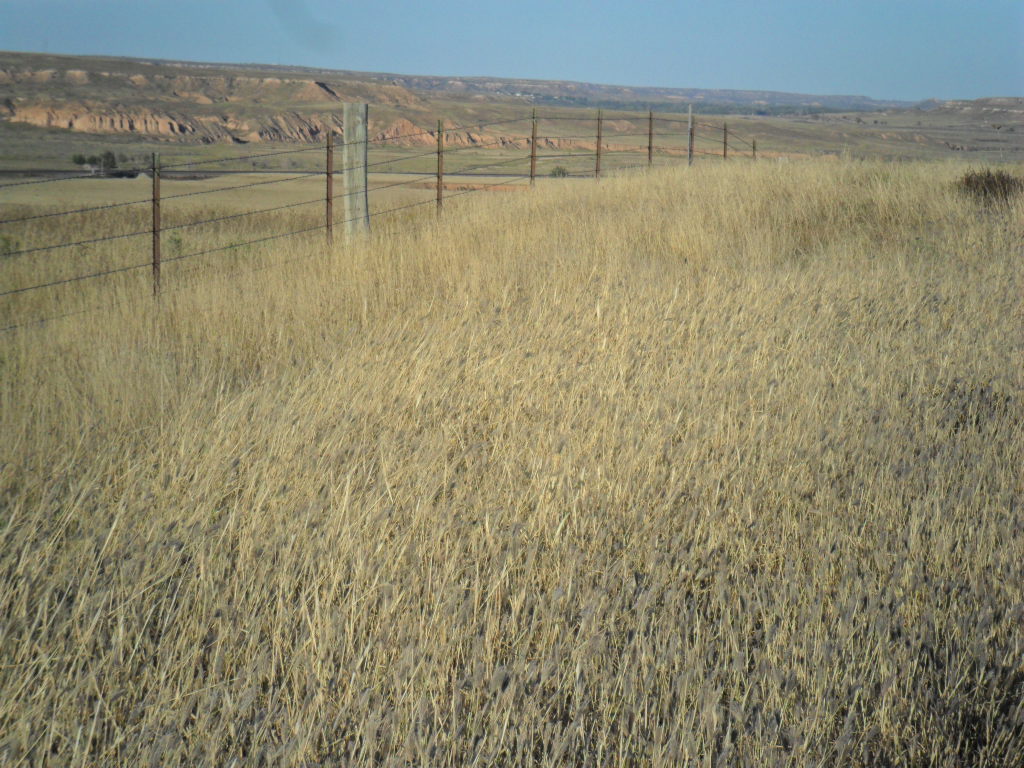
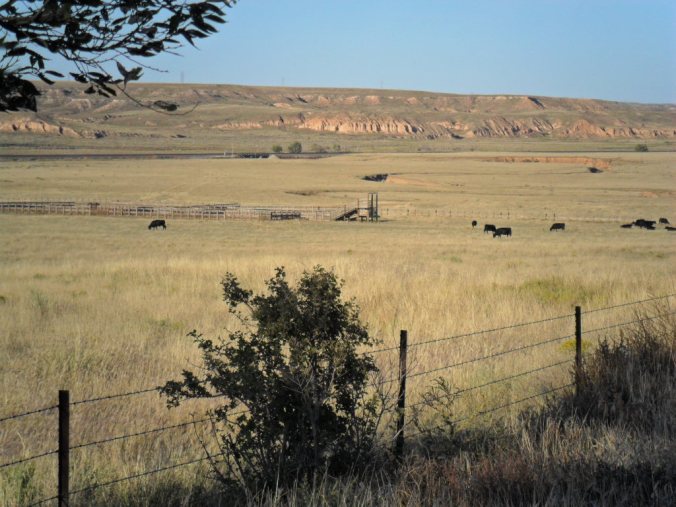
All this exploration with the rug caused me to leave Canadian considerably later than planned. The drive from Canadian to Miami, Texas, provides somewhat dramatic scenery typical of much of the west with an occasional richness of trees and green quite unexpected and delightful.  The following photographs were taken during this drive.

SAM_1366

The Canadian River with the bluffs on the other side.
SAM_1367

SAM_1368

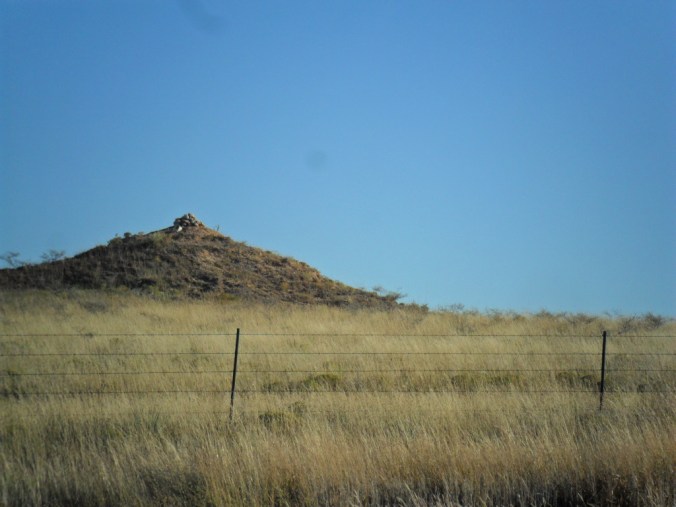
It appeared as if someone had built a cairn at the summit of this odd little hill.  In the middle of nowhere, who could I ask.

SAM_1370