The Mabel Dodge Luhan House in Taos


For years I had read and heard about this place, even attended a lecture by a descendent of one of her frequent guests who actually knew her when he was a child.  This past weekend good friends from Rociada took me there with my best friends from college years, friends from long ago, visiting from California.

I already knew something about Mabel and her friends, famous people who frequented her salon, created the artistic mystique that still hangs over Taos.  When I returned home, I wanted to know more.  Born into Buffalo, NY, high society, she had been married and widowed by the age of 23.  As a young woman she was openly bisexual; her memoir, “Intimate Memories”, provides a frank discussion of this part of her life.  Several years after her first husband’s death, she married the architect Edwin Dodge.  They lived near Florence, Italy, for seven years where she entertained such notables as Gertrude Stein, Alice B. Toklas, and Andre Gide.  After affairs and two suicide attempts, she separated from her husband and moved to Greenich Village.  Eventually, she married her third husband, the painter Maurice Sterne and became a patron of the arts.

In 1917, she and her husband moved to New Mexico.  This changed her life; she lived there until she died 45 years later.  She preferred Taos to Santa Fe, finding the latter “too civilized”.  She found New Mexico “alive” and fell in love with Pueblo culture eventually even cutting her hair to mimic Pueblo style.  Sterne did not find New Mexico to his liking and left.  After their divorce she married her long standing love, Antonio Luhan, a Taos Pueblo man.  They remained married 40 years.

Mabel entertained a nearly endless array of famous artists, writers, and intellectuals:  D.H. Lawrence, Georgia O’Keefe, Willa Cather, Ansel Adams, Carl Jung, Emma Goldberg, Margaret Sanger, the founders of the Taos Society of Artists.  She introduced New York and the east coast to New Mexico through her columns in “The New York Journal”.  Mabel died in 1962.

IMG_2284

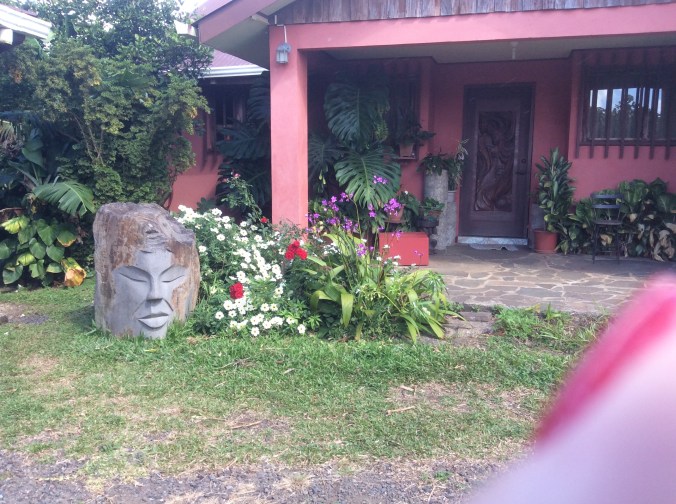
A view of the main entrance and the largest portion of the house and grounds.
IMG_2274

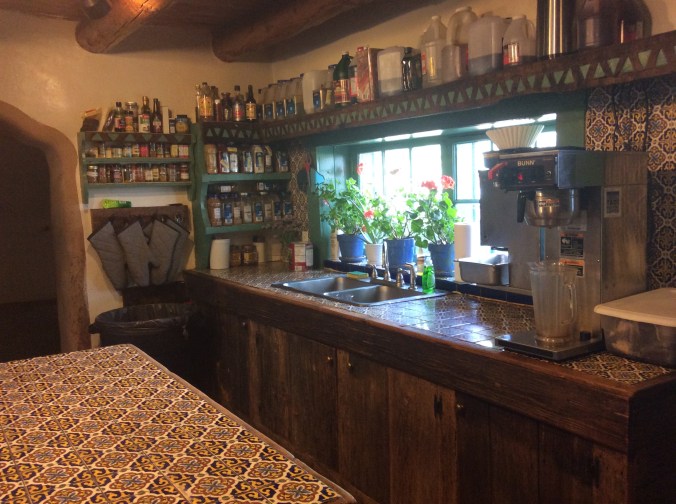
A small portion of the kitchen.  Cookies, coffee, fruit infused water, and tea were available in the dining room for hotel guests. Books with historical photos lay out for visitors to read in an adjoining room.

Dennis Hopper bought the house in 1970 and recreated her “salon” hippie style.  In 1977, he sold it to George Otero.  Because of years of neglect, it required extensive restoration.  The Oteros turned it into a non-profit where they held workshops.  The Attiyeh Foundation, its current owners, purchased it in 1996 and run it as a hotel and conference/retreat center.  It costs nothing to visit and wander around.

IMG_2281

This photo was taken from the same spot as the first one, looking to the right instead of toward the entrance.
IMG_2282

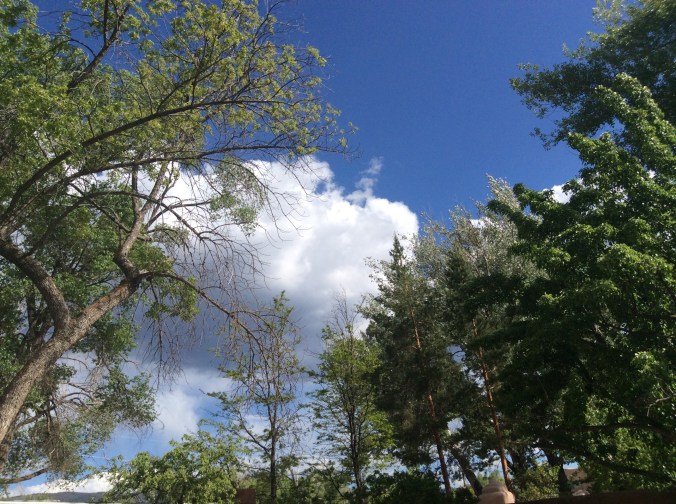
While standing there, I looked up into that incredible New Mexico sky.
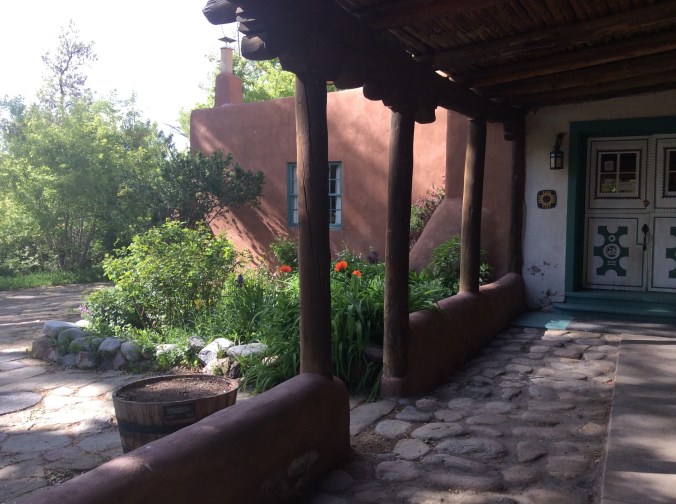
IMG_2279

A close up view of the entrance.

IMG_2276

Look at all the bird houses.

IMG_2275

Beside the kitchen, out a side door–patio and horno (traditional clay oven) shaded from the afternoon sun.
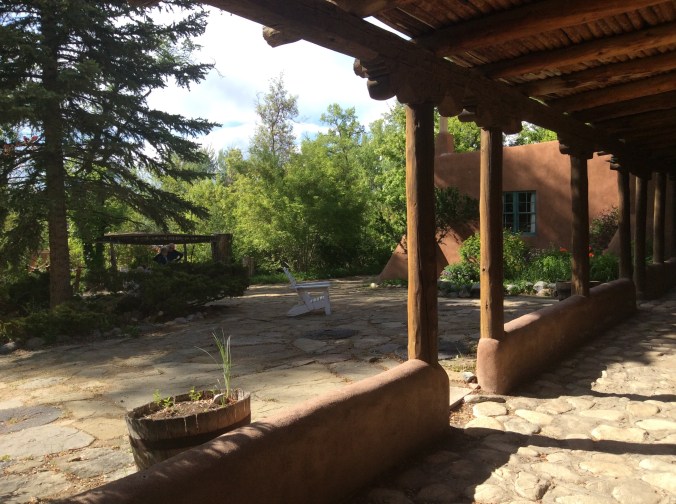
IMG_2277

IMG_2280

Friends chit chatting while I wander around taking photos.

For more details, go to:   http://www.mabeldodgeluhan.com.  This includes history, accommodations, workshops, etc.  The accommodations portion even tells the site visitor who slept in each room when visiting Mabel.


Woman Is Not Anonymous by Vanessa Rivera de la Fuente


Vanessa Rivera de la Fuente's avatarFeminism and Religion

Vanessa Rivera Virginia Woolf

Lately I have been reflecting on this quote of Virginia Woolf: “For most of history, Anonymous was a woman.” Here she points out the deliberate invisibilization of women’s contribution in all areas of human endeavors.

Patriarchy always takes these contributions for granted. For centuries, domestic labor has been invisible and not considered work. It has put beauty over intelligence, even with women of outstanding intelligence. And in terms of knowledge and intellectual production, patriarchy has appropriated women’s ideas and in presenting them as “anonymous,” presents them as it’s own.

Thanks to the feminist reclaiming of history, and proving the accuracy of the premise that “Anonymous is woman,” we have learned of the long list of inventions that were made possible due to women’s ideas who were kept invisible, unnamed, unquoted,  and erased;  after all, she was “just” a “woman.”

View original post 867 more words

Four Reasons We Need To Reclaim The Power of the Divine Feminine Now by Mary Petiet


Why is the divine feminine so important? What does it promote that values others, our planet? This says everything I could have said myself.

Guest Contributor's avatarFeminism and Religion

Mary Petiet photo(Spoiler alert:  She’s already here)

The power of the divine feminine taps into the power of life. The power is accessible to everyone as the equal opportunity energy surrounding and connecting all living things. The power is ancient, and meditative practices such as yoga, which in Sanskrit means linking to the divine, can connect us to this power. When we make the connection, we find the balance we need to realize our highest selves, and through that balance we can realize the highest self of the larger society.  To reclaim the divine feminine, we need only remember, and as more and more of us remember, we heal first ourselves, and ultimately the planet.

1. She is the route back to the self.

In her mother aspect the divine feminine offers a route back to the self and She is all-inclusive. She embraces all of creation, men, women and nature, and we…

View original post 501 more words

#ImWithHer: Excuse Me, I’m Listening—to Her by Marie Cartier


This post states about everything I myself could say on this subject. People vote how they vote for a wide variety of reasons. I vote on social issues. Often voters fail to realize that, like it or not, we are intricately part of a global economy. What occurs even in some remote part of the world affects everyone else, economically as well as socially.

Marie Cartier's avatarFeminism and Religion

marie kimMy wife and I attended a panel discussion last Sunday with Chelsea Clinton, the daughter of the Democratic nominee presidential hopeful, Senator Hillary Rodham Clinton. Chelsea was accompanied by the famous and beloved Superstore and former Ugly Betty star, America Ferrera and also uber- television entrepreneurial juggernaut, Lena Dunham , creator and star of Girls. The event was meant to highlight that millennials, particularly female millennials, are supporting Hillary Clinton. Obviously the event was meant to counteract the prevailing media notion that millennials are not supporting Hillary—whether or not they are female. And certainly some millennials are not—but, as this event pointed out, many are.
Ferrera opened and talked about her immigrant parents saying that she would not have been able to receive an arts education if not for someone like Hillary fighting for better public schools. She was one of the children who needed the free lunches, coming…

View original post 1,865 more words

Women Writers and the Story Circle Network


More than twenty years ago, I coauthored a book with an attorney.  Not only did it get published, it was also translated into Spanish.  The topic, the momentum for its topic, seems basically gone now.  Some technical and business magazines published a few articles I wrote.  I wrote some safety manuals, other technical stuff, rather boring, uninspiring.  Then I discovered the Story Circle Network.

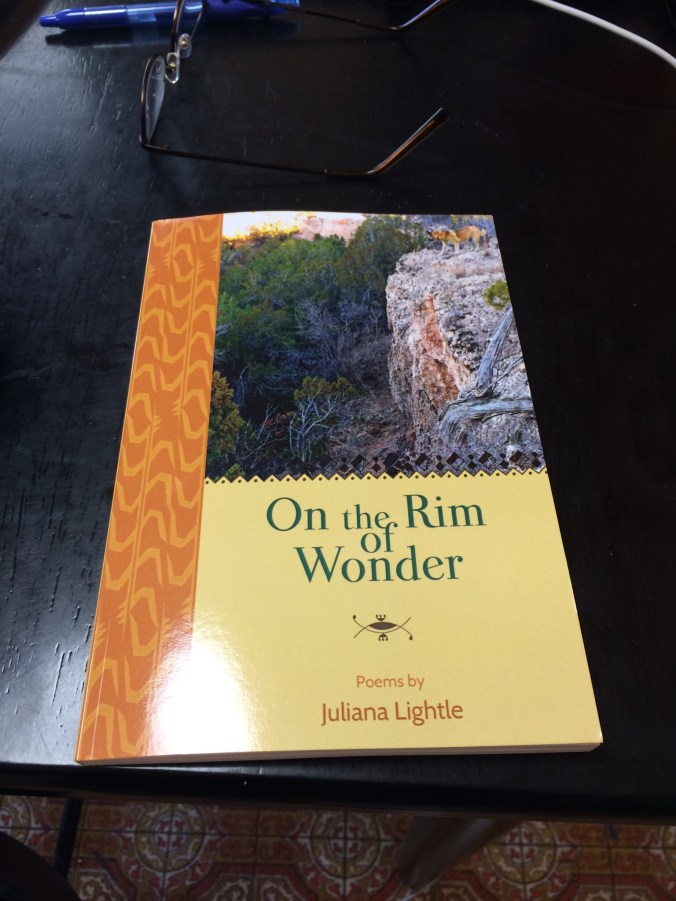
The Story Circle Network inspired me to write creatively again–once upon a time in high school my poetry was published.  Then I quit writing for years.  When I started again, it was technical or business writing.  If you want to write your stories, read other women’s stories, just explore fiction, poetry, travel writing, you name it, join this organization.  It changed not only my writing life, but my life in a broader sense.  Through it I met not only other writers, I also became a board member, made new friends who write and share. This inspiring organization not only provides classes, publishes, but also hosts various writing contests and a biannual conference.  In the middle of April, I will head to Austin for the conference.  The keynote speaker is no other than Brooke Warner, the woman who founded She Writes Press.  Go to http://www.storycircle.org to learn more about the conference and the just announced winners of the Sarton Women’s Literary Awards, become inspired, create, publish, grow.  Without this organization, I seriously doubt I would have written my book of poetry, published by Uno Mundo Press in April 2014.

10285598_10201564553698114_927164360_o

Because of comments from readers of this book, inspiration from friends, and personal interests, I am now working on another book.

I offer thanks to the Story Circle Network for renewing my writing life.


Rewriting Religion: the radical poetry of Aemilia Bassano Lanier by Mary Sharratt


This illustrates how recently in history English speaking women have gained the right to openly display their talents, how hard won these gains have been. These rights can just be as easily be lost unless we remain vigilant.

Mary Sharratt's avatarFeminism and Religion

Sharratt_DarkLady-hi

Aemilia Bassano Lanier (also spelled Lanyer) is the heroine of my new novel The Dark Lady’s Mask.  Born in 1569, she was the highly educated daughter of an Italian court musician—a man thought to have been a Marrano, a secret Jew living under the guise of a Christian convert. She may have also been the mysterious, musical Dark Lady of Shakespeare’s sonnets, although most academic scholars dispute this. What we do know for a fact and what really matters is that she was the first woman in England to pursue a career as a published poet.

In Italy women such as Isabella Andreini published plays and poetry on a wide variety of secular subjects, but in England Lanier effectively had only one option—to write devotional Protestant verse. Her English literary predecessors, Anne Locke and Mary Sidney, wrote poetic meditations on the Psalms.

But Lanier turned this…

View original post 636 more words

Costa Rica Adventure, Day Five-Part One


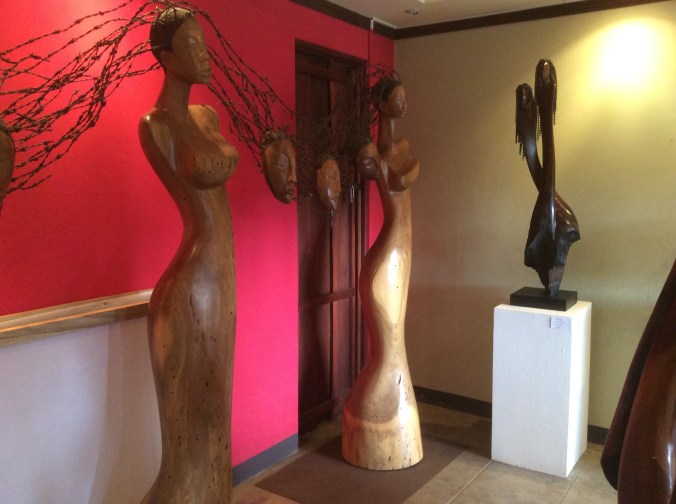
After spending our first leisurely late afternoon and evening at Rio Perdido, we arose early the next morning heading to a farm near the Nicaraguan border.  On our way, about 3/4 to one hour from Rio Perdido, we stopped at the studio of the sculptor Tony Jimenez.  Apparently, Tony loves–perhaps an understatement-the female form.  With few exceptions, he carves women, mostly giant women, in wood.

IMG_2003

He sells smaller statues, even as small as eight inches high, but refuses to sign them partly because they are made from less substantial wood.  I bought one about a foot high.  Later, in another part of Costa Rica I saw some very similar to mine.  When I asked if Tony made them, I was told his cousin was the sculptor.

IMG_2004

Although Tony sells sculpture, his front door fascinated me even more.  It, too, is carved, a frieze.  Even the crossbars on his windows are carved.

IMG_2005

We drove along the west side of a volcano for hours.  Because of clouds, wind, and weather from the Caribbean, even though we were on the Pacific side, we never saw the top of the volcano.  It remained misty and rainy most of the morning as we crossed from the Pacific to the Caribbean side.

IMG_2002

I do not recall anyone mentioning the name of this volcano.  Given where we were headed, it would appear to be Volcano Miravalles.


Lucy Pick’s Pilgrimage by Mary Sharratt


I will add this to my list of must reads.

Mary Sharratt's avatarFeminism and Religion

mary sharrattIn medieval Europe, religious devotion provided an alternate narrative for women’s lives in a male-dominated culture. Defiant women who stood up for themselves in the face of rape, incest, and murder were hailed as virgin martyrs. Religious vocations, such as becoming a nun or a beguine, provided a viable and esteemed alternative to forced marriage.

Even women who were married with children could escape their domestic entanglements and conjugal duties by taking an oath of celibacy as 15th century English mystic Margery Kempe did, leaving behind her husband and 14 children to go on pilgrimage to Santiago de Compostela, Rome, and Jerusalem. Her Book of Margery Kempe, the tale of her travels, reads like a kind of late medieval Eat, Pray, Love and is the first autobiography written in the English language.

Though it might seem surprising to us today, women of the European Middle Ages possessed more…

View original post 370 more words

Brilliant books by brilliant writers


In case you are looking for something new to read. I would add any book by Leslie Marmon Silko. My all time favorite book, “Storyteller”, written by her contains a story I must have read 50 times, “Yellow Woman”.

Samuel Snoek-Brown's avatarSamuel Snoek-Brown

And all these writers are women.

I spotted this list of 30 books by women in my Facebook newsfeed — the always-glorious Lidia Yuknavitch shared it — and I loved the first line of the intro:

“Let’s be real: You should be reading books, and books by women, every month of the year.”

Amen!

But yes, it’s Women’s History Month here in the states, and while Emily Temple, author of this listicle, claims, “That women have contributed just as much to our literary culture as men doesn’t even need to be said,” I think, sadly, it does. We need to say it again and again, not just this month but every month.

So read a bunch of books by women. And the ones you don’t finish? Well, there’s always next month, and the month after that, and the rest of the year.

Need a hint of where to start? There are a bunch…

View original post 352 more words

Apocalyptic Planet-Part Five: Civilizations Fall


Whether it is my innate ambition, something my parents instilled in me, or something else unknown, I try to learn something new every day.  Craig Childs starts this chapter of his book by talking about a Phoenix landmark.  Back when I travelled to Phoenix regularly, I knew this place as Squaw Peak.  Now its name Is Piestewa Peak.  The name change is probably a good thing.  I never knew before reading this how dreadfully pejorative the word squaw is.  Basically, it means Indian bitch as well as other things related to the privates of women.  All languages seem to possess an accumulation of dreadful words geared to putting women down one way or another.  Slang words for the private parts of a man rarely mean anything pejorative, at least not that I know of.  The new name, a Hopi name, a blessing word, is a word that calls water to this place.  Not a bad idea in Phoenix or most of the Southwest for that matter.

The name Phoenix fits.  Underneath modern day Phoenix, an ancient city lays buried, a quite sophisticated city with ball courts, temples, irrigation canals.  This city existed at least a thousand years ago.  Its inhabitants grew corn, cotton, beans, and agave.  Farmers, hunters, carvers, all sorts of artisans and merchants apparently lived there.  Now they are called Hohokam taken from an O’odham word meaning “ancestors”, the “ones who have gone”.  We find forgotten cities all over the world, Palmyra, Machu Picchu, Angkor Wat.  What causes these sophisticated civilizations to fall?  If you read a bit, look further, you find common themes:  environmental decay, resource depletion, conflict, disease, social problems.  Angkor Wat fell because it could not maintain its complex irrigation network.  Ur in Iraq fell because a drought caused its port to dry up.  Usually, the demise of particular civilizations occur over time, e.g.Rome.

Childs notes that human patterns often follow animal patterns, or at least mammalian patterns.  For example, when over population occurs, behavior changes.  Parental care and cooperation become replaced with aggression, violence, competition for resources, dominant behaviors.  These types of behaviors are particularly detrimental to females and the young without whom the society (or animal population) cannot replace itself.  Generally, in animal populations, when this occurs, reproduction slows for several generations and the imbalance corrects itself.  For humans, it is not so simple.  Hohokam bones indicate mass starvation and malnutrition.  Other civilizations, e.g. the Anasazi, seem to have disappeared without a trace.

Today, most of the world’s largest cities have immense infrastructures that keep them going, miles of underground sewage tunnels, water mains, etc.  Here in the US in our oldest cities, much of what we take for granted is very old and deteriorating.  New York City and Chicago have water main systems that some experts claim are near collapse or at the very best badly in need of repair.  Doubtless such conditions exist in old cities throughout the world, most of which are much older and larger than the majority of cities in the US.  Yet, they continue to prosper.  Have we passed a point when civilization cannot fall?

Childs completes this discussion by describing his visit with his wife to Guatemala.  They visited all the best known Mayan sites, visited with natives.  His wife managed to get invited to a Mayan fire ceremony, a renewal ceremony.  History books tell us the Mayan civilization is dead, ended.  But it is not.  The Mayan culture still exists.   At least six million still live in the Central America.  What would have happened to Mayan cities if the Europeans had not brought epidemic diseases and better fire power?  We will never know, of course, but no matter how many civilizations rise and fall, change continues and humans continue to inhabit the earth.

The new question is this:  can this planet we live on sustain the ever increasing numbers of humans who inhabit it??