Book 46 for 2024: “What Happened to Ruthy Ramirez”, Claire Jiménez


The Puerto Rican Ramirez family lives on Staten Island. The book begins years after one of the three daughters, Ruthy, disappears at the age of 13 while on her way home after her school track practice. Twelve years later while watching TV, Jessica, the oldest daughter, sees someone on a reality show who looks like Ruthy. The woman on the TV has red hair like Ruthy and the same birthmark mole. Jessica tells her younger sister, Nina. They concoct a plot to go to the reality show site and bring Ruthy (if she is really Ruthy) home. They avoid telling their mother, Delores, who has never ceased struggling over Ruthy’s disappearance. Delores discovers their plot and insists on not only joining them, but also bringing her older Pentecostal friend who frequently falls into spiritual spells on the floor at church. Eventually, they all head to Boston where the show is located and all kinds of turmoil occurs.

The novel is told from the viewpoint of each sister and their mother, providing endless details about their Puerto Rican culture, their jobs, their views, and how they feel about each other, all done with dialogue. Sometimes it is loving, sometimes snarky as it deals with their experiences with racism, sexism, family secrets, and violence. As a reader, I, too, wanted to know what happened to Ruthy. Definitely worth the read.

Book 42 for 2024: “These Is My Words: The Diary of Sarah Agnes Prine, 1881-1901, Arizona Territories


This fictional work is based on the life of the author’s great grandmother. Written as a diary with specific dates, the narrator is not yet a teen when the novel starts. Her parents are wanderers, always looking for a better, new place. Sarah’s character is that of a tough, pioneer girl and then a woman. She can ride horses, shoot to kill, manage a ranch, do whatever it takes to survive. Much of it includes a rather accurate portrayal of life in Arizonan territories as well as Texas at the time including the prejudices of many of the white inhabitants toward the Spanish speaking people already there, fights with Apaches, and the hunt for Geronimo. It is not just the story of her own life, including her relationship with the Army Captain whose job initially is to protect a wagon train, but also portrays other people living in the Southwest during that time period.

I read this as part of a book club. Reactions to the book varied widely from those of us who thoroughly enjoyed the book to at least one person who insisted it is poorly written and viewed it as a romance novel. The rest of us did not. She used an audio book edition. After her descriptions, it appears the audio book does not correctly follow the book itself and is poorly done which may have contributed to her view of this work. I borrowed this novel from the public library and it was obviously well read because it was not in the best condition.

Book 33 for 2024: “Three Daughters of Eve”, Elif Shafak


Shafak is a popular Turkish writer. One of my all time favorite books is her novel about the life of Rumi.

“Three Daughters of Eve” takes place one evening in Istanbul in 2016. Peri, one of the daughters from the title, is on her way to a fancy party when a thief snatches her purse out of the back seat of her car which is stalled in traffic. She parks the car and chases him through back alleys. As she fights him for her purse, an old photo falls to the ground. It portrays three young women and their university professor. This photo jars her mind, takes her back to her time at Oxford University when she was a student there in 2000-2002, her childhood in Istanbul in the 1980s and 90s, and her life. She thinks back to her life with her two friends, Shirin, an adventurous Iranian young woman, and Mona, a devout Egyptian Muslim who word a headscarf out of choice. And then there is the famous professor Azur, whose class on God either makes students hate or love him and the scandal that caused Peri to return to Istanbul.

Until her daughter, who was in the car and eventually chases her mother down in the alley, sees the photo, no one, except her husband, seems to have known Peri even went to Oxford. Her daughter mentions it at the party while everyone is arguing about East and West and politics and who has the most money and how they acquired it. Peri tries to deflect questions, changes the subject, and keeps remembering her past: her parents, a father quite irreligious, her mother a devout Muslim, their endless arguments and hostility, her brothers, her childhood and her stint at Oxford.

Through the story of Peri’s life, this novel explores personal identity, East-West history and politics, the meaning of marriage and friendship.

Book 31 for 2024: “Tender”, Sofia Samatar


This book contains 20 fantastical and dystopian short stories. I found them fascinating with topics ranging from selkies to ogres to ghouls to jinns to witches (in this case positive ones). The settings range from US to Africa to a settlement in outer space (the story “Fallow”). Divided into two sections, Tender Bodies, Tender Landscapes, these stories address human frailty, anger, greed, extreme religions and how humans treat each other (both good and bad) and what might occur in the future if people do not behave better. “Fallow” is a sort of handmaid’s tale where instead of being on Earth–which has been basically destroyed–a group of extreme religious folks have made a place for themselves on another planet after escaping Earth. If anyone from Earth accidentally shows up, they are in big trouble unless they become just like the people already there. Otherwise, they do not kill them–that is wrong–but just sort of let them slowly die. These stories, both brutal and lovely, display an incredible imagination.

Book 29 for 2024: “The Covenant of Water”, Abraham Verghese


I waited for more than a year to get this book via the library. It stayed on the best seller lists for months and months and has been translated into more than twenty languages. It is the saga of one family from 1900 to 1977. The setting is the Kerala area of India (I have been to India but not this area). It is unique compared to much of India in that Christians, Muslims, and Hindus live in relative peace with each other. Unlike the more arid parts of India, this is a place dominated by water which is a major theme in the book. Several of the main characters in the book suffer from an inherited Condition, as they refer to it. In every generation, at least one person dies from drowning.

The book begins with a 12 year old girl being married off to a 40 some year old widower. She has to travel far from her family via water. He is kind and patient but unlike her, who loves the water, he will travel many extra miles to avoid even traveling by water. He is terrified of water because he has the Condition. Eventually, she becomes the family matriarch, Big Ammachi. This is her story and the story of her descendants, the Christian community in Kerala, and the fate of one British man who remained in India after independence. It is also the story of the progress of medicine (Big Ammachi’s granddaughter is determined to become a doctor and find what causes the Condition) and how one family experiences many hardships to further future generations.

The author, Vice Chair of the Department of Medicine at Stanford, details this fictional family’s history for several generations in 715 pages. It sounds daunting but I kept reading because I wanted to know what happens to all the people. At the same time, I found this to be one of the saddest books I have ever read. Due to the Condition and leprosy, for which there was no cure at the time, many people’s lives are horrendously affected. I did learn a lot about medicine and medical advances, how leprosy destroyed lives, Kerala and, much to my amazement, that many Christians in Kerala continued to follow the Hindu caste system.

Book 23 for 2024: “Off With Her Head: Three Thousand Years of Demonizing Women In Power”, Eleanor Herman


Starting with ancient Egypt and later with the ancient Greeks and Romans and ending in current times, this highly researched book (there are 15 pages of Bibliography) details millennia of lies told about and attacks against women in power. Ridiculous things have been attributed to women, powers that no human has, in order to control them. Here is an example: Pliny the Elder (23-79 CE) wrote that menstruating women caused hailstorms, lightning, and whirlwinds. And worse yet, demons come from this blood (various medieval medical authorities) and it can shrivel the penis.

Then there is the whole thing about raging hormones. The word hysteria, which supposedly is an ailment of women, comes from the Greek word for uterus. During the 2020 presidential campaign, Marco Rubio, currently a possible candidate for vice president, tweeted a photo of ten missiles exploding and asked if you want a woman a heartbeat away from the presidency.

During the Middle Ages millions of women were put to death in various horrible manners after being accused of witchcraft. Even in current times various male political candidates and media announcers (a Newsmax journalist, Zinke of Montana, Ben Carson, Chris Matthews–list is almost endless) have called powerful political women witches. The victims of these pejorative rantings even include Margaret Thatcher when she held office.

Marie Antoinette never said, “Let them eat cake”. Various forms of this phrase had been around for over one hundred years. Ann Boleyn originally wanted to marry the love of her life who also wanted to marry her but the powers at the time, including Henry VIII, forbade this. Many of the ridiculous stories about Cleopatra can be easily disproven, e.g her being so rich she dissolved a giant pearl in vinegar to prove her wealth. Unless powered, pearls do not dissolve in vinegar. Catherine de Medici was attacked as some sort of sex pervert when she was 42, obese, and anything but a sexy seductress.

The documented lives of many powerful women for the last three thousand years contains endless abuse of all sorts. How is this possible? Because there is an informal Misogynist Handbook that has been used for millennia to control women. The above is only a smattering of what you will learn about this Handbook if you read this book. In the last chapter, the author does provide recommendations for overcoming this abuse of women. However, she also notes currently there is a “furious backlash against this long-delayed crawl toward justice, resulting in the increasing viciousness of sexist tweets and memes, more violent threats, more savage abuse.”

Book 16 for 2024: “Digging to America”, Anne Tyler


This book details the lives and relationships between two families, one native to the US and the other Iranian immigrants. When the young couple in each family adopt a Korean baby, their lives become intertwined. Every year on the anniversary of the arrival of the babies, they take turns hosting an Arrival Party. Two of the grandparents, one on each side, one male and one female, find their lives linked in unexpected ways. The book explores what it means to be an immigrant, how the native born sometimes view those from another country, and questions to what extent a person’s character is due to culture and what is simply the way that person remains regardless of culture. While a serious exploration of culture, family relationships, friendship, and cultural adaption, the book is also quite funny. I found myself sometimes laughing out loud and at other times feeling sad. I also found myself thinking more about my own personality and its development.

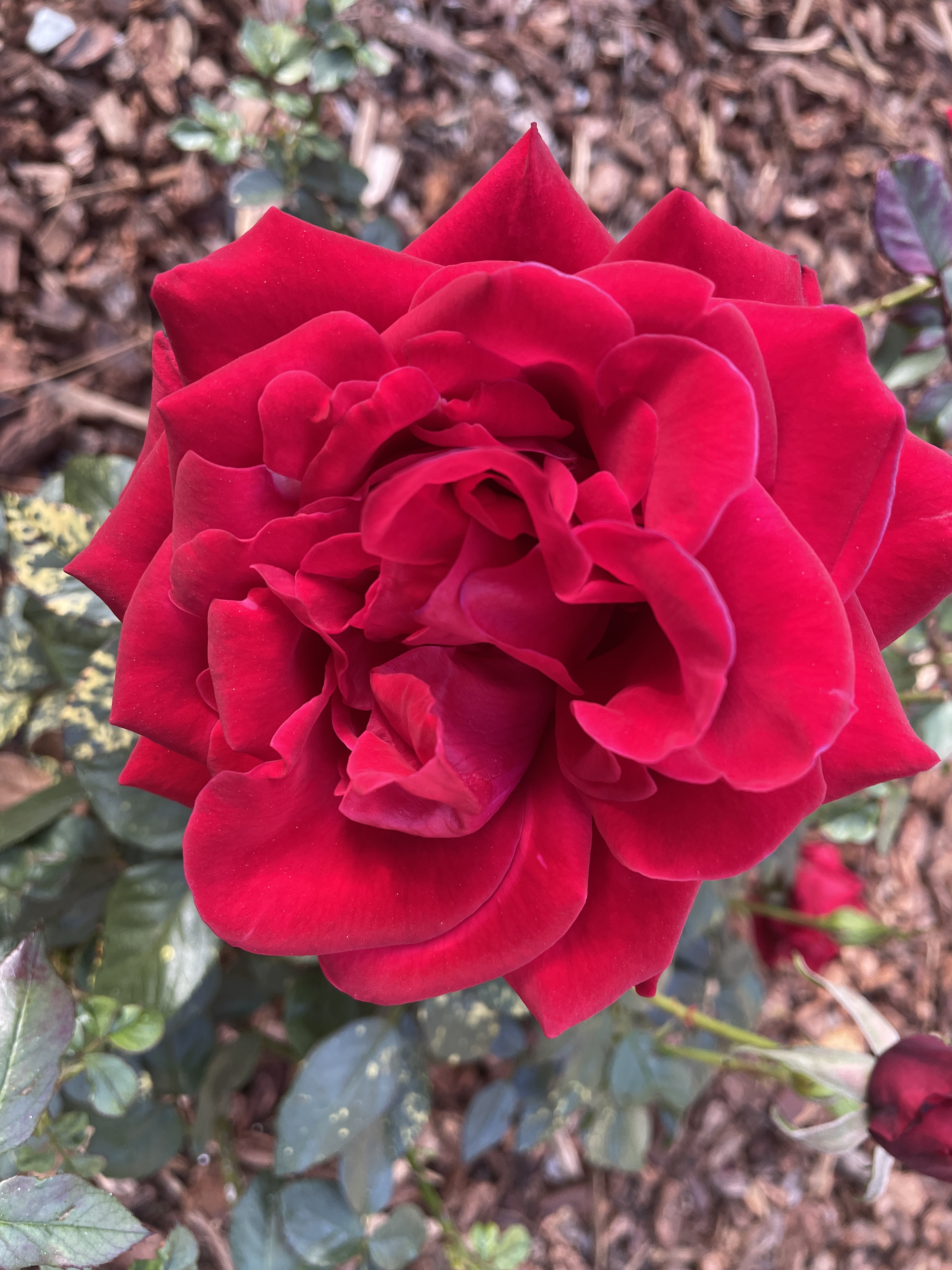
Red Roses


He’s very good at wooing:

gifts–chocolate cherries,

red roses, delicate lingerie,

I love you.

He wears his mask well,

keeps calm, a handsome spider,

weaving a silken web.

She laughs, tells her friends

just how very special she’s

sure he is.

He wears this mask for months,

finds them the perfect apartment,

swimming pool, gym, marble,

granite, luxury appliances.

She’s sure he loves her:

the gifts, the perfect apartment,

fancy restaurants, luxury weekends.

She’s late, heavy traffic, an

emergency at work. He

screams, wants to know

why; no explanation matters.

He hits her for the first time, her

torso, knocks her down.

Tomorrow 24 red roses

arrive at work. He begs

forgiveness. She’s sure

he’s sorry; it won’t happen

again.

Two months later, she’s

late again. Real reasons he

does not want to hear. He

screams, he hits, he knocks

her down.

She dreads red roses.

Note: This is part of my writing a poem per day for National Poetry Month. Regarding this poem, 34% of female homicides are women who have been killed by intimate male partners. Often when women kill a man attacking them, they are convicted of murder even when trying to defend themselves.

Book 14 for 2024: “The Invisible Hour”, Alice Hoffman


This is a book for those who believe in the power of books to transform life, who are fans of Alice Hoffman, and who like time travel. It also about how a charismatic man can ruin the lives of many, especially women, by controlling everything around him through fear and coercion. In his Community books and contact with the rest of the world are banned. Mia is a young woman who sneaks into a local library and finds Hawthorne’s “The Scarlet Letter”. She realizes the life she is living in the Community is like the lives in the book. Through this book she manages to attain the courage to escape such a man, the man who destroyed her mother, Ivy. She makes her way back in time to the period in the book, has a love affair with Hawthorne, and finally escapes the horrible man who tracks her everywhere she goes.

Book 10 for 2024: “The Furies: Women, Vengeance, and Justice”, Elizabeth Flock


This book raises these questions: Can women gain true safety and equality without violence? Can we end misogyny without fighting back?

The book details the stories of three women, one from Alabama, a woman from northern India, and a Kurdish fighter in northern Syria. All use a form of violence to overcome abuse and mistreatment they have experienced and see other women experiencing. The author personally interviewed all of these women and others close to them and visited them repeatedly.

The first is Brittany Smith, who shot the man who had raped her and was trying to kill her brother. Her story details how Stand Your Ground laws work for men, but often fail for women, especially in areas of the US South where men are protected by their beliefs in a male Code of Honor.

The second is the story of Angoori Dahariya, a Dalit woman, from Uttar Pradesh, India. Fed up, she creates a group called the Green Gang (they wear green saris) dedicated to defending poor, under caste, female victims of abuse. Note: Dalit refers to the lowest caste.

The third is the story of Cicek Mustafa Zibo, a Kurdish fighter in the female militia that fought ISIS in northern Syria. She and many others follow the teachings of Ocalan, a Kurdish leader imprisoned by the Turks for leading the Kurdish militia who for years have fought the Turks for independence. He teaches equality between men and women and women’s rights, which is anti the general cultural beliefs in this area of the world. Note: Ocalan is labeled a terrorist by many.