Gypsies, Deserts, and Random Thoughts on a Cold Sunday Morning


In less than 15 hours, it has dropped from low 70s to 9 here on my canyon rim–one of the joys of living in the Panhandle of Texas where a mere change in wind direction can dictate the weather.  Yesterday afternoon, I was helping my daughter clean her back yard and ready the ground for planting some shrubs and a tree and now 60 degrees colder.  This type of drastic weather change has occurred repeatedly in the last few weeks.  Perhaps it has muddled my brain which keeps hopping back and forth from this to that.  First, the “this”.

Mostly, I read Latin American, American Indian, and Middle Eastern authors.  When I recently stopped by the library, I could find none of these that I had not already read so I picked up a book from a Dutch author of whom I had never previously heard, Margriet de Moor.  The book, a novel, The Duke of Egypt, tells the tale of a Gypsy man who meets this young Dutch woman.  They marry and lead a quite unusual life:  in the winter he lives with her on the family horse farm; in summer he leaves and lives with the Gypsies, wandering around Europe in their caravans.  When he is “home” with her, in the evenings he tells her tales of his Gypsy family and friends, centuries of history.  These tales shocked me:  centuries of discrimination, hangings–even Gypsy women hanged publicly for no other reason than they happened to be Gypsy in the wrong country at the wrong time, sick children whom no doctor would treat, starvation, driven from country to country.  Of course, like many people I have heard stories about Gypsies:  as a child my grandmother telling me that Gypsies stole other people’s children, a friend telling me the police said it was Gypsies when someone stole some silverware from her house, but I never really believed it.  Reading this book caused me to delve a bit more into Gypsy/Roma history only to learn even more tales of horror.  Hitler and his Nazis hated Gypsies almost as much as they hated Jews.  It is estimated that the Nazis sent at least ten per cent of the Gypsy population in Europe to the gas chamber.  On the positive side, I learned that many Gypsies were hired by people who raised horses to help them with their horse care because Gypsies were considered expert horse trainers and traders.  In addition, some hired them for their music to play for social events and festivals.

When several friends came over for dinner, I mentioned the book to them and my shock.  I wondered aloud as to why so many hated the Gypsies.  The general response was this:  Gypsies consistently live as they wish and refuse to follow the social norms of the rest of the population.  They refuse to settle down and live in one place, they enjoy life, dancing, drinking, roaming.  If you refuse to live like everyone else, the rest of the world will  punish you.

Then I moved on to the book I am reading now, Apocalyptic Planet:  Field Guide To The Future Of The Earth.  I am only on page 27 of 327, and already I have learned:  “Deserts generate most of the world’s airborne dust, contributing to a global migration of surface minerals.  Dust blowing from the southern Sahara is the single largest producer of iron for the mineral-poor soils of the Amazon in South America.  Half of this dust originates in the Bodele Depression north of Lake Chad, which produces about one hundred storms a year, each sending 40,000 tons of dust across the Atlantic to South America.”  And a bit further in the book:  much of the fertile High Plains here in the US (Kansas, eastern Colorado, Oklahoma, Nebraska, Texas, basically from Canada to Mexico) sit on top of a desert, e.g. the Sand Hills.  Currently, these sand hills remain stabilized by miles and miles of grass–our native short grass steppe.  It does not take much to imagine what would occur if drought continues and the grass disappears.  Once desertification occurs as it is now occurring in many places in the world, e.g. the Sahel, deserts consume.  Jonathan Overpeck, a leading climate researcher claims, “…we are significantly underestimating the severity of drought we could get in the future.”  He predicts many places now inhabited will become uninhabitable unless we initiate drastic changes in our water management.  People will be forced to move from places of little to no water to places “wherever there is no desert”.  He adds, “We are contributing enough change to the planet that we are moving toward more droughts instead of away from them.”  In the Sahel alone it is estimated that 500 million people will have to move to survive.  I think over this information and about the current drought here and look at the beautiful place where I write and live, wondering will it be habitable in one hundred years.

Now on to the “that”:  grateful I live here in the United States in spite of all our “problems”.  I could have been born in Ukraine, Syria, Central Aftican Republic, any of those places experiencing turmoil, fear, religious hatred, genocide, torture–the list goes on and on.  Instead here I am happy, relatively safe, warm in spite of the 9 degrees outside, well fed–you get the picture.

Much as Love and Murder, Freedom is a Many-Splendored Thing


danielwalldammit's avatarnorthierthanthou

17711-series-header Yapto Soerjosoemarno is a middle-aged man. He is the leader of Pankasila, an Indonesian youth group three million strong. The camera follows him out onto a golf course where he explains; “Gangsters are free men. They want to live life in their style. Relax and Rolex.” A moment later he tells his young caddy she has a mole on her pussy.

And she smiles.

Of course all of this comes after Yapto explains that Pankasila had killed all the communists in Indonesia. It comes after he has spoken at a Pankasila rally, one in which he calls himself the biggest gangster of all.

What else could the young girl do but smile?

KillingAs he and his friends try on colorful gangster outfits, Anwar Kongo waxes on about his inspirations; Al Pacino, John Wayne, and others like them. He goes on to relate the story of how he once placed the…

View original post 1,449 more words

Bedtime Reading or Not–the Hazara


A lifelong habit that helps me settle down to sleep remains reading.  However, occasionally I delve into a book that turns out not to be so wonderful to read just before going to bed.  The topic turns to the disturbing and then, suddenly, my mind churns.  By that time, it is too late to go back.  Or, like the book I am reading now, parts of it consist of stories inspiring, amusing, enlightening, parables for life.  Then there are the other parts:  the abuse of an entire people by the other ethnicities surrounding them, genocide, turmoil, invasion.  I remain a lifelong lover of libraries.  Recently, while browsing through new books, I found this one:  The Honey Thief  by Najaf Mazari and Robert Hillman.  Mazari grew up in a Hazara village in the northern part of Afghanistan, the area known as Hazarajat, became a master rug maker and fled from the Taliban to Australia in 2000 where he met his now close friend and coauthor.  For several days now, it has been my bedtime reading.

The Hazara people speak a dialect of Farci, the language of Iran.  Data varies, but they number approximately seven million in Afghanistan and remain one of the largest ethnic groups there.  Nevertheless, in spite of this, other groups discriminate against them for various reasons, including the fact that most Hazara are Shia Muslims surrounded by Sunnis.  Until 1893, they were the majority when half were massacred and many fled to live in Iran, Pakistan, and India.  Some believe the Hazara are the descendants of Genghis Khan’s warriors.  Many resemble the people who live in Mongolia today and in many ways parts of their culture resemble that of Mongolia, e.g. their tents look like yurts; no one knows for sure.  They have lived in what is now known as Afghanistan for hundreds of years.  They are people of the mountains who have learned to cultivate beauty and farm in high, inaccessible places.  They are famous for poetry and story telling.  Unlike other women in Afghanistan, they shunned burkas, fought along side men as soldiers, and believed in education for women.  These attributes fueled discrimination by other groups there.

Now back to bedtime reading.  Several stories in particular contain what I consider the necessary qualities for bedtime perusal:  entertaining and instructive without gore, controversy.  They also hold an unusual quality of something you cannot quite quantify, a hint of the mystery of life, of a particular kind of not quite describable beauty.  Hoping that at least some of you will find the book and actually read it, I will first list the stories to read without dread or worry if you want to read at bedtime:  “The Wolf Is the Most Intelligent of Creatures”, “The Music School”, and the “Snow Leopard”.  Under no circumstances read “The Life of Abdul Khaliq” and “The Death of Abdul Khaliq”.  You will, indeed, learn a considerable amount of Afghan history, but unless you are quite heartless and insensitive, you probably will not be able to drift off to a pleasant dreamland for hours.

If all this stokes your curiosity, here are two websites to learn more about the Hazara:  www.joshuaproject.net and http://www.hazarapeople.com.

For All the Lonely, Lost Young Men


At first, I planned to simply post a poem by this title, a response to the bombing in Boston and the young men who orchestrated it.  Then I decided that a few comments seemed more appropriate.  These comments come from a realization and conversations with a couple of colleagues at work noticing that all the perpetrators of the bombings and mass killings have been young males.  These young men cite various causes from the anger of being disenfranchised and bullied to religious fervor of a certain type to insanity.  All acknowledged anger over something, a rage so profound they felt driven to act, at least for those to whom authorities could talk.  Most appeared to be alienated from their culture, friends, or family, young men who failed to fit in.  Although we must condemn their horrific acts, perhaps it would also prove more productive to ask, “Why?” Unless we know why and address the causes, these events will be repeated somewhere at some totally unforeseen time.  And many innocents will die again and again.  Perhaps equally disturbing is the fact that we are not alone.  These types of events repeat themselves in one way or another in many other countries in the world.  Additionally, I realize that many people feel the solution lies in revenge, punishment, justice as they see it.  For those, many of the sentiments I express in this poem may seem too simplistic, too kind, too naive.  I teach high school.  I work with all types of young men daily.  I see their fear, anger, loneliness even if fleeting and only momentarily.  We can make a difference; we can reach out.

Look at yourselves

filled with

fear,

anger,

hatred.

This world may not embody

the perfect place

of which you dream;

do not despair.

We care.

Do not shoot me.

I care.

Do not throw bombs at the innocent;

They care.

Do not hate the different.

They care.

Do not despair.

Waiting–my first, I think, prose poem


It seems I cannot stop taking courses, or at least some courses–those dealing with art, literature, poetry, music.  Perhaps the reason has something to do with the fact that from about 7:30 to 5 for five days a week, I teach math.  And not just any math, but mostly math to teenagers who hate it, think they cannot do it, and complain considerably.  I try to “save” them, inspire them, help them to see math’s usefulness in regular, ordinary adult life.  Sometimes I succeed and sometimes….

My new poetry class started today, but it is very different from anything I previously studied.  I am supposed to read and learn how to write prose poems.  Now if I can just figure out exactly what is a prose poem versus, let’s say, flash fiction or memoir. I’ve read all the directions and a couple of Robert Bly prose poems and have decided it has a lot to do with imagery.  This post is my first attempt.  Still I am quite concerned that it is not really a prose poem and if not a prose poem, what is it.  Please tell me.

She stands alone by the train tracks,

watching and waiting and dreaming.

Hobos no longer exist.

She remembers reading stories of life

when her great grandmother lived:

hobos begging for food, gypsies stealing

babies and telling fortunes, long days of

working in the corn fields, chopping weeds.

Her own family praises modernity:

tractors, riding lawnmowers, herbicides, pesticides,

electricity, TVs, dishwashers, fast cars, fast food, diet sodas,

cell phones, computers, DVDs, iPADs.

Now the only excitement lays in video games,

guns, and sex.  She watches and waits and dreams.

Faith, Lies, and the War on Terror


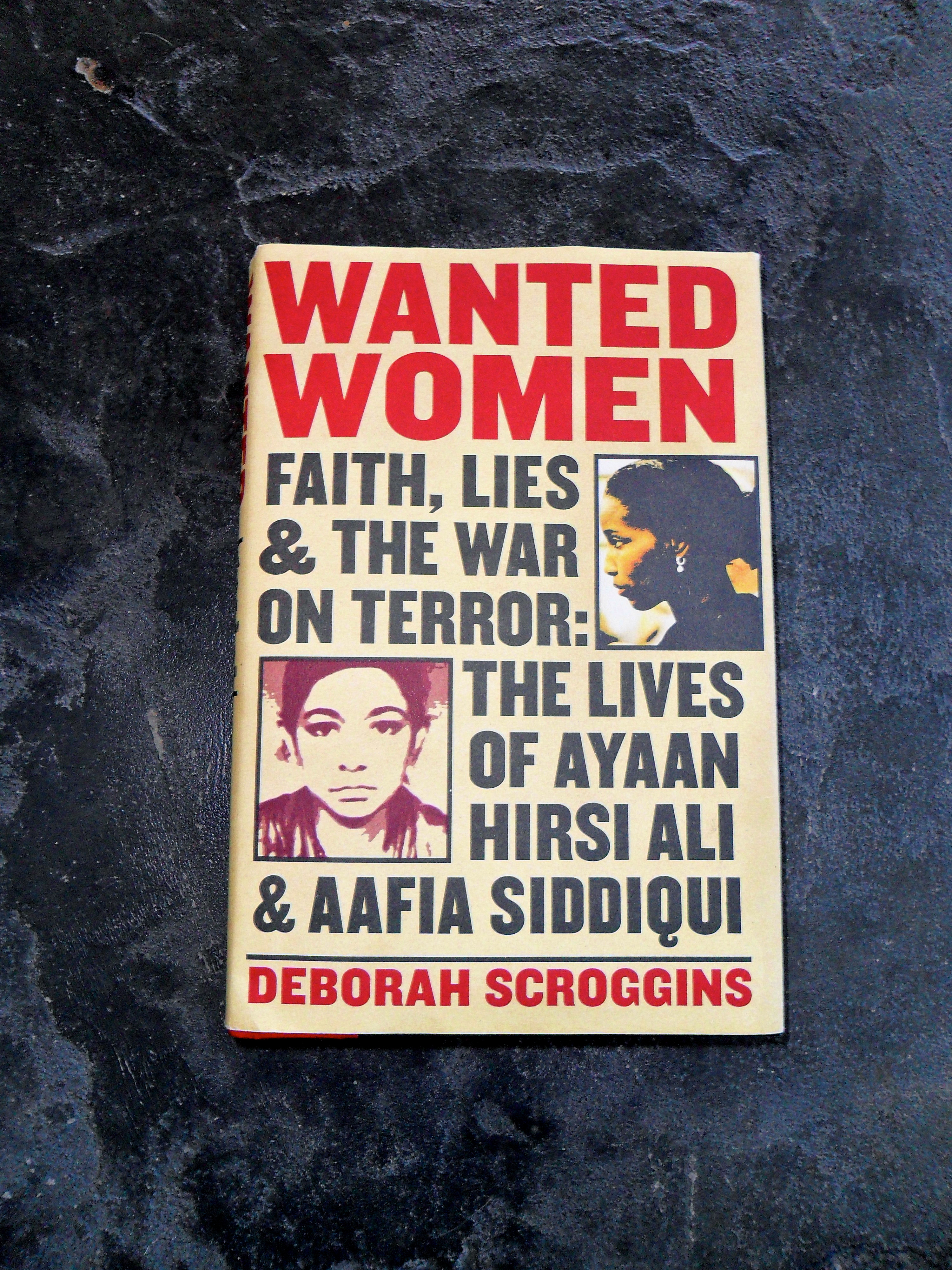
This blog began as a vehicle to “make” me write more and share my writings, e.g. poetry, flash memoir, essays, with others and to learn from reader responses.  Along the way, it morphed into my recipes—starting with friends requesting them, my travels and adventures, inspirations, and thoughts.  This post will morph me into something I fear may be far more controversial, but also feel I must explore. Several years ago, a couple of friends and I enrolled as continuing education students in a course about Islamic thought and literature.  Our hope was to learn more about exactly what the title indicated.  Although I had already read quite a lot of Middle Eastern literature, especially Iranian, and also some Turkish novels as well as memoirs and nonfiction books, I had no one with whom to discuss my readings and thoughts.  This presented an ideal opportunity.  After a couple of weeks, it became quite clear that the teacher had a definite agenda.  Although she never overtly discussed her own religious beliefs, she generally chose parts of readings to discuss to promote a certain, anti-Islamic bias.  We read the Quran (in translation because none of us spoke or read Arabic—mine was a Pakistani translation), Ayaan Hirsi Ali—various works including Infidel, Benazir Bhutto’s autobiography, and short stories by Iranian, Palestinian, and other Middle Eastern authors.  None were from Southeast Asia where the majority of the world’s Muslims live.  None were from India.  When we discussed the Quran, she chose very specific passages that zeroed in on what she perceived to be Islam’s oppression of women and promotion of violence and war.  When the rest of us tried to also discuss passages about ones duty to the oppressed, the orphans, the poor, she would channel the discussion back to her chosen agenda.  Some dropped out.  The rest of us decided to stay because we wanted to read and discuss the writings in spite of the situation.  Over time, our insistence on a broader based view seemed to affect her strong bias slightly.  In the end, she even showed the Iranian movie, “Children of Heaven”, which presents the plight of a poor Iranian family in a very sympathetic light.  The father overtly loves his wife and struggles valiantly to help her and his family in any way he can. This class has led me to further pursue my readings of literature from Iran, Egypt, Turkey, Pakistan, India, etc., both fiction and non-fiction and to learn as much as I can about the past and present as it relates to issues in these parts of the world.  Since then, I have also experienced the privilege of hosting exchange students from Thailand, Brazil, and Argentina.  One of my closest friends grew up Muslim in Indonesia.  I also have Christian, Jewish, Muslim, Buddhist, Pagan and atheist friends from many parts of the world, and some who have little interest in religion. Recently, the librarian where I teach asked me to read Wanted Women, Faith, Lies, and the War on Terror:  The Lives of Ayaan Hirsi Ali and Aafia Siddiqui.  I finished it recently and highly recommend reading this book.  The author, Deborah Scroggins, spent six years following the lives of these two women, including interviewing their colleagues, family members, self proclaimed jihadists, and government officials from several countries.  She delineates an incredible amount of information and data.  If you care about the political and spiritual future of this planet and the ongoing controversies surrounding Islam, Christianity, and Judaism, this book provides an excellent opportunity to explore history and the events of the last 20-30 years, and then to develop your own insights.  My hope is that this post will encourage others to explore new avenues of knowledge and open wider venues of thought that encourage a better, kinder world in which we respect and value each others’ differences.

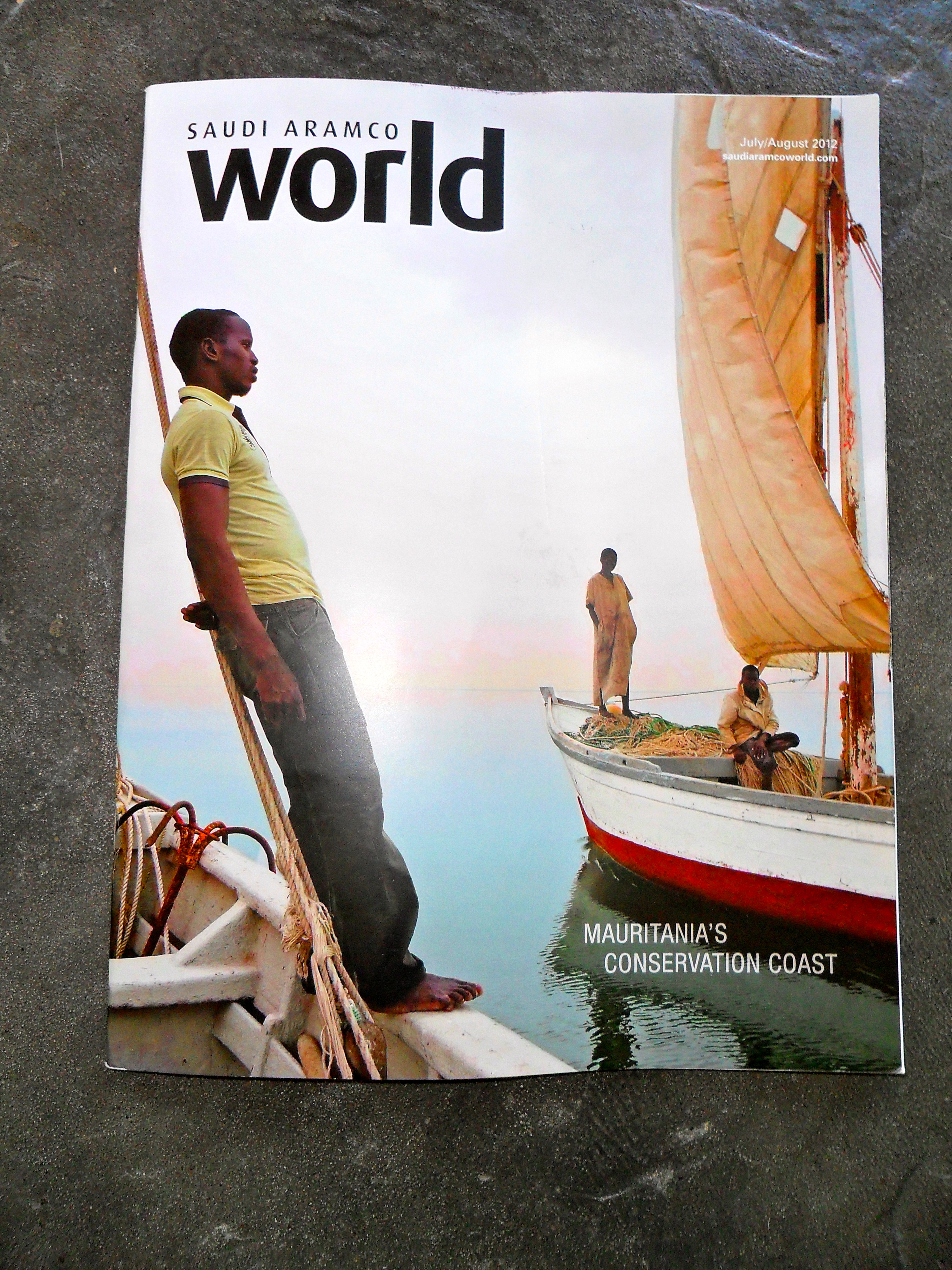
Recommended additional readings:   This is one of my favorite magazines.  It is free and covers art, cuisine, nature, history, literature, geography, just about everything imaginable.  For teachers, they have suggested uses and additional materials at the back.  It comes out six times per year.

If you are unfamiliar with literature from the Arab world, this is a good place to start.  Mahfouz won the Nobel prize for literature.  Although his novels take place in Egypt, the themes are universal.

In spite of the word jihad in the title, this is more of a “fun” read.  The Iranian American author, a journalist, decided to go to the Iran of her roots and work and live there for a while.  This book describes her adventures as a journalist in Iran.

Other books I recommend are Moonlight on the Avenue of Faith by Gina B. Nahai                   (this is one of my all time favorite books), No God but God by Reza Aslan, another Iranian journalist, The Forty Rules of Love by Elif Shafak (this book is a novel about Rumi, whose beliefs Islamists do not find acceptable), and Shattering the Stereotypes:  Muslim Women Speak Out edited by Afzal-Khan.

Another source of information about events, literature, art, etc. in the Middle East is a blog entitled “Sugar Street Review”.  One of their latest blog posts, Top Five Female Arab Writers provides a list of these women with photos, brief bios, and some critique.

The Land in Love with Guns


In the United States firearms kill approximately 15,000 individuals per year.  In Britain, Australia, and Canada, the average is 350 per year.  Spain’s rate is even lower.  In Germany, it is less than 800.  A young person here dies about every 4 ½ hours, shot dead.  The US murder rate is 19.5, nearly 20 times higher that the next 22 richest countries.  In the 23 richest countries combined, 80 percent of all gun related deaths are in the US; 87 percent of children killed are shot by guns here.  In the last 45 years, bullets killed more than one million people in the US.

Gun sales are big money.  More than a dozen hand guns are sold per minute.  One survey indicates that one out of every four US homes possess a gun; another survey says 39 percent.  However, most guns are owned by only a small proportion of the population, gun “collectors” who own an average of seven weapons per person.  Guns are cheap here and bullets even cheaper, about 50 cents each.  The Mexican government contends that our cheap guns help fuel the dreadful violence there which then overflows to here.

In spite of all this, the US murder rate is the lowest in more than 45 years.  The NRA claims more guns equal less violent crime.  The NRA contends that the lower crime rate is the result of less strict gun laws and more people owning guns.  Nevertheless, mass murder occurs on a regular basis.  We mourn, we lament, but nothing changes.

Eventually, another mass murder occurs and the cycle repeats itself.  Why?  Who or what is responsible?  What can be done?  Will more restrictive gun laws help or hinder?  Debates continue; opposing views and answers abound, but the cycle continues.  Will it ever change?

I wrote the above after the last mass murder event.  Nothing changed.  Now the conversation appears more strident, more active.  Apparently, the mass killing of children is more heinous, more scary than the mass murder of adults even if the adults are young.  The NRA advocates armed guards at schools.  How will that prevent mass killings at movie theaters, at malls, at churches, on the street, e.g. the three murders this week in Pennsylvania?

Australia was another country in love with guns, but after a mass killing there, they changed their collective mind.  They enacted strict gun control laws for assault weapons and ammunition.  Could that work here?  I think not.  This is a country in love with guns because the right to own a gun symbolizes  what is perceived as individual rights.  This is a country where personal liberty remains far more important than community safety and social justice.  Until that changes, mass murders will continue.