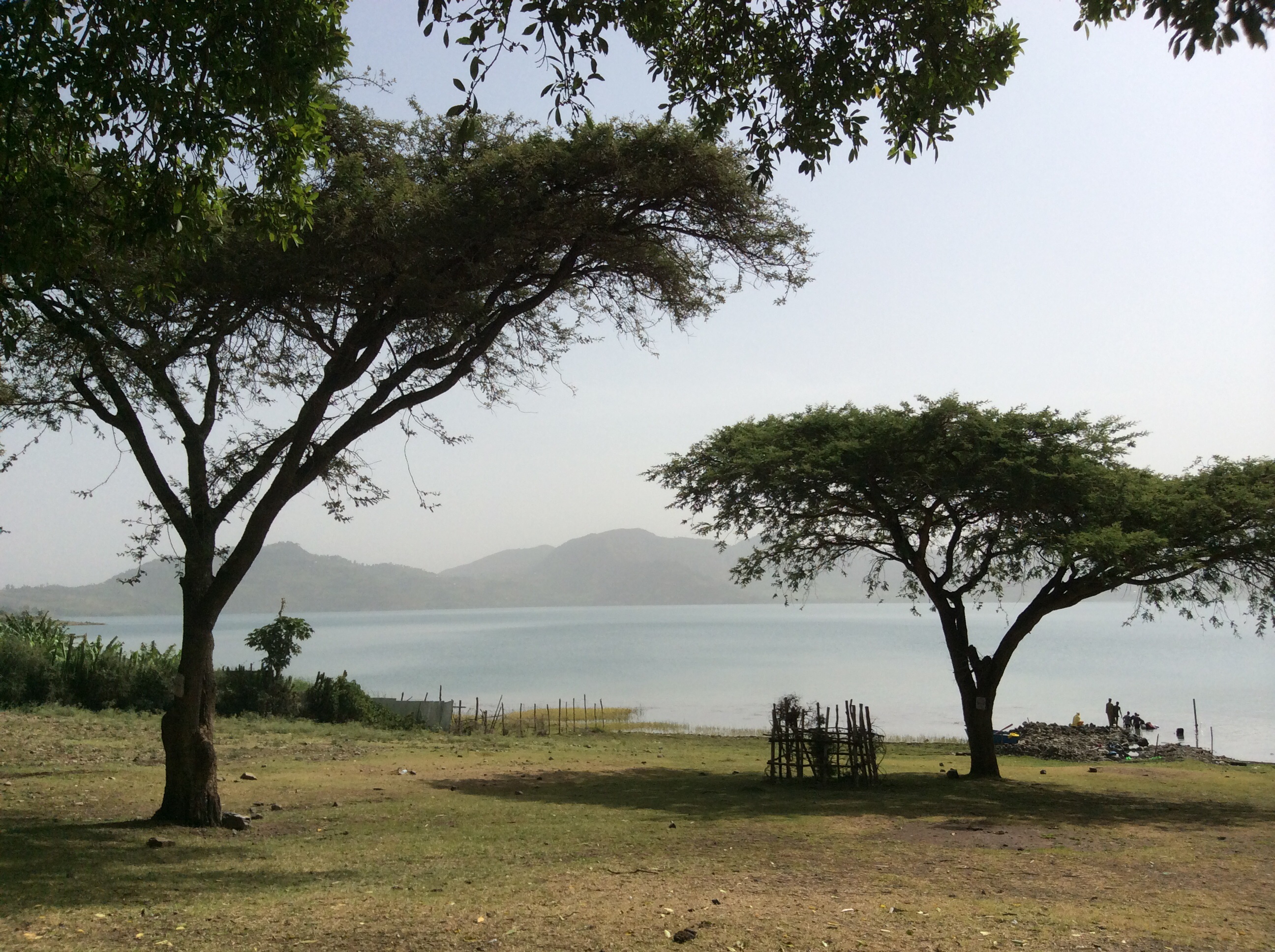
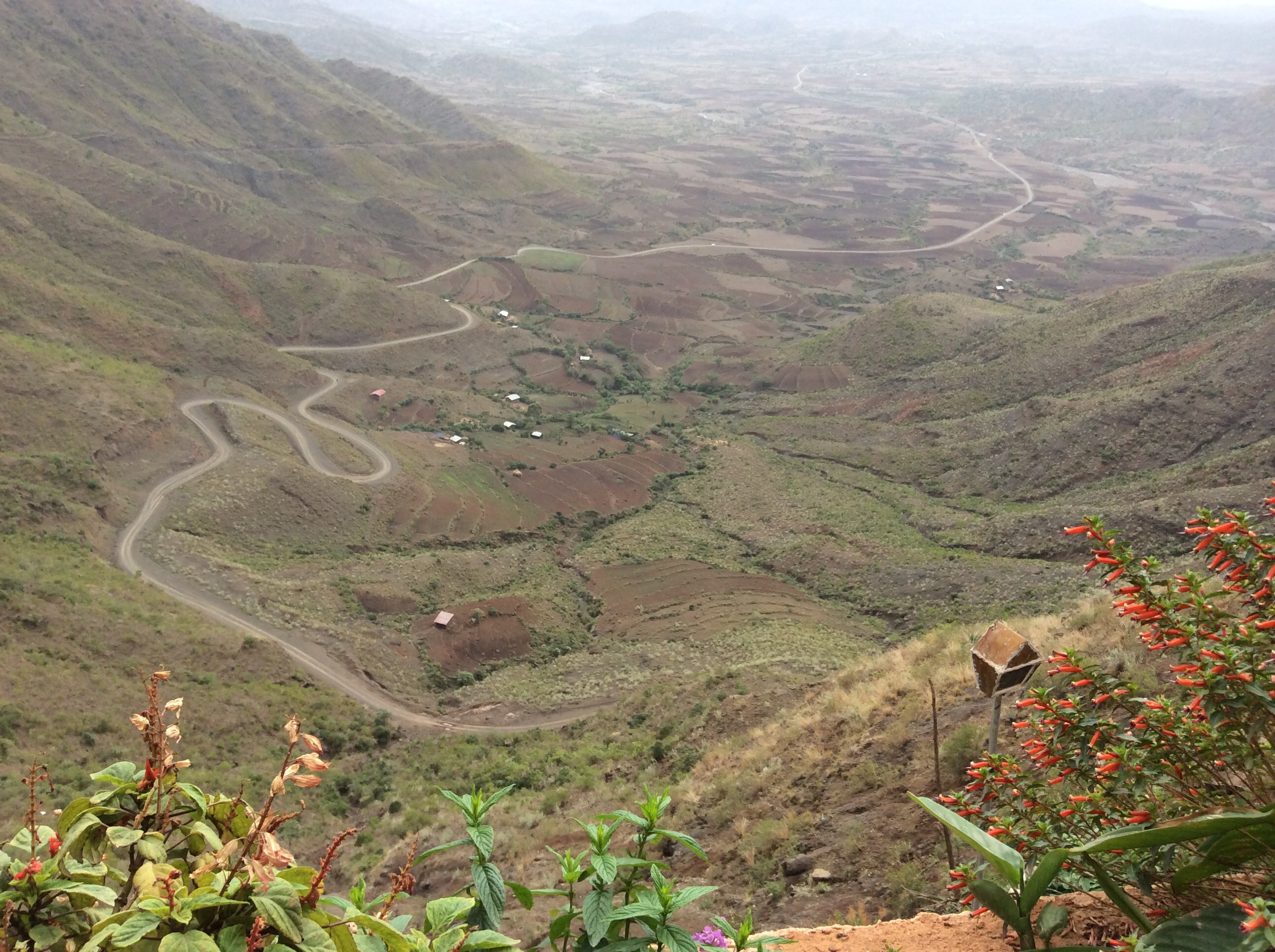
I landed here five days ago. What an amazing country–so ancient and so modern simultaneously. In two days we drove from Addis
Lalibela, the place where 12 churches were hewn out of solid basalt centuries ago. After climbing up and down step cliffs to enter the churches today, I feel exhausted so will post a variety of photos. My ultimate plan is to provide details of the trip when I return to the US.
Uncategorized
A Day in Dubai
Much to my surprise our route took us over the southern tip of Greenland, over Iceland, Copenhagen, eastern
Europe, Turkey, and Iraq. We landed late here late this morning.
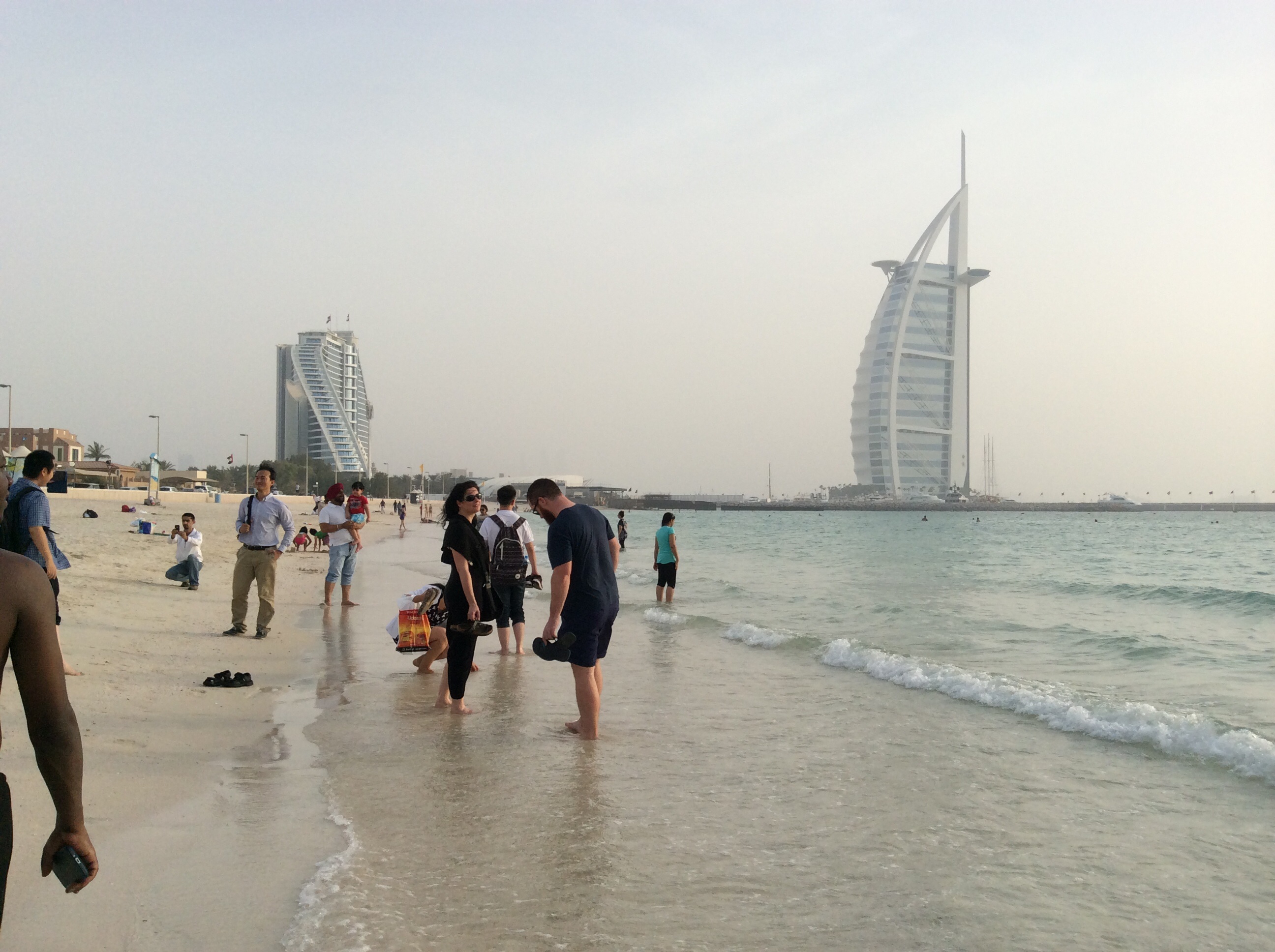
From one to five we took a tour of the major sites. Photos follow. Because I have limited wifi time, I will post photos and explain more later if I run out of time. As a person not particularly fond of cities, I did not expect to like Dubai so much. What an amazing city. One of my favorite stops, Saga, displayed amazing crafts, clothing, rugs, art work, all from this part of the world. However, we were not allowed to take photos there. Some of the photos were taken from the little tour bus. The humidity surprised me. If you have been to Houston in the heat of the summer, well, it is more or less like that with no breeze. It was also very hazy. We did have a chance to stick our feet in the Arabic part of the Persian Gulf, the visit the mosque modeled after the one in Istanbul, see the world’s fourth tallest five plus star hotel, see the Atlantis resort at the end of the island built in the shape of a palm tree, stop by the aquarium in Dubai Mall and see the fountain show in front of it. Our final destination was the Gold and Spice Souq.
Up, Up and Away
Except I won’t be in a balloon. This will be very short because I leave my house at 5 in the morning headed to the airport. Board a plane for Dallas at 6:20 or so. Then at 12:25 board Emirate Airlines to Dubai. The longest flight I previously experienced I think is from Tokyo to San Francisco. This flight to Dubai is 14 hours and 45 minutes. We will spend a day in Dubai and then head to Addis where it will be approximately 35 degrees cooler. The temperature in Dubai the last time I looked was 109. With any luck, my next blog post, assuming I get Internet to work there, will be a Day in Dubai.
Soybeans
SOYBEAN CHECKOFF
If you grow soybeans, there is this program–not sure what else to call it–named the Soybean Checkoff. Basically, when you sell soybeans, you get docked a few cents per amount sold to advertise, etc. soybeans. I received my latest issue of the Lonestar Soybeans recently. For those of you reading from afar, Lonestar refers to Texas. It is the Lonestar state and our flag has one lone star on it. Back to soybeans. First, there is a report on soybean production issues. Research is to the point in terms of soybean physiology that they are about to zero in on optimal planting time, conditions, latitude, etc. Here in this part of Texas, generally no one grows soybeans. We grow irrigated corn and wheat, milo, sorghum, and crops that do not require as much water as soybeans.
EXPORTS AND ETHANOL
I grew up on a farm where we raised both soybeans and corn–I still do. We raised some wheat also; tried milo, but it was too wet in Missouri. Never thought a lot about where my soybeans went after I sold them so I learned something new today. Compared to all other crops, we export more soybeans than anything else–to the tune of 20 billion dollars a year. We also export a lot of wheat–about the same as soybeans, but soybeans trump wheat if you include soybean meal and oil. Meanwhile corn exports have dropped steadily since 2007 or so. Why? Ethanol.
GMO
This report does not tell the reader some other notable facts. While almost all corn grown commercially in the United States is GMO, such is not the case for soybeans. The big market for soybeans is Asia and at least China will pay more for non-GMO soybeans. 60 per cent of all soybean exports go to China. For those of you out there who are adamant about GMO, perhaps the solution is demand for non-GMO. Currently, the only way I know to get non-GMO corn is to find a company that sells heirloom seeds and plant and harvest the corn yourself or find a small farmer who does this.
A Lonely Horse
Three months ago, Cool, a horse I raised, died suddenly from acute colic. Cool was a friendly, inquisitive character. He investigated everything, knew when you forgot to shut a gate totally, knew how to open things, never missed anything that was occurring. Fun and funny and well loved.
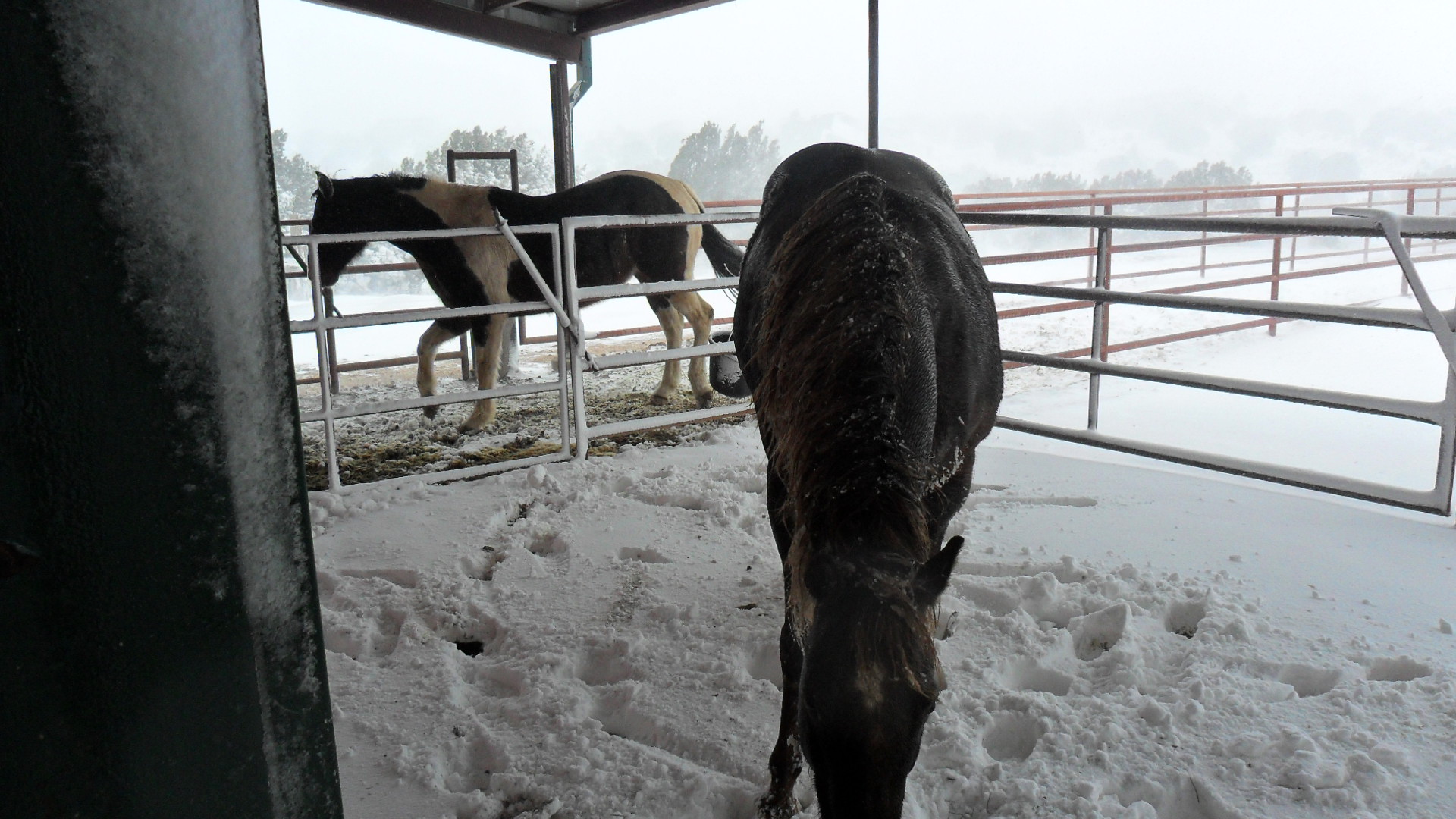
So well loved in fact that the photo on the back of On the Rim of Wonder is of me holding his bridle while my friend’s exchange student from Austria, Klara Kamper rides him. Apparently, I am not the only one who misses him. Rosie, my other horse, decided this past week that she needed to be as close to the house as possible so she could see me through the window. For the last several days, when I awaken, there she is complete with her nose prints on the window.
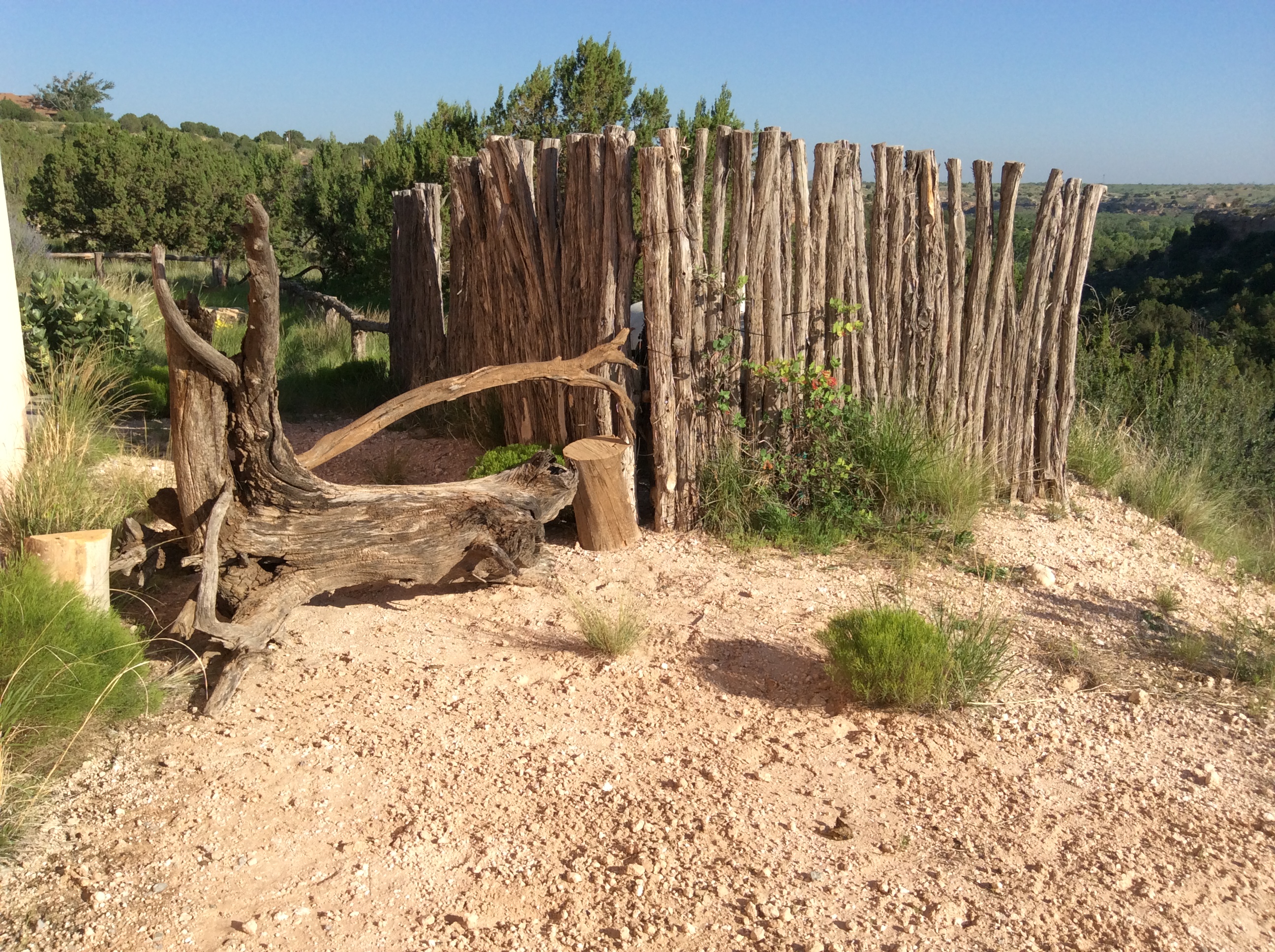
This morning I decided this had to stop for several reasons, one of which is that she is trampling all the flowers and grasses I have tried to grow in this caliche area. It is also not easy to get her to leave. I have to hike around the house and drive her reluctant self out along the edge of the canyon. A fence around a propane tank covers part of the width between the house and canyon–the area through which she walks. About fifteen feet in front of it a large old log sat mostly for decorative purposes. It occurred to me that I could possibly move this back between the fence and house. It is so heavy that to do so I had to pick up one end and move it six inches then go to the other end and do the same. By doing this repeatedly, I did manage to move it. However, a small gap on either side still existed. Since horses can jump, she could jump the foot or so over it if determined. I found another dead piece of juniper to put across the top and two old log pieces to put at either end. Now I can only wait and see if this deters her.
When I return from my trip to Africa, I think I must find another horse to keep her company. In the meantime, she must endure sadly. Here are some photos of both of them when Cool was still alive and well.
While writing this, I heard neighing and checked to see. Poor, sad Rosie stood at the other end of the obstacles I set up. It was as if she were calling to me to please, please, please let her get back by the house. I ignored her pleas. Eventually she gave up and walked away. Now I am just hoping that she does not find the little walkway by the garage that goes to the front door, which I frequently leave open for the summer breeze. She would just walk into the house.
Milkweed and Monarchs
Because I belong to the local chapter of the Native Plant Society, I notice native plants more, try to learn their names, and even find out if they possess medicinal uses. We decided to adopt a theme for the year 2014, milkweeds. Why milkweeds? They are the primary food for monarch butterflies which are in extreme decline. Why the decline? Pesticide and herbicide use plus overwhelming habitat loss, especially along bar ditches and in the area of Mexico to which they migrate annually. This past winter instead of hundreds of trees in Mexico covered with monarchs, there were only twelve. Yes, only twelve. Why do herbicides cause a problem?? When the butterfly larvae eat milkweed sprayed with herbicide, they ingest that herbicide toxin.
Monarchs are an ancient species. They have been around for over 50 million years. Monarchs are the only insect species to migrate 2500 miles annually. Monarchs go through four generations per year. The first three generations hatch and live up to six weeks. The fourth continues to live for six or eight months. They taste with their feet. Monarchs have special meaning for Mexicans because they arrive in Mexico at the same time as the Day of the Dead.
In the Panhandle of Texas, four common milkweeds grow: Asclepias tuberosa, Asclepias asperula, Asclepias latifolia, and Asclepias verticillata. The name Asclepios is derived from the Greek word, Asklepios, the Greek god of medicine and healing. I find only two of these here where I live, latifolia and asperula.
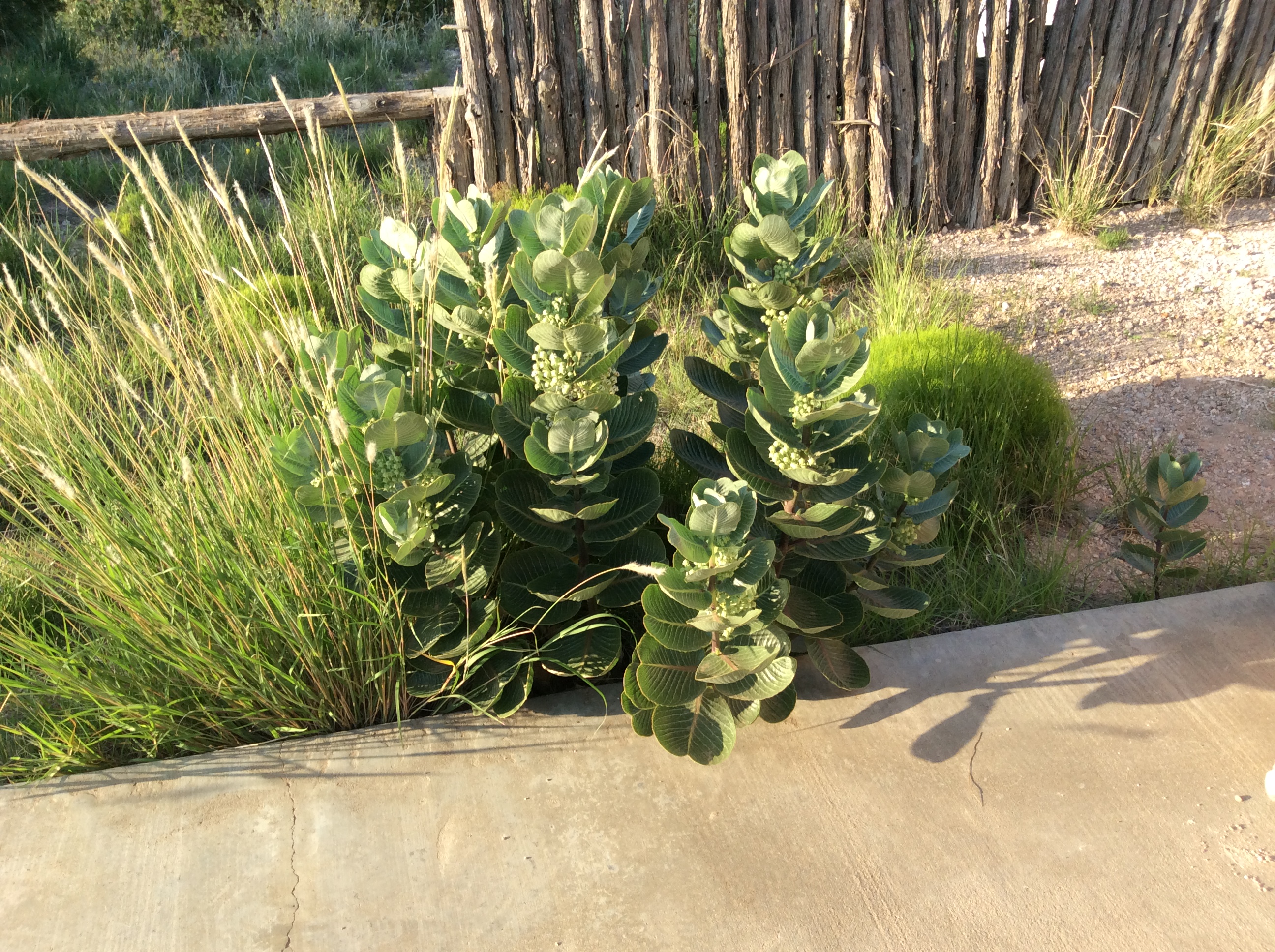
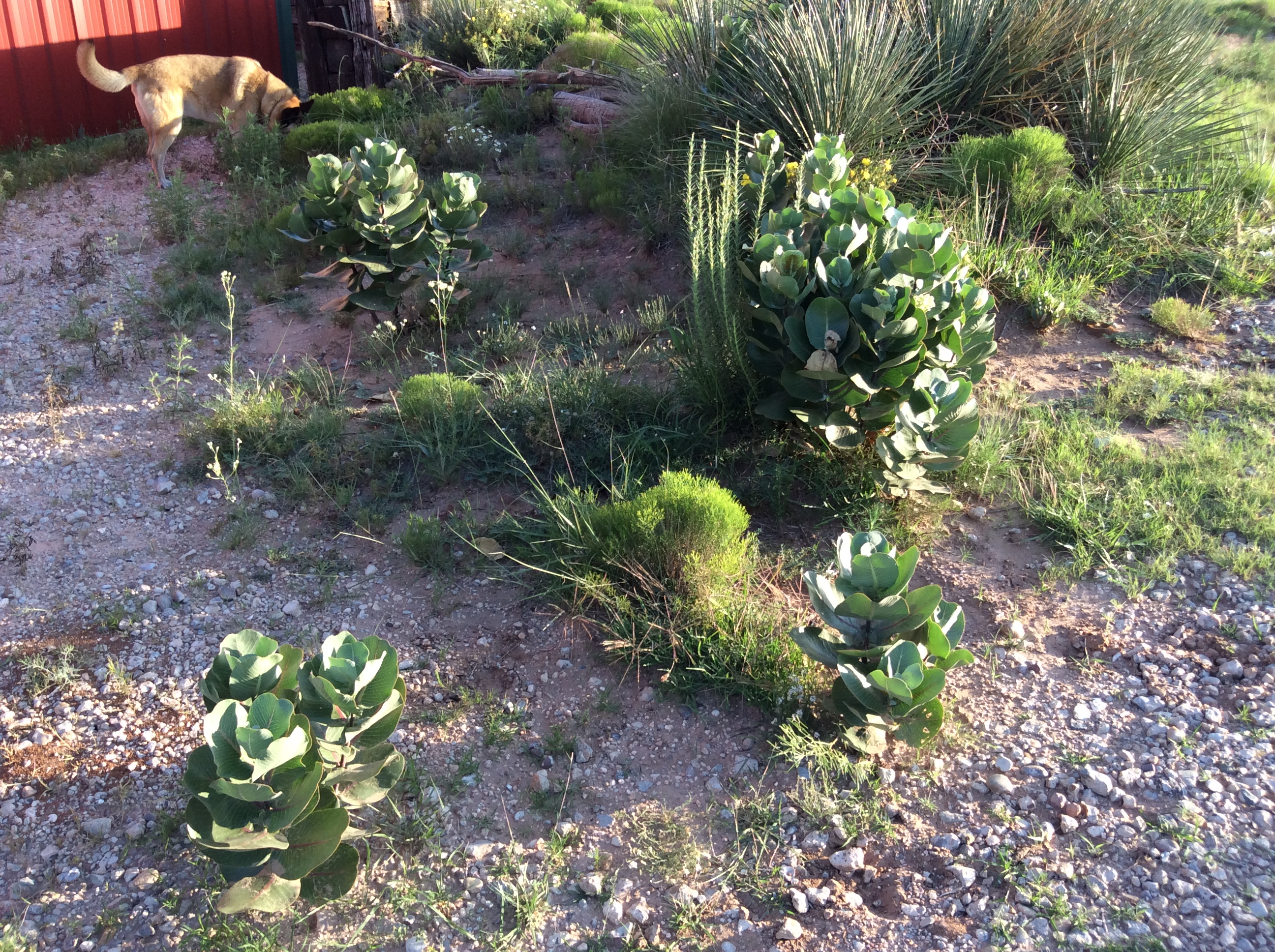
The top photo and the one immediately above are of asperula, more commonly called antelope horns. They are important hosts for butterflies. When discussing butterflies of any species, it is important to note that butterflies require two types of plants, host and nectar. This plant provides important food for larvae.
At least where I live, the more common–by that I mean it grows anywhere and everywhere, even in the driest caliche soil–is latifolia. However, I have never seen a monarch on either the blossoms or the leaves. When in full bloom, latifolia attracts giant (as in several inches long) black and orange wasps which seem incredibly non-agressive.
This poor latifolia specimen barely hangs on next to the hydrant by the barn.
If you want to try growing milkweed yourself and you live in the Panhandle, seeds and plants can be purchased from Canyon Edge Plants and Panhandle Greenhouses. Obtain free seeds from Livemonarch.com. Wildseed Farms in Fredericksburg, Texas, also sells seeds. If you want butterflies, do not use pesticides and herbicides. Contact me if you want me to publish the “Butterfly Attracting Plant List”.
Walking in the Wild–Part One
Toward evening after it had cooled down from the mid 90s, I decided it would be a good time to practice with the camera on this iPAD mini. Because of all the rain, everything looks like desert plants in Ireland. I am still learning to type and blog on this tiny keyboard and trying how to space the photos on the iPAD. I must figure it out if I want to post from Dubai and Ethiopia next week. I will not be able to do what I did a couple of days ago when I went to the iMAC and fixed it.
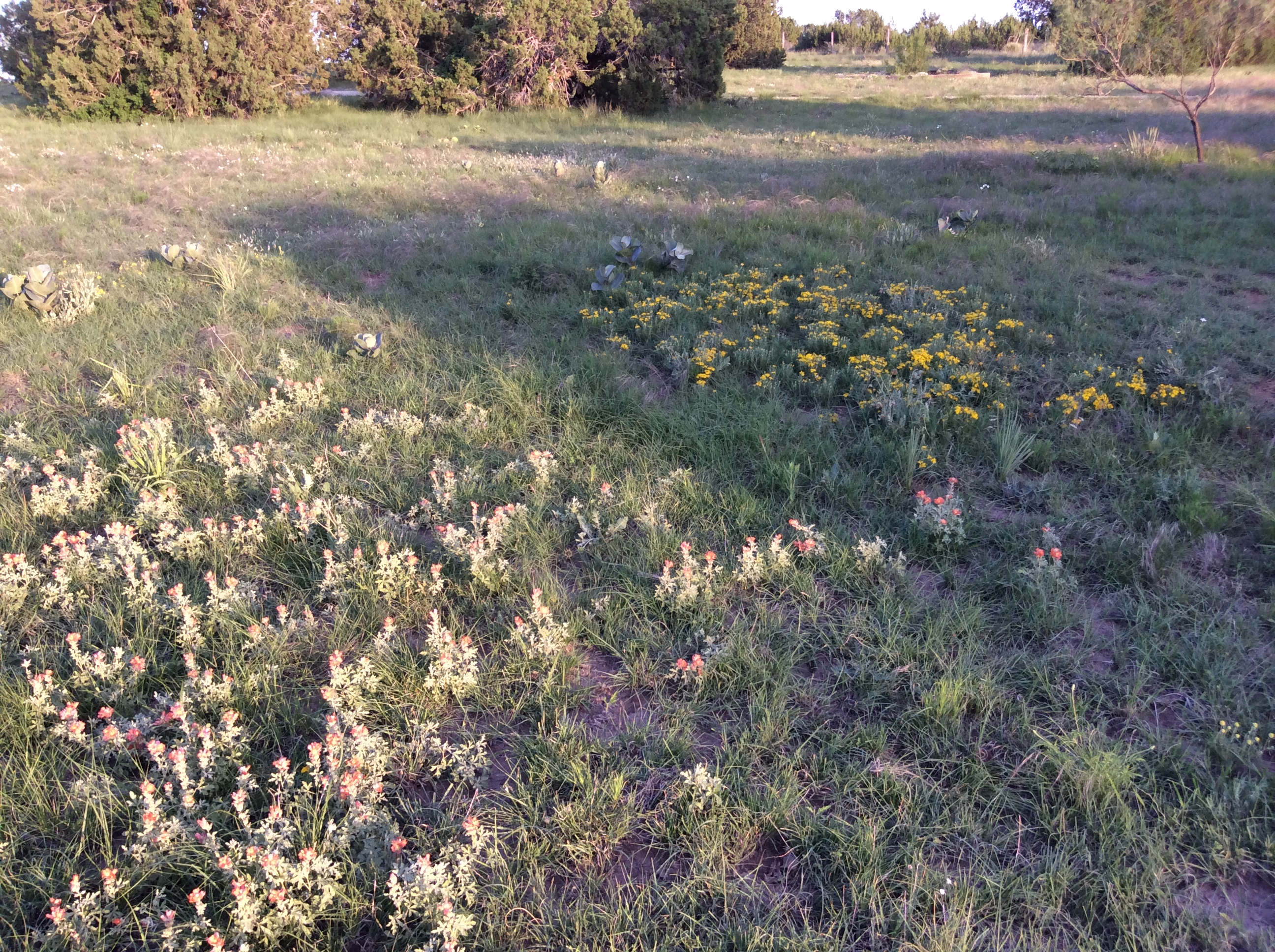
The following photos were taken on my stroll. I know most of the wildflowers: blackfoot daisies, winecups, chocolate flowers, sundrops, plains zinnia, several kinds of native grasses, milkweed, at least two kinds of prickly pear cactus. If I can get the photos to space as I want, I will identify what I know as I go.
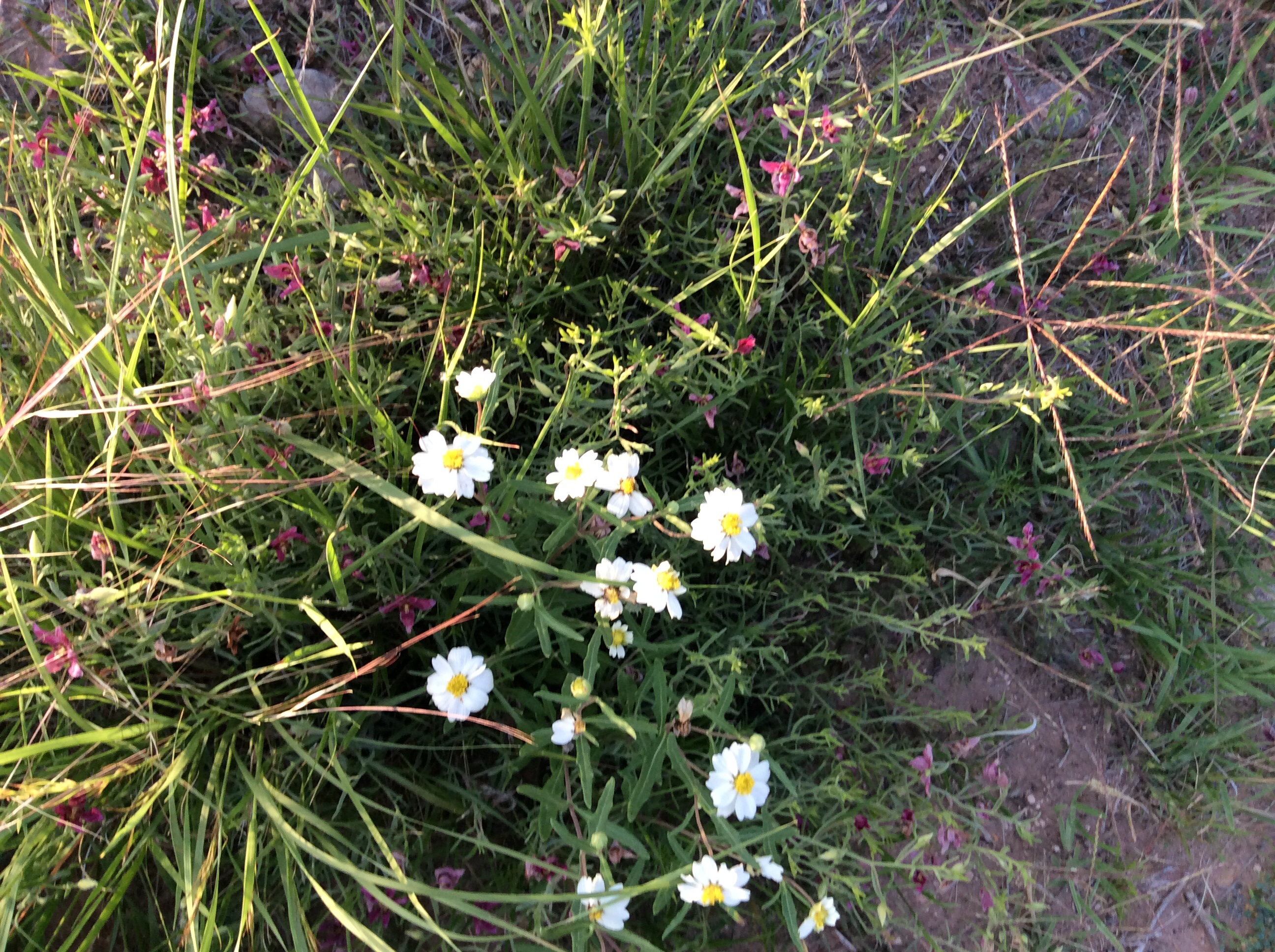
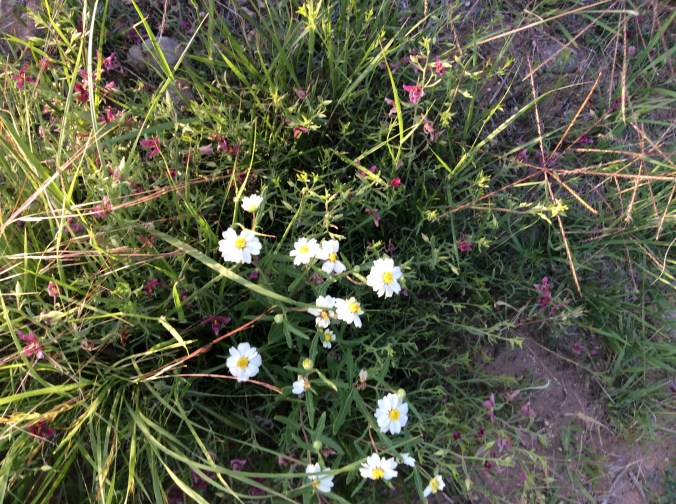
The flowers near my front door. The flowers below are blackfoot daisies and I think winecups. You will see a lot of blackfoot daisies in these photos..
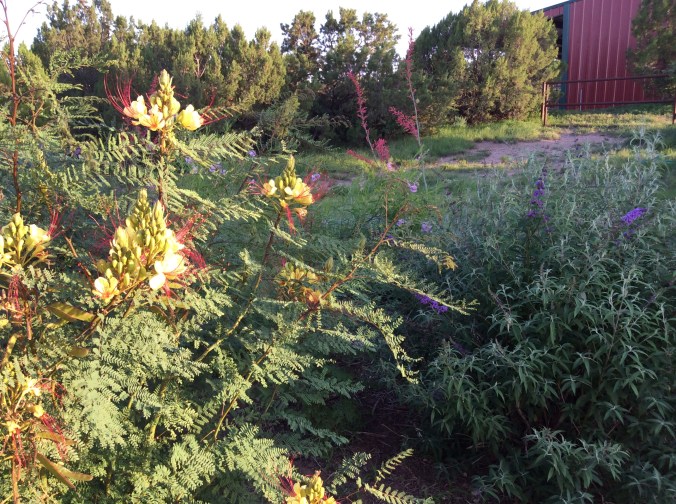
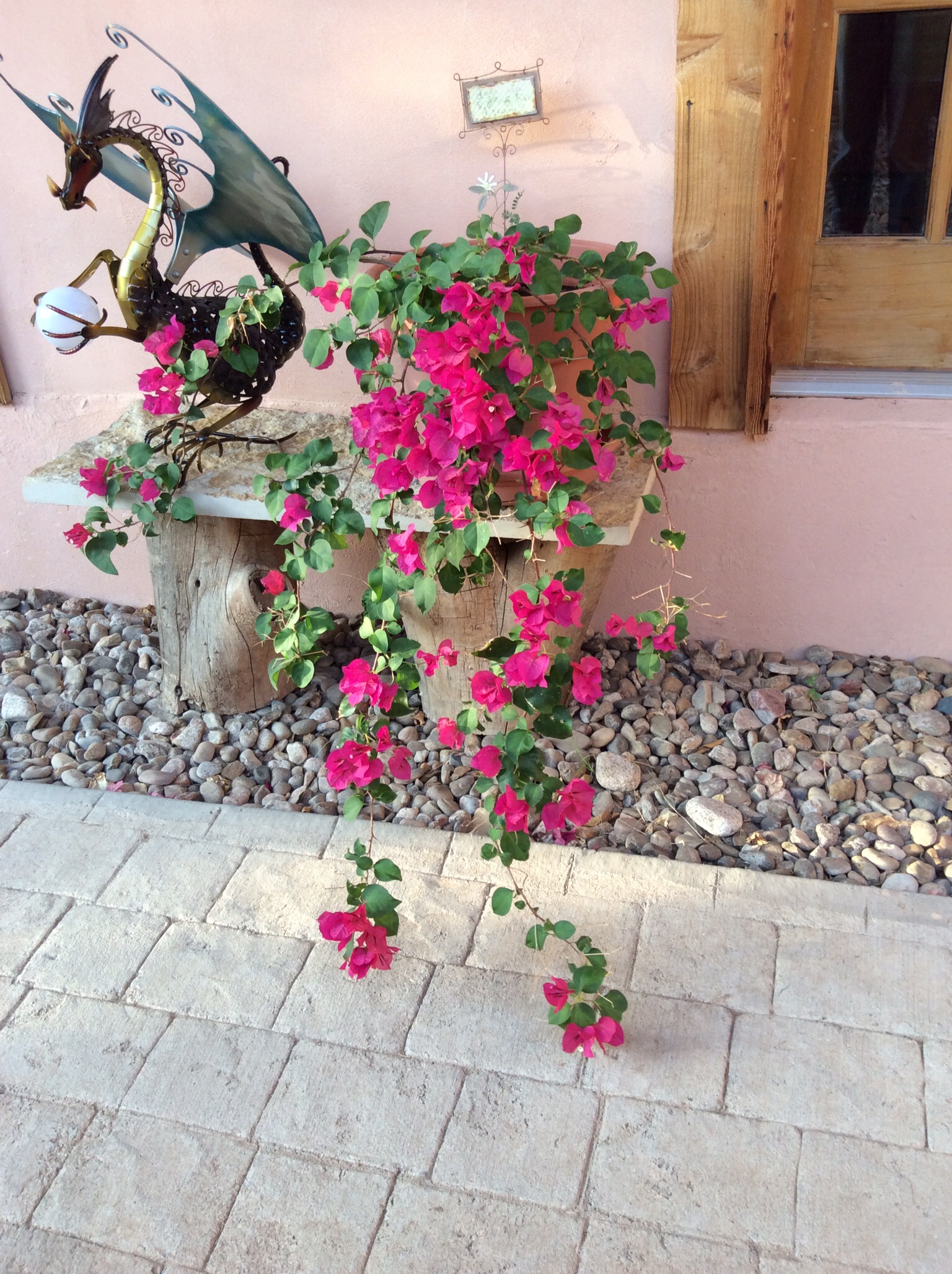
The flowers in the photo below are desert (sometimes called Mexican) birds of paradise, catmint, and lavender, none of which are native, but grow well here.
More Mexican birds of paradise, butterfly bushes and red yucca.
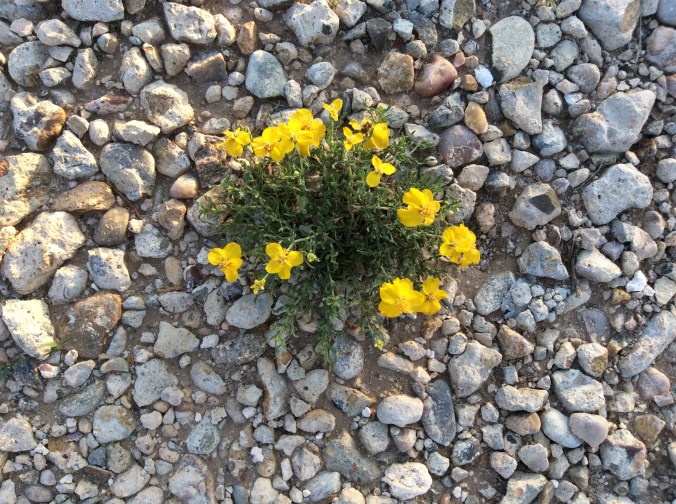
Plains daisies and they usually grow in clumps over a wider area as in the photo below, but this little one decided to grow in the middle of the drive and I do not have the heart to destroy it.
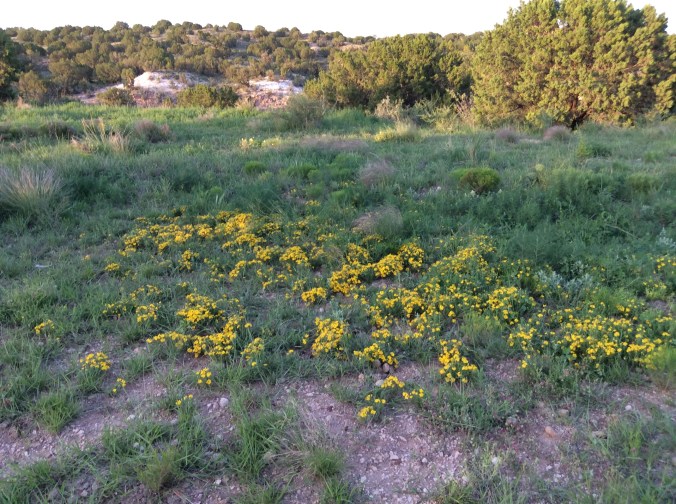
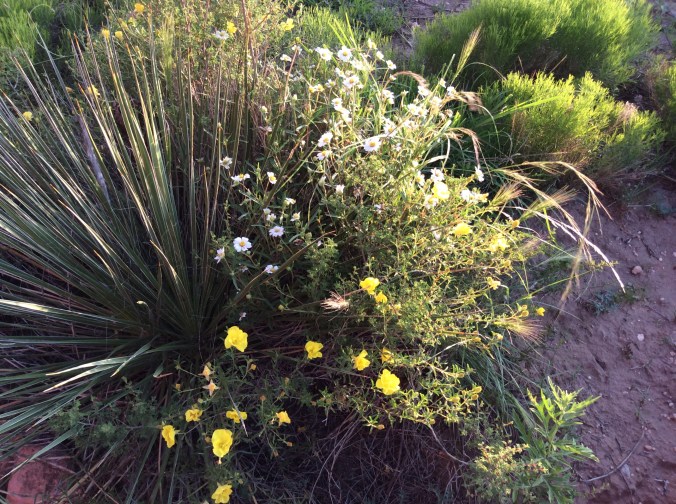
Blackfoot daisies and sundrops growing next to a yucca plant.
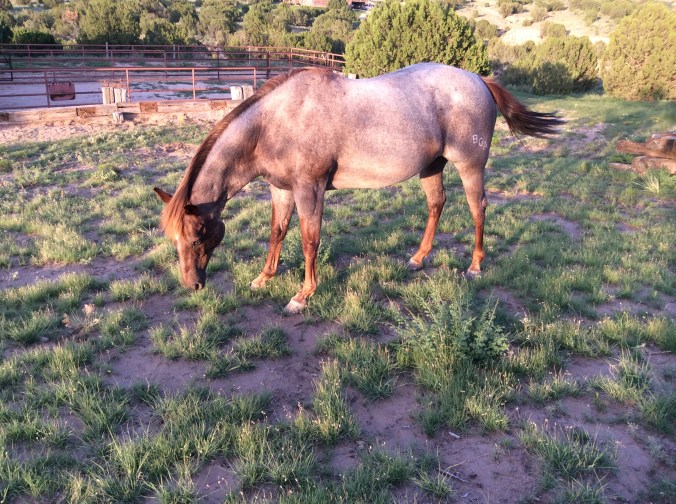
Rosie getting fatter and fatter on all the grass.
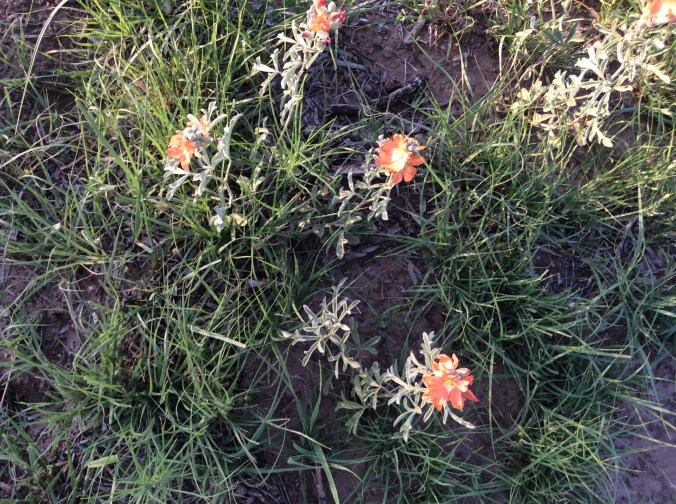
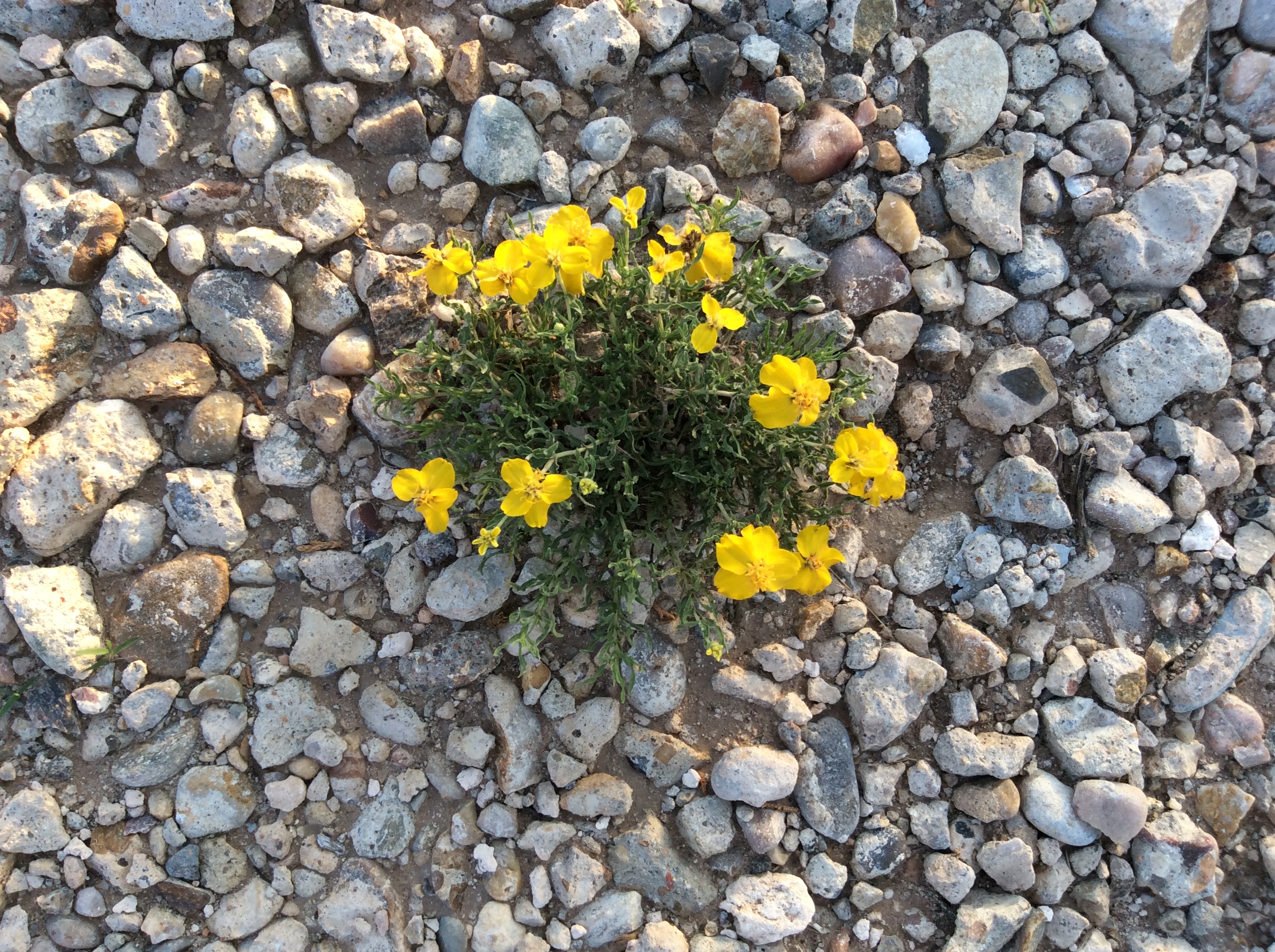
One of my favorite wild flowers, globe mallow. They are tiny but such a glorious, bright color.
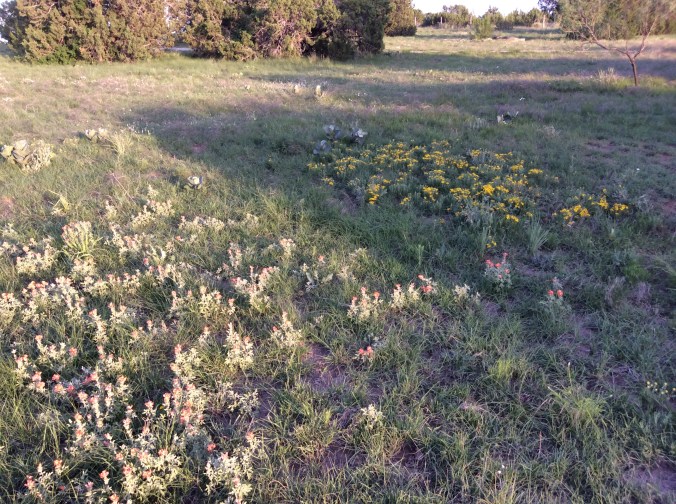
A field of globe mallow and plains zinnia.
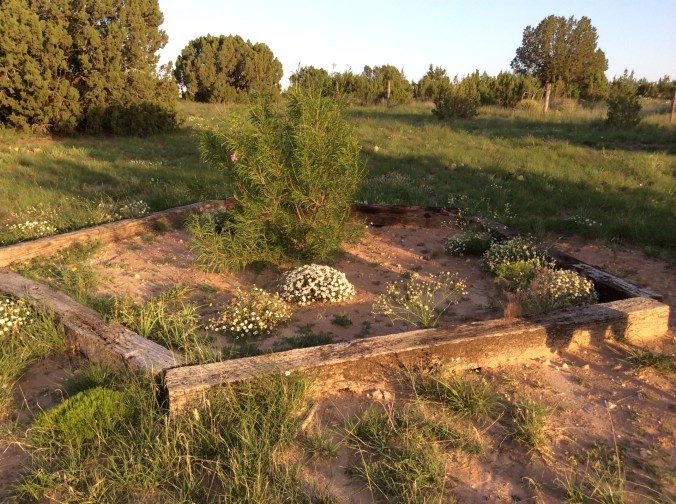
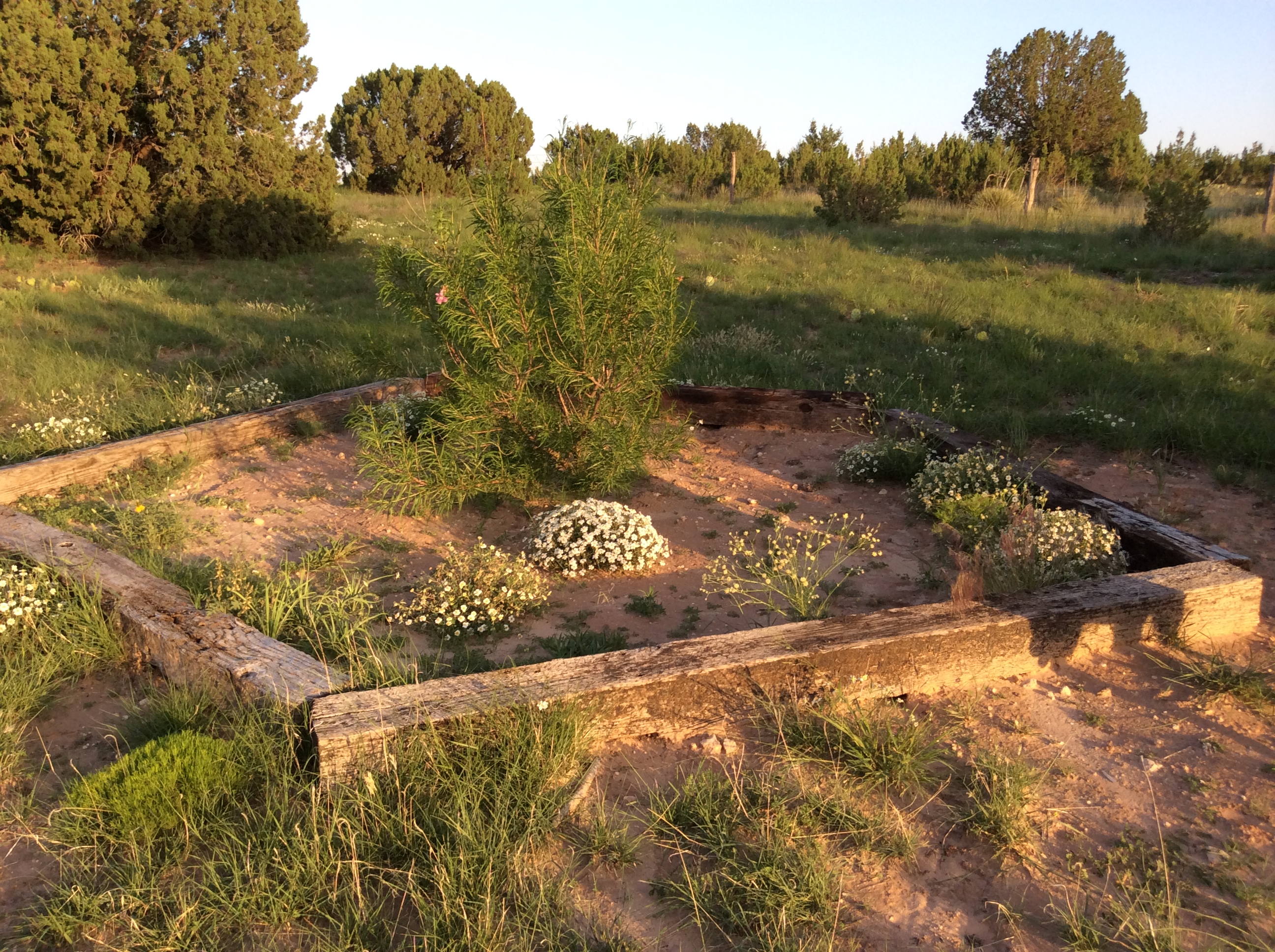
Star’s gravesite. I planted the desert willow, but all the wild flowers are filling in by themselves. I actually tried planting some flowers here, but the bunnies ate them.
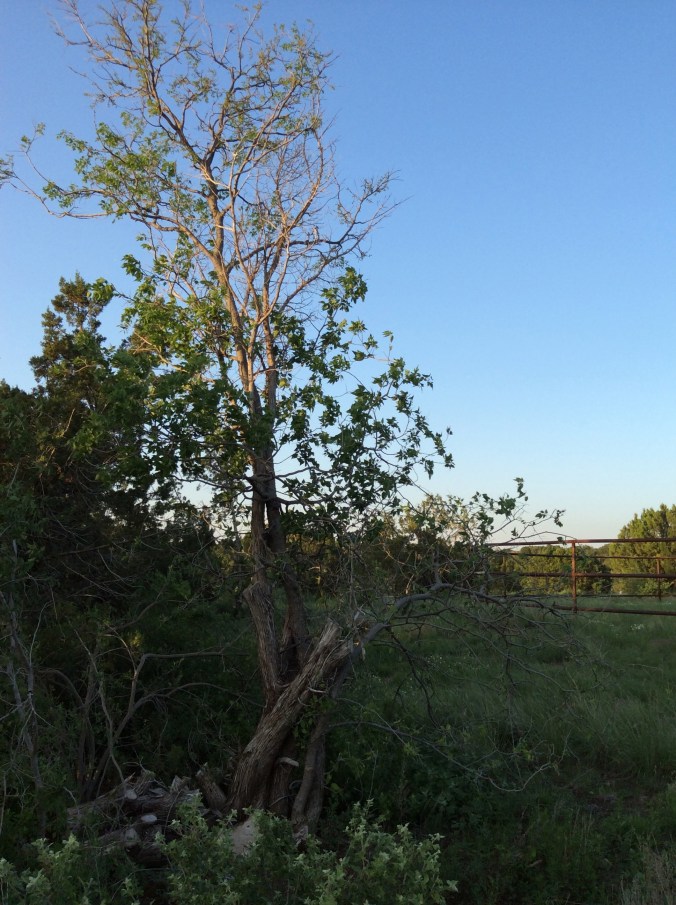
Two weeks ago, I had almost decided to cut this tree down because it appeared totally dead. I tried to break off a twig, but it only bent, indicating it was still alive. I thought to my self it might recover if it rained soon enough. And it did–not quite up to its form a year ago, but vastly improved.
More photos from walking in the wild tomorrow. Because I live where I do, I cannot get the speediest Internet and it is very, very slow going tonight.
Learning Something New Every Day
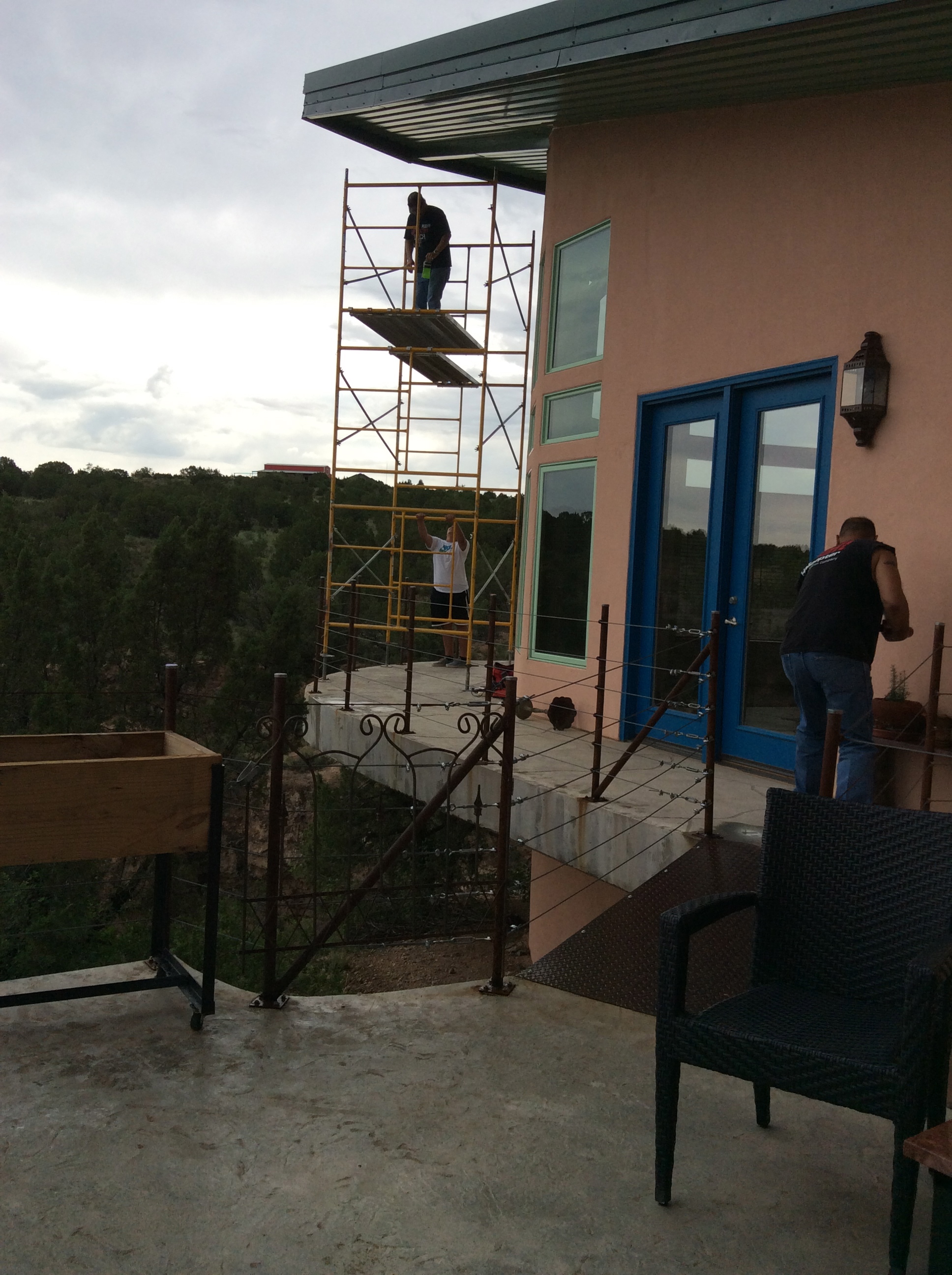
My goal recently has been to learn to use my iPAD as much as possible before heading to Ethiopia a week from today. At this time next week, I will be on a 14 hours and 45 minutes flight to Dubai on Emirate Airlines. That gives me about six days to keep learning. With the help of my more computer literate friends, today I learned how to download photos from my iPAD to my iMAC and to connect my iPAD to iCloud. In the midst of all this, guys are working on my house roof because when it rains just the right direction with the wind blowing, it leaks in particular places, depending on the direction of the wind and rain. Here is a photo of them up high in the sky working.
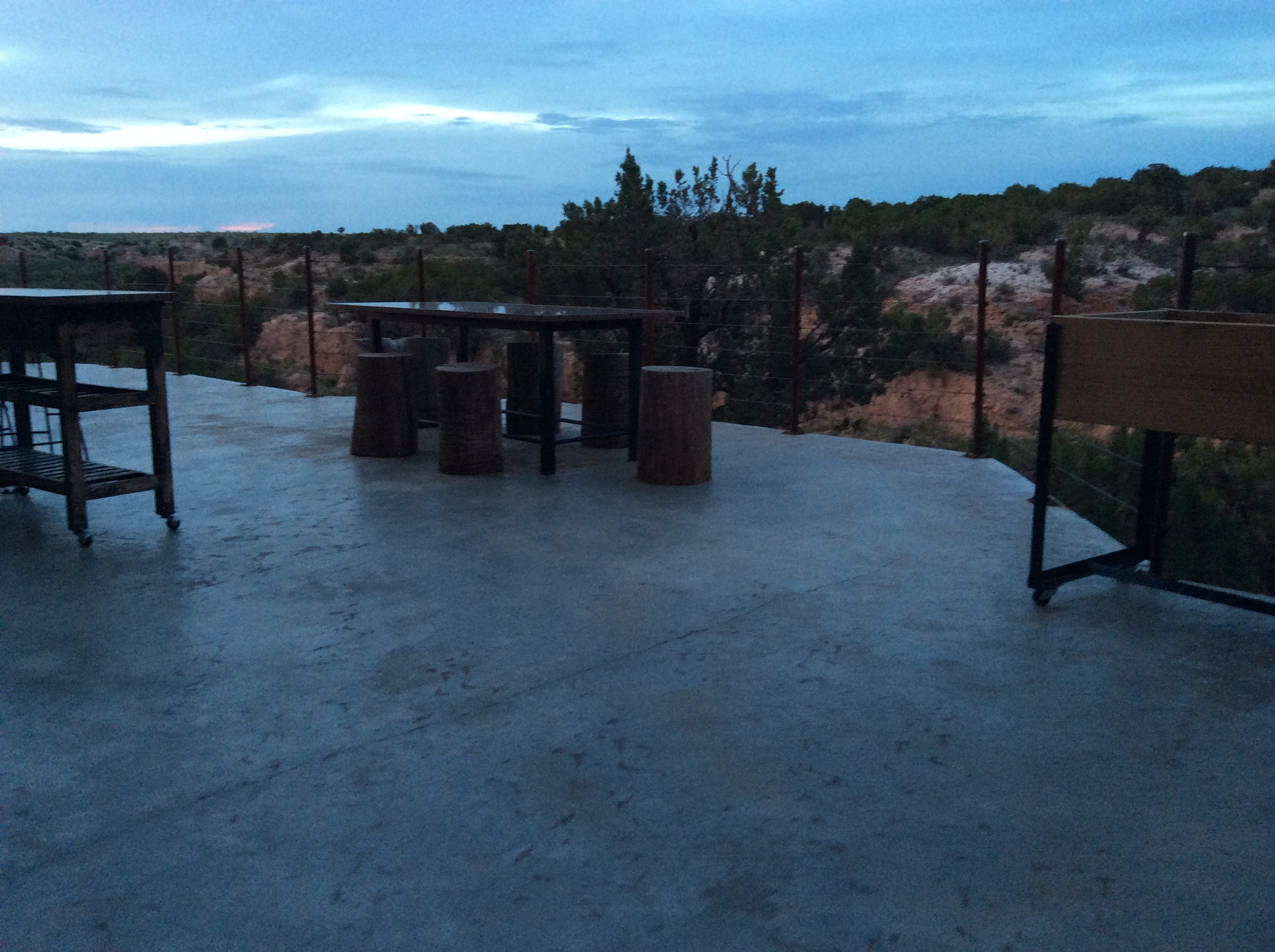
Yesterday, I decided to play with my iPAD camera so I can take some good photos as we wander around Dubai and Ethiopia and post them for all of you to see. I am reading the 2012 Man Booker winner, Bring Up the Bodies by Hilary Mantel. Henry VIII is not someone I would want to like me. Once he was done with one wife, he had her executed or divorced. The only exceptions are Jane Seymour, who died two weeks after giving birth, and his last wife, who outlived him. I read while on my patio. The evening view struck me as very photographable so I took several.
The view from where I sat reading.
The sunset from the edge of the patio–two views.
Of course I knew about Henry VIII more or less, but wow, he and Cromwell….This book is sufficiently fascinating that I may download (the next thing I am going to learn to do) Wolf Hall, the book that you are supposed to read before you read Bring Up the Bodies, onto my iPAD so I can have something to read on that long, long flight. People who have flown Emirates tell me there will be about 60 movies available, but I may have to see that. Really?!
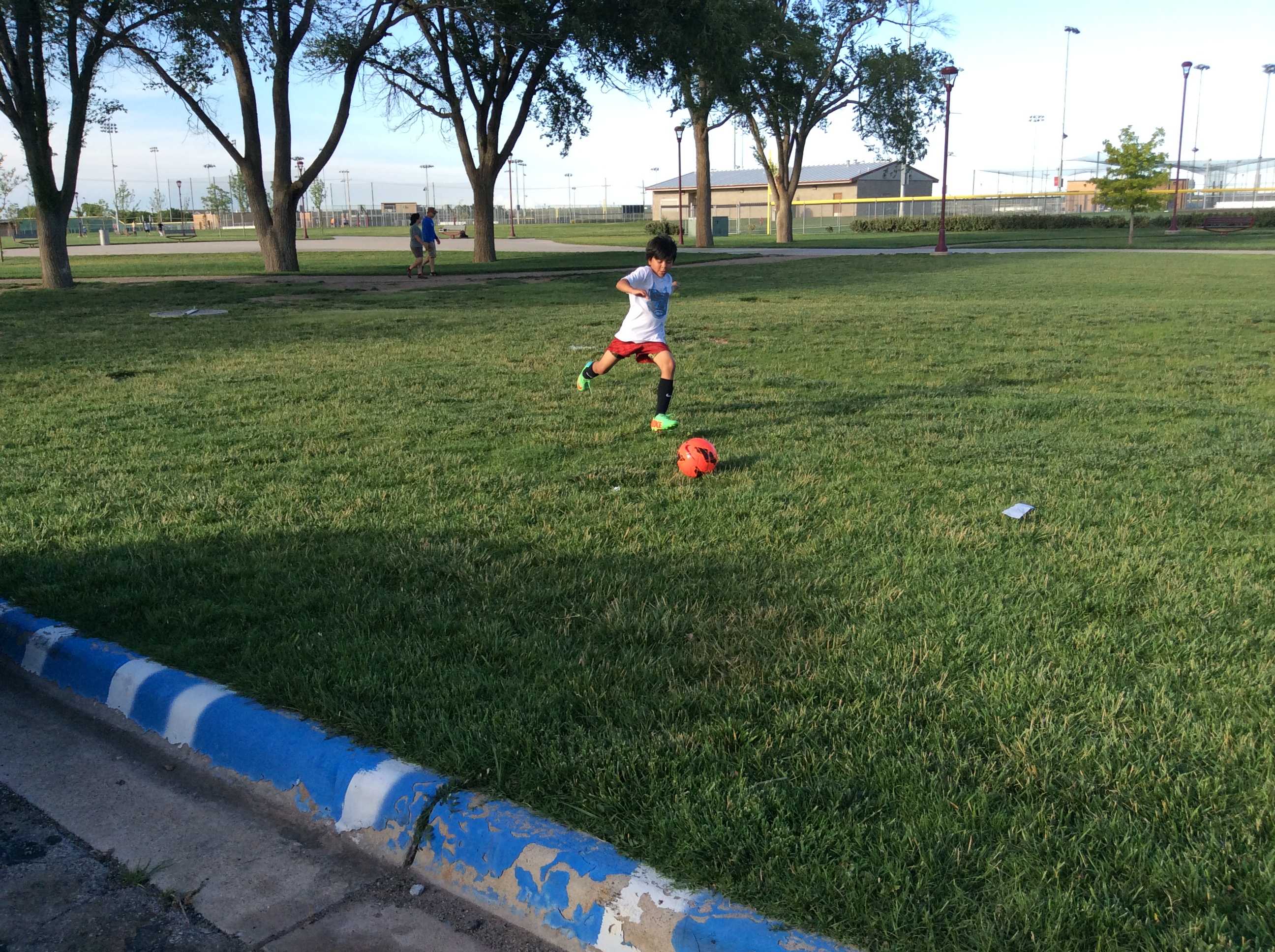
Yesterday, I also took my grandson to his soccer lesson at the WTAMU soccer field. It has rained so much here that once when I thought I was just walking through grass, I ended up wading in the water.
Doctors, Climbers, and Friends
Several friends came over for dinner tonight. We still have enough left over wine from the wine tasting to last for weeks unless I keep inviting people over who drink wine. I served salmon teriyaki with crystallized ginger, jasmine rice, roasted vegetables, and salad–see previous posts for recipes. We also feasted on Ethiopian bread given to me at an Ethiopian party last night. Three of us in the group are headed to Ethiopia in ten days. Two of the group are doctors, ones wife is his office manager, which leads to the first topic.
Both of these doctors are from Southern Hemisphere countries. Both trained originally there and practiced there. One practiced medicine in several African countries before coming here. Basically, they had to start over here and go through most of medical school, residency, examinations, everything all over again. The more I think about this, the more I wonder if going to a doctor who did all this twice is not a better choice when you pick a doctor. I liked school; in general, I liked studying. Would I want to go through all that twice. Hell, no! Really. Their good humor, dedication, and persistence amaze me.
The morning after the wine tasting, I looked over the edge of my balcony, down the cliff, and to my horror saw all these full bottles of water. Since Thursday, when I discovered them, I have been trying to think how to get them out of there before the next rain storm comes and they wash even further down the steep slope. Friends to the rescue. I could not believe how Hernan descended the gravely slope. He confidently walked down it and around, picking up bottles, putting them in a plastic bag. He made it look easy, like he was walking on flat land. I finally had to ask how–I was down by the edge but not really climbing up and down. He informed me that he grew up in the mountains, the Andes. We all watched in mild astonishment at how easy he made it appear.
A good day to begin a good week I think: this morning people who bought my book telling me they love it, one telling me her mom grabbed it and she has not been able to even take a look, friends over for dinner, the bottles cleaned up, and the possibility of showers.
Rescue Horses and Book Signing–the Real Deal
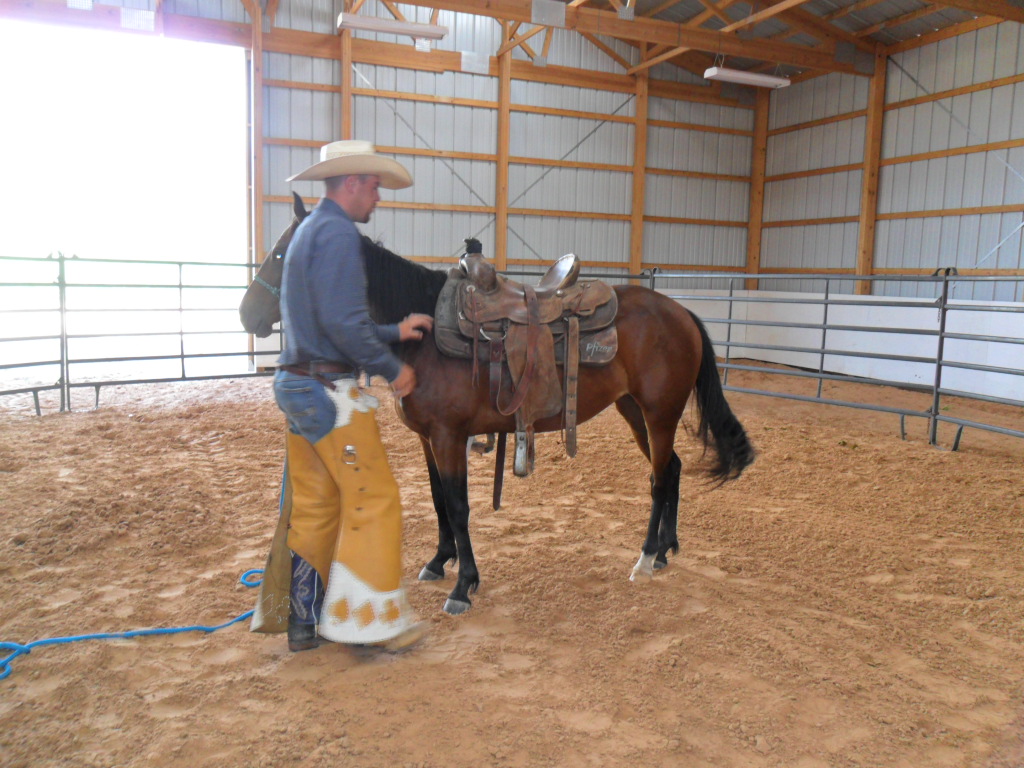
Started the day with coffee, make-up, inside plant watering and then off to see the rescue horses at Dove Creek Ranch near Canyon, Texas. I spent about two hours there talking to the owner, the ranch manager, and others. The following horse is Jazzy. They gave a demonstration in the round pen and this was her fourth ride ever. For a young horse she was really, really calm.
Their technique includes a lot of ground work and desensitization to motions and sounds.
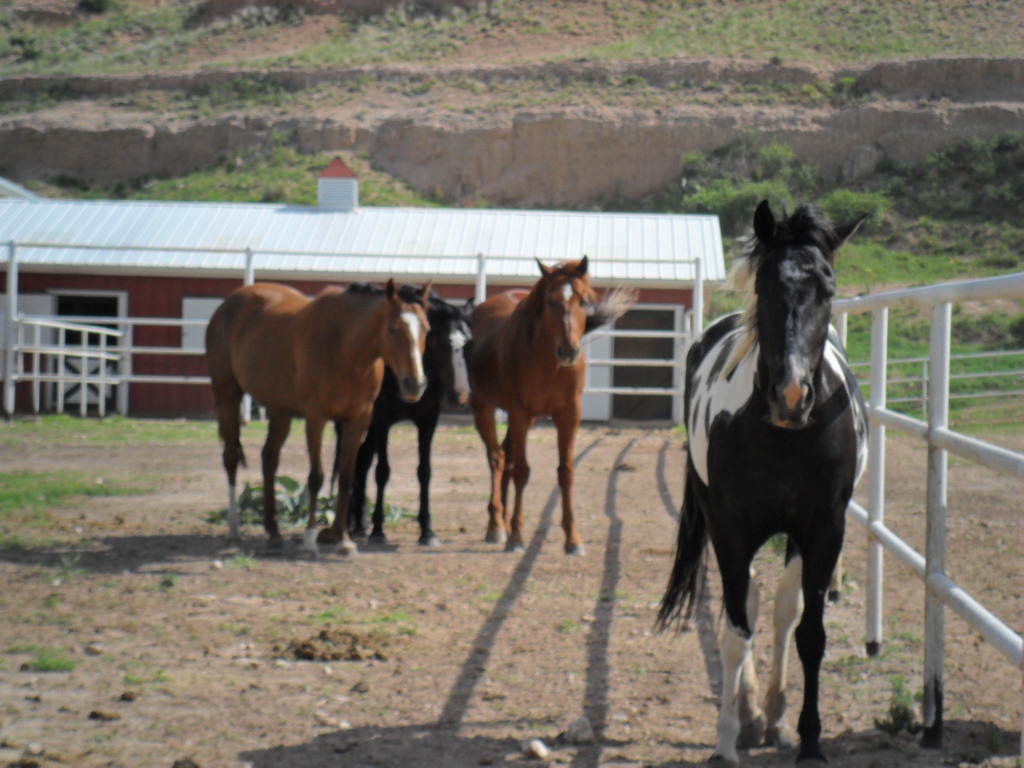
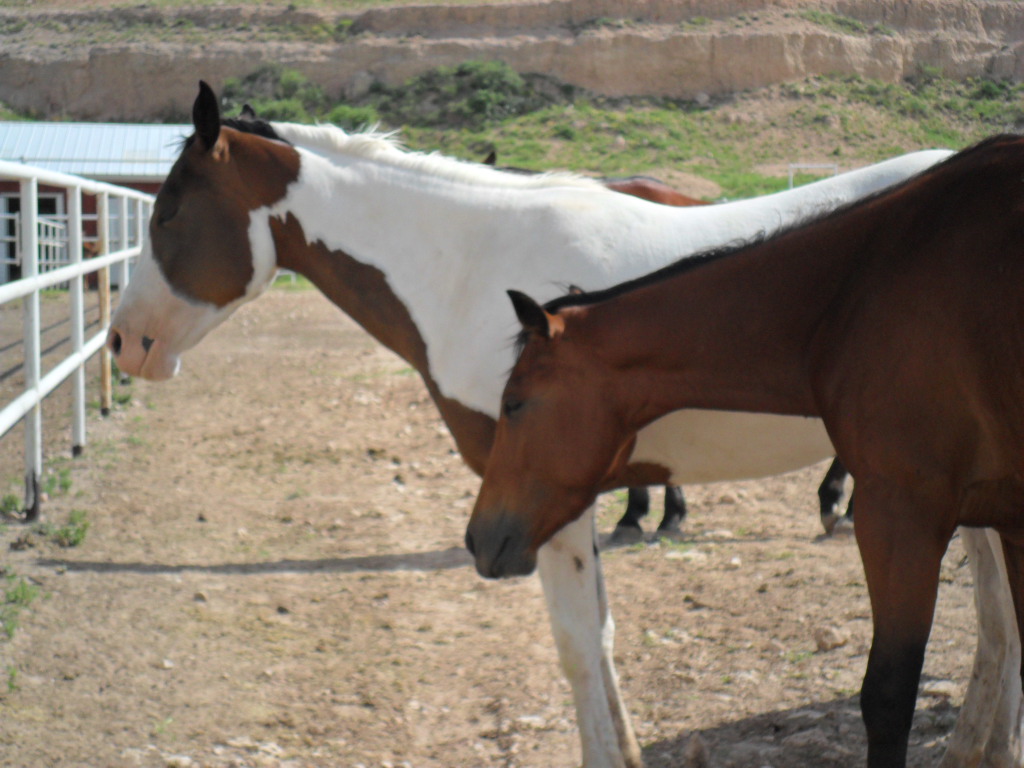
He put the saddle on and off repeatedly before riding her. Then I went outside to a large corral to look at this flashy paint. She is so beautiful but might not be adoptable.
Although they once had her mother and siblings who have already been adopted, her behavior is very inconsistent. They told me that one day she does fine, but the next day she may not remember anything from the day before, or act a bit crazy like running into things. The more we discussed this behavior and possible causes, the more it made me think of a horse I once knew who had eaten loco weed. Loco weed is toxic and affects a horse so that it suddenly behaves basically crazy and unpredictable. Made me sad; she is so beautiful. I saw another paint filly, but she belongs to the ranch manager. Yes, she is nice, but not the looker the above one is.
Then I ran home for a couple of hours, checked to see where Rosie had disappeared–she was off grazing, and headed to my book signing. It went well. I was especially thrilled to see a few people I had not seen in a long time. One, Kira Satterfield, used to teach with me years ago. She said it had been seven. My grandson passed out fliers, Hastings made coffee for the guests, and my daughter helped.