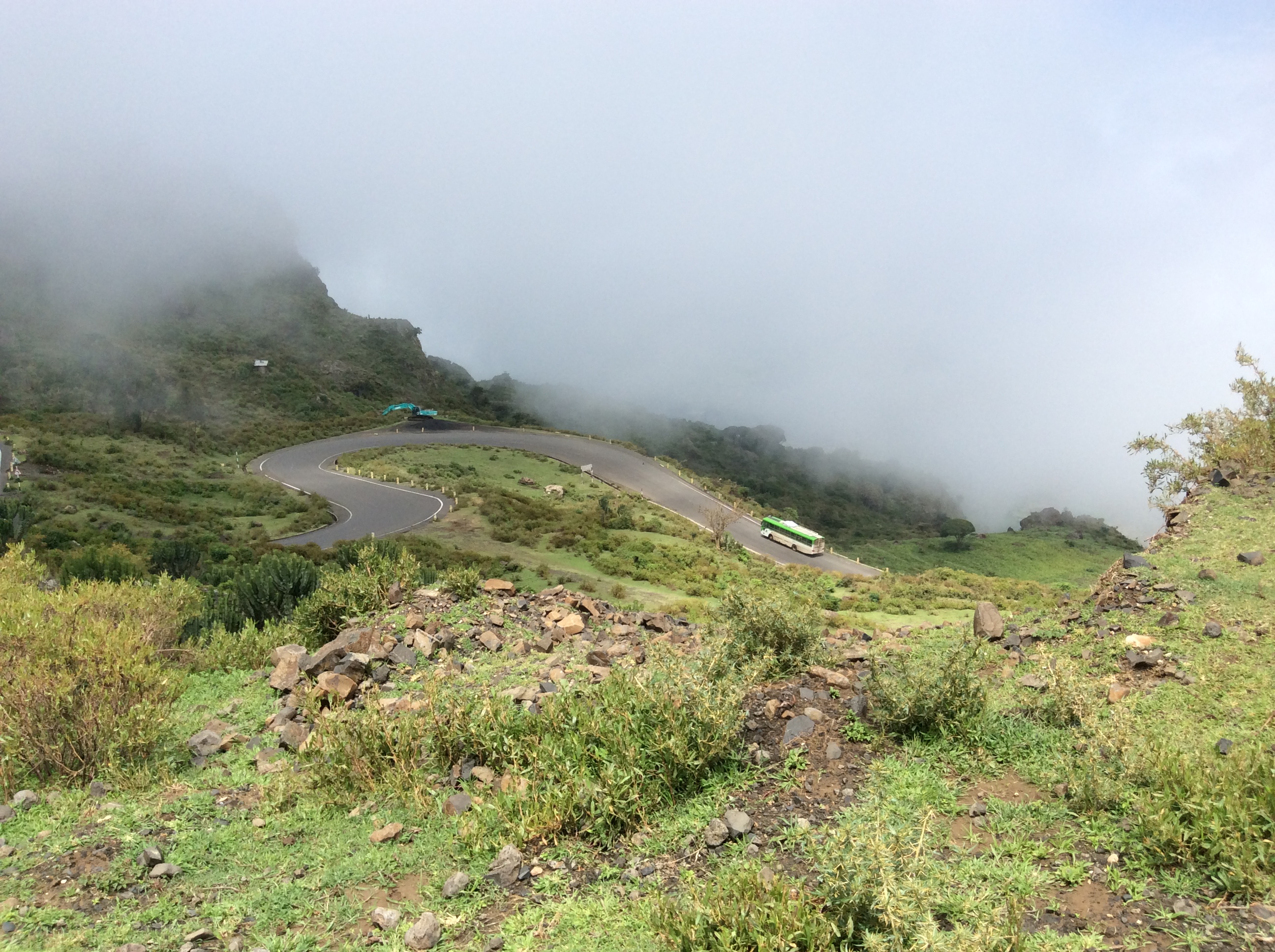
My Ethiopian Adventure: The Great Rift Valley and Awash National Park


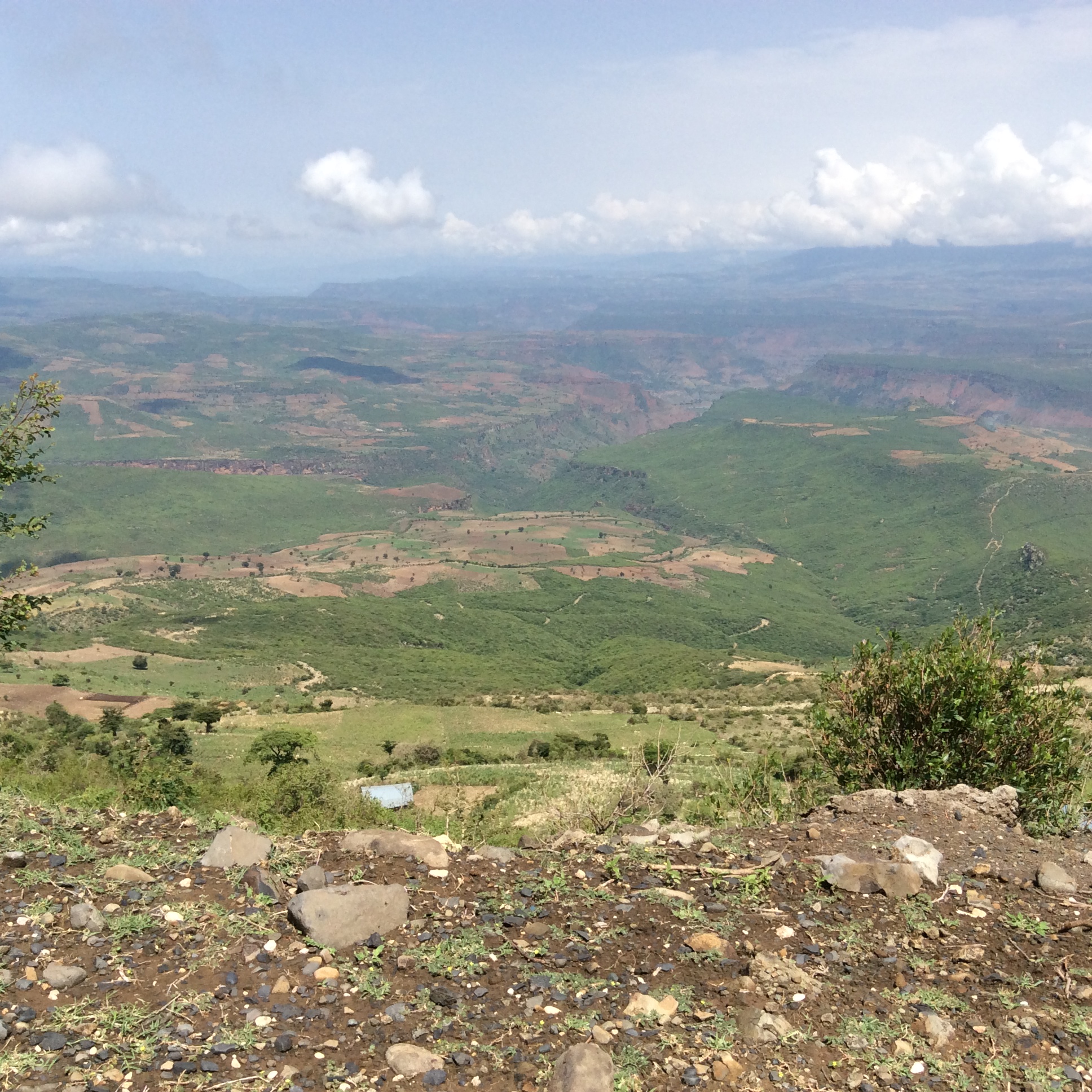
My friend’s parents live in Nazret or Adama, depending on which Ethiopian language you speak.  Nazret is the Amharic name and Adama is Oromo.  After relaxing a couple of days there, we headed toward Awash National Park for a day trip.  What a contrast to the previous part of our journey.  Intense green and cold totally gone.  What we saw here probably fits more with what most Americans picture when they hear the word Ethiopia.

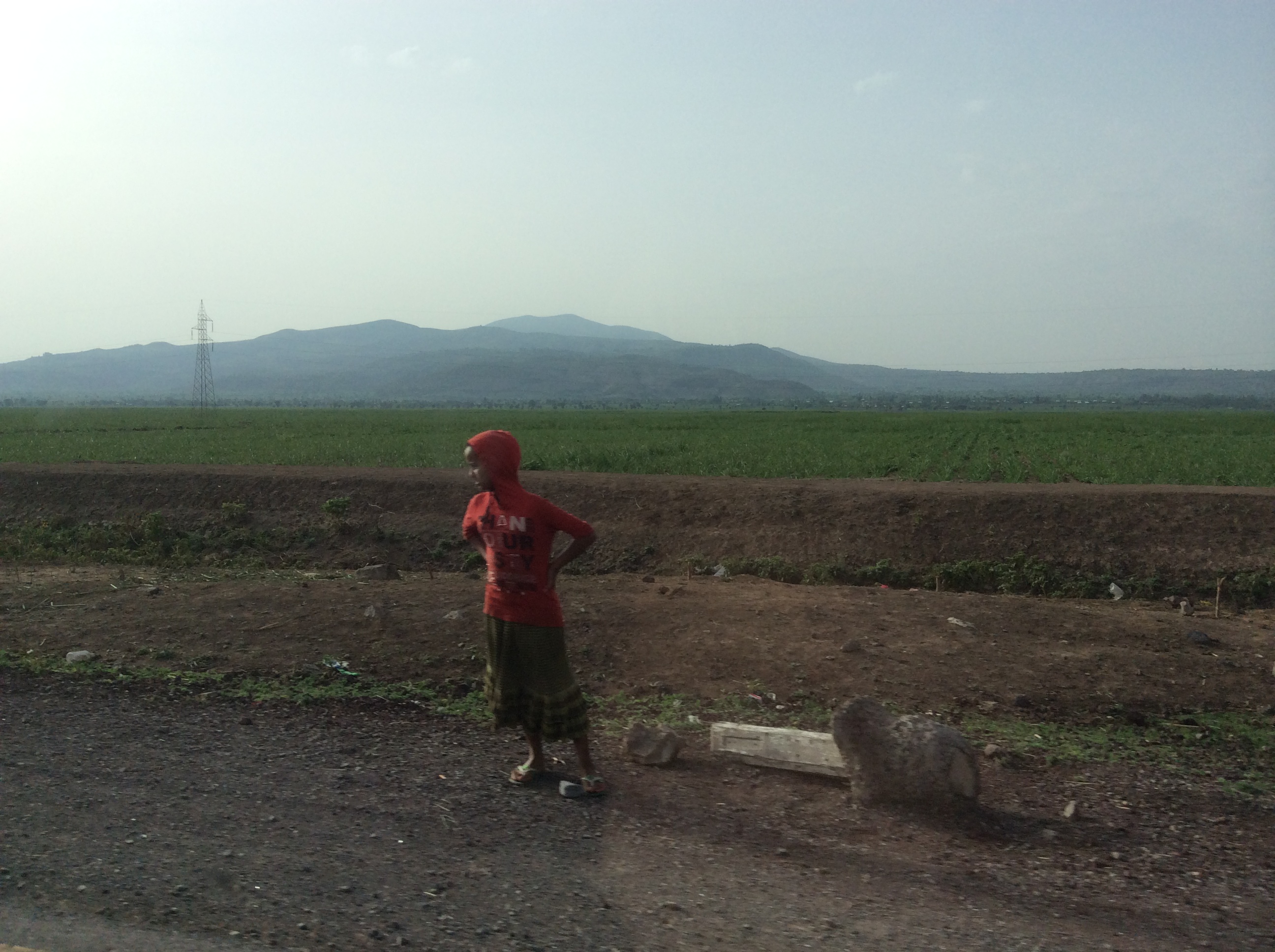
On the way out of town into the country, we passed fields of various crops including this sugar cane field.

IMG_1092

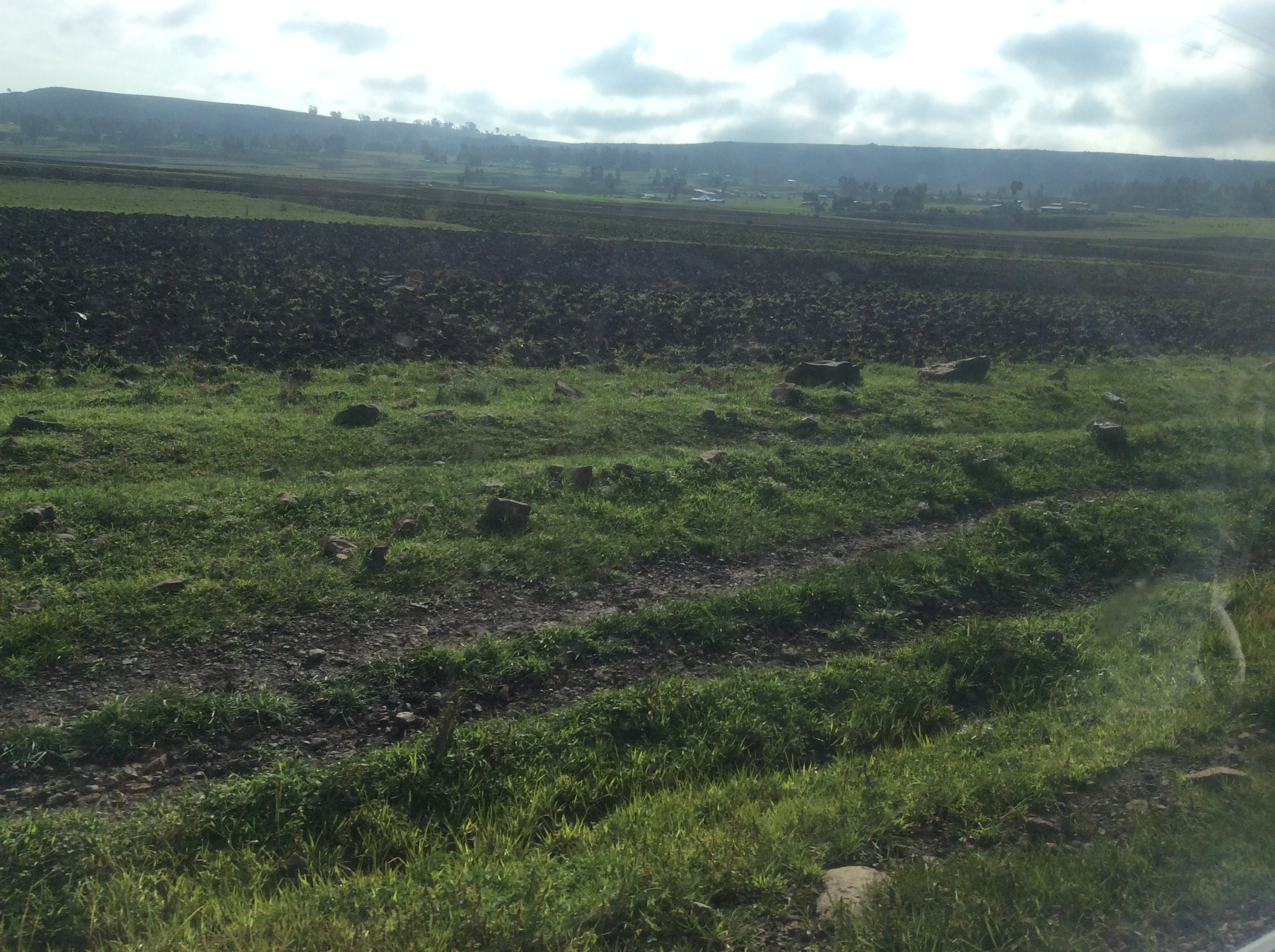
We also saw fields cultivated for sowing teff.  Since I had seen teff fields previously in the green, high mountain country, I came to the conclusion that teff successfully grows in a wide variety of climates and altitudes.

IMG_1093

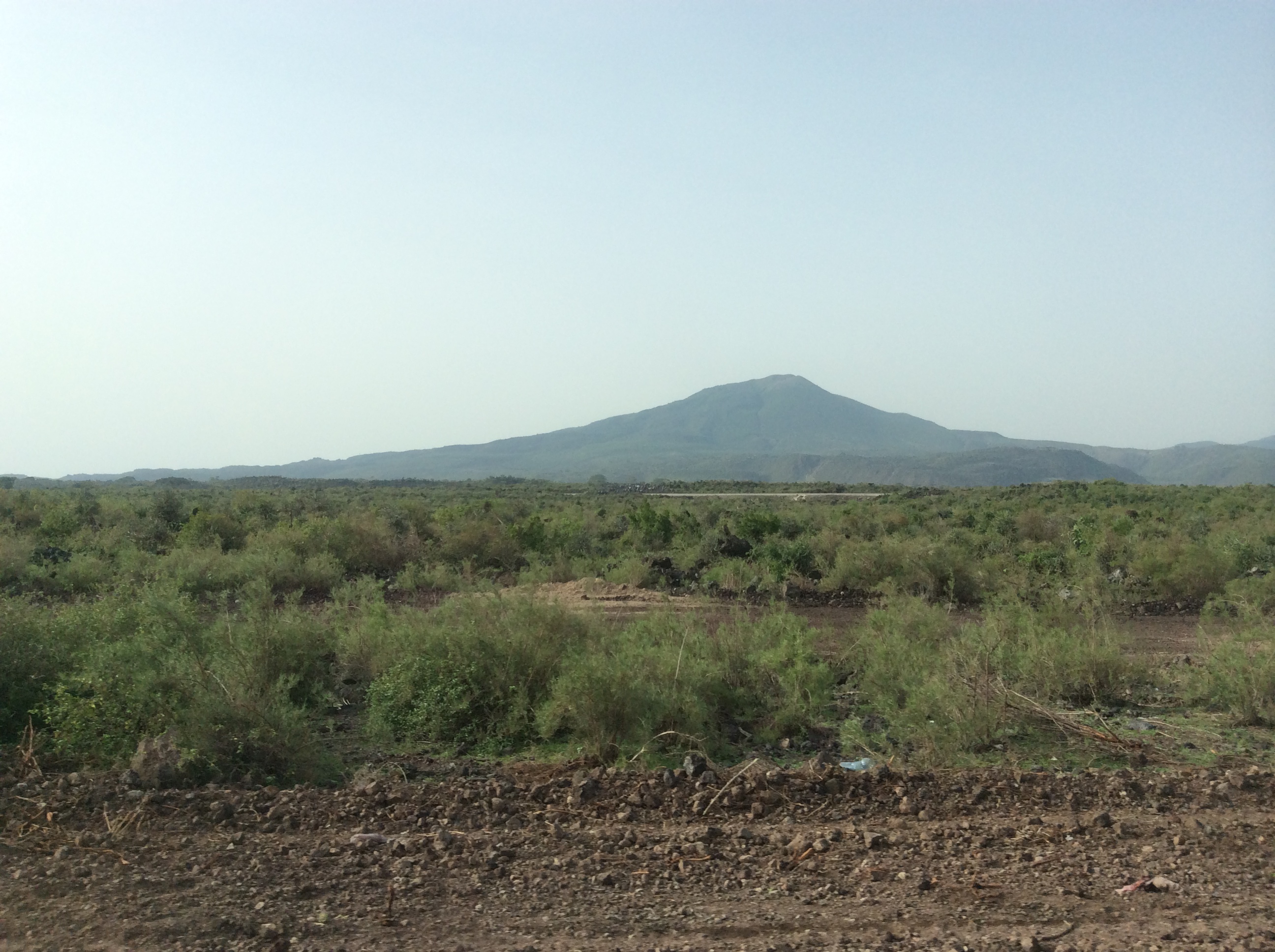
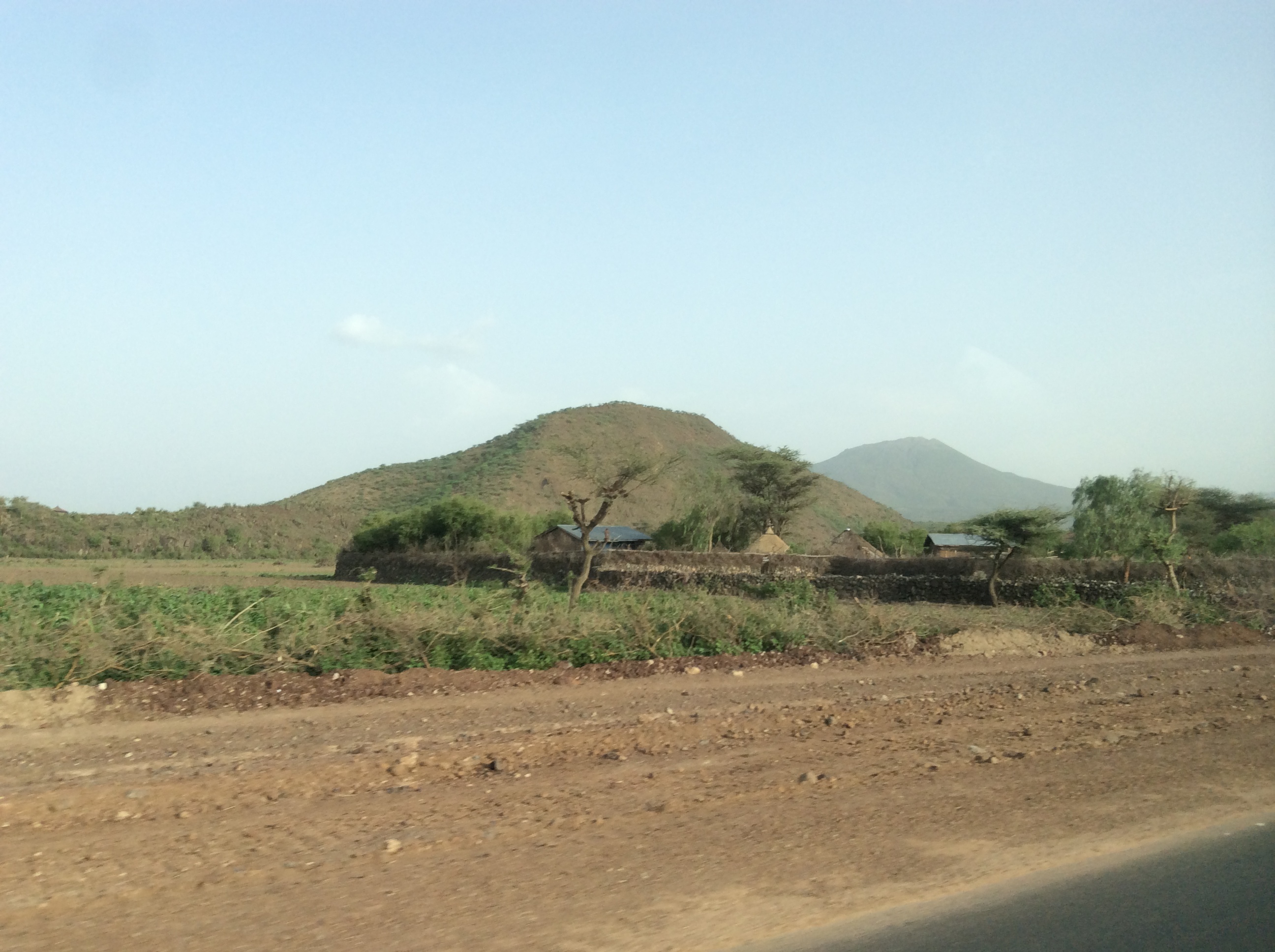
This is volcano country.  Although most are extinct and have not erupted in hundreds to thousands of years, at least one in sight of the highway has erupted within recent history.
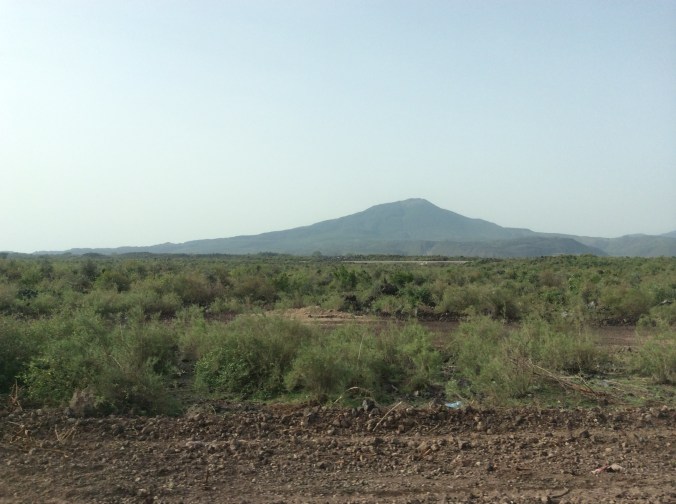
IMG_1095

Throughout the trip we saw small villages of traditional round houses with thatched roofs, most with rock walls around them.  These walls provide protection from predators such as hyenas.  And then suddenly we were there, a place I so wanted to see, the Great Rift Valley, the place where the oldest totally intact hominid skeleton was found, Lucy.

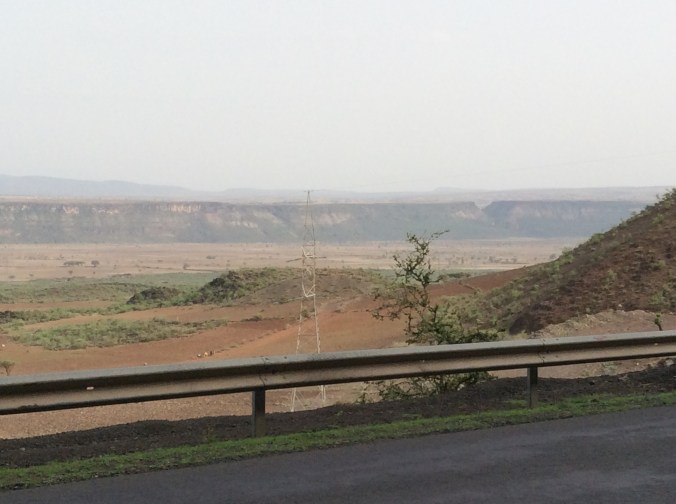
IMG_1097


IMG_1098

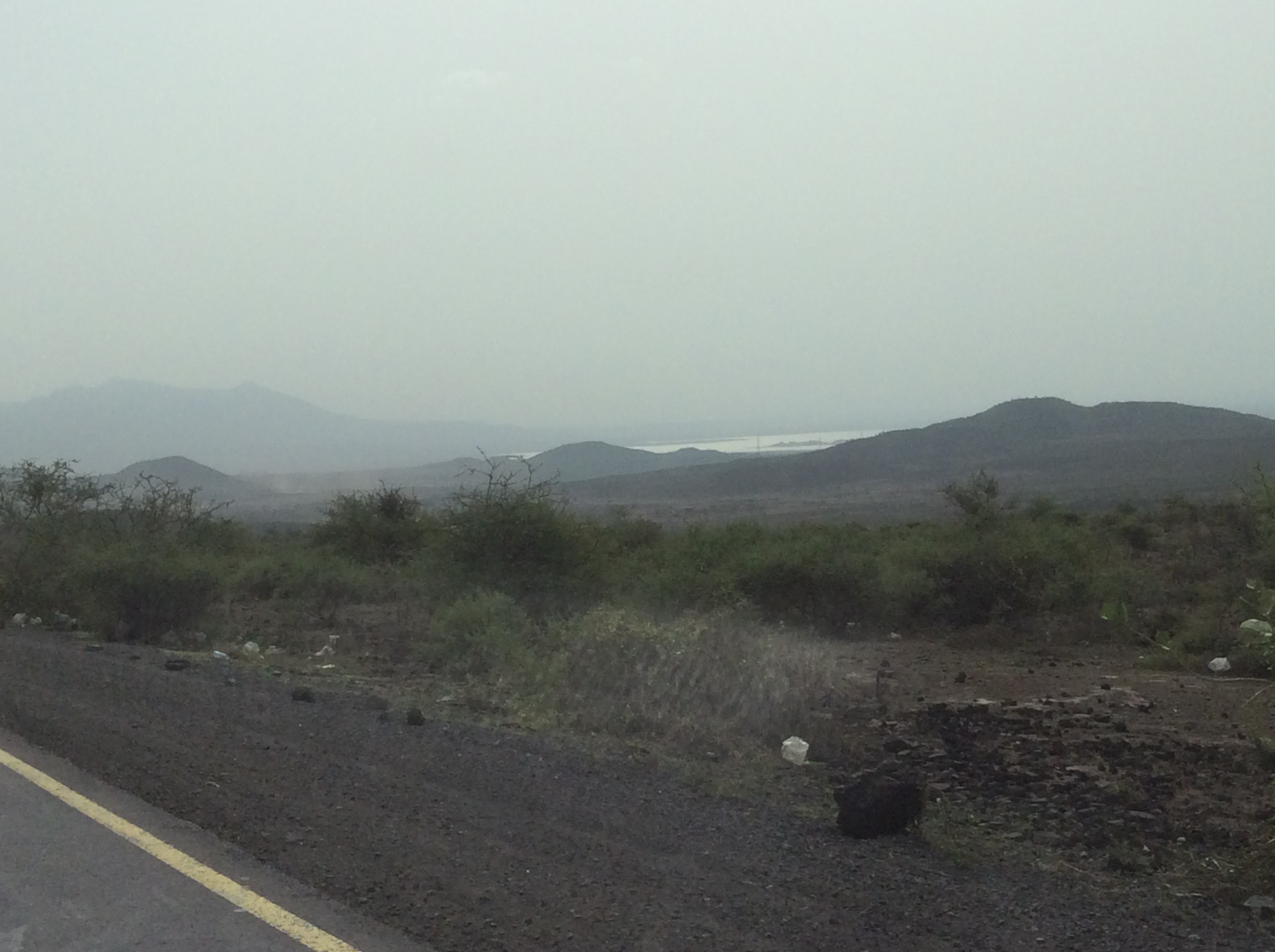
The Great Rift Valley goes for thousands of miles from farther south in Kenya up through the Red Sea and the Gulf of Aden.  I was very surprised to discover they grow grapes here in Ethiopia and produce wine.  We decided to try it; the merlot was good.  A series of unique lakes lay in the valley.  I would like to go back and visit all of them.  Some are filled with so many chemicals, you cannot drink the water and no fish live there. An example is Metehara Lake.  The fish are delicious, but the water cannot be safely drunk.  The most amazing thing about this lake is that it grows approximately four inches annually.  In the last few years, the road had to be relocated because of it.
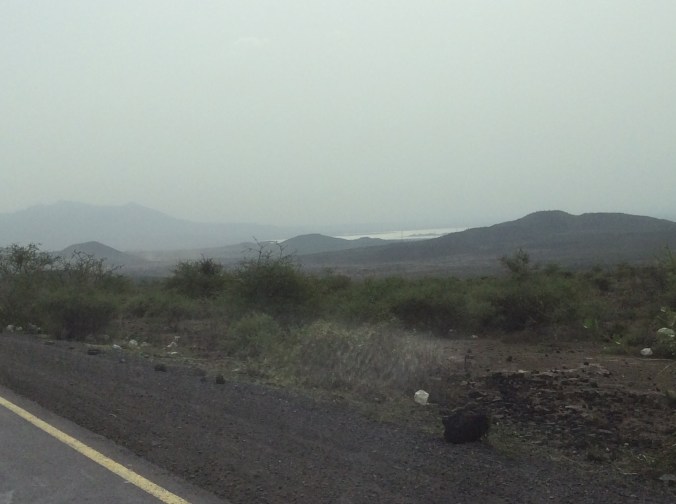
IMG_1105

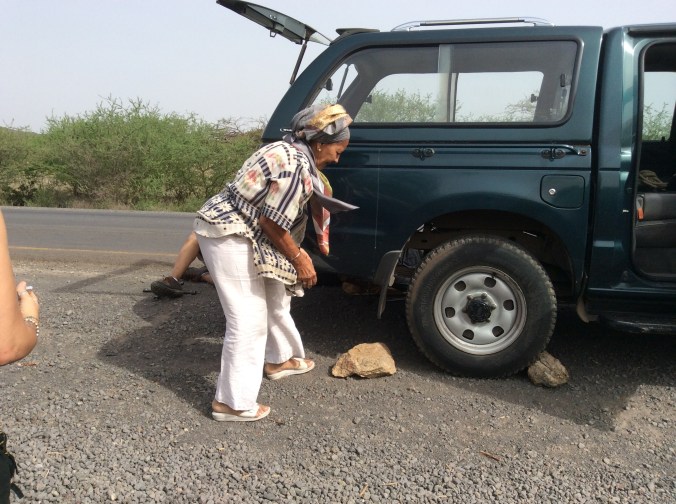
First glimpse of the lake.  Then we had a flat tire which delayed the trip a few hours because not only did Dino and his dad have to change the tire, but we had to stop in the town of Metehara to buy a new spare which entailed bargaining and more bargaining.  Dino’s mom hiked down the road to get rocks to keep the vehicle from rolling.  If I had realized what she was doing, I would have done it myself.  She is in her 70s.
IMG_1106

A little adventure occurred here.  First, while they were working on the tire, a man came along and offered to help.  His truck (this is a major highway between Adama and Djibouti) had broken down nearby.  Then an Afar teenager came along and looked around, saying nothing.  I realized he had a dagger in the back of his clothes when he walked off.  Finally, an Afar man, maybe in his late 40s or 50s came along.  The Afar are a nomadic people who have lived in East Africa for thousands of years.  The men are noted for their ferocity.  Their lifestyle has changed little; instead of spears, they now carry assault rifles slung across a shoulder.  They herd cattle, goats, and camels.  He walked around the vehicle and came up to me.  Neither of us knowing the others’ language, the tiny conversation consisted of gestures.  Dino suddenly told me to get in the car.  At first I ignored him.  A couple of minutes passed; he loudly repeated the order.  I got in the car, wondering why.  When I asked, he told me one never knows what the Afar are going to do and pointed out just how close the man had stood.  I never noticed; I have no personal space.

Tire changed, we drove toward the town close to the lake.

IMG_1109

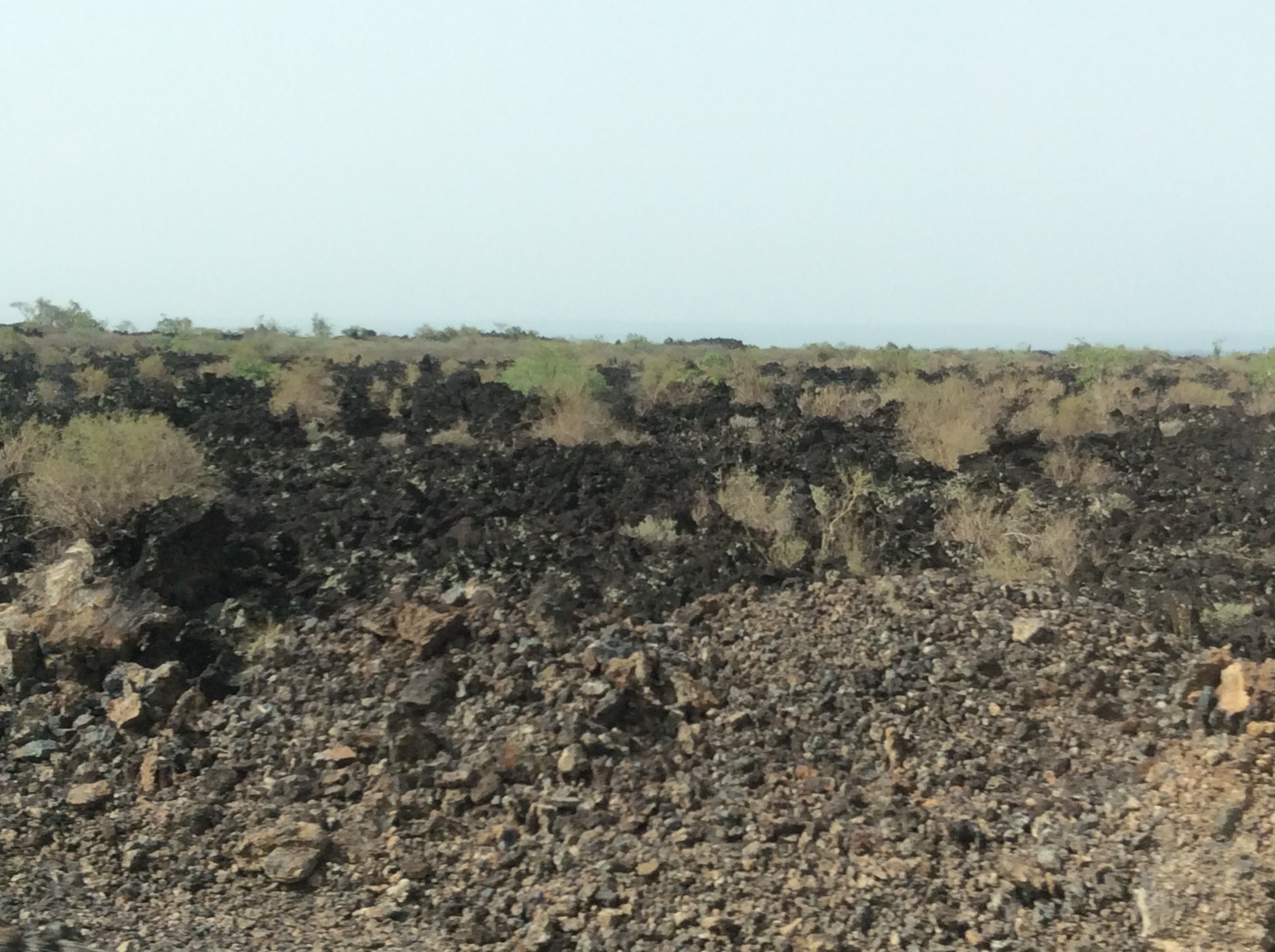
Crossing thèse lava beds would be difficult.  As we dropped lower, we drove on the new road by the lake.  You can see the old road crossing the middle of the photo below.  It is nearly covered with water.

IMG_1110

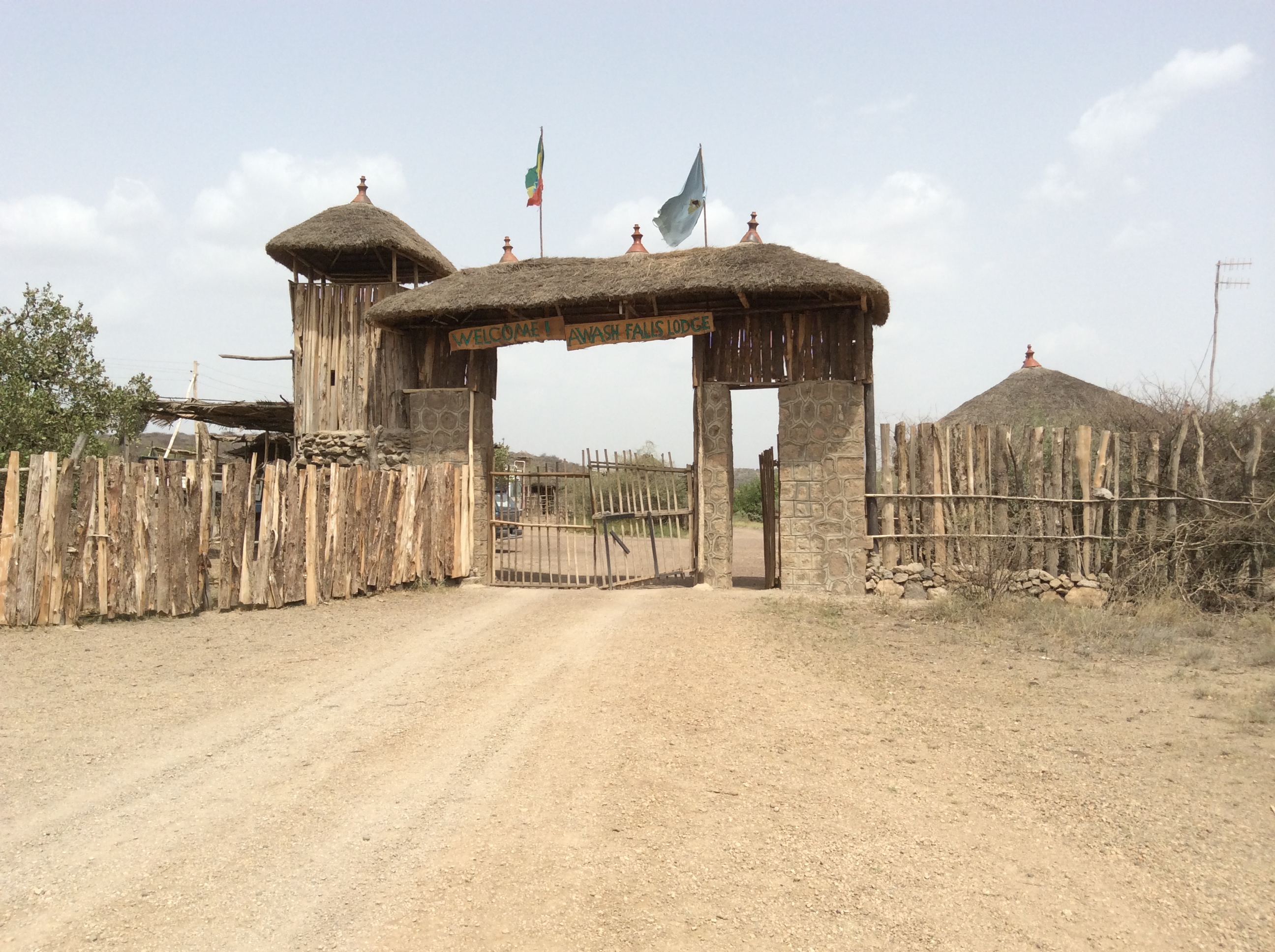
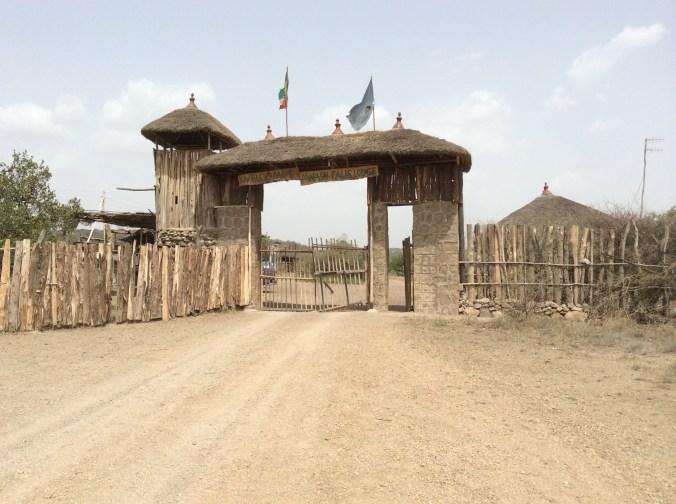
We missed the entrance to the park, realized we had gone too far, turned around, and headed back.  The entrance to the lodge is more like what most people think of when they think of Africa.
IMG_1151

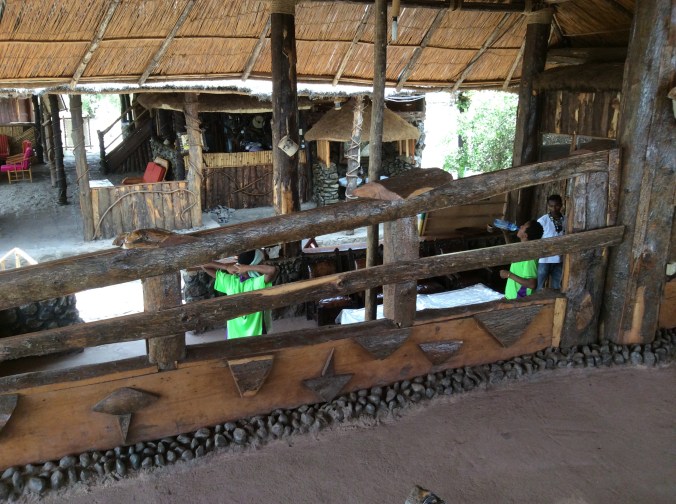
This was one of my favorite places:  it was warm, almost hot.  I saw lesser kudus several times, but they seemed so ordinary to the others that no one stopped so I could take a photo. The lodge was delightful and the shiro some of the best I had.  Loved it.  I even asked for the recipe. The resident ostriches, however, looked rather pathetic.

IMG_1117

IMG_1118

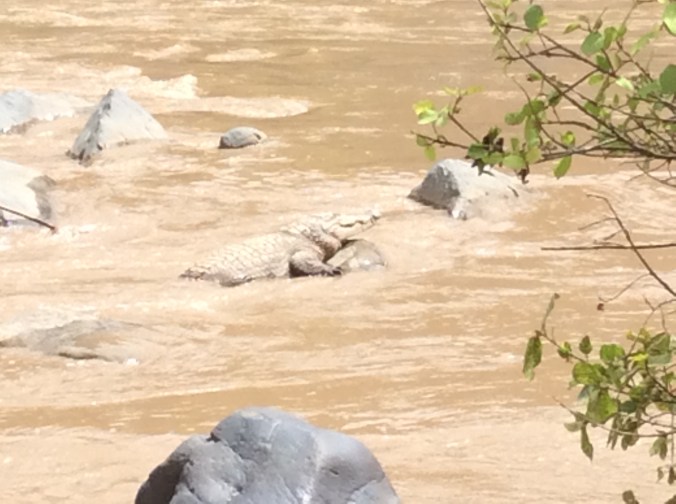
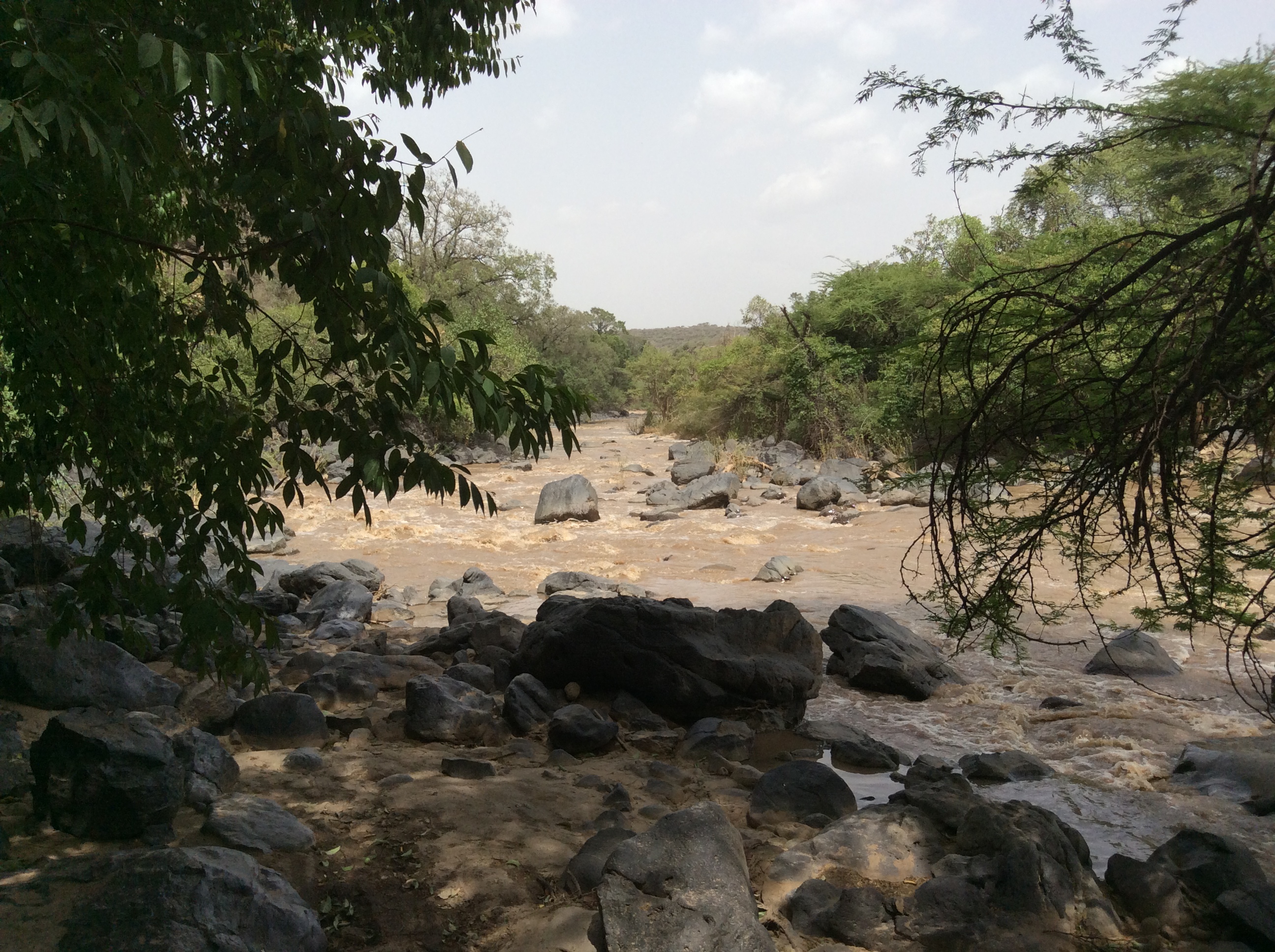
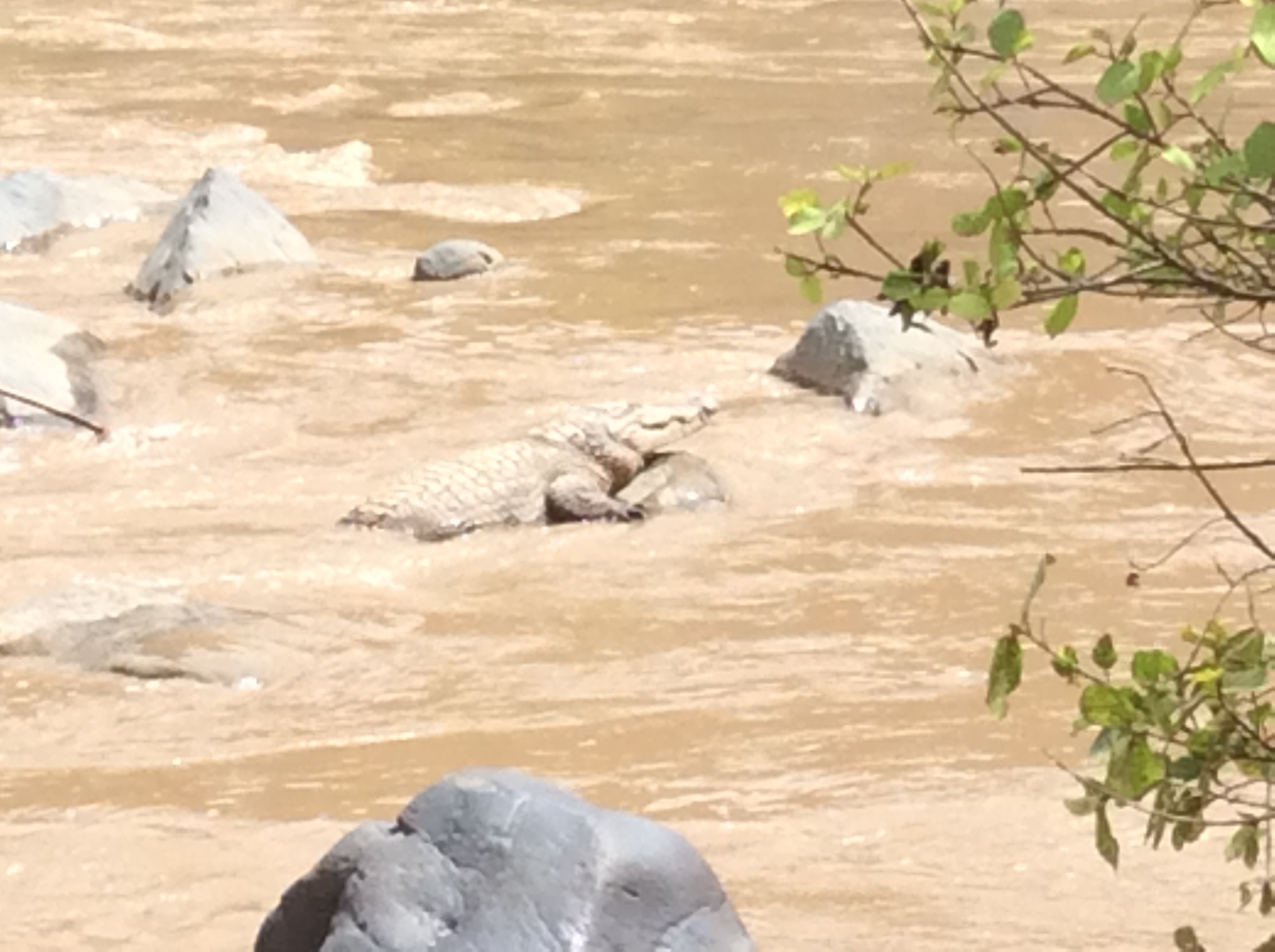
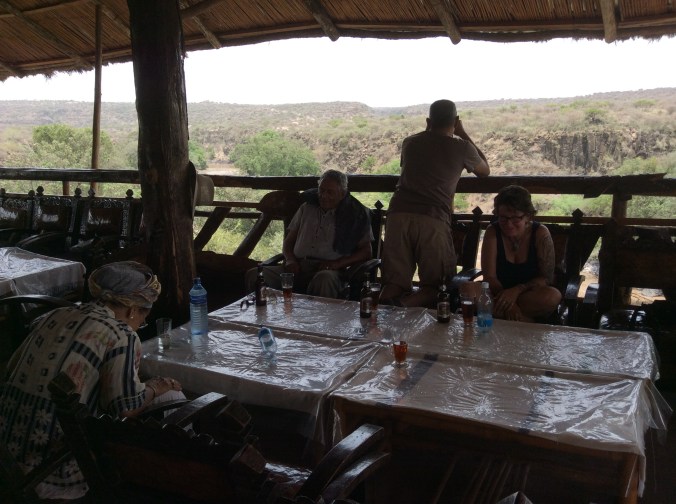
Here the Awash River is full of crocodiles.  Our first glimpse was through binoculars from the lodge restaurant.
IMG_1120

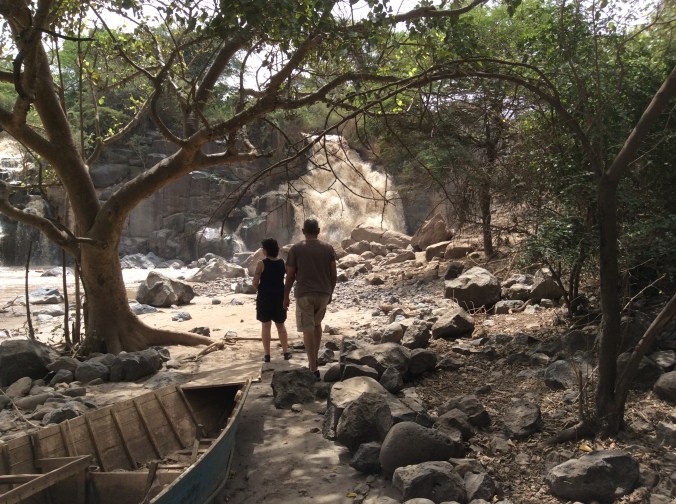
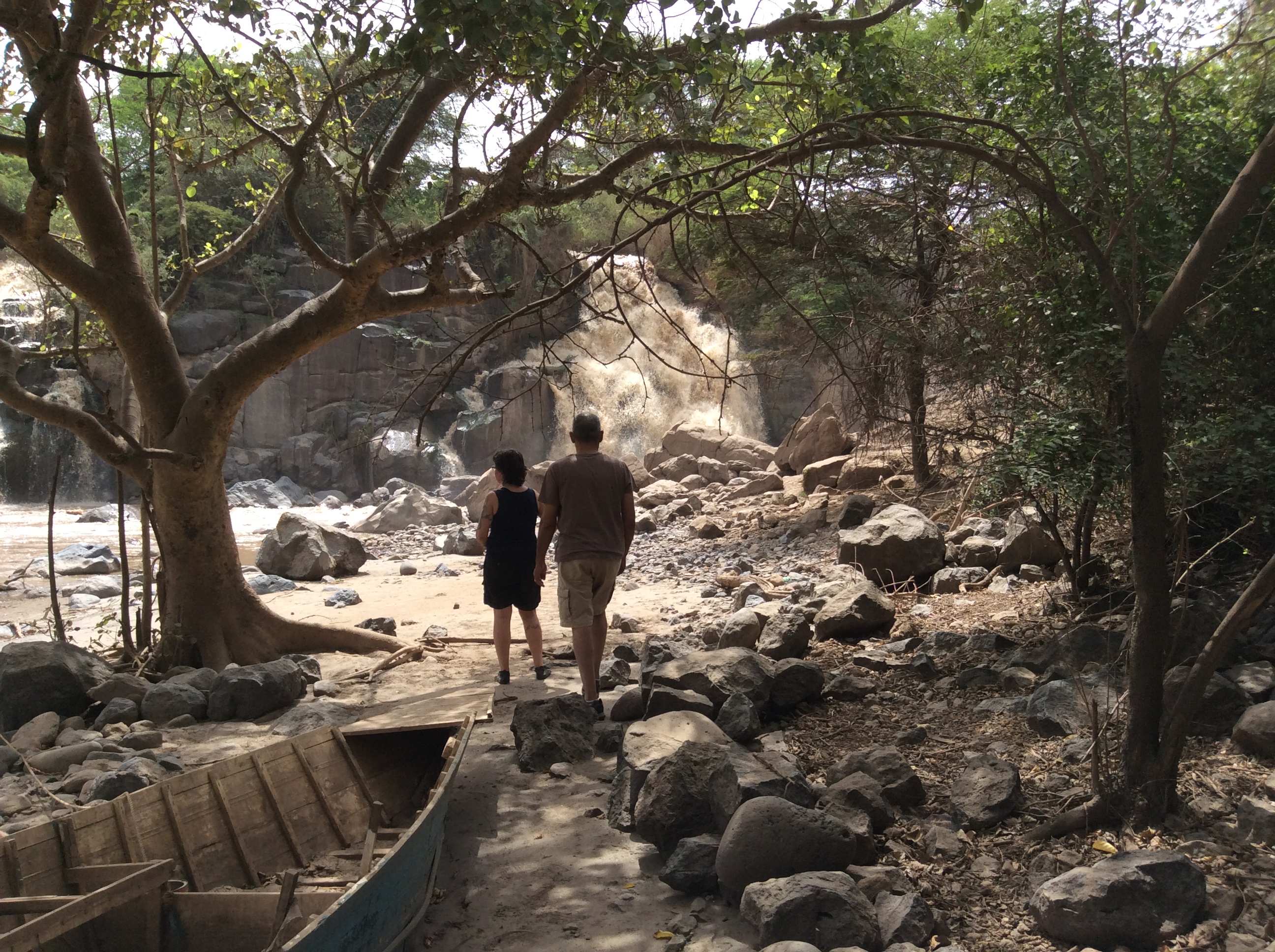
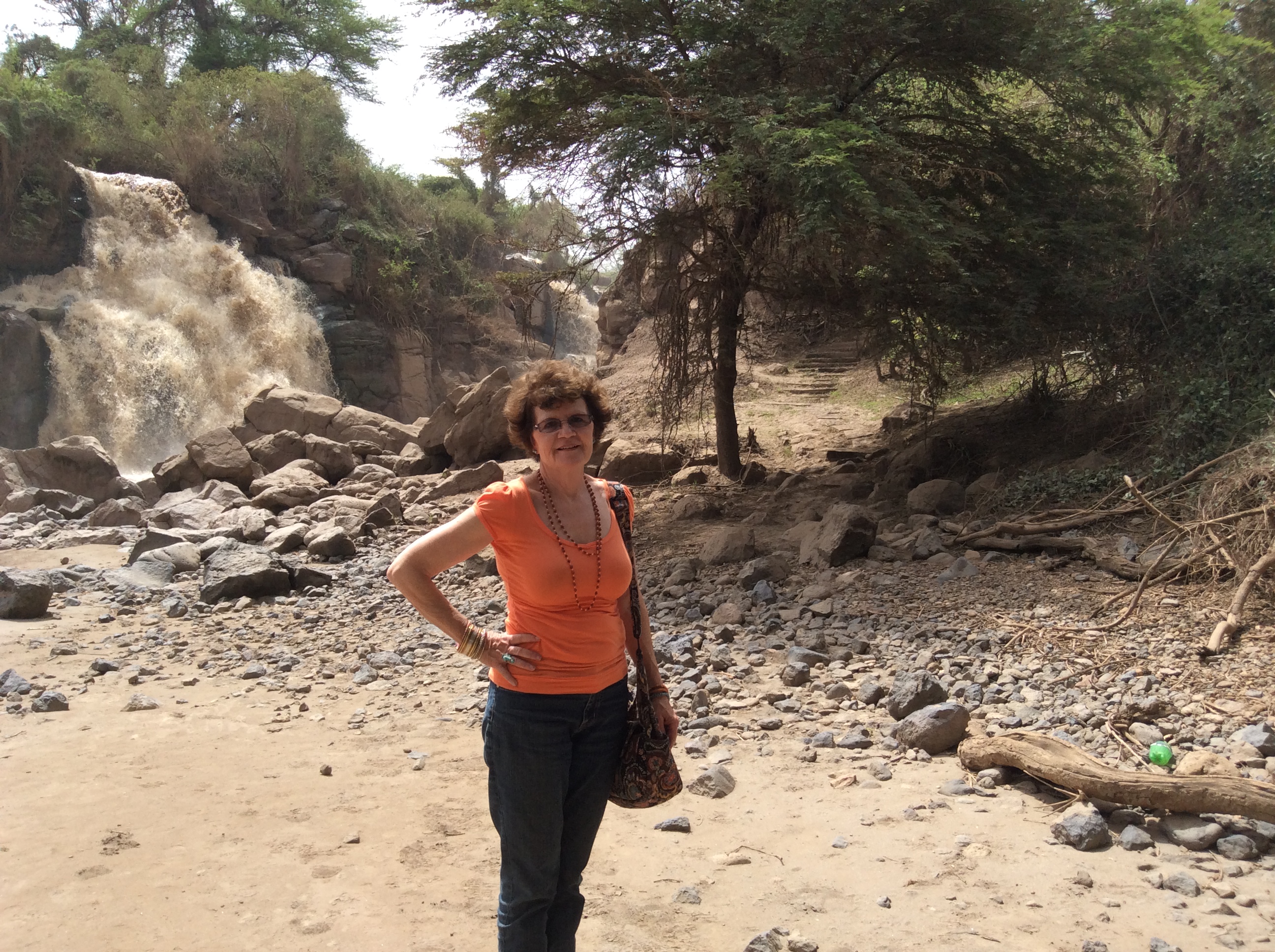
Dino’s mom posed with me while we waited for lunch.  Then we hiked down to the river and the falls where we saw even more crocodiles.

IMG_1116

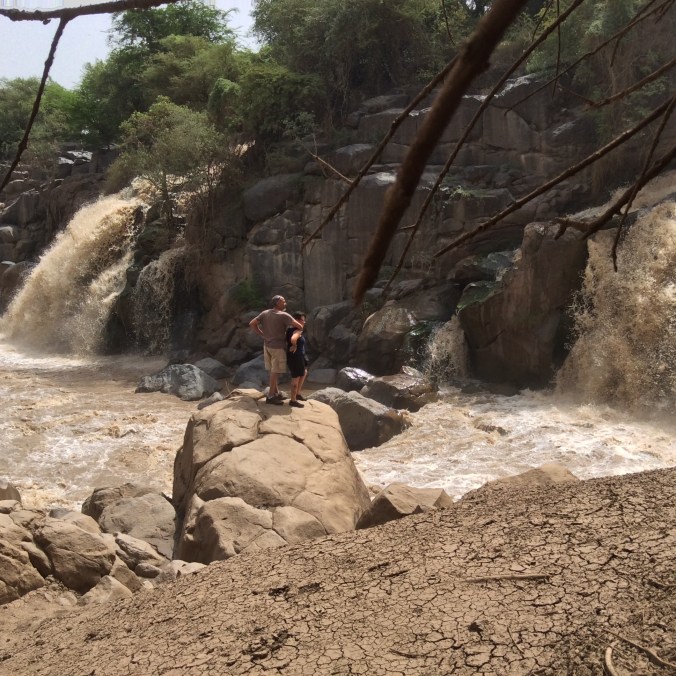
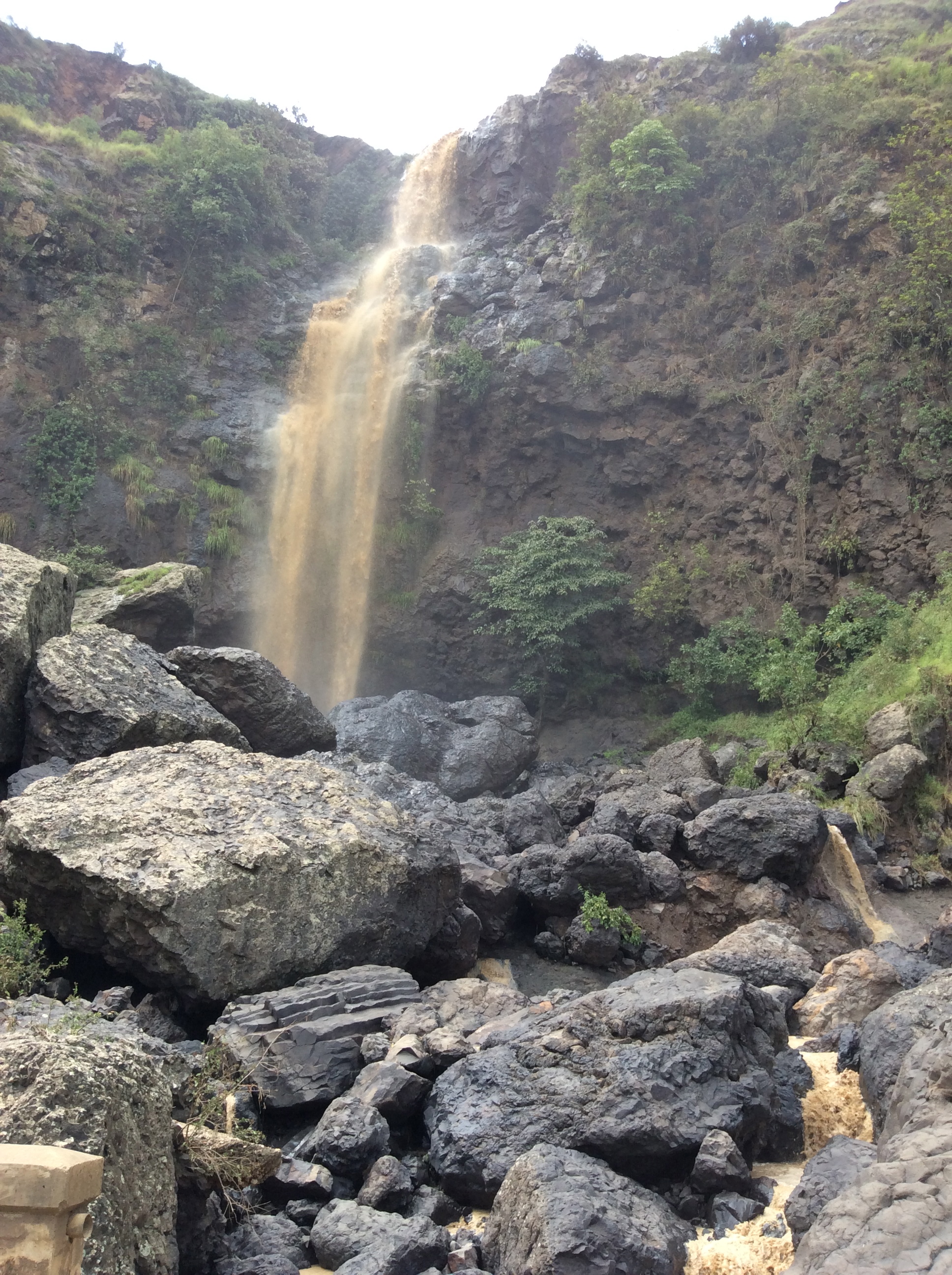
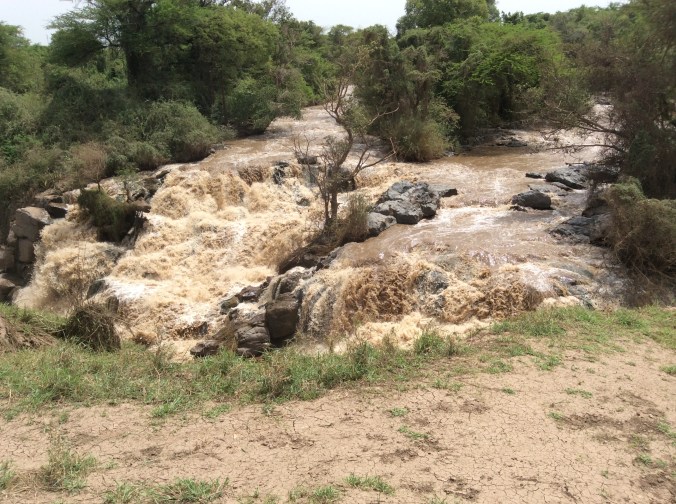
The falls are so large that I could take a photo of only a portion of them at the top where the hike down begins.
IMG_1125

The green between the two sections of the falls was totally covered with water a few weeks later when Dino’s brother travelled there with his family.
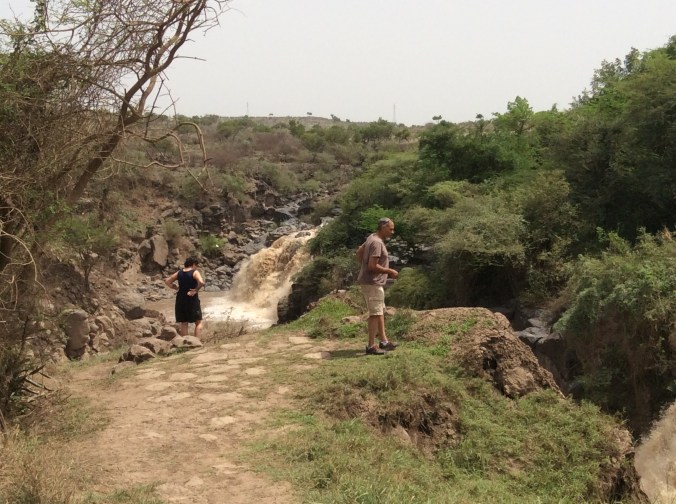
IMG_1128

I loved walking along the river banks, careful, however, because of the crocodiles.  They may look slow, but they can really move rapidly when they choose to do so.
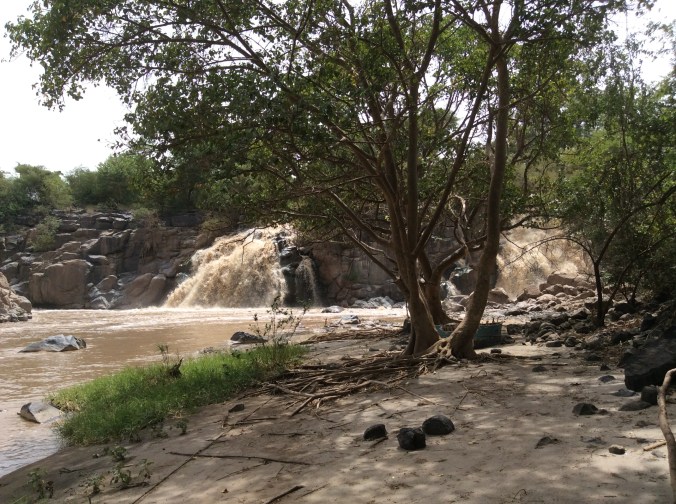
IMG_1131

IMG_1135


IMG_1137

IMG_1138

IMG_1139

IMG_1141

IMG_1143

IMG_1148

IMG_1144

Crocodiles like basking in the sun.

IMG_1130

IMG_1136

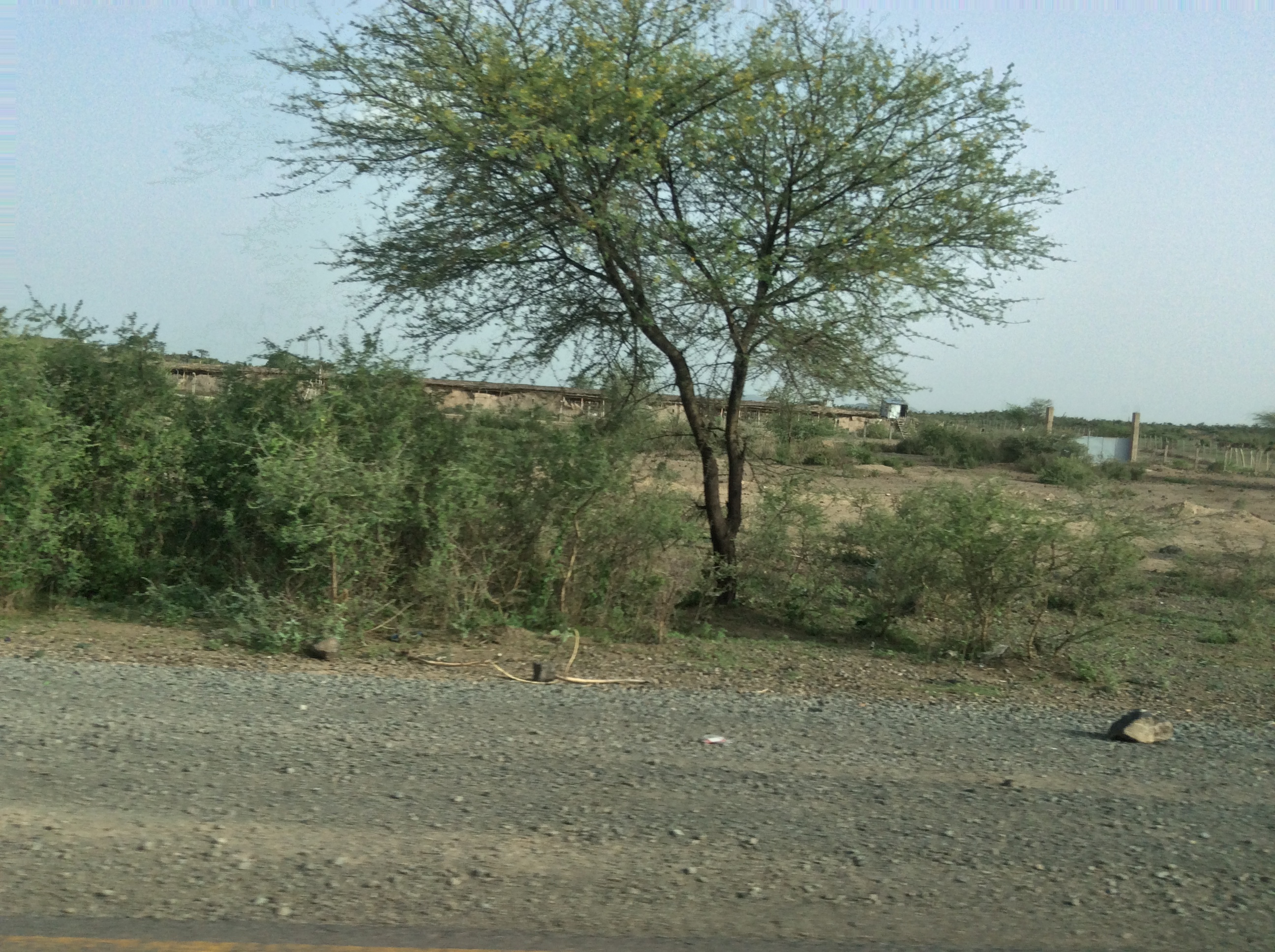
Along the highway, camels graze, boys herd large flocks of goats, and a totally different species of acacia appear.

IMG_1155

IMG_1159

If you look at the background of the photo below, you can see long lines of corrals–for camels to export to Yemen and other areas where camels are eaten.  If you live in Amarillo, Texas, and order in advance, you can eat camel at the Somali restaurant on Amarillo Boulevard.

IMG_1167

Unlike most of Ethiopia where we had previously travelled, here we saw fences especially around villages.  They bring the livestock in for protection from not only hyenas but also lions.  Yes, lions live here.  I asked if they ever see them.  I was told, “No, but you sometimes hear them roar at night.”  They also told me that the lions like to go down to the sugar cane factory, but no one knows why.

IMG_1168


When I want an Ethiopia “fix”, I listen a audio/video of Awash Falls.


My Ethiopian Adventure: On the Road from Debre Markos to Addis, Crossing the Nile Gorge


Once again, we drove through rain and clouds and endless fields, some of which had been cultivated ready to plant and some all green and growing.

IMG_0958

I realize this is not what most people in the United States think when they hear the word Ethiopia.  I kept thinking of photos I had seen of Ireland.

IMG_0959

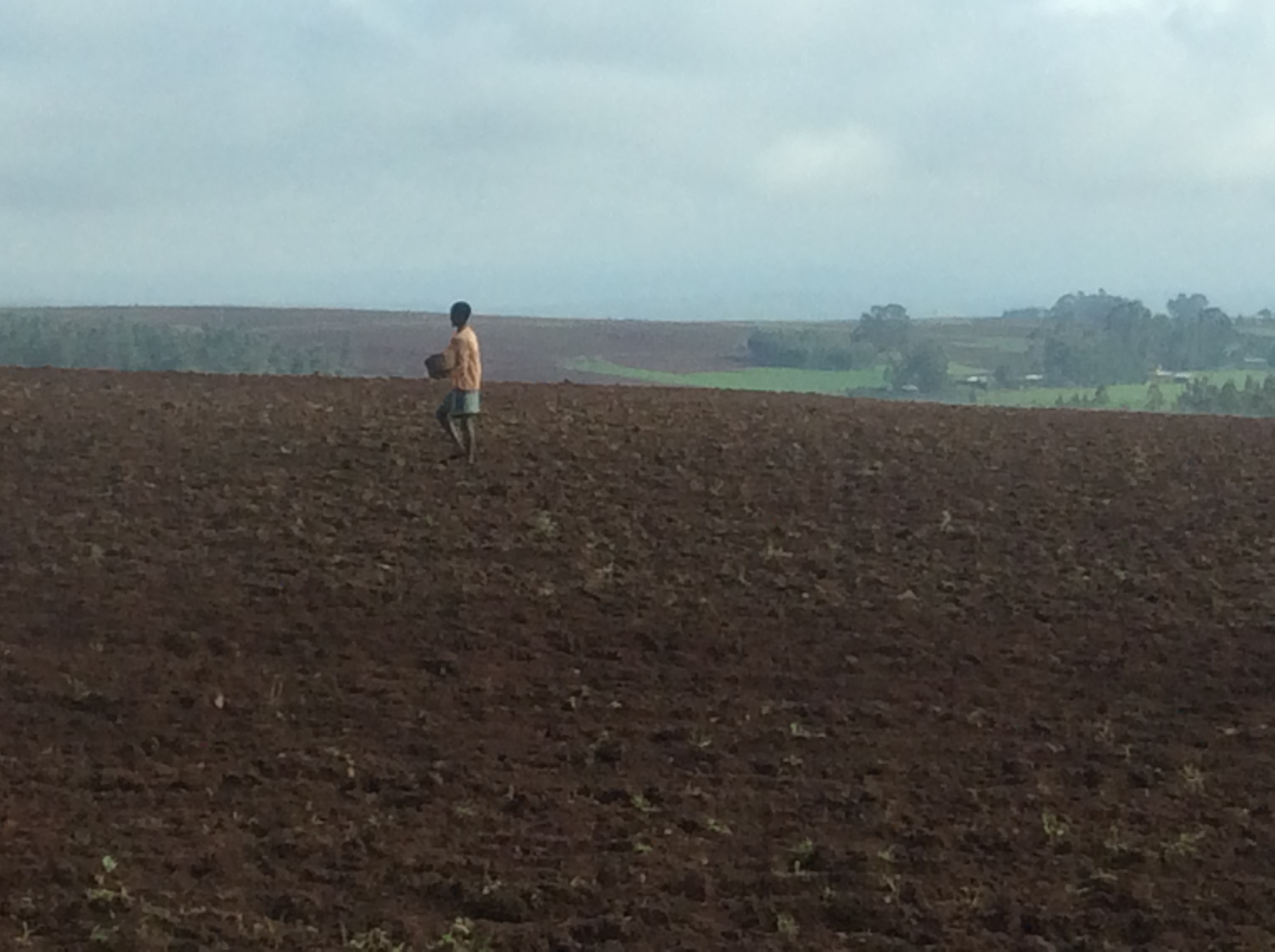
The ancient grain, teff, produces extremely tiny seeds which are ground to flour to make injera, an Ethiopia staple.  It is used much like people in India use chapatis or like people in Mexico use tortillas.  However, it looks nothing like either of these.  It is thicker and a bit spongy like crepes but huge–more than a foot in diameter.  The man in the photo below is sowing teff.

IMG_0960

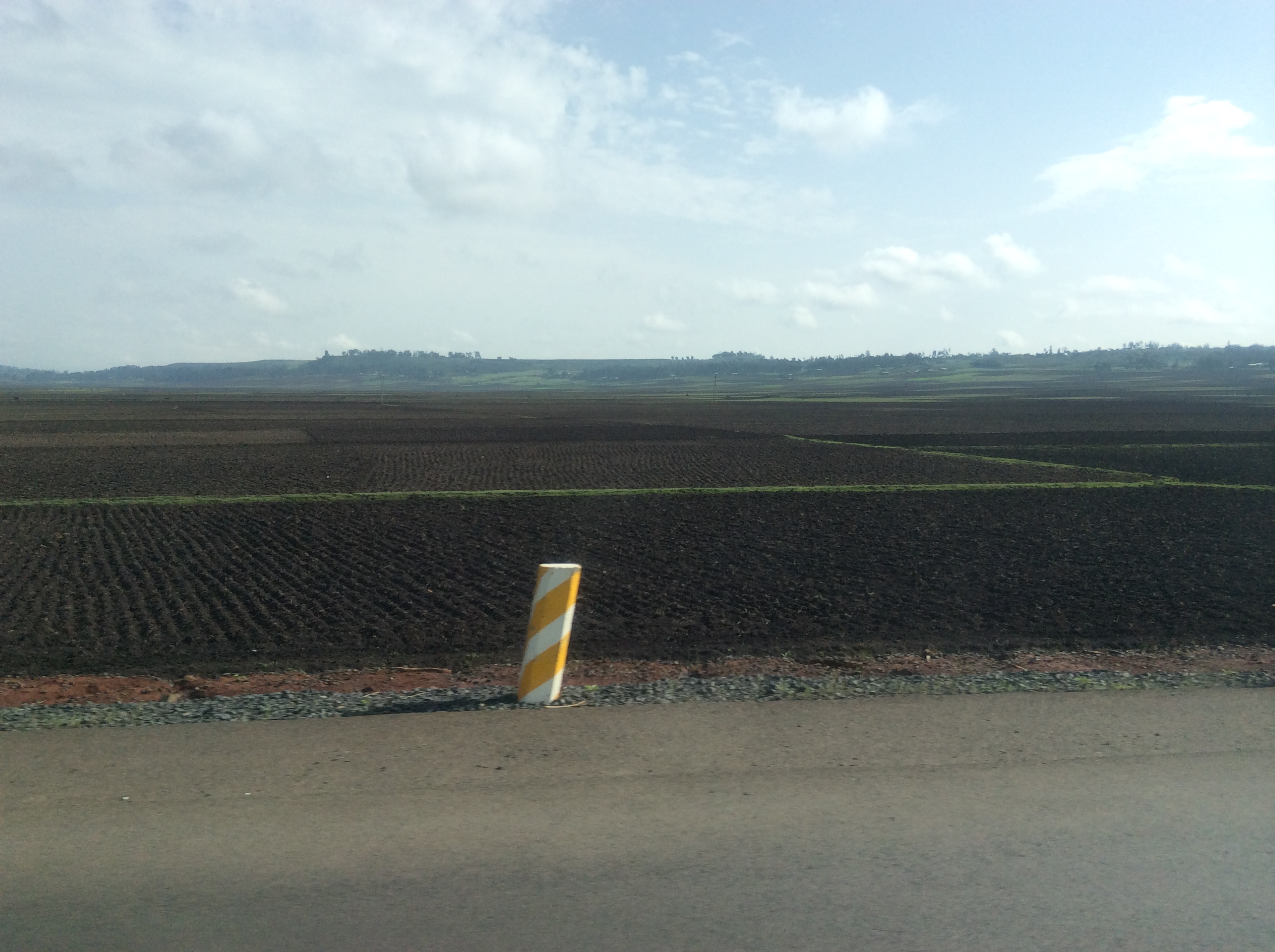
Teff fields stretch almost as far as the eye can see.

IMG_0961

Villages are frequently set along side the good highways.

IMG_0962

Major highways are excellent.  The only really bad road we traversed was in Simien Mountains National Park where they keep the road that way on purpose. Well, that and the streets in Addis.

IMG_0965

IMG_0968

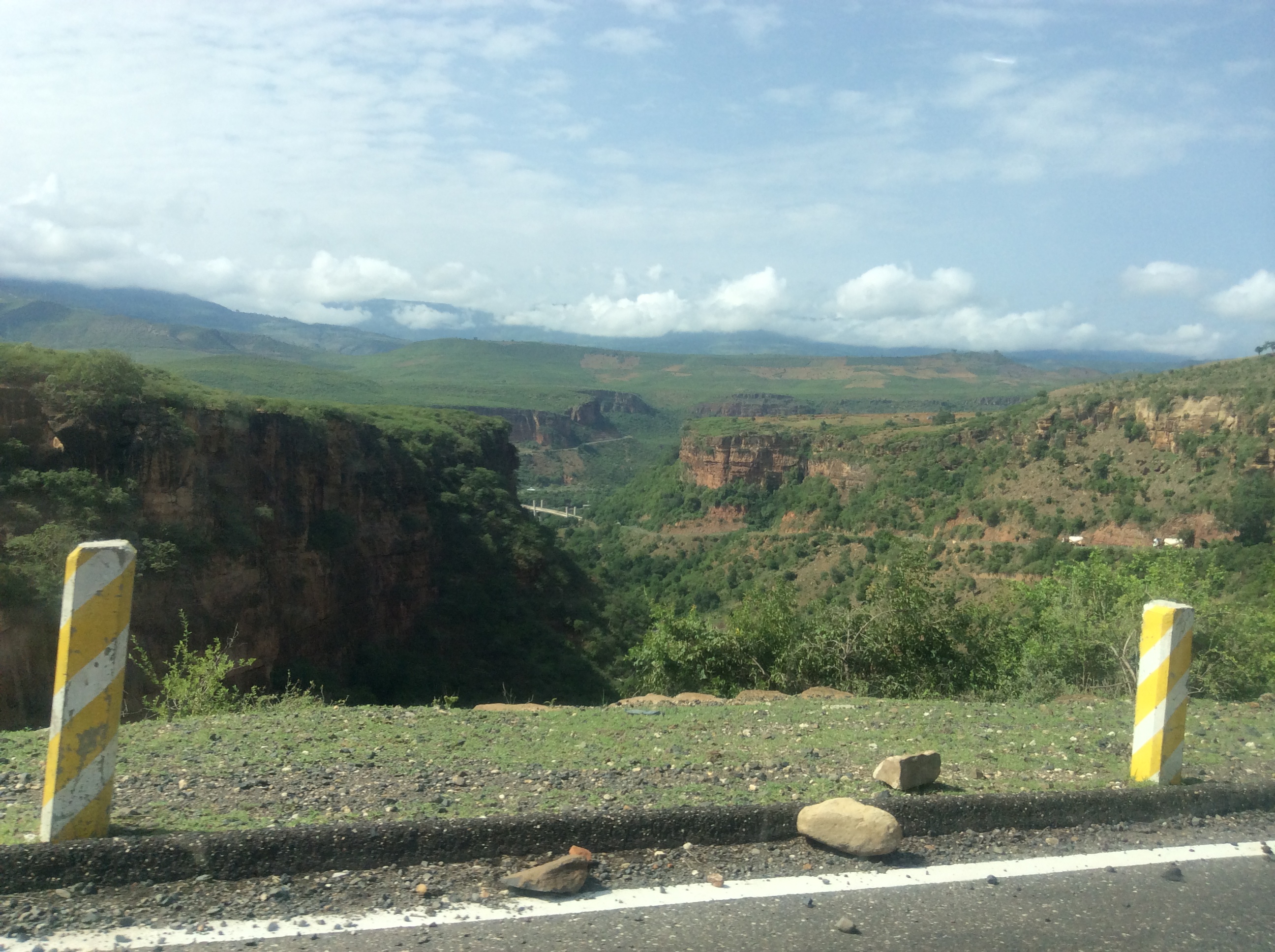
As we came closer to the Nile Gorge, it became more mountainous again.

IMG_0970


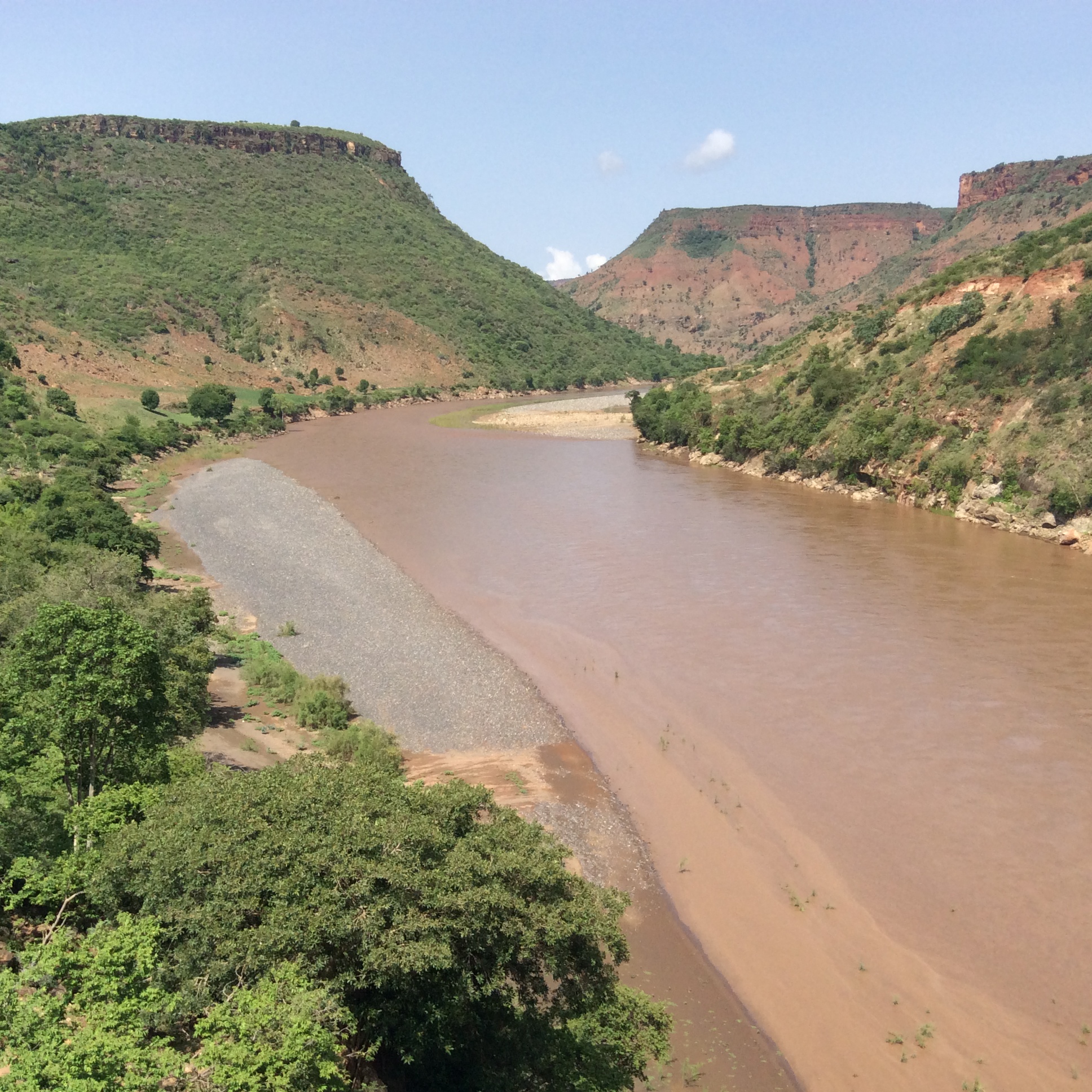
First sight of the Nile Gorge.

IMG_0972

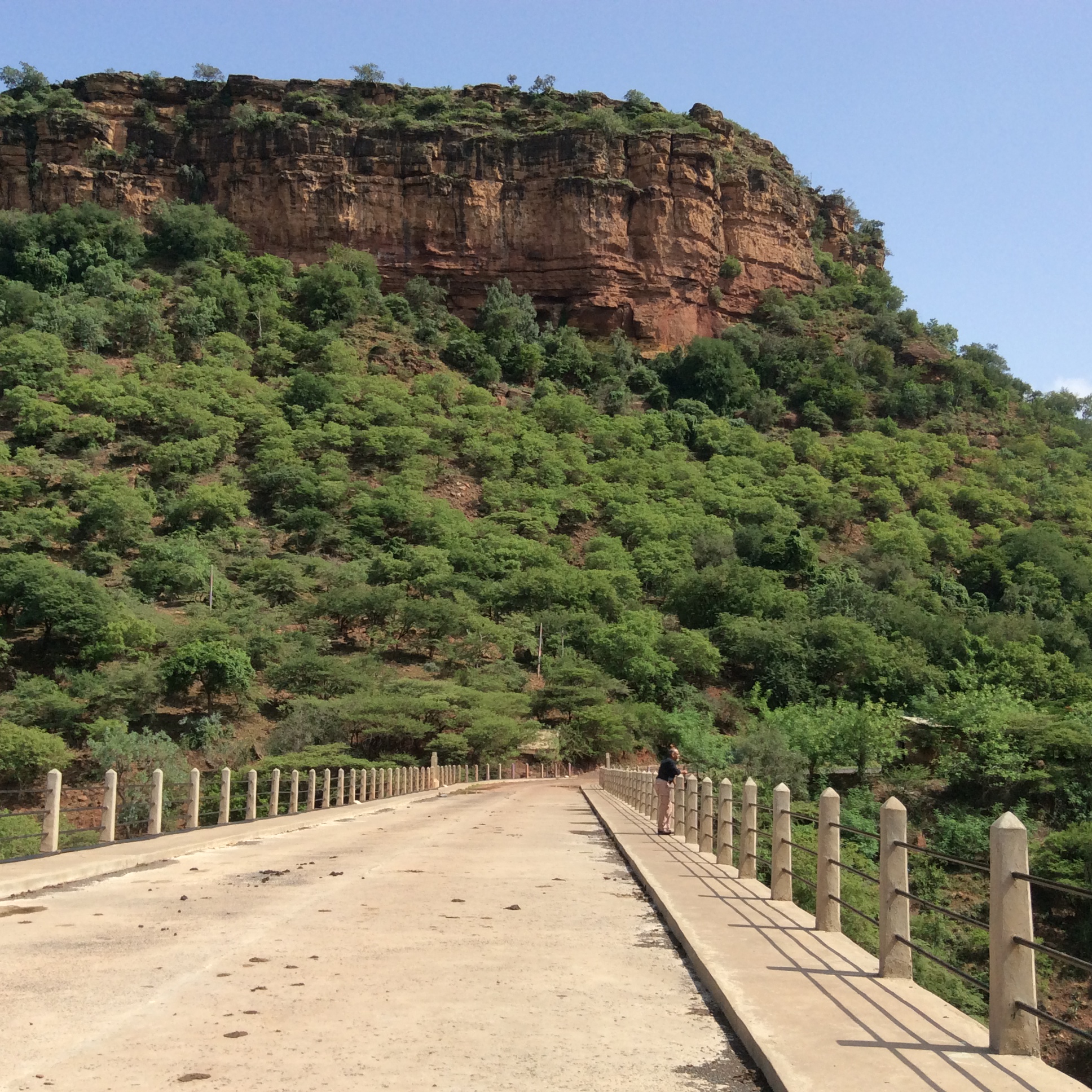
All major bridges seem to have a resident guard.  Unlike the guard at the bridge in Bahir Dar, this guy told us we could walk around and take photos.

IMG_0988

If there is a guard, he has to have a guard house.

IMG_0994


And a house.

IMG_0986

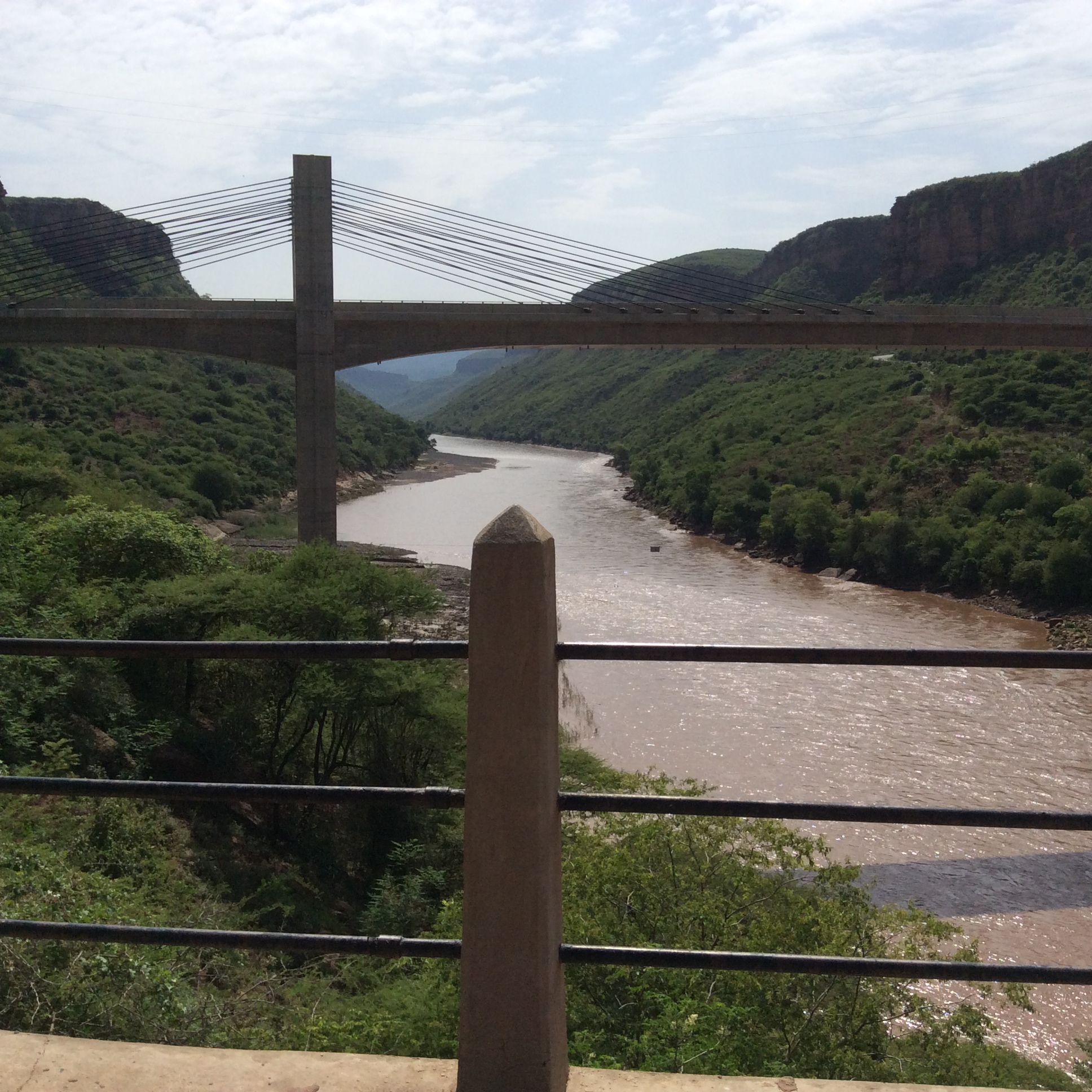
Even though by this time I had not only floated down the Nile but also crossed it in a boat a couple of times, I remained entranced.  We walked across the old bridge built in 1948.  Actual traffic now crosses the new bridge built by the Japanese.

IMG_0974

IMG_0976

IMG_0980

Personally, I did not see anything wrong with this old bridge and wondered why they thought they needed a new one.

IMG_0982

A couple of signs written in several of the languages spoken in Ethiopia commemorate the old bridge.

IMG_0984

As we climbed out of the gorge, we saw common baboons begging.  They are neither as pretty nor as friendly as gelada baboons.

IMG_0998

IMG_0996

I could not resist taking a variety of photos looking back down into the Nile Gorge.

IMG_1001

IMG_1007

Dino could not resist stopping for one long, last look at the Nile.

IMG_1011


When we asked the name of this waterfall, we were told that it was just an ordinary waterfall and had no name.

IMG_1014

The final switchback before we became immersed in the clouds.

IMG_1015

My Ethiopian Adventure: Bahir Dar and the Nile Falls


My Ethiopian friend with whom I travelled asked me about a week ago, “Where would you like to go back to if you go back to Ethiopia?”  With a little hesitation while various places flitted through my mind, I answered, “Bahir Dar.”  Why?  Bahir Dar’s climate suits me perfectly, tropical but not all that hot, lush flowers everywhere, Lake Tana, the Nile.  What more could one ask for?

IMG_0864

You can drive down streets that look like this and go to restaurants along Lake Tana with beautiful scenery and gardens plus a lake view.

IMG_0867

IMG_0868

IMG_0870

IMG_0872

IMG_0873

And I could drink the only beer I have ever tasted that I actually liked.

IMG_0871

Saint George Amber Beer.  Yes, Saint George is everywhere, even beer.

To get to the Nile Falls, you have to drive through the countryside on less than fabulous roads and park in probably the dirtiest, most dismal village I saw in all the places I visited in Ethiopia.  Part of the dirty appearance, I know, was due to it being the rainy season with puddles and mud everywhere.  Once I walked away from the village on the path to the falls, lush farmland lay before me.

IMG_0876

Fields of beans and corn.  Off and on all my life, I have raised corn.  This corn is as good a crop as I have seen anywhere.

IMG_0877

On the path to the Nile Falls, youngsters show up everywhere selling various items.  This young man walked all the way to the falls and back with me.  I bought this flute for my grandson.  We have all tried to play it, my daughter and grandson, and I.  We cannot make a sound.  This young man made it sing.

IMG_0890

He also spoke very good English which he learned in school.  He could explain all the crops, when they plant, everything as we strolled along.

The falls, although impressive, failed to meet my expectations.  After seeing numerous photos of them, I expected something grander.  They used to be.  Now, 80 per cent of the water is diverted from the Nile before it reaches the falls.  Ethiopia produces enough hydroelectric power to export it to nearby countries.  85% of the people in Ethiopian have electricity.  As you drive by villages, you can see dishes for TVs on rooftops.
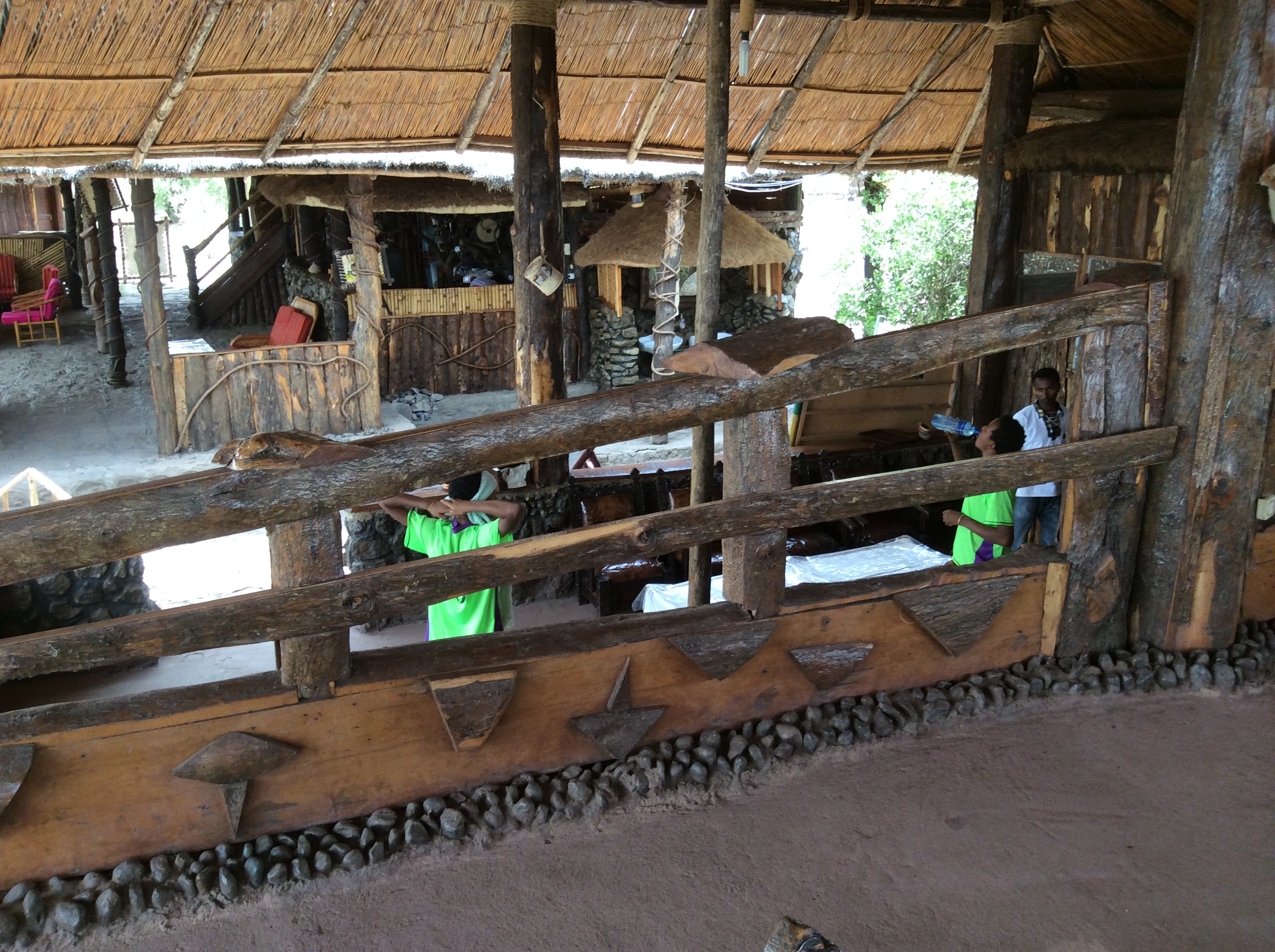
IMG_0879

We were told that the falls used to be so large they covered everything where we stood.

IMG_0886

IMG_0882

My friends took a different route to get to the falls than I.  I crossed the Nile at another location to get there.  They hiked around some large hills and crossed this footbridge made by the Portuguese years ago.

Children of varying ages crowded around us selling various types of items.  My friend, Zuriash, is in the middle with the hat.

IMG_0891

Twice that day I crossed the Nile in this boat.

IMG_0892

The morning we left Bahir Dar, Alemu took us to this restaurant at a fancy resort on the lake.  The owner’s story remains one of those success stories one hears off and on in Ethiopia.  He came to the US, worked for a big hotel here, learned the trade, saved his money, returned home, and built a couple of very successful luxury hotels.  This is the restaurant at the one in Bahir Dar.  All the rooms, the landscaping, everything deliberately duplicates African traditional architecture and gardening, a certain, special atmosphere.
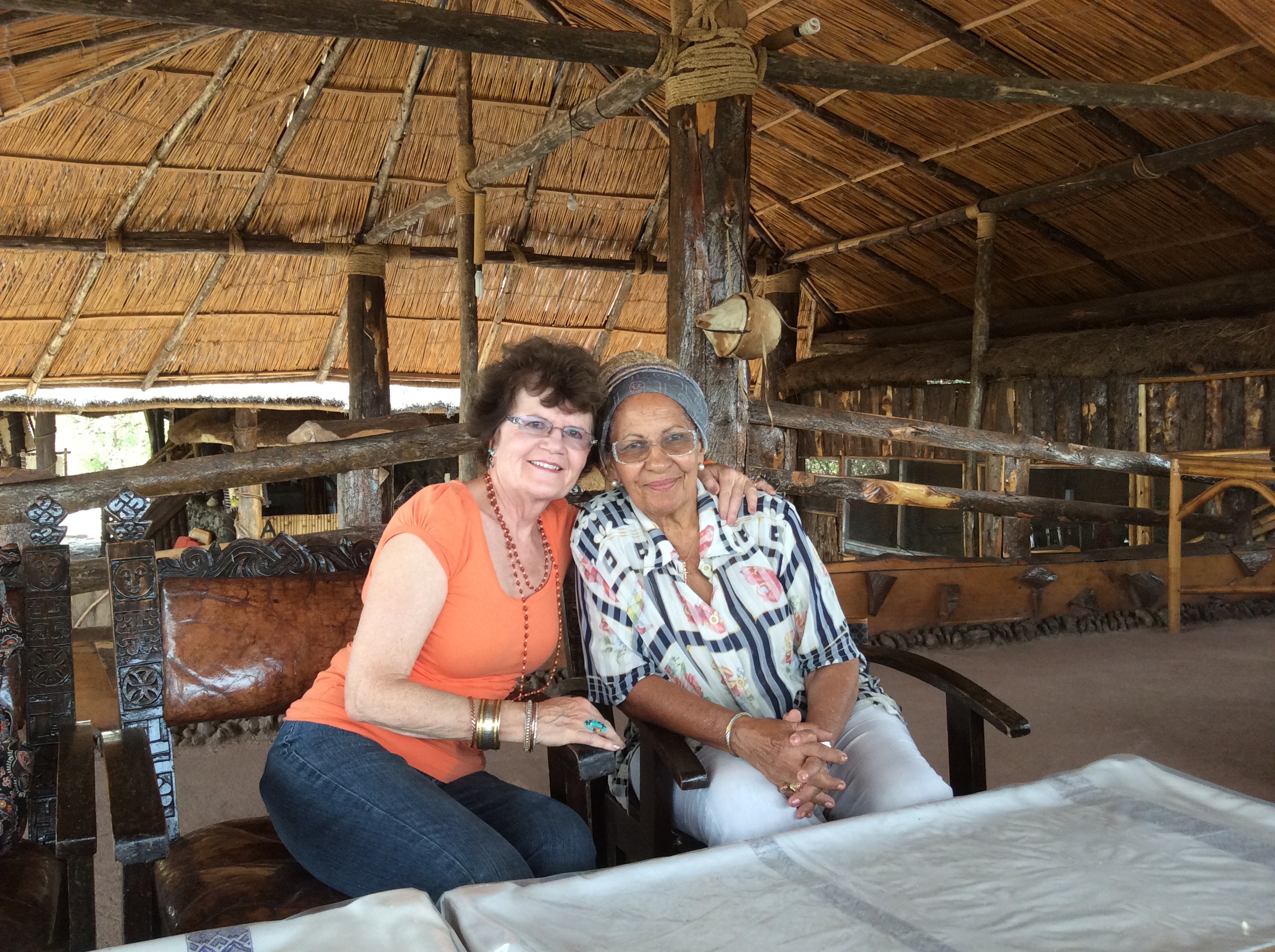
IMG_0893

IMG_0894

These hand carved chairs may look uncomfortable but they are not.  Somehow they fit the human body perfectly.  The following is a view of the pool and some of the rooms.

IMG_0895

IMG_0896

My Ethiopian Adventure–The Roof of Africa, Part One


Initially, we had planned to go no farther north than the city of Gondar.  However, in the pretrip planning, I came across photos of Simien Mountain National Park and knew I had to go there.  I told my friend Dino to take a look; we went.

IMG_0557

The road from Gondar to Debark, the city where one gets the pass, the guide, and the guard to go into the park is typical of the Ethiopian highland country, high, wet, and green.

IMG_0560

We kept saying things like “Are you sure we aren’t in Ireland?”  Nothing seemed to fit the stereotype everyone in the US seems to have of Ethiopia.

IMG_0562

IMG_0563

IMG_0564

Acacia trees like these out the front window must surely be among the most picturesque trees on the planet.

IMG_0565

Fences are relatively rare in Ethiopia.  Usually, animals are herded by boys and girls rather then enclosed by fences.  To get into Simien Mountain National Park, you must stop, sign in with your name, age, address, and passport in Debark.  After you do this, your party is assigned an official guide and a guard.  Yes, a guard.  These two men stay with you everywhere you go except your room and when you eat in the dining room at the only lodging inside the park.

IMG_0568

My room at Simien Park Lodge with traditional Ethiopia textiles for curtains and bedspreads.  This lodge resides at 3260 meters (nearly 11,000 feet) above sea level. There is no heat in the rooms.  To keep warm, each guest receives a hot water bottle to put in bed to keep warm.  I piled on two blankets and crawled in, but before doing so…

IMG_0598

I tried a new drink, Romana Sambuca, here in the highest bar in Africa.  We were told that normally, when the British owner is here, the locals, the guides, guards, drivers, etc. are not allowed either in here or the dining room.  We were glad he was not there so everyone could hang out around the fire together.  Even with this, Alemu could not eat with us in the dining room.  Such rules made us quite unhappy.  This sort of elitism seemed totally inappropriate and insulting, especially since this is their country.

IMG_0595

Knowing all I would have to keep me warm at night would be the hot water bottle and blankets, I felt reluctant to leave this fire in the bar.

IMG_0570

After checking in, we headed out for an afternoon hike.

IMG_0572

The hiking was relatively easy, not too up and down, but in places very wet and slippery.

IMG_0573

Our guard carried an umbrella (we all did and had the opportunity to use them)  and a Kalashnikov and never let us out of his sight.  He spoke no English so only Dino could actually chat with him.  He seemed very nice and helpful.  Yes, it was cold.  I wore four layers.

IMG_0574

Finding familiar plants in a different form fascinated me.  This plant, a type of thistle, bristles with thorns both on top and on the underside of its leaves.  Herbs grow everywhere.

IMG_0576

And then the cliffs and vistas overwhelm.  I have been all over the Rockies in the US and some of Canada, have driven through some mountains in Kashmir, and flown in and out of Nepal with a view of the highest mountains in the world.  Nowhere have I seen mountains like these:  endless cliffs falling thousands of feet, endless vistas, and endless emerald green.

IMG_0577

Frequently we walked or drove above various bits of clouds.  Sometimes the fog became so thick we could barely see where we were going. I am moderately brave regarding heights but it was wet and slippery.  Sometimes while the guard and my friends climbed right on the cliff edge, I chose to go higher with the guide.  In at least one instance, this strategy really paid off because we walked right through the middle of this huge group of gelada baboons.

IMG_0592

These baboons exist only in four places in Ethiopia.  I travelled in three of the four places. The males have a big red heart on their chests and heavy lionlike manes.

IMG_0588

The views never failed to astonish me.

IMG_0581

IMG_0580

IMG_0582

IMG_0578After five o’clock the baboons disappear, climbing down the cliffs into caves to protect themselves from predators–leopards and hyenas.

IMG_0593

Michael, the guide on the left, and the guard, fearless–these drop-offs are routine.

IMG_0594

The heights did not bother Dino.  He scared us with his ability to walk right up to the edge except in one case where he and Zuriash decided it was even too daunting for them.

IMG_0615


Robin Williams and a Few Thoughts on Major Depression


In the midst of my “fun”, enlightening posts about Ethiopia, I feel I must reblog this. The best vet I ever used for my horses hung himself–serious depression. It is very sad that with all the advancements in modern medicine, individuals continue to suffer so badly from depression that life is no longer worth living.

lenleatherwood's avatar20 Minutes a Day

I was very sorry to read the news of Robin William’s death yesterday. What a sad ending for a man who has brought such joy into people’s lives through laughter. How ironic that such a “funny” man could end his life by his own hand, communicating to the world that his private world had become decidedly unfun, unmanageable and out of control. His publicist stated that Williams had been suffering from a severe depression over the past several months.

There are several messages that can be discerned from William’s suicide:

One is obvious: appearances can be deceiving. A public image is not the same as the private person and it is inaccurate to assume that seeing celebrities at a distance offers any real glimpse into the angst they may be facing. Phillip Seymour Hoffman’s recent drug overdose comes to mind regarding this. However, this is not confined to celebrities: that…

View original post 312 more words

My Ethiopian Adventure–Lalibela, the Churches, Part Three


After we left the first group of churches, we had to walk to reach the one that is probably the most photographed.

IMG_0428

Like all these churches, this one, Bet Emanuel, was carved and dug out of solid rock and is built so that the top is level with the slope of the land.  Thus, it is purposefully nearly invisible unless you are quite close to it.  To get to the bottom and go inside you have to climb down rather steep steps. Built in the Auxumite style (Auxum was the original “capital” of the Ethiopian Orthodox Church), some art historians consider it to be the most impressive church in Lalibela.  It is 18 meters by 18 by 12 (58.5 feet by 58.5 by 39).

IMG_0429

The guide explained that because this church is of harder stone, it has no protective cover like some of the first churches we entered.

IMG_0430

Like the first group of churches, this one also has a drainage trench around it.

IMG_0431

A pool of holy water–I saw a boy go up to one of the pools and fill a bottle with water.

IMG_0432

A holy space where only priests can enter.  Every church has a copy of the Ark of the Covenant and a symbolic Bethlehem.

IMG_0435

Saint George and the Dragon appear everywhere. Saint George is the national saint of Ethiopia. There is even St. George beer.

IMG_0436

In this second group of buildings, two were definitely designed as churches.  However, even though others are currently used as churches, there is some question as to whether that was their original purpose.  The guide told us that one building is believed to have been the residence of King Lalibela and his family.  Unlike most of the other buildings, its layout does not appear to have been designed as a church. It also does not contain the usual paintings and artwork.

IMG_0437

Another sacred space. Before we could go on to see the other churches in this group, we had to climb out and walk by the River Jordan.

IMG_0438

All the trenches that drain water from the churches during the rainy season flow into this River Jordan.  The design of the churches, the symbolism, this River Jordan, everything was designed to duplicate to the extent possible he Holy Land, to create another Holy Land in the highlands of Ethiopia, a new Jerusalem.

IMG_0439

The road by the River Jordan.  Until recently people lived in the traditional houses you see on the right.  In front of one we saw a group of young men being trained as priests.

IMG_0440

The land near the churches looks just like anywhere.  You cannot see the churches until you are really close to them.  We were told they were built this way intentionally to protect them from invaders who had destroyed earlier visible churches.

IMG_0441

On both sides of the River Jordan are cemeteries. The dead from the tombs in the walls opposite the churches (see Part I and II) were moved here.

IMG_0442

Unlike the first group of churches shown in Part I, not all the churches in the second group are connected by trenches or so close together.To see some of them you have to climb in and out from one to another.

IMG_0443

IMG_0444

The guide took this photo.  Why am I wearing my socks over my jeans?  Fleas.  It is common knowledge that the carpets and bamboo mats on the floors of the churches contain lots of fleas.  We were told to tuck our jeans inside our socks and spray everything below our knees with insect spray.

IMG_0448

IMG_0449

Between this latter group of churches, there are some passageways so you do not always have to climb in and out.  There is a third type of church in this area, churches built in caves, one of which is 40 kilometers from Lalibela.  Churches such as these exist nowhere else in the world. The only way in and out of Lalibela is that steep road below my hotel room.

IMG_0451

It was drier around Lalibela because the rains were late. We headed to the cave church of Yemrehanna Krestos for the afternoon.

IMG_0452

IMG_0457

One disadvantage of traveling to Ethiopia this time of year, especially in the north, is the weather, cold and rainy.  On the positive side, often we were the only tourists.

IMG_0458

The climb up to the church was long and a bit steep but with good steps and handrails.  Rain had made the stones a bit slippery.  The churches have served an unintentional good in that around most churches in the country the original forest is left to hide the church.  This was one of a few places where we could see what the land looked like before deforestation and before invasive species were brought in from elsewhere.

IMG_0459

The guide who took us through the churches in Lalibela came with us here.  I walked with him and Dino and Zuriash walked with the priest who did not speak English.

IMG_0460

This is what you see when you first arrive at the top.  Like in all the churches, you have to take your shoes off.

IMG_0461

An entire church resides inside the cave.  We were told that the white marble and wood were brought from Egypt by elephants. The church dates to the 11th century.

IMG_0463

The cave is big with lots of space around the church.

IMG_0462

IMG_0464

IMG_0465

IMG_0472

The decor and carvings inside the church are very detailed and elaborate.  Services are held here weekly and at certain times of the year many pilgrims journey here some walking for many miles.

IMG_0473

The priest who resides in the village.  This is “his” church.

IMG_0468

Behind this fence at the back of the cave lay the bones of pilgrims who died here.

IMG_0477

The Ethiopians believe that one of the Three Wise Men came from Ethiopia.

IMG_0470

The tomb of Yemrehanna Krestos resides behind the church inside the cave.

IMG_0484

The road to this church is relatively new.  Before pilgrims had to either walk or ride a horse or donkey to get here.  The road continues above the village, but we turned around and headed back to Lalibela.

IMG_1263

There were two shops in the village that sold sacred objects and souvenirs.  I bought this cross which has St. George and the Dragon on one side and the Virgin Mary and baby Jesus on the other.  Mary is exceedingly important in the Ethiopian Orthodox Church.

IMG_1265

I like to bargain and generally did quite well with it when purchasing various items.  However, the man in this shop for this particular item refused to come down.  I really wanted it because it seemed quite unique so bought it at his price.  Nowhere else did I have to do that.

On the road back to Lalibela we decided to stop and admire a couple of huge fig trees.

IMG_0485

IMG_0486

My Ethiopian Adventure–Lalibela, Part One


IMG_0393

The final climb to Lalibela nearly terrified me–switchbacks up and up, no guard rails as I recall, and drop-offs more than a thousand feet.  This photo, taken from my hotel room patio, fails to really show just how far down the drop really is.  The other buildings in the photo are also hotels.  Having been told that only one really good restaurant exists there, we ate at the same place two evenings.  It rests at the end of a narrow unpaved road at the edge of a cliff.

IMG_0497

The second evening there, we met the owner, an older woman from Scotland who originally came to Lalibela at the request of a friend to teach.  She stayed, bought this land, and hired two young architects from Addis to design the restaurant–to look like a flower.

IMG_0498


IMG_0494

To get to this restaurant from the hotel, Alemu had to turn the corner as tightly as he could, backup a bit, and then proceed on this road.  Immediately below where we backed up,  there is a steep cliff.  I asked him if anyone ever fell off. He said a friend of his did.  I assumed he had died, but no, his vehicle was caught by a tiny ledge and he survived.

image

The road up to Lalibela as viewed from my hotel patio.  We stayed at the Maribela Hotel which was one of the nicest on the road trip.  They were still building a restaurant but served an excellent breakfast.

IMG_0395

Lalibela is to the Ethiopian Orthodox Church what Jerusalem is to Jews and many western Christians.  It is famous for its eleven churches carved from solid rock.  It has been called the New Jerusalem, a New Golgotha.  In approximately 1200 AD, King Lalibela, one of the last kings of the Zagwe dynasty, came to power after God told his brother, who was king, to abdicate.  The name Lalibela comes from honey, sweetness because when a baby, King Lalibela was surrounded by bees which prophesied his future greatness.  The story becomes quite complicated but in essence, angels took his soul to heaven and showed him the churches he was to build.  They were built in twenty four years with the help of angels.  Lalibela then became the holy city.  Like the ancient rulers from Axum (the original holy city where they believe a church holds the Ark of the Covenant), the Zagwe dynasty traced their origin to King Solomon and the Queen of Sheba.

In Lalibela two types of rock churches still stand:  rock hewn monolithic churches which were cut out of solid basalt from the top down with trenches surrounding them and rock hewn churches which were cut inward from a cliff or by using a natural cave or indentation in a cliff as a starting point.  The architectural and technical building skill required is clearly evident.  The churches are on several levels and built in such a way that they drain to carry off the heavy rain flow during the rainy season.  The trenches around the churches also serve to feed the River Jordan–an area made to duplicate the original River Jordan.  The architecture of the monolithic churches exists nowhere else in the world.

To tour the churches requires a professional guide who knows the history and architecture intimately.  Our guide held the position of deacon in the Ethiopian Orthodox Church.  While many Muslims live in parts of Ethiopia, Lalibela is a Christian town in a heavily Christian area.  Deacons and priests can marry, but if a male wants to become a bishop, he cannot marry.  The Ethiopian Orthodox Church, like the traditional Catholic Church with Latin, has its own ancient religious language, Ge’ez.  The alphabet of modern Amharic is the same as Ge’ez. Priests learn to read Ge’ez.  Later, in Gondar, we were able to get a priest to chant from a religious text in Ge’ez.  For more details regarding the Ethiopian Orthodox Church, a list books in both the New Testament and Old Testament, as well as other sacred texts and hymnals, go to:   http://www.ethiopianorthodox.org. There are many more books in the Orthodox Bible than in those used by European and American churches.

IMG_0396

My Ethiopian Adventure–On the Road to Lalibela, Part Two


IMG_0344

Mountains pervade everywhere it seems.  We continually drove up and down mountainsides.  Eucalyptus is not native.  They were brought in by the Australians many years ago and became invasive.  They are a mixed blessing–grow rapidly and have many uses, but they take a lot of water and drive out native species.  When simply cut down, they grow right back.  In some places, we saw preserves where the original species of trees still exist and are protected.  Otherwise, eucalyptus reign.

IMG_0348

IMG_0350

And there are several species of eucalyptus as you can see here.  Not only do the leaves differ, but also the color of the trunks.

IMG_0352


IMG_0353

Almost all the mountainsides are covered with fields.  Ones, like this one, may have been just plowed or just planted.  In the mountains barley, wheat, and oats are grown and sometimes teff.  Barley seems to ripen first.

IMG_0356

At first, I suffered minor terror because of the steep roads and huge drop-offs, sometimes thousands of feet.  However, eventually I became rather used to it.

IMG_0357

These roads, mostly built a long time ago by the Italians, remain excellent and do have guardrails.  The Chinese have built some of the newer roads.  The Ethiopians make jokes regarding how long they think these Chinese roads will last.

IMG_0359

Eventually, we rose to a high plateau area across which we drove for hours.

IMG_0360

The endless shades of green, indicating different crops, or in some cases, the gold of ripening grain.

IMG_0363

Winnowing grain the old fashioned way.

IMG_0364

IMG_0365

Houses on this high plateau seemed mostly built of rocks which lay everywhere.

IMG_0366

IMG_0368

Amelu asked us if we wanted to see inside one of the houses and visit with some people.  Of course, we said yes.

IMG_0373

This couple had a somewhat older child who was out herding their animals–cattle as I recall.  At night they bring the animals inside their house to protect them from predators, e.g. hyenas.  They also provide body heat which helps them keep warm.  He explained in Amharic that   he did not own land, but was saving up and when he could, would build a separate house so that their animals would be able to stay in one and his family in another. I thought Amelu knew these people, but he did not.  His own children had outgrown some of their clothes.  He had brought them to give away so he gave them to this family.

IMG_0375

After we crossed the plateau, we dropped down and crossed a river. Because it was the rainy season, rivers raged everywhere, running dark with mud.

IMG_0381

The little shed is for the river guard.  We did not see anyone here when we crossed, but major rivers have guards often armed with an assault rifle.

IMG_0385

IMG_0388

Almost to Lalibela–we discovered later that the rains were late and people were very concerned.  Crops had been planted and they were waiting.

IMG_0379


IMG_0392

The first photo in Lalibela–the view from my room at the edge of a cliff–the Maribela Hotel.