Over One Foot of Snow


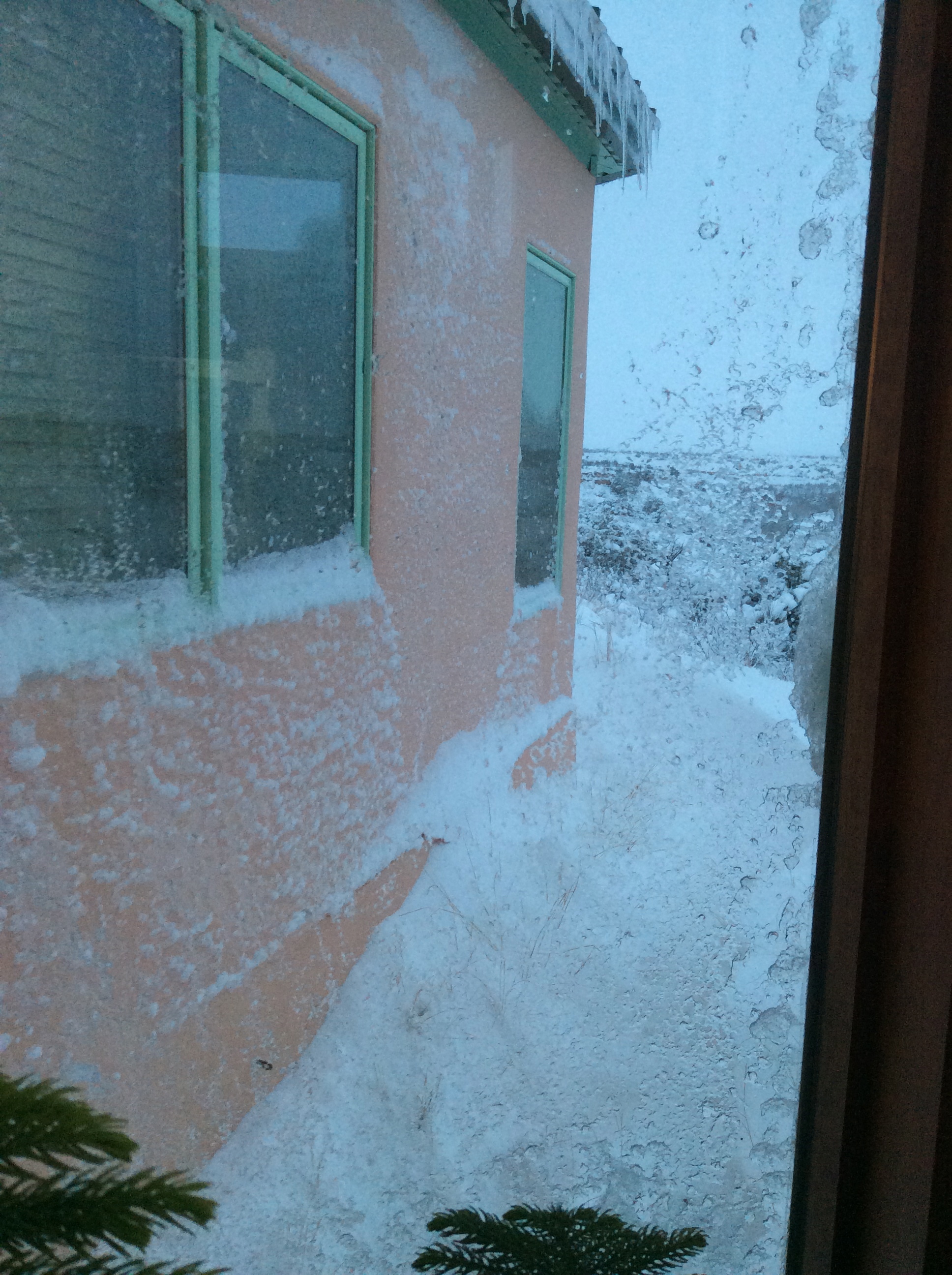
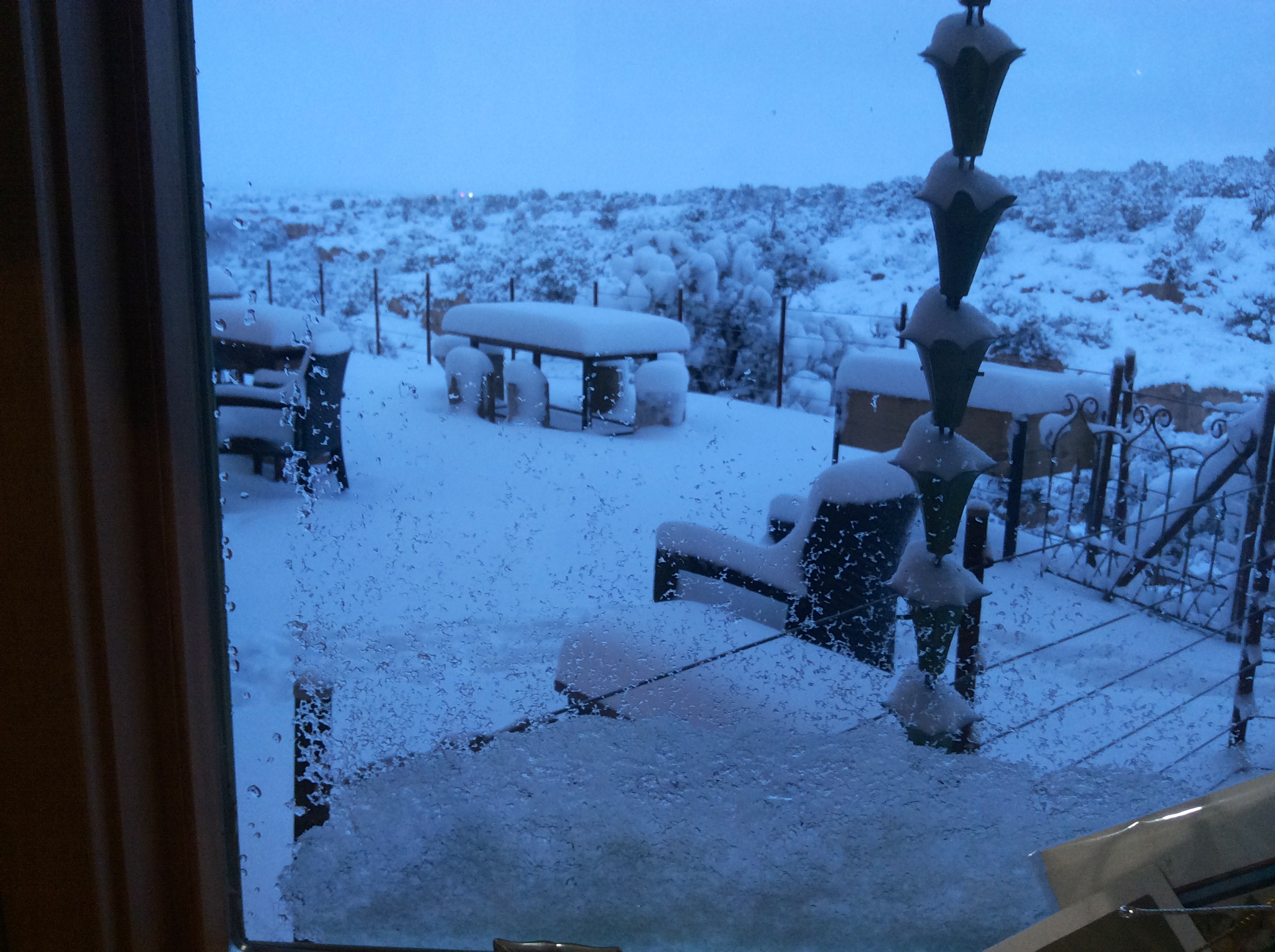
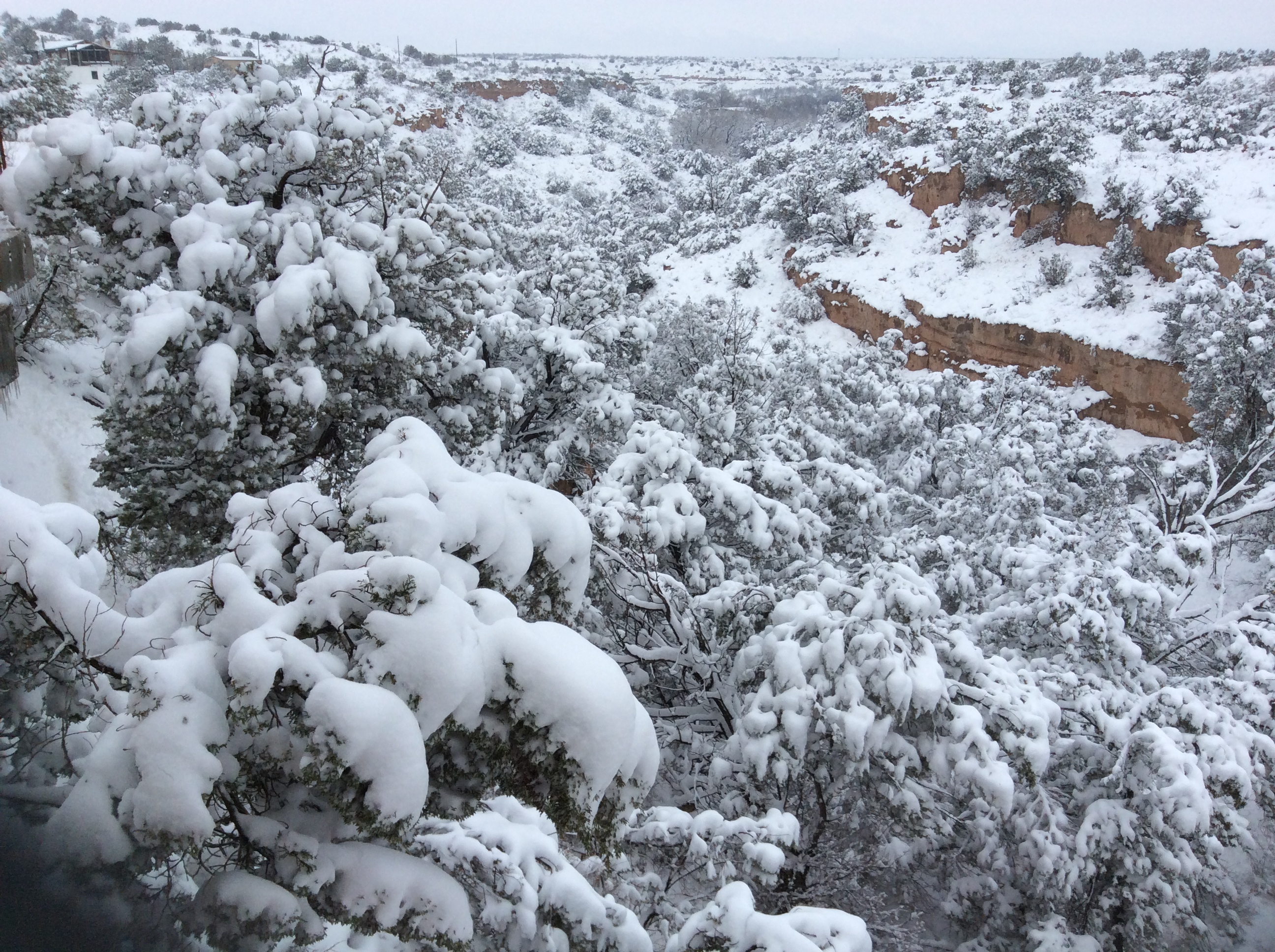
Once I learned there would be no school today–I am a teacher, I planned to blog something profound and thought provoking.  However, thirteen inches of snow takes a long time to shovel.  Before it became sufficiently light to hike out and feed Rosie, my horse, I took these photos.

IMG_1410

IMG_1413

IMG_1412

IMG_1415

It took no time for me to realize as soon as sufficient light arrived and it warmed up a bit, that I needed to start the shoveling process.  Since the patio in the photos receive little sun in winter, it would take weeks–a weeklong warming trend is on its way–and probably longer than the predicted warming trend to melt all this unless I started working on the shoveling process.  The profound blog forgotten, I put on tights under jeans, three layers on top plus a long coat, two pairs of gloves, wool socks over the tights, boots, and headed out.  Round one entailed my shoveling a path up the steps seen in a photo above and on to the barn to feed Rosie, returning to the patio and shoveling for about 1 and 1/2 hours.  At that point cold hands and feet necessitated my coming indoors to warm up.  In the meantime I took a few more photos.

IMG_1409

IMG_1414

Much to my dismay, this unusually wet and heavy snow broke off a large limb on the juniper tree by my blue, Santa Fe inspired, door.  When it warms up and the snow melts, I will have to saw it off and learn to live with the space it used to occupy.

IMG_1417

Because I did not want this to happen to a couple of other trees close to the house, I later went around with a shovel, hitting them, trying to knock off snow.  Time for round two of shoveling–the rest of the patios.  The snow is beautiful, but after four hours of shoveling and vacuuming the whole house between shoveling rounds, I think perhaps I will collapse and profundity can wait for another day.  Later in the afternoon I took the photos below.  I am not a photographer; I teach high school seniors British literature.  However, a painter asked permission to paint the photo below.  I feel quite flattered.

IMG_1419

Since my truck is in the barn above the house and my drive next to the garage is full of snow as seen in the photo below, it may be a week or so before I go anywhere in my little car.

IMG_1416

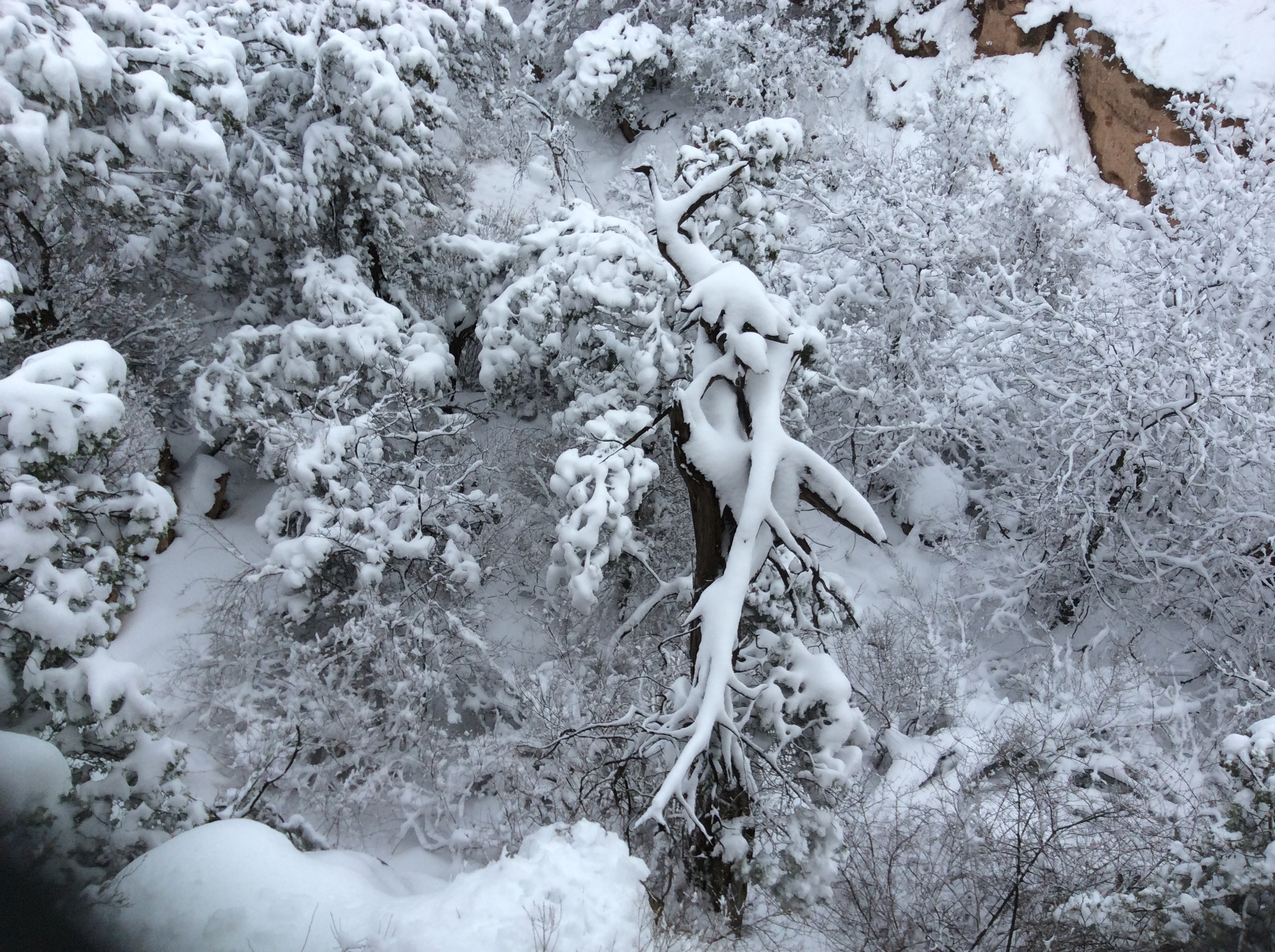
During the last snow storm, a friend came over and took a photo of the aged juniper tree rising from the canyon floor almost to my patio.  After he took the photo, we noticed it looks like a bird.  Today as you can see from this photo, she is a snow goose.

IMG_1418


55 Random Facts about China


My fellow blogger from India posted this. I found the detailed information quite fascinating and much of it surprising or new.

getsetandgo's avatargetsetandgo

Before my recent trip to China, for some reason, I had a bunch of wrong notions and misconceptions about this country. In hindsight I feel that some were so random that I can’t even begin to fathom where did they originate from. But whatever my expectations or beliefs China proved me wrong on nearly all of them. Hence it’s not surprising that this holiday also doubled into a learning experience – that I term as China 101. I discovered many new facts, explored some different facets and met some of its amazing people. Some of these experiences / discoveries were amazing, some shocking and some downright disgusting.

Forbidden City, Beijing, China Forbidden City, Beijing, China

View original post 1,934 more words

My Ethiopian Adventure–Final Days


It took me a while to post this because I did not want the adventure to end.  Of course, it will never end in my heart and mind.  Nevertheless, this last post about my three week adventure brings a feeling of termination I have apparently attempted to avoid.  I spent the last few days of my trip, staying with my friend’s parents in Adama.  They took me on the wonderful adventure described in my last Ethiopian post, the day trip to Awash National Park.  Later, we went shopping for gold, silver, and textiles, ate, wandered around, visited, relaxed.  We listened to the Muslim call to prayer and the Ethiopian Orthodox chanting.  One day I heard another voice over the loud speakers and asked, “What is this one?”  The Pentecostals competing–three types of churches all on loud speakers, calling people to worship.  Because at least two of them start before dawn, it kept my friends up.  By this time in the trip, I had earned to sleep through it all.

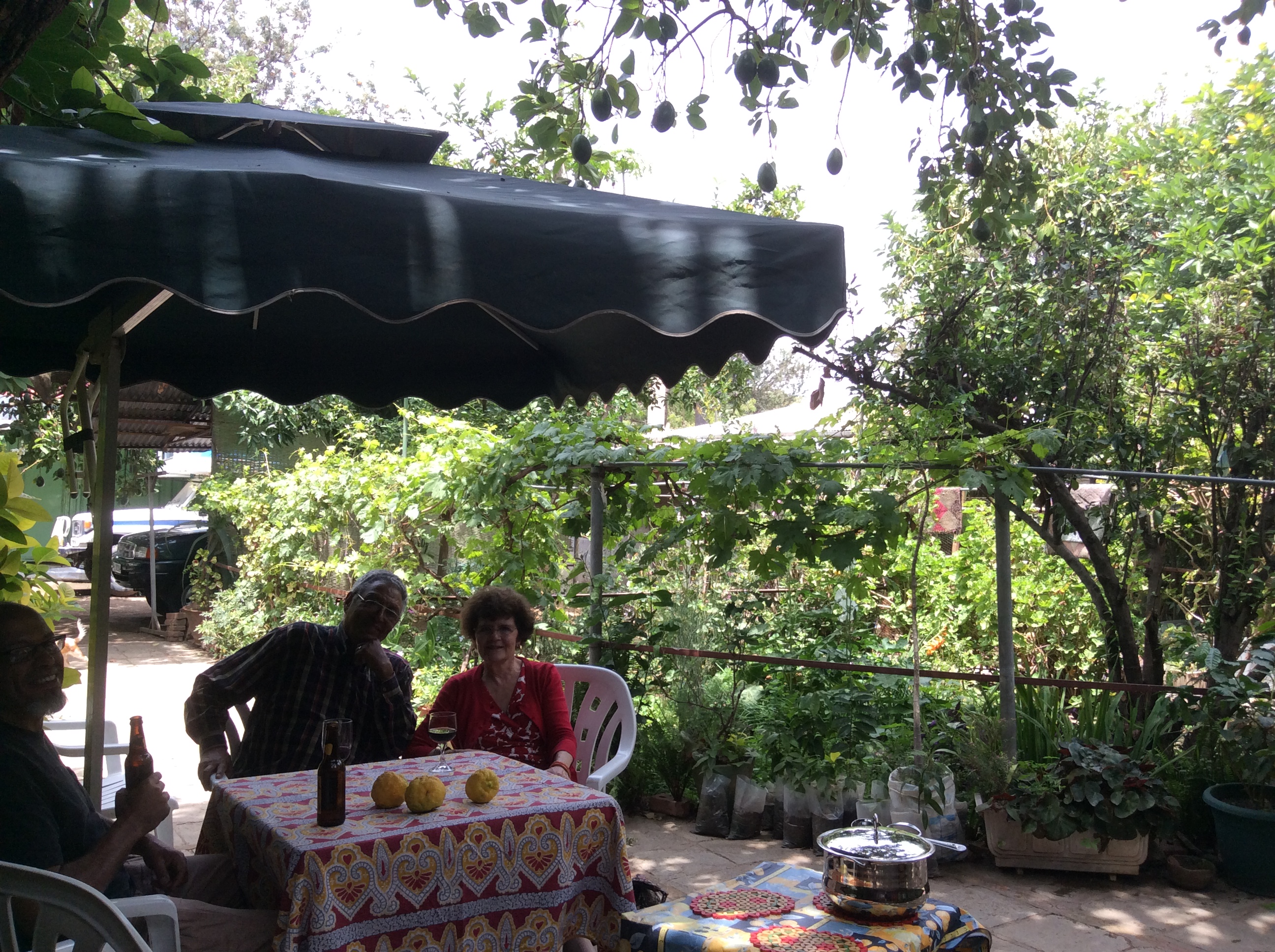
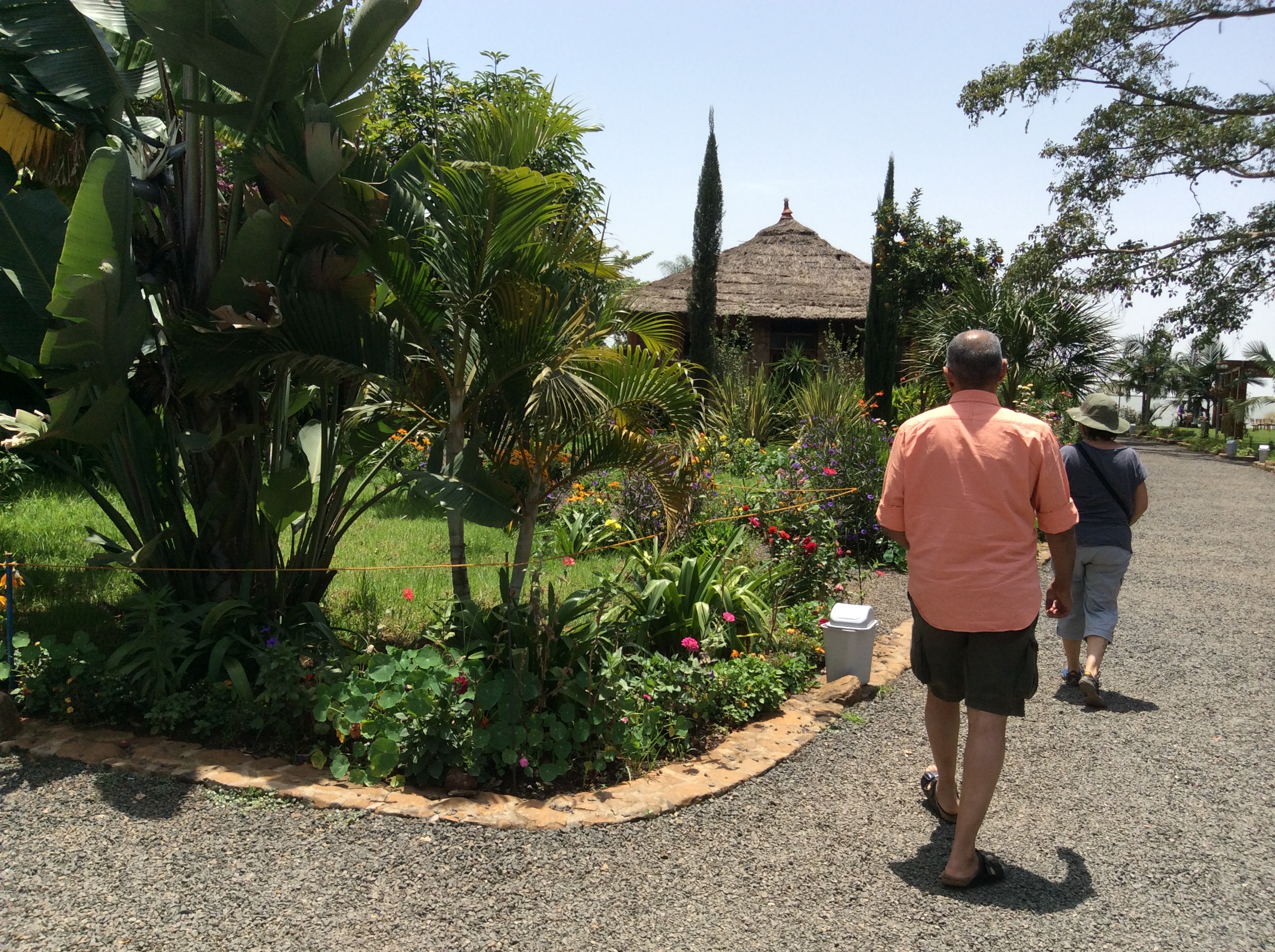
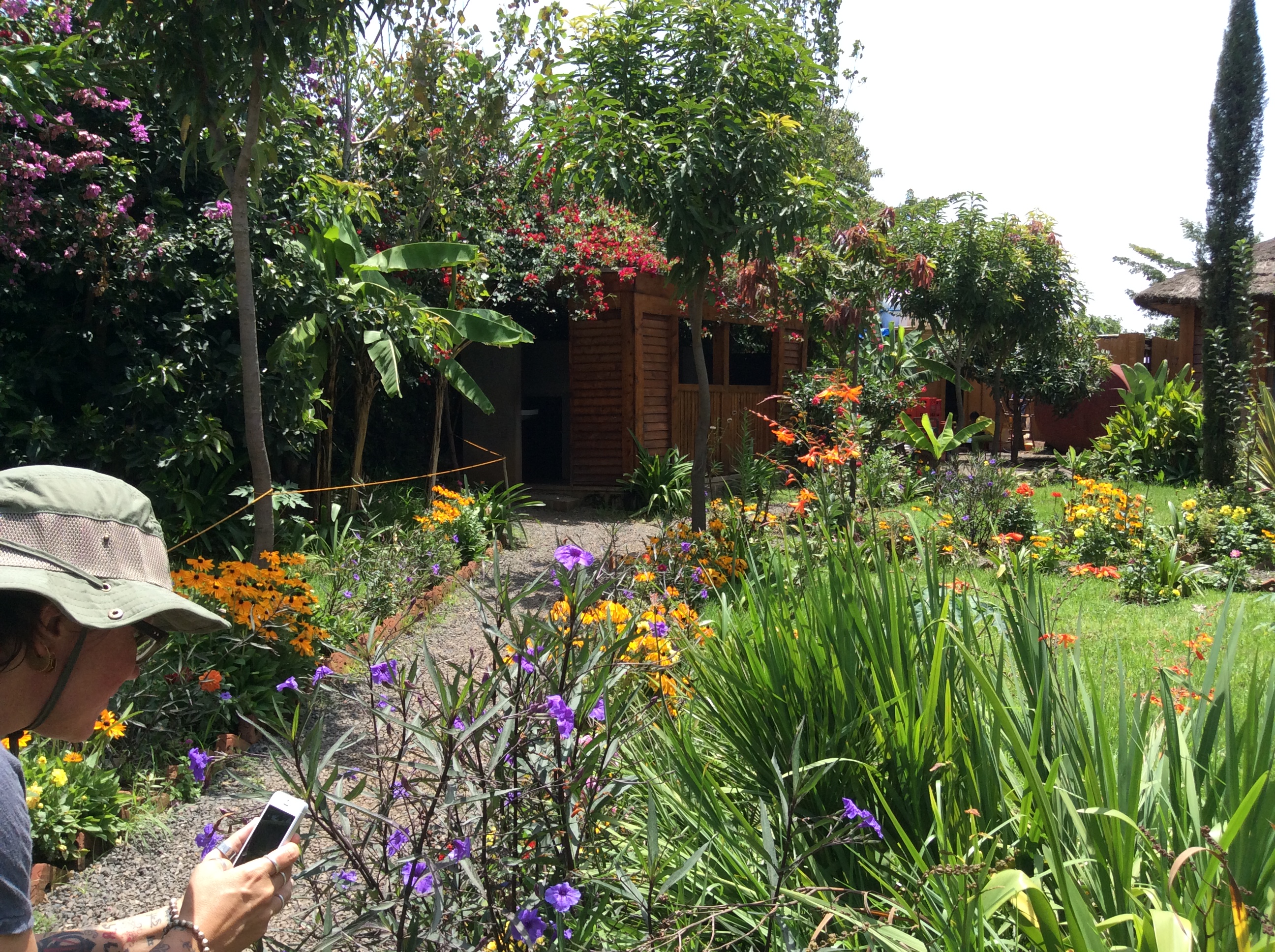
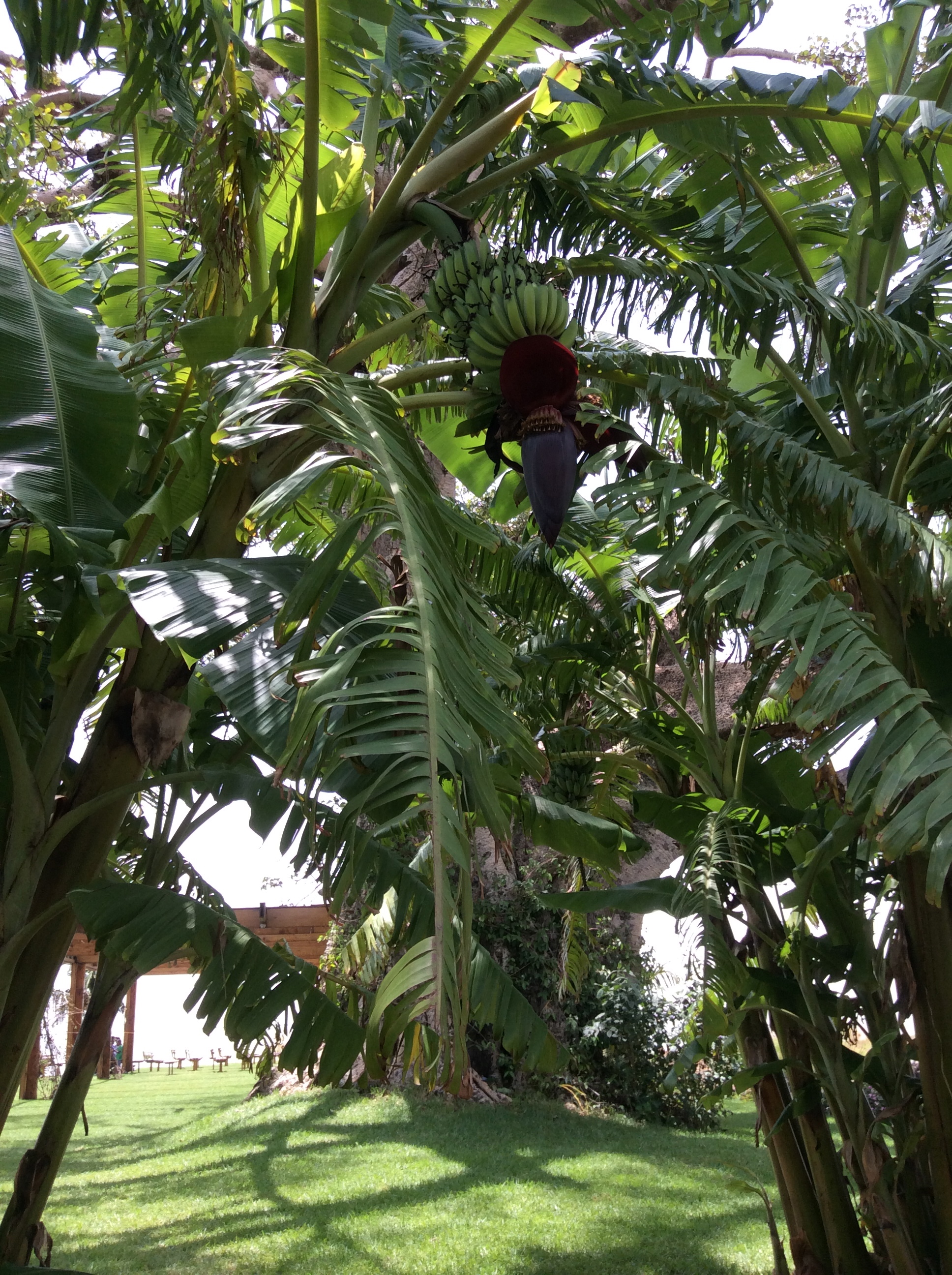
I like the climate in Adama, especially after being cold for most of the first half of the trip.  It seemed I could put on multiple layers and still shiver.  Adama is nice and warm, hot, but not too hot.  Flowers and tropical fruits thrive as in the photos below–my friend’s mother’s lush garden and her elegant table.

IMG_1085


IMG_1090

The plates are an Ethiopian design apparently only available there–Ethiopian figures in a circle. Even breakfast is a work of art.

IMG_1177

The neighbor’s grape arbor amazed me.  I have never seen anything like it.

IMG_1181

Zoning remains unheard of here.  Next to a new, well built, modern house where one or two families may live is a place like this or the one on the other side of my friend’s parents’ house where both cows and no one knew exactly how many people live.

IMG_1179

In the dark space in the middle of the above photo live two cows–if they have not been slaughtered by now.  From this vantage point I could see a minaret, a modern wind farm on the far hill, cows, goats, an empty lot, a luxurious looking house being built on the other side of this adjoining lot, everything from the most modern to the ancient.  Every bedroom possessed its own little patio.  The photo below shows the view from mine.

IMG_1087

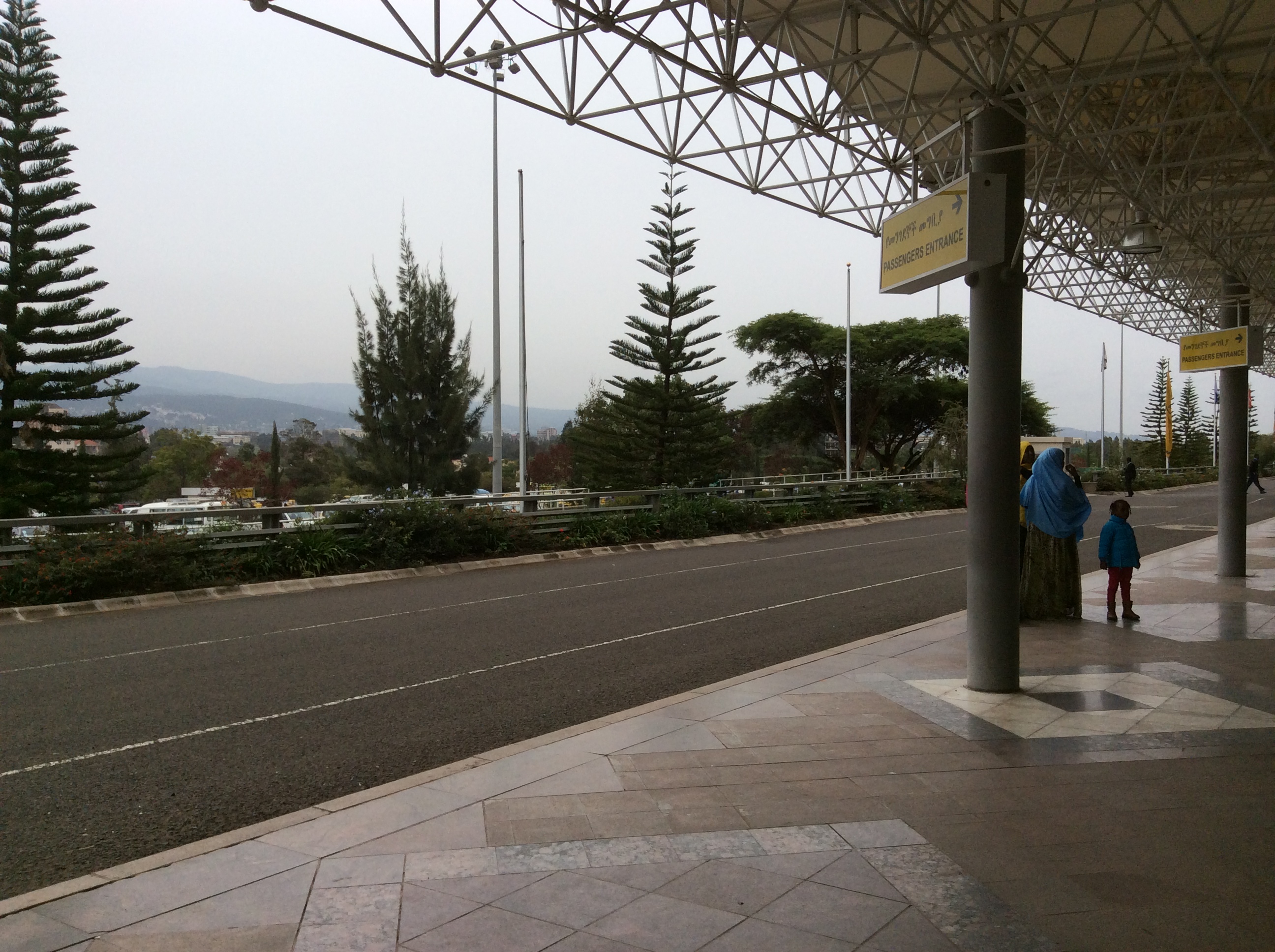
So we would not have to make a mad rush to get me to the airport through Addis traffic, we went back to Addis the day before my flight out.  I took a few photos from the front of the Addis airport before I left.

IMG_1183

IMG_1182

Due to the kindness of a complete stranger, I made my flight.  When I was about to go through the passport line, I discovered I had my friend’s passport which meant she had mine.  In Bahir Dahr, we had to show our passports to the hotel before getting keys for our rooms.  Apparently, the young man switched them when he gave them back to us.  We took them and put them away without looking.  My phone did not work in Ethiopia.  I experienced a major panic.  I had my Ethiopian friend’s phone number but no phone.  I explained to the guy checking passports the problem.  The man standing in line next to me heard and offered his phone.  He actually got out of line to help me.  I did not recognize his accent and have no idea his country.  He called the number for me.  The call failed to go through.  He waited, tried again.  Eventually, it all worked out and I made my flight, all due to this man’s patience and kindness.  When I finally made it inside the airport, several people who had heard the problem actually came up to me and told me they were worried I might not make it.  I knew none of them; yet they cared.

With a six hour layover in Dubai, I had a lot of time to wander, drink coffee, explore the airport, which is huge, really huge.  I bought some perfume–Muslim perfume with no alcohol in it.  I like it so much, I will have to figure out how and where to order it when it runs out.  Many of this airport’s shops are opulent.  People stood in line to buy gold, high end cosmetics, designer everything.  It is cosmopolitan, clean, efficient, fancy, welcoming.

IMG_1185

IMG_1184

In this airport, I saw one of the women who was relieved to see me inside the airport at Addis after my passport scare.  She unfortunately experienced a frightening incident during the flight and they had to give her oxygen.  We chatted, she seemed fine finally.  As I write this, what do I remember most of those last 36 hours of the trip:  the kindness and concern of total strangers.


2014 in review and HAPPY NEW YEAR


This posts the usual annual report stuff.  Looking at stats always surprises and to some extent dismays me.  What seems the most popular is frequently what I find the least important, food, for example.  I receive a lot of responses to recipes.  Before I started blogging I had no idea how important food is to a lot of people.  What remains most important to me may not be to readers out there:  my writing, travel adventures.  Some of My Ethiopian Adventure posts received a lot of hits and one was tweeted all over Africa.  People from 88 countries viewed my blog.  Still two of the most popular posts were recipes.  Life is always full of surprises and wonders.  May 2015 continue this amazing adventure:  Life.

Here’s an excerpt:

A New York City subway train holds 1,200 people. This blog was viewed about 4,500 times in 2014. If it were a NYC subway train, it would take about 4 trips to carry that many people.

Click here to see the complete report.

Who Is the Best Writer: A Matter of Taste and Viewpoint


Until I was asked to be a judge for a memoir competition, I did not spend a lot of time thinking about this topic.  For years my general awareness about writing preferences included the knowledge that the writers I prefer and usually read rarely hit the best seller list and generally are not white, main stream USA.  What do I read:  Native American (American Indian), Indian as in the country of India, and Latin American writers, and writers from the Middle East, especially Iran.  My favorite writer is Leslie Marmon Silko.  My favorite book of hers is Storyteller.  My favorite story, “Yellow Woman”, is in that book as well as numerous literary anthologies. I estimate I have read that story at least fifty times, maybe more.  Why?  In spite of asking myself that question, I remain somewhat clueless.  Because of my current teaching assignment which includes British literature from Beowulf to now, I try my best to read a bunch of British literature.  For instance, I just read I, Claudius by Robert Graves.  Of course, it has nothing to do with Britain; perhaps it does not count.   Next on my list is The Inheritance of Loss by Kiran Desai.  This book won the Man Booker Prize in 2006.  Although she writes in English, she obviously is not British unless you consider being in a former British colony counts as British.

Back to my contest assignment:  Two of the books I was assigned to read nearly put me to sleep.  One did not; in fact I liked it a lot–enough to mark pages with passages I plan to use when I need writing inspiration/ideas later.  When I read a bunch of reviews recently, it came as quite a shock to find one of those put-me-to-sleep books favorably reviewed.  Could I really have been that far off base?  I consider the possibility that even though I have read some excellent memoirs, I find many of them impossible to read.  Why?  From my viewpoint, many memoirs whine, lament, and carry on about the past in a way I find highly objectionable.  Who wants to read hundreds of pages about how someone overcame addiction or some hideous disease or a divorce? Apparently, a lot of people.  Even though I consider The Glass Castle an excellent book, I even had a difficult time plugging through the last 50 pages of that one.  Some of Storyteller is a memoir–a combination of poetry, vignettes, photos, but it also includes several enlightening short stories.  While writing now and reflecting, I can only think of one other memoir type book, I actually recommend to people, Jimmy Santiago Baca’s A Place to Stand.  While stopping by the library this morning, I did pick up Willie Nelson’s latest, Roll Me Up and Smoke Me When I Die.  It even has a foreword by Kinky Friedman, who in my opinion would make a much better governor than any one we have experienced in Texas lately or will have for the foreseeable future.  With a title like that, about Willie, and Kinky thrown in, surely it won’t be too boring.


The Thinks You Can Think: Creators of Love & Life & Realities for Everyone to Share


I want to promote this blog. Oscar Hokeah’s posts are well worth taking the time to read. He is a Native American writer who currently lives in New Mexico and is originally from Oklahoma. One of his recent activities is raising money to get his new novel published. He has won numerous awards. His posts range from very serious subjects, e.g. prejudice and discrimination to the less serious, e.g. his love for coffee. Take a look for yourself.

My Ethiopian Adventure: The Great Rift Valley and Awash National Park


My friend’s parents live in Nazret or Adama, depending on which Ethiopian language you speak.  Nazret is the Amharic name and Adama is Oromo.  After relaxing a couple of days there, we headed toward Awash National Park for a day trip.  What a contrast to the previous part of our journey.  Intense green and cold totally gone.  What we saw here probably fits more with what most Americans picture when they hear the word Ethiopia.

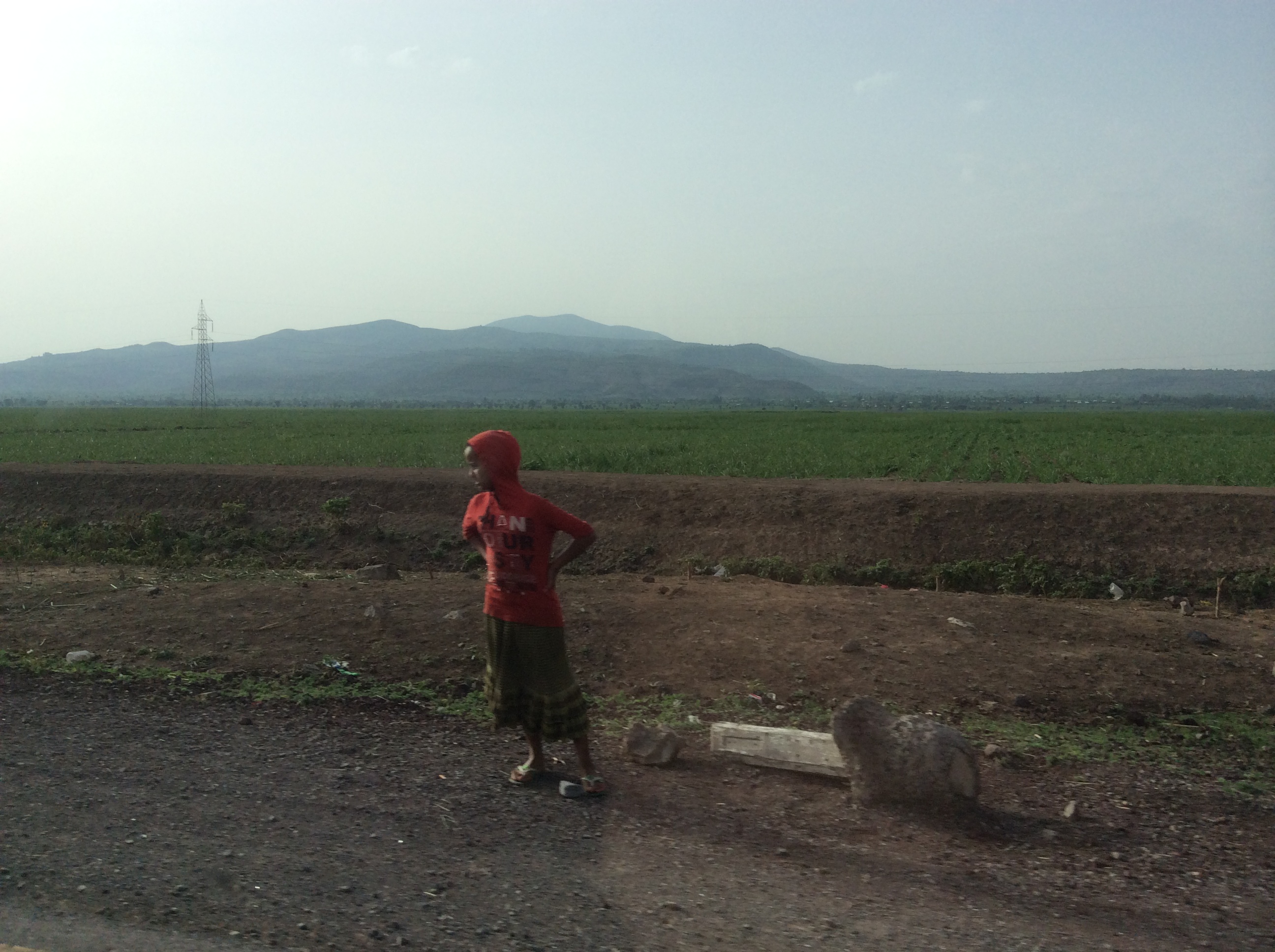
On the way out of town into the country, we passed fields of various crops including this sugar cane field.

IMG_1092

We also saw fields cultivated for sowing teff.  Since I had seen teff fields previously in the green, high mountain country, I came to the conclusion that teff successfully grows in a wide variety of climates and altitudes.

IMG_1093

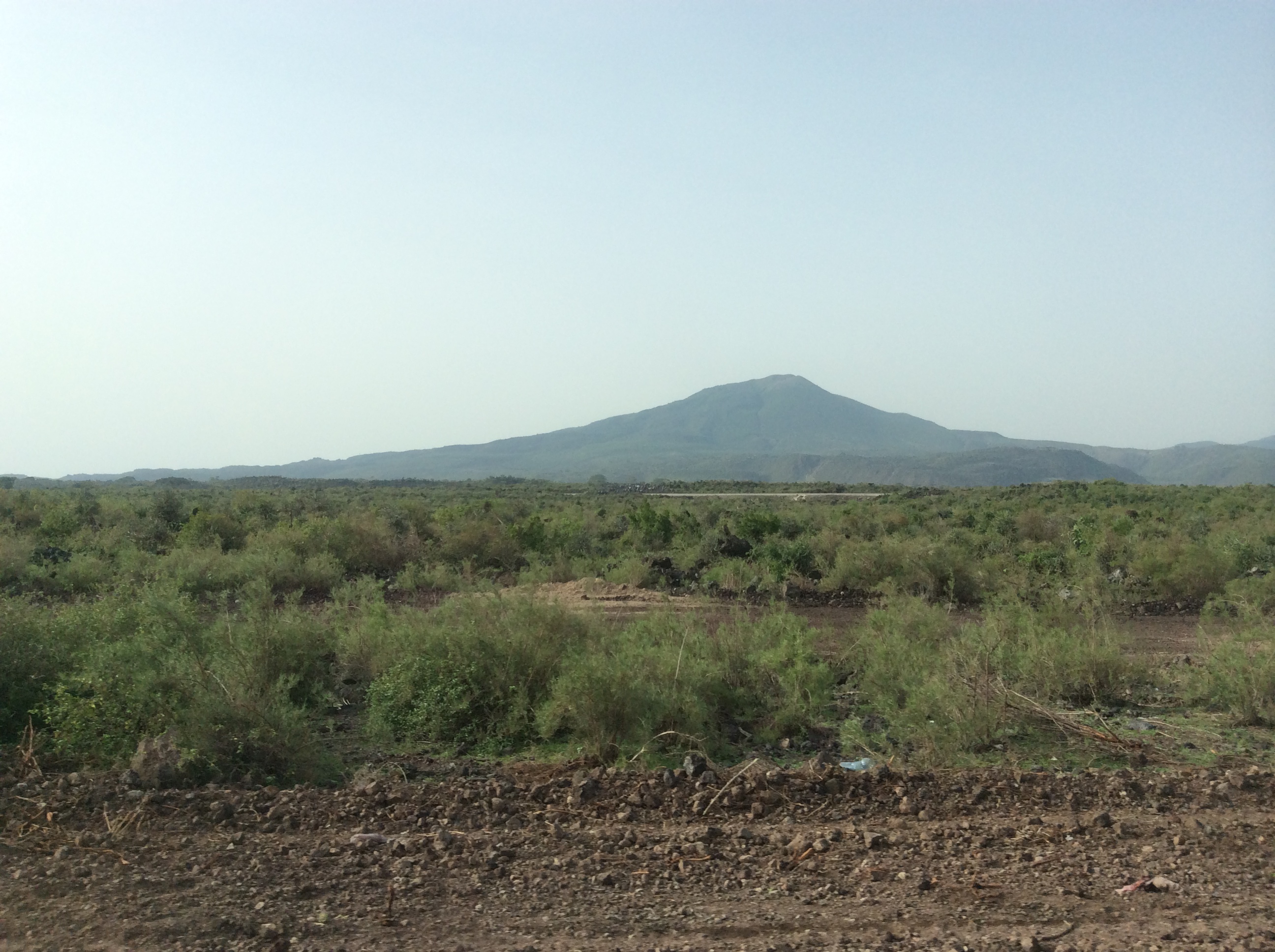
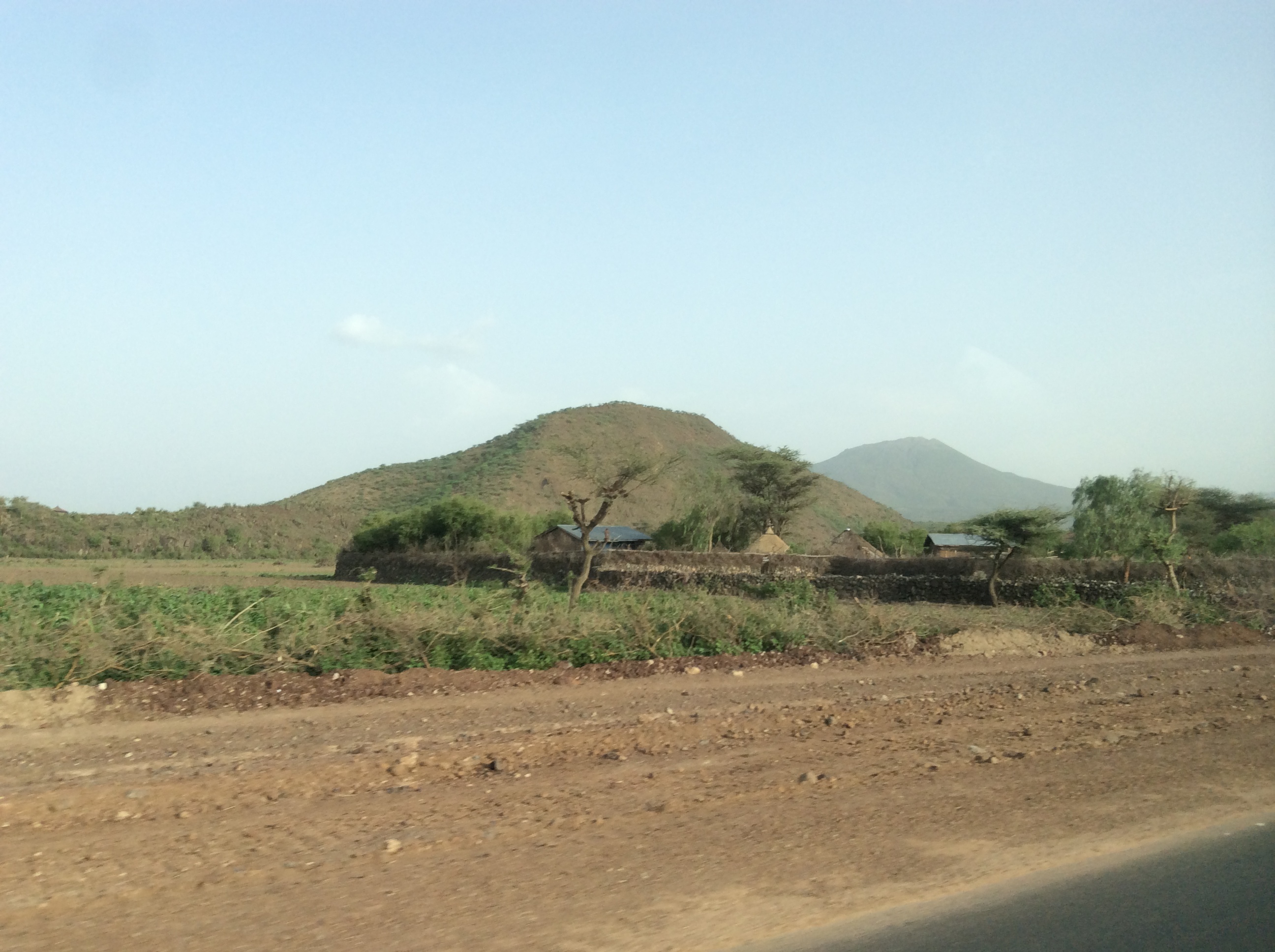
This is volcano country.  Although most are extinct and have not erupted in hundreds to thousands of years, at least one in sight of the highway has erupted within recent history.
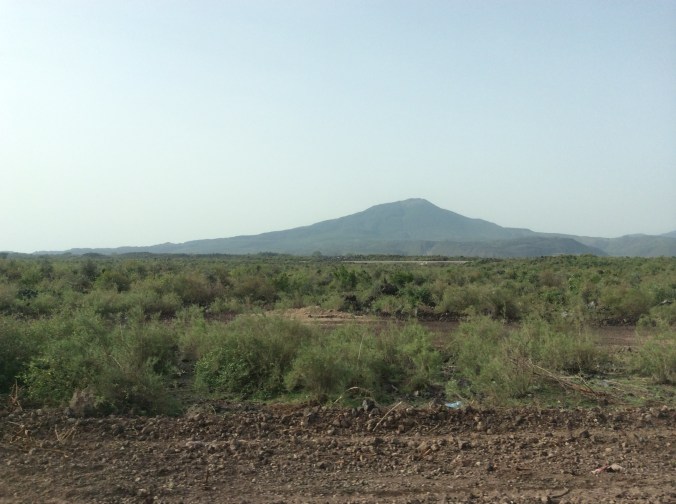
IMG_1095

Throughout the trip we saw small villages of traditional round houses with thatched roofs, most with rock walls around them.  These walls provide protection from predators such as hyenas.  And then suddenly we were there, a place I so wanted to see, the Great Rift Valley, the place where the oldest totally intact hominid skeleton was found, Lucy.

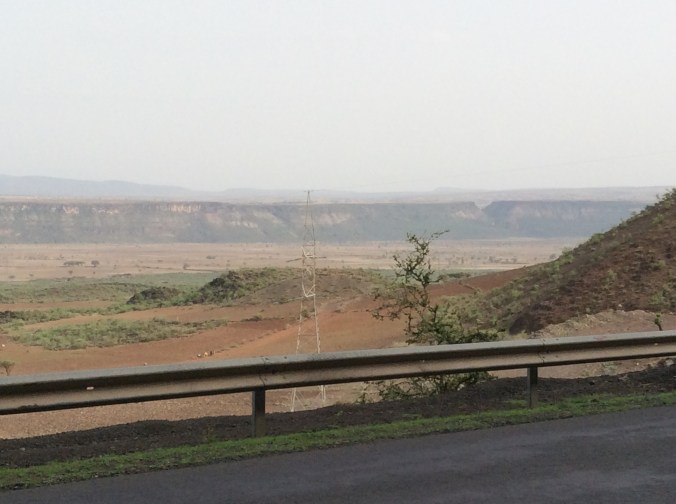
IMG_1097


IMG_1098

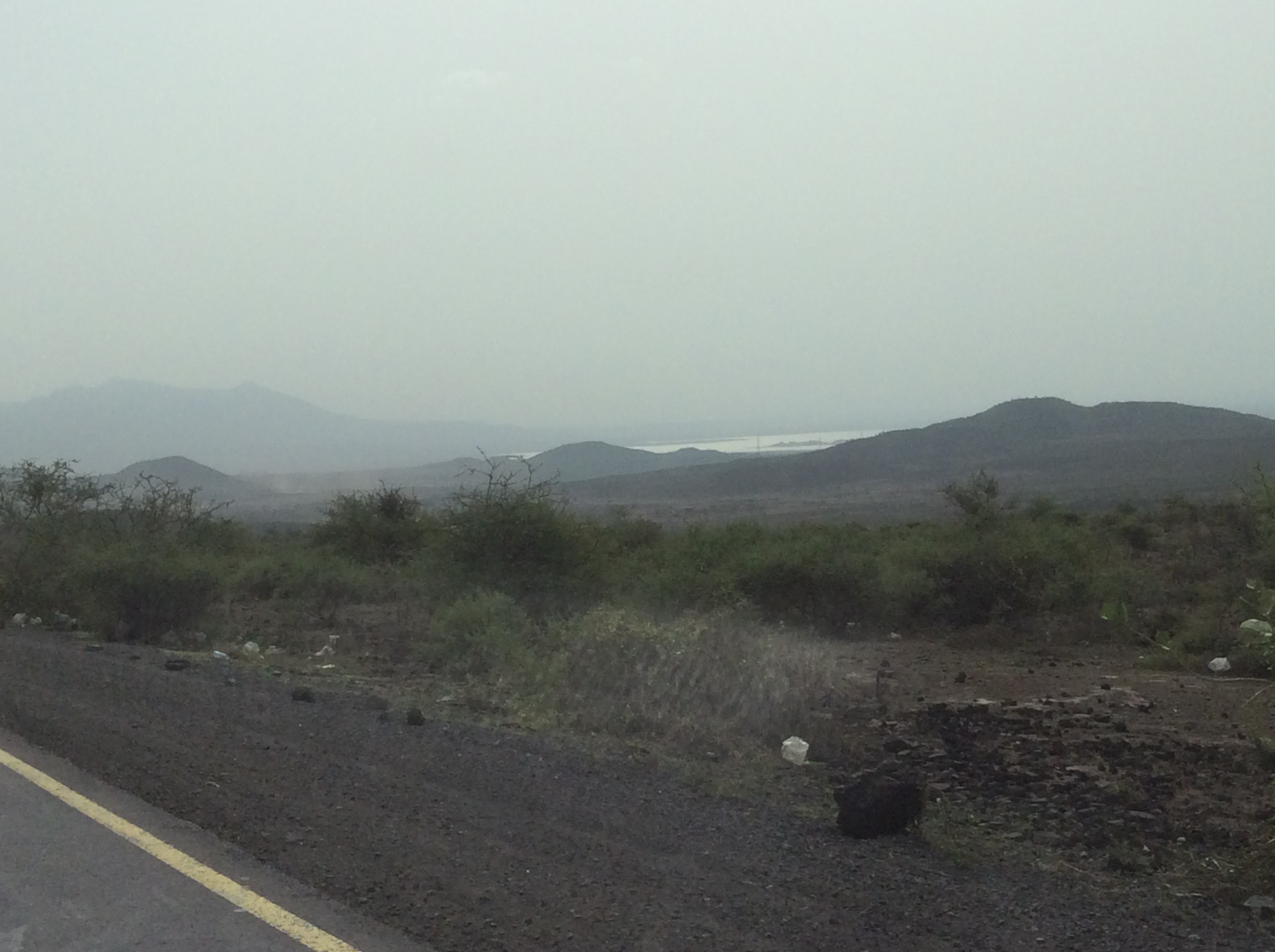
The Great Rift Valley goes for thousands of miles from farther south in Kenya up through the Red Sea and the Gulf of Aden.  I was very surprised to discover they grow grapes here in Ethiopia and produce wine.  We decided to try it; the merlot was good.  A series of unique lakes lay in the valley.  I would like to go back and visit all of them.  Some are filled with so many chemicals, you cannot drink the water and no fish live there. An example is Metehara Lake.  The fish are delicious, but the water cannot be safely drunk.  The most amazing thing about this lake is that it grows approximately four inches annually.  In the last few years, the road had to be relocated because of it.
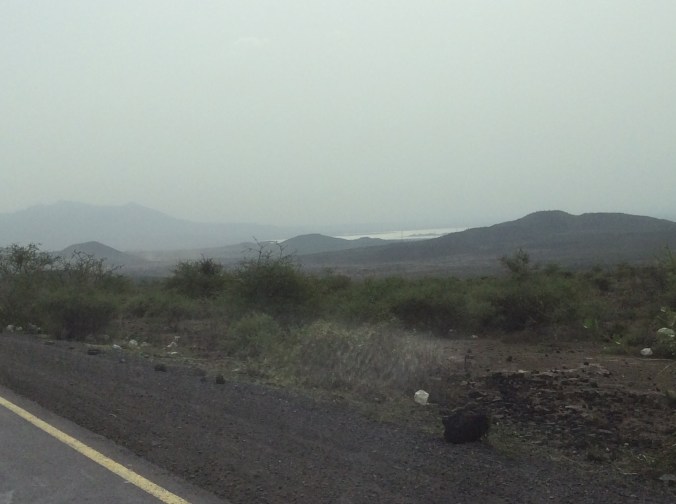
IMG_1105

First glimpse of the lake.  Then we had a flat tire which delayed the trip a few hours because not only did Dino and his dad have to change the tire, but we had to stop in the town of Metehara to buy a new spare which entailed bargaining and more bargaining.  Dino’s mom hiked down the road to get rocks to keep the vehicle from rolling.  If I had realized what she was doing, I would have done it myself.  She is in her 70s.
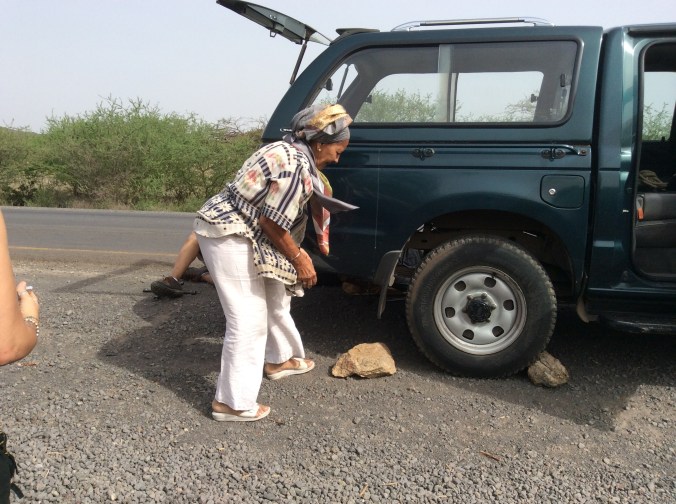
IMG_1106

A little adventure occurred here.  First, while they were working on the tire, a man came along and offered to help.  His truck (this is a major highway between Adama and Djibouti) had broken down nearby.  Then an Afar teenager came along and looked around, saying nothing.  I realized he had a dagger in the back of his clothes when he walked off.  Finally, an Afar man, maybe in his late 40s or 50s came along.  The Afar are a nomadic people who have lived in East Africa for thousands of years.  The men are noted for their ferocity.  Their lifestyle has changed little; instead of spears, they now carry assault rifles slung across a shoulder.  They herd cattle, goats, and camels.  He walked around the vehicle and came up to me.  Neither of us knowing the others’ language, the tiny conversation consisted of gestures.  Dino suddenly told me to get in the car.  At first I ignored him.  A couple of minutes passed; he loudly repeated the order.  I got in the car, wondering why.  When I asked, he told me one never knows what the Afar are going to do and pointed out just how close the man had stood.  I never noticed; I have no personal space.

Tire changed, we drove toward the town close to the lake.

IMG_1109

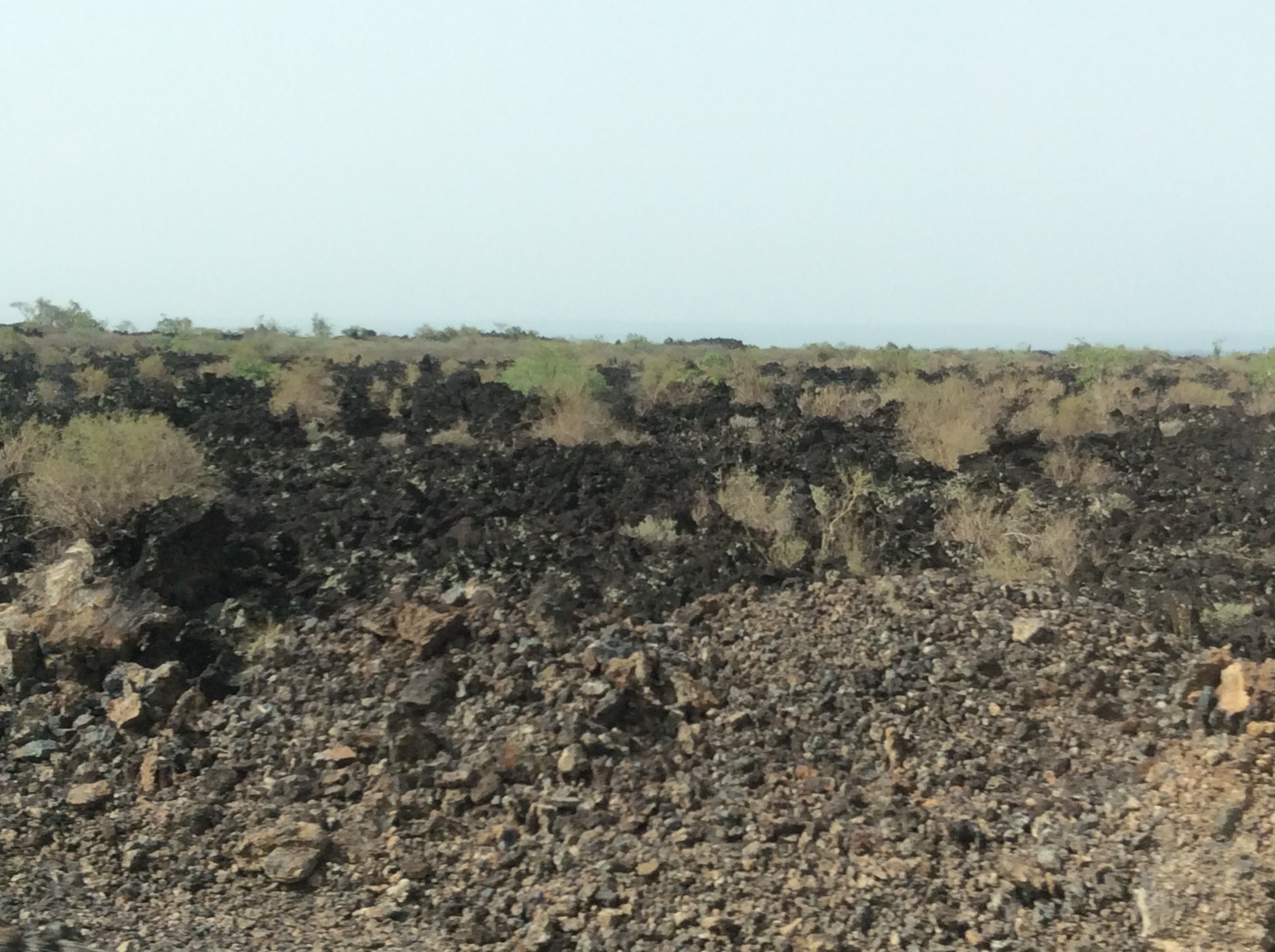
Crossing thèse lava beds would be difficult.  As we dropped lower, we drove on the new road by the lake.  You can see the old road crossing the middle of the photo below.  It is nearly covered with water.

IMG_1110

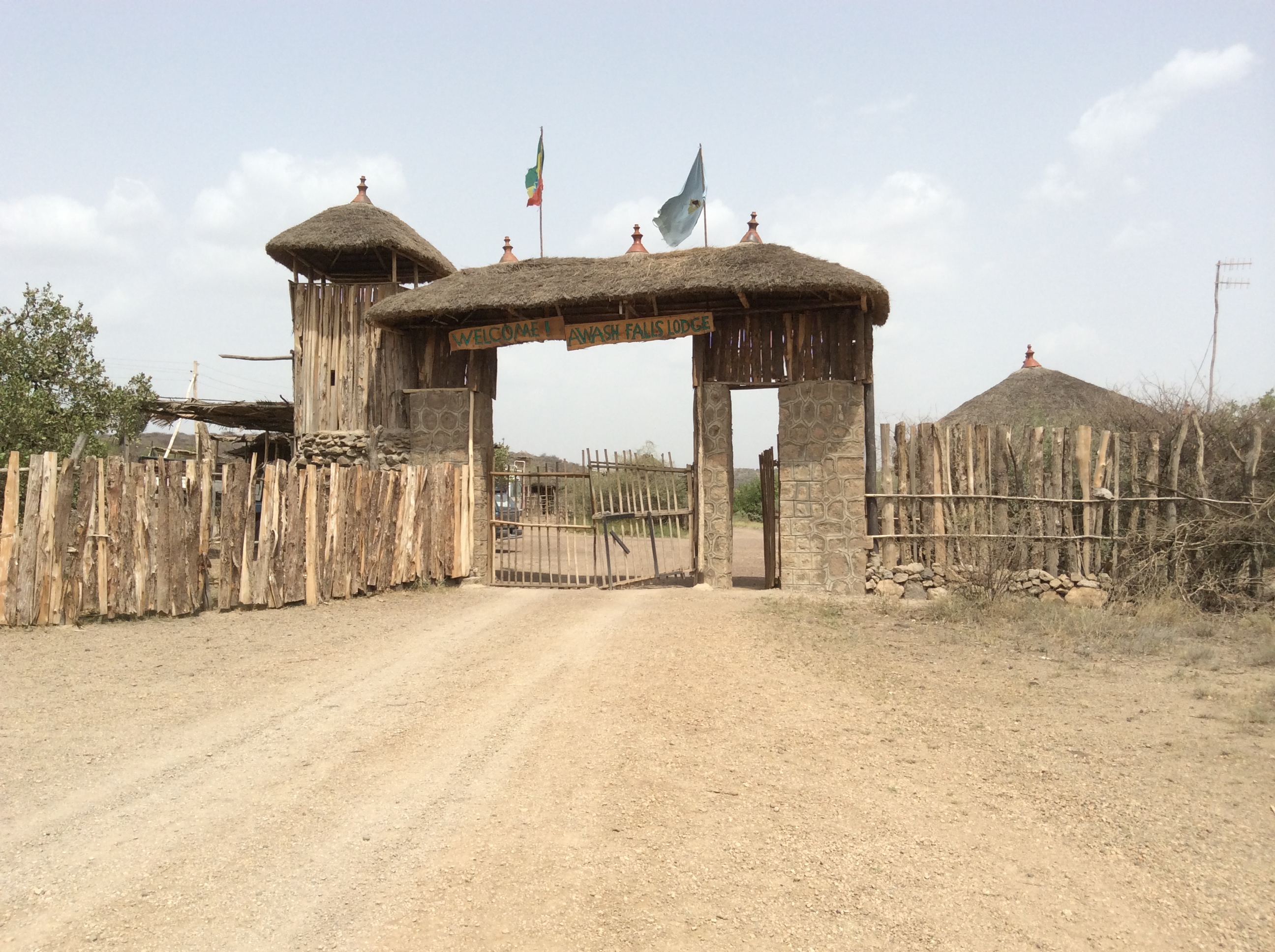
We missed the entrance to the park, realized we had gone too far, turned around, and headed back.  The entrance to the lodge is more like what most people think of when they think of Africa.
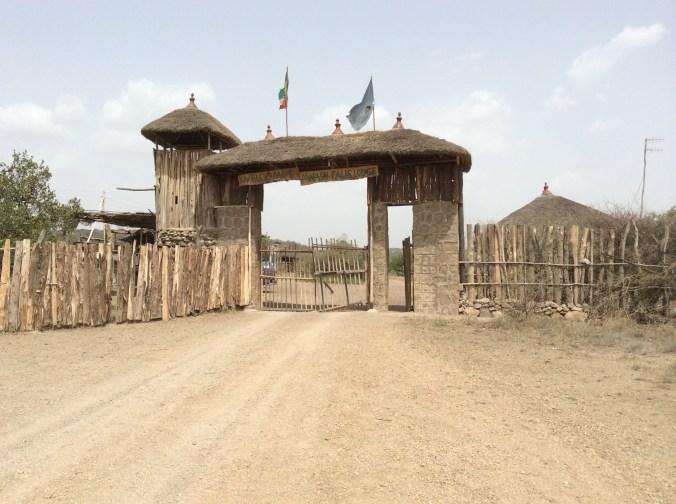
IMG_1151

This was one of my favorite places:  it was warm, almost hot.  I saw lesser kudus several times, but they seemed so ordinary to the others that no one stopped so I could take a photo. The lodge was delightful and the shiro some of the best I had.  Loved it.  I even asked for the recipe. The resident ostriches, however, looked rather pathetic.

IMG_1117

IMG_1118

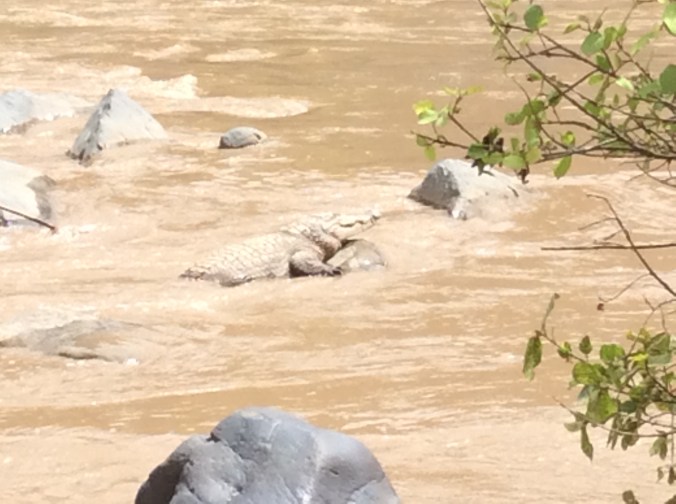
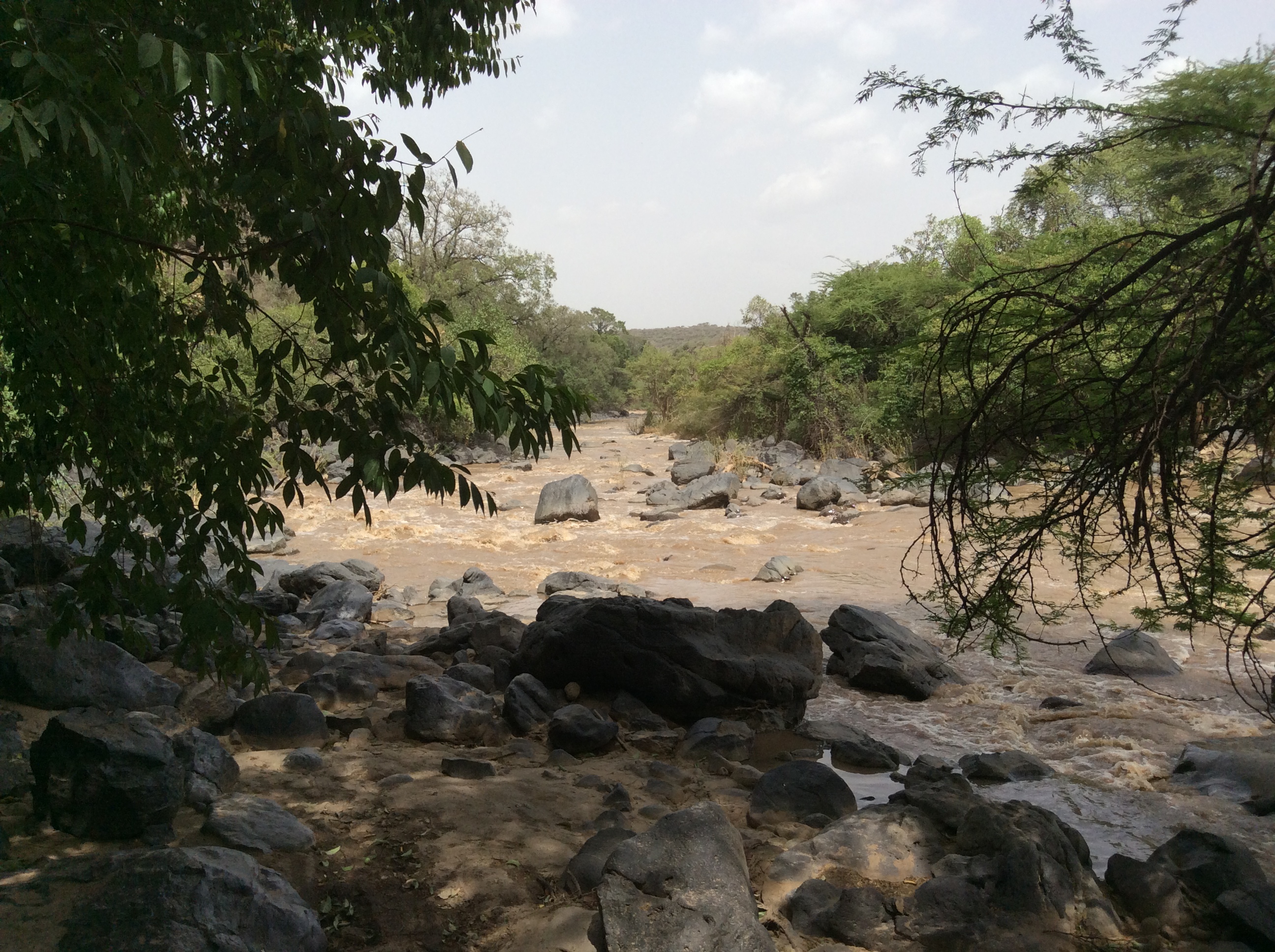
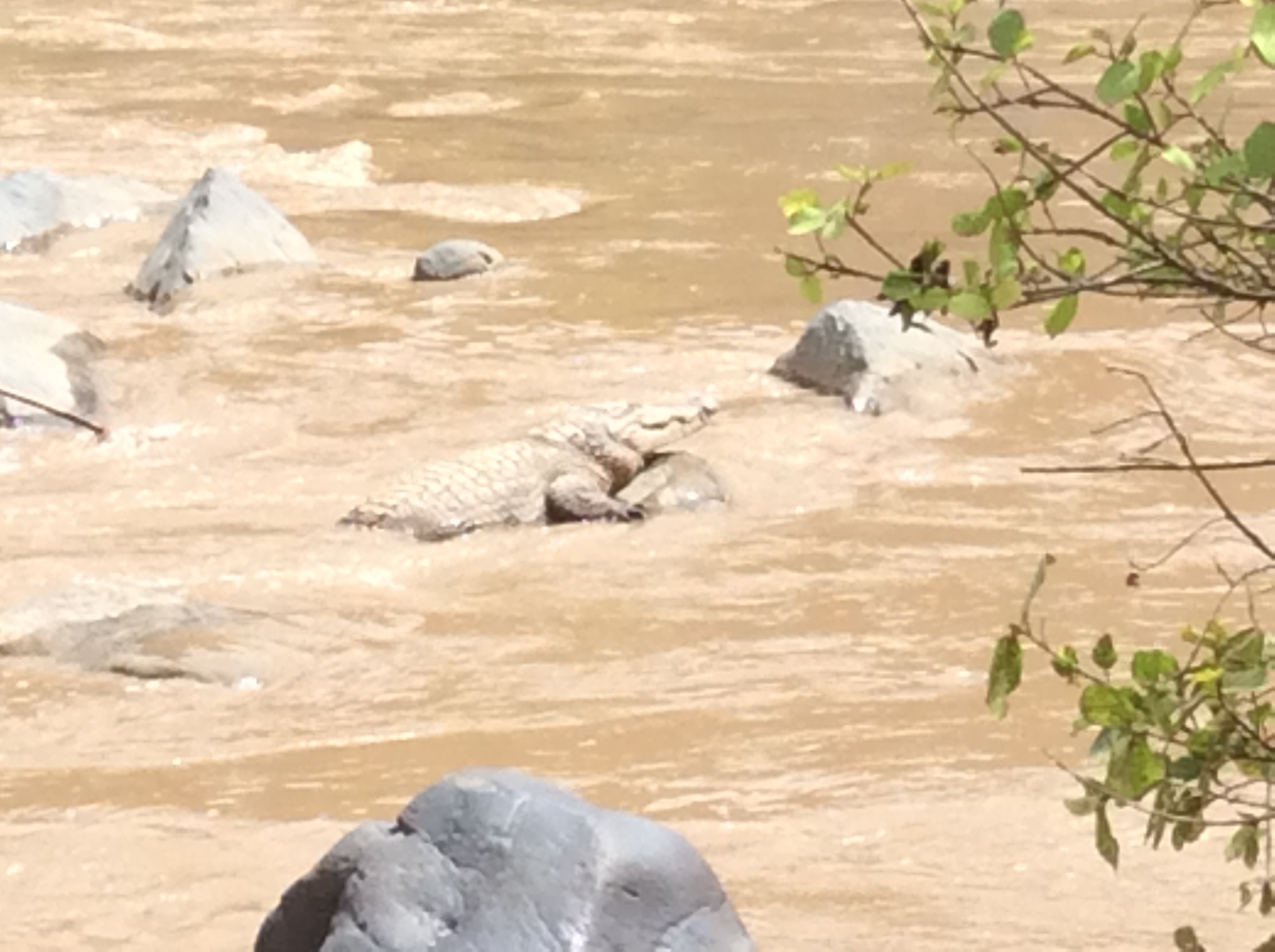
Here the Awash River is full of crocodiles.  Our first glimpse was through binoculars from the lodge restaurant.
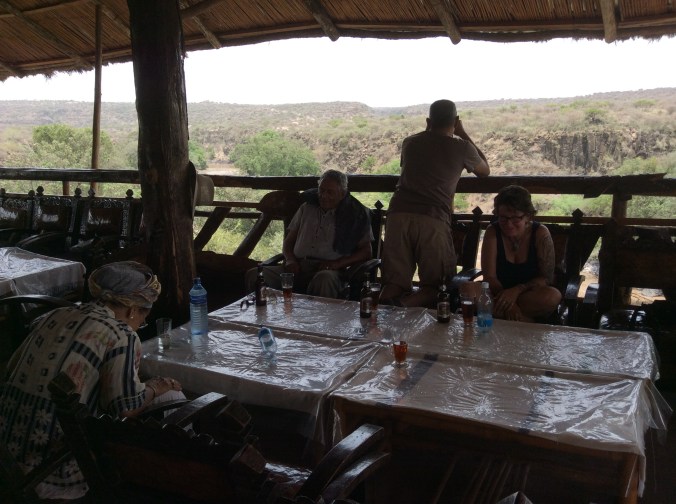
IMG_1120

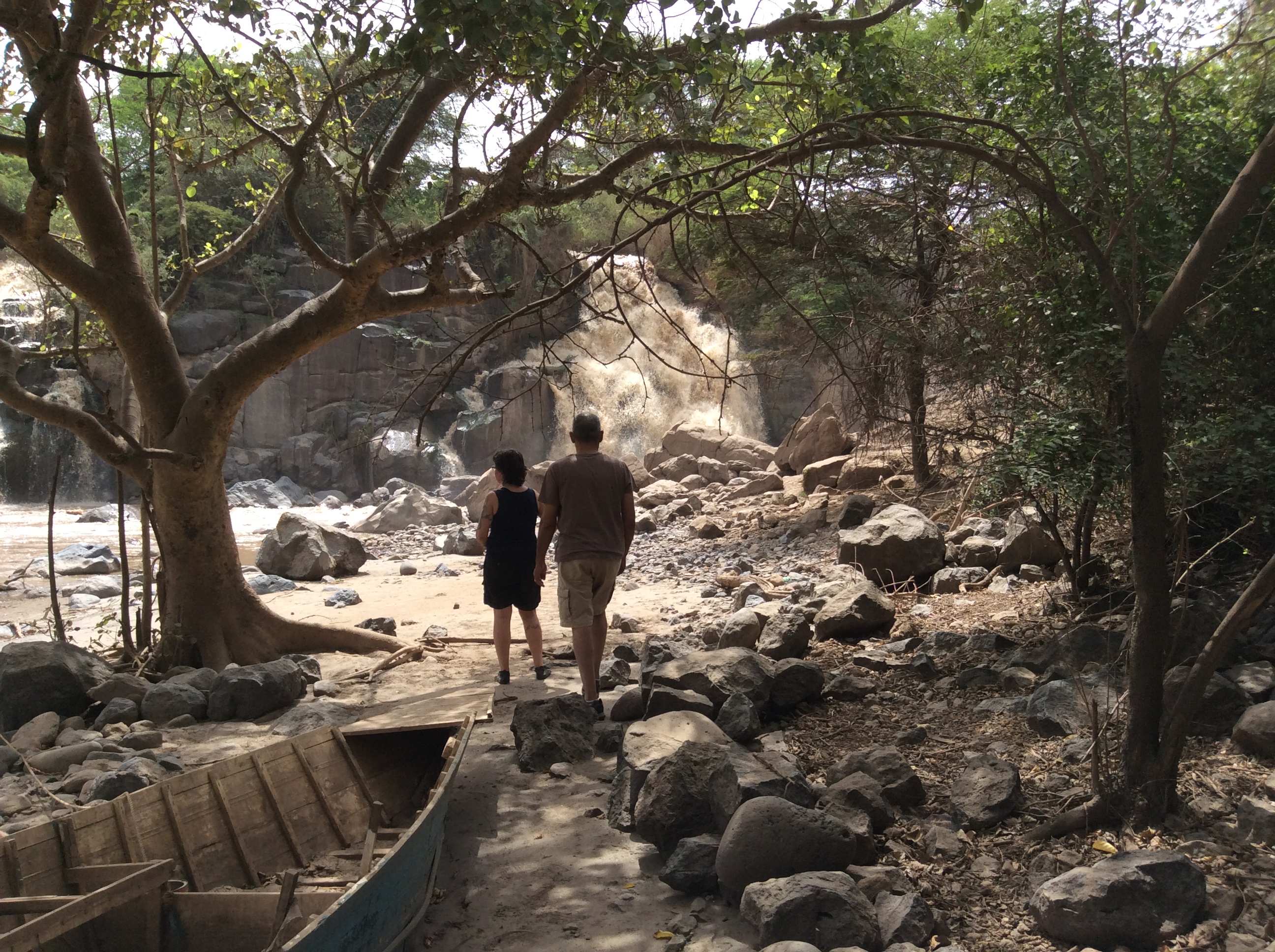
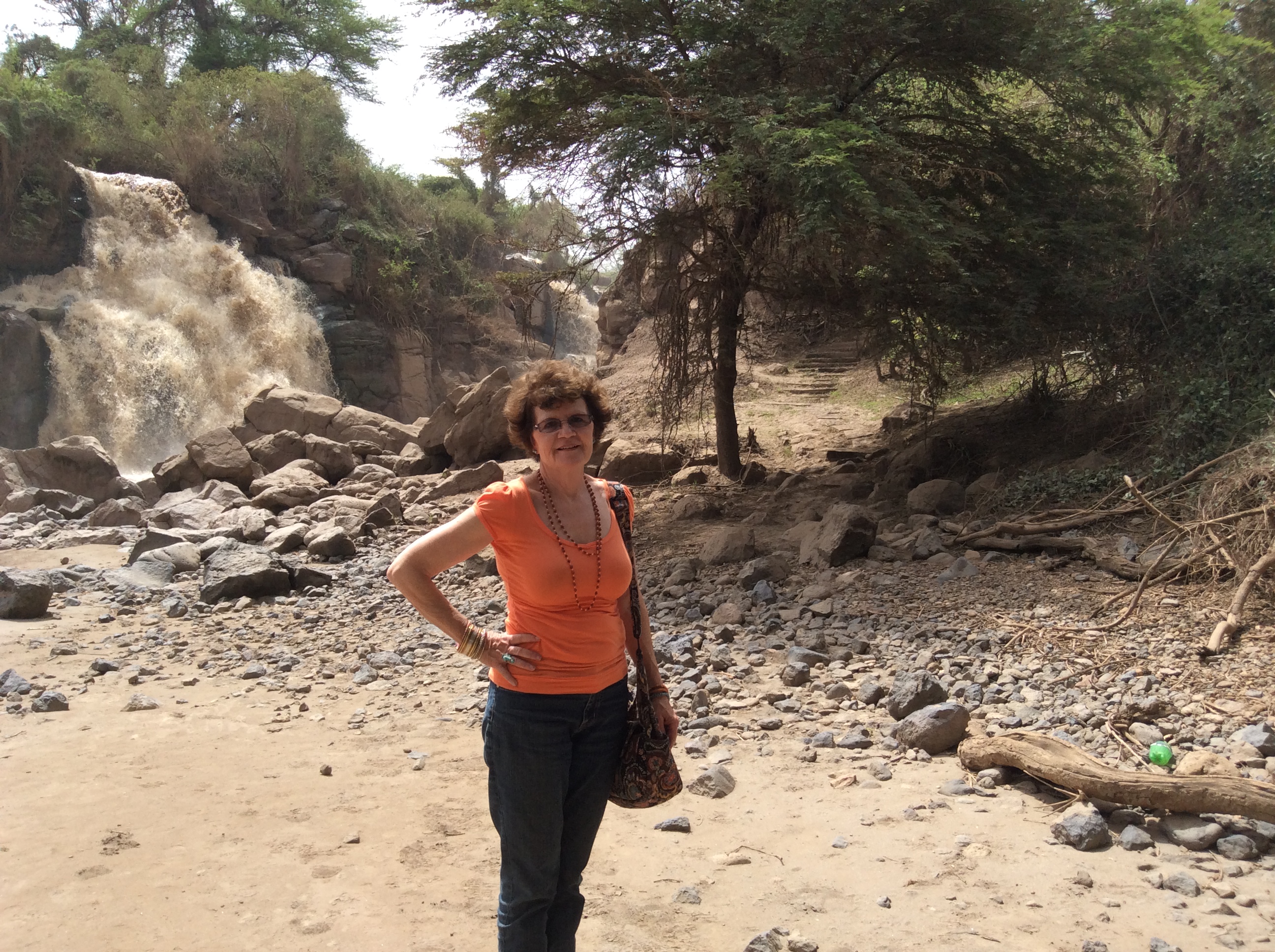
Dino’s mom posed with me while we waited for lunch.  Then we hiked down to the river and the falls where we saw even more crocodiles.

IMG_1116

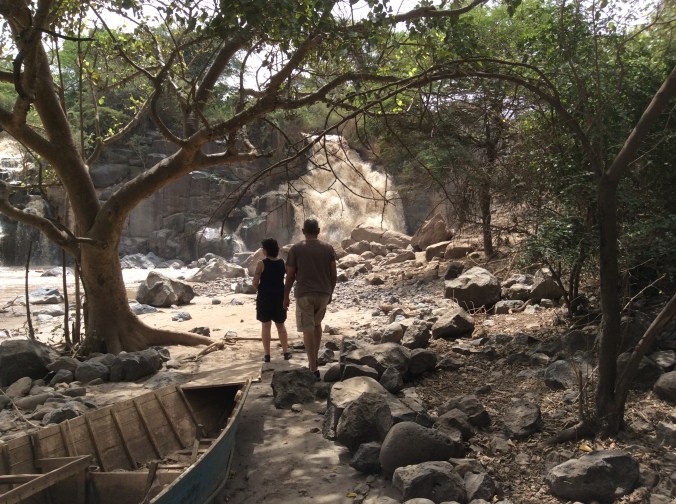
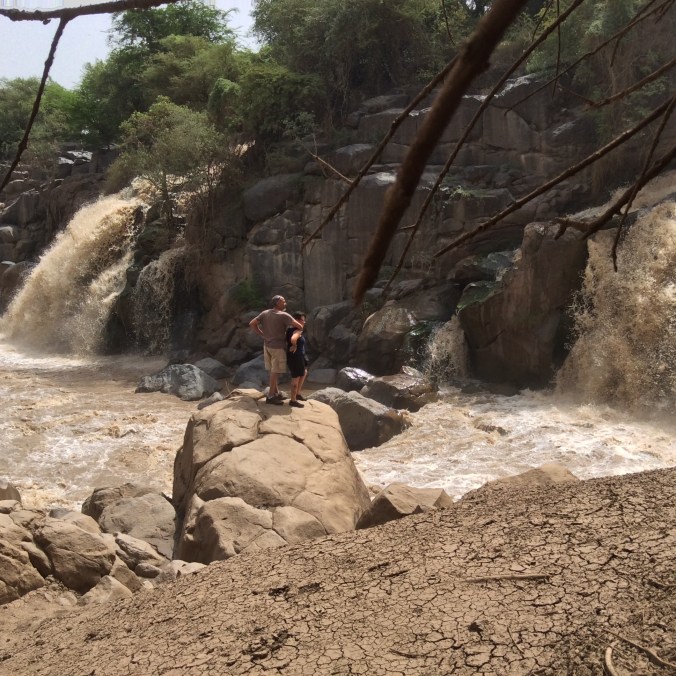
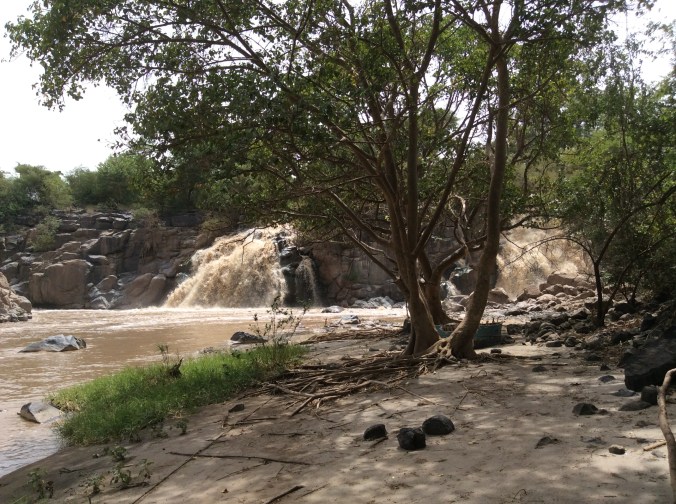
The falls are so large that I could take a photo of only a portion of them at the top where the hike down begins.
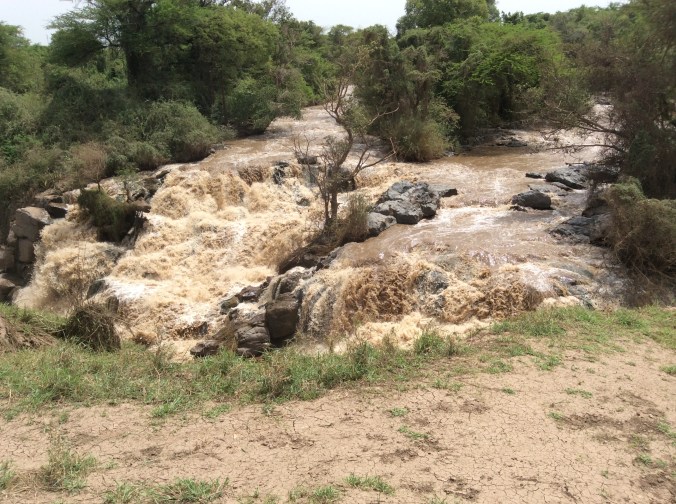
IMG_1125

The green between the two sections of the falls was totally covered with water a few weeks later when Dino’s brother travelled there with his family.
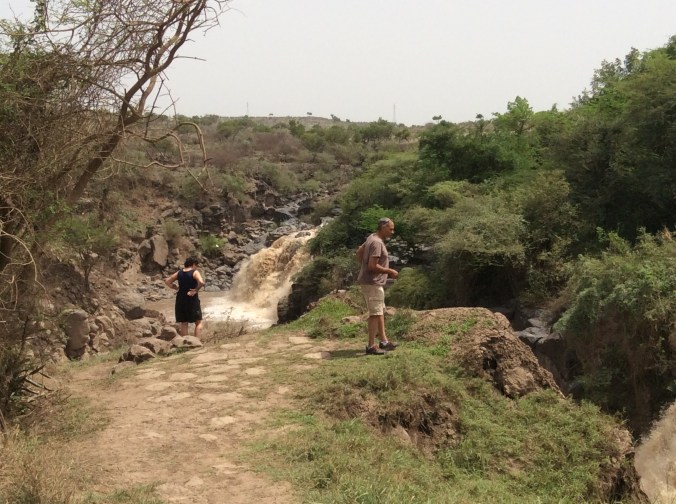
IMG_1128

I loved walking along the river banks, careful, however, because of the crocodiles.  They may look slow, but they can really move rapidly when they choose to do so.
IMG_1131

IMG_1135


IMG_1137

IMG_1138

IMG_1139

IMG_1141

IMG_1143

IMG_1148

IMG_1144

Crocodiles like basking in the sun.

IMG_1130

IMG_1136

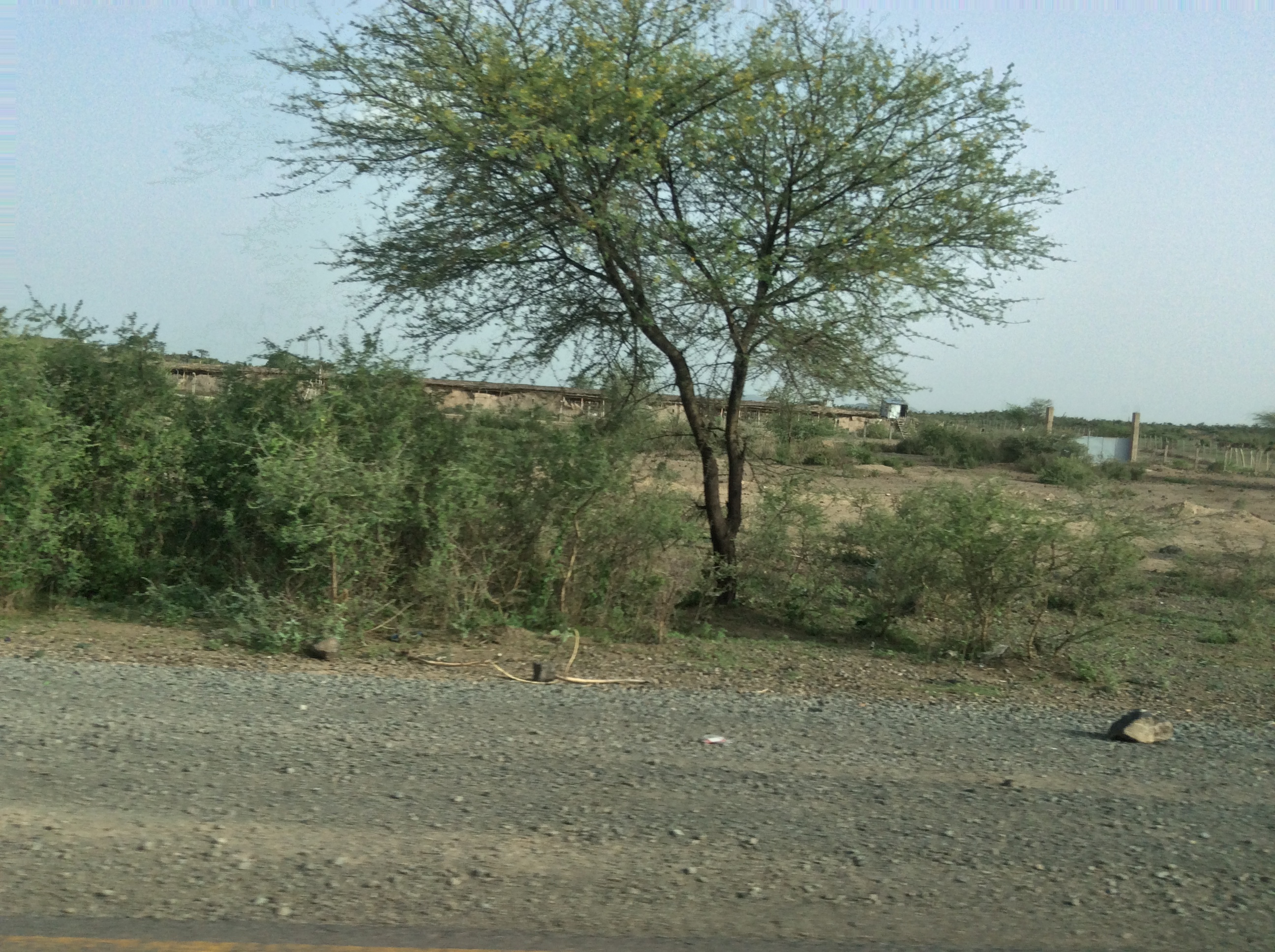
Along the highway, camels graze, boys herd large flocks of goats, and a totally different species of acacia appear.

IMG_1155

IMG_1159

If you look at the background of the photo below, you can see long lines of corrals–for camels to export to Yemen and other areas where camels are eaten.  If you live in Amarillo, Texas, and order in advance, you can eat camel at the Somali restaurant on Amarillo Boulevard.

IMG_1167

Unlike most of Ethiopia where we had previously travelled, here we saw fences especially around villages.  They bring the livestock in for protection from not only hyenas but also lions.  Yes, lions live here.  I asked if they ever see them.  I was told, “No, but you sometimes hear them roar at night.”  They also told me that the lions like to go down to the sugar cane factory, but no one knows why.

IMG_1168


When I want an Ethiopia “fix”, I listen a audio/video of Awash Falls.


My Ethiopian Adventure: On the Road from Debre Markos to Addis, Crossing the Nile Gorge


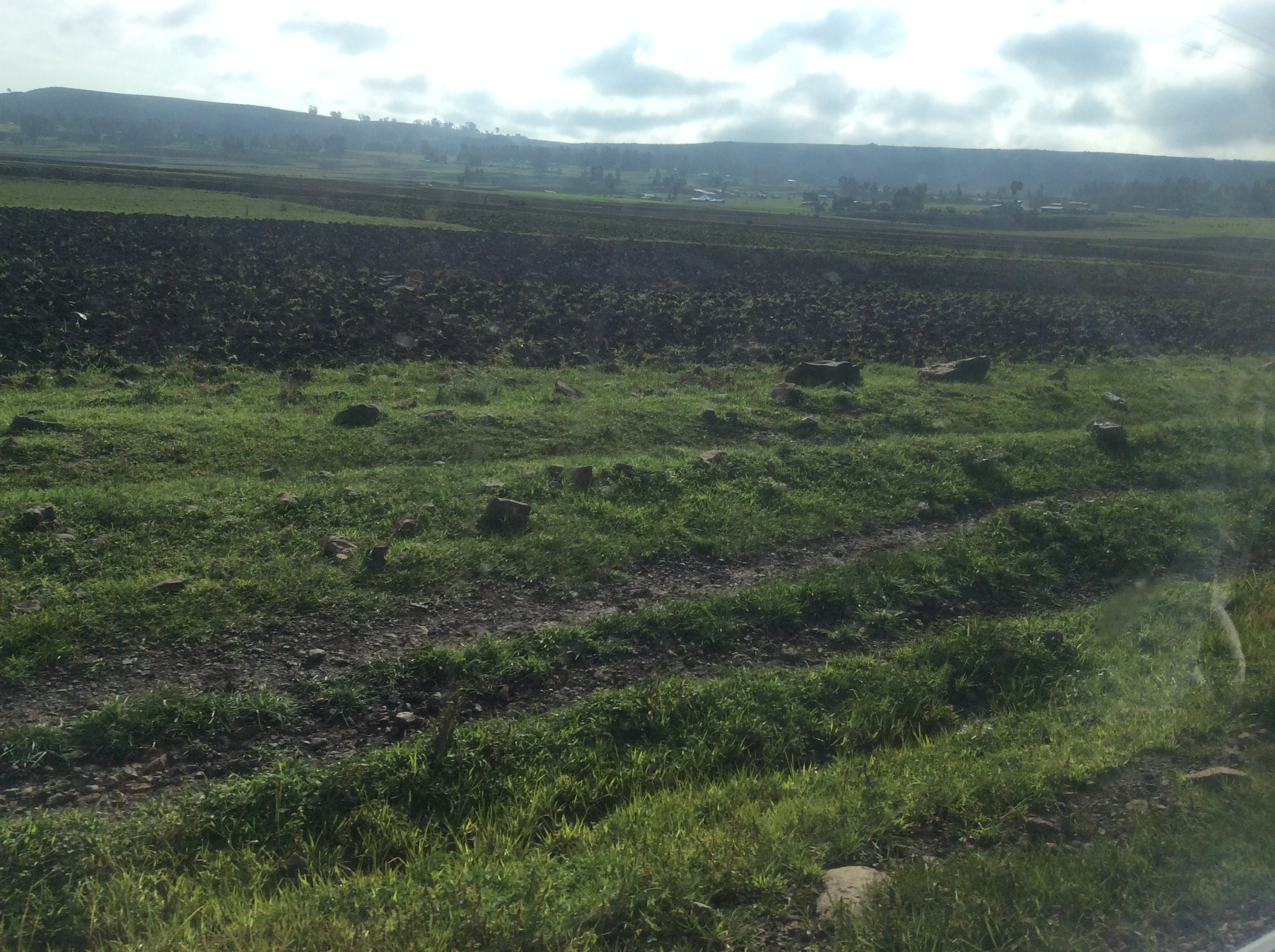
Once again, we drove through rain and clouds and endless fields, some of which had been cultivated ready to plant and some all green and growing.

IMG_0958

I realize this is not what most people in the United States think when they hear the word Ethiopia.  I kept thinking of photos I had seen of Ireland.

IMG_0959

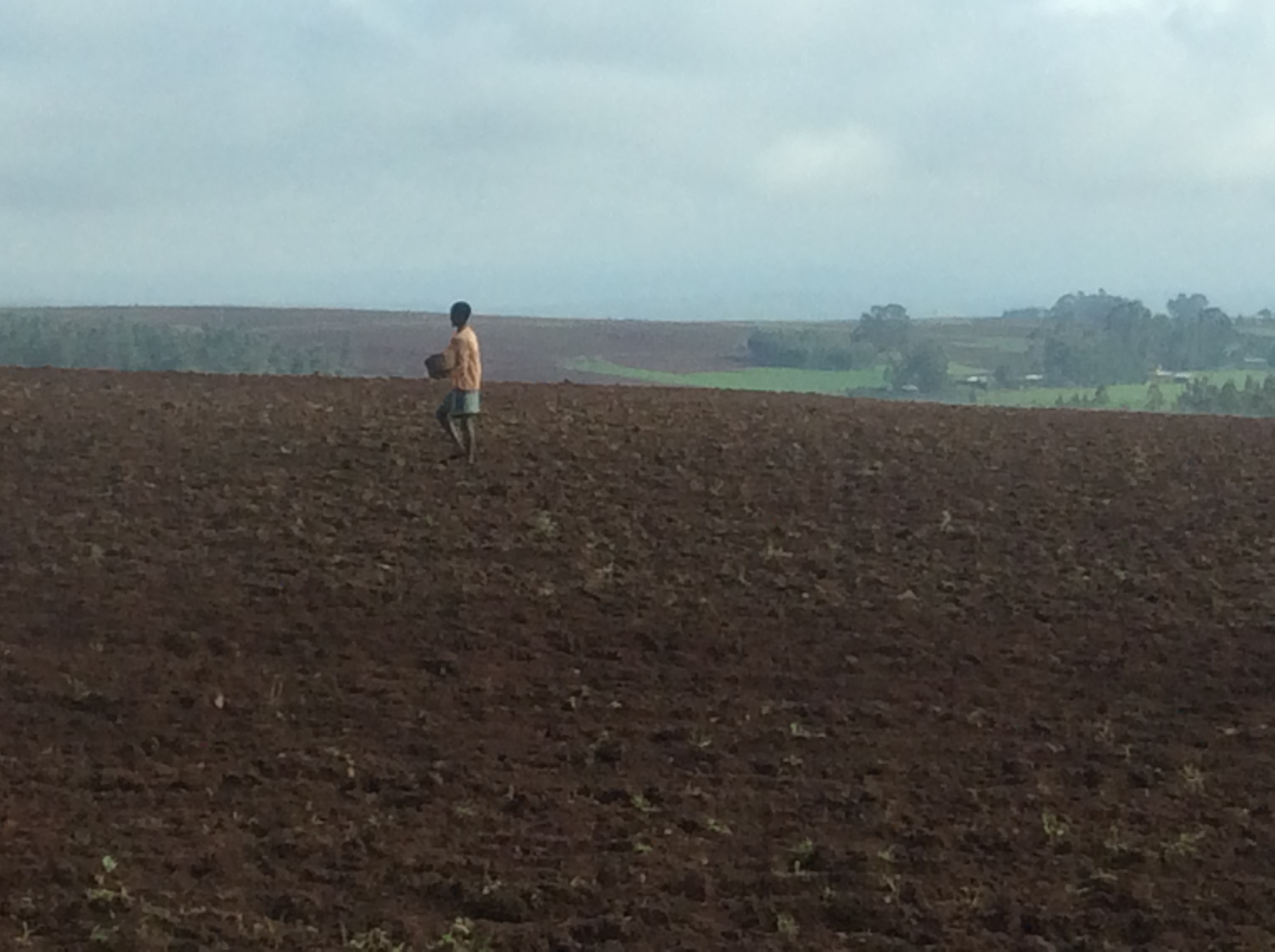
The ancient grain, teff, produces extremely tiny seeds which are ground to flour to make injera, an Ethiopia staple.  It is used much like people in India use chapatis or like people in Mexico use tortillas.  However, it looks nothing like either of these.  It is thicker and a bit spongy like crepes but huge–more than a foot in diameter.  The man in the photo below is sowing teff.

IMG_0960

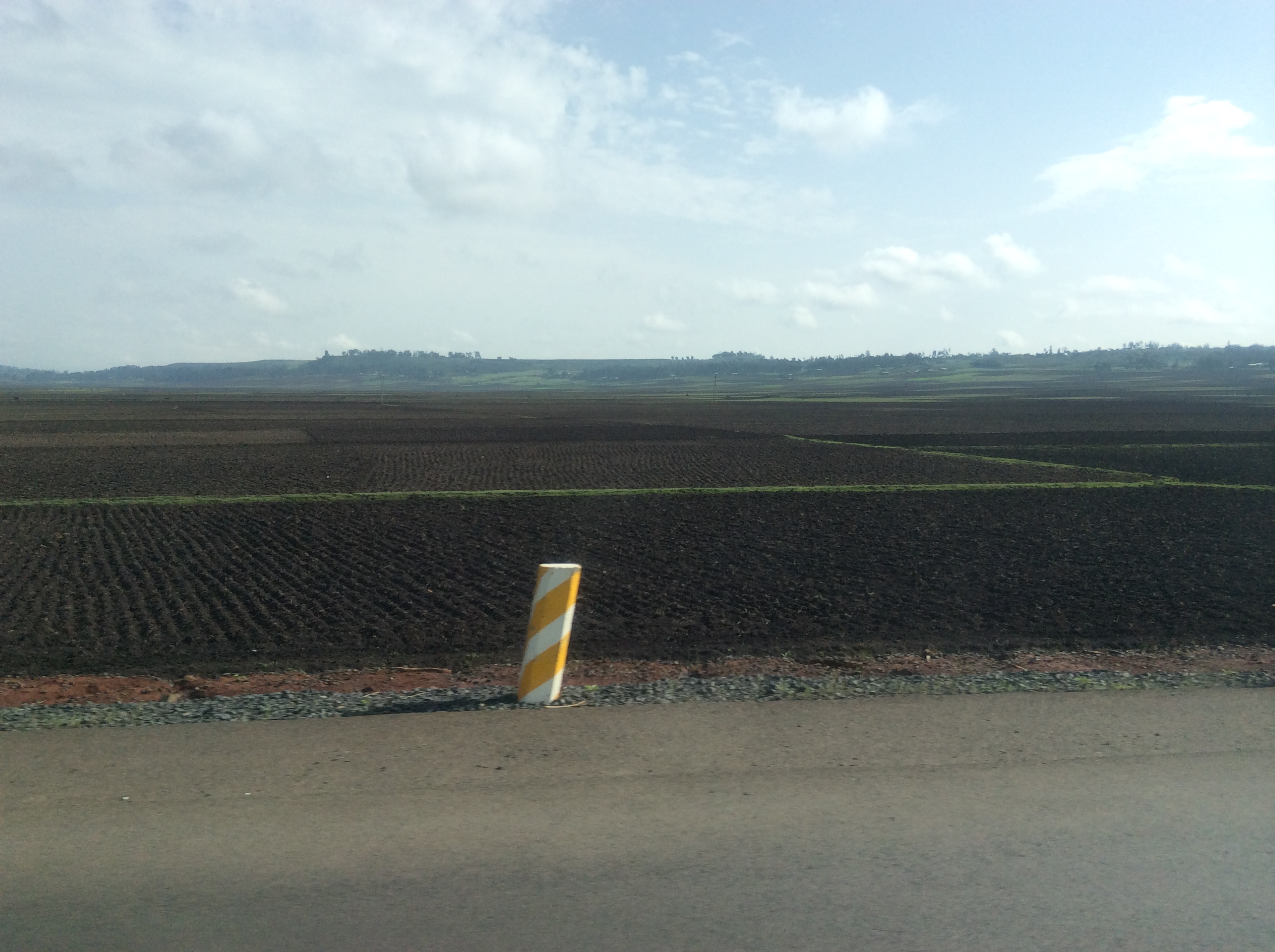
Teff fields stretch almost as far as the eye can see.

IMG_0961

Villages are frequently set along side the good highways.

IMG_0962

Major highways are excellent.  The only really bad road we traversed was in Simien Mountains National Park where they keep the road that way on purpose. Well, that and the streets in Addis.

IMG_0965

IMG_0968

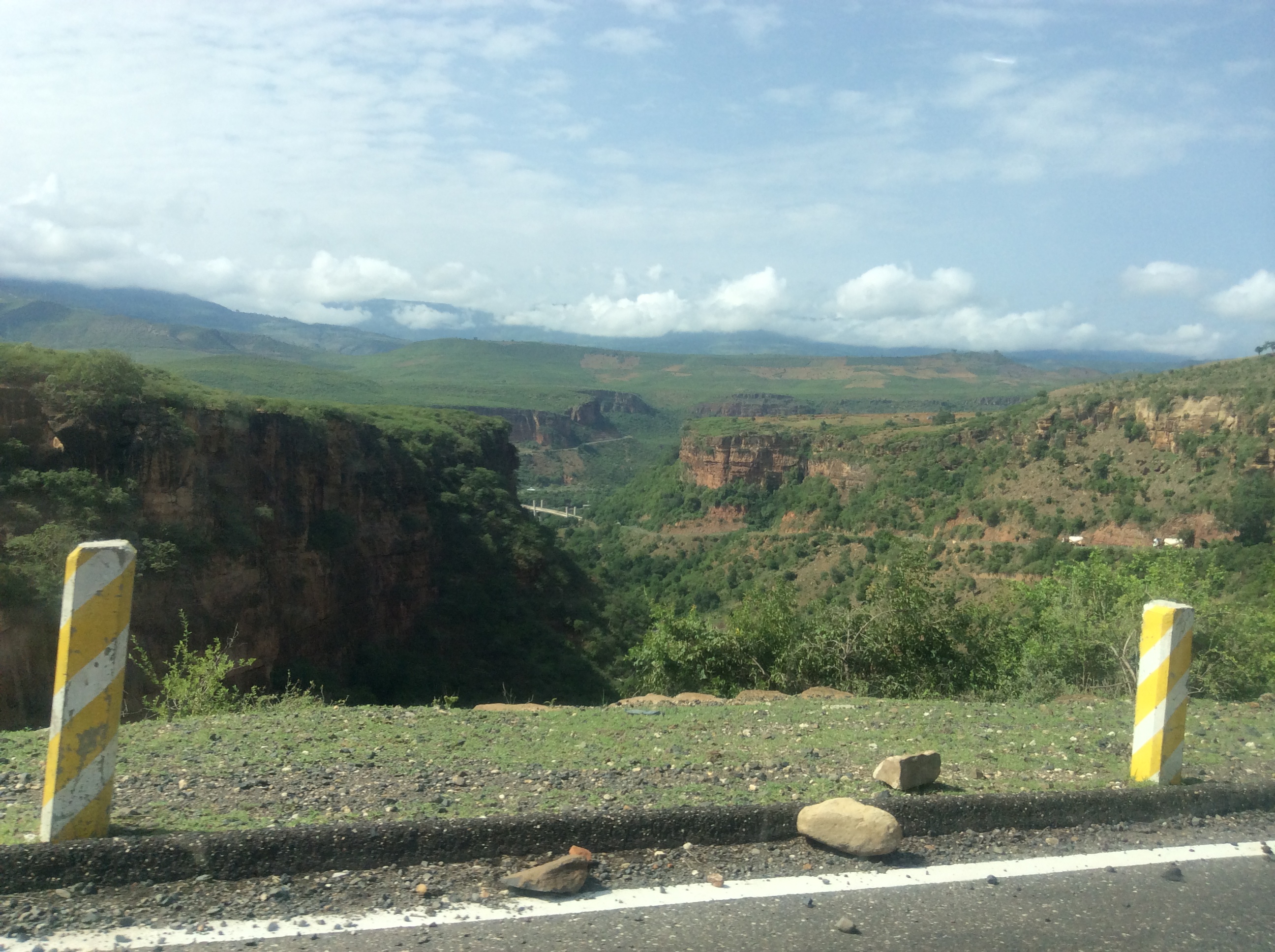
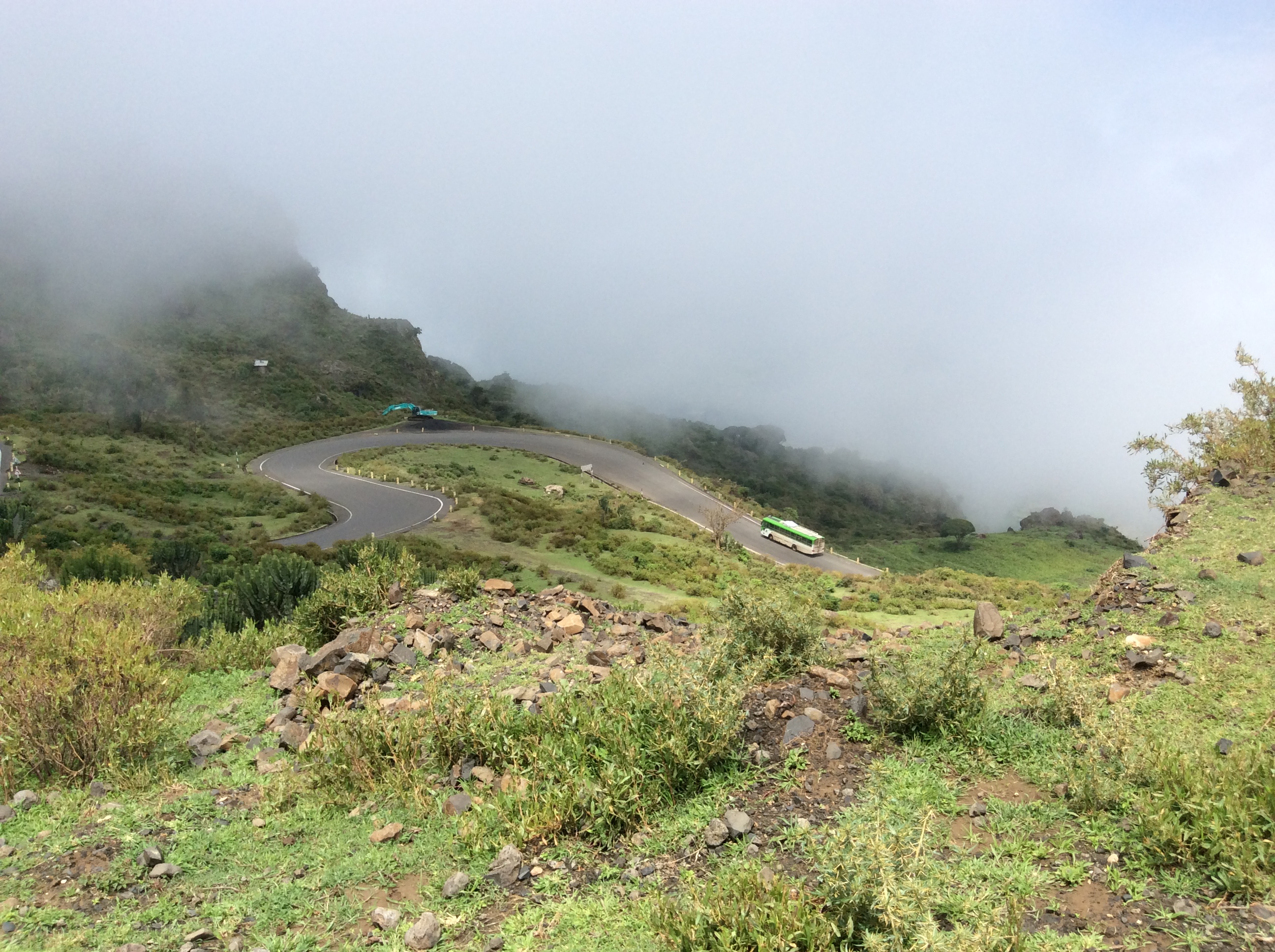
As we came closer to the Nile Gorge, it became more mountainous again.

IMG_0970


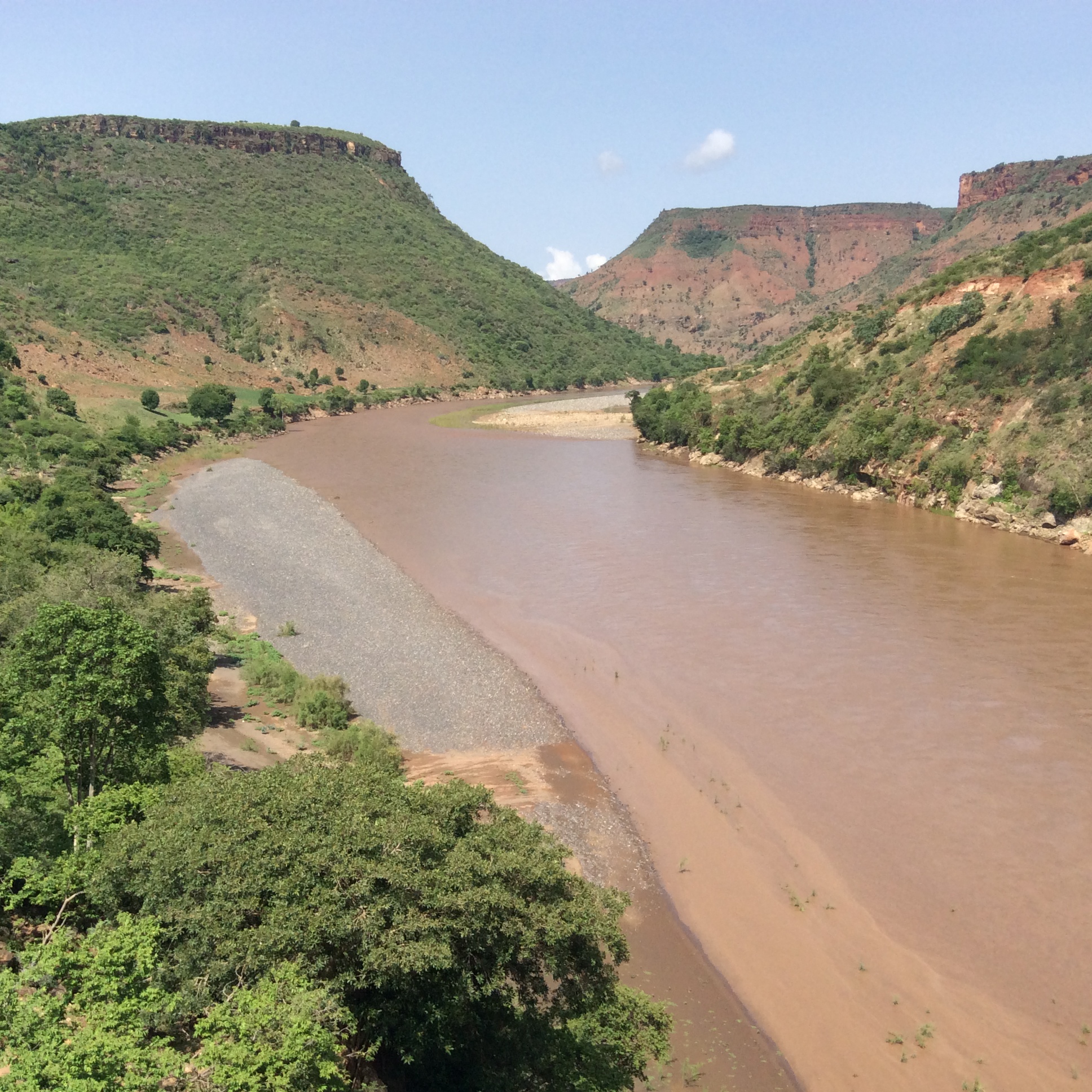
First sight of the Nile Gorge.

IMG_0972

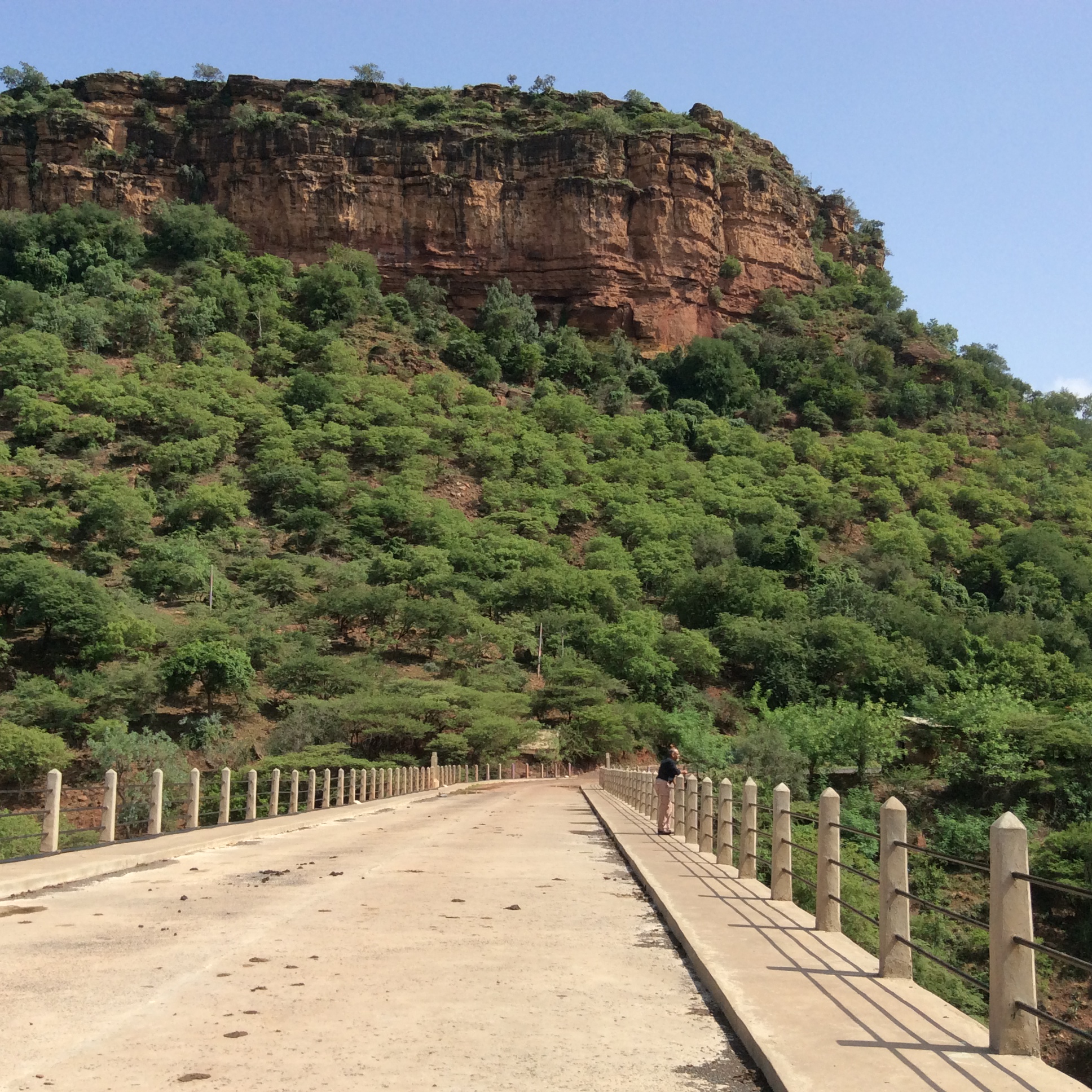
All major bridges seem to have a resident guard.  Unlike the guard at the bridge in Bahir Dar, this guy told us we could walk around and take photos.

IMG_0988

If there is a guard, he has to have a guard house.

IMG_0994


And a house.

IMG_0986

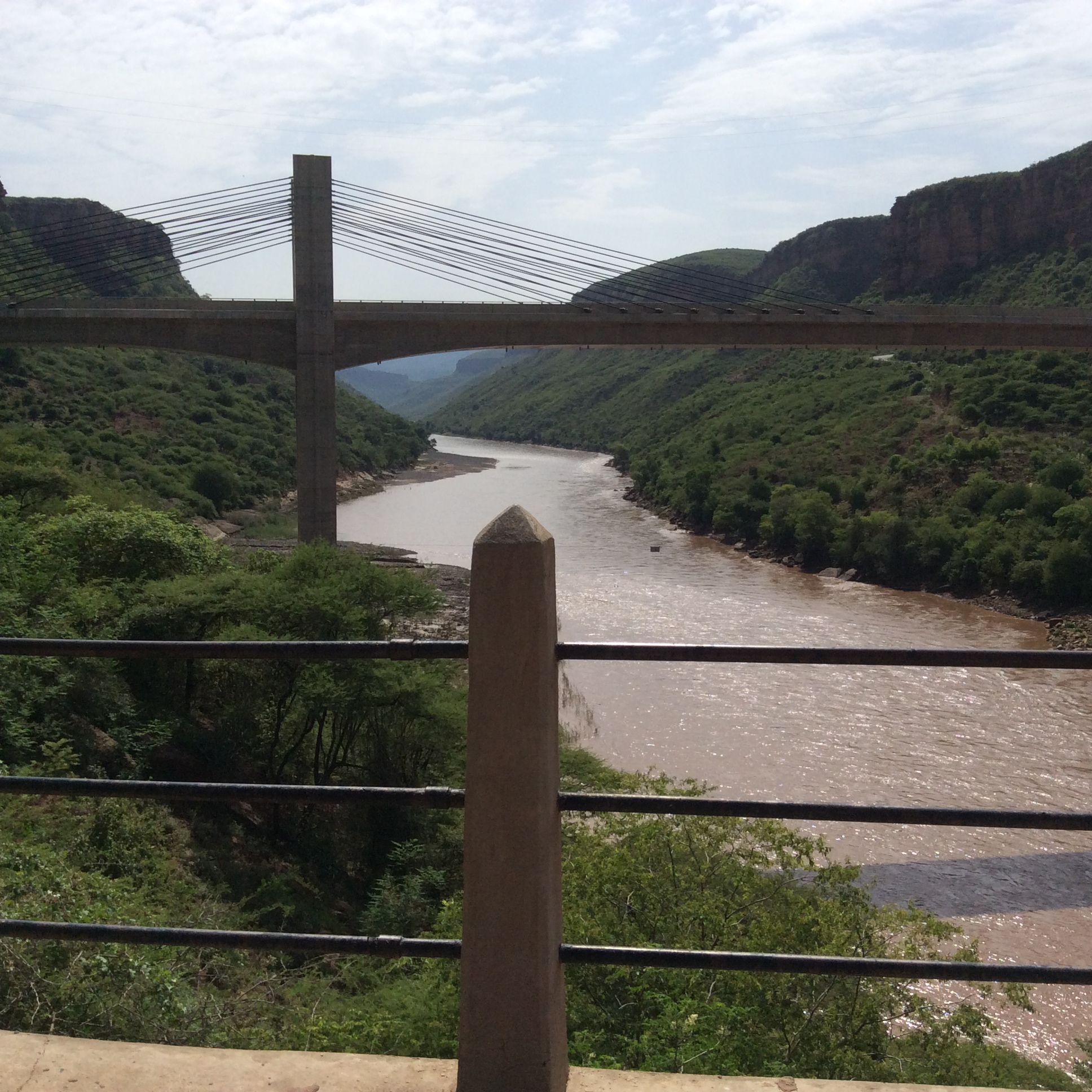
Even though by this time I had not only floated down the Nile but also crossed it in a boat a couple of times, I remained entranced.  We walked across the old bridge built in 1948.  Actual traffic now crosses the new bridge built by the Japanese.

IMG_0974

IMG_0976

IMG_0980

Personally, I did not see anything wrong with this old bridge and wondered why they thought they needed a new one.

IMG_0982

A couple of signs written in several of the languages spoken in Ethiopia commemorate the old bridge.

IMG_0984

As we climbed out of the gorge, we saw common baboons begging.  They are neither as pretty nor as friendly as gelada baboons.

IMG_0998

IMG_0996

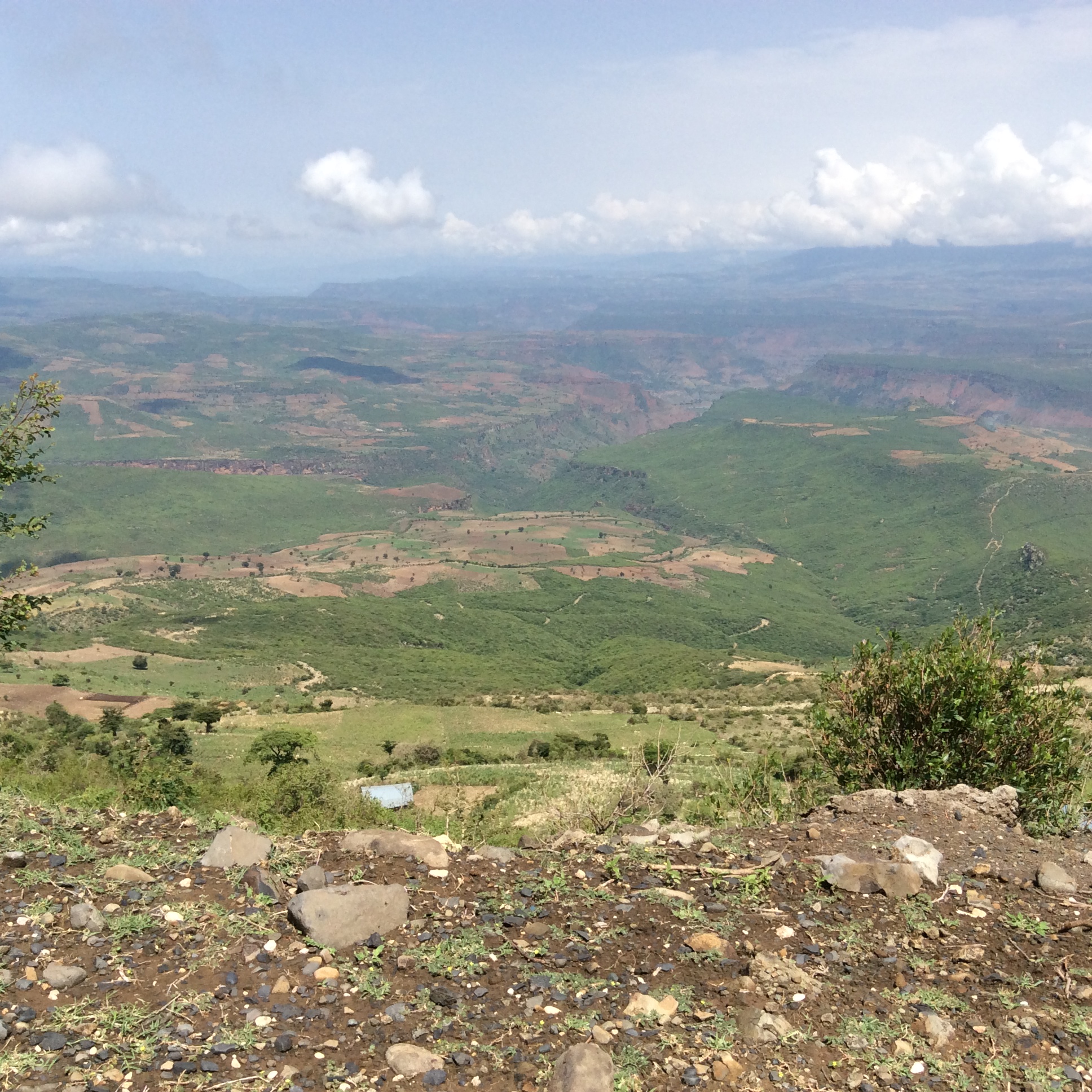
I could not resist taking a variety of photos looking back down into the Nile Gorge.

IMG_1001

IMG_1007

Dino could not resist stopping for one long, last look at the Nile.

IMG_1011


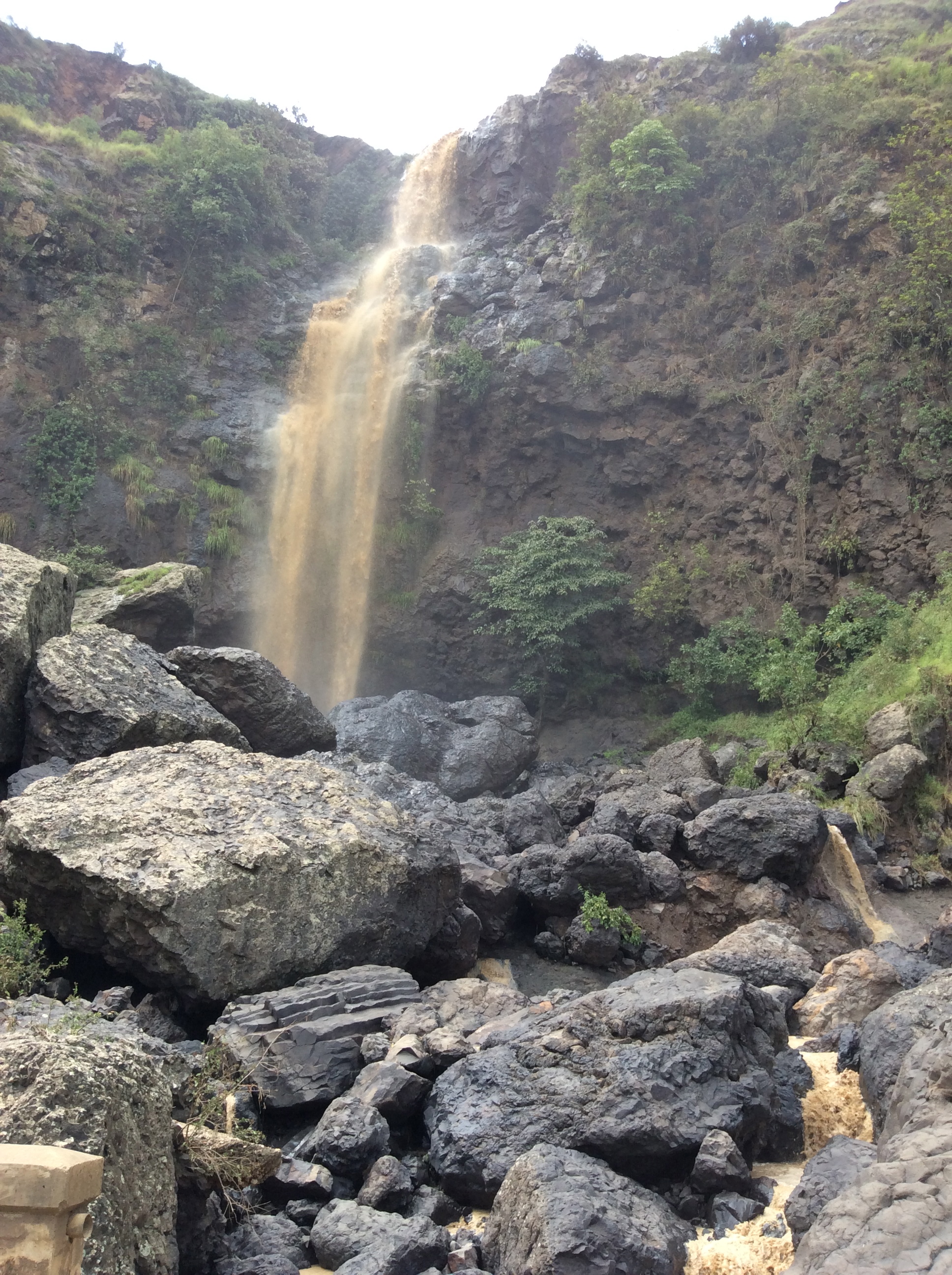
When we asked the name of this waterfall, we were told that it was just an ordinary waterfall and had no name.

IMG_1014

The final switchback before we became immersed in the clouds.

IMG_1015

My Ethiopian Adventure: Bahir Dar and the Nile Falls


My Ethiopian friend with whom I travelled asked me about a week ago, “Where would you like to go back to if you go back to Ethiopia?”  With a little hesitation while various places flitted through my mind, I answered, “Bahir Dar.”  Why?  Bahir Dar’s climate suits me perfectly, tropical but not all that hot, lush flowers everywhere, Lake Tana, the Nile.  What more could one ask for?

IMG_0864

You can drive down streets that look like this and go to restaurants along Lake Tana with beautiful scenery and gardens plus a lake view.

IMG_0867

IMG_0868

IMG_0870

IMG_0872

IMG_0873

And I could drink the only beer I have ever tasted that I actually liked.

IMG_0871

Saint George Amber Beer.  Yes, Saint George is everywhere, even beer.

To get to the Nile Falls, you have to drive through the countryside on less than fabulous roads and park in probably the dirtiest, most dismal village I saw in all the places I visited in Ethiopia.  Part of the dirty appearance, I know, was due to it being the rainy season with puddles and mud everywhere.  Once I walked away from the village on the path to the falls, lush farmland lay before me.

IMG_0876

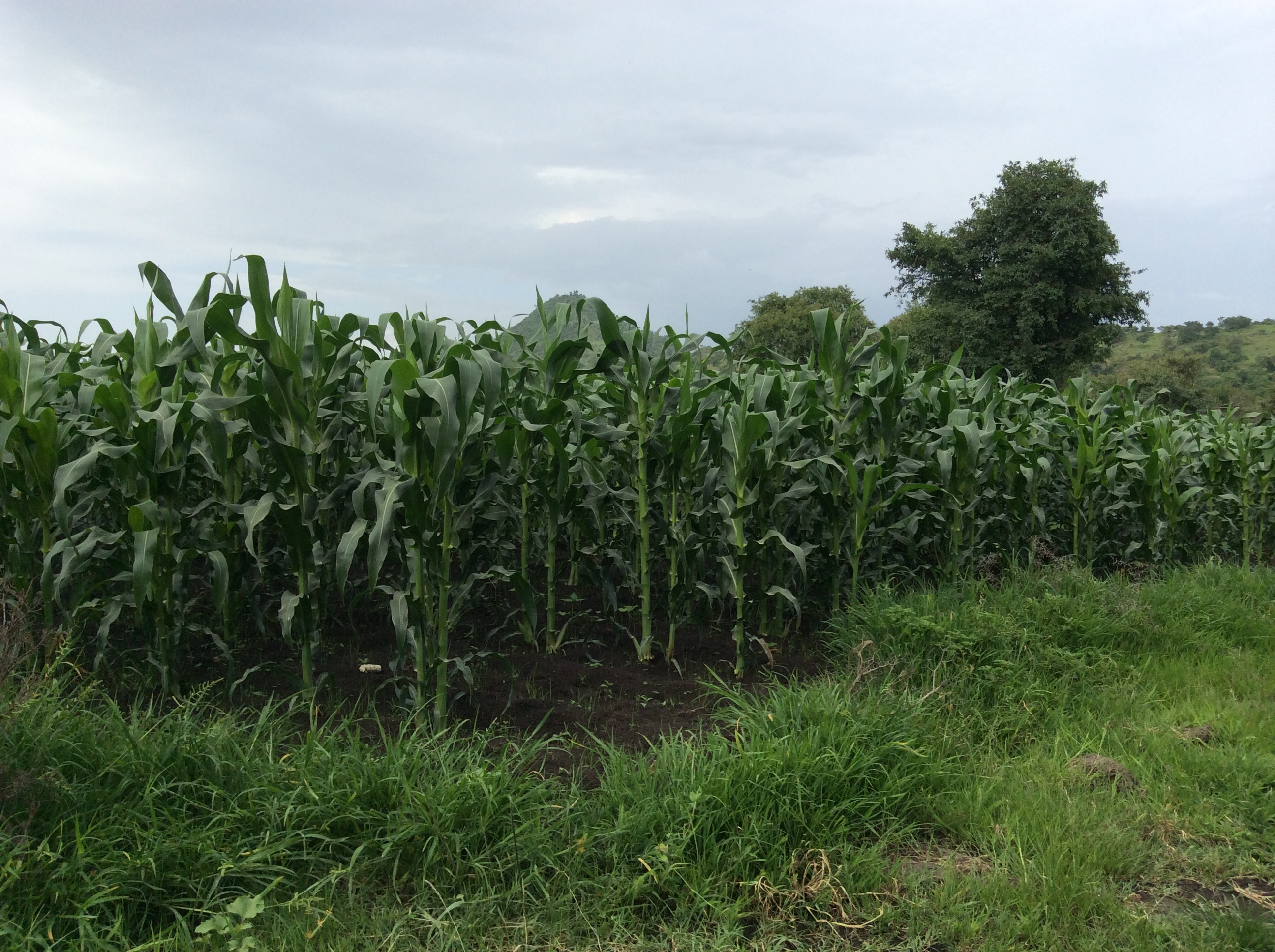
Fields of beans and corn.  Off and on all my life, I have raised corn.  This corn is as good a crop as I have seen anywhere.

IMG_0877

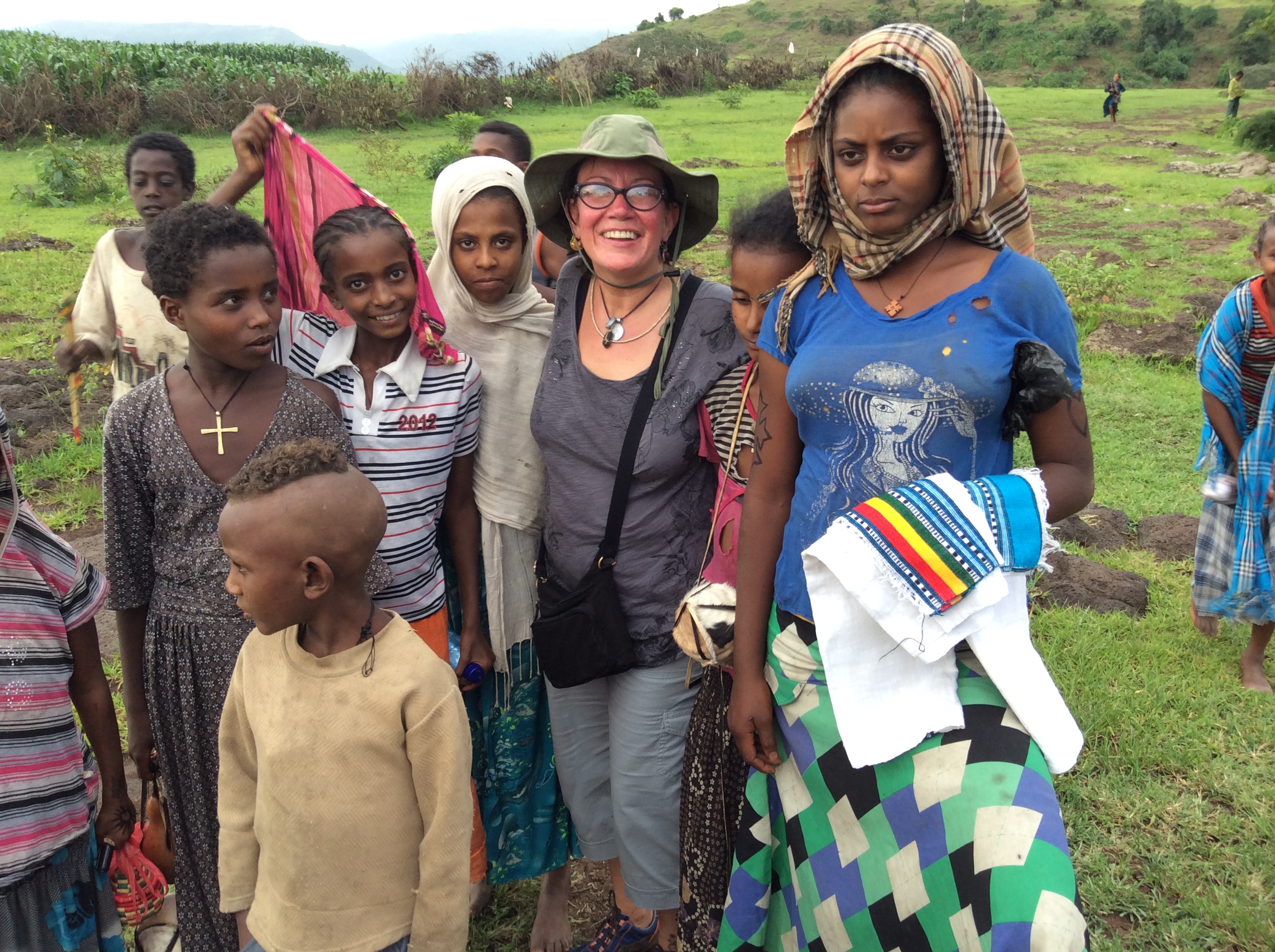
On the path to the Nile Falls, youngsters show up everywhere selling various items.  This young man walked all the way to the falls and back with me.  I bought this flute for my grandson.  We have all tried to play it, my daughter and grandson, and I.  We cannot make a sound.  This young man made it sing.

IMG_0890

He also spoke very good English which he learned in school.  He could explain all the crops, when they plant, everything as we strolled along.

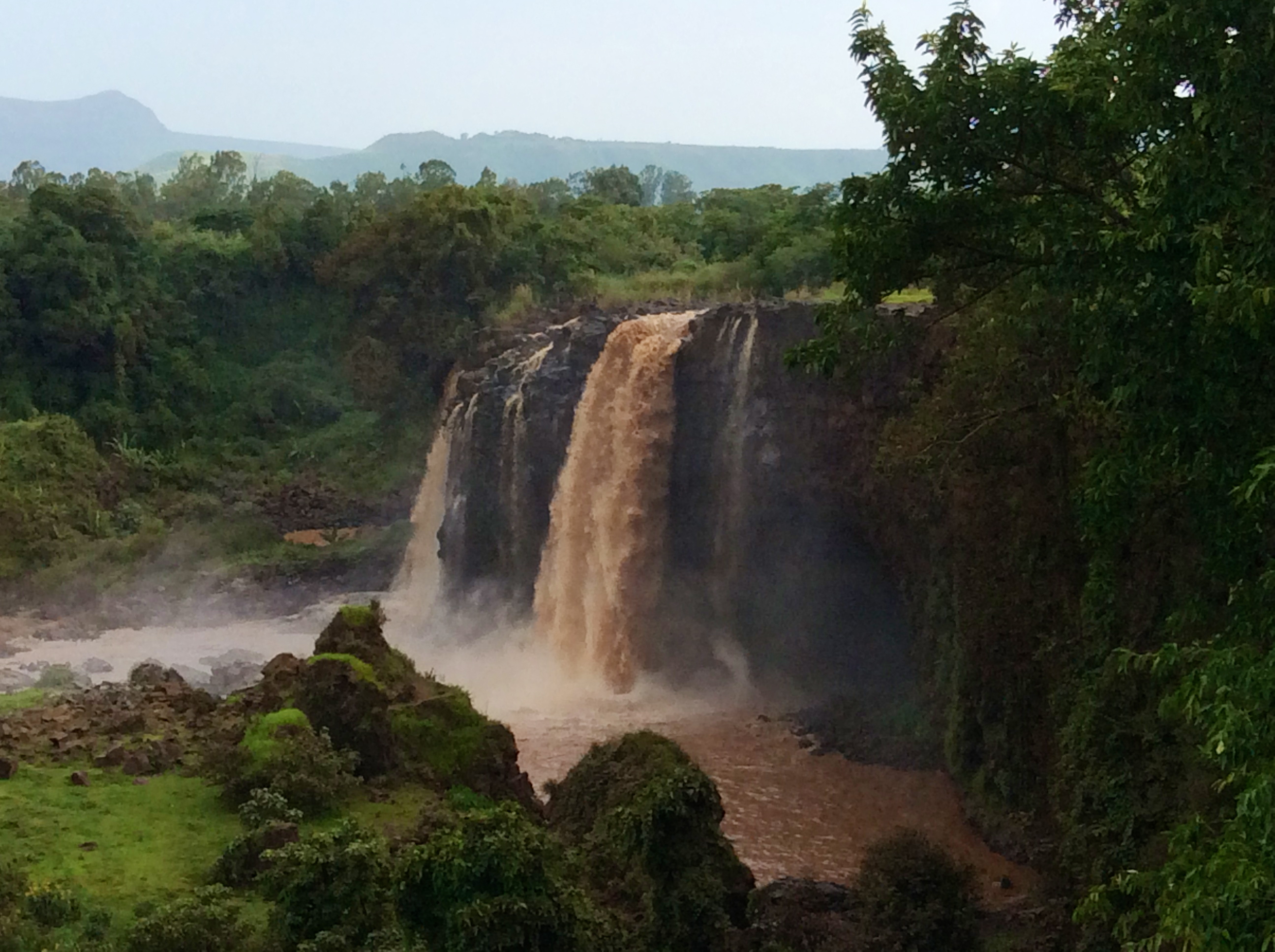
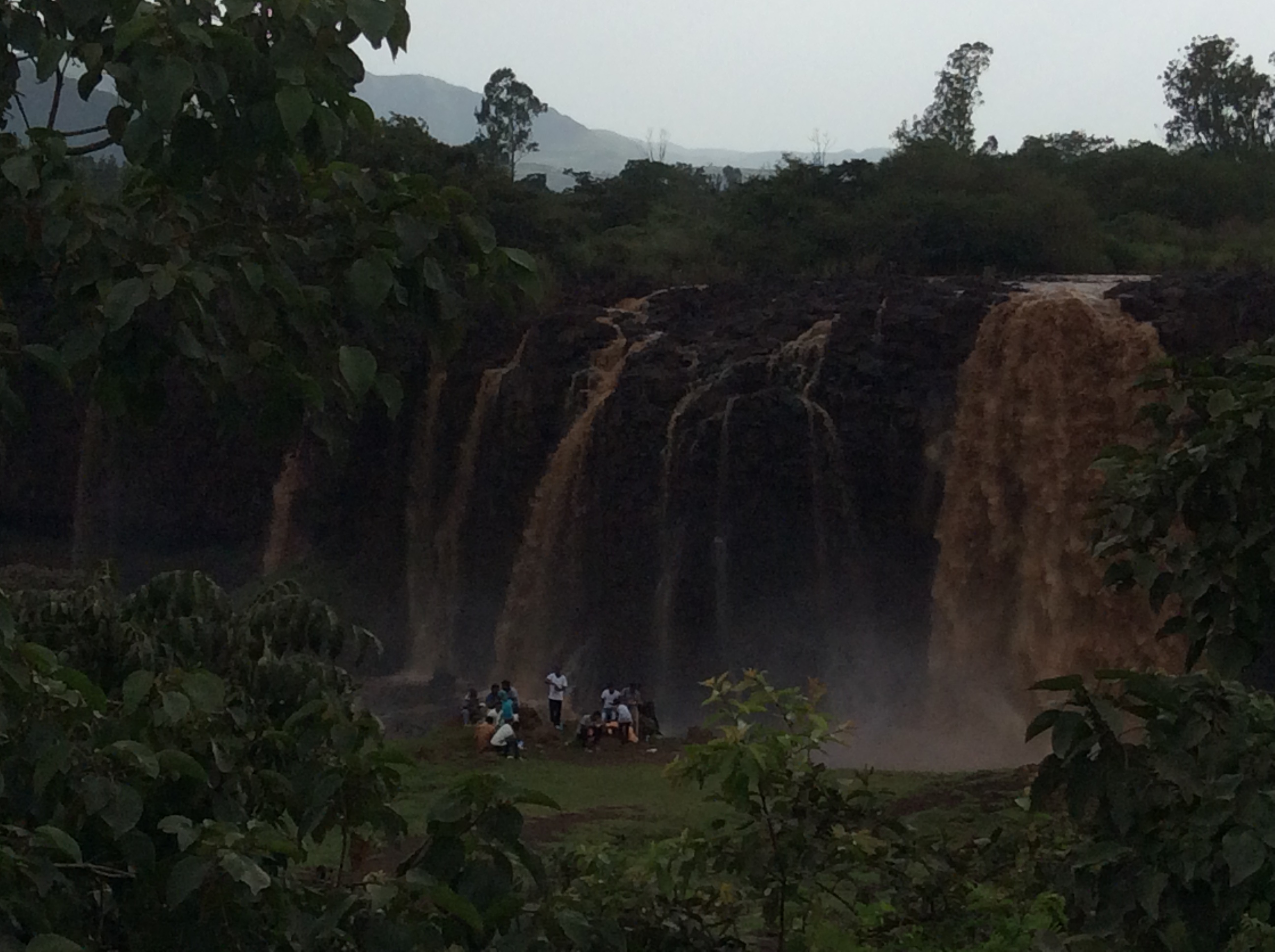
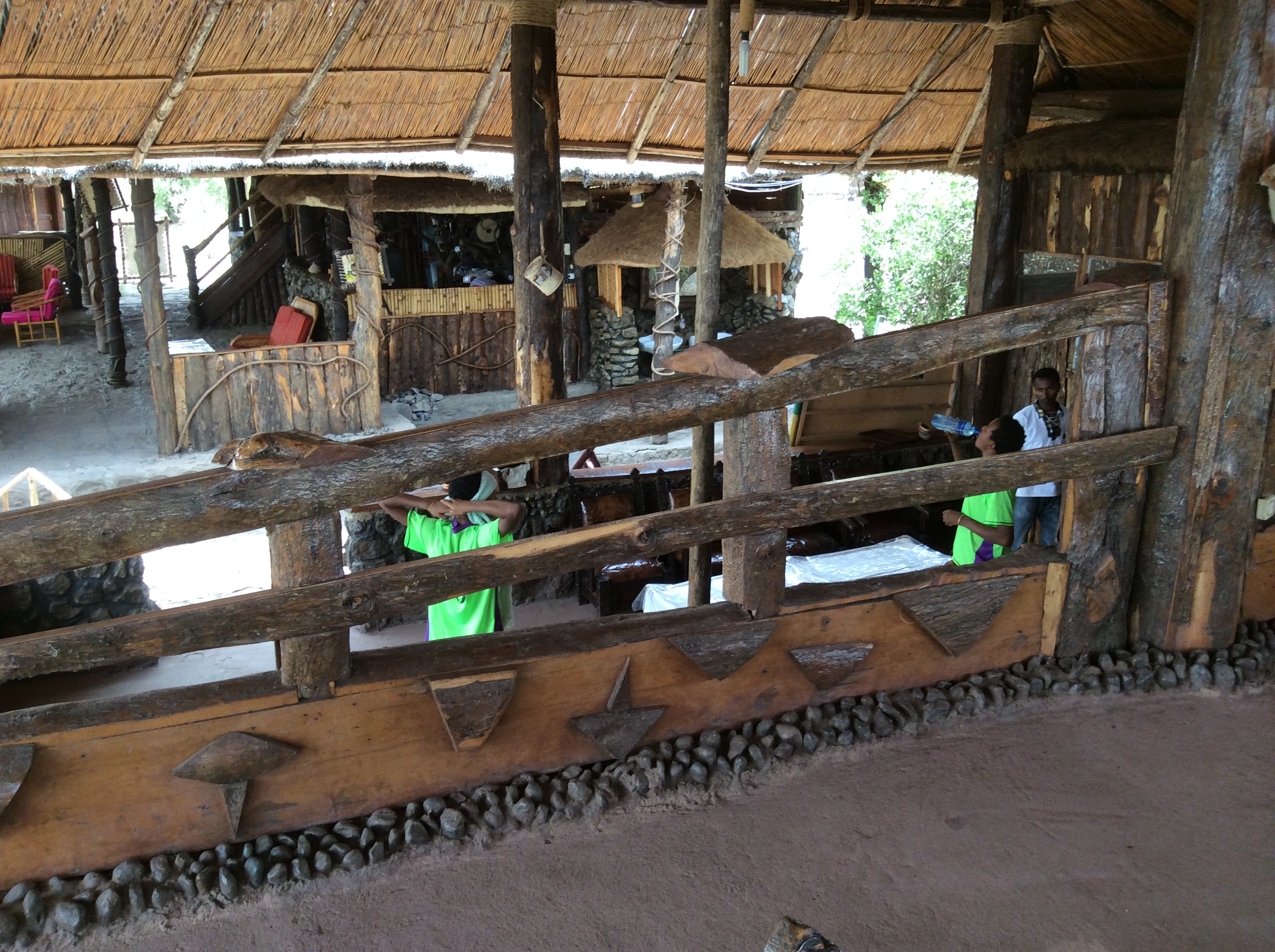
The falls, although impressive, failed to meet my expectations.  After seeing numerous photos of them, I expected something grander.  They used to be.  Now, 80 per cent of the water is diverted from the Nile before it reaches the falls.  Ethiopia produces enough hydroelectric power to export it to nearby countries.  85% of the people in Ethiopian have electricity.  As you drive by villages, you can see dishes for TVs on rooftops.
IMG_0879

We were told that the falls used to be so large they covered everything where we stood.

IMG_0886

IMG_0882

My friends took a different route to get to the falls than I.  I crossed the Nile at another location to get there.  They hiked around some large hills and crossed this footbridge made by the Portuguese years ago.

Children of varying ages crowded around us selling various types of items.  My friend, Zuriash, is in the middle with the hat.

IMG_0891

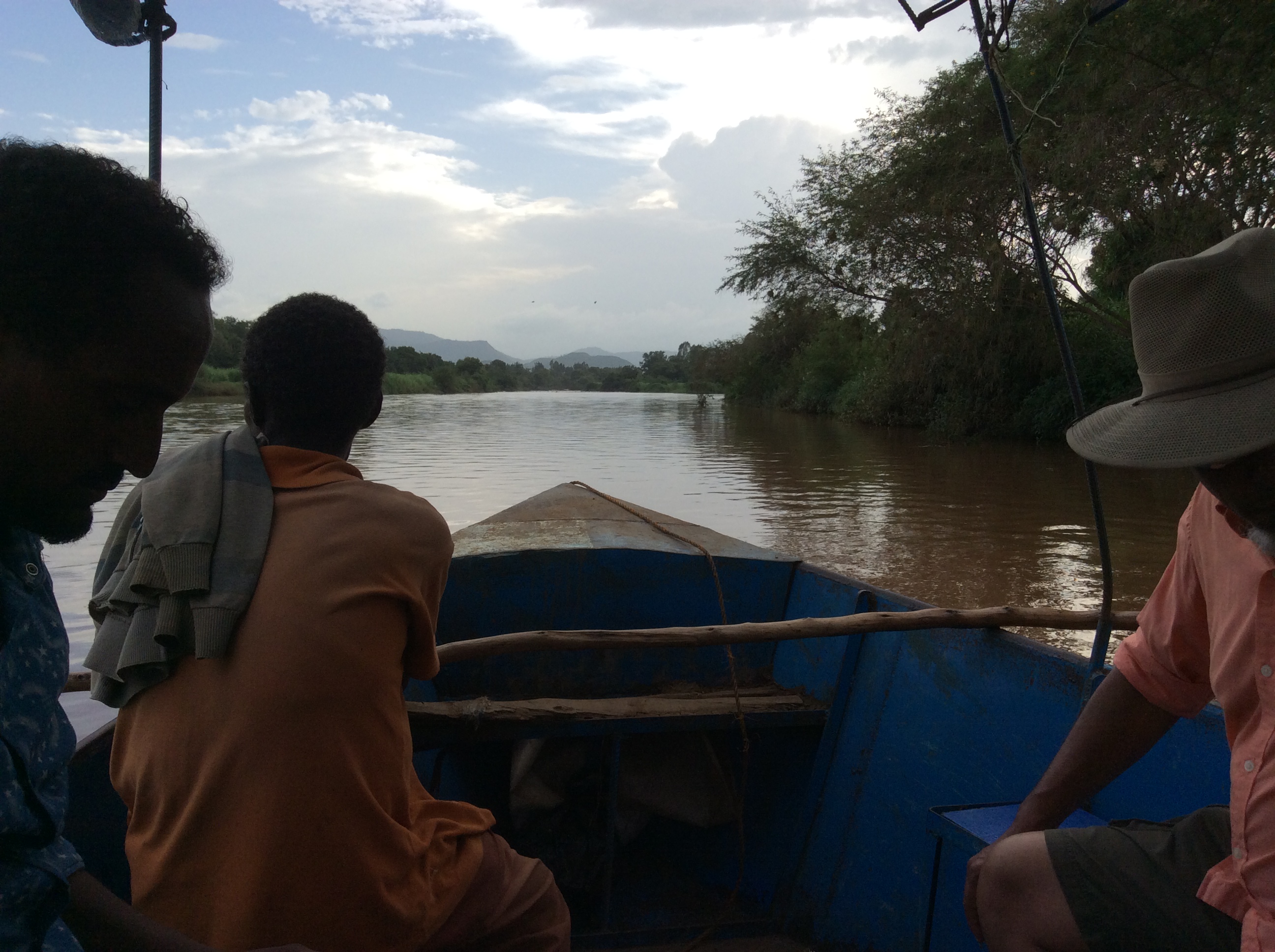
Twice that day I crossed the Nile in this boat.

IMG_0892

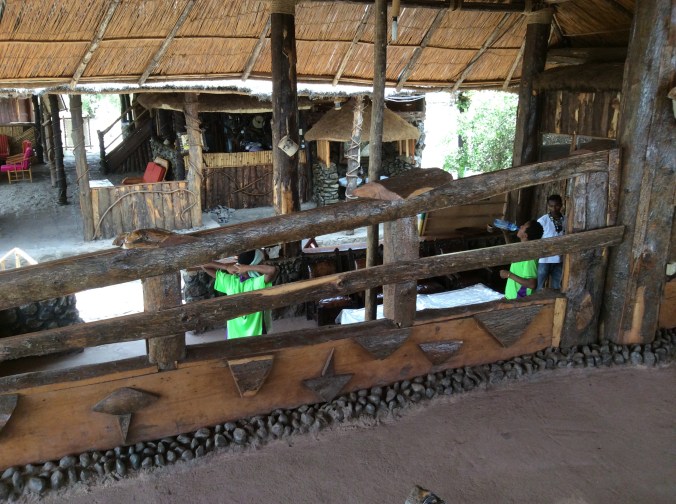
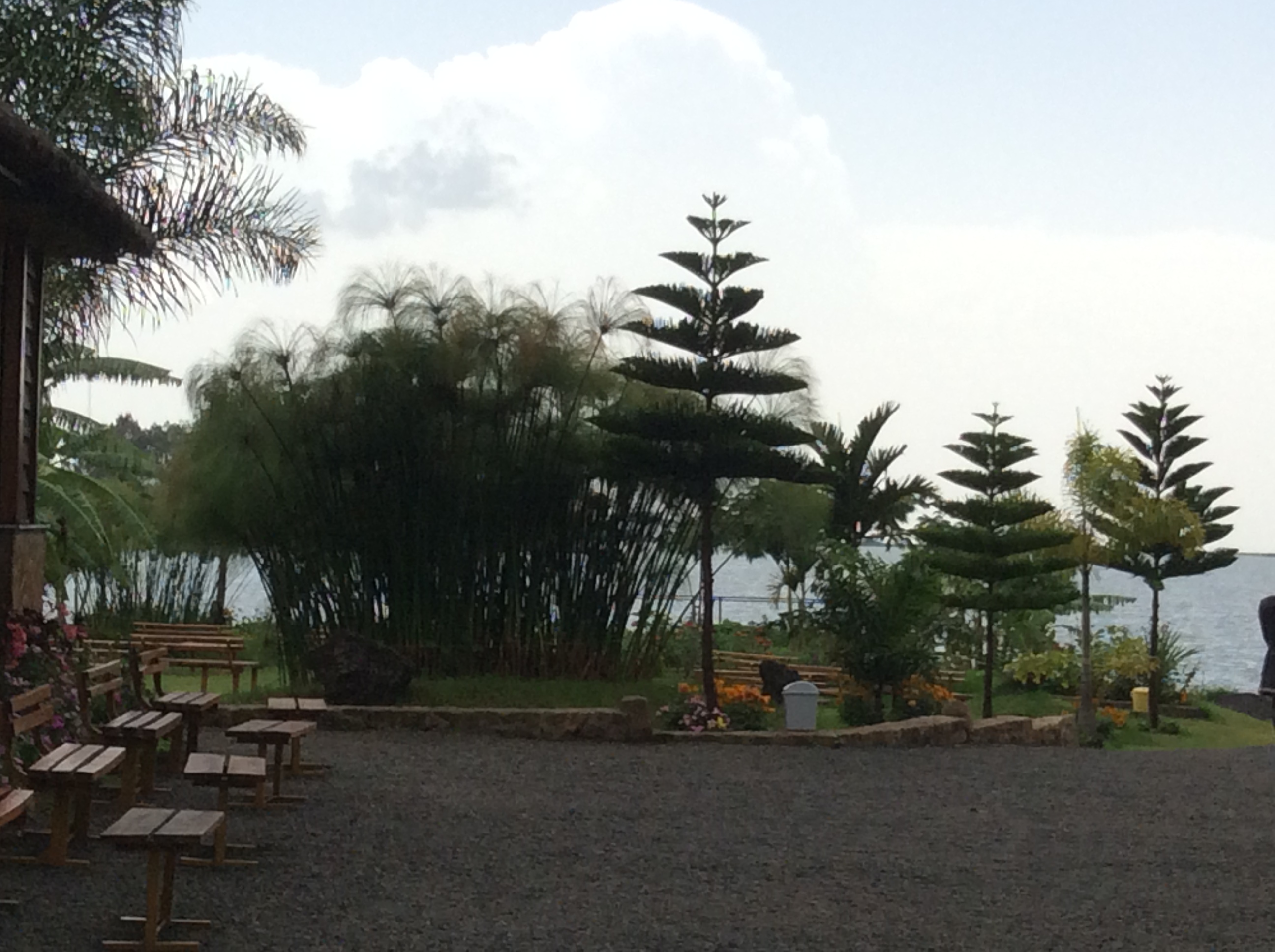
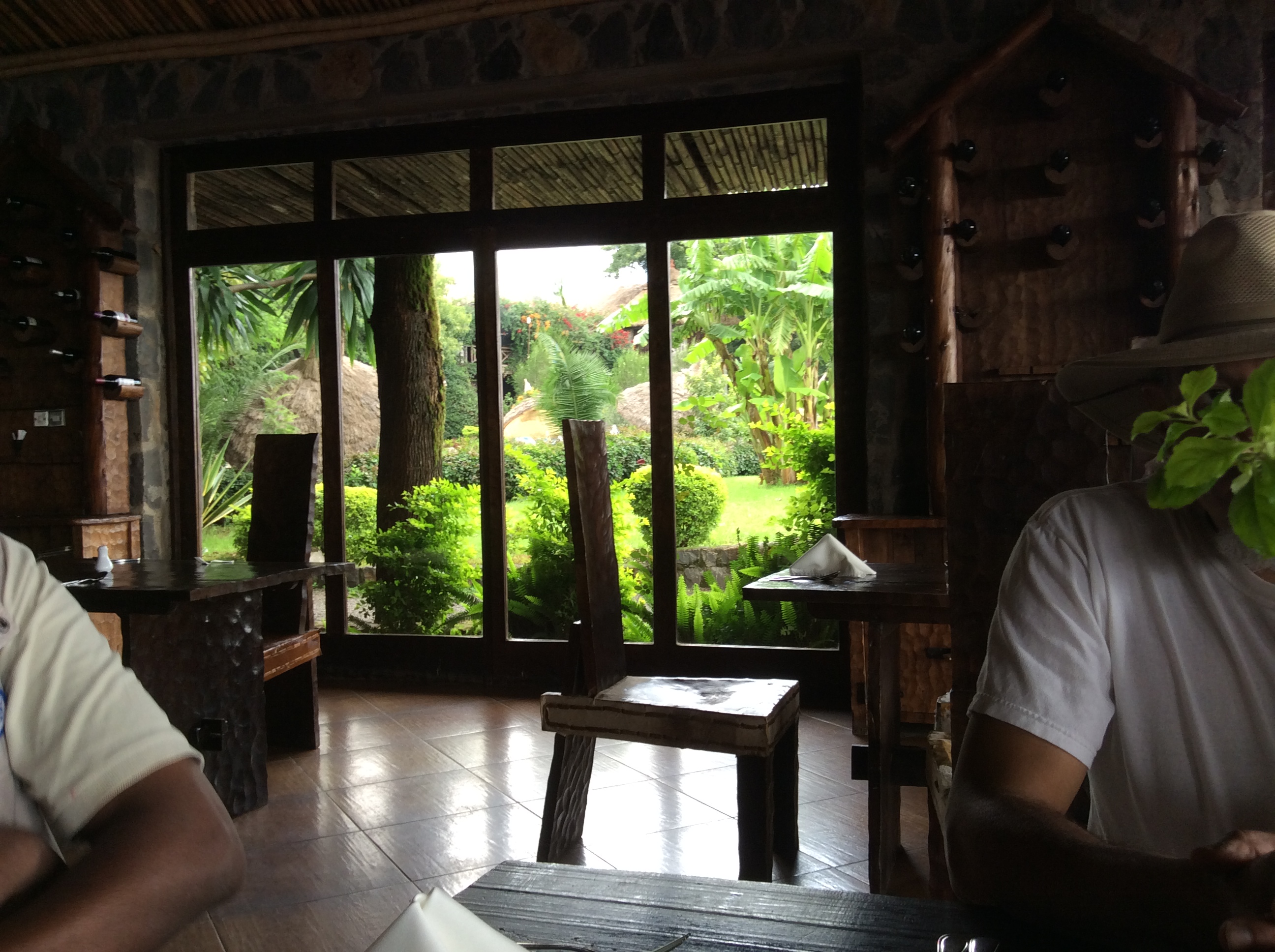
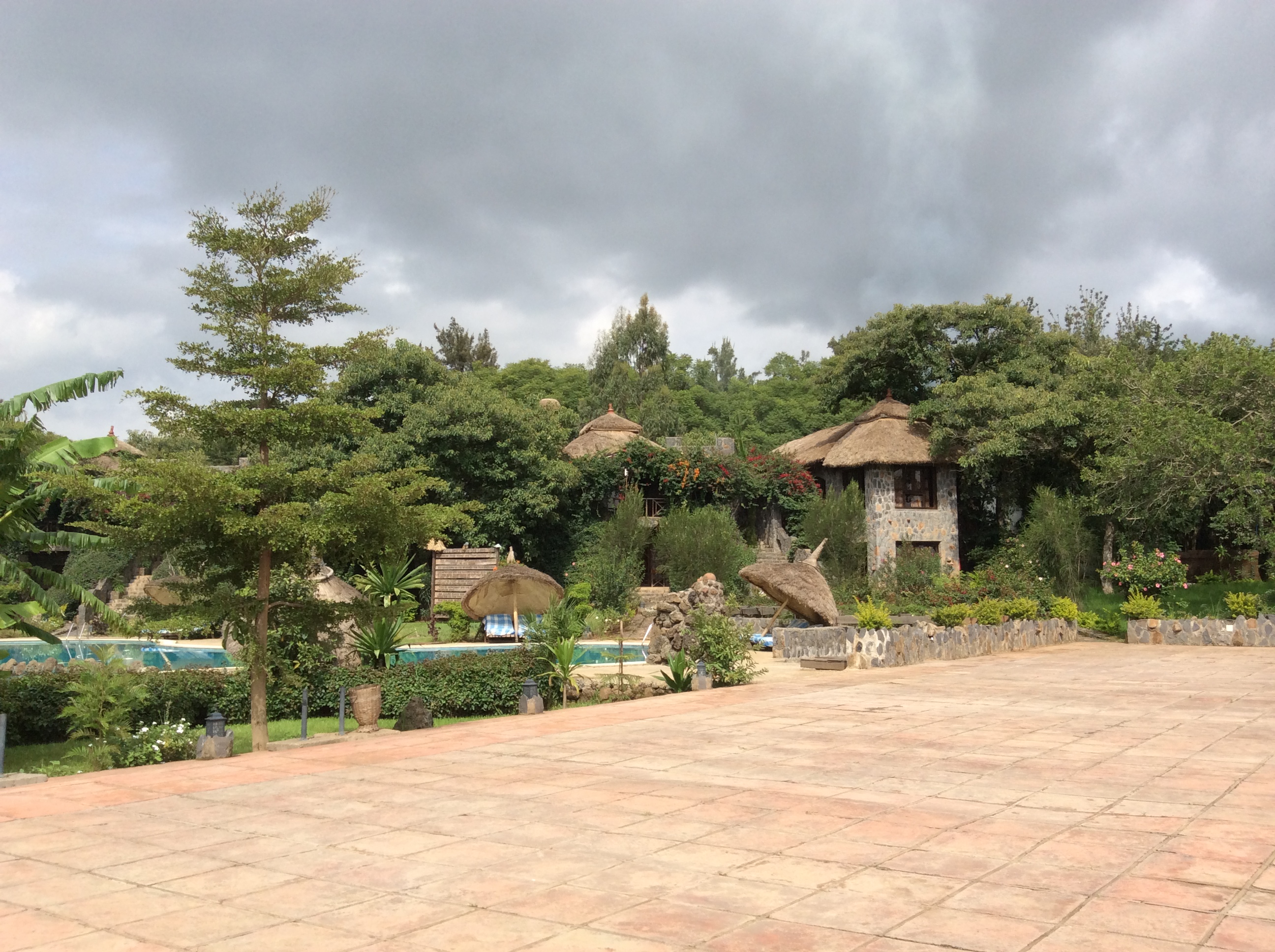
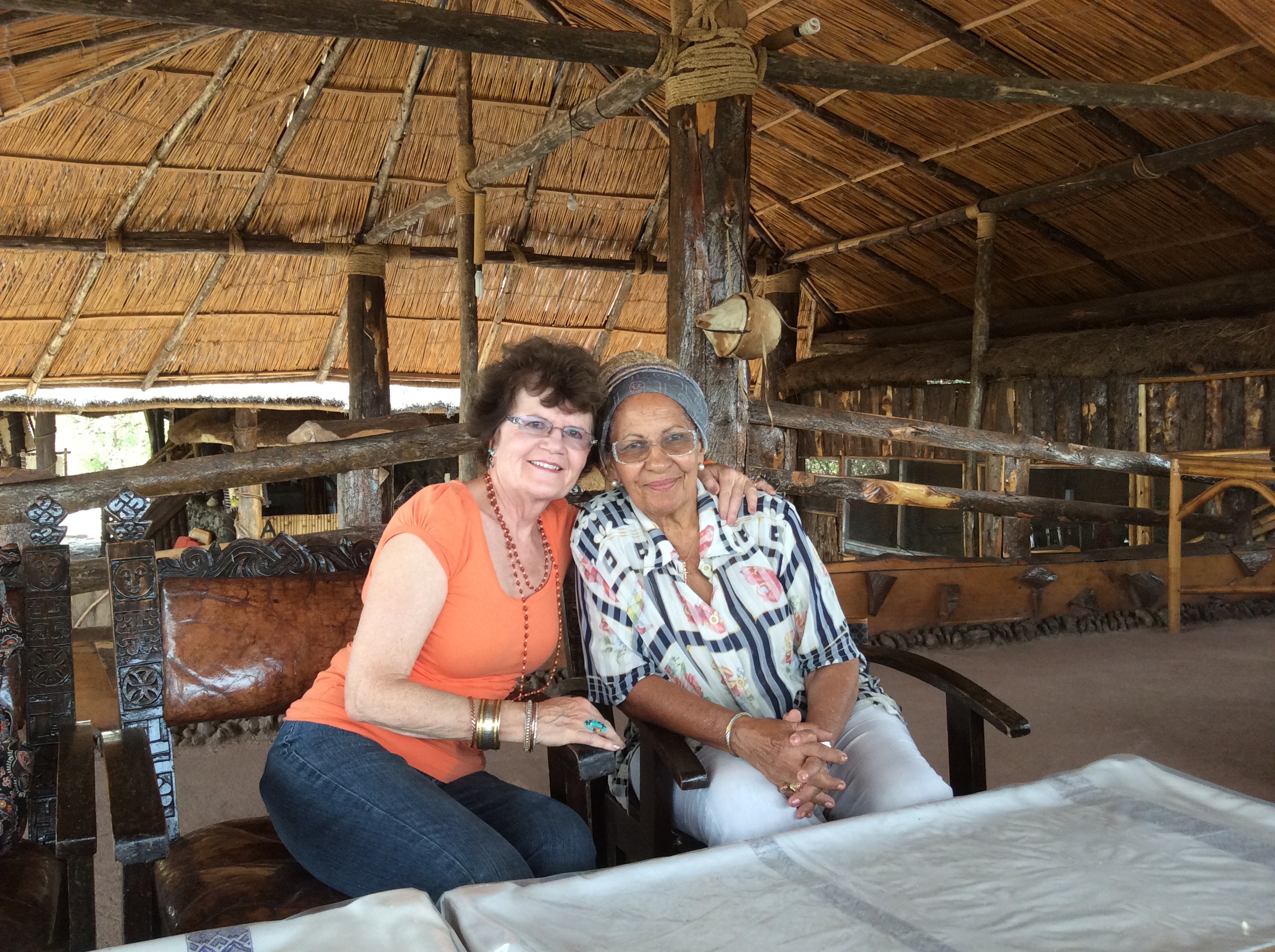
The morning we left Bahir Dar, Alemu took us to this restaurant at a fancy resort on the lake.  The owner’s story remains one of those success stories one hears off and on in Ethiopia.  He came to the US, worked for a big hotel here, learned the trade, saved his money, returned home, and built a couple of very successful luxury hotels.  This is the restaurant at the one in Bahir Dar.  All the rooms, the landscaping, everything deliberately duplicates African traditional architecture and gardening, a certain, special atmosphere.
IMG_0893

IMG_0894

These hand carved chairs may look uncomfortable but they are not.  Somehow they fit the human body perfectly.  The following is a view of the pool and some of the rooms.

IMG_0895

IMG_0896