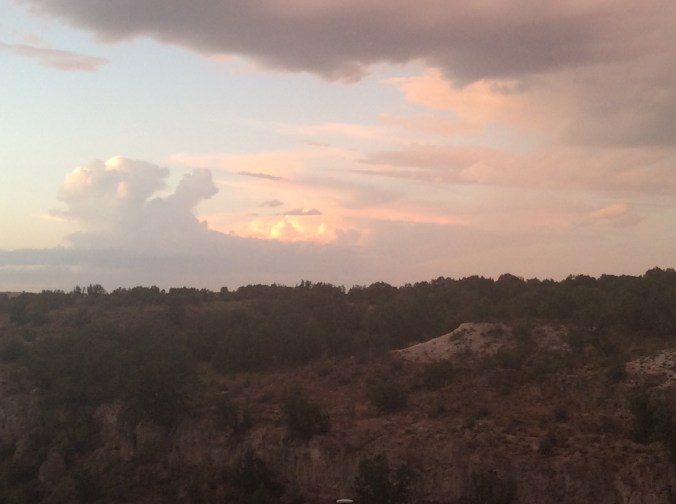
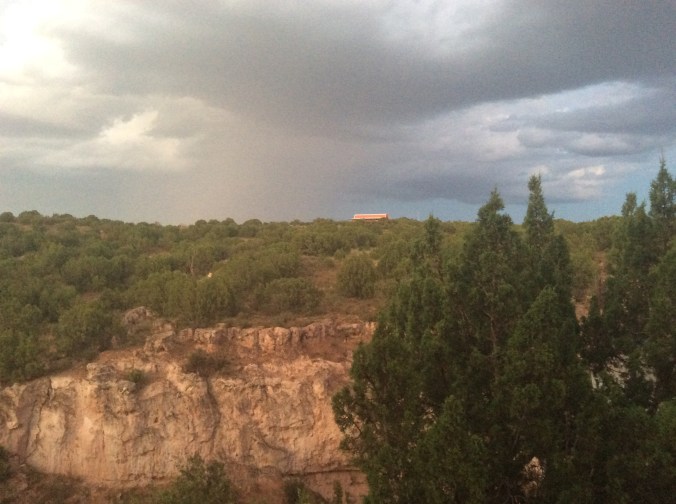
Horses fed
Thunder
Lightning
Silence
Thunder
Downpour
Sunset
Beauty
Late summer
Evening
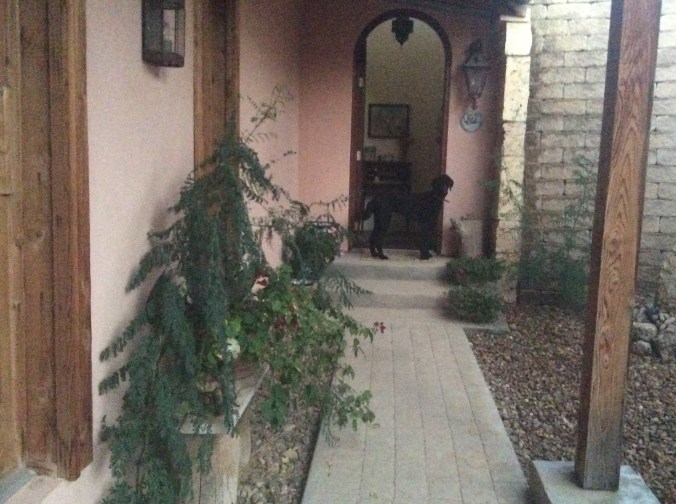
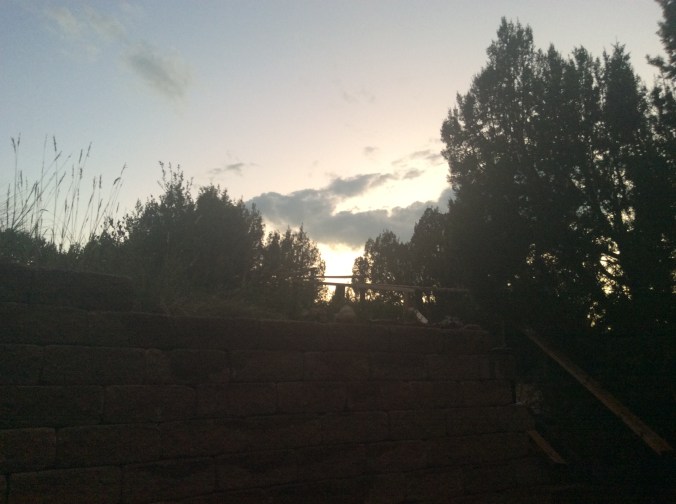


Horses fed
Thunder
Lightning
Silence
Thunder
Downpour
Sunset
Beauty
Late summer
Evening
I was going to write my own blog post today but like this one so much I decided to reblog it. Why? Unlike all those memes that say smart people are messy, etc., I disagree. Maybe some are. For myself, I like aesthetic order. How else can I see the paintings, the books, the family heirlooms, the colors in my house? I also prefer mental order geared toward creative accomplishments. I love nature which has order, e.g. a snowflake. There is a kind of mindfulness in appreciating the task at hand, the order of completion, the moment.
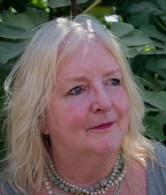 While the world is falling apart all around me, I have been slowly engaged in a major cleaning and cleansing of my home.
It started when I began to move my summer clothes to my main closet in June. Here in Greece we have no tradition of second-hand stores, Goodwill, or Salvation Army. This makes it difficult to get rid of anything: often the garbage can is the only option. Still, I began with my clothes, tossing out even some much loved and still beautiful things that no longer fit. My Greek-Albanian cleaning lady took all of them, and I didn’t ask her what she did with them.
Then I moved on to the kitchen.
View original post 1,102 more words
For those of you who enjoy different types of stories and their authors, here is a weekly Podcast to explore.
I am profoundly excited to announce that I’ll be joining a new podcast series, hosted by author Jude Brewer, called Storytellers Telling Stories. The series will consist of writers sharing their work and their craft in a new version of the oldest tradition: oral storytelling.
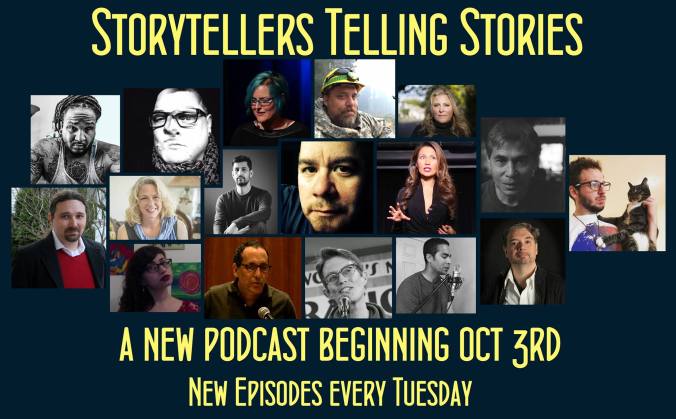
You can check out the teaser trailer online now.
I’d be excited to join this series anyway, especially since I’m a fan of Jude’s work in general and am honored he invited me to come aboard. But the lineup he has in place for season one includes some of my favorite writers and dearest friends: Jason Arias, David Ciminello, Sean Davis, Daniel Elder, Zach Ellis, Jenny Forrester, DeAngelo Gillispie, Kate Gray, Rios de la Luz, Gina Ochsner, Kate Ristau, Domi J Shoemaker, Davis Slater, and Reema Zaman.
My own…
View original post 51 more words
Clouds
Sunrise
Sunset
Beauty
Summer


Nearly everyone lies about an important aspect of US history even historians. School history books avoid the discussion totally, this significant part of US history, much of which explains past and current racism.
Americans pretend that social class does not matter, that anyone can rise to the top given enough effort. This myth depends on the continuation of a very selective historical memory, indeed, a lie.
It began with the British and those who intentionally left there to come here. Even colonists divided the classes with poor people and criminals at the bottom–whores, discharged English soldiers, robbers, highwaymen; the saddest of the lot were the orphans, rounded up, loaded on ships bound for America, sold as indentured servants. Often these contracts were repeatedly resold with no routes for the individuals to escape. The rigid English class conditions continued here. People of higher classes in the colonies referred to the poor as waste, rubbish, and trash.
John Locke, often considered the father of constitutional government, favored slavery and aristocratic society. He endorsed an aristocratic constitutional government and called the poor, landless, lazy lubbers. Because the southern colonies lacked sufficient land lubbers and land owners believed Africans more suitable for hot, humid swamp clearance, they petitioned for slaves–previously illegal in Georgia, for example. These wealthy landowners also viewed poor whites as too lazy to work.
Even the esteemed Ben Franklin believed in the concept of class as inevitable. Both he and Jefferson saw expansion westward as the solution to potential class conflict. Franklin thought the new colonies needed more people and advocated for the freedom of slave women who bred many children and for white women to be allowed to gain property rights for the same. More people would move west and alleviate class conflict. Franklin was not an advocate for the poor, whom he considered lazy, slothful. He even endorsed their forced migration westward and referred to them as “the meaner Sort, i.e. the Mob, or the Rable”.
If this sounds shocking, Jefferson went even further, calling the poor, “rubbish”. He did feel they could improve, given land and education. He did not include slaves in this theory.
If you ever wondered about the origin of the term “cracker”, look back to the era of Andrew Jackson, the era of “squatters” in a log cabin in the thickly forested frontier, people who squatted on land they did not even own. Many saw them in both positive and negative terms: half strong, hard working pioneers and half robbers. Two terms applied to these people, “cracker” and “squatter”, none of whom legally owned the land where they lived, troublemakers with no hope of upward mobility, people who championed crudity, distrust of civil society and city dwellers, and held on to a kind of crude arrogance. Both terms came from England where such people were considered lazy vagrants. The more educated and “civilized” viewed them as degenerate, low class fornicators. These squatters saw Andrew Jackson as their champion and Davy Crockett as their hero.
The phrase “white trash” became common in the 1860s and after. These were the southern poor with dirty faces, ragged clothing, distended bellies without possibility of improvement, who for a brief time were viewed as even lower than slaves. Southern aristocrats pushed the concept of bloodlines for people as well as livestock. They advocated a criteria for human as well as livestock breeding to justify slavery and Anglo-Saxon superiority. Native Indians were a biologically inferior, degraded race, doomed to extinction. Later Texans used similar arguments to deter intermarriage with Mexicans. Sam Houston championed this cause apparently ignoring his own personal history. He had lived with Natives and married two of them. In the long run these beliefs did not help poor whites or raise their status. They lived off the worst land and were continually referred to in derogatory terms, e.g. white trash, sand eaters.
Just before the Civil War some elite Southerners advocated to keep certain classes ignorant. They defended the planter class as having the best bloodlines, whose destiny was to rule over poor whites and black slaves. When they realized they needed poor white support to secede, and that many did not support them, they convinced them the war was necessary to save them from a state worse than slavery. Some were promised land and other rewards. Since most were illiterate, they remained unaware that they were referred to as “perfect drones”, “the swinish multitude”, and other pejorative terms; and that some saw them as trash who contaminated whatever they touched. It was not the Southern elite who died in masses during the Civil War; it was the poor, recruited with Davis’ rhetoric about the superiority of the white race.
Later, during Reconstruction, William Percy wrote a description of poor whites as those who lynch Negroes, lack intelligence, attend religious revivals then fornicate in the bushes afterwards. He also explicitly referred to them as Anglo-Saxons. Teddy Roosevelt saw this a bit differently. He wanted Anglo-Saxons to work, to join the military, and breed, but he excluded poor whites from this group and his plan.
The term “rednecks” came into use in the South during the 1890s. It referred to people who lived in the swamps and mill towns, wore overalls, heckled at political rallies.
The Great Depression exacerbated the situation for poor whites and increased their numbers dramatically. Those who had never been considered white trash joined the ranks of the poor. Many Southern writers went back to discussions about the Civil War and argued about the current poverty and how to solve the problem. One, Jonathan Daniels, even wrote that Rebel pride blindfolded all classes.
Later, one way to overcome the prejudices against the poor was through music and TV shows, e.g. Elvis Presley and “The Beverly Hillbillies”. It allowed the country to feel better about prejudices and pretend they did not exist.
Today this manifests itself through politicians who “pretend” to be white trash and rednecks to gain votes, but in reality live the lifestyle of the upper class.
Note: For those who wish to read more about class and the writings of the individuals mentioned above here is a partial list.
Writings and speeches of Benjamin Franklin and Thomas Jefferson
Sherwood Anderson’s “Poor White”
Writings of John Locke
Works of James Agee
“White Trash: The 400-Year Untold History of Class in America”
Speeches of Jefferson Davis
Recently, while reading a novel about a woman in Shakespeare’s time, I came across this statement by one of the characters. It rings so true for many eras of human history, I feel compelled to share it:
“Religion is not only about men’s souls. It is about who rules us, what laws we obey, how and why we are punished, and by whom.”
This blog will be of special interest to university professors and anyone who teachers in a college or public school at a higher level or those concerned about the state and future of education.

What a pleasant surprise to become acquainted with Samar Habib when she appeared on my newsfeed the other day. According to her biography, she “is a writer, researcher and scholar” as well as “[a] tireless advocate of human rights.” She is also “an expert of international standing on Gender and Sexuality in the Arab world, with unparalleled publications on same-sex love and desire among women and the juncture of Islam and homosexuality.” The Ted Talk I stumbled upon, titled “Let the Scholar Speak, Even if it Scares You,” explores the modern university’s difficulty navigating that murky space between academic freedom (based on scholarship and inquiry) and giving offense (based on fear of decimating a student’s belief system).
Samar is Palestinian, raised in a secular, but nominally Christian, household. Initially, her research focused on the study of sex and gender in the Arab world and gradually incorporated the more specific…
View original post 912 more words

Eerie. Silence. Fixed dinner, took it out on the patio, sat down. Realized I could hear myself chewing–pasta, not celery or carrots, pasta. What?!
Stopped eating. Listened. No insects chirping, no birds calling, no wind blowing.
Nothing.
Eerie. Quiet, cloud covered sky. No lightning, no thunder.
Nothing.
I looked for a tornado cloud, an explanation. None. This never occurs here.
The sound of no sound.
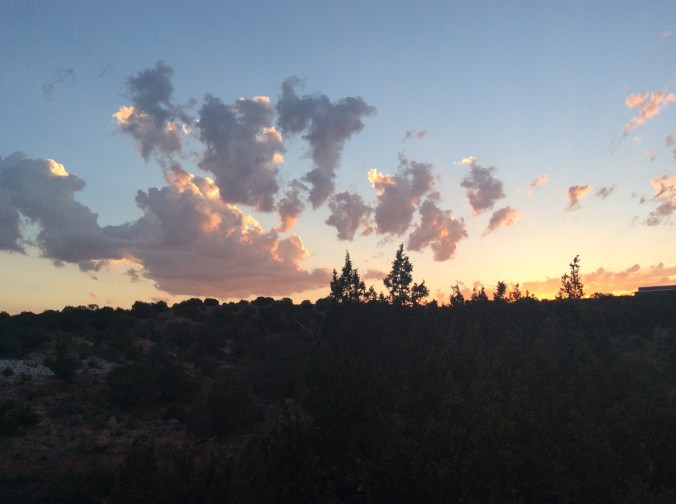
Birdsong
Mist
Peace

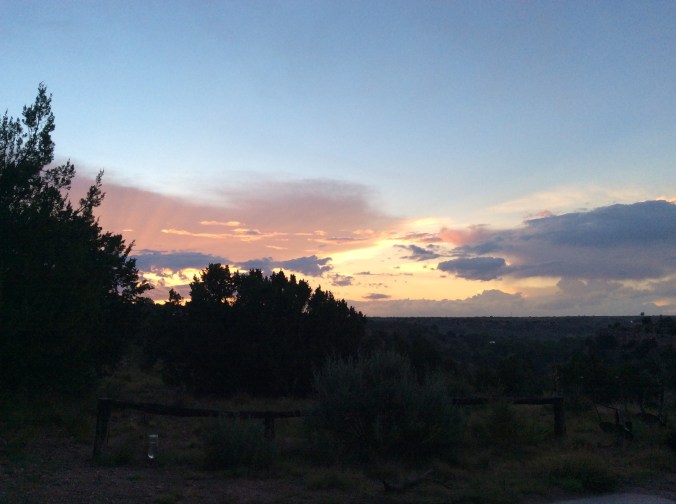
Today at the bookstore browsing, I picked up a book nestled among the magazines.
This question appeared on page 41: “If you were given a book on the story of your life,
would you read the end?”
I asked my grandson. He immediately said, “No!”
I wonder.
Remain unsure.
If I read it, could I change it?
Are lives predetermined, choiceless?
Are we unwittingly predetermined and just victims?
If I read it, could I change it?
Eat something different,
sing a varied song,
laugh more,
spend more time with sunsets, sunrises,
read less, more,
love someone new,
say words now lost,
write a contrary story,
choose an opposing path,
challenge?
Travel the World 4 Less
A Glimpse into My Life & Passions
Ceto-Magoism, the Whale-guided Way of WE in S/HE
Exploring the F-word in religion at the intersection of scholarship, activism, and community.
ANCESTRAL FOOD. HERBAL WISDOM. MAGICAL COOKERY. SEASONAL CELEBRATION.
inesemjphotography
politics, engineering, parenting, relevant things over coffee.
Food is the best expression of every emotion. Explore through my reviews, recipes, events and more.
Smile! A Site for Friends Wherever You Are!
inspiring personal growth through poetry and writing
Combining atheism with whimsy. This is a Fair and Balanced blog based on opinion unencumbered by fact.
Odds and ends ~ My Life
Original poetry, commentary, and fiction. All copyrights reserved.
bripike@gmail.com
A wildlife filmmaker in Africa
A Geeky Feminist's Musings On Pop Culture
"5 minute walks"


 writingontherim