A Surprising Find at the Library


Two days ago I drove to the local library to return “The Historian” and inquire about a book an acquaintance had recommended. The library houses a used book section at its front hall entrance. I usually only glance at it because mostly it contains books in which I have zero interest. I glanced once again. There in nonfiction I saw NERUDA painted in big, bold bright colors-blue, red, green, purple–across the top half of a book cover. Just below this was a parade of flowers marching across the middle of the cover in the same bold, bright colors. Finally, at the bottom painted in bright red on a black background in capital letters it read, “MEMOIRS.” Inside the O is printed in the same red these words,”confieso que he vivido.” I snatched it up. The little sign said 25 cents. Although I’ve read Neruda poems mostly translated into English, I had no idea he had written anything about his own life. I knew I had to read this. I knew some things about his fascinating life. I wanted to know more. I dug around in my wallet, found a quarter, and deposited in the little brown box one of the librarians had indicated.

Later at home, I read the beginning, his brief introduction, explaining there are gaps here and there. He also explains, “What the memoir writer remembers is not the same as what the poet remembers.” He goes on to explain this. I will need to contemplate this more. Then in the beginning of the first chapter, “The Country Boy”, he describes “The Chilean Forest”. It starts, “Under the volcanoes, beside the snow-capped mountains, among the huge lakes, the fragrant, the silent, the tangled Chilean forest…” What continues is a prose poem describing this forest with intense sensory detail so clear the reader can see the details, the mystery, the lushness. He ends with this poem with the words, “Anyone who hasn’t been in the Chilean forest does not know this planet. I have come out of this landscape, that mud, that silence to roam, to go singing through the world.” Reading this beginning instantly linked me to his poetry I had read, to its sensory detail, to its lyricism.

They say we are all products of the environment in which we grew up whether we like it or not. Reading this is making me view this truism in a new light.

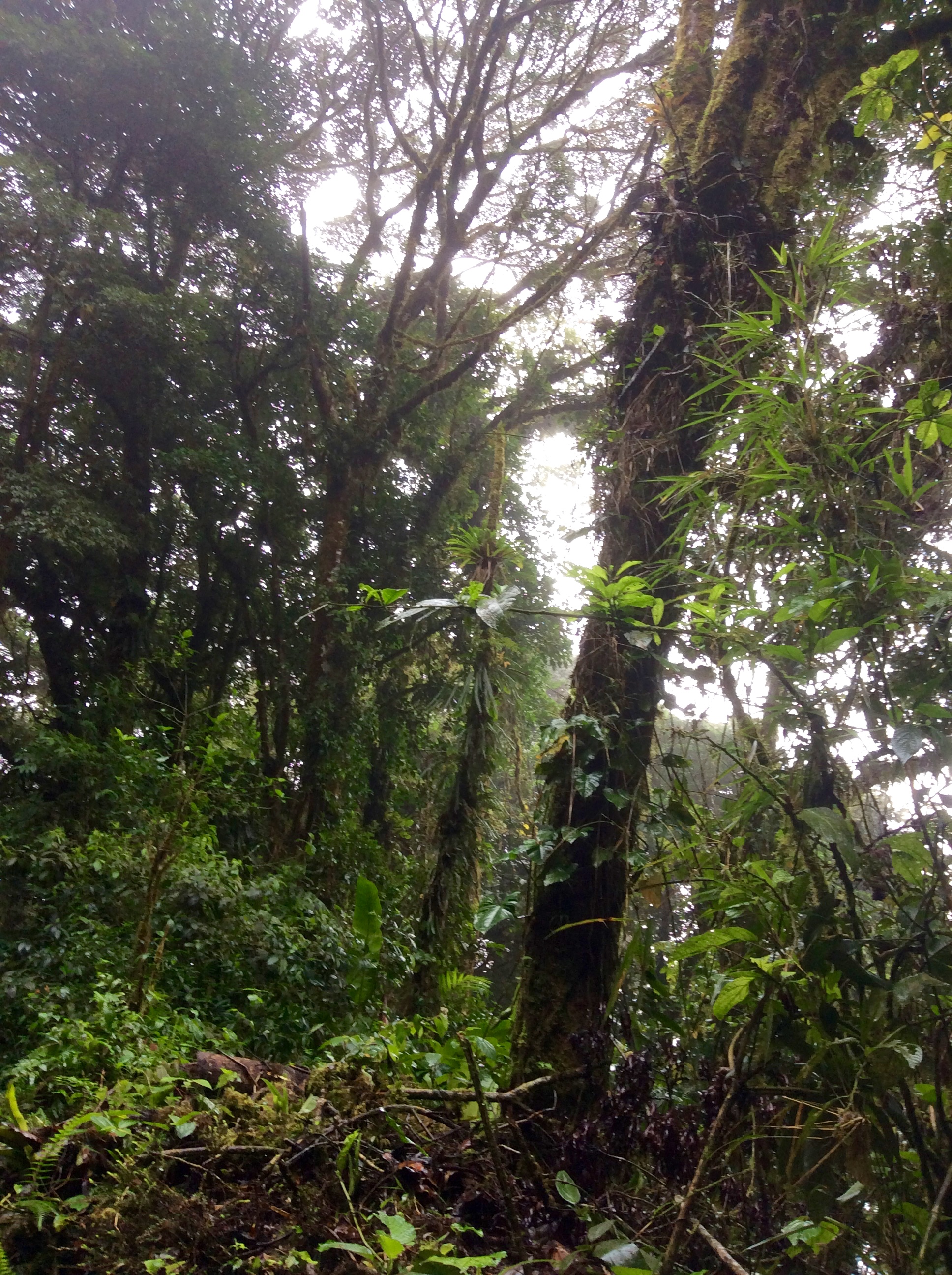
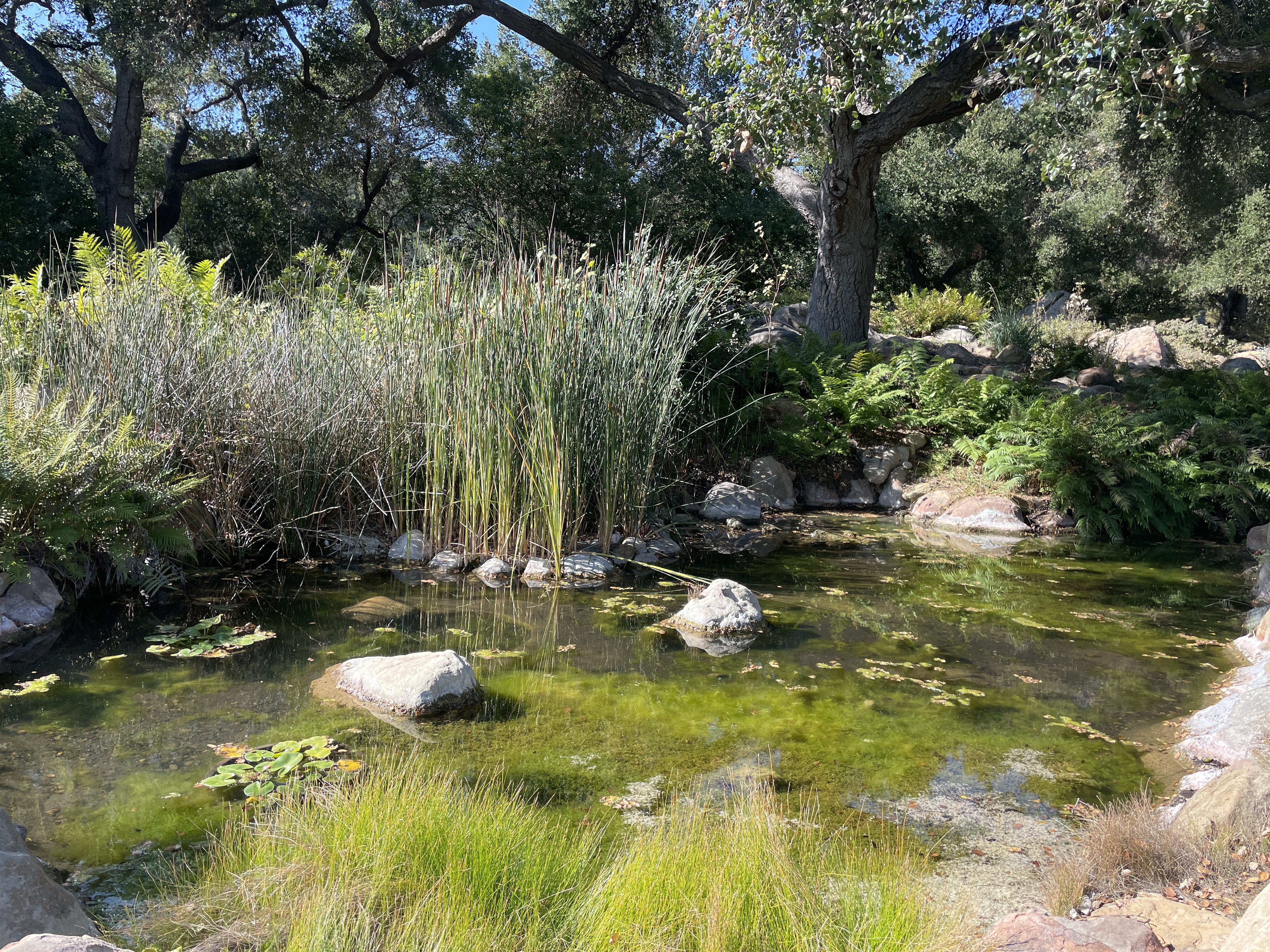
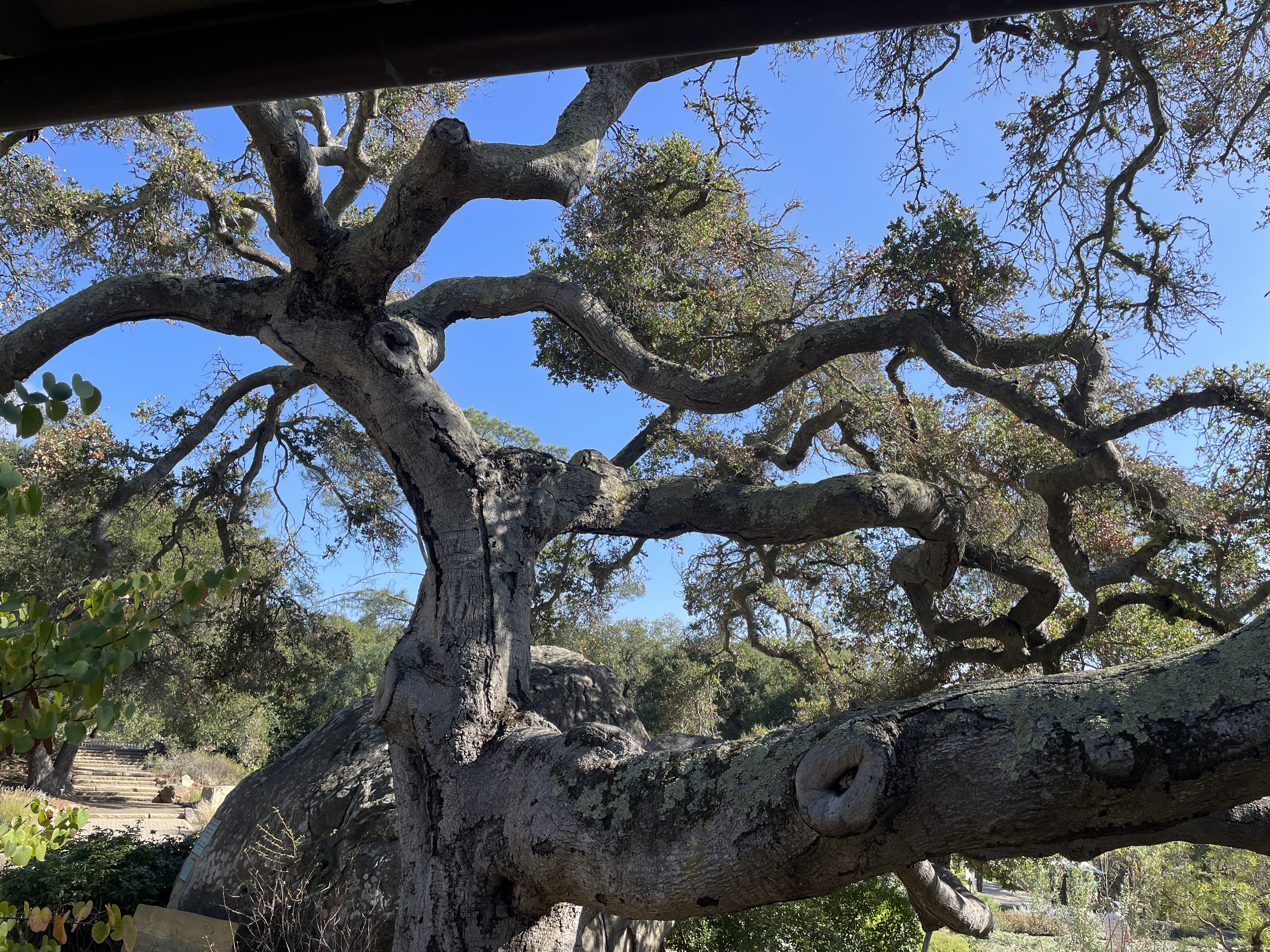
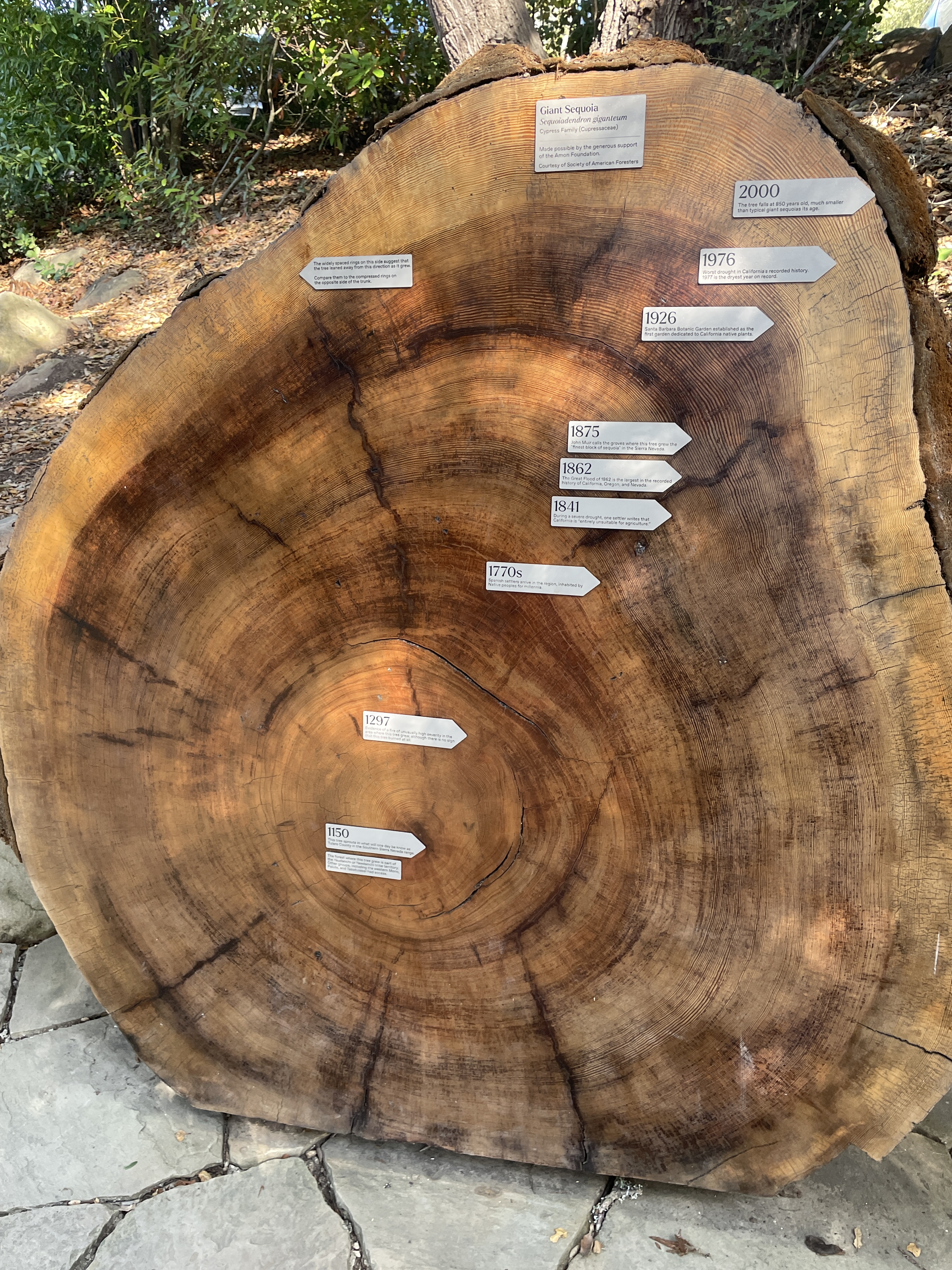
Santa Barbara Botanical Garden


gurgling water

redwoods sighing

peace

Note: All the plants in this 78 acre garden are native to the area including the coastal redwoods.

Book 37 for 2025: “Black Sea: Dispatches and Recipes”, Caroline Eden


This is a sort of travelogue, memoir, and recipe book. The author begins in Odessa and travels south from there to the port of Constanza in Romania as well as various other seaside towns in Bulgaria, then to Istanbul. After spending more time there she heads east to all the ports and some inland cities near
Turkey’s Black Sea coast.

I hope to learn new information and become a little more enlightened when I read–especially when reading non-fiction. This book did not disappoint. Here are a few of the things I learned:

-Odessa is a very old and once a very international city. At one point it had the second largest Jewish population in Europe. Now only about 1/3 of the residents are Jewish. Many of the restaurants serve traditional Jewish food even if not Jewish. Once in the past, Mark Twain visited there and made it famous for its ice cream.

-In Constanza, Romania, she witnessed a huge Navy Day celebration with booming gun salutes. Once upon a time, this city was famous for its Casino which now is just a glorious ruin. Here a breakfast mainstay is polenta with a mushroom topping. The author apparently liked the food because this section contains more recipes.

-Varna is the main seaport city in Bulgaria. The author’s main quest here was to see the gold, yes, gold. Once upon a time, this city was a major Roman port. Now the Museum of Archeology houses a spectacular collection of ancient gold. “Breastplates, bracelets, burial gifts, regal-looking head pieces, figurines, and pendants–all gold–shone for attention. The silent Midas room was deafening, ringing out with finery, treasure and opulence. And the loudest, biggest treasure of all, was the smallest. Tiny pendant earrings, almost inconceivably old, dating back 6000 years….these earring are the oldest ‘worked gold’ in the world. They belonged to the first known culture to craft golden artifacts, and they lived here, on Bulgaria’s section of the Black Sea in what some archeologists consider the oldest prehistoric town. But it was not gold that made this area wealthy; it was salt which was mined nearby. The world salary comes from the Latin word ‘salarium’–a Roman soldier’s stipend to buy salt.

-She goes to Istanbul and then on to Turkey’s Black Sea towns, Amasra, several a bit inland, Sinop, Trabzon, and Rize. Sinop has a particularly good harbor. There is a saying that the Black Sea has three safe harbors, July, August, and Sinop. This is in an area often targeted by Cossacks who crossed the Black Sea to raid these more prosperous areas. The town also houses an infamous prison where Russian convicts taught Turkish cellmates how to make model ships for which the town is now famous.-More than 3/4 of the world’s hazelnuts are grown in this area of Turkey. However, that did surprise me as much as the tea, yes, tea. When I think of Turkey, I think of that thick, strong Turkish coffee. However, Turkey is the fifth largest grower and exporter of tea in the world. The tea grows in the fog and mist on steep slopes that end at the sea. Several photos in the book illustrate the lush green mountains covered in tea bushes.

-When I think of Hagia Sophia, I think of the spectacular building in Istanbul, the one that has withstood invasions and earthquakes. But there is another one. On the western edges of the city of Trabzon, there is a smaller, more tranquil Hagia Sophia, one of the Black Sea area’s most spectacular monuments. It was built as a church in the 13th century, converted to a mosque, then to a cholera hospital, then a museum and finally back to a mosque in 2013. The ceiling and walls are covered with frescoes that for a long time no one knew existed until they were restored.

In addition to all the tales of her adventures and the ordinary people she meets, the book is filled with recipes that are specialties of the areas she visited. I’ve taken some ideas from several to experiment with new dishes like combining Swiss chard and sultanas (golden raisins) with chopped onions and garlic sautéed in olive oil and served over Basmati rice.

Book 34 for 2025: “Samarkand”, Caroline Eden and Eleanor Ford


I enjoyed the previous book by Caroline Eden so much I searched for this one. I doubt I will ever make it to Samarkand or Tashkent, places sort of on my bucket list, so what I do is read everything I find about these fabled cities on the Silk Road. The sub-title of this one is “Recipes and Stories From Central Asia and The Caucasus”. It starts with Samarkand and the story of Tamerlane, the legendary hero who conquered a lot of this area and a large portion of surrounding areas in 1370. He was a military genius who loved chess and made up his own chess game with twice the number of pieces.

What foods show up in both the stories and recipes? Beets, fruit–dried and fresh for which the area is famous, tomatoes, cucumber, pomegranates, cabbage, lentils, rice, lamb and mutton, and all sorts of kebabs and flatbreads. I learned there is a huge beach on Lake Issyk-Kul in Kyrgyzstan. It is one of the world’s largest alpine lakes and in summer people from Russia and all over Central Asia flock to its shores. People who own guest houses there make all their money for the entire year in the brief summer between mid-July and mid-August.

In the remote mountains of Azerbaijan lies the small town of Gyrmyzy Gasaba above the Qudiyaleay River, a town where all the people are Jewish. Even though Azerbaijan is a predominantly Shia Muslim country, the people in this town have peacefully lived here for hundreds of years. This town is considered the last surviving pre-Holocaust Jewish town untouched by WWII.

If you are a lover of apples, then consider this country, Kazakhstan, the place where apples originated. All apples in the world today come from the original apples here. The name of the largest city, Almaty, whose older name was Alma-Ata means fatherland of apples. In Ile-Altalan National Park on the northern slopes of the Tien Shan mountain chain thousands of acres of wild apples flourish.

Even though this book was published less than ten years ago in 2016, a lot of people must have been interested in reading the stories and recipes because the copy the library found for me is not in the best condition. Before I return it, I will copy some of the recipes to try.

Book 32 for 2025: “My Name Is Emilia del Valle”, Isabel Allende


The last two books of hers that I read were set in the more recent times when Salvador Allende and later Pinochet were presidents of Chile. This one dates back to the 1800s and the Chilean Civil War. In 1866 a nun of Irish descent living in San Francisco has a passionate affair with a Chilean aristocrat and becomes pregnant. He abandons her; their daughter becomes the woman in the title of this novel. She is raised by a loving step father, an intellectual teacher from whom she learns to be independent and defy societal norms. At a young age she becomes the writer of short pulp fiction novels using a fake male name. The income from these helps her family live a reasonably good life.

Bored with writing these lucrative little books, she convinces a San Francisco newspaper to hire her as a journalist where she works along with a more seasoned journalist, Eric Whelan. Eventually, the two are sent to Chile to cover the civil war and violence occurring there. She sees this as not only an opportunity to satisfy her adventurous spirit but also an opportunity to find her biological father. She encounters dangers, almost gets killed, and sets off to find herself in the far southern reaches of the Chilean wilderness, learning from the indigenous people who live there how to survive in remote mountains.

Note: One of the places she goes was nearly impossible for non indigenous people to find during the 1800s and many never made it. Today, it is a popular area for hiking, camping, and exploring nature.

Book 31 for 2025: “Cold Kitchen: A Year of Culinary Journeys”, Caroline Eden


What a delightful, entertaining book! The title refers to her basement kitchen in Edinburgh, Scotland, where she lives when she is not wandering the globe. Each chapter highlights a certain place in her travels, in this case Ukraine, various countries in Central Asia, e.g. Uzbekistan, Russia, and the city of Istanbul, which she says is one of her favorite cities to visit especially in winter when tourists are gone. In one chapter, “Russian Railway Pies”, she and her husband ride the train from Moscow to the eastern shore of Russia–the Trans Siberian Railway journey. They did this in winter when the temperature in some places they stopped were as low as 50 below zero.

Each chapter contains her experiences in an individual country or city. She describes the places in detail, the people she meets, the food she eats. She also relates her feelings regarding these places, many of which she had previously visited, how they have changed over the years for better or worse–worse in the case of Russia, what they mean to her. In each chapter she always goes back to her kitchen, her dog, hiking the Scottish highlands, and her cooking, usually a recipe where she is trying to re-create a food she ate in one of these places she loves.

This is her most recent book, published in 2024. She also has a series of books about particular places where the entire book is dedicated to that particular place. Mostly, she has travelled in Central Asia, Russian, the Balkans, Turkey. I enjoyed this book so much, I plan to read another one about her other adventures. She is not just on these adventures for fun but also as a career so she knows many journalists, diplomats, officials in these places.

Book 18 for 2025: “The Great Hippopotamus Hotel”, Alexander McCall Smith


After reading 17 serious books to date this year, I decided it was time to read something lighter and found this latest in the No. 1 Ladies Detective Agency series at the library. If you are looking for lighter reading, sort of mystery stories without murders, and insights into a different culture, Botswana, this series is for you. Start with at least several near the beginning of the series so you get to know all the main characters to fully appreciate what occurs and who’s who.

This novel gets its name from a traditional hotel located way out in the countryside far from city. It is a relaxing place with a lovely veranda and native gardens full of flowers and succulents. Strange things begin to occur–food poisoning, scorpions in rooms, laundry disappearing from the clothes line–too many for it to be by accident. The hotel manager comes to see Mma Ramotswe and Mma Makutsi for help. At the same time Mr. J.L.B. Matekoni has a male client who asks him to find him a fancy, red, Italian sport car without his wife knowing anything about it. With their customary good humor and kindness, these characters set out to solve the problems of the hotel and deal with the sports car issue.

As usual in this series, one learns that quite often people accuse the wrong person, that things are often not as they seem, and that your own prejudices and inclinations can lead you totally astray.

The Angel


Can you call yourself a creative writer if you have not written a word in months? I have a friend who promotes 20 minutes of writing per day, telling people to just write, forget quality, just write. Really?! I care about quality. Perhaps too much? I make sure to read quality writing 99.99% of the time. Is this just words I am writing here or is it quality or garbage? You tell me!

One thing I can do is read. I’m good at reading. And singing. And gardening. I talk to plants; that’s why they grow for me. I truly care. They bring me peace and joy.

In the last two months, I’ve read three collections of short stories, two by Anthony Doerr and one by Gayle Jones. Normally, I am not a short story reader, but here I am reading these. Talk about different. It’s almost like these two famous writers inhabit different planets. Doerr’s stories seem intensely emotional, often a bit fantastical and heart wrenching with a lush, descriptive, poetic style even though Doerr is not a published poet. Jones is a published poet, yet her stories are blunt, conversational, often first person and sometimes short–one page short.

In many, a character is telling his or her (most of the stories are her) story about where they are, some experience, somebody they knew, what they did or said. In one story the narrator says she’s an angel, explains where she’s been, whom she’s known, and ends up by asking readers if they’ve seen her near the Seine. I doubt anyone mistakes me for an angel.

Note: Book 13 for 2025 is “Butter”, Gayle Jones. A collection of short stories.

Book Ten for 2025: “Four Seasons in Rome”, Anthony Doerr


If you have ever felt enchanted by a trip to Rome, you will find this memoir delightful and informative. It made me want to return just to stay a while, wander around, visit the more obscure places Doerr describes, people watch, eat, and drink local wine.

In 2007, Anthony Doerr, the 2015 Pulitzer Price Winner, won the Rome Prize to become a fellow at the American Academy in Rome. He and his wife, Shauna, moved to Rome with their newborn twins, Owen and Henry. This memoir memorializes the four seasons they spent living there. They learn to care for babies; wander throughout Rome visiting tourist sites, local restaurants, the butcher, the baker, the toy store; learn enough Italian to acknowledge all the Italians who stop to admire the babies; and attend the vigil for the dying Pope John Paul II.

While there intending to write his later novel (the one that eventually won the Pulitzer) and failing to do so, he does manage to write a short story which I have read in one of his collections and to read everything by Pliny the Elder. His discussions about his readings makes me want to read some of Pliny the Elder myself. As in his short stories and novels, Doerr’s descriptions, language, and observations delight and enchant. This is a wondrous book about one of the world’s oldest and most fascinating cities which he calls, “a Metropolitan Museum of Art the size of Manhattan with no roof, no display cases…

Book Seven for 2025: “The Map of Salt and Stars”, Zeynab Joukhadar


Two young heroines dominate this fascinating novel which switches back and forth between the Syria of 2011 and the 12th century. The latter is a girl who disguises herself as a boy to join the quest of a famous mapmaker. Nour, the first girl, lost her father to cancer in NYC. Then her mother, a mapmaker, decides to move herself and the three daughters back to Homs, Syria. They barely settle into their new life when the civil war breaks out and a bomb destroys their house. They become refugees. This is the tale of their harrowing journey from Syria to Jordan to Egypt to Libya to Algeria, then Morocco and finally to Cuenta, the Spainish city on the north coast of Africa, where their uncle lives.

To keep sane, Nour repeatedly tells herself the story of Rawiya, the disguised girl who is an apprentice to the map maker. When he was alive, this was the favorite traditional story her father told her. The book alternates between what is really occurring to Nour and her refugee family and this ancient story. At the beginning of the section for each country through which they travel, there is a touching and beautifully written poem in the shape of the map of that country. The poem for Jordan/Egypt is printed below.