Book 26 for 2024: “The Burgess Boys”, Elizabeth Strout


After winning the Pulitzer for her previous book, “Olive Kitteridge”, Strout continues her stories about people and families from a small town in Maine, the town of Shirley Falls. “The Burgess Boys” focuses on one family, the Burgesses. A freak accident which occurred when the children were under the age of ten has affected all their lives in one form or another. The boys, Jim and Bob–both lawyers, escaped to NYC as quickly as they could. Only their sister remained behind in Shirley Falls in the old family home which has become a rather dark and dismal place. Jim, a hyper successful, high powered attorney, has demeaned his younger brother Bob, a Legal Aid attorney, all their lives. The lifelong family dynamic is totally upended when the sister, Susan, calls them back for a family emergency after her teenage son commits a stupid, heinous act and gets himself in serious legal trouble.

Strout possesses a simple, straight forward, unique style of writing that seems perfect for telling family stories, illuminating human personal struggles, and illustrating the good and bad of modern life. If you have not read any of her work before, I suggest looking at the publication dates and reading them in order. The same characters keep reappearing and you learn about their lives as you go from book to book.

Book 25 for 2024: “The Spoiled Heart”, Sanjeev Shasta


The main character, Nayan Olak, is a Sikh whose parents immigrated to England. He has worked decades first on a factory floor and then later risen through the ranks of his union. Encouraged by others, he decides to run for head of the union when suddenly a young woman of the same ethnicity decides to run against him. She will do anything to beat him including using an unfortunate argument between them to accuse him of all sorts of misdeeds.

In the meantime, a woman, Helen, who left town under mysterious circumstances years ago shows up with her young adult son who is recovering from the aftermath of another unfortunate misunderstanding. Helen works for home health but refuses to take care of Nayan’s dementia ridden father. He cannot figure out why since she willingly takes care of others. He becomes obsessed with her, helps her son who becomes a sort of substitute for Nayan’s son who was killed along with Nayan’s mother in a fire many years previously. The police never determined who started the fire even though they knew it was arson.

Tragedies ensue as this story about race, misunderstandings, secrets, and relationships progresses. It also demonstrates the power, for better or worse, of misunderstood words and actions.

An Abecedarian Poem for Juneteenth


All slaves did not know freedom

because the powers in Texas

could not, or more likely,

did not want them to know.

Eventually, three years after Emancipation,

freedom came to Texas, June 19,1865, in

Galveston when General Grange proclaimed

henceforth enslaved people could not be

illegally held as property so Texas

joined the nation acknowledging that

keeping slaves was illegal.

Long held in bondage in Texas

many formerly enslaved rejoiced,

now looking forward to a better future.

Opposition arose almost immediately.

People did not want non-whites to hold power,

quickly responded by making new laws

requiring the formerly enslaved to

stay quietly in their homes.

They were informed no public gatherings allowed

under threat of arrest.

Void of the choices, they were forced to

work for low wages.

Xenophobia continues to reign,

youth taught Emancipation but not this.

Zany as it seems, 159 years later, prejudice continues.

Book 23 for 2024: “Off With Her Head: Three Thousand Years of Demonizing Women In Power”, Eleanor Herman


Starting with ancient Egypt and later with the ancient Greeks and Romans and ending in current times, this highly researched book (there are 15 pages of Bibliography) details millennia of lies told about and attacks against women in power. Ridiculous things have been attributed to women, powers that no human has, in order to control them. Here is an example: Pliny the Elder (23-79 CE) wrote that menstruating women caused hailstorms, lightning, and whirlwinds. And worse yet, demons come from this blood (various medieval medical authorities) and it can shrivel the penis.

Then there is the whole thing about raging hormones. The word hysteria, which supposedly is an ailment of women, comes from the Greek word for uterus. During the 2020 presidential campaign, Marco Rubio, currently a possible candidate for vice president, tweeted a photo of ten missiles exploding and asked if you want a woman a heartbeat away from the presidency.

During the Middle Ages millions of women were put to death in various horrible manners after being accused of witchcraft. Even in current times various male political candidates and media announcers (a Newsmax journalist, Zinke of Montana, Ben Carson, Chris Matthews–list is almost endless) have called powerful political women witches. The victims of these pejorative rantings even include Margaret Thatcher when she held office.

Marie Antoinette never said, “Let them eat cake”. Various forms of this phrase had been around for over one hundred years. Ann Boleyn originally wanted to marry the love of her life who also wanted to marry her but the powers at the time, including Henry VIII, forbade this. Many of the ridiculous stories about Cleopatra can be easily disproven, e.g her being so rich she dissolved a giant pearl in vinegar to prove her wealth. Unless powered, pearls do not dissolve in vinegar. Catherine de Medici was attacked as some sort of sex pervert when she was 42, obese, and anything but a sexy seductress.

The documented lives of many powerful women for the last three thousand years contains endless abuse of all sorts. How is this possible? Because there is an informal Misogynist Handbook that has been used for millennia to control women. The above is only a smattering of what you will learn about this Handbook if you read this book. In the last chapter, the author does provide recommendations for overcoming this abuse of women. However, she also notes currently there is a “furious backlash against this long-delayed crawl toward justice, resulting in the increasing viciousness of sexist tweets and memes, more violent threats, more savage abuse.”

Book 22 for 2024: “The Reluctant Fundamentalist”, Mohsin Hamid


Written in an unusual style, the narrator, the main character, tells his story to an American visiting Pakistan. While they are sitting eating dinner and later walk to a hotel, the narrator relates his life as an immigrant who found US life too shallow, too focused on profit. The narrator, a young, Pakistani man with an Ivy League degree, attains the heights of success in the US, working in a highly desirable career position where he is the star. After 9/11 occurs, he questions who he is, what working in this sought after career means, whether it is even ethical to work in a position for a firm whose job it is to investigate companies, their profits, and ruin the lives of the people who work there. He is sent to Chile to investigate a literary firm, meets the manager who takes him under his wing and helps him look at what he is doing in a totally different light. Is money everything? Do the lives of ordinary workers matter? In addition, it is a love story. He meets a beautiful, young, wealthy, US woman, they develop a close friendship, and he discovers she is not mentally stable and does everything he can to help her.

While on the surface this appears to be a story of a young immigrant who does not ultimately fit in with US life, it is much more. It raises the questions of the definition of success, of what love is, of profit over humanity.

Book 21 for 2024: “The Thousand Crimes of Ming Tsu”, Tom Lin


If you like the unusual, violence, magic, revenge, stories of racism, classism, and Westerns, this is the book for you. Ming Tsu, a Chinese orphan at the time when the Chinese were building the railroad, is taken in by the head of a crime organization and taught to be an assassin. He falls in love with Ada, the daughter of a wealthy railroad magnate, elopes with her only to have her father (who has hired the crime organization to further his goals) kidnap her and force Ming Tsu into labor for the railroad. He eventually escapes, joins with a Chinese clairvoyant whom he calls the Prophet and a group of touring magic show performers, many of whom have supernatural abilities. He sets out to gain revenge, hunting down and killing all who helped his father-in-law kidnap Ada and put him in bondage. This is the classic Western romance, revenge story with a totally different twist and an unexpected ending.

Book 18 for 2024: “Quiet Street”, Nick McDonell


Want to know how the top 1 percent, the super wealthy live and control nearly everything in the US? Read this book. In a mere 117 pages, McDonell explains his own life and that of fellow 1 percenters. He details his early life, the private school he attended, the family connections, summers taking sailing lessons in the Hamptons, and vacations using private jets to places like the Galapagos Islands. At 18, he was able to get his first novel published in part because of his family connections to a famous publisher. Eventually, he left this life behind to become a foreign correspondent in Iraq and Afghanistan.

In this book he details how the super wealthy hoard wealth, pass it from one generation to another, and how outsiders, the poor and those not white, are kept out. Here are a few quotes from the book:

“I began to see how, in the United States of America and elsewhere, success almost always, and predominantly, depends upon wealth–and frequently comes at the expense of the less wealthy.”

“We in the one percent like to believe in meritocracy, even fairness.” At this point he lists several of famous people who rose to wealth and power from poorer circumstance and explains how this is used to make the “one percenters feel good, they distract from the possibility of a more humane distribution of wealth.”

Why do the one percenters behave as they often do? He interviews several whom he knows through his private school connections. “The fear they share was loss of wealth. Without ever saying so, they were very much afraid of losing their country houses, the barn converted for their kids sleepovers, the space for the grand piano, the green houses, pied-a-terre where their mother-in-law stayed without interfering in everyone’s business, the airport lounge that allowed them to enjoy pleasures among their own, in quiet. They were afraid of supermarket processed cheese, preferred organic stuff which they believed would keep them alive longer….they were afraid of losing their Prada bags…the cashmere….They feared losing wealth not for its own sake but because it was justified, in their own minds, by intelligence, hard work, determination—that is by character.” They truly seem to believe they are smarter and harder working than other people.

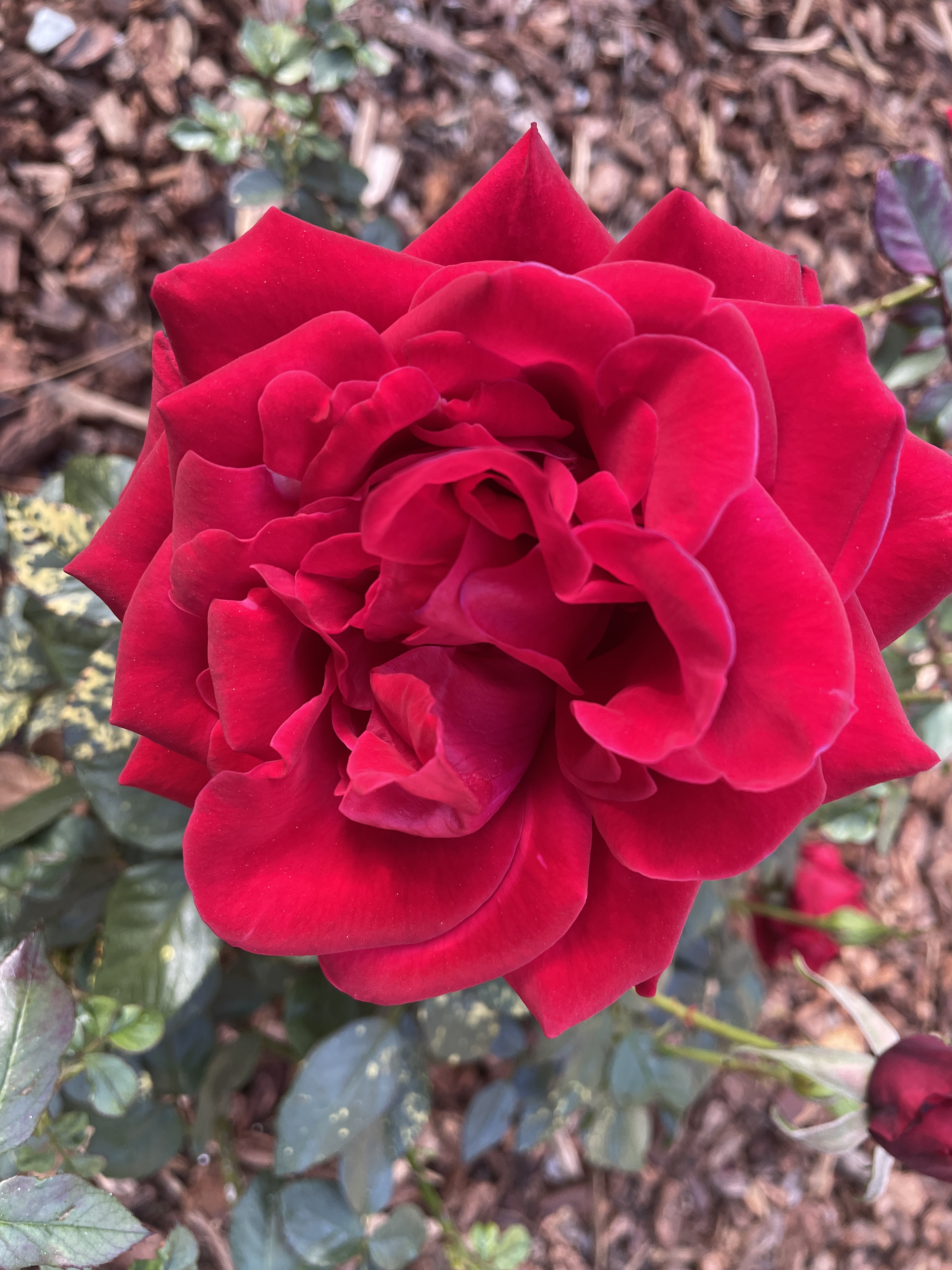
Red Roses


He’s very good at wooing:

gifts–chocolate cherries,

red roses, delicate lingerie,

I love you.

He wears his mask well,

keeps calm, a handsome spider,

weaving a silken web.

She laughs, tells her friends

just how very special she’s

sure he is.

He wears this mask for months,

finds them the perfect apartment,

swimming pool, gym, marble,

granite, luxury appliances.

She’s sure he loves her:

the gifts, the perfect apartment,

fancy restaurants, luxury weekends.

She’s late, heavy traffic, an

emergency at work. He

screams, wants to know

why; no explanation matters.

He hits her for the first time, her

torso, knocks her down.

Tomorrow 24 red roses

arrive at work. He begs

forgiveness. She’s sure

he’s sorry; it won’t happen

again.

Two months later, she’s

late again. Real reasons he

does not want to hear. He

screams, he hits, he knocks

her down.

She dreads red roses.

Note: This is part of my writing a poem per day for National Poetry Month. Regarding this poem, 34% of female homicides are women who have been killed by intimate male partners. Often when women kill a man attacking them, they are convicted of murder even when trying to defend themselves.

Book 14 for 2024: “The Invisible Hour”, Alice Hoffman


This is a book for those who believe in the power of books to transform life, who are fans of Alice Hoffman, and who like time travel. It also about how a charismatic man can ruin the lives of many, especially women, by controlling everything around him through fear and coercion. In his Community books and contact with the rest of the world are banned. Mia is a young woman who sneaks into a local library and finds Hawthorne’s “The Scarlet Letter”. She realizes the life she is living in the Community is like the lives in the book. Through this book she manages to attain the courage to escape such a man, the man who destroyed her mother, Ivy. She makes her way back in time to the period in the book, has a love affair with Hawthorne, and finally escapes the horrible man who tracks her everywhere she goes.

Book 13 for 2024: “The Blueprint”, Rae Giana Rashad


In this dystopian novel white men in Texas run everything and carry guns, have taken over what was the US, eliminated The Constitution, and now use a Blueprint one of the main characters created. There is no choice for much of anything especially if you are a Black woman. An algorithm determines your occupation, spouse, residence, well, everything. Black men have a bit of choice, mainly to be in the military and die young. You can raise to a high rank, have some power, and be honored for your bravery. Sometimes young Black girls around 15 are assigned by this algorithm to be the concubines of powerful white men. This is how the main character, Solenne, ends up living with the most powerful man, becomes his lover. Unlike other circumstances where later she might have a choice, he becomes so obsessed with her that he never wants to let her go. To keep sane she writes about her enslaved ancestor, Henriette, the concubine of a powerful white planter in the 1800s. Women have a tracker implanted in their thumbs so men can see where they are and what they are doing. The only place to escape to is Louisiana, a free state, but even there greed and power can entrap you and force you to return to Texas. The prevailing attitude is this:

“The Councilmen said a nation was only as strong as its hold on its women. They had to squeeze the life out of the women’s liberation movements, give it no air…It begins at home with the wives.”