Book 18 for 2024: “Quiet Street”, Nick McDonell


Want to know how the top 1 percent, the super wealthy live and control nearly everything in the US? Read this book. In a mere 117 pages, McDonell explains his own life and that of fellow 1 percenters. He details his early life, the private school he attended, the family connections, summers taking sailing lessons in the Hamptons, and vacations using private jets to places like the Galapagos Islands. At 18, he was able to get his first novel published in part because of his family connections to a famous publisher. Eventually, he left this life behind to become a foreign correspondent in Iraq and Afghanistan.

In this book he details how the super wealthy hoard wealth, pass it from one generation to another, and how outsiders, the poor and those not white, are kept out. Here are a few quotes from the book:

“I began to see how, in the United States of America and elsewhere, success almost always, and predominantly, depends upon wealth–and frequently comes at the expense of the less wealthy.”

“We in the one percent like to believe in meritocracy, even fairness.” At this point he lists several of famous people who rose to wealth and power from poorer circumstance and explains how this is used to make the “one percenters feel good, they distract from the possibility of a more humane distribution of wealth.”

Why do the one percenters behave as they often do? He interviews several whom he knows through his private school connections. “The fear they share was loss of wealth. Without ever saying so, they were very much afraid of losing their country houses, the barn converted for their kids sleepovers, the space for the grand piano, the green houses, pied-a-terre where their mother-in-law stayed without interfering in everyone’s business, the airport lounge that allowed them to enjoy pleasures among their own, in quiet. They were afraid of supermarket processed cheese, preferred organic stuff which they believed would keep them alive longer….they were afraid of losing their Prada bags…the cashmere….They feared losing wealth not for its own sake but because it was justified, in their own minds, by intelligence, hard work, determination—that is by character.” They truly seem to believe they are smarter and harder working than other people.

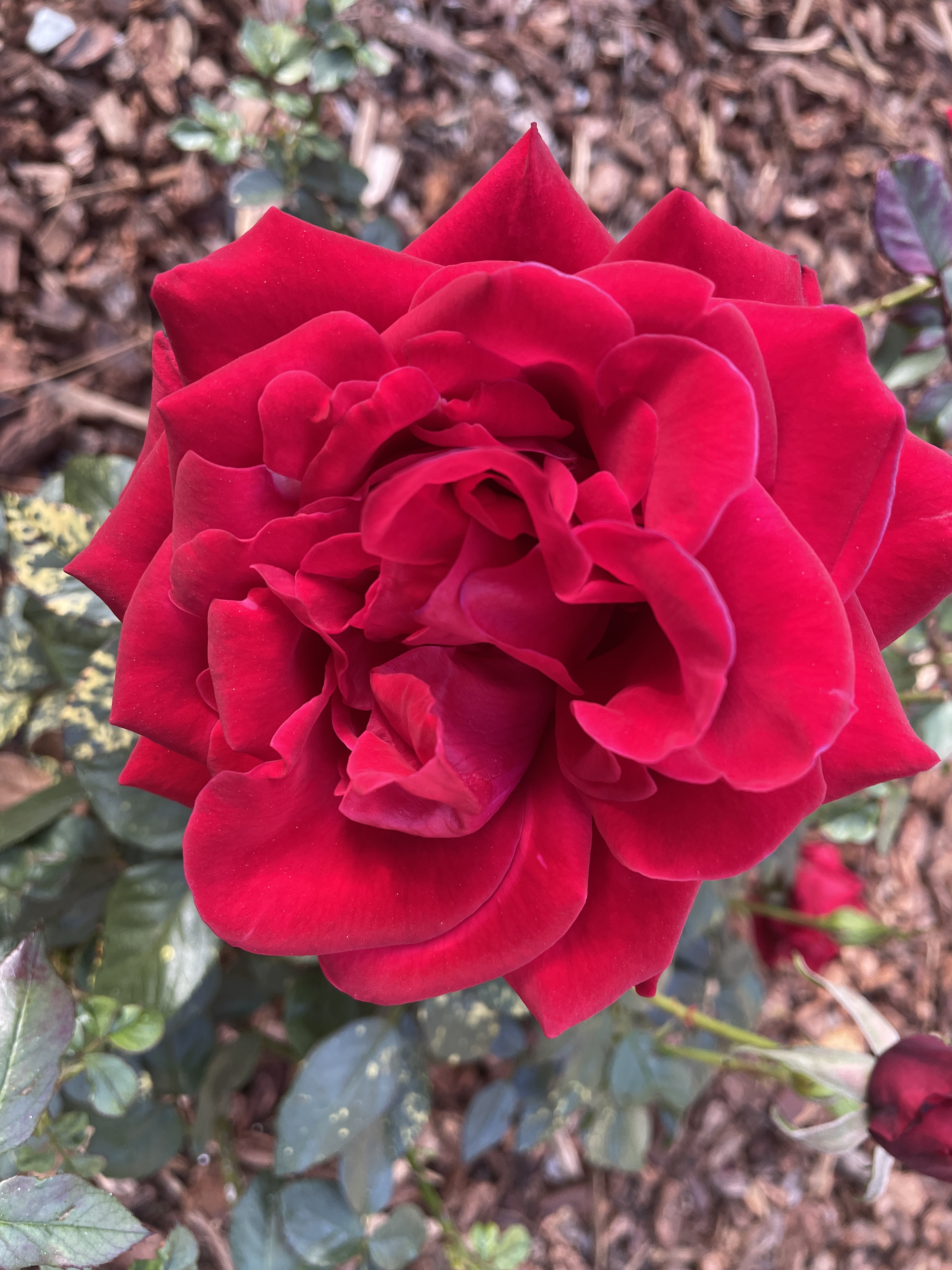
Red Roses


He’s very good at wooing:

gifts–chocolate cherries,

red roses, delicate lingerie,

I love you.

He wears his mask well,

keeps calm, a handsome spider,

weaving a silken web.

She laughs, tells her friends

just how very special she’s

sure he is.

He wears this mask for months,

finds them the perfect apartment,

swimming pool, gym, marble,

granite, luxury appliances.

She’s sure he loves her:

the gifts, the perfect apartment,

fancy restaurants, luxury weekends.

She’s late, heavy traffic, an

emergency at work. He

screams, wants to know

why; no explanation matters.

He hits her for the first time, her

torso, knocks her down.

Tomorrow 24 red roses

arrive at work. He begs

forgiveness. She’s sure

he’s sorry; it won’t happen

again.

Two months later, she’s

late again. Real reasons he

does not want to hear. He

screams, he hits, he knocks

her down.

She dreads red roses.

Note: This is part of my writing a poem per day for National Poetry Month. Regarding this poem, 34% of female homicides are women who have been killed by intimate male partners. Often when women kill a man attacking them, they are convicted of murder even when trying to defend themselves.

Book 14 for 2024: “The Invisible Hour”, Alice Hoffman


This is a book for those who believe in the power of books to transform life, who are fans of Alice Hoffman, and who like time travel. It also about how a charismatic man can ruin the lives of many, especially women, by controlling everything around him through fear and coercion. In his Community books and contact with the rest of the world are banned. Mia is a young woman who sneaks into a local library and finds Hawthorne’s “The Scarlet Letter”. She realizes the life she is living in the Community is like the lives in the book. Through this book she manages to attain the courage to escape such a man, the man who destroyed her mother, Ivy. She makes her way back in time to the period in the book, has a love affair with Hawthorne, and finally escapes the horrible man who tracks her everywhere she goes.

Book 13 for 2024: “The Blueprint”, Rae Giana Rashad


In this dystopian novel white men in Texas run everything and carry guns, have taken over what was the US, eliminated The Constitution, and now use a Blueprint one of the main characters created. There is no choice for much of anything especially if you are a Black woman. An algorithm determines your occupation, spouse, residence, well, everything. Black men have a bit of choice, mainly to be in the military and die young. You can raise to a high rank, have some power, and be honored for your bravery. Sometimes young Black girls around 15 are assigned by this algorithm to be the concubines of powerful white men. This is how the main character, Solenne, ends up living with the most powerful man, becomes his lover. Unlike other circumstances where later she might have a choice, he becomes so obsessed with her that he never wants to let her go. To keep sane she writes about her enslaved ancestor, Henriette, the concubine of a powerful white planter in the 1800s. Women have a tracker implanted in their thumbs so men can see where they are and what they are doing. The only place to escape to is Louisiana, a free state, but even there greed and power can entrap you and force you to return to Texas. The prevailing attitude is this:

“The Councilmen said a nation was only as strong as its hold on its women. They had to squeeze the life out of the women’s liberation movements, give it no air…It begins at home with the wives.”

Book 11, 2024: ” Frida’s Fiestas: Recipes and Reminiscences of Life with Frida Kahlo”


The author of this book, Guadelupe Rivera, is the daughter of Diego Rivera by the woman to whom he was married before he married Frida. Diego went on a trip to Russia and his then wife, the author’s mother, became attached to her previous boyfriend, the poet Jorge Cuesta. She and Diego divorced and then he married Frida. Eventually, the two couples became friendly and at one point they all lived in the same house.

Thirteen years after Diego married Frida, the author moved in with them. This book details her life living with Frida and her father, how Frida learned to cook, how she decorated the Blue House in Coyoacan, the fiestas, the food, the adventures. The book includes photos and recipes of Frida and Diego’s favorite foods, photos of the house, and places the author visited with Frida. It is also a story of many of Mexico’s famous people at the time.

I own several books about Frida but this one is the most revealing and intimate in many ways. If you like Mexican food and find the life and art of Frida and Diego of interest, read this book.

Note: It was also written by the journalist Pierre Marie-Colle with photos by Ignacio Urquiza.

Book 10 for 2024: “The Furies: Women, Vengeance, and Justice”, Elizabeth Flock


This book raises these questions: Can women gain true safety and equality without violence? Can we end misogyny without fighting back?

The book details the stories of three women, one from Alabama, a woman from northern India, and a Kurdish fighter in northern Syria. All use a form of violence to overcome abuse and mistreatment they have experienced and see other women experiencing. The author personally interviewed all of these women and others close to them and visited them repeatedly.

The first is Brittany Smith, who shot the man who had raped her and was trying to kill her brother. Her story details how Stand Your Ground laws work for men, but often fail for women, especially in areas of the US South where men are protected by their beliefs in a male Code of Honor.

The second is the story of Angoori Dahariya, a Dalit woman, from Uttar Pradesh, India. Fed up, she creates a group called the Green Gang (they wear green saris) dedicated to defending poor, under caste, female victims of abuse. Note: Dalit refers to the lowest caste.

The third is the story of Cicek Mustafa Zibo, a Kurdish fighter in the female militia that fought ISIS in northern Syria. She and many others follow the teachings of Ocalan, a Kurdish leader imprisoned by the Turks for leading the Kurdish militia who for years have fought the Turks for independence. He teaches equality between men and women and women’s rights, which is anti the general cultural beliefs in this area of the world. Note: Ocalan is labeled a terrorist by many.

Book Eight for 2024: “Being Heumann”, Judith Heumann


Judith Heumann contracted polio as a child and was subsequently confined to a wheel chair. Doctors suggested to her parents that they send her off to live in a place for the disabled. Having escaped Nazi Germany, her parents were horrified and refused. There were no laws protecting disabled people when she was a child. Her parents, especially her mother, fought for her to go to regular school. This is how her story begins as she tells it. The rest is the story of her activist life.

When the Rehabilitation Act of 1973 was passed, it took months for Section 504 regulations to be signed into law. At this time the author was a young woman living in the SF Bay area. She lead a days long sit-in at the federal building in San Francisco. When this did not work, she went to DC. The entire book is her account of her life as an activist for the rights of disabled persons, beginning with her childhood, her becoming a certified teacher after attending college, and her endless activism for Section 504 and the ADA.

This is an important book for anyone interested in the history of civil rights for the disabled.

Book Seven for 2024: “After Eden, A Short History of the World”, John Charles Chasteen


Want to learn a lot in less than 400 pages? Read this book. Published this year, it is the most recent book by a prominent Latin American scholar and historian. After humans learned agriculture and built cities, most of the population of the world became increasingly patriarchal and warlike. The divide between rich and poor increased. Egalitarian foragers and wandering hunters existed only in more remote areas. A few still exist in those remote and less modern corners of the world, often places where few others want to even go. This quote says a lot about the current state of affairs:

“Our civilization has thousands of years practice making war. We have almost NO practice making global peace, but without it we are doomed. Today’s pervasive nationalism and rearmament is unlikely to help us make global peace.”

And a page later:

“Only a true unanimous global effort has any chance to preserve our common home.”

He notes that saving Earth will take huge social transformations, including curbing the excessive consumer capitalism that currently pervades plus overcoming a world wide history where half of humanity mistreated the other half, a practice that still continues.

Book One for 2024: “Rain of Gold”, Victor Villaseñor


The lady in charge of the College Center at Mendez Learning Center told me about this book, one of her favorites. I received it for Christmas from my grandson. It is the first book I read this year.

Although it reads like an epic novel, it is non-fiction, the story of Victor Villaseñor’s family tracing back to his four grandparents in Mexico, one set from Jalisco and the other from the rugged mountains closer to the US border. All left Mexico to escape the violence of the Mexican Revolution and eventually settled in Southern California.

Some of the events in this story are heart wrenching incidents of violence, even death, blatant prejudice, and economic poverty. On the other hand, I often found myself laughing out loud, it was so funny. The author’s parents remain perfect examples of strong people who never give up, whose persistence and determination lead to prosperous lives as successful business owners. The author continues to live on the ranch where he grew up in northern San Diego County. Now 83, he has authored many books including a sequel to this one. His website not only talks about his life and writing, but also struggles with dyslexia.

One Book a Week-54: “On A Night Of A Thousand Stars”, Andrea Yaryura Clark


For decades I have been a bit obsessed with Argentina and its history. When the horrible events described in this recent novel occurred during the military dictatorship in the 1970s, I closely watched news and read books about it. Later, I hosted an exchange student from Argentina and visited him and his family. Therefore, when I saw this novel on the new books shelf of the local library, I checked it out.

At a polo match in New York, a wealthy Argentinian diplomat and his wife and daughter meet a woman from his college days. She says things about him and his past that upset him and cause his daughter, Paloma, to wonder about her dad’s past, about which she knows little. When they go to Argentina on a trip related to his diplomatic duties, Paloma decides to investigate. She meets a local university student whose parents had disappeared (as thousands did) during the military dictatorship. He is part of an activist group searching into the disappearance of close family members during the dictatorship. He decides to help her with her research into her dad’s past. This creates a chain of events that upsets everything she knows and endangers her life.

If you want to read a heartbreaking love story, learn more about a brutal period in Argentinian history and some Argentinian customs and lore, this is the book for you. I went back and reread some of it twice.