Books 3-5 for 2024: “Happening”, “The Young Man”, “Simple Passion”, Annie Ernaux


In the last few days, I’ve read three books by Annie Ernaux who won the Nobel Prize for literature in 2022. Although she is a major writer in France, I had never previously heard of her. Since the local library possessed none of her books, I drove to Claremont and checked out all of her books that were available. The publication dates range from 1974 to 2022.

Most of her books defy categorization. The librarian helped me find them because some were in fiction and some nonfiction. From just reading them, it is impossible to determine whether what I’m reading is real or imaginary or a combination. She writes about women’s lives mostly and issues that only women experience.

“The Young Man”, copyright 2022, tells a detailed account of a love affair between a young male student and a 50 something woman, thirty years older than he. They meet on weekends often at his apartment, make fervent love, visit sidewalk cafes, wander. The narrator notes that people sometimes look askance at them in a way they never view an older man and a younger woman. She finds love making helps her write, “Often I have made love to force myself to write.” At the end of the book are photos of Ernaux over the years (she was born in 1940) and a detailed biography.

Next I read “The Happening”, (2001) a detailed account of a young female student seeking an abortion when it was illegal in France. She manages to hide her state from most people including her parents. She finally finds an elderly nurse, but later experiences complications and ends up in the hospital where a young doctor, who thinks she is just some poor woman off the street, treats her badly. When he discovers she is a university student, he finds her and apologizes. It seems mistreating the poor is okay but not someone from his own class status.

Then I read “Simple Passion” (1991), a short (64 pages) detailed account an illicit love affair between a young, married man from Eastern Europe and the narrator. The telling part of this story is the narrator’s (the author?) obsession with this man she calls A. She waits for his calls 24/7. She thinks about him every waking moment and dreams about him at night. I kept thinking of myself and many women I know who have become obsessed with some man to their own detriment.

A a writer, I find her work totally fascinating in its extreme courage. She writes in detail about experiences few would dare to even talk about, but many experience and keep silent. Much of it is autobiographical, an even great demonstration of bravery. Who dares tell the truth of many of our own experiences? Very few of us.

Book Two of 2024: “Jezebel”, Megan Barnard


As a woman whose view of most women in the Bible remains nuanced, I could not resist a purchase when I saw this on the shelf at a bookstore. For centuries, she’s been vilified as a harlot, a temptress, both descriptors seen as negative by many societies even in these freer, modern times.
This novel by Megan Barnard is first person Jezebel, beginning with what she has been told about her birth and family. Then she describes her luxurious upbringing in Tyre, her forced marriage to Ahab while Ahab’s father is still alive and king of Israel. She begs her father not to force her to marry Ahab. Her father wants an alliance with Israel, which at that time was considerably less wealthy, quite backward, and more warlike than Tyre. She and Ahab have never even met when she arrives as a teenager to be his wife. To make it more difficult initially Ahab mostly ignores her, preferring other women in the harem. One issue is their differences in religion, she being a follower of Astarte while he and Israel are followers of Yaweh. She is used to religious tolerance, thinks people should be free to follow whatever religion works for them. The Israelis go to war over religion, demand adherence to their god.
Throughout she laments the plight of women, their lack of power and self determination. She notes that only prominent men are remembered, written about, not women regardless of their status, intellect, and influence. She remains steadfast in her determination to be remembered, to be written about even to the point where she engages in devious and sometimes cruel behavior to accomplish her goals. I find it noteworthy how effective this turned out to be; she is remembered, immortal, whereas kinder, gentler women are mostly forgotten.

One Book a Week-45: “The Bluest Eye”, Toni Morrison


“The Bluest Eye” is one of the most banned books in the US. Even here in California, some in my local school district tried to get it removed from the high school library. One school board member told me it had been on the shelves since it was first published and no one cared until this year. Why the controversy about this book?

Yes, there is incest and sexual assault, but this occurs near the end. My guess is that what really disturbs some is the stark details and honesty about how people treat each other, the brutality of racism and poverty, and even among people of the same race, the cruelty of discrimination based on how people look, their level of education, their origins. The main character is poor, unattractive, and unpopular. She comes to believe that if she just had blue eyes, all her problems would disappear. She even goes to a charlatan preacher whom she believes can make her eyes blue because others have told her he creates miracles.

The relentless truths detailed in this novel create a hard look at the effects of poverty and racism.

A Book a Week-43: “Desertion”, Abdulrazak Gurnah


Gurnah, a native of Zanzibar, won the Nobel Prize for Literature in 2021. This is the second of his novels I have read. Both deal with colonial Africa and the effects of colonialism on both individuals and countries, especially in East Africa.

In 1899, a British man, Pearce, stumbles out of the desert and collapses near the shop of a local businessman, Hassanali. His sister, Rehana, saves Pearce. This sparks a love affair, the results of which have long lasting effects on several families, not only for Pearce and Rehana, but for lovers and individual family members two generations later.

It is also a tale of governments immediately after independence and their failures. Additionally, it addresses “forbidden” love and its effects on those who genuinely love each other but cannot pursue their love. The effects are not only immediate but long lasting, affecting others not just the two lovers.

One Book a Week-18: “If An Egyptian Cannot Speak English”, Noor Naga


Identity politics remains at the heart of this unusual novel. Written in three parts, One portrays a “love” affair between an Egyptian American woman who has gone to Cairo to find her Egyptian self and an unemployed, revolution (as in Arab Spring) photographer who alternates between living in a rooftop shack and homelessness. Each vignette starts with a question and alternates between the voice of the woman and the man, expressing their viewpoints on life, love, and their situation. Part Two is the same except without the “headline” question. Part Three is a big surprise–a discussion, written as a play, a critique of the rest of the novel among the author, an instructor, and several “students”.

I loved this book in part because it enabled me to learn a lot about Egyptian cultures, but also because I found it thought provoking and intriguing.

Italy–Pompeii


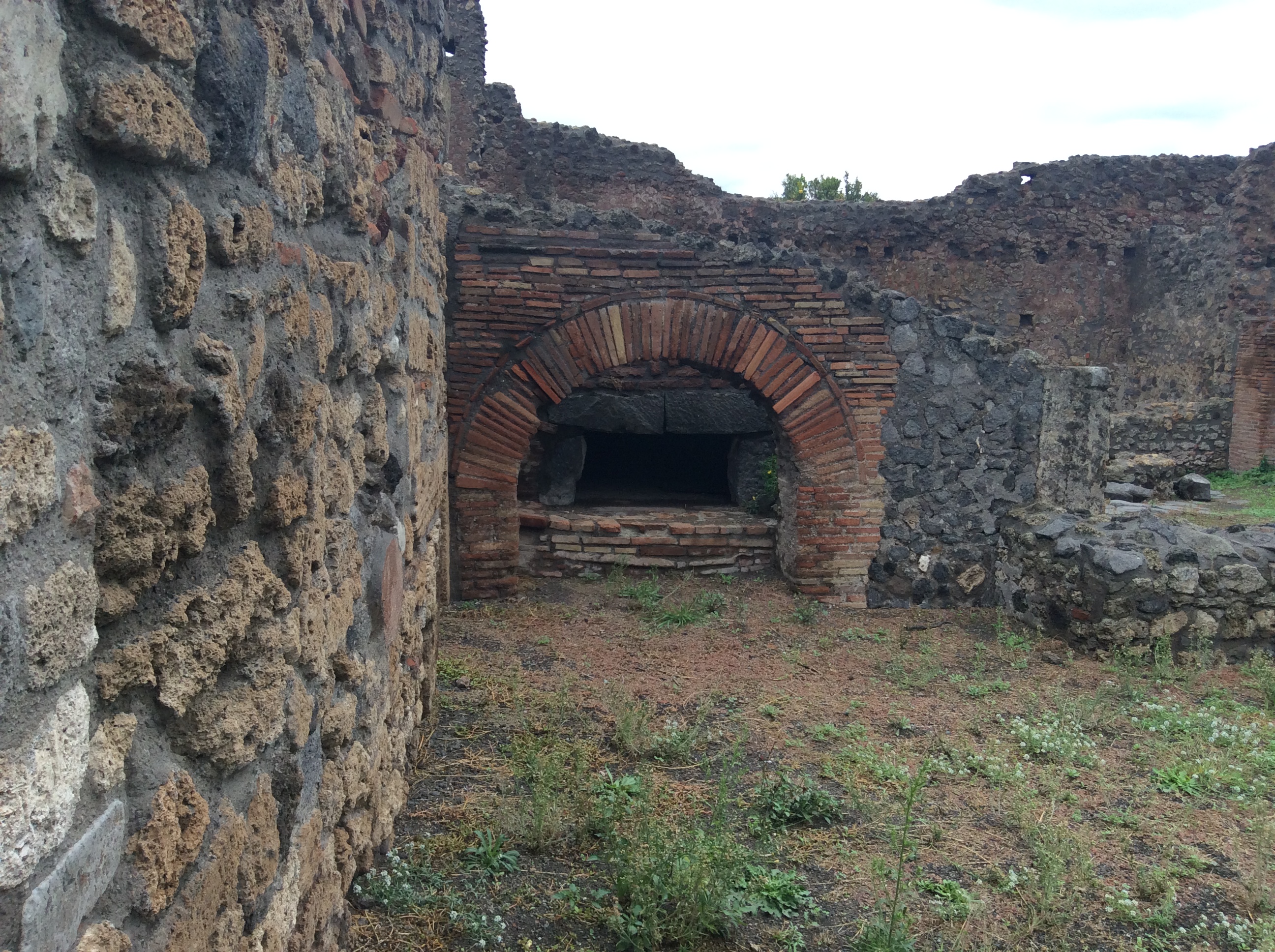
Although I had heard about, read articles, seen photos and documentaries, nothing prepared me for its size, grandeur, and wealth.

IMG_4155

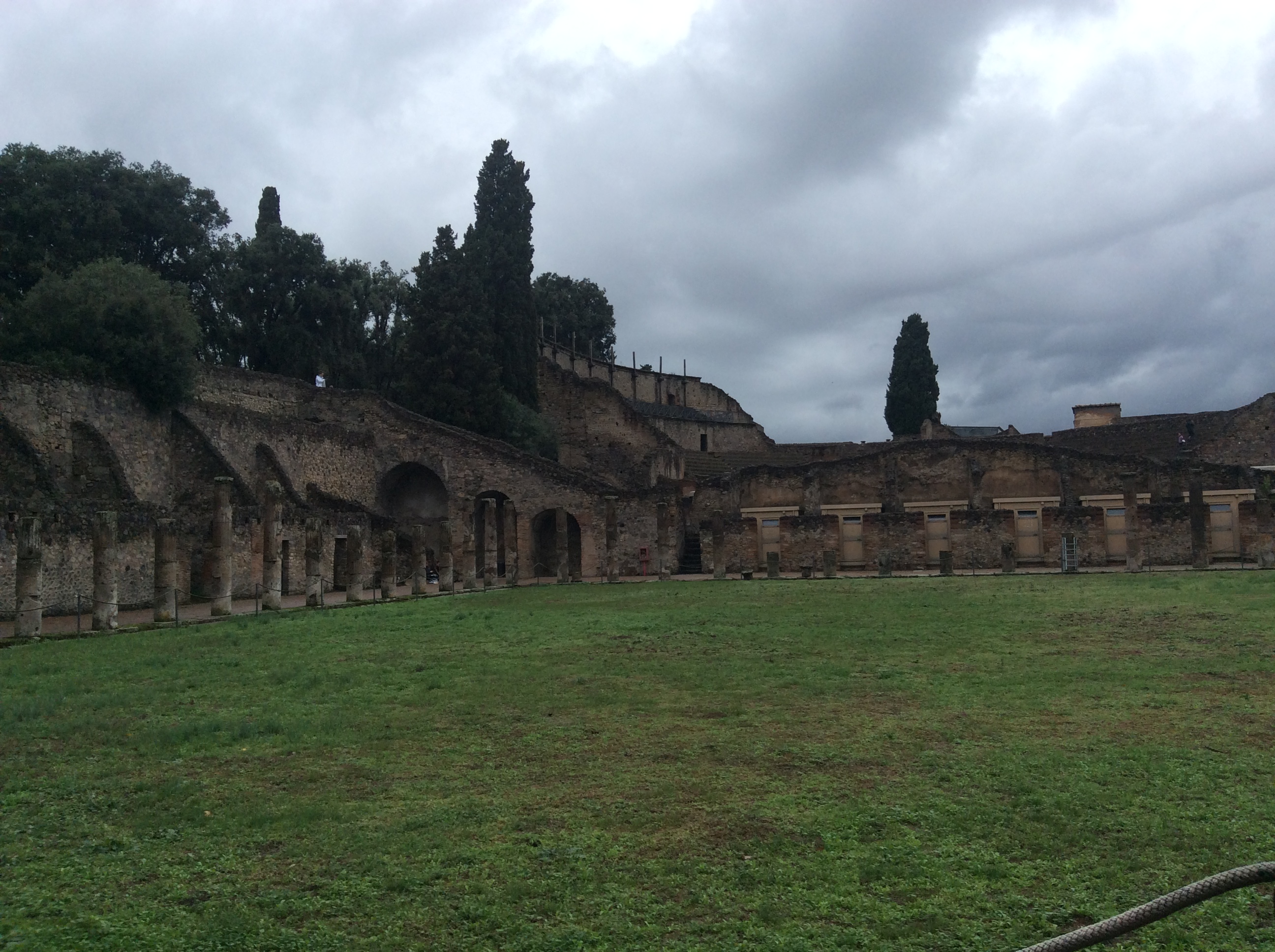
To get here you have to climb up a hill.  This is where the gladiators lived and trained.

IMG_4156

IMG_4157

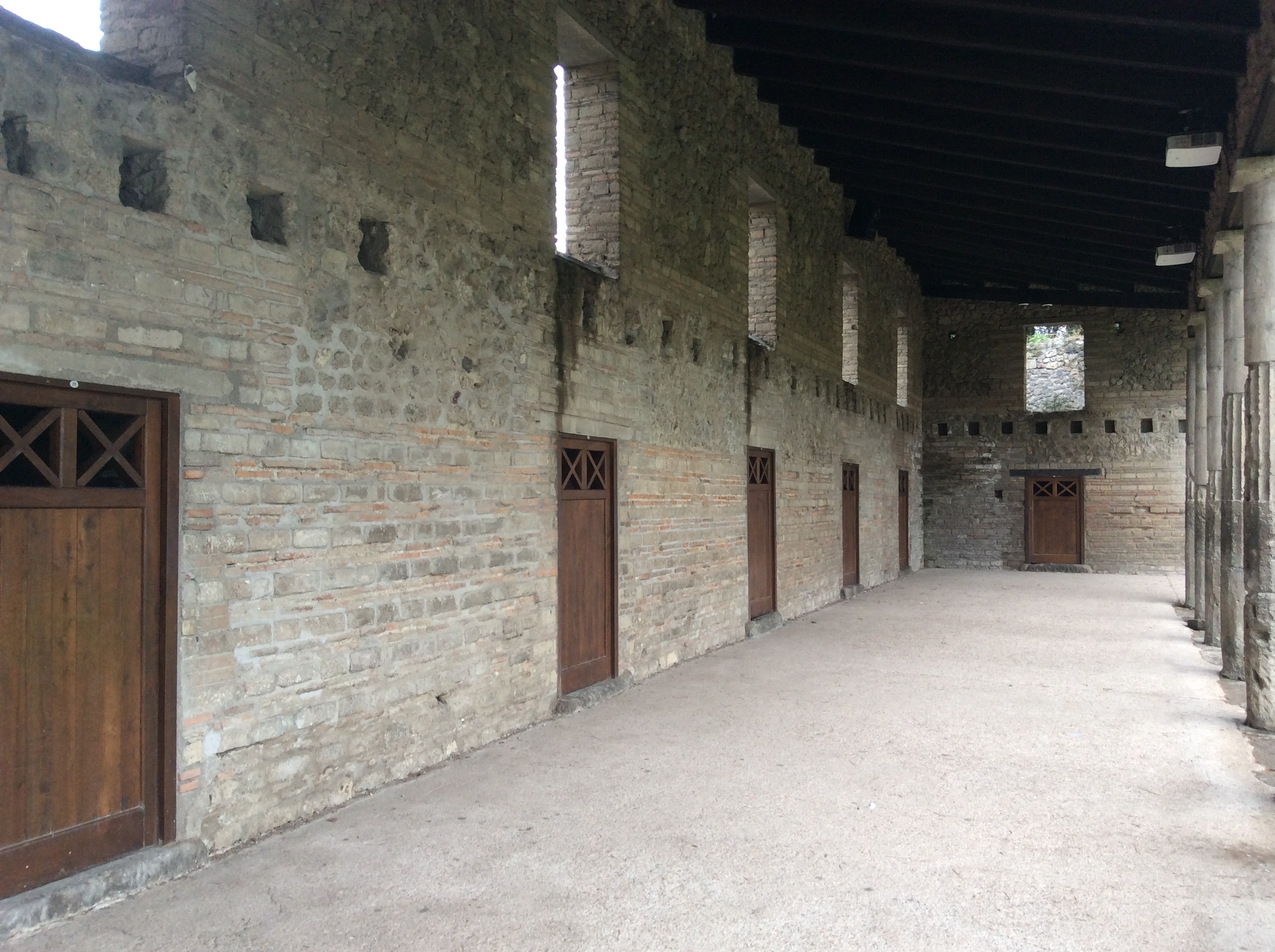
The doors are copies, the rest not.  Gladiators lived in the rooms behind the doors and exercised and practiced in the green area shown in the previous two photos.

IMG_4158

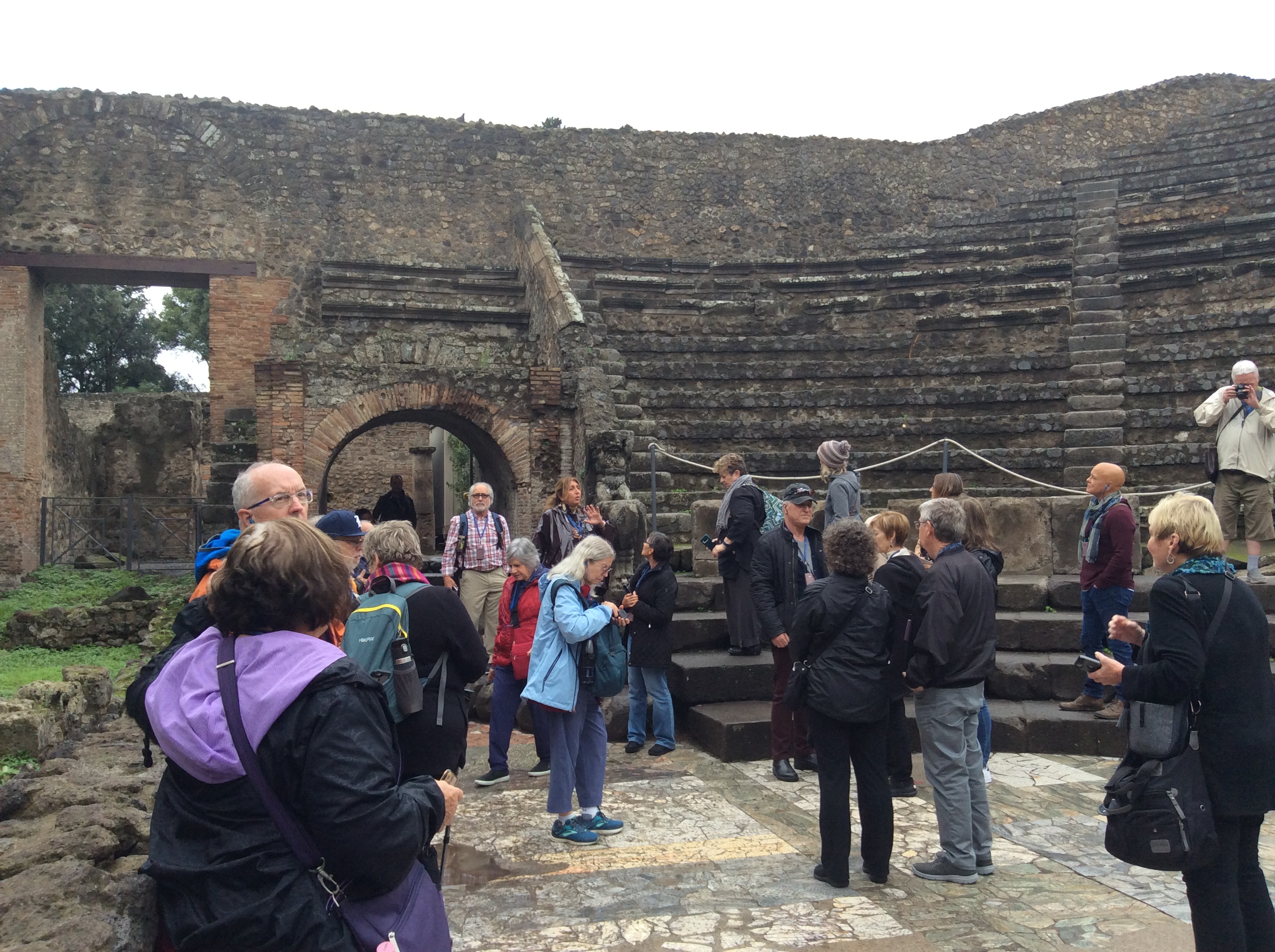
This is the tiny amphitheater which holds about 1000 persons. Occasionally, performances, e.g. concerts, are still held here.

IMG_4159

An we walked around, I took pictures of the various buildings, streets, walls.

IMG_4160

Looking back toward the small amphitheater.

IMG_4161

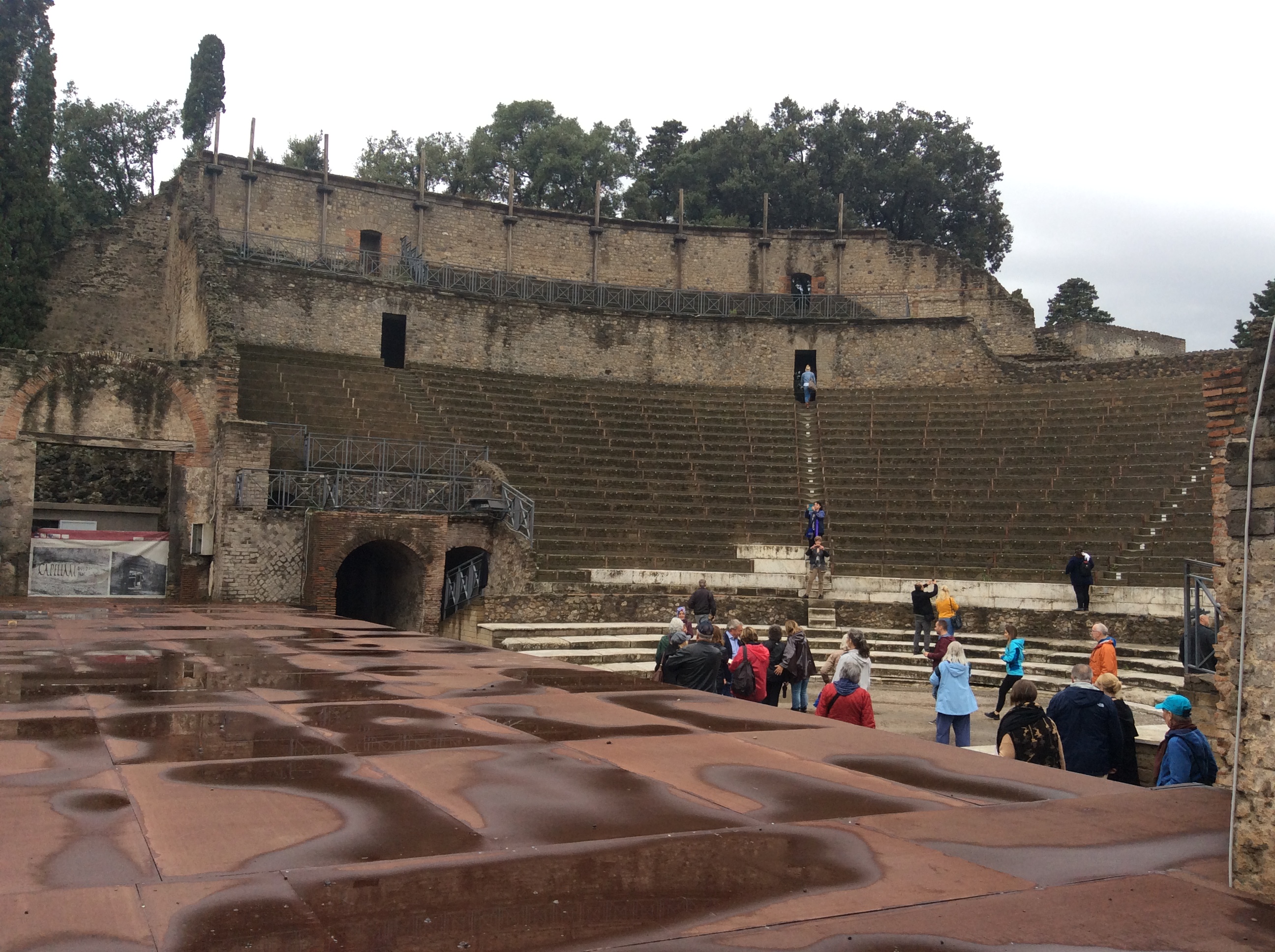
This is the large amphitheater which holds 5000.  Just like in theaters now, the seats vary in size, view, etc. so that the where you get to sit depends on who you are and how much you have to spend.

IMG_4162

Looking toward what remains of the stage and area behind the stage.

IMG_4164

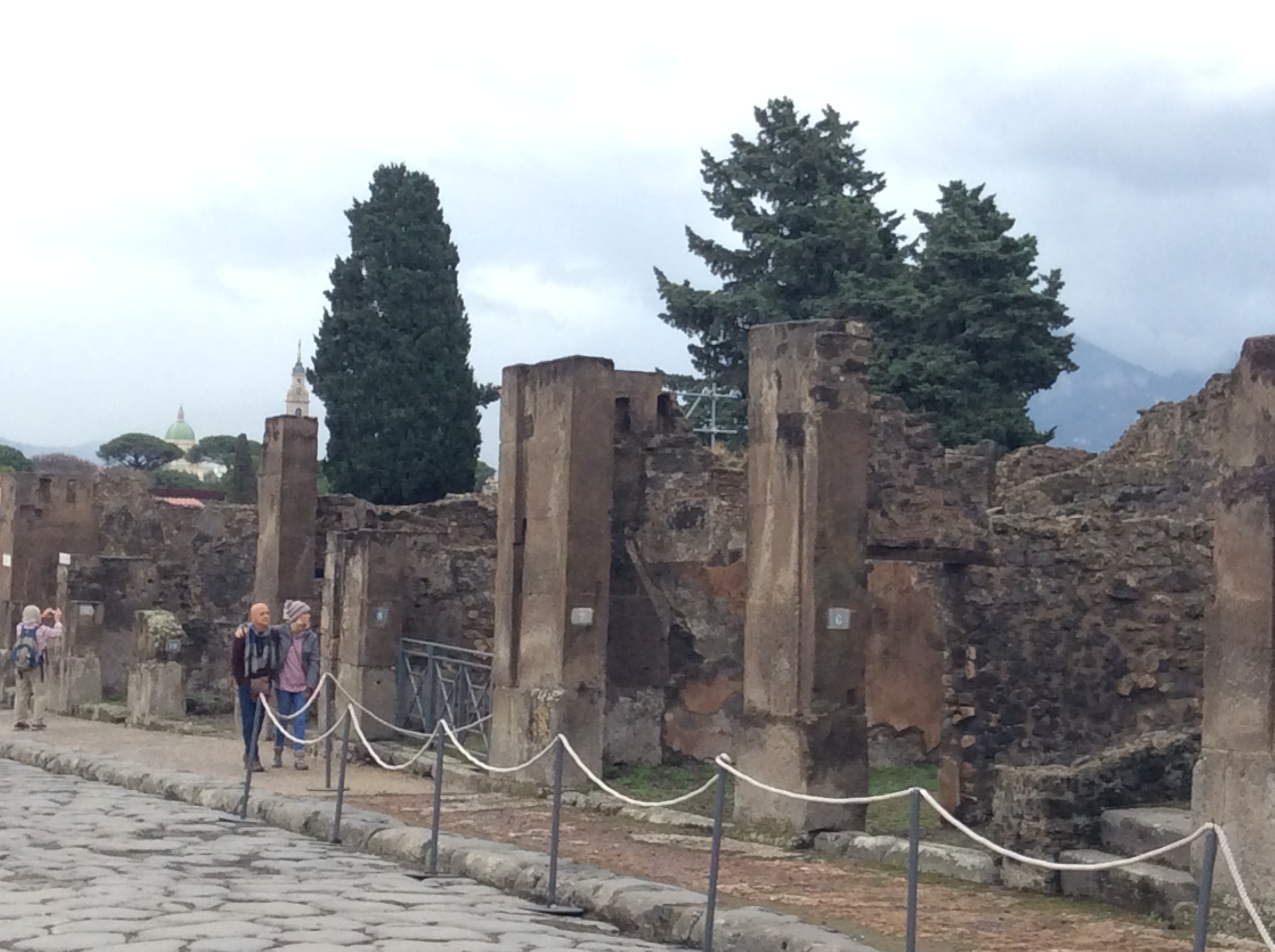
Streets were laid out in a grid at right angles to each other.  This is a typical street with sidewalks on each side.  Notice the large stones in the middle.  At times with excessive rain, the streets would flood.  The large stones allowed people to cross without getting their feet wet.  The spaces in the middle were designed so carts could pass through.  Along the sides are spaces for shops.

IMG_4165

IMG_4167

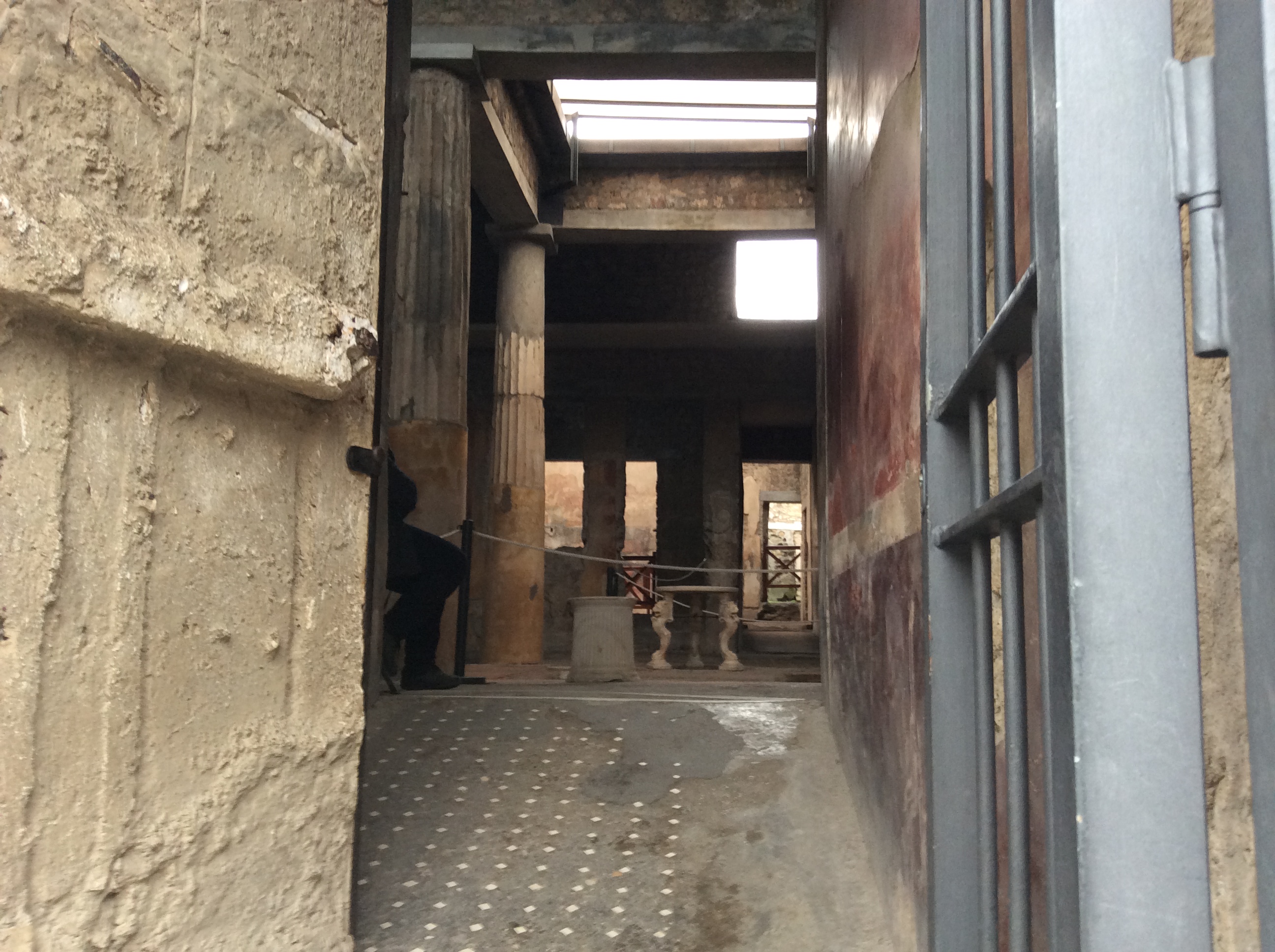
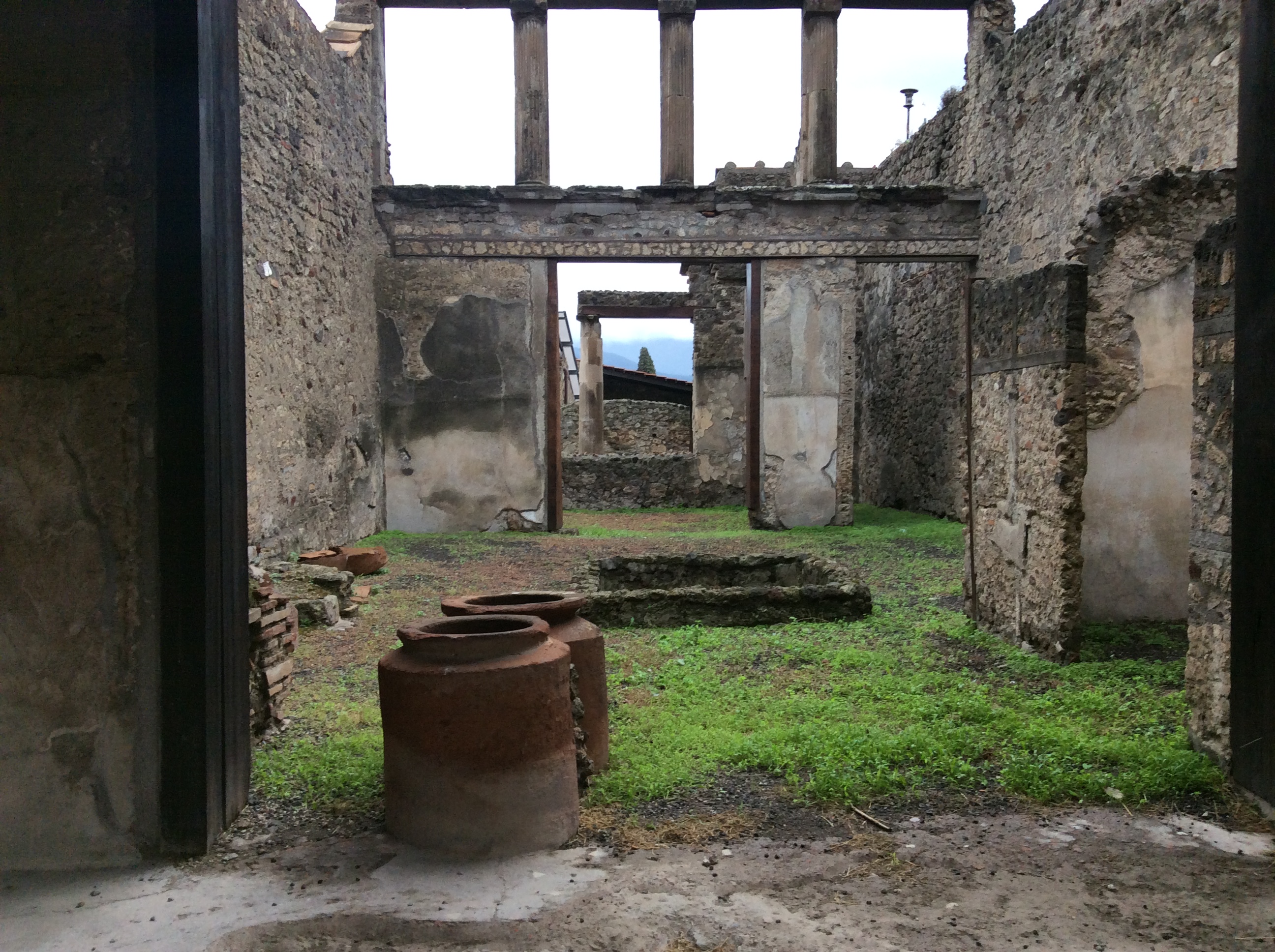
The wealthy in Pompeii lived in very large, elegant houses, with water collection systems, heated and running water.  This is the entry to one such house.

IMG_4168

The courtyard at the same house.

IMG_4169

What remain of the frescoes there.  Considering this was buried for nearly 2000 years…

IMG_4170

IMG_4171

IMG_4172

Part of the dining room.  There, like in Rome, people reclined while eating.

IMG_4173

We moved on to another house.

IMG_4174

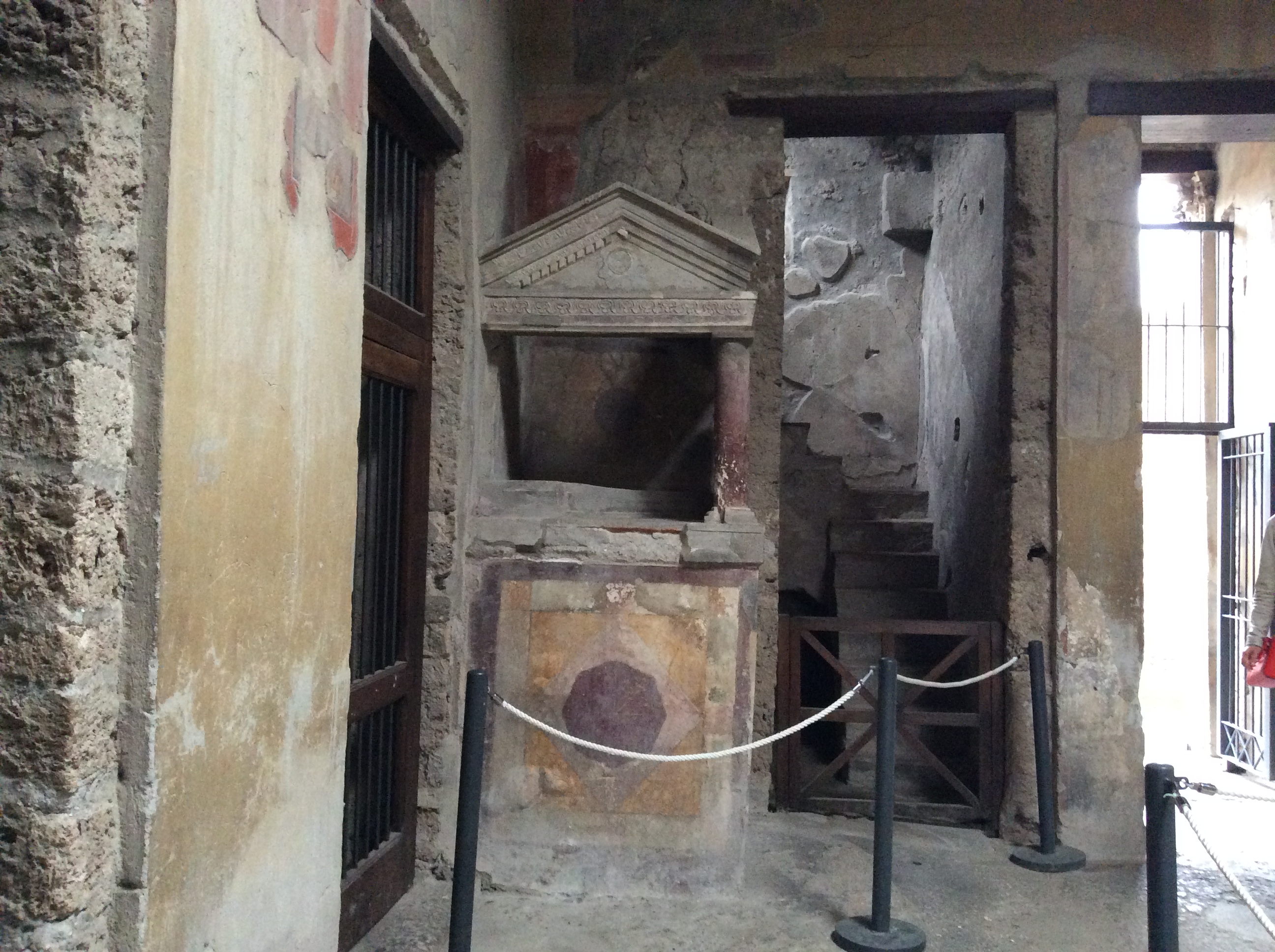
More frescoes.  Most of them tell a well known story.

IMG_4175

IMG_4176

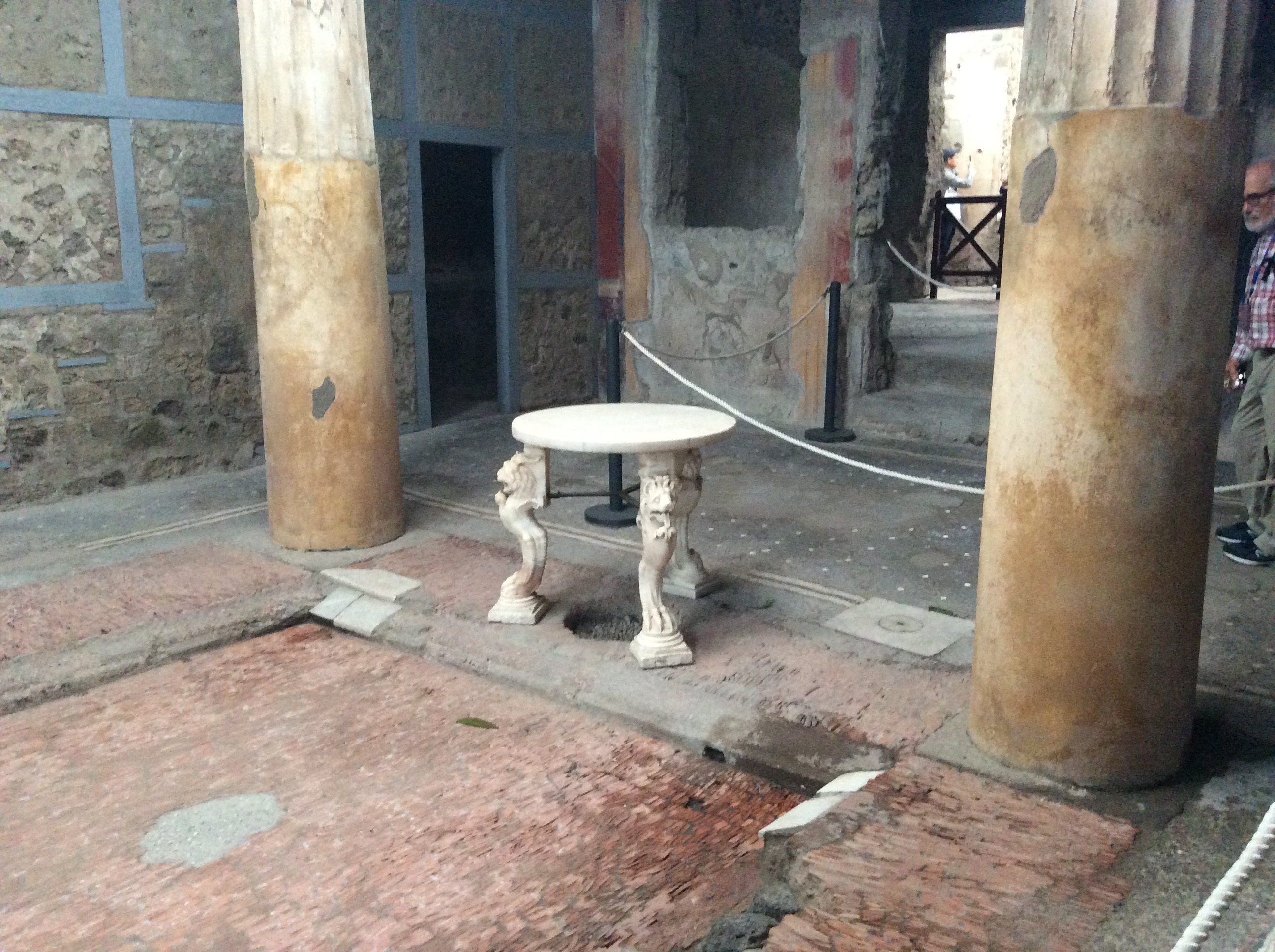
When they excavated this second house, they found this table with three legs–common then apparently.  This is not a new table, it is one from Pompeii found in this house.

IMG_4177

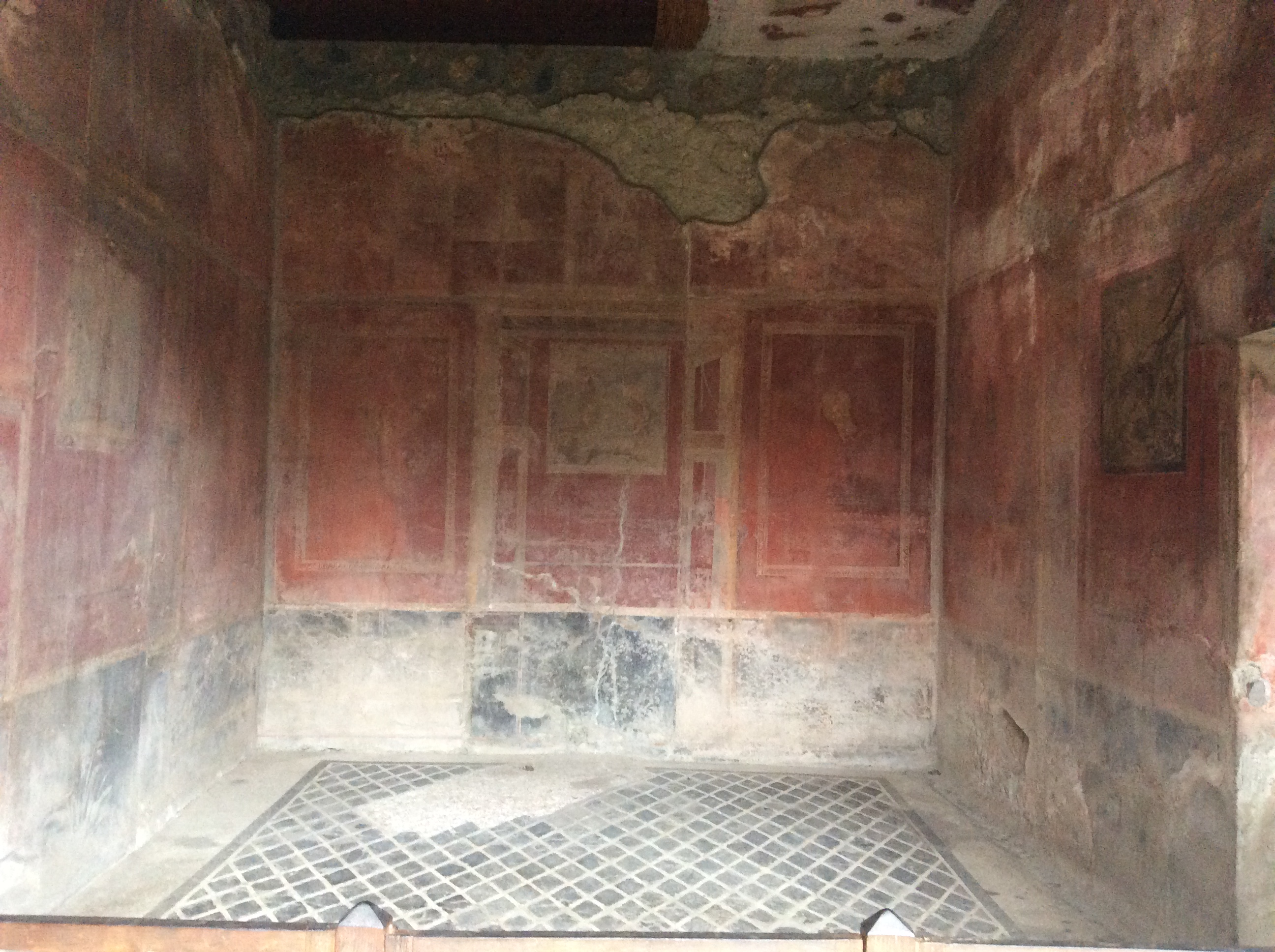
Decorated walls in this second house.

IMG_4178

An original floor in the same house.

IMG_4180

A place where someone had a shop with items for sale.

IMG_4181

IMG_4291

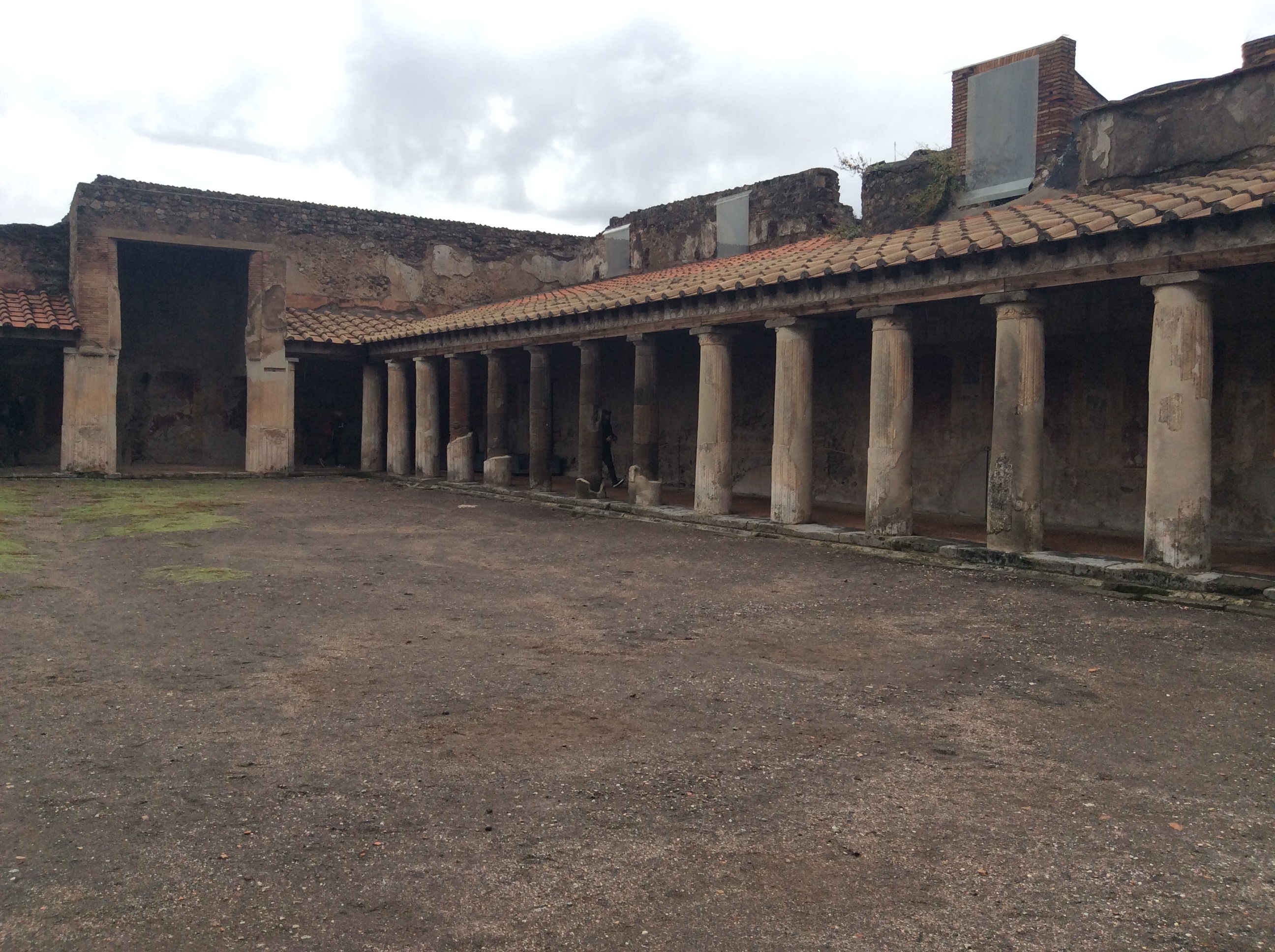
We also visited the bathhouse area where there would be separate bathhouses for men and women, exercise rooms, hot water, steam, just like today.

IMG_4302

Although the walls, floors, streets and sidewalks are as they were before the volcanic eruption, in some places they have restored roofs to look like what they would have looked like then.

IMG_4303

IMG_4344

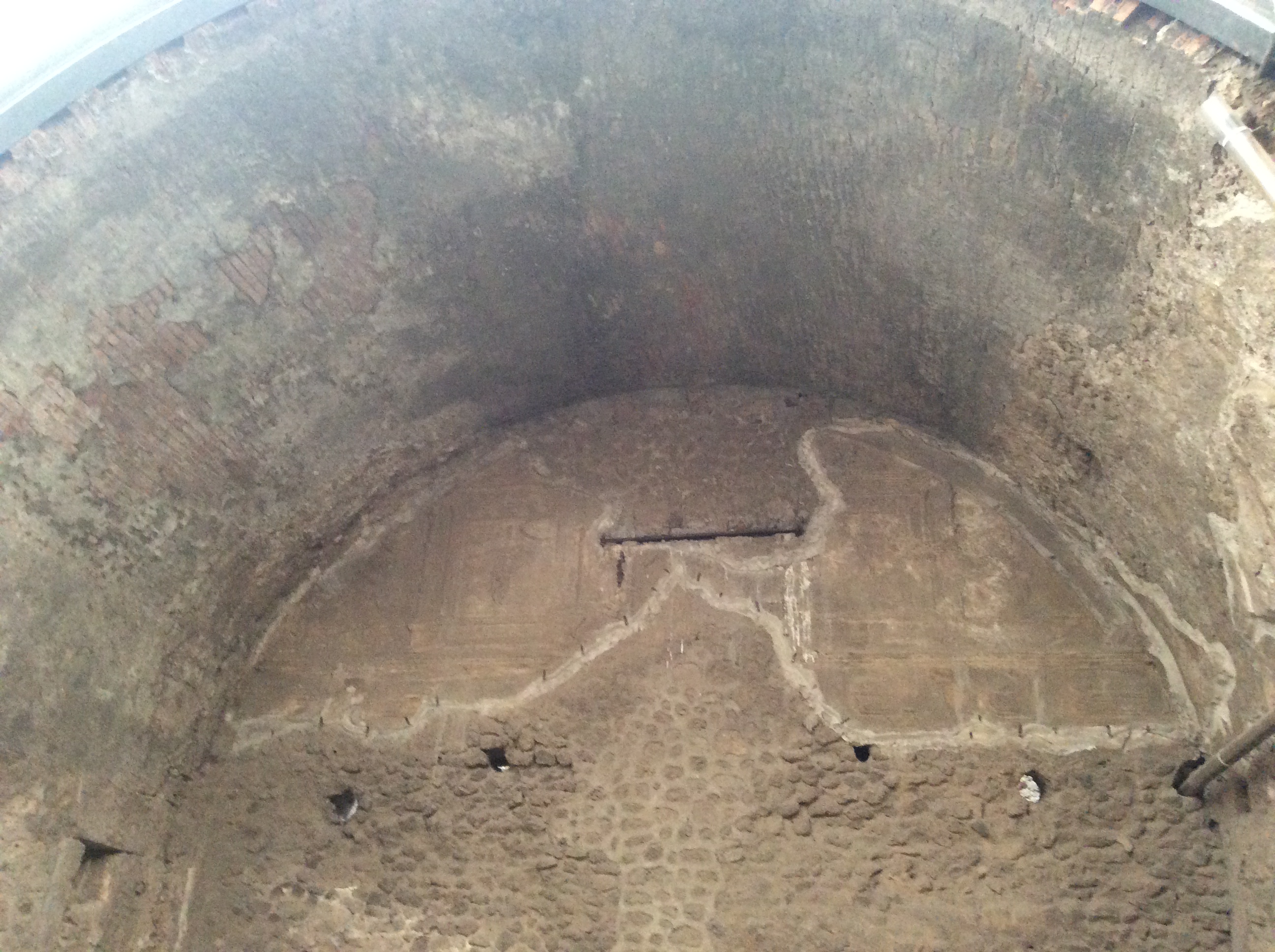
They knew that domed structures are more stable.

Next we walked to the brothel.  Many of the sexually graphic frescoes remain.  They illustrate different positions.  I might also add that both stone and painted penises are everywhere in Pompeii.  Why?  They were the symbol of a good life, of prosperity, of fertility, of joy, of, well, everything good. I took some photos of the frescoes at the brothel but do not want to get thrown off my blogging site so will not put them here.

IMG_4348

Another typical street headed toward the giant city square.

IMG_4368

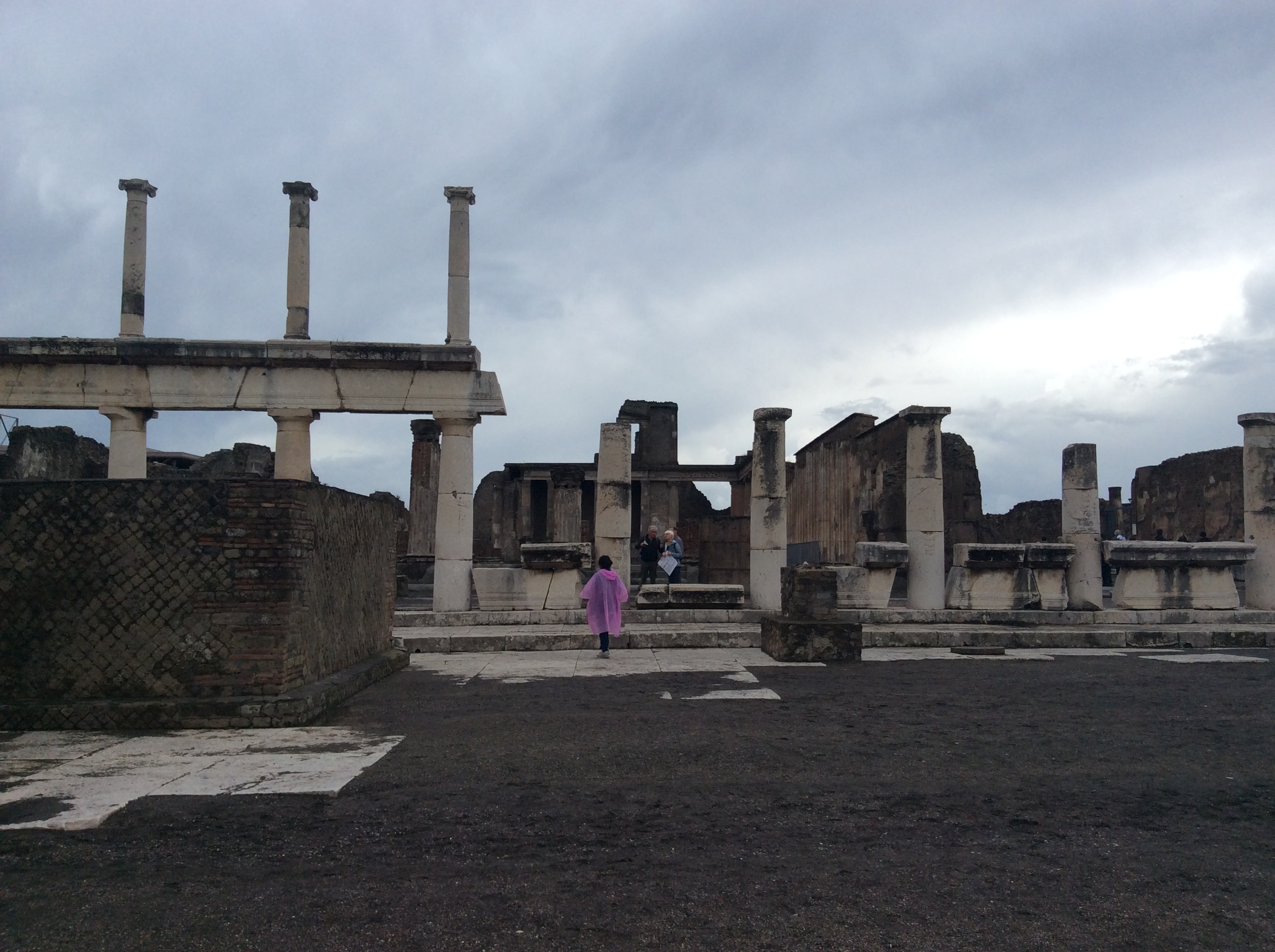
Standing in the middle, looking toward one direction.  I was astonished at the size of this place.  We went a good time of the year–the off season.  The guide told us that in high season there are so many people here, it is difficult to move through them at times.

IMG_4370

Looking the other direction with Mount Vesuvius in the background. Before the eruption this volcano was just a tall mountain or so the people there thought.  Then it was approximately 10,000 feet.  The eruption made it fall into itself and decrease by about 6000 feet.

IMG_4371

More photos of the square.

IMG_4372

IMG_4373

IMG_4375

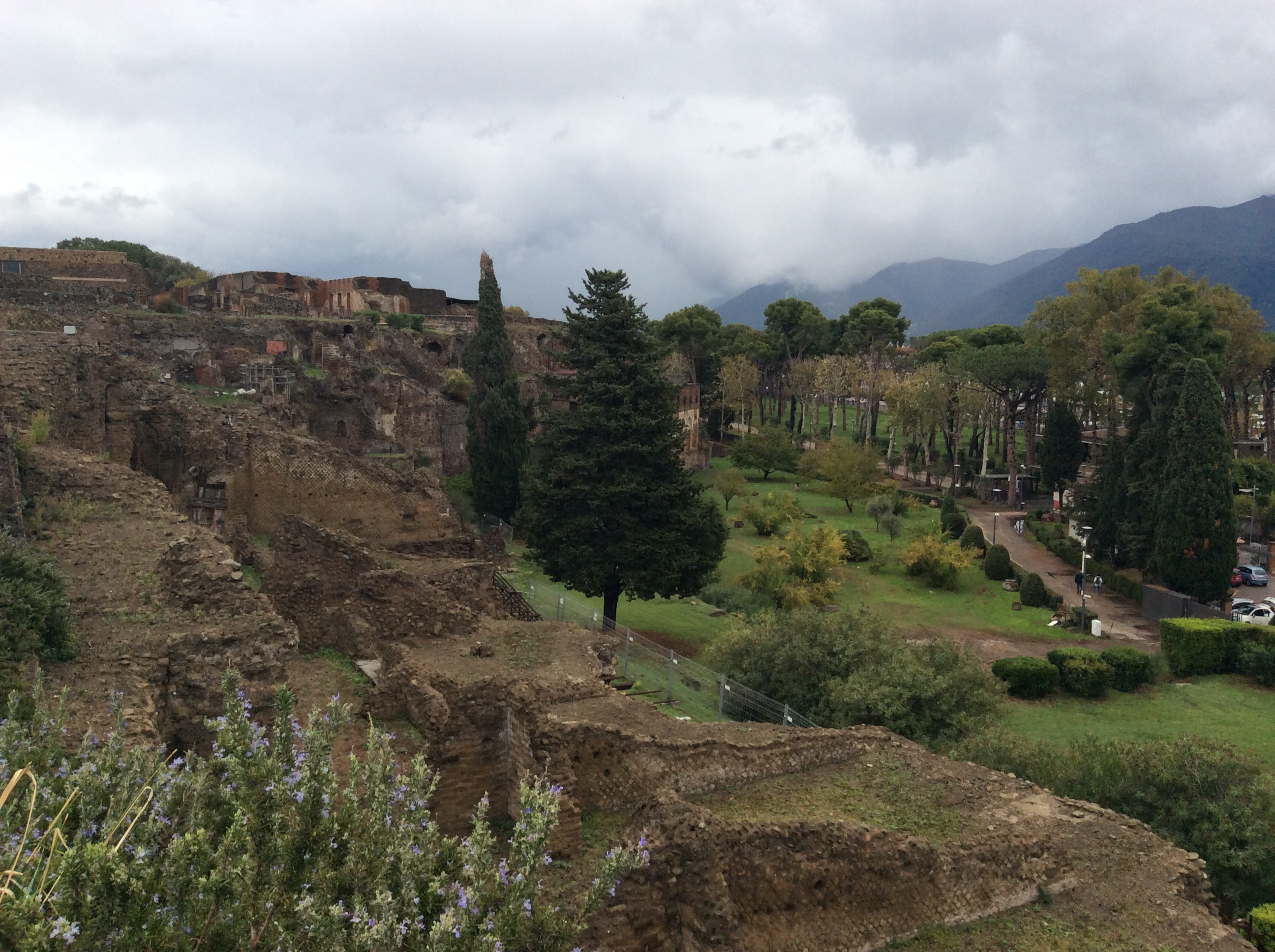
The countryside near Pompeii is lush green. IMG_4454

The view walking down the steps leaving Pompeii.


Summer Reading


IMG_3957Last year I joined Now Read This, the online bookclub sponsored by PBS and The New York Times.  Why did I join?  To expand my exposure to books I might not otherwise read, to learn, to explore, to interact with others reading the same books.

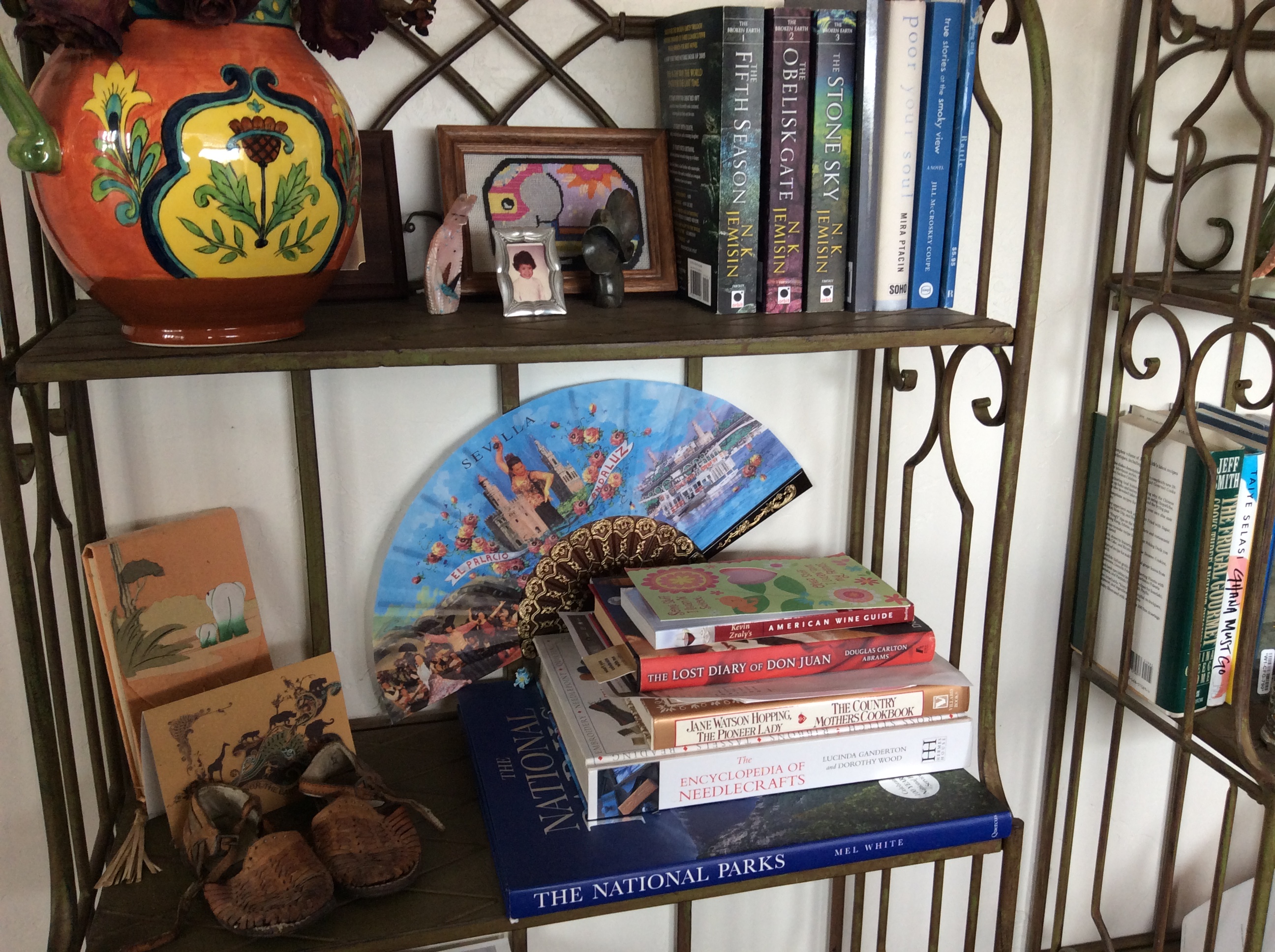
I rarely read fantasy or science fiction.  This summer has become an exception.  The June choice, The Fifth Season by Jemisin, won the Hugo in 2016.  The other two books in the trilogy won in 2017 and 2018.  I wanted to know what happened to the characters so I read them all.  The spine says Fantasy.  I think they are more science fiction.  Even people who claimed they did not like either fantasy or science fiction became like me and read them all.  This series tells a futuristic tale extremely applicable to events, both social and political, in the world today, how prejudice kills both overtly and covertly,  how fear of those who are different affect everyone, what it costs to live in a world where certain attitudes exist.

It took me two days to finish the July title even with chores, touchup house painting, all the things teachers attempt to do during summer break.  Although I had previously read at least three books by Luis Alberto Urrea, I had not read this one, The House of Broken Angels about a family who lives back and forth across the border–San Diego and Tijuana.  It is a tragic-comedy about the endurance, hopes, dreams, cooking, living of several generations.  His non-fiction book, The Devil’s Highway, is a must read for those who want to understand what occurs along the US-Mexico borderlands.

In the midst of all this, I went back and reread Ursula LeGuin’s The Left Hand of Darkness.  Wow, no wonder it caused a stir when it was published in the 1960s: a whole country where everyone switches back and forth between male and female and those who cannot do this are considered perverts.  Additionally, the main character is described as having very dark brown skin and those who do not behave exactly as they should or politically protest are sent off to a stark camp where they work in excessive cold and eventually die.

Then I read an article about Toni Morrison and authors who do not write for people based on a certain audience, e.g. black, white.  They write about what they know, what they feel, for a different purpose. One book listed was Children of Blood and Bone by Tomi Adeyemi, a fantasy, all of which takes place in what we now think of as Nigeria. It has not one single white character in it.  I kept thinking, wow.  I read a lot of literature from Africa, Middle East, and Latin America.  Most of the time, for better or worse, characters from other cultures show up, usually European and usually for the worse.  Not in this one.  If you go to a book store looking for it, look in Young Adult.  Jemisin’s can be found in Adult Science Fiction/Fantasy.  When I mentioned to someone I could not tell why some are categorized one way and some another, I was told there is less graphic sex in YA.  Really?  I cannot tell the difference.

Next on my list?  I annually act as a judge in a literary contest.  Three novels arrived in yesterday’s mail.  Guess I need to get busy.


Waiting–my first, I think, prose poem


It seems I cannot stop taking courses, or at least some courses–those dealing with art, literature, poetry, music.  Perhaps the reason has something to do with the fact that from about 7:30 to 5 for five days a week, I teach math.  And not just any math, but mostly math to teenagers who hate it, think they cannot do it, and complain considerably.  I try to “save” them, inspire them, help them to see math’s usefulness in regular, ordinary adult life.  Sometimes I succeed and sometimes….

My new poetry class started today, but it is very different from anything I previously studied.  I am supposed to read and learn how to write prose poems.  Now if I can just figure out exactly what is a prose poem versus, let’s say, flash fiction or memoir. I’ve read all the directions and a couple of Robert Bly prose poems and have decided it has a lot to do with imagery.  This post is my first attempt.  Still I am quite concerned that it is not really a prose poem and if not a prose poem, what is it.  Please tell me.

She stands alone by the train tracks,

watching and waiting and dreaming.

Hobos no longer exist.

She remembers reading stories of life

when her great grandmother lived:

hobos begging for food, gypsies stealing

babies and telling fortunes, long days of

working in the corn fields, chopping weeds.

Her own family praises modernity:

tractors, riding lawnmowers, herbicides, pesticides,

electricity, TVs, dishwashers, fast cars, fast food, diet sodas,

cell phones, computers, DVDs, iPADs.

Now the only excitement lays in video games,

guns, and sex.  She watches and waits and dreams.

The Encounter Poems-Three


Portland

It never snows here.

Now it is snowing.

The hotel bar is crowded.

No one’s on the streets.

He says,

“Come with me to my ship.”

He’s a freighter captain.

On board, he begs,

“Spend the night!”

On a freighter?

He takes me out to breakfast.

We wander in the snow.

Back home, my friend asks,

“Did you get laid?”

I laugh.

The Encounter Poems


Throughout my life, I seem to experience what I call encounters:  meeting people I never saw before and having some type of connection with them.  Various things occur under these circumstances.  Sometimes I keep in contact for at least a while with these people and sometimes not.  This week I am going to post several of these poems.  Here is the first one.

In Line at a Fast Food Restaurant

Caramel eyes

glowing in a brown face

Panama hat

Intricately carved silver cross

Crisp, snowy linen shirt

No collar

Slacks loose.

He’s lost weight.

I think,

“Gorgeous brown man.”

He says,

“In case no one has told you lately,

you’re gorgeous!”

He walks off to meet

the pregnant woman in the corner.