Weekend Trip to Northern Baja


This past weekend I headed to Mexicali in Northern Baja to visit the town of San Felipe and see a new development about an hour south of there. San Felipe is a small fishing town of approximately 20,000 people where there are no fast food restaurants and no Starbucks. Excellent restaurants and good coffee can be found but not at the places mentioned above. They do not exist there. The town of San Felipe has a long boardwalk right along the Sea of Cortez with restaurants across the street. This past weekend they were holding a ceviche contest and fiesta on a cross street. This is shrimp season and the city is known for its shrimp. Unlike the Pacific side of Baja, there is no large commercial fishing allowed in this part of the Sea of Cortez because it contains many endangered fish and the place where whales come to mate. Locals can fish and you see smaller fishing and shrimp boats in the sea. Not only is the Sea of Cortez protected but so are the plants and animals in the desert. Certain plants, like ironwood trees, are ancient and rare. If you want to build a road, it has to be around them. Many other species are also protected.

Unlike the Pacific side of Baja, the water in San Felipe is safe to drink from the tap. It comes from an aquifer up in the mountains to the west.

We spent most of Sunday at the new green development (it is totally off grid) called Rancho Costa Verde. Solar is used for power and each house has a large underground water tank where water comes from an aquifer up in the mountains. This is a newer development so although many of the lots are already sold, except for beachfront, many houses are just now under construction.

This is a very modern beachfront property with marble floors and a glass wall facing the Sea of Cortez.
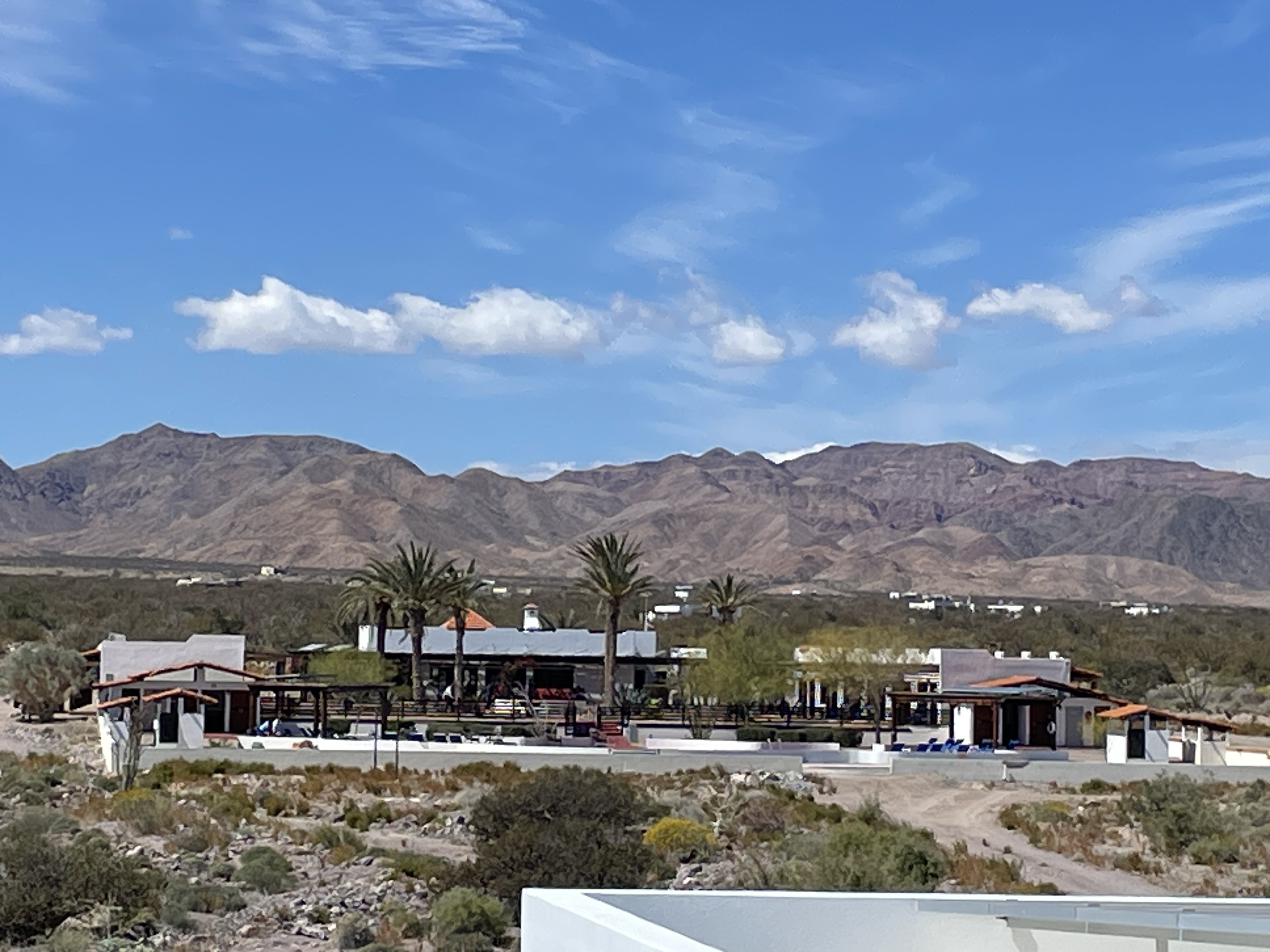
This photo is of the clubhouse and looking the opposite direction toward the mountains. Here I am standing on the roof of the house in the previous photo.

Here I am in front of the pool in front of the clubhouse facing the Sea of Cortez. The house in the first picture is on the left in the distance.

This is desert land where even though it can get hot in summer, the sea breeze keeps it relatively cool.
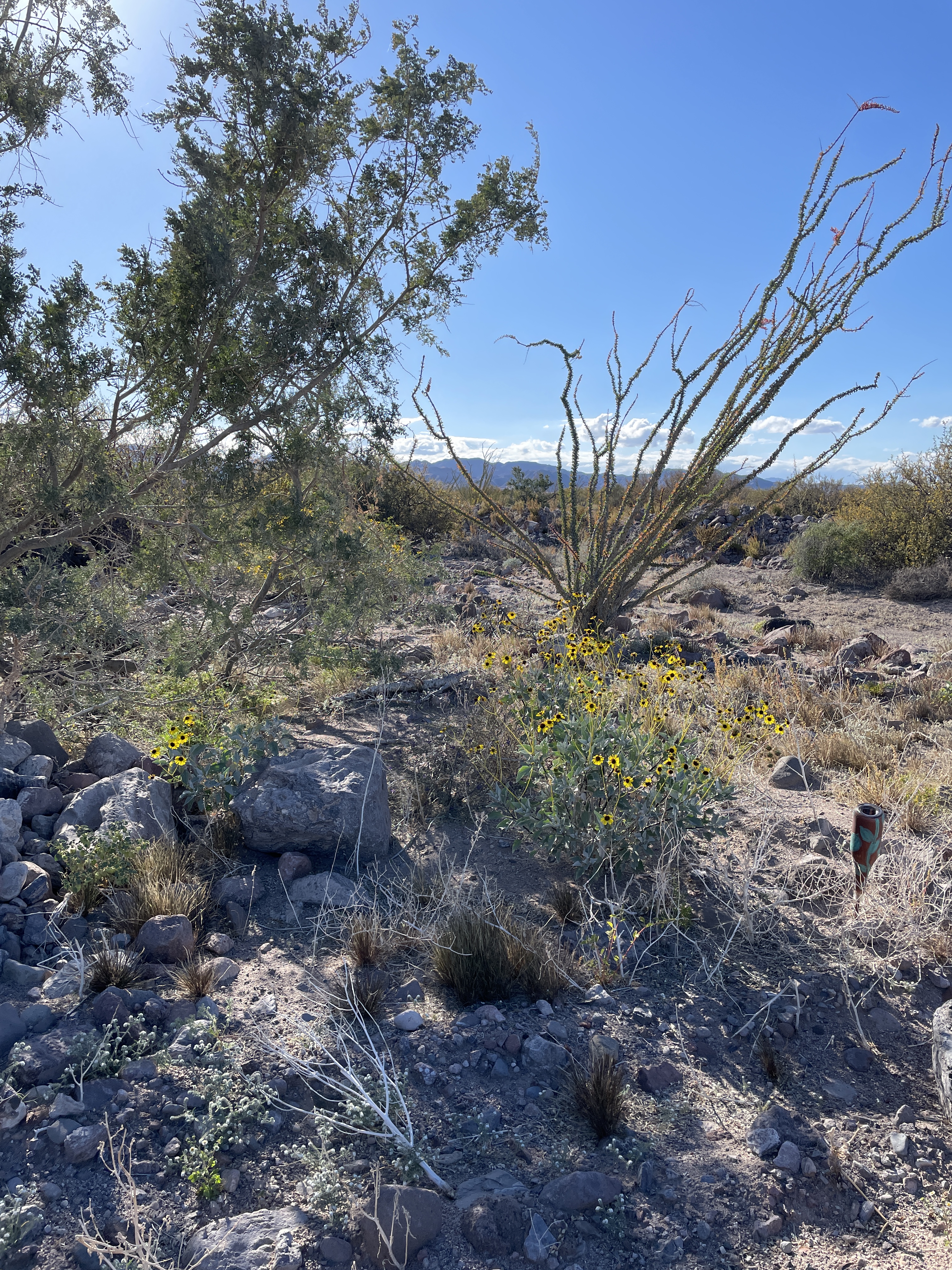
The plant on the right is ocotillo which is protected. If you are building a house and it is in the way, you have to move it elsewhere. You cannot just get rid of it.

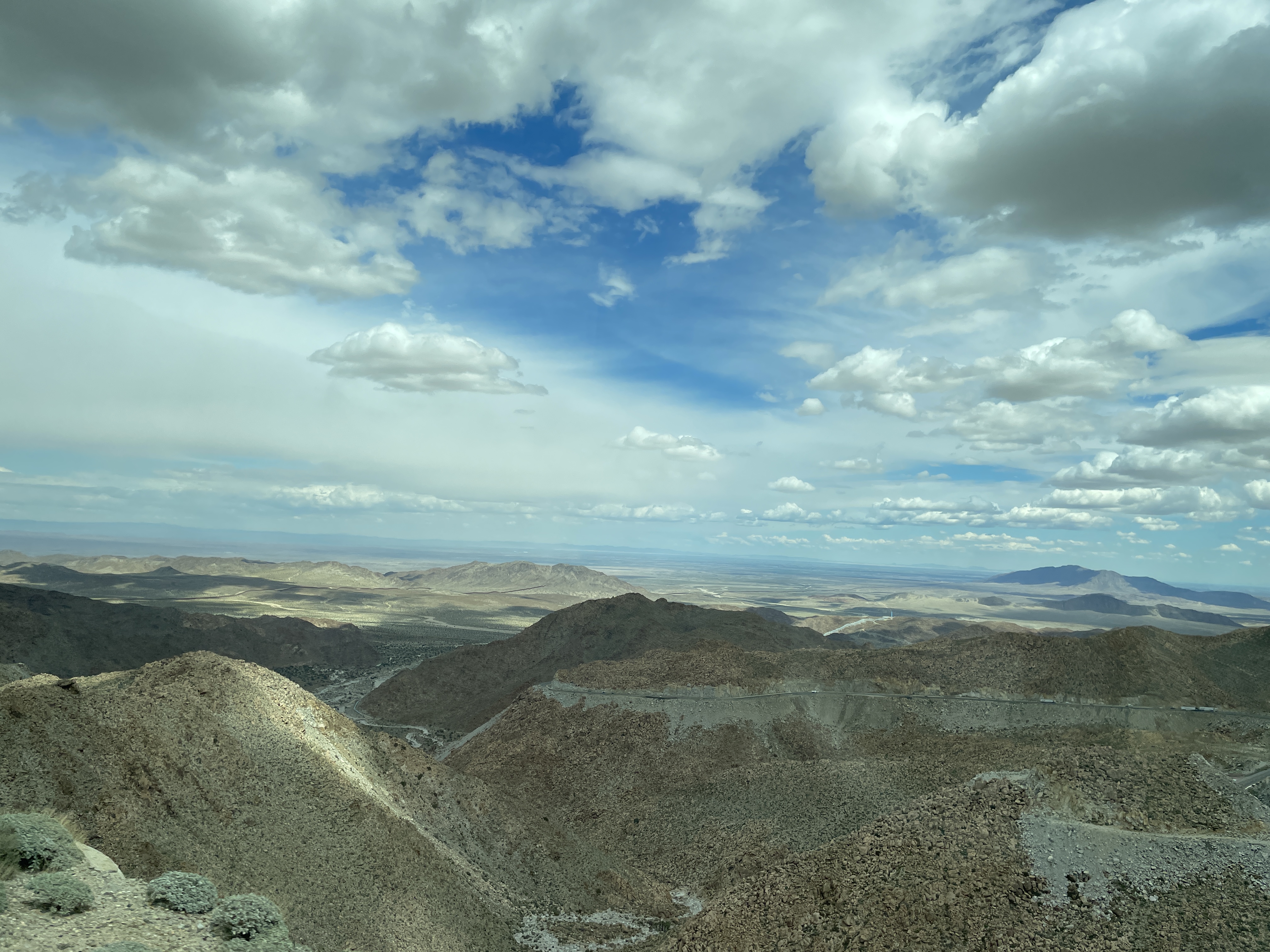
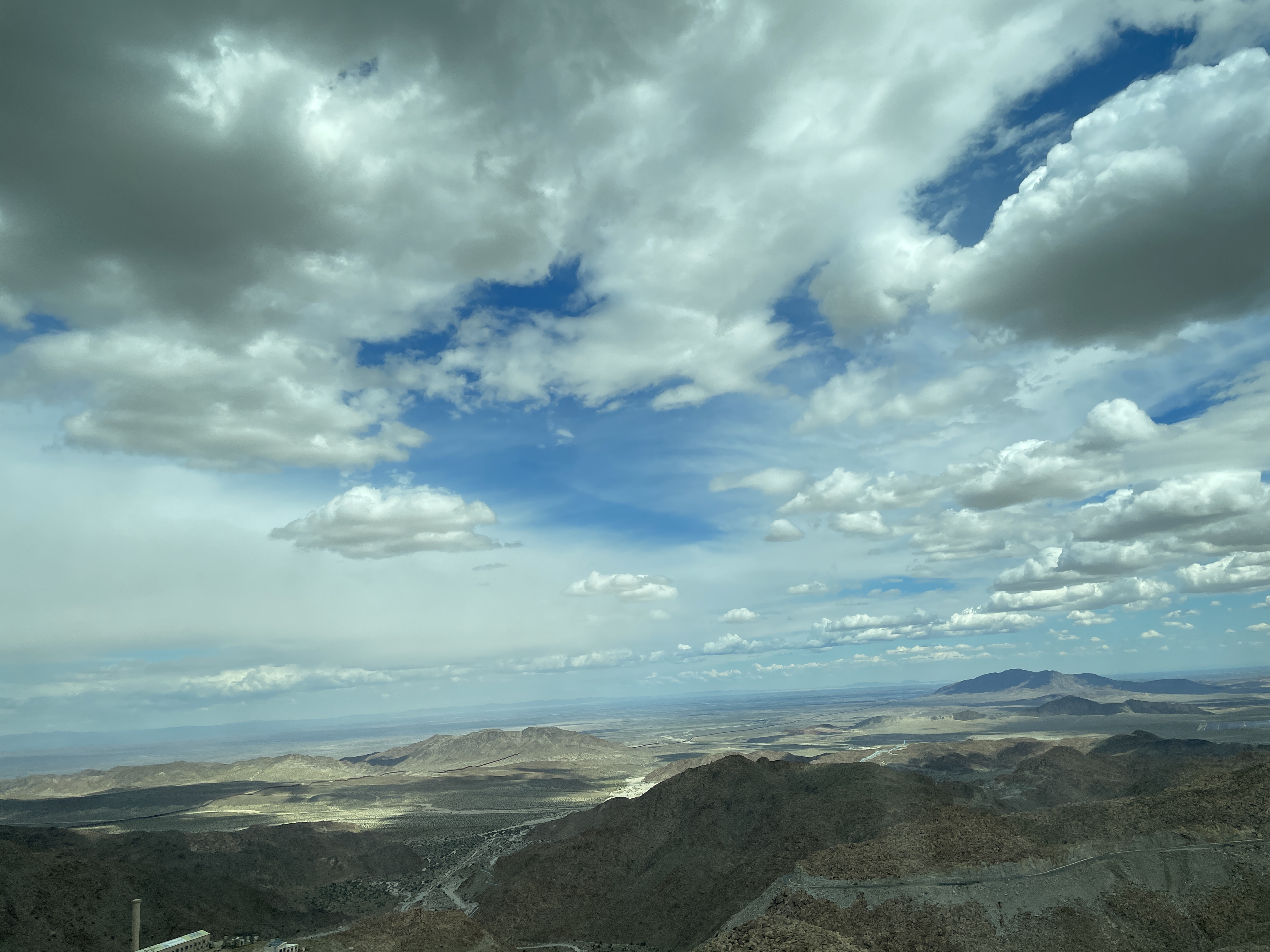
Monday was a big adventure trying to cross the border. We arrived in Mexicali only to discover no busses could cross the border there so we had to take the highway to Tijuana and cross there. To do this you must cross a mountain pass. What a feat of engineering building this road must have been. It is quite incredible and as you climb higher and higher the views go on forever into the far distance. The following are photos I took from the bus window as we drove higher and higher.
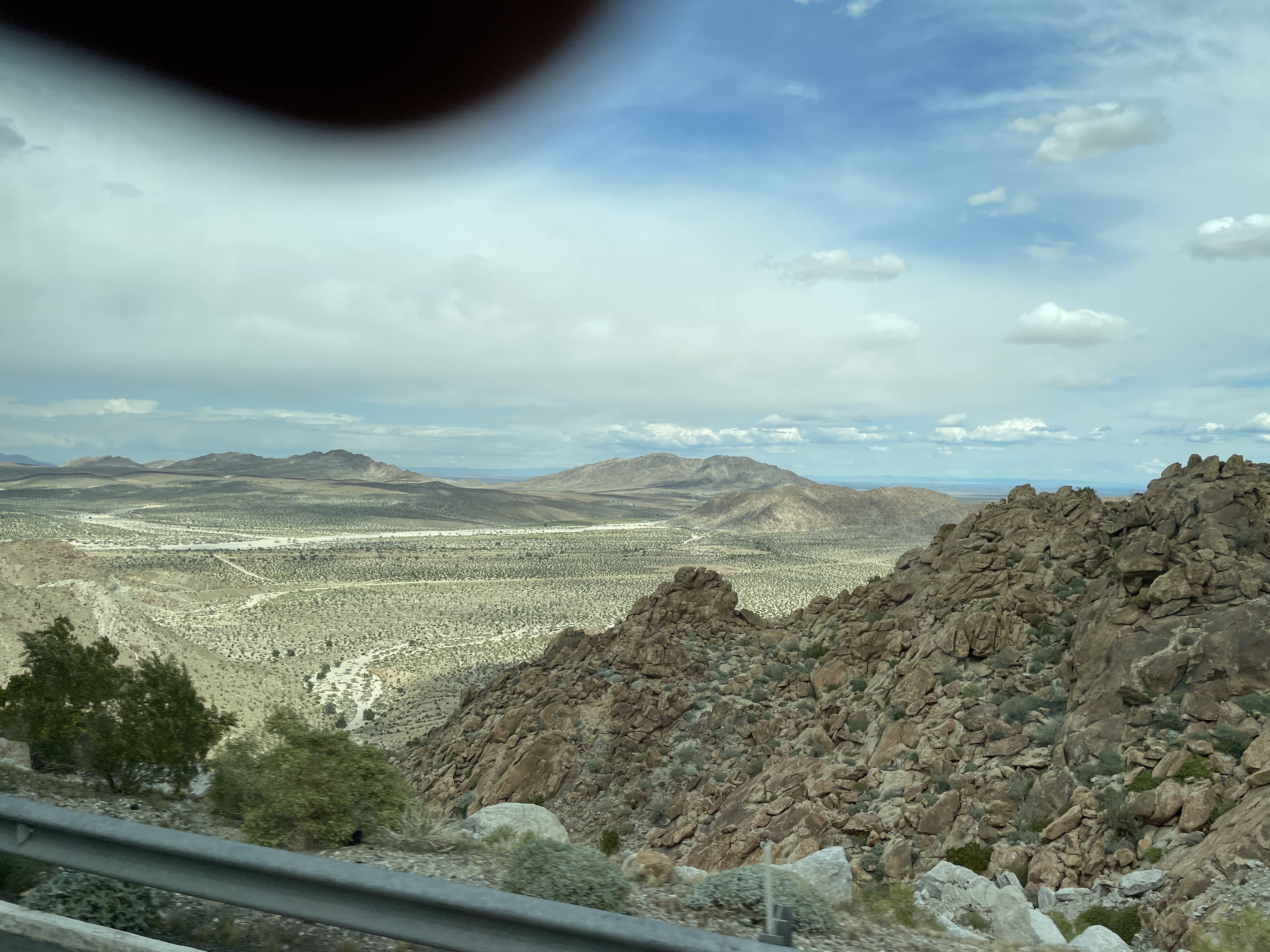
These mountains are made of rocks of all sizes that are just stacked on top of each other. Here only these small blue-green plants seem to thrive.

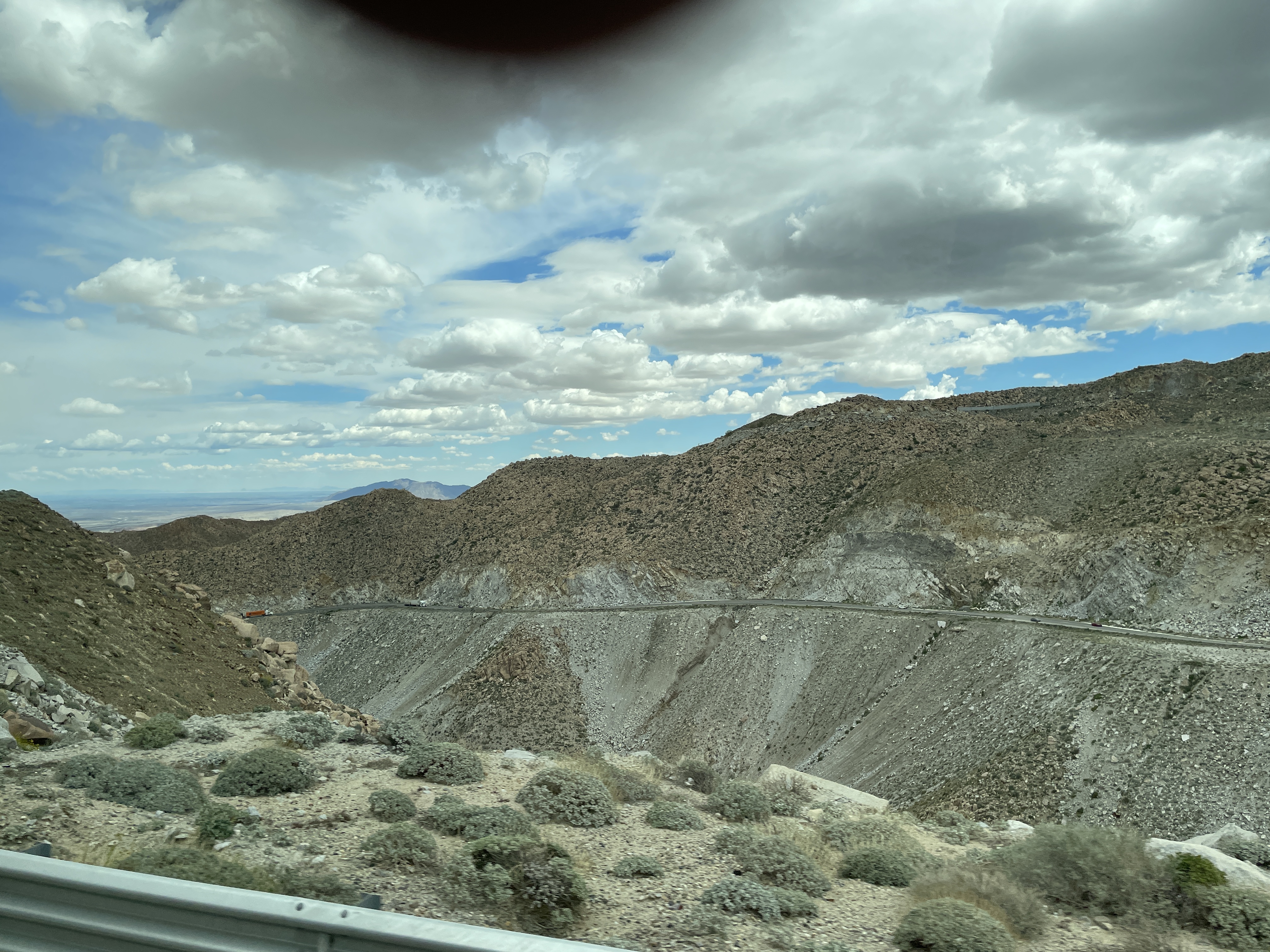
In this photo you can see the highway where we had just traversed.
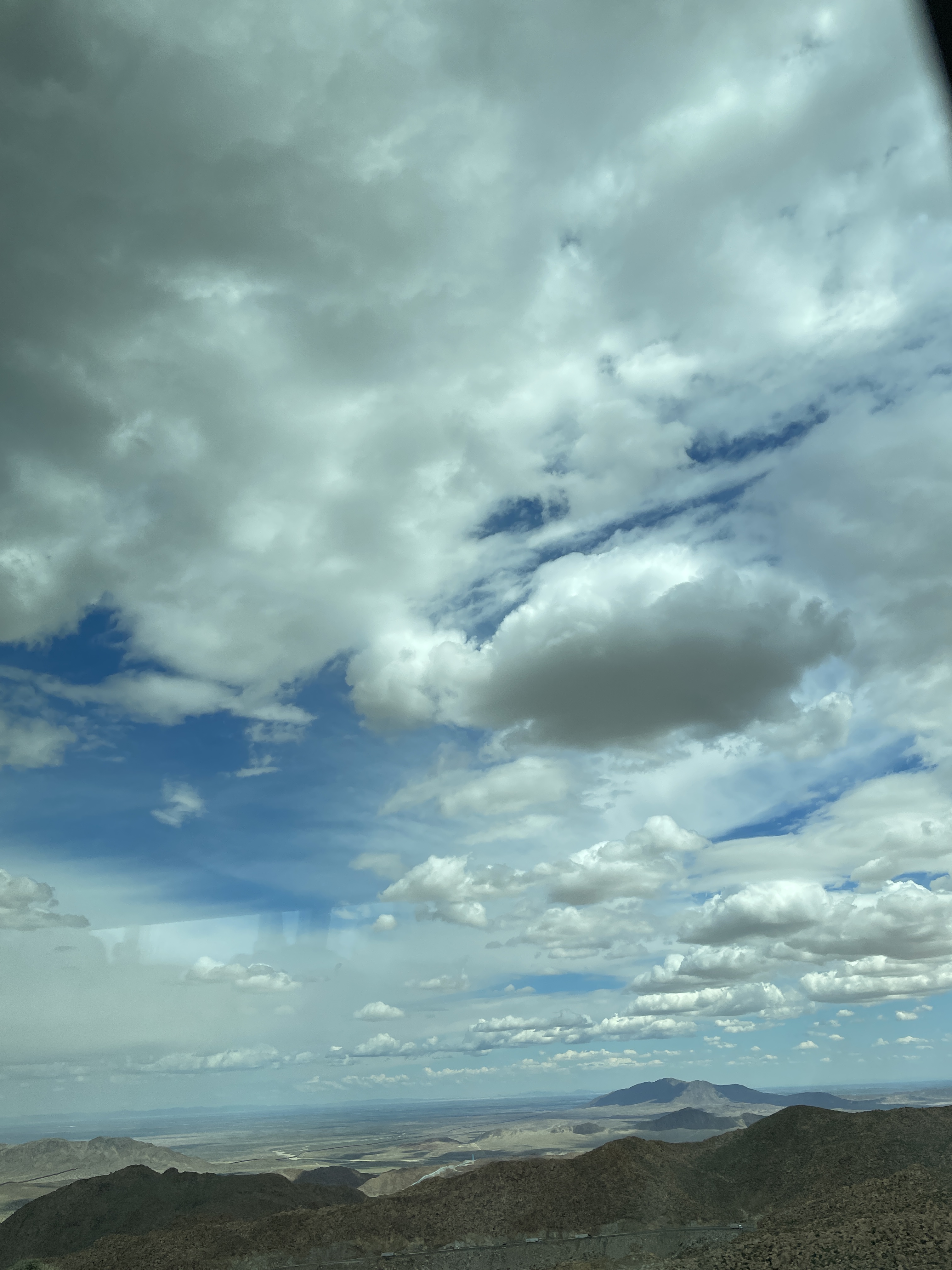
Here you can see how at this height the mountains are nothing but stacked rocks of all sizes.

After the summit as we went down toward the town of Tecate, it started to rain and it rained most of the way to Tijuana. The Pacific side of this part of Baja gets rain and it was lush green this time of year while the Sea of Cortex side is desert.

I do not recommend crossing at Tijuana in a large bus. Even though we had sent all our passport information in advance, they made the bus sit there for nearly an hour and wait. Meanwhile those on foot and in cars were just zooming along at a rather rapid pace. Then we had to get out of the bus with all our luggage and everything and wait more. I crossed the border (not in a bus) last April and it did not take long at all. I have heard that Tijuana is the busiest port of entry from one country to another in the world but have not verified that. It certainly was busy yesterday.

You’re Gonna Eat That!? Adventures with Food, Family, and Friends


This is my new book, published last month.  It is filled with stories, poems, and recipes–healthy food for vegans, vegetarians, pescatarians, and meat eaters with photos and detailed instructions. Currently, it can be purchased at Burrowing Owl bookstores in Canyon and Amarillo, Texas, and online at http://www.dreamcatcherbooks.com, Angel editions.

IMG_4660

Overweight and Poorer


Today I planned to post a lovely poem.  However, I was so engrossed by an article on the Internet that I decided to discuss that topic instead.  Why are so many people in this country overweight?  Why do people complain about being poorer?

The article in question, which I could not download and post here, claims that the biggest item on which people in the United States overspend is eating out at restaurants.  It is also a major cause of obesity.  On average when a person eats in a restaurant they eat 200 calories more than if he or she ate at home.  If that person eats out three times a week, that adds up to more than 30,000 extra calories a year.  Even if he or she eats fast food, which probably adds even more calories, the extra expenditure at even a low 8.00 per meal, would  add to nearly 1300 dollars per year.  If it is a family, multiply that by the  number of people in the family.  For 8 dollars, they could go to the grocery here in Texas and buy a delicious already roasted chicken that would feed at least four.

Personally, I find few restaurants that can actually create a meal better than one I can cook myself.  Others say who wants to cook for oneself.  I live alone and I cook for myself all but a couple of times a month.  Being a bit of a health nut and not much of a meat eater (I eat quite a lot of fish, usually cod or salmon), that 8 dollars would turn into much bigger amounts.  Plus I do not want to waste the time eating out.  I can create a much healthier meal, cheaper, quicker at home.  Restaurant food tends to be much saltier with fewer herbs and spices than I prefer as well.

I am curious to find out why others eat out all the time.  It mystifies me.


PS.  Curious as to what sorts of foods I create, what spices I use?  I have posted lots of recipes here on my blog.  Take a look.


IMG_1430


SAM_1568

Pura Vida: 2, Comida (Costa Rican food)


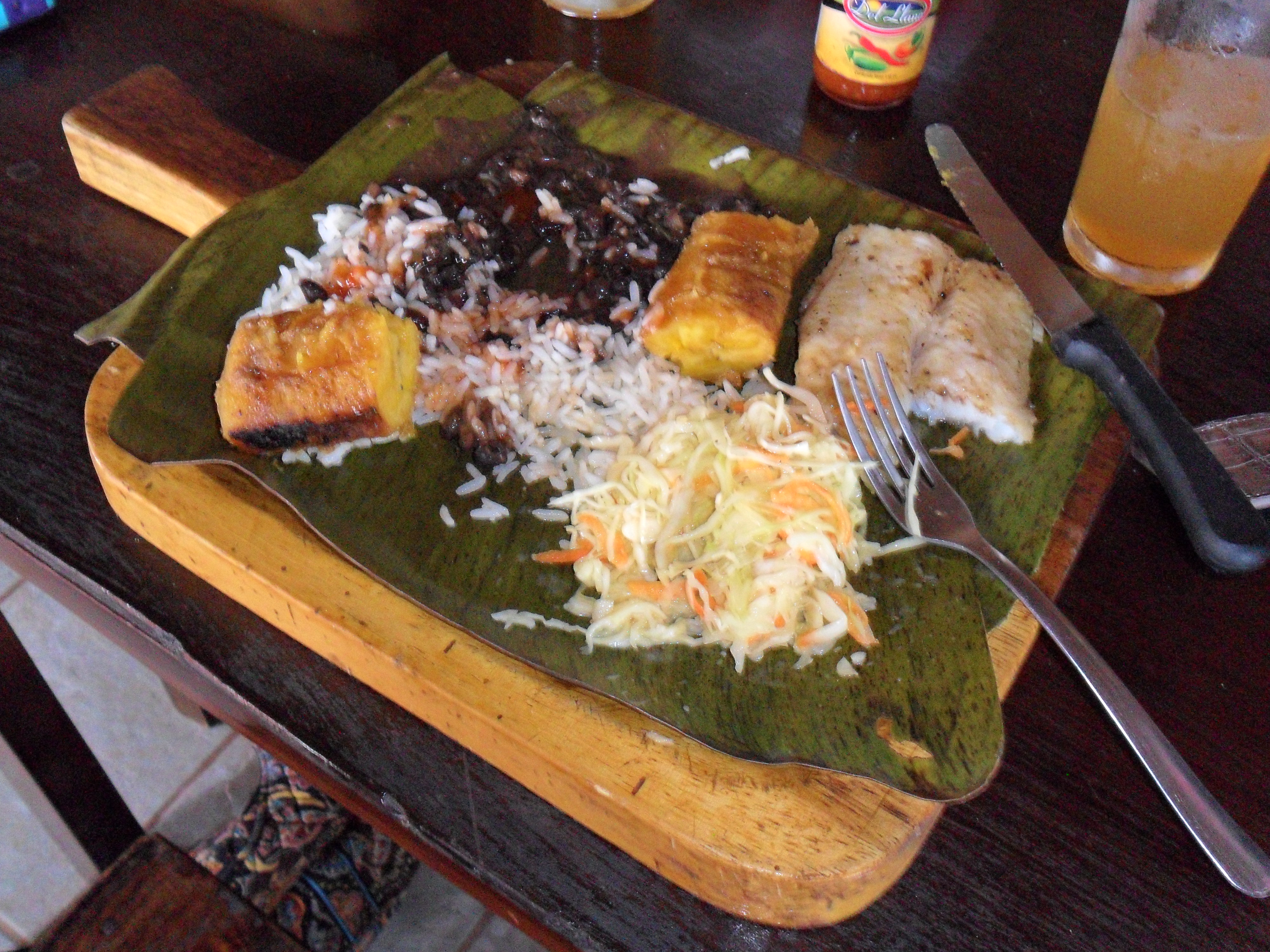
Costa Ricans appear to be very, very healthy.  Their food mainly consists of rice, black beans, salad, cooked vegetables, chicken or fish, fruit (usually pineapple, papaya, mangoes) and sometimes fried plantain.  In fact fried plantain was the only fried food, except occasionally cheese.  The food is plain with few spices, even though hot sauce, especially their version of tobasco,  is often available if you want it.  The national dish is gallo pinto:  left over white rice mixed nearly equally with black beans and sometimes a little chopped onion and bell peppers sautéed in oil.  This is a breakfast staple, but frequently served three times a day.  Sometimes, although black beans and rice are usually served at lunch and dinner, they are not mixed together then.  Often salad is their version of cole slaw, but tastes nothing like cole slaw here.  Usually both cabbage and carrots are very finely shredded and mixed together.  I never did quite figure out the dressing, in part because it varied greatly.  When the salad was with lettuce, it was also more finely chopped than we usually do here in the US and served with various dressings including olive oil.  The freshness of the salads stood out–no little bits of brown edges in Costa Rica.

The coffee, well, just lets say, I miss it.  Pitchers of steaming, strong, mountain grown coffee served with pitchers of steaming, rich milk.  In the mountains everywhere Jersey, Guernsey, and Holstein cows roamed up to their tummies in grass.  Happy cows for sure, producing rich milk for coffee and rich white cheese, which is served for breakfast.  Yes, breakfast, sometimes plain and sometimes fried.  Oh, and I cannot forget the ice cream.  Beyond creamy and smooth and rich.

There are sweets, usually made as snacks with coconut especially.  This was my favorite.

Obesity appeared to be non-existent.  I did see a few chubby people but no one really excessively over weight.  Perhaps diet is one reason, but they walk a lot even though most have cars.  They appear to drive them only if going some distance.  In the mountains I saw a lot of people riding horses.

The biggest food adventure for me occurred while waiting around near a little family owned restaurant at the top of a mountain.  All but four of us and the bus driver had gone river rafting.  We disembarked from the bus and walked around to kill time, chit chatting about this and that in Spanish.  Suddenly the restaurant owner came out with his grandson, unlocked the fence gate, and invited us in.  While sitting at the bar conversing with him and Hector, the bus driver, I noticed the menu posted on the wall.  It included huevo de tortuga.  Previous information given to us indicated that Costa Rican law protected turtles (tortugas).  I asked how he could serve this.  He told me it depended on the species of turtle and that he could acquire only a limited amount of them.  Suddenly, in front of me, Lisa, the other woman who did not go rafting and is pregnant, and Hector appeared three glasses that looked like giant, triple sized, shot glasses.  Each one contained a raw turtle egg immersed in red hot sauce the consistency of tobasco sauce.  Instructions and gestures indicated this was to be downed like a shot of tequila.  Lisa stuck her tongue in the sauce and said it was ok.  She downed hers first and said, “This is not all that bad.”  The restaurant owner told her it held great nutrition for her unborn baby.  I translated.  It became very clear to me that I had no choice but to down mine as well.  Hector downed his; then I mine.  Lisa’s assessment was correct; it was ok inspite of the turtle egg feeling like a rather solid but squishy mass as it slid down my throat.  The hot sauce made it possible.  Lisa downed a second one; Hector and I declined.  This experience remains one of the highlights of my trip:  relaxing in the middle of nowhere with a local family in their little restaurant.  Pura vida!!!!

Easy Thai Shrimp for Two


1/2 purple onion, chopped

1-2 red Mexican peppers, deseeded and cut crosswise into circles

1 large poblano pepper, deseeded and coarsely chopped

5 baby portabello mushrooms, sliced

20 medium cooked shirmp

garlic (optional), coarsely chopped

Olive oil

Thai sweet chili sauce

Pour enough olive oil in a skillet to cover the bottom.  Saute the onions and garlic until translucent.  Add mushrooms and sauté.  Add the shrimp and peppers.  Saute until peppers are cooked, but do not overcook.  Add sufficient Thai sweet chili sauce to make a thick sauce.  Serve over rice.  I combine red and Jasmine rice.  You may also use other types of peppers.  However, the dish is prettier if you combine the green of the poblanos with some type of red peppers.

The last time I made this for my Thai exchange student, I planned to take a good photo but somehow we became too distracted and had eaten most of our dinner before I remembered that I had not taken a photo so here it is fork and all.