Book 46 for 2024: “What Happened to Ruthy Ramirez”, Claire Jiménez


The Puerto Rican Ramirez family lives on Staten Island. The book begins years after one of the three daughters, Ruthy, disappears at the age of 13 while on her way home after her school track practice. Twelve years later while watching TV, Jessica, the oldest daughter, sees someone on a reality show who looks like Ruthy. The woman on the TV has red hair like Ruthy and the same birthmark mole. Jessica tells her younger sister, Nina. They concoct a plot to go to the reality show site and bring Ruthy (if she is really Ruthy) home. They avoid telling their mother, Delores, who has never ceased struggling over Ruthy’s disappearance. Delores discovers their plot and insists on not only joining them, but also bringing her older Pentecostal friend who frequently falls into spiritual spells on the floor at church. Eventually, they all head to Boston where the show is located and all kinds of turmoil occurs.

The novel is told from the viewpoint of each sister and their mother, providing endless details about their Puerto Rican culture, their jobs, their views, and how they feel about each other, all done with dialogue. Sometimes it is loving, sometimes snarky as it deals with their experiences with racism, sexism, family secrets, and violence. As a reader, I, too, wanted to know what happened to Ruthy. Definitely worth the read.

Book 42 for 2024: “These Is My Words: The Diary of Sarah Agnes Prine, 1881-1901, Arizona Territories


This fictional work is based on the life of the author’s great grandmother. Written as a diary with specific dates, the narrator is not yet a teen when the novel starts. Her parents are wanderers, always looking for a better, new place. Sarah’s character is that of a tough, pioneer girl and then a woman. She can ride horses, shoot to kill, manage a ranch, do whatever it takes to survive. Much of it includes a rather accurate portrayal of life in Arizonan territories as well as Texas at the time including the prejudices of many of the white inhabitants toward the Spanish speaking people already there, fights with Apaches, and the hunt for Geronimo. It is not just the story of her own life, including her relationship with the Army Captain whose job initially is to protect a wagon train, but also portrays other people living in the Southwest during that time period.

I read this as part of a book club. Reactions to the book varied widely from those of us who thoroughly enjoyed the book to at least one person who insisted it is poorly written and viewed it as a romance novel. The rest of us did not. She used an audio book edition. After her descriptions, it appears the audio book does not correctly follow the book itself and is poorly done which may have contributed to her view of this work. I borrowed this novel from the public library and it was obviously well read because it was not in the best condition.

Book Eight for 2024: “Being Heumann”, Judith Heumann


Judith Heumann contracted polio as a child and was subsequently confined to a wheel chair. Doctors suggested to her parents that they send her off to live in a place for the disabled. Having escaped Nazi Germany, her parents were horrified and refused. There were no laws protecting disabled people when she was a child. Her parents, especially her mother, fought for her to go to regular school. This is how her story begins as she tells it. The rest is the story of her activist life.

When the Rehabilitation Act of 1973 was passed, it took months for Section 504 regulations to be signed into law. At this time the author was a young woman living in the SF Bay area. She lead a days long sit-in at the federal building in San Francisco. When this did not work, she went to DC. The entire book is her account of her life as an activist for the rights of disabled persons, beginning with her childhood, her becoming a certified teacher after attending college, and her endless activism for Section 504 and the ADA.

This is an important book for anyone interested in the history of civil rights for the disabled.

Chinese New Year at the Tzu Chi Campus


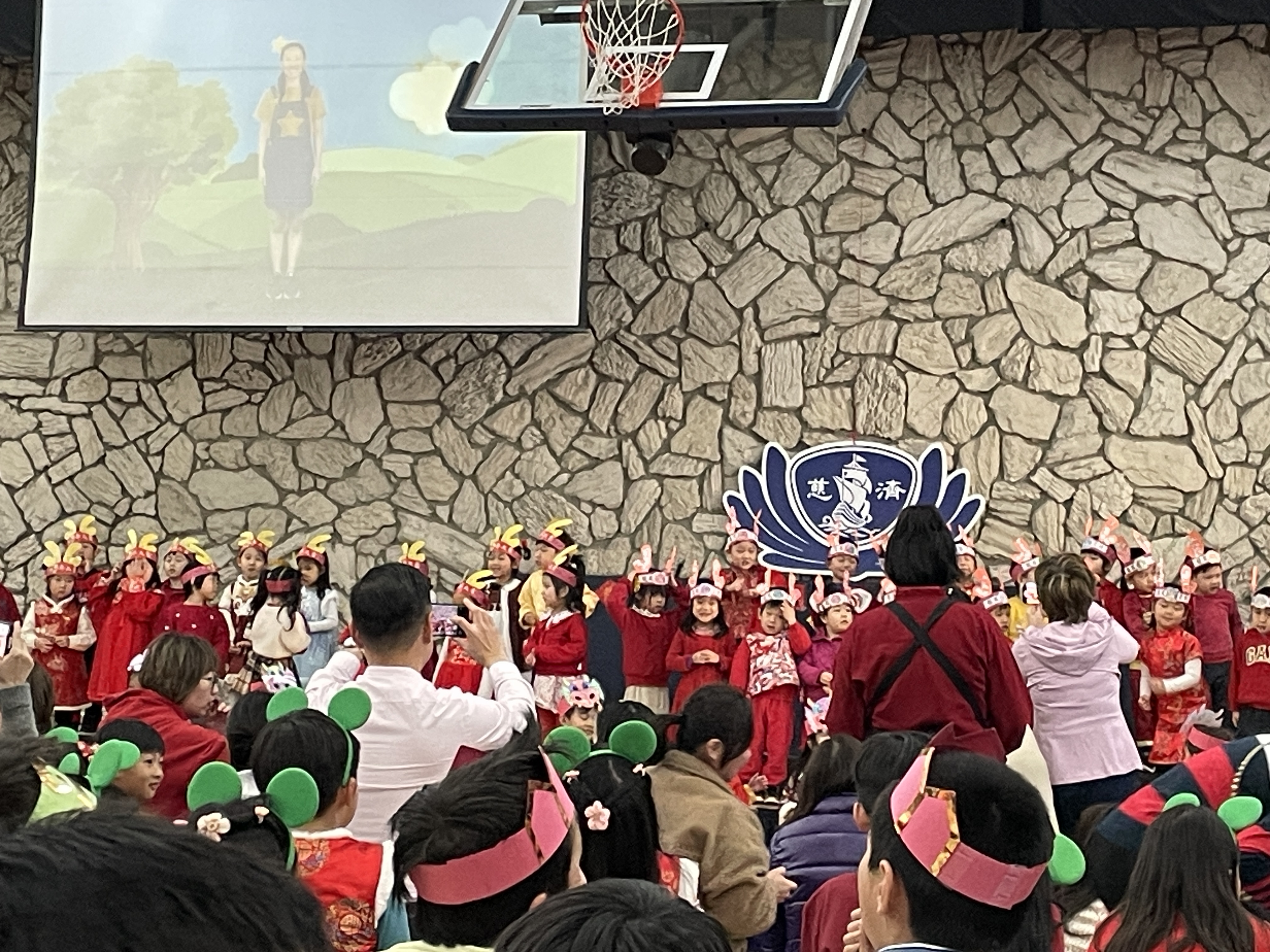
Today I traveled a bit south of where I live to the campus of the Tzu Chi school which I have visited numerous times. First we had a vegetarian lunch–they are Taiwanese Buddhists who advocate a vegetarian, plant based diet as better for the environmental future of Earth. Then all the visitors, who were mostly parents of the children, went to the gym for the program. Various ages wore headdresses to represent the various signs. Some of the youngest children wore dragon headdresses. This is the year of the dragon.

The children sang and danced.

Parents were very enthusiastic about taking photos.

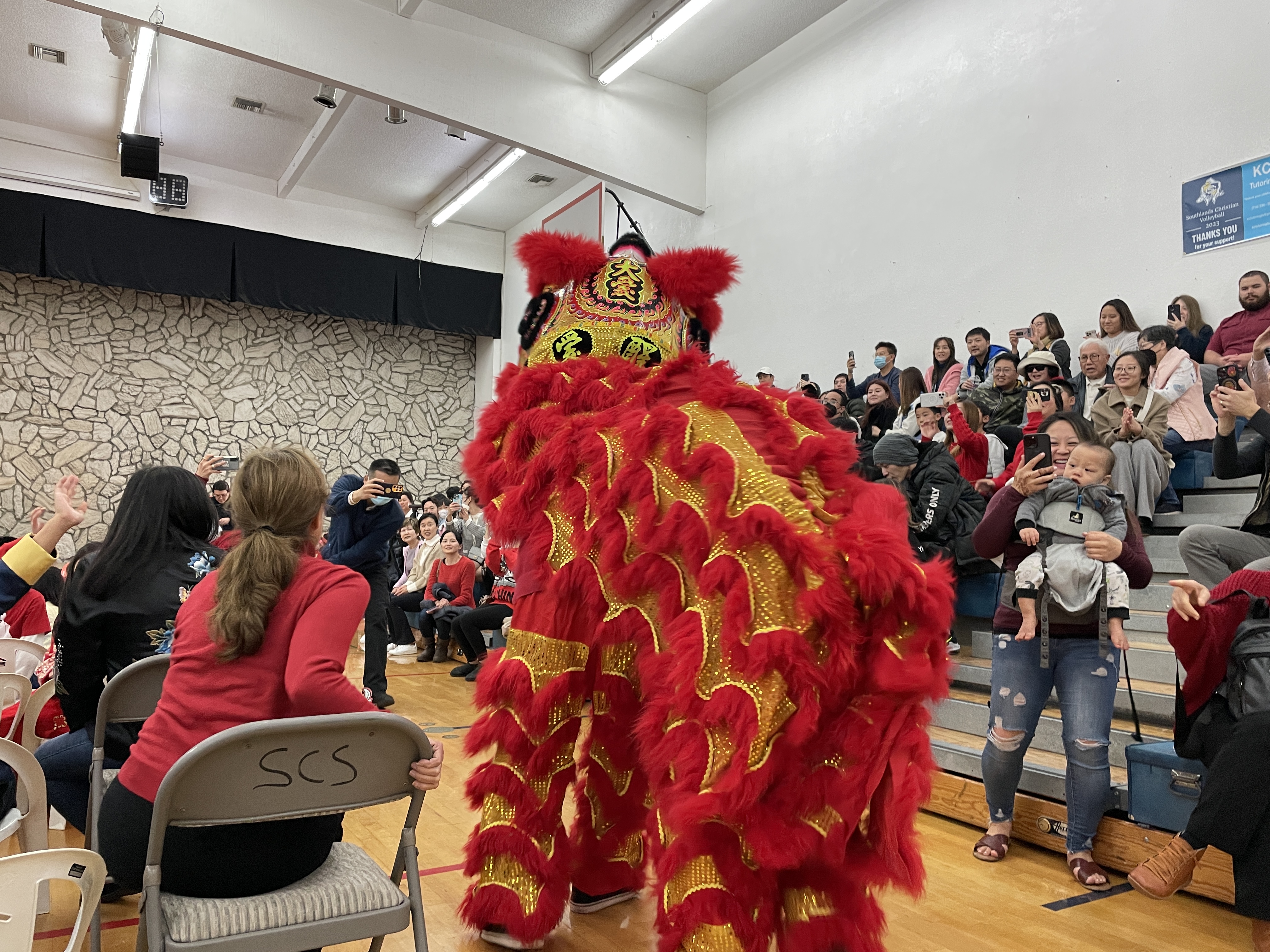
Then after all the students of varying ages finished all their performances, including older students who made a circle around the room and sang plus danced with perfect synchrony, out came the dragon.

It was so much fun to see all the children performing; it was obvious they had worked very hard to accomplish this. It was also enjoyable to see so many happy, enthusiastic parents.

Note: I work with this Buddhist Center teaching character education at local public schools.

Shootings


In Iowa

the governor says she’s praying

the senator says he’s praying

presidential candidates tell us to pray.

What?!

Oh, yes, I observe how well

that’s working.

82 school shootings last year,

39 dead, 89 wounded.

In US, death by gun is now primary

cause of demise for children and teens.

It’s not much better for the rest of us.

18,762 shot dead.

36,167 injured.

If you’re male, depressed, have a gun,

just shoot yourself.

Bang!

Thousands shot themselves.

I know some keep saying,

“People kill people, not guns.”

If you don’t have a gun,

you can’t shoot someone else

or yourself with one.

The most popular gun in the US?

An AR-15.

Think about that!

What does it tell

you about this country.

One Book a Week-50: “The Poet X”, Elizabeth Acevedo


I purchased this book not long after it won the National Book Award, but never managed to get around to reading it until recently. I love this book. Yes, it won in the youth category, but since I have worked with teens for decades, I “get” it. It is a novel in poetry where the narrator, a 15 year old Dominican Latina, Xiomara, who lives in Harlem, keeps a poetry journal to stay sane. Her very religious Catholic die-hard Mom frequently drives her crazy with rules like she can never talk to a boy, much less date one. Her dad is a bit of a playboy and less strict. Her twin brother is a genius who won a scholarship to a fancy private school, and her best friend, Caridad, is hyper religious. Yet these young people all keep each other “together”. Her English teacher realizes Xiomara has a gift and encourages her to become involved in poetry slam events. She cannot see how this is possible given her mother’s attitude toward her poetry. You do not have to be a teenager to enjoy this book. In fact, if you think you do not understand teenagers, I suggest you read this book. It will enlighten you.

The Murals at Mendez High School


Every Wednesday I visit Mendez High School in Boyle Heights near downtown LA. I volunteer as a college counselor for College Match LA. The school is named after the couple who, in 1946, sued for equal education for Mexican children and won.

This is the couple and the school mascot is the jaguar.

This explains the ruling that gave Mexican children equal educational rights.

View of downtown from in front of the College Center area where students go to get help with college applications, learn from presentations by admissions officers from different colleges, and work on college and financial aid applications.

Thanks to the two guys sitting here chatting for giving me permission to take this photo.

When I asked who did the murals, I was told that students did them in conjunction with an art class several years ago.

Teacher Tales


Sometimes a teacher’s work seems to never end and, honestly, it keeps me from posting here as often as I might like.  At the same time, it provides me with endless joy and entertainment.  The last couple of days brought lots of laughter.

I teach 8th – junior English and Spanish 1 and 2.  This past Friday, Spanish 1 class became the site for lots of laughter.  We were practicing translating sentences from English to Spanish.  To date they have learned to say what they like, sentences about the weather, write about time, and to use the two “to be” verbs used in Spanish among other things.  Somehow in the process of describing a person using a variety of adjectives they have been taught, one of the students blurted out, ” I think old people are ugly.” I said, “So you think I am ugly?”  This caused a minor uproar with laughter and indignation.  In an attempt to make the situation better, he continued, “No, I mean people over 60.”  I repeated, “So you think I am ugly?”  By this time everyone was laughing, including me, protesting his attitude.  He started to try to wriggle out of that one when I pointed out that it might be better if he kept quiet.  He started to say something about wrinkles but that got shut down by the other students.

Just before all this,  his younger brother came into the classroom.  He is the student who wrote a page-long poem about my hair last year.  He said to his brother, “What is wrong with you?  She is beautiful.”  Then walked out of the room.

E6A29E6C-D58A-44CE-89FA-3B69CC78F2AF

By this time everyone was laughing and talking except the student who made the original remark about old people and a few were shouting at him about his awful attitude.  By the way, in case you do not know, the word for ugly in Spanish is feo or  fea, depending on whether you are describing a male or female.

This weekend I read 50 or so book reports.  One of them included this statement in response to the question, “What did you learn from this book?”  “I learned it is sometimes fun to be bad.” The student was referring to the book, “Tom Sawyer.”

I have no clue how to respond to that remark.


My Hair–a Student Poem


Recently, my students read a poem where the eggs in a carton expressed terror at being removed by human hands and a Pablo Neruda poem about his socks–hand made, blue wool with a golden thread running through them.  Their assignment was to also write a 20 line poem about something ordinary which they love or appreciate. One student wrote about my hair.

E6A29E6C-D58A-44CE-89FA-3B69CC78F2AF


New Adventure: A New Teaching Job


Monday I went to my new job, finished decorating my new room with a few posters, a giant puma drawing from one of my former students, and an old National Geographic photo of a giant redwood tree with several men stationed at varying heights.  This year I will be teaching English Language Arts to grades 7-10, a writing class, and Spanish 1 and 2.  The 7th and 8th graders will be a new experience.  However, several have already come by to meet me, chat, hang out.  Hard to knock that for starters. It is a nearly new building out in the country surrounded by fields and pasture with a feed lot down the road–ranching country where rodeo is a major activity.

On the east side of my classroom a giant window takes up 1/3 of the wall.  A small section of the window even opens.  Twice I have opened it and listened to the birds singing outside. The window sill can hold several plants because it is long and at least one foot wide. Plant shopping occurs this weekend. Students begin next week.

IMG_3482