My Mother–Barbie Doll


Barbara Lewis Duke, pretty petite, blue-eyed and blond, my mother, one fearless, controlling woman.  Long after Mother’s death, Dad said, “Barbara was afraid of absolutely no one and nothing.”  They married late:  34 and 38.  He adored her unconditionally.  She filled my life with horses, music, love, cornfields, hay rides,      books, ambition.  Whatever she felt she had missed, I was going to possess:  piano lessons, a college education.  Her father, who died long before I was born, loved                 fancy, fast horses.  So did she.  During my preschool, croupy years, she quieted my hysterical night coughing with stories of run aways horses pulling her in a wagon.      With less than one hundred pounds and lots of determination, she stopped them,               a tiny Barbie Doll flying across the Missouri River Bottom, strong, willful, free.

Note:  this poem is in my book “On the Rim of Wonder” and was also recently published in “Inside and Out”, a collection of writings by women.  It is available on Amazon and published by the Story Circle Network.

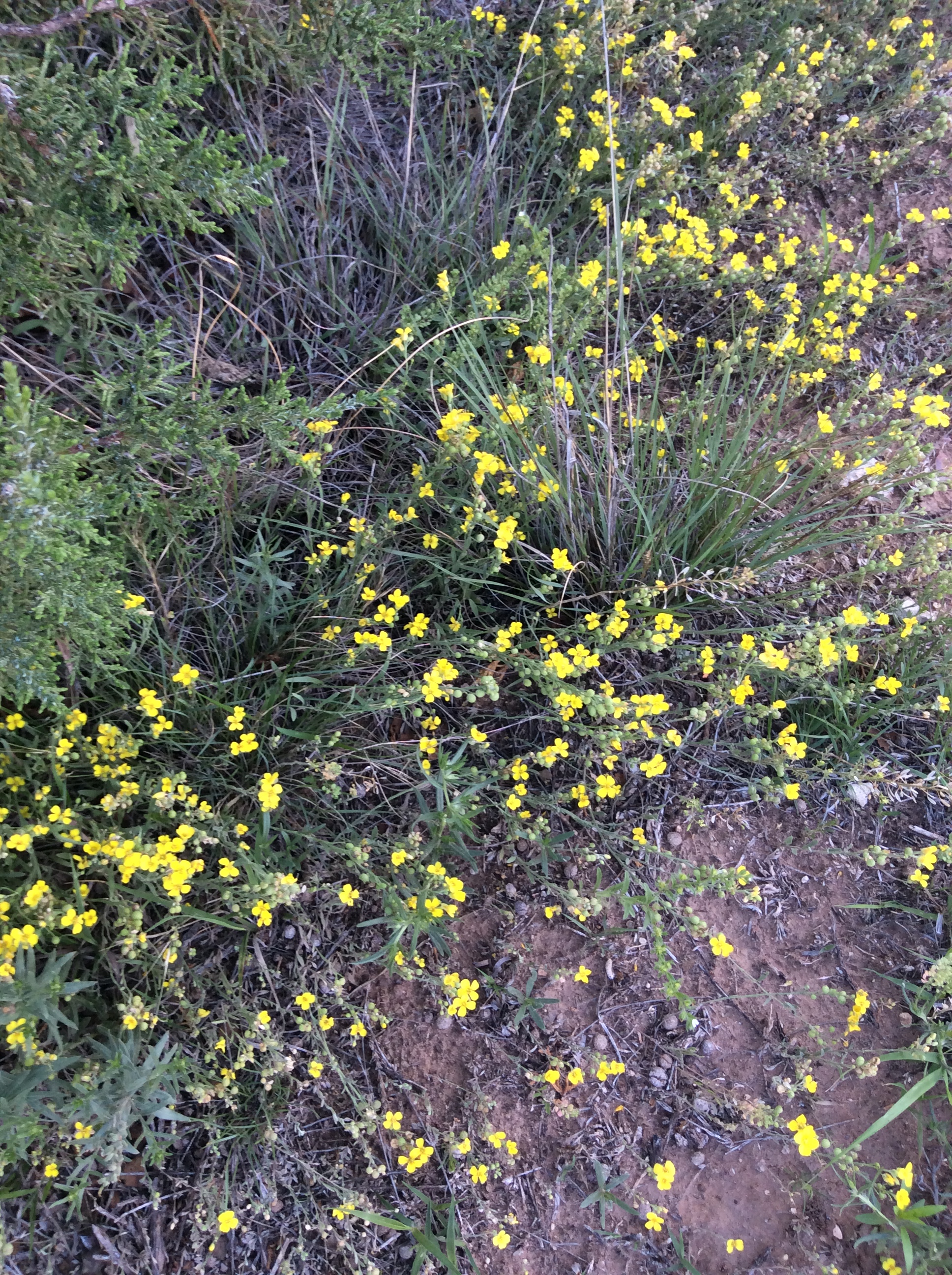
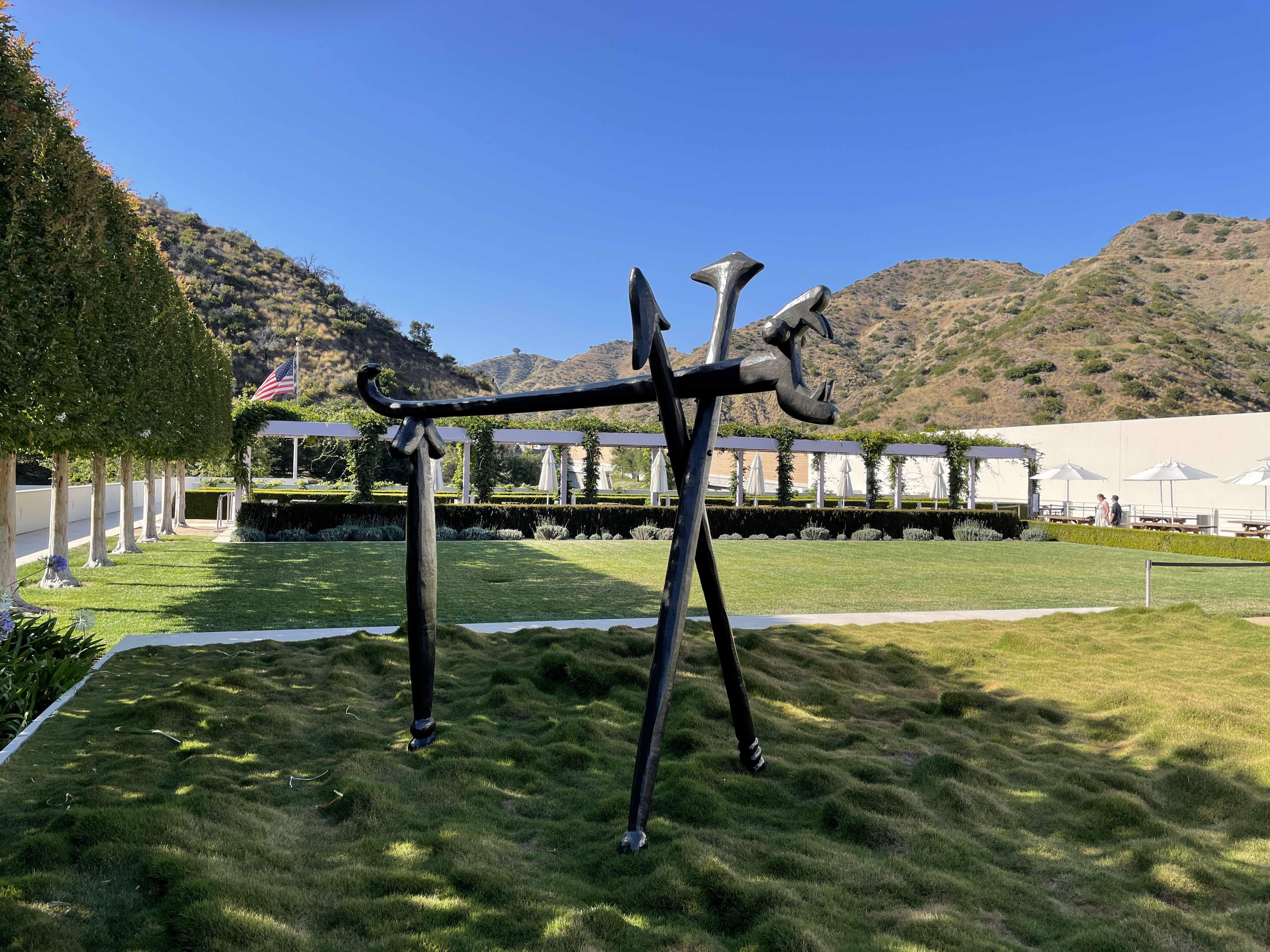
Addendum:  My mother loved horses and flowers.  When I look at the flowers around my house I think of my mother.  And, yes, I have horses.  The following photos are dedicated to my mother’s memory.


IMG_2230 (1)

IMG_2866

IMG_2373

IMG_2318

IMG_2304

SAM_0947

My mother’s mother and father.


Blood Quantum: A Poem for Our Time


My grandson cuts himself into 16 equal pieces:

4/16 Urhobo from Africa

3/16 Spanish from Spain

4/16 European–two Swiss German great, great-grandfathers

(Werth and Kaiser), Irish, English and who knows what

3/16 Mexican–whatever mixtures that may be

2/16 Navaho


Who am I? What am I?

Who are you? What are you?

Do we really know?

Who sets the rules?

white men

black

Indian

Native American

Irish

English

German

from where and for whom?


He looks Navaho:

-blue black straight hair

-pale brown skin

-obsidian eyes.

One four year old girl asks him,

“Are you American Indian?”

His six year old self says nothing.

She repeats,

“Are you American Indian?”

He says, “It’s complicated.”


The Navaho won’t claim him, too little blood.

He needs 1/4, not 1/8.

Caddy and Fort Sill Apache allow 1/16, not Navahos.

1/4 blood is for

-Sioux

-Cheyenne

-Kiowa

-Navaho

1/8 works for Comanche and Pawnee.

Some Cherokees only want a Cherokee ancestor.


But he is none of those.
Is he Navaho?

Is he white?

The old South goes by the one drop rule:

one drop of Negro…

Is a person with 99/100 per cent white

and 1/100 black, black?

Who says?

Kids at school ask, “What are you?”

He tells them.

They say, “You’re lying.”


I only know specifically about two ancestors,

the Swiss Germans.

Another great grandfather disappeared during the Civil War.

I don’t even know his name.

Who am I?

Who are you?

I think I’ll get a DNA test.
Then I’ll know how many pieces I need to cut myself into.


Note:  This was originally published in my book “On the Rim of Wonder”.  I had a cousin send me 75 pages of ancestry information.  I looked up more myself.  That one great grandfather remains a mystery.  I had my DNA done.  It did not match what I expected from the ancestry work.

Blood quantum is the term the US government used to determine whether a person would be qualified as an Indian.  Now many Indian Nations use it to decide who can be on the tribal rolls and who cannot.


Make America Great Again?


Although few argue with the spirit of the Declaration of Independence, few look long and hard at the history and life then.  Unless you owned land, were male, were white, nothing for you.  Most of the founding fathers still held, tacitly or openly, to the old English class system.  Many owned slaves even when they claimed to dislike it.  Throughout United States history,  a small group of high status, white men have controlled the country.

More recently during WWII, we imprisoned Japanese Americans but not Germans.  The Japanese were often seen as ruthless, barbaric while the Aryan German remained quite close to the idealized, white, patriotic American ideal.

Today when people read about white men murdering large numbers of people, the news and the comments indicate that most think these people are abnormal, not like the rest of us.  This is a country fascinated with hate.  For many in the last couple of years this has taken the form of hatred of outsiders, refugees, dark people.  This has brought a new wave of tough on crime mentality.  People who think differently, more welcoming, more critical, are seen as subversive, anti-patriotic.  Much of the public sees certain groups, e.g. black men, as criminals, wicked, violent, groups to be feared.  Any research contrary to these prevalent views tends to be hidden, pushed away, unreported.  One example is a report by Homeland Security in 2009 which warned law enforcement agencies about the dangers of right-wing conservatism.  Certain conservative groups demanded the withdrawal of this report and succeeded.

Certain Christian groups push for a return to Christian values not realizing perhaps the origin of some of these values.  The word, evil, provides an excellent example.  This word goes back to Saint Augustine who defined it as a refusal to act morally, a refusal to do good.  While Hitler, the Holocaust, and Nazism have been associated with evil, interestingly fascism has not. Franco in Spain escaped the evil label probably because the Vatican, the US government, and US businesses supported him.  The word evil is rarely used to describe state sanctioned violence as in the US support of the Shah of Iran, Pinochet in Chile.  It appears we pick and choose the evil label to suit certain purposes.  Powerful groups are rarely labeled evil and therefore do not become targets of general hatred.

Fear relates to hate.  People hate what they fear.  Some media play on these fears to incite hate to suit their own goals and philosophies.  Certain talk radio hosts use their rants to further their goals in this manner.  They want people who do not think like they do to incite fear which leads to hate. These media can easily inflame the public fears about crime, refugees, drug usage.  They also rely on the often hidden preexisting prejudices that many deny they have, e.g. racism, fear of outsiders, fear of differences.

The ultimate end of these prejudices is war.  The often popular belief remains:  justice and goodness can be attained via violence, force.  We are good and everyone against us is evil and therefore to be hated.  The war vocabulary remains part of common everyday language:  War on Women, Drug War, War on Poverty.  Our language remains full of these types of communications.  It expresses a common worldview. Problems can be solved by force.  This continues in spite of enormous evidence that it does not work.  The War on Drugs never attained success, our economic and social problems remain.  Even efforts at containment frequently fail, e.g. the current opioid epidemic.  Many schools currently hire police officers and sometimes students are arrested for relatively minor infractions.  Often those arrested are students with certain types of disabilities or from certain minority groups.  Our prison population has increased by 500% over the last thirty years with the increased imprisonment of women double that of men, mainly due to drug related crimes.  Obviously, these “wars” are failing. Because of the “cult” of individuality and freedom, people in the US often see these failures as the result of individuals acting irresponsibly rather than societal failures.  Although these factors do not force an individual to behave in certain ways, they do affect a person’s psychological makeup, opportunities for betterment, and mental and physical health.

We have become a society possessed with fear and hatred caused by a profound mistrust of others.  Contrary to what many wish to believe this nation has a long history of obsession with perceived enemies and evil.  Some see threats everywhere, liberals hate conservatives and vice versa, some fear and hate those with different sexual orientations, the list seems endless.  Many see the solution as one form of war or another either through violence, incarceration, or laws.

Mass rallies on both sides further incite this sort of mass mentality.  History remains full of disastrous consequences of such behavior.  The Nazis came to power this way and killed millions of Jews via such strategies.  The genocide in Rwanda is another example. We see the perpetrators of such as monsters, but common, ordinary men and women made the Holocaust possible.  Good, decent people engage in horrible crimes.  The Ku Klux Klan continues with membership of otherwise ordinary, upstanding citizens. Doctors in Nazi Germany rationalized their help with exterminations and experimentations as part of German nationalism to save their country.

In the US racism is not the sole purview of white bigots.  Just recently someone commented to me about being colorblind.  Such is a form of denial.  When people see another person, they notice how they look, eyes, height, etc.  Most white people in the US today never choose to recall, if alive then, and acknowledge, if not,  the millions of black people (mostly men) lynched, most of whom were raped, tortured and castrated before they were killed.  When someone commits these types of atrocities today, we often refer to him as a monster.  We conveniently forget the long history of atrocities against all people of color in this country, atrocities deemed perfectly normal at the time.

As noted in the examples above, much of the violence and hatred and injustice currently seen in this country has a long history.  We have not been able to even come close to the ideals espoused in the Declaration of Independence. Instead of talking about Making American Great Again, we need to change the conversation into a future vision of making the US like the vision detailed in this document, a place where justice and the hope of equality can be attained by all, regardless of color, ethnicity, gender, sexual preference, religion.


Note:  Recommended readings include “Considering Hate” by Kay Whitlock and Michael Bronski and “White Trash:  the 400-Year Untold History of Class in America” by Nancy Isenberg.


Is This How Patriarchy Began? by Carol P Christ


Is violence more likely when men spend a lot of time away from women and children?

Carol P. Christ's avatarFeminism and Religion

In my widely read blog and academic essay offering a new definition of patriarchy, I argued that patriarchy is a system of male dominance that arose at the intersection of the control of female sexuality, private property, and war. In it, bracketed the question of how patriarchy began. Today I want to share some thoughts provoked by a short paragraph in Harald Haarmann’s ground-breaking Roots of Ancient Greek Civilization. Haarmann briefly mentions (but does not discuss) the hypothesis that patriarchy arose among the steppe pastoralists as a result of conflicts over grazing lands. As these conflicts became increasingly violent, patriarchal warriors assumed clan leadership in order to protect animal herds, grazing lands, and the women and children of the clan.

View original post 808 more words

A Tribute to My Dad, Doyle Lightle


Dad lived his entire life, 90 years, on the farm which my great grandfather, Gottlieb Werth, homesteaded in the middle 1800s.  Gottlieb Werth came to the United States from Switzerland when he was 18.  Even though Dad lived in the same place all his life, he liked road trips.  The first occurred when I was three.  He drove us all the way from Northwest Missouri to Monterey, Mexico.  I still have photos of us wading in the Gulf in Texas before we crossed into Mexico.  Thereafter, we almost never missed at least one road trip a year between wheat harvest and the start of school.  Sometimes instead of a summer trip we took one around Christmas, like the year we went to Florida when I was in elementary school.  I skipped school a couple of weeks, took my work along, and came home ahead because the flu, which I missed, put everything behind.

By the time I was six, I had probably covered half the continental United States and, of course, been to Mexico.  I do not remember some of those first trips but the later ones I remember well, like the summer we spent in Crested Butte, Colorado, when it was still a mining town, and another in Placerville, Colorado, down the road from Telluride.  Then it was just a nowhere place, filled with the Victorian houses of its mining heyday.  Dad joked later that he should have bought one of those houses when it was cheap.

One year, the year between my junior and senior year in high school, we took a one month trip and drove 6,000 miles, from home to the Black Hills, where we had relatives, to Vancouver, to Vancouver Island and then to Victoria.  We visited every national park along the way,  Grand Tetons, Yellowstone, Glacier, Olympic, then drove up the Columbia and cut back across Rocky Mountain National Park and through Colorado. On an earlier trip we went to every park in Utah and Northern Arizona and Mesa Verde.

Dad’s interest in and curiosity about everything seemed endless.  He tried the latest agricultural methods in his farming, was an avid conservationist, wanted to check everything out on these trips, talked to people about what they were doing.  At home he read National Geographic and Scientific American and endless books.

Because of these trips, his sense of wonder, his propensity for intellectual activity, my friends in college were always shocked to find out he was a farmer.  They often thought, originally, that he was a college professor.

He moved into this house where I grew up when he was ten.  After Mom died, Dad and I were at her grave on Memorial Day when a man came up and starting talking with Dad.  I learned that the building in the foreground of this photo, before it was used for livestock and storage, was used for dancing during the Depression. The sheriff would send out deputies to make sure no illegal alcohol was consumed. I took this photo four years ago when I took a trip back.

12193406_10204105678156113_6043720938154804167_n

There used to be woods to the right of this photo but someone bought the land and bulldozed down all the huge oak trees.  The tall douglas fir tree in the middle was tiny when we brought it home on one of our trips out West.

I will forever be thankful to Dad for instilling in me a love of exploration, wonder, and curiosity.


Sunday Poem–A Life


IMG_1645

I wrote the first blog post about this in February, a second a few weeks later.  The following poem I wrote a week ago but never posted:  too upset, too sad, too filled with regrets I could have no way fixed because I did not even know all the story.  He remained unconscious for two months from late January until March 22.  It seems strange that the memories of a life I lived so long ago, mostly forgotten, could surge into so many waking moments now years later.  Life:  always filled with wonder, surprises.

yesterday we put his body in the ground

the wind blew through the trees

whispering green spring, beauty

yesterday we put his body in the ground

the man I loved, beautiful mahogany velvet

dazzled the world with his smile

yesterday we put his body in the ground

my daughter’s father, standing with family

some we had never seen before, worldwide

yesterday we put his body in the ground

watched a life flash by, slides from baby

to our life long ago, other lives and children

yesterday we put his body in the ground

family, friends, two of his children

a life struck down, too suddenly, too soon

In honor of the life of Kenneth A. Mowoe

You will not be forgotten, your memory lives on with me, your family, your children and grandchildren, your friends.  Peace.  Love.

IMG_2666

Springing Forward with the Wicked Witch by Barbara Ardinger


A story for our time!!!

Barbara Ardinger's avatarFeminism and Religion

Barbara ArdingerEl Presidente was enlarging his war against his citizens. This meant the roads were more crowded than before with refugees fleeing the capital city for safety among the farmers on the plains and up in the hills. Some of these refugees arrived, of course, at the farm of the wicked witch.

Refugees

Whenever a family arrived, the witch would put on her wickedest face and voice (she’d been practicing) and tell the children she was going to roast them and eat them with mashed potatoes and baby gravy. The children believed her for about a minute and a half, whereas their parents just smiled as each family was taken in hand by the senior refugees and led to rooms where there were new beds. The tenured refugees had (with the witch’s permission) taken charge and somehow found enough lumber to build two new rooms (lean-tos) at the side of the house…

View original post 988 more words

I Have a Dream


Fifth-three years ago today Martin Luther King, Jr. gave one of the most inspiring and telling speeches ever given by a person from this country.  Today I listened to a young man, Patrick Miller, a middle school teacher here in Amarillo, give this same speech totally from memory with no notes.  I feel saddened at the extent to which King’s speech still rings true, that although we have progressed tremendously, people of African descent and others of color still experience prejudice at so many levels in their lives, frequently on a daily basis.

Here I offer other quotes from Martin Luther King, Jr.:

Life’s most persistent and urgent questions is, “What are you doing for others?”

We must develop and maintain the capacity to forgive.  He who is devoid of the power to forgive is devoid of the power to love.  There is some good in the worst of us and some evil in the best of us.  When we discover this, we are less prone to hate our enemies.

The ultimate tragedy is not the oppression and cruelty by the bad people but the silence over that by the good people.  

Naked and Unafraid: Mahasveta Devi (1926-2016)


A powerful story of the power of woman and in this case of “right”.

Vibha Shetiya's avatarFeminism and Religion

03devi-obit-master768 Photo credit: The New York Times

Mahasveta Devi died last month at the age of 90 in Kolkata, India. A widely acclaimed Bengali writer, she identified as an activist first, clearly evident in her meticulously researched “fiction.” Most of her stories champion the cause of those living on the margins of society, particularly the Adivasis or original inhabitants of India; poor, unemployed and itinerant, they traditionally subsisted off the land, and continue to struggle against exploitative upper caste landowners.

I cannot claim to be an expert on Devi or her activism, but there is a story I read a few years ago, which never fails to haunt me, whether because of the rawness with which she describes the harsh reality faced by tribal people or because of what can be seen as the violent but ultimate triumph of its female protagonist, I cannot tell. Perhaps because of both, or because…

View original post 1,120 more words