Black Bean and Corn Chili


Some probably would not call this a real chili. Nevertheless, it is healthy and vegan unless you garnish it with shredded cheese.

1 cup chopped purple onion

3 garlic cloves, coarsely chopped

Olive oil

2 cups black beans–either use canned or cook your own. I prefer to cook my own.

I can corn, drained

1/2 red bell pepper, seeded and chopped

1 cup canned salsa–I used one that was fine and medium heat. Add more depending on your preferred texture for chili.

1-2 Tablespoons berbere or chili powder. I used berbere.

Saute the onion and garlic in olive oil. Add bell peppers and saute until tender. Add the black beans and corn. Stir and add salsa and spices. Heat through and serve with condiments and shredded cheese of your choice.

Weekend Trip to Northern Baja


This past weekend I headed to Mexicali in Northern Baja to visit the town of San Felipe and see a new development about an hour south of there. San Felipe is a small fishing town of approximately 20,000 people where there are no fast food restaurants and no Starbucks. Excellent restaurants and good coffee can be found but not at the places mentioned above. They do not exist there. The town of San Felipe has a long boardwalk right along the Sea of Cortez with restaurants across the street. This past weekend they were holding a ceviche contest and fiesta on a cross street. This is shrimp season and the city is known for its shrimp. Unlike the Pacific side of Baja, there is no large commercial fishing allowed in this part of the Sea of Cortez because it contains many endangered fish and the place where whales come to mate. Locals can fish and you see smaller fishing and shrimp boats in the sea. Not only is the Sea of Cortez protected but so are the plants and animals in the desert. Certain plants, like ironwood trees, are ancient and rare. If you want to build a road, it has to be around them. Many other species are also protected.

Unlike the Pacific side of Baja, the water in San Felipe is safe to drink from the tap. It comes from an aquifer up in the mountains to the west.

We spent most of Sunday at the new green development (it is totally off grid) called Rancho Costa Verde. Solar is used for power and each house has a large underground water tank where water comes from an aquifer up in the mountains. This is a newer development so although many of the lots are already sold, except for beachfront, many houses are just now under construction.

This is a very modern beachfront property with marble floors and a glass wall facing the Sea of Cortez.

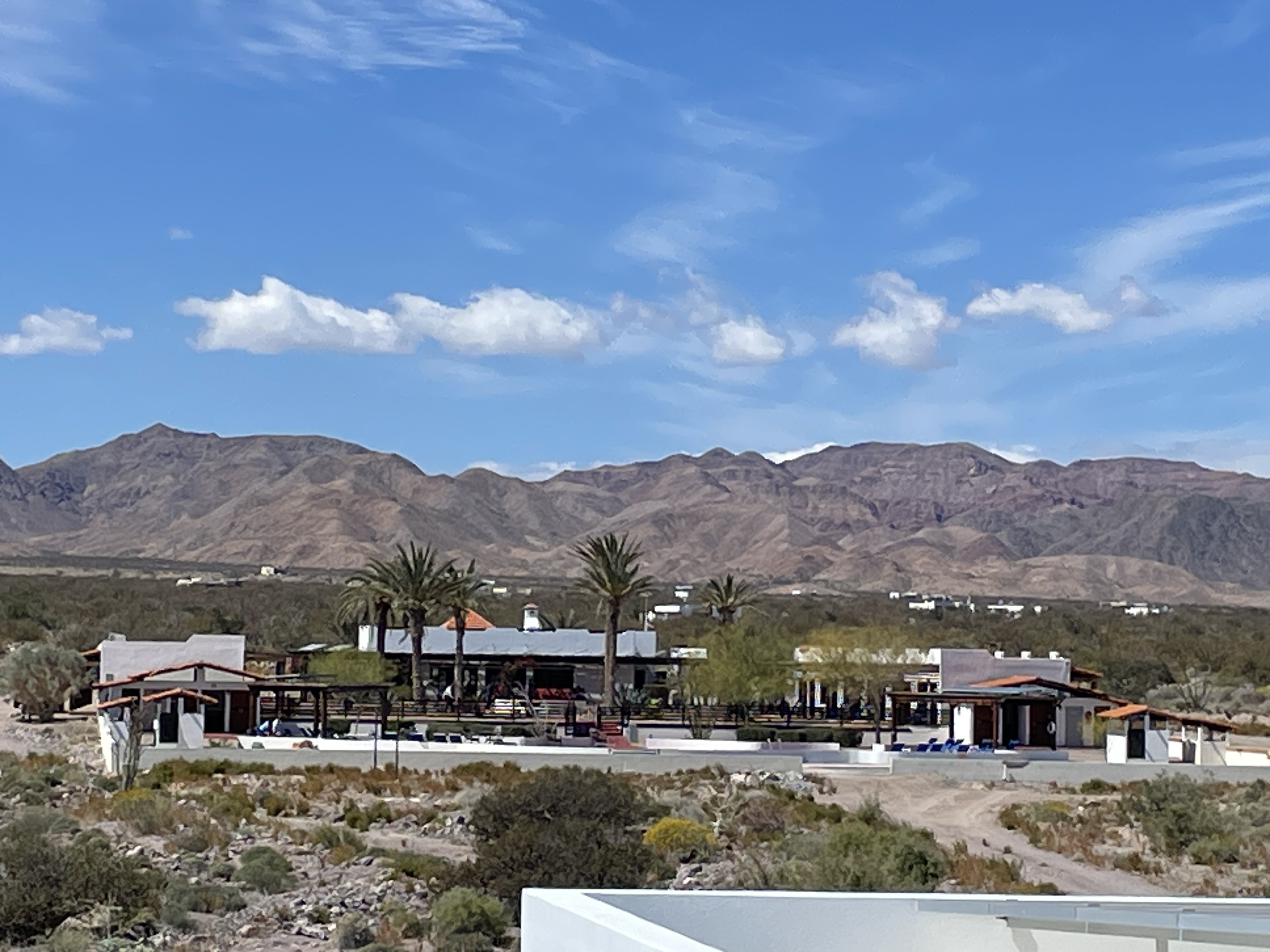
This photo is of the clubhouse and looking the opposite direction toward the mountains. Here I am standing on the roof of the house in the previous photo.

Here I am in front of the pool in front of the clubhouse facing the Sea of Cortez. The house in the first picture is on the left in the distance.

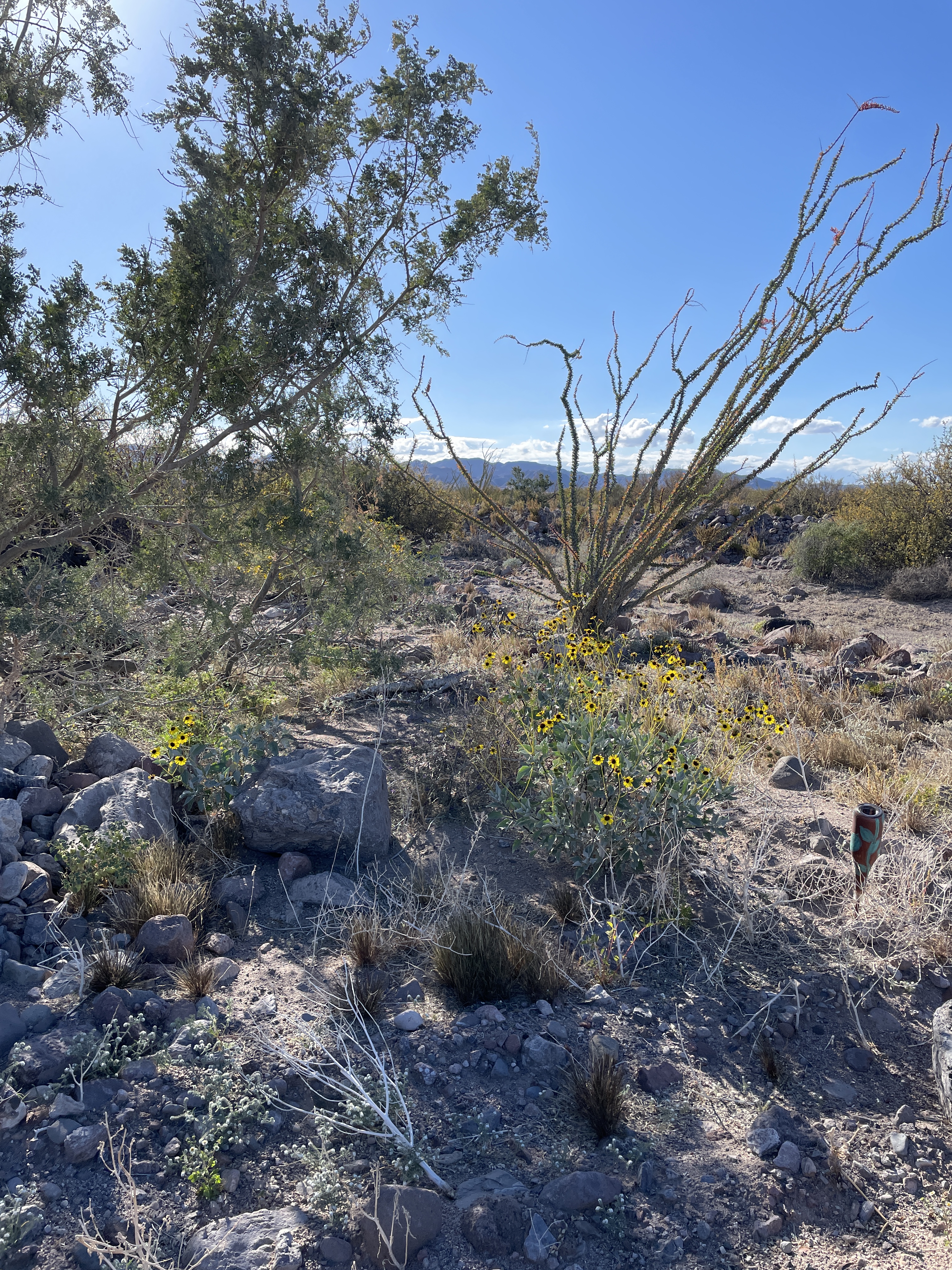
This is desert land where even though it can get hot in summer, the sea breeze keeps it relatively cool.

The plant on the right is ocotillo which is protected. If you are building a house and it is in the way, you have to move it elsewhere. You cannot just get rid of it.

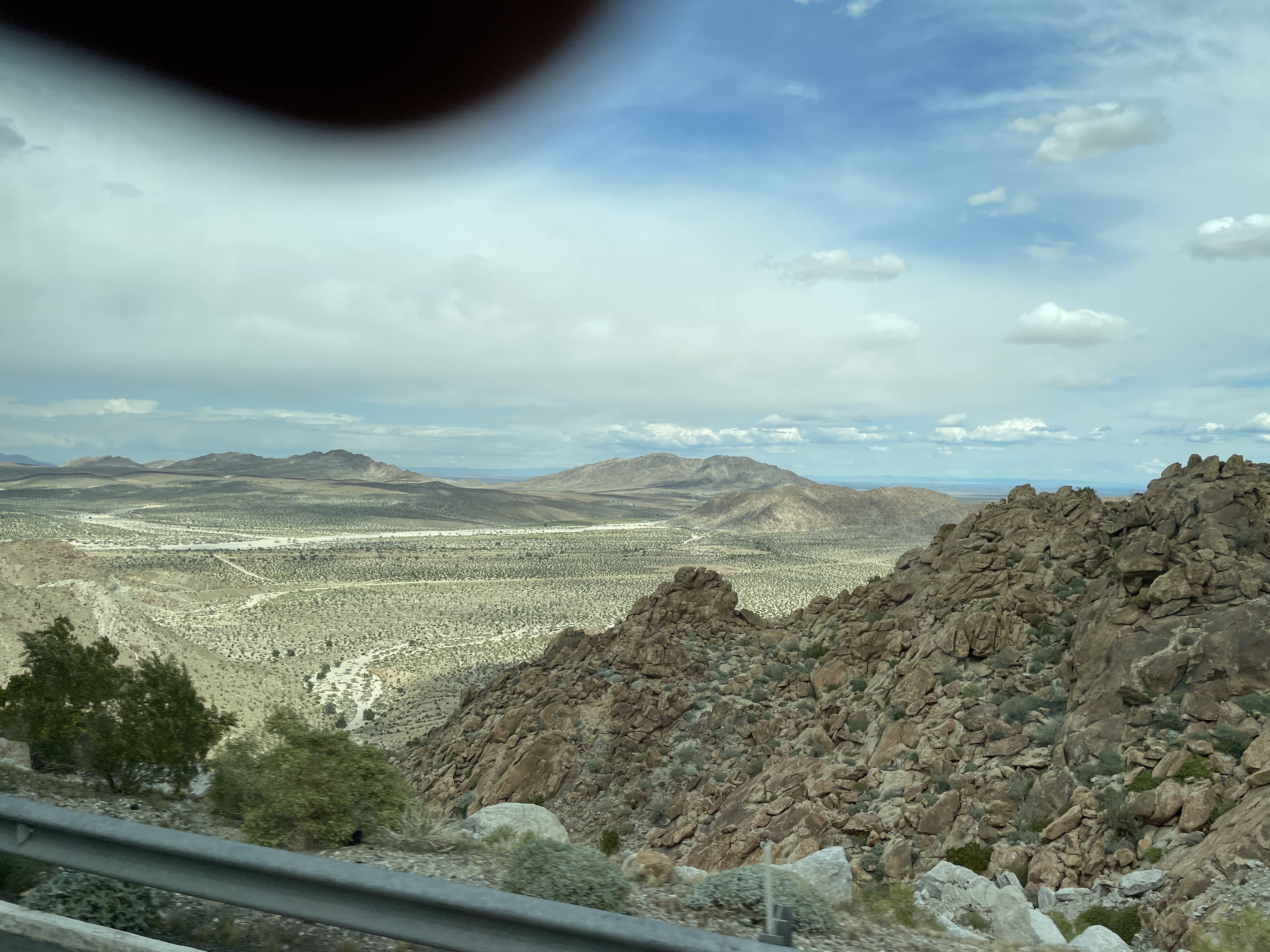
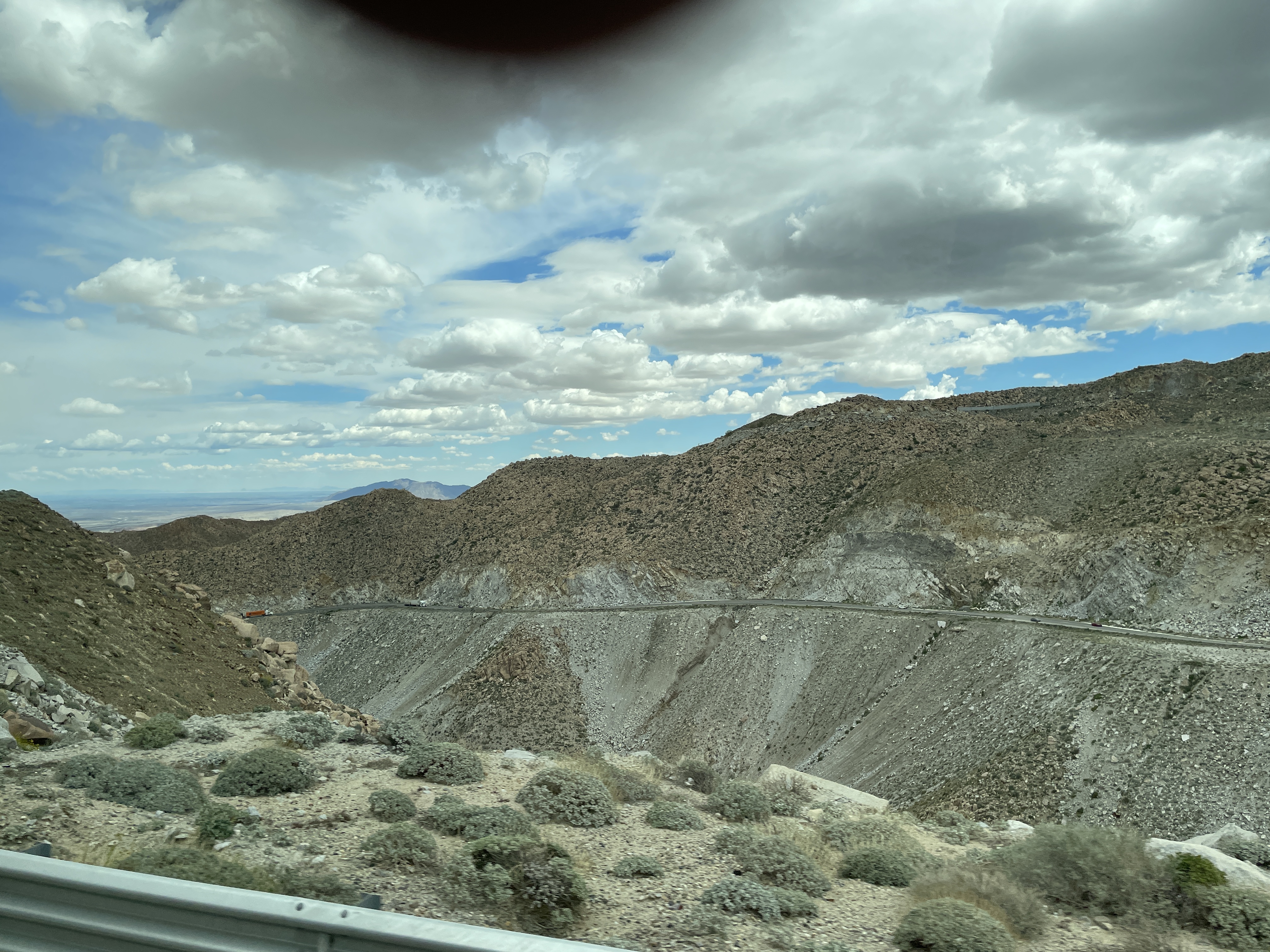
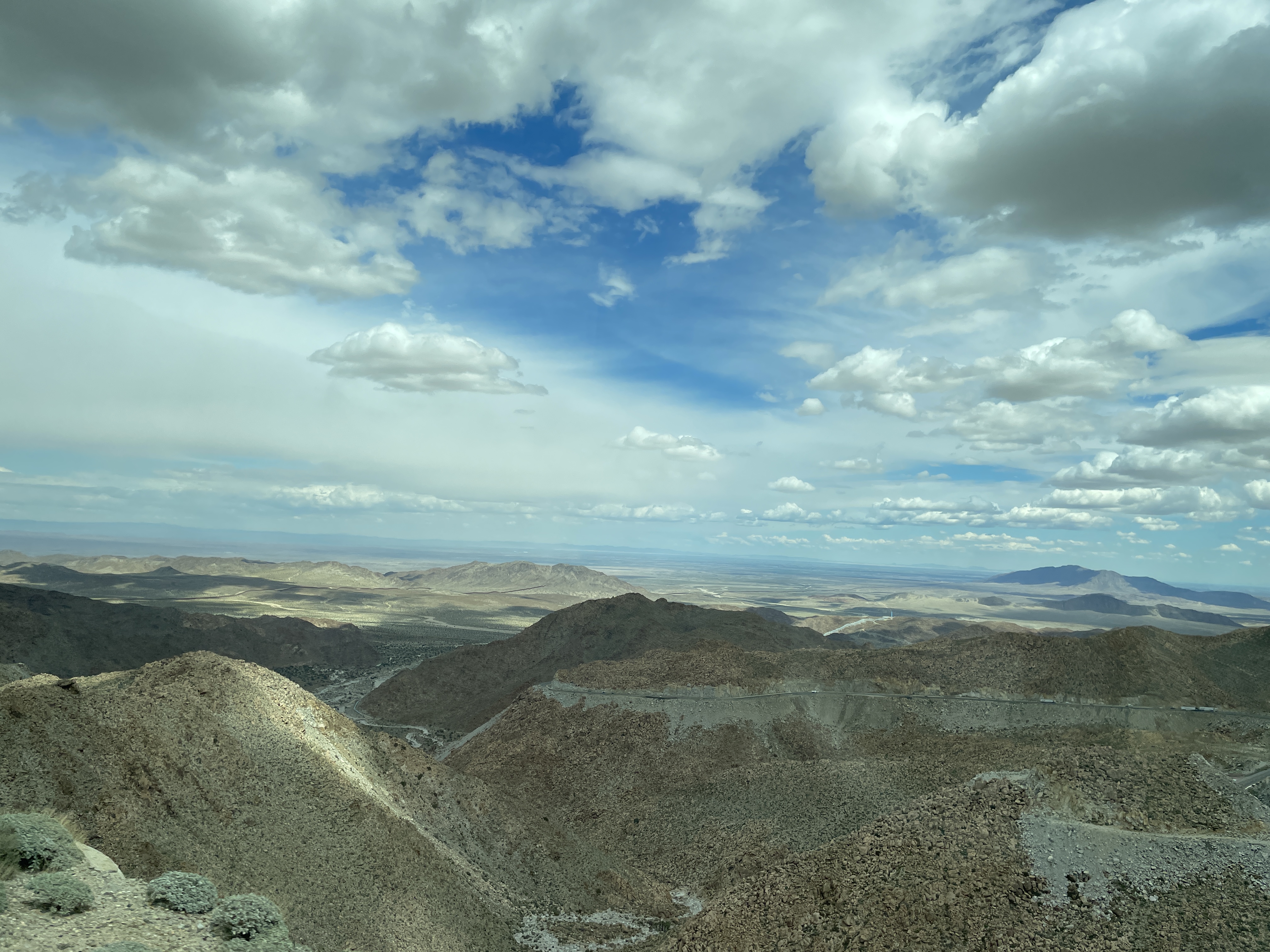
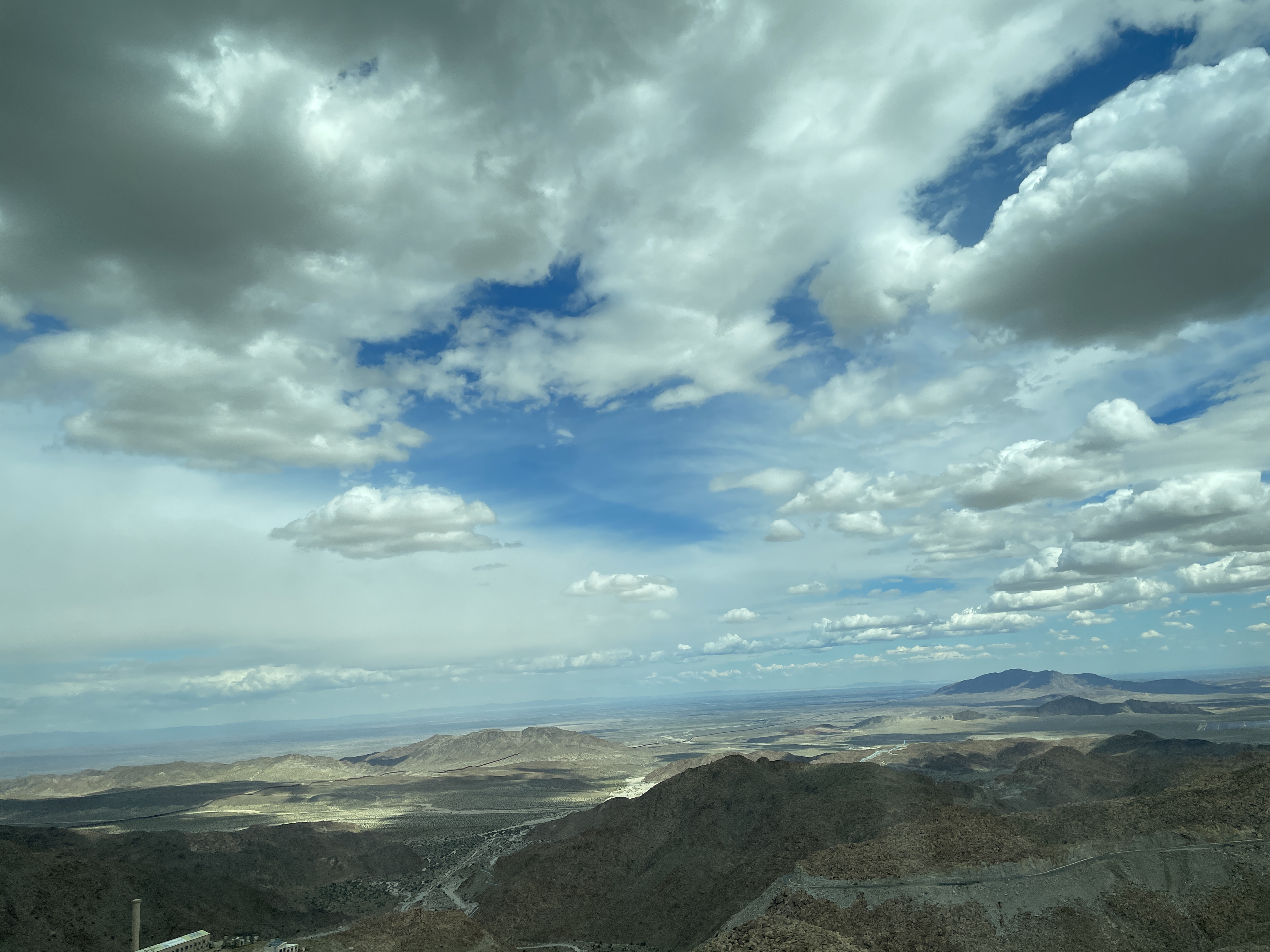
Monday was a big adventure trying to cross the border. We arrived in Mexicali only to discover no busses could cross the border there so we had to take the highway to Tijuana and cross there. To do this you must cross a mountain pass. What a feat of engineering building this road must have been. It is quite incredible and as you climb higher and higher the views go on forever into the far distance. The following are photos I took from the bus window as we drove higher and higher.

These mountains are made of rocks of all sizes that are just stacked on top of each other. Here only these small blue-green plants seem to thrive.

In this photo you can see the highway where we had just traversed.

Here you can see how at this height the mountains are nothing but stacked rocks of all sizes.

After the summit as we went down toward the town of Tecate, it started to rain and it rained most of the way to Tijuana. The Pacific side of this part of Baja gets rain and it was lush green this time of year while the Sea of Cortex side is desert.

I do not recommend crossing at Tijuana in a large bus. Even though we had sent all our passport information in advance, they made the bus sit there for nearly an hour and wait. Meanwhile those on foot and in cars were just zooming along at a rather rapid pace. Then we had to get out of the bus with all our luggage and everything and wait more. I crossed the border (not in a bus) last April and it did not take long at all. I have heard that Tijuana is the busiest port of entry from one country to another in the world but have not verified that. It certainly was busy yesterday.

Book 11, 2024: ” Frida’s Fiestas: Recipes and Reminiscences of Life with Frida Kahlo”


The author of this book, Guadelupe Rivera, is the daughter of Diego Rivera by the woman to whom he was married before he married Frida. Diego went on a trip to Russia and his then wife, the author’s mother, became attached to her previous boyfriend, the poet Jorge Cuesta. She and Diego divorced and then he married Frida. Eventually, the two couples became friendly and at one point they all lived in the same house.

Thirteen years after Diego married Frida, the author moved in with them. This book details her life living with Frida and her father, how Frida learned to cook, how she decorated the Blue House in Coyoacan, the fiestas, the food, the adventures. The book includes photos and recipes of Frida and Diego’s favorite foods, photos of the house, and places the author visited with Frida. It is also a story of many of Mexico’s famous people at the time.

I own several books about Frida but this one is the most revealing and intimate in many ways. If you like Mexican food and find the life and art of Frida and Diego of interest, read this book.

Note: It was also written by the journalist Pierre Marie-Colle with photos by Ignacio Urquiza.

Baja Trip-7: Tres Mujeres Winery


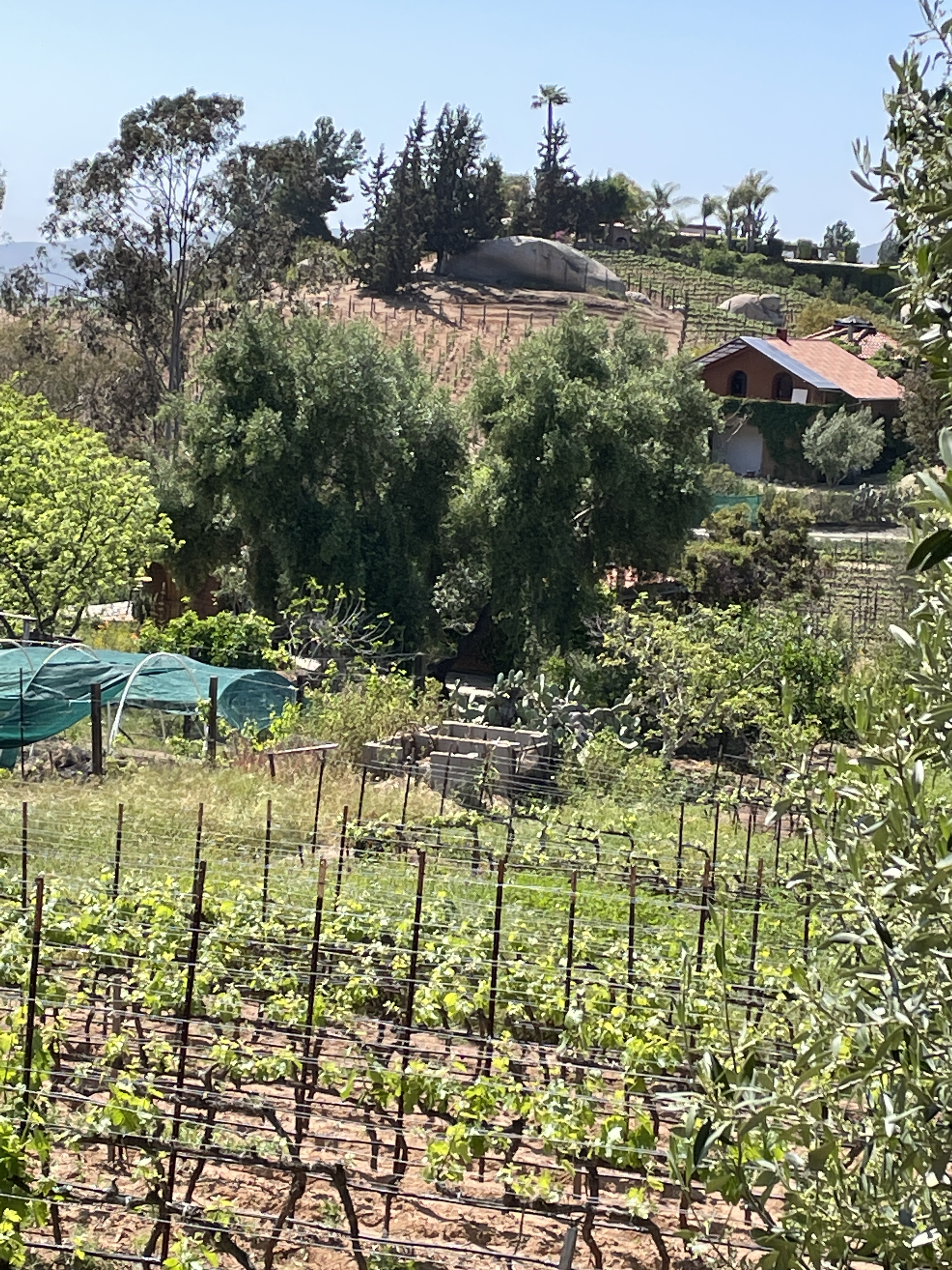
Originally started by three women–see the name, this woman is the only one of the three left as owner. She said she has been doing this for 20 years. The vineyards keep healthy without the use of toxic herbicides or pesticides. She says the breezes from the ocean help with keeping the vines healthy. She also has olive trees and gardens and a small restaurant–outside. The vegetables, flowers, etc. used in the restaurant are grown there. Below is the salad we had for lunch.

Lunch under the trees.

Wine tasting underground. What you notice when you drink all natural wines is that at the bottom of the bottle there is usually a residue.

The path in and out of the tasting room.

Buildings and fences made of local stone and flowers everywhere.

Stones, some quite large, show up everywhere in this part of Valle de Guadalupe. Some buildings, restaurants, other wineries, houses are build around the rocks with rocks as part of the architecture. I took the following photos from Tres Mujeres.

A lot of Valle de Guadalupe reminded me of parts of New Mexico and also the rocky hills around Temecula, California.

Not only are there over 100 vineyards in this valley but also endless olive groves. Locally pressed olive oil can also be purchased at many of the wineries. The other specialty is cheese. We stopped at one shop, the Cremeria Los Globos where they specialized in many cheeses filled with chipotle, black pepper, you name it. Honey is also produced locally and for sale at many wineries. For the most part, everything is all natural.

Wandering the World–Food


My travels have not only enlightened me personally, but also enabled me to create recipes from my food adventures around the world. Due to the recommendations of friends and family worldwide, I created a cookbook/memoir with stories and recipes. Len Leatherwood, new President of the Story Circle Network, says, “This is a cookbook after my own heart, filled with a wide range of healthy recipes from several cultures that will add flavor, color, and variety to any table.” Jennifer Archer, award winning writer and editor elaborated further, “A feast for the senses…combines colorful stories, poems, and mouth-watering recipes that inspire readers to experience new places, new tastes…from Asia, Africa, Latin America, Scandinavia, and America.”

This would make a great Christmas present for foodies and people who want worldwide food adventures. It can be ordered online from: http://www.dreamcatcherbooks.com and go to Angel Books.

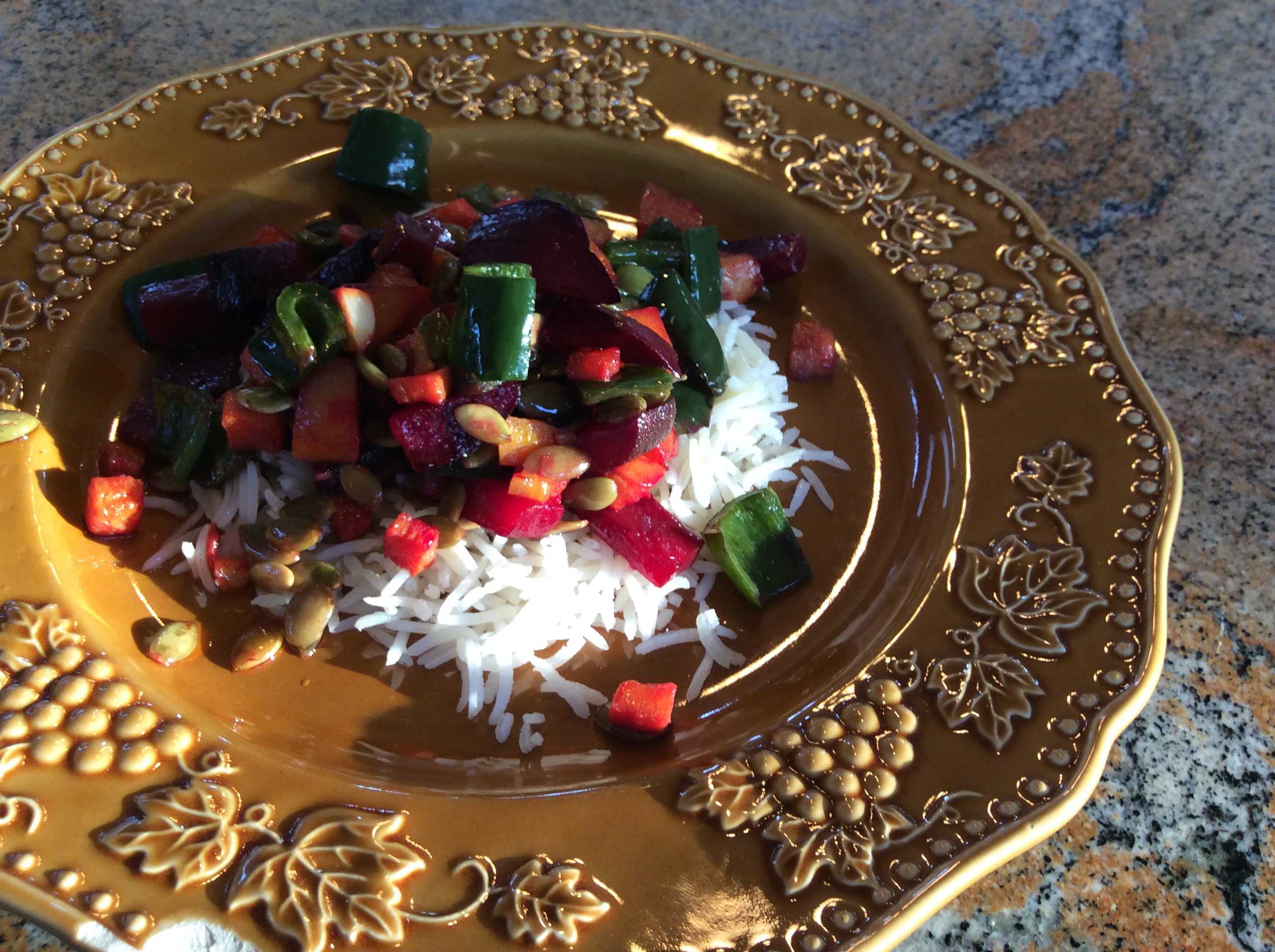
Recipes for the food in the photos above are included in the book. More food photos follow:

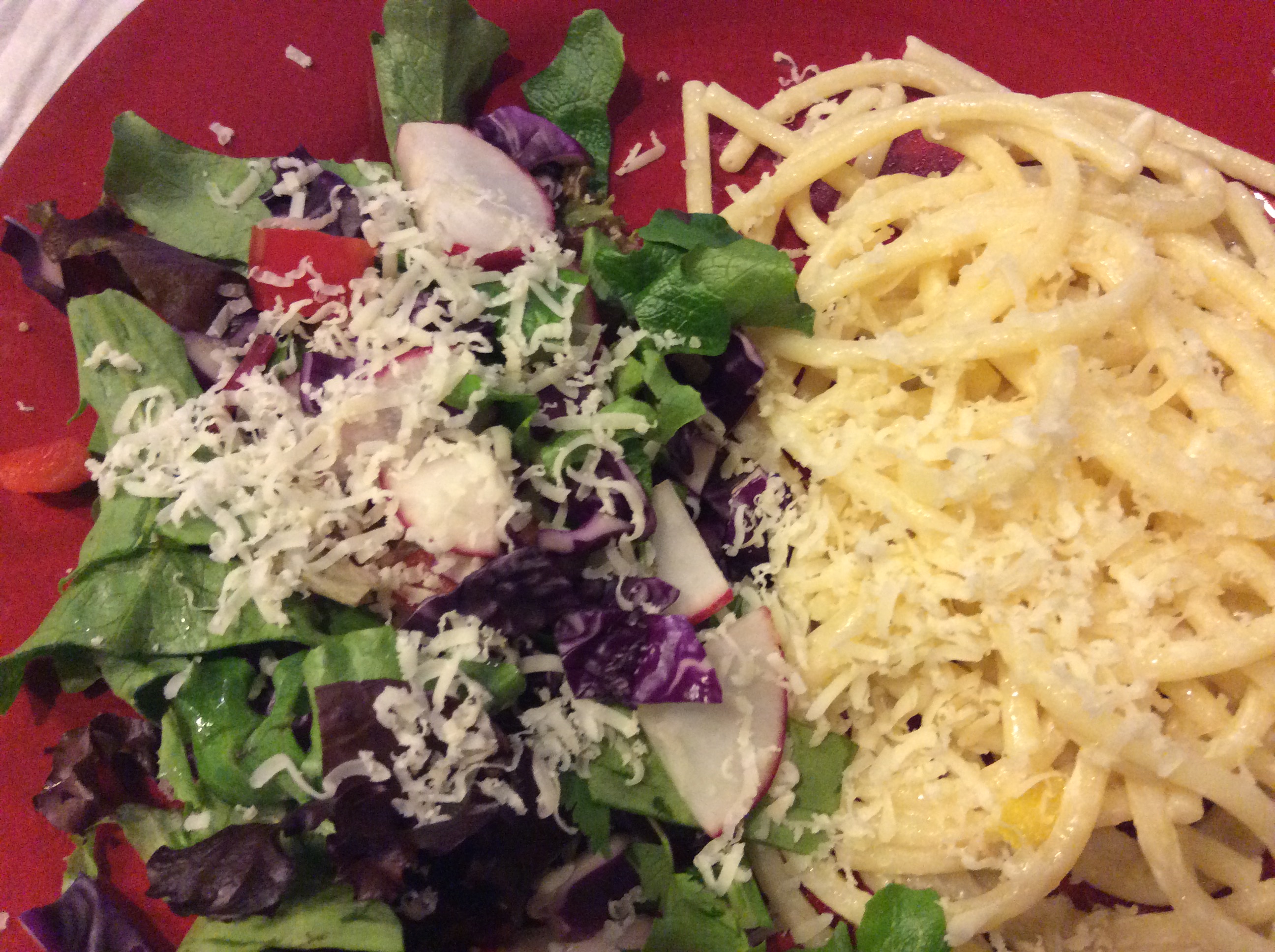
Lemon pasta with mixed salad topped with grated asiago cheese.

Many of the recipes feature berbere, a spice used in Ethiopian cooking. The book also includes four different recipes for salmon and many vegetarian and vegan recipes using spices from around the world.

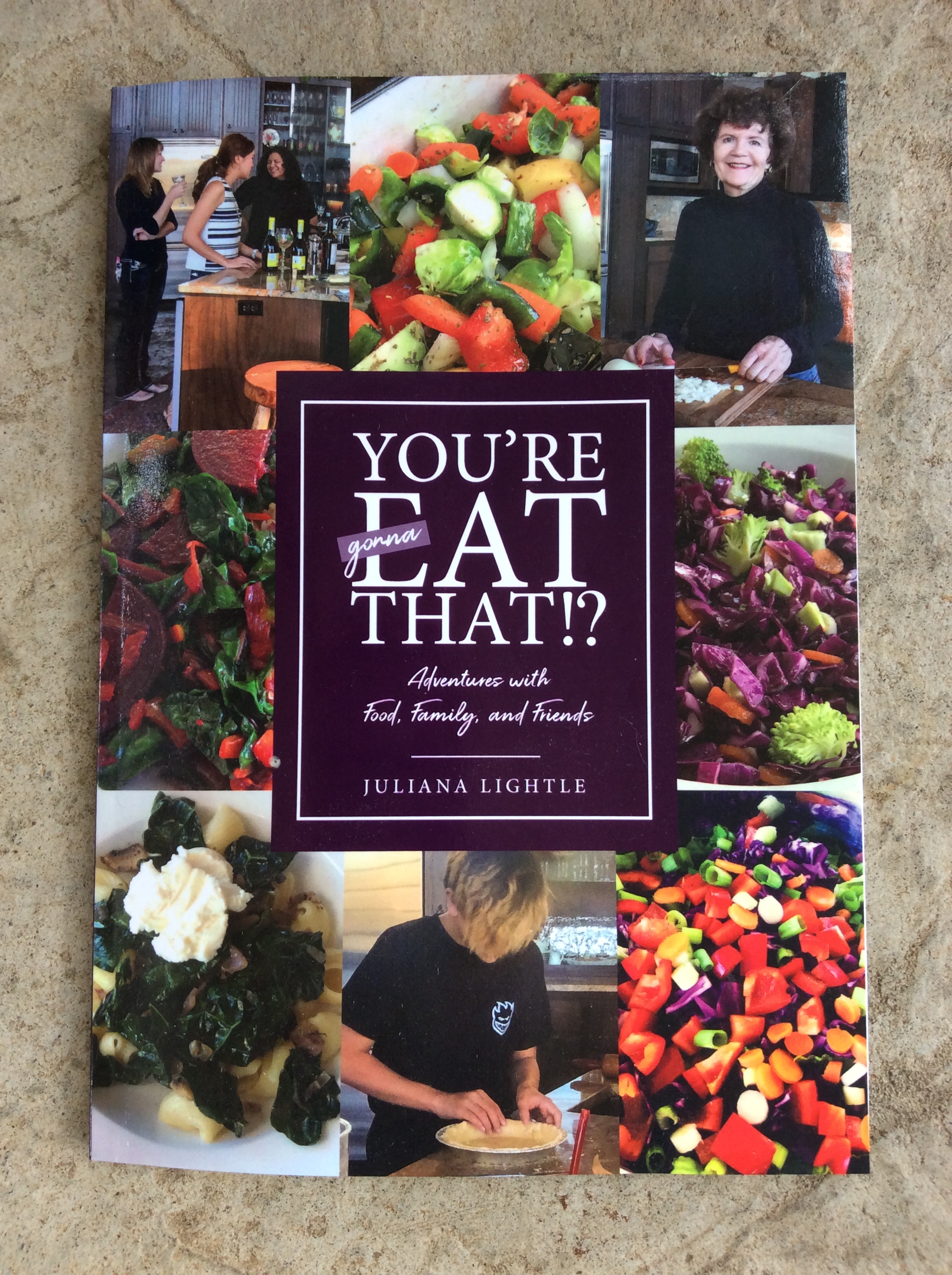
You’re Gonna Eat That!? Adventures with Food, Family, and Friends


This is my new book, published last month.  It is filled with stories, poems, and recipes–healthy food for vegans, vegetarians, pescatarians, and meat eaters with photos and detailed instructions. Currently, it can be purchased at Burrowing Owl bookstores in Canyon and Amarillo, Texas, and online at http://www.dreamcatcherbooks.com, Angel editions.

IMG_4660

Holiday Break Fun and Recipes


Because of my job, I am on the last day of a two week holiday break.  What a productive and fun time it has been.  Christmas Eve, my friends, my daughter, and my grandson came over.  For the first time ever, I made ham in a big Crock Pot and it melted in our mouths.  They requested I make my signature Refried Black Bean Cassserole and roasted vegetables so I did.  Other food requests included chocolate spiders for dessert–they are cookies.

Ham in the Crock Pot

Cover the bottom of the slow cooker with a 1/2 inch thick layer of brown or turbinado sugar mixed with 2-3 T tapioca. Place ham on top of the sugar.  Cover the top of the ham with preserves of your choice.  I used homemade pineapple/apricot preserves I had made several years previously.  Cook on low for 6-8 hours.  Note:  I used spiral sliced ham precooked.  You do not need to add any liquid, it will make its own.  If you wish, once some liquid has accumulated, you can periodically baste the ham.

SAM_1400

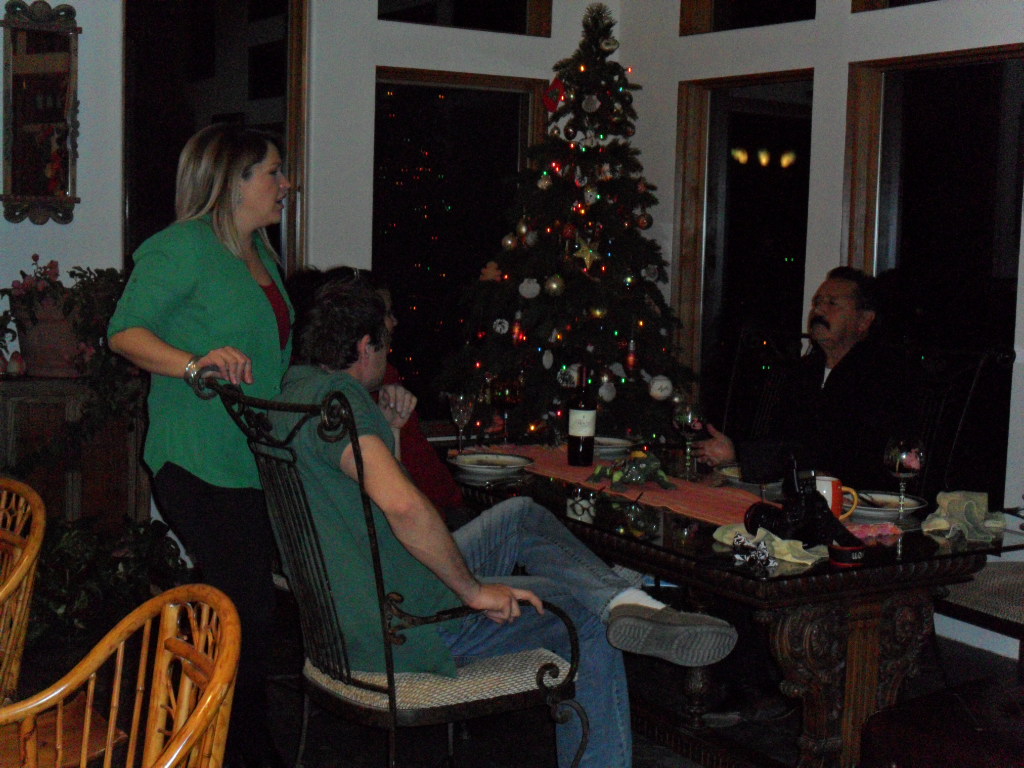
Christmas Eve dinner, eating and relaxing at the dinner table.

SAM_1398

At the bar before dinner while I am still cooking.

SAM_1405

Lingering and relaxing around the dinner table.

These same friends came over about 1 1/2 weeks later.  The special request that time was for another round of Refried Black Bean Casserole.   This is one of those recipes I invented but never measure anything, just make to taste.  This last time I decided to work at paying attention to what I used so I could share.  It may or may not be exactly what I do every time, but it is close.

Refried Black Bean Casserole

2 cans black beans drained

Enough olive oil to cover bottom of large skillet

1/2 red onion, finely chopped

3-4 Tablespoons organic ketchup

3 Tablespoons cumin–add or subtract to suit you taste

Tortillas

Grated white cheese–I usually use monterey jack

Heat oil in skillet and add onions.  Cook until translucent.  Add black beans, one can at a time.  Take a regular table fork and mash beans repeatedly until most of the beans are mashed–I like to leave some not totally mashed to add a bit of texture.  This is easier to do if you only add one can at a time.  Thoroughly mix beans and onions.  Add the cumin and ketchup and stir thoroughly and keep mixing until the mixture it thick and heated through.  Use a round slow cooker or casserole dish.  Oil bottom of dish and place one tortilla in bottom.  Place enough of the black bean mixture on top to cover the tortilla, then sprinkle the grated white cheese on top.  Repeat layers, ending with grated cheese.  You may use any kind of tortilla.  However, I prefer whole wheat flour, but anything works.  Heat through until cheese is melted.  You may also make the bean mixture a day in advance and refrigerate.  If you do this, it will take longer to heat the casserole.

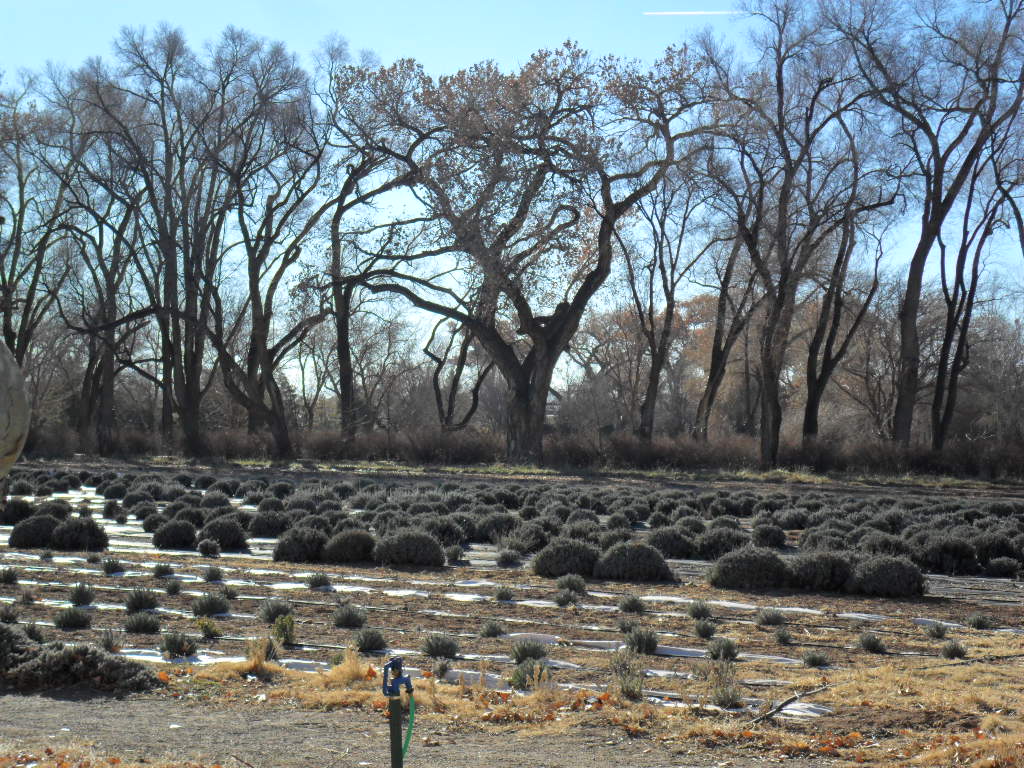
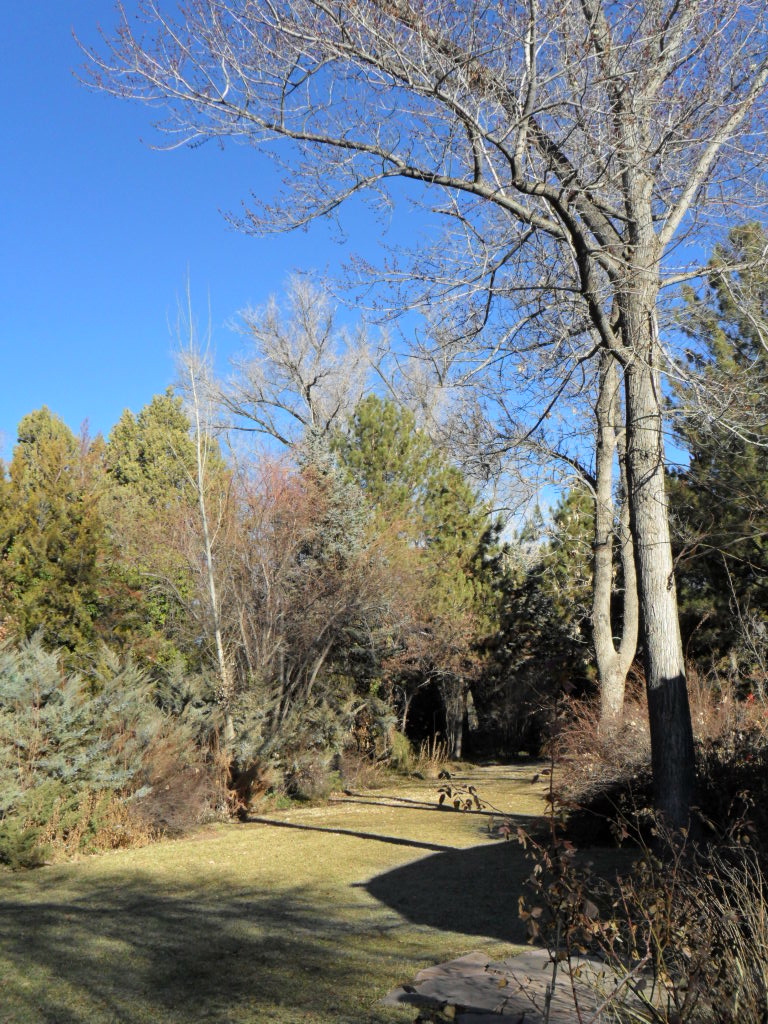
In between cooking adventures, one of my best friends and I decided to take a quick trip to Albuquerque, NM.  We visited our favorites places in Old Town, ate here and there when we felt like it, and stayed someplace new to both of us, Los Poblanos.  We loved this place.  It is located a bit north of downtown and Old Town, off of Rio Grande Blvd. by the river,  and includes 25 acres of lavender fields, a barn, a solar powered swimming pool–not open in the winter, a restaurant, a farm store, an herb garden, paths for strolling here and there, and an impressive tree lined entry drive.

SAM_1421Looking down the entry drive of Los Poblanos.
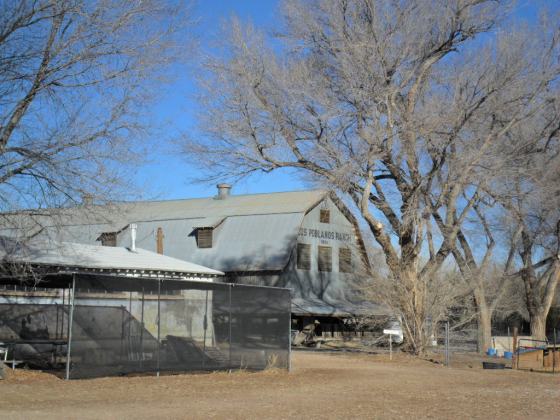
SAM_1418The barn and other out buildings.

SAM_1420

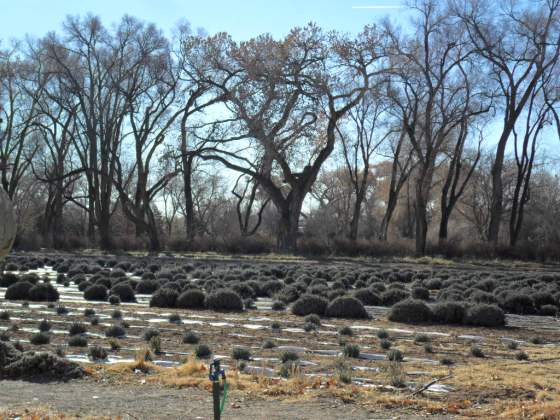
The lavender field.  They offer many lavender products in the Farm Store as well as balsamic vinegar, cookbooks, and various other items related to what they grow and organic farming and cooking.

SAM_1414

A view of the main house and restaurant area.
SAM_1422

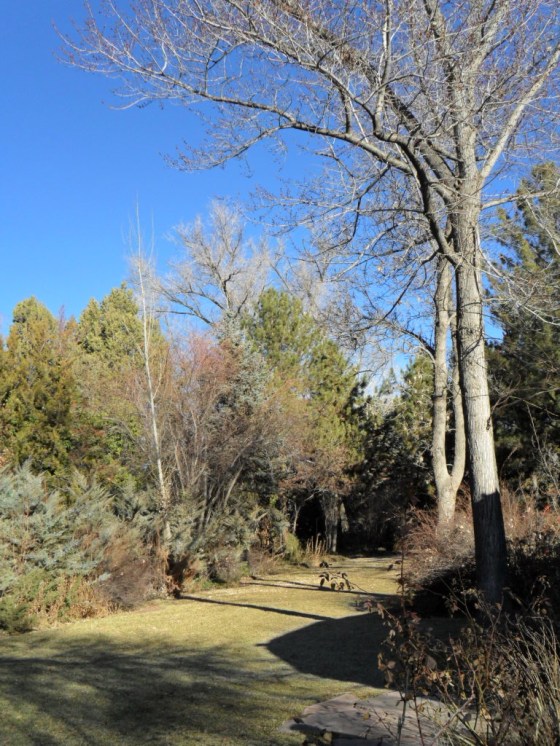
A view near one of the many walking paths.

SAM_1413

The fireplace in our room.

Although I have been to Old Town in Albuquerque many, many times, never before did I go inside the beautiful old church on the square.  They allow photography so I took a photo.  It was all decorated for Christmas with a nearly life sized nativity scene.

SAM_1425

Tomorrow I go back to work.  With friends coming over for Christmas Eve, a trip to the local museum with my friend Roberto Borja, his family coming over for dinner again, the trip to Albuquerque with my friend Zuriash, hanging out with my daughter and grandson, it turned out to be one of the best holiday breaks ever.  Here’s to an equally wonderful 2014.

Summer Salad: Garbanzo Beans and Corn


The first Sunday is potluck Sunday at the Unitarian Universalist Fellowship in Amarillo, Texas, about 14 miles from where I live.  Usually, for years, I have made a certain pie that many like.  This morning I neither felt the inclination nor the had the time because I went out to feed horses and work on my steep drive.  Plus, the forecast predicted a quite hot day, 98 degrees Fahrenheit, making me disinclined to heat up the oven.  I opened my pantry door, viewed the canned goods and created this recipe.  Several asked how I made it; apparently my experiment met with success.

2 15 oz. cans garbanzo beans, drained and rinsed

1 15 oz. can whole kernel corn, drained

1/4 medium size purple onion, finely chopped

1 medium size red bell pepper, chopped

1/3 cup medium size black olives, sliced

1/4 cup (or amount to suit your own personal taste) red wine vinegar

1/2 cup olive oil

2 tsp. ground cumin

2 tsp. coriander seeds, ground

freshly ground black pepper to taste

Mix all the above.  Chill and serve.  Personally, I think this might have been even better if allowed to marinate to blend all the flavors.  This is easy,  nutritious, and vegan.

Red Snapper with Chorizo and Mixed Rice


Last Sunday evening I invited three friends over for dinner.  They come to my house all the time so I decided to try something different.  Red snapper was on sale at the market so I bought one big fillet and one smaller one, thinking they would fit perfectly in the heavy cast iron fish pan I have.  I use this particular cast iron pot because I can put it on the grill in the summer and avoid  heat in the house.  In my refrigerator I also found some soyrizo–chorizo made from soy instead of pork.  Since one of the friends is Muslim, I make sure never to feed him pork–he does not want me to go to hell, he says.  Since the fish and the chorizo made for rather sizable servings, I did not expect all of it to totally disappear.  Wrong.  They ate all of it and asked for the recipe.

Approximately 1 1/2 pounds red snapper or similar firm fleshed fish

Enough soyrizo (or chorizo) to cover the fish in a thin layer sprinkled over the fish

1 onion finely chopped

1 large poblano pepper, seeded and chopped

Olive oil

1/2 teaspoon cinnamon

1 small can tomato sauce

Pour enough olive oil into a heavy pan to cover the bottom

Lay the fish in the bottom of the pan and cover with chorizo

Saute the onions and poblano pepper in olive oil until onions are translucent

Spread the onion/pepper mixture over the top of the chorizo

Stir the cinnamon into the tomato sauce

Pour the cinnamon/tomato sauce mixture over the top

Place a lid on pan and bake on the grill at medium heat.

It takes the cast iron a long time to heat up so once it was heated, I baked the dish for approximately 20 minutes or until the fish was done and everything was bubbling.

I served this with my favorite rice:  1/3 Jasmine red rice, 1/3 Jasmine white rice, combined with 1/3 black rice.  I used one half cup each, sauteed with 1 TBS. finely chopped garlic in enough olive oil to cover the bottom of a large sauce pan.  Saute until the rice appears to be sticking slightly, then pour water double the total amount of rice.  Stir in 1 tsp. bouillon, cover with six paper towels and then the lid, turn down to low, and cook approximately one hour.  The red and black rice take at least twice as long to cook as white rice.

This easily serves four.  I served it with a salad:  romaine, red cabbage, dried cherries, yellow pepper, diced radishes, and feta cheese.  Bon appetit!!

Vegetarian Chorizo with Potatoes and Black Beans


    This is a quick, simple recipe.  I served it with a very basic green salad of red lettuce, orange and red bell peppers, and a goat feta cheese.  Rice would make a nice addition as would fried ripe plantains.

6 small (petite) potatoes, diced

6 oz. (1 large link) soy chorizo (I used Soyrizo which is also vegan)

1/2 medium red onion, chopped

1 can black beans

Olive oil

Saute the onion and potatoes in the olive oil until tender.  Remove the chorizo from the package and crumble into the skillet with the onion and potatoes.  Stir into the onion and potato mixture.  Rinse the canned black beans and drain.  Add to the mixture and stir.  When black beans are heated, serve.

The portions in this recipe are easy to multiply to serve more people.