Old Barns and Blogging 101


Previously I mentioned that I decided to try WordPress’ class to see if I could discover something new, broaden my horizons, play, explore.  In completing assignment for day eight, I found a blog with a photo of an old barn.  Old buildings fascinate me, lead to daydreaming.  Who lived or worked there, how old is it, why did they abandon, move on?  Several miles down the road from where I live stands an unusually large, faded, red brick barn.  On the edge an even taller, circular silo stands.  Part of the roof is falling in, a few trees shade the east side.  I used to drive by this barn every day, twice a day.  Still when I drive by, I think what a unique restaurant or house it would make.  Meanwhile, slowly it deteriorates; I feel sad.

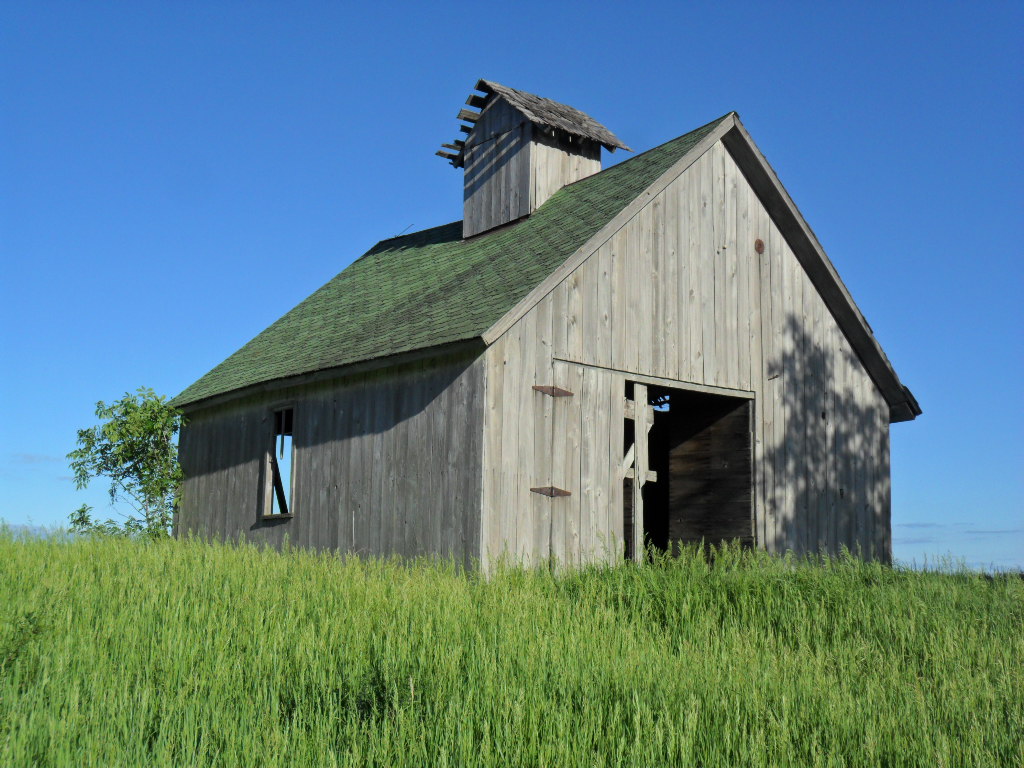
While writing this and looking at the photo mentioned above, I remembered the old carriage house where I grew up.  It stands, the only building remaining where my father was born and lived until he reached the age of ten.  I still own the farm; the young man who farms it cannot bear to tear the building down.  When I was there 2 1/2 years ago, it housed a piece of farm equipment.  I remember large elm trees and the hollyhocks growing next to it, making hollyhock dolls as a child. Who will remember when it is gone?

SAM_1165

Who Is the Best Writer: A Matter of Taste and Viewpoint


Until I was asked to be a judge for a memoir competition, I did not spend a lot of time thinking about this topic.  For years my general awareness about writing preferences included the knowledge that the writers I prefer and usually read rarely hit the best seller list and generally are not white, main stream USA.  What do I read:  Native American (American Indian), Indian as in the country of India, and Latin American writers, and writers from the Middle East, especially Iran.  My favorite writer is Leslie Marmon Silko.  My favorite book of hers is Storyteller.  My favorite story, “Yellow Woman”, is in that book as well as numerous literary anthologies. I estimate I have read that story at least fifty times, maybe more.  Why?  In spite of asking myself that question, I remain somewhat clueless.  Because of my current teaching assignment which includes British literature from Beowulf to now, I try my best to read a bunch of British literature.  For instance, I just read I, Claudius by Robert Graves.  Of course, it has nothing to do with Britain; perhaps it does not count.   Next on my list is The Inheritance of Loss by Kiran Desai.  This book won the Man Booker Prize in 2006.  Although she writes in English, she obviously is not British unless you consider being in a former British colony counts as British.

Back to my contest assignment:  Two of the books I was assigned to read nearly put me to sleep.  One did not; in fact I liked it a lot–enough to mark pages with passages I plan to use when I need writing inspiration/ideas later.  When I read a bunch of reviews recently, it came as quite a shock to find one of those put-me-to-sleep books favorably reviewed.  Could I really have been that far off base?  I consider the possibility that even though I have read some excellent memoirs, I find many of them impossible to read.  Why?  From my viewpoint, many memoirs whine, lament, and carry on about the past in a way I find highly objectionable.  Who wants to read hundreds of pages about how someone overcame addiction or some hideous disease or a divorce? Apparently, a lot of people.  Even though I consider The Glass Castle an excellent book, I even had a difficult time plugging through the last 50 pages of that one.  Some of Storyteller is a memoir–a combination of poetry, vignettes, photos, but it also includes several enlightening short stories.  While writing now and reflecting, I can only think of one other memoir type book, I actually recommend to people, Jimmy Santiago Baca’s A Place to Stand.  While stopping by the library this morning, I did pick up Willie Nelson’s latest, Roll Me Up and Smoke Me When I Die.  It even has a foreword by Kinky Friedman, who in my opinion would make a much better governor than any one we have experienced in Texas lately or will have for the foreseeable future.  With a title like that, about Willie, and Kinky thrown in, surely it won’t be too boring.


Gratitude


Usually, I plan my posts, write them out carefully, sometimes even proof a couple of times.  Today is Thanksgiving Day here in the United States.  Even though I know all about the historical lies to cover up the truth about the supposed original Thanksgiving, I continue to think this is a useful and fun holiday for several reasons.  Thankfulness, gratitude, remains the primary source of a happy life.  The list of things for which I am thankful seems nearly endless:

-health

-living in a place filled with natural beauty

-my daughter

-my grandson

-my son, even though we talk only occasionally and he lives far away

-teaching

-my students, one of whom posted on Facebook this morning that he is grateful that he had me as a teacher ten years ago

-the friends who took me with them to Ethiopia this past summer

-all my other friends locally and from all over the world

-the exchange students who have lived with me and from whom I receive messages regularly

-my parents for whom I owe eternal gratitude for teaching me values, independence, tolerance, a love of beauty and knowledge, and a sense of wonder

-music

-my ability to sing

-horses

-wildlife, nature–here where I am so fortunate to live

-art

-my ability to write

-all the people who love my book of poetry and tell me they do–I might also include the people, mostly men, who find it shocking

-happiness and the choice I made to be happy all those long years ago

-red wine

-plentiful food

I could go on and on.  However, it seems best to end with this fantabulous morning on my own little rim of wonder and say I am thankful for a life filled with so many astonishing events and experiences I never expected and for which I am endlessly grateful.

SAM_1454

My Ethiopian Adventure–on the Road from Lalibela to Gonder


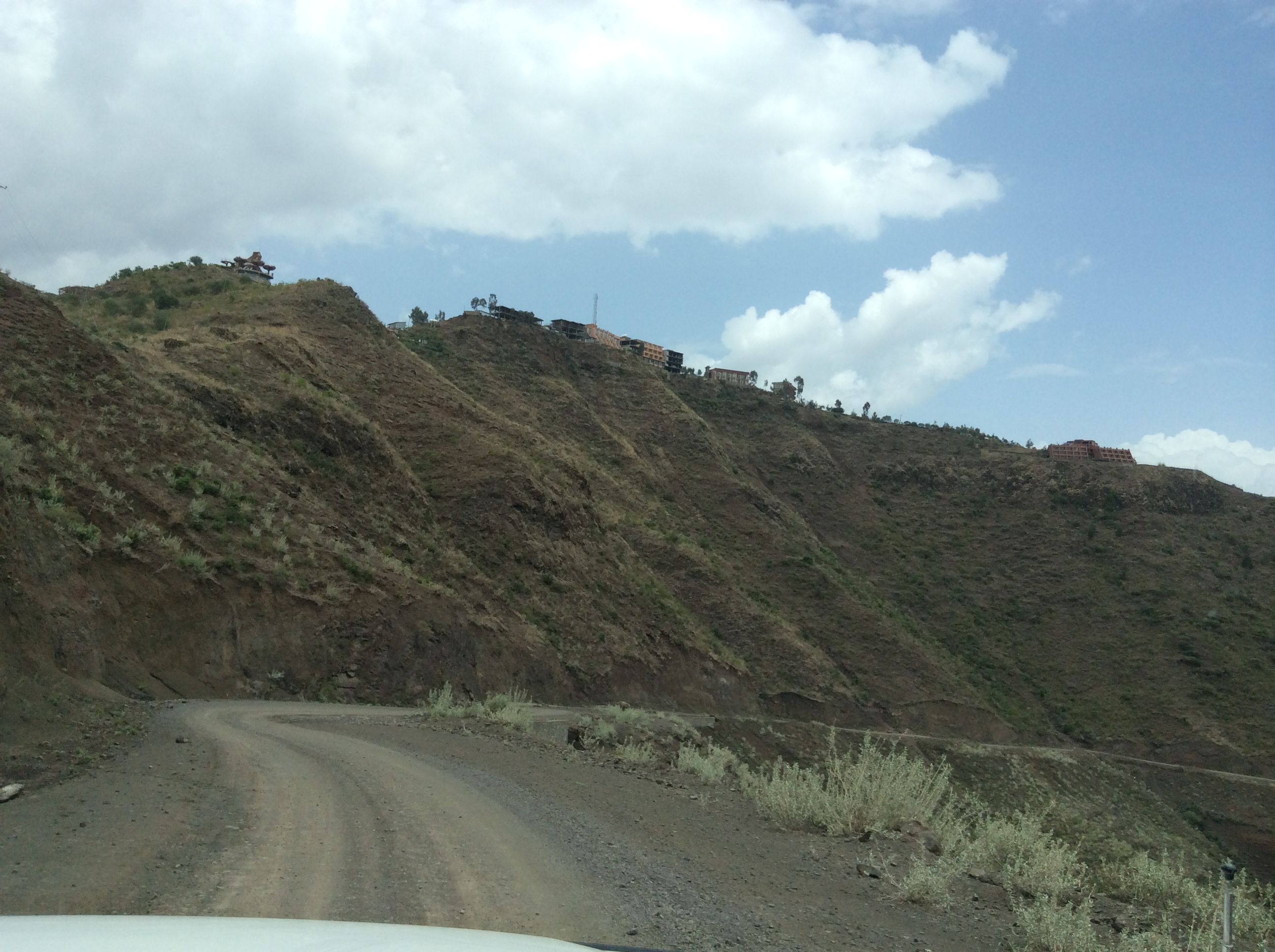
Since there is only one road in and out of Lalibela, we headed back to the main road after an 8:00 breakfast.  By this time, after three times on this road, the heights hardly bothered me.

IMG_0491

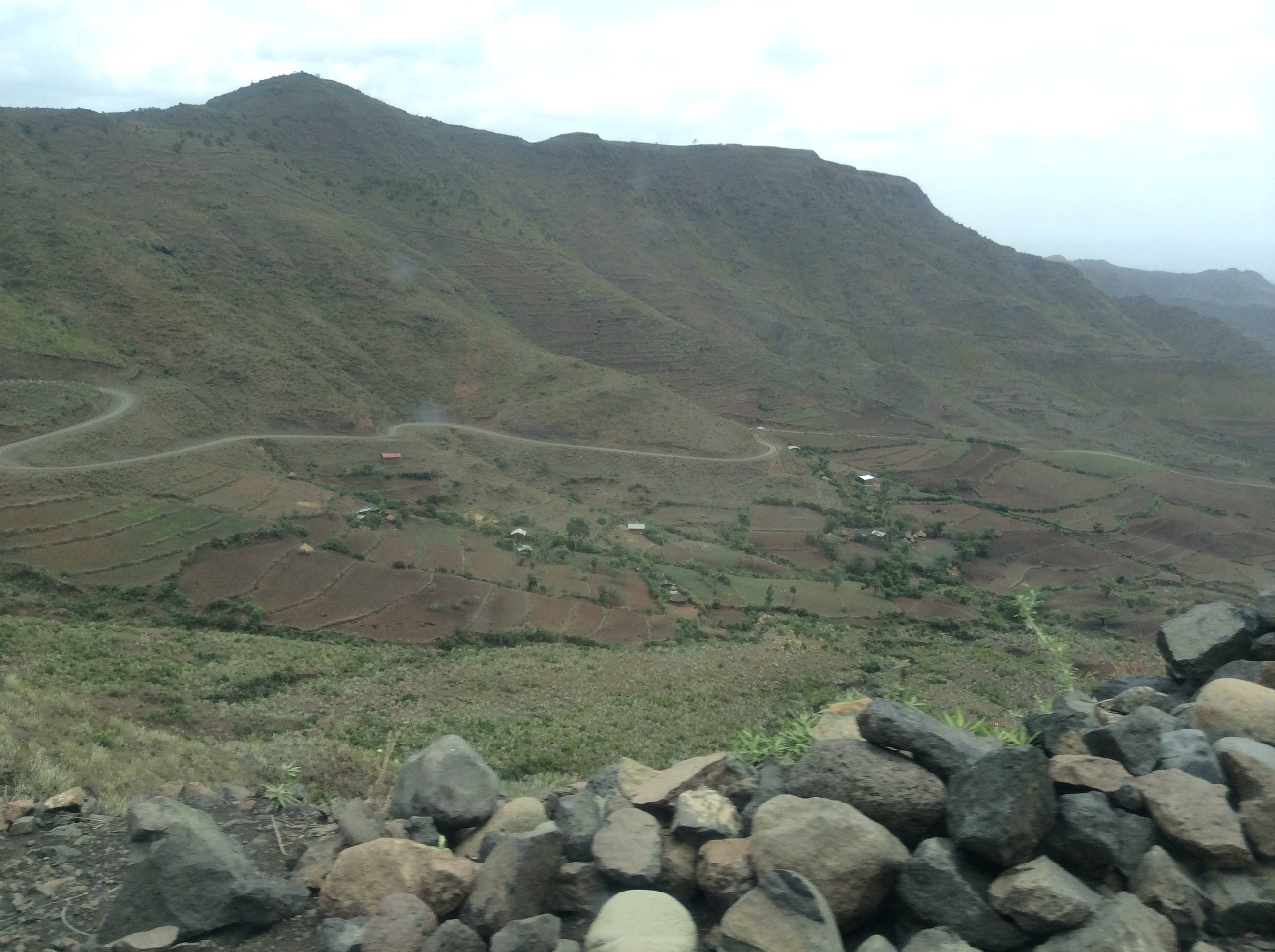
We drove through mountains a large part of the day, through the large towns of Nesfas Mawcha, Debre Tabor, and turned north at Wereta. By this time, I had become accustomed to seeing endless beautiful scenery, hardly knowing when to take photos.

IMG_0501

IMG_0502

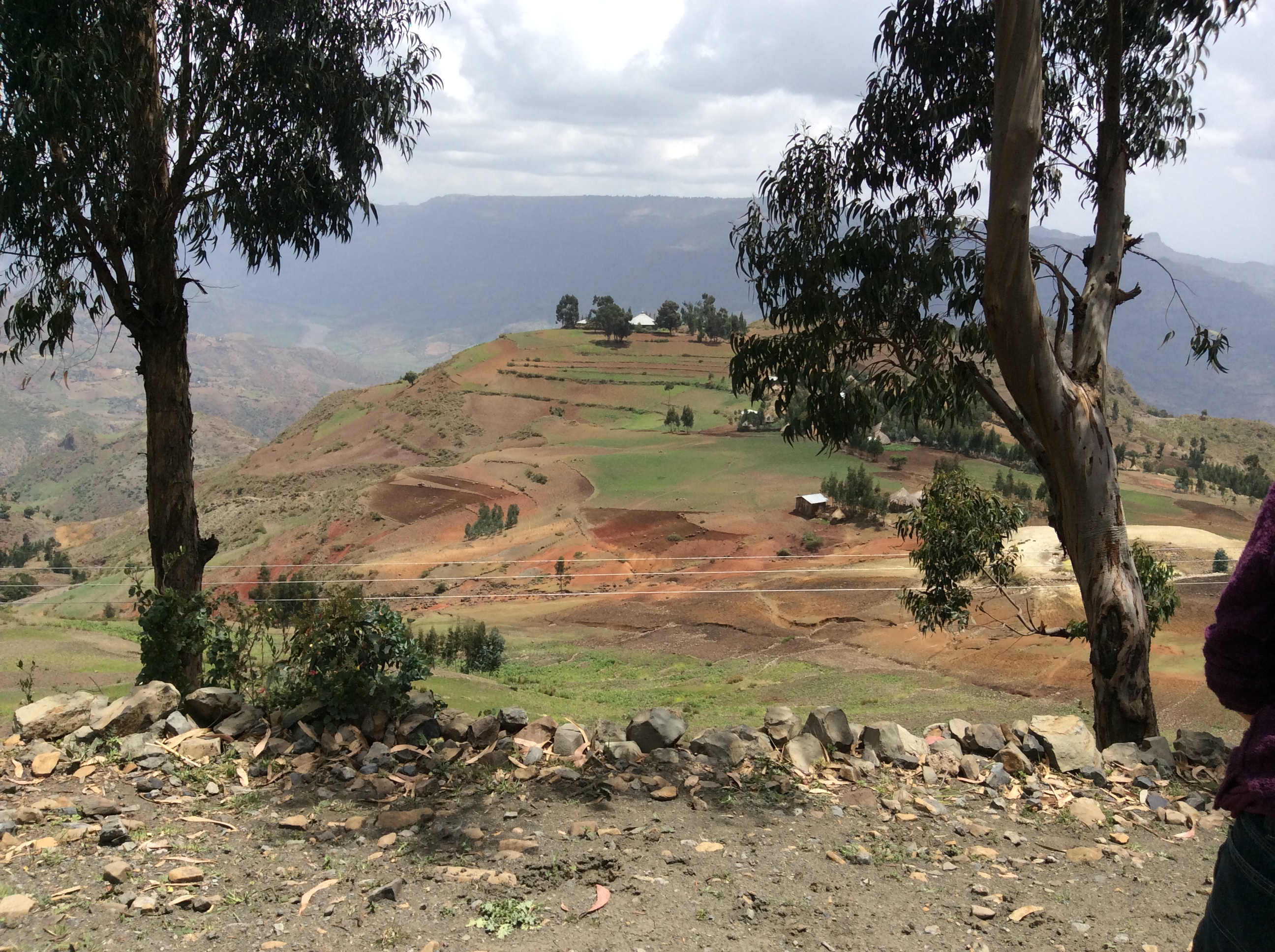
The invasive eucalyptus trees and pastoral mountain villages show up everywhere.

IMG_0503

IMG_0505

Most villages have their own church.  The building with the round roof in the distant middle is one such little church.

IMG_0507

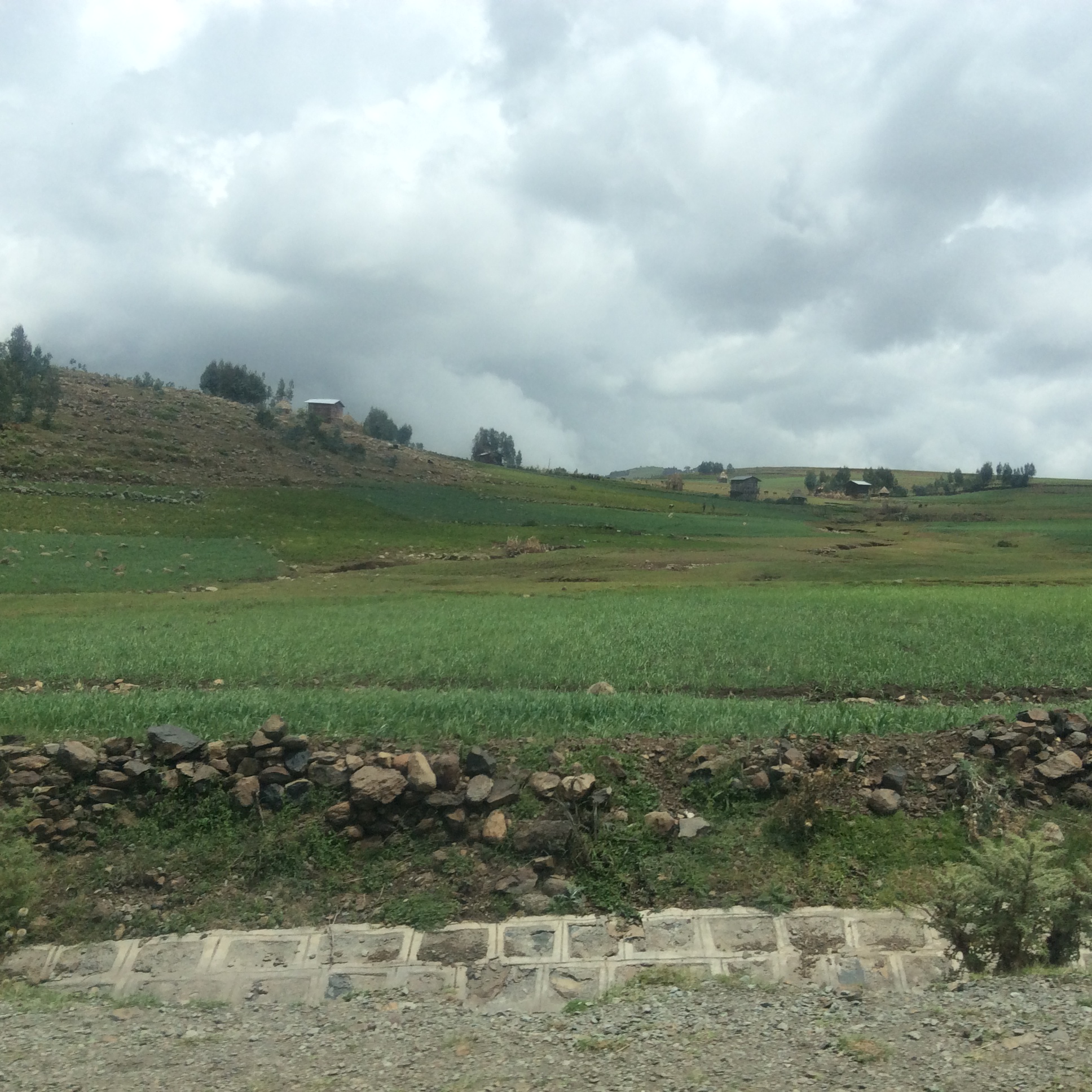
Excellent roads, mostly built by the Italians years ago,  crisscross this part of the country. Some newer roads have been built by the Chinese.  Many Ethiopians made jokes about this, implying they do not expect them to last  long.  After reaching a high plateau, we drove through endless pastures and fields of green.

IMG_0508

IMG_0509

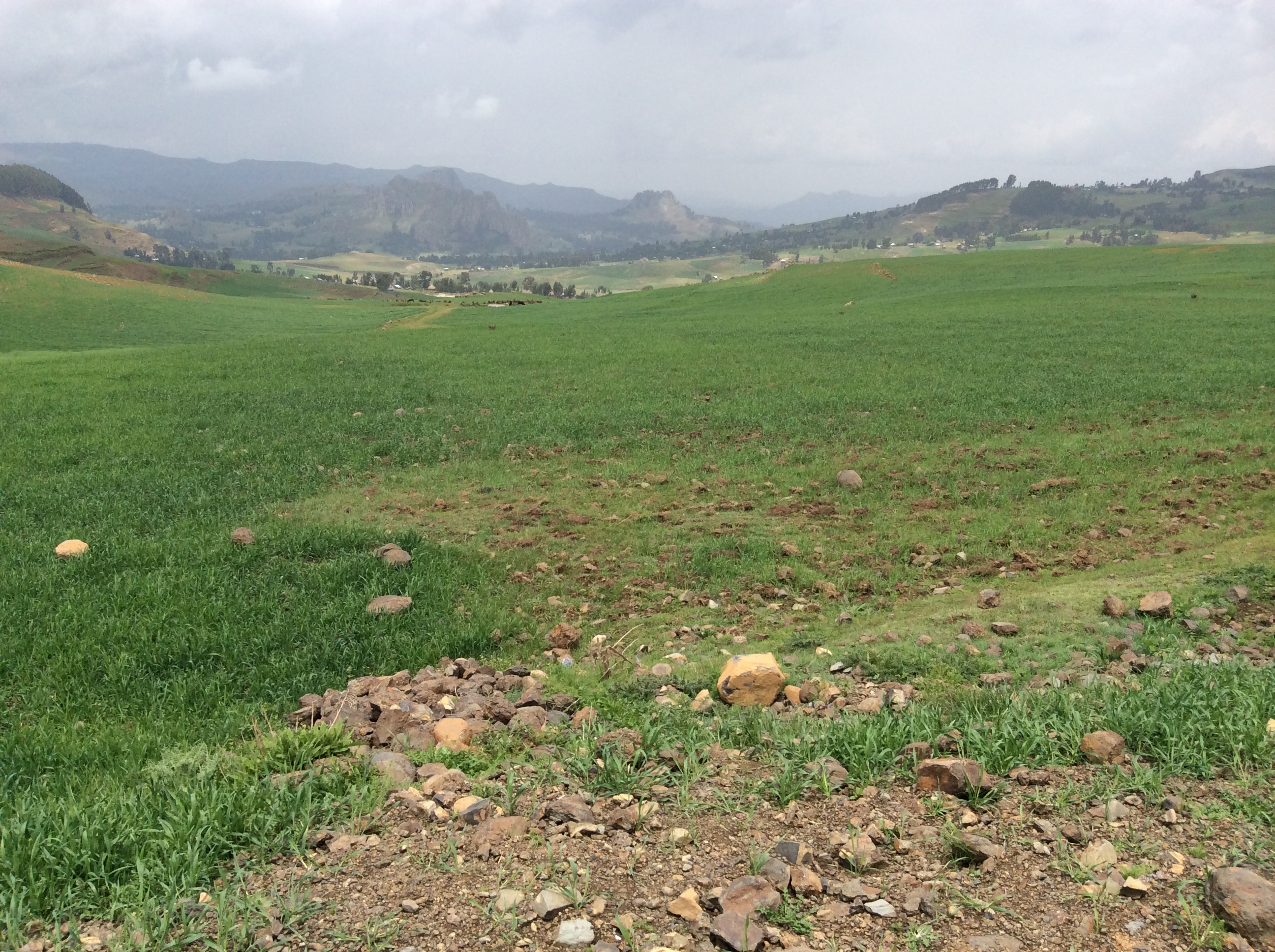
Up in this high country, farmers grow wheat, barley, and oats.  Horses and cattle graze in large pastures.

IMG_0510

IMG_0512

IMG_0514

The mountains appear to continue forever.

IMG_0515

IMG_0516

Buildings, like the one in this photo above, usually house animals at night to protect them from predators such as hyenas.

IMG_0517

Whenever we stopped, children ran up sometimes asking for pens, occasionally for money.  Dino and Alemu, the driver, usually scolded them in Amharic for begging.

IMG_0518

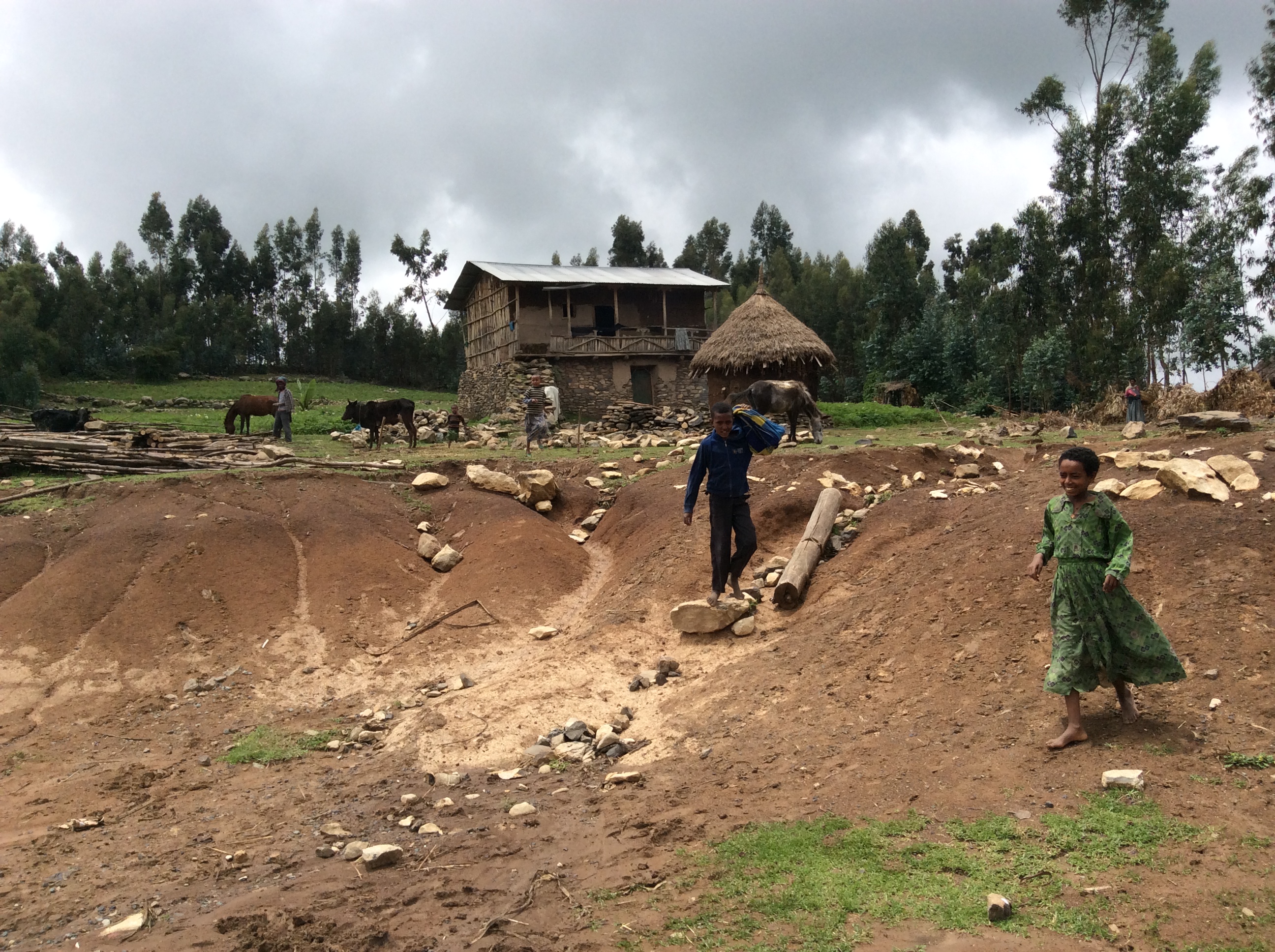
Houses here seemed bigger, usually two story, with rocks used as a main building material.

IMG_0519

We drove by two men galloping along on horseback, their horses adorned in fancy tack.

IMG_0520


IMG_0523

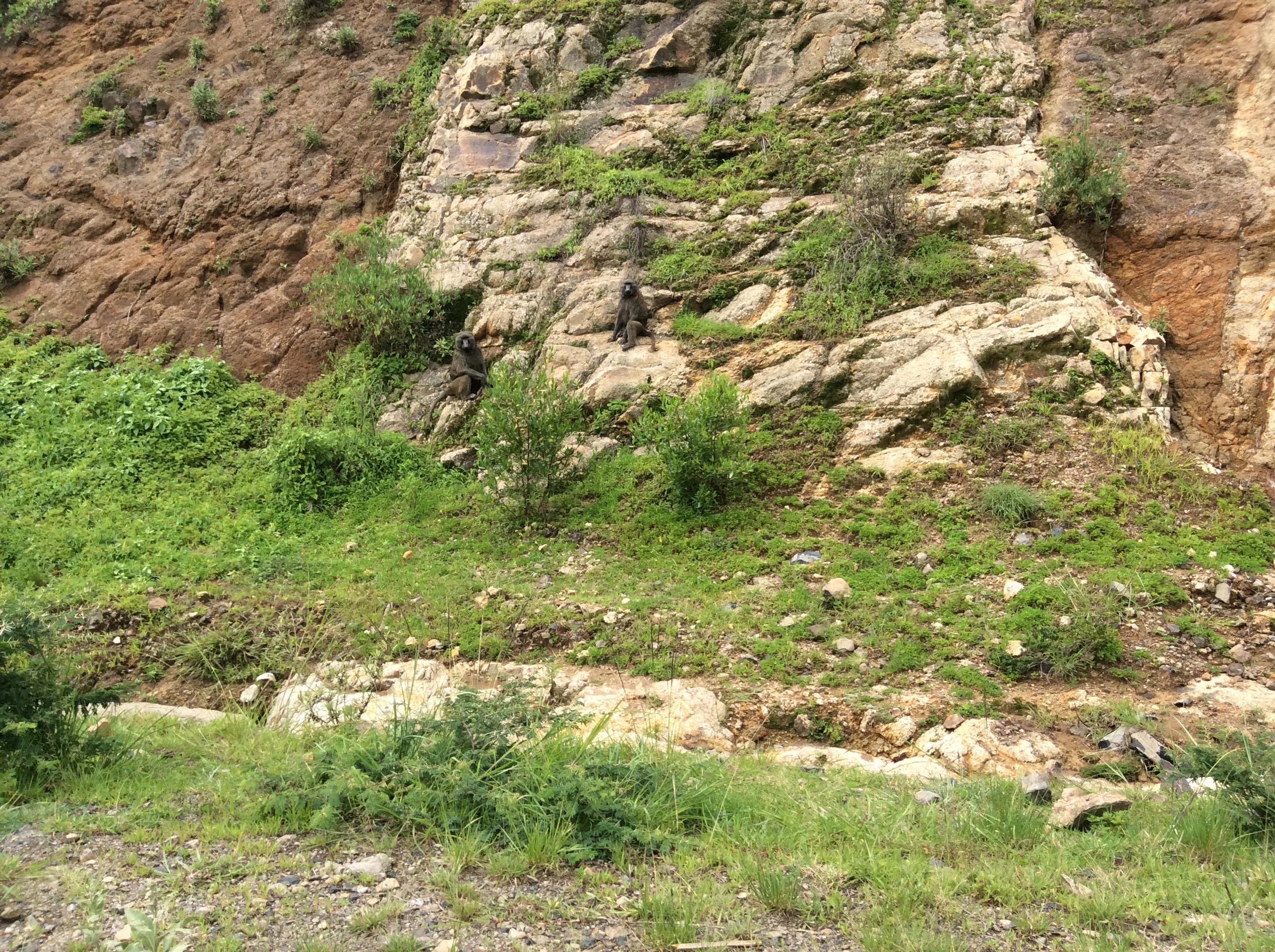
As we began a long descent into a huge valley, common baboons appeared along the road.

IMG_0524

IMG_0525

These huge rocks left my millions of years of erosion, provide a dramatic contrast to the intense green.

IMG_0527

IMG_0528

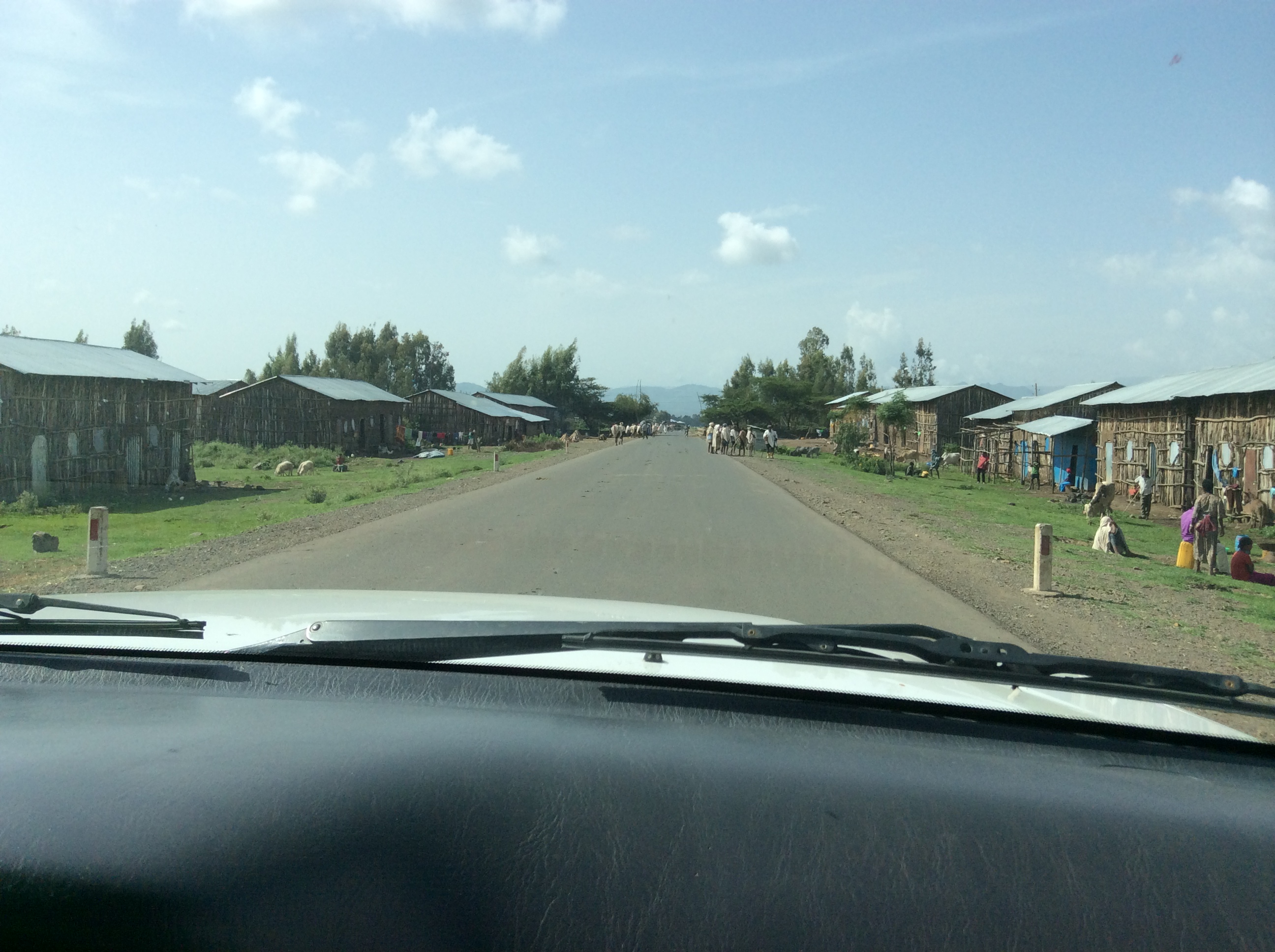
It took more than an hour to cross this valley.  As usual cattle, goats., burros, people mingled with vehicles.  What a surprise:  Rice fields as far as I could see on either side of the road.

IMG_0530

The villages in this area are built higher–above the rice paddies. And then as we climbed out of the valley…

IMG_0533

The name of this rock really surprised me, the Finger of God.

IMG_0535

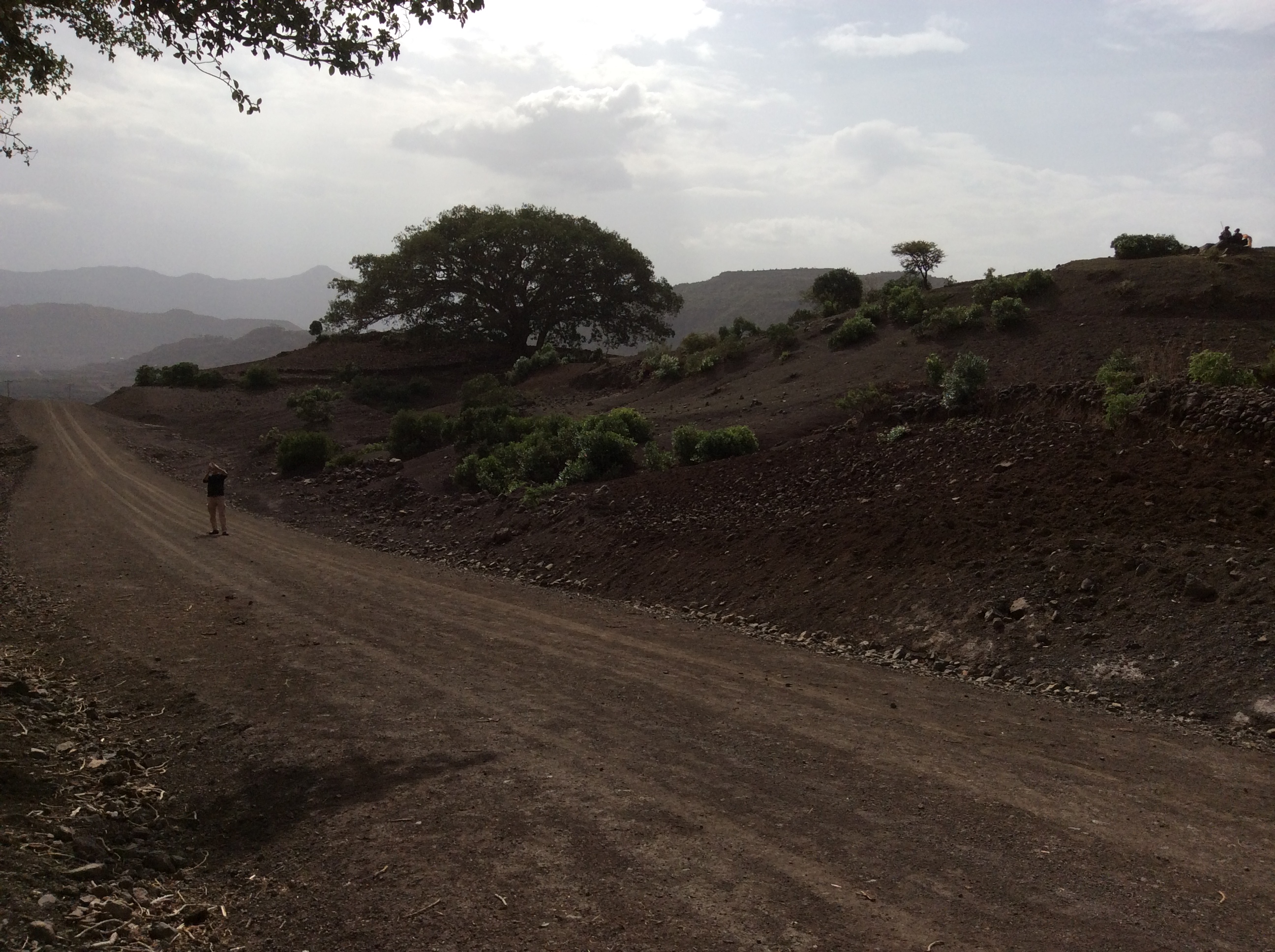
A big later, suddenly Alemu turned off on a dirt road and this appeared.

IMG_0538

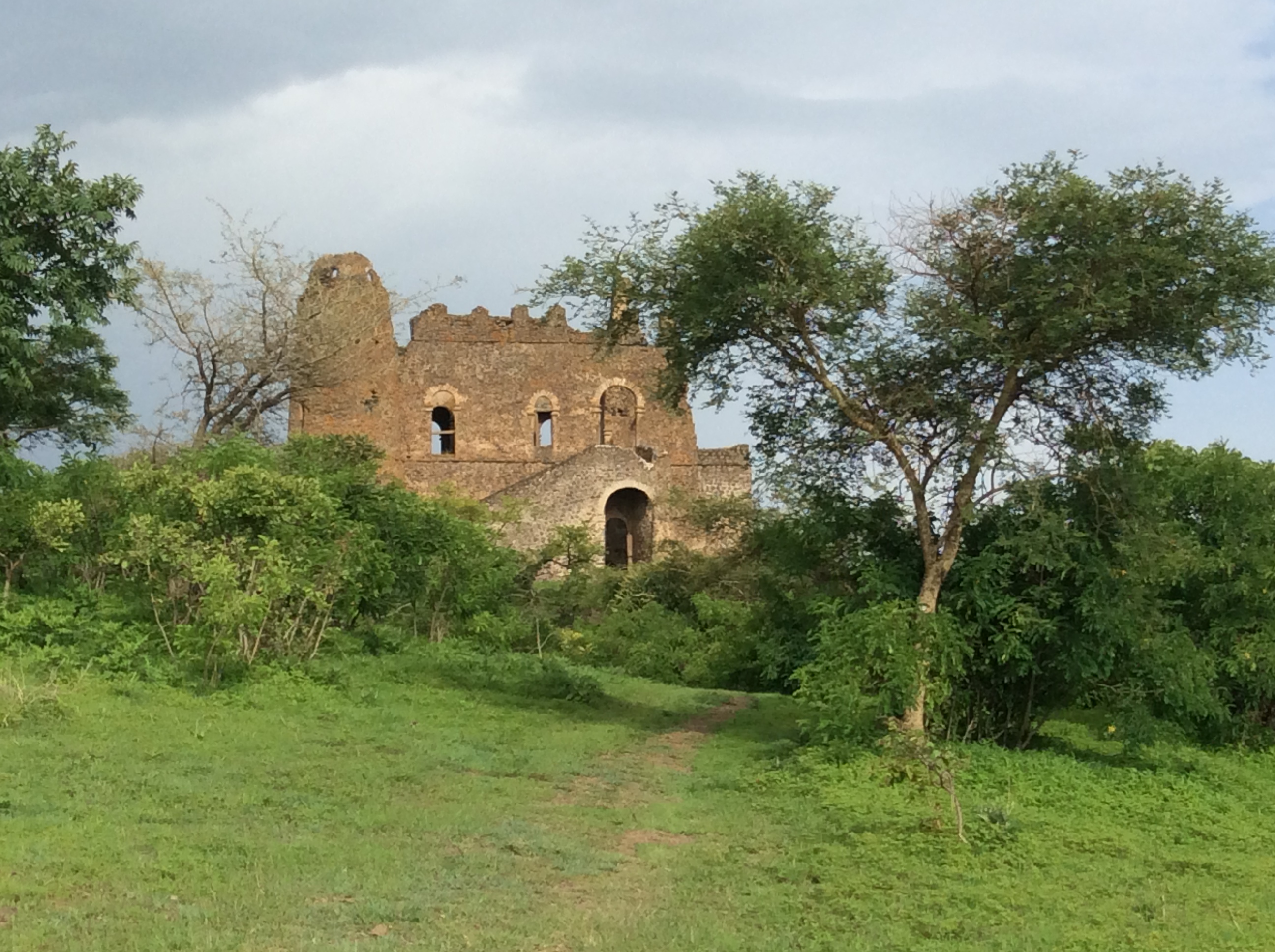
The sign says:  Guzara Palace, G.C. 1563-1597.

IMG_0539

When a person goes on such a trip, sometimes places hold your heart, places unexpected.  I loved this place.  It seemed magical.  With no other people around, it felt private and special.  It becomes obvious quite quickly why a king would build a castle here.  You can see forever, for miles and miles, all the way  to Lake Tana in the background.

IMG_0541


IMG_0542

IMG_0544

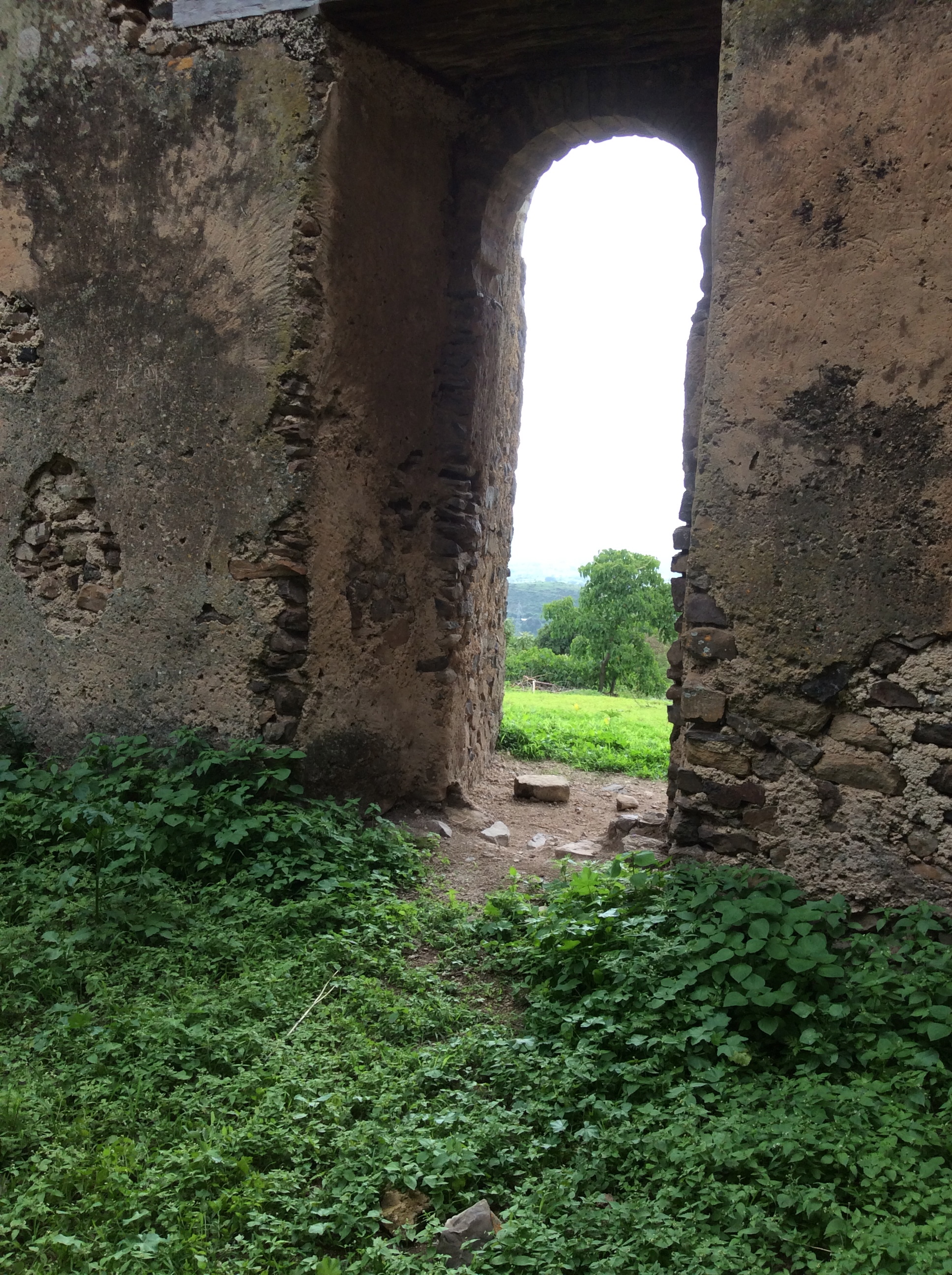
We climbed up to the second story and could see Lake Tana even more clearly in the distance.  I felt a sudden rush of emotion, looking at Lake Tana, my first glimpse of where the Nile River begins.

IMG_0546

IMG_0548

On the other side of the castle, looking toward the mountains, the remains of the old wall around the castle show up clearly.  The part of the wall on the path to the castle has been restored.  This part still awaits restoration. We drove on to Gonder.  We stayed there two nights at  Hotel Goha, but not in sequence.  I found the window coverings so unique I had to take a photo.

IMG_0550

Fabric, stretched over a frame slides back and forth so you can slide it to cover the window.  This hotel possesses fantastic, modern showers.


My Ethiopian Adventure–Lalibela, the Churches, Part Three


After we left the first group of churches, we had to walk to reach the one that is probably the most photographed.

IMG_0428

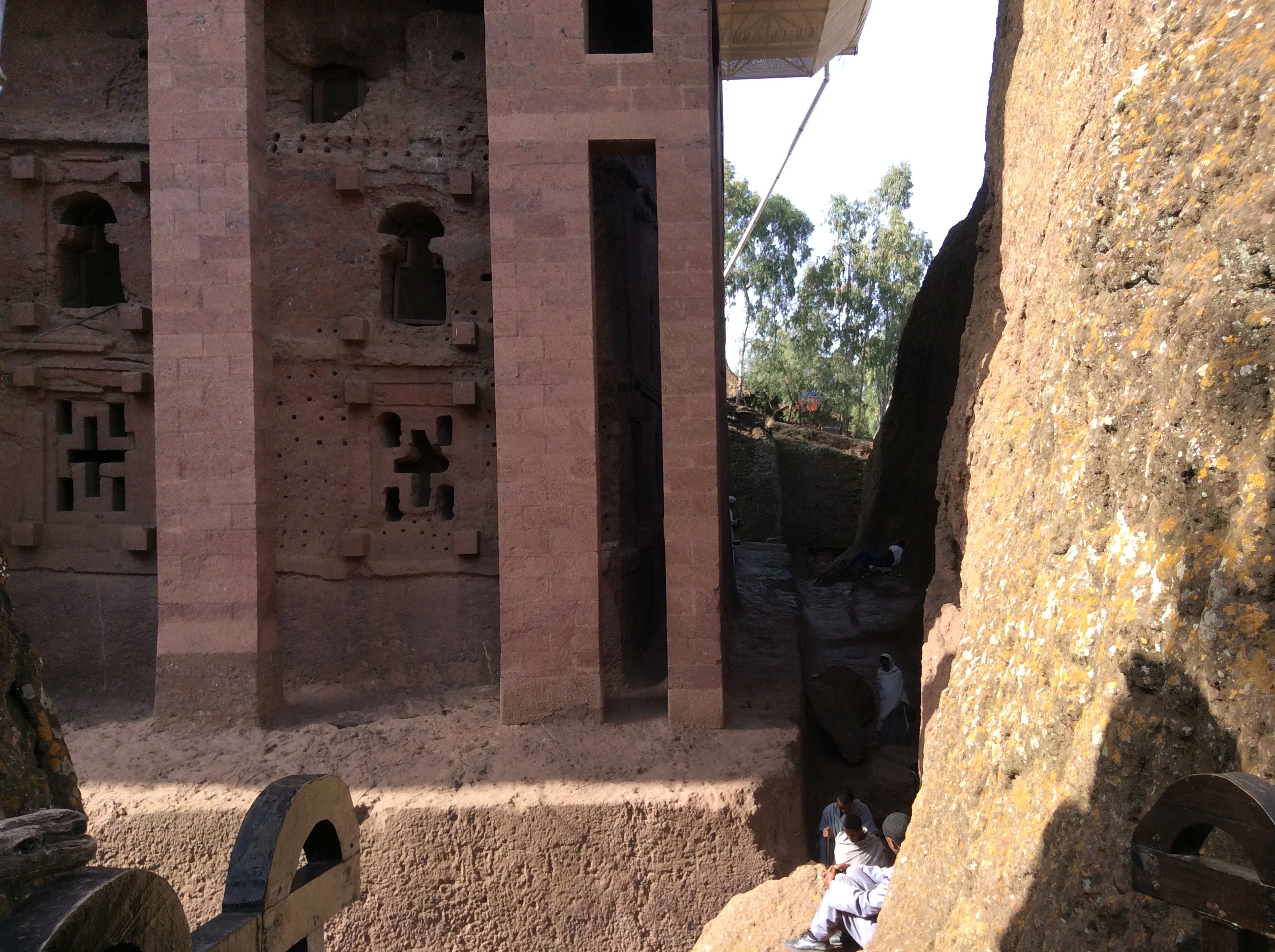
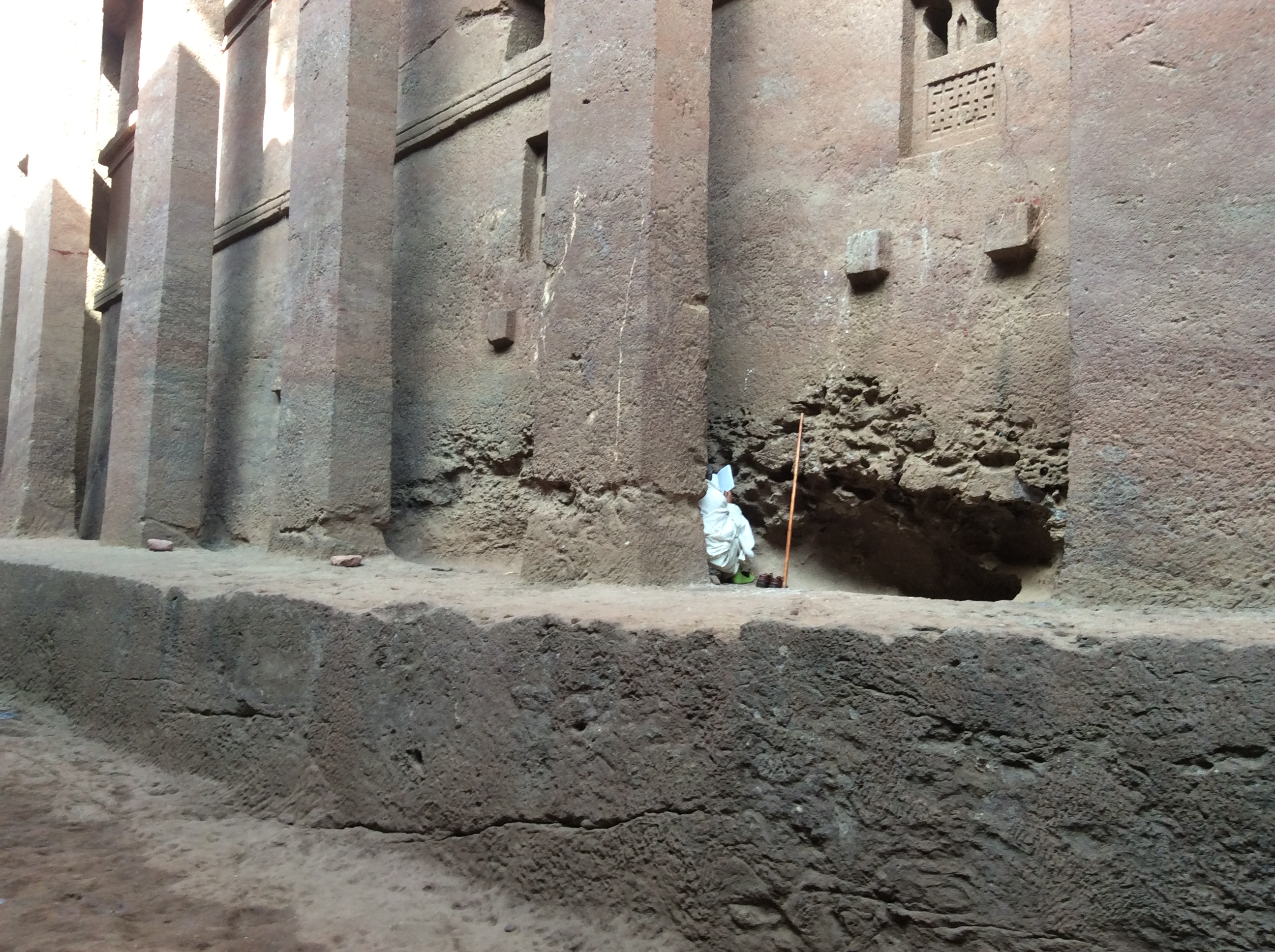
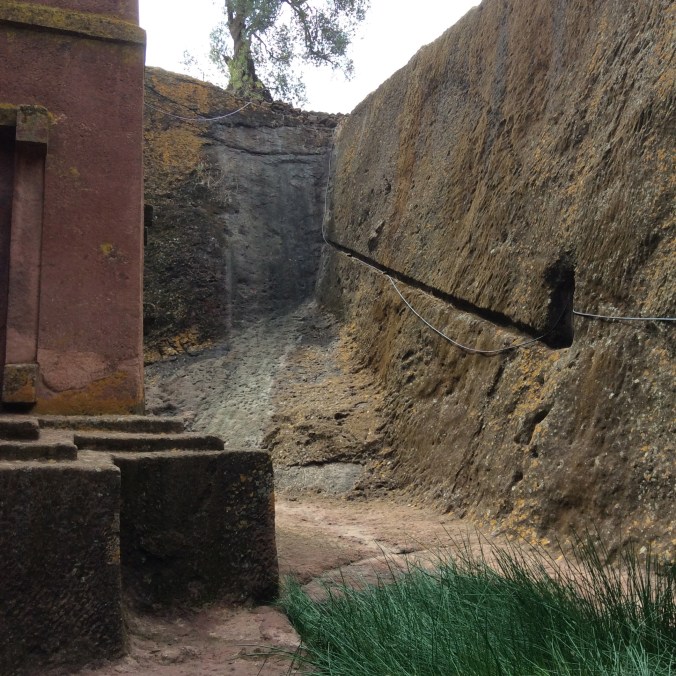
Like all these churches, this one, Bet Emanuel, was carved and dug out of solid rock and is built so that the top is level with the slope of the land.  Thus, it is purposefully nearly invisible unless you are quite close to it.  To get to the bottom and go inside you have to climb down rather steep steps. Built in the Auxumite style (Auxum was the original “capital” of the Ethiopian Orthodox Church), some art historians consider it to be the most impressive church in Lalibela.  It is 18 meters by 18 by 12 (58.5 feet by 58.5 by 39).

IMG_0429

The guide explained that because this church is of harder stone, it has no protective cover like some of the first churches we entered.
IMG_0430

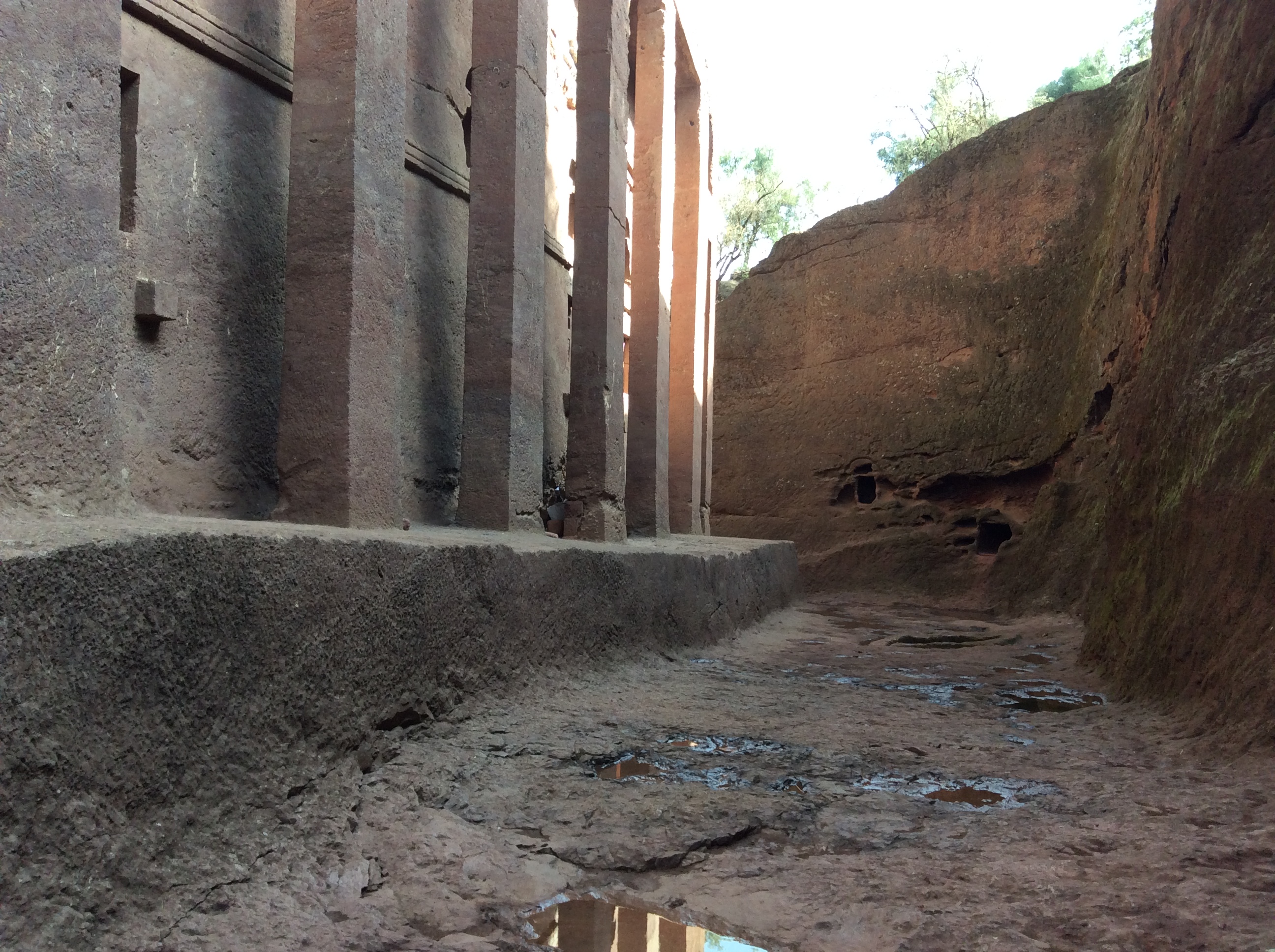
Like the first group of churches, this one also has a drainage trench around it.

IMG_0431

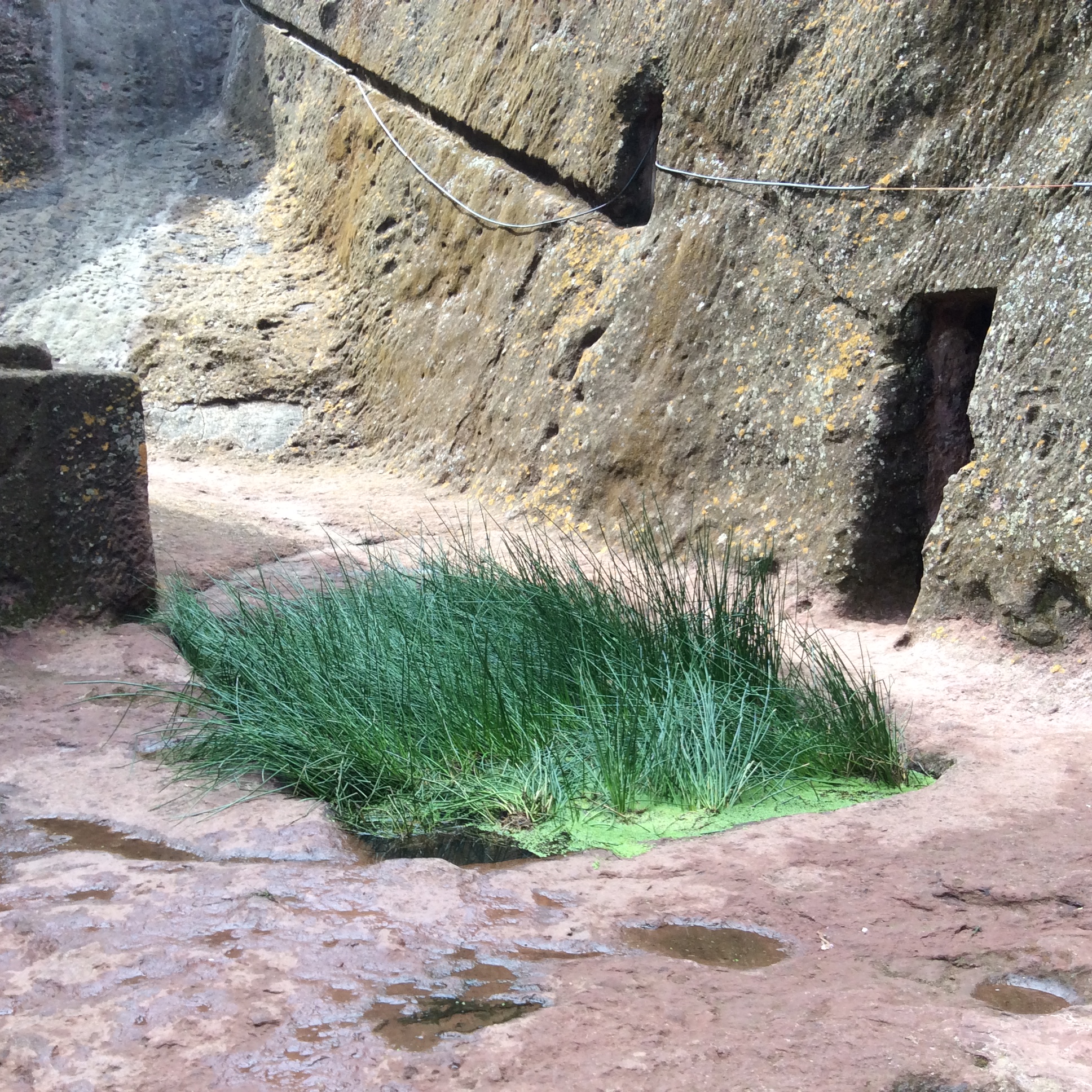
A pool of holy water–I saw a boy go up to one of the pools and fill a bottle with water.

IMG_0432

A holy space where only priests can enter.  Every church has a copy of the Ark of the Covenant and a symbolic Bethlehem.

IMG_0435

Saint George and the Dragon appear everywhere. Saint George is the national saint of Ethiopia. There is even St. George beer.

IMG_0436

In this second group of buildings, two were definitely designed as churches.  However, even though others are currently used as churches, there is some question as to whether that was their original purpose.  The guide told us that one building is believed to have been the residence of King Lalibela and his family.  Unlike most of the other buildings, its layout does not appear to have been designed as a church. It also does not contain the usual paintings and artwork.
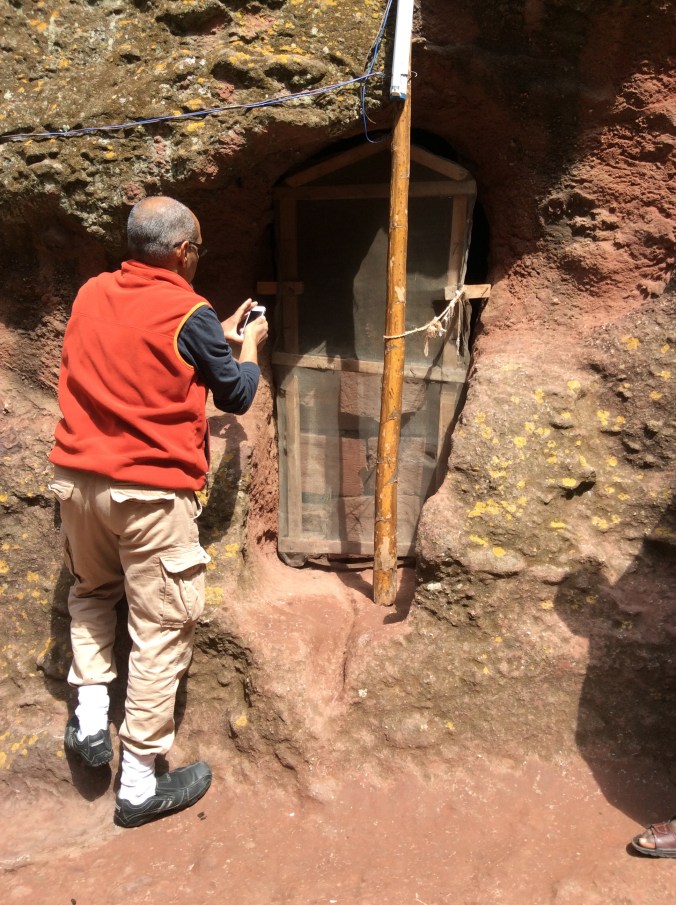
IMG_0437

Another sacred space. Before we could go on to see the other churches in this group, we had to climb out and walk by the River Jordan.

IMG_0438

All the trenches that drain water from the churches during the rainy season flow into this River Jordan.  The design of the churches, the symbolism, this River Jordan, everything was designed to duplicate to the extent possible he Holy Land, to create another Holy Land in the highlands of Ethiopia, a new Jerusalem.
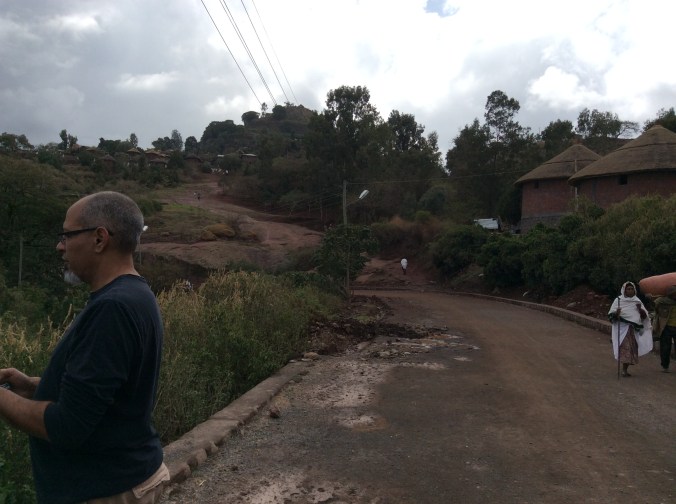
IMG_0439

The road by the River Jordan.  Until recently people lived in the traditional houses you see on the right.  In front of one we saw a group of young men being trained as priests.

IMG_0440

The land near the churches looks just like anywhere.  You cannot see the churches until you are really close to them.  We were told they were built this way intentionally to protect them from invaders who had destroyed earlier visible churches.
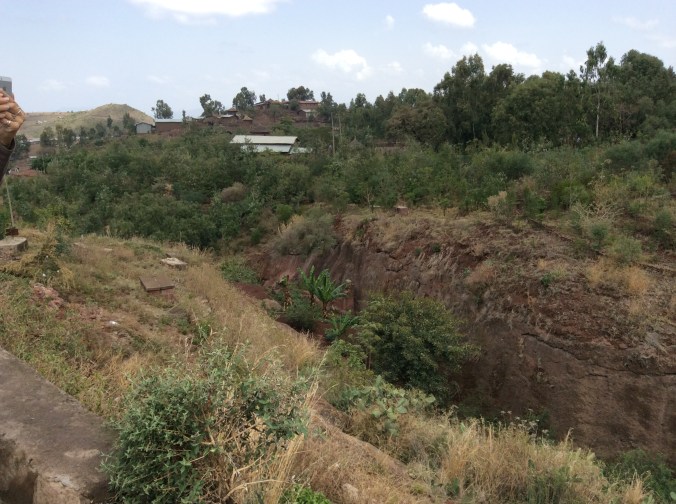
IMG_0441

On both sides of the River Jordan are cemeteries. The dead from the tombs in the walls opposite the churches (see Part I and II) were moved here.

IMG_0442

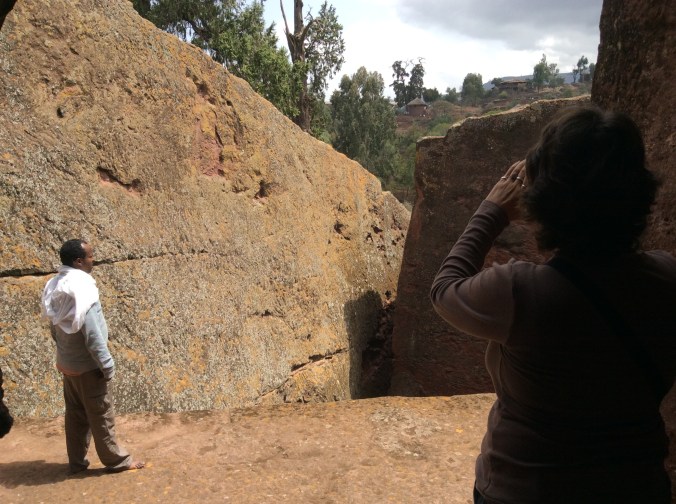
Unlike the first group of churches shown in Part I, not all the churches in the second group are connected by trenches or so close together.To see some of them you have to climb in and out from one to another.
IMG_0443

IMG_0444

The guide took this photo.  Why am I wearing my socks over my jeans?  Fleas.  It is common knowledge that the carpets and bamboo mats on the floors of the churches contain lots of fleas.  We were told to tuck our jeans inside our socks and spray everything below our knees with insect spray.

IMG_0448

IMG_0449

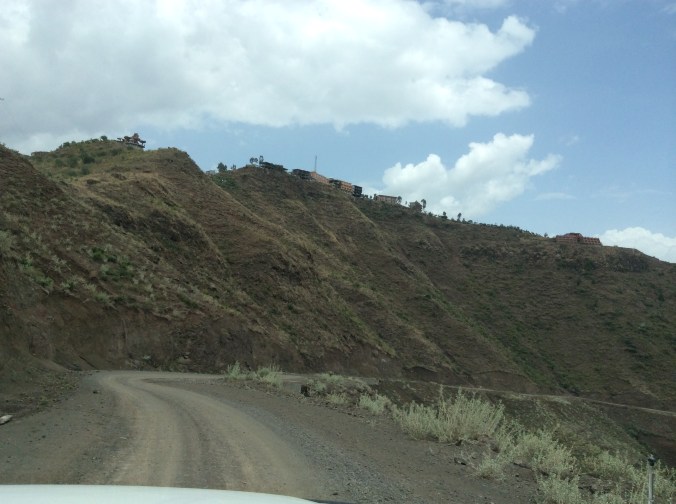
Between this latter group of churches, there are some passageways so you do not always have to climb in and out.  There is a third type of church in this area, churches built in caves, one of which is 40 kilometers from Lalibela.  Churches such as these exist nowhere else in the world. The only way in and out of Lalibela is that steep road below my hotel room.
IMG_0451

It was drier around Lalibela because the rains were late. We headed to the cave church of Yemrehanna Krestos for the afternoon.

IMG_0452

IMG_0457

One disadvantage of traveling to Ethiopia this time of year, especially in the north, is the weather, cold and rainy.  On the positive side, often we were the only tourists.

IMG_0458

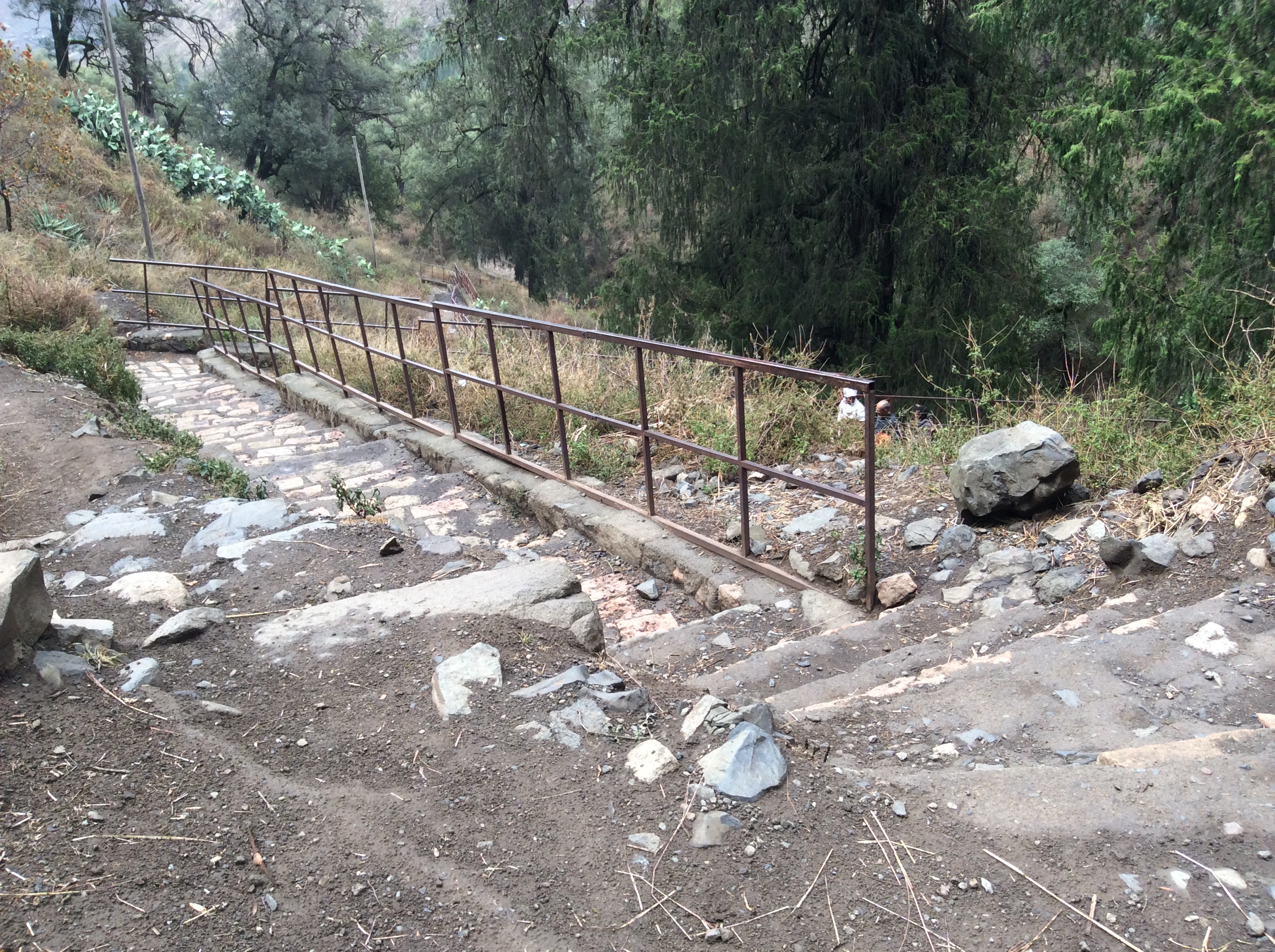
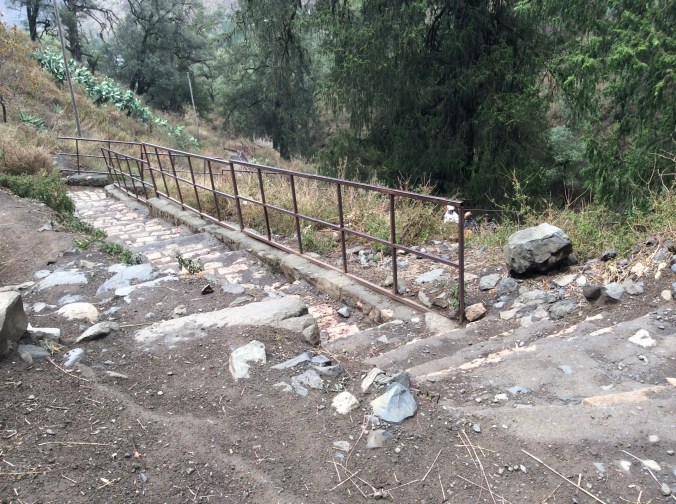
The climb up to the church was long and a bit steep but with good steps and handrails.  Rain had made the stones a bit slippery.  The churches have served an unintentional good in that around most churches in the country the original forest is left to hide the church.  This was one of a few places where we could see what the land looked like before deforestation and before invasive species were brought in from elsewhere.
IMG_0459

The guide who took us through the churches in Lalibela came with us here.  I walked with him and Dino and Zuriash walked with the priest who did not speak English.

IMG_0460

This is what you see when you first arrive at the top.  Like in all the churches, you have to take your shoes off.

IMG_0461

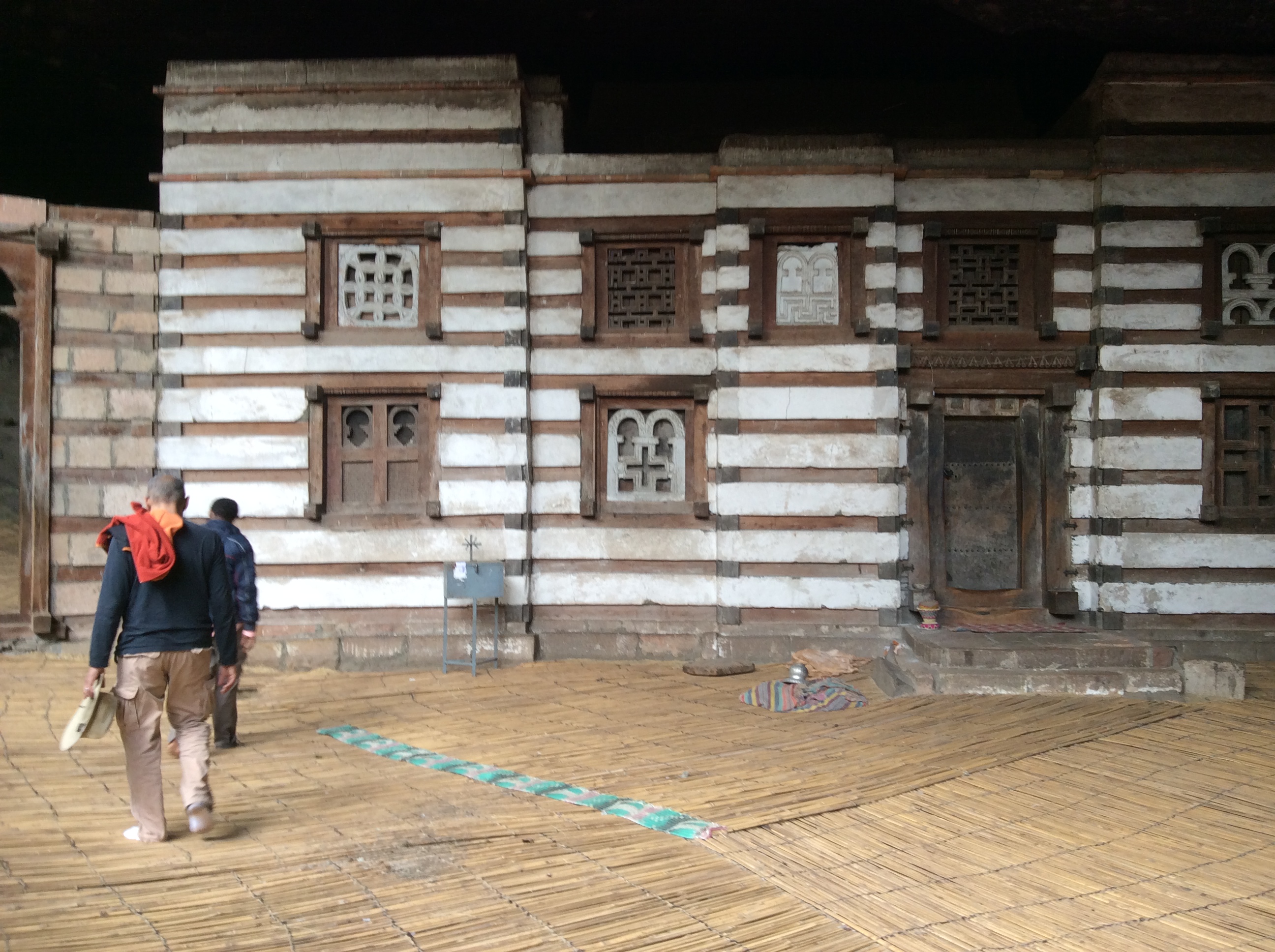
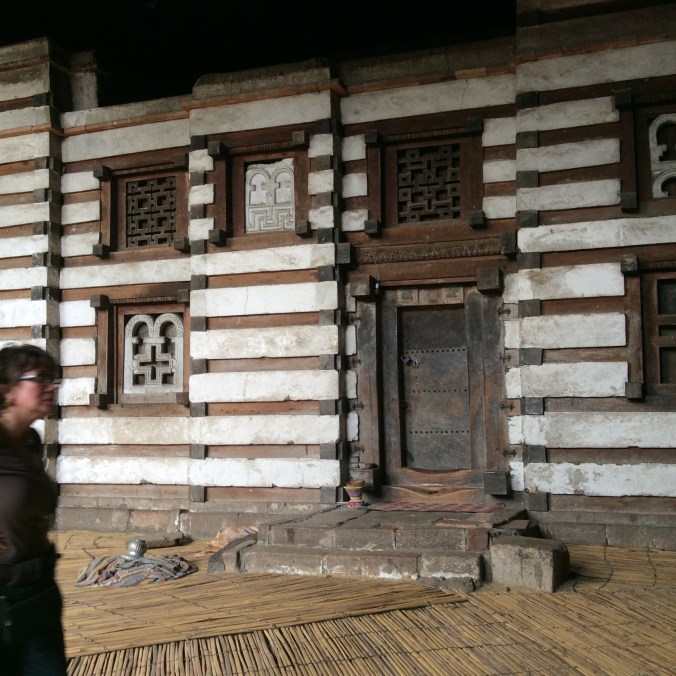
An entire church resides inside the cave.  We were told that the white marble and wood were brought from Egypt by elephants. The church dates to the 11th century.
IMG_0463

The cave is big with lots of space around the church.

IMG_0462

IMG_0464

IMG_0465

IMG_0472

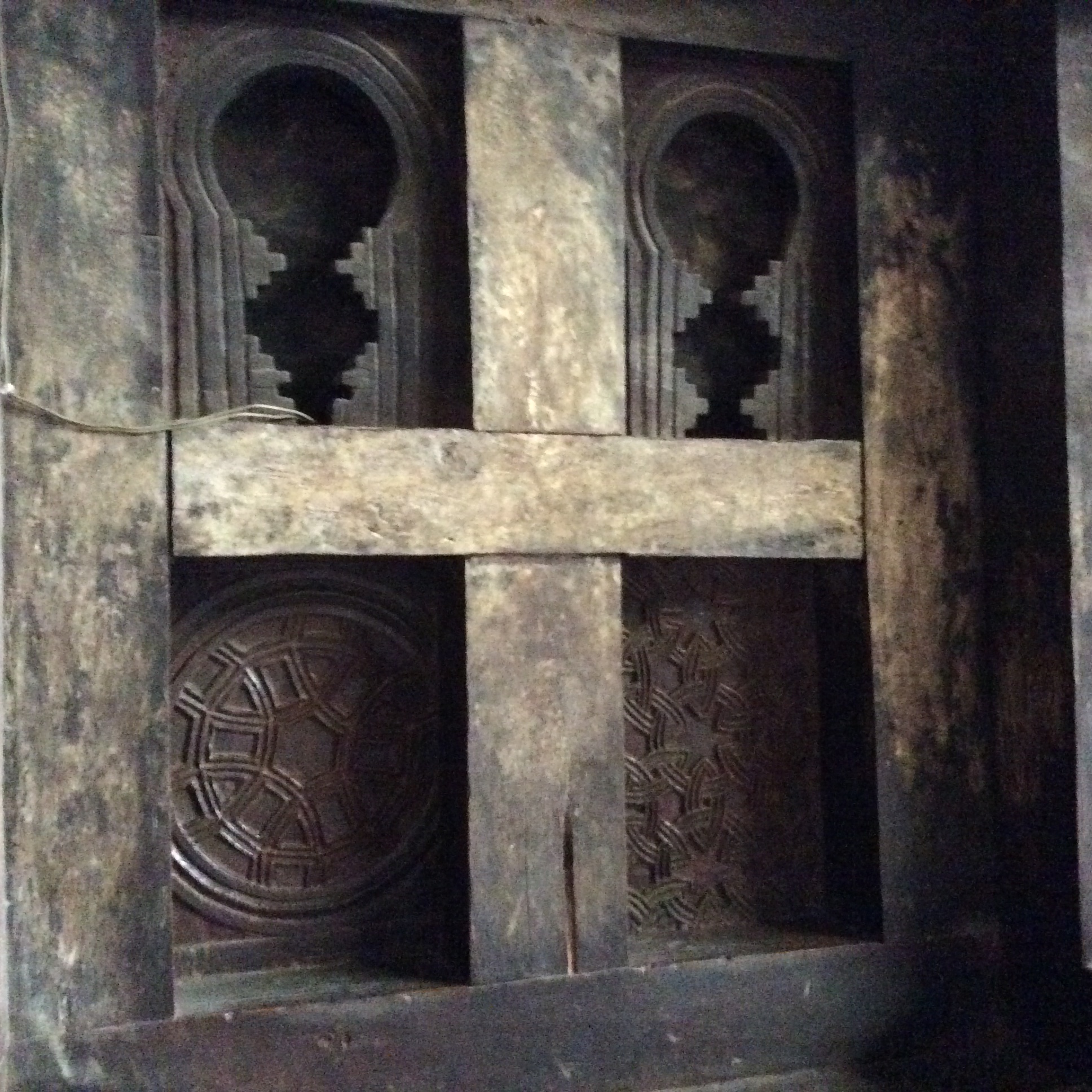
The decor and carvings inside the church are very detailed and elaborate.  Services are held here weekly and at certain times of the year many pilgrims journey here some walking for many miles.

IMG_0473

The priest who resides in the village.  This is “his” church.

IMG_0468

Behind this fence at the back of the cave lay the bones of pilgrims who died here.

IMG_0477

The Ethiopians believe that one of the Three Wise Men came from Ethiopia.
IMG_0470

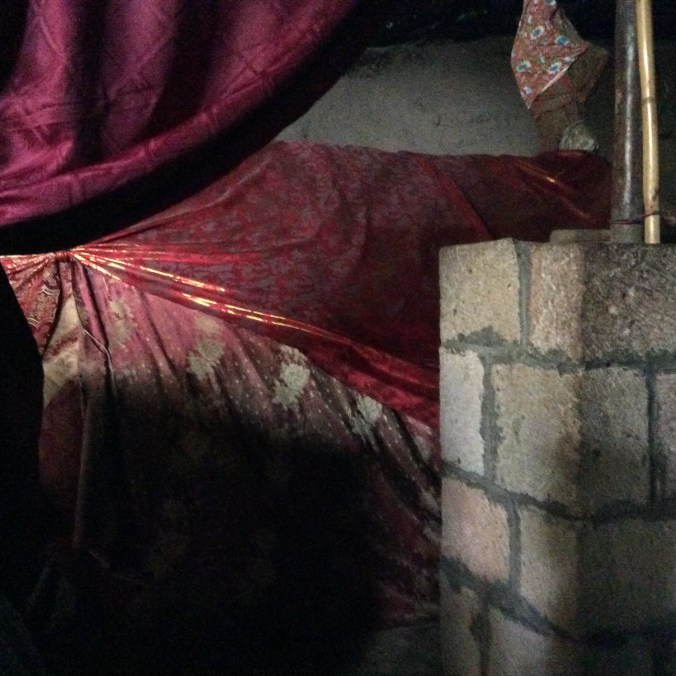
The tomb of Yemrehanna Krestos resides behind the church inside the cave.
IMG_0484

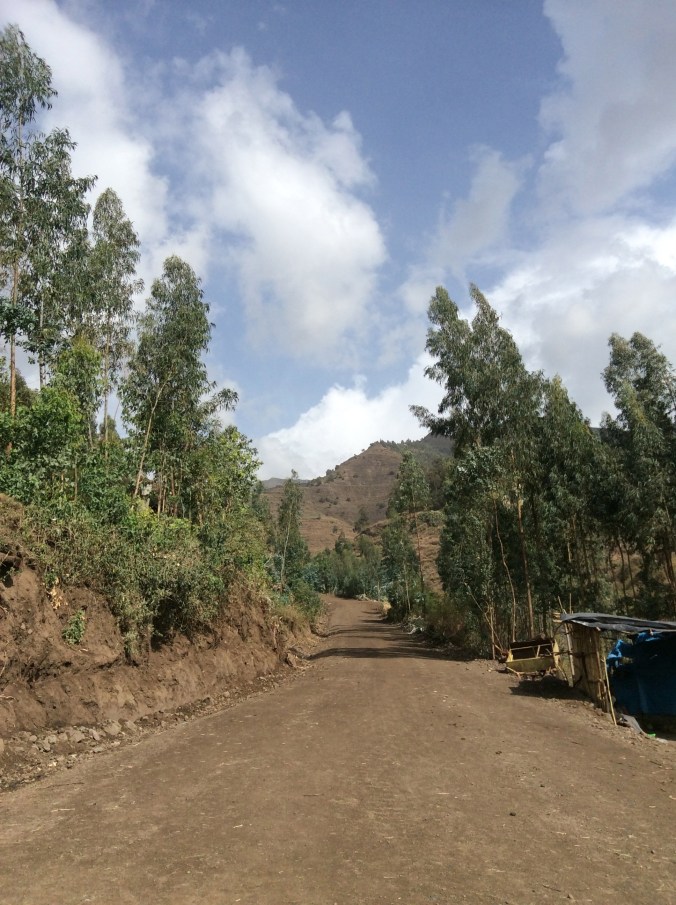
The road to this church is relatively new.  Before pilgrims had to either walk or ride a horse or donkey to get here.  The road continues above the village, but we turned around and headed back to Lalibela.
IMG_1263

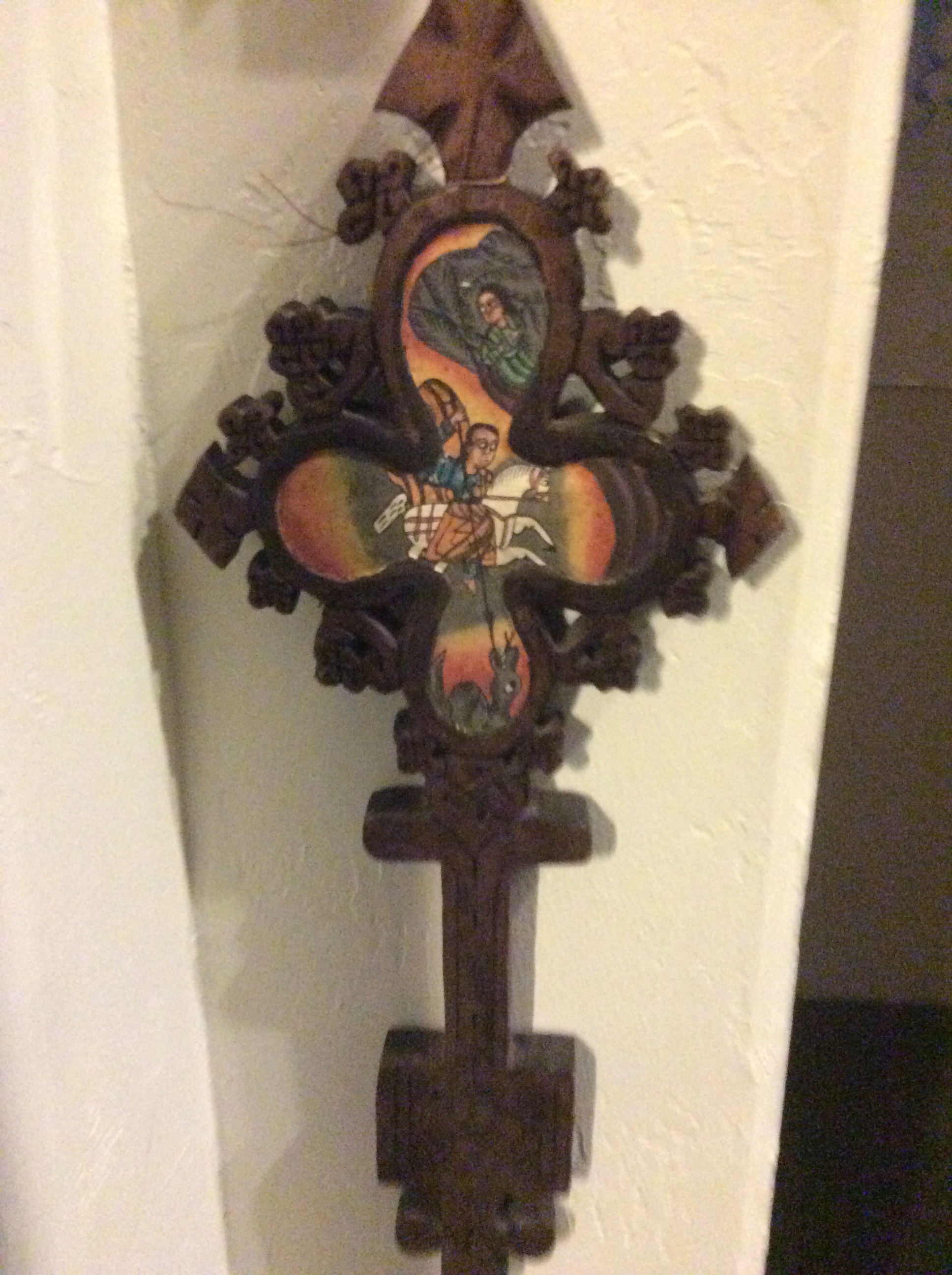
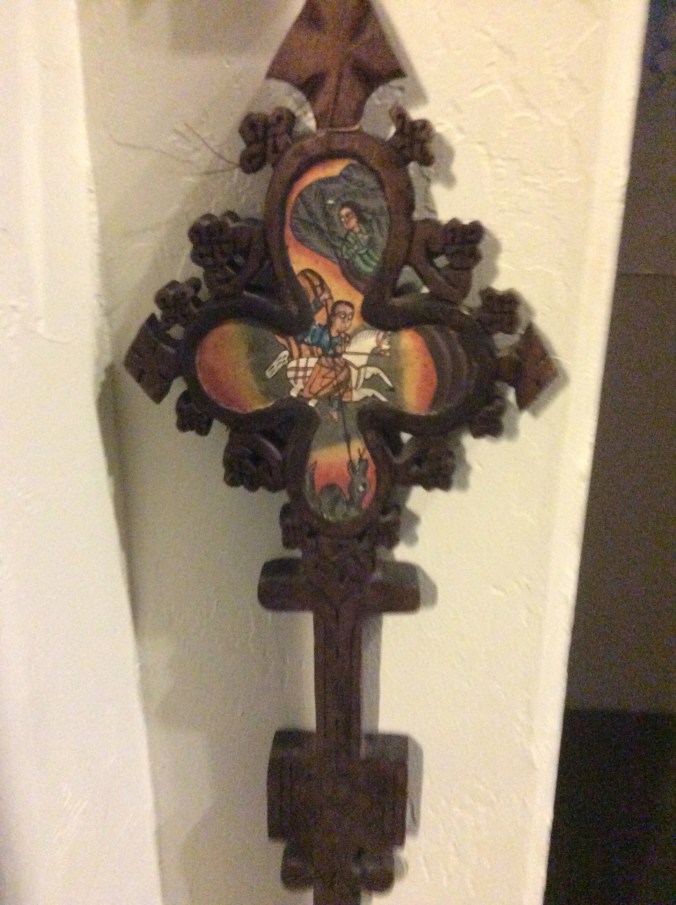
There were two shops in the village that sold sacred objects and souvenirs.  I bought this cross which has St. George and the Dragon on one side and the Virgin Mary and baby Jesus on the other.  Mary is exceedingly important in the Ethiopian Orthodox Church.

IMG_1265

I like to bargain and generally did quite well with it when purchasing various items.  However, the man in this shop for this particular item refused to come down.  I really wanted it because it seemed quite unique so bought it at his price.  Nowhere else did I have to do that.

On the road back to Lalibela we decided to stop and admire a couple of huge fig trees.

IMG_0485

IMG_0486

My Ethiopian Adventure–Lalibela, Part Two–the Monolithic Churches


IMG_0397

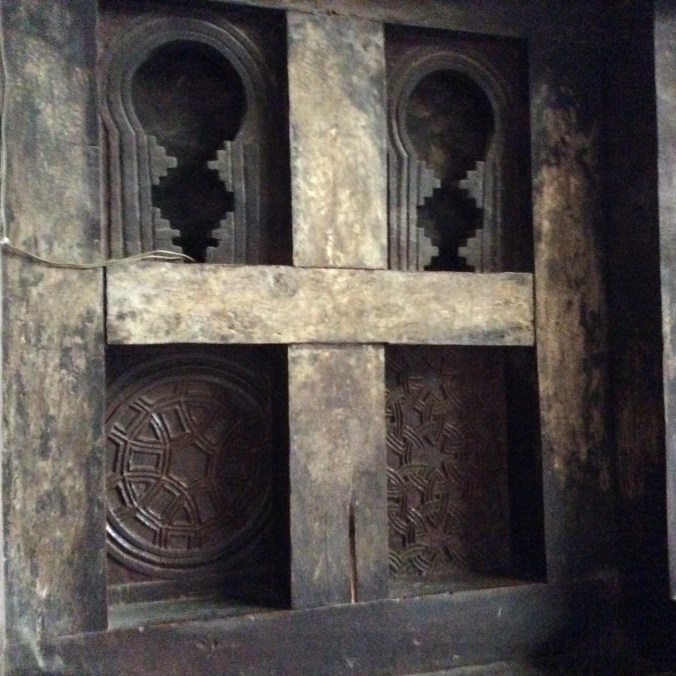
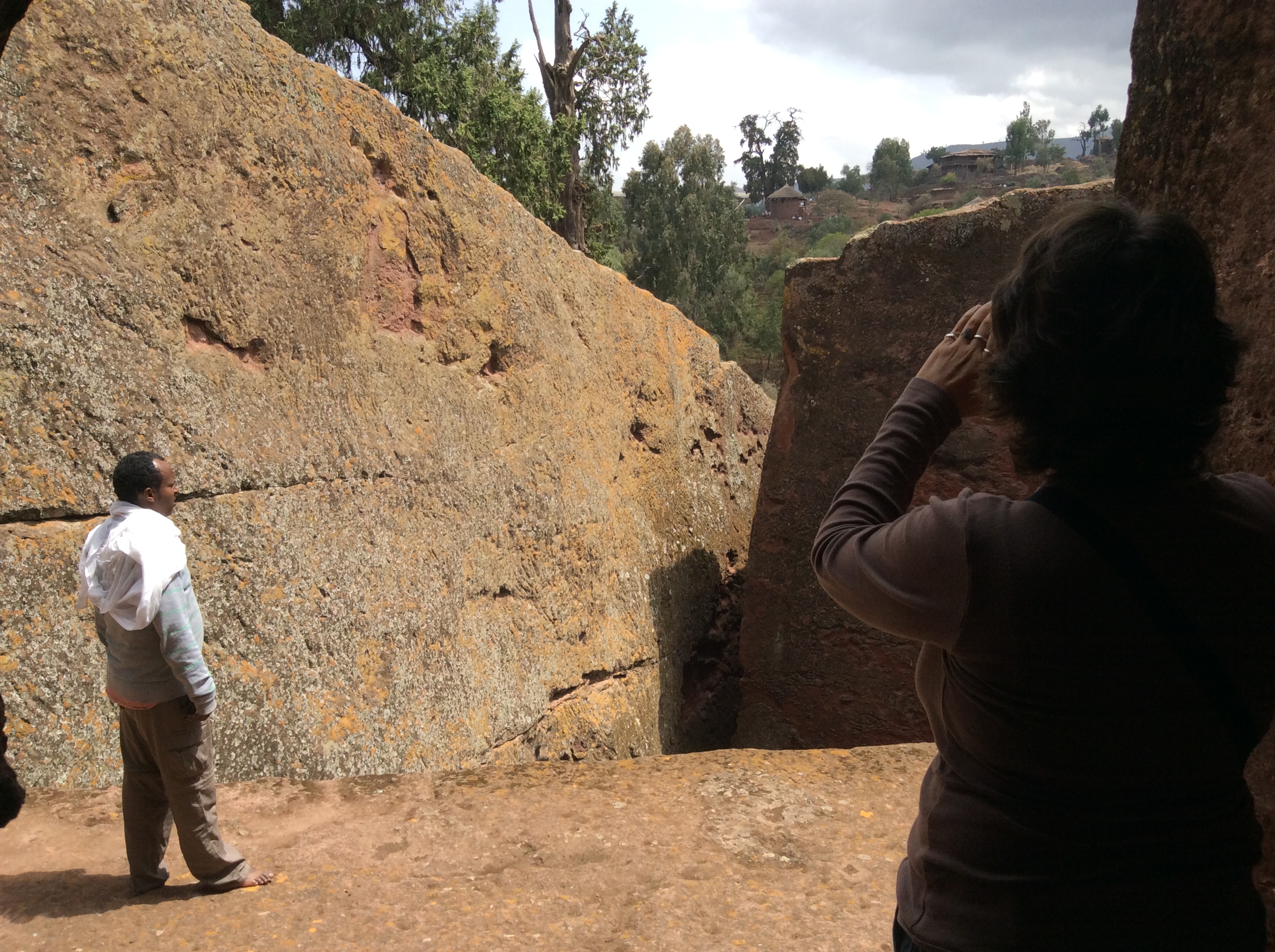
This is the first of the monolithic churches we visited.  Because the churches were built from the top down and actually cannot be seen until you are very near them, you have to climb down a lot of steps to get to the bottom level from which you can enter into the interior.  The “trenches” around them are the same depth as the churches are high because they were carved out of the solid stone.  As you look at these photos, you will notice multiple cross designs, including Greek, the type found in Axum, those referred to as Lalibela.  Every carving, every painting, every design possesses an explicit symbolic meaning.  I wish I had been able to record all the information provided by the guide.  This church, Bet Medhane Alem, is the largest of this type.  It’s approximate size is 33.7 meters  by 23.7 meters with a height of 11.5 meters (109.5 feet by 77 feet with a height of 37.4).  All sides have columns.

IMG_0399


IMG_0400

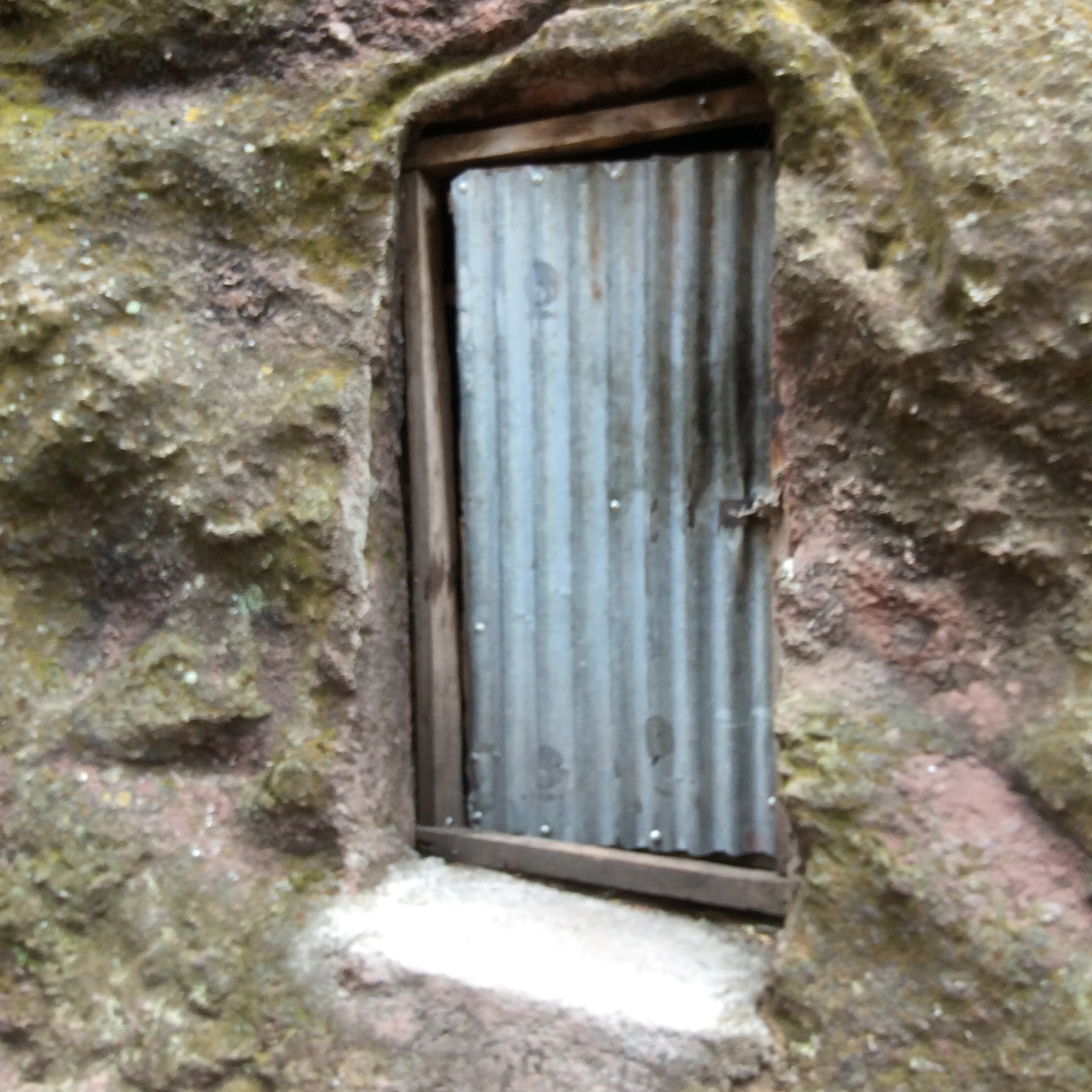
These churches are not mere tourist attractions.  We saw many people walking around, praying, and worshipping.  Services are still held here.  Carved into some of the “trench” walls opposite the church are tombs.  Those buried in these tombs have been removed and their graves now lie on either side of the River Jordan–photos of that later.

IMG_0398

The interior decoration includes detailed carvings, elaborate drapes, and paintings.

IMG_0403

Certain areas, like this one behind the drapes, only priests can access, mainly because they contain the sacraments.  The floors of all the churches are hard rock so all contain coverings of cloth, Persian type rugs, and bamboo.  Accessing the interior requires a lot of climbing up and down very worn, slick, stone steps.

IMG_0405

While smaller trenches and areas separate this first group of churches from each other, the entire group is surrounded by the deepest, large trench.  This is the next church we visited.  It lacks outside columns.

IMG_0407

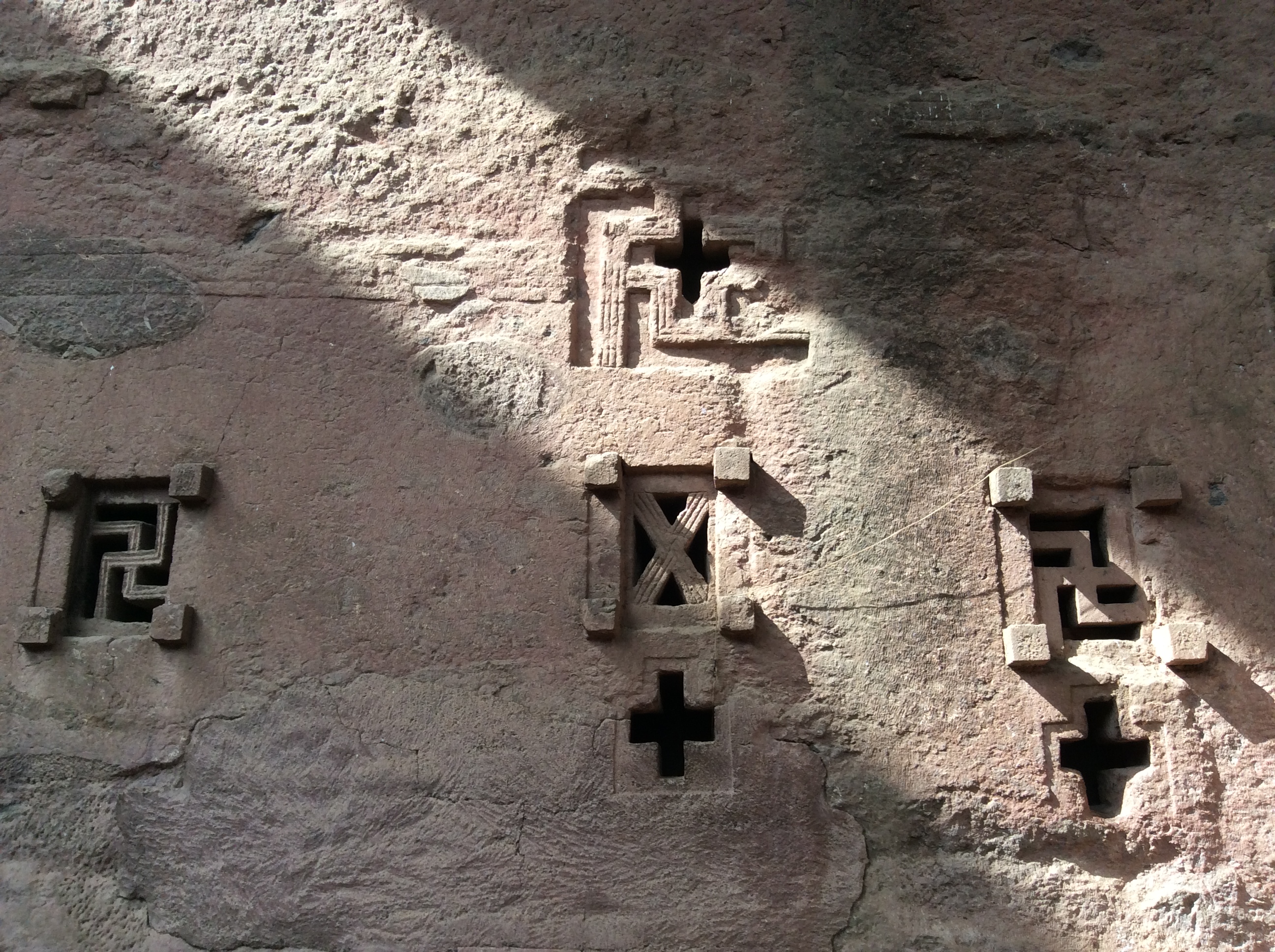
At first the sight of swastikas everywhere startled me until I remembered how old these churches are and the original meanings attached to this symbol.  Our deacon guide explained that they symbolize everlasting life (the circle of life) and also mentioned its meaning in ancient Hinduism–the continual, everlasting cycle of birth and rebirth.

IMG_0408

This is the fertility pool.  It is so deep that the priest must be lowered into the water attached to ropes as are the man or woman who wants treatment in this holy water.  At one point, someone realized that the pool was no longer as deep as it was originally.  When they investigated, they found the pool had been filled with dirt below where it could be seen.  When this dirt was excavated, a cache of ancient, holy artifacts were found.  They had been buried there to protect them.

IMG_0409

IMG_0411

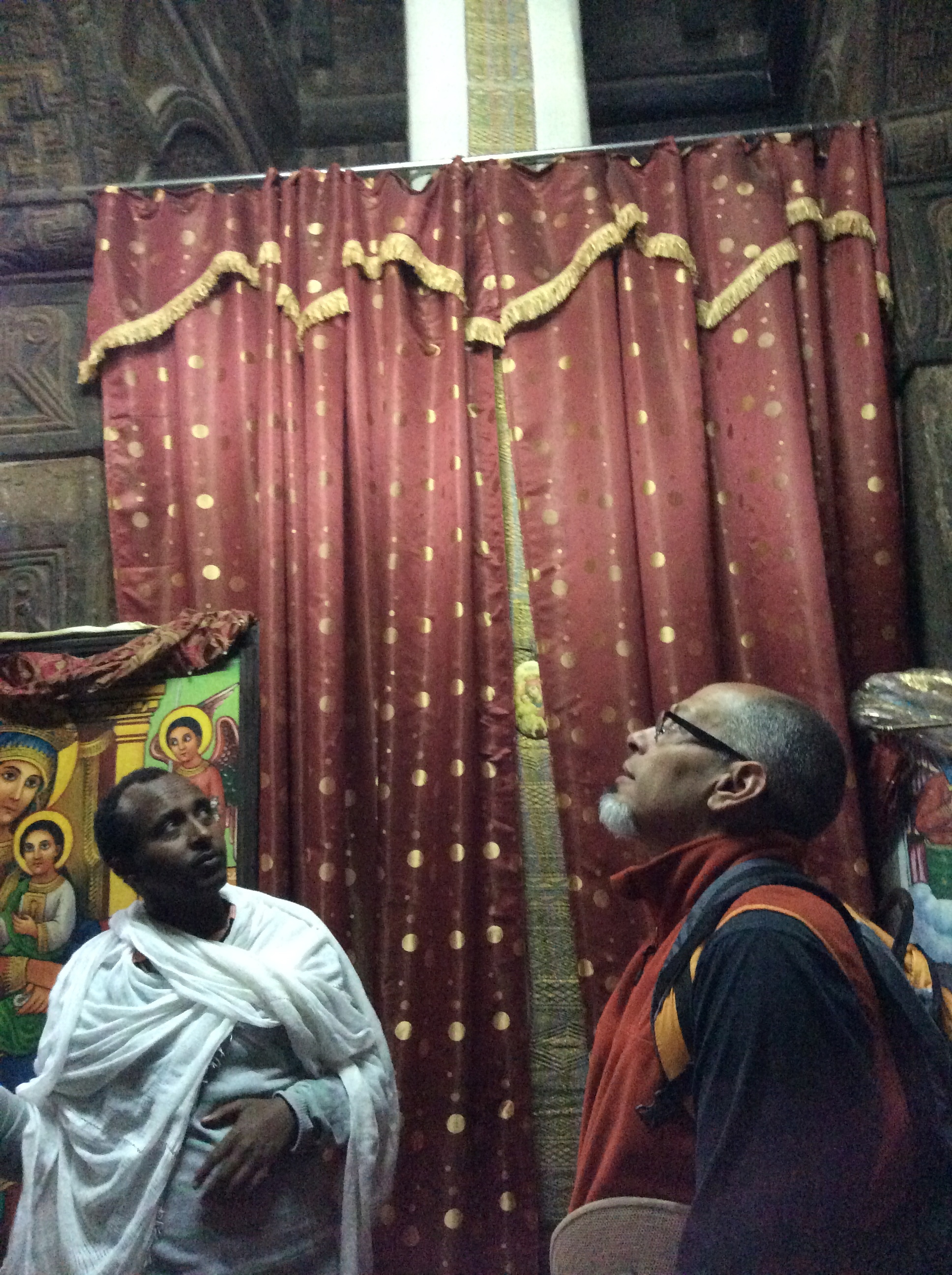
Ethiopians wrap themselves in white not just to go to church, but in general.  I constantly marveled how they keep these garments so incredibly white in spite of dirt and rain and walking through mud everywhere.  The person on the right is our guide, a deacon in the Ethiopian Orthodox Church.  He knows the meaning of every carving, every painting, every symbol.  The extent of information explained was not only detailed but extensive.

IMG_0412

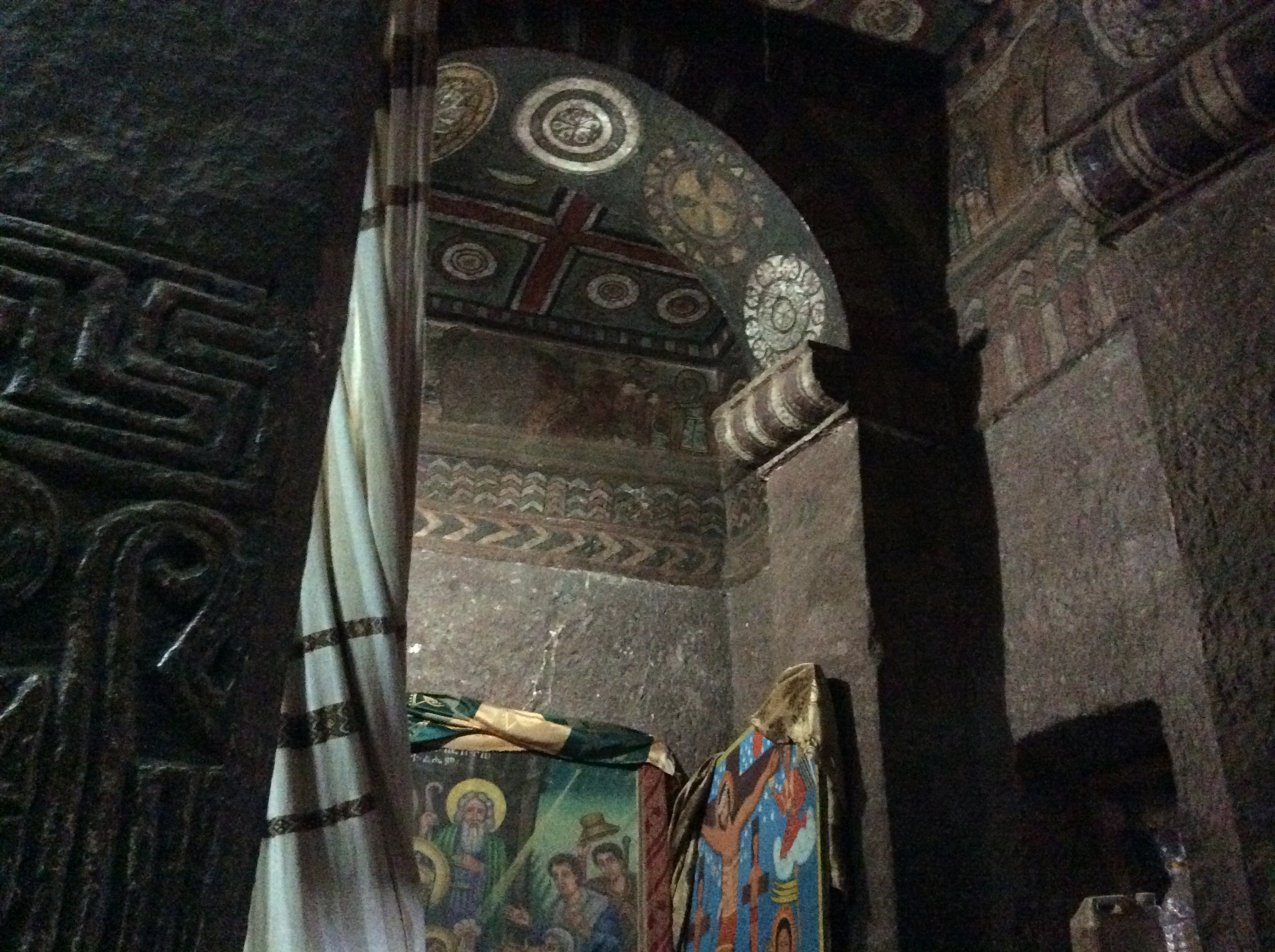
Only some of the churches possess paintings on the walls as well as carvings.  The wise men, Mary, everyone looks Ethiopian at least to some extent.

IMG_0413

Notice the Star of David.  This symbol is everywhere because the Ethiopians believe they are descendants of Solomon and Sheba.  As a consequence, the paintings, carvings, all the symbols reflect not only the New Testament but also the Old Testament.

IMG_0414

Every church has this curtain behind which only a priest can go.  Every church has a copy of the Ark of the Covenant.  They believe the original was taken by Menelik I, the son of Solomon and Sheba, to its current location in Axum in a special treasury next to the Church of Saint Mary of Zion.  It has been safely kept there through the millennia.

IMG_0415

IMG_0416


IMG_0417

Protective roofs cover some of the churches.  The guide explained that the hardness of the basalt varies.  Because some of the stone is softer, churches carved out of this softer stone had begun to deteriorate.  The coverings protect and preserve them.
IMG_0419

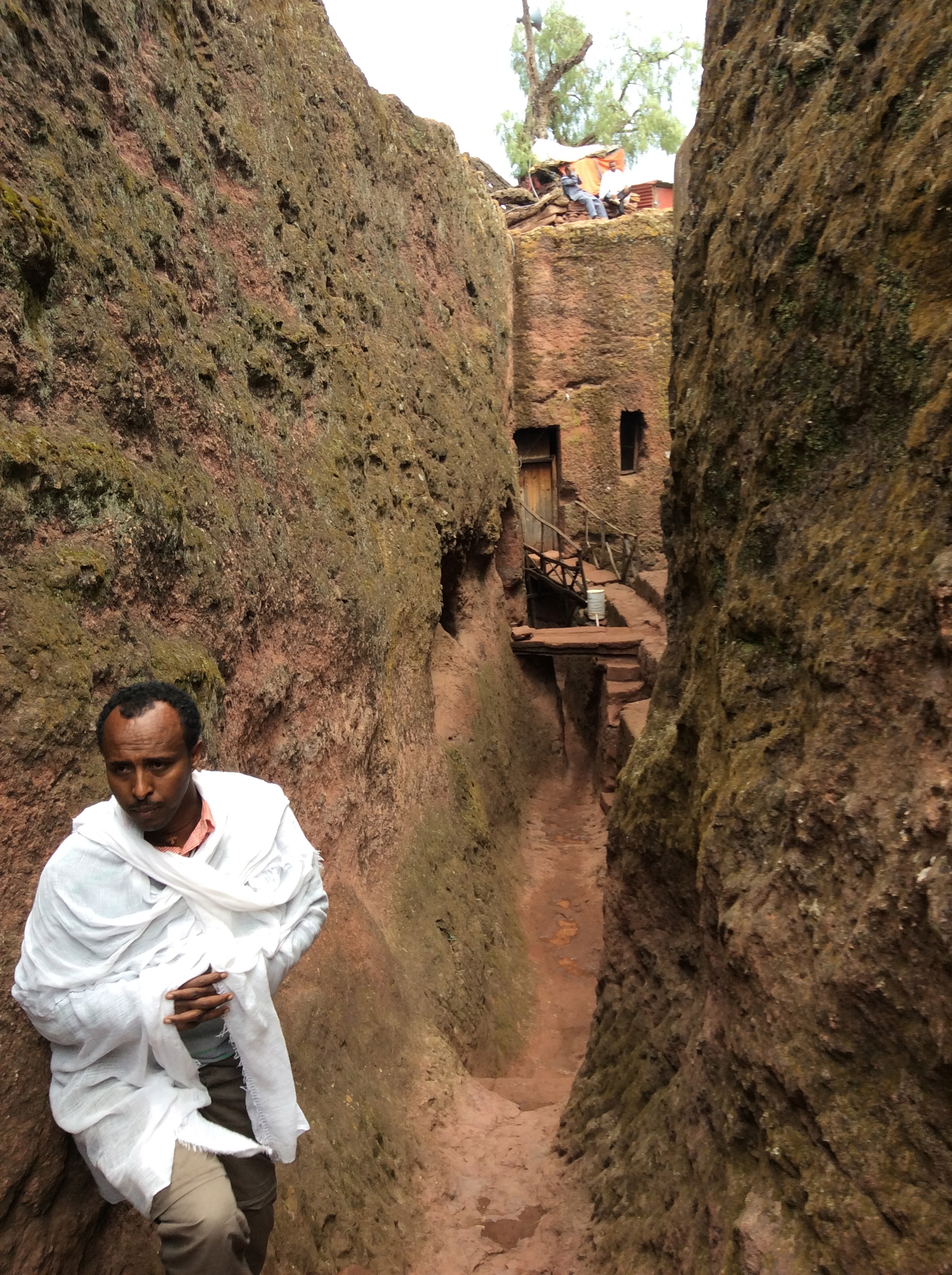
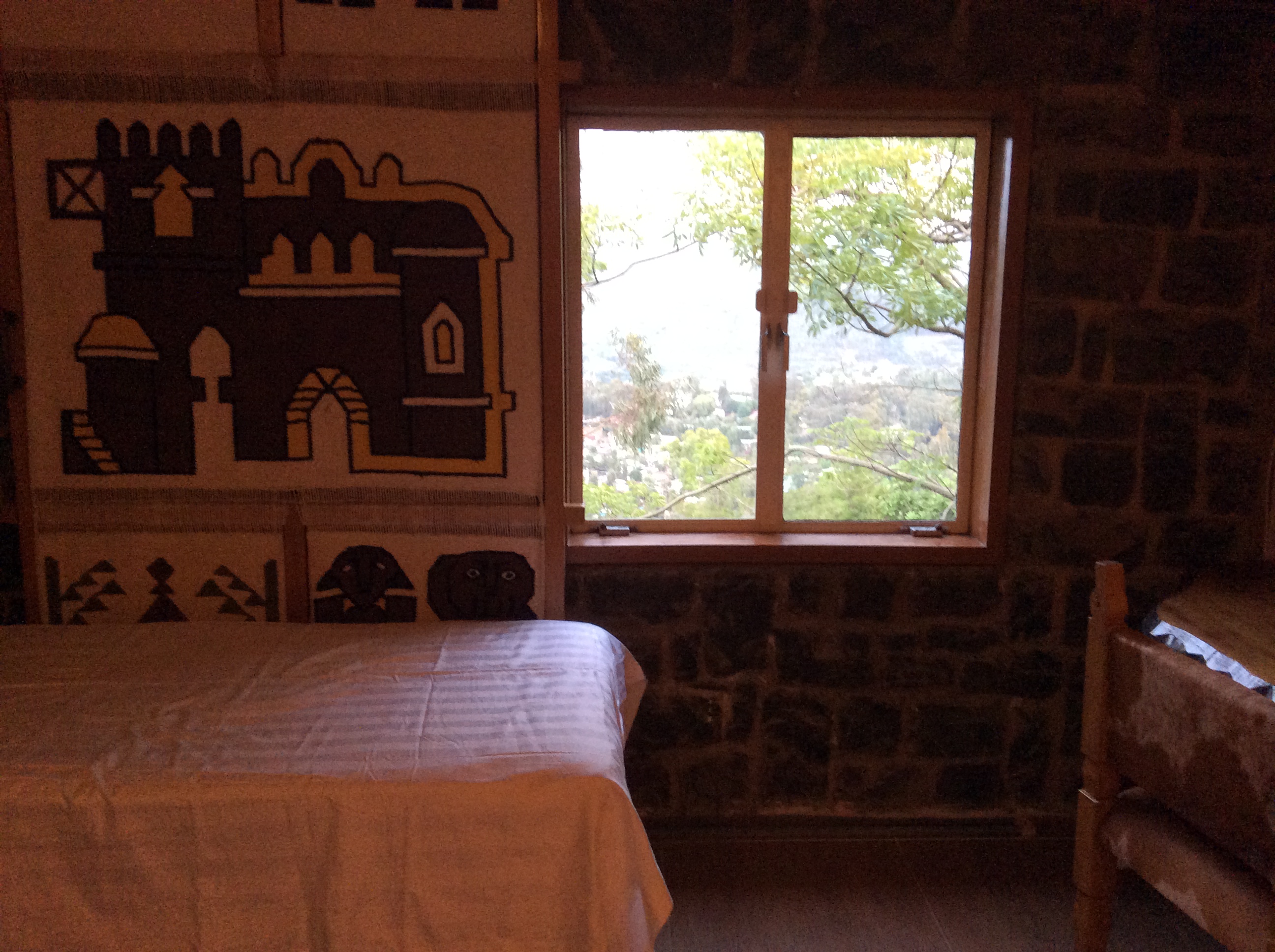
To get from church to church in this first group of churches, usually we walked through these trenches.  To reach the actual church entrances requires climbing up steps.  These trenches enable water drainage into the River Jordan during the rainy season.  The floor of the churches remain above the water.
IMG_0420

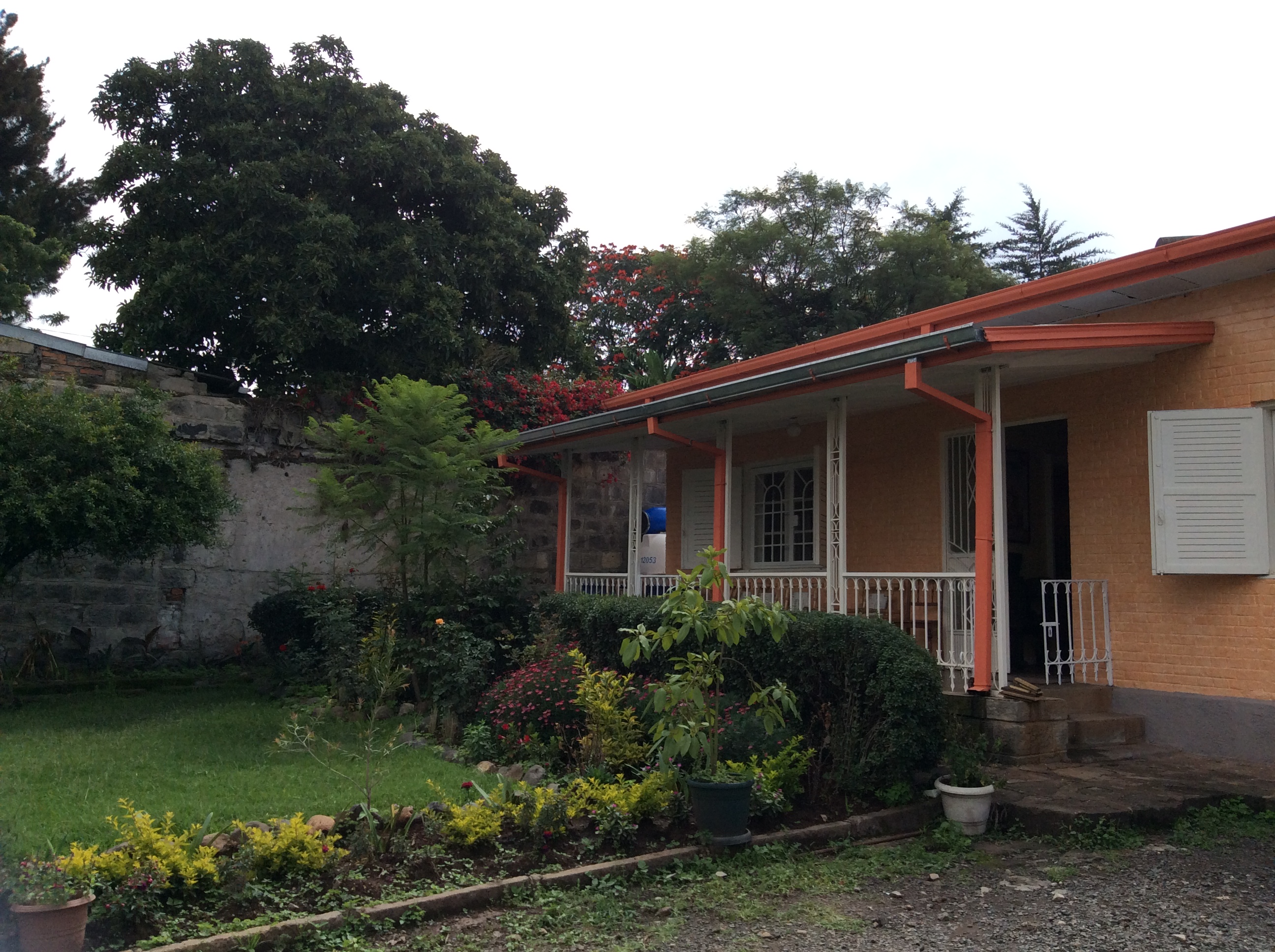
Walking through these churches kept me in a constant state of awe.  They were built more than 800 years ago without modern tools.  And there are eleven of them all here, carved out of solid stone.

IMG_0421

St. George and the Dragon hold a prominent place in Ethiopian Orthodox symbolism.  The dragon represents paganism.  St. George slated the dragon.

IMG_0422


IMG_0423

We left this  group of churches, climbing out from this trench and headed to one of the most photographed.

IMG_0425

We encountered two walking funeral processions complete with chanting.  I took no photos because it seemed disrespectful.


My Ethiopian Adventure–the Beginning


After leaving the US on July 2, flying 14 hours to Dubai, spending a day there, I finally made it to Addis Ababa (also spelled Abeba) on the 4th.  I remained in Ethiopia until this past Monday when I left Addis late in the afternoon.  Blog posting from Ethiopia was limited because wifi is available only in certain areas and places and there is no 2,3, or 4G anywhere.  For those of you who saw my four posts from Ethiopia, some photos and a few details may be repeated.  My plan is to post photos and detailed information now that I am back which will require a number of posts because not only did we go on a ten day road trip, we also spent time in Addis Ababa and Adama (Nasret).

I went on this trip with two friends, a couple.  Dino is from Ethiopia, having grown up in Dire Dawa.  His parents now live in Adama where his father owns and runs a printing press.  Two of his sisters and one brother live in Addis.  We spent the first few days before our road trip in Addis, staying with his sister, Anna, who owns a painting company.  She imports the paint from Italy and her clients include individuals and businesses.  Her company also paints cars.  Of course, she painted her own house with this paint.  I loved the colors and textures.

IMG_0209

The front of Anna’s lovely house.  It is the rainy season and flowers grow everywhere.

IMG_0206

IMG_0207

IMG_0208

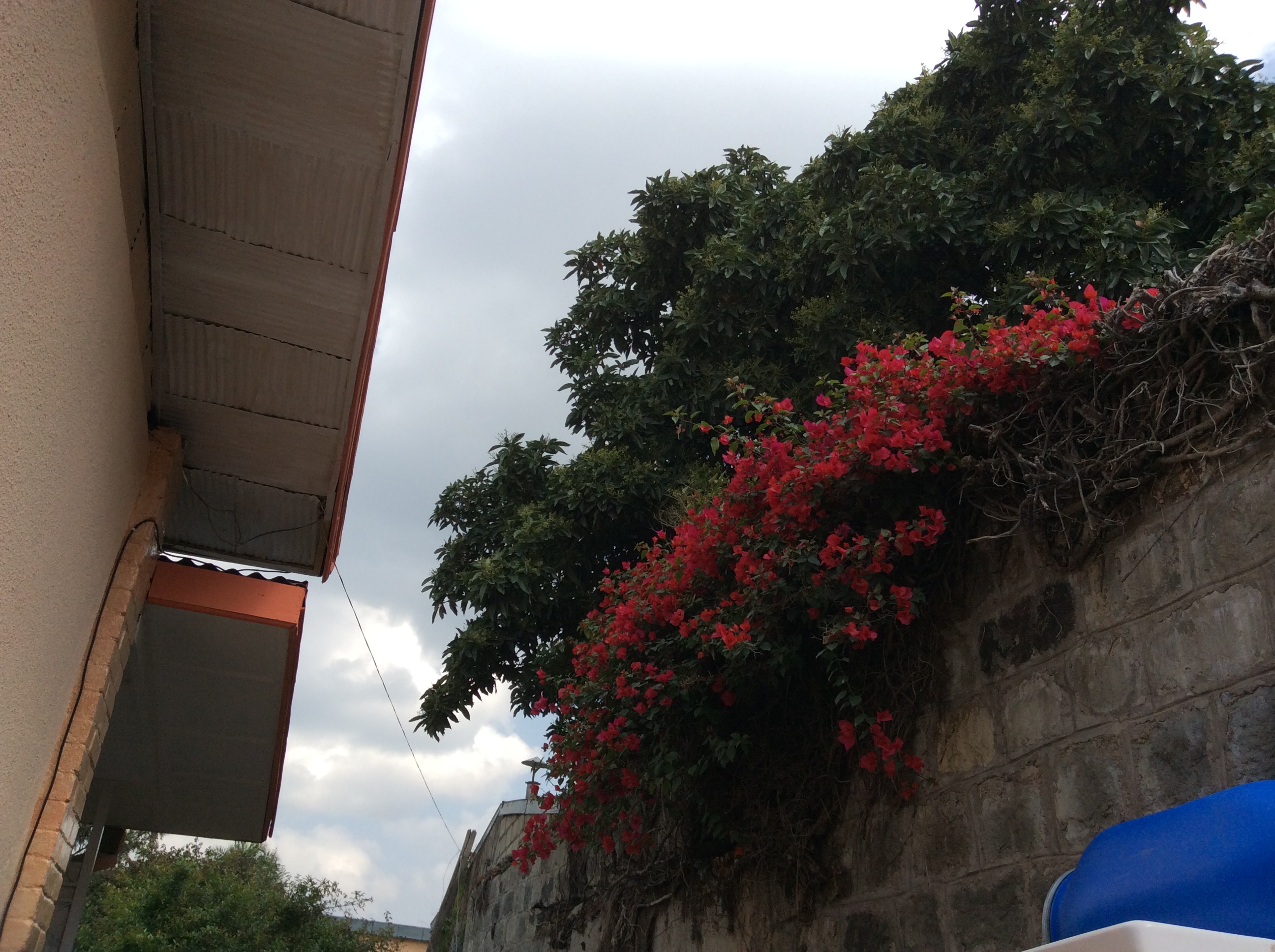
The translation for these orange flowers, which I had never seen before, is flowers of the sun.

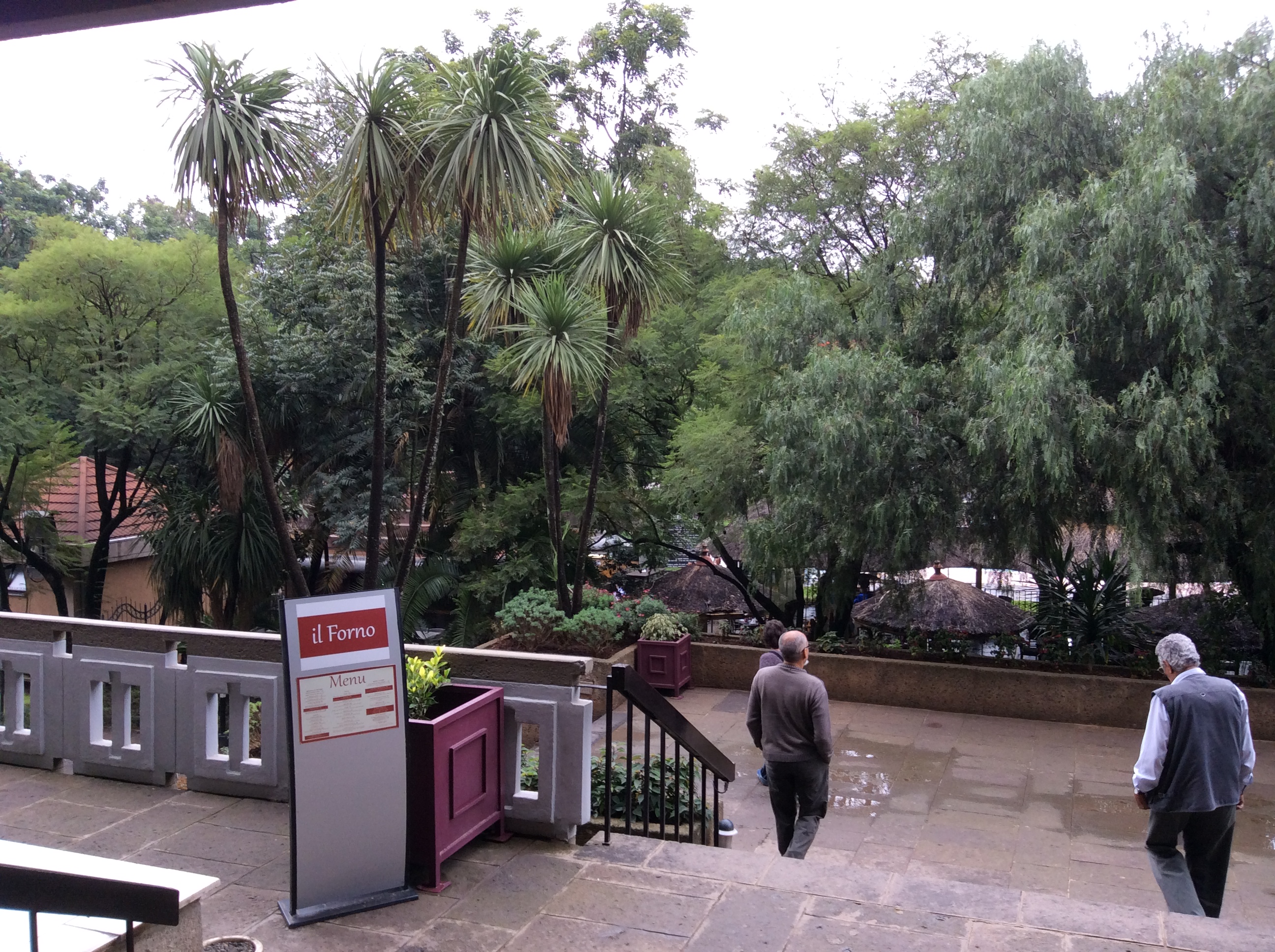
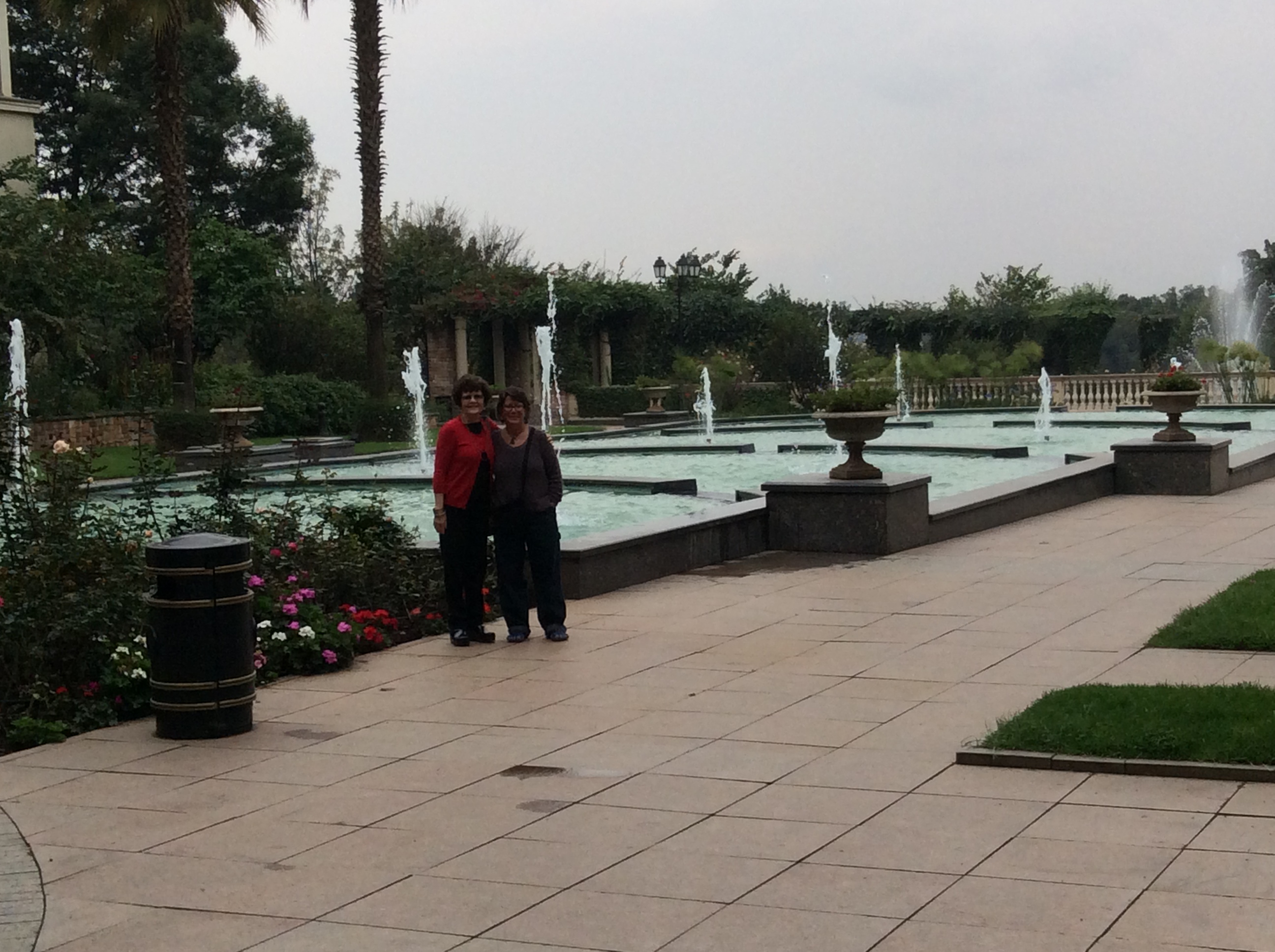
One afternoon four of us decided to take a drive around Addis to see some of the more beautiful spots which mainly included the Addis Hilton Hotel and the Sheraton, which is a five star.  Carlo, Dino’s father drove.  What a remarkable man, in his 80s and still getting to work at 6, driving everywhere.  The Hilton is the older of the two.  The grounds of both display lush greenery.

IMG_0216

IMG_0218

Zuriash and I enjoying the grandeur.

IMG_0219

Papyrus by the pool at the Sheraton.

IMG_0224

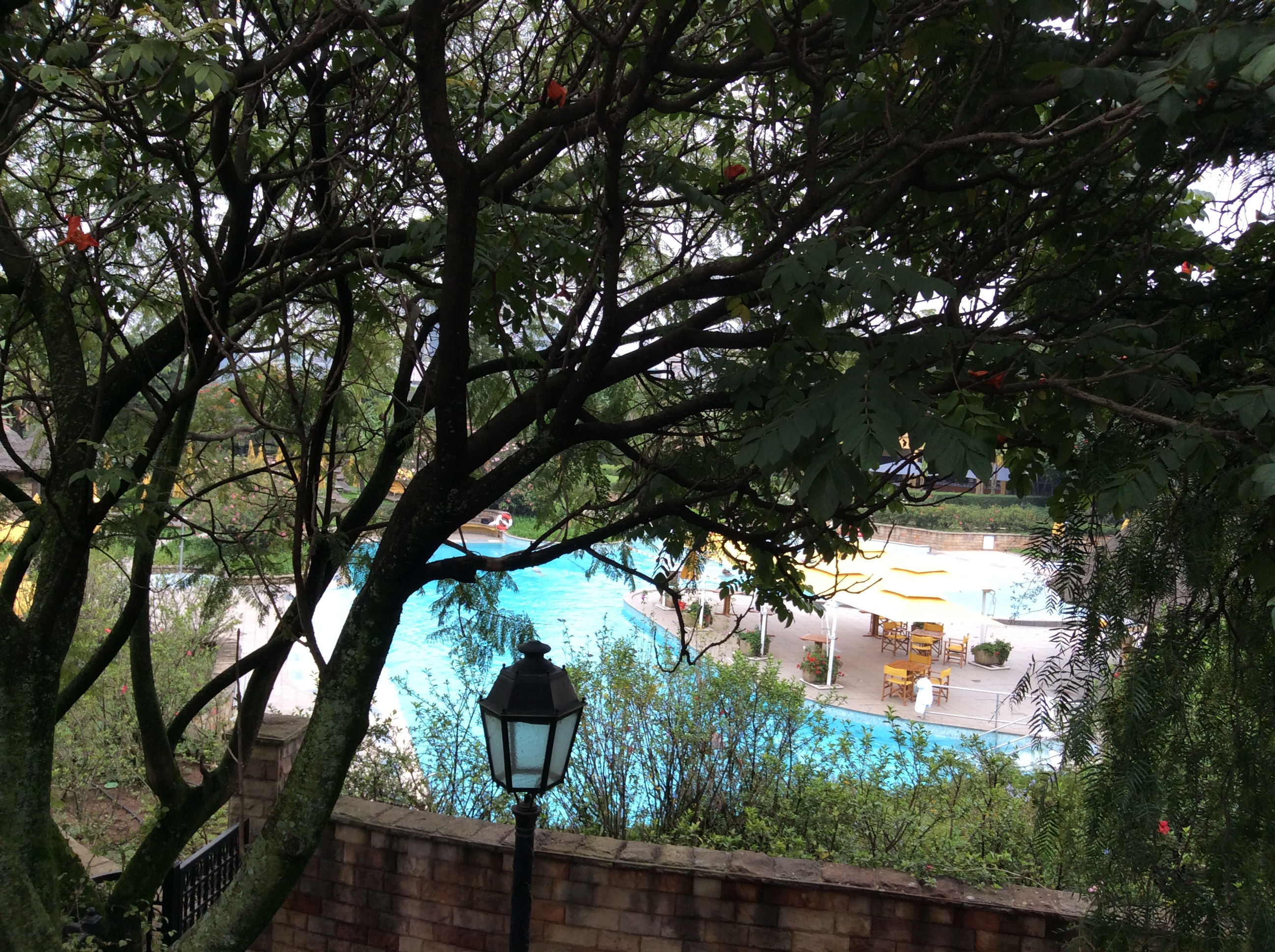
The swimming pool at the Sheraton.  You cannot use it unless you are staying there.  However, the pool at the Hilton is available on a membership basis–you do not have to stay there to use it.

IMG_0226

The rooms at the Sheraton overlooking the gardens and pool.  Dino and Carlo, son and father, walking down the path to the pool area.  Apparently, many visiting dignitaries stay here.  Inside walls are filled with excellent local art.

IMG_0227

And then there is Addis traffic.  Approximately six million people live there.  In five or so days, riding here and there all over the city, I saw only two traffic lights, neither of which worked.  Most large intersections contain a traffic circle and around and around you go trying to wiggle into a space and get across the intersection.  Take a look.

IMG_0210

Trying to drive to Guiseppe’s house, Anna driving, we were stuck here.  The big trucks would not let us through.  Finally, a guy in another car, got out, stopped the trucks and waved us on.  It took us 1 1/2 hours to get there.  A couple of days later, he came to Anna’s in twenty minutes.

IMG_0214

In front of Guiseppe’s house.  A typical residential street, sometimes like this one with gates on each end.  People hire someone to watch the gates.  You honk and they are opened and then closed.

IMG_0215

On the last evening before we began our ten day road trip, Anna took us to a cultural restaurant to eat traditional food and watch the dancing from different parts of the country.  I expected it to be just a tourist spot, but no, many locals were there.  During the dancing, locals competed with the professionals to see who could dance the best.

IMG_0242

This dance requires almost no motion except a lot of shoulder action.  I attempted to do it myself when the man behind the girl in white came over and asked me to dance.  I tried but would have to practice forever to get this one right.

IMG_0243

The young men in the background competing.

IMG_0229

Anna and I in front of her house.  She is wearing a traditional Ethiopia dress.

Happy Birthday to Suzanne Gelber Rinaldo


Suzy and I met as freshmen at Grinnell College in Iowa.  She was from a suburb of Cleveland and I from a farm in Northwest Missouri.  We decided we wanted to be roommates the following year.  We remain friends still after all these years even though we usually live far apart except for a brief time when we both lived in Rhode Island.  She married David Rinaldo, who attended Grinnell with us.  At least once a year one of us goes to see the other.  We seem able to pick up conversations as if we had just talked a few hours before.  Last year my daughter, grandson, and I drove to California and spent five days with them.  This year they will come to see me.  We remain the perfect example of that trite phrase, best friends forever, BFF.  On the left side of my fireplace a tiny painting she gave me when we were in college still hangs.  I wrote this poem about it last year.


The Gift


On the wall for forty years,

a copy of some famous painting:

almost everything a strange dark

shade of blue, a blue not quite

blue, the merest hint of green,

antique cupboard, curved table

base, ladder back chair, window

frame, even the tree outside.


The only exceptions:

white table cloth,

newspaper in the lady’s hands,

her pale pink floral dress with tiny

darker pink flowers,

large copper antique teapot

in the cupboard, the black and copper

pots on top.  Her teacup, saucer, plate

of toast, white and blue, an old Danish pattern.


I’ve kept the gift,

hung on too many walls to count.

My college roommate, the giver, said,

“This reminds me of you.”

I look at it, all these years

have wondered why.

We’re still friends.

I’ve never asked.


SAM_1572

My Dad–In Memory


Today in the United States is Father’s Day.  As I drove home from Dallas through the green countryside, I noticed a few places looked like the landscape in Northwest Missouri where I grew up.  My great grandfather from Switzerland homesteaded there in the 1800’s.  My dad lived on that farm all of his ninety years.  A year ago in June, I went back for a long weekend, visited the land I still have on the home place and drove to Rulo, Nebraska, where we used to go eat catfish and carp.  The last flood nearly demolished the place where we went.  Driving along, I reflected on the scenes I saw there last summer.

SAM_1167


This is the house where I grew up and the building in the foreground my dad built long before he married my mom and I was born.  During the Depression, when it was new, he occasionally held dances there and the sheriff stayed to make sure there was no moonshine. My dad lived in this house 80 of his 90 years.

The following is a poem I wrote about Dad after my visit there last summer.  There used to be a lake behind the house with a large grove of burr oak trees surrounding it.  The lake is still there but the beautiful trees are gone except for one lone tree, the rest bulldozed down.  This poem is in my collection of poetry, On the Rim of Wonder.


My Father

He watches:

The house where he was born

gone

Only the old carriage house stands.

The young man who farms the land cannot bear to tear it down.

He watches:

The ancient burr oaks and black walnuts

gone

bulldozed into waste piles or sold for greed.

He watches:

The house he lived and loved in for eighty years

still stands on land his family owned more than 150 years.

Strangers live there.

He sees the well trimmed lawn,

new picket fence

children playing.

He watches:

The pond he proudly built and stocked with fish reflects the summer sun.

The tree filled park between the pond and house

gone

He wonders why someone would destroy such beauty.

He watches:

The walnut grove where he ran cattle

gone

The pond where his grandson caught the giant turtle

gone

plowed over and planted in corn and soybeans.

He watches.

SAM_1165

The old carriage house.