My Aunt Julia, Mom’s sister, lived to 94. She loved fine antique china, linens, and French furniture. The ordinary bowl in this photo defies those inclinations, its origins a mystery. How did she acquire such a plain bowl and why? I will never know. In spite of its age, cracks, dull finish, I have used it every morning for decades. It is my breakfast bowl, filled with yogurt or cottage cheese with dried blueberries and a handful of walnuts, or, occasionally, oatmeal.
The spoon, on the other hand, is not ordinary, but rather good silver from the set Dad gave Mom on their first wedding anniversary. Unlike Mom, who saved her good silver for holidays and special occasions, I use these spoons daily and think of her unconditional love, strong will, determination, and love for beauty.
Ten days ago I took the final photos of the house I originally built as my dream home. Events occur, life changes, new adventures await. Final photos taken from the patio, great room, and walkway to the barn of the house where I lived the last 13 years.
Now I am in The San Gabriel Valley in northeastern LA County house hunting. The trees here, the flowers, the succulents astonish. Purple jacaranda trees in full bloom line many streets. Yesterday evening while out strolling around the hotel grounds for some exercise, I saw the largest humming bird I have ever seen. I feel excited to start this new adventure.
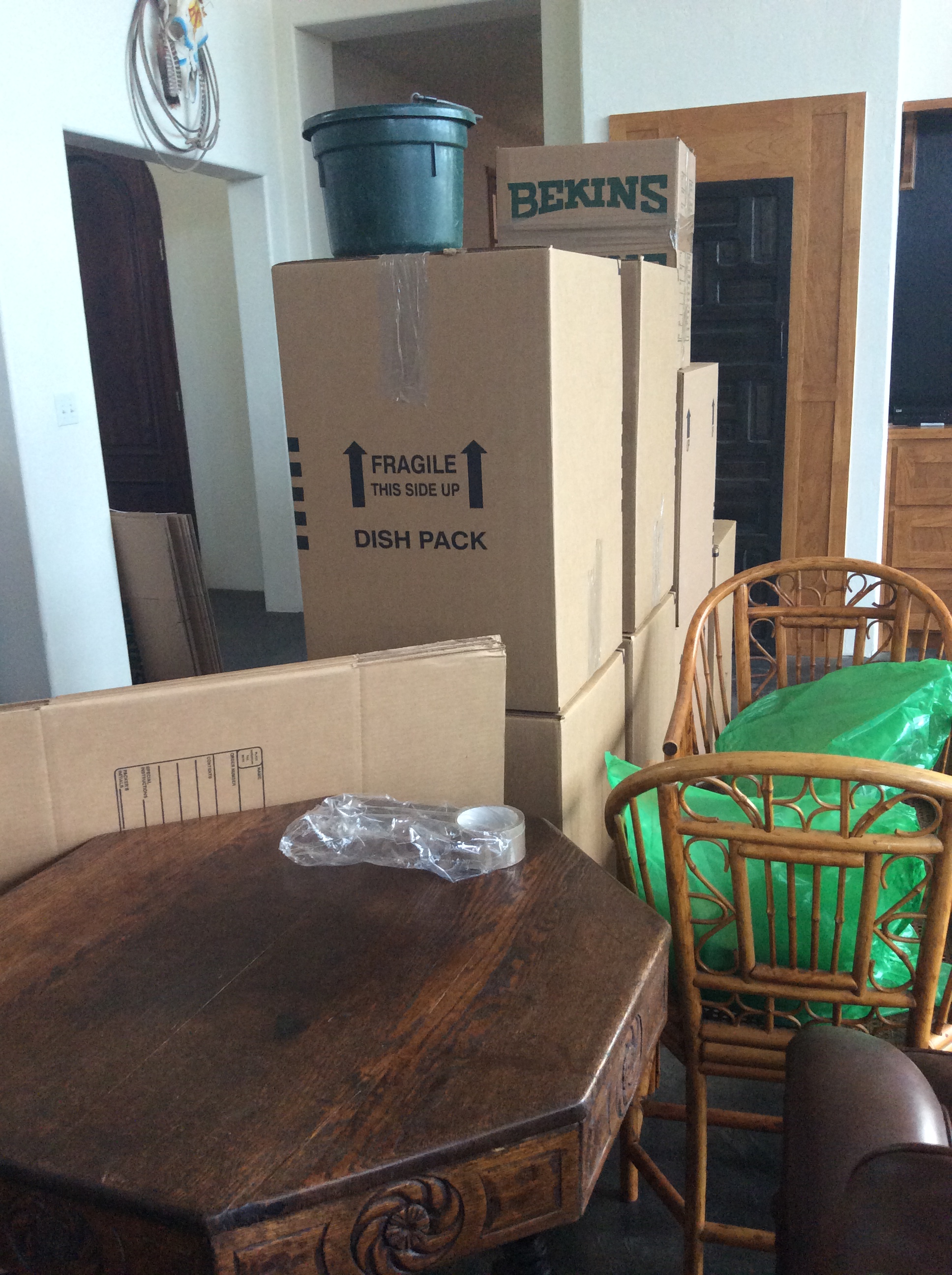
This morning my house looked close to normal in spite of all the packing I had already done. I began with meditation, made coffee same as always, completed my yoga routine, ate some yogurt with walnuts. Normal ended there. I moved the car out of the garage, hiked to the gate and opened it, waited for the professional packers, figured it would take them two days. These two guys–twins probably in their 50s–are speedy. Even after getting lost and finally arriving close to ten and taking a lunch break, they have packed a lot of my life today.
Mom’s crystal, hand-painted dishes, Grandmother’s (whom I never knew) dishes, the silverware Dad gave mom on their first wedding anniversary, all the little painted china pieceds D’mitri made for me reside somewhere in these boxes.
These hold CDs and movies collected over a couple of decades, corn maiden Kachina dolls, a Navaho hoop dancer, Talavera pots, a Thai spirit house–so much of me.
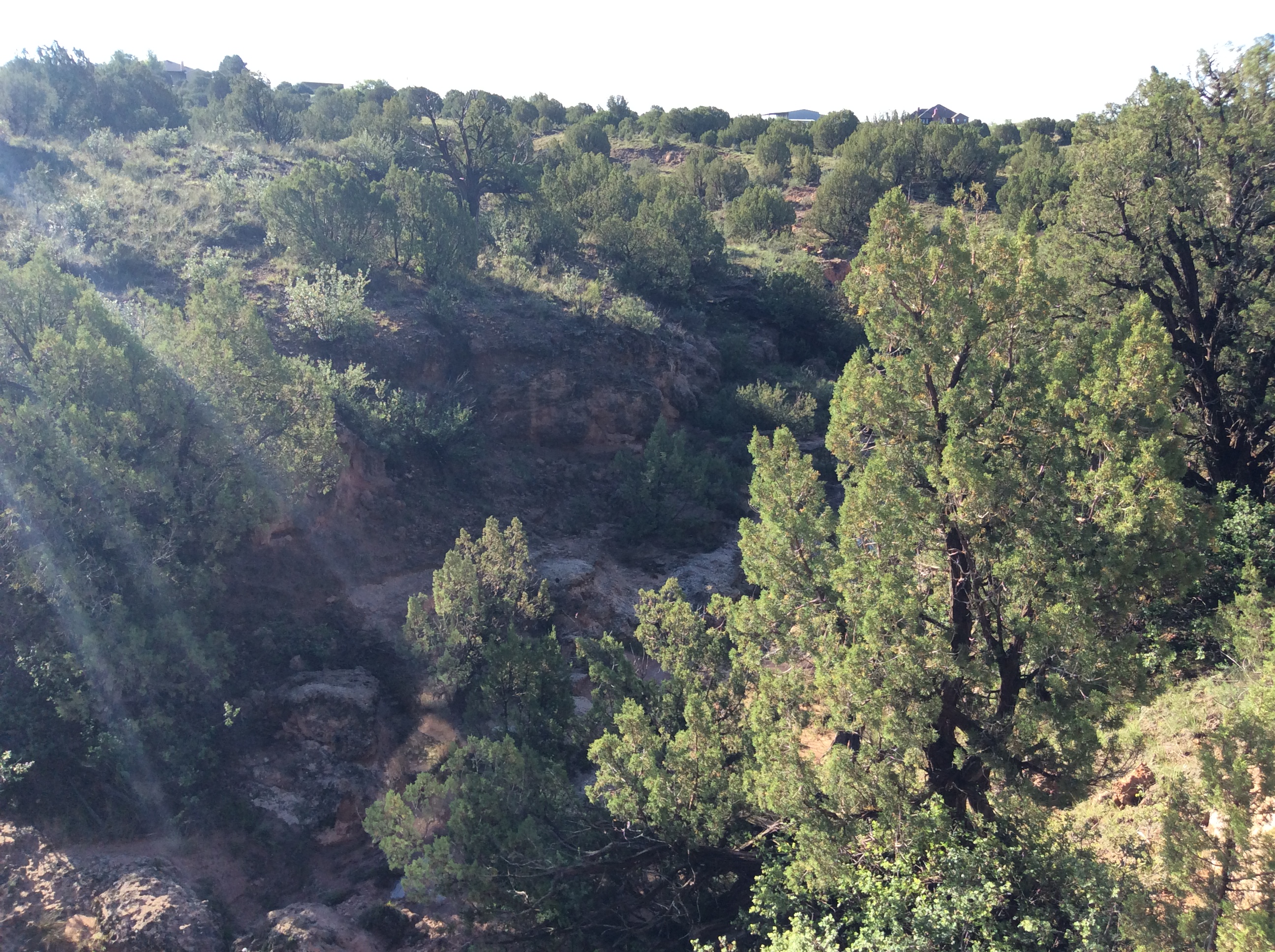
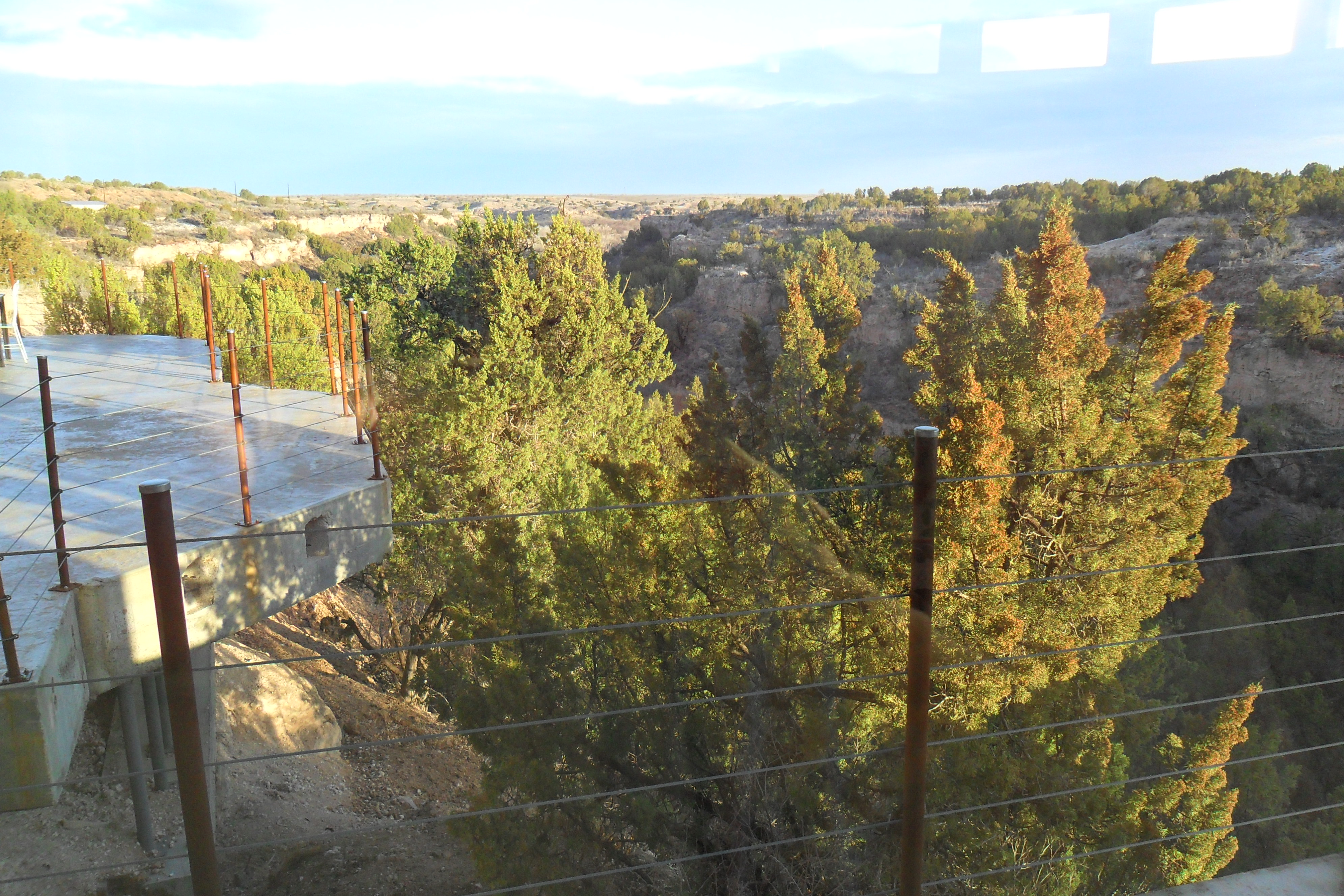
I thought last night would be my last here, but I am staying tonight. All they have left to pack now are clothes, the TV, and this computer. They said they would leave this to last so I could still use it. It is a lovely evening looking down the canyon, a golden light hard to capture with an iPAD.
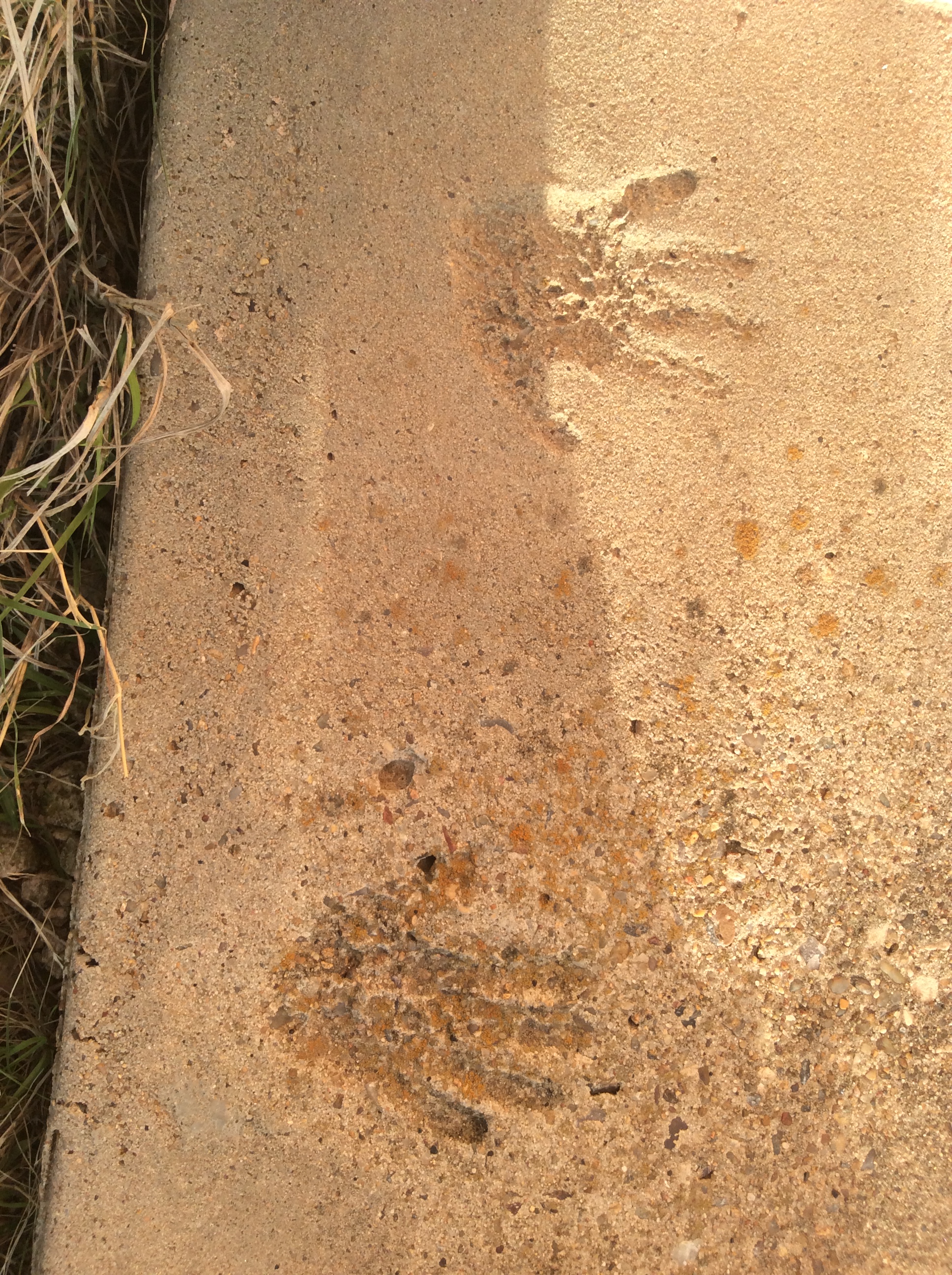
One of the hardest things to leave is D’mitri’s four year old handprints in the cement by the garage. He graduates from high school one year early on Friday. Yes, I will miss this beautiful setting, what I thought was my dream house, the canyon, the wildlife. Nevertheless, I am looking onward to new adventures in a new setting, making new friends, and seeing old ones more often whom I rarely see now.
One of my fellow elementary school students from decades ago posted a quote on Facebook, the topic of which is STUFF. The gist of this is that STUFF rarely makes your life better, usually costs money, fails to contribute to wonderful memories, and provides little in the way of happiness. The timeliness of this post really hit me. Where have I been lately? Certainly not doing much blogging. In addition to working full time, my recent endeavors focus on getting rid of STUFF as in took 35 pounds of paper documents to the shredder and there is more to come, hauled one load of clothes I no longer wear to the shop for Downtown Women’s Center and another load is stacked up on a desk, gave 20 books to the school library and some to the local bookstore, lined up glassware from flower bouquets sent to me to take to the florist on Tuesday on way home from work, and I just got started. More boxes remain to attack.
How did I acquire all this STUFF, and more importantly why did I keep some of it for decades? Perhaps easier to haul it around than to address the problem. Some of it was so old, it even shocked me why I still had it. Now that I am done for today getting rid of more STUFF, I am going to take a walk in the sunshine and admire the yellow wildflower carpet beautifying my land.
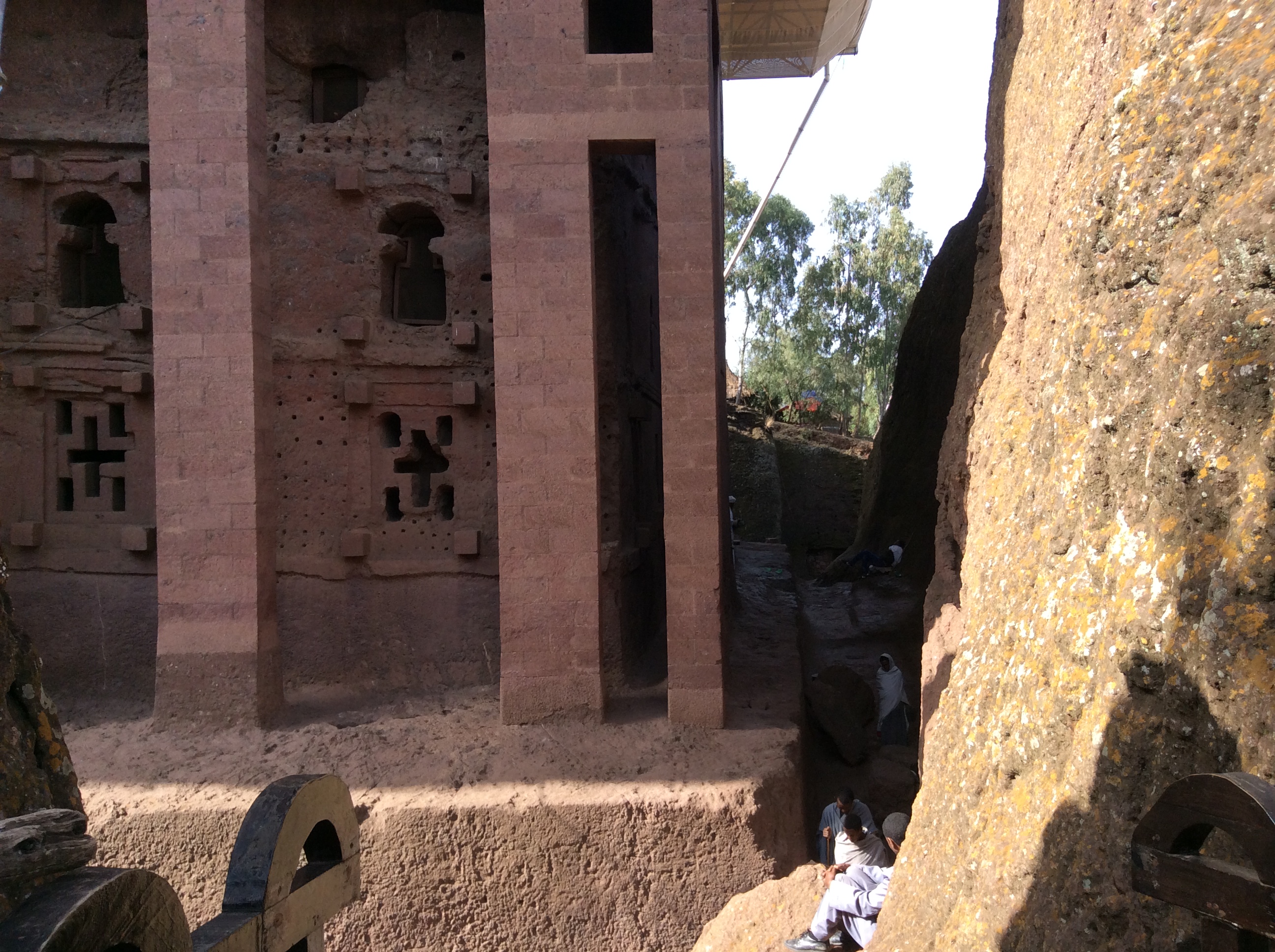
Last night part of 60 Minutes featured these churches. Several years ago I went with friends from Ethiopia to see them. We spent almost an entire day hiking through around and up and down all eleven of them. I decided to travel back a few years and relive my experiences there and share it here.
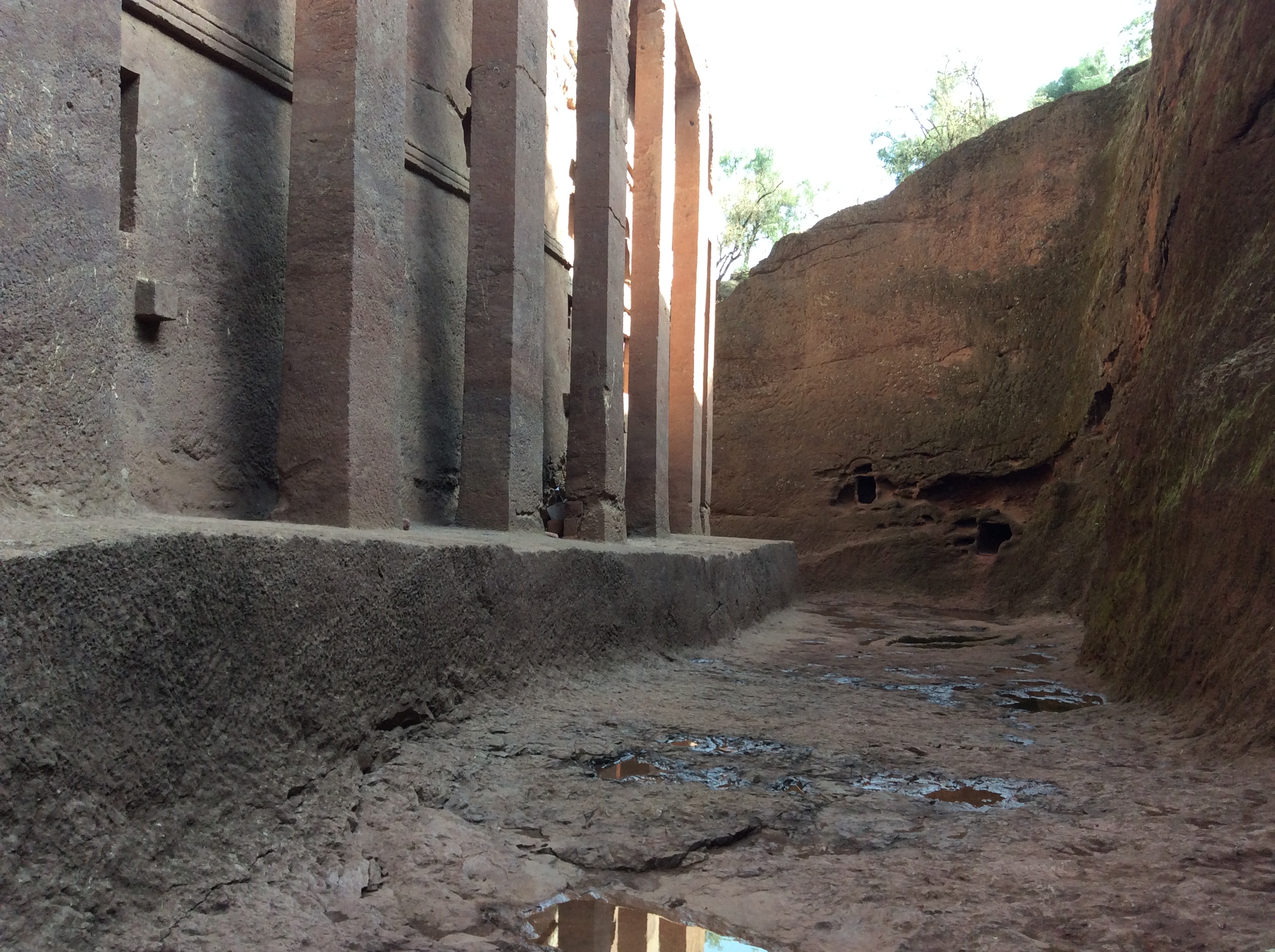
800 years ago these churches were carved from the top down out of solid stone. They dug a trench deep all around what is now each church and then worked from there. Everything is stone, including the interior columns and spaces.
There are areas around all the churches and drainage canals so they do not flood in the rainy season.
The inside of each church is decorated with carvings, frescoes, and wall hangings.
Because 800 years of wear and tear and especially rain was beginning to take its toll, they covered them several years ago. Now, according the the architect on 60 Minutes, they are experiencing the opposite problem. The stone is getting too dry and contracting. They are teaching local people how to preserve the stone so it will last hundreds more years.
Dino, my Ethiopia friend, and the guide, in white.
Why the ridiculous looking socks? Fleas are a problem. Many of the churches have old carpet on the floors, thousands of people still workshop in them regularly. We were told to spray our ankles, tuck our pants inside out socks, spray our socks. It worked.
And here is probably the most photographed of them from up above. Yes, you do get to climb all the way down there if you want to go inside. We did. The story goes that the king went to Jerusalem and wanted to create an Ethiopian Jerusalem. There is a river nearby which they call the River Jordan. As you tour, they explain every detail and how they match passages and stories from the Biblical Jerusalem. How did they build all of these out of solid stone? With the help of angels.
When I was a child, we lived on a farm where it rains around 40 inches annually. On the Fourth of July, Dad always shot off a few Roman candles, and we had small firecrackers and sparklers, nothing fancy, just fun. Even then I knew about the Declaration of Independence, revered its message. Still do.
Now I live where it is hot and dry. The neighbor’s fireworks display rivaled those found in cities–beautiful but dangerous in brown grass country. I wonder if they give any thought to the history, to why anyone celebrates this day.
For the first time in the decades of my life, I did not celebrate Independence Day. Why?
Born decades ago, I originally went to college in Virginia where I experienced the shock of real segregation; I had not grown up where it was like that. I was horrified, lasted only one semester, then transferred. Later I attended a college which shut down in protest over the Viet Nam War, I supported The Civil Rights Movement, I helped create one of the first intercollegiate groups to advocate for abused women, and with an ethnically diverse group I taught diversity classes for teachers.
Now in 2020, I feel that even with all that hard, determined work, progress has been too limited. It is as if I have been transported back to 40 years ago. People need to learn from the history most do not even know:
-Cotton Mather, the leading intellectual and Puritan minister in the colonial era, actually helped butcher King Phillip (Metacomet) like an animal. What did he do to deserve this? He tried to save his Native people. Cotton Mather later writes about tearing Metacomet’s jaw from his skull.
-In 1676, when poor whites joined enslaved Africans to rebel for a better life and decent living conditions, fighting for justice against the wealthy planters, those rich planters realized they had to get poor whites to hate Blacks. They took land owned by Blacks and gave it to poor white people and then paid them to hunt down and abuse, even kill, people of African descent.
-Later, the same Cotton Mather mentioned above, learned from his slave that in Africa, Africans had been taking pus from a smallpox infected person and inoculating others with it to prevent smallpox from spreading. He refused to believe any African could be so smart even though he inoculated himself and his family after learning this. Later, he wrote this about his African slave who had told him the story that may have saved his life: “…brokenly and blunderingly and like Idiots they tell the Story.”
-Of course, we all know that the intellectual giant, Thomas Jefferson, held the deed to the woman who would later bear him numerous children while he proclaimed those famous words that all people are created equal.
The history of racial and ethnic hatred goes back to the inception of this country. It continues to poison progress and hope. It never seems to end. I am tired of it. Enough is enough.
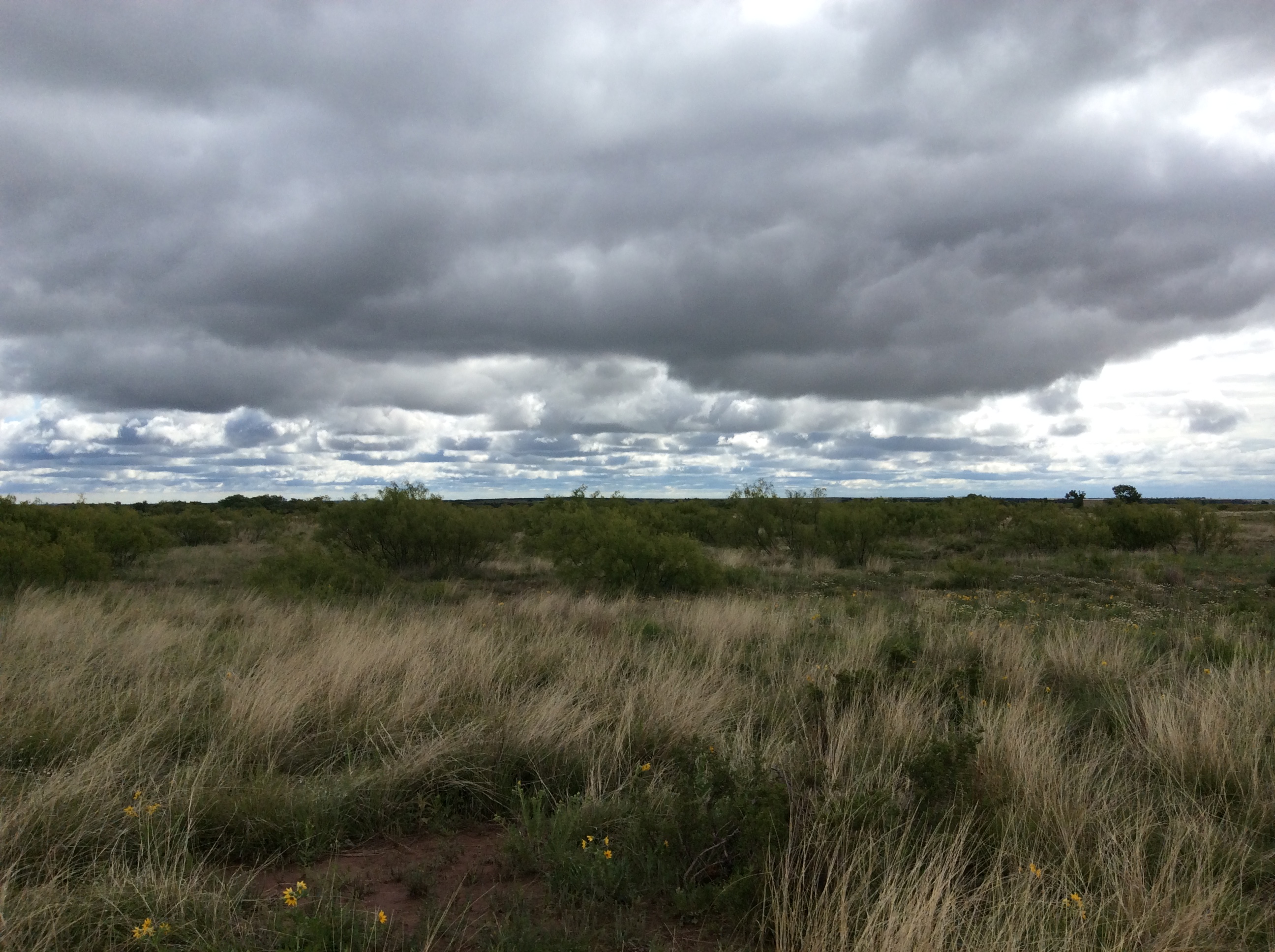
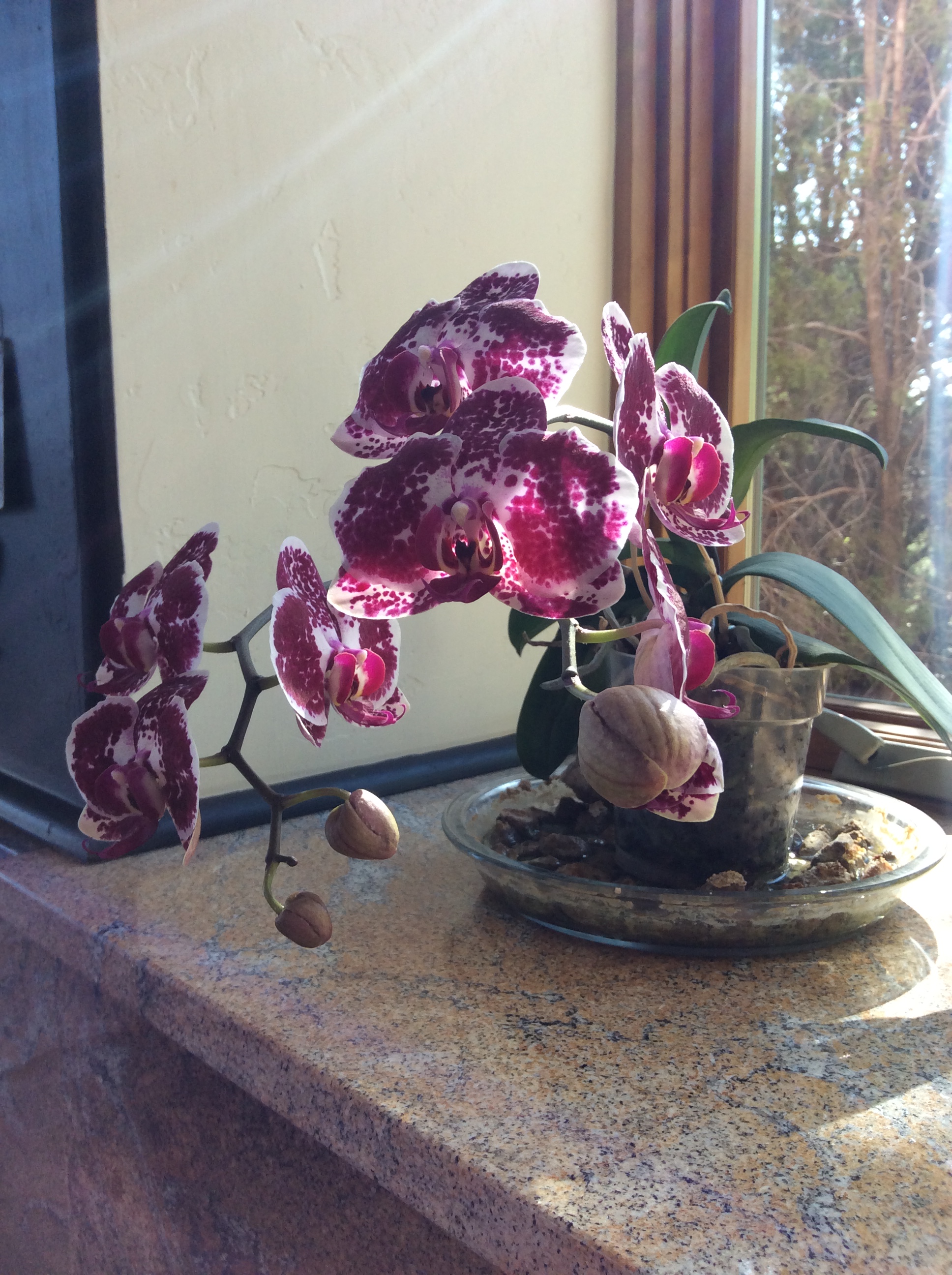
In the midst of being home for about a month now, it is spring most of the time. Saturday was 80 something. Now it is snowing. When it was 80 plus, I walked around outside and took photos of some of the wild flowers and the orchids blooming in the window above my kitchen sink.
I had planned to post several days ago, but I am so busy teaching English and Spanish online, I hardly have time to do much else. I did mow for several hours Saturday morning, did some gardening, cleaned horse runs, let them out to run. My students are studying the works of John Steinbeck, reading Animal Farm, The Odyssey, and Oedipus Rex–I teach four different levels of English. Designing lessons they can do online with little assistance takes forethought and planning. I thought I would hate it, but there are some things I really like and when we go back to class, I probably will continue. In the meantime, I will read, think, garden, care for my horses, hike my canyon, teach, write, and dream. Take care. Be safe.

















 writingontherim