Lucy Pick’s Pilgrimage by Mary Sharratt


I will add this to my list of must reads.

Mary Sharratt's avatarFeminism and Religion

mary sharrattIn medieval Europe, religious devotion provided an alternate narrative for women’s lives in a male-dominated culture. Defiant women who stood up for themselves in the face of rape, incest, and murder were hailed as virgin martyrs. Religious vocations, such as becoming a nun or a beguine, provided a viable and esteemed alternative to forced marriage.

Even women who were married with children could escape their domestic entanglements and conjugal duties by taking an oath of celibacy as 15th century English mystic Margery Kempe did, leaving behind her husband and 14 children to go on pilgrimage to Santiago de Compostela, Rome, and Jerusalem. Her Book of Margery Kempe, the tale of her travels, reads like a kind of late medieval Eat, Pray, Love and is the first autobiography written in the English language.

Though it might seem surprising to us today, women of the European Middle Ages possessed more…

View original post 370 more words

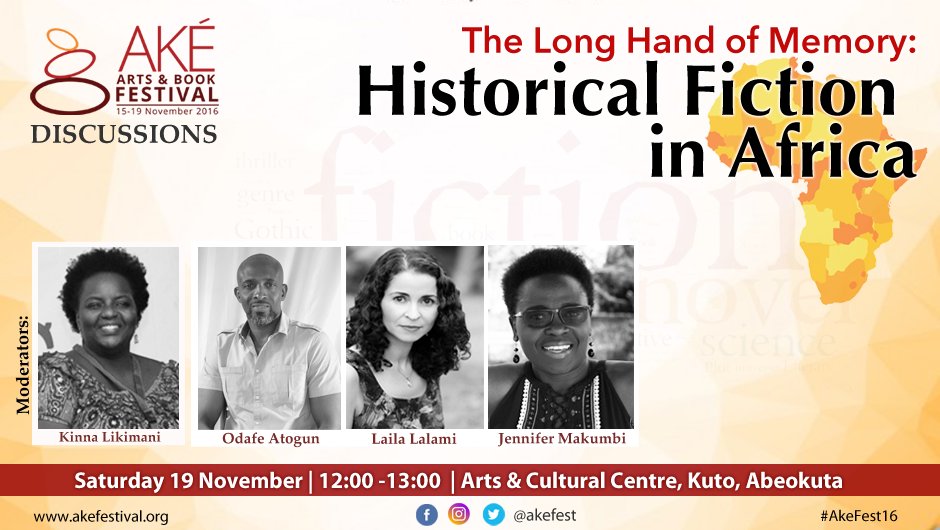
My 27-Book Haul from @AkeFestival #AkeFest15


This perfectly fits my goal to expand awareness of literature from non-western cultures. Reading remains one of the best ways to expand intercultural awareness especially if you cannot travel there.

Kinna's avatarKinna Reads

I didn’t do badly this first time at Aké; I come home with 27 books!

Books I Bought:

Ake Books I bought

  • The Birth of Illus by Jumoke Verissimo. This is Jumoke’s second collection of poetry. I’m a fan of her work.
  • Bound to Secrecy by Vamba Sherif. A detective novel set in Liberia. A new-to-me writer.
  • Lagoon by Nnedi Okorafor. The first of Okorafor’s books that I own. It’s been a long time coming.
  • Minaret by Leila Aboulela. She has a new book, The Kindness of Enemies, out. I’m trying to catch up.
  • Blackass by A. Igoni Barrett. I”m behind on my reviews but I loved Igoni’s Love is Power or Something Like That.  This is his newest book.
  • A Killing in the Sun by Dilman Dila.  Speculative fiction.  I first came across his work in Jalada’s Afrofutures issue.

(In a special category) The Etisalat Prize Longlisted Books

Etisalat Prize-longlisted books

View original post 429 more words

Favorite Authors and Books


The blogging 101 assignment today told me to use a prompt of some sort.  I scrolled through the various suggestions and came up with this one.

My all time favorite author is Leslie Marmon Silko from Laguna Pueblo.  Although her novel, Ceremony, is the most famous of her books, I prefer Storyteller.  The title comes from the long American Indian tradition of story telling plus it is also the title of one of the short stories in the book.  Storyteller contains a compilation of family photos, poems, anecdotes, and short stories, including my all time favorite short story, Yellow Woman.  By now I have probably read that story at least fifty times.  I jokingly refer to my occasional need to read it as getting my Yellow Woman Fix.  Every time I read it, I ask myself why I love this story so much?  Honestly, I have no clue, none at all.  The story speaks to me in a way like no other and I cannot figure out exactly why.  Perhaps some friend out there in blogging land or even a stranger may tell me.  Who knows?

Another of my favorite books is Moonlight on the Avenue of Faith by Gina Nahai, an Iranian Jewish woman who now lives in California.  This book reminds me of all the Latin American magical realism books I also enjoy.  The heroine of this book is not an ordinary woman.  For one thing, she flies. Often, I have asked myself why some Iranian novels remind me of Latin American novels and short stories.  If I were to go back to graduate school to study literature, I think I would explore this further.  For now, however, I simply wonder about this similarity and possible causes.  For those interested in Iranian history, and more particulary about the history of the Jewish people in Iran, I always recommend Cry of the Peacock by Nahai.  It traces the history of a Jewish family there for seven generations.

Other favorite authors include Julia Alvarez, Isabelle Allende, Louise Erdrich, M. Scott Momaday, and Gabriel Garcia Marquez.  Although he is most famous for One Hundred Years of Solitude, my favorite book of Marquez’s is The General in His Labyrinth about the life and death of Simon Bolivar, the liberator of much of South America from Spanish rule.

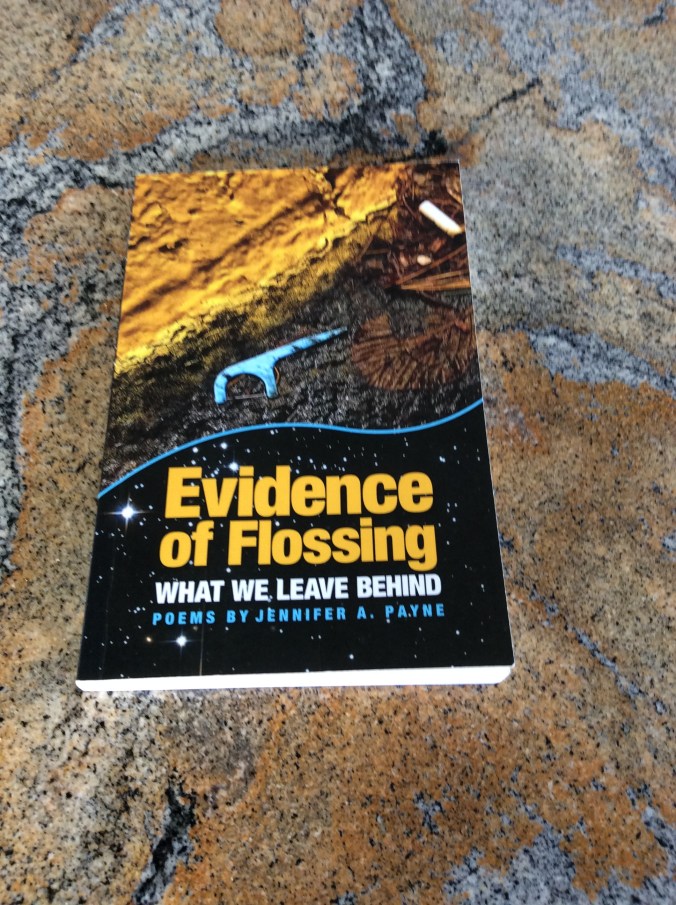
As for poetry, Storyteller is the only book listed above that contains poetry.  When I ask myself about favorite poets, I think of William Butler Yeats, Joy Harjo, Sherman Alexie–who inspired one of the poems in my book, and, of course, Silko.  A unique poetry book, Carver, my Marilyn Nelson gives a biography of George Washington Carver in poems.  I learned a lot reading that book, especially since I am always looking for new ideas on writing poems for my own writing practice.

Finally, I hope some of those who read this respond with their favorites.

51yW0RGMMvL._SY344_BO1,204,203,200_

Book Signing and Rescue Horses


Tomorrow is a big day!!  First, I will get up and bake my second set of brownies.  It may be totally ridiculous, but on She Writes, taking food to your book signing was recommended so I made one pan of brownies tonight.  The other pan will bake in the morning.  Although this is not my first book, it is my first signing event.  Tomorrow at three at Hastings on Georgia I will be by the front door greeting and selling.  Because people actually get books signed and then do not buy them, just leave them somewhere in the store, Hastings will require buyers to pay first, then get the book signed.  I keep wondering just what sort of person does such a thing as get a book signed and then leave it randomly anywhere.

Since Cool died, I think Rosie is lonely.  Tomorrow morning Dove Creek Ranch Horse Rescue opens their doors for an annual event to show off their rescue horses, trained and ready for adoption.  At least I want to look and see who ( I see a horse as a who, not a which) is available.  Some of the horses have been so badly treated that it takes months and sometimes never to regain their trust and decent behavior.  Others just needed a home after their owners could no longer care for them.  The least I can do is look.  I will post photos of the ranch and horses tomorrow and report on the book signing.  Sleep currently seems a good idea.


10285598_10201564553698114_927164360_o

Teaching English for a change


Years ago, four day before school started, the principal informed me that I was going to teach freshmen English and a special course for all these juniors and seniors who had passed the state test but not one single English class.  The goal–we were on a quarter system then:  teach a year of English per quarter or at least do that for the seniors.  Of course, everyone knew that if I did the traditional curriculum, such a thing would prove impossible.  I took a look at the students.  Smart (at least some of them), rebellious, lazy, unmotivated, potheads probably–some openly admitted it, and various combinations of these sorts of things.  For fun the previous summer, I had taken a week long course on how to teach junior Advanced Placement English–I know, a strange idea of fun, but I loved it.  Four days gave me little time to prepare so I decided I would use the freshman book for the freshmen, but incorporate what I had learned in the AP English course.  For this other special class, I decided to try some really different tactics, including starting with a really different book than any had probably ever read.  Because of the language–swear words in Spanish for starters, and because of the topics, e.g. prison, it seemed necessary to get the permission from the head of the English department.  The book:  A Place to Stand by Jimmy Santiago Baca, one of my all time favorite books and a superb example of figurative language.  The department head gave permission much to my astonishment–she must have taken a look at the students and decided anything was worth a try.  The students actually read ahead, looked the author up online, found out he was giving a reading in Santa Fe and contacted him. We did go to Santa Fe for the reading and actually had lunch with him and his wife and baby–who would now be a teenager or nearly so.  One of the students who went contacted me a couple of months ago to tell me he still had a signed copy of one of Baca’s books.

After that year, I taught math for years–algebra, geometry.  Occasionally, I even cotaught chemistry or remedial science for those who had not passed the state test.  About three weeks ago, the new principal called me in and asked me what I wanted to teach.  I said English.  He asked me how about senior English?!  Next school year I will be teaching British literature.  Now, I am trying to think how to make Beowulf and Canterbury Tales readable and exciting.  I was told I could also incorporate modern British literature so I started looking at the Man Booker (sort of like a British and former British colonies version of the Pulitzer or something of that sort) short list.  Much to my astonishment, I have read a lot of the authors on this list, but mostly those from the colonies like Nigeria and India.  Now I am reading We Need New Names by NoViolet Bulawayo.  This book won the Pen Hemingway and was short listed for the Man Booker.  Probably more familiar authors for many readers would be names like Iris Murdoch, Doris Lessing, Amitav Ghosh, and Kiran Desai.  If any of you who read this blog have others suggestions for modern British literature, send me the names.  The students may be in a temporary  (or longer) state of shock when they find out they really do have to read, but they will get over it and might even discover its fun.

Random Thoughts at the End of a Rather Long Day


When I realized the time and know 5:30 tomorrow morning will come sooner than I may prefer, I decided I had to write something here to fulfill my commitment to write daily for at least one month–three weeks down and one to go.  Will I continue?  Don’t know yet.  Pluses:  I have gained quite a few new followers, at least ten, maybe more–have not taken an exact count; it proves that if you stick to something, there are pay offs; and it forces me to think about some things I’ve read or experienced in a way that I might not if I were not going to blog about it.

What are some of those things I am thinking about?  First, the weather.  We desperately need rain and this statement comes from someone not all that fond of rain.  I like the green results but do not like to be out in the rain normally.  It is a wonder I love Costa Rica because it rains almost daily at least it did when I was there two summers ago.  Fire warnings are even currently posted on overhead flashing signs on the interstates–not daily, but every time the wind rises which here is almost daily.  Second, when I think about the destruction of volcanoes–from reading another chapter in Apocalyptic Planet last night, I keep wondering what would happen today if another explosion like Krakatoa in the 1800s occurred.  Mass famine I imagine and a bunch of certain types of religious people claiming the end of the world.  Third, after spending two boring mornings giving STAAR tests–the state standardized tests in Texas, and another morning left to go, wondering exactly why I still think standardized tests are good.  Fourth, wondering how to turn this blog into a sort of website where people who want a signed copy of my new book, On the Rim of Wonder, can order it directly from me on this blog/website (I have had requests already which is, of course, a wonderful thing since book marketing is not all that easy).  Fifth, well this will have to wait until another day when my mind is really sharp and we can have a discussion about the effects of poverty and why it is so difficult to escape.

In the meantime, while I was out watering around my house–to keep my xeroscape garden alive (even drought resistant flowers need some) and to, I hope, make my house safer in case of a wildfire, I thought about all the lovely flowers blooming in spite of the dry weather.  Here they are in all their enduring beauty.


SAM_1081


SAM_1074


SAM_1078


SAM_0461


SAM_0161


SAM_0160

The Sound of Silence


For years I puzzled over what this phrase means.  This evening I discovered the answer.  Unlike the first part of the week, today was sunny, little wind, high 70s, what most consider a perfect day weather wise.  I ran home from work, gave Rosie, my horse, some food, let Isabella, my dog out for a bit, and then ran back to town to see my grandson perform.  He attends Wolflin Elementary School.  The physical education teacher selected a group of students called the SWAT Team who perform at different functions.  The last time I saw them, they performed at a local high school’s basketball tournament.  Today they executed four routines at their school’s annual gala, a fund raiser with games, food, a silent auction, dunking in the water, that sort of thing.  It really astonished me.  I have no idea how much they practiced, but these routines were not short and everything was perfectly choreographed.  First, the boys performed using basketballs to do various tricks and movements in unison to music.  Then  the girls did this complicated sort of dance over these long bamboo poles that other students clicked together.  The only other place where I have seen anything like this is in Thailand at the Rose Garden near Bangkok.  The third routine included both boys and girls and they used this giant circle of multicolored cloth to dance around, in and out, make the cloth into a sort of yurt like shape.  I have no idea how they kept it up like a giant circular tent one minute and flat the next.  Finally, they competed with hoola hoops to see who could keep going the longest.

After I returned home, I hosed off the front entryway, planted some flowers in pots, and watered other flowers, all in preparation for a fund raiser tomorrow night at my house–to raise money for a local senior citizens center.  Rosie is shedding her winter coat and seemed miserable itching so I brushed her.  Now tufts of pale rose colored hair lay everywhere in her corral.  Finally, a bit after eight I came inside for a late dinner.  Then I noticed.  No sounds, no wind, no appliances humming, no coyotes howling, no birds singing, no dogs barking, no sounds at all.  Nothing.  The patio doors are open; I walked outside a few minutes ago.  Nothing.  I sit here before the computer and hear the sounds the keys make when I hit them.  When I stop, nothing.

Rosie


Rosie


SAM_0301


Isabella on the patio in winter.

SAM_0160


They started blooming today.

Gratitude and Dust


Initially, I planned to continue my Apocalyptic Planet series, but today’s events caused me to choose otherwise.  As I sit here writing this, I can see the endless blowing dust through the spotted window.  Sometime today, while I was at work, it sprinkled while the dust blew.  Now every window on the east and north side of my house appears as if someone had thrown handfuls of nearly dry mud at it.  My black car looks the same.  The wind whistles in the flue of the wood burning stove in my bedroom.  This storm  blows harder and longer than the one we experienced last week.  Tomorrow they forecast more of the same.

Saturday I stopped by two greenhouses to purchase some hanging baskets and native flowers.  The mesquite trees kept telling me, “Wait, wait.  Cold will come again. Wait!”  Normally, I obey what the mesquite trees tell me.  They never come out until they know without a doubt the cold is over and they feel safe.  I bought the flowers anyway.  This coming Saturday, Hilltop Senior Citizen Center in Amarillo has their Gala at my house to raise money–complete with a silent auction, food, and drink to raise some much needed money.  I want everything to look springlike and pretty.  I heard the weather forecast on the radio coming home from work.  I just looked again on the Internet.  Frost predicted tonight and even colder tomorrow night.  After I fed Rosie, placing the alfalfa as much out of the wind as I could, I brought the hanging baskets inside and poured a bunch of water on the other new plants. The native plants, tough, worry be little.  The others will not survive 33 degree weather.  Later, I will go out and cover them with old towels, hoping the wind relents and does not blow them off.

Everyone here posts photos of the dust on the Internet and gripes about this horrid weather.  Although I certainly dislike it, I refuse to complain.  This, too, is tornado country.  I listened to the news this morning and again coming home from work.  Thirty four dead, whole towns destroyed, a new school flattened.  Here I see no devastation, only the endless, depressing, annoying dust and wind.  My friends, family, and I are alive, our houses intact.  Rosie huddles behind the barn, still healthy, neighs when she hears me coming.  Gratitude engulfs me.


Rosie


Rosie


SAM_0461


The iris I was hoping for.

Sacred Corn


SAM_0035   In the summer on hot, humid nights, you can hear the corn grow.  My great grandfather, my grandfather, and my father grew corn.  I grow corn in that same rich loess soil of Northwestern Missouri.  Soil laid down by Ice Age glaciers thousands of year ago.  Only on a few hill tops, here and there, will you find non glacial soil. Repeatedly, daily, I walk by the sacred corn plant of life painted on my hall corner.  This sacred corn corner houses three corn maiden kachinas and a drum decorated with corn maidens.  I give thanks to corn for my house and the life I lead.

Corn Song

I sing the song of ancients:

pueblo peoples,

Anazazi, Hopi, Zuni.

I sing the song of an America long gone.

Maya, Aztec, Tolmec.

I sing the song of life:  colors of the rainbow

golden, red, white, blue.

I sing the song of now:  thick, endless

identical rows.

Pioneer, Monsanto,

anhydrous ammonia,

atrazine.

I sing the song of hope and joy:

an ancient reclaiming,

a klaidescope of colors,

butterflies and fireflies.

I sing the eternal human song.

SAM_0913

SAM_1489

This is a Navaho kachina.  Kachina are actually Hopi, but Navaho artists now make kachinas as well.  The first corn maiden kachina I bought.

SAM_1490

Spotted corn kachinas, on the left, are unusual.  It took me years to find one.  The kachina on the right was created by R Pino, who is both Hopi and Navaho.

SAM_1491

Every year Pendleton runs an art contest among Native American students.  The winner’s art work is transformed into saddle blankets.  This design, created by Mary Beth Jiron, is the latest in this Student Series. There are three corn  maidens  on each side of the blanket, representing the different varieties of corn grown by native peoples, yellow, red, blue, white, black, and spotted.

Apocalyptic Planet-Part Two: Hadley Cells, Weather and Drought


Hadley cells, the wind systems in each hemisphere , form patterns of atmospheric circulation in which warm air rises near the equator, cools as it travels poleward at high altitudes, sinks as cold air, and then warms as it travels back to the equator.  They are named after George Hadley, an English scientific writer.  Tropical regions receive more heat from solar radiation than they radiate back to space and such areas have constant temperatures.  More simply, warm air rises (heat rises) and then flows poleward at high altitudes, cools, drops, and flows back toward the equator at lower altitudes.   Then the process repeats itself.  When the air rises and leaves these tropical areas, it loses moisture as it heads to subtropical areas.  The majority of the worlds large deserts lay in these subtropical areas.

Hadley cells are expanding.  Precipitation has declined in tropical areas since 1970.  As I mentioned in yesterday’s post, Southern Asia, the Sahel, Southern Africa, the Mediterranean, and the US Southwest are getting drier and drier.  Even wetter areas now experience long dry spells between extreme events of rain and snow.  Examples in the US include the cold and snowfalls in the Midwest and Eastern Seaboard this past winter.  Texas and New Mexico continue to experience a prolonged drought.  In the next thirty years scientists predict a 30 per cent decline in water resources.

In some places both governments and individuals create innovative and sometimes simple measures to counteract desertification.  In India near the Thar Desert, the government mandated the dispersal of grass seed to hold the ground.  Studies indicate that the grass seed grew better when planted by hand than when dispersed from airplanes.  Also in India orans, small sacred groves, have helped preserve shrubs and grasses and even trees, a genetic bank that would otherwise have been lost.  Childs describes how his friends who live on the outskirts of Tuscon have coaxed their water table fifteen feet higher, using ordinary shovels and hard work.  They built contour traps and “massaged” the ground.  Hardly worth noticing except when it rained, the rain sank into underground catches.  Their properties now look like small areas of refuge in the vast desert.  In some areas of the Sahel people have been able to plant and nurture trees in such a way that areas of green exist where they had disappeared.

Archeologists and geologists know that periods of drought occurred repeatedly for millions of years.  For humans and the animals we know, drought has never been easy.  Large areas of civilization cannot exist without water.  We can affect our future in positive ways and prepare ourselves if we choose.