Apocalyptic Planet–Part One


Usually I read only one book at a time.  Lately, I am reading several, one of which is Apocalyptic Planet:  Field Guide to the Future of the Earth by Craig Childs.  Childs is a sort of combined explorer/adventurer/scientist.  He goes to places few go to see what occurs there, the wind, the flora and fauna, the weather, the climate.  The next couple of days I intend to share some of his most pithy observations and ruminations.  We will start with the desert.  He and a friend literally wandered around the most arid and hostile portion of the Sonoran Desert in northwestern Mexico.  This desert has enlarged and become more arid due to an extended drought.

Deserts come and go.  If you live in a lovely lush green landscape, wait long enough and it, too, may become a desert.  Six thousand years ago lakes, marshes, and grassland lay where the Sahara is today.  A slight orbital change in earth’s relation to the sun caused nearby oceans to heat up, changing atmospheric conditions.  Humans living there had no choice but to move.  Forty per cent of the earth’s population lives in semiarid regions.  Even a small drought changes survival chances for the people who live there.  The Sahara, the Gobi, and the Taklimakan are growing, arable farmland decreasing.  Vulnerable areas include southern Spain, Greece, Bolivia, Australia, central Asia, and our own West.  The entire American High Plains (I live in the southern part) sits on top a giant desert.  Without pivot irrigation, only grass grows here.  In the last decade many irrigation wells have dried up or gone too saline.  The giant bulges you see in places like the sand hills of Nebraska are really a sand dune sea covered with grass.  Take away a little rain and here comes the desert.

Childs and his friend carried water with them and buried them with markers in the sand so they could find them later.  As the desert grows in parts of India, women carry water farther and farther, an average of six miles a day, four gallons at a time.  In the Sahel just south of the Sahara a difference in rainfall of just an inch or two can mean the difference between survival and starvation.  Without water, there is no civilization.

What causes these changes?  Human behavior and the increase in greenhouse gases are  part of the reason.  Humans are creating enough changes that we are moving toward more deserts, not fewer.  One climate expert, Jonathan Overpeck, thinks we are seriously underestimating the severity of drought we will face in the not so distant future.  Forget five and seven year droughts and think fifty years.  Hadley cells also affect climate change.  Tomorrow I will explain Hadley cells and how they affect our weather.

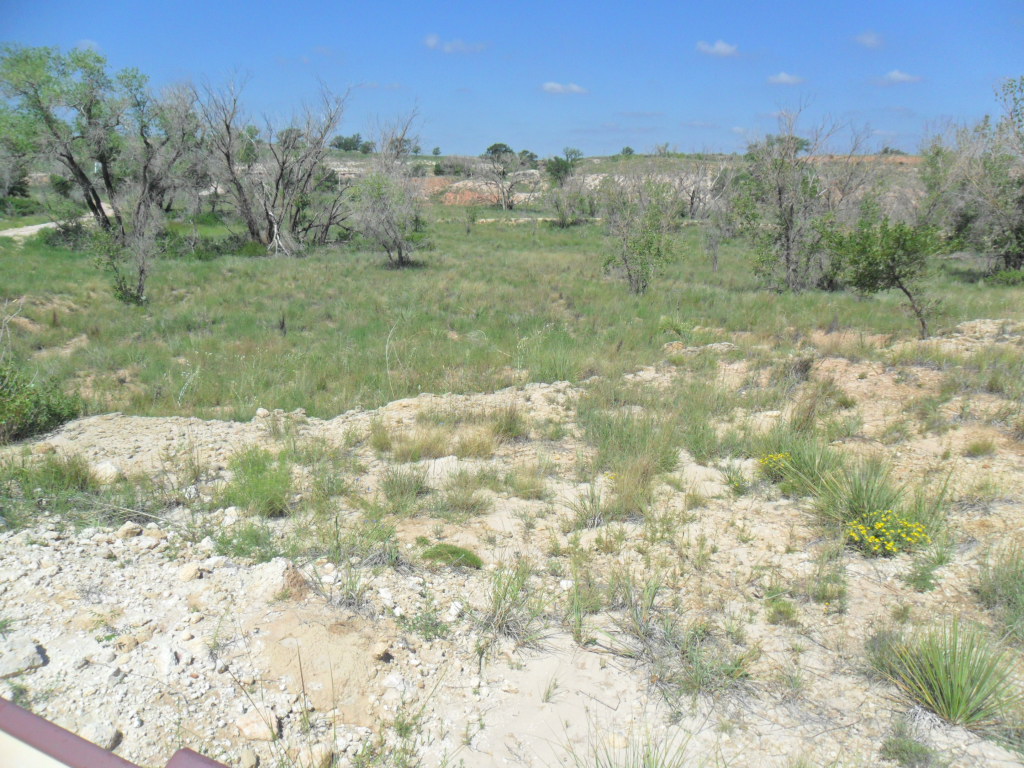
SAM_1190


Northern Arizona

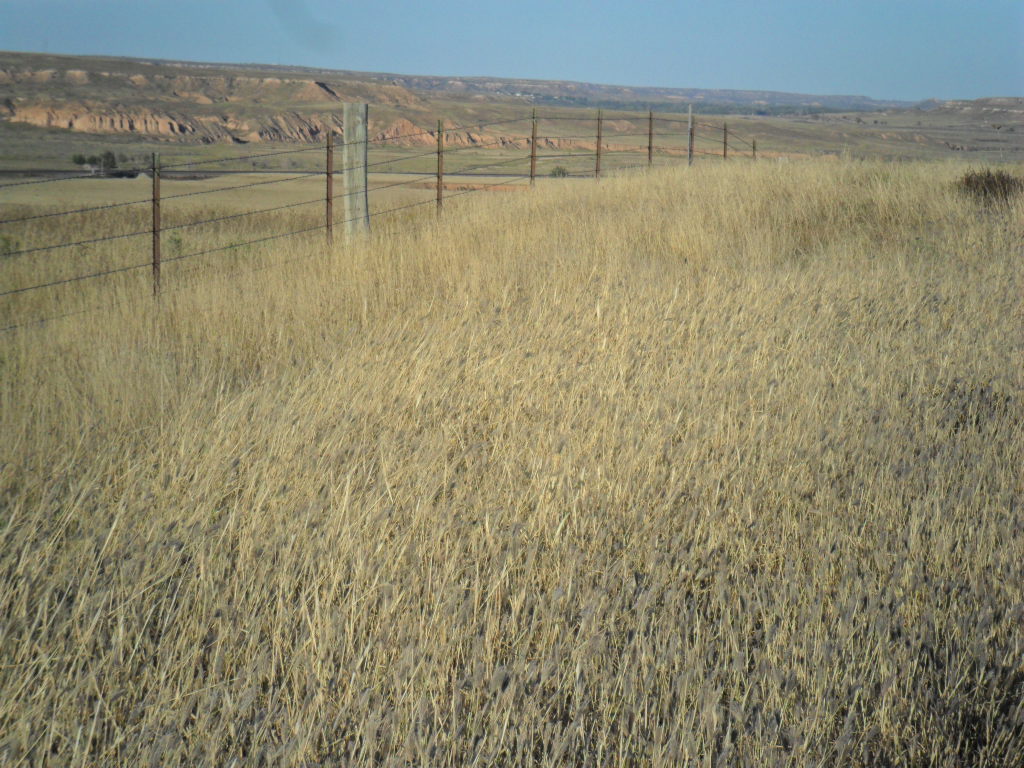
SAM_1302


Eastern New Mexico


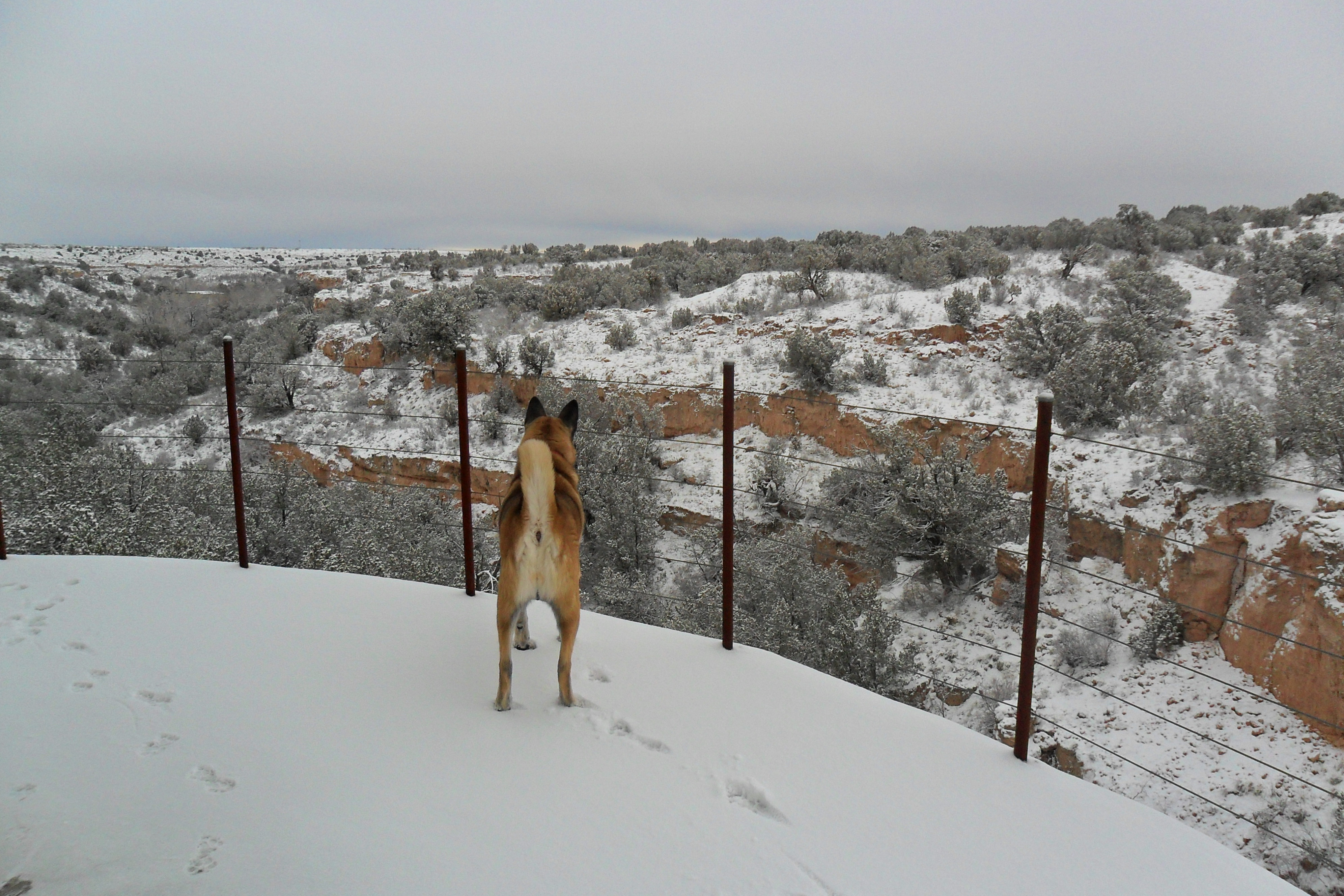
SAM_1370


Texas Panhandle

The Story Circle Network Conference and My Commitment: This Is What I Know


ad_scnconfWhen I first started blogging more than two years ago, I committed to blogging once a week.  That I managed for a year or so and then since that time, it became more sporadic.  Full time job, writing poems for my book, visitors, mini vacations, all sorts of stuff got in the way.  Really, I let it lapse, but refused to give up.  Last Thursday, I drove to Austin with my daughter and grandson for the biannual Story Circle Network Conference.  The plan:  while I conferred, they played.  The Story Circle Network is an organization for women which encourages women to write, to tell their stories, to share these stories, and when possible and desired, publish those stories in various forms from memoir to poetry.  This was my second time to attend and my first time to attend as a new board member.  A former mentor/teacher of mine, Len Leatherwood, facilitated  a workshop entitled “Transforming Your Writing Life in Just 20 Minutes a Day”, the last workshop I attended.  She blogs everyday.  I follow her blog.  No matter what, she sits down and writes 20 minutes minimum a day separate from the writing she does with her students–she teaches writing privately in southern CA.  One of her recent blogs has been accepted for publication–a piece of flash fiction.  She nearly begged us to commit to this kind of writing practice.  Previously, I had refused, flat out refused, partly thinking that if I tried it, more than half the resulting writing would be crap.  Nevertheless, she and her workshop convinced me that at least for one month I must try this.  Now all of you following my blog will be inundated with daily blog posts.  I am filled with curiosity as to how people will respond.  Maybe it will be like my Facebook posts–yes, I am an almost addict–the posts I consider most meaningful for the universe at large are the ones people ignore and the ones I consider personal trivia receive the most response.  Maybe I will track what appeals to my readers.  Some I won’t know because with blogging I share to Facebook and to a couple of professional networks, I have no clue who read what.  Once I received an email regarding a poem I posted. Although it never showed up as a like, the lady actually told me she read my poem in church!  Who would have guessed. I forgot to time myself so have no idea how long I have been here writing.

Here I am writing about why I am writing.  On the stove I smell Jasmine rice cooking.  I love Jasmine rice from Thailand.  I am a very picky rice eater and prefer to mix equally white Jasmine rice with black and red.  For one thing, it looks lovely when done–a sort of dark reddish purple.  Since I sautéd chopped garlic in olive oil, then added the rice and sautéd for about 15 more seconds, then added water and some broth just before I started writing this, the smell of Jasmine rice fills the house.  I piled a bunch of paper towels on the top before I put on the lid or you can use some cloth towel–a habit I picked up from my Iranian ex-husband.  Iranians really know how to cook rice.  I am also drinking a glass of Cupcake Shiraz which I bought on the way home from work.  And yes, Shiraz is also the name of a city in Iran where they actually grow grapes or at least used to. But of course, drinking wine is no longer acceptable in Iran or at least not publicly.  Good Muslims do not drink at all.

I did write something worthwhile while in this workshop and will share–doing this last because it won’t count as my daily writing since I wrote it yesterday.


This Is What I Know


My parents loved me, really loved me.

My mom was proud of my accomplishments.

Dad gave me a love of books, intellectual curiosity, and a

sense of wonder.

Mom gave me a love of music, beauty, and cooking.

Happiness is a choice.

I do not believe in luck.  You make your own luck.

Life is an exciting adventure.

Horses give me joy.

Singing gives me joy.

Dancing gives me joy even if I rarely have the opportunity.

Family relationships can be distressingly complicated.

I am proud of my children and their accomplishments.

Religion matters much less to me than 99 per cent of the people I know.

Ethnic and religious prejudice distress me and I do not

understand those kinds of attitudes.

I am a good writer.

I want to make a real difference in the world.

I am happy 99 percent of the time.

Blessings flood my life.

My close friends and children and grandson are more

important to me than they know.

Writing has enriched my life.

I have few regrets:

One I have rectified;

the other I cannot–

my dad is dead.

On a cold winter evening


This post displays my occasional propensity for pensiveness and reflection.  The highest temperature today was 8 degrees.  The weather forecaster predicted a low of zero, very cold for here with more snow.  In  a few months, it is likely we will hit 100.  Who would want to live in such a place?  Yet people do, worldwide.  Some in places much colder and hotter.  How and why did they all get to wherever they are?  Millennia ago we all migrated from Africa and look at us now.  We think we are smarter, better, but are we?  Perhaps technologically, but psychologically??  War rages over differences in ethnicity and religion.  Clashes for thousands of years change little, just the nature of the weapons, the use of advanced technology.  The intent remains the same.

Sunday, I finished a book by the Turkish writer, Elif Shafak.  I have read all her books translated into English.  This, her latest, Honor, details the effects of the belief in honor of above all else.  To paraphrase one of the main characters, a poor man:  rich men possess money, fancy cars, lavish houses, travel, but poor men have nothing but their honor.  Acting on this belief leaves one family devastated.  For those who desire to learn about other cultures and to understand the behavior of the individuals in them, I highly recommend this novel.

Earlier, I donned two pairs of gloves and socks, four layers of clothes, and ventured out.  If you own horses, you have to feed them regardless of the weather.  Unlike me, my dog, Isabella, fares well in this weather.  Her part wolf blood gives her an undercoat perfect for winter extremes.  Inside, I viewed my larder–what to cook on a frigid winter night?  A simple chicken curry with onions, brussels spouts, jalapeño peppers, and chicken with Jasmine rice, red, white, and black.  And a glass of red wine, cabernet franc, from a local winery, the only wine I have ever seen from only this one grape.  It is usually added to blends.  Definitely haram–still thinking about that book.

SAM_1428

As the temperature drops, building a fire in the wood stove seems like a reasonable endeavor.  I love fires but hate to build them.  Nevertheless, sitting in front of the fire reading brings a silent joy, a paradise.  I feel at peace:  chores done, warm house on a frigid winter night, satisfying dinner homemade, and the knowledge that my book of poetry lays in its final stages with the editors and photoshoppers who will make it publication ready.  I feel extremely grateful, looking forward to dazzling dreams on the rim of wonder.

sam_0303.jpg

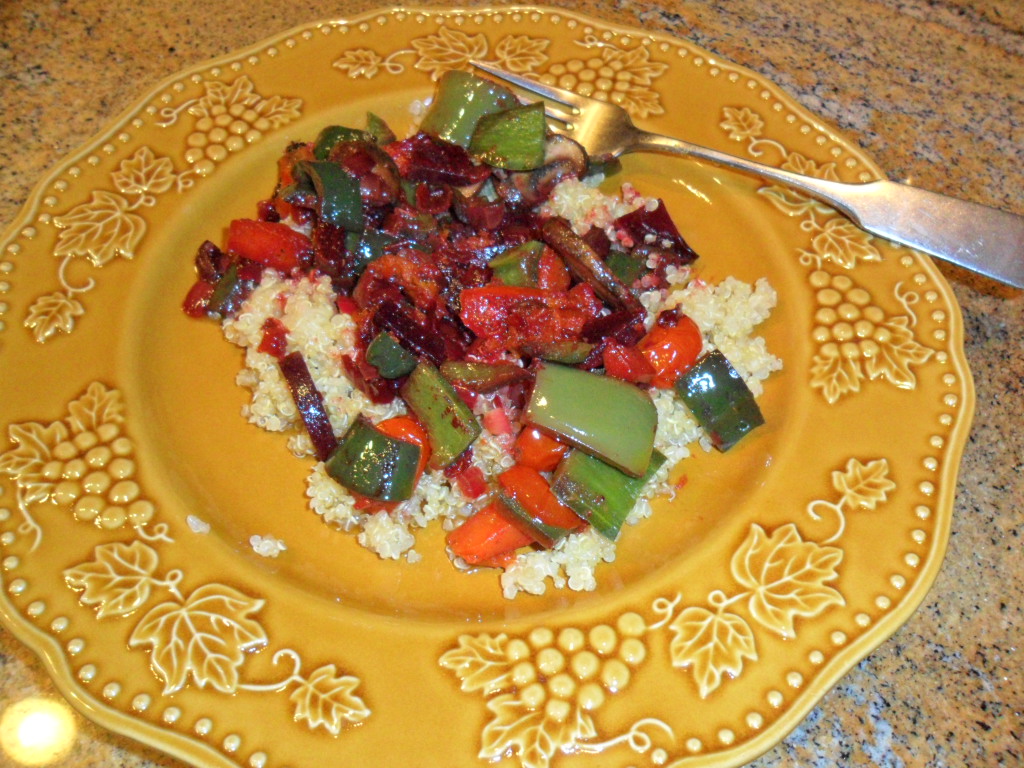
Curried Vegetables with Quinoa


This recipe originated out of my desire to learn to like quinoa.  Except for some quinoa cakes at a local restaurant, I had never eaten quinoa that I thought delicious.  Actually, I found it a dreadfully boring food.  Nevertheless, I became determined to find a way to like it.  Why?  Nutrition.  It is good for you.  So let’s start with how I learned to cook quinoa so it is actually tasty.

Quinoa

Olive oil

1 cup quinoa

1 3/4 cups water

1 tablespoon finely chopped garlic–I am lazy about garlic and buy it by the giant jarful, already chopped

1 heaping teaspoon vegetable or chicken base–I use Better Than Bouillon

Rinse quinoa thoroughly–it requires an extremely fine strainer.  Pour enough olive oil in a medium sauce pan to cover the bottom.  Place the chopped garlic in the olive oil and sauté a minute or so at medium high heat. Add the quinoa, stir quickly to mix with the garlic and oil mixture.  Add the water and base.  Stir thoroughly to combine the base with the other ingredients. Bring to a boil, turn heat down to low.  Cook approximate 20 minutes or until the quinoa has absorbed the liquid and is fluffy.  Quinoa reheats well in a microwave so you can make extra for meals later.

Curried Vegetables

1/2 medium purple onion, chopped

1 large poblano pepper, seeded and coarsely chopped

3-4 portabella mushrooms, sliced

1 large jalapeño pepper, seeded and coarsely chopped

1 small beet, sliced and cut into smaller pieces

1/2 cup coarsely chopped butternut squash

Olive oil

1/2 tsp. curry powder–I used Malaysian Seven Seas Curry by Spice Appeal

1/2 tsp. masala–I used Chana Masala by Spice Appeal

Use whatever curry you prefer.  This curry is a mite hot.

Saute the onion, mushrooms, squash, and beets in olive oil until slightly tender.  Add spices and peppers and sauté until tender but still slightly crisp.  Serve over the quinoa or rice.

Regarding olive oil:  I use it to make nearly every kind of food from all over the world.  I use a lot because I really like it.  I have even made pie crust out of olive oil.  It is one of those few oils you can use and know it is good for you.

SAM_1426

Holiday Break Fun and Recipes


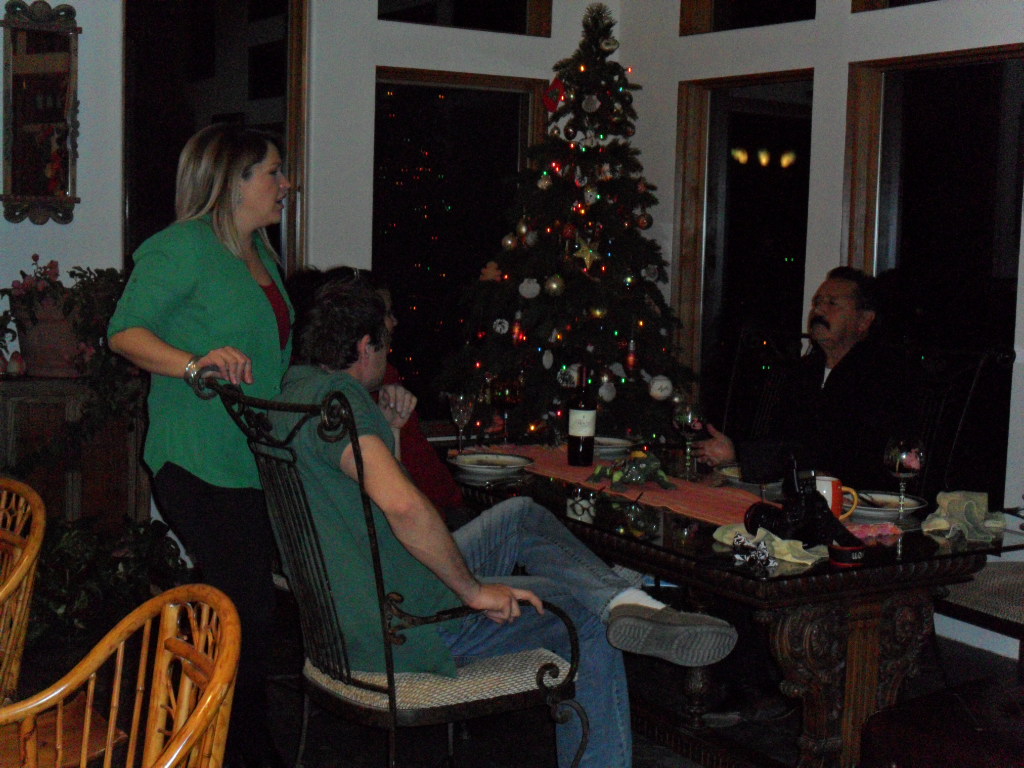
Because of my job, I am on the last day of a two week holiday break.  What a productive and fun time it has been.  Christmas Eve, my friends, my daughter, and my grandson came over.  For the first time ever, I made ham in a big Crock Pot and it melted in our mouths.  They requested I make my signature Refried Black Bean Cassserole and roasted vegetables so I did.  Other food requests included chocolate spiders for dessert–they are cookies.

Ham in the Crock Pot

Cover the bottom of the slow cooker with a 1/2 inch thick layer of brown or turbinado sugar mixed with 2-3 T tapioca. Place ham on top of the sugar.  Cover the top of the ham with preserves of your choice.  I used homemade pineapple/apricot preserves I had made several years previously.  Cook on low for 6-8 hours.  Note:  I used spiral sliced ham precooked.  You do not need to add any liquid, it will make its own.  If you wish, once some liquid has accumulated, you can periodically baste the ham.

SAM_1400

Christmas Eve dinner, eating and relaxing at the dinner table.

SAM_1398

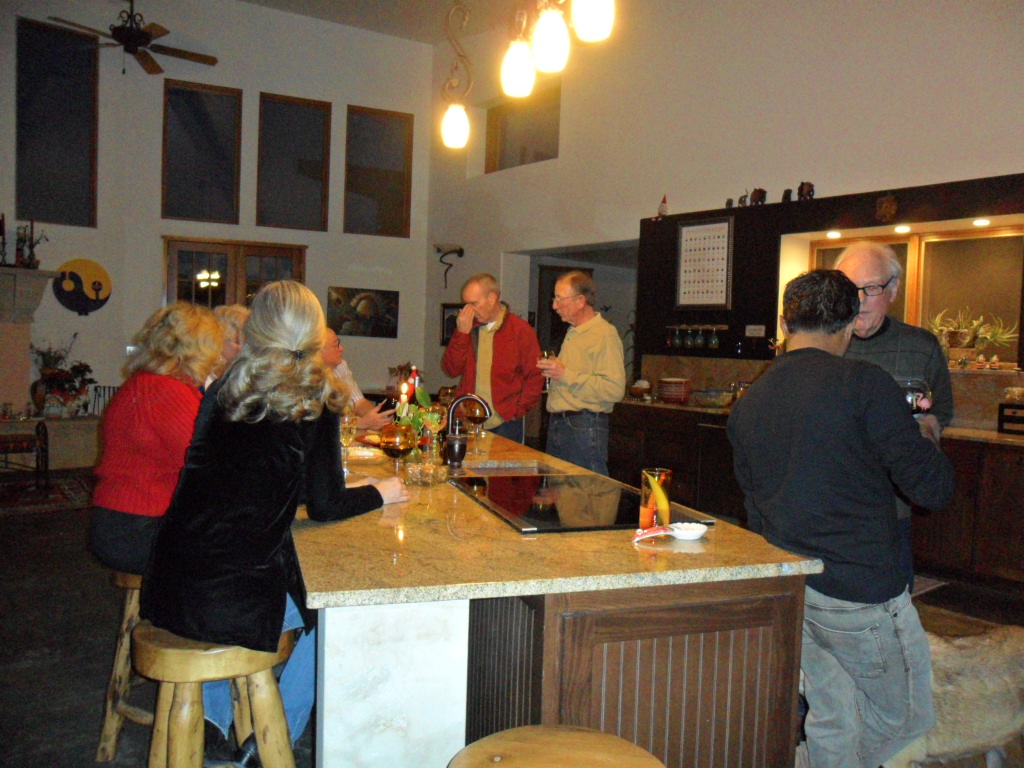
At the bar before dinner while I am still cooking.

SAM_1405

Lingering and relaxing around the dinner table.

These same friends came over about 1 1/2 weeks later.  The special request that time was for another round of Refried Black Bean Casserole.   This is one of those recipes I invented but never measure anything, just make to taste.  This last time I decided to work at paying attention to what I used so I could share.  It may or may not be exactly what I do every time, but it is close.

Refried Black Bean Casserole

2 cans black beans drained

Enough olive oil to cover bottom of large skillet

1/2 red onion, finely chopped

3-4 Tablespoons organic ketchup

3 Tablespoons cumin–add or subtract to suit you taste

Tortillas

Grated white cheese–I usually use monterey jack

Heat oil in skillet and add onions.  Cook until translucent.  Add black beans, one can at a time.  Take a regular table fork and mash beans repeatedly until most of the beans are mashed–I like to leave some not totally mashed to add a bit of texture.  This is easier to do if you only add one can at a time.  Thoroughly mix beans and onions.  Add the cumin and ketchup and stir thoroughly and keep mixing until the mixture it thick and heated through.  Use a round slow cooker or casserole dish.  Oil bottom of dish and place one tortilla in bottom.  Place enough of the black bean mixture on top to cover the tortilla, then sprinkle the grated white cheese on top.  Repeat layers, ending with grated cheese.  You may use any kind of tortilla.  However, I prefer whole wheat flour, but anything works.  Heat through until cheese is melted.  You may also make the bean mixture a day in advance and refrigerate.  If you do this, it will take longer to heat the casserole.

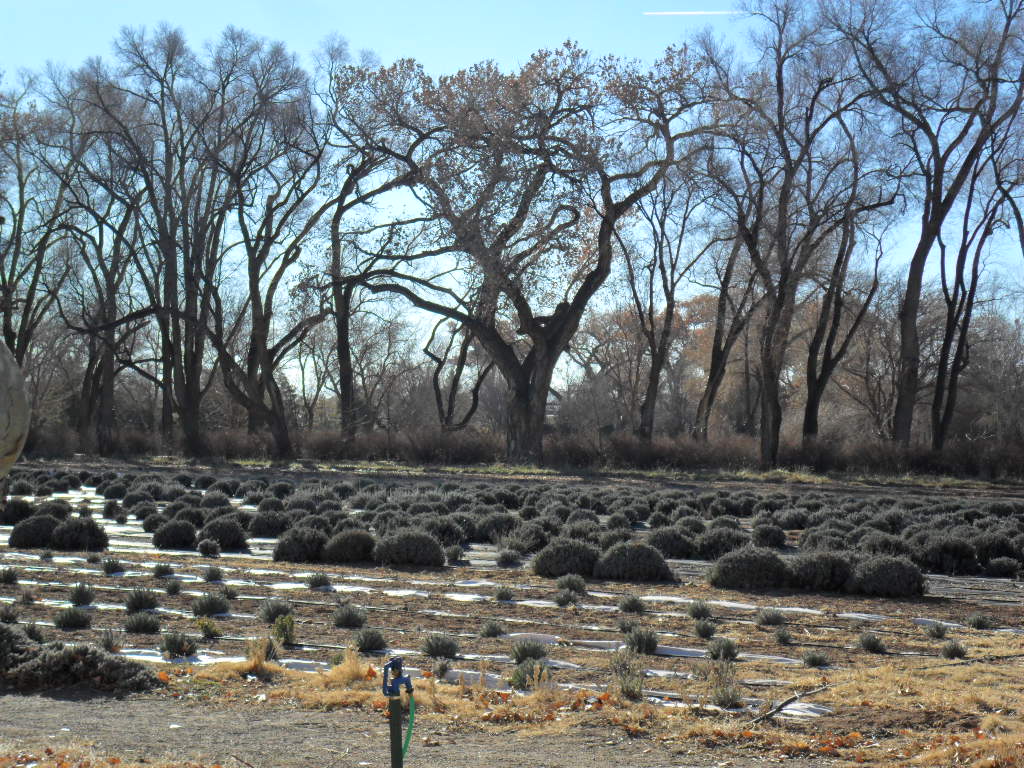
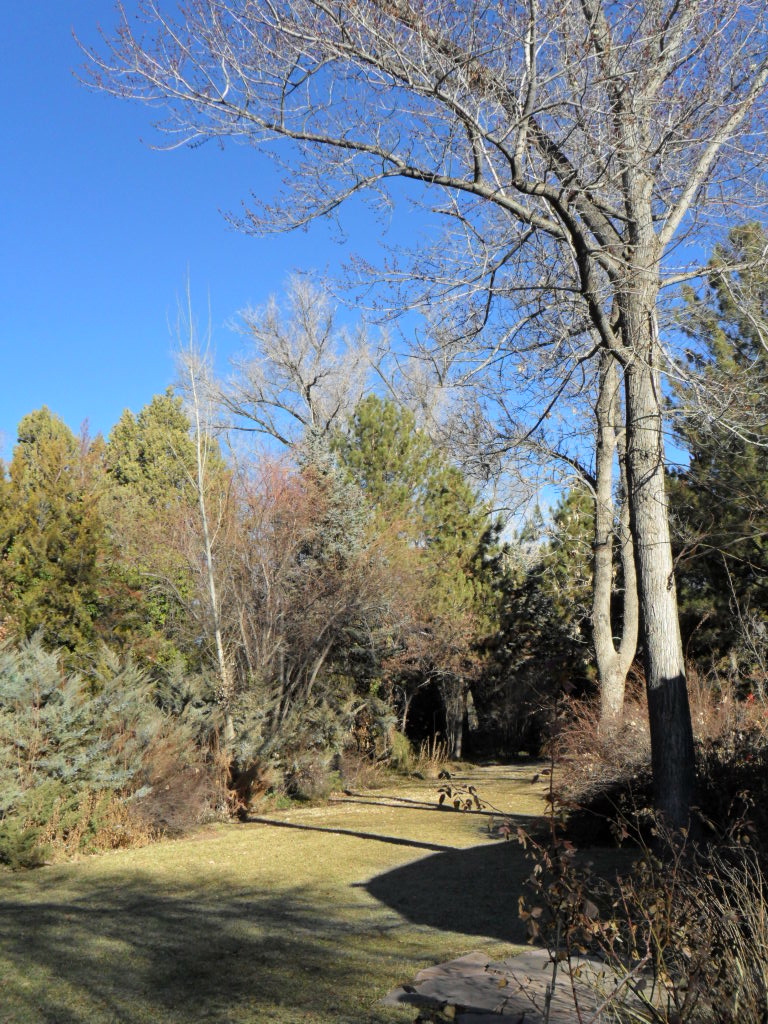
In between cooking adventures, one of my best friends and I decided to take a quick trip to Albuquerque, NM.  We visited our favorites places in Old Town, ate here and there when we felt like it, and stayed someplace new to both of us, Los Poblanos.  We loved this place.  It is located a bit north of downtown and Old Town, off of Rio Grande Blvd. by the river,  and includes 25 acres of lavender fields, a barn, a solar powered swimming pool–not open in the winter, a restaurant, a farm store, an herb garden, paths for strolling here and there, and an impressive tree lined entry drive.

SAM_1421Looking down the entry drive of Los Poblanos.

SAM_1418The barn and other out buildings.

SAM_1420

The lavender field.  They offer many lavender products in the Farm Store as well as balsamic vinegar, cookbooks, and various other items related to what they grow and organic farming and cooking.

SAM_1414

A view of the main house and restaurant area.

SAM_1422

A view near one of the many walking paths.

SAM_1413

The fireplace in our room.

Although I have been to Old Town in Albuquerque many, many times, never before did I go inside the beautiful old church on the square.  They allow photography so I took a photo.  It was all decorated for Christmas with a nearly life sized nativity scene.

SAM_1425

Tomorrow I go back to work.  With friends coming over for Christmas Eve, a trip to the local museum with my friend Roberto Borja, his family coming over for dinner again, the trip to Albuquerque with my friend Zuriash, hanging out with my daughter and grandson, it turned out to be one of the best holiday breaks ever.  Here’s to an equally wonderful 2014.

Fun, Food, and Community with Vegetarian Enchiladas


A couple of weeks ago, one of the blogs I follow, getsetandgo, created a post about “community” with photos of an Indian festival where all sorts of people come together to celebrate–a community.  She requested others post photos of their community events.  After reading her blog post,  I decided to tell about my attempt to start a monthly “community” :

Several months ago, I reached way out of my comfort zone and started a monthly potluck.  When and where I grew up, inviting people over for a potluck was socially unacceptable.  If you invited people over, you cooked everything yourself.  If people wanted to bring something, insisted, well, ok, but otherwise, no, no, no.  Because of work, writing, and singing, I invited a number of friends over only every few months.  In September, I decided it would be far nicer to see people  more often and invited some friends over for potluck.  They asked if we could do this regularly so a monthly ritual began.  More and more friends keep asking to join.  It remains a type of hit and miss thing.  Sometimes 16 people show up, sometimes only five.  My most recent event was a week ago.  Because some of these friends are vegetarian, I invented a recipe, vegetarian enchiladas, just for them.  I also made pork roast and chicken enchiladas.  The vegetarian enchiladas disappeared quickly and everyone wanted the recipe.

Vegetarian Enchiladas

Six tortillas (I used whole wheat)

1/2 purple onion, chopped finely

1 large poblano pepper, chopped finely

1/2 medium sized red bell pepper chopped finely

1 package cream cheese

Olive oil

1 tsp Mexican spice mix

1/2 tsp chipotle pepper, ground (I used Spice Appeal-adjust to hotness desired)

Shredded monterey jack cheese

Red enchilada sauce–I used canned because my cooktop is awaiting repair

Saute onions and pepper in just enough olive oil so they will not stick or become too dry.  Mix in cream cheese and spices until thoroughly blended.  Fill the tortillas, roll up, and place in an 8 inch casserole dish.  Cover with a light layer of enchilada sauce.  Sprinkle enough shredded cheese on top to cover.  Cover with aluminum foil.  Place in a 350 degree oven for 30-40 minutes.

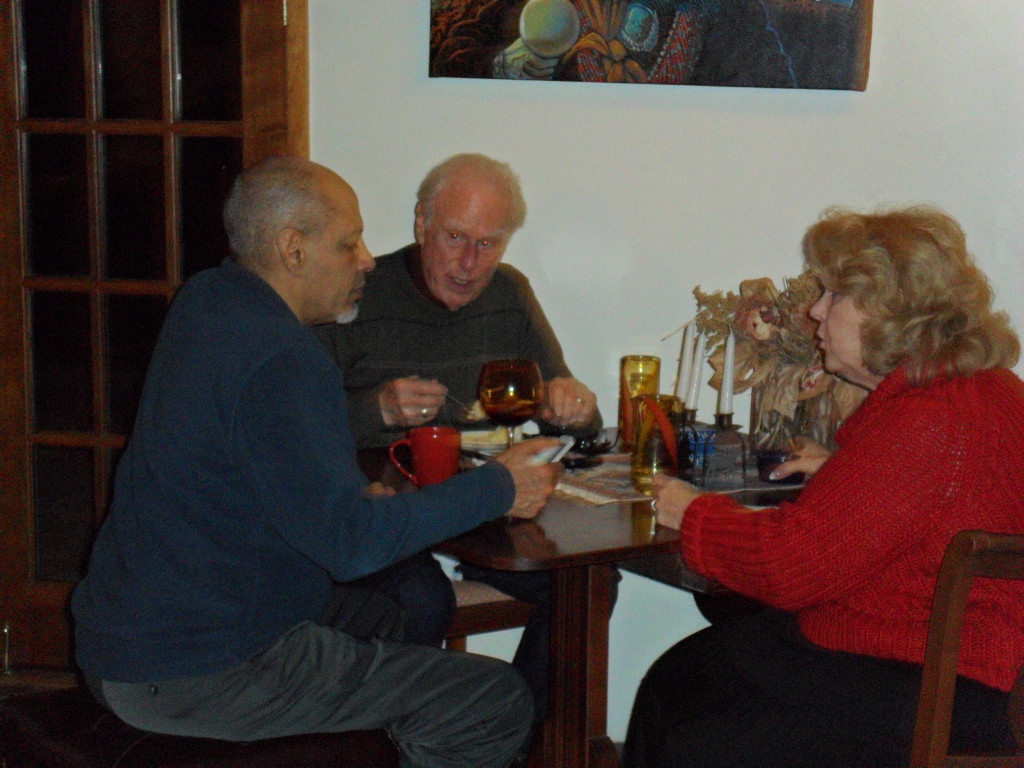
In the spirit of the getsetandgo blog, I took photos of my friends as we talked and ate.  The enchiladas were all gone before it occurred to me that it would be nice to have a photo.

SAM_1385

SAM_1387

SAM_1388

SAM_1392

Additionally, I regretted not taking a photo of three of my women friends with long hair.  Another friend who has spectacular, very dark grey, long hair and just turned 70 recently told me a story about how a mutual acquaintance came up to her and told her no woman over 60 should have long hair.  It annoyed me so much in an odd sort of way that I now wear my hair longer than usual.

Mom’s Pumpkin Pie Recipe


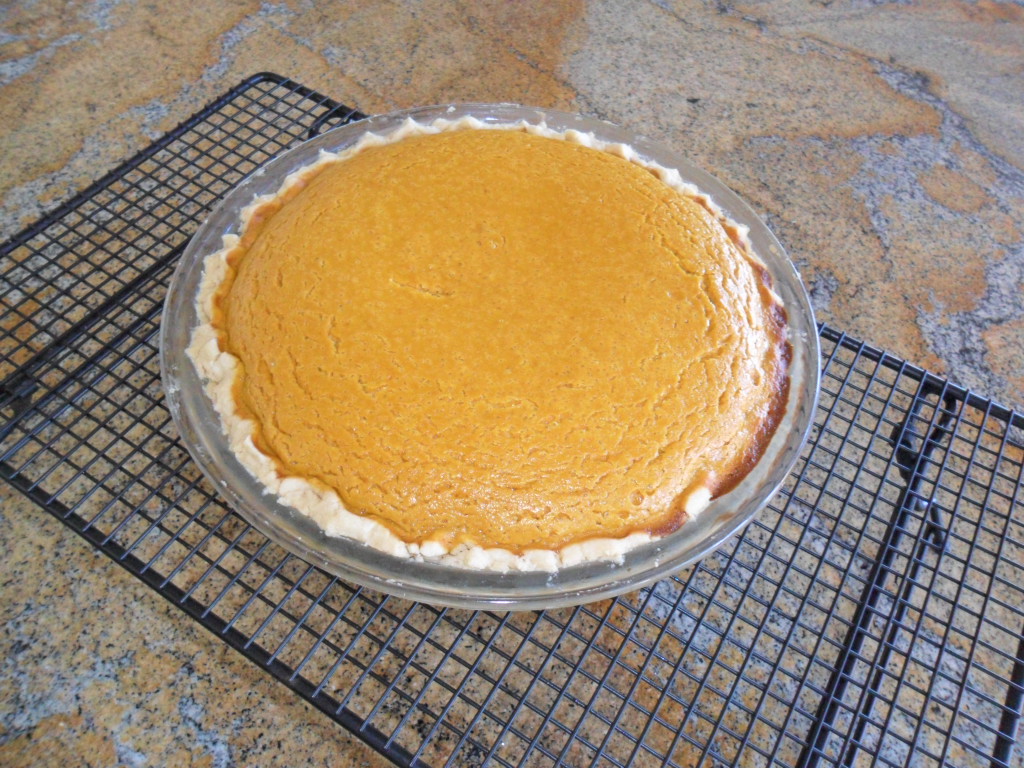
Today, Thanksgiving Day, I will make Barbara Duke Lightle’s (my mother)  pumpkin pie, using a recipe and blender she gave me decades ago.  The recipe includes a small hand written note about her preferred way of combining the ingredients.  My grandson loves this pie and the idea that what he is eating is a recipe from his great grandmother, a woman he will never know.  He tries other pumpkin pies but likes only this one.  Dad loved this pie, too.  After Mom died and he discovered he was gluten intolerant, he taught himself to cook.  He made this for himself sans the crust–pumpkin pudding.

1 1/2 cups cooked or canned pumpkin

1 1/2 cups milk or milk combined with cream or evaporated milk

3 eggs

3/4 cup brown or white sugar

1 tsp ground cinnamon

1 tsp ground nutmeg

1/2 tsp ground ginger

(or use 1/2 tsp nutmeg and 1 tsp ginger for a more spicy flavor)

Place all ingredients in a blender.  Place your hand over the blender cover before starting the motor.  Blend just  a few seconds, until smooth, and pour into pastry lined pie shell.  Bake at 450 for ten minutes, then bake at 350 for 30 minutes longer or until firm in the center.  A piece of outer peel of orange can be blender grated into the pie mixture–if you do this, place in blender with 1/2 cup milk and blend fine before adding other ingredients.

You may use squash instead of pumpkin.

The hand written note says, “Juliana, if you use half evaporated milk it gives wonderful flavor and I like white sugar best”.

I use evaporated milk totally and white sugar like Mom recommended.  I have never used orange peel.  The cinnamon I am using today comes from a tree at my friend’s mother’s house in Ethiopia.

This seems a great day to also thank my mother for all she taught me:  cooking, singing and playing the piano, a love of beauty–flowers, wildlife, good food, the list is endless.  She taught me think positively, to believe in myself, to make the most of what life brings, to never give up.  Thank you, Mom!!!

SAM_1381

Baked Pork Chops with Vegetables


My stove top quit a couple of weeks ago.  No repairman is available until after Thanksgiving.  To cook anything, I must use the oven, microwave, or electric roaster.  Last night a friend came over for dinner.  Decided to try something I had never tried before:  roasting the pork chops in the oven with vegetables.

4 pork chops

3 medium red skinned potoates, sliced

2 poblano peppers, seeded and chopped

2 jalapeño peppers, seeded and chopped (optional)

1 medium sized red onion, chopped

2 apples, cut into slices–I used Jonathan

5 medium sized baby portabello mushrooms, sliced

Olive oil

Rubbed sage

Dried thyme

I used a cast iron enamel roasting pan.  Use whatever you have so that you can layer the ingredients.  Pour enough olive oil into the bottom of the pan to cover the bottom.  Layer the chopped onions with  potato slices on top.  Place the pork chops on top of the potato slices.  Sprinkle rubbed sage to cover lightly the pork chops.  On top of the pork chops, layer the poblano and jalapeño peppers, then the apples.  Sprinkle thyme over the top of this layer.  Finally, place the sliced portabello mushrooms on top and pour olive oil over the layered chops and vegetables.  Place the roasting pan in a 400 degree oven.  Bake until pork chops are done, approximately 45 min. to an hour.  Serves four.

Pasta with Kale and Portabello Mushrooms


Earlier I took a hike across my little canyon and up the hill where I plan to build a fence so people will not drive where they are not supposed to drive.  Driving there causes rather bad erosion.  Walked back to the barn, fed the horses, and returned to the house, then noticed hunger.  This afternoon I bought some Tuscan kale and wanted to try it out.  Here’s my creation:

Extra virgin olive oil

1/2 medium onion, coarsely chopped

3-4 medium size portabello mushrooms, sliced

3 large Tuscan kale leaves, center stem removed and chopped

Pasta–your choice.  I used rigatoni but my favorite is conchiglie from Montebello Monastery in Italy which has been doing this since 1388 or so they claim

Greek oregano

Ricotta cheese

Cover bottom of a skillet with the olive oil.  Add the onions, mushrooms, and chopped kale stems.  Saute until the onions are translucent and the kale stems are cooked but still crunchy.  While this is cooking, tear the kale leaves into bite sized pieces.  Take two dried oregano stems and lightly remove and crumble the leaves and florets into the skillet.  Discard the stems.  Add the kale leaves to the onion mixture and saute.  When done, kale leaves will be tender but still a bright green.  Pour over the pasta and place a dollop of ricotta cheese on top.

Note:  I grow my own Greek oregano and dried a bunch on my counter top this week–I live in a dry climate so this works.  I took two stems with the dried leaves and flowers still attached and stripped off the leaves and flowers and crushed them with my hands directly into the skillet.  Greek oregano is very mild.  You might want to use less of other oregano.  Without the ricotta, this recipe is vegan.  I used whole milk ricotta; I never buy low fat anything.  I tried to learn to like whole wheat pasta but gave up.  Quinoa and corn mixed pasta is ok, but give me the real thing from Italy.


SAM_1296


SAM_1298


SAM_1299


This photo illustrates the dried Greek oregano.  I will have to decide whether to store like this or take it all off the stems and crush it.

Summer Salad: Garbanzo Beans and Corn


The first Sunday is potluck Sunday at the Unitarian Universalist Fellowship in Amarillo, Texas, about 14 miles from where I live.  Usually, for years, I have made a certain pie that many like.  This morning I neither felt the inclination nor the had the time because I went out to feed horses and work on my steep drive.  Plus, the forecast predicted a quite hot day, 98 degrees Fahrenheit, making me disinclined to heat up the oven.  I opened my pantry door, viewed the canned goods and created this recipe.  Several asked how I made it; apparently my experiment met with success.

2 15 oz. cans garbanzo beans, drained and rinsed

1 15 oz. can whole kernel corn, drained

1/4 medium size purple onion, finely chopped

1 medium size red bell pepper, chopped

1/3 cup medium size black olives, sliced

1/4 cup (or amount to suit your own personal taste) red wine vinegar

1/2 cup olive oil

2 tsp. ground cumin

2 tsp. coriander seeds, ground

freshly ground black pepper to taste

Mix all the above.  Chill and serve.  Personally, I think this might have been even better if allowed to marinate to blend all the flavors.  This is easy,  nutritious, and vegan.