Chocolate Zucchini Cake


Everyone always grows too much zucchini if they plant even one little hill.  I invented this recipe about a year ago in an attempt to not throw away a bunch of too large zucchini.  Yesterday a friend requested my recipe; I promised her I would post it today.

Combine 3 eggs, 1 2/3 cups sugar, and 1 cup cooking oil in an electric mixer bowl.  Add one teaspoon vanilla.  Mix thoroughly.  Combine 1 1/2 cups flour, 1 tsp. cinnamon, 1/4 tsp. baking powder, 1 tsp. baking soda, and 1/4 cup dark cocoa.  Add to egg mixture.  By hand mix in 2 cups grated zucchini and 3/4 cup chopped walnuts.  The mixture will be very stiff.  Spoon into oiled and floured bundt pan.  Bake at 325-350 for 1 hour or until done.  Let cool before taking out of the bundt pan.  This is a lovely moist cake and keeps well.

Red Snapper with Chorizo and Mixed Rice


Last Sunday evening I invited three friends over for dinner.  They come to my house all the time so I decided to try something different.  Red snapper was on sale at the market so I bought one big fillet and one smaller one, thinking they would fit perfectly in the heavy cast iron fish pan I have.  I use this particular cast iron pot because I can put it on the grill in the summer and avoid  heat in the house.  In my refrigerator I also found some soyrizo–chorizo made from soy instead of pork.  Since one of the friends is Muslim, I make sure never to feed him pork–he does not want me to go to hell, he says.  Since the fish and the chorizo made for rather sizable servings, I did not expect all of it to totally disappear.  Wrong.  They ate all of it and asked for the recipe.

Approximately 1 1/2 pounds red snapper or similar firm fleshed fish

Enough soyrizo (or chorizo) to cover the fish in a thin layer sprinkled over the fish

1 onion finely chopped

1 large poblano pepper, seeded and chopped

Olive oil

1/2 teaspoon cinnamon

1 small can tomato sauce

Pour enough olive oil into a heavy pan to cover the bottom

Lay the fish in the bottom of the pan and cover with chorizo

Saute the onions and poblano pepper in olive oil until onions are translucent

Spread the onion/pepper mixture over the top of the chorizo

Stir the cinnamon into the tomato sauce

Pour the cinnamon/tomato sauce mixture over the top

Place a lid on pan and bake on the grill at medium heat.

It takes the cast iron a long time to heat up so once it was heated, I baked the dish for approximately 20 minutes or until the fish was done and everything was bubbling.

I served this with my favorite rice:  1/3 Jasmine red rice, 1/3 Jasmine white rice, combined with 1/3 black rice.  I used one half cup each, sauteed with 1 TBS. finely chopped garlic in enough olive oil to cover the bottom of a large sauce pan.  Saute until the rice appears to be sticking slightly, then pour water double the total amount of rice.  Stir in 1 tsp. bouillon, cover with six paper towels and then the lid, turn down to low, and cook approximately one hour.  The red and black rice take at least twice as long to cook as white rice.

This easily serves four.  I served it with a salad:  romaine, red cabbage, dried cherries, yellow pepper, diced radishes, and feta cheese.  Bon appetit!!

Do you like to eat? Bees and the Food Supply


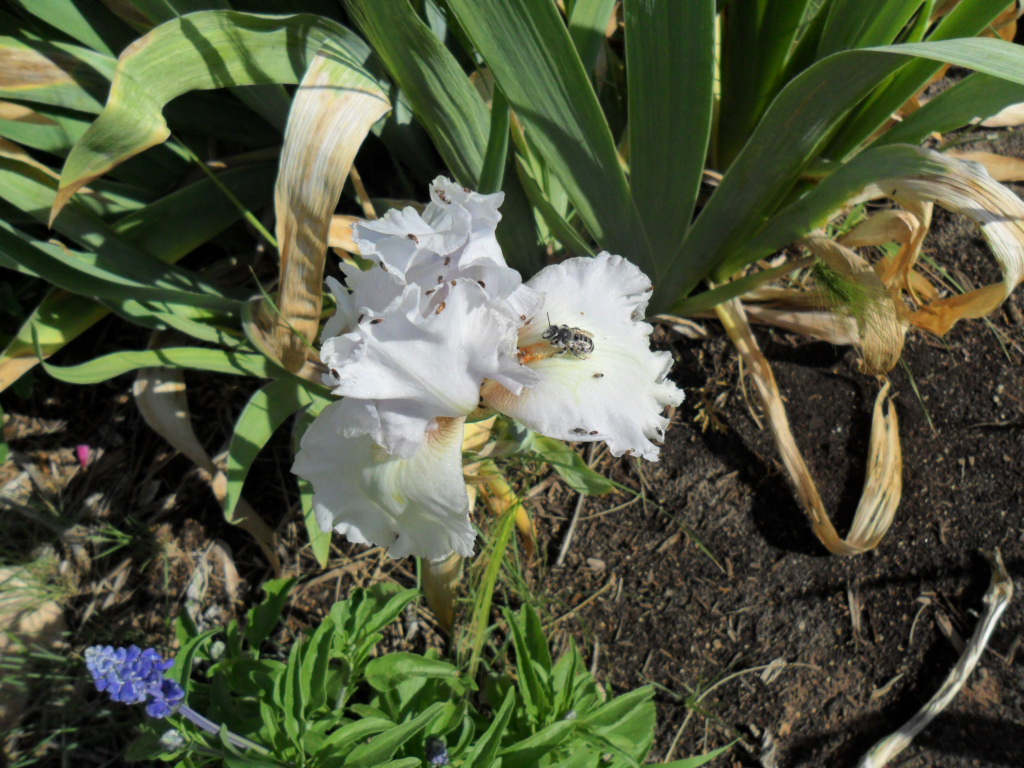
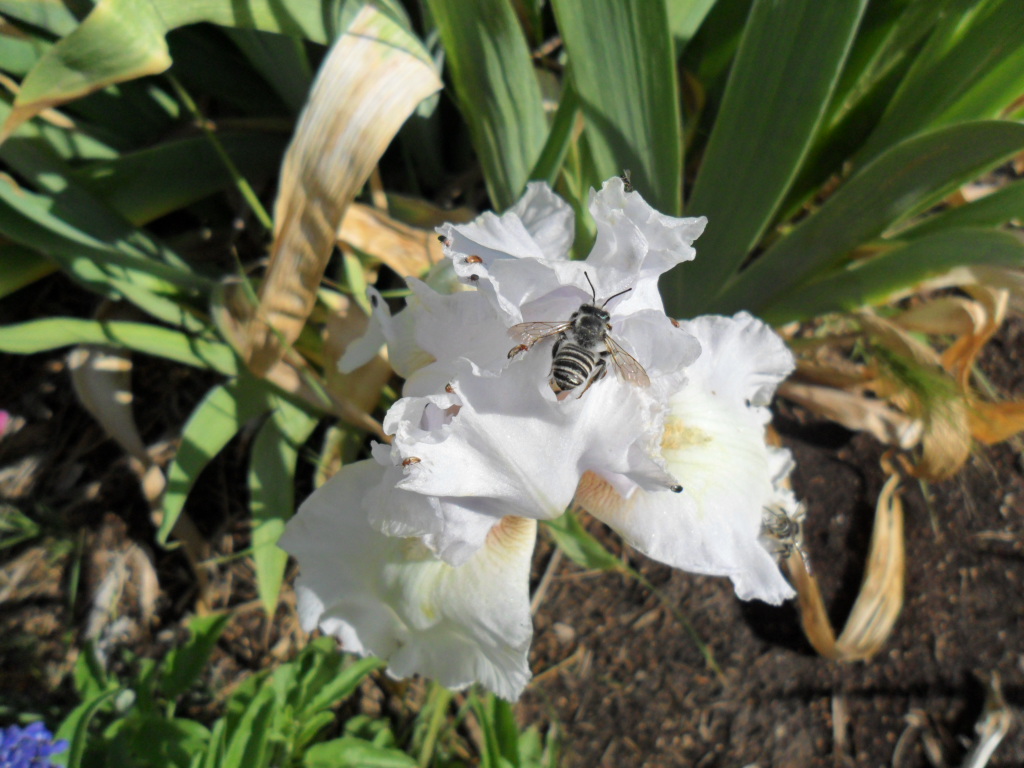
SAM_1074Do you like to eat?  Do you eat almonds, apples, cherries, watermelon, blueberries, or cantaloupe?  In fact, the biggest factor limiting the world’s food supply is not war, drought, or any of the factors you commonly hear about.  The world’s food supply is limited by the amount of bees available for pollination.  In the last five years in the United States alone, approximately one million honey bee colonies died each year, about one third of our national bee herd.  Bees are in danger of extinction.  Native to Southeast Asia, honey bees were domesticated long before written history, before the building of the Egyptian pyramids.  Thousands of species of bees exist, but honey bees carry the main load of pollination for cultivated crops.

More than 740,000 acres of almonds, California’s leading agricultural export,  remain in cultivation in the Central Valley of California.  Pollination depends on bumble bees, honey bees, and wild bees.  Sadly, the wild bees are mostly extinct, killed by pesticides and habitat loss.  Now pollination depends on traveling bee keepers and their honey bees.  Today, commercial bee keepers number one fourth of what they did in 1980.  To get enough bees the almond (and cherry and apple, etc.) growers hire these bee keepers to install approximately 2 million bee hives to work the pollination.  Almonds alone require at least 1.5 million hives.  Each almond tree’s blossoms number 25,000 and at 135 or so trees per acre, that adds up to 3.5 million flowers to pollinate.  The difference between a poor harvest and a great one depends on bees.  After the bees finish their work in the Central Valley and other warmer climates, the commercial keepers take them to places like Idaho and North Dakota for the summer where they sip alfalfa, buckwheat, goldenrod, and sweet clover blossoms and produce the honey sold in groceries.

Where have all the bees gone?  What leads them toward extinction?  In 2006-2008, beehives across the world from Europe to here to Indian and Brazil nearly collapsed.  Causes vary:  foulbrood–a bacterial fungus, wasps, ants, mice, a host of viruses, nosema–bee diarrhea, and certain pesticides.  What can we do?  First, we can ban certain pesticides that are known to harm bees.  Second, we need to grow more flowers and blooming weeds (yes, I said weeds) to encourage a broader spectrum of healthy bees for pollination.  Honey bees cannot do it all alone.  The lack of sufficient flowers is the result of not only pesticides, but also the increase in lawns.  If you personally want to make a difference for bees and ultimately our food supply, let the wild flowers grow, plant more flowers and less lawn, limit pesticide use.

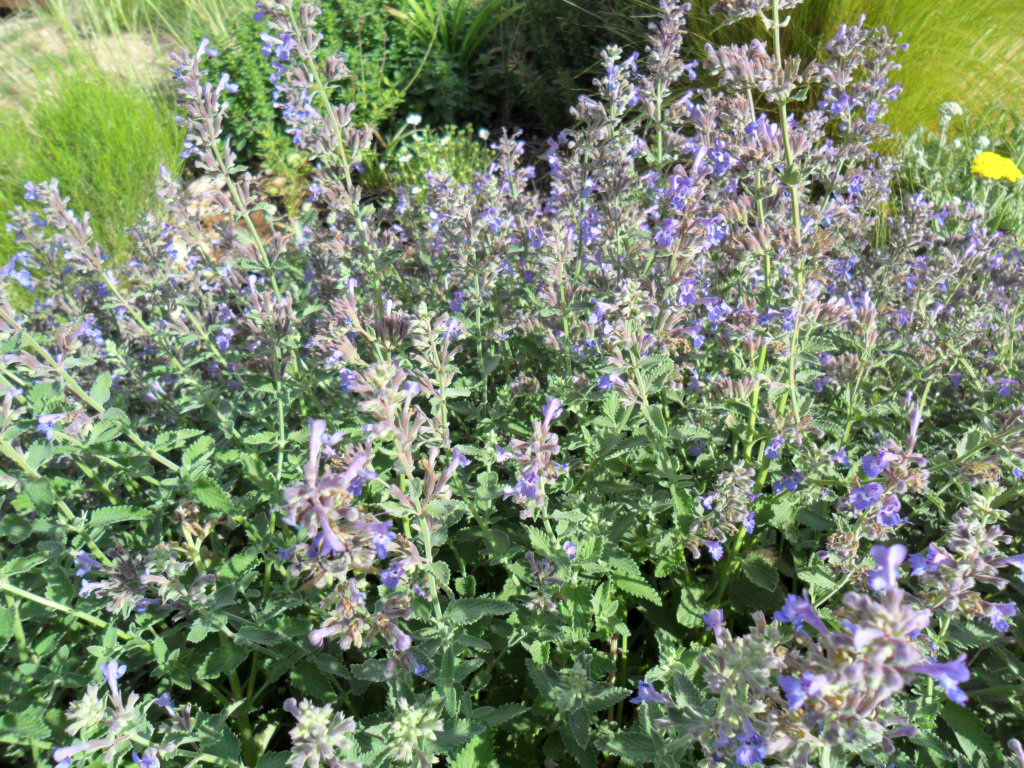
This morning I went out to my xeroscape garden–I have no lawn–and photographed bees.  At one catmint plant, so many busy bees made a clearly audible buzzing sound.  I witnessed at least four different kinds–species–of bees.  These SAM_1076

SAM_1081

SAM_1077

SAM_1078photographs illustrate at least several different types of flowers bees love.

Vegetables with Coriander, Cumin, and Tumeric


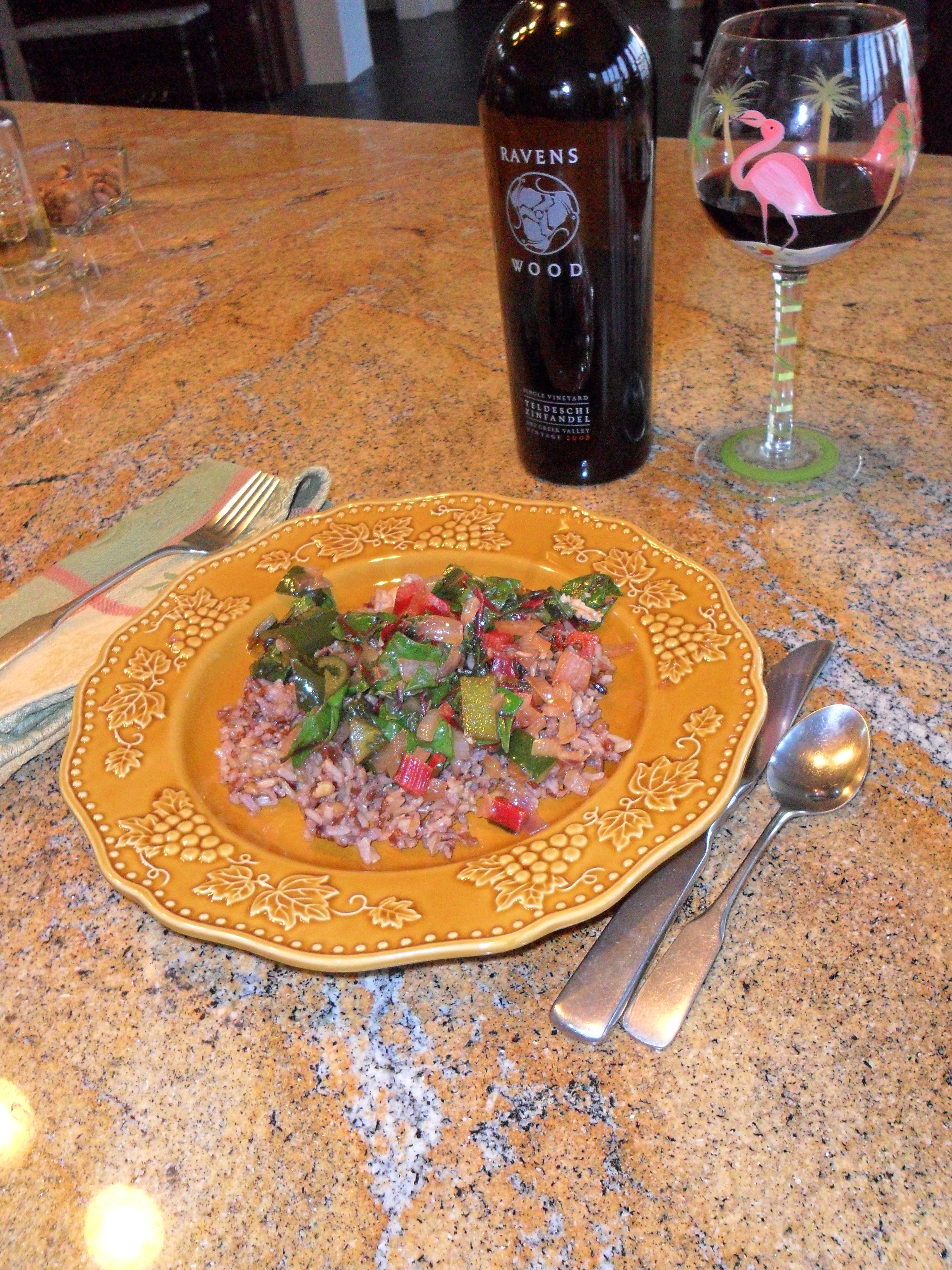
SAM_1010Vegetables are my favorite food.  Interspersed with the poems and essays I publish, I try to post unique recipes.  My recipes come from years of interaction and relationships with people from all over the world, husbands, exchange students who enhance my extended family, travels to Asia and Latin America, my international friends near where I live.  Recently, after a dinner party, I had left over vegetables that needed cooking so one evening home from work, I created this recipe.  It is vegan by accident not intention.  One could add fish, chicken, turkey leftovers (see recent post for turkey curry), shrimp…you get the idea.  The options are endless.  I used the vegetables I needed to use up, but take a look in your refrigerator and try what you have on hand.  Experiment.

1 medium sized beet, peeled and cut into half coins

1 poblano pepper seeded and chopped

1/2 purple onion, chopped

Several pieces of Swiss chard, stems removed and chopped, leaves cut into large, bite sized pieces

Garlic cloves, peeled and chopped–amount to your own taste

Olive oil

1 teaspoon coriander seeds, ground

1/2 teaspoon cumin–or extra to taste

1 teaspoon ground turmeric

Saute the beets, chopped Swiss chard stems, garlic, and onions in olive oil until beets are cooked through.  Add spices and poblano pepper.  When  the pepper is nearly done, add the Swiss chard leaves and cook only until wilted.

Serve over rice.  I used equal amounts of black, red, and Jasmine rice.

How to cook rice:

1/3 cup black rice

1/3 cup red rice

1/3 cup brown or Jasmine rice–your preference

1 teaspoon chopped garlic

1 teaspoon concentrated broth/bouillon–I use Better Than Bouillon brand which is available Vegetarian as well as Chicken, etc.

Pour enough olive oil into a saucepan to cover the bottom.  Add the rice and chopped garlic.  Saute at high heat until rice starts to stick, stirring constantly.  Add two cups water and the bouillon.  Stir rapidly until bouillon dissolves.  Turn down heat to low, cover the top of the saucepan with four paper towels or a tea towel folded to make several layers.  Put sauce pan lid on the top and cook for approximately one hour.  Red, brown, and black rice take twice as long to cook as white rice.  Do  not peek while rice is cooking.  Lifting the lid to check causes the rice to be mushy.
Turkey Curry


The holidays left me with all this left over turkey, cleaned off the bones, and frozen.  Then I kept wondering what to do with it besides the old standbys.  Recently, a longtime friend from Ohio posted a recipe for curry on Facebook.  Suddenly, it hit me:  modify this recipe and use some of this left over turkey.  I made it tonight for dinner and in all the rushing around after work, failed to take a photo. I am posting it anyway.

Coat the bottom of a skillet with oil

Add 1/2 onion, chopped

1 cup chopped mushrooms

1 cup peeled and diced butternut squash.

Saute until the onions are translucent.

Add approximately ten cherry tomatoes, cut in half

1/2 large pepper chopped–to increase the heat, use a hotter type of pepper

Add 1 Tablespoon curry powder (I have about three to four types of curry; use the one you like)

1-2 teaspoons ground tumeric

1-2 teaspoons ground ginger, to taste

Stir in 1/2 cup cream to make a sauce.

Finally, add the left over turkey cut into bite sized pieces.

Heat through and serve over rice.

My friend’s recipe called for sour cream instead of heavy cream.  I did not have sour cream so used regular cream instead.  Her recipe used eggplant.  I did not have any so used the squash.

The combination of the squash and tomatoes and the red pepper I used made a very colorful, pretty dish.  My dog was so excited by the smell of the turkey that she got a few bites of it as I cooked.

It was a success all around.  Enjoy!!

2012 in review


The WordPress.com stats helper monkeys prepared a 2012 annual report for this blog.

Here’s an excerpt:

600 people reached the top of Mt. Everest in 2012. This blog got about 2,800 views in 2012. If every person who reached the top of Mt. Everest viewed this blog, it would have taken 5 years to get that many views.

Click here to see the complete report.

I started this blog 11 months ago.  I want to thank all my followers, commenters, and friends who follow me via WordPress, Facebook, etc.  for making this a success.  Thank you and Happy New Year.  May this new year bring joy and prosperity to all of you.

Christmas Thoughts


Snow falls in a
driving wind.
If the roads become
too awful, I will
celebrate Christmas
alone.
An awful experience?
No.
Beauty lies outside the windows and
in my heart.
Heat radiates from the fire.
Food fills my refrigerator.
Music bursts from CDs’.
Joy!!
Christmas always brings delight and
reflection.
You do not have to be a Christian to
feel the meaning:
Kindness
Tolerance
Empathy
Giving
Receiving
Accepting
Families
Friends
Love
Joy!!

Vegetarian Chorizo with Potatoes and Black Beans


    This is a quick, simple recipe.  I served it with a very basic green salad of red lettuce, orange and red bell peppers, and a goat feta cheese.  Rice would make a nice addition as would fried ripe plantains.

6 small (petite) potatoes, diced

6 oz. (1 large link) soy chorizo (I used Soyrizo which is also vegan)

1/2 medium red onion, chopped

1 can black beans

Olive oil

Saute the onion and potatoes in the olive oil until tender.  Remove the chorizo from the package and crumble into the skillet with the onion and potatoes.  Stir into the onion and potato mixture.  Rinse the canned black beans and drain.  Add to the mixture and stir.  When black beans are heated, serve.

The portions in this recipe are easy to multiply to serve more people.

Teriyaki Salmon with Red Chard and Cassia Cinnamon (for two)


Image

The red chard leaves, chopped.

Image

Just after adding the salmon.

Image

The finished product.


2  6 oz. servings of wild salmon

1/2 medium red (purple) onion, chopped

1/2 large poblano pepper, seeded and coarsely chopped

2 large red chard leaves and stems

1/2 to 1 tsp. cassia cinnamon

1/8 cup teriyaki sauce mixed with 1/8 cup Worcestershire sauce

Olive oil

Marinate the salmon in the teriyaki/Worcestershire sauce while you prepare the rest.  Using a sharp knife, destem and devein the red chard.  Coarsely chop the stems and veins.  Chop the leaves into pieces as indicated in the photo above.  Cover the bottom of a medium sized skillet with olive oil.  I love extra virgin olive oil and use a lot of it, but not absolutely necessary.  Saute chopped onions in the olive oil until translucent.  Add the poblano pepper and red stems of the chard.  When the peppers and chard stems are slightly cooked, add the salmon and marinade and sauté for about 2 minutes.  Turn the salmon and place the chard leaves on top.  Scatter the cinnamon on top of the chard leaves.  Saute until the chard leaves are wilted.

Serve with mixed grain rice (khao-pa-som in Thai) which can be found at Asian markets.  It is a mixture of brown, black, and red rice with various grains including what appears to be barley.  I cook it exactly like rice: sauté in olive oil with finely chopped garlic for a minute or so, add water, and stir in 1 tsp. concentrated bouillon. Turn heat to low, cover pan with several layers of paper towels, and put on lid.  This, like red and brown rice, takes about twice as long to cook as white rice.  It is more nutritious than white rice. If you want the health benefits of cinnamon, it is necessary to use cassia cinnamon, not Ceylon cinnamon.

Costa Rica 6: Adventures and Views


Without a doubt Costa Rica holds my vote for most photogenic and greenest country.  From the Caribbean and Pacific rain forests to the high mountain town of Monteverde, the words lush, exotic, verdant do not even begin to describe how incredibly rich the landscape is.  One of the first spectacular views lay before me across the parking lot from a combination restaurant and souvenir shop where we stopped for snacks.

I did not expect to see multiple mountain streams like in the Rockies, but it seemed we were crossing one nearly constantly.  This abundance of water explains their nearly total dependence on hydroelectric power with a little help from wind and thermal energy.

Several of my traveling companions decided to raft this river with class 4 rapids. Something told me I should not do this.  After flipping over several times, banged up and bruised, they decided to hike out.  In  the meantime, I experienced my own adventure, eating a raw turtle egg in salsa at a family restaurant on the top of a nearby mountain.

Beautiful mountain scenery seems endless.  I kept 00hing and awing.

This view shows the Bay of Nicoya in the distance from my hotel room in Monteverde.  The following photos all show views in the mountains near this little remote town.  There is only one road in and out and it is not paved and it is narrow.  The town was originally settled by Quakers from Canada who still believe a paved road will ruin the peaceful lifestyle.  Both the Quakers and the town are famous for their cheese which was served both plain and fried for breakfast.

This area provides both zip lining and horseback riding for tourists.  I elected to ride.  However, these horses did not seem well fed and certainly did not want to go very fast.  Although I saw a lot of horses in Costa Rica, these were by far the thinest.

The guy who lead us did not ride one of these.  He was riding a fancy, prancing, grey Paso Fino.

Look closely and you can see someone zip lining across the forested canyon hundreds of feet below.

When I asked about this tree, I was told it is related to cacao, but not eaten, not by humans anyway.

We traveled down the mountain on another dirt road to visit this elementary school.  It housed grades 1-6 with one teacher who is also the principal.  The literacy rate in Costa Rica is 98.5.

Playing soccer with the students.

A port on the Pacific on the way to the surfing town of Jaco.  Costa Rica exports many agricultural products from both its Pacific and Caribbean ports.  This includes bananas, pineapples, hearts of palms, and many tropical flowers.

While many beaches remain unsafe for swimming due to a strong undertow, the beaches at Manuel Antonio National Park are perfect.

To get into Manuel Antonio you have to walk and no parking exists really close.  Hiking out we crossed an area where the water rushed around our knees and the sign said, “No Swimming, Crocodiles”.

As a farmer, I like to look at and photograph crops.  With all the rain and heat, Costa Rica is the perfect climate for many tropical fruits and rice.  On the way back from Manuel Antonio we passed miles of rice fields and Aftican palms which produce palm oil.

Rice.

Coffee, the main export of Costa Rica.  In the highlands, coffee grows everywhere even along the berms in places so steep I wondered how the person picking the beans did not fall over.  Of course, I wondered the same thing about the dairy cattle grazing on the mountain slopes.

We did stop in Sarchi, the town famous for its furniture and oxcart industry.  Oxcarts remain the national symbol of Costa Rica.  Because of the mountainous terrain, when Costa Rican coffee initially became famous and its most successful crop, the only way to get the coffee to the coasts for export was to use oxcarts.

We spent very little time in cities.  However, as we left San Jose near the end of the trip and headed for the Caribbean side, I took some hurried photographs out the window.

My first and last hotel window view in San Jose included these stately coconut palms.

PURA VIDA