Costa Rica Adventure, Day Five–Hidden Treasures in the Rainforest


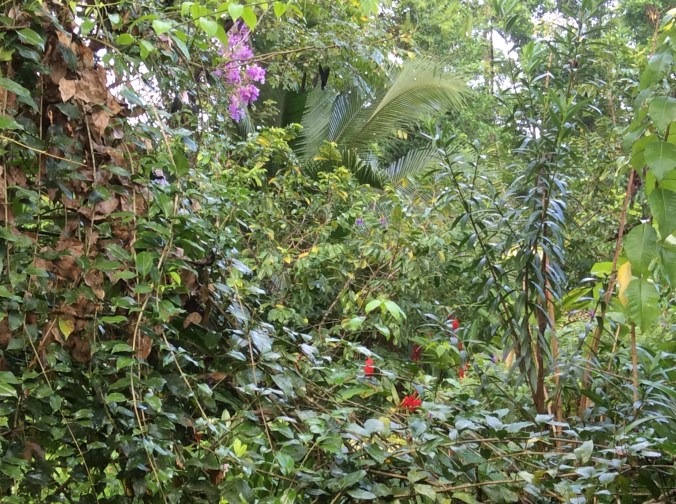
After we left the little village of Colonia Liberatad, we headed down another unpaved road to a tiny little building in a large garden for coffee and dessert.  Costa Rica is heaven for flower and plant lovers, a true botanists’ paradise.

IMG_2035

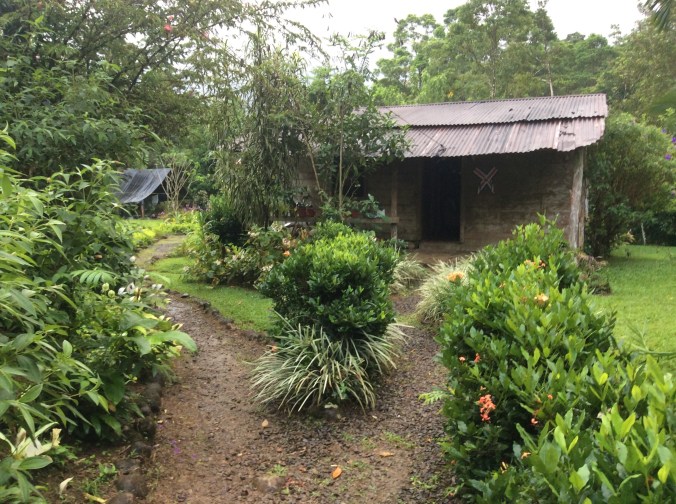
A pebbled path led from the road to the “restaurant”.  No one rushed; we were too enthralled with the flowers, the humidity, the total intenseness of the surroundings and atmosphere.

IMG_2036

Although I have been to Costa Rica twice now, ten days each time, and love flowers, still I can only recall the names of a few.

IMG_2037

Hundreds, sometimes, thousands, of species reside within only a few square yards.

IMG_2038

IMG_2039

IMG_2040

Everyone stopped along the way to look.  Some of the children wanted to hunt for reptiles. They were warned because the deadly fear-de-lance lives here.  A few assured everyone they knew exactly what they look like.  Knowing them, it was probably true.

IMG_2041

A wood building is a rare sight anywhere I have been there–too much rain.  All roofs are either metal or tile for the same reason.  Other types of roofing rot.  Some have totally given up trying to add color because it disappears quickly apparently.  This area of Costa Rica on the Caribbean side of the mountains receives rain daily.  It rained off and on all day.

I have no idea the name of the dessert they served us with coffee.  It resembled Indian Fry Bread (from New Mexico and Arizona–I love the stuff), super crispy, soaked in honey.

IMG_2042

The road just outside this hidden gem.

My Ethiopian Adventure–the Beginning


After leaving the US on July 2, flying 14 hours to Dubai, spending a day there, I finally made it to Addis Ababa (also spelled Abeba) on the 4th.  I remained in Ethiopia until this past Monday when I left Addis late in the afternoon.  Blog posting from Ethiopia was limited because wifi is available only in certain areas and places and there is no 2,3, or 4G anywhere.  For those of you who saw my four posts from Ethiopia, some photos and a few details may be repeated.  My plan is to post photos and detailed information now that I am back which will require a number of posts because not only did we go on a ten day road trip, we also spent time in Addis Ababa and Adama (Nasret).

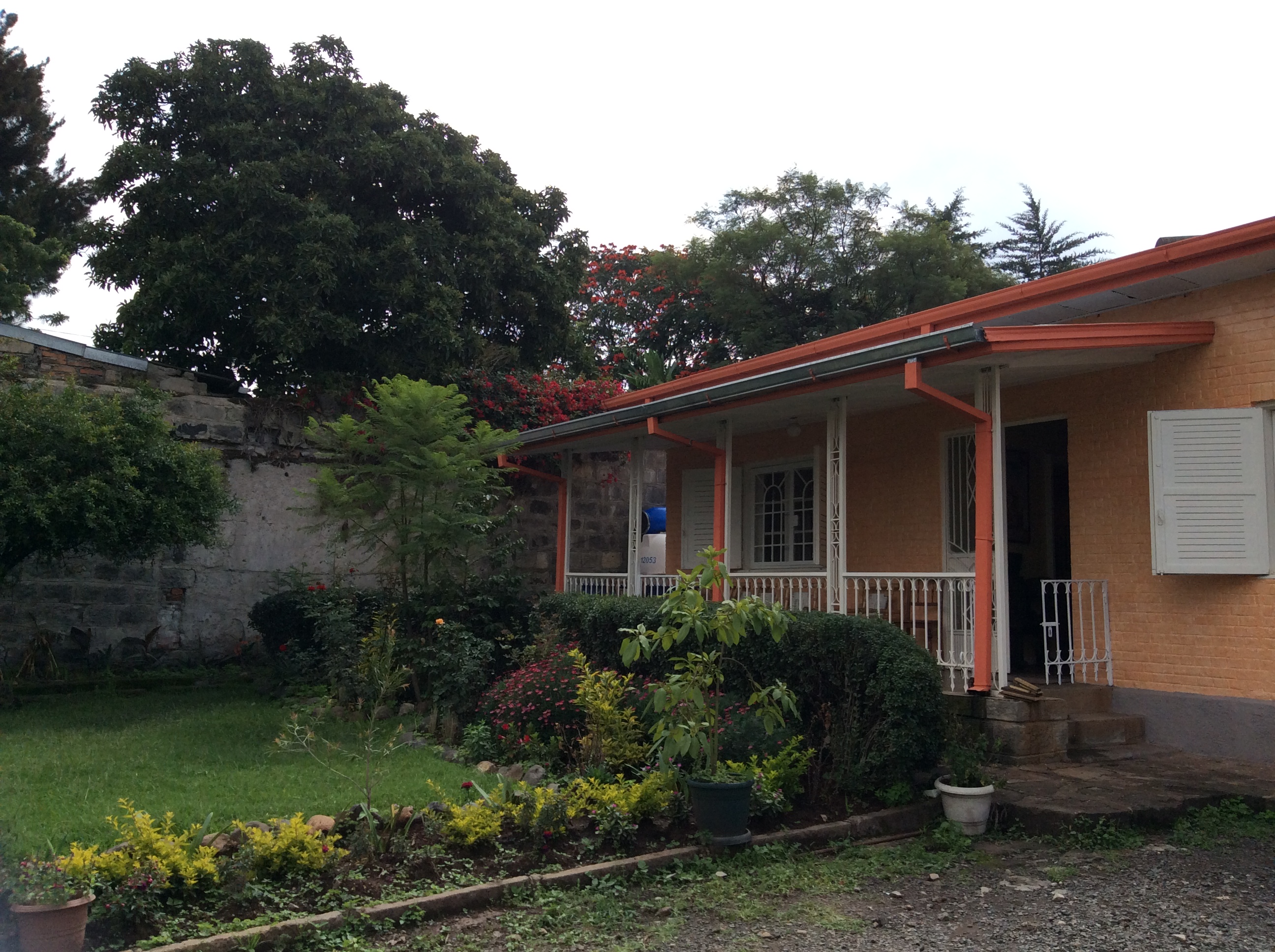
I went on this trip with two friends, a couple.  Dino is from Ethiopia, having grown up in Dire Dawa.  His parents now live in Adama where his father owns and runs a printing press.  Two of his sisters and one brother live in Addis.  We spent the first few days before our road trip in Addis, staying with his sister, Anna, who owns a painting company.  She imports the paint from Italy and her clients include individuals and businesses.  Her company also paints cars.  Of course, she painted her own house with this paint.  I loved the colors and textures.

IMG_0209

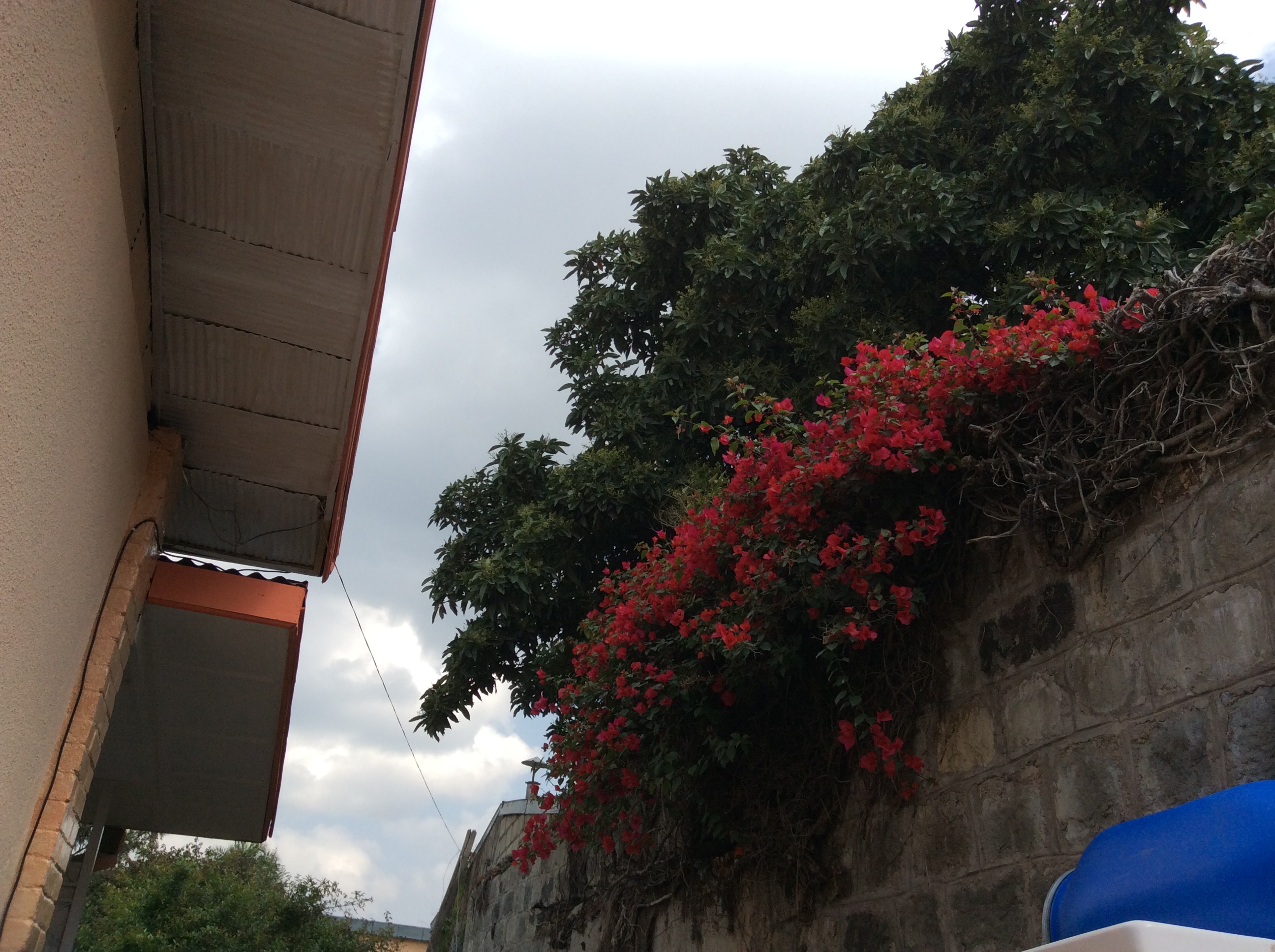
The front of Anna’s lovely house.  It is the rainy season and flowers grow everywhere.

IMG_0206

IMG_0207

IMG_0208

The translation for these orange flowers, which I had never seen before, is flowers of the sun.

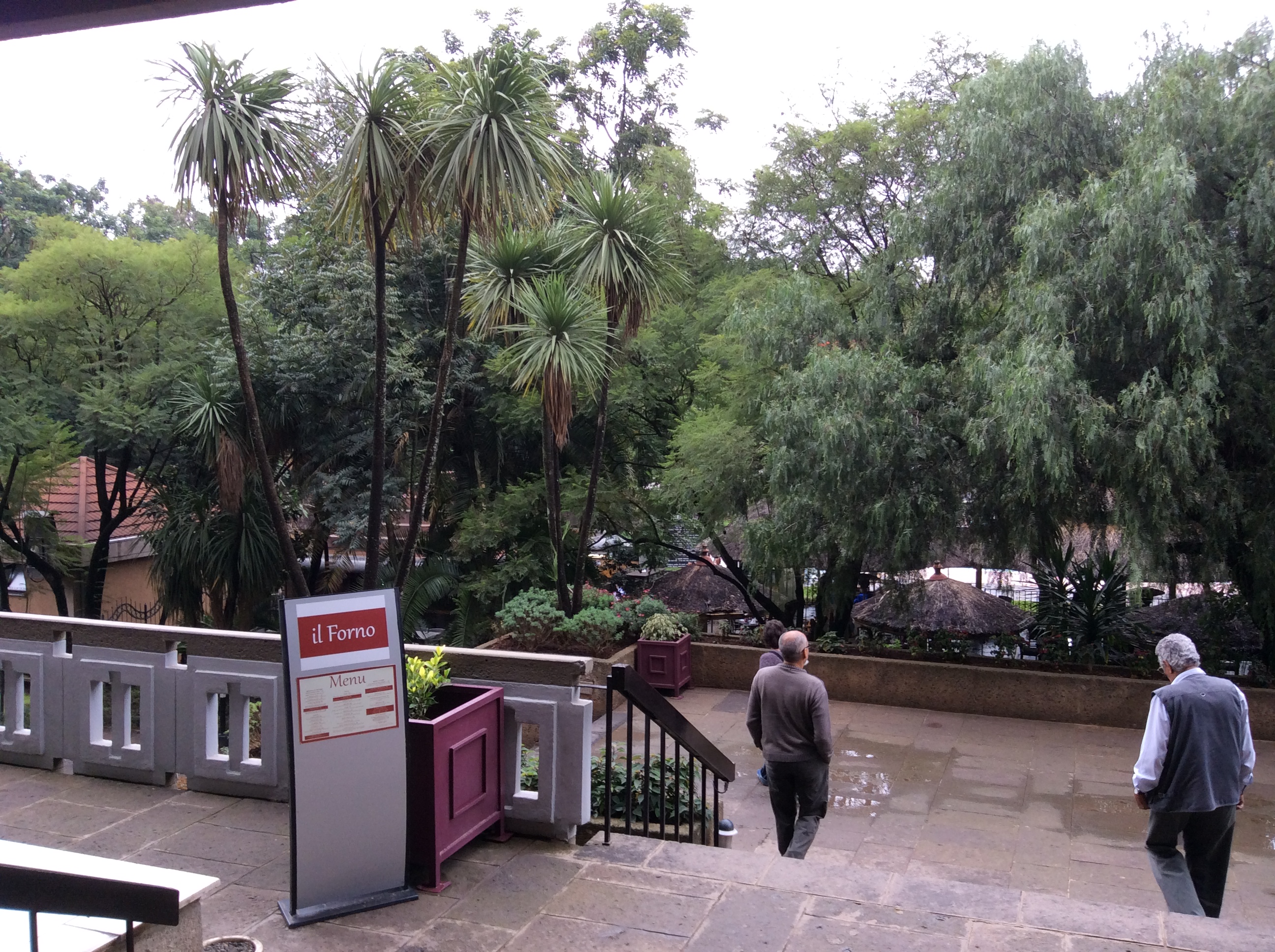
One afternoon four of us decided to take a drive around Addis to see some of the more beautiful spots which mainly included the Addis Hilton Hotel and the Sheraton, which is a five star.  Carlo, Dino’s father drove.  What a remarkable man, in his 80s and still getting to work at 6, driving everywhere.  The Hilton is the older of the two.  The grounds of both display lush greenery.

IMG_0216

IMG_0218

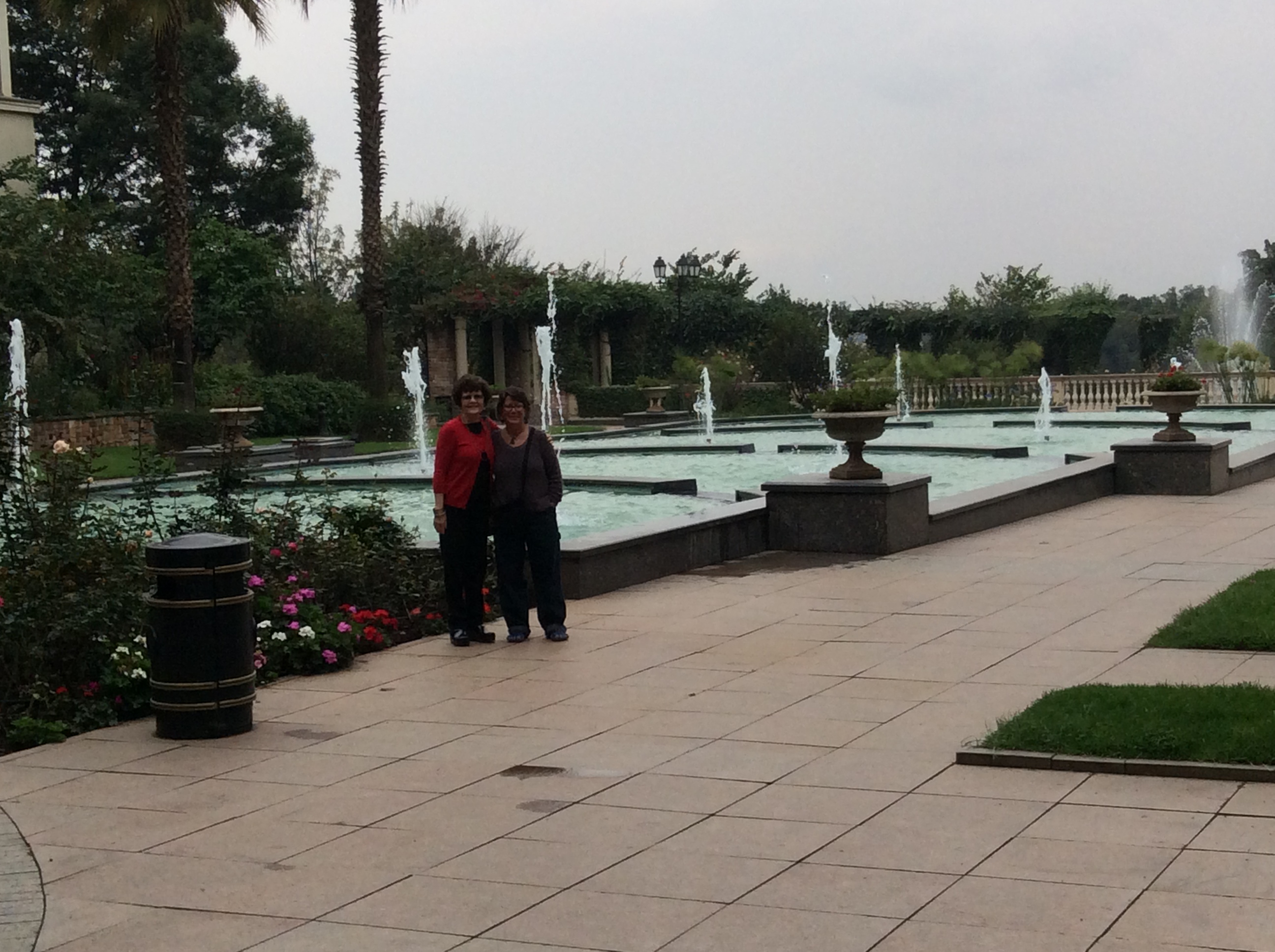
Zuriash and I enjoying the grandeur.

IMG_0219

Papyrus by the pool at the Sheraton.

IMG_0224

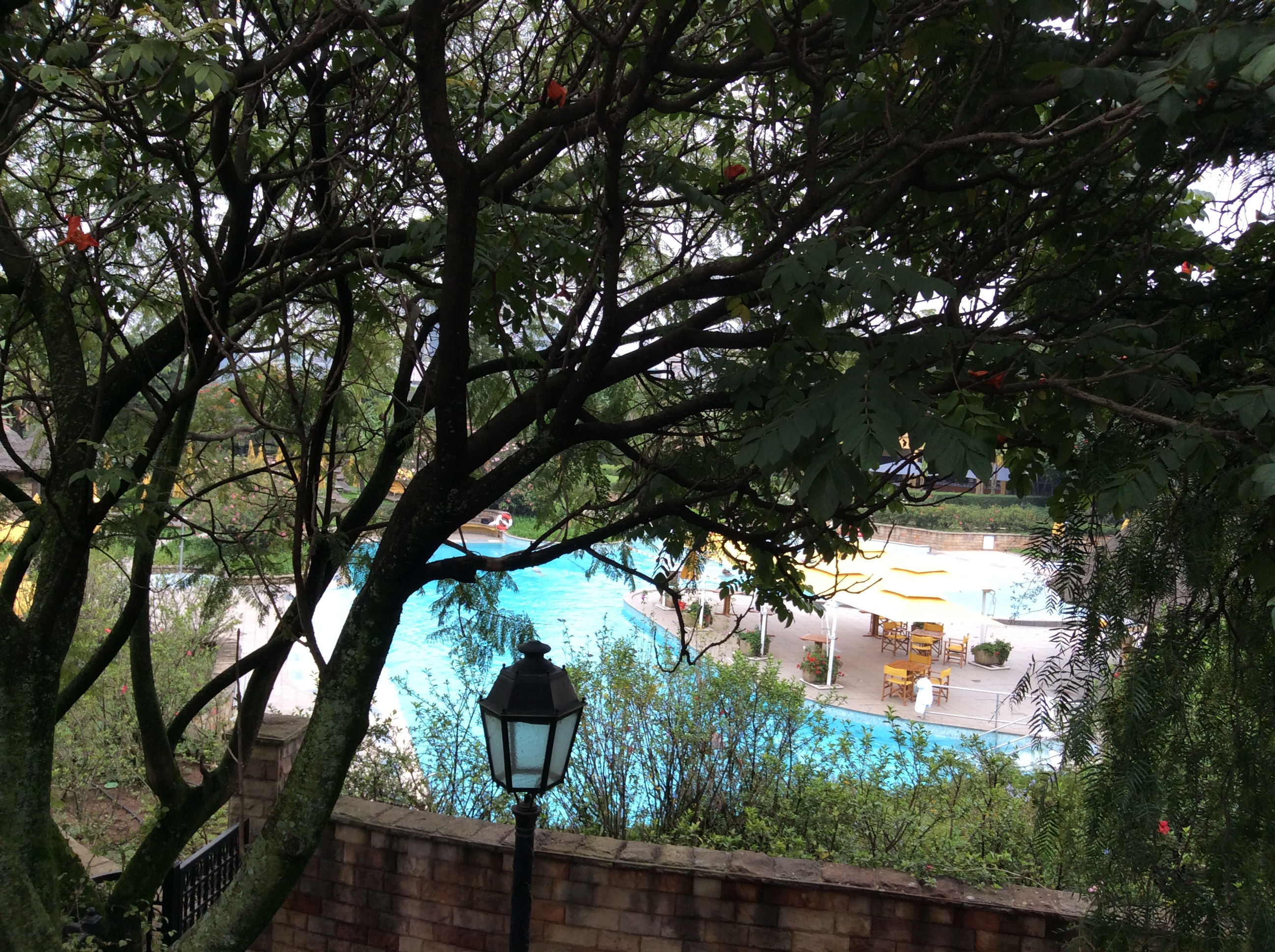
The swimming pool at the Sheraton.  You cannot use it unless you are staying there.  However, the pool at the Hilton is available on a membership basis–you do not have to stay there to use it.

IMG_0226

The rooms at the Sheraton overlooking the gardens and pool.  Dino and Carlo, son and father, walking down the path to the pool area.  Apparently, many visiting dignitaries stay here.  Inside walls are filled with excellent local art.

IMG_0227

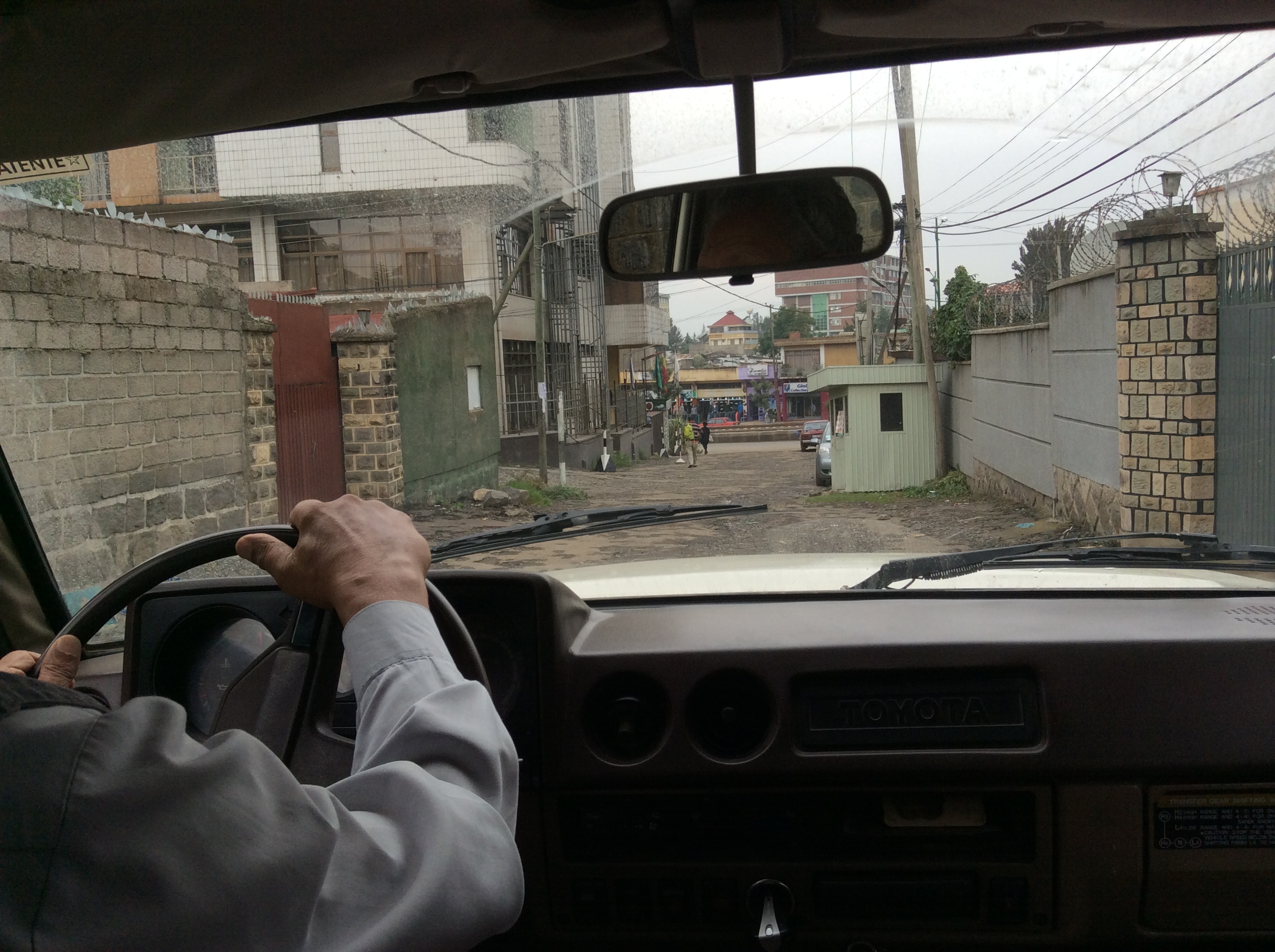
And then there is Addis traffic.  Approximately six million people live there.  In five or so days, riding here and there all over the city, I saw only two traffic lights, neither of which worked.  Most large intersections contain a traffic circle and around and around you go trying to wiggle into a space and get across the intersection.  Take a look.

IMG_0210

Trying to drive to Guiseppe’s house, Anna driving, we were stuck here.  The big trucks would not let us through.  Finally, a guy in another car, got out, stopped the trucks and waved us on.  It took us 1 1/2 hours to get there.  A couple of days later, he came to Anna’s in twenty minutes.

IMG_0214

In front of Guiseppe’s house.  A typical residential street, sometimes like this one with gates on each end.  People hire someone to watch the gates.  You honk and they are opened and then closed.

IMG_0215

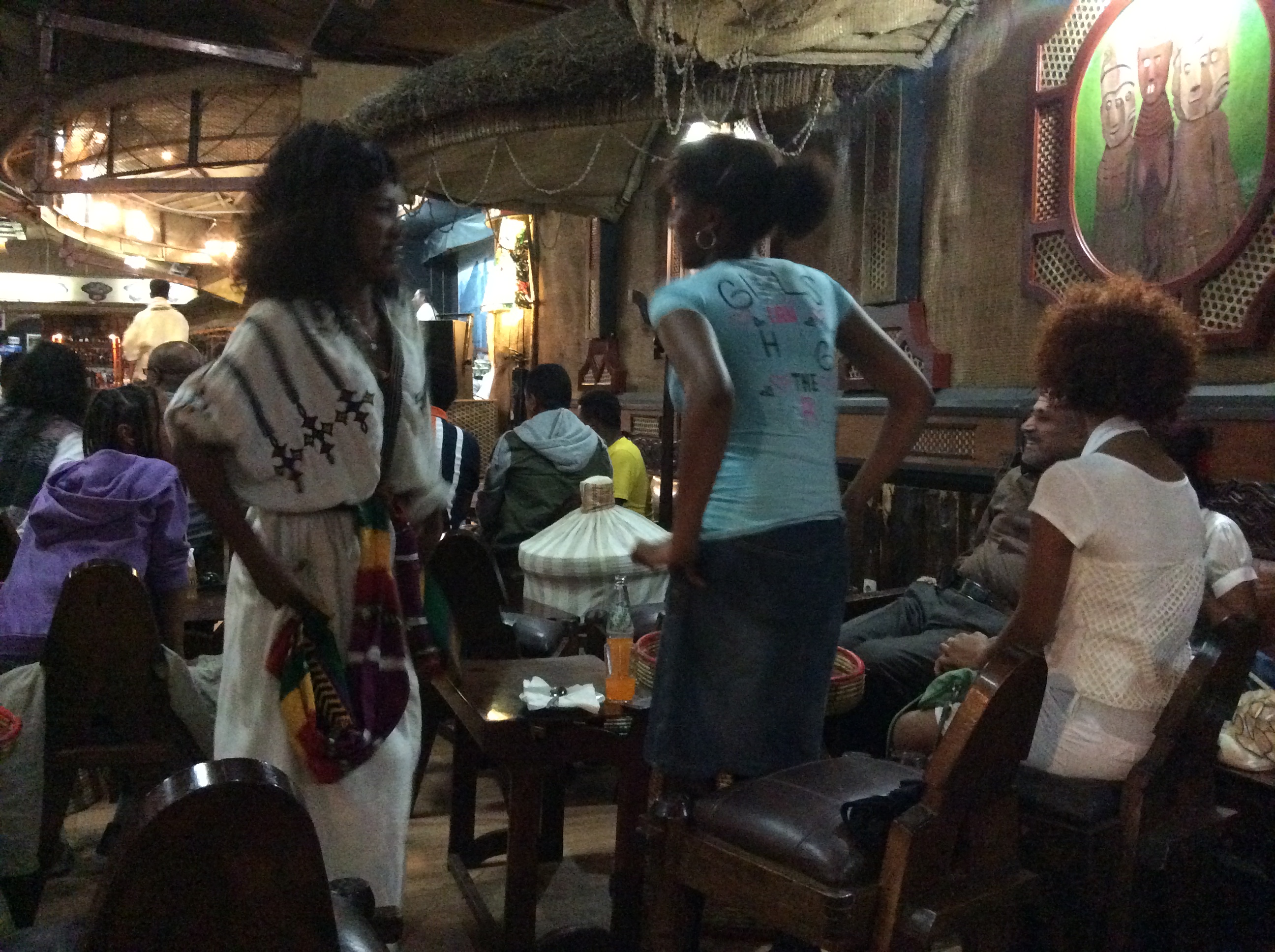
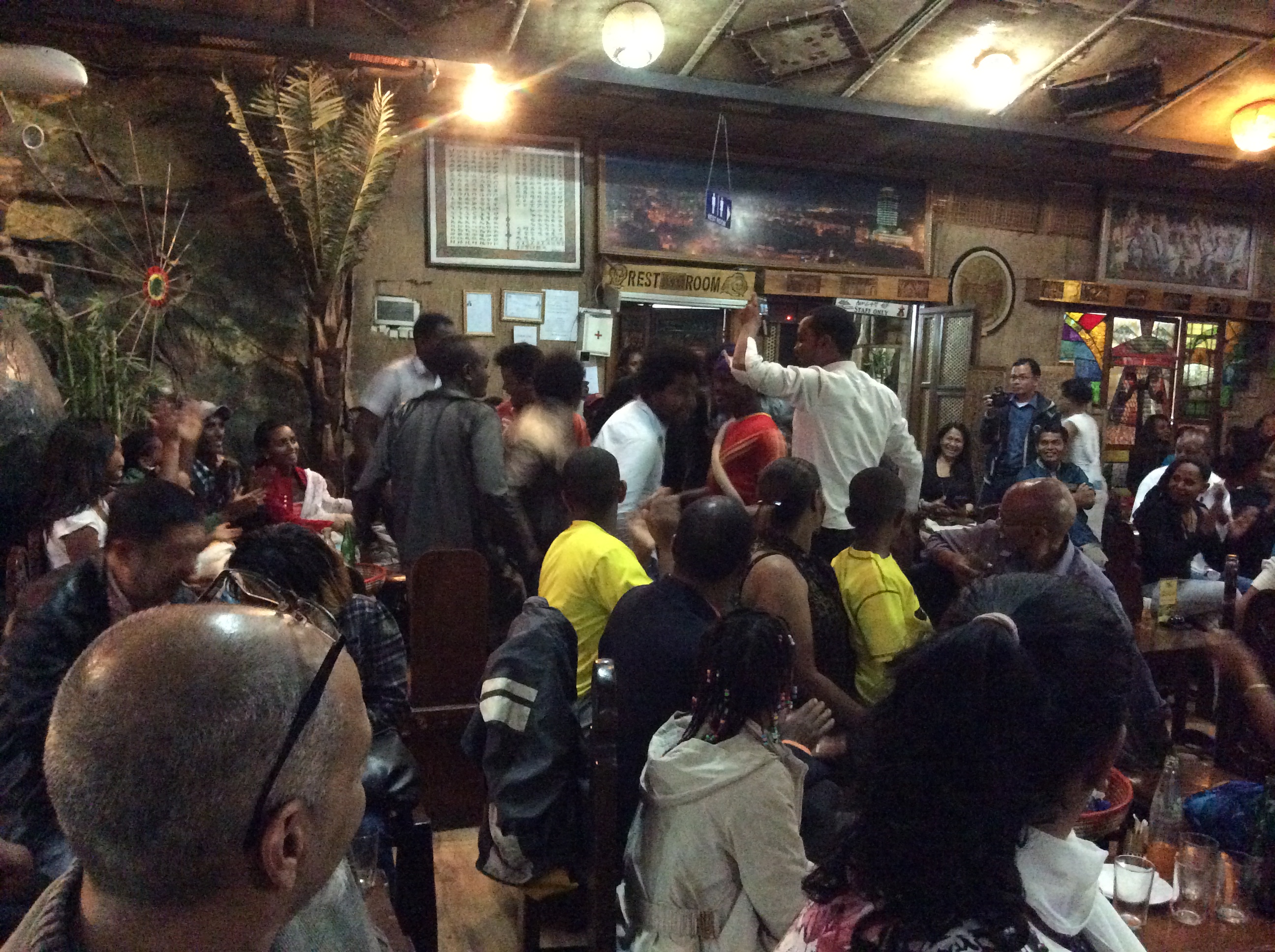
On the last evening before we began our ten day road trip, Anna took us to a cultural restaurant to eat traditional food and watch the dancing from different parts of the country.  I expected it to be just a tourist spot, but no, many locals were there.  During the dancing, locals competed with the professionals to see who could dance the best.

IMG_0242

This dance requires almost no motion except a lot of shoulder action.  I attempted to do it myself when the man behind the girl in white came over and asked me to dance.  I tried but would have to practice forever to get this one right.

IMG_0243

The young men in the background competing.

IMG_0229

Anna and I in front of her house.  She is wearing a traditional Ethiopia dress.

Milkweed and Monarchs


IMG_0093


Because I belong to the local chapter of the Native Plant Society, I notice native plants more, try to learn their names, and even find out if they possess medicinal uses.  We decided to adopt a theme for the year  2014, milkweeds.  Why milkweeds?  They are the primary food for monarch butterflies which are in extreme decline.  Why the decline?  Pesticide and herbicide use plus overwhelming habitat loss, especially along bar ditches and in the area of Mexico to which they migrate annually.  This past winter instead of hundreds of trees in Mexico covered with monarchs, there were only twelve.  Yes, only twelve.  Why do herbicides cause a problem??  When the butterfly larvae eat milkweed sprayed with herbicide, they ingest that herbicide toxin.

Monarchs are an ancient species.  They have been around for over 50 million years.  Monarchs are the only insect species to migrate 2500 miles annually.  Monarchs go through four generations per year.  The first three generations hatch and live up to six weeks.  The fourth continues to live for six or eight months.  They taste with their feet.  Monarchs have special meaning for Mexicans because they arrive in Mexico at the same time as the Day of the Dead.

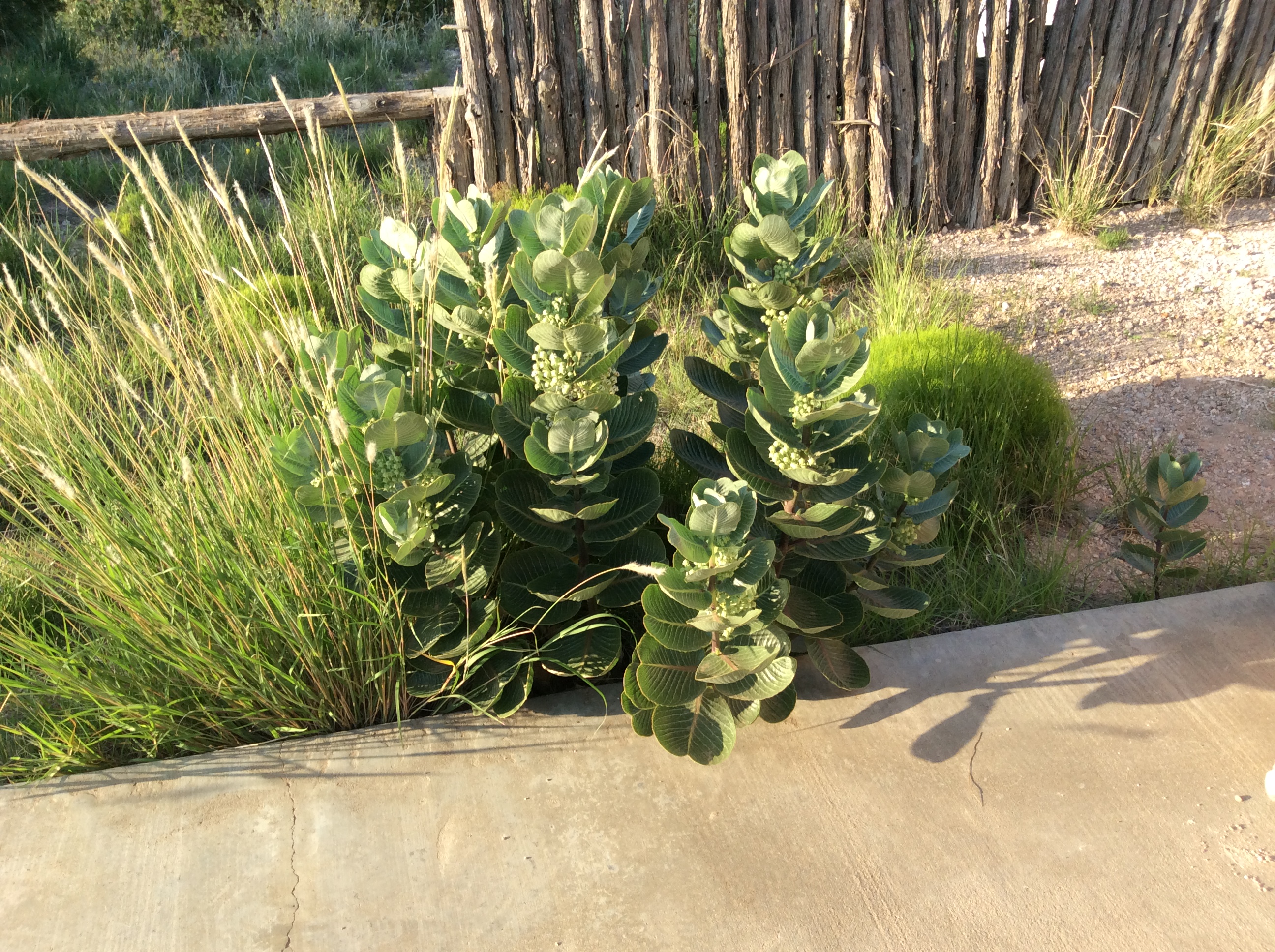
In the Panhandle of Texas, four common milkweeds grow:  Asclepias tuberosa, Asclepias asperula, Asclepias latifolia, and Asclepias verticillata.  The name Asclepios is derived from the Greek word, Asklepios, the Greek god of medicine and healing.  I find only two of these here where I live, latifolia and asperula.


IMG_0092


The top photo and the one immediately above are of asperula, more commonly called antelope horns.  They are important hosts for butterflies.  When discussing butterflies of any species, it is important to note that butterflies require two types of plants, host and nectar.  This plant provides important food for larvae.

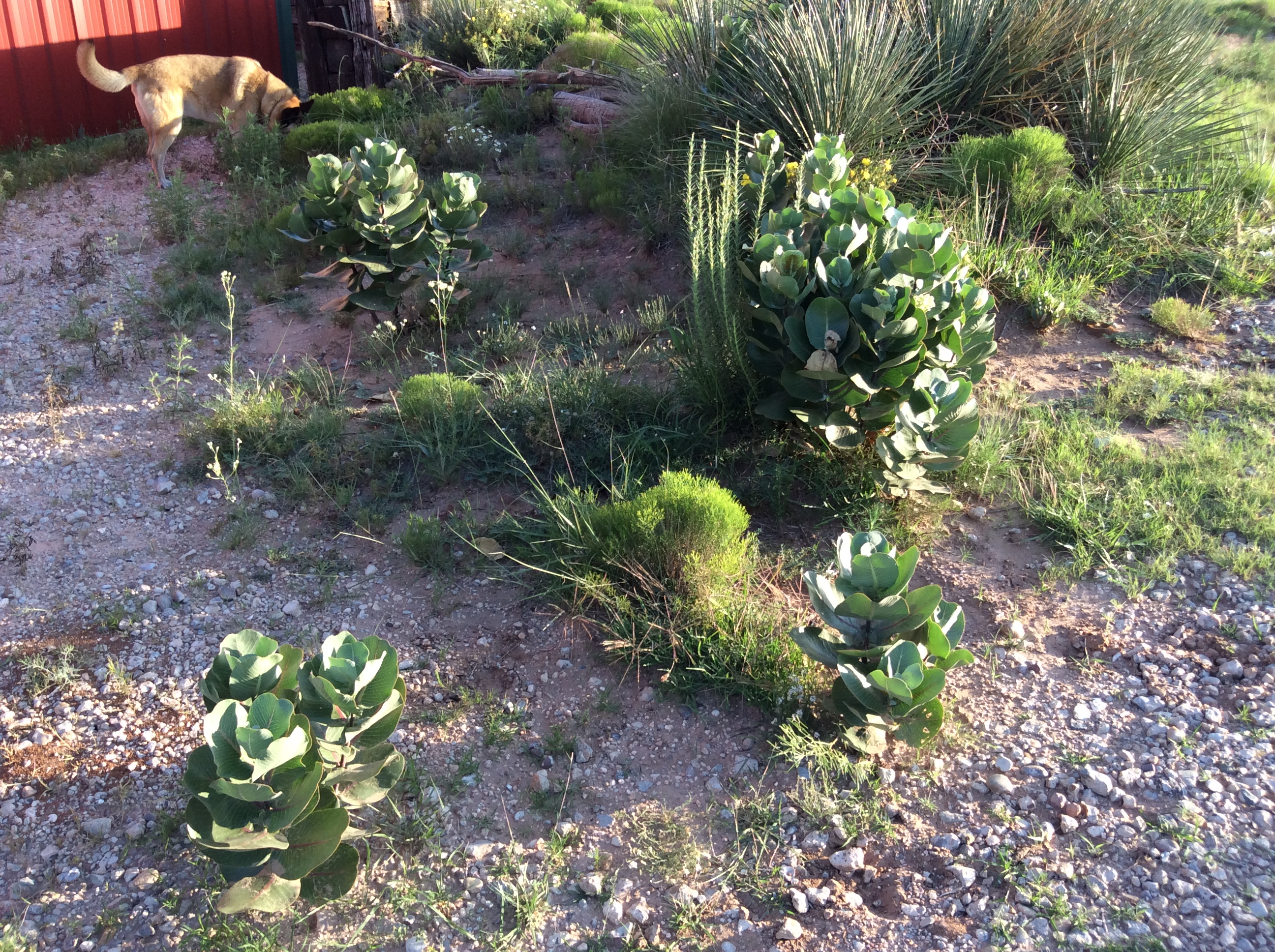
At least where I live, the more common–by that I mean it grows anywhere and everywhere, even in the driest caliche soil–is latifolia.  However, I have never seen a monarch on either the blossoms or the leaves.  When in full bloom, latifolia attracts giant (as in several inches long) black and orange wasps which seem incredibly non-agressive.


IMG_0140


IMG_0142


IMG_0143


This poor latifolia specimen barely hangs on next to the hydrant by the barn.


If you want to try growing milkweed yourself and you live in the Panhandle, seeds and plants can be purchased from Canyon Edge Plants and Panhandle Greenhouses.  Obtain free seeds from Livemonarch.com.  Wildseed Farms in Fredericksburg, Texas, also sells seeds.  If you want butterflies, do not use pesticides and herbicides.  Contact me if you want me to publish the “Butterfly Attracting Plant List”.


My Happy Mother’s Day


SAM_1508

Mother’s Day filled my heart.  First, when I awakened in the morning, I made coffee and opened this computer.  When I logged into Facebook, I found this pronouncement from my daughter:

“I’m so thankful to have an amazing, talented, smart, ambitious, honest woman as my mommy.  You made me the person I am today and as I continue to grow, I see things you taught me passing down to my son.  I’m the mom I am today because of the mom you were to me.  I may not always show it or tell you but I love you so much.”  I nearly cried; I am not a crier.

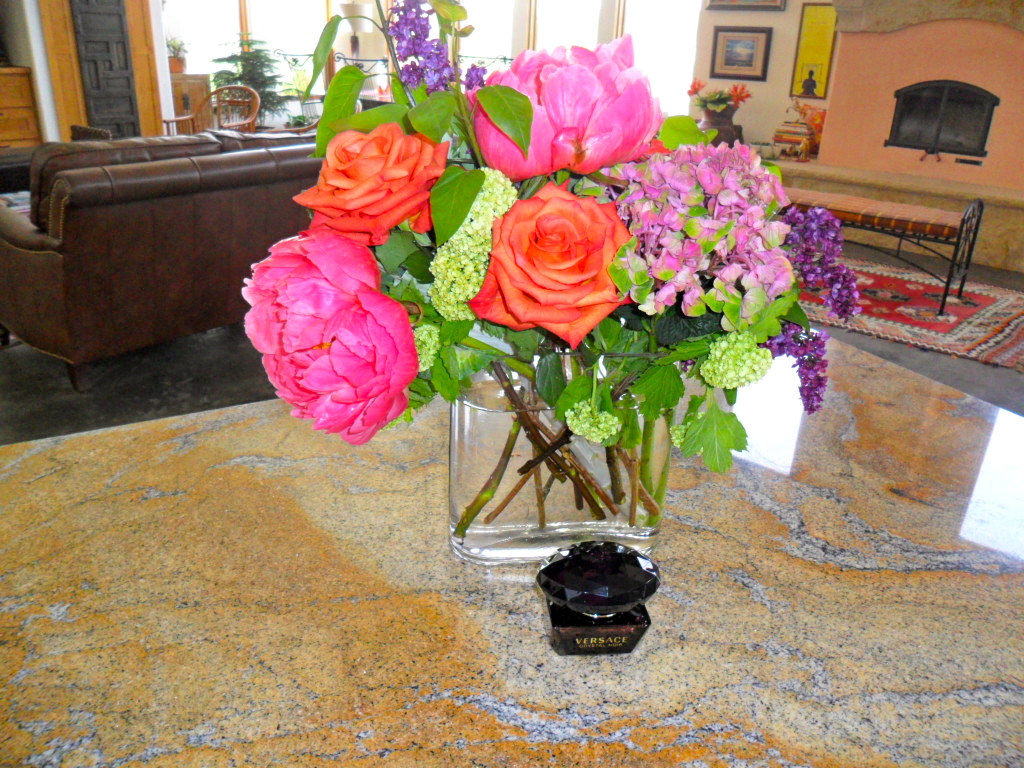
The flowers arrived Saturday from my son who lives twenty hours away if you drive.  Look at these flowers!!  Fantastic.

Then my grandson gave me a handmade card about 5 by 8 inches with this long note some of which follows:

“Happy Mother’s Day.  I know your not my mom but your my mom’s mom so your a mother so happy mother’s day.  Thank you for giving birth to my mom because if you wouldn’t have, I wouldn’t be alive right now so thanks….Thank you for all the things you do for me.  You always watch me.  Your always nice even when I’m mean and you spoil me.  I love you and happy mother’s day. ”  He is ten.

Then today I received a totally unexpected thank you card with a note from a young man who stayed with me a while last spring just before he graduated from college with an A average.  He was experiencing an extremely painful time then.  His hand written note:  “Happy Mother’s Day!  It has been one year since I graduated from college.  I would never have made it without you!  Thank you for the great help in my most difficult time.  You are the small ray of sunshine that really brings me hope!  Thank you!”  I felt overwhelmed.

The bottle in front of the flowers above is Versace perfume–Mother’s Day present from my daughter.


Family Roadtrips


During my childhood, my father took us on regular road trips.  The first one occurred when I was three.  He actually drove all the way from northwestern Missouri to Monterey, Mexico, via Padre Island and back.  Every year we took at least one, sometimes two.  Later in life, I truly realized the value and magic of these family road trips.  Although my daughter, grandson and I take short road trips to New Mexico in particular, we had never taken a really long one until two weeks ago when we left Amarillo, Texas, headed for Carmel, California.

At our first stop, Old Town, Albuquerque, for lunch, we experienced a most refreshing and delightful drink which I plan to duplicate the next time I invite friends over for dinner.

SAM_1176

This feast for the eyes and mouth consists of water infused with pineapple and strawberries.  It tastes best after letting it set to allow the fruit to meld into the water.

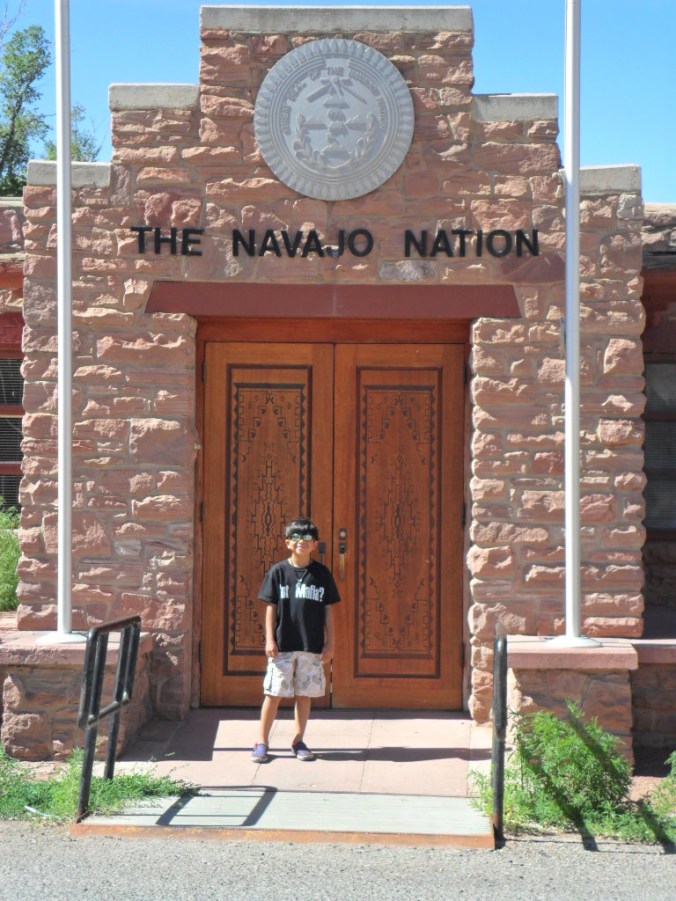
We spent the night in Gallup, but arrived too late to visit the galleries and shops so headed to a little Italian restaurant where my grandson, D’mitri, donned a black shirt which reads Got Mafia.  Friday morning we headed to Window Rock, capital of the Navaho Nation.  Since D’mitri’s great grandfather was Navaho, D’mitri’s interest in this stop remained high.

SAM_1178

SAM_1179

SAM_1180

After strolling around the park here, we stopped to visit the ladies selling the jewelry they were making on site.  As a person a bit obsessed with corn plants, I could not resist a pair of turquoise earrings that look exactly like tiny ears of corn.  D’mitri had to have a necklace with a soccer ball pendant which he wore the rest of the trip.
SAM_1183

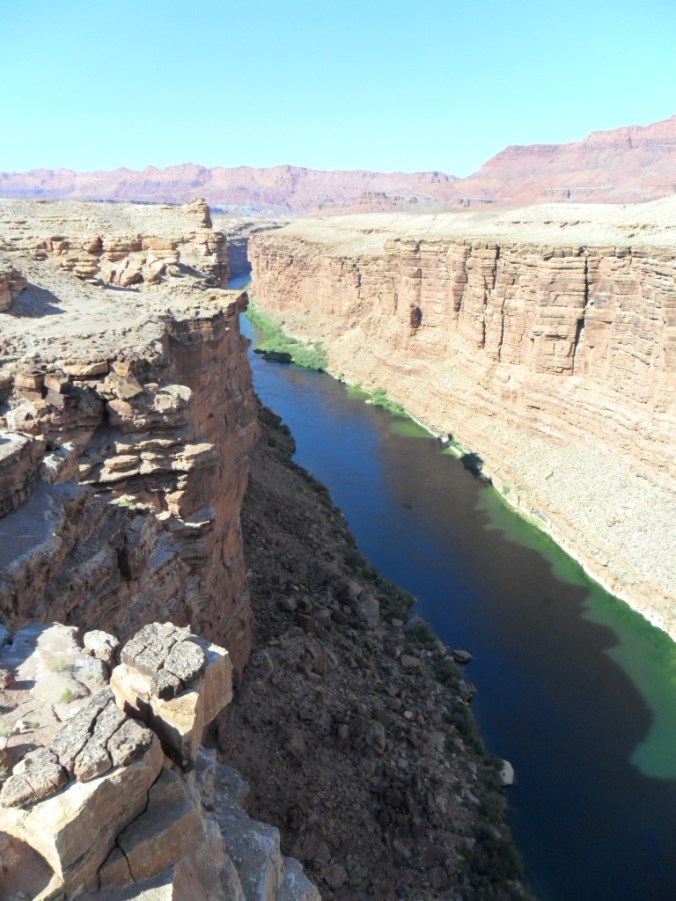
After the morning at Window Rock, we drove off across the Navaho Nation and the Hopi, headed for the North Rim.  We stopped off and on to visit vendors along the side of the road.  The dwellings throughout the Navaho Nation seemed scattered across the landscape with many hogans next to or close to what appeared to be a main house.  Horses roamed in the semi-arid fields.  The Hopi area, however, held a different view with no scattered dwellings.  Everyone seemed to live in villages along the way and I never saw a horse in Hopi country.  Finally, we crossed the mighty Colorado River at Navaho Bridge from which I took this photo.
SAM_1186

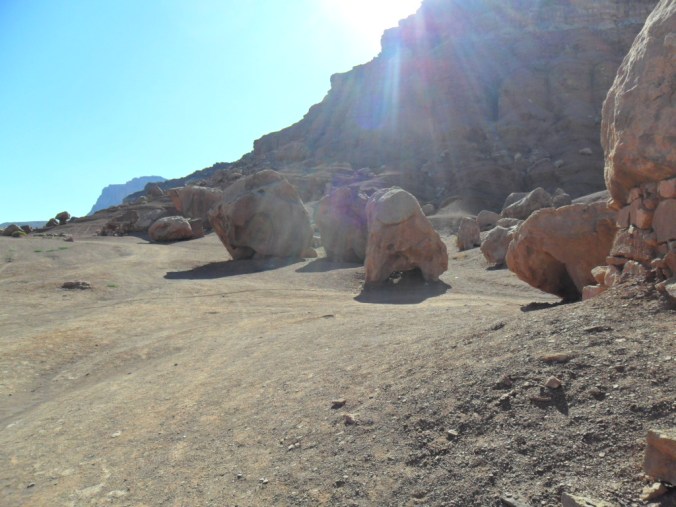
The road follows the base of the cliffs of Vermillion Cliffs National Monument.  We could see them looming large long before we arrived.  Huge rocks appeared to have tumbled off the cliffs and lay near the road.  I kept wondering if they ever fall and hit cars.

SAM_1188

SAM_1190

SAM_1189

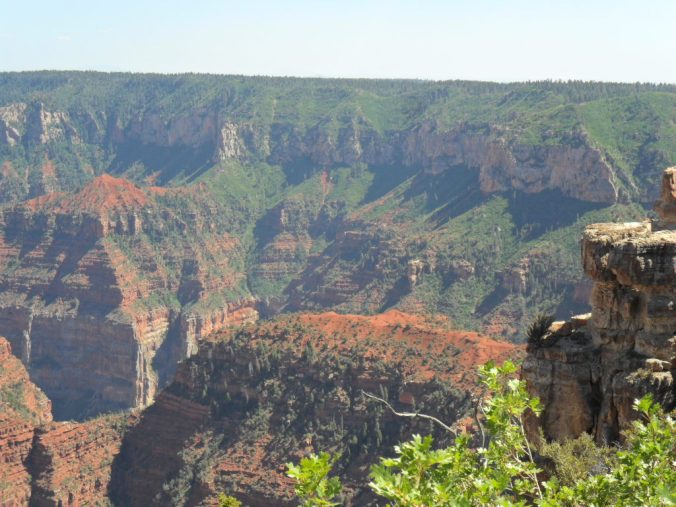
We finally made it to the Jacob Lake Inn near the North Rim of the Grand Canyon.  We arrived too late to go to the Grand Canyon  so took a hike through the ponderosa pines supposedly headed to a lake.  Dry, hot weather apparently turned the lake into a mere puddle.  We barely made it back before dark, disappointed.  The next morning we drove the forty some miles through heavy woods interspersed with giant meadows to the North Rim.  If you have never been to the Grand Canyon, its size and grandeur remain impossible to convey via photos.  Perhaps due to the rather warm, dry conditions, a heavy haze hung over the Canyon all day.  We took a few tiny hikes, only to discover just how very much out of shape we are.  Additionally, the altitude affected D’mitri quite negatively, making him more tired than customary.  Nevertheless, determined to not miss out too much, I took several photographs from Imperial Point.

SAM_1191

SAM_1192

SAM_1193

SAM_1195

SAM_1197

SAM_1196

Flowers exactly the same as grow where I live on a little canyon in the Panhandle of Texas grew along the path.  We spent another night at Jacob Lake and then continued toward Las Vegas.  The fastest route drops off the Kaibab Plateau rather dramatically with spectacular long views, the depth and breadth of which no ordinary camera can capture.  We ate a late breakfast in Hurricane, Utah, a bit after the infamous Colorado City, Arizona,  where the houses appeared quite large with high walls around many of them.  Then off to Las Vegas, Nevada, to meet an elementary school classmate, Craig Prater,  whom I had not seen in years.  He treated us to a fabulous lunch at the Mandalay Bay, took us to a shopping area down road, and he and I attempted to catch up for all those years while Ema and D’mitri shopped.  We marveled how two children who attended a rural school (at first it had only one room and then later two) eighteen miles from any town of more than a couple of hundred could attain what we have attained.  He produces films and travels all over the world.  I have lived, worked,  and traveled to many different places.

SAM_1198

SAM_1200

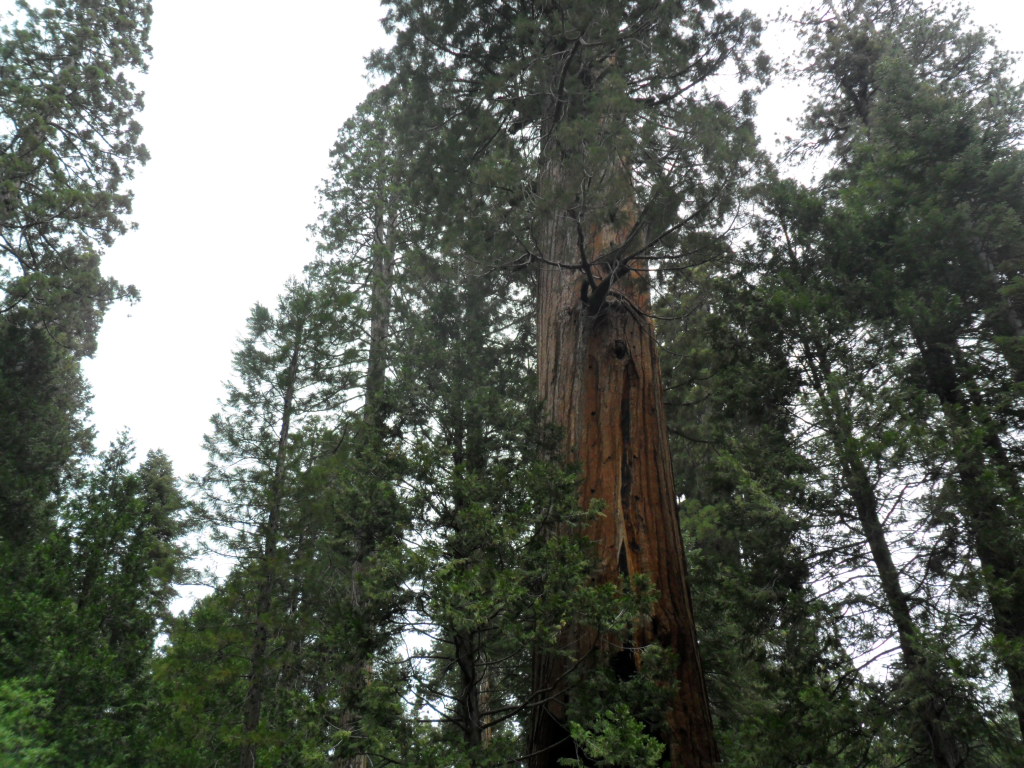
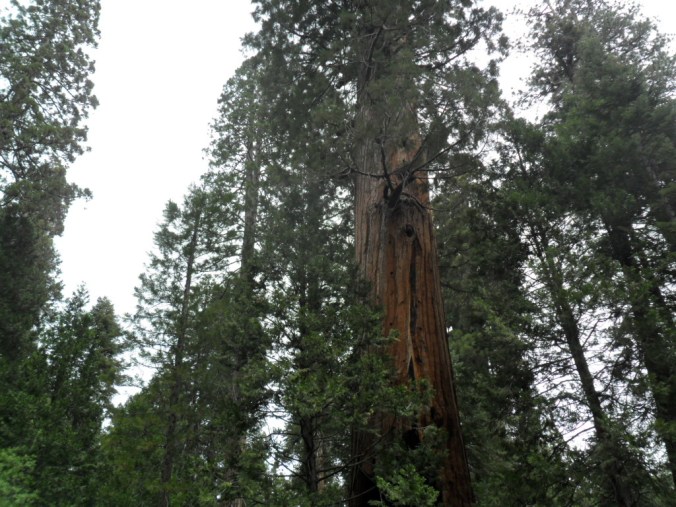
After Las Vegas, we drove to Mojave, California, for the night. The only  scenery on this drive is through a canyon on the Interstate.  We experienced high winds and a sand storm and arrived after dark.  The next morning we solved the mystery of the hundreds of red blinking lights on the hillsides, wind turbines.  From there it is a rather short drive,  a couple of hours, to the Trail of 100 Giants in Sequoia National Monument.  To say we experienced amazement is an understatement.  What a magical forest so wet and dark and alluring after miles and miles and miles of hot desert.

SAM_1204

SAM_1205

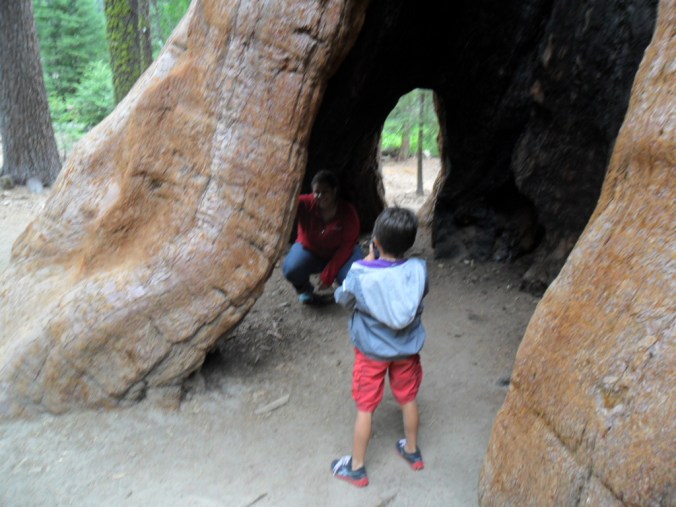
SAM_1207My daughter, Ema, and her son, D’mitri really enjoy clowning around and what better place than surrounded by the largest trees in the world.  The squirrels here also “talked” a lot and we tried to get close.

SAM_1209

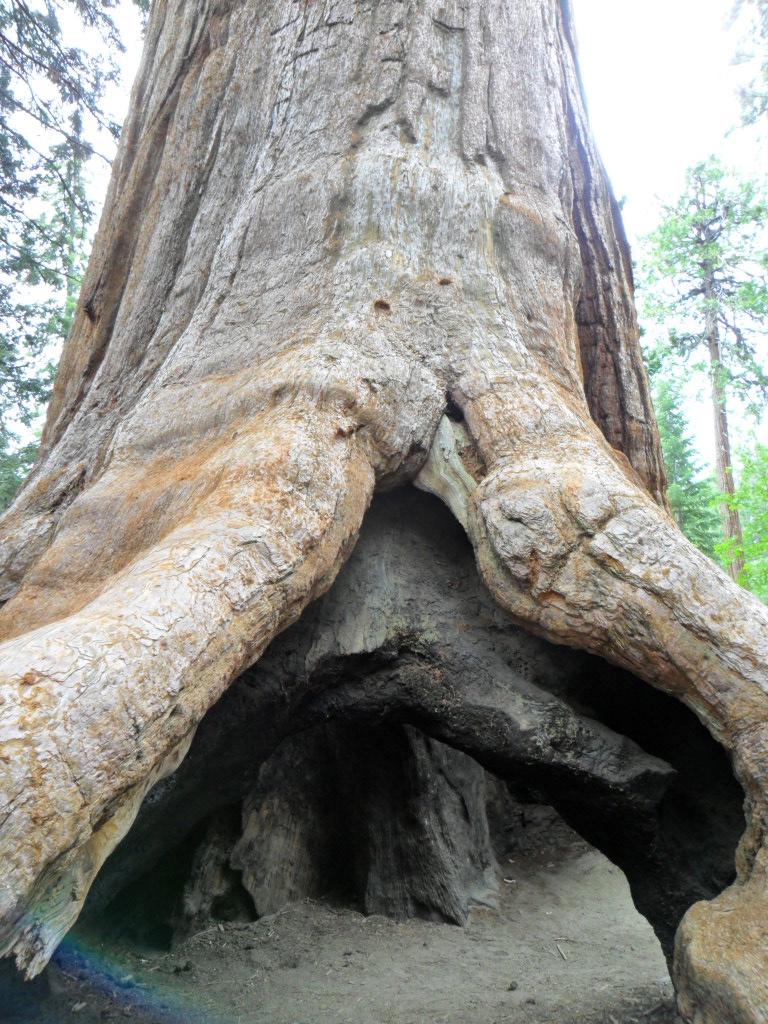
Usually, I frequently dislike photos of me, but this one is an exception.  Although not large, this tree stood out as so unique I could not resist a photo shot.  Even with the best camera, I doubt a photo of an entire sequoia tree is possible.  You have to see them to obtain the full effect.
SAM_1210

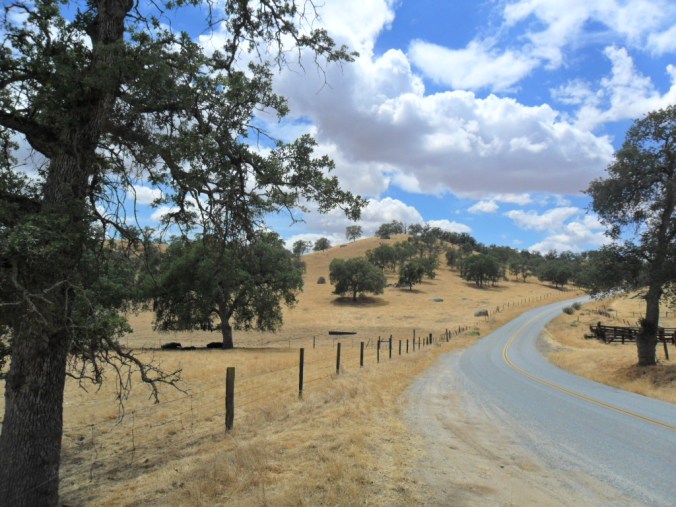
We wanted more time with the trees, but needed to make it to Carmel by evening so headed down the mountain toward California Hot Springs.  Altitude is everything here.  In ten minutes the golden hills replace giant trees.
SAM_1218

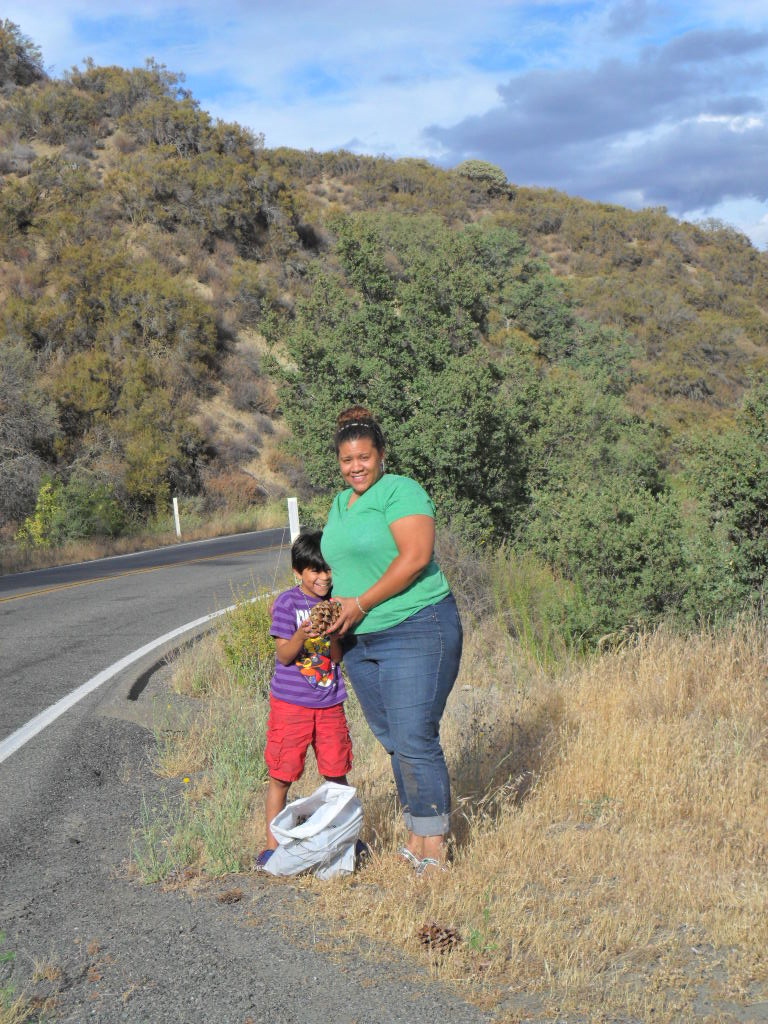
Then, in an hour or less, we were driving across the Central Valley past miles of vegetables and at least three types of trees in huge orchards or groves.  The only tree species I was able to identify was almonds.  I wanted to take pictures, but did not desire to arrive in Carmel at my college roommate’s house in the dark so I kept driving.  No quick road exists that crosses California except way to the south.  This still astonishes me.  Two lanes with heavy truck traffic take a long time to get from one destination to another.  We decided to cross on 198 through Coalinga to San Lucas which resulted in a fun, scenic drive with lots of twists and turns.  Much to our surprise, huge pine cones lay everywhere beside the road.  It seemed strange that these cones came from a tree much smaller than the Sequoia.  Ema and D’mitri collected some to display at home.

SAM_1219

Finally, just before dark we arrived at the Rinaldo’s.  Suzy and I roomed together at Grinnell College at the ages of 18-19.  David attended Grinnell also.  We only see each other once or twice a year but can pick up conservations as if it were a few moments ago.  They live in the Santa Lucia Preserve.

SAM_1268

SAM_1258

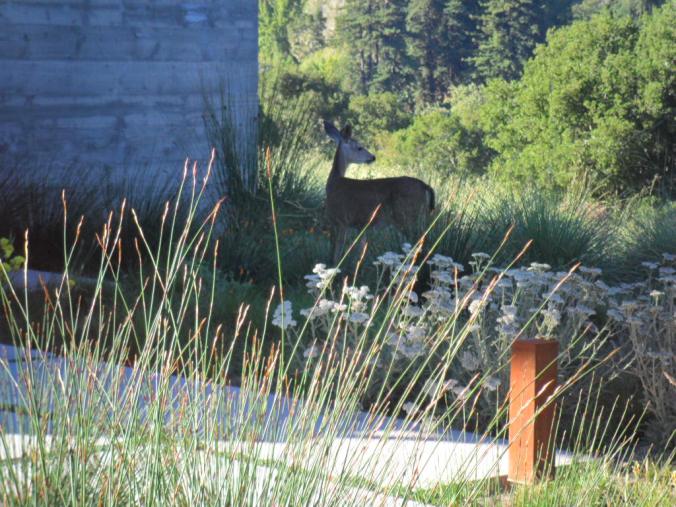
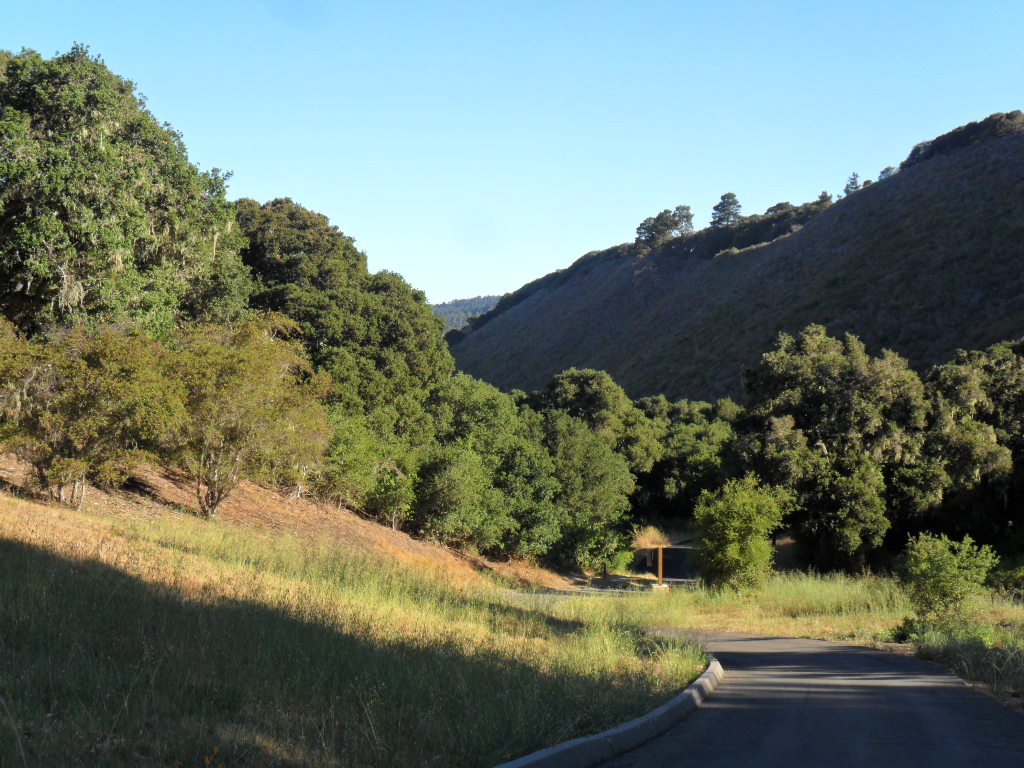
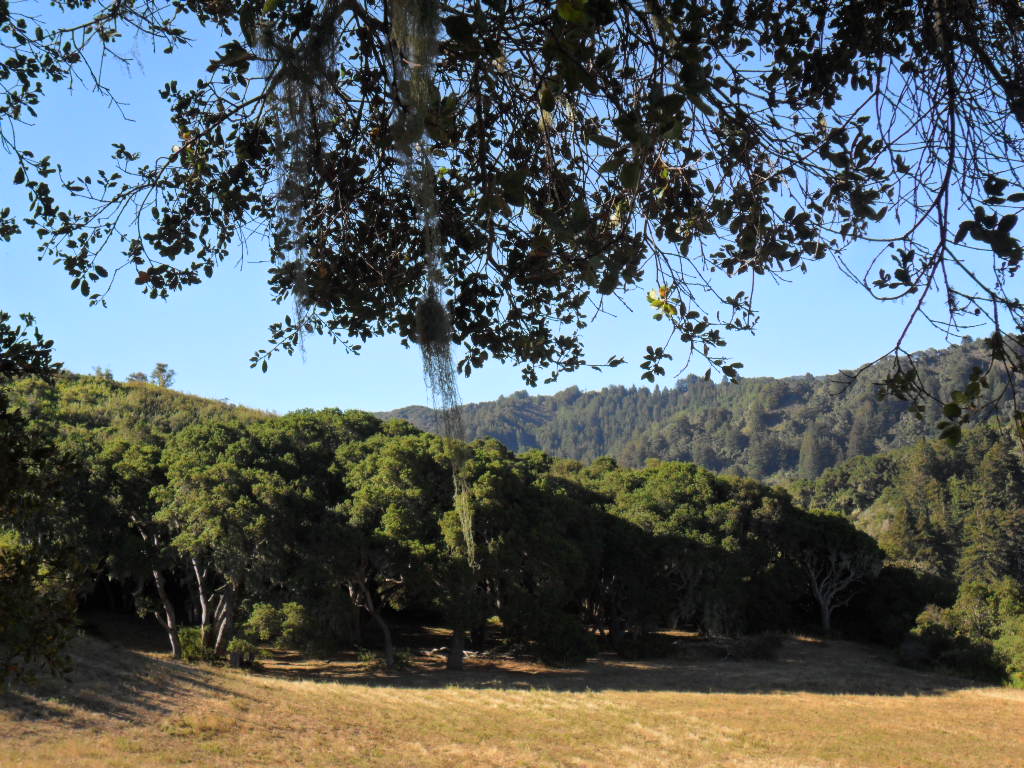
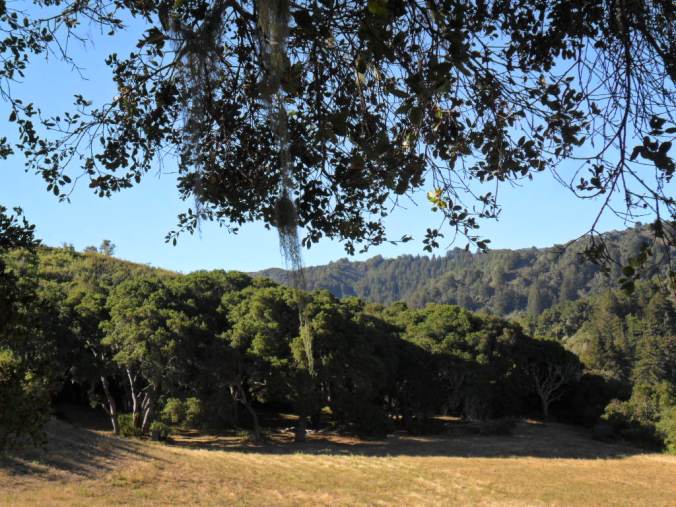
Every morning this deer casually ate California poppies and ran away only if I went outside too quickly.  One morning I took a long walk up one of the few roads on the Preserve.  I love the live oaks and learned they are very fire resistant so residents are allowed to let them grow close to their houses.  Everything else, except for a few native grasses and plants–no trees or brush, must be cleared for 150 feet all around any house.

SAM_1259

SAM_1265

SAM_1264

SAM_1262

SAM_1261

I commented on the radiant red colors I saw in the leaves of an attractive plant only to find out it is poisonous oak and if I touched it, the result would not make me very happy.  It must love this particular environment because it grows everywhere.

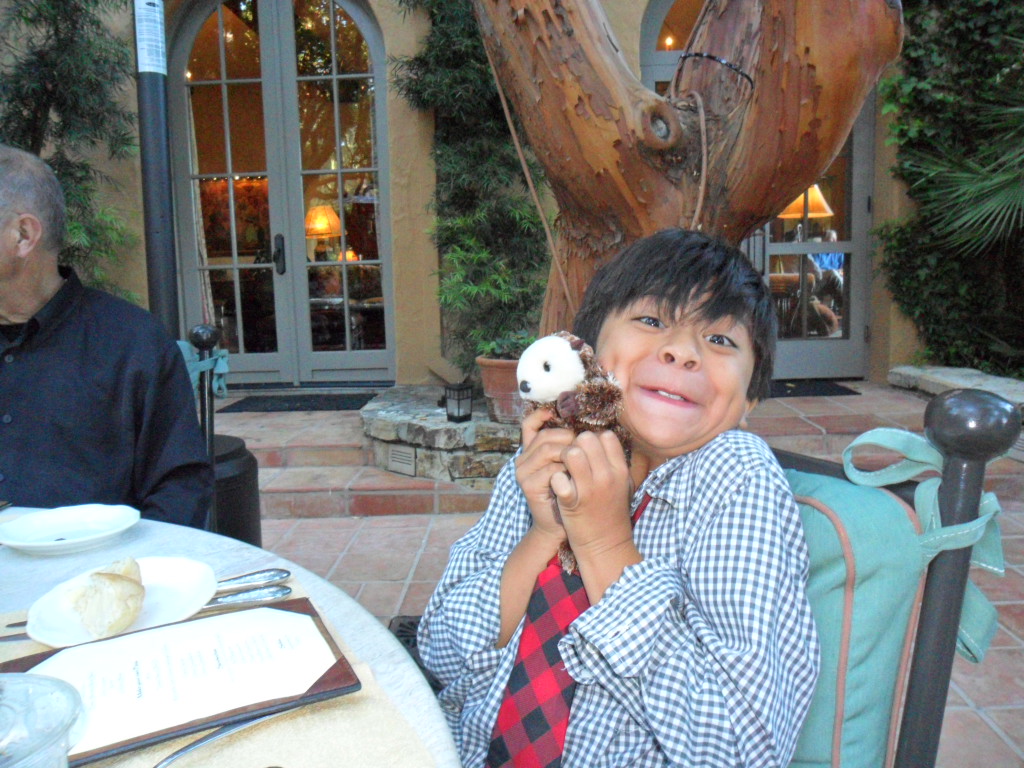
One of my favorite restaurants is at the Hacienda at Santa Lucia Preserve, not because of the food, but due to the impeccable service and enchanting atmosphere, what I imagine to have existed in old California.  D’mitri says it is his favorite fancy restaurant on the trip.

SAM_1221

SAM_1223

SAM_1228

SAM_0103

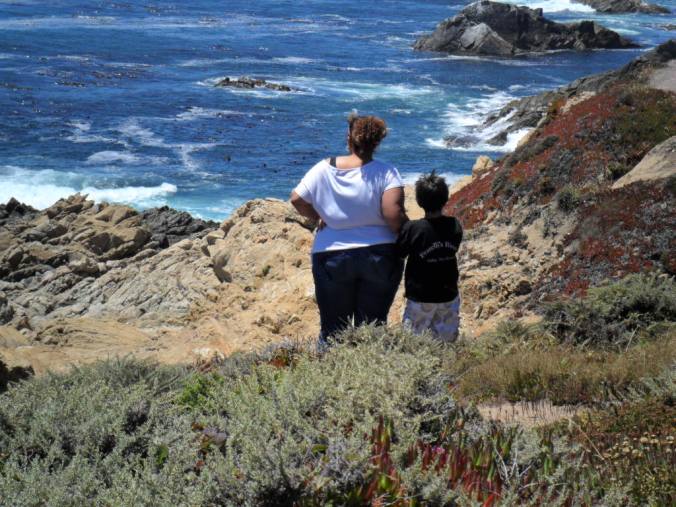
In the dark, driving back home to David and Suzy’s, we saw a bobcat, several deer, wild turkeys, a skunk, and another animal we could not identify.  The next day we ladies went shopping in Carmel while David and D’mitri took a ride in the Porsche and swam.  No one can go near Carmel surely and not drive the glorious drive south to Big Sur.  D’mitri loves water so we stopped at two different places along the way.
SAM_1238

SAM_1239

SAM_1241

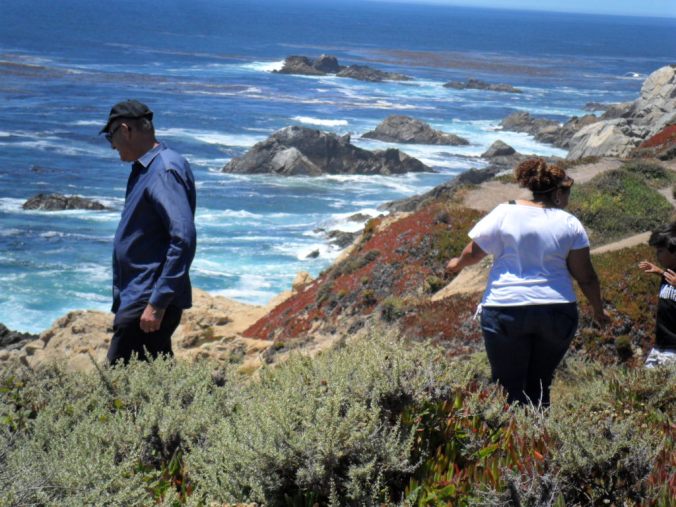
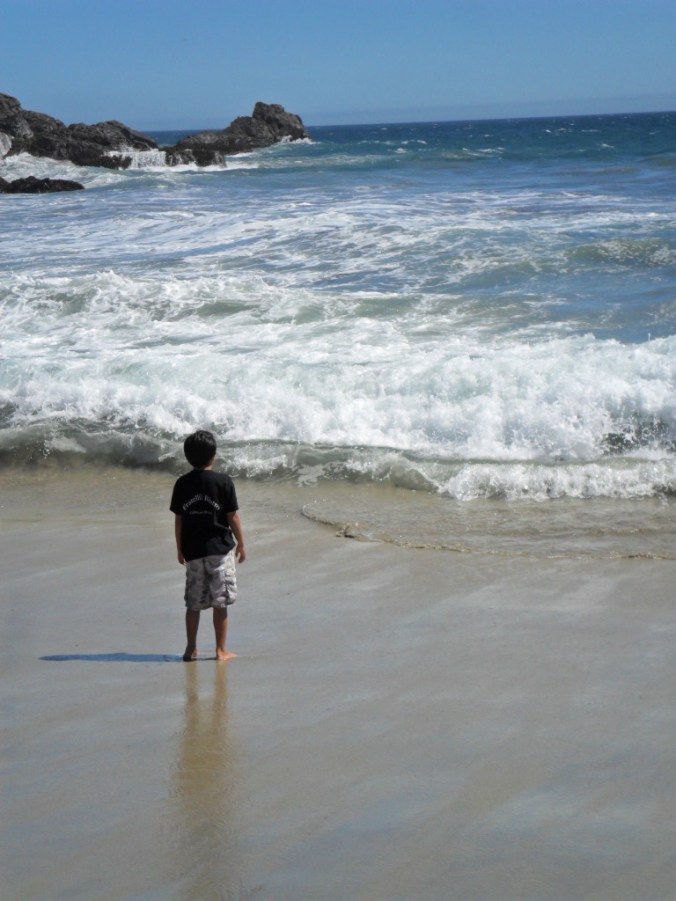
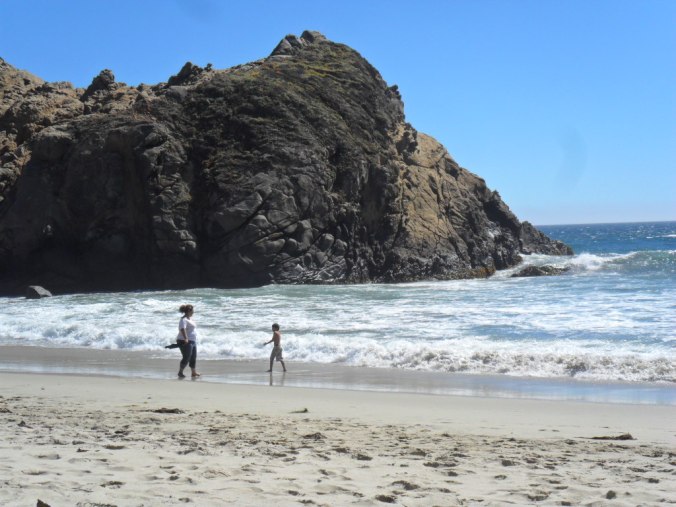
D’mitri became quite alarmed when Suzy told him many of the bushes along the path are poison oak.  David informed us that a really wonderful beach existed down the road if we could get in.  Off we drove to Julia Pfeiffer Burns State Park.  They only allow so many cars into the park at once so we had to wait until someone left.  It was worth the wait.  This beach does not allow swimming; people have drowned here.  Nevertheless, who cares; the drama of crashing surf, giant holes in rocks worn by water, and trees shaped by wind and erosion make it magical.
SAM_1245

SAM_1252

SAM_1251

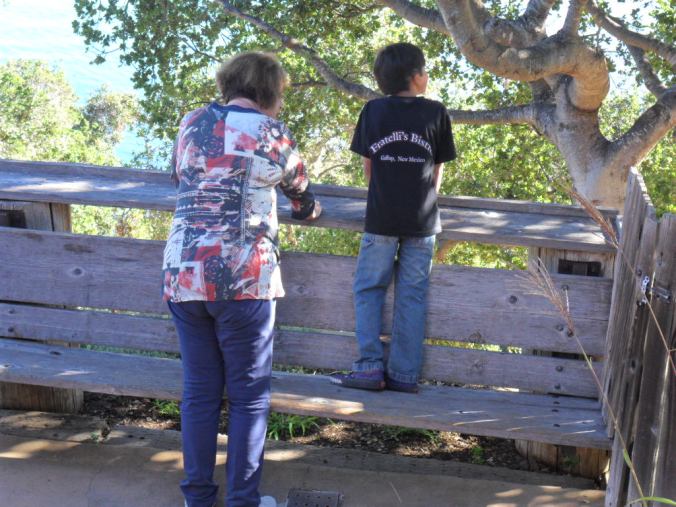
SAM_1250You cannot go down highway 1 without stopping at Nepenthe.  This restaurant’s views alone are worth going there, plus a gift shop full of finds from all over the world.  The wine list and hamburgers finish off the list of why you must stop here if you are anywhere near Big Sur.
SAM_1255

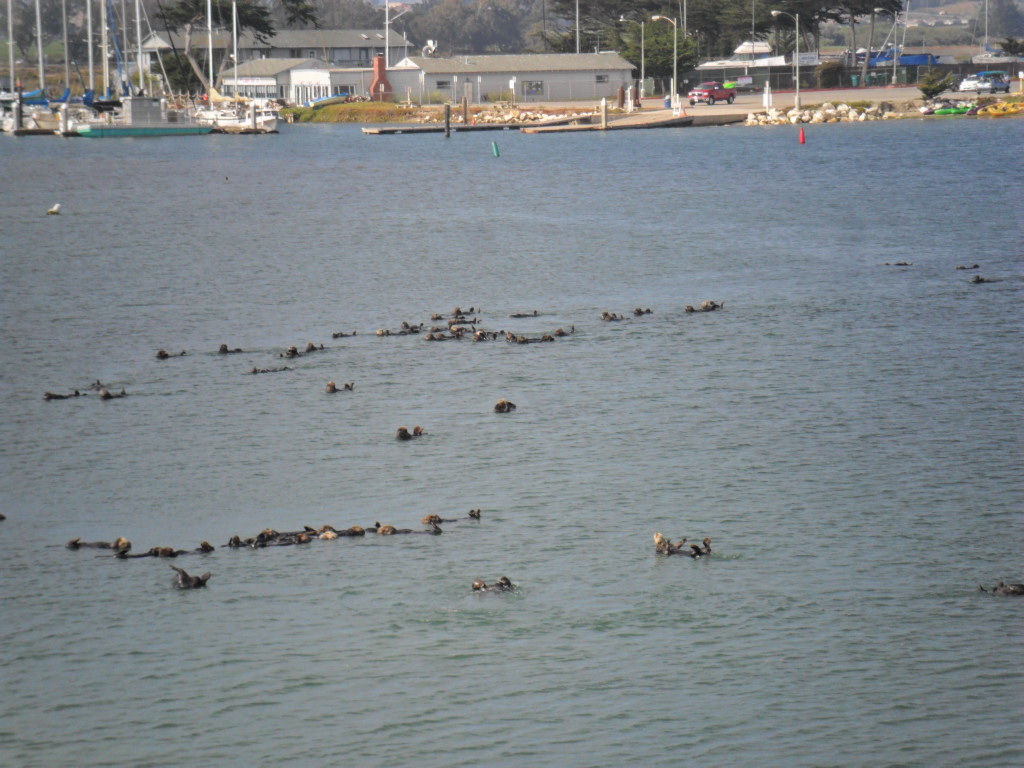
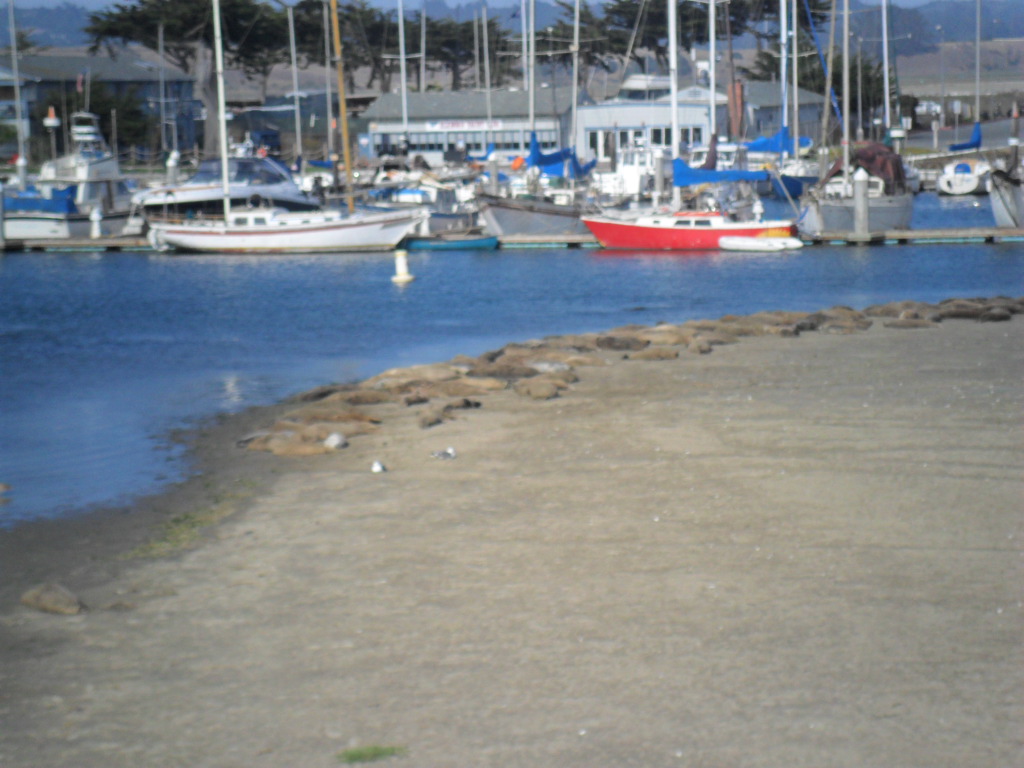
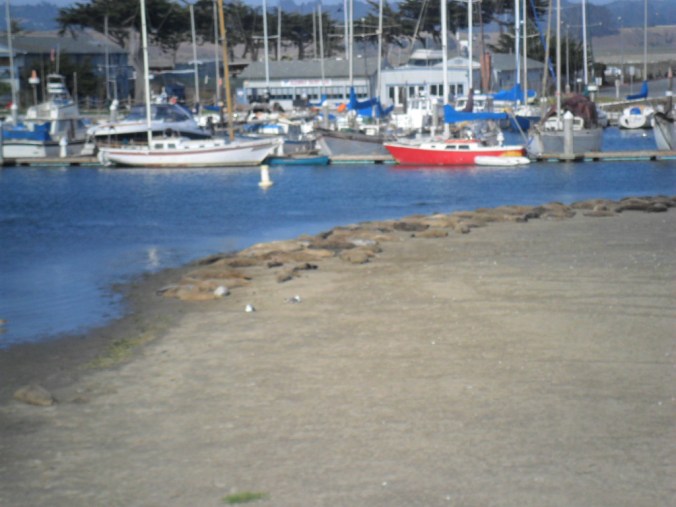
Time seemed to run rapidly; with only one day left, we decided to head to Moss Landing to see the seals.  Much to David’s astonishment, not only did seals lay all along the beach, but a large number of sea otters were playing in the water, rolling over and over, splashing.  David had been there many times and never seen anything like this.  The sea otters delight the watcher with their playful antics.

SAM_1271

SAM_1272

Unlike the ever playful sea otters, the seals just lay still like large rocks along the beach.
SAM_1274

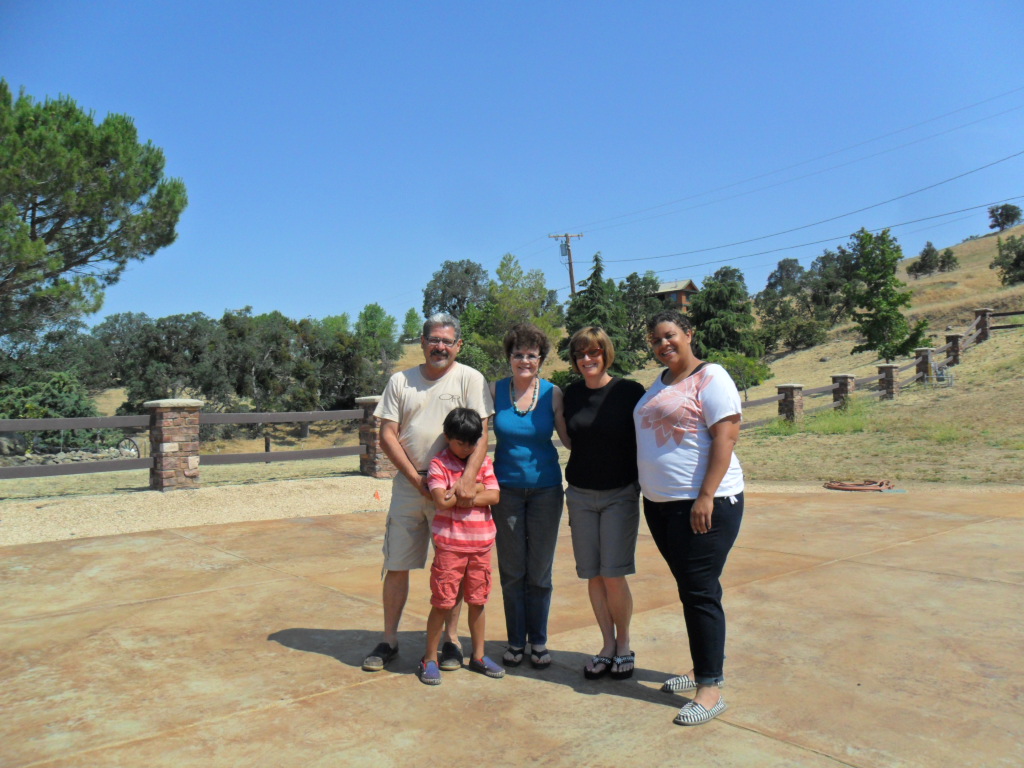
Early on a Saturday morning, Suzy and David fed us waffles to fortify us for the long drive to Flagstaff, nearly 700 miles.  We crossed over to Salinas, then down 101 and finally through Bakersfield where we found a delightful, rather elegant Italian restaurant for lunch.  The good looking waiter chit chatted and provided excellent service, three pluses when you go out to eat.  As we cut across the middle of California, headed for I-40 eventually and neared Tehachapi, Ema decided to call D’mitri’s other grandparents who have a house there. When we went the other direction almost a week before, they had been vacationing in France.  To our surprise, they answered and asked us to stop for the night.  D’mitri’s excitement was contagious.  He expressed special delight to have his grandfather to himself for hours instead of needing to share him with other grandchildren.  The Herreros live on a hillside with a breathtaking view for miles.  Unfortunately, the haze prevented proper photography so I gave up on the idea of capturing the endless panorama.   However, this presented itself as the perfect opportunity for family photos.

SAM_1278

SAM_1280

SAM_1285

The California desert never comes to mind when I think of California.  I always fly to San Francisco or Oakland and visit friends or conduct business.  Unlike the glorious red rocks and drama of southern Utah and northern Arizona or the saguaros of  southern Arizona, the California desert maintains an endless pale tan color with only a few tiny plants.  Thanks to air conditioned automobiles, you can drive for miles, escaping the intense heat.  When we finally stopped at a Dairy Queen for a refresher, D’mitri and I stepped out of the car and were nearly knocked over by the hideously hot wind.  In general, I like heat, but this seemed overwhelming.  When we drove off, I asked Ema about the temperature.  She looked it up on her smart phone, 118.  The only truly beautiful I sight I saw (and I think nearly everywhere possesses some sort of loveliness) occurred when I drove over the mighty Colorado River, surrounded by the only green for miles.  After this heat, the cool, green beauty of Flagstaff enchanted us.  We settled into our hotel room, then drove off to our third Italian restaurant in two days, Oregano’s.  Instead of the usual coloring books, puzzles, etc. offered to children, this place gives them pizza dough to mold.

SAM_1287

As we drove home, I noticed how terribly dry it is once we dropped out of the mountains around Flagstaff.  Off and on we crossed areas where there had been enough rain to create a pale green.  Apparently, it had not rained west of Albuquerque because it still looked like brown winter just as it had eleven days before on the first day of the trip.  East of Albuquerque we encountered such an intense downpour with some hail that I could not see to drive.  I pulled off the road and waited. From Albuquerque to Amarillo, in the eleven days we were gone, it had rained enough to make the mountains, foothills, and high plains a lovely soft emerald.   We had missed the hot, 100 plus week and came home to rain and cooler weather that lasted several days.  In one week, the weather had changed from record highs to record lows, the typical extremes one learns to live with on the Llano Estacado.

Do you like to eat? Bees and the Food Supply


SAM_1074Do you like to eat?  Do you eat almonds, apples, cherries, watermelon, blueberries, or cantaloupe?  In fact, the biggest factor limiting the world’s food supply is not war, drought, or any of the factors you commonly hear about.  The world’s food supply is limited by the amount of bees available for pollination.  In the last five years in the United States alone, approximately one million honey bee colonies died each year, about one third of our national bee herd.  Bees are in danger of extinction.  Native to Southeast Asia, honey bees were domesticated long before written history, before the building of the Egyptian pyramids.  Thousands of species of bees exist, but honey bees carry the main load of pollination for cultivated crops.

More than 740,000 acres of almonds, California’s leading agricultural export,  remain in cultivation in the Central Valley of California.  Pollination depends on bumble bees, honey bees, and wild bees.  Sadly, the wild bees are mostly extinct, killed by pesticides and habitat loss.  Now pollination depends on traveling bee keepers and their honey bees.  Today, commercial bee keepers number one fourth of what they did in 1980.  To get enough bees the almond (and cherry and apple, etc.) growers hire these bee keepers to install approximately 2 million bee hives to work the pollination.  Almonds alone require at least 1.5 million hives.  Each almond tree’s blossoms number 25,000 and at 135 or so trees per acre, that adds up to 3.5 million flowers to pollinate.  The difference between a poor harvest and a great one depends on bees.  After the bees finish their work in the Central Valley and other warmer climates, the commercial keepers take them to places like Idaho and North Dakota for the summer where they sip alfalfa, buckwheat, goldenrod, and sweet clover blossoms and produce the honey sold in groceries.

Where have all the bees gone?  What leads them toward extinction?  In 2006-2008, beehives across the world from Europe to here to Indian and Brazil nearly collapsed.  Causes vary:  foulbrood–a bacterial fungus, wasps, ants, mice, a host of viruses, nosema–bee diarrhea, and certain pesticides.  What can we do?  First, we can ban certain pesticides that are known to harm bees.  Second, we need to grow more flowers and blooming weeds (yes, I said weeds) to encourage a broader spectrum of healthy bees for pollination.  Honey bees cannot do it all alone.  The lack of sufficient flowers is the result of not only pesticides, but also the increase in lawns.  If you personally want to make a difference for bees and ultimately our food supply, let the wild flowers grow, plant more flowers and less lawn, limit pesticide use.

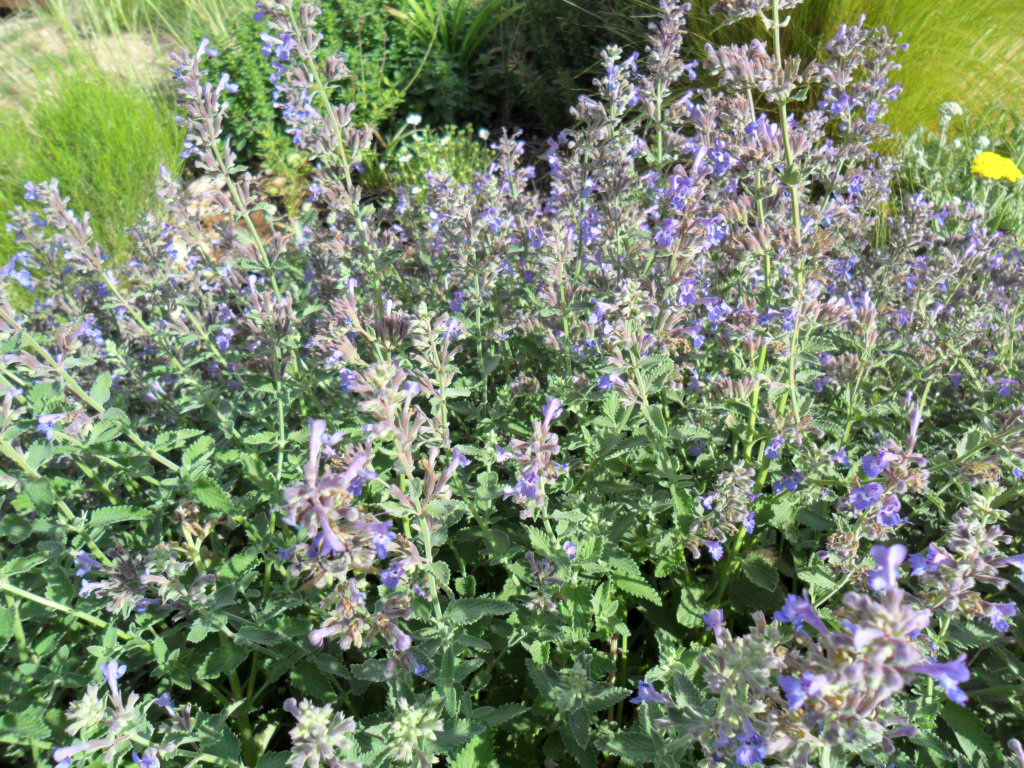
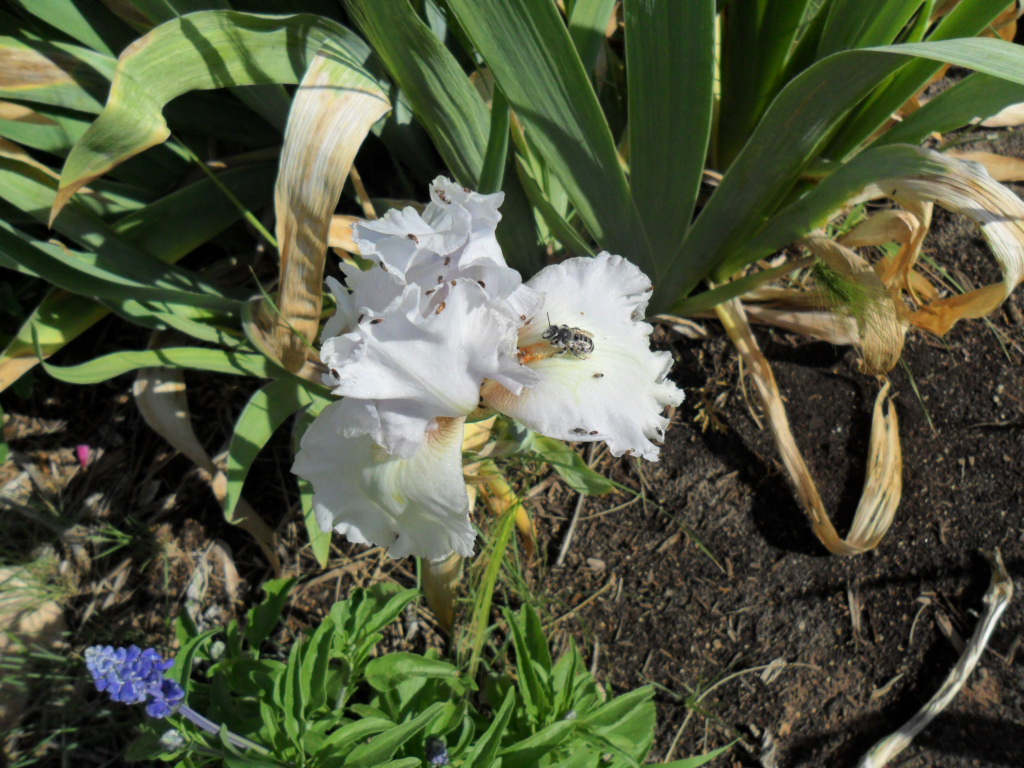
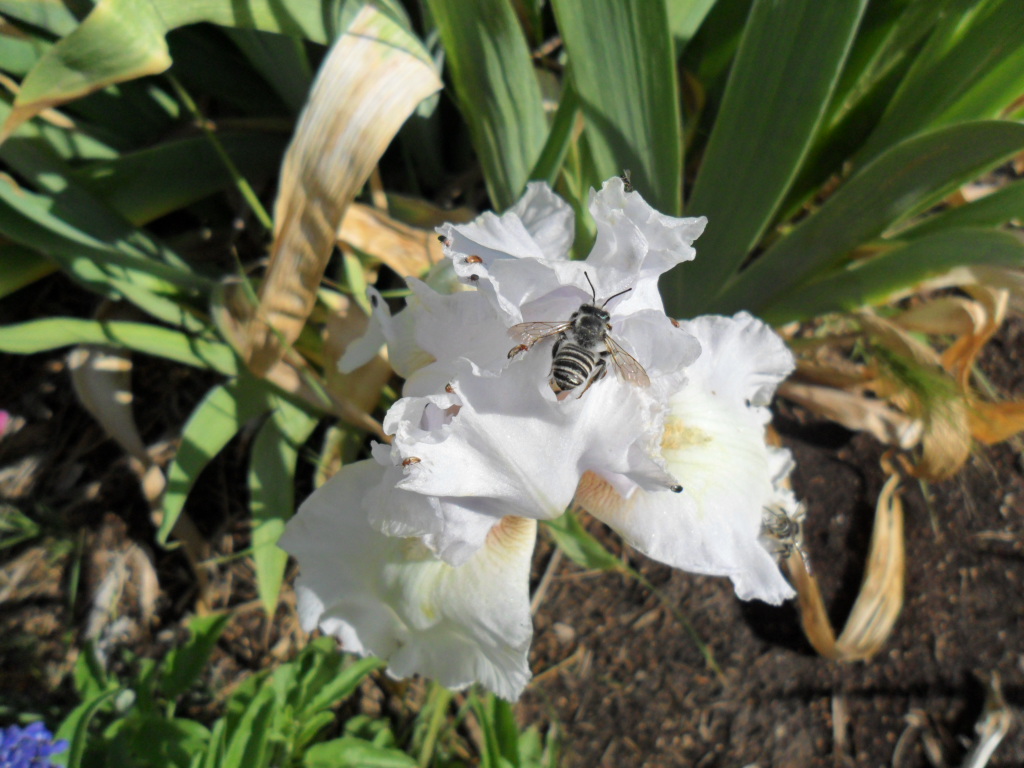
This morning I went out to my xeroscape garden–I have no lawn–and photographed bees.  At one catmint plant, so many busy bees made a clearly audible buzzing sound.  I witnessed at least four different kinds–species–of bees.  These SAM_1076

SAM_1081

SAM_1077

SAM_1078photographs illustrate at least several different types of flowers bees love.

Evening


SAM_1040

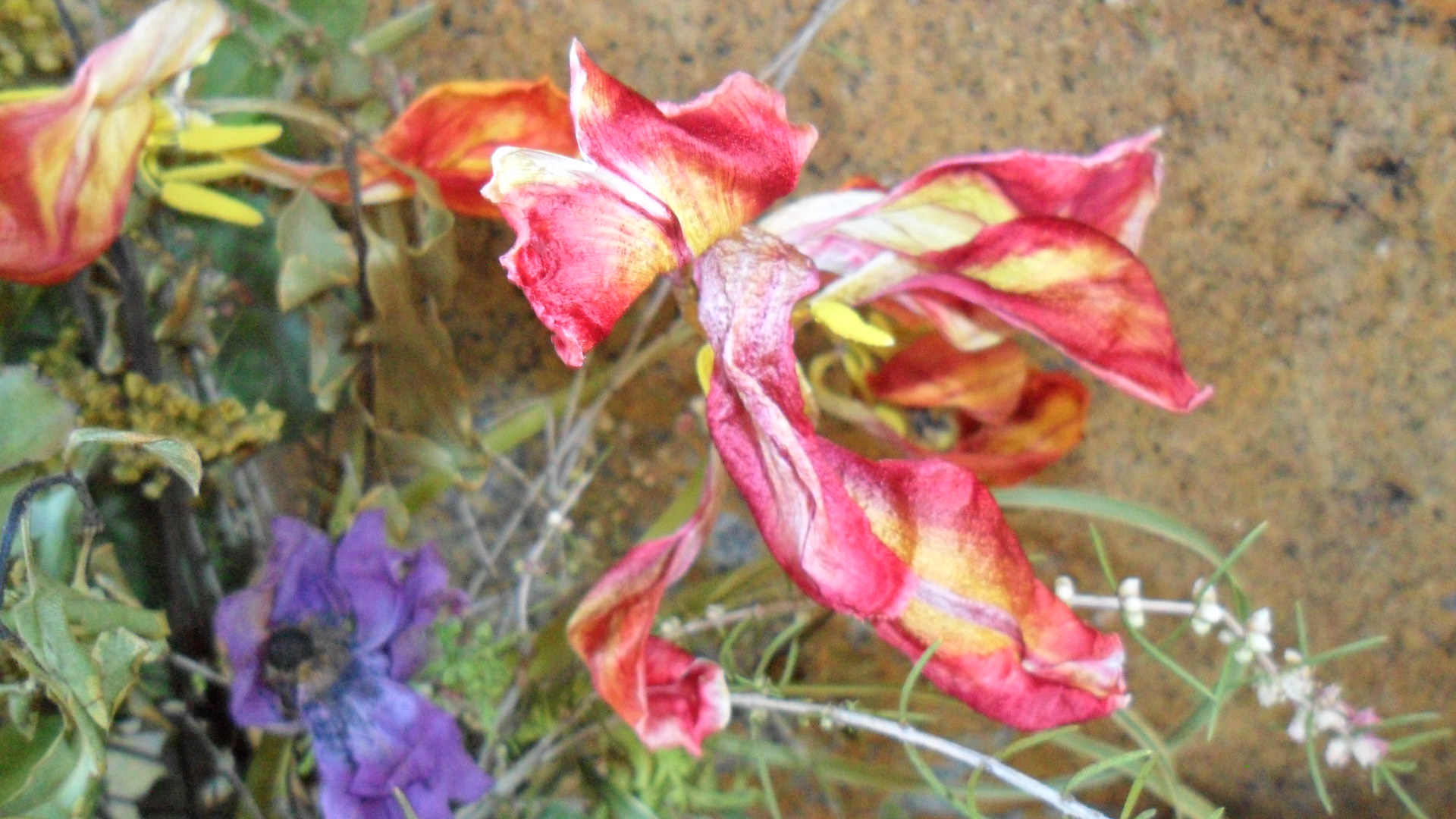
Tulip remnants float in my palm,

the color

of fresh blood,

of sunsets

cerise, burnt orange, gold.

A pale blue dragon

thunders

across a salmon sky.

Slowly indigo night

descends.

Only the night hawks call.

2012 in review


The WordPress.com stats helper monkeys prepared a 2012 annual report for this blog.

Here’s an excerpt:

600 people reached the top of Mt. Everest in 2012. This blog got about 2,800 views in 2012. If every person who reached the top of Mt. Everest viewed this blog, it would have taken 5 years to get that many views.

Click here to see the complete report.

I started this blog 11 months ago.  I want to thank all my followers, commenters, and friends who follow me via WordPress, Facebook, etc.  for making this a success.  Thank you and Happy New Year.  May this new year bring joy and prosperity to all of you.

Costa Rica 6: Adventures and Views


Without a doubt Costa Rica holds my vote for most photogenic and greenest country.  From the Caribbean and Pacific rain forests to the high mountain town of Monteverde, the words lush, exotic, verdant do not even begin to describe how incredibly rich the landscape is.  One of the first spectacular views lay before me across the parking lot from a combination restaurant and souvenir shop where we stopped for snacks.

I did not expect to see multiple mountain streams like in the Rockies, but it seemed we were crossing one nearly constantly.  This abundance of water explains their nearly total dependence on hydroelectric power with a little help from wind and thermal energy.

Several of my traveling companions decided to raft this river with class 4 rapids. Something told me I should not do this.  After flipping over several times, banged up and bruised, they decided to hike out.  In  the meantime, I experienced my own adventure, eating a raw turtle egg in salsa at a family restaurant on the top of a nearby mountain.

Beautiful mountain scenery seems endless.  I kept 00hing and awing.

This view shows the Bay of Nicoya in the distance from my hotel room in Monteverde.  The following photos all show views in the mountains near this little remote town.  There is only one road in and out and it is not paved and it is narrow.  The town was originally settled by Quakers from Canada who still believe a paved road will ruin the peaceful lifestyle.  Both the Quakers and the town are famous for their cheese which was served both plain and fried for breakfast.

This area provides both zip lining and horseback riding for tourists.  I elected to ride.  However, these horses did not seem well fed and certainly did not want to go very fast.  Although I saw a lot of horses in Costa Rica, these were by far the thinest.

The guy who lead us did not ride one of these.  He was riding a fancy, prancing, grey Paso Fino.

Look closely and you can see someone zip lining across the forested canyon hundreds of feet below.

When I asked about this tree, I was told it is related to cacao, but not eaten, not by humans anyway.

We traveled down the mountain on another dirt road to visit this elementary school.  It housed grades 1-6 with one teacher who is also the principal.  The literacy rate in Costa Rica is 98.5.

Playing soccer with the students.

A port on the Pacific on the way to the surfing town of Jaco.  Costa Rica exports many agricultural products from both its Pacific and Caribbean ports.  This includes bananas, pineapples, hearts of palms, and many tropical flowers.

While many beaches remain unsafe for swimming due to a strong undertow, the beaches at Manuel Antonio National Park are perfect.

To get into Manuel Antonio you have to walk and no parking exists really close.  Hiking out we crossed an area where the water rushed around our knees and the sign said, “No Swimming, Crocodiles”.

As a farmer, I like to look at and photograph crops.  With all the rain and heat, Costa Rica is the perfect climate for many tropical fruits and rice.  On the way back from Manuel Antonio we passed miles of rice fields and Aftican palms which produce palm oil.

Rice.

Coffee, the main export of Costa Rica.  In the highlands, coffee grows everywhere even along the berms in places so steep I wondered how the person picking the beans did not fall over.  Of course, I wondered the same thing about the dairy cattle grazing on the mountain slopes.

We did stop in Sarchi, the town famous for its furniture and oxcart industry.  Oxcarts remain the national symbol of Costa Rica.  Because of the mountainous terrain, when Costa Rican coffee initially became famous and its most successful crop, the only way to get the coffee to the coasts for export was to use oxcarts.

We spent very little time in cities.  However, as we left San Jose near the end of the trip and headed for the Caribbean side, I took some hurried photographs out the window.

My first and last hotel window view in San Jose included these stately coconut palms.

PURA VIDA