Apocalyptic Planet-Part Seven: Species Vanish


We all know extinction occurs.  Nearly everyone knows different species of dinosaurs at varied times roamed the earth for millennia.  Bones of all sorts of animals and various hominids are dug up off and on.  Scientists study them, determine their age, where and how they lived.  Scientists and sometimes even average persons develop theories about why they went extinct.  Regardless of which theory a person decides is accurate, these ancient extinctions generally took thousands of years. Recent extinctions are different, e.g. carrier pigeons.  Millions existed a couple of hundreds of years ago; now they are gone.  Why?  Humans.

Various causes exist for the extinctions of ancient species.  A major cause is the climate change caused my the changing tilt of the earth’s axis.  These changes occur over thousands and thousands of years.  What is different now?  Let’s take corn.  Native Americans cultivated rainbow colors of corn in small, frequently irrigated fields.  Where is most corn grown now?  Giant fields of GMO corn grow from horizon to horizon in the Midwest.  And if Monsanto had its way, no other corn would continue to exist for long.   Iowa is a good example.  Wherever this corn is grown, native grasses and other native plants totally disappear, in part due to cultivation.  A bigger issue is herbicides–to have clean fields, nothing and I mean nothing but corn must grow there.  A farmer’s expertise as a farmer is measured my just how super clean his fields are.  The only way to get these totally weedless fields is to use herbicides.  Biodiversity is a key to environmental health.  Little biodiversity exists in giant fields of crops like corn and soybeans.  Fertilizers to obtain huge yields wash downstream and in the Midwest eventually end in the Gulf of Mexico and cause giant marine algae blooms which pulls oxygen from the water to create a dead zone where no marine animals or fish can live.

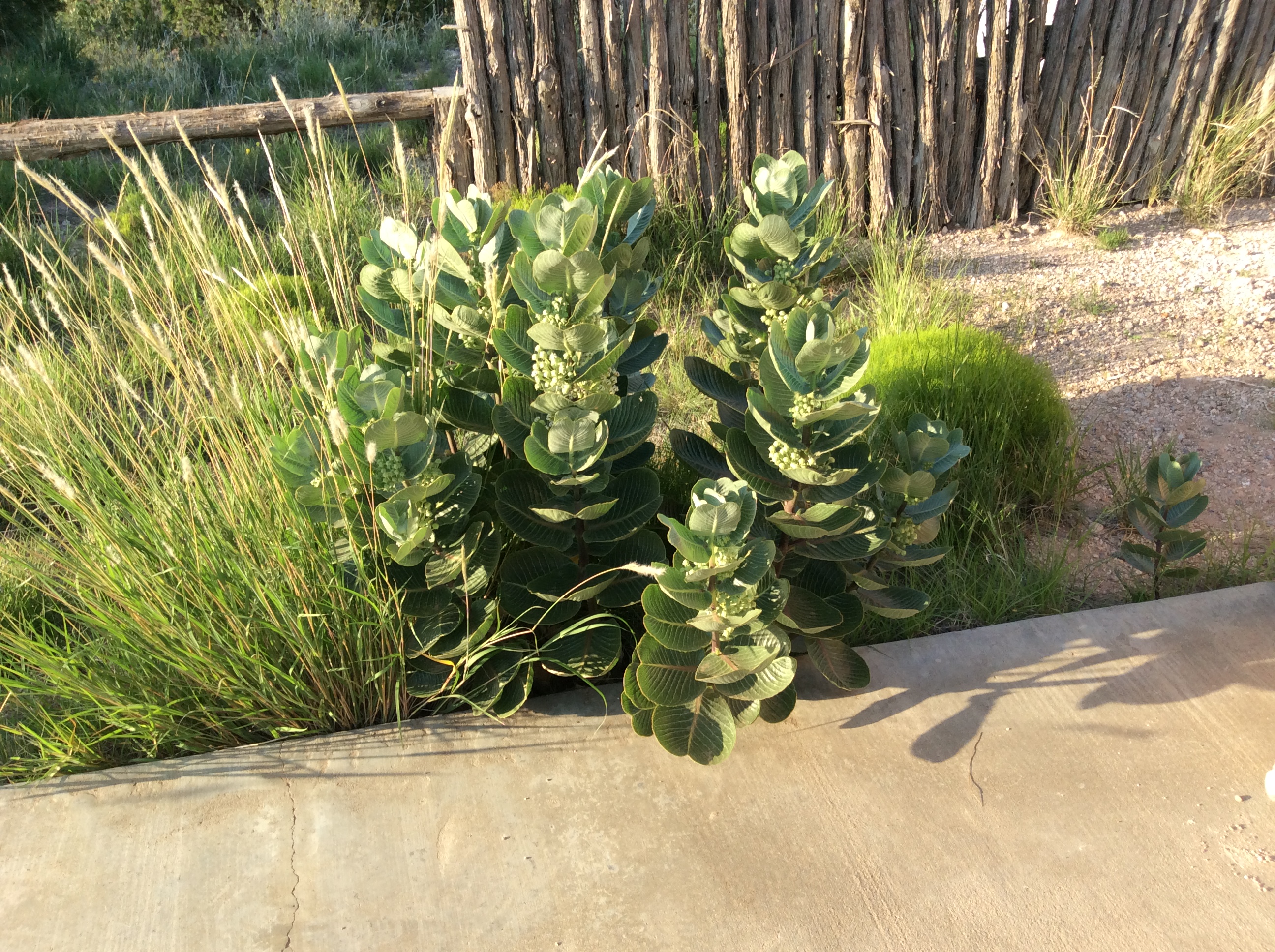
Perhaps readers have heard of the plight of monarch butterflies.  Compared to just ten years ago, the population has dropped dramatically.  What happened to them?  Roundup.  Over 100,000 tons of Roundup and other brands of glyphosate herbicides are annually applied to crops in the US.  What do monarchs eat?  Milkweed.  Since 1999, 58 per cent of the milkweed has disappeared.  Recently, monarchs experienced a 30 per cent reduction in their numbers in one year.  Are we headed toward a mass extinction?  Some scientists think so.  These scientists are not talking about tigers, elephants, and rhinos being killed at an ever increasing rate for their body parts, but rather about the less noticeable extinctions of various plants and less obvious animals like frogs.  And then there is the problem with bees.  Bees are disappearing at an ever increasing rate due to not only diseases but due to herbicides and pesticides.  Without bees to pollinate the giant fields of almonds and various fruits in California, for example, those foods won’t exist.  See a previous post for more discussion on the importance of bees.  So why care about frogs?  Scientists consider frogs and amphibians in general an indicator of the health of an ecosystem.  Certain more tropical species of frogs are especially subject to the effects of climate change and they are disappearing.

Where I live big bluestem, blue grama, buffalo grass, and other native species grew from horizon to horizon.  This is the high plains.  Root systems of some plants grow twelve feet deep.  It has not rained in over a month.  Where the native grass once grew, crops are now grown.  This time of year finds open fields. Without rain, with the recent endless high winds, dust fills the sky.  To safely return home from town Sunday, I had to turn on the car lights to see.  The dryness fuels wildfires.  Earlier this week, over one hundred homes burned down in a wildfire north of Amarillo.  Drought.

Many human inventions are wonderful and make many lives better, but for some of them, I cannot help but wonder at what cost.


Family Roadtrips


During my childhood, my father took us on regular road trips.  The first one occurred when I was three.  He actually drove all the way from northwestern Missouri to Monterey, Mexico, via Padre Island and back.  Every year we took at least one, sometimes two.  Later in life, I truly realized the value and magic of these family road trips.  Although my daughter, grandson and I take short road trips to New Mexico in particular, we had never taken a really long one until two weeks ago when we left Amarillo, Texas, headed for Carmel, California.

At our first stop, Old Town, Albuquerque, for lunch, we experienced a most refreshing and delightful drink which I plan to duplicate the next time I invite friends over for dinner.

SAM_1176

This feast for the eyes and mouth consists of water infused with pineapple and strawberries.  It tastes best after letting it set to allow the fruit to meld into the water.

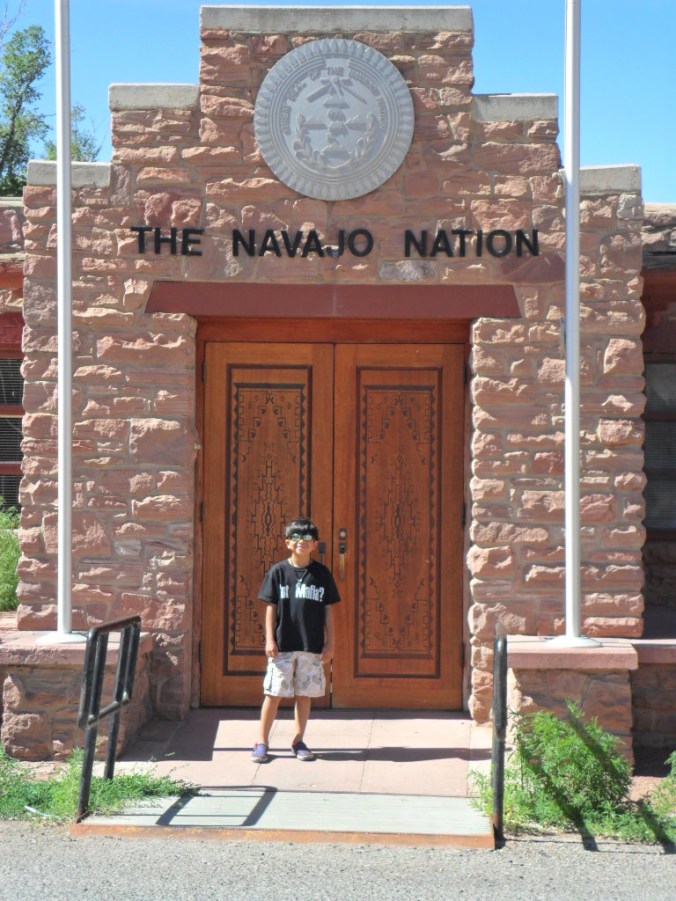
We spent the night in Gallup, but arrived too late to visit the galleries and shops so headed to a little Italian restaurant where my grandson, D’mitri, donned a black shirt which reads Got Mafia.  Friday morning we headed to Window Rock, capital of the Navaho Nation.  Since D’mitri’s great grandfather was Navaho, D’mitri’s interest in this stop remained high.

SAM_1178

SAM_1179

SAM_1180

After strolling around the park here, we stopped to visit the ladies selling the jewelry they were making on site.  As a person a bit obsessed with corn plants, I could not resist a pair of turquoise earrings that look exactly like tiny ears of corn.  D’mitri had to have a necklace with a soccer ball pendant which he wore the rest of the trip.
SAM_1183

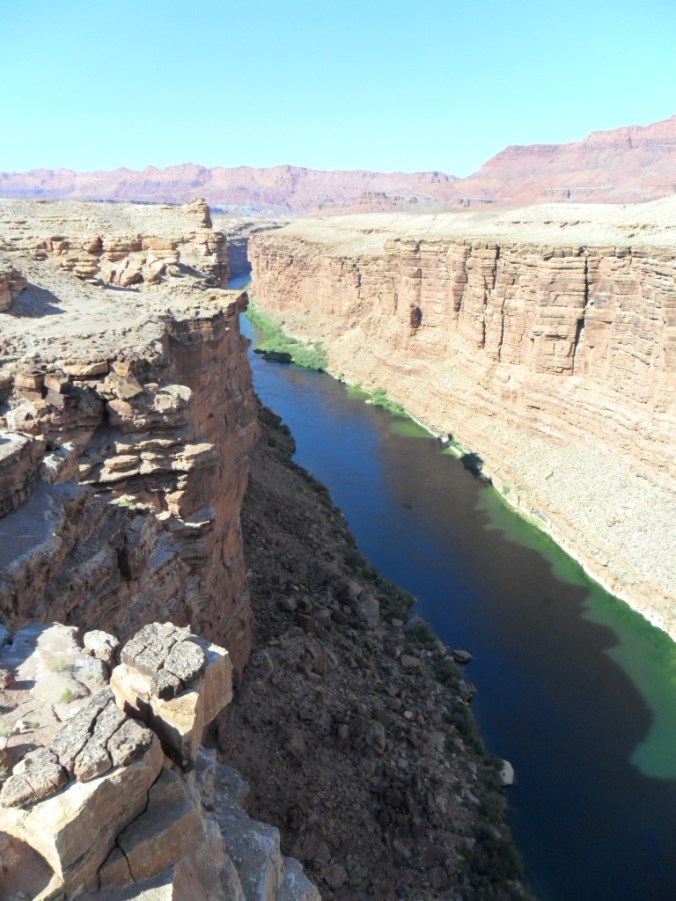
After the morning at Window Rock, we drove off across the Navaho Nation and the Hopi, headed for the North Rim.  We stopped off and on to visit vendors along the side of the road.  The dwellings throughout the Navaho Nation seemed scattered across the landscape with many hogans next to or close to what appeared to be a main house.  Horses roamed in the semi-arid fields.  The Hopi area, however, held a different view with no scattered dwellings.  Everyone seemed to live in villages along the way and I never saw a horse in Hopi country.  Finally, we crossed the mighty Colorado River at Navaho Bridge from which I took this photo.
SAM_1186

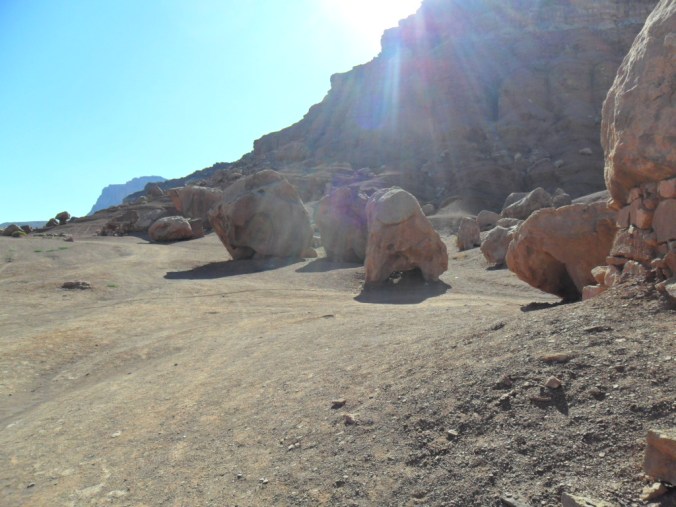
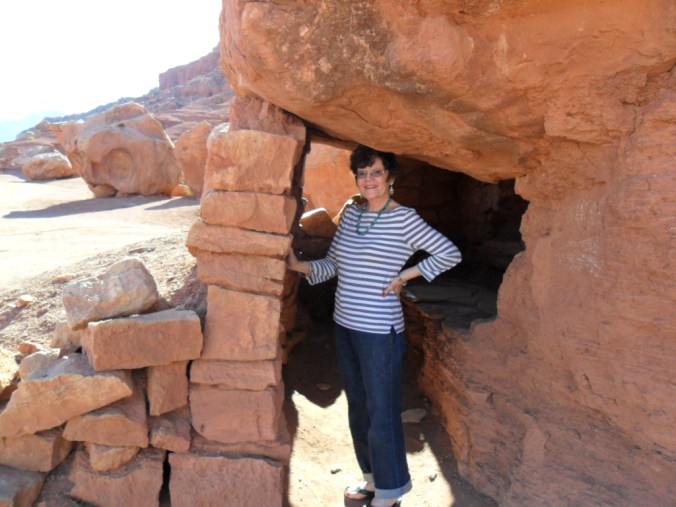
The road follows the base of the cliffs of Vermillion Cliffs National Monument.  We could see them looming large long before we arrived.  Huge rocks appeared to have tumbled off the cliffs and lay near the road.  I kept wondering if they ever fall and hit cars.

SAM_1188

SAM_1190

SAM_1189

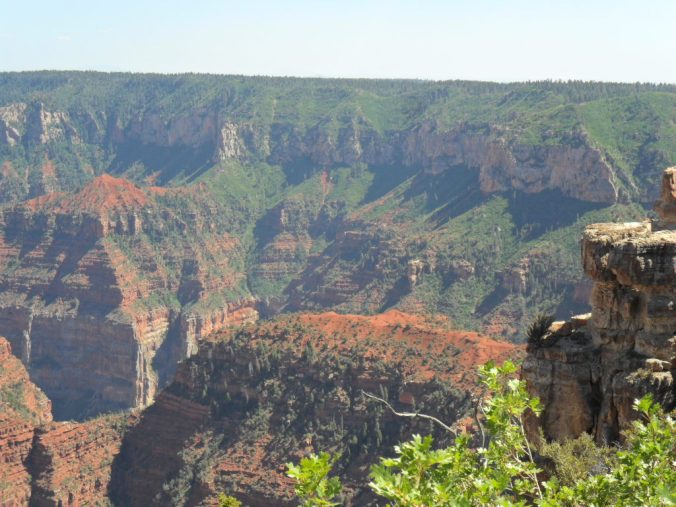
We finally made it to the Jacob Lake Inn near the North Rim of the Grand Canyon.  We arrived too late to go to the Grand Canyon  so took a hike through the ponderosa pines supposedly headed to a lake.  Dry, hot weather apparently turned the lake into a mere puddle.  We barely made it back before dark, disappointed.  The next morning we drove the forty some miles through heavy woods interspersed with giant meadows to the North Rim.  If you have never been to the Grand Canyon, its size and grandeur remain impossible to convey via photos.  Perhaps due to the rather warm, dry conditions, a heavy haze hung over the Canyon all day.  We took a few tiny hikes, only to discover just how very much out of shape we are.  Additionally, the altitude affected D’mitri quite negatively, making him more tired than customary.  Nevertheless, determined to not miss out too much, I took several photographs from Imperial Point.

SAM_1191

SAM_1192

SAM_1193

SAM_1195

SAM_1197

SAM_1196

Flowers exactly the same as grow where I live on a little canyon in the Panhandle of Texas grew along the path.  We spent another night at Jacob Lake and then continued toward Las Vegas.  The fastest route drops off the Kaibab Plateau rather dramatically with spectacular long views, the depth and breadth of which no ordinary camera can capture.  We ate a late breakfast in Hurricane, Utah, a bit after the infamous Colorado City, Arizona,  where the houses appeared quite large with high walls around many of them.  Then off to Las Vegas, Nevada, to meet an elementary school classmate, Craig Prater,  whom I had not seen in years.  He treated us to a fabulous lunch at the Mandalay Bay, took us to a shopping area down road, and he and I attempted to catch up for all those years while Ema and D’mitri shopped.  We marveled how two children who attended a rural school (at first it had only one room and then later two) eighteen miles from any town of more than a couple of hundred could attain what we have attained.  He produces films and travels all over the world.  I have lived, worked,  and traveled to many different places.

SAM_1198

SAM_1200

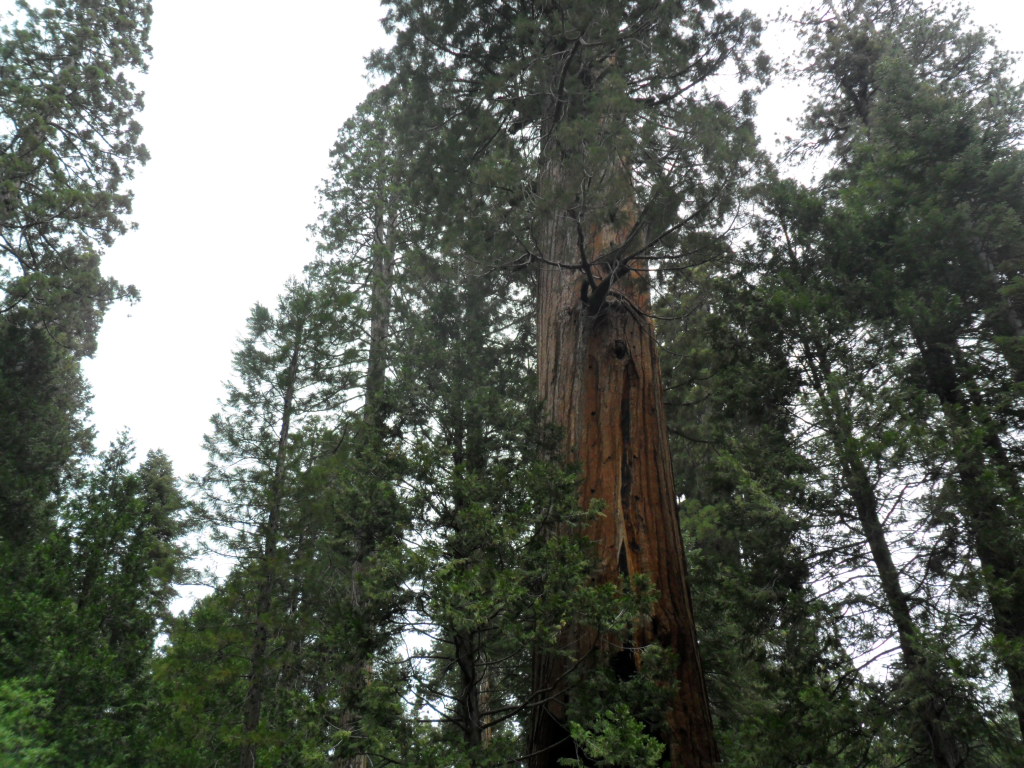
After Las Vegas, we drove to Mojave, California, for the night. The only  scenery on this drive is through a canyon on the Interstate.  We experienced high winds and a sand storm and arrived after dark.  The next morning we solved the mystery of the hundreds of red blinking lights on the hillsides, wind turbines.  From there it is a rather short drive,  a couple of hours, to the Trail of 100 Giants in Sequoia National Monument.  To say we experienced amazement is an understatement.  What a magical forest so wet and dark and alluring after miles and miles and miles of hot desert.

SAM_1204

SAM_1205

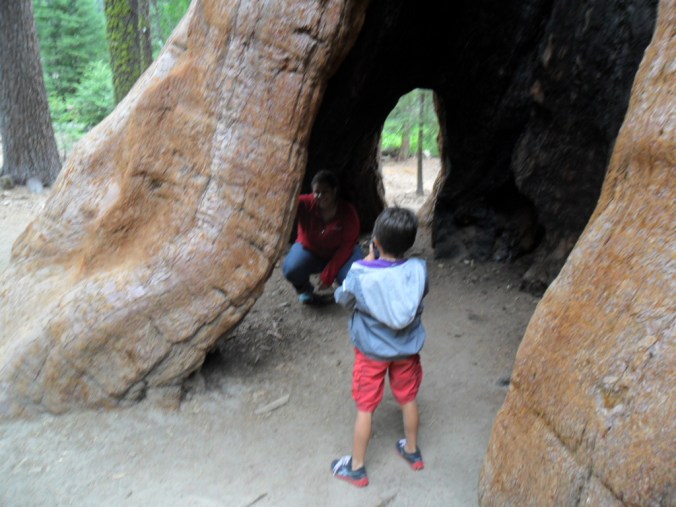
SAM_1207My daughter, Ema, and her son, D’mitri really enjoy clowning around and what better place than surrounded by the largest trees in the world.  The squirrels here also “talked” a lot and we tried to get close.

SAM_1209

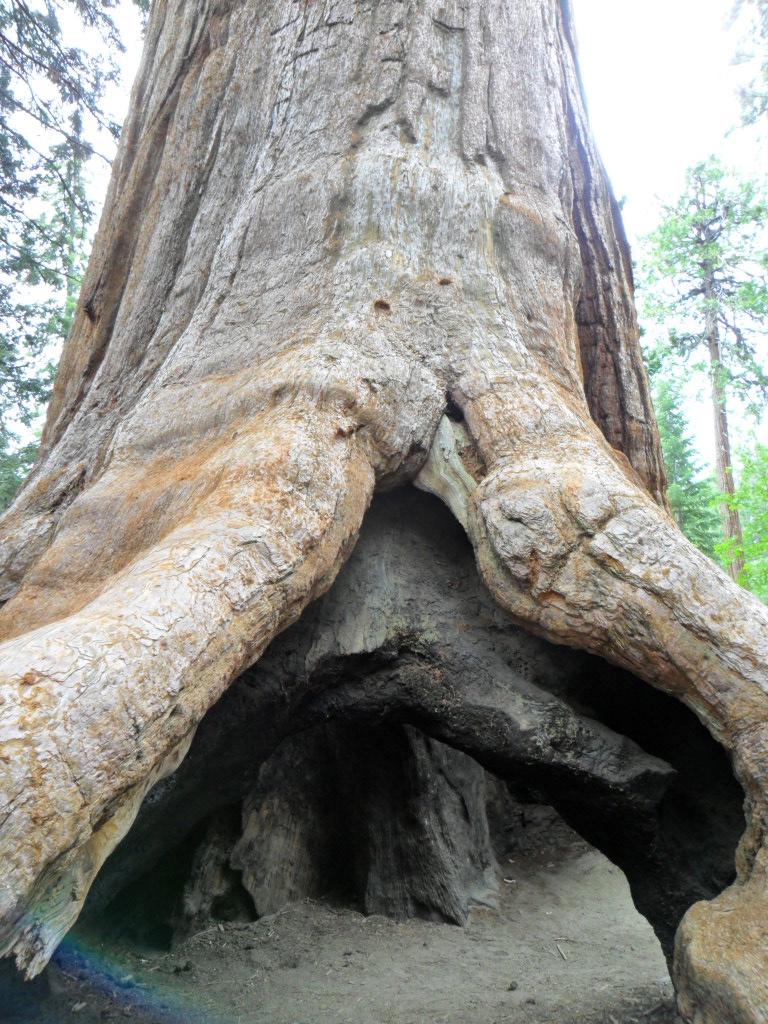
Usually, I frequently dislike photos of me, but this one is an exception.  Although not large, this tree stood out as so unique I could not resist a photo shot.  Even with the best camera, I doubt a photo of an entire sequoia tree is possible.  You have to see them to obtain the full effect.
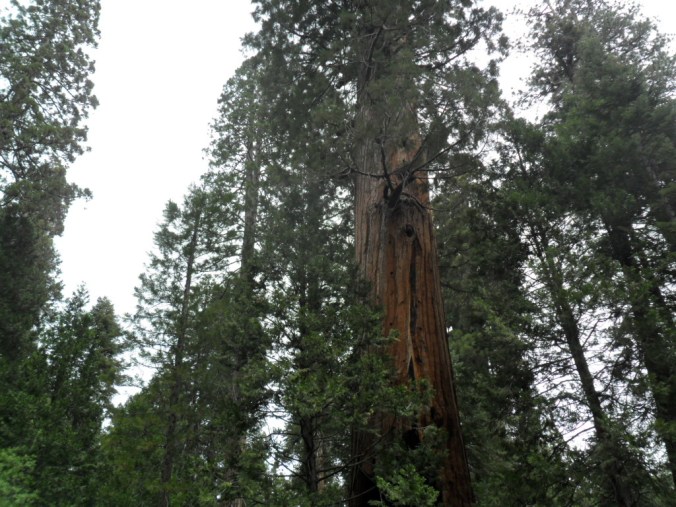
SAM_1210

We wanted more time with the trees, but needed to make it to Carmel by evening so headed down the mountain toward California Hot Springs.  Altitude is everything here.  In ten minutes the golden hills replace giant trees.
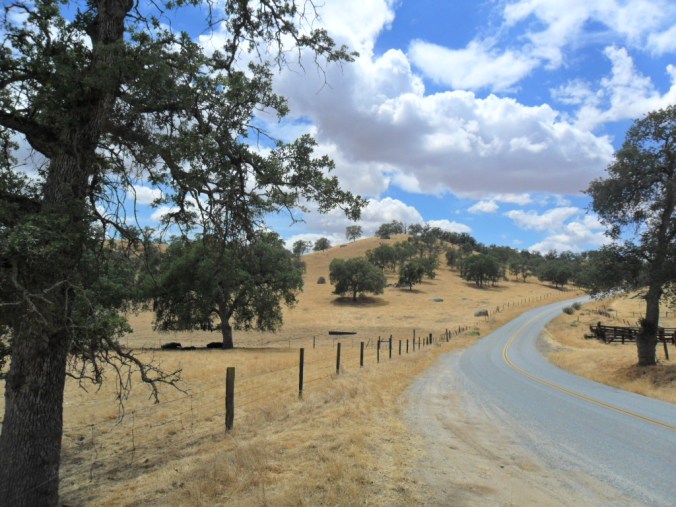
SAM_1218

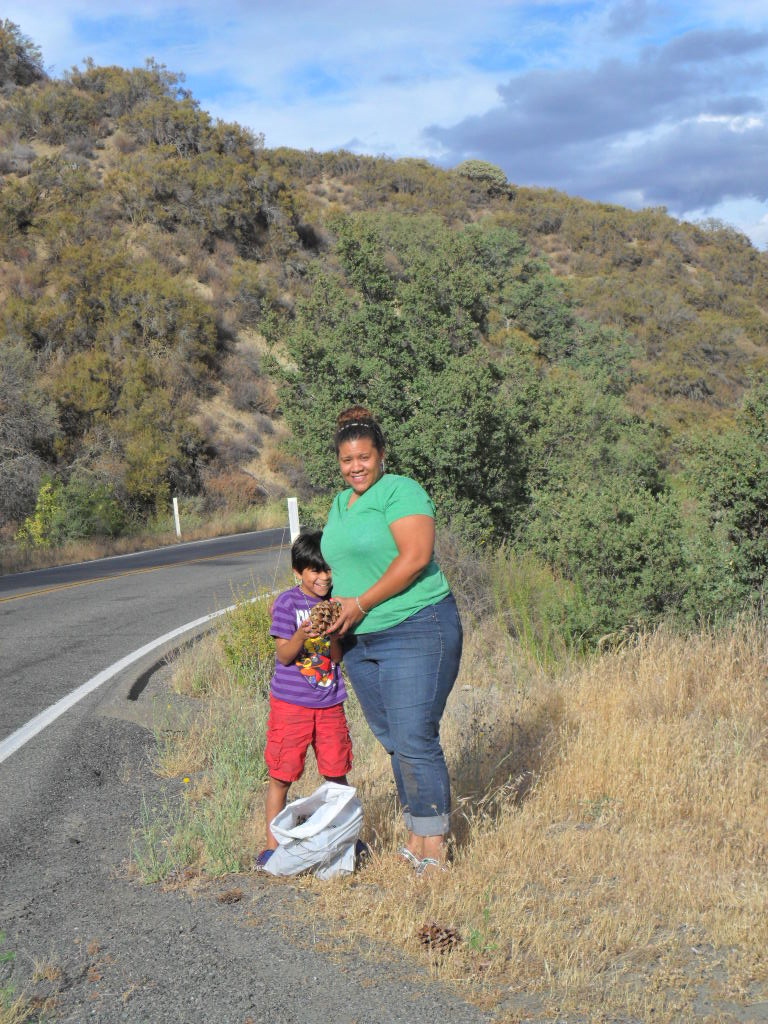
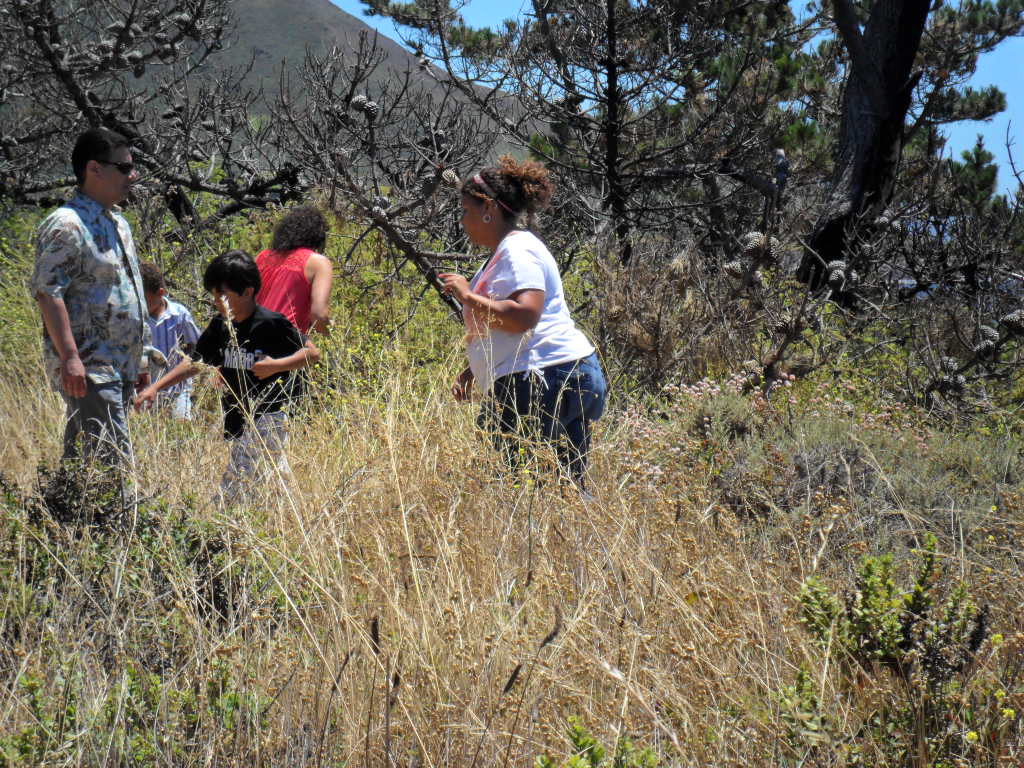
Then, in an hour or less, we were driving across the Central Valley past miles of vegetables and at least three types of trees in huge orchards or groves.  The only tree species I was able to identify was almonds.  I wanted to take pictures, but did not desire to arrive in Carmel at my college roommate’s house in the dark so I kept driving.  No quick road exists that crosses California except way to the south.  This still astonishes me.  Two lanes with heavy truck traffic take a long time to get from one destination to another.  We decided to cross on 198 through Coalinga to San Lucas which resulted in a fun, scenic drive with lots of twists and turns.  Much to our surprise, huge pine cones lay everywhere beside the road.  It seemed strange that these cones came from a tree much smaller than the Sequoia.  Ema and D’mitri collected some to display at home.

SAM_1219

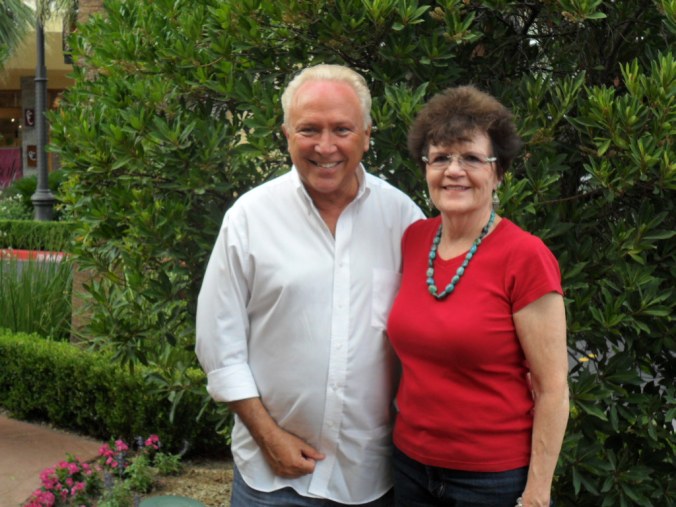
Finally, just before dark we arrived at the Rinaldo’s.  Suzy and I roomed together at Grinnell College at the ages of 18-19.  David attended Grinnell also.  We only see each other once or twice a year but can pick up conservations as if it were a few moments ago.  They live in the Santa Lucia Preserve.

SAM_1268

SAM_1258

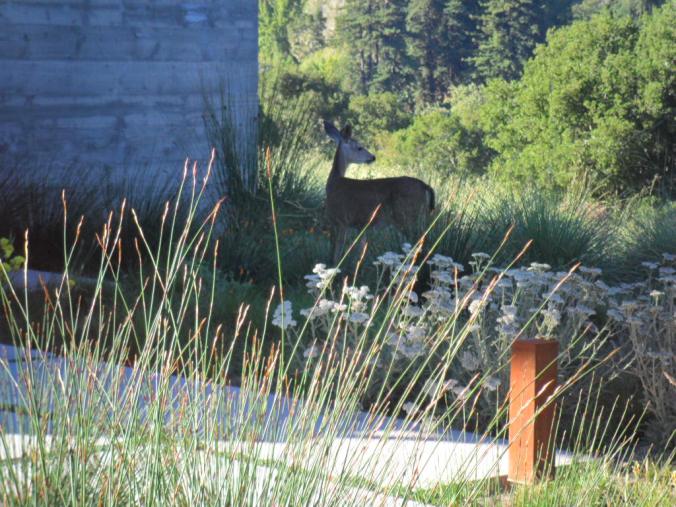
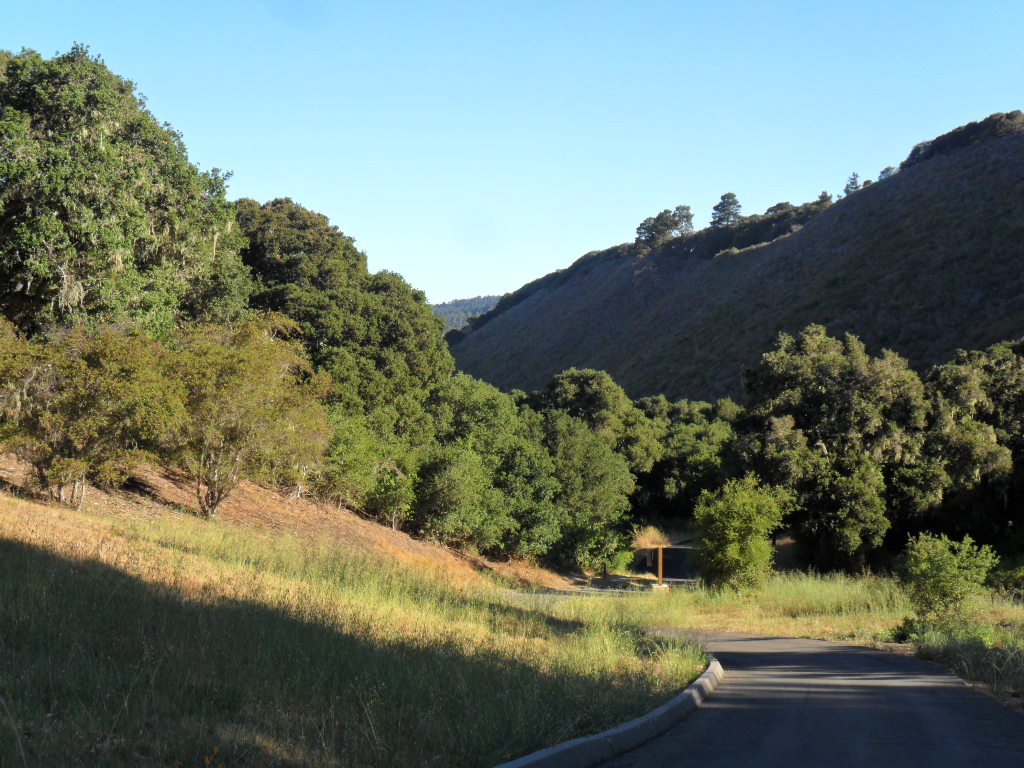
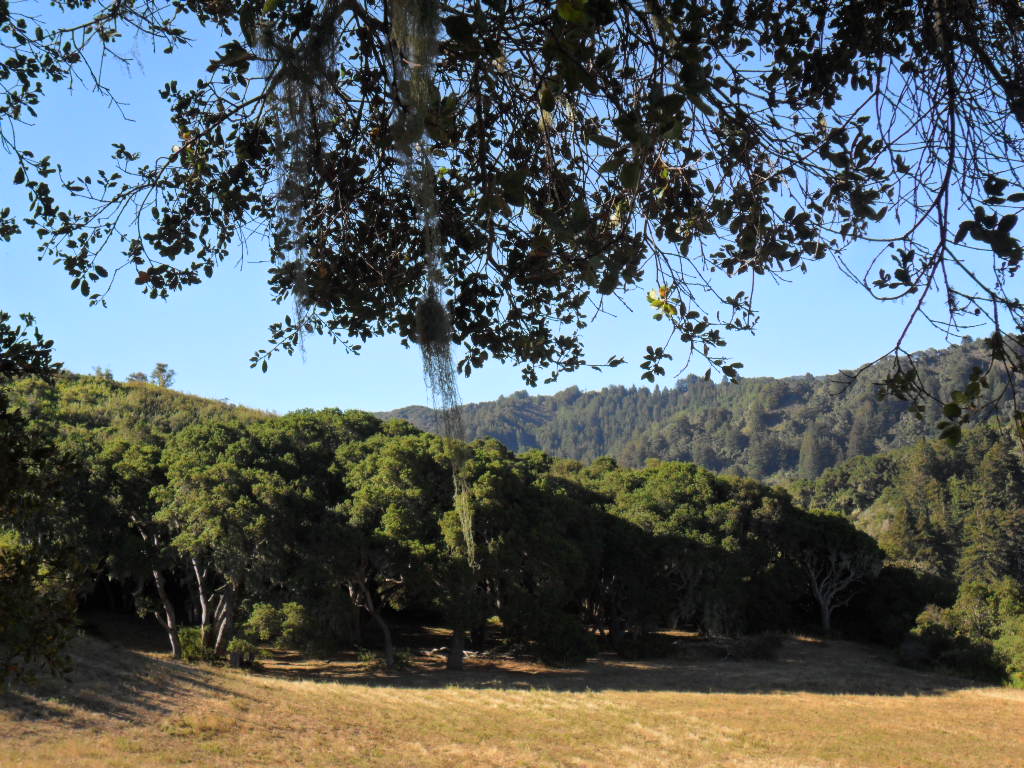
Every morning this deer casually ate California poppies and ran away only if I went outside too quickly.  One morning I took a long walk up one of the few roads on the Preserve.  I love the live oaks and learned they are very fire resistant so residents are allowed to let them grow close to their houses.  Everything else, except for a few native grasses and plants–no trees or brush, must be cleared for 150 feet all around any house.

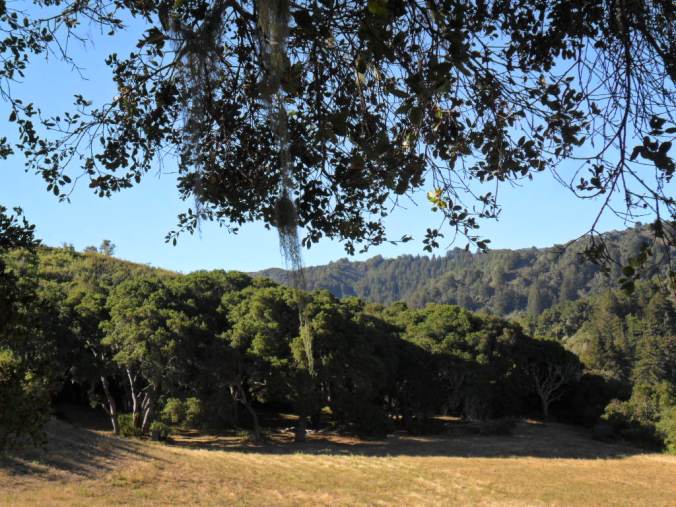
SAM_1259

SAM_1265

SAM_1264

SAM_1262

SAM_1261

I commented on the radiant red colors I saw in the leaves of an attractive plant only to find out it is poisonous oak and if I touched it, the result would not make me very happy.  It must love this particular environment because it grows everywhere.

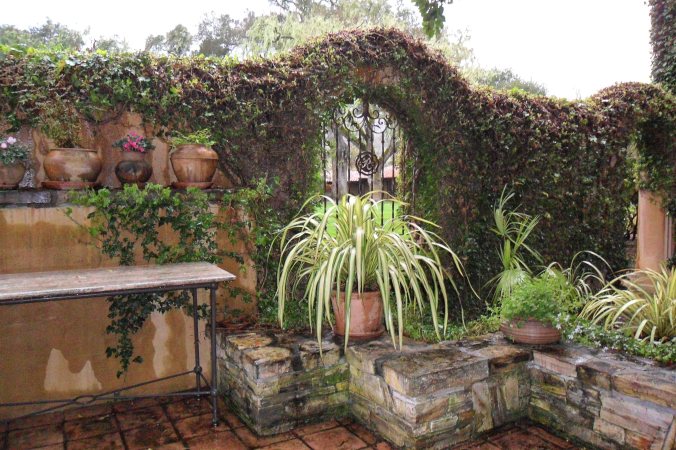
One of my favorite restaurants is at the Hacienda at Santa Lucia Preserve, not because of the food, but due to the impeccable service and enchanting atmosphere, what I imagine to have existed in old California.  D’mitri says it is his favorite fancy restaurant on the trip.

SAM_1221

SAM_1223

SAM_1228

SAM_0103

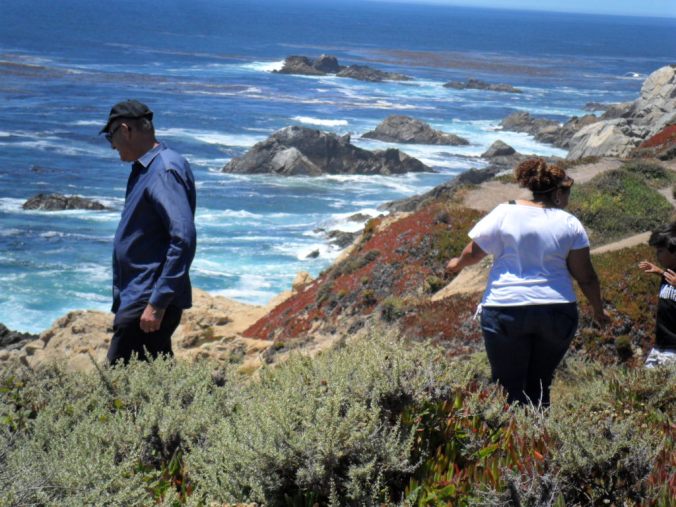
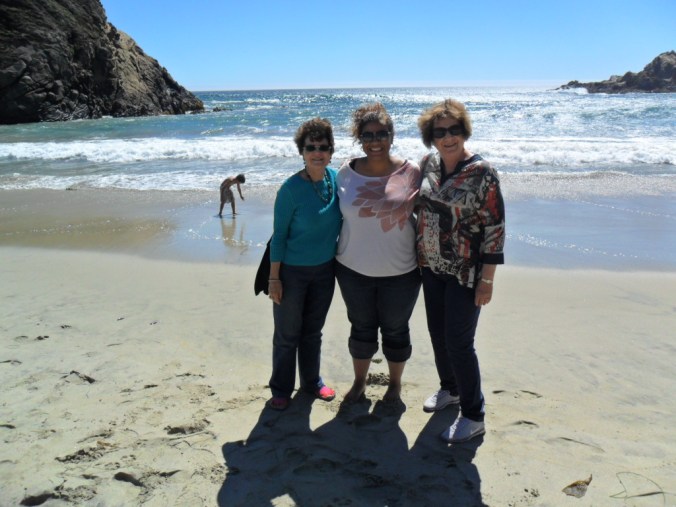
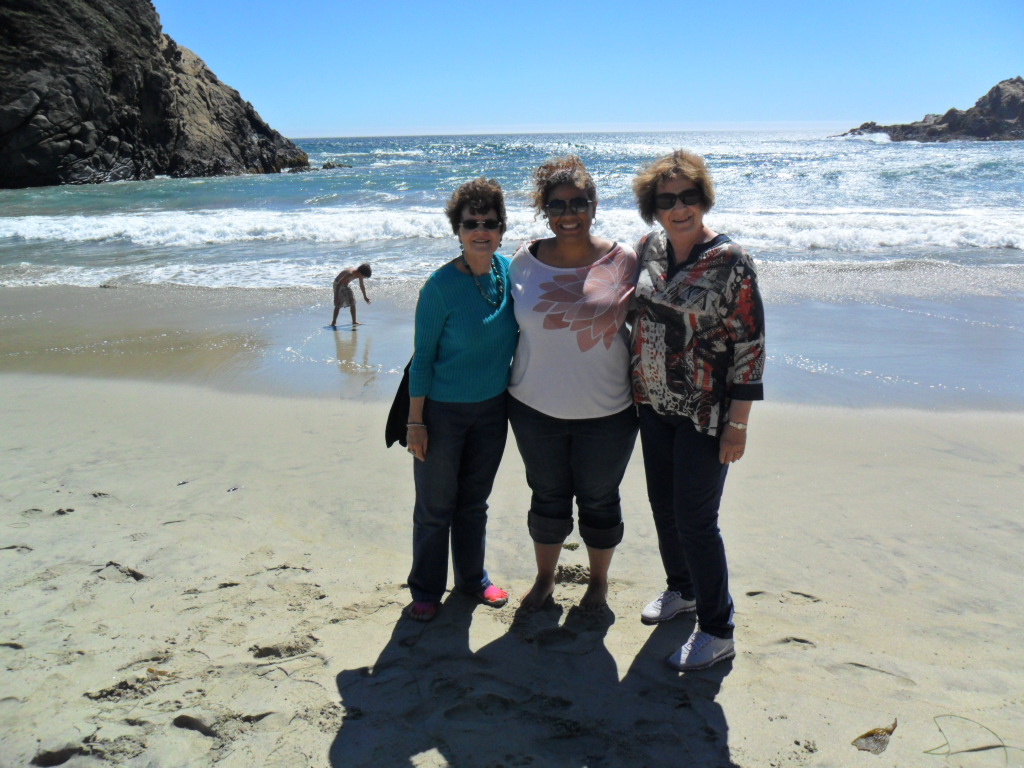
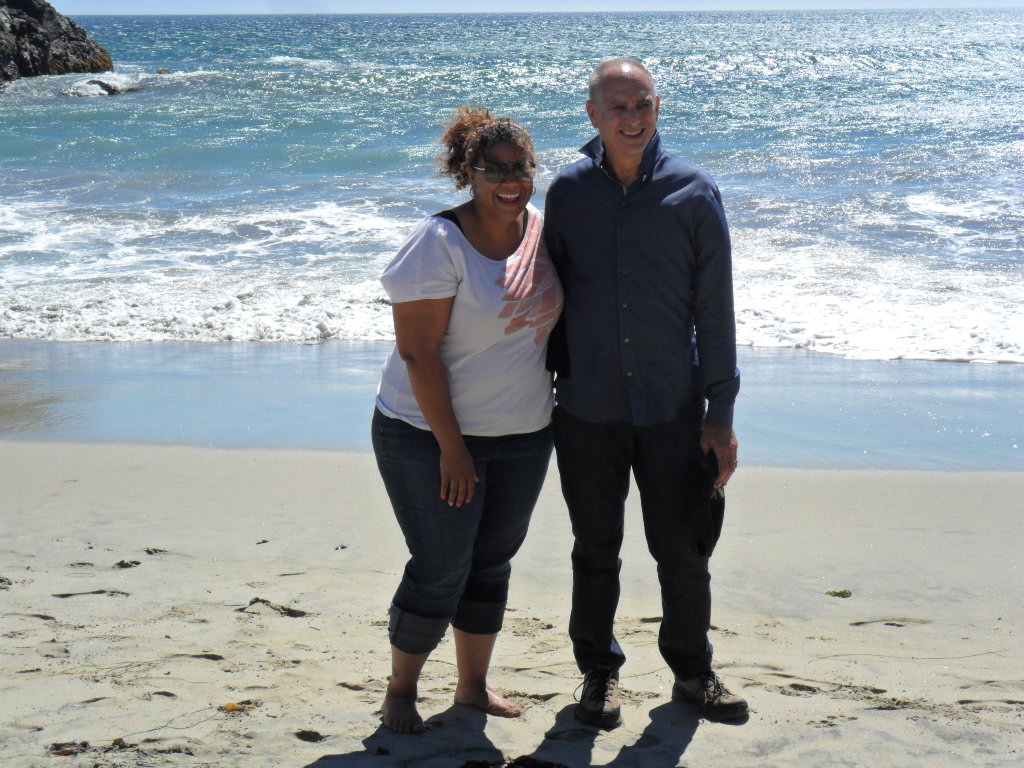
In the dark, driving back home to David and Suzy’s, we saw a bobcat, several deer, wild turkeys, a skunk, and another animal we could not identify.  The next day we ladies went shopping in Carmel while David and D’mitri took a ride in the Porsche and swam.  No one can go near Carmel surely and not drive the glorious drive south to Big Sur.  D’mitri loves water so we stopped at two different places along the way.
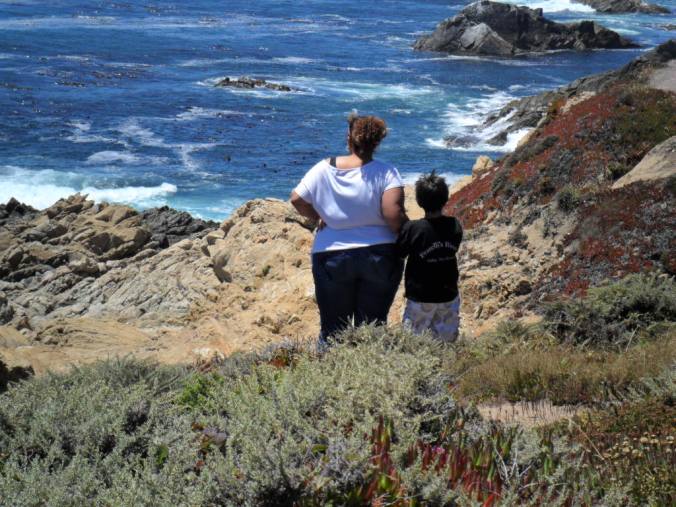
SAM_1238

SAM_1239

SAM_1241

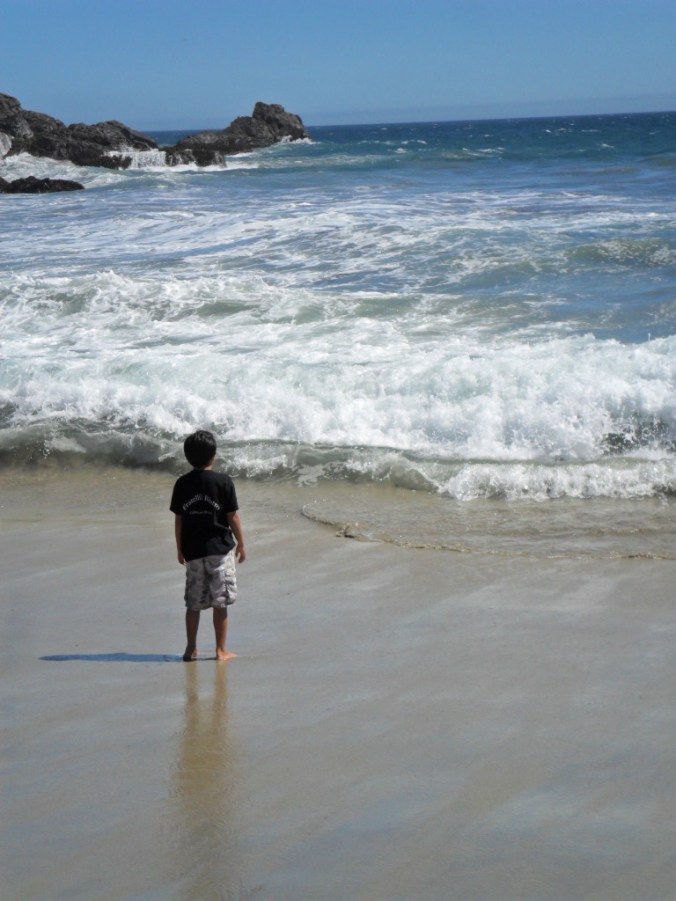
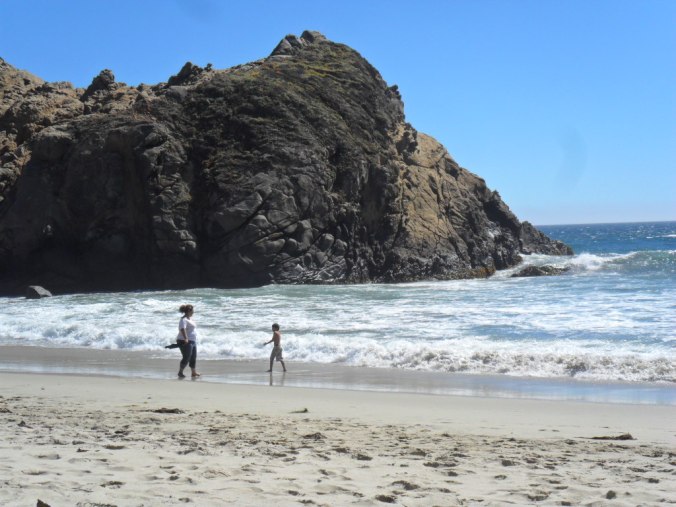
D’mitri became quite alarmed when Suzy told him many of the bushes along the path are poison oak.  David informed us that a really wonderful beach existed down the road if we could get in.  Off we drove to Julia Pfeiffer Burns State Park.  They only allow so many cars into the park at once so we had to wait until someone left.  It was worth the wait.  This beach does not allow swimming; people have drowned here.  Nevertheless, who cares; the drama of crashing surf, giant holes in rocks worn by water, and trees shaped by wind and erosion make it magical.
SAM_1245

SAM_1252

SAM_1251

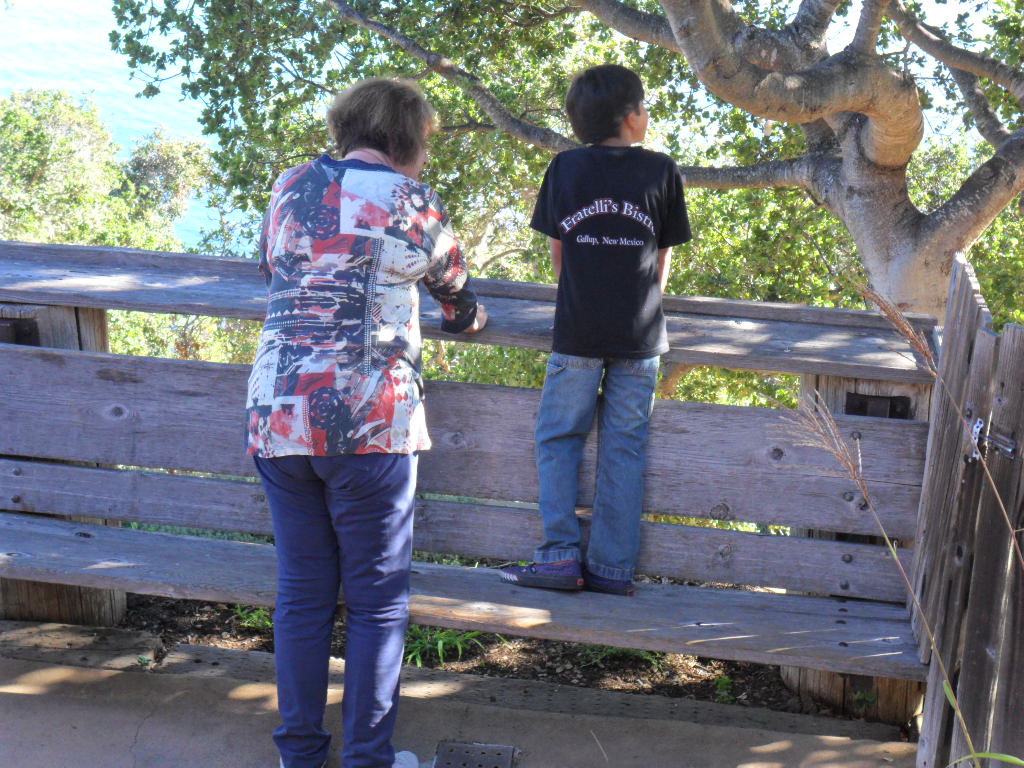
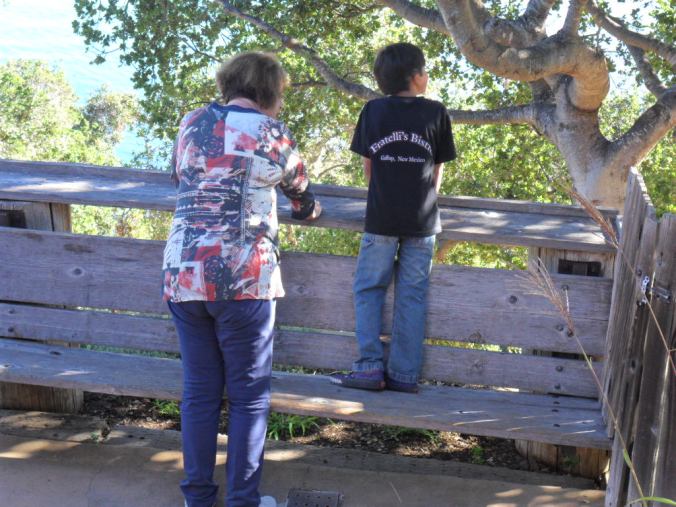
SAM_1250You cannot go down highway 1 without stopping at Nepenthe.  This restaurant’s views alone are worth going there, plus a gift shop full of finds from all over the world.  The wine list and hamburgers finish off the list of why you must stop here if you are anywhere near Big Sur.
SAM_1255

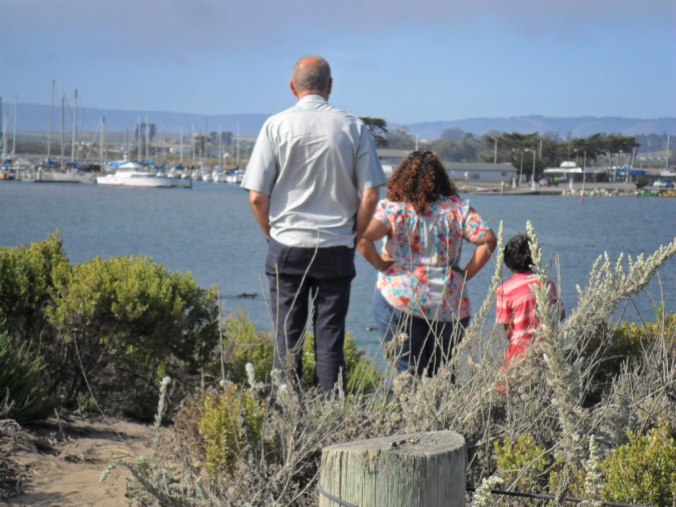
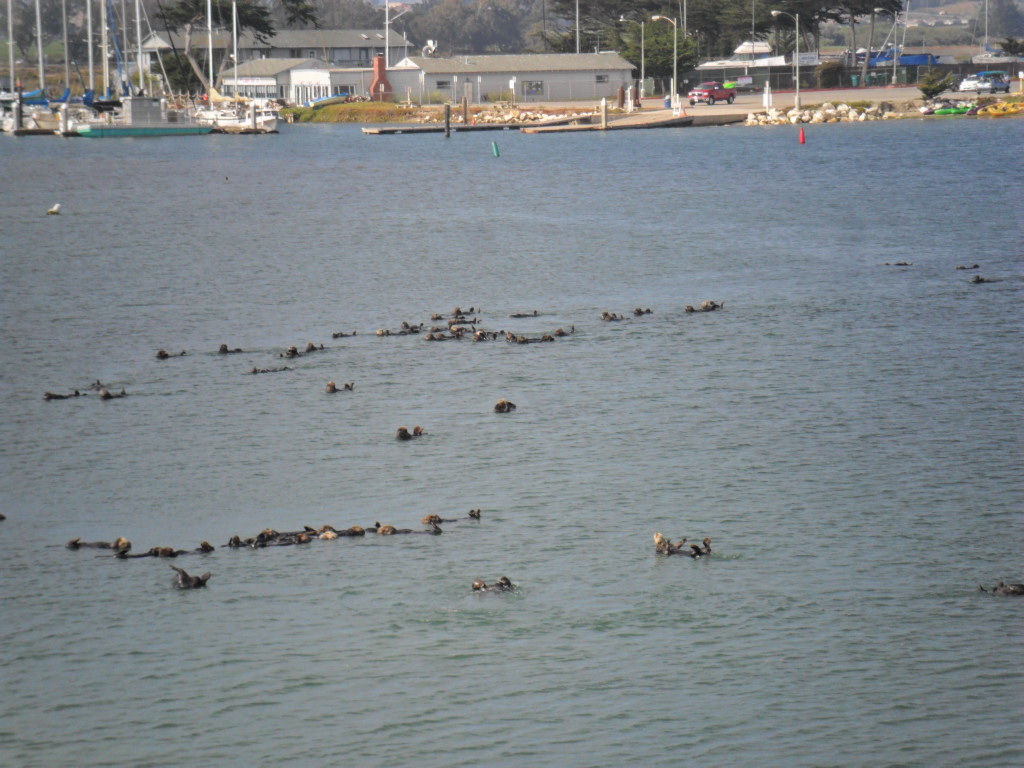
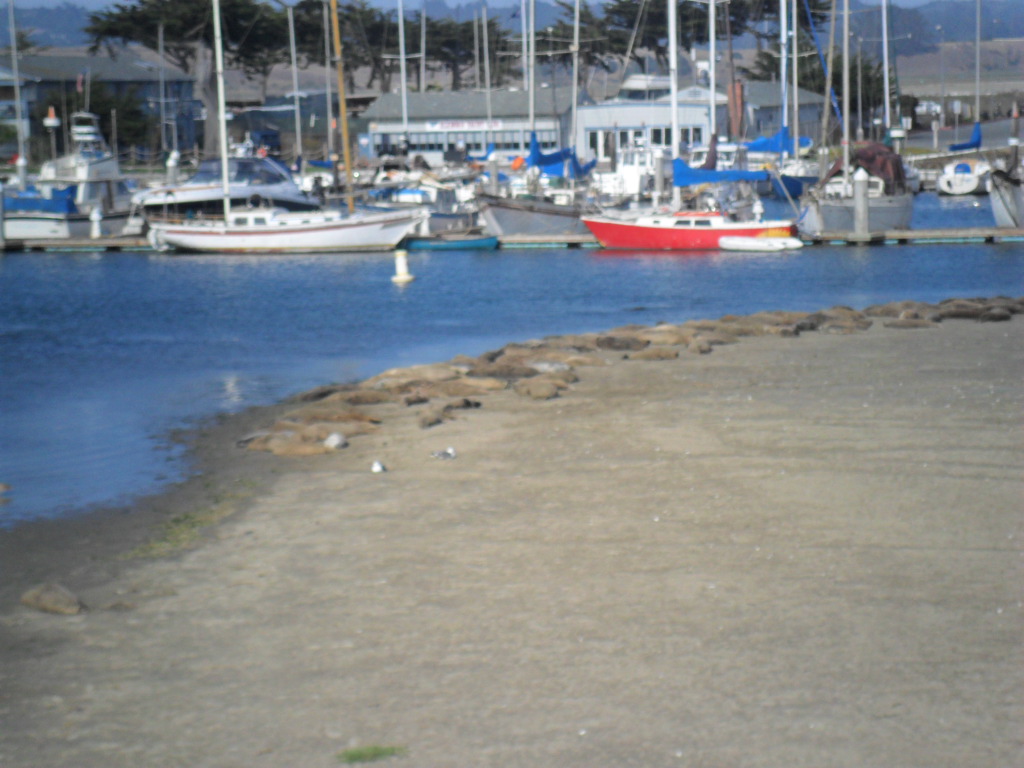
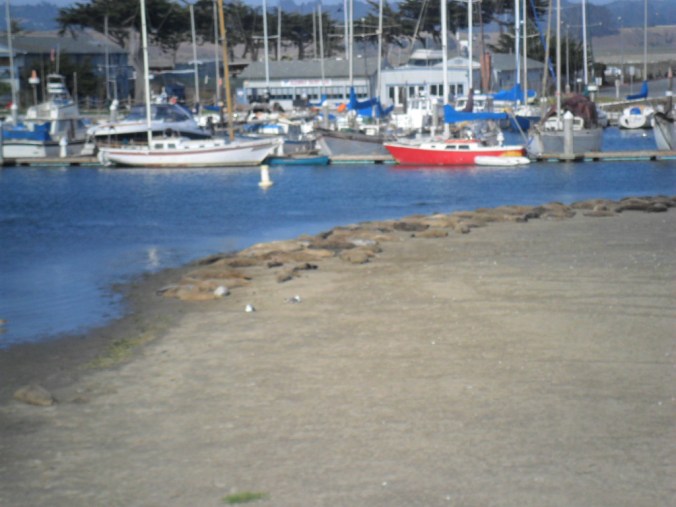
Time seemed to run rapidly; with only one day left, we decided to head to Moss Landing to see the seals.  Much to David’s astonishment, not only did seals lay all along the beach, but a large number of sea otters were playing in the water, rolling over and over, splashing.  David had been there many times and never seen anything like this.  The sea otters delight the watcher with their playful antics.

SAM_1271

SAM_1272

Unlike the ever playful sea otters, the seals just lay still like large rocks along the beach.
SAM_1274

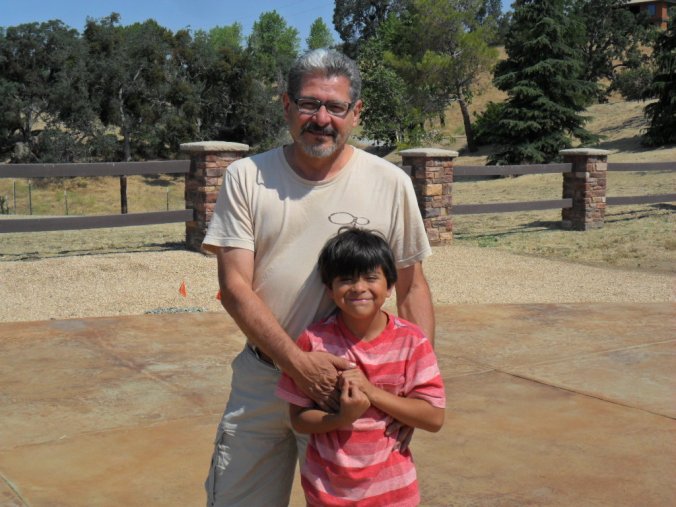
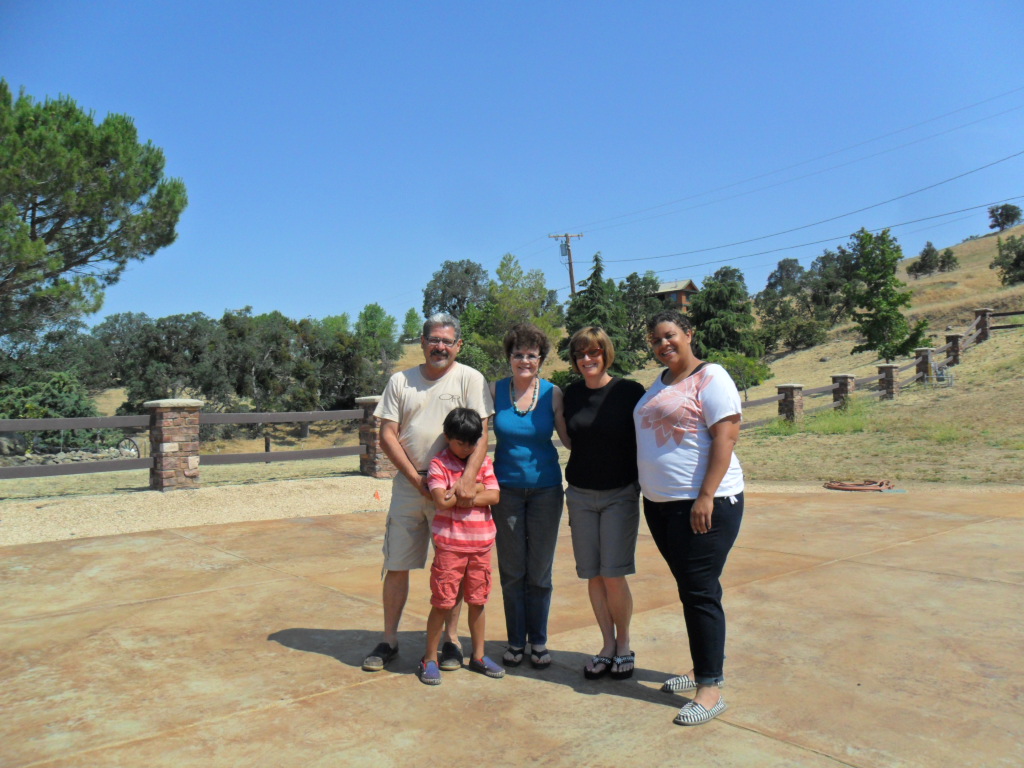
Early on a Saturday morning, Suzy and David fed us waffles to fortify us for the long drive to Flagstaff, nearly 700 miles.  We crossed over to Salinas, then down 101 and finally through Bakersfield where we found a delightful, rather elegant Italian restaurant for lunch.  The good looking waiter chit chatted and provided excellent service, three pluses when you go out to eat.  As we cut across the middle of California, headed for I-40 eventually and neared Tehachapi, Ema decided to call D’mitri’s other grandparents who have a house there. When we went the other direction almost a week before, they had been vacationing in France.  To our surprise, they answered and asked us to stop for the night.  D’mitri’s excitement was contagious.  He expressed special delight to have his grandfather to himself for hours instead of needing to share him with other grandchildren.  The Herreros live on a hillside with a breathtaking view for miles.  Unfortunately, the haze prevented proper photography so I gave up on the idea of capturing the endless panorama.   However, this presented itself as the perfect opportunity for family photos.

SAM_1278

SAM_1280

SAM_1285

The California desert never comes to mind when I think of California.  I always fly to San Francisco or Oakland and visit friends or conduct business.  Unlike the glorious red rocks and drama of southern Utah and northern Arizona or the saguaros of  southern Arizona, the California desert maintains an endless pale tan color with only a few tiny plants.  Thanks to air conditioned automobiles, you can drive for miles, escaping the intense heat.  When we finally stopped at a Dairy Queen for a refresher, D’mitri and I stepped out of the car and were nearly knocked over by the hideously hot wind.  In general, I like heat, but this seemed overwhelming.  When we drove off, I asked Ema about the temperature.  She looked it up on her smart phone, 118.  The only truly beautiful I sight I saw (and I think nearly everywhere possesses some sort of loveliness) occurred when I drove over the mighty Colorado River, surrounded by the only green for miles.  After this heat, the cool, green beauty of Flagstaff enchanted us.  We settled into our hotel room, then drove off to our third Italian restaurant in two days, Oregano’s.  Instead of the usual coloring books, puzzles, etc. offered to children, this place gives them pizza dough to mold.

SAM_1287

As we drove home, I noticed how terribly dry it is once we dropped out of the mountains around Flagstaff.  Off and on we crossed areas where there had been enough rain to create a pale green.  Apparently, it had not rained west of Albuquerque because it still looked like brown winter just as it had eleven days before on the first day of the trip.  East of Albuquerque we encountered such an intense downpour with some hail that I could not see to drive.  I pulled off the road and waited. From Albuquerque to Amarillo, in the eleven days we were gone, it had rained enough to make the mountains, foothills, and high plains a lovely soft emerald.   We had missed the hot, 100 plus week and came home to rain and cooler weather that lasted several days.  In one week, the weather had changed from record highs to record lows, the typical extremes one learns to live with on the Llano Estacado.

Going Home Again


Last weekend I returned to the county where I grew up and the family farms in Andrew and Holt County, Missouri.  It had been at least six years since I had returned to the place my great grandfather homesteaded over a hundred years ago.  Strangers live in the house where I grew up and my father lived 80 of his 90 years.  On the site where he was born, only the old carriage house still stands, a sentinel to a lifestyle long gone.  Repeatedly, I tried to write a poem about all this, but have not been able to do so–perhaps the experience is still too close.  Additionally, for the first time, I attended my high school reunion and chatted with individuals I had not seen since I was 18.  Decades truly change people; I would have recognized only a couple without the name tags.  Northwest Missouri this year presents an intense emerald landscape.  Having travelled there from the semi-arid land where I now live, I suffered “green” shock.  And tree shock.  The Panhandle of Texas grows few large trees outside of towns and cities.  Even with my very ordinary camera, these photographs capture the beauty I witnessed and family memories I want to remember and share with my children and friends.
SAM_1167

This is the house where I grew up and Dad lived 80 years.  The building in the foreground was built during the depression.  Before it was put to its final farm use–for hogs and chickens at various times in my childhood–Dad held dances here.  Because of prohibition, the sheriff always sent someone to make sure no illegal alcohol consumption occurred.

SAM_1097

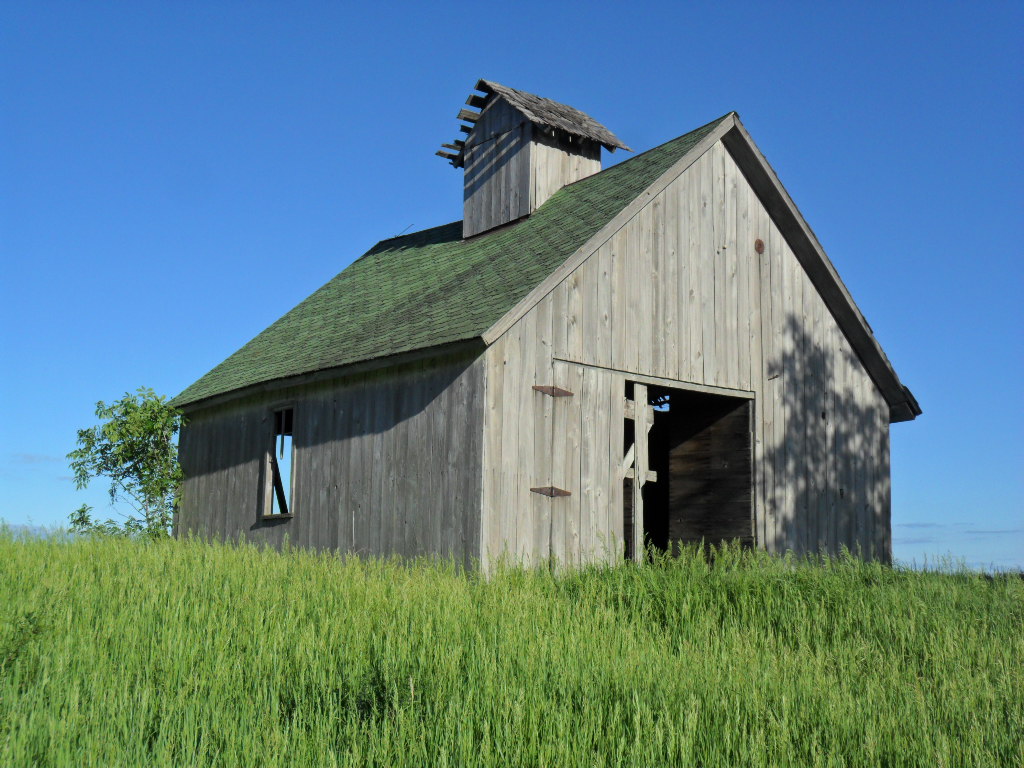
The old carriage house, just south of the site where a large house stood during my childhood, still stands.  The stained glass transom window hanging in my own house now and an etched glass hunting scene are all that remain of the house where Dad lived as a small child.  Emptiness and raccoons finally destroyed it.   When he gave me the windows over thirty years ago, Dad said it was impossible to keep an empty house in good shape forever.

SAM_1165

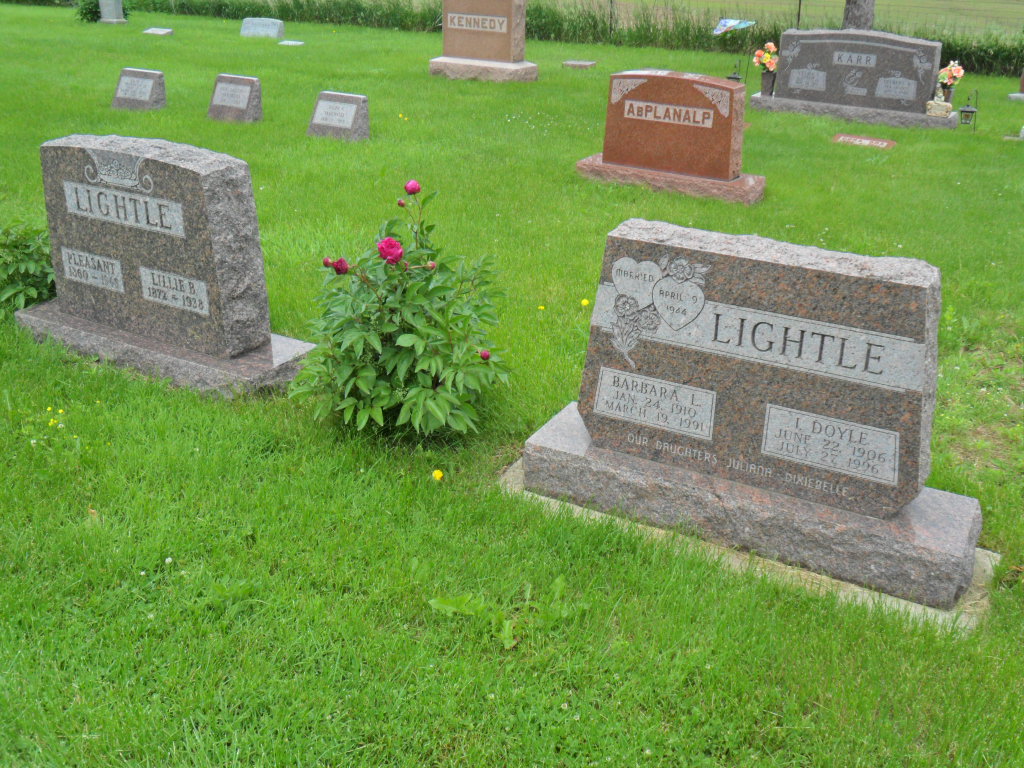
At the age of 18, my great grandfather, Gottlieb Werth, came to the United States to avoid being drafted into the Swiss army which hired out soldiers as mercenaries.  My father told me what his mother told him:  my father’s mother stood on the roof of her house in Switzerland and waved until she could no longer see her son; she never saw him again.  This photograph shows his grave in the Fillmore, Missouri, cemetery.

SAM_1094

Nearby, perhaps fifty feet away, lay the graves of Mom and Dad and my grandparents.  I never knew this grandmother; she died long before I was born.  My grandfather died when I small and sadly I do not remember him.  The family stories tell that he taught me to talk at a very early age, nine months, because he held me on his lap and told me about everything occurring outside the windows.  My first word was “tractor”.

SAM_1090

Another family story tells that this grandfather walked to Andrew County, Missouri, from Illinois.  Andrew County’s rolls are full of Lightles.  It remains the only place I have ever lived where I am not the only person with my last name in the phone book.  Dad claimed there would be even more Lightles except for the fact that several brothers died when they tried to walk across the Nodaway River on winter ice and it broke.  They all drowned.

SAM_1106

Dad built the large pond in this photo and stocked it with fish.  Until a few years ago when someone bought the land and destroyed all the trees, a small forest of ancient oaks, black walnuts, and chestnuts grew between the house and pond.  Dad kept it mowed and groomed–a park.  Sadness filled me when I saw the trees all gone.

SAM_1107

All my childhood we attended Antioch Christian Church.  Although I could not see it from my house, if I walked across the road to where the carriage house still stands, it looms across the distance.  Potlucks were a very popular activity here.  Mom made such fabulous pies that everyone would get her pie first to make sure they got a piece.

SAM_1114

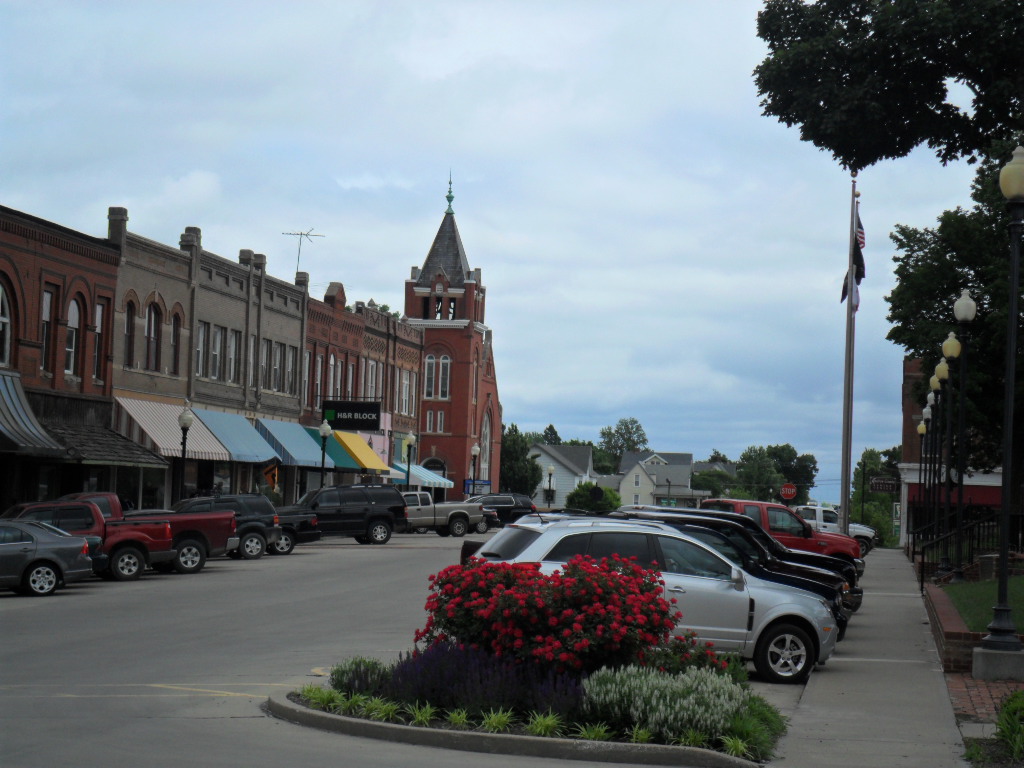
The sign in front of the Andrew County Courthouse.  This county remains filled with people of Swiss descent to the point they have celebrations commemorating their heritage. The following include photos of the courthouse and some of the restored buildings on the courthouse square.

SAM_1112

SAM_1116

SAM_1113

Several reasons exist for my returning “home” at this time, including attending my high school reunion for the first time.  The following photos show several people I had not seen since I was 18, including Melanie Eisiminger, who was the valedictorian when I was salutatorian so many years ago, and Jim Ahillen and his lovely wife.  Melanie is in the middle.

SAM_1127

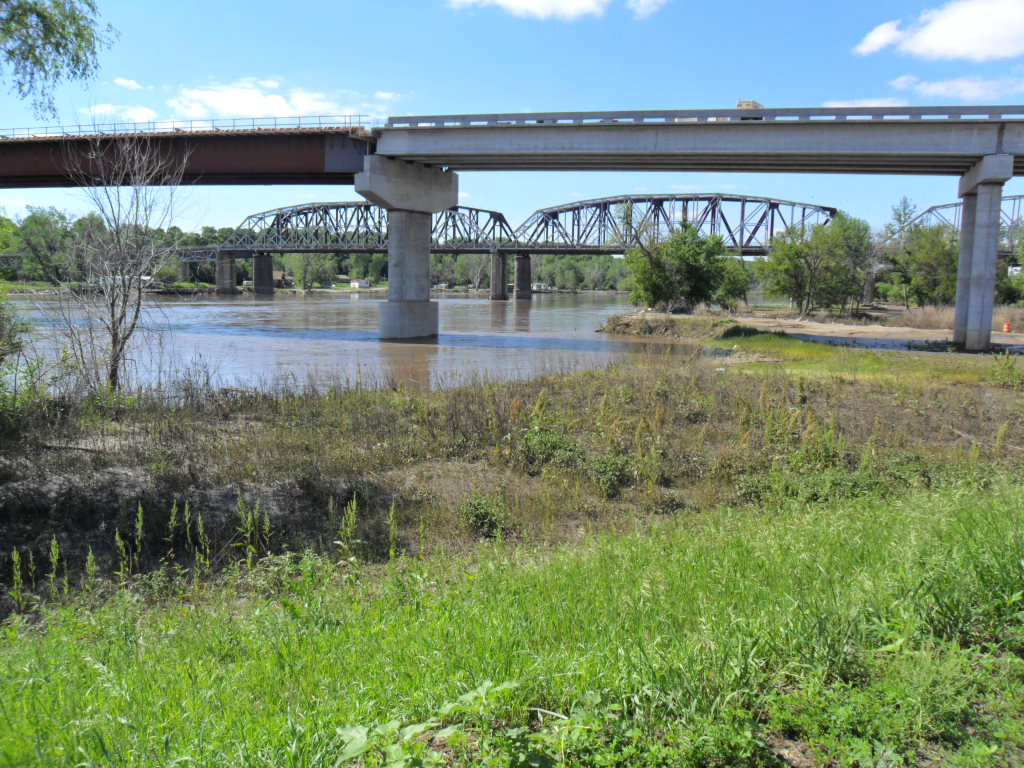
My mother grew up in Holt County, Missouri,  in the town of Fortesque and her family farm next to the Missouri River still remains mostly in the family.  In my childhood, Fortesque was still relatively prosperous.  Now fewer than fifty people live there.  The farm lays right next to the Missouri River.  I walked down the levee and took photos of this mighty river, the Rulo, Nebraska bridge, and the farm.  If I turned one direction, I faced the bluffs where White Cloud, Kansas, resides and the other direction is Nebraska.

SAM_1134

SAM_1128

SAM_1139

Between the Missouri River and the bluffs lays one of the largest wildlife refuges in the United States, Squaw Creek National Wildlife Refuge.  It is especially important for migratory birds, bald eagles, wading birds, and various mammals.  One can drive the new road ten miles through it to observe birds in particular but also other species.  The huge cottonwoods and oaks fascinated me.  It appears I had totally forgotten just how grand these trees can grow if given adequate water.  In one area I drove for at least four miles through a tree tunnel, then several raptors screamed at me while I tried to photograph them, and finally I managed to photograph a red winged black bird and geese.  After several days of semi constant rain, it felt fabulous to experience a perfect sunny day for my tiny trip to the wild.

SAM_1150

SAM_1148

SAM_1151

SAM_1149

SAM_1152

SAM_1155

After I left Squaw Creek, I drove to Mound City to find the graves of the Duke side of my family.  The last time I had been there was when we buried my aunt, mother’s sister.  I also remember going with her there more than twenty years ago.  I recalled the general location but had to hike around a bit to find them.  Because Grandfather Duke was much older than Grandmother, I never knew him.  Aunt Julia came to visit me at least once a year until she neared ninety and could no longer travel easily.    She never married and remained admirably independent until she became too feeble to get around on her own.

SAM_1160

SAM_1161

The E stands for Evelyn.  She was named after a woman Grandmother worked for on the White Cloud Reservation, Evelyn Le Clair.  On my previous visit to Missouri, I went to the White Cloud Reservation and inquired about the Le Clairs but had been told they had moved away a long time ago.  Grandmother had to work because her father went blind and could no longer work.  His name was Kaiser and he, too, came from Switzerland.  The following is the gravestone of my great grandmother.  Mother frequently recited sayings from her, e.g. you can’t tell by the looks of a frog how far he can leap.

SAM_1159

In  my childhood, we cut across the country side to go from the Andrew County farm where we lived to Grandmother’s Holt County farm.  I remained unsure whether I could recall exactly how to do this but tried and met with success, feeling very happy with myself, remembering something I had not accomplished in decades.  Because it had rained six inches the previous week, unlike last year during the drought, knee high grass grew along the backroads, corn was coming up, ponds were full.  I drove by the houses of people I remember from childhood, not knowing who lived there any more except a few.  People change, life proceeds, but the country still holds endless promise and beauty.  Finally, with a few hours left before flying back to Texas, I stopped by a new area north of Kansas City, Briarwood, strolled around, visited an excellent natural food market, ate a rather exotic lunch, and took a few photographs of huge new houses and the Kansas City skyline.

SAM_1173

SAM_1175

Everyone asked me to bring some rain back to the Panhandle of Texas.  It has rained three times since I returned home.  A coincidence, of course, but very welcome.

Do you like to eat? Bees and the Food Supply


SAM_1074Do you like to eat?  Do you eat almonds, apples, cherries, watermelon, blueberries, or cantaloupe?  In fact, the biggest factor limiting the world’s food supply is not war, drought, or any of the factors you commonly hear about.  The world’s food supply is limited by the amount of bees available for pollination.  In the last five years in the United States alone, approximately one million honey bee colonies died each year, about one third of our national bee herd.  Bees are in danger of extinction.  Native to Southeast Asia, honey bees were domesticated long before written history, before the building of the Egyptian pyramids.  Thousands of species of bees exist, but honey bees carry the main load of pollination for cultivated crops.

More than 740,000 acres of almonds, California’s leading agricultural export,  remain in cultivation in the Central Valley of California.  Pollination depends on bumble bees, honey bees, and wild bees.  Sadly, the wild bees are mostly extinct, killed by pesticides and habitat loss.  Now pollination depends on traveling bee keepers and their honey bees.  Today, commercial bee keepers number one fourth of what they did in 1980.  To get enough bees the almond (and cherry and apple, etc.) growers hire these bee keepers to install approximately 2 million bee hives to work the pollination.  Almonds alone require at least 1.5 million hives.  Each almond tree’s blossoms number 25,000 and at 135 or so trees per acre, that adds up to 3.5 million flowers to pollinate.  The difference between a poor harvest and a great one depends on bees.  After the bees finish their work in the Central Valley and other warmer climates, the commercial keepers take them to places like Idaho and North Dakota for the summer where they sip alfalfa, buckwheat, goldenrod, and sweet clover blossoms and produce the honey sold in groceries.

Where have all the bees gone?  What leads them toward extinction?  In 2006-2008, beehives across the world from Europe to here to Indian and Brazil nearly collapsed.  Causes vary:  foulbrood–a bacterial fungus, wasps, ants, mice, a host of viruses, nosema–bee diarrhea, and certain pesticides.  What can we do?  First, we can ban certain pesticides that are known to harm bees.  Second, we need to grow more flowers and blooming weeds (yes, I said weeds) to encourage a broader spectrum of healthy bees for pollination.  Honey bees cannot do it all alone.  The lack of sufficient flowers is the result of not only pesticides, but also the increase in lawns.  If you personally want to make a difference for bees and ultimately our food supply, let the wild flowers grow, plant more flowers and less lawn, limit pesticide use.

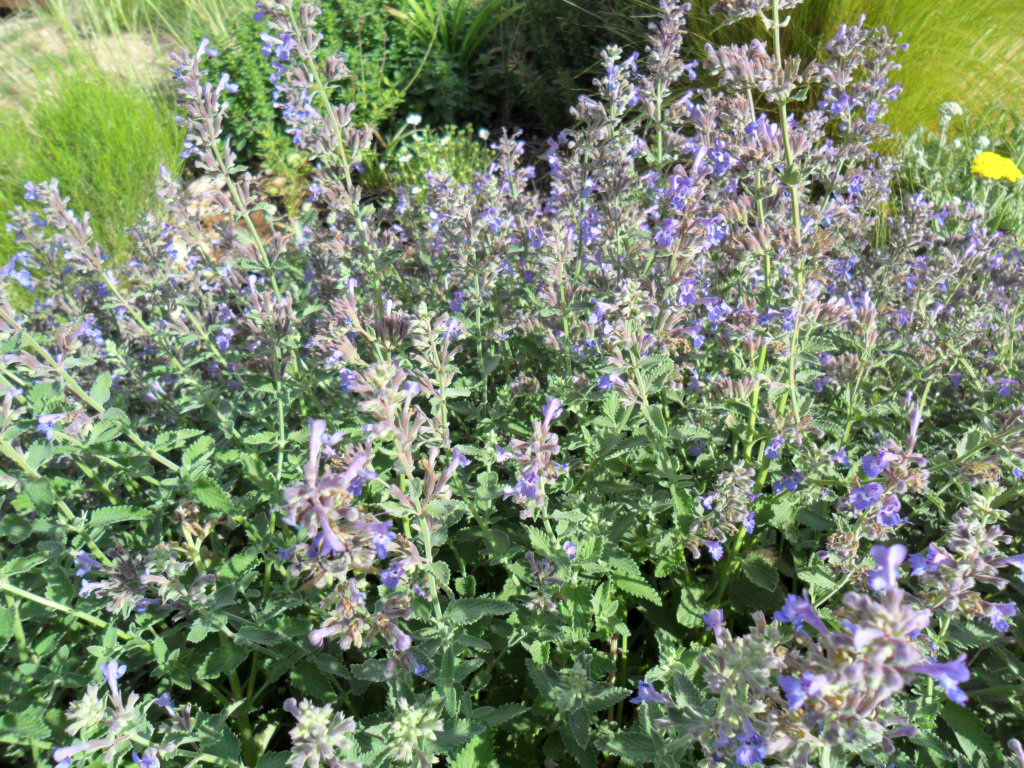
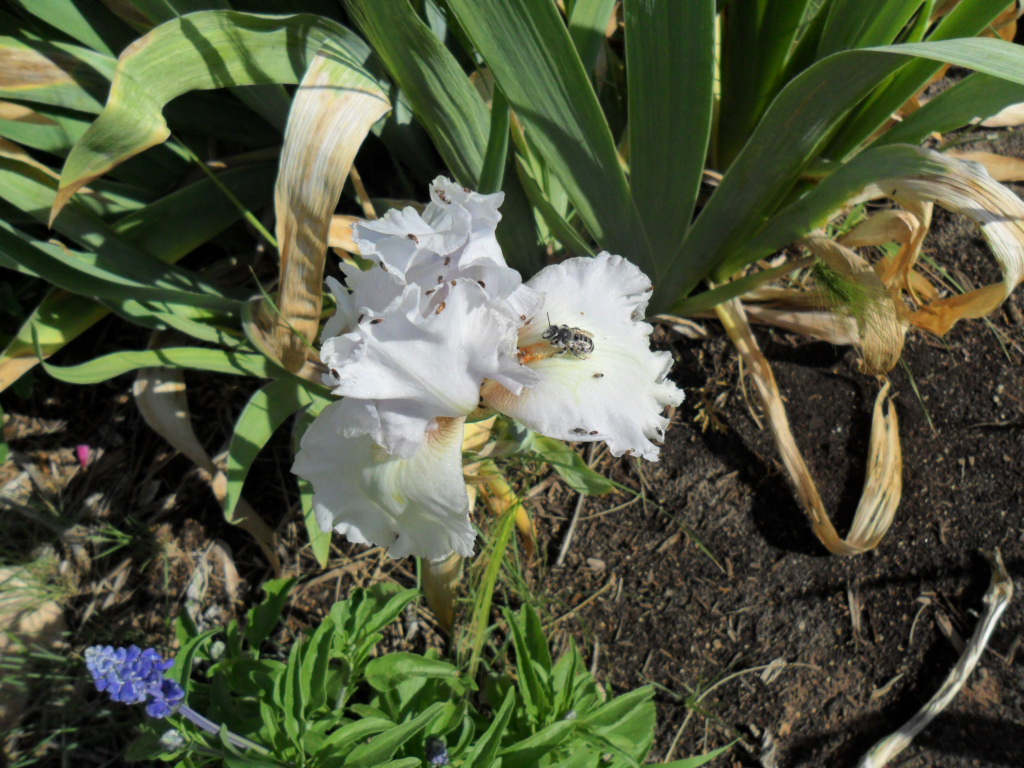
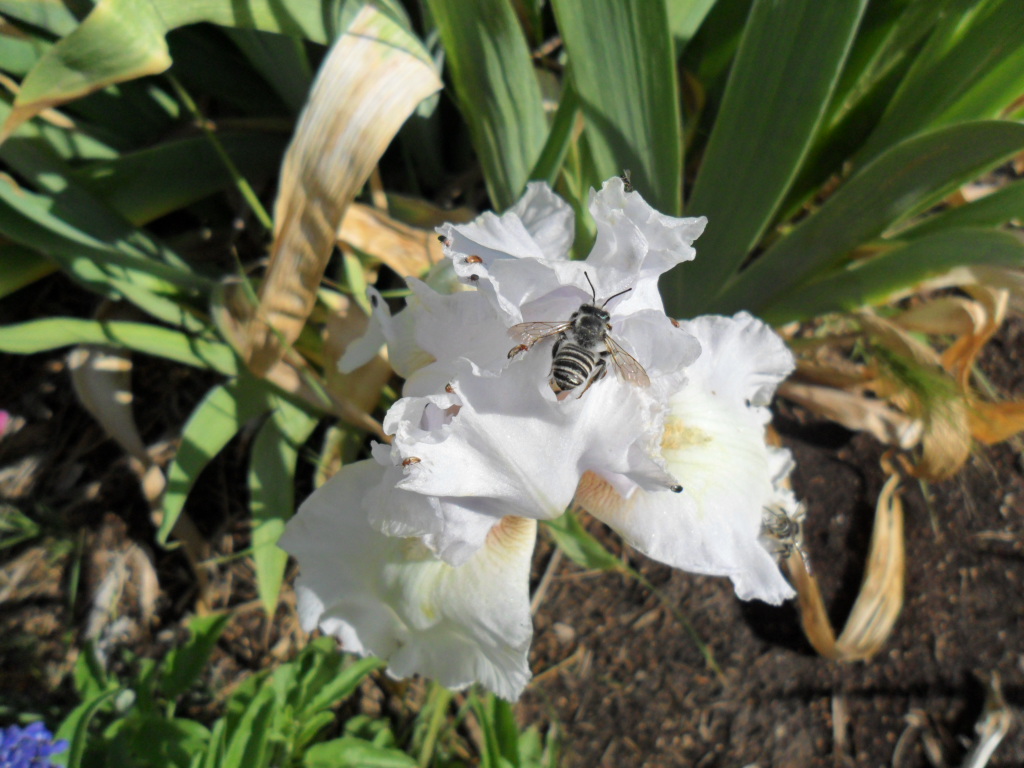
This morning I went out to my xeroscape garden–I have no lawn–and photographed bees.  At one catmint plant, so many busy bees made a clearly audible buzzing sound.  I witnessed at least four different kinds–species–of bees.  These SAM_1076

SAM_1081

SAM_1077

SAM_1078photographs illustrate at least several different types of flowers bees love.

Costa Rica 6: Adventures and Views


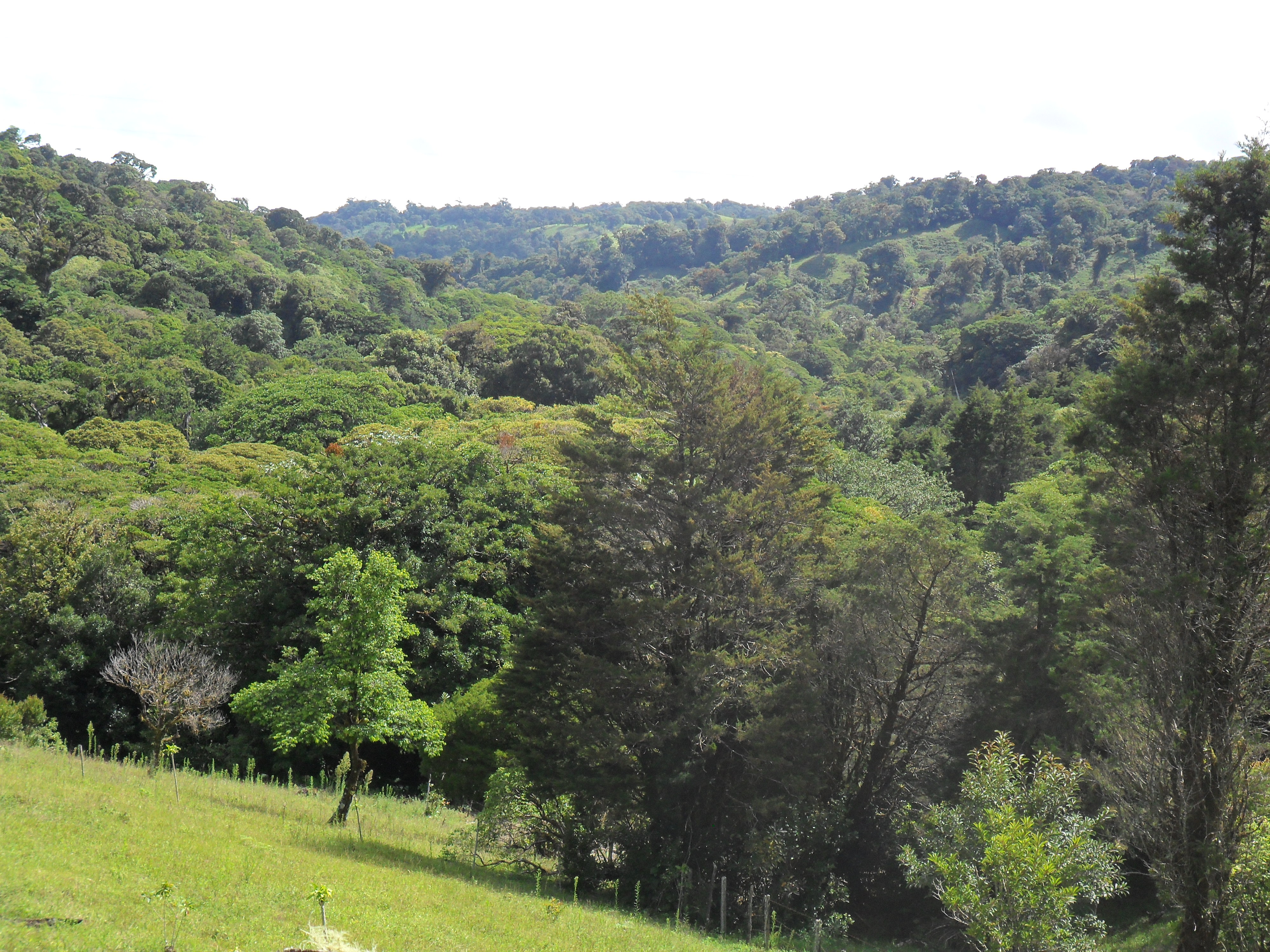
Without a doubt Costa Rica holds my vote for most photogenic and greenest country.  From the Caribbean and Pacific rain forests to the high mountain town of Monteverde, the words lush, exotic, verdant do not even begin to describe how incredibly rich the landscape is.  One of the first spectacular views lay before me across the parking lot from a combination restaurant and souvenir shop where we stopped for snacks.

I did not expect to see multiple mountain streams like in the Rockies, but it seemed we were crossing one nearly constantly.  This abundance of water explains their nearly total dependence on hydroelectric power with a little help from wind and thermal energy.

Several of my traveling companions decided to raft this river with class 4 rapids. Something told me I should not do this.  After flipping over several times, banged up and bruised, they decided to hike out.  In  the meantime, I experienced my own adventure, eating a raw turtle egg in salsa at a family restaurant on the top of a nearby mountain.

Beautiful mountain scenery seems endless.  I kept 00hing and awing.

This view shows the Bay of Nicoya in the distance from my hotel room in Monteverde.  The following photos all show views in the mountains near this little remote town.  There is only one road in and out and it is not paved and it is narrow.  The town was originally settled by Quakers from Canada who still believe a paved road will ruin the peaceful lifestyle.  Both the Quakers and the town are famous for their cheese which was served both plain and fried for breakfast.

This area provides both zip lining and horseback riding for tourists.  I elected to ride.  However, these horses did not seem well fed and certainly did not want to go very fast.  Although I saw a lot of horses in Costa Rica, these were by far the thinest.

The guy who lead us did not ride one of these.  He was riding a fancy, prancing, grey Paso Fino.

Look closely and you can see someone zip lining across the forested canyon hundreds of feet below.

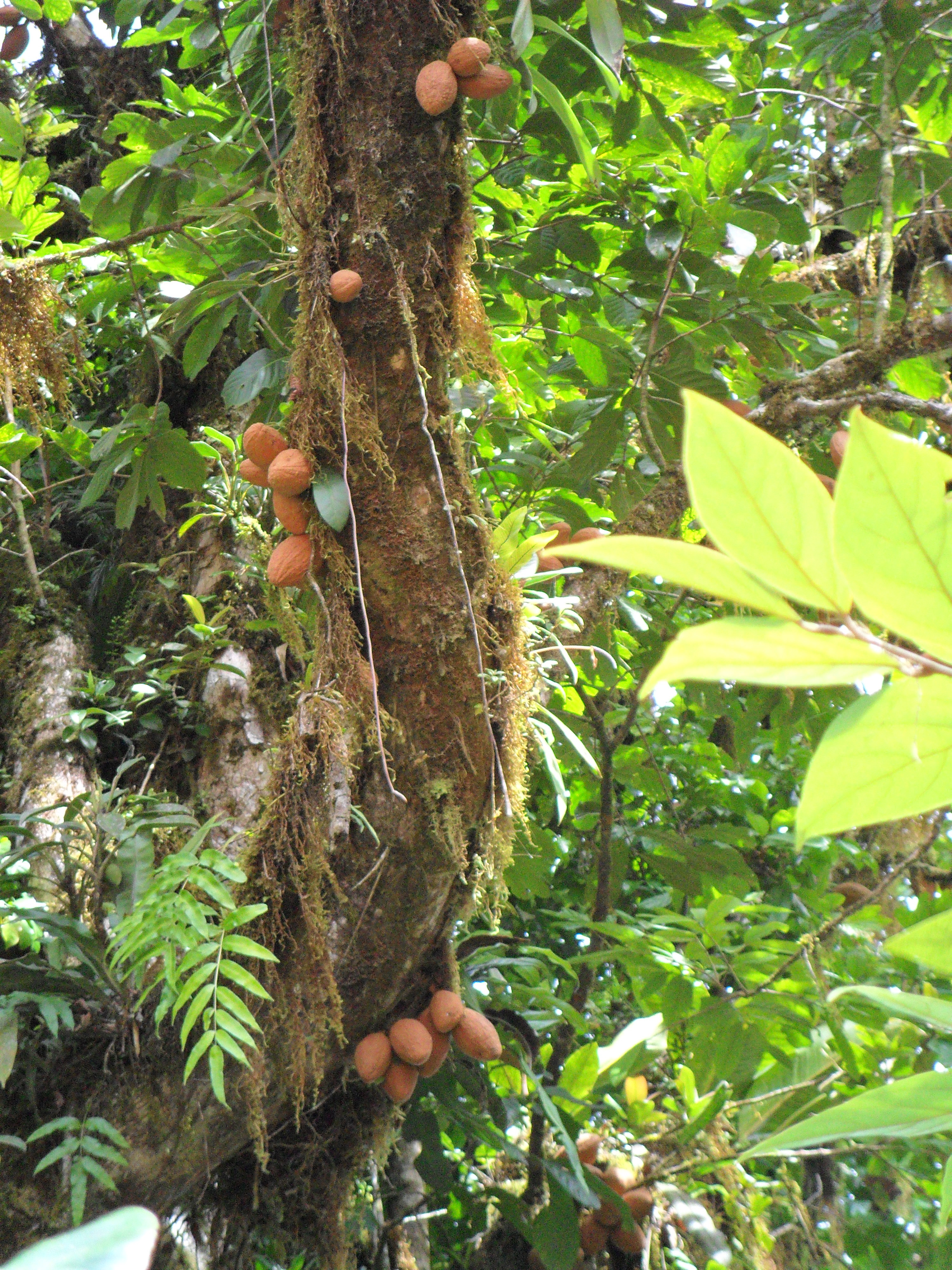
When I asked about this tree, I was told it is related to cacao, but not eaten, not by humans anyway.

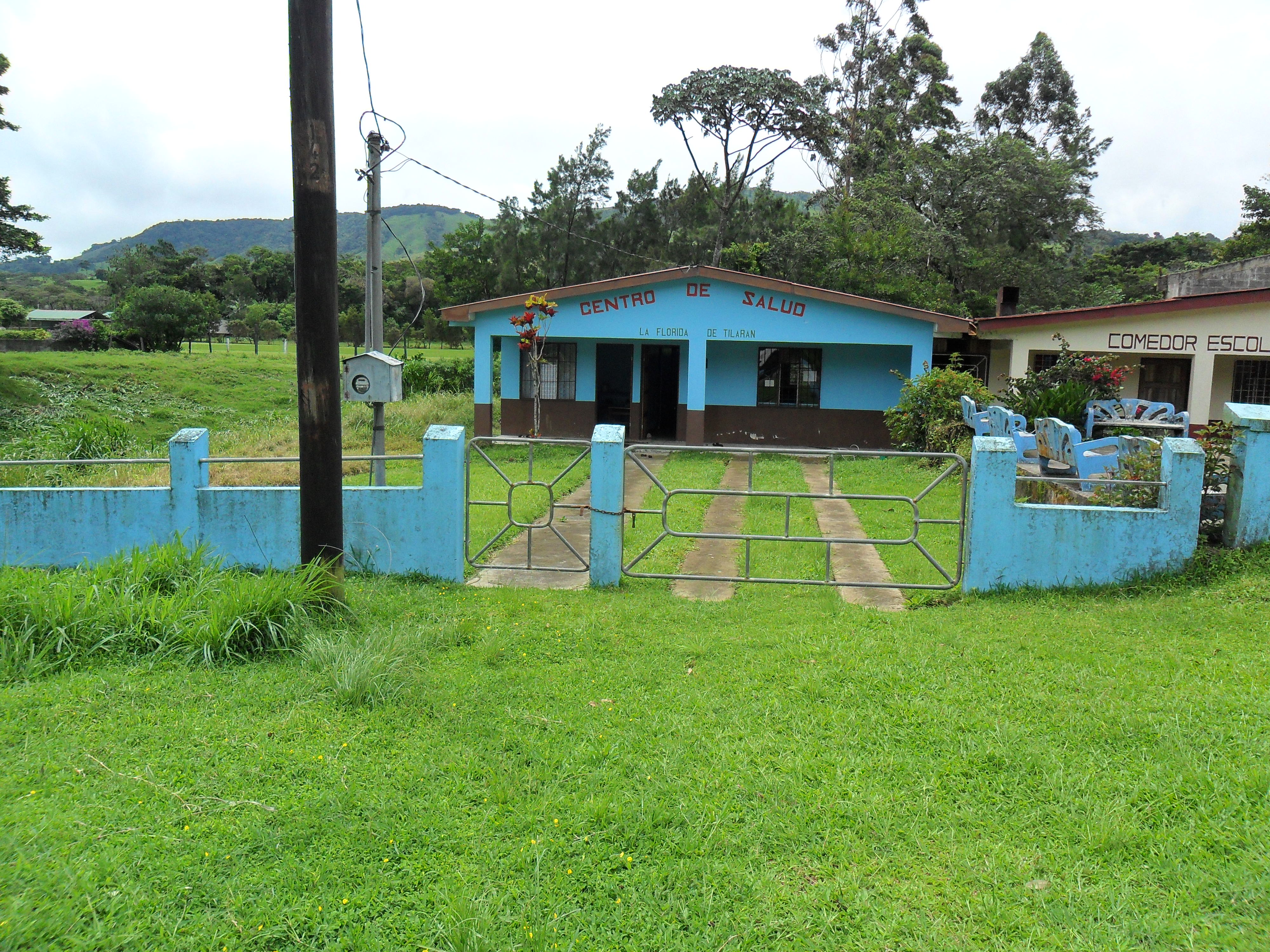
We traveled down the mountain on another dirt road to visit this elementary school.  It housed grades 1-6 with one teacher who is also the principal.  The literacy rate in Costa Rica is 98.5.

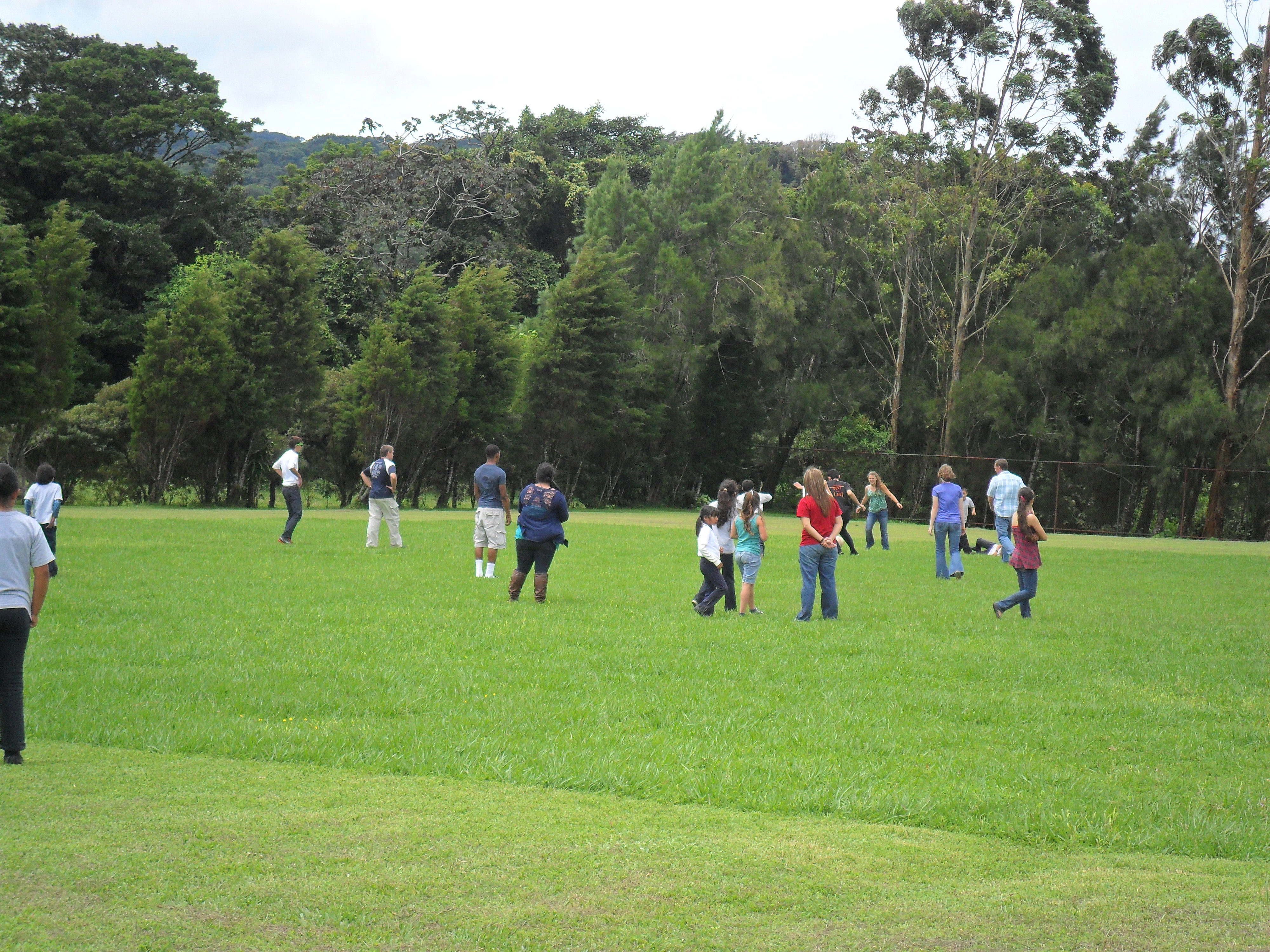
Playing soccer with the students.

A port on the Pacific on the way to the surfing town of Jaco.  Costa Rica exports many agricultural products from both its Pacific and Caribbean ports.  This includes bananas, pineapples, hearts of palms, and many tropical flowers.

While many beaches remain unsafe for swimming due to a strong undertow, the beaches at Manuel Antonio National Park are perfect.

To get into Manuel Antonio you have to walk and no parking exists really close.  Hiking out we crossed an area where the water rushed around our knees and the sign said, “No Swimming, Crocodiles”.

As a farmer, I like to look at and photograph crops.  With all the rain and heat, Costa Rica is the perfect climate for many tropical fruits and rice.  On the way back from Manuel Antonio we passed miles of rice fields and Aftican palms which produce palm oil.

Rice.

Coffee, the main export of Costa Rica.  In the highlands, coffee grows everywhere even along the berms in places so steep I wondered how the person picking the beans did not fall over.  Of course, I wondered the same thing about the dairy cattle grazing on the mountain slopes.

We did stop in Sarchi, the town famous for its furniture and oxcart industry.  Oxcarts remain the national symbol of Costa Rica.  Because of the mountainous terrain, when Costa Rican coffee initially became famous and its most successful crop, the only way to get the coffee to the coasts for export was to use oxcarts.

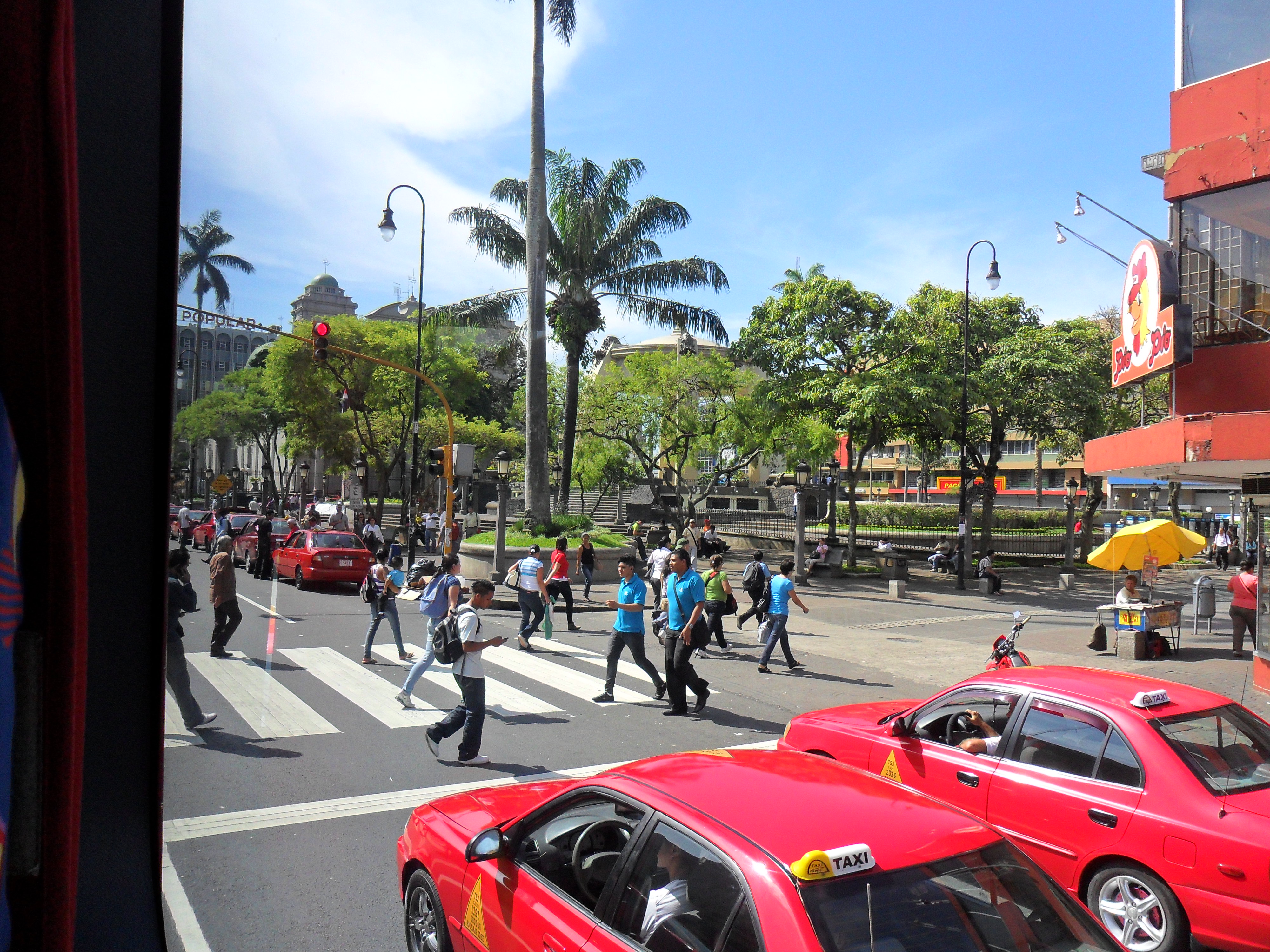
We spent very little time in cities.  However, as we left San Jose near the end of the trip and headed for the Caribbean side, I took some hurried photographs out the window.

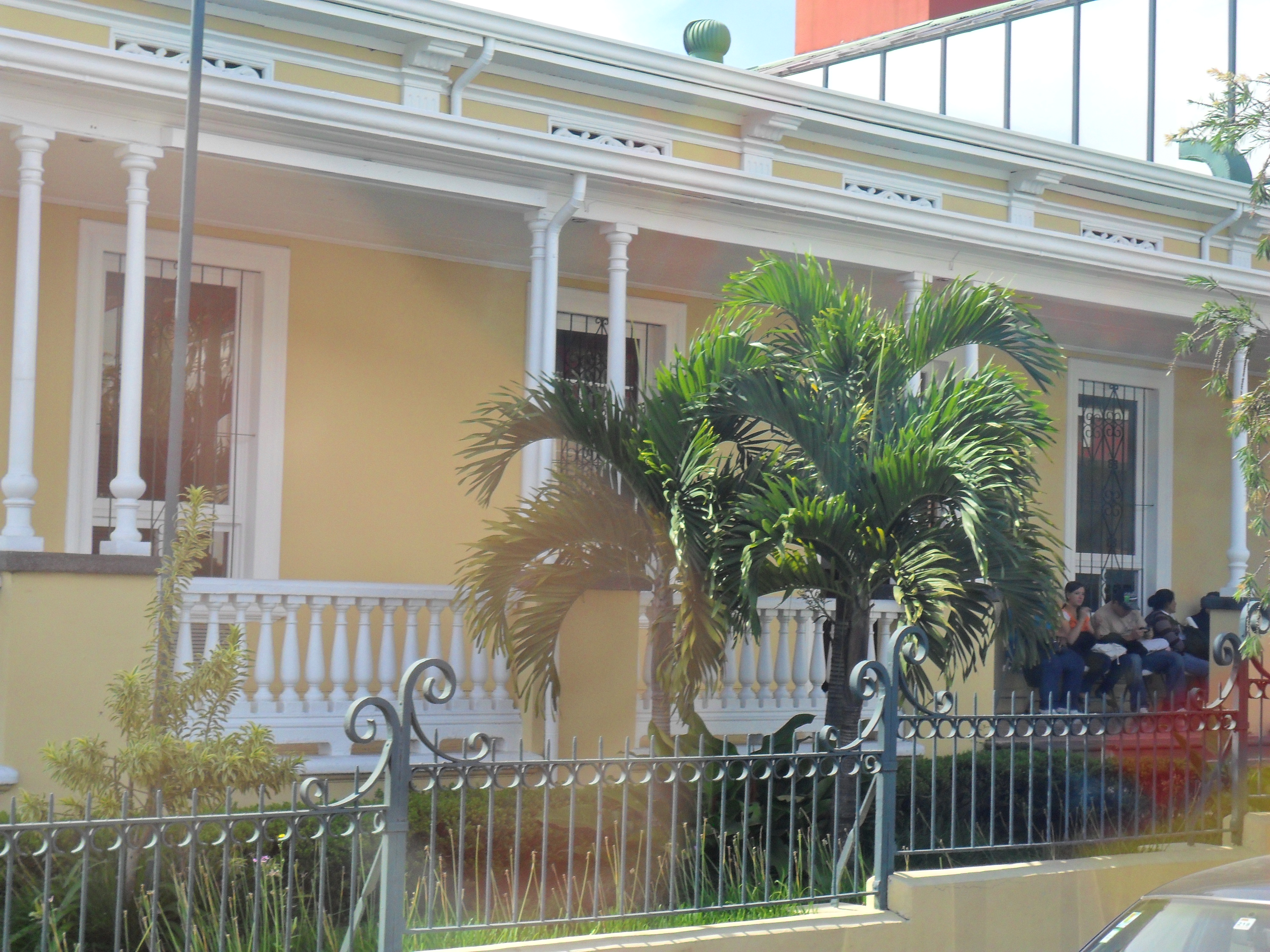
My first and last hotel window view in San Jose included these stately coconut palms.

PURA VIDA

Costa Rica: 4, Flora


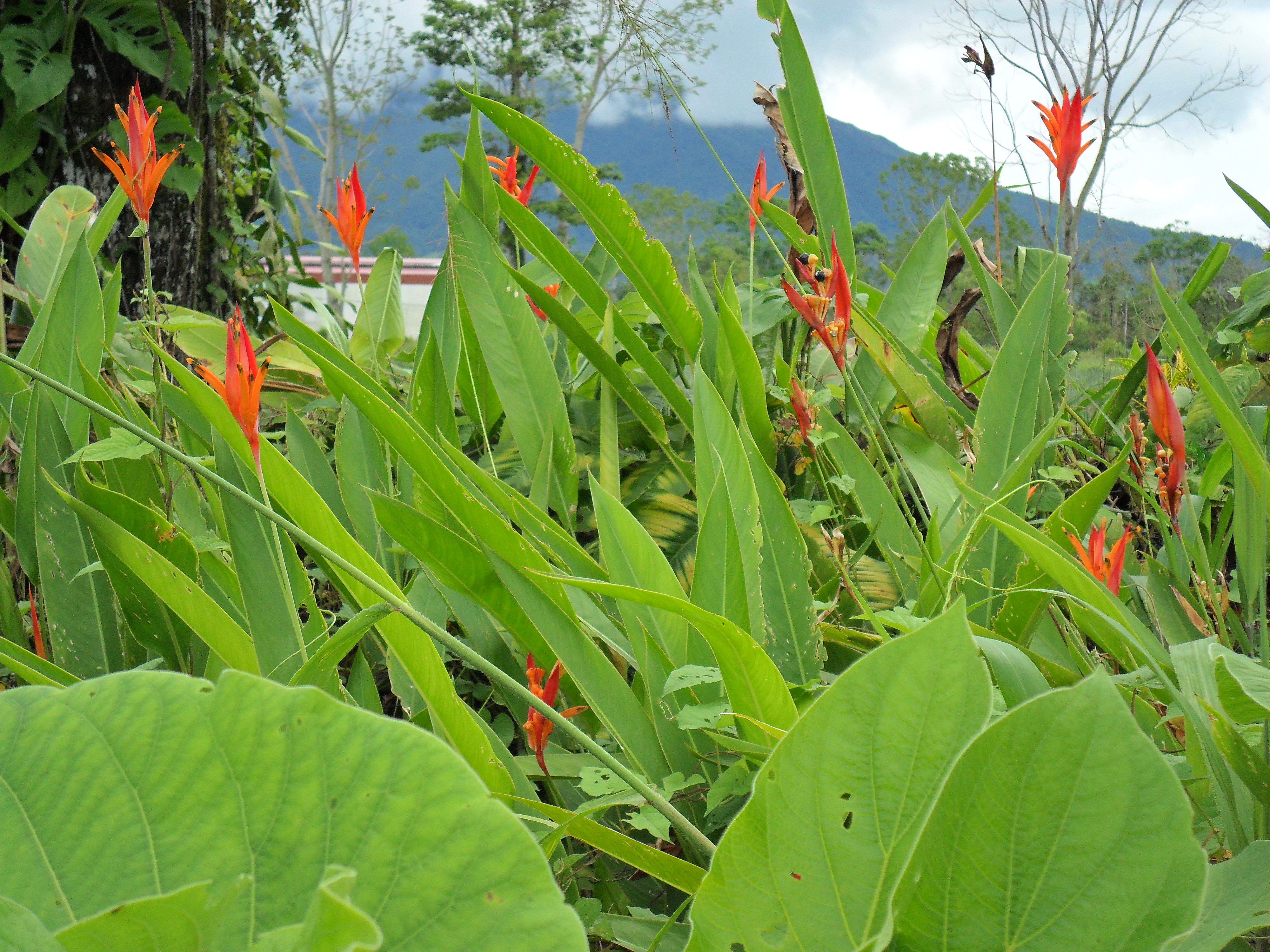
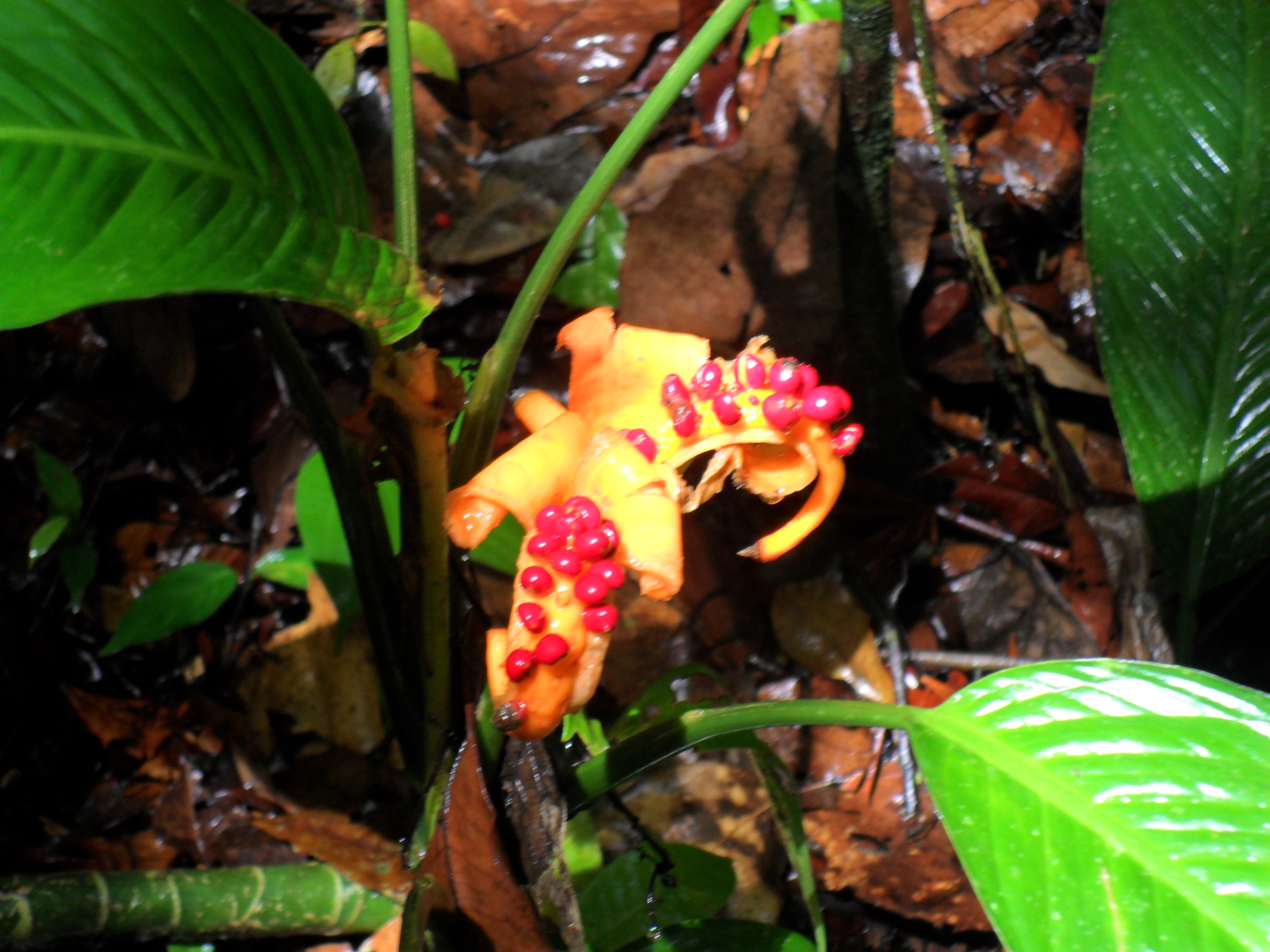
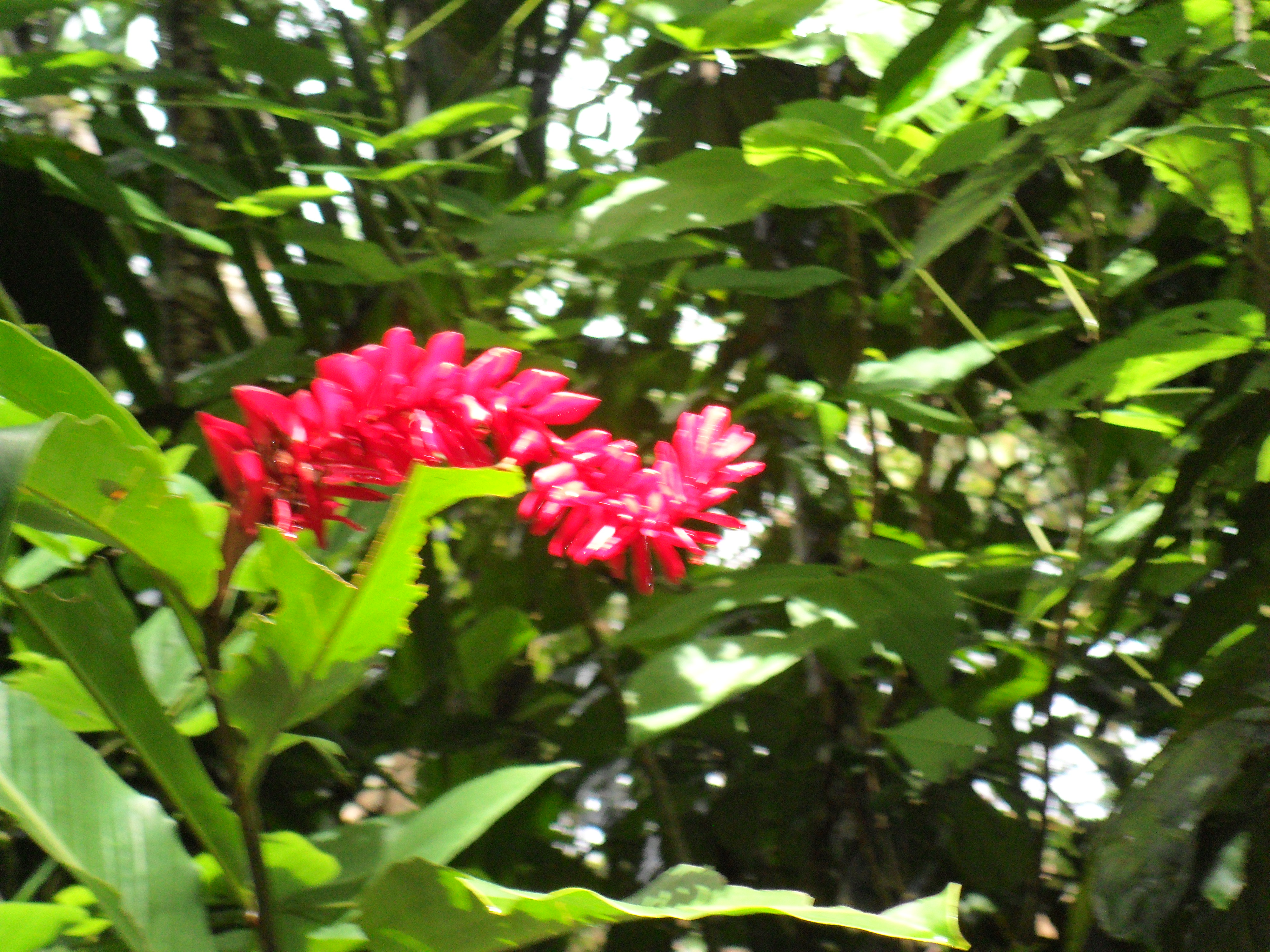
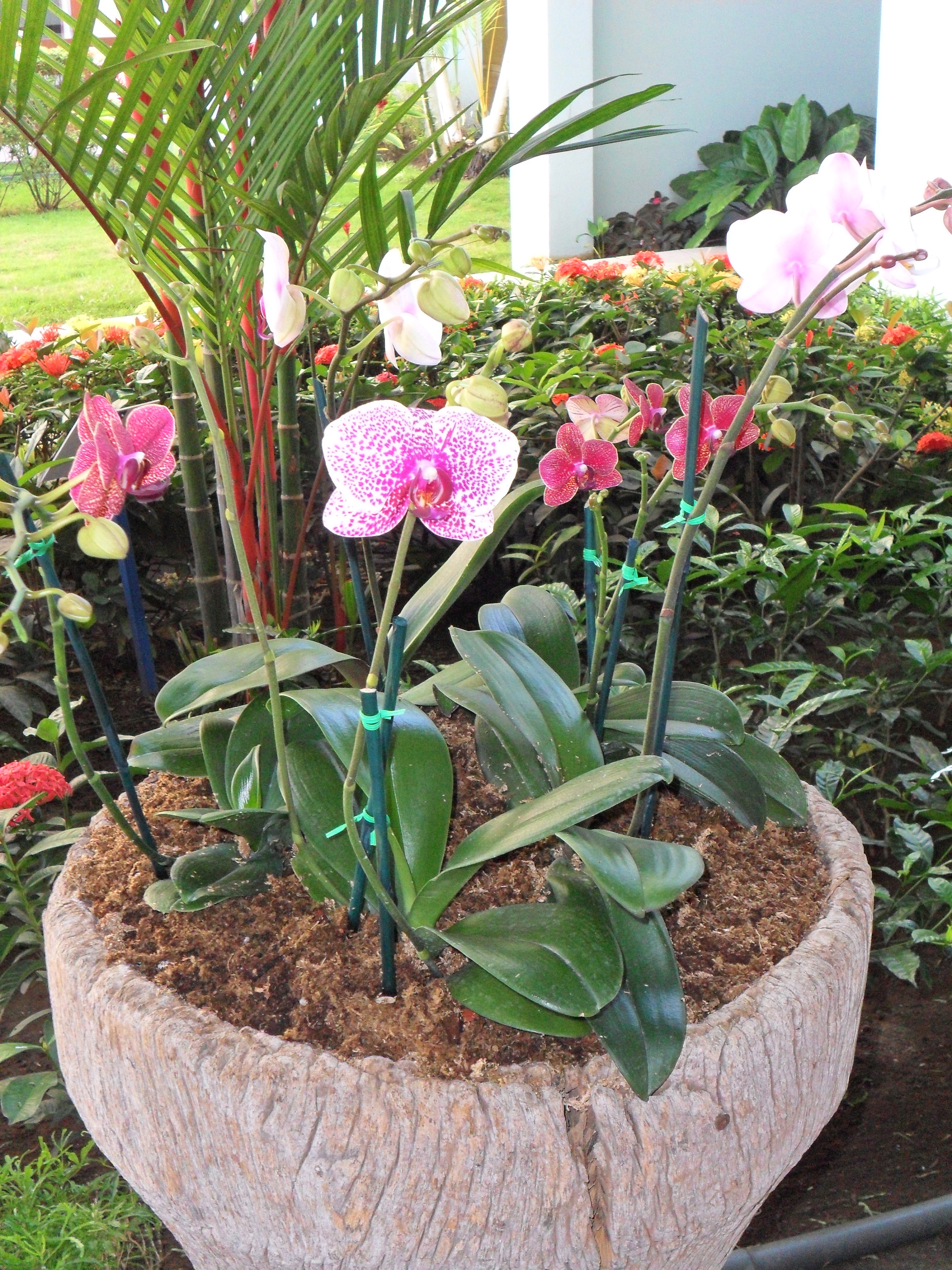
For a person who loves flowers (and I do), Costa Rica exemplifies a lush, green heaven.  This intense green makes the flowers show up more than they would in a duller landscape.  Whether in the high mountains near Monteverde or down in the coastal lowland jungles, flowers abound.  So many flowers everywhere made me want to photograph them all, but there are too many; I photographed a few.

My friend, Anabel McMillen, the professional photographer, just about went nuts there were so many spectacular things to photograph.  Last count I think she hit over 1000 photographs.

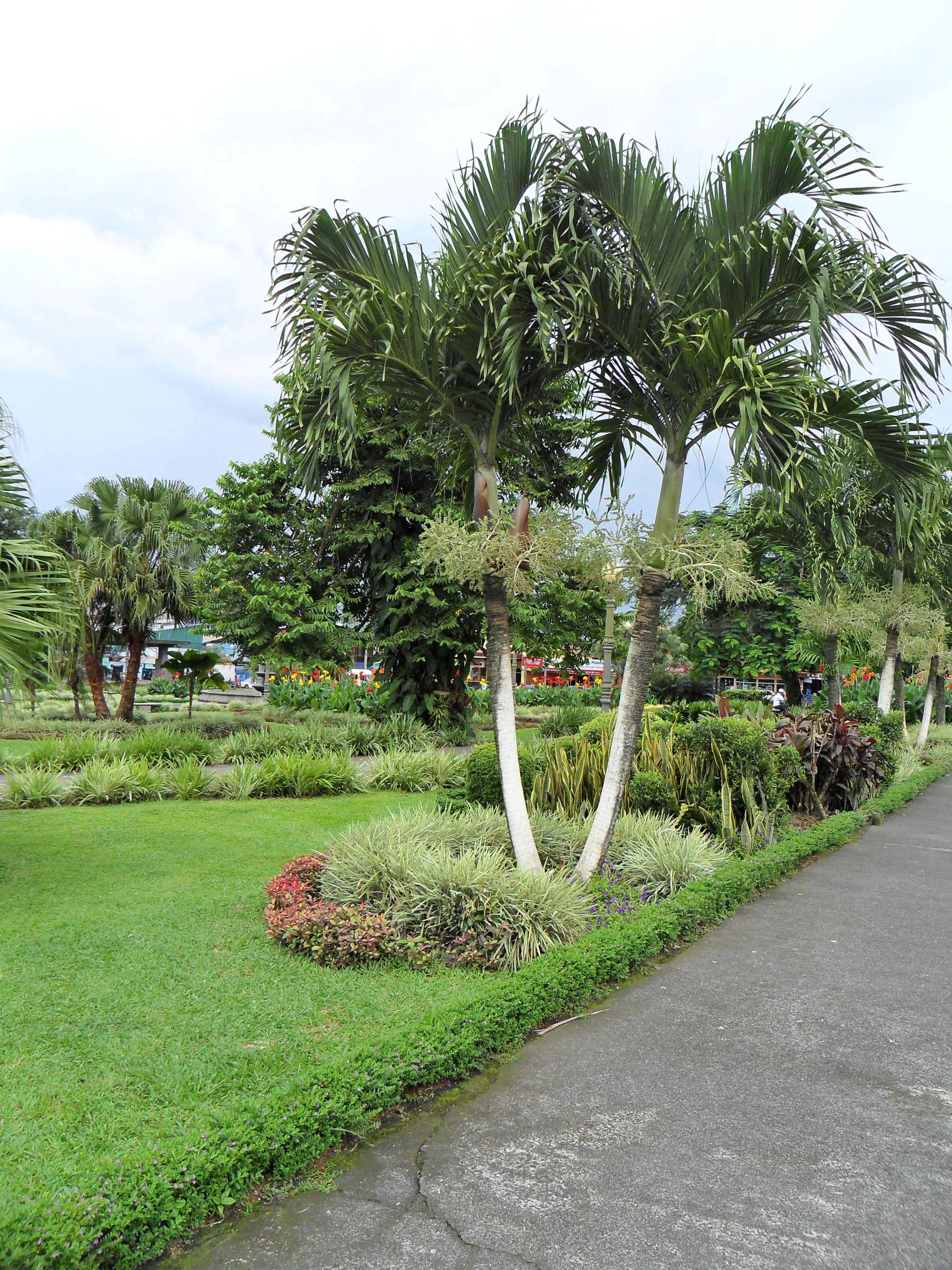
While wild flowers grow everywhere, the people also take great pride in both their personal and public gardens.  Even at the simplest country house, flowers and other plants could be found growing in profusion.  Almost all towns, like La Fortuna in the photo above and the one below near Arenal Volcano, create a public square with a church and gardens.

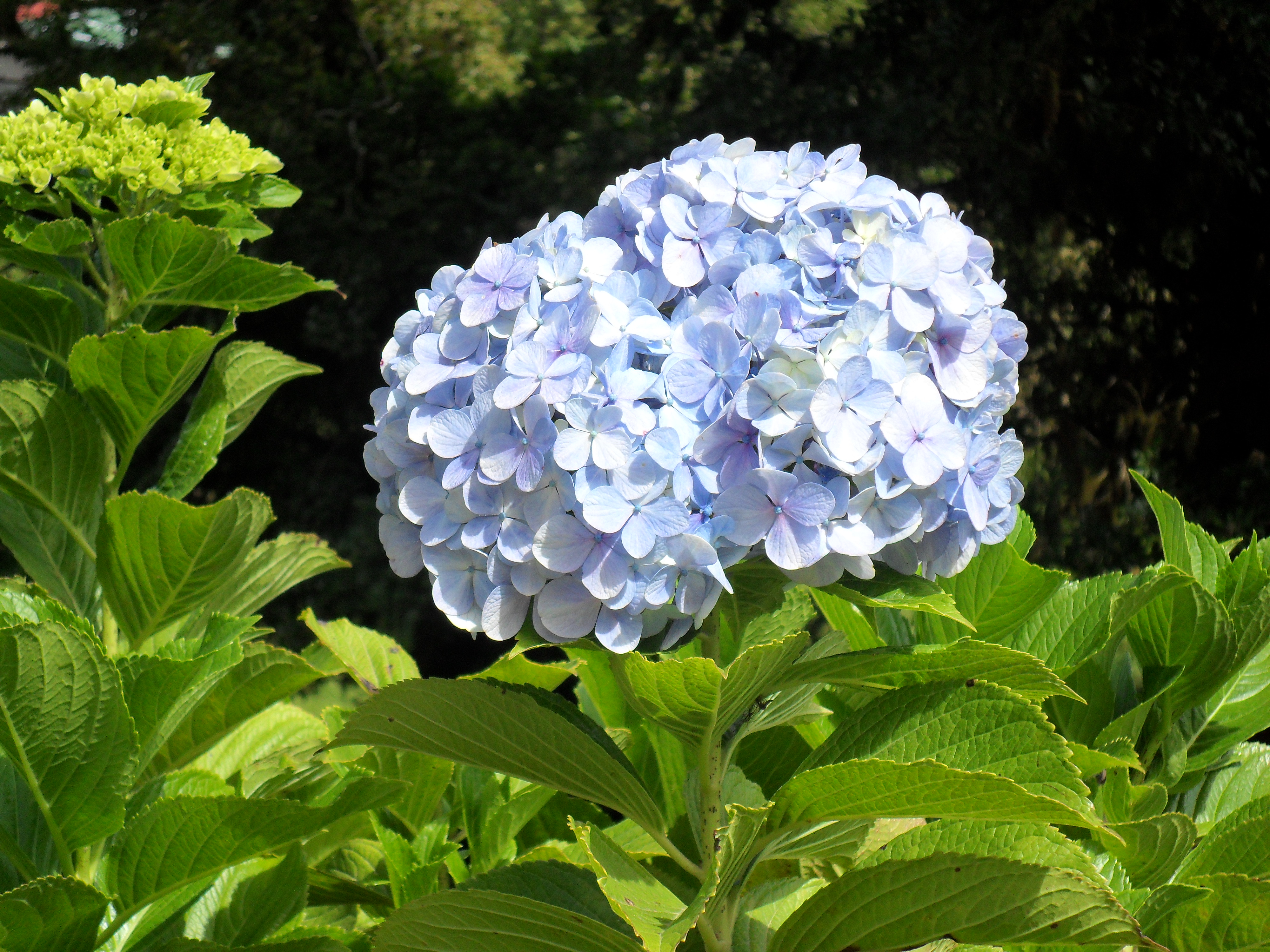
Hydrangeas like this one above grow along the roads everywhere near Monteverde.

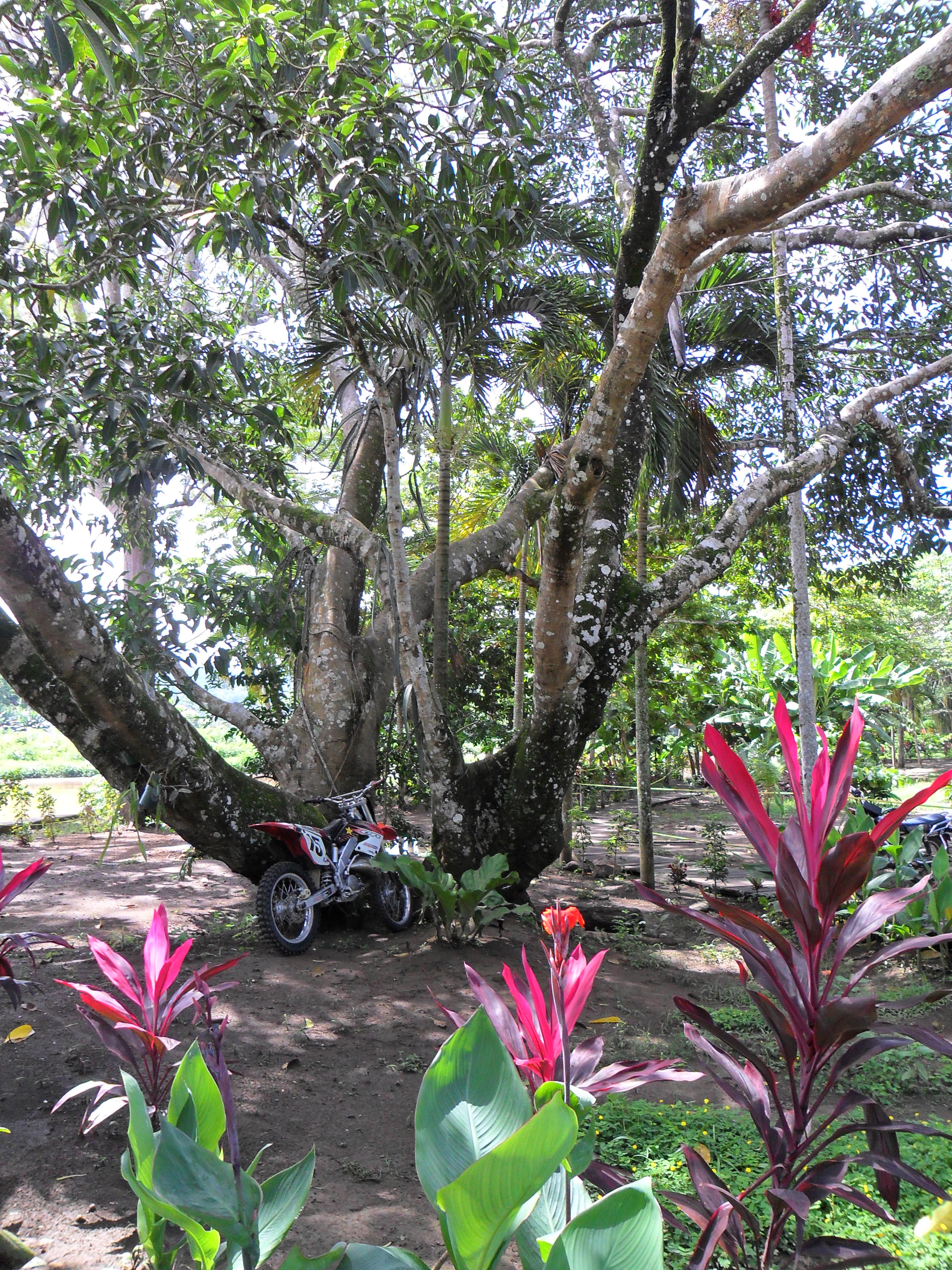
Not only are the flowers frequently much larger than the same flowers grown here, but in the lowlands, in particular, many of the trees seem huge.  Costa Rica also cultivates flowers for export.  Net covered fields of ferns grow all over the steep mountain slopes.

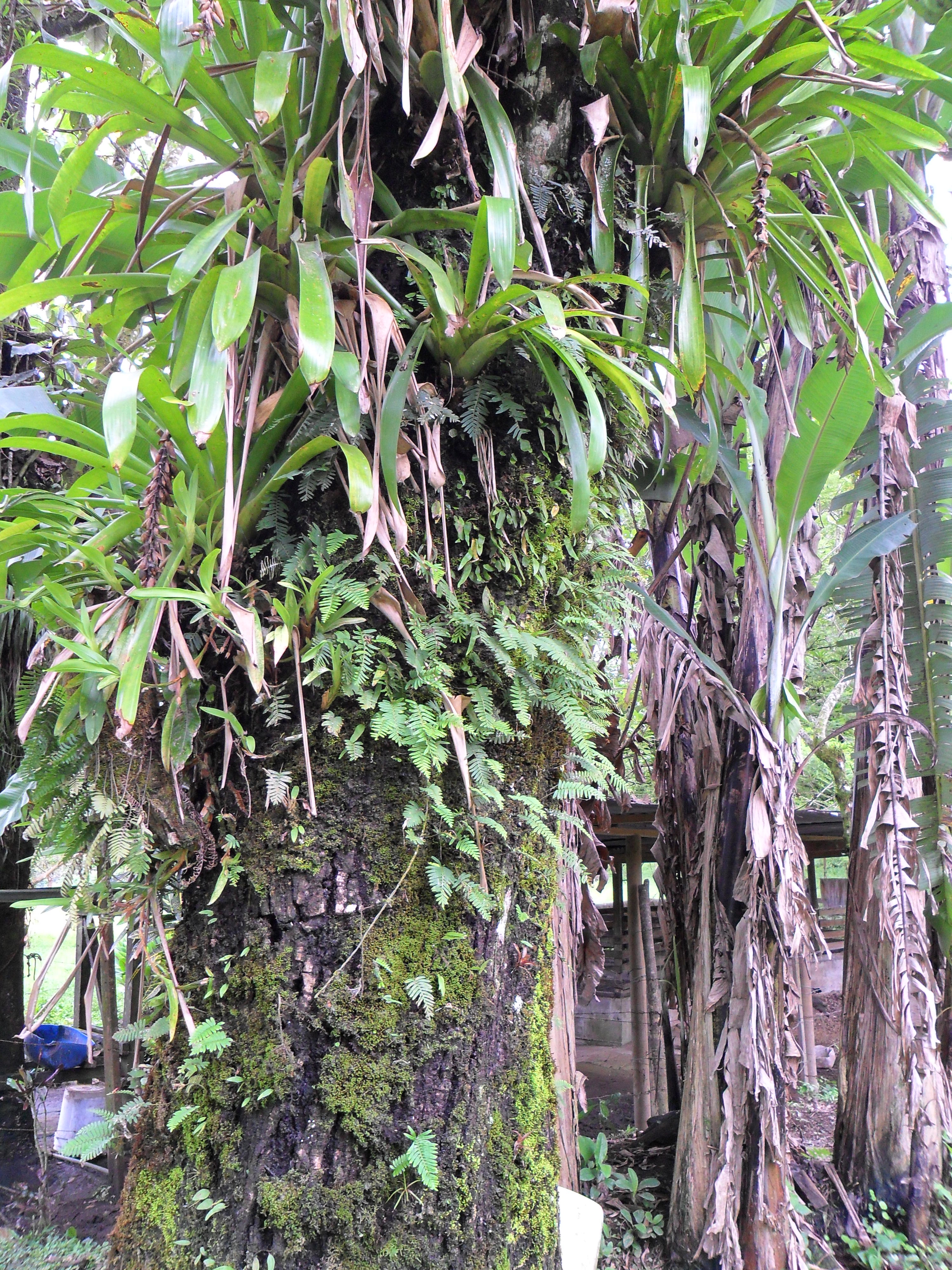
In the highlands near Monteverde more than one hundred species of plants can be found growing on the surface of one tree as shown in the photos below.

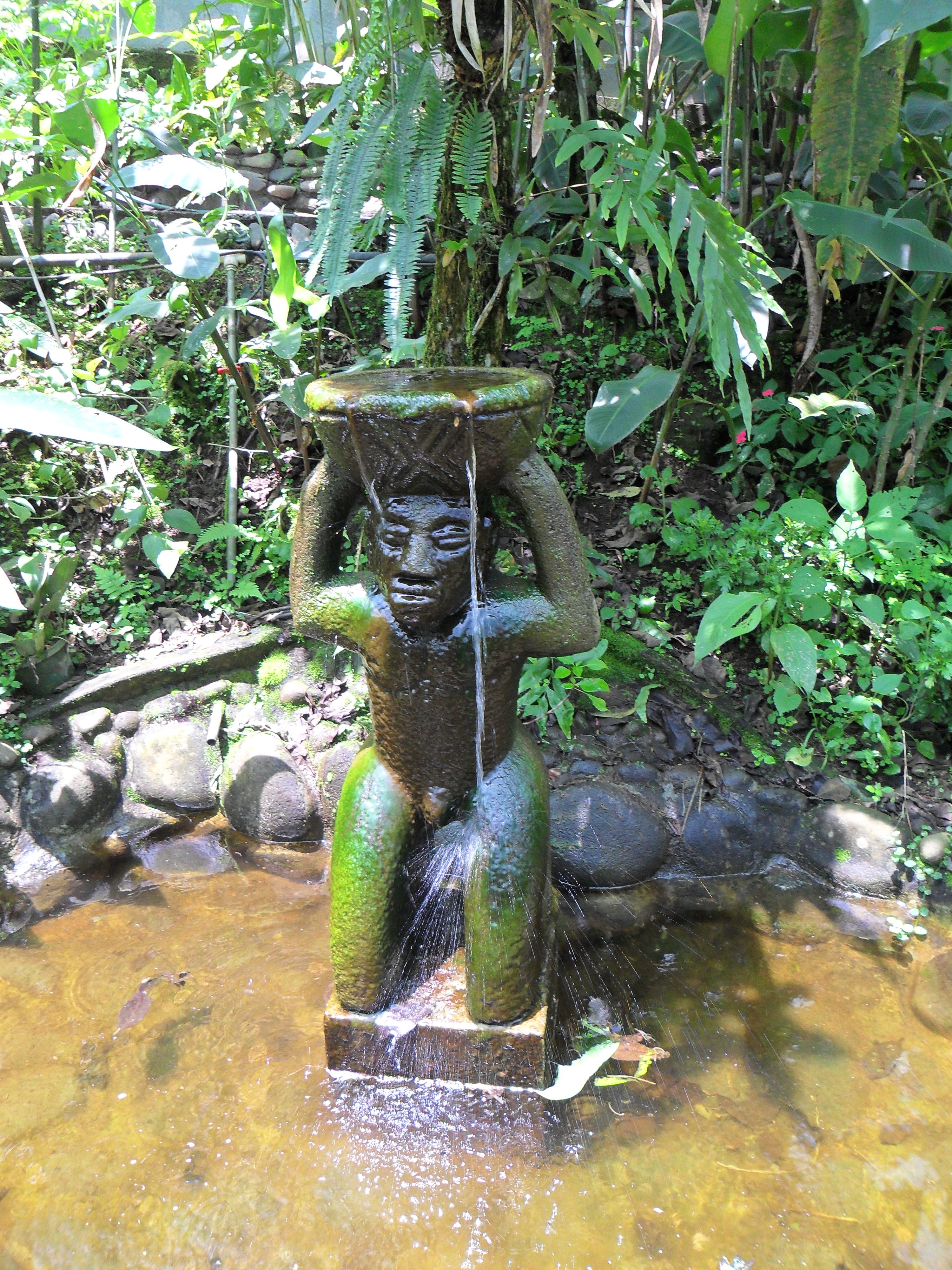
Twice we stopped at a place called El Jardin, once on the way to Monteverde and another on the way back to San Jose from the Pacific Coast town of Jaco.  In addition to their beautifully landscaped outdoor gardens, they possessed a small greenhouse filled with butterflies and a sculpture water fountain in an indigenous style seen throughout the country.

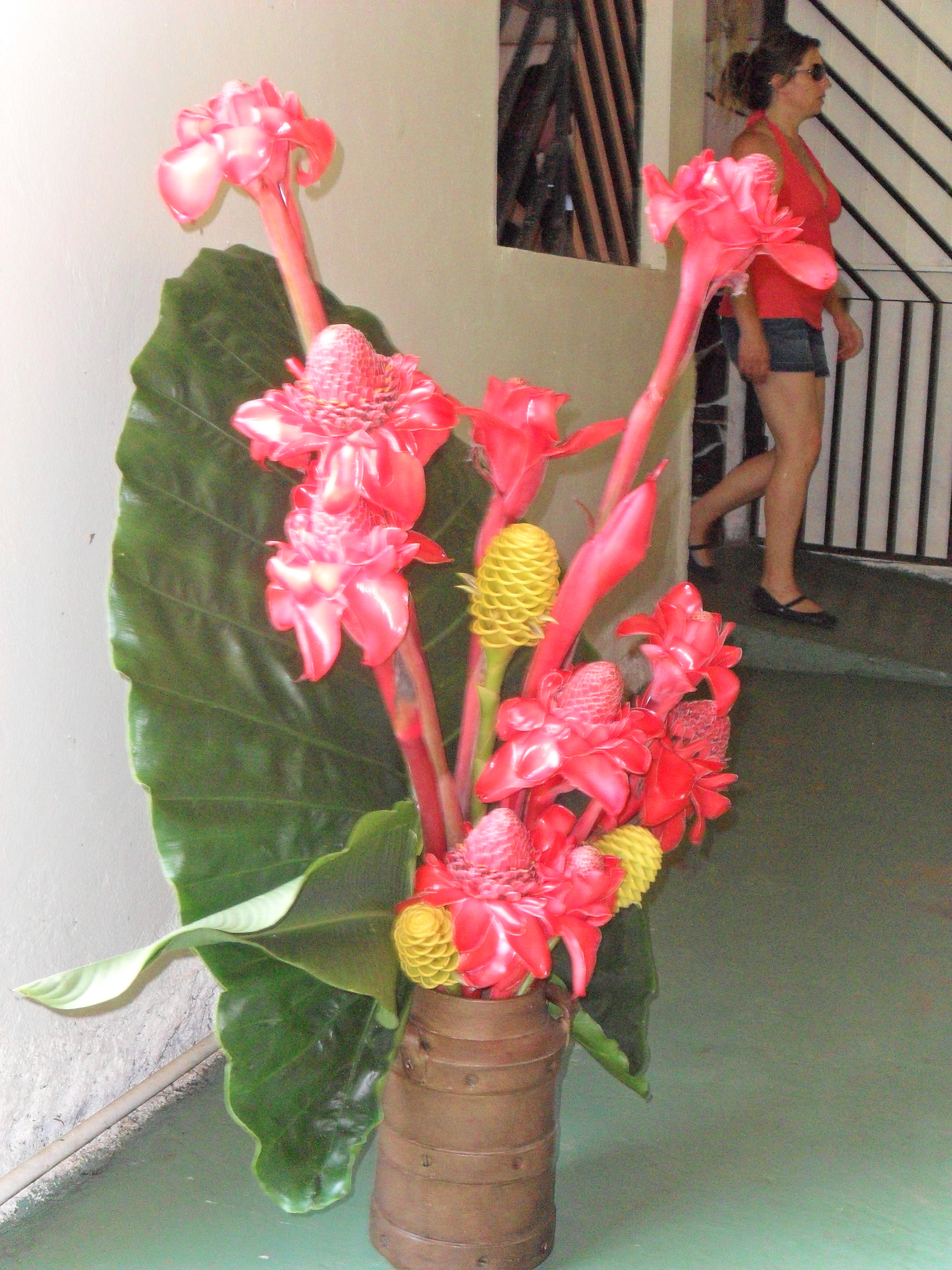
As I looked at the following bouquet where we ate lunch near the Sarapiqui River on the Caribbean side, I touched it because I remained unsure as to whether it could be real.  It was.

PURA VIDA!!

Writing on the Rim


The canyon edge looms out my bedroom windows,

pale adobe, stark.

Fall to death or serious injury!

I will not fall; I love living on the edge.

Rain brings a one hundred foot deluge,

a roar of water, cascading, screaming.

Someone said my house is pink; it is not pink!

It is the color of the canyon, the worldwide color,

Moroccan, pueblo, Saudi, Mali, Navaho, Timbuktu,

Desert, alive and lovely.

Three bucks watch me through my bedroom windows.

They see me move; they stare.

Isabella stands rigid, watching.

I kneel to her level; follow her eyes.

The bobcat casually climbs the canyon wall, impervious.

He marks the cedar tree, walks a deer path, disappears.

He is a secret, rarely seen.

The huge hoot owl’s voice echoes down the canyon,

drifting through my dreams.

A young road runner calls, scratchy,

running across the patio–on the edge.

In the spring the mocking bird sings all night,

“This is my territory.”

I sing all year, full of joy.

I live in beauty on the rim.

I decided to reblog this because it is the season for giving thanks, and I am eternally grateful for the privilege of living in such a beautiful place.  Yesterday, my family and I took a hike here, saw deer, lovely colorful rocks, bunnies, and native plants the names of which I do not know.  I live in beauty on the rim of wonder!!  I feel blessed!!