Memorial Day–Memories


While I was growing up, my mom grew peonies by the side of the vegetable garden.  Red, pink, white, huge spectacular blooms that always arrived around this time of year just in time for Memorial Day.  We would pick many, put them in mason jars and take them to my father’s and her family’s cemetery plots.  She has created a metal apparatus to hold them so the wind would not blow them over.  We took water to fill the jars.  We did this every Memorial Day always.

No one lives close any more.  There is no one left to take flowers there.

My mother’s family members are buried in the Mound City, Missouri Cemetery.

SAM_1160

My mother’s parents’ gravestone.  She was Nellie Narcissus Kaiser before she married rather late for back then–in her late twenties.  I never knew my grandfather.  He was so much older than she that even though he lived to be 80, he died long before I was born. My great-grandfather Kaiser was born in Switzerland and brought here as a child.

SAM_1159

The gravestone of my mother’s grandmother.  I know she lived with my grandmother and grandfather a lot of the time from family photos, but I also know that she died in San Diego.  No one ever told me how she got there or why.

SAM_1161

The gravestone of Aunt Julia, Mother’s sister.  She never married, loved fancy antiques and china.  I frequently use some of what she left me.  She came to see me rather often and we visited antique stores when she visited.  To say she was an independent woman is an understatement.

SAM_1090

My parents’ gravestone is on the right and Dad’s parents’ on the left–in the cemetery in Fillmore, Missouri.  My grandfather, Pleasant Lightle, had walked from Illinois to Missouri as a child according to family stories.  My parents met dancing. I always smile when I see the peonies planted at their graves.

SAM_1094

This is the gravestone of my great-grandfather, Dad’s mother’s father, who came to the US from Switzerland when he was 18.  According to my dad, he did not want to be conscripted into the Swiss army because at that time Swiss soldiers were being hired out as mercenaries.  His mother stood on the roof of their house waving until she could see him no longer.  They never saw each other again.  I grew up on the land he homesteaded in Andrew County, Missouri.  Andrew County is filled with descendants of immigrants who came from Switzerland.

SAM_1097

The old carriage house near the house where Dad spent the first ten years or so of his 90 years.  It is all that is left standing.

SAM_1098

The house where Dad lived the last 80 years of his life and where I grew up.
SAM_1167

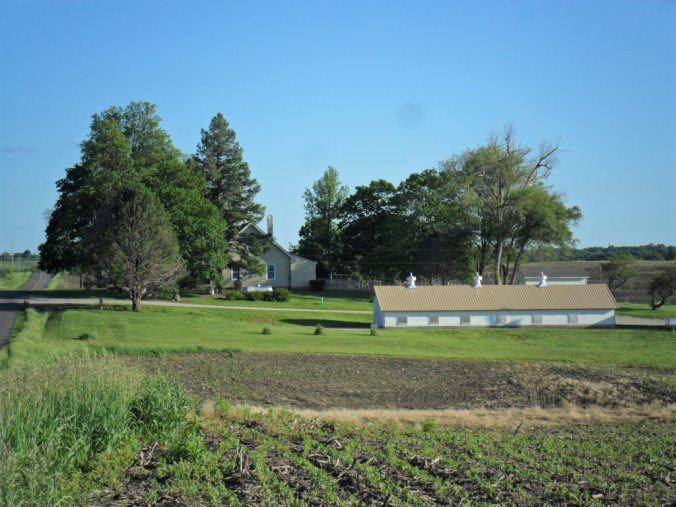
When I was a child, the building in the foreground was used at various times as a farrowing house, once for Rhode Island Red chickens, and to store various farm supplies.  When I went to visit Dad after Mom died and we were at the cemetery on Memorial Day, a man came up to Dad and asked if he was Doyle Lightle.  They started chatting and I learned that when Dad first built it during Prohibition times, he held dances there.  The sheriff would send deputies to watch and make sure no one was drinking.  I had lived there and visited there for decades and had never heard this story.
SAM_1134

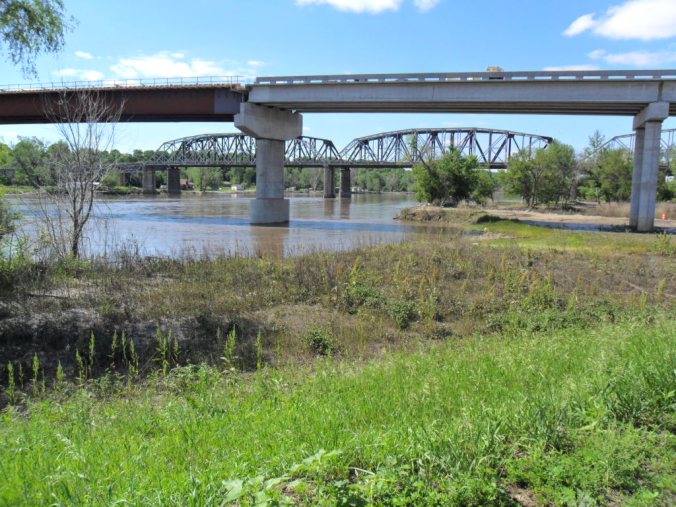
I took this photo standing on the levee next to the Missouri River looking toward the Rulo, Nebraska bridge.  This is the land my mother’s family owned.  On some Sundays as a treat, we would cross the bridge to a restaurant on the Nebraska side.  It was famous for its fried catfish and carp.

SAM_1150

This is country with lots of water and trees.  This picture was taken near Squaw Creek National Wildlife Refuge.  Several times in my life, I have seen flooding from the bluffs on the Missouri side all the way to the bluffs on the Kansas and Nebraska side of the river.  When I was a child, my uncle and aunt lived on the river farm until a flood reached half way up the second story of their house.  They gave up and moved to town.
SAM_1145

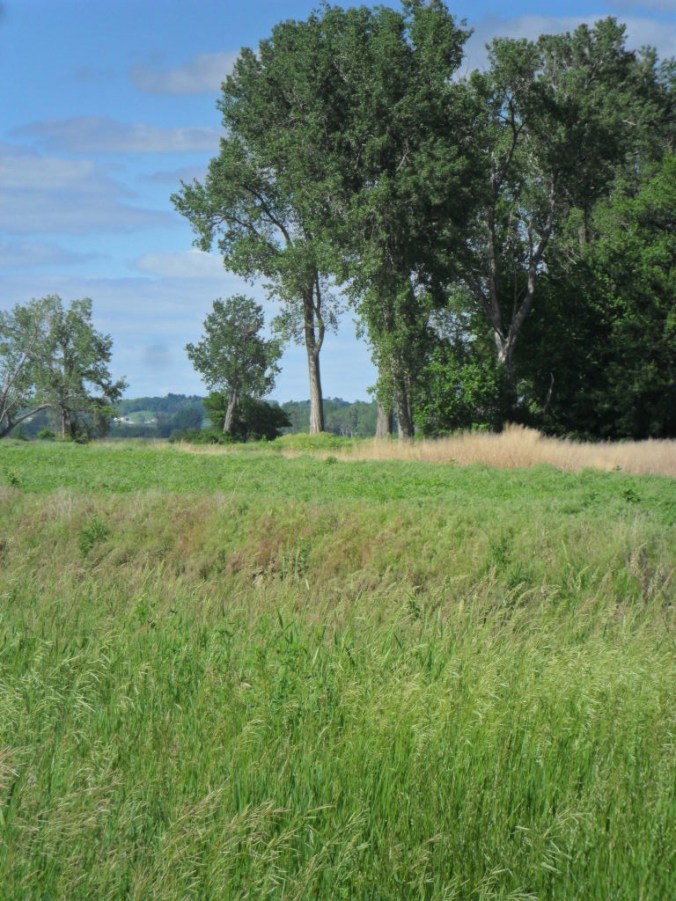
When I was a child, there were trees like this in lots of places on Mom’s family’s farm.  About this time of year we would hunt for morels and often pick a bushel basket full.  Mom dipped them in egg and cornmeal, then fried them.  We practically lived on them for week or two.  I was shocked as an adult to go into a fancy market and discover that dried morels were 95 dollars a pound.


A Week of Gratitude (cont.)


Each day I made a list of things for which I feel grateful, sometimes more, sometimes less.  Tuesday’s list includes:

-Endless sunsets streaked with orange, vermillion, purple, lavender and colors with no name.

-An ability to sing the world’s greatest chorale music with a group of experienced singers who even occasionally sings with the symphony.

Wednesday’s list includes:

-Books I love.  My favorite is “Storyteller” by Leslie Marmon Silko.  I must have read her story “Yellow Woman” at least 50 times.

-The ability to write myself.  I entered a flash memoir contest on Wednesday.

Today’s list includes:

-A short but fun experience with my grandson whom I picked up at school.  He told me all about what he is learning in science class–he is in seventh grade.  We discussed genetics and Punnett Squares.  I recently explained them to some high school biology students.

-Driving my tractor, grading the steep drive down to my cliffside house.  I grew up on a farm and love driving the tractor.

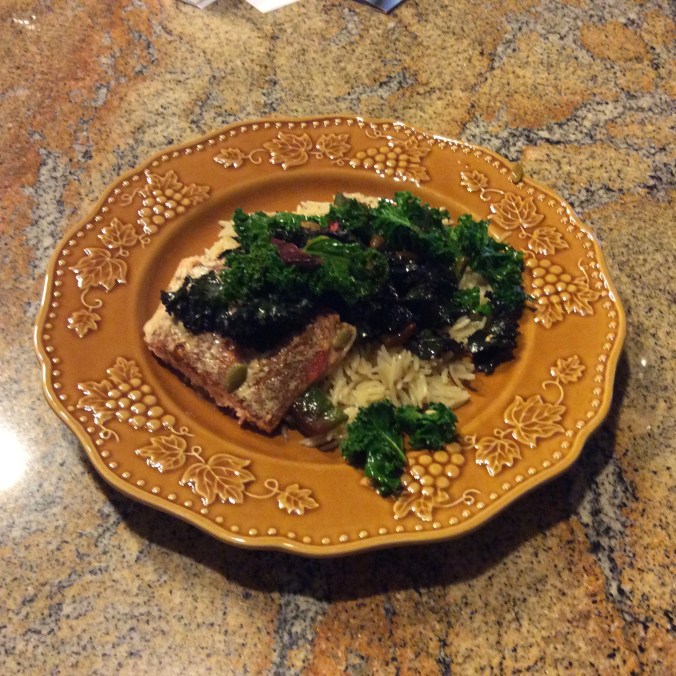
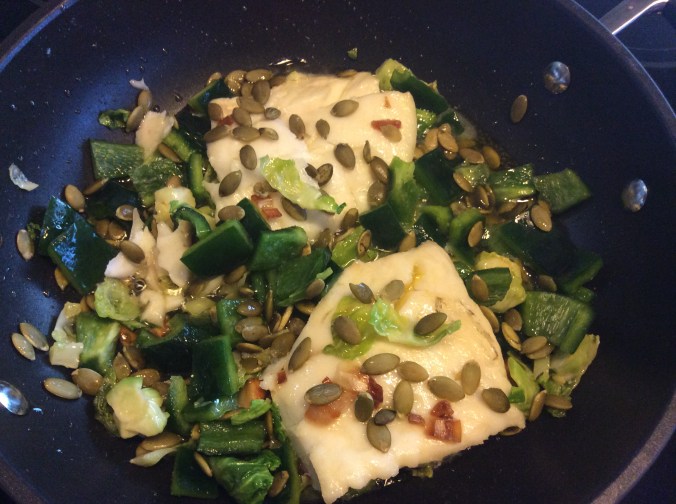
-Cooking dinner.  Here’s the recipe:

Fillet of salmon–keta

4-5 garlic cloves, coarsely chopped

1 poblano pepper, seeded and coarsely chopped

1/2 medium beetroot, thinly sliced and then diced

Bebere to taste or other spice if you do not have this

Several bunches kale, spine removed, and coarsely chopped.  I used two kinds–one green and one purple.

Saute the garlic and beetroot in olive oil until nearly cooked.  Add the poblano pepper and salmon.  Sprinkle a coating of bebere to cover the salmon.  Saute until salmon is nearly done and pepper is cooked but still bright green.  Add kale, occasionally stir, and saute until kale is slightly wilted. Serve over rice.  I used basmati from Pakistan.

Note:  bebere is a spice from Ethiopia.  I use homemade from my Ethiopian friends who have it special made.  Her blend is complex but not very hot.  Some commercial blends are mostly hot.

img_2505

Blue Apron: Is It Worth a Try


My daughter gets it off and on–yes, you can cancel weeks when you do not want what they have, etc.  Although I cook yummy, nutritious meals for myself, I realized I was in a food rut of sorts and decided it might be worth a try to explore new food horizons.  To date, I have made two of week one recipes, Crispy Catfish and Five-Spice Chicken.

Crispy Catfish??  Boring?? The title seems quite inaccurate to me.  No deep frying, nothing like that.  Unusual, yes!  Besides cat fish, it includes kale, semi-pearled farro, Thomcord grapes ( I know, I never heard of them before either), rosemary, along with some more ordinary ingredients.  Catfish is not my favorite fish but ok.  Would I have ever gone out and bought farro?  Probably not.  Would I ever have thought to cook grapes to put over fish?  No.  The recipe calls for cooking the farro, sautéing the kale with garlic, then mixing the two together.  Rosemary and chopped almonds sautéed together with the grapes made an incredibly savory-sweet relish.  I had some left over so later cooked a cod loin and served the relish and faro/kale salad with it.  I will definitely saute rosemary, almonds, and grapes together again.

Tonight I made the Five-Spice Chicken.  I remain uncertain as to whether I have seen cremini mushrooms in the stores here.  The ingredients included those, baby fennel, collard greens, Chinese five-spice powder, hoisin sauce, ginger, sesame oil, soy sauce, and vermicelli rice noodles.  The only thing not included I had to also use was olive oil which I buy in the largest containers because I love the stuff. Would I ever have made this dish without Blue Apron?  Probably not.  It was delicious and since I cook for one and everything comes for two or, if you choose, a family, I have leftovers for later in the week.

What is the down side?  You may not like all the combinations provided for a certain week so you cancel.  I am quite concerned about the packaging and how to recycle all this stuff.  Their website says everything is made to recycle.  However, to do that you have to live where recycling is available.  I do not except for the box.  The recipes are detailed but not all that speedy so it does take more time than I normally take to cook.

Will I try this again?  Yes, when I like all the combinations in a week.  I still have to try the vegetarian option for this week, a Thai curry.  What showed up with that?  A very lovely looking little squash I never heard of before.  You can choose various options including vegetarian.  What will I repeat?  While I might not be able to find this special kind of grape, I will saute grapes with rosemary and almonds again.  I will use collard greens and fennel more often.

The Fly, Wine, and Fennel


I look .

The fly floats in my glass of Seven Deadly Zins,

full to two golden flowers half way up the rim.

What kind of flowers?

I look.

Unsure, I watch the fly struggle, floundering around

in the deep red, the color that turns tongues

purple drunk.

I look.

Dead.  It floats.

Not poor, frugal.  I debate.

Should I throw the wine out?  Drink it?

I take the silver teaspoon–from the six piece

set Father gave Mother in 1946 on their

first anniversary–dip it in the dark, remove

fly, throw it down the antique copper sink drain.

I pick up the glass.

I look,

swirl the wine around in the bowl, take a sip.

Surely 15 percent alcohol kills germs.


img_2384


It was past seven, time to fix dinner.  Since I live a lone, I often fix dinner for two, save half, and have dinner ready for a hectic evening after work.  Just warm in the microwave.

Cod with Fennel, Mint, and Lemon

Two cod loins–one if extra large

1 heaping tablespoon chopped garlic

Olive oil

1/2 to 1 cup finely sliced small carrots

1/2 large poblano pepper, seeded and coarsely chopped

several cauliflower florets thinly sliced

crushed dried mint

essential oil of lemon and fennel (if you do not use essential oils,

you can use 1 tsp. ground fennel and lemon juice to taste)


Pour enough olive oil in a ten inch skillet to totally cover the bottom.  Saute garlic and carrots in the olive oil until carrots are almost tender.  Sprinkle a small handful of mint over the garlic and carrot mixture.  Add cauliflower and poblano pepper.  When poblano peppers are about to change color, add the cod.  Sprinkle drops of lemon and fennel essential oil over the cod–or the ground fennel and lemon juice.  Cook until the cod flakes.    Serve over rice.  I use basmati.


Apocalyptic Planet-Part Seven: Species Vanish


We all know extinction occurs.  Nearly everyone knows different species of dinosaurs at varied times roamed the earth for millennia.  Bones of all sorts of animals and various hominids are dug up off and on.  Scientists study them, determine their age, where and how they lived.  Scientists and sometimes even average persons develop theories about why they went extinct.  Regardless of which theory a person decides is accurate, these ancient extinctions generally took thousands of years. Recent extinctions are different, e.g. carrier pigeons.  Millions existed a couple of hundreds of years ago; now they are gone.  Why?  Humans.

Various causes exist for the extinctions of ancient species.  A major cause is the climate change caused my the changing tilt of the earth’s axis.  These changes occur over thousands and thousands of years.  What is different now?  Let’s take corn.  Native Americans cultivated rainbow colors of corn in small, frequently irrigated fields.  Where is most corn grown now?  Giant fields of GMO corn grow from horizon to horizon in the Midwest.  And if Monsanto had its way, no other corn would continue to exist for long.   Iowa is a good example.  Wherever this corn is grown, native grasses and other native plants totally disappear, in part due to cultivation.  A bigger issue is herbicides–to have clean fields, nothing and I mean nothing but corn must grow there.  A farmer’s expertise as a farmer is measured my just how super clean his fields are.  The only way to get these totally weedless fields is to use herbicides.  Biodiversity is a key to environmental health.  Little biodiversity exists in giant fields of crops like corn and soybeans.  Fertilizers to obtain huge yields wash downstream and in the Midwest eventually end in the Gulf of Mexico and cause giant marine algae blooms which pulls oxygen from the water to create a dead zone where no marine animals or fish can live.

Perhaps readers have heard of the plight of monarch butterflies.  Compared to just ten years ago, the population has dropped dramatically.  What happened to them?  Roundup.  Over 100,000 tons of Roundup and other brands of glyphosate herbicides are annually applied to crops in the US.  What do monarchs eat?  Milkweed.  Since 1999, 58 per cent of the milkweed has disappeared.  Recently, monarchs experienced a 30 per cent reduction in their numbers in one year.  Are we headed toward a mass extinction?  Some scientists think so.  These scientists are not talking about tigers, elephants, and rhinos being killed at an ever increasing rate for their body parts, but rather about the less noticeable extinctions of various plants and less obvious animals like frogs.  And then there is the problem with bees.  Bees are disappearing at an ever increasing rate due to not only diseases but due to herbicides and pesticides.  Without bees to pollinate the giant fields of almonds and various fruits in California, for example, those foods won’t exist.  See a previous post for more discussion on the importance of bees.  So why care about frogs?  Scientists consider frogs and amphibians in general an indicator of the health of an ecosystem.  Certain more tropical species of frogs are especially subject to the effects of climate change and they are disappearing.

Where I live big bluestem, blue grama, buffalo grass, and other native species grew from horizon to horizon.  This is the high plains.  Root systems of some plants grow twelve feet deep.  It has not rained in over a month.  Where the native grass once grew, crops are now grown.  This time of year finds open fields. Without rain, with the recent endless high winds, dust fills the sky.  To safely return home from town Sunday, I had to turn on the car lights to see.  The dryness fuels wildfires.  Earlier this week, over one hundred homes burned down in a wildfire north of Amarillo.  Drought.

Many human inventions are wonderful and make many lives better, but for some of them, I cannot help but wonder at what cost.


Apocalyptic Planet-Part Four: Seas Rise


As I write this title, it seems a bit counter intuitive that one of the first things I saw this morning was a newspaper discussing many small cities around the Texas Panhandle which are running out of water.  And on the TV news as I write this, the city of Amarillo announces measures being taken to curtail water use, followed by a detailed discussion, explaining how one of these smaller towns plans to address the lack of water.  Drought expands while ice melts and seas rise.

Childs explains sea behavior by comparing it to pouring water back and forth among a bunch of pans.  Ocean behavior varies from place to place.  Louisiana has been losing seacoast at the rate of twelve meters per year and large parts of the Nigerian coastline has lost as much as thirty meters per year, one of the fastest losses on earth–erosion.  The moon causes tides twice a day changing sea levels on the average of two meters each time.  Historically most sea level changes are long term changes.  A major cause of sea level change is temperature.  Half the current sea level rise can be attributed to thermal expansion.  Water warms and spreads out.  Not only does heat expand near the sea surface, but now also expands into depths not previously affected.  Findings by two oceanographers, Purkey and Johnson, indicate an increase in ocean heat 16 per cent greater than previously thought.  Oceans are the largest reservoirs of heat on earth.  Once heated, their size makes them slow to cool.

Purkey also notes that even in the depths of the seas, waves transfer heat.  However, because of the size of the Pacific, an event that occurred forty years ago in the southern Pacific will not reach the northern Pacific for approximately those forty years.  Thus, the warming and subsequent ice melt we see in the north Pacific started in the south Pacific forty years ago.  Another scientist, Carl Wunsch, notes that earth changes remarkably without human intervention.  Nevertheless, he recommends humans do something to reduce carbon dioxide emissions as a precautionary measure in addition to discouraging people from settling in low lying areas.  Unfortunately, rising seas do not bode well for much of the earth’s population who live in exactly these low lying areas:  all of Bangladesh, Venice, Shanghai, New Orleans, Bangkok, the Marshall Islands, and many US coastal cities to name just a few places.

St. Lawrence Island north of the Aleutians provides a perfect example of what is happening.  Sea ice breaks up too early, fish species they used to see are gone replaced by new ones they never saw before, and the population of seals and sea lions has altered.  Cancer rates in the villages there have risen dramatically caused in part by the toxic poisons concentrated in the meat of the seals, whales, and salmon they harvest from our polluted oceans.  In 2008, they brought a lawsuit against Exxon, Chevron, and Mobil, claiming that these companies are the world’s major contributors to global warming.  They want these companies to pay for moving their villages to higher ground.  Sea rise necessitates the move.  They lost in District Court, but the case is under appeal.  The court cited that the chain of events causing their predicament is too long to lay blame in one place.  Childs notes that we really need such places to endure, places where people know how to lead minimalist lives, places where people know how to survive.

Red Snapper with Chorizo and Mixed Rice


Last Sunday evening I invited three friends over for dinner.  They come to my house all the time so I decided to try something different.  Red snapper was on sale at the market so I bought one big fillet and one smaller one, thinking they would fit perfectly in the heavy cast iron fish pan I have.  I use this particular cast iron pot because I can put it on the grill in the summer and avoid  heat in the house.  In my refrigerator I also found some soyrizo–chorizo made from soy instead of pork.  Since one of the friends is Muslim, I make sure never to feed him pork–he does not want me to go to hell, he says.  Since the fish and the chorizo made for rather sizable servings, I did not expect all of it to totally disappear.  Wrong.  They ate all of it and asked for the recipe.

Approximately 1 1/2 pounds red snapper or similar firm fleshed fish

Enough soyrizo (or chorizo) to cover the fish in a thin layer sprinkled over the fish

1 onion finely chopped

1 large poblano pepper, seeded and chopped

Olive oil

1/2 teaspoon cinnamon

1 small can tomato sauce

Pour enough olive oil into a heavy pan to cover the bottom

Lay the fish in the bottom of the pan and cover with chorizo

Saute the onions and poblano pepper in olive oil until onions are translucent

Spread the onion/pepper mixture over the top of the chorizo

Stir the cinnamon into the tomato sauce

Pour the cinnamon/tomato sauce mixture over the top

Place a lid on pan and bake on the grill at medium heat.

It takes the cast iron a long time to heat up so once it was heated, I baked the dish for approximately 20 minutes or until the fish was done and everything was bubbling.

I served this with my favorite rice:  1/3 Jasmine red rice, 1/3 Jasmine white rice, combined with 1/3 black rice.  I used one half cup each, sauteed with 1 TBS. finely chopped garlic in enough olive oil to cover the bottom of a large sauce pan.  Saute until the rice appears to be sticking slightly, then pour water double the total amount of rice.  Stir in 1 tsp. bouillon, cover with six paper towels and then the lid, turn down to low, and cook approximately one hour.  The red and black rice take at least twice as long to cook as white rice.

This easily serves four.  I served it with a salad:  romaine, red cabbage, dried cherries, yellow pepper, diced radishes, and feta cheese.  Bon appetit!!

Vegetables with Coriander, Cumin, and Tumeric


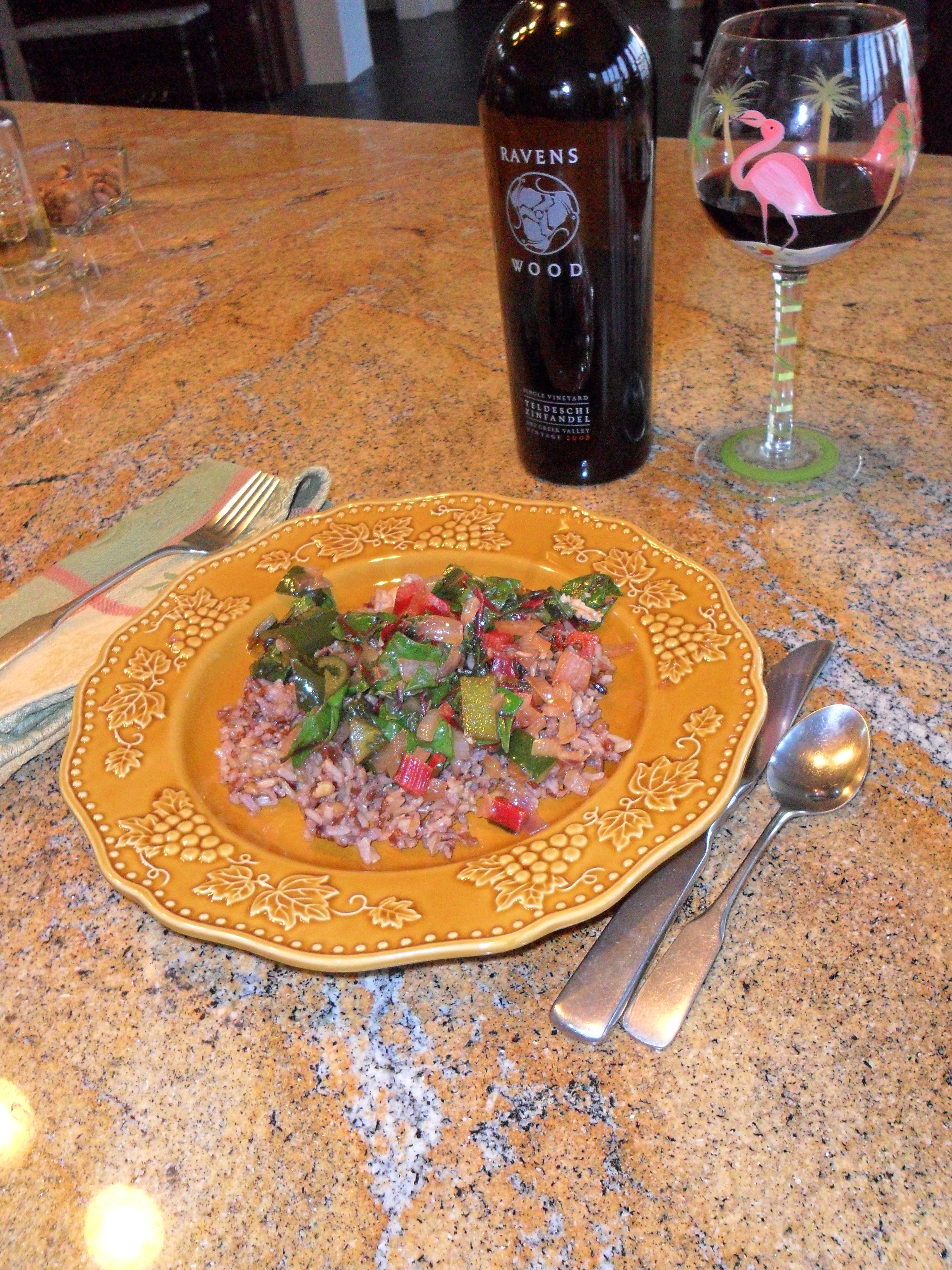
SAM_1010Vegetables are my favorite food.  Interspersed with the poems and essays I publish, I try to post unique recipes.  My recipes come from years of interaction and relationships with people from all over the world, husbands, exchange students who enhance my extended family, travels to Asia and Latin America, my international friends near where I live.  Recently, after a dinner party, I had left over vegetables that needed cooking so one evening home from work, I created this recipe.  It is vegan by accident not intention.  One could add fish, chicken, turkey leftovers (see recent post for turkey curry), shrimp…you get the idea.  The options are endless.  I used the vegetables I needed to use up, but take a look in your refrigerator and try what you have on hand.  Experiment.

1 medium sized beet, peeled and cut into half coins

1 poblano pepper seeded and chopped

1/2 purple onion, chopped

Several pieces of Swiss chard, stems removed and chopped, leaves cut into large, bite sized pieces

Garlic cloves, peeled and chopped–amount to your own taste

Olive oil

1 teaspoon coriander seeds, ground

1/2 teaspoon cumin–or extra to taste

1 teaspoon ground turmeric

Saute the beets, chopped Swiss chard stems, garlic, and onions in olive oil until beets are cooked through.  Add spices and poblano pepper.  When  the pepper is nearly done, add the Swiss chard leaves and cook only until wilted.

Serve over rice.  I used equal amounts of black, red, and Jasmine rice.

How to cook rice:

1/3 cup black rice

1/3 cup red rice

1/3 cup brown or Jasmine rice–your preference

1 teaspoon chopped garlic

1 teaspoon concentrated broth/bouillon–I use Better Than Bouillon brand which is available Vegetarian as well as Chicken, etc.

Pour enough olive oil into a saucepan to cover the bottom.  Add the rice and chopped garlic.  Saute at high heat until rice starts to stick, stirring constantly.  Add two cups water and the bouillon.  Stir rapidly until bouillon dissolves.  Turn down heat to low, cover the top of the saucepan with four paper towels or a tea towel folded to make several layers.  Put sauce pan lid on the top and cook for approximately one hour.  Red, brown, and black rice take twice as long to cook as white rice.  Do  not peek while rice is cooking.  Lifting the lid to check causes the rice to be mushy.

Teriyaki Salmon with Red Chard and Cassia Cinnamon (for two)


Image

The red chard leaves, chopped.

Image

Just after adding the salmon.

Image

The finished product.


2  6 oz. servings of wild salmon

1/2 medium red (purple) onion, chopped

1/2 large poblano pepper, seeded and coarsely chopped

2 large red chard leaves and stems

1/2 to 1 tsp. cassia cinnamon

1/8 cup teriyaki sauce mixed with 1/8 cup Worcestershire sauce

Olive oil

Marinate the salmon in the teriyaki/Worcestershire sauce while you prepare the rest.  Using a sharp knife, destem and devein the red chard.  Coarsely chop the stems and veins.  Chop the leaves into pieces as indicated in the photo above.  Cover the bottom of a medium sized skillet with olive oil.  I love extra virgin olive oil and use a lot of it, but not absolutely necessary.  Saute chopped onions in the olive oil until translucent.  Add the poblano pepper and red stems of the chard.  When the peppers and chard stems are slightly cooked, add the salmon and marinade and sauté for about 2 minutes.  Turn the salmon and place the chard leaves on top.  Scatter the cinnamon on top of the chard leaves.  Saute until the chard leaves are wilted.

Serve with mixed grain rice (khao-pa-som in Thai) which can be found at Asian markets.  It is a mixture of brown, black, and red rice with various grains including what appears to be barley.  I cook it exactly like rice: sauté in olive oil with finely chopped garlic for a minute or so, add water, and stir in 1 tsp. concentrated bouillon. Turn heat to low, cover pan with several layers of paper towels, and put on lid.  This, like red and brown rice, takes about twice as long to cook as white rice.  It is more nutritious than white rice. If you want the health benefits of cinnamon, it is necessary to use cassia cinnamon, not Ceylon cinnamon.

Costa Rica 5, Fauna


Costa Rica continued to surprise me.  I did expect some of the animals, photos of which are posted below,  but did not expect so many cattle, especially the dairy cattle, including Jerseys, Guernseys, and Holsteins,  that populated the steep mountain slopes.  They grazed everywhere up to their tummies in grass on even the steepest mountainsides.  I kept wondering how they learned to balance themselves and why they did not fall over, catapulting down the mountain.  Everyone in the group commented on the fat, happy cows.  Such abundance resulted in fabulous steaming milk for morning coffee, rich cheeses, and the creamiest ice cream imaginable.

A cow pen near the top of a mountain on the Caribbean side next to the restaurant that sold cheese and where I ate the raw turtle egg.  Most of the cows roamed free up and down the mountainsides.

In the lowlands on both the Pacific and Caribbean sides of the country, Brahma cattle relaxed or grazed in the lush grass.  It reminded me of the landscape near Veracruz, Mexico, where I lived many years ago.

The most common meat besides fish, most of which is talapia, is chicken.  Near the mountain top where the Jersey cow above was photographed, I saw a huge shed and when I asked about it, was told it was a chicken farm. However, pork is frequently served as well and occasionally beef.  I took the following photograph at a small place on a dirt road.  We stopped there to drink coconut water.  The spotted, pregnant pig was due soon.  However, the fate of the black pig remained less lovely–food.  Their girth resulted from eating coconuts; they constantly gorged themselves.

Birds abound, from the protected scarlet macaws on the Pacific Coast to tiny hummingbirds.  Hundreds of species I had never seen before and many I had seen rather often like various egrets and herons. And then there were the monkeys which I did expect to see but found difficult to photograph with my ordinary camera.

These white faced monkeys roamed everywhere near the beaches at Manual Antonio National Park, begging for food and if that did not work, actually stealing it.

While the white face monkeys remained highly visible, the howler monkeys could be heard easily but were much harder to locate because they tend to stay high in the tallest trees.  Without a good telescoping lens, this was the best I could do.

Look for the dark blob in the middle of the photo.  They also move fast so hard to locate and follow and even harder to photograph under those conditions.

Just as we arrived, walking, at the entrance to Manuel Antonio, a downpour began.  Not fond of drenchings, I stayed back, hoping it would stop, and suddenly saw a small sloth, the grey spot in the nearly leafless tree in the middle of this photo.

Lizards of many varieties abound.  The tree near my hotel room in Jaco contained four iguanas that appeared nearly lifeless since they never seemed to move.  Again, without a better lens I could not really photograph them.  However, at Manuel Antonio many other kinds of lizards ran here and there only slightly afraid and relatively easy to photograph.

When I think back as to what I expected, it never occurred to me that huge, brackish (salt) water crocodiles existed in such abundance or even existed there at all.  Near Jaco, on the Rio Grande Tarcoles the Costa Ricans created a preserve to protect the endangered scarlet macaws and crocodiles.  We arrived early in the morning and floated around the river, into a mangrove swamp, watching birds and crocodiles.  The list of common birds included 58 species and we saw others that the guide referred to as “bonus birds”.  The following photos come from this lovely, relaxing river ride.  Truly, I loved this part of the trip.

Entering the mangrove swamp.

Two months old.

Where the Rio Grande Tarcoles enters the Pacific Ocean.

The boat captain feeding the crocodile in the mud barefoot.  I thought about touching this one he was so close until I was told they could swim as fast as 55 miles per hour.  It occurred to me that he could turn around really quickly and snap off my hand so…