Grandmother


We sit on the wooden swing suspended by silver chains

hanging from the bungalow front porch ceiling.

She, elderly beyond her years, grey hair piled atop her head,

thin and wrinkled.

She stays with us sometimes when Aunt Julia goes off

on one of her adventures.

Cattle graze across the road in front of the house.

It is summer.

A bull mounts a cow.

Suddenly, out of the silence, Grandmother speaks,

“Men and bulls are just alike;

they are only interested in one thing.

A bunch of good for nothings!”

Her voice is vitriolic.

And I, a child, maybe twelve, innocent and ignorant,

sit there shocked,

amazed,

embarrassed,

astonished

to hear my grandmother talk that way.

Now, nearly fifty years later,

I wonder about her life,

what in it caused this secret bitterness

she spilled just once on that idyllic summer day.

I look at her wedding photo.

She has a steady, unsmiling, pretty face,

marrying a handsome man twenty two years her senior.

Were they happy, sad, or probably a bit of both?

I remember what my mother, her youngest daughter, told me

snippets here and there.

A hard life, endless guests

never a break from gardening, cooking, canning, cleaning.

I look at other photos of my grandmother

taken before I was born,

older, nearly as wide as she is tall, never smiling.

I remember her in an old lady’s flowery, lavender dress,

thin from years of undulate fever.

I remember her feeding me bread, butter, and sugar sandwiches,

Easter egg hunts at her house,

and later, at another house, walking with her to the corner store.

I never remember her smiling.

I Have Lived


Depression, sad days, melancholy.

Gone!!

At 26, I said, “To hell with this!

You control your life; live it!!


I tried forbidden liaisons, trained horses,

Went around the world, a cobra wrapped around my neck,

Walked the Shalimar Gardens in Kashmir,

Watched the Taj Mahal reflected in still waters,

Stood before the Jama Masjid in Old Delhi,

Strolled the streets of Katmandu,

Talked with monks at the Shwedagon Pagoda,

Bargained with sticks in dirt, math our only common language,

Downed raw turtle eggs in Costa Rica,

Danced on table tops, sang “Adonai”,

Roamed empty roads across the Navaho Nation,

Raised two charming children,

Married, divorced four times.


I have lived, running on the rim of wonder.


This poem is a response to another Mary Oliver assignment for the SCN poetry class.  The prompt was to write about how we might have lived differently or made different choices.  On the whole I possess few to no regrets, have been to places never dreamed of, met astonishing people all over the world, and live exactly as I want to live.  I feel blessed.


Faith, Lies, and the War on Terror


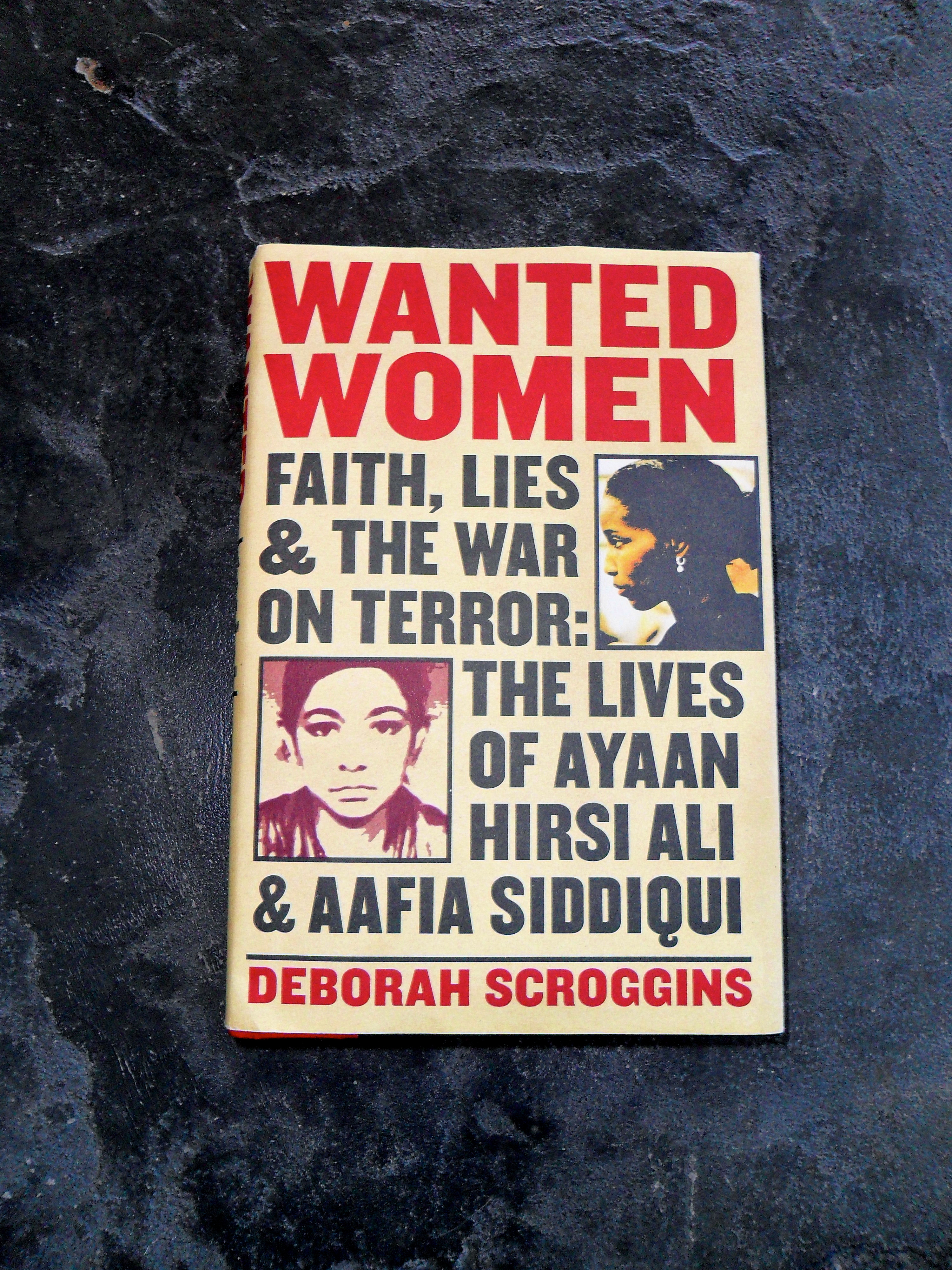
This blog began as a vehicle to “make” me write more and share my writings, e.g. poetry, flash memoir, essays, with others and to learn from reader responses.  Along the way, it morphed into my recipes—starting with friends requesting them, my travels and adventures, inspirations, and thoughts.  This post will morph me into something I fear may be far more controversial, but also feel I must explore. Several years ago, a couple of friends and I enrolled as continuing education students in a course about Islamic thought and literature.  Our hope was to learn more about exactly what the title indicated.  Although I had already read quite a lot of Middle Eastern literature, especially Iranian, and also some Turkish novels as well as memoirs and nonfiction books, I had no one with whom to discuss my readings and thoughts.  This presented an ideal opportunity.  After a couple of weeks, it became quite clear that the teacher had a definite agenda.  Although she never overtly discussed her own religious beliefs, she generally chose parts of readings to discuss to promote a certain, anti-Islamic bias.  We read the Quran (in translation because none of us spoke or read Arabic—mine was a Pakistani translation), Ayaan Hirsi Ali—various works including Infidel, Benazir Bhutto’s autobiography, and short stories by Iranian, Palestinian, and other Middle Eastern authors.  None were from Southeast Asia where the majority of the world’s Muslims live.  None were from India.  When we discussed the Quran, she chose very specific passages that zeroed in on what she perceived to be Islam’s oppression of women and promotion of violence and war.  When the rest of us tried to also discuss passages about ones duty to the oppressed, the orphans, the poor, she would channel the discussion back to her chosen agenda.  Some dropped out.  The rest of us decided to stay because we wanted to read and discuss the writings in spite of the situation.  Over time, our insistence on a broader based view seemed to affect her strong bias slightly.  In the end, she even showed the Iranian movie, “Children of Heaven”, which presents the plight of a poor Iranian family in a very sympathetic light.  The father overtly loves his wife and struggles valiantly to help her and his family in any way he can. This class has led me to further pursue my readings of literature from Iran, Egypt, Turkey, Pakistan, India, etc., both fiction and non-fiction and to learn as much as I can about the past and present as it relates to issues in these parts of the world.  Since then, I have also experienced the privilege of hosting exchange students from Thailand, Brazil, and Argentina.  One of my closest friends grew up Muslim in Indonesia.  I also have Christian, Jewish, Muslim, Buddhist, Pagan and atheist friends from many parts of the world, and some who have little interest in religion. Recently, the librarian where I teach asked me to read Wanted Women, Faith, Lies, and the War on Terror:  The Lives of Ayaan Hirsi Ali and Aafia Siddiqui.  I finished it recently and highly recommend reading this book.  The author, Deborah Scroggins, spent six years following the lives of these two women, including interviewing their colleagues, family members, self proclaimed jihadists, and government officials from several countries.  She delineates an incredible amount of information and data.  If you care about the political and spiritual future of this planet and the ongoing controversies surrounding Islam, Christianity, and Judaism, this book provides an excellent opportunity to explore history and the events of the last 20-30 years, and then to develop your own insights.  My hope is that this post will encourage others to explore new avenues of knowledge and open wider venues of thought that encourage a better, kinder world in which we respect and value each others’ differences.

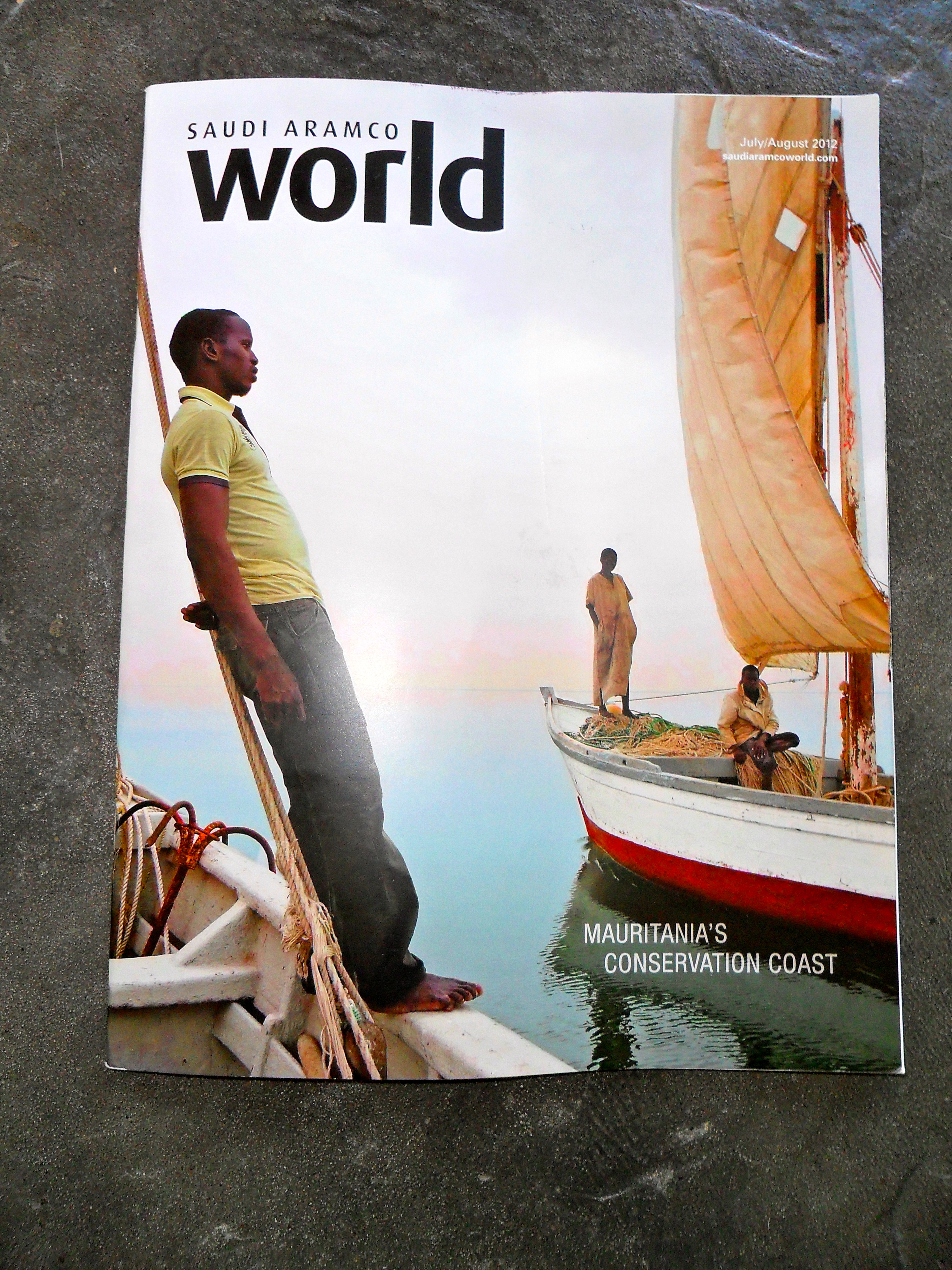
Recommended additional readings:   This is one of my favorite magazines.  It is free and covers art, cuisine, nature, history, literature, geography, just about everything imaginable.  For teachers, they have suggested uses and additional materials at the back.  It comes out six times per year.

If you are unfamiliar with literature from the Arab world, this is a good place to start.  Mahfouz won the Nobel prize for literature.  Although his novels take place in Egypt, the themes are universal.
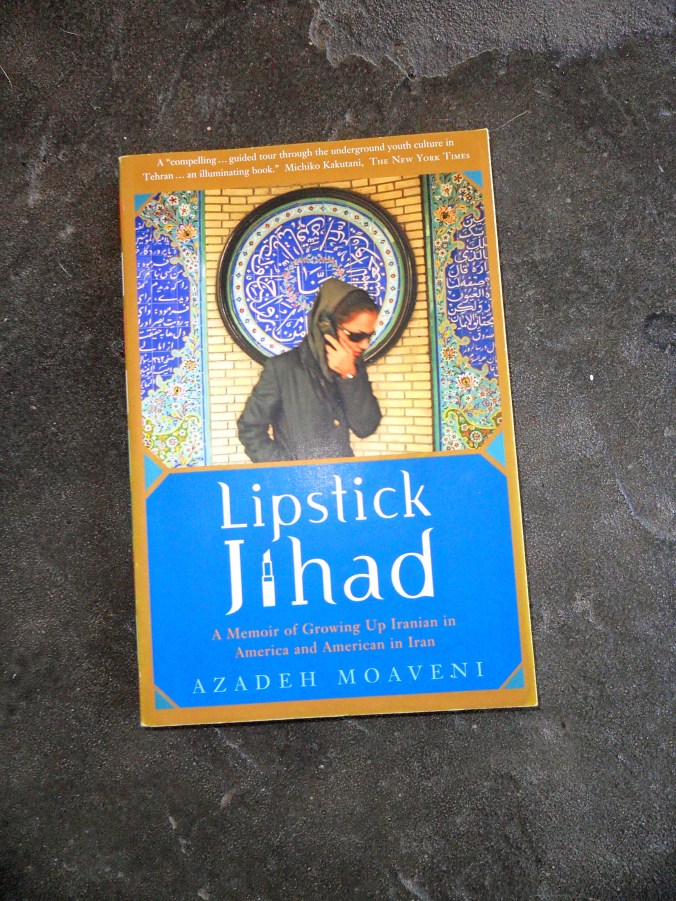
In spite of the word jihad in the title, this is more of a “fun” read.  The Iranian American author, a journalist, decided to go to the Iran of her roots and work and live there for a while.  This book describes her adventures as a journalist in Iran.

Other books I recommend are Moonlight on the Avenue of Faith by Gina B. Nahai                   (this is one of my all time favorite books), No God but God by Reza Aslan, another Iranian journalist, The Forty Rules of Love by Elif Shafak (this book is a novel about Rumi, whose beliefs Islamists do not find acceptable), and Shattering the Stereotypes:  Muslim Women Speak Out edited by Afzal-Khan.

Another source of information about events, literature, art, etc. in the Middle East is a blog entitled “Sugar Street Review”.  One of their latest blog posts, Top Five Female Arab Writers provides a list of these women with photos, brief bios, and some critique.

The Land in Love with Guns


In the United States firearms kill approximately 15,000 individuals per year.  In Britain, Australia, and Canada, the average is 350 per year.  Spain’s rate is even lower.  In Germany, it is less than 800.  A young person here dies about every 4 ½ hours, shot dead.  The US murder rate is 19.5, nearly 20 times higher that the next 22 richest countries.  In the 23 richest countries combined, 80 percent of all gun related deaths are in the US; 87 percent of children killed are shot by guns here.  In the last 45 years, bullets killed more than one million people in the US.

Gun sales are big money.  More than a dozen hand guns are sold per minute.  One survey indicates that one out of every four US homes possess a gun; another survey says 39 percent.  However, most guns are owned by only a small proportion of the population, gun “collectors” who own an average of seven weapons per person.  Guns are cheap here and bullets even cheaper, about 50 cents each.  The Mexican government contends that our cheap guns help fuel the dreadful violence there which then overflows to here.

In spite of all this, the US murder rate is the lowest in more than 45 years.  The NRA claims more guns equal less violent crime.  The NRA contends that the lower crime rate is the result of less strict gun laws and more people owning guns.  Nevertheless, mass murder occurs on a regular basis.  We mourn, we lament, but nothing changes.

Eventually, another mass murder occurs and the cycle repeats itself.  Why?  Who or what is responsible?  What can be done?  Will more restrictive gun laws help or hinder?  Debates continue; opposing views and answers abound, but the cycle continues.  Will it ever change?

I wrote the above after the last mass murder event.  Nothing changed.  Now the conversation appears more strident, more active.  Apparently, the mass killing of children is more heinous, more scary than the mass murder of adults even if the adults are young.  The NRA advocates armed guards at schools.  How will that prevent mass killings at movie theaters, at malls, at churches, on the street, e.g. the three murders this week in Pennsylvania?

Australia was another country in love with guns, but after a mass killing there, they changed their collective mind.  They enacted strict gun control laws for assault weapons and ammunition.  Could that work here?  I think not.  This is a country in love with guns because the right to own a gun symbolizes  what is perceived as individual rights.  This is a country where personal liberty remains far more important than community safety and social justice.  Until that changes, mass murders will continue.

Migraine


Since I was a child, my only health issue has been headaches.  When younger, sometimes they were little ones and sometimes nearly incapacitating.  As an adult I could count on having at least one a month, sometimes more.  Weather seems to be the main culprit now.  If certain weather patterns occur, a series may hit me for several days in a row and then blissfully nothing for a couple of months.  My daughter has migraines also; she must have inherited this from me, sadly.  Tuesday this week, I awakened with a doozy and suddenly recalled that I had to attend this class for work.  I took my medication and hoped.  While waiting for the class to start, I decided to write down exactly how these migraines make me feel.


Poised above my head,

the hammer ball strikes the ten inch nail.

It drives through my right frontal lobe,

the nail point jutting out just below my right cheek, shiny, bloodless.

The hammer flips, the nail pulled out.

Pain pulses, excruciating.

Poised above my head, the hammer strikes again and again.

Endless hours the hammer strikes and pulls.

I hold my head in my hands, rocking back and forth.

Endlessly.

Pura Vida: 2, Comida (Costa Rican food)


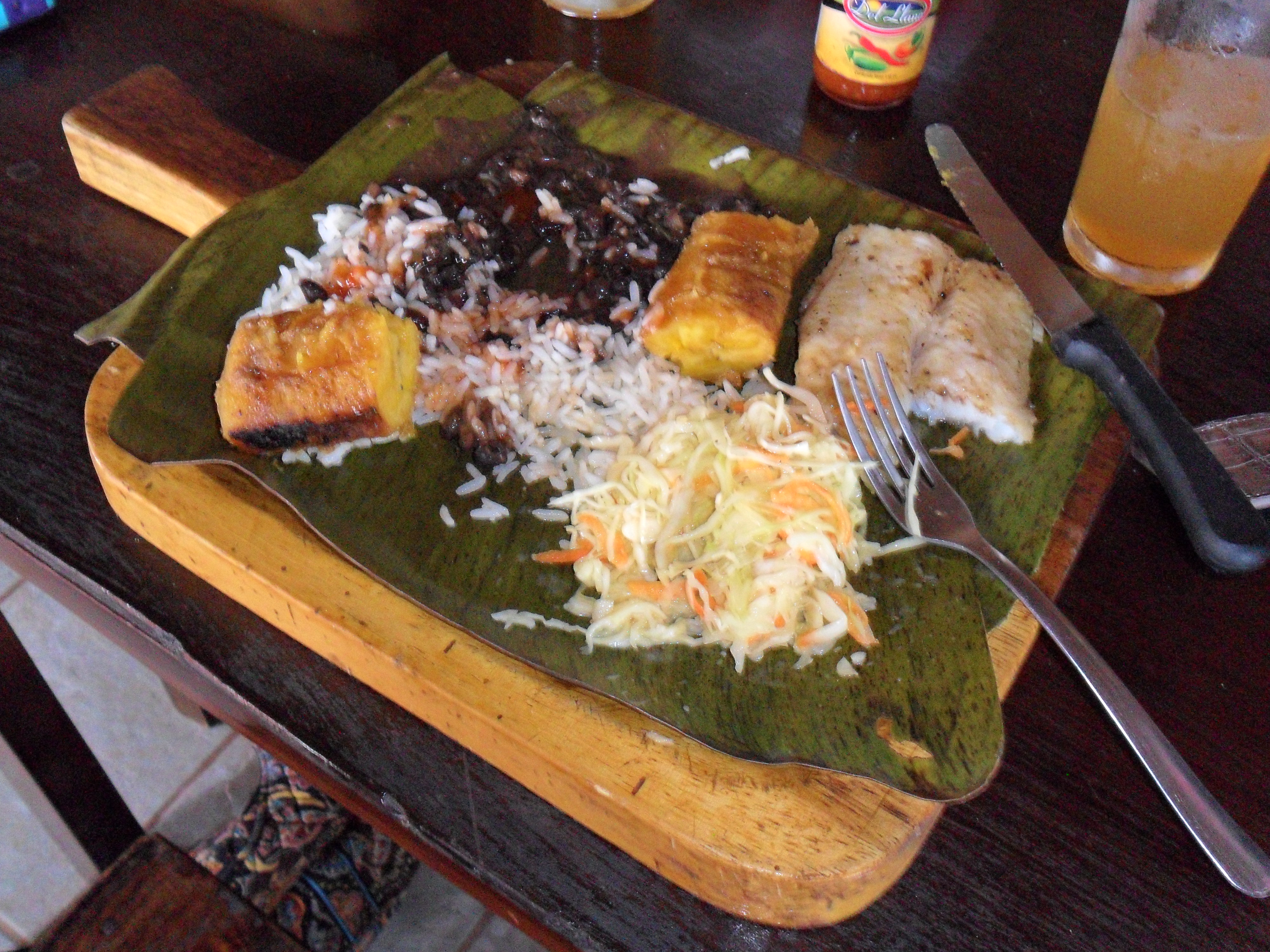
Costa Ricans appear to be very, very healthy.  Their food mainly consists of rice, black beans, salad, cooked vegetables, chicken or fish, fruit (usually pineapple, papaya, mangoes) and sometimes fried plantain.  In fact fried plantain was the only fried food, except occasionally cheese.  The food is plain with few spices, even though hot sauce, especially their version of tobasco,  is often available if you want it.  The national dish is gallo pinto:  left over white rice mixed nearly equally with black beans and sometimes a little chopped onion and bell peppers sautéed in oil.  This is a breakfast staple, but frequently served three times a day.  Sometimes, although black beans and rice are usually served at lunch and dinner, they are not mixed together then.  Often salad is their version of cole slaw, but tastes nothing like cole slaw here.  Usually both cabbage and carrots are very finely shredded and mixed together.  I never did quite figure out the dressing, in part because it varied greatly.  When the salad was with lettuce, it was also more finely chopped than we usually do here in the US and served with various dressings including olive oil.  The freshness of the salads stood out–no little bits of brown edges in Costa Rica.

The coffee, well, just lets say, I miss it.  Pitchers of steaming, strong, mountain grown coffee served with pitchers of steaming, rich milk.  In the mountains everywhere Jersey, Guernsey, and Holstein cows roamed up to their tummies in grass.  Happy cows for sure, producing rich milk for coffee and rich white cheese, which is served for breakfast.  Yes, breakfast, sometimes plain and sometimes fried.  Oh, and I cannot forget the ice cream.  Beyond creamy and smooth and rich.

There are sweets, usually made as snacks with coconut especially.  This was my favorite.

Obesity appeared to be non-existent.  I did see a few chubby people but no one really excessively over weight.  Perhaps diet is one reason, but they walk a lot even though most have cars.  They appear to drive them only if going some distance.  In the mountains I saw a lot of people riding horses.

The biggest food adventure for me occurred while waiting around near a little family owned restaurant at the top of a mountain.  All but four of us and the bus driver had gone river rafting.  We disembarked from the bus and walked around to kill time, chit chatting about this and that in Spanish.  Suddenly the restaurant owner came out with his grandson, unlocked the fence gate, and invited us in.  While sitting at the bar conversing with him and Hector, the bus driver, I noticed the menu posted on the wall.  It included huevo de tortuga.  Previous information given to us indicated that Costa Rican law protected turtles (tortugas).  I asked how he could serve this.  He told me it depended on the species of turtle and that he could acquire only a limited amount of them.  Suddenly, in front of me, Lisa, the other woman who did not go rafting and is pregnant, and Hector appeared three glasses that looked like giant, triple sized, shot glasses.  Each one contained a raw turtle egg immersed in red hot sauce the consistency of tobasco sauce.  Instructions and gestures indicated this was to be downed like a shot of tequila.  Lisa stuck her tongue in the sauce and said it was ok.  She downed hers first and said, “This is not all that bad.”  The restaurant owner told her it held great nutrition for her unborn baby.  I translated.  It became very clear to me that I had no choice but to down mine as well.  Hector downed his; then I mine.  Lisa’s assessment was correct; it was ok inspite of the turtle egg feeling like a rather solid but squishy mass as it slid down my throat.  The hot sauce made it possible.  Lisa downed a second one; Hector and I declined.  This experience remains one of the highlights of my trip:  relaxing in the middle of nowhere with a local family in their little restaurant.  Pura vida!!!!

DEATH


I was afraid of revealing me, the essence of me.  Who even, indeed, was I?  My mother told me, when I started dating, to hide the essence of me, boys wouldn’t like it.  Too smart; too aggressive; too full of myself; too intense; too serious; too burning inside strong; too adventuresome; too nasty a temper; too full of desire to feel, taste, see, learn; too much in love with a world of possibility.  I took her advice, married a genius scientist, safe, timid, disadventurous.  He liked me because I could shoot a bird off a wire hundreds of feet away.  I time, we all died, him, me, the bird.


This piece was a finalist in a flash memoir contest.

Marriage


The following poem was chosen to be published in the Story Circle Network’s annual Anthology this past autumn.   I submitted two flash memoir pieces, including the Spiders story on a previous post,  as well as this poem.  I was very surprised that this was the one chosen.

Marriage

                                               I remember the time he touched my face, melting me.

                                               I married him; my face slowly, inexorably froze.

Flame Kissed Chicken and Lentil Salad


This week what I thought was going to be a culinary disaster resulted in the best chicken I have ever eaten.  Twelve people were coming for dinner–a teachers’ sorority.  One of the women gave me the chicken half frozen in marinade to take to my house–we work together.  She planned to come to my house early and grill the chicken.  Because she was unexpectedly late, I had to grill the chicken myself.  Now, to tell the truth, even though I cook a lot and blog about food, I had never grilled chicken before.  My daughter had grilled steaks several days earlier, but it never occurred to me to clean the drippings pan under the grill.  Here is what happened:

I heated the grill to about 450 degrees, took the still slightly frozen chicken out of the marinade and placed it on the grill.  It took only about 30 seconds and flames were shooting up about 6-8 inches and the chicken  was turning a grayish color.  I was concerned about two things:  the flames getting totally out of control and starting a real fire (my grill is propane) and the chicken being totally inedible.  I turned the heat down, pulled the grill farther away from the wall, turned the chicken over, and hoped it would be ok in the end.  After all this commotion, a half hour or so later, and after cooking the hamburgers as well, we tried the chicken.  It was the best chicken I have ever eaten.  It was even good left over cold out of the refrigerator–I normally refuse to eat leftover, cold chicken, reheated or otherwise, because I think it tastes dreadful.  People also told me the hamburgers were cook perfectly.

If anyone can tell me how to duplicate this delicious chicken result without all the flames and fire dangers, please comment on this post.

Several weeks ago a fellow food blogger, The Hungry Irishman, posted a lentil salad.  Here is my promise to him to post the lentil salad I make.  The original recipe is from one of my oldest and most favorite cookbooks, The Silver Palate.  However, like most everything I cook, I modify to suit myself and  never really follow the recipe, except maybe for cake, but I rarely bake cake so…

LENTIL SALAD

Cook two cups dried lentils in water with several carrots, 1 medium onion, chicken or vegetable stock, cloves, and 1 bay leaf.  Be sure not to over cook.

While the lentils are cooking, combine 3-4 garlic cloves, 1/2 cup olive oil, 1/4 cup white vinegar, 2 teaspoons dried thyme (you can use fresh also, but will require more thyme), and black pepper to taste in a blender and blend until creamy.  You may also add 2 teaspoons ground cumin for a slightly more  Middle Eastern taste.

When lentils are done, drain, and remove the carrots, etc.  Place in a serving bowl and stir in the blended  mixture.  Refrigerate overnight.  Just before serving add 1 cup scallions, chopped, and 1 cup chopped walnuts.  You may adjust vinegar and olive oil to suit your taste.

If you use regular onions chopped rather than scallions, this salad will keep well in the refrigerator for 4-5 days.