A Letter to the Man I Loved the Most


Today is your birthday, June 6.  I cannot wish you Happy Birthday because you fell into a coma a year and 1/2 ago and died several months later.  Our daughter came over and over to see you, unconscious, eyes staring into empty space.  She drove the five hours back and forth repeatedly.  Sometimes I came with her.

What happened to you?  Your mahogany hands and arms looked as they did when I first met you decades ago.  I looked at the signs of aging on my own; yours seemed so young, ageless.  But not your face.  I wonder if I would have recognized you on the street.  I remember the first time I saw you, sitting on a sofa–fancy, engraved silver tipped cowboy boots, shirt open half way down your chest, and your smile radiating across the room.  I knew immediately I had to have you.

What happened to you?  How could I have guessed I could be so wrong, decades of believing you just left, no explanation, nothing.  Then after you are comatose and I cannot talk to you, I learn a far different truth, a truth that never leaves me, a truth from which I will never totally recover.

What happened to you?  Charming, laughing, the man so many loved.  That you.  Did the other you finally dominate–the sad, disappointed, angry you?  The you few knew, the hidden you, the one I often held, tried to protect. Now I talk to your cousin, the one you forbade to tell me the truth I never knew, the friend I thought I had lost forever.  Yesterday we talked.  Today she left me a message.  She and I will never be the same, she filled with irreparable loss, your company, your mutual love, and I with a hole in my heart that can never be filled because I cannot talk to you.

What happened to you?  A decade ago when you came to see our daughter, it was like I had seen you only yesterday, in so many ways as if we had never been apart.  It haunted me.  You could have told me then, the truth.  But no, I had to learn it by accident from our daughter.  She thought I knew, that you had told me.

What happened to you?  I look at photos of us, young, filled with hope and love and promise, smiling brightly toward a camera.  I wonder how different my life might have been.  I will never know.


Memorial Day–Memories


While I was growing up, my mom grew peonies by the side of the vegetable garden.  Red, pink, white, huge spectacular blooms that always arrived around this time of year just in time for Memorial Day.  We would pick many, put them in mason jars and take them to my father’s and her family’s cemetery plots.  She has created a metal apparatus to hold them so the wind would not blow them over.  We took water to fill the jars.  We did this every Memorial Day always.

No one lives close any more.  There is no one left to take flowers there.

My mother’s family members are buried in the Mound City, Missouri Cemetery.

SAM_1160

My mother’s parents’ gravestone.  She was Nellie Narcissus Kaiser before she married rather late for back then–in her late twenties.  I never knew my grandfather.  He was so much older than she that even though he lived to be 80, he died long before I was born. My great-grandfather Kaiser was born in Switzerland and brought here as a child.

SAM_1159

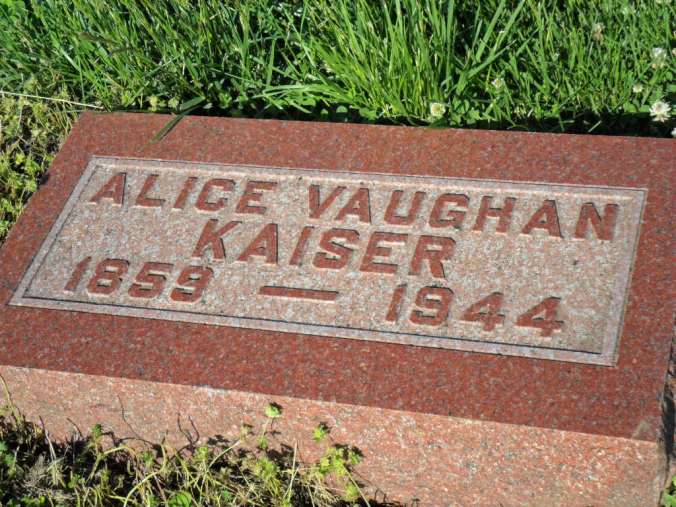
The gravestone of my mother’s grandmother.  I know she lived with my grandmother and grandfather a lot of the time from family photos, but I also know that she died in San Diego.  No one ever told me how she got there or why.

SAM_1161

The gravestone of Aunt Julia, Mother’s sister.  She never married, loved fancy antiques and china.  I frequently use some of what she left me.  She came to see me rather often and we visited antique stores when she visited.  To say she was an independent woman is an understatement.

SAM_1090

My parents’ gravestone is on the right and Dad’s parents’ on the left–in the cemetery in Fillmore, Missouri.  My grandfather, Pleasant Lightle, had walked from Illinois to Missouri as a child according to family stories.  My parents met dancing. I always smile when I see the peonies planted at their graves.

SAM_1094

This is the gravestone of my great-grandfather, Dad’s mother’s father, who came to the US from Switzerland when he was 18.  According to my dad, he did not want to be conscripted into the Swiss army because at that time Swiss soldiers were being hired out as mercenaries.  His mother stood on the roof of their house waving until she could see him no longer.  They never saw each other again.  I grew up on the land he homesteaded in Andrew County, Missouri.  Andrew County is filled with descendants of immigrants who came from Switzerland.

SAM_1097

The old carriage house near the house where Dad spent the first ten years or so of his 90 years.  It is all that is left standing.

SAM_1098

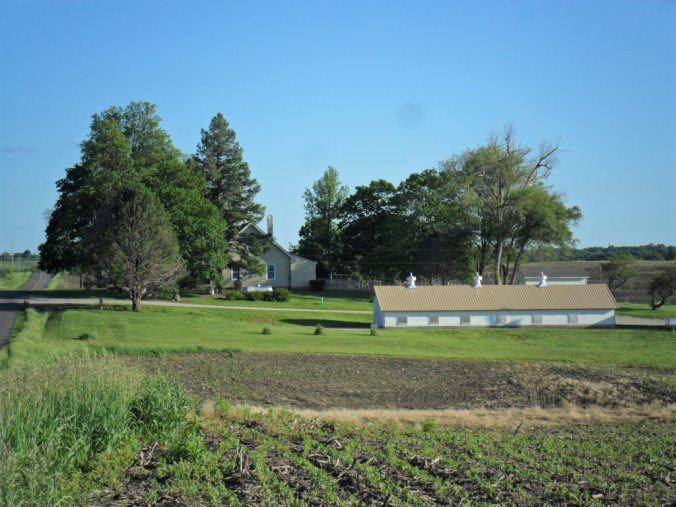
The house where Dad lived the last 80 years of his life and where I grew up.

SAM_1167

When I was a child, the building in the foreground was used at various times as a farrowing house, once for Rhode Island Red chickens, and to store various farm supplies.  When I went to visit Dad after Mom died and we were at the cemetery on Memorial Day, a man came up to Dad and asked if he was Doyle Lightle.  They started chatting and I learned that when Dad first built it during Prohibition times, he held dances there.  The sheriff would send deputies to watch and make sure no one was drinking.  I had lived there and visited there for decades and had never heard this story.

SAM_1134

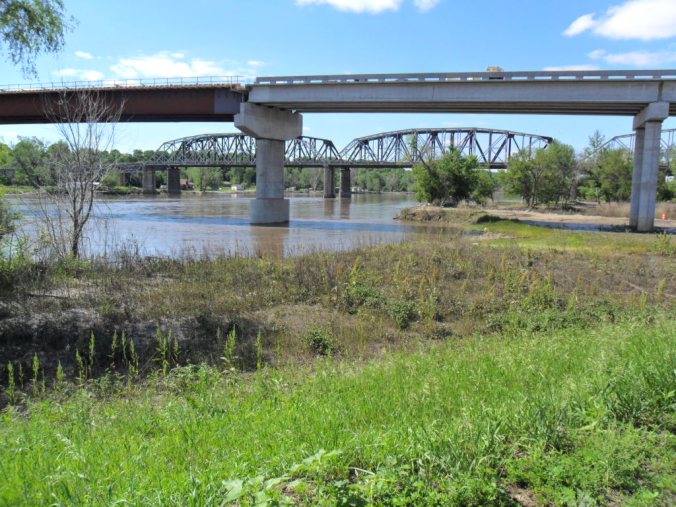
I took this photo standing on the levee next to the Missouri River looking toward the Rulo, Nebraska bridge.  This is the land my mother’s family owned.  On some Sundays as a treat, we would cross the bridge to a restaurant on the Nebraska side.  It was famous for its fried catfish and carp.

SAM_1150

This is country with lots of water and trees.  This picture was taken near Squaw Creek National Wildlife Refuge.  Several times in my life, I have seen flooding from the bluffs on the Missouri side all the way to the bluffs on the Kansas and Nebraska side of the river.  When I was a child, my uncle and aunt lived on the river farm until a flood reached half way up the second story of their house.  They gave up and moved to town.

SAM_1145

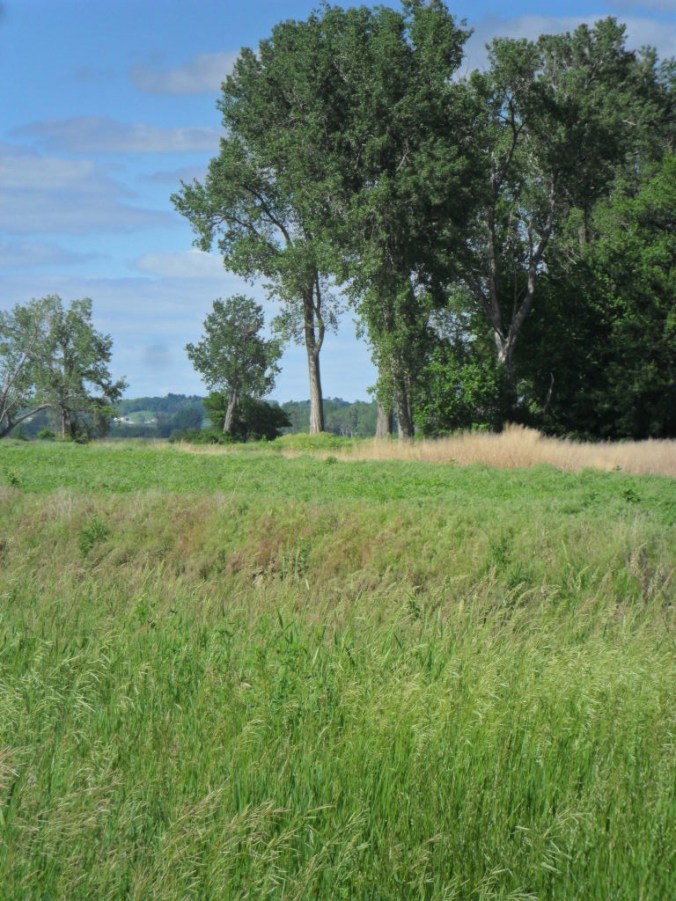
When I was a child, there were trees like this in lots of places on Mom’s family’s farm.  About this time of year we would hunt for morels and often pick a bushel basket full.  Mom dipped them in egg and cornmeal, then fried them.  We practically lived on them for week or two.  I was shocked as an adult to go into a fancy market and discover that dried morels were 95 dollars a pound.


My Mother–Barbie Doll


Barbara Lewis Duke, pretty petite, blue-eyed and blond, my mother, one fearless, controlling woman.  Long after Mother’s death, Dad said, “Barbara was afraid of absolutely no one and nothing.”  They married late:  34 and 38.  He adored her unconditionally.  She filled my life with horses, music, love, cornfields, hay rides,      books, ambition.  Whatever she felt she had missed, I was going to possess:  piano lessons, a college education.  Her father, who died long before I was born, loved                 fancy, fast horses.  So did she.  During my preschool, croupy years, she quieted my hysterical night coughing with stories of run aways horses pulling her in a wagon.      With less than one hundred pounds and lots of determination, she stopped them,               a tiny Barbie Doll flying across the Missouri River Bottom, strong, willful, free.

Note:  this poem is in my book “On the Rim of Wonder” and was also recently published in “Inside and Out”, a collection of writings by women.  It is available on Amazon and published by the Story Circle Network.

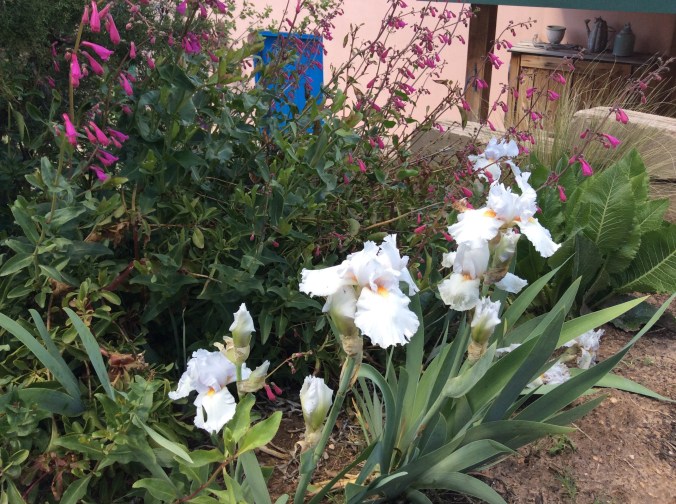
Addendum:  My mother loved horses and flowers.  When I look at the flowers around my house I think of my mother.  And, yes, I have horses.  The following photos are dedicated to my mother’s memory.


IMG_2230 (1)

IMG_2866

IMG_2373

IMG_2318

IMG_2304

SAM_0947

My mother’s mother and father.


Blood Quantum: A Poem for Our Time


My grandson cuts himself into 16 equal pieces:

4/16 Urhobo from Africa

3/16 Spanish from Spain

4/16 European–two Swiss German great, great-grandfathers

(Werth and Kaiser), Irish, English and who knows what

3/16 Mexican–whatever mixtures that may be

2/16 Navaho


Who am I? What am I?

Who are you? What are you?

Do we really know?

Who sets the rules?

white men

black

Indian

Native American

Irish

English

German

from where and for whom?


He looks Navaho:

-blue black straight hair

-pale brown skin

-obsidian eyes.

One four year old girl asks him,

“Are you American Indian?”

His six year old self says nothing.

She repeats,

“Are you American Indian?”

He says, “It’s complicated.”


The Navaho won’t claim him, too little blood.

He needs 1/4, not 1/8.

Caddy and Fort Sill Apache allow 1/16, not Navahos.

1/4 blood is for

-Sioux

-Cheyenne

-Kiowa

-Navaho

1/8 works for Comanche and Pawnee.

Some Cherokees only want a Cherokee ancestor.


But he is none of those.

Is he Navaho?

Is he white?

The old South goes by the one drop rule:

one drop of Negro…

Is a person with 99/100 per cent white

and 1/100 black, black?

Who says?

Kids at school ask, “What are you?”

He tells them.

They say, “You’re lying.”


I only know specifically about two ancestors,

the Swiss Germans.

Another great grandfather disappeared during the Civil War.

I don’t even know his name.

Who am I?

Who are you?

I think I’ll get a DNA test.

Then I’ll know how many pieces I need to cut myself into.


Note:  This was originally published in my book “On the Rim of Wonder”.  I had a cousin send me 75 pages of ancestry information.  I looked up more myself.  That one great grandfather remains a mystery.  I had my DNA done.  It did not match what I expected from the ancestry work.

Blood quantum is the term the US government used to determine whether a person would be qualified as an Indian.  Now many Indian Nations use it to decide who can be on the tribal rolls and who cannot.


Poetry Reading


23622546_10212763863162805_8472929759460388736_n

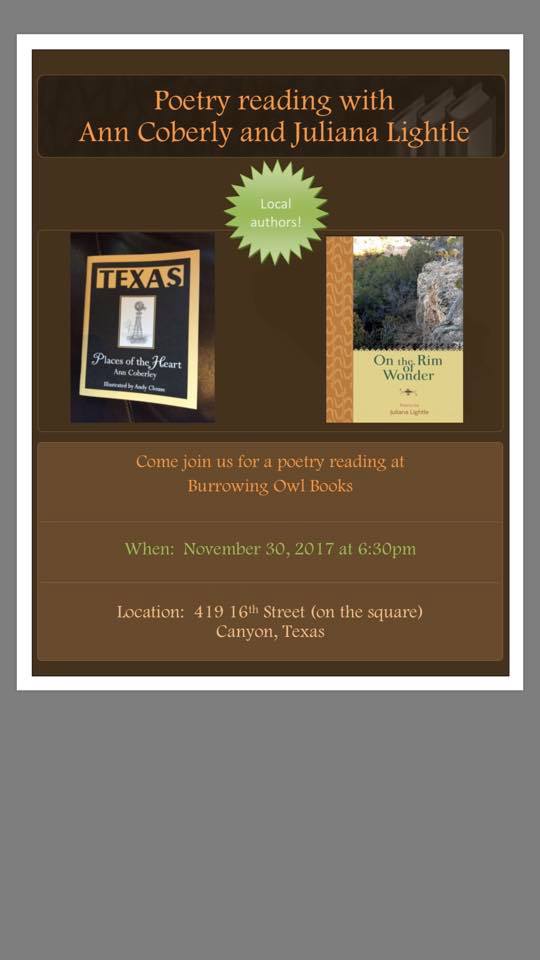
A busy time of year, this holiday season.  Here is what I will be doing this week on Thursday.  Now I have to decide which poems to read, the Puma Poems, Hot Pink Toenails, Star–the sad one about the death of my grandson’s horse, poems about aging, death, what?

Mom’s Pumpkin Pie


Mom made fantastic pies of all sorts so much so that when she took a pie to a potluck, people would rush to get a piece even before they acquired any other food.  The only pumpkin pie my grandson likes is Mom’s.  He seems to like the idea that he is eating something his great grandmother created.  Today, I taught him to make homemade pie crust and Mom’s pumpkin pie.  Here he is crimping the edges after rolling out the dough and placing it in the pie pan.

IMG_2884

We made two pumpkin and one pecan today.  Here is the recipe for Mom’s pumpkin pie.  He ground the cinnamon–pieces of bark from a friend’s mom’s tree in Ethiopia–using an old fashioned, wooden grinder.

1 1/2 cups cooked or canned pumpkin

1 1/2 cups milk and cream or evaporated milk  ( I use 1 can evaporated milk)

3 eggs

3/4 cup brown or white sugar

1 teaspoon cinnamon

1 teaspoon nutmeg ( I grated this fresh)

1/2 teaspoon ginger

Dump everything in a blender.  Place your hand on the lid before starting the motor.  Blend a few seconds, until smooth, and pour into pastry-lined pie shell.  Bake at 450 for ten minutes, then bake at 350 for 30 minutes longer or until firm in the center.

Placed with Mom’s original typed recipe is this note:  “Juliana, if you use half evaporated milk it gives a wonderful flavor and I like white sugar best.” I use white sugar.

The finished product looks like this.

SAM_1381

This recipe makes a lot of filling so if you do not have a large pie pan, you will need to bake some of the filling in another pan.  Since we made two today, we baked the left over without a crust in another oven proof dish–pumpkin pudding.

Sunday Poem–“Hair”


No females in my family had long hair.

Dad did not like it,

said it showed male domination

over women.

Once when grown and gone

from home, I began to grow mine

out, experiment.

When he saw it, he told me

he thought it unbecoming.

I cut it.

Mom said she had long hair

when she was young.

Her dad forbade her to cut it.

In her twenties she chopped her golden locks

off, flapper style, then hid her head

in a scarf, afraid.


Note:  This poem is from the family section of my book, “On the Rim of Wonder”.


Sunday Poem


A few years ago Uno Mundo Press published my second book, a book of poems.  Reviewers say it is a memoir.  Oddly, that was not the plan; in retrospect, it seems apt.  The poems’ topics are not chronological but rather via topic with quotations before each topic as a sort of introduction.  For the foreseeable future, while I continue writing another book, I will post one poem from the book every Sunday.

The book begins with this quotation:

“Do something scandalous to give your descendants something

to talk about when you are gone.”  Vanessa Talbot


The first section begins with this quote by Judith Jameson, the famous dancer and choreographer:

“I always tell my dancers.

You are not defined by your fingertips,

or the top of you head,

or the bottom of your feet.

You are defined by you.

You are the expanse.

You are the infinity.”


The first poem in the book goes like this:

I Have Lived

Depression, sad days, melancholy.

Gone!

At 26, I said, “To hell with this!

You control you life, live it!”


I tried forbidden liaisons, trained horses,

Traveled around the world, a cobra wrapped around my neck,

Walked the Shalimar Gardens in Kashmir,

Stood before the Jama Masjid in Old Delhi,

Watched the Taj Mahal reflected in still waters,

Walked the streets of Katmandu,

Talked to monks at Shwedagon Pagoda,

Bargained with sticks in dirt, math our only common language,

Downed raw turtle eggs in Costa Rica,

Danced on table tops, sang “Adonai”,

Roamed empty roads across the Navaho Nation,

Divorced four times,

Raised two talented children.


I have lived, running on the rim of wonder.

IMG_2675


A Tribute to My Dad, Doyle Lightle


Dad lived his entire life, 90 years, on the farm which my great grandfather, Gottlieb Werth, homesteaded in the middle 1800s.  Gottlieb Werth came to the United States from Switzerland when he was 18.  Even though Dad lived in the same place all his life, he liked road trips.  The first occurred when I was three.  He drove us all the way from Northwest Missouri to Monterey, Mexico.  I still have photos of us wading in the Gulf in Texas before we crossed into Mexico.  Thereafter, we almost never missed at least one road trip a year between wheat harvest and the start of school.  Sometimes instead of a summer trip we took one around Christmas, like the year we went to Florida when I was in elementary school.  I skipped school a couple of weeks, took my work along, and came home ahead because the flu, which I missed, put everything behind.

By the time I was six, I had probably covered half the continental United States and, of course, been to Mexico.  I do not remember some of those first trips but the later ones I remember well, like the summer we spent in Crested Butte, Colorado, when it was still a mining town, and another in Placerville, Colorado, down the road from Telluride.  Then it was just a nowhere place, filled with the Victorian houses of its mining heyday.  Dad joked later that he should have bought one of those houses when it was cheap.

One year, the year between my junior and senior year in high school, we took a one month trip and drove 6,000 miles, from home to the Black Hills, where we had relatives, to Vancouver, to Vancouver Island and then to Victoria.  We visited every national park along the way,  Grand Tetons, Yellowstone, Glacier, Olympic, then drove up the Columbia and cut back across Rocky Mountain National Park and through Colorado. On an earlier trip we went to every park in Utah and Northern Arizona and Mesa Verde.

Dad’s interest in and curiosity about everything seemed endless.  He tried the latest agricultural methods in his farming, was an avid conservationist, wanted to check everything out on these trips, talked to people about what they were doing.  At home he read National Geographic and Scientific American and endless books.

Because of these trips, his sense of wonder, his propensity for intellectual activity, my friends in college were always shocked to find out he was a farmer.  They often thought, originally, that he was a college professor.

He moved into this house where I grew up when he was ten.  After Mom died, Dad and I were at her grave on Memorial Day when a man came up and starting talking with Dad.  I learned that the building in the foreground of this photo, before it was used for livestock and storage, was used for dancing during the Depression. The sheriff would send out deputies to make sure no illegal alcohol was consumed. I took this photo four years ago when I took a trip back.

12193406_10204105678156113_6043720938154804167_n

There used to be woods to the right of this photo but someone bought the land and bulldozed down all the huge oak trees.  The tall douglas fir tree in the middle was tiny when we brought it home on one of our trips out West.

I will forever be thankful to Dad for instilling in me a love of exploration, wonder, and curiosity.


Weekend Adventure


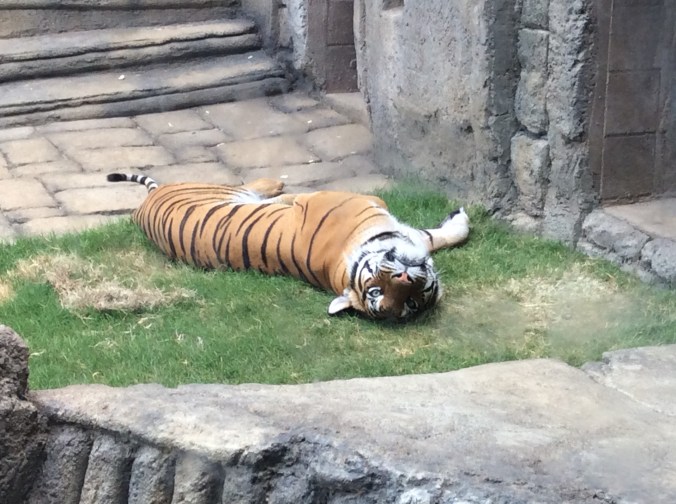
This past weekend my family had to return to Tulsa, Oklahoma, to finish some family business.  While there, we decided to explore as well.  After completing what we needed to accomplish on Friday, we decided to check out the Tulsa Zoo located in Mohawk Park.  Tulsa Zoo contains lots of green, open spaces, and some extremely interesting architecture.  For example the Malayan tigers live in an area made to look like ancient, abandoned temples.

IMG_2682

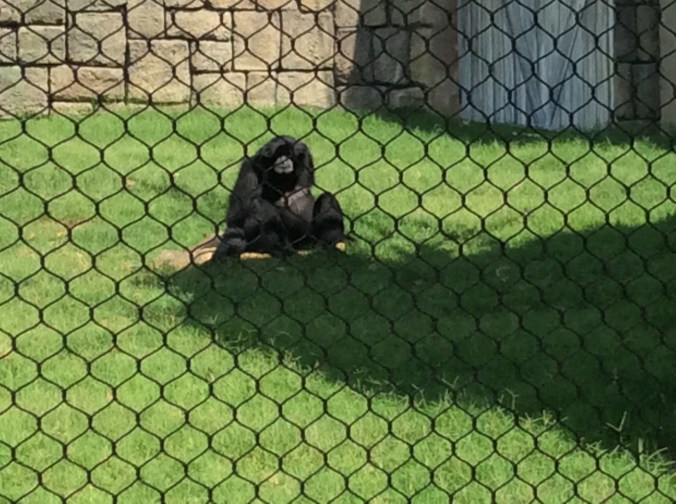
Then there are animals I have never even heard of before like the siamangs.

IMG_2686

I was surprised to see komodo dragons.

IMG_2681

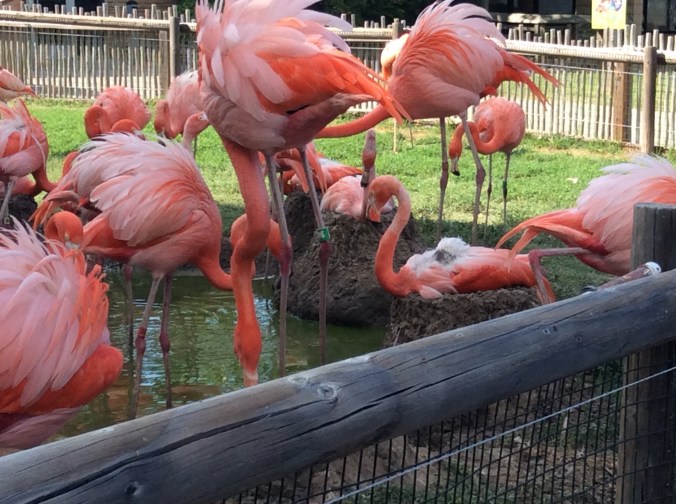
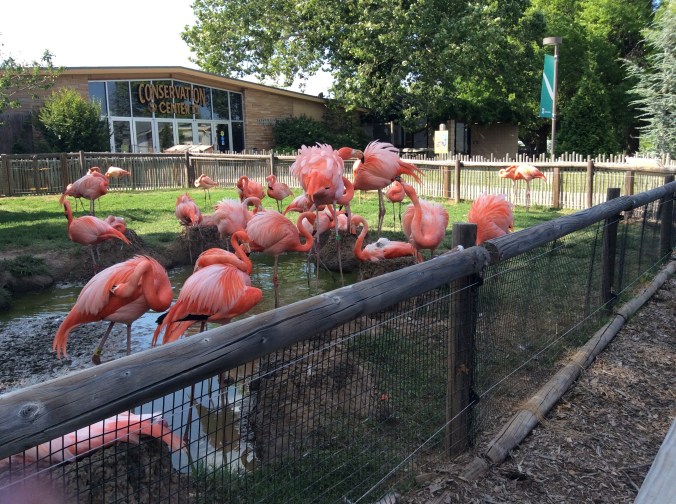
The intensity of the colors in the American flamingoes never cease to amaze.

IMG_2690

IMG_2691

Apparently, the rest of my family liked them as well.

IMG_2689

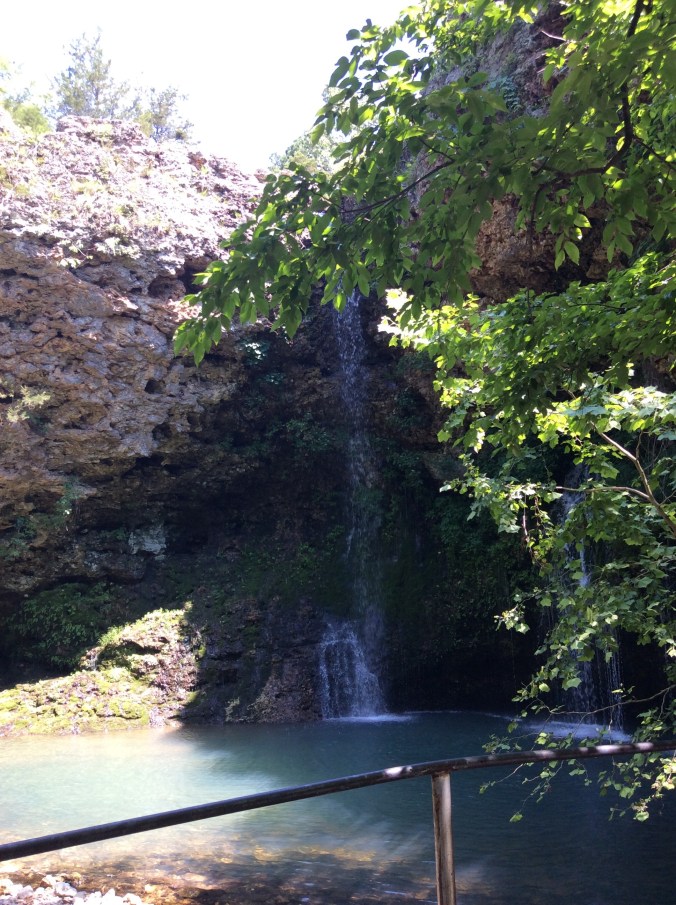
The next day, Saturday, we decided to head east through the Cheyenne Nation to visit Natural Falls State Park. If we had known what it is really like, we would have taken a picnic.

IMG_2693

The area above where the falls drop off.

IMG_2697

IMG_2698

Dripping Springs

IMG_2700

Just below the falls another stream enters and then flows down to a lake.

IMG_2709

The lake becomes larger as it flows farther.  It is a moderate to difficult hike getting to the lake.  Fishing is permitted here.  This park is also a good place to camp.

While gone, a giant thunderstorm arrived at my house with 8 inches of hail and three inches of rain in a short period.  Although the juniper trees look close to normal, most of the deciduous plants were denuded.  I have no idea whether they will recover.  A few of the small native flowers appear normal.  Luckily, my house was not damaged. However, this evening with my grandson’s help I will tackle the drive which is full of about 8 inches, in some places, of dirt, rocks, and gravel.  Luckily, after removing the larger rocks, I will get most of it with the tractor bucket and move it back to where it belongs.