After reading two intense, serious books, one fiction and one non-fiction, I needed a break. Several friends and acquaintances recently told me about Ross Gay’s delight books so I went to the local library and asked them to request his latest, “The Book of (More) Delights”. I had my doubts after reading the first few entries, but kept going and then #10 “Alright Baby” made me laugh out loud as well as recall an incident in a high school class I taught years ago.
Gay’s 2.5 page entry is about testicles, yes, testicles. He tells about a couple of young guys who think they are not stuff challenging him and his friend (they are in their 40s) to basketball. The two 20 somethings were doing their best to prove what Gay calls their manhood. As Gay relates the incident, he jokes about maleness and testicles and how testicles control a lot of what men do. I had to laugh. The two old guys won by the way.
This mere 2.5 page story made me remember a class of teenagers I taught from years ago. I do not even recall what caused whatever was going on in class, but one male student suddenly shouted, “There’s too much testosterone in this room!” Everyone laughed. Thereafter every time any sort of commotion, even if piddly, occurred, everyone shouted, “There’s too much testosterone in this room!”
“What are you willing to give up to alleviate someone else’s suffering?”
This book won the National Book Award for Non-fiction in 2025. I started reading it before book four but had to take a break. It is very serious and details a lot of dreadful recent and not so recent history. The author discusses in detail the gap between Western ideals and the reality the West enacts using examples from Gaza, his stint as a journalist in Afghanistan and other war torn places. He notes the betrayals of free speech, the betrayals of indigenous people, the betrayals of people of African descent. Some parts talk about reckoning and questions whether such will occur, who will remember, and will it matter and to whom.
El Akkad was born in Egypt, but grew up in Qatar and Canada as the family followed wherever his father was able to find work. He now lives in the US and states his current home is his 17th or 18th. His family had to move so much he remains uncertain.
This is a serious read for people who want to think about what has occurred in the last 20-30 years, what is occurring presently, and how all this will affect the future.
Another intriguing novel by an author who has won both the Pulitzer and the National Book Award. Initially the four main characters do not seem to have any interactions with each other. 12 year old Evie’s life is changed forever when her father, the inventor of the first aqualung, makes her submerge in a pool to prove it works. She becomes one of the world’s most famous divers and oceanographers. Ina, an artist, grew up in US naval bases all over the South Pacific and eventually finds herself at a university in Illinois. Rafi, a genius black child, is pushed by his dad to apply to a private Jesuit high school where he meets Todd, a rich kid whose whose family provides scholarships to the school. The two become best friends in spite of different interests. Rafi loves literature and Todd loves computers. They bond over a thousands of years old Chinese game with which they become obsessed. They become roommates at the same university where Ina is a student. The three become best friends.
Decades later all these lives become intertwined on an island in the South Pacific–Makatea in French Polynesia, an island where the harvesting of giant phosphorus deposits nearly ruined it while furnishing the rest of the world with fuel to make planets grows faster and better and feed the world. Because of Evie’s obsession with the sea, I learned enormous amounts about the ocean and the varied animals that live there, some of which I had never heard of before. Because of Todd’s obsession with computers and his invention of an AI game, I learned a lot about how gaming works and how people become addicted. For Rafi, the agony and anger of often being the one left out, the one seen as the smart Black kid, and the only one in many circumstances affect how he views the world and himself and where life eventually takes him. From his character I learned new things about literature and how books and writing affect people and their relationships.
I could not stop reading this book. Years ago, when it first came out, I read the author’s novel, “The Overstay”. While the topics and characters are totally different, in some ways this novel reminded me of that story, of how our lives are often intertwined in all sorts of ways we never expected.
Neftali Ricardo Reyes Basoalto, a country boy who grew up in a remote, rainy, forested area in southern Chile, an area called Araucania, an indigenous name, became Pablo Neruda, a name he created so he could publish poetry without his father’s knowledge. His father and mother, who died less than a month after his birth, originally came from the wine country of central Chile. His father became a conductor for a ballast train in this southern region. His descriptions of his childhood are of a shy boy who loved nature in all its forms and books. Later, he wrote letters to girls for his friends. Yet, he says he wrote his first poem when he had barely learned to read. Overcome with emotion, he wrote a poem to his stepmother, the only mother he knew. When he showed it to his father, his father asked to know what he had copied it from.
Later, he moves to Santiago to attend university, always poor, always wearing black, always carrying books. He joins a Student Federation and becomes acquainted with other young poets. He writes, “I saw a refuge in poetry with the intensity of someone timid.” After he struggled paying for the printing of his first book, he wrote, “…the writer’s task…must be a personal effort for the benefit of all.”
He wins a literary prize at school, his books are popular, and he finds himself acquiring a job at a Chilean consul in Rangoon but to get there he and a friend end up in France and Portugal, then Japan, then Singapore, before finally arriving at his destination. Thus, began his life as a consul official in places all over the world, including Spain just before and at the beginning of Franco’s rise to power.
After witnessing so much poverty, so many conflicts benefiting the rich, he becomes an avid supporter of the Chilean Communist Party–a form of communism unlike what most think of when they think of communism. The communism he and his friends support includes working on behalf of the poor, the common laborer, the disenfranchised against the wealthy elite who controlled most Latin American countries during his lifetime and in many cases still do.
He states, “I want to live in a world where beings are only human with no other title but that, without worrying their heads about rules, a word, a label…I want the great majority, the only majority, everyone, to be able to speak out, read, listen, thrive…I have taken a road because I believe that road leads us all to a lasting brotherhood…an inexhaustible goodness…”
Later, he chose to live at Isla Negra, a sort of hideout especially in winter where he could write. Then he returned to Chile. He helped his friend Salvatore Allende campaign for the presidency of Chile. After Allende became president, he appointed Neruda to be ambassador to France. In 1971, Neruda won the Nobel Prize. In 1972, the US blockaded Chile and Neruda returned and completed the final edit of his memoirs. He was welcomed back with a ceremony at the National Stadium in Santiago with a huge crowd in attendance. In 1973, a military coup, supported by the US, overturned the government and assassinated Allende. Less than one month later, Neruda died. Shortly thereafter, news spread worldwide that his two houses in different parts of Chile had been ransacked and vandalized by the new government and its forces.
This recently published book is one of the latest in a bookclub to which my grandson belongs. Although an historical novel based on the reporting of an actual event in 1701, much of it applies to today’s world. In 1701, Dr. John Friend reported to the the Royal Society of England about a “rumuor spread” which discussed a report that young girls in the Oxfordshire country side had “been seized with frequent barking in the manner of dogs.”
Five sisters live with their grandfather on an affluent farm in the country. Due to the recent death of their grandmother, they go around dressed in black as was the custom. Because they stay to themselves a lot, roam freer than most girls, they are often looked upon with suspicion by the villagers. One man, who ferries everyone to and fro over the nearby river, has issues with women and loathes these girls because he thinks they are too independent and views them as defiant and thinks they ridicule him because they do not chat with him when they use the ferry. He also has a severe drinking problem and spends all of his free time in the village pub. He is about to be married to a local woman but has severe anxiety over this because he thinks his new wife might try to boss him around.
Most of the men in the village spend their evenings drinking in the pub and often resort of fights and various forms of violence when issues arise. They see this as manly behavior. They view with suspicion any man who does not behave as they do. The woman, Temperance, who serves them hates alcohol and goes so far as to wear leather gloves so the alcohol will not touch her hands. She is one of few in the village who does not believe in rumors and supports rational behavior.
Everything goes awry when during a severe drought, the river dries up, the heat overcomes everyone, and Pete, the ferryman, insists he has seen the five sisters bark and turn into dogs and incites fear in many in the village. It seems to matter little that the two young men who work for the girls’ grandfather, proclaim that the girls are perfectly normal and none of this is true.
This novel raises various issues that continue as issues hundreds of years after the above incident:
-What does it take to make a man? What characteristics define real manhood? Is manhood defined by violence or kindness and compassion?
-How much freedom is okay for women? How much independence and who determines this?
-When is drinking ok and how much? Should people stop people who become violent when drunk?
-What happens to a neighborhood, a society, when people start to believe all sorts of stuff that is not true? Can it be stopped and how?
Last week a writer friend commented on the notion that writers are known for wearing turtlenecks. That’s news to me even though I am a writer and I wear turtlenecks plus multiple layers. I’m cold. I’m cold at least half of the year even here in Southern California. This comment caused me to count mine. It seems I own 25 turtlenecks–white, off-white, various shades of beige and brown but none dark, several black, two red, two orange, two coral one of which one is darker than the other, two striped (one black and white, one tan and creme), deep green, two hot pink, and one sheer in shades of black and brown and creme and a sort of burgundy color. Another is a color I am not even sure how to describe which I will call pale peach. Since I’ve been the same size for decades, I am guessing some of these border on the ancient but not worn out. I never dry them in the dryer. Drying clothes in the dryer wears them out faster and changes their color.
About one-third of the way through his “Memoirs”, Pablo Neruda talks about a poet friend of his in Spain who wore turtlenecks which Neruda claims was a huge no-no at the time. What does he say poets should wear? Black from head to toe. He had been wearing black practically since birth. His mother died from tuberculosis a month after he was born. Perhaps the endless rain and endless mud he describes in the area of southern Chile where he grew up made wearing black the most practical color. Doubtless the poverty he witnessed as a young man working as a poor employee of tiny Chilean consulates in places like Ceylon (now SriLanka), Indonesia, and India did not inspire him to wear colorful clothes. Then not long after he arrives in Spain, Franco comes to power and one of his best friends, Federico Garcia Lorca is assassinated. As for me, when I am not wearing colorful clothes, I wear black, not due to rain or mud or sadness. The reason I am drawn to black mystifies me–another thing to ponder.
Not sure this qualifies as a turtleneck but it comes close.
Two days ago I drove to the local library to return “The Historian” and inquire about a book an acquaintance had recommended. The library houses a used book section at its front hall entrance. I usually only glance at it because mostly it contains books in which I have zero interest. I glanced once again. There in nonfiction I saw NERUDA painted in big, bold bright colors-blue, red, green, purple–across the top half of a book cover. Just below this was a parade of flowers marching across the middle of the cover in the same bold, bright colors. Finally, at the bottom painted in bright red on a black background in capital letters it read, “MEMOIRS.” Inside the O is printed in the same red these words,”confieso que he vivido.” I snatched it up. The little sign said 25 cents. Although I’ve read Neruda poems mostly translated into English, I had no idea he had written anything about his own life. I knew I had to read this. I knew some things about his fascinating life. I wanted to know more. I dug around in my wallet, found a quarter, and deposited in the little brown box one of the librarians had indicated.
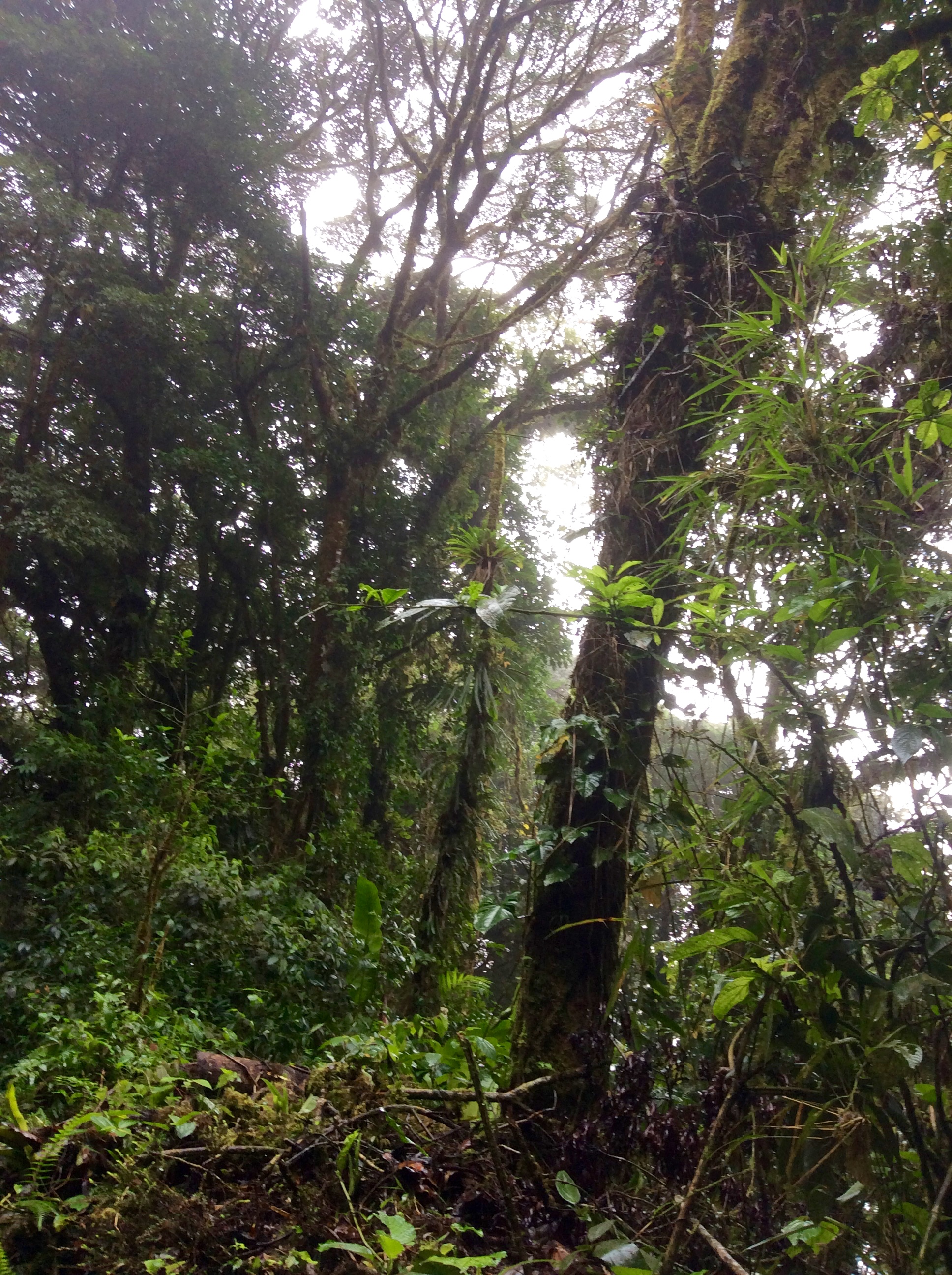
Later at home, I read the beginning, his brief introduction, explaining there are gaps here and there. He also explains, “What the memoir writer remembers is not the same as what the poet remembers.” He goes on to explain this. I will need to contemplate this more. Then in the beginning of the first chapter, “The Country Boy”, he describes “The Chilean Forest”. It starts, “Under the volcanoes, beside the snow-capped mountains, among the huge lakes, the fragrant, the silent, the tangled Chilean forest…” What continues is a prose poem describing this forest with intense sensory detail so clear the reader can see the details, the mystery, the lushness. He ends with this poem with the words, “Anyone who hasn’t been in the Chilean forest does not know this planet. I have come out of this landscape, that mud, that silence to roam, to go singing through the world.” Reading this beginning instantly linked me to his poetry I had read, to its sensory detail, to its lyricism.
They say we are all products of the environment in which we grew up whether we like it or not. Reading this is making me view this truism in a new light.
People tell me I have a lot of determination. If they know about it, they use this example: I just finished my 659th day of walking at least 10,000 steps per day never missing a day. My average is over 13,000 but it was higher until the rain came. It forced me to dance, jog, and run in place inside my house, not exactly a fun endeavor.
Three years ago as part of a Story Circle Network class, I read about book written by a woman who read a book per day for a year in order to help her deal with her grief over the loss of young family member who died too soon. I figured if she could read a book a day, surely I could read a book per week. First year I made it, second I fell one short, and in 2025 I read 53 and reviewed them all on my blog.
Today, I finished book one off 2026: “We Are Green and Trembling” by the Argentinian writer Gabriela Cabezon Camara. It won the National Book Award for translated literature. A sort of fantastical, historical novel, it portrays the life of a real person, Antonio de Erauso. Now identifying as a man, he writes letters to his aunt who is the prioress of a Basque convent. When a small girl, his parents placed her in the convent hoping she would someday replace the aunt as head of the convent. To flee the narrow confines of such a life, she escapes and disguises herself as a man. Through his narration and letters to his aunt, he tells of all his adventures, including working as a mule skinner, then becoming a conquistador in South America among other endeavors. At the time of the novel, he has escaped the military captain for whom he fought and rescued two native Guarini girls from enslavement along with two monkeys. The smallest girl and the monkeys were in cages and near starvation when he rescued them. Pursued by the military they escaped, they now reside deep in the jungle aided by the natives who live there.
Through this novel, the author manages to criticize colonialism, the tyranny of strict religious beliefs, the treatment of women, and the horrors inflicted on native peoples.
Recently, at a party I attended, someone claimed young people these days are lazy, don’t want to work, feel entitled. Sometimes I can keep my mouth shut, just listen, and disagree inside. Not this time. When I hear comments like this about young people, comments with which I vehemently disagree whether it is in person or on social media, I feel compelled to speak up.
During at least half the year, I spend one day a week at an inner city high school. Granted the students I work with are high achieving, students who are the opposite of lazy, some almost to the extreme. When I mentioned this, the person said, “Well this is because they are recent immigrants.” In most of these cases at this school, that is true. Then I explained that I had taught more than 20 years at two Title I high schools where nearly no one was a recent immigrant. Of course, like throughout history, there are some lazy young people. That, however, does not describe the majority. I’ve had homeless students who took the hardest dual credit classes and prevailed. I’ve had students who spent extra time at school because it was safer than being home. I’ve had students whose parents were in jail or drug addicts but still made it to school, did the required work, and graduated. I’ve had students struggling with mental health issues but no matter what managed to do the work required.
Reasons to be lazy abound. Reasons to feel hopeless about the future abound. Look at the present economy, look at the wage cap between the rich and poor, look at how many struggle to find a decent job. Young people are aware of all this, acutely aware. Yet most do the work required and press on no matter what.


 writingontherim