Book 19 for 2026: “An Unnecessary Woman”, Rabih Alameddine


Aaliya Saleh, 72, lives alone in an apartment in Beirut. Her obsession is reading books and translating books into Arabic. Every January she starts a new translation. Upon completion, she stores the translation in a box and puts it in the spare bedroom. No one ever sees them or reads them. Her family members envy her large apartment because she is divorced and has no children–her brothers think they should have it because they are married and have children. Her mother is a difficult woman and has become stricken with mild dementia. Written in first person, Aaliya relates her life as she sees it. Her impotent husband walks out and she is fine with this because he is a difficult person. Living alone she is able to defy norms and customs and lives as she chooses, a reclusive life for the most part except for her decades long job running a small bookstore. During her telling in the novel she is now retired with some relatively minor aches and pains. She has managed to live as she chooses in spite of the Civil War, repeated bombing by the Israelis, and other difficulties. Toward the end, an unthinkable disaster occurs that threatens what she views as her life’s purpose.

This character’s prodigious reading and knowledge of literature and authors inspired me to look up authors I had not read, learn more about them, and go to the bookstore and library in search of some of the books she discusses in the novel. It also made me think more about how societies see women as unnecessary (or worse) if they fail to comply with societal norms. This novel’s setting may be Beirut, but it could be anywhere in the world in terms of the price women often pay when they defy cultural norms and live as they choose.

Balinese Gamelan Music and Dancing


Earlier this week I attended a concert at Pomona College. I do not recall ever hearing Gamelan music before. Gamelan is percussion music. In fact the word means percussion orchestra. The instruments used in this performance are called gong kebyar. The instruments are made of bronze, iron, or bamboo. This music sounds nothing like European music. The instruments are tuned to a very high pitch and deliberately what one might consider out of tune. This is intentional. Pomona College has its own gamelan ensemble. Musicians and dancers from The Californian Institute of the Arts joined them. They performed traditional temple dancing, music from Balinese puppet theatre, and some original pieces by a famous Balinese couple (Dr. NyomanWenten and Nanik Wenten) –both music and dance. The style of this music is loud and fiery. I could only take photos because recording was prohibited.

Delights 6


Redwood tree absorbs the mist.

Jasmine fragrance fills th air.

Scarlet, hot pink, peach, orange and multicolored

rose blooms grace the garden wall.

Hummingbirds drink nectar from the feeder

in the lilac bush.

Morning joy.

Book 18 for 2026: “The Hakawati”, Rabih Alameddine


In Lebanese, a hakawati is a traditional teller of legends, tales, all sorts of stories. Two basic sets of stories run parallel in this 500 plus page novel. One set is the family story of the narrator whose grandfather was a famous hakawati. This part of the novel portrays life in contemporary Lebanon and the life of the narrator who emigrated to the US to attend UCLA engineering school and stayed in the US. He tells about his family history and his growing up, the various invasions of Israel into Lebanon and how it affected his family and friends, and how his family deals with their blended ethnicities, e.g Druze, Maronite, Orthodox. The novel alternates between this family’s story and traditional Middle Eastern tales of military heroes, jinn, magic, the underworld, etc. That portion of the novel is a sort of more modern One Thousand and One Nights.

My favorite quote from the novel is this: “Uncle Jihad used to say that what happens is of little significance compared with the stories we tell ourselves about what happens. Events matter little, only stories of those events affect us.” I reread this several times and thought about how even in the same family, individuals remember an event totally differently. This novel is also a reminder that even though Lebanon is in a totally different part of the world, families everywhere are more similar than different–the likes and dislikes, the family feuds, the emotions–in this all families remain the same no matter where on Earth.

Book 17 for 2026: “The Silence of the Girls”, Pat Barker


As I mentioned in an earlier post, I read the second and third book of this trilogy first not realizing it was a trilogy until after I started the second one. Pat Barker won the Booker for another set of historical novels and this appears to be her preferred genre. Most stories about Achilles and the Trojan War focus on the viewpoint of the men fighting. This trilogy focuses on the women in and around Troy who have been captured by the Greeks and have become their slaves.

This novel’s voice is that of Briseis, who was once queen of one of Troy’s neighboring kingdoms before Achilles sacked it and murdered her husband and brothers. She is now Achilles’ slave, a battle prize. She realizes she must adapt in order to survive. She gets caught in a dispute between Agamemnon and Achilles’ with the former demanding to take her away from Achilles. Achilles refuses to fight, the Greeks start to lose, something has to be done or the Trojans will win.

Briseis is just one of thousands of women who are now the slaves of the Greeks. This is not only her story but that of all those other women who are now slaves, prostitutes, nurses, women who lay out the dead. This is their story as well as that of Achilles, Patroclus, and various other Greek men but from the viewpoint of Briseis.

California Adventure 2


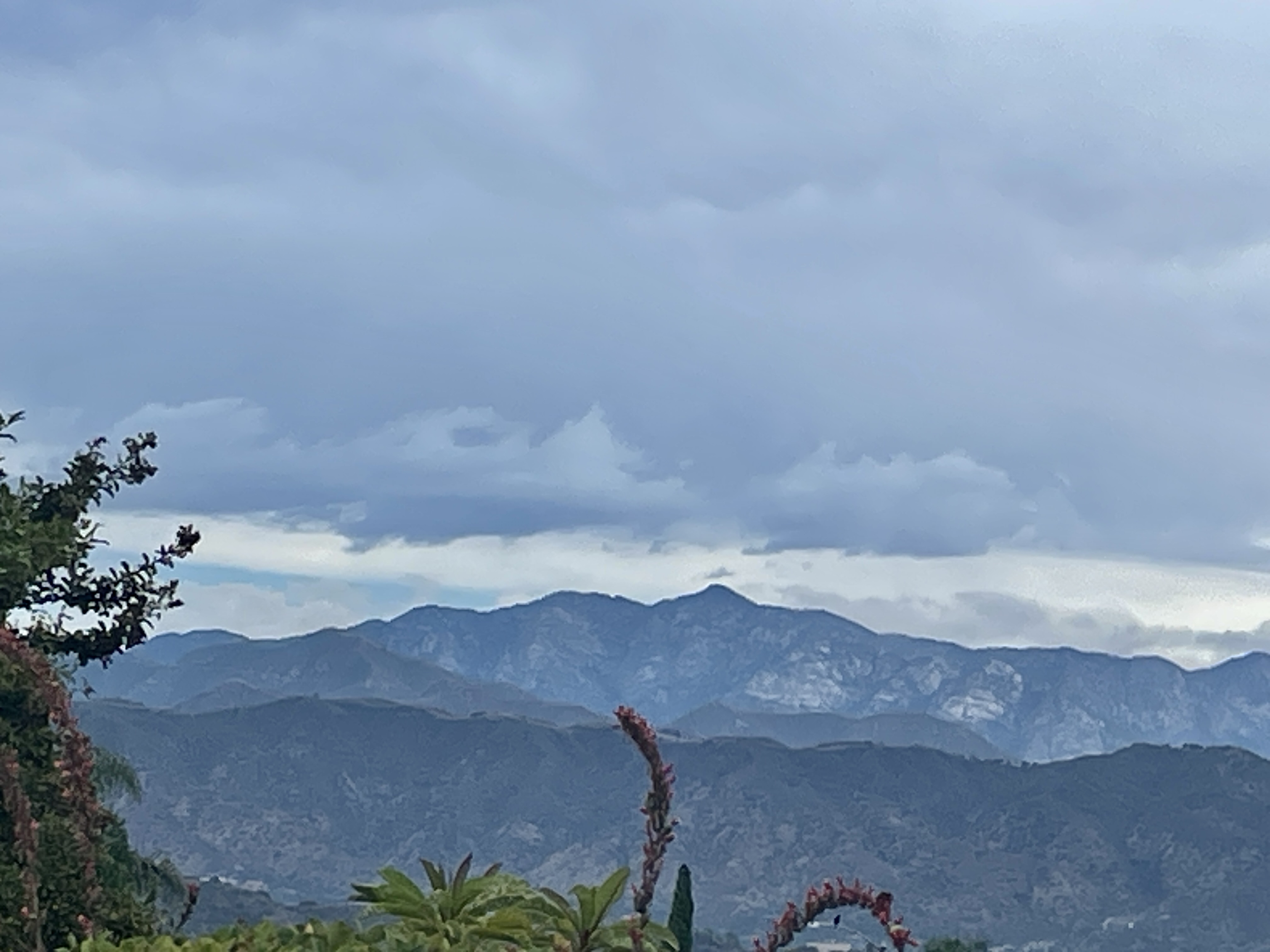
Although my son had been here a couple of times previously, he had never been up Mt. Baldy so we decided to drive a way I had never gone before, the Glendora Mountain Highway. It begins in the mountains above the town of Glendora, CA, and goes approximately 22 miles east where it intersects the highway going up Mt. Baldy at the Mt. Baldy Village. This road is not for the faint of heart. Although in good condition and well paved and two lanes wide, it is narrow and windy and without guard rails. Unfortunately, we did not stop and I was so busy driving, I could not see all the views. Unlike most of the highways and roads up toward the mountains all of which have views to the south, this highway crosses over to the other side so that many of views reveal all the rugged mountains to the north. I will attempt this adventure again, but not alone. For most of the trip we saw no other cars, and there is no cell phone reception up this way so best to have someone along with you if you decide to drive this.

After we intersected the main road, we drove to the top but the very top is blocked off so we turned around and parked to hike to Angel Falls. The following photos were taken on this hike. Most of it is paved, but the very last part up to the falls is steep and gravel and necessitates crossing the stream below the falls. We decided to hike farther up a gravel road that climbs up the mountain where the paved part stops. Angel Falls can be heard long before you can see it. This is a relatively easy hike. Even on a Monday, there were quite a few people headed to the Falls so if you do not want crowds, go on a weekday.

Yes, that is snow on the left side.

California Adventure 1


My son was visiting from Ohio and we decided to go on an adventure. Highway 39 used to go up through the mountains north of Azusa and connect with Highway 2. However, due to rockslides the last 4 or so miles, those 4 miles of the highway have been closed for years. We decided to drive as far as we could. You can go around the barrier and continue by hiking farther up over a sort of pass. Although my son did go partway, we did not hike to the top. These are photos along the way where you pass two reservoirs that are now used only for flood control. It is not a difficult drive and a fun activity going up into Los Angeles National Forest–an easy day adventure.

Books 15 and 16 for 2026: “The Wrong End of the Telescope” and “The True Story of Raja the Gullible (and His Mother)”, Rabih Alameddine


This award winning author has a writing style all his own–both serious and very funny. How anyone can make serious topics so entertainingly funny is a unique gift. The setting of the first is the island of Lesbos when masses of Syrian and other refugees are landing and many NGOs go there to help the refugees. Mina Simpson is a Lebanese American doctor who goes on a two week trip there to help a friend who works for an NGO. Mina is a trans woman who has been rejected by all her Lebanese family except one brother with whom she is very close. He goes there to meet her. This is also the story of a refugee family, the mother of whom is dying from cancer, her small children, her husband, and the NGO people and others who do everything to help this family.

The second is his most recent novel and tells the life story of a philosophy teacher in Beirut. It starts in Beirut in 2023 then goes back to the Covid pandemic and the banking collapse in Lebanon from 2001 to 2021. Then it skips back to his childhood in 1960 to 1975, the Lebanese Civil War in 1975, and later to the port explosion that destroyed much of Beirut. This novel is Lebanese history from the viewpoint of this main character. We learn all about his mother, her best friend who seems to be some kind on international criminal gang leader, some of his students, classmates, and others. While much of it relates horrors of living in dire circumstances, it is also very funny. I found myself frequently laughing.

Note: I enjoyed these two books so much that I intend to read other novels by this author.

Book 14 for 2026: “Forgotten Landscapes: How Native Americans Created Pre-Columbian North America and What Can We Learn From It”, Stanley A. Rice


The title of this non-fiction book explains what this book is about. The author is emeritus professor of biological science at Southeastern Oklahoma State University and of Cherokee heritage. He cites all the historical findings and current research regarding how natives used fire to control forests and grasslands, the numerous large native cities found both in US and Latin America using lidar technology, and how the colonists were totally mistaken when they thought they had found a land that lacked the influence of humans regarding forestry, farming, orchard keeping, etc.

He notes that the way the indigenous people in the US farmed and maintained orchards was not like those of the Europeans so they thought no one was doing anything and they were incorrect. He also goes into a lot of the history about how European diseases especially brought about the demise (genocide) of millions of native peoples even often those who had not themselves seen Europeans. Many European diseases spread from domesticated animals to humans (he provides a long list) and natives had no immunity. He cites of only one Western Hemisphere disease (syphilis) that went from the Americas to Europe. He claims that there were so few native diseases in this hemisphere because there were no large animals to domesticate.

The way Native Americans farmed, maintained forests, established orchards, etc. was so different from the European way that Europeans thought no one was doing anything productive with the land. To the contrary, they were affecting the land greatly but in ways that were more sustainable. Currently, he notes in the US forest management people have begun to recognize Native American forestry expertise and use it in many places.

Delights – 5


reading,

listening to birds

the gurgling of water,

looking up to watch

four hummingbirds challenge

each other at the feeder, and

I notice I’m surrounded by flowers

and the scent of orange blossoms.