This unusual novel features identical twin sisters, inseparable as children, living in a small town in rural Louisiana. The town’s founder, a light skinned Black man, insisted on maintaining a certain character for the town–only light skinned Black people should live there. At sixteen the sisters run away to New Orleans where they ultimately choose diametrically opposed lives, one passing as white, marrying a wealthy white man who knows nothing of her true past. In spite of the deception and lies, years later their lives become intertwined in unexpected ways. The novel not only addresses themes of race but also sexual identity and who we are as individuals and a country.
The Booker (previously Mann-Booker) Prize winner in 2022, this book is filled with gruesome events and dark, graveyard humor. Since if takes place in Sri Lanka, if you know little about Sri Lanka history in the last 50 years, you might want to do a quick review so you know about the civil unrest and the various Sri Lankan ethnicities, e.g. Tamil, Sinhalese, Burgher. Written from the viewpoint of the title character, a war photographer, after being murdered, he resides in a sort of celestial purgatory while he tries to save his two best friends and male lover who are still alive and discover the identity of his murderer. He is given seven moons in which to accomplish this task. Not a book for the faint of heart, it contains gruesome war and torture details but frequently is also quite funny and filled with “truths”. In an interview the author explained, “Sri Lankans specialize in gallows humor; it is our coping mechanism.” As I read, I underlined passages I found especially meaningful, profound, or fascinating. Here are some of them:
“-There are only two gods worth worshipping. Chance and electricity.
-Hell is all around us and it is in session as we speak.
-Evil is not what we should fear. Creatures with power acting in their own best interests; that is what should make us shudder.
-There has never been an era of peace in all recorded history.
-Interest in fair play and democracy are not always the same thing.
-I have a superb name for God. Whoever.
-Laws are needed because made-up religions are not enough.
-The universe is nothing but mathematics and probabilities…we are nothing more than accidents of our births.
-They say the only thing worse than being talked about is not being talked about.
-Your race, your school, your family will dictate how the dice of life will fall for you.
-All religions keep the poor docile and the rich in their castles.
-People are ok if bad things happen to people who are not them.
-Do not be afraid of demons; it is the living we should fear.
-I have thought long and there are no answers. There is only this. There is only now.
-We must all find a pointless cause to fight for, or why bother with breath?
-The kindest thing you can say about life. It’s not for nothing.
-I cannot understand why humans destroy when they can create. Such a waste.”
In my last blog post about reading, I promised to address the prophecies of Octavia Butler in my next post. The best way is to quote some passages from Parable of the Talents which was published in 1998. This book is the sequel to Parable of the Sowers. In that book the main character creates a new religion with CHANGE as a major focus. In fact, one of the main tenants of that religion forms the words on Octavia Butler’s tombstone which I quoted in an earlier post. Here are some passages from Parable of the Talents:
I couldn’t help wondering, though, whether these people with their crosses, had some connection with my current least favorite presidential candidate, Texas Senator Andrew Steele Jarrett. It sounds like the sort of thing his people might do—a revival of some nasty out of the past….So now we have another group that uses crosses and slaughters people. Jarrett’s people could be behind it. He insists on being a throwback to some earlier ‘simpler’ time. Now does not suit him. Religious tolerance does not suit him. He wants to take us back to some magical time when everyone believed in the same God, worshipped Him in the same way, and understood that their safety in the universe depended on completing the same religious rituals and stomping anyone who is different.
Jarrett’s supporters have been known to burn people at the stake for being witches….a Moslem, a Jew, a Hindu, a Buddhist, or in some parts of the country, a Mormon, a Jehovah’s Witness, or even a Catholic. A witch may also be an atheist or an eccentric…anyone who does not fit into Jarrett’s version of Christianity. He condemns the burnings but in very mild language.
He has a simple answer: ‘Join us! Our doors are open to every nationality, every race.! Leave your sinful past behind, and become one of us. Help us make American great again.”
Note: If you are interested in Octavia Butler books, the stack at the right bottom of the photo are mostly her books. Some are series and need to be read in a certain order.
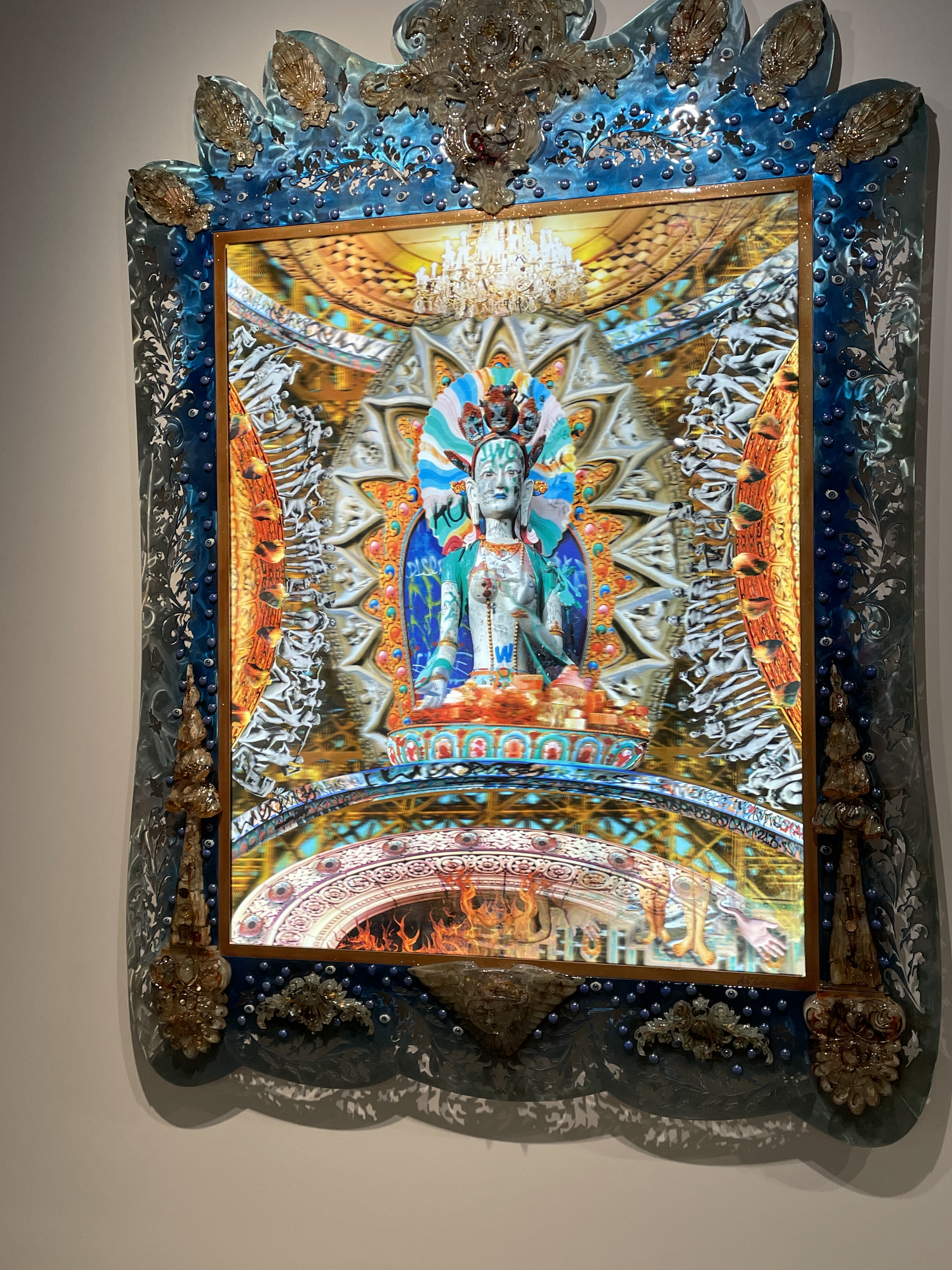
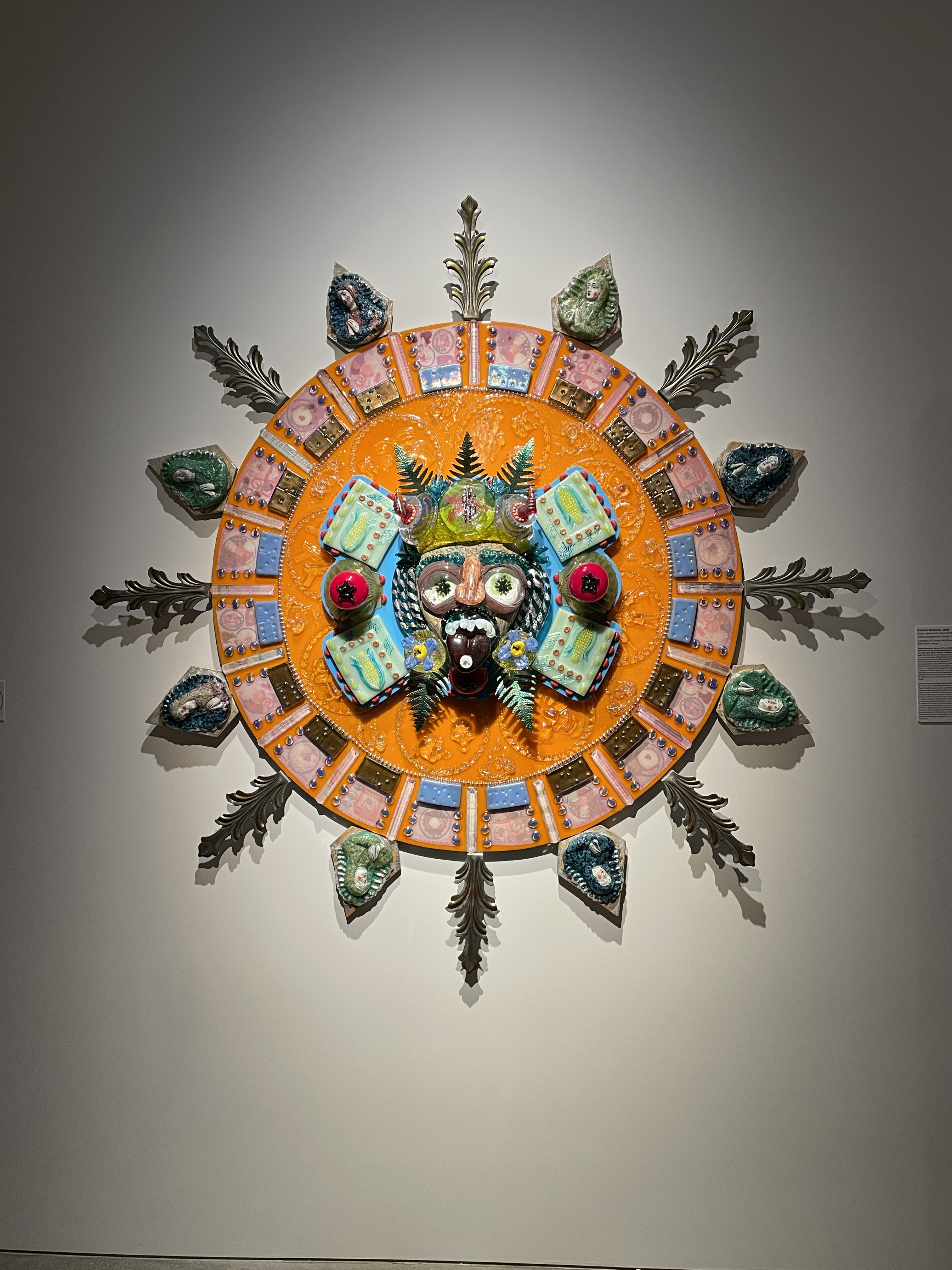
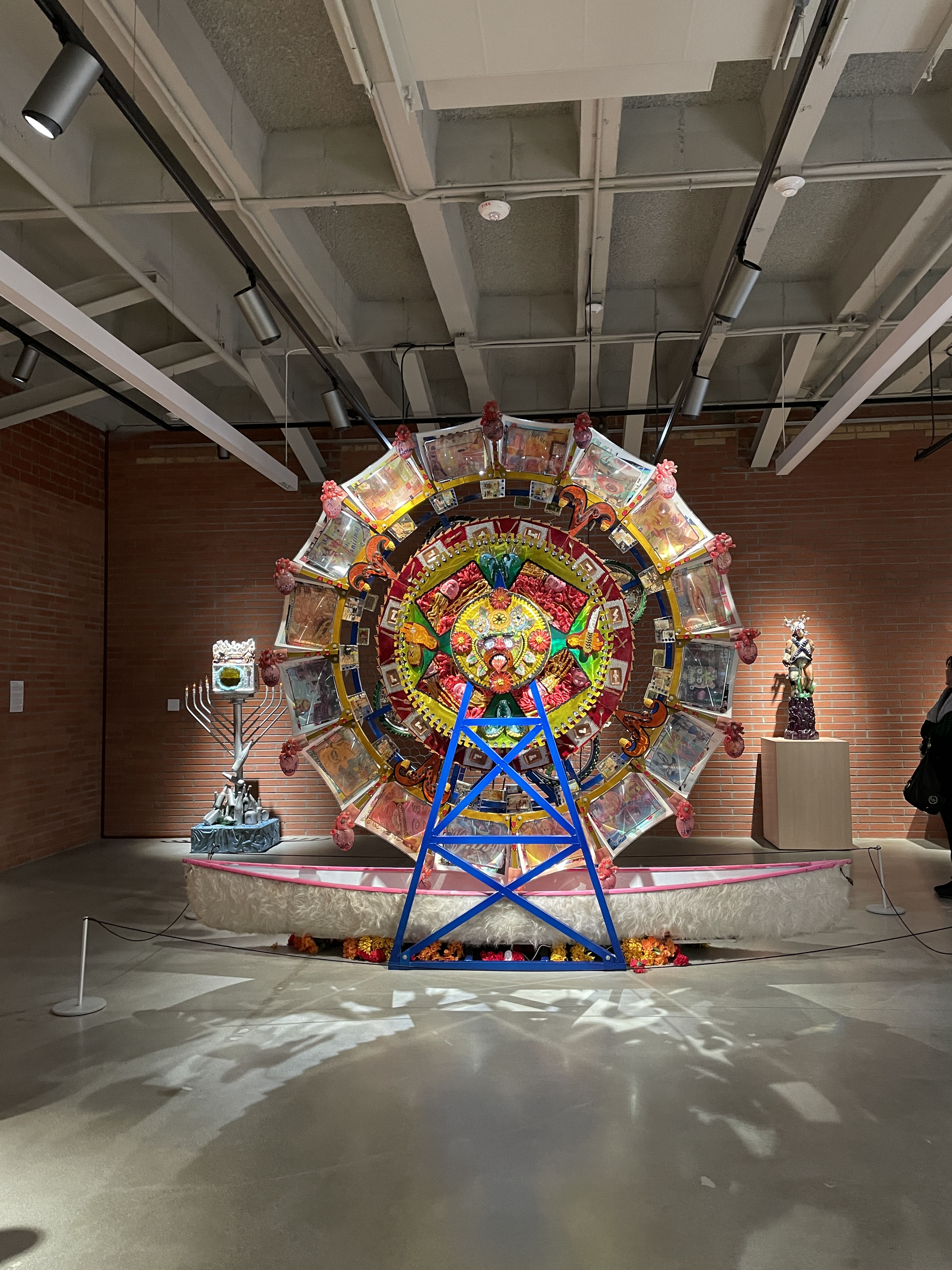
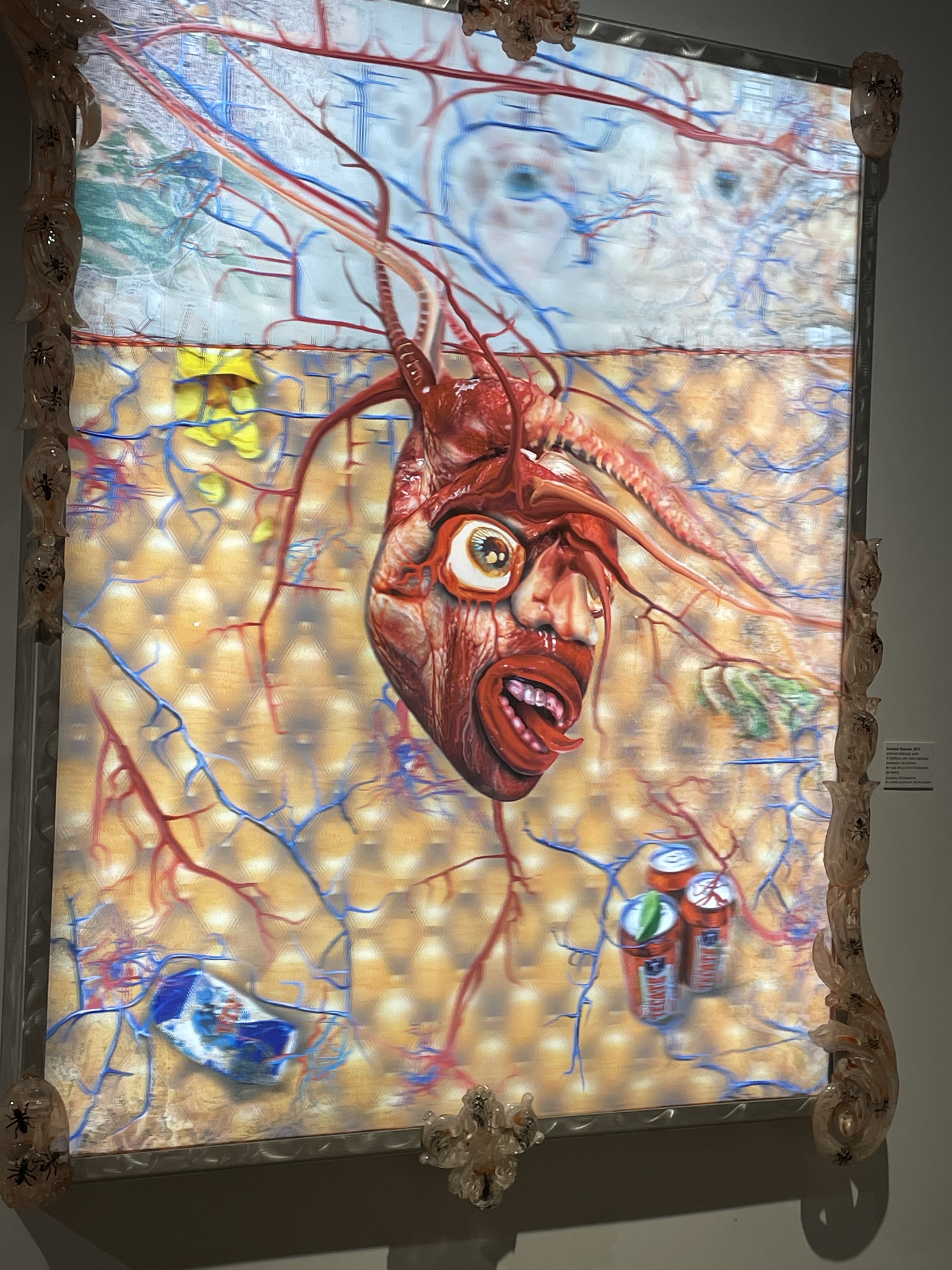
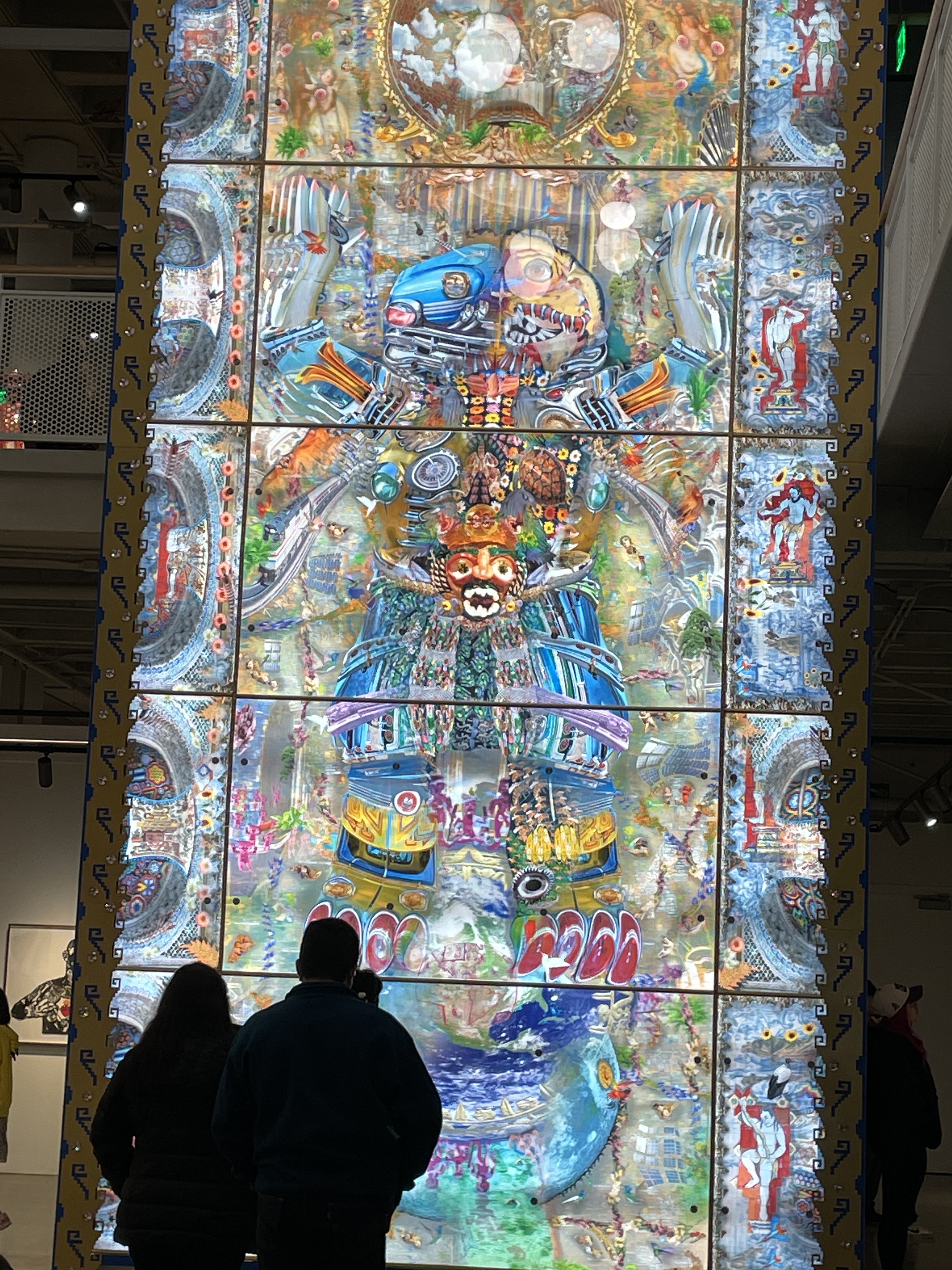
The second floor of the Cheech contains even more astonishing art including more multidimensional pieces except smaller than the giant one you see when you enter the building.
Depending where you stand in front, to either side, what you see is quite different. I kept thinking some old Flemish art or Hieronymus Bosch meets modern technology.
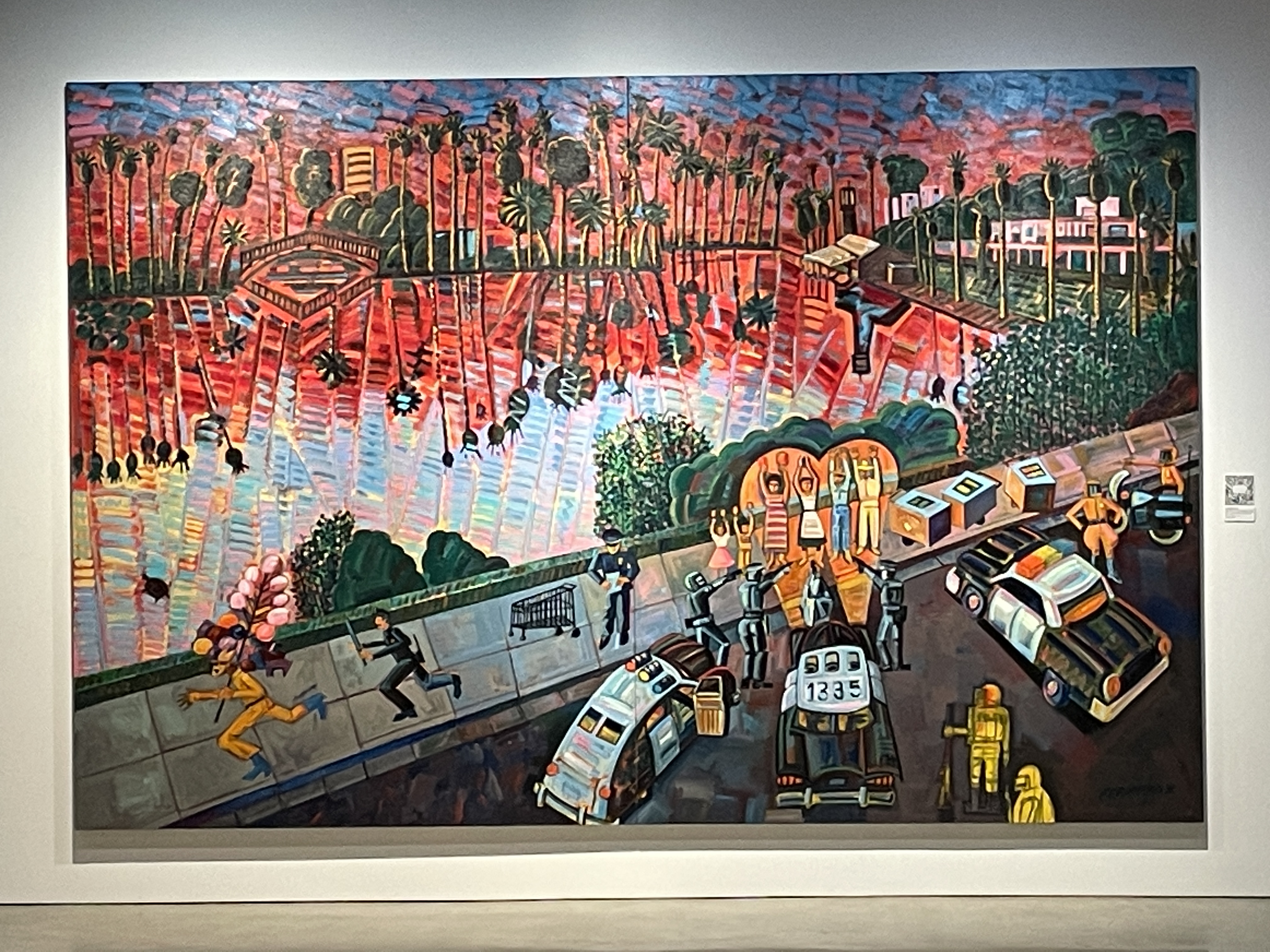
Much of the art makes a social or political statement especially about colonization, culture, poverty.
Some of the art is reminiscent of Mayan and Aztec calendars.
Hearts appear in many of the paintings.
And of course Frida.
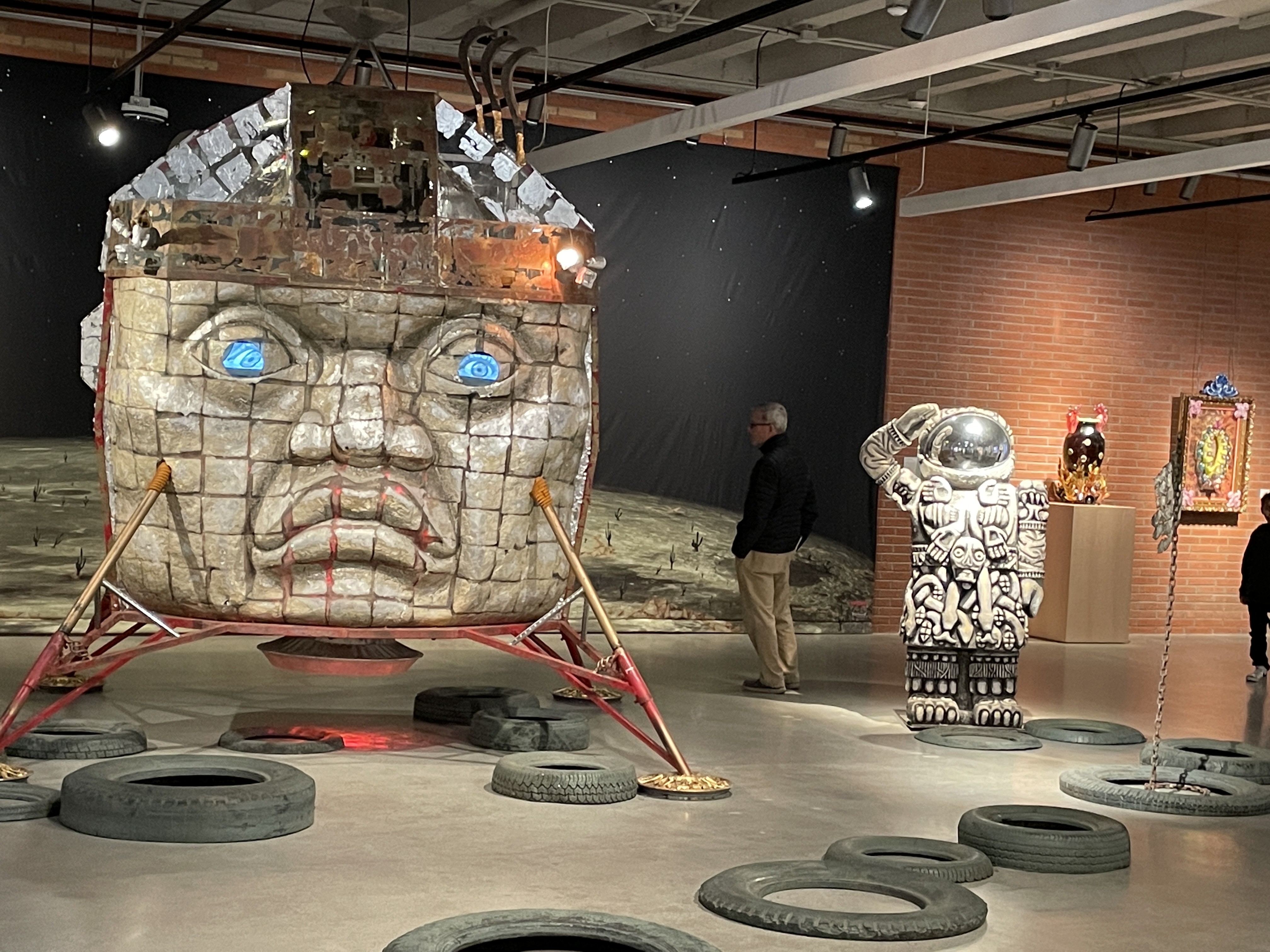
This is a space ship with changing eyes. If you walk around the back there is a creature inside watching everything with monitors.
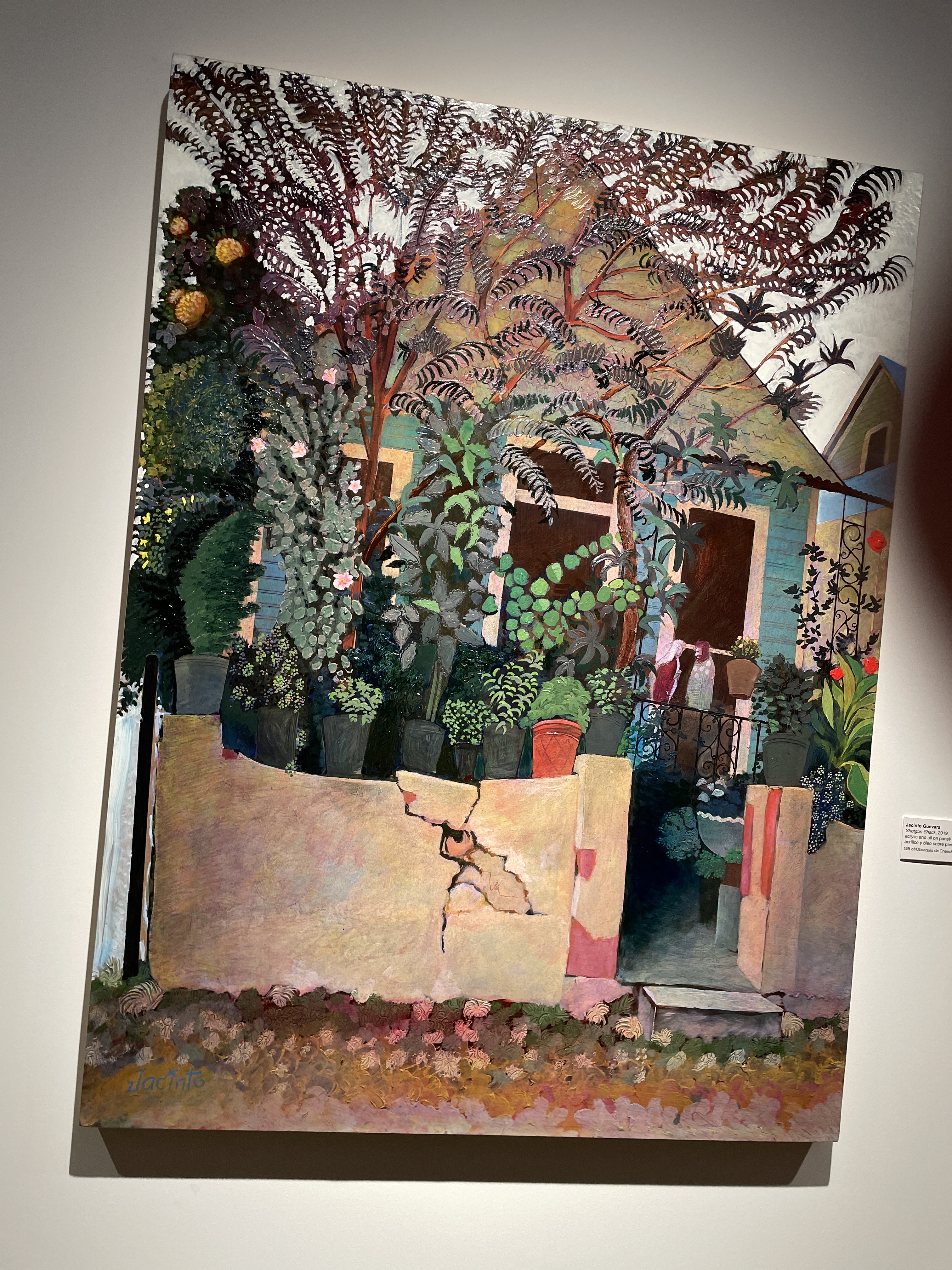
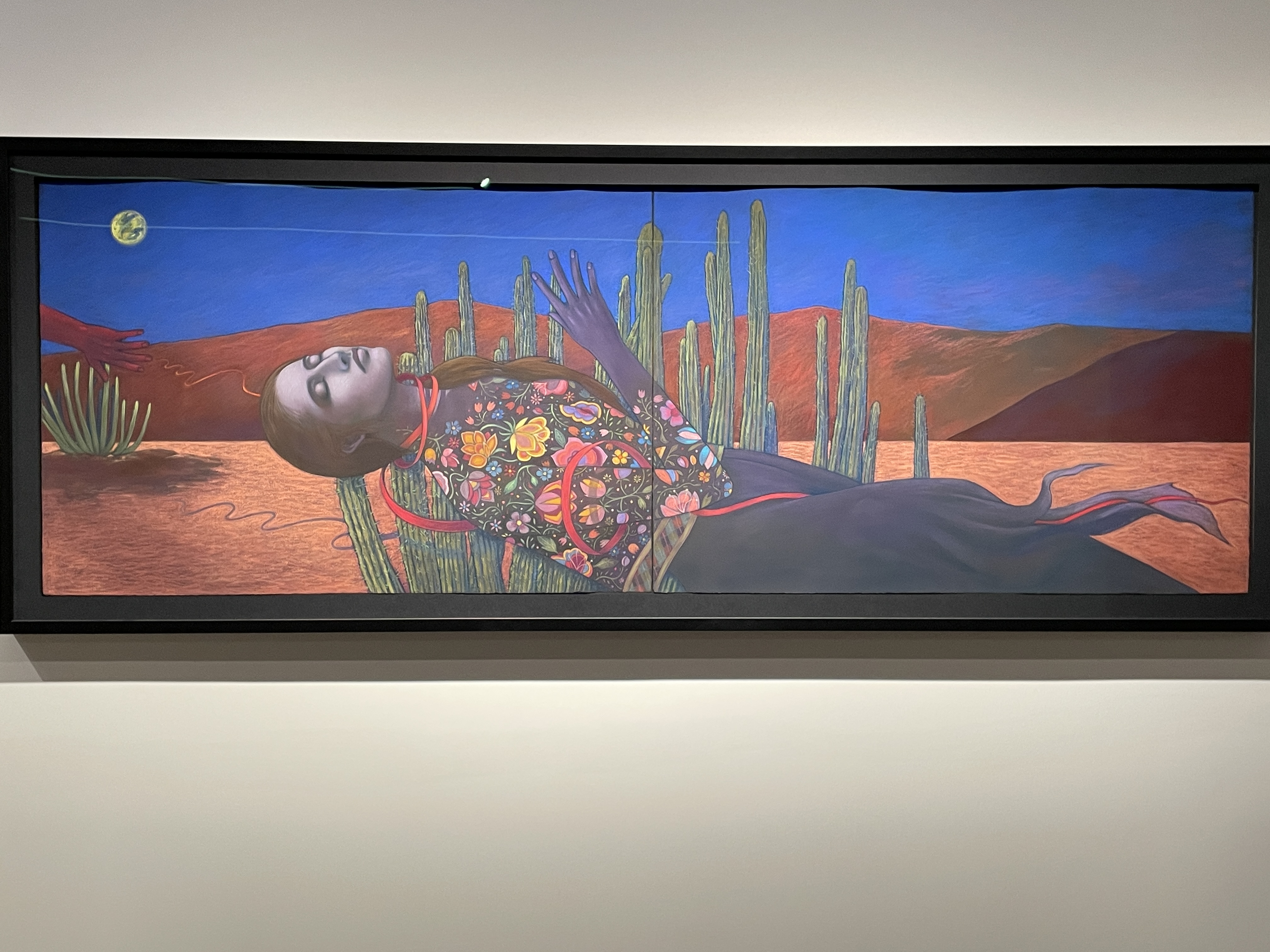
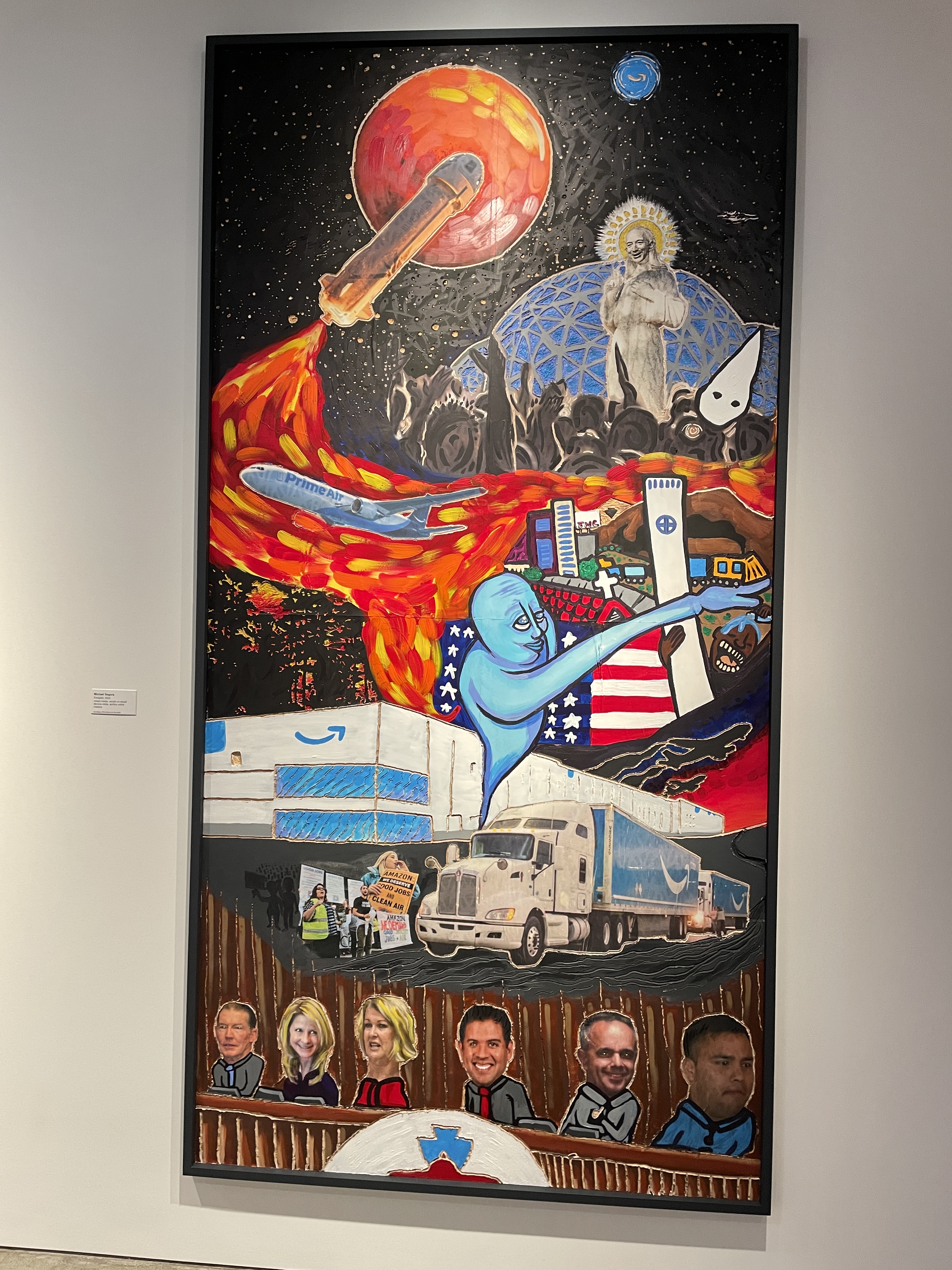
Some of you may remember the comedy duo Cheech and Chong way back in the day. Cheech has spent his life collecting Chicano and Chicana art. This year he gave a lot of his art collection to open a new museum in Riverside, California. Earlier this week my grandson, his girlfriend and I went to visit the museum. Photos and videos are allowed without flash. The following is the first set of photos I took. Please note that you need to see this art for yourself. Photos do not do it justice. Much of it is multidimensional and looks very different depending on where the viewer stands.
This is what you see when you enter the door; it is two stories high and multidimensional. Look how different the next photo of it looks from this one.
Walk farther to the side and it looks totally different again.
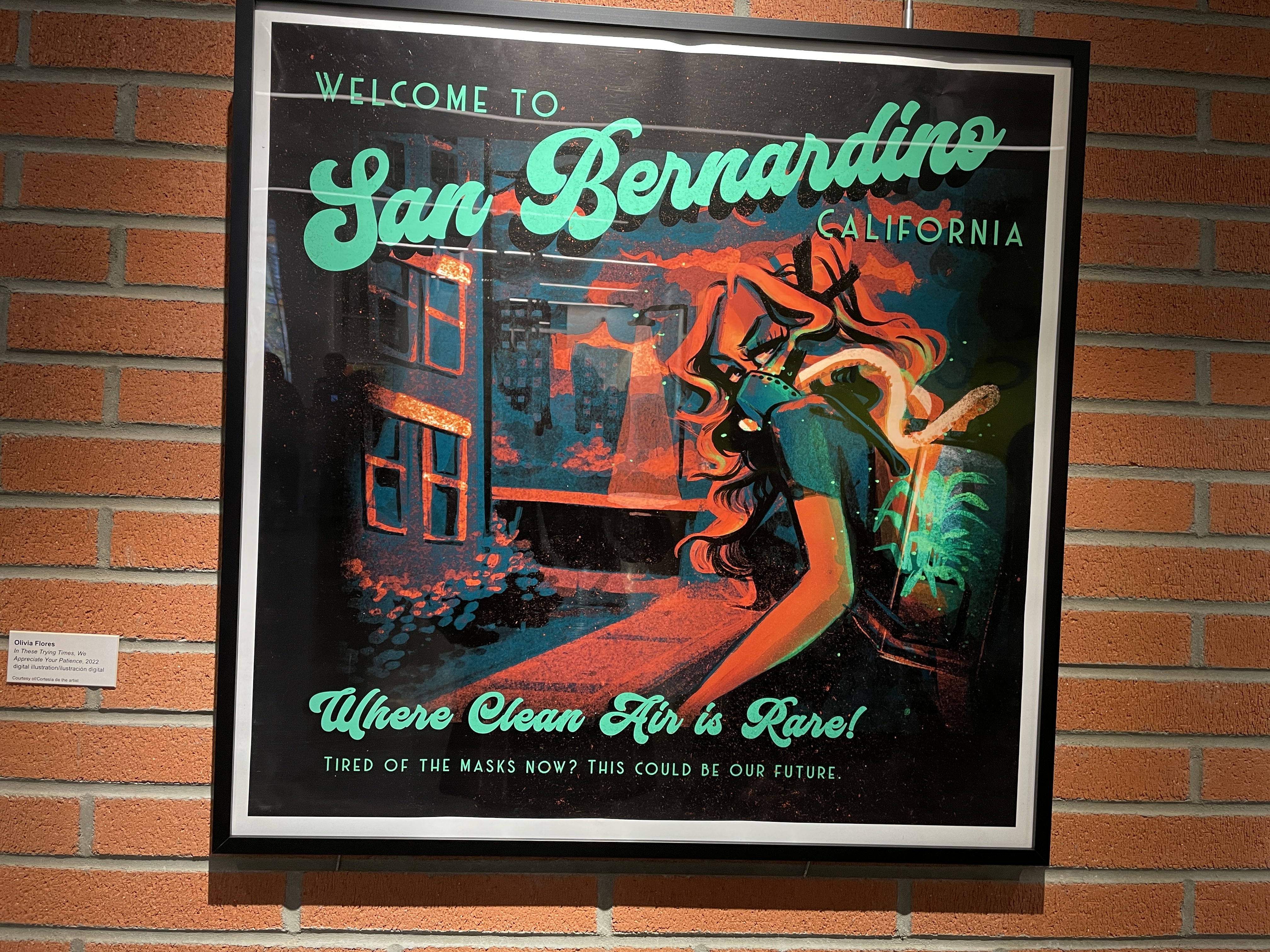
This speaks for itself. Right now where I live the air is clean enough that unless it is foggy, I can see all the way to downtown LA 30 plus miles away.
All the art at this museum has a message; much of it illustrates the ills of society.
The influence of indigenous art, e.g. Aztec, Mayan, can be seem in much of the art and the statements the art makes.
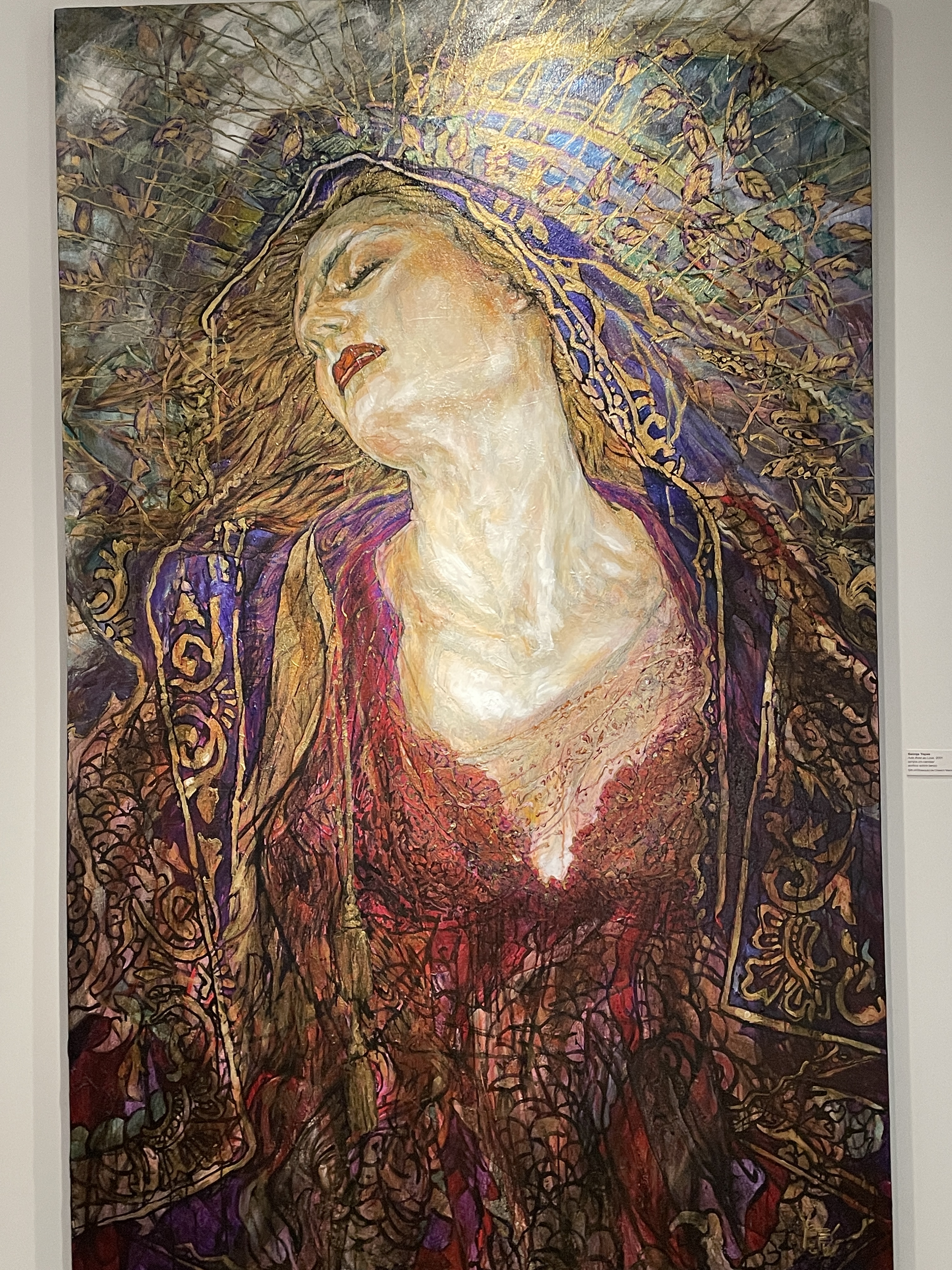
The woman above and the woman below hang next to each other.
On January 2, my grandson, D’mitri, his girlfriend, Landri, and I went to The Riverside Art Museum and the Cheech in Riverside, California. This post includes what we saw at this museum. Later I will share photos of the art at the Cheech.
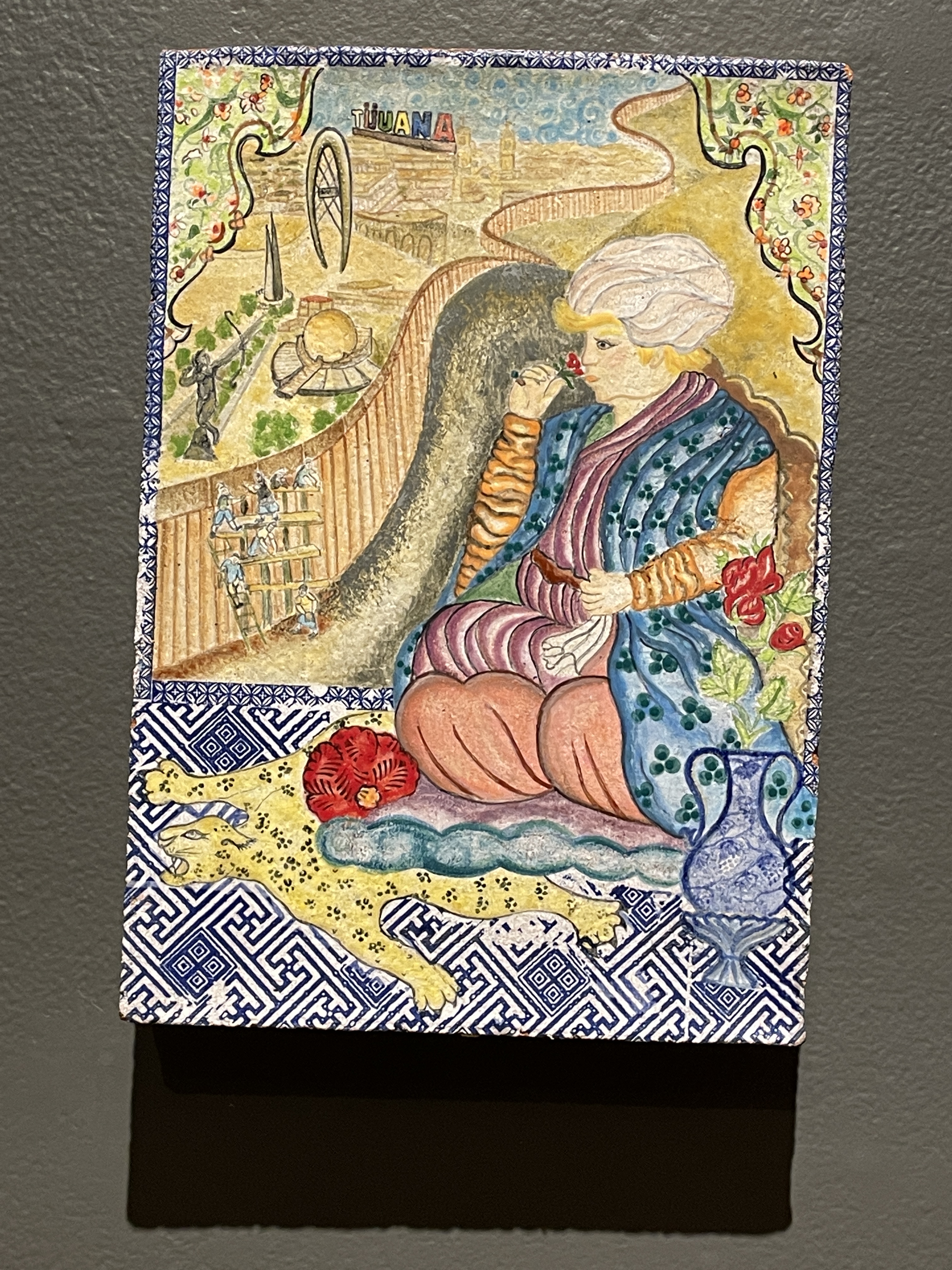
All the art seen in these first photos is by this Turkish-Mexican American artist. Here she explains how and why she interweaves the various parts of her heritage.
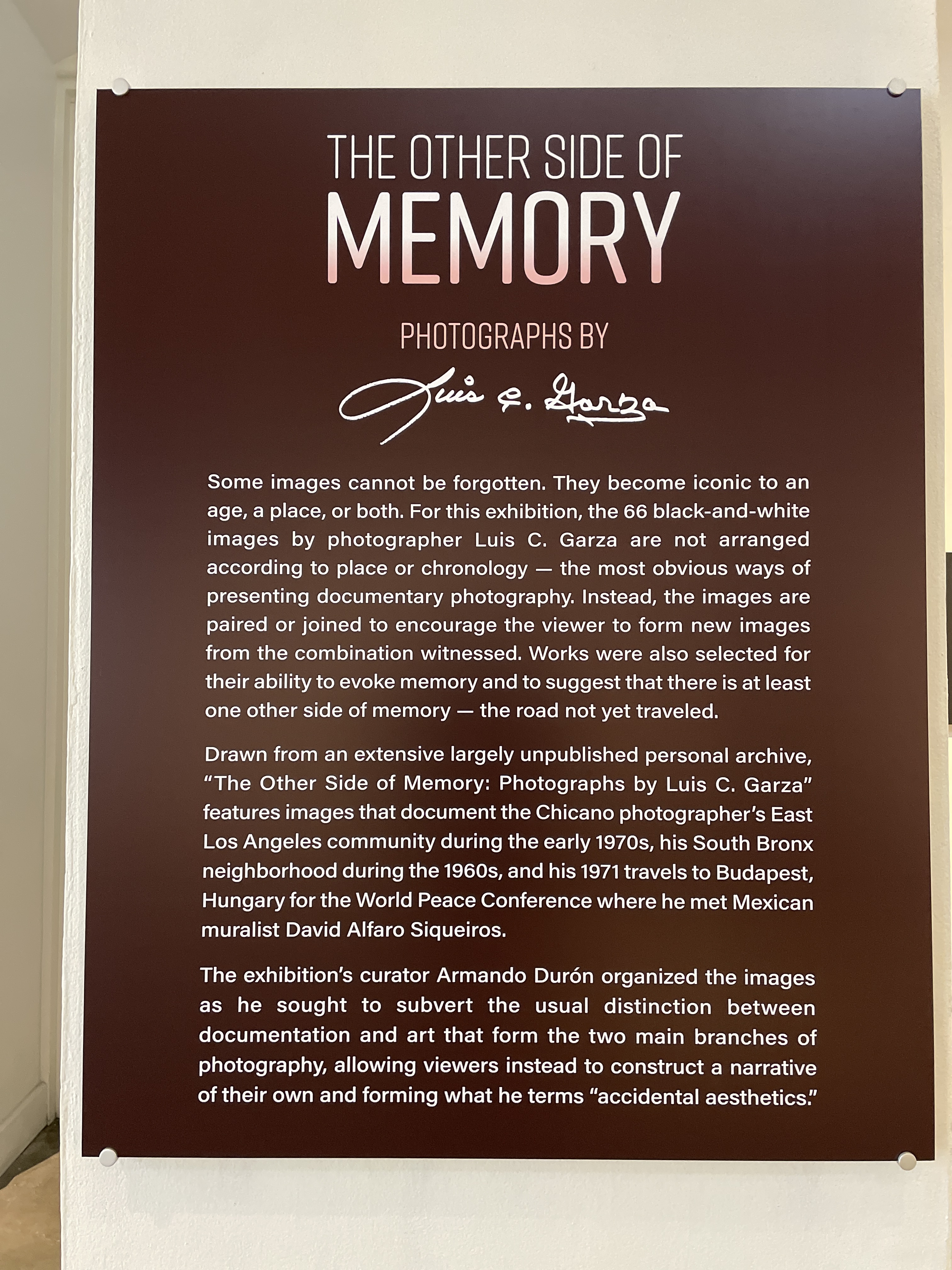
The next gallery room contained hundreds of photos from the 1970s in LA and surrounding areas. Although LA certainly is not the perfect place, improvements since that time are evident in the photographs. Here is a photo about that exhibit.
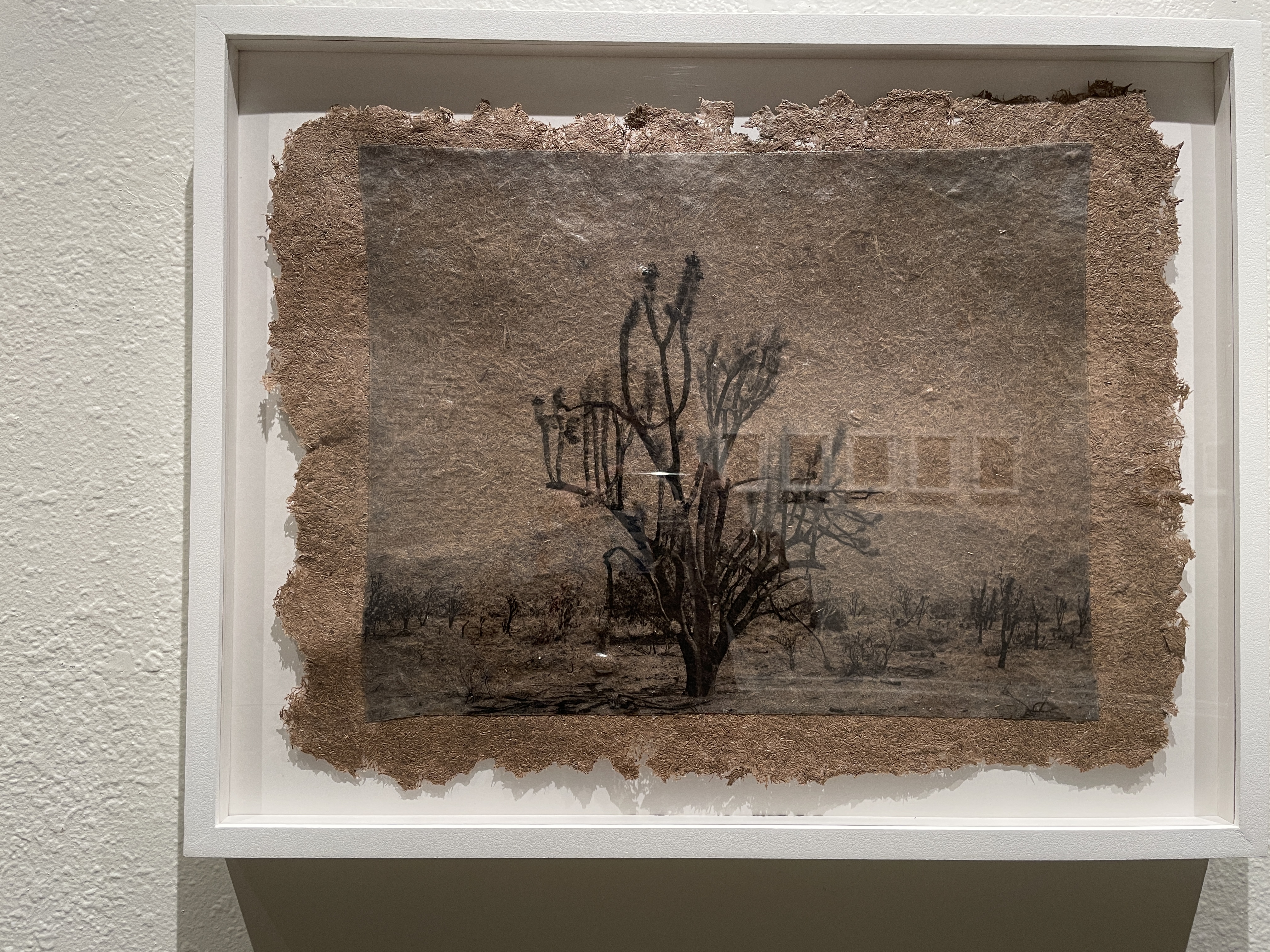
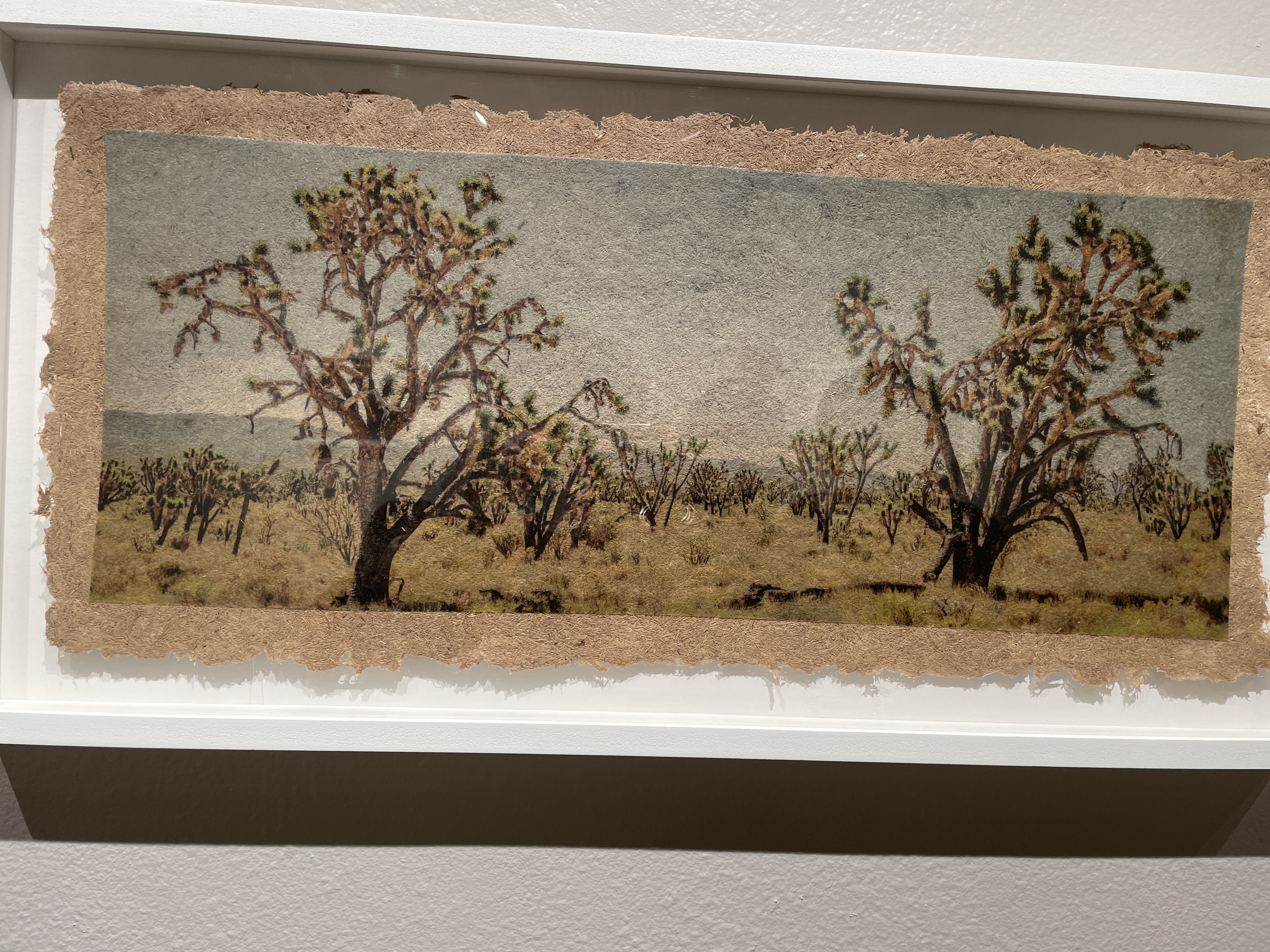
The next gallery contained art of the Joshua trees. The paper used was made of Joshua trees.
The following photos were taken in a hallway above the patio garden and in a smaller adjoining gallery.
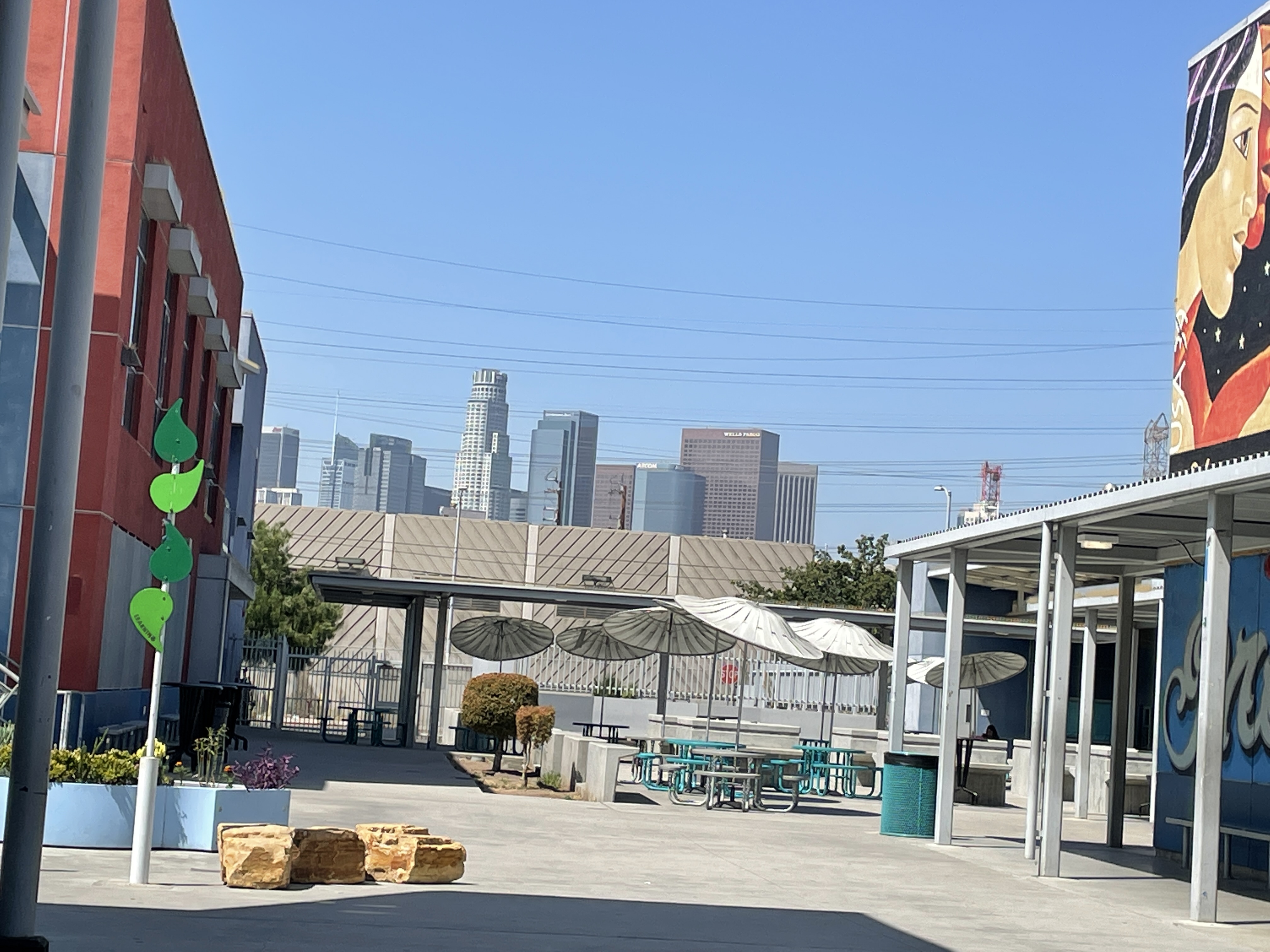
Every Wednesday I visit Mendez High School in Boyle Heights near downtown LA. I volunteer as a college counselor for College Match LA. The school is named after the couple who, in 1946, sued for equal education for Mexican children and won.
This is the couple and the school mascot is the jaguar.This explains the ruling that gave Mexican children equal educational rights.
View of downtown from in front of the College Center area where students go to get help with college applications, learn from presentations by admissions officers from different colleges, and work on college and financial aid applications.
Thanks to the two guys sitting here chatting for giving me permission to take this photo.
When I asked who did the murals, I was told that students did them in conjunction with an art class several years ago.
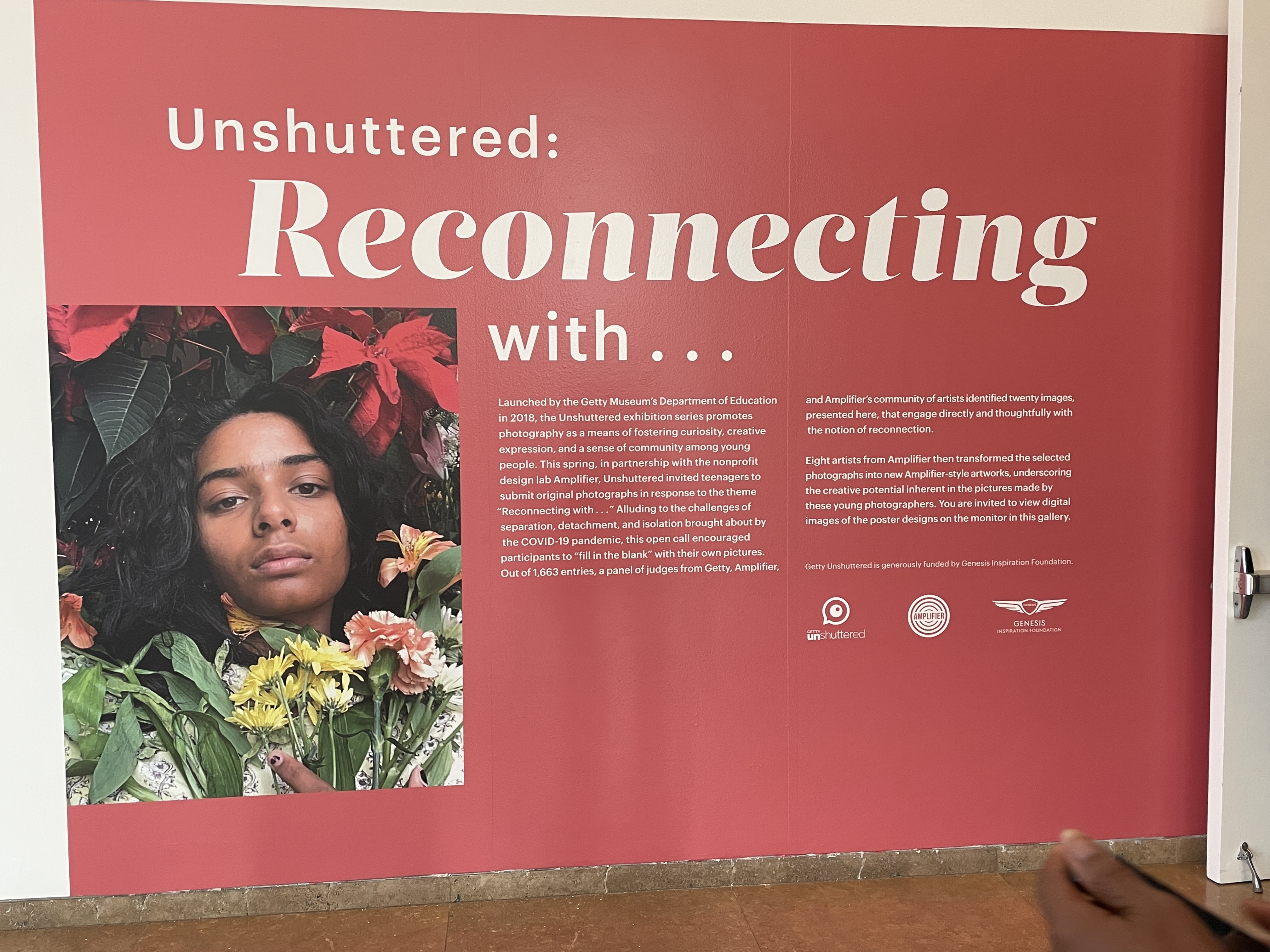
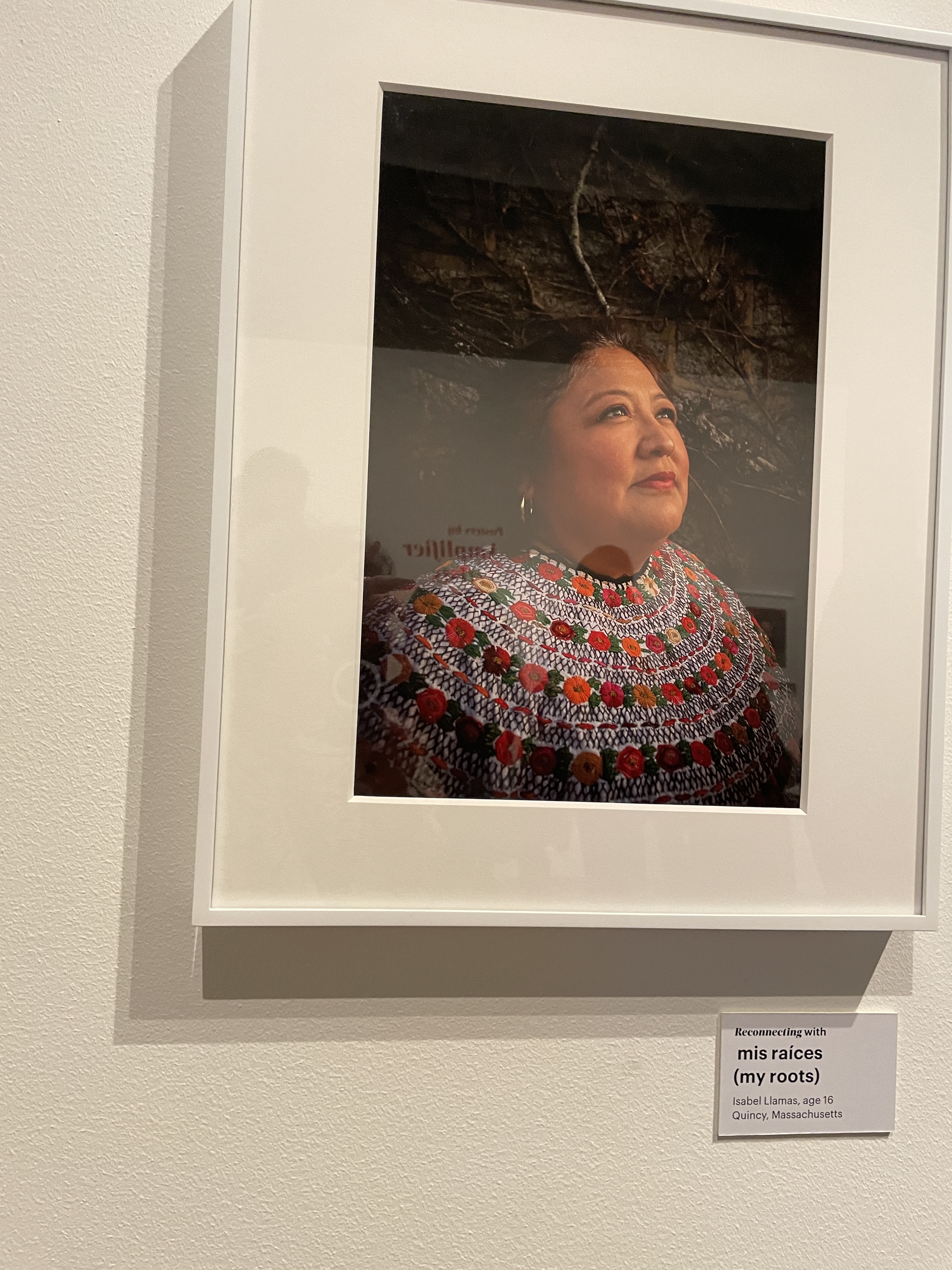
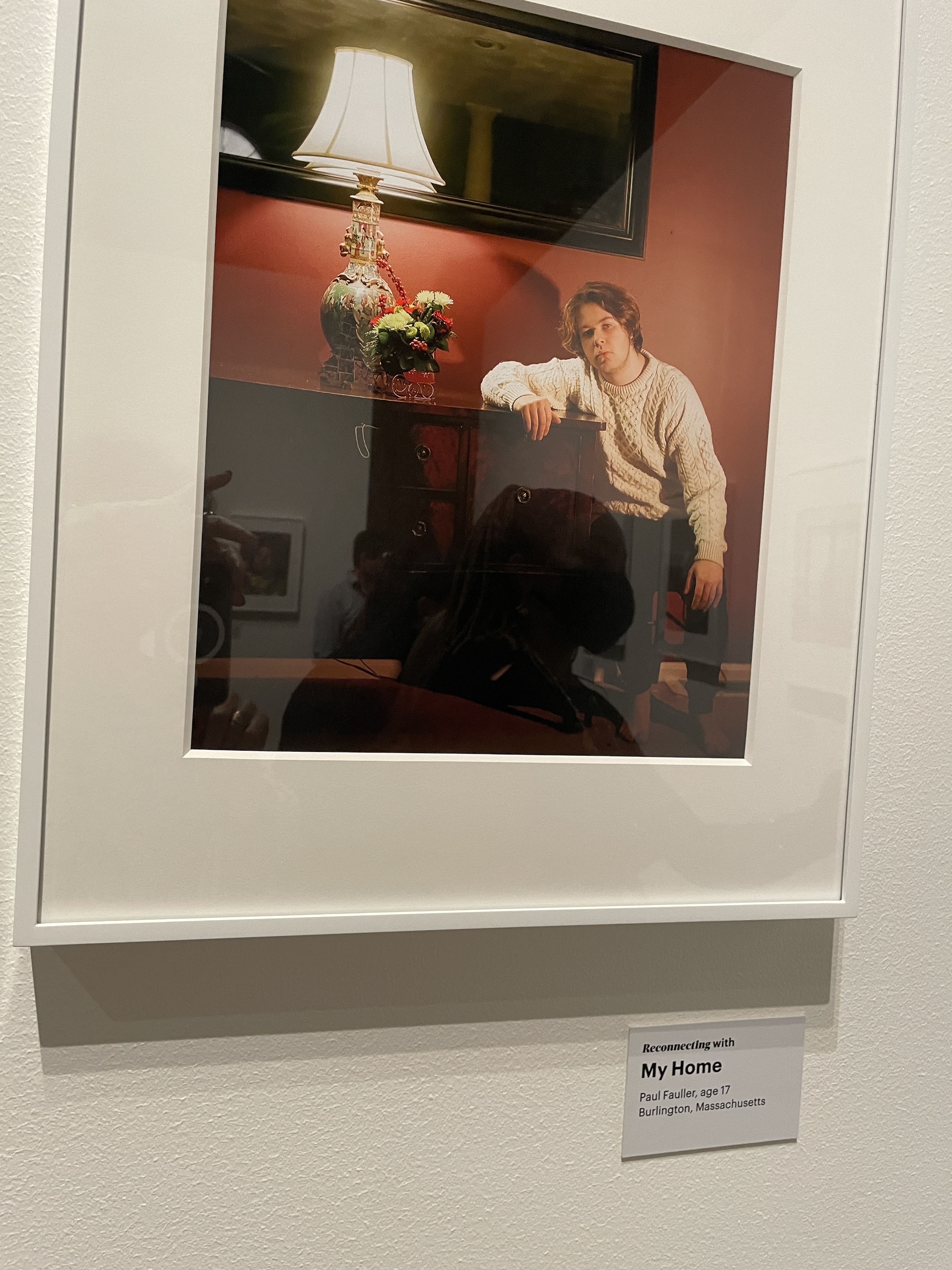
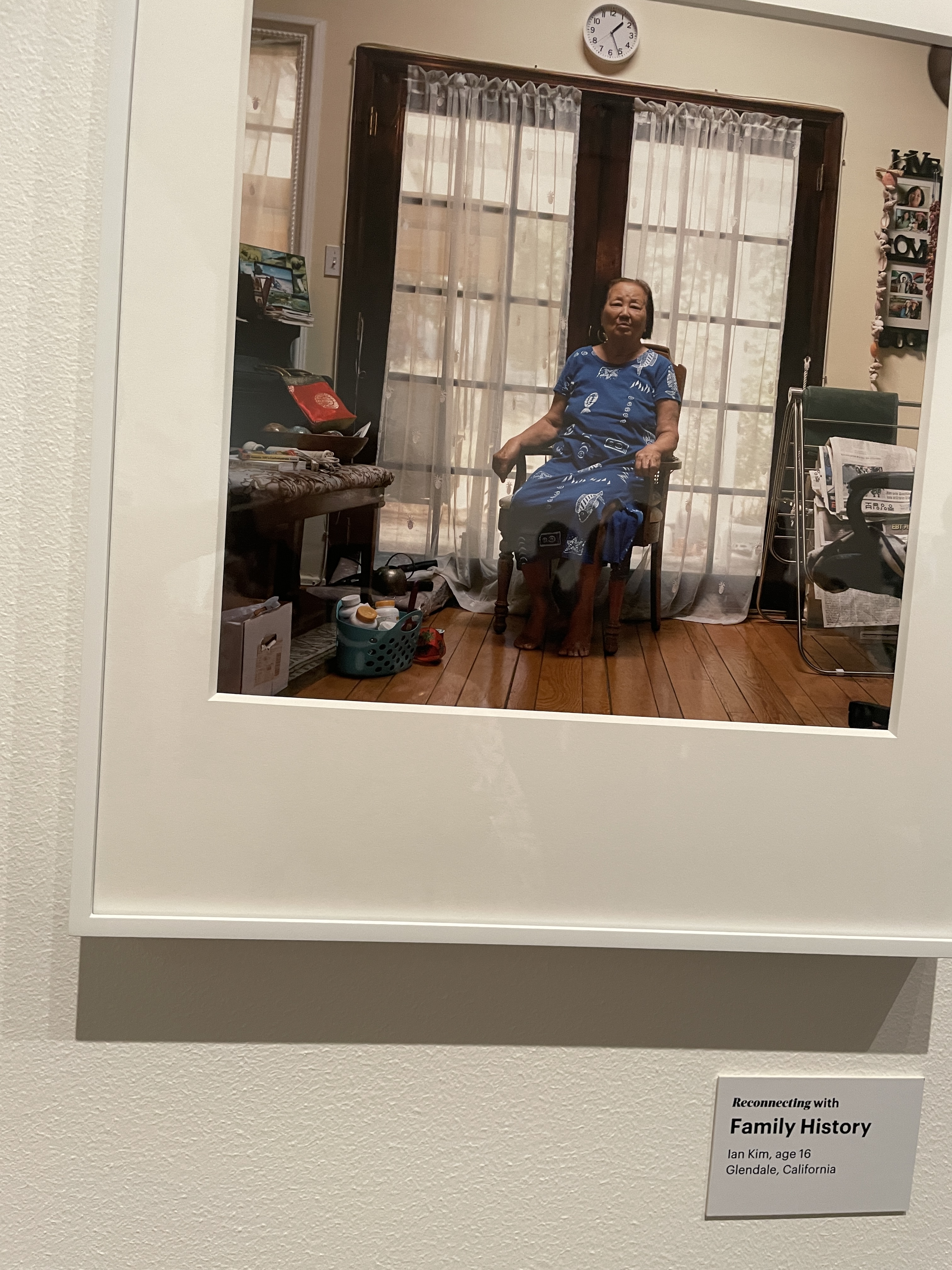
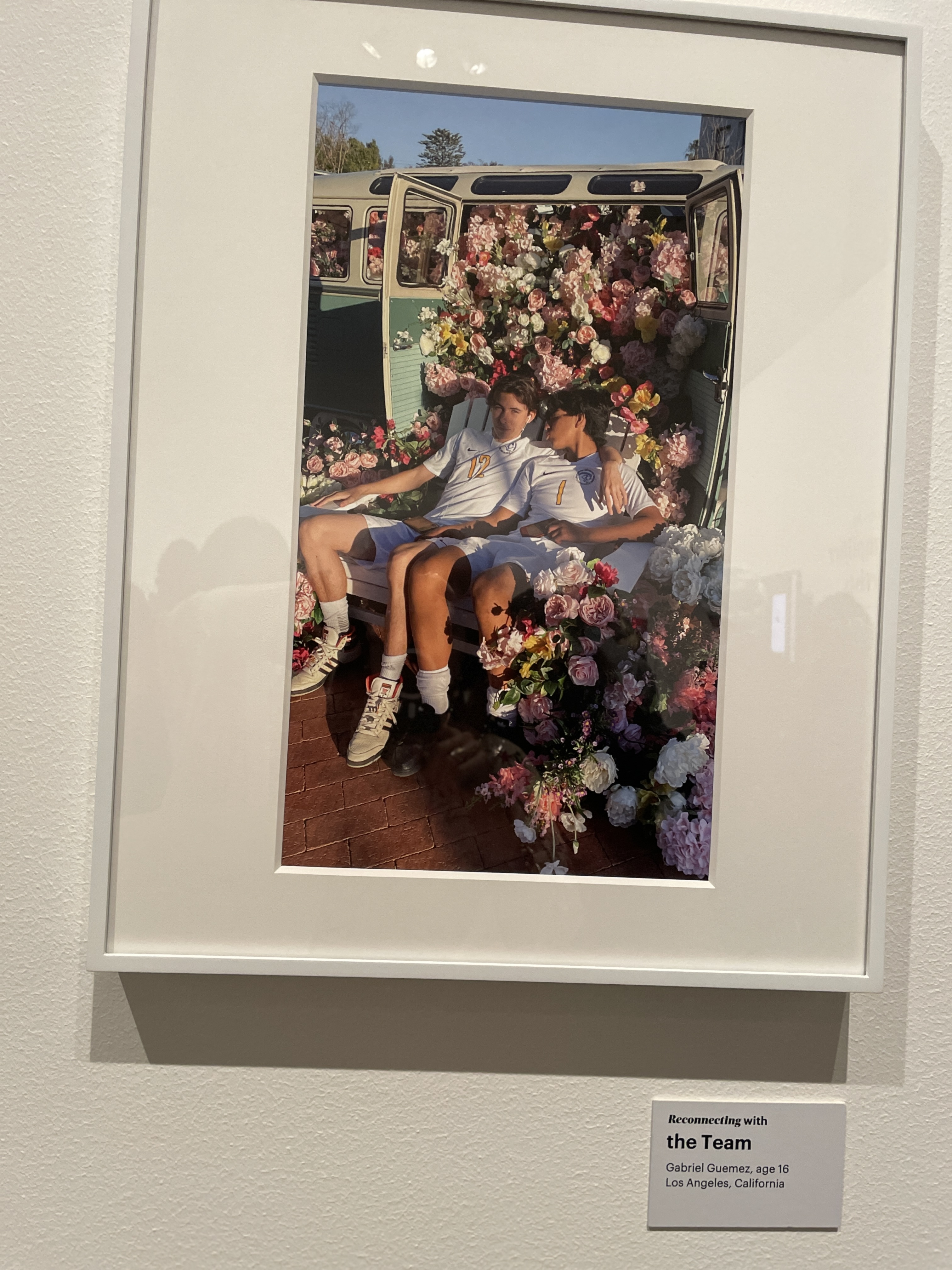
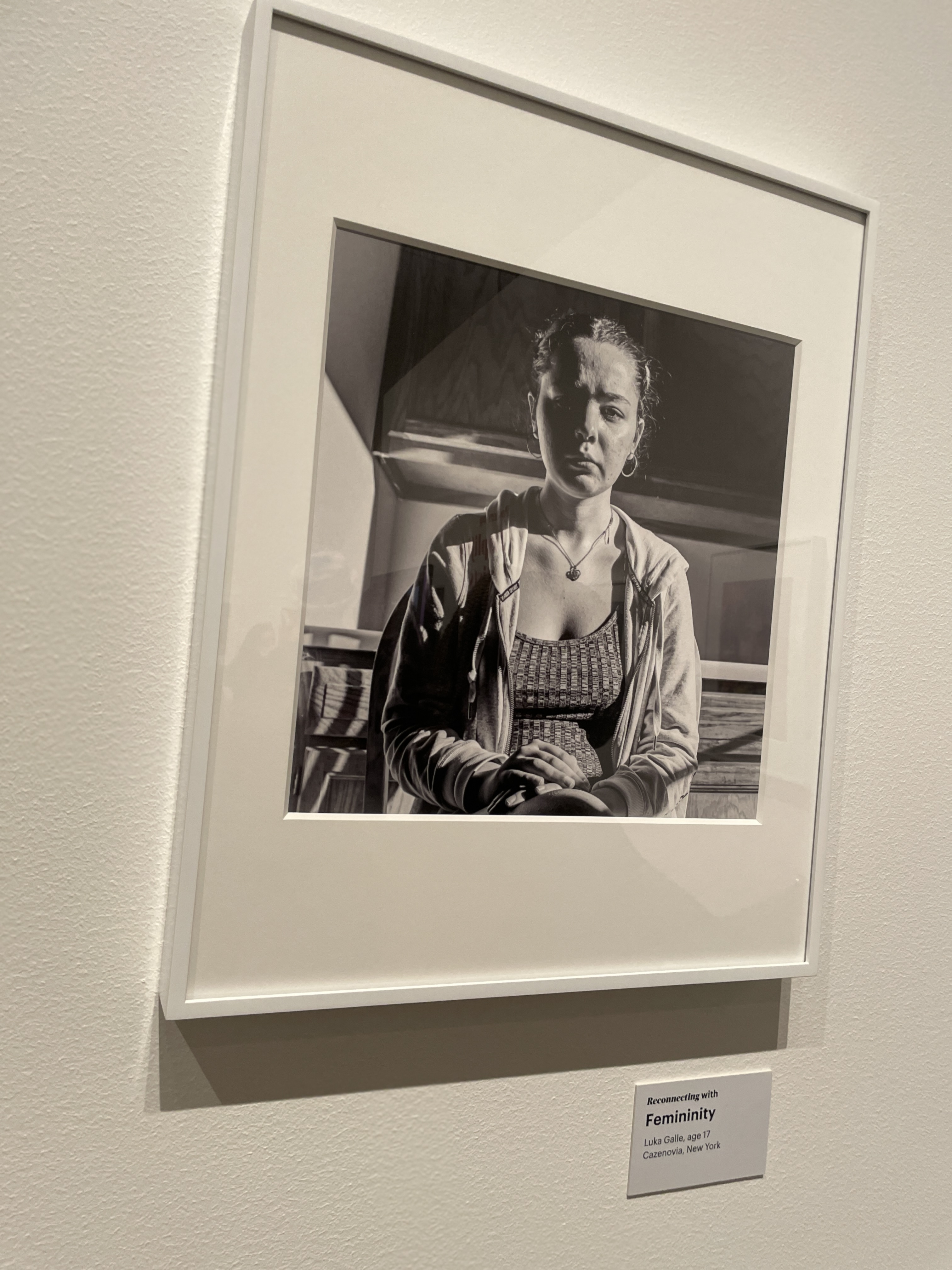
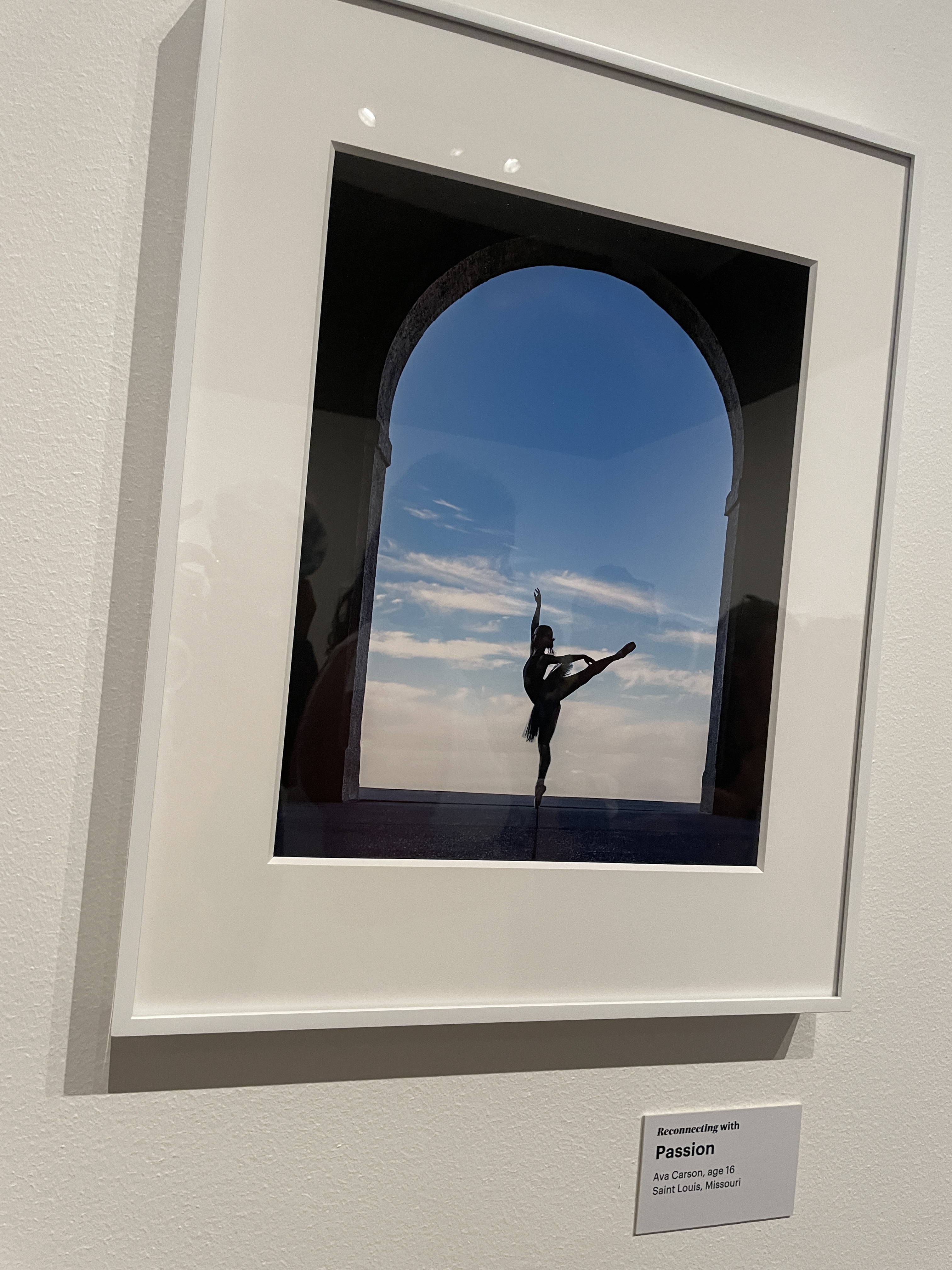
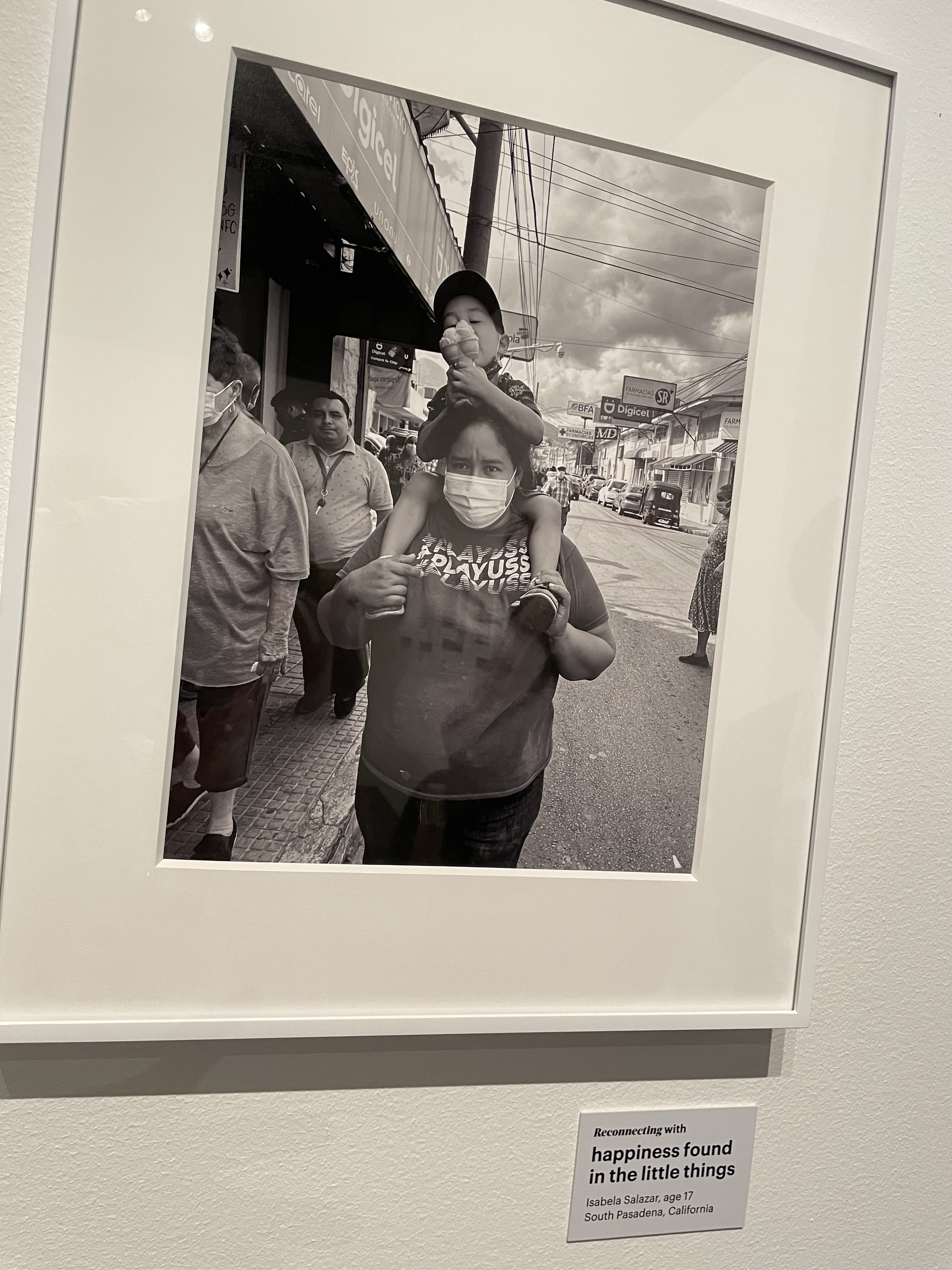
Monday evening I attended a private reception at The Getty for photographs taken by teens to reflect their reactions to the pandemic and the shut downs. This first photo explains the exhibit.
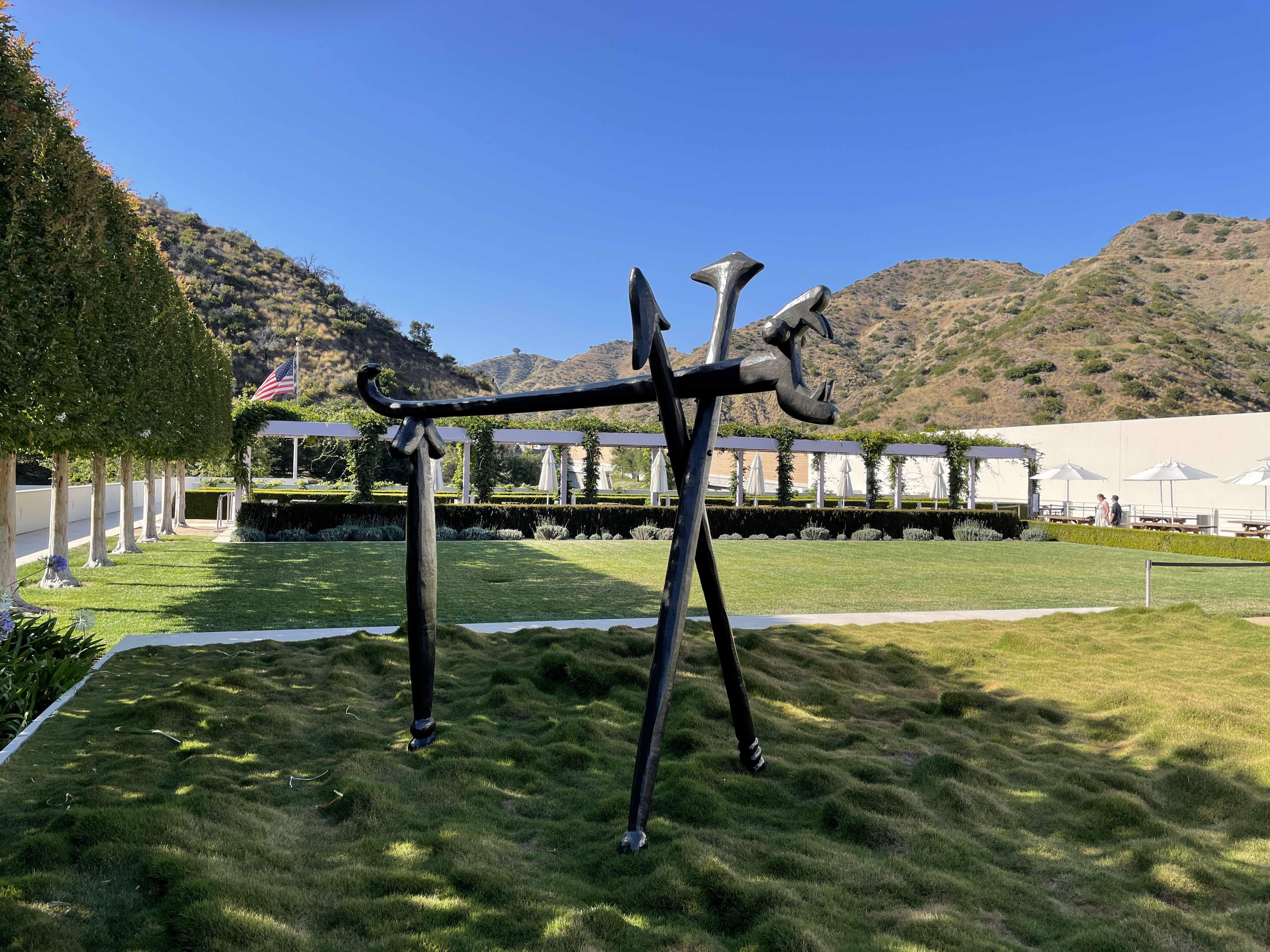
I was able to attend because Faith Mowoe invited me. She is my daughter’s cousin and teaches English at a high school here in California. Usually The Getty is closed on Monday. We arrived early hoping to be able to walk around a bit, but they did not allow anyone to enter until 5:30 so we strolled around the gardens near the parking lot. You cannot drive up to The Getty. You have to park in the parking area which costs 20 dollars and take a shuttle to The Getty which is otherwise free. This and the next few photos were taken at the gardens near the parking lot.The Getty sets on a hill overlooking portions of LA in all directions. The red on top of the mushroom like pillars in the this photo is bougainvillea. The amount of stone in the buildings is huge. The Getty comprises several different buildings including several filled with art, others for research, and a theatre.This photos shows one of the teen photographers. This one is from Ohio. The following photos illustrate the teens who were chosen out of the more than 1600 entries.We briefly met the young lady in this photo. Many of the students who took the photos were present and honored by the sponsors of the exhibit.After eating–the reception provided all sorts of delicious treats, wine, beer, water, and various others drinks–we strolled into the gardens.
Posters have been made from the teen photographs and will be available for purchase.
The Getty is astonishing. I was able to see only a tiny portion of it. Definitely a place to see if you come to Los Angeles.
My current writing endeavor is part of a challenge to write 20 minutes per day six days a week. The story I am going to relate now was written as part of that project. The brief introduction here was part of something I wrote the day before I wrote about the boy.
I watched “60 Minutes” on Sunday about German Jewish Americans who volunteered to go behind enemy lines before and after the end of WWII to either spy on or interrogate Nazis, often officers of higher rank. One of them related that he never met a Nazi who had any remorse for atrocities he had committed, who thought what they had done was wrong. How horrifying, to hate anyone, any group so much over religion, ethnicity, sexual preference, status, remains to a great degree beyond my comprehension. Although I may view people like the Nazis as my moral enemies, to hate anyone so much as to torture and murder them seems incomprehensible.
These views also affect my attitude toward immigration. People rarely leave their countries because they want to, they leave because they need or have to in order to survive. Often it is a matter of life or death. Now I will tell you about the boy from Honduras.
Short, straight black hair, obsidian eyes, skin the color of café con leche, he showed up at high school one day absent any knowledge of the English language. His brother, married to a US citizen, lived across the street from the high school secretary. The assistant principal brought him to me. By Texas state law he had to spend at least one period of the day with a certified ESL teacher, me. He came often even from his other classes because everything except Spanish class was in English. Written Spanish helped him only somewhat. In Honduras poor country students only attended school for a few years. The more advanced middle and high schools were in cities and required fees paid.
The counselor claimed he had not been to school at all. I knew better; he knew things that a kid only learns if he or she has gone to school. When I did not understand his Spanish, I asked him to write it down. It took me a while to figure out some of his written Spanish. He sounded it out and so instead of writing habla (h is silent in Spanish), he would write abla. When I really could not understand, I went to the Spanish teachers from Mexico; they could not always understand him either. One, who had travelled all over Mexico, said he spoke a dialect she had never heard. Over time, I learned he had started school at six, attended for four years, then went to work on a coffee plantation. He was 15 when I met him. After I showed him a photo of me picking coffee in Costa Rica, he became very excited.
His father had been murdered; his mother feared for his life so she sent him to his brother in the US. He was cheery, always smiling, played soccer at lunch with the other students, missed home. He told me his family was working with an immigration lawyer so occasionally he traveled to Dallas to meet the lawyer. Then one day he disappeared. We never saw him again. Later one of the Spanish teachers told me he had come, smuggled in a shipping container, had survived this for days. And now he was gone.
Students asked about him; we had no answers. Some who had ranted about illegal immigrants stopped ranting. It was someone they knew, liked, who had left with no answers. He was a kind, funny kid whom everyone liked. Is he in hiding? Is he safe? Is he alive? Who knows?








































 writingontherim