One Book a Week-30: “Deacon King Kong”, James McBride


It takes genius to write a novel about serious topics, e.g. racism, poverty, addiction, drug dealing, crime, which is also very funny. This is the first book I’ve read this year where I found myself frequently laughing out loud. In the projects of South Brooklyn in 1969, an elderly church deacon shoots a young drug dealer, who is also a star local baseball pitcher. Thus begins a saga about the Black and Hispanic residents who live there, the cops who patrol the area, the Italian mobsters who control the docks, and the church where the shooter is a deacon. The “New York Times” listed this as one of the ten best books of 2020. Indeed it is. This is the third book I have read by this author, and I will soon progress to another one.

One Book A Week-28: “The Tea Girl of Hummingbird Lane”, Lisa See


My view of this book remains somewhat mixed. I know it was a best seller, but some parts of the storyline seem extremely contrived rags to riches stories without evidence to back them up. Nevertheless, it is a powerful novel about the ritualistic Akha tribal people of the southern Chinese region of Yunnan who were viewed as backward and remained mostly unknown until their superior Pu’er tea was discovered. Additionally, the novel explores Chinese adoptions, issues Chinese children experience when adopted by white people, and how so-called primitive practices, e.g. killing twins and banishing their parents, can change over time even in remote areas.

I prefer to read books that provide me the opportunity to learn something new. This book definitely provided that. Before reading this novel, I knew nothing about the Akha people, even though I have visited tribal areas not too distant, nothing about Pu’er tea or tea processing and how tea can be as valuable a commodity as gold. Pu’er tea is different from other teas because of the types of trees from which it is harvested and its unique fermentation process which makes it a probiotic.

One Book A Week-25: “The Daughters of Madurai”, Rajasree Variyar


The first sentence of the book reads: “A girl is a burden. A girl is a curse.”

In India in early 1990s, Janani lives with her abusive mother-in-law and an alcoholic husband who is often absent, chauffeuring people here and there. Although she is allowed to keep daughter number one, the fate of the next daughters is death. She, who is Tamil lower caste, is lucky enough to work for the same higher caste family for whom her mother worked and with whom she spent most of her childhood. They treat her much better than her husband and mother-in-law who hate her for not bearing a boy baby.

The book goes back and forth between this time period and 2019 Australia where the fate of Indian girls and women is far different. The family returns to India for the funeral when the family patriarch dies. Those who know little about their family history learn some shocking revelations.

In the Afterward, the author discusses female infanticide. Although many educated families oppose it and national laws prohibit the practice, it remains so common in parts of rural India that in those places there is a shortage of women for marriage. As a consequence, men resort to kidnapping women from other areas.

I thought it would take me a while to read this 326 page novel. However, I became so engrossed, I finished it in two days while also engaging in several other activities.

A Book a Week-24: “The Water Museum”, Luis Alberto Urrea


What an amazing story collection!! As I read these incredibly diverse stories featuring so many different types of people, I kept wondering how does he know so much about different sorts of individuals:

-An older white lady in a tiny town in Idaho who runs a little restaurant.

-Chicanos in San Diego–this one I “get”; he grew up near there in Tijuana.

-A divorced white guy, wandering aimlessly cross country.

-A teen in Arizona who loves a nice girl from a dangerous family.

-A “weird” old man in a Mexican village.

-A young man trying to save his dead dad’s possessions from questionable friends.

-A strange magical realism Mexican story. I love magical realism so if I think it strange…

-A kids’ trip to a water museum ( the title) in the drought ridden plains.

-A sad South Dakota story of a white man married to an woman from Pine Ridge.

-In Iowa a widowed farmer trying his best to befriend and understand his Mexican neighbors.

Book a Week-21: “Boy, Snow, Bird”, Helen Oyeyemi


A unique and sometimes frightening story with a surprising ending, this is another tale of the lengths to which people of color will go to pass for white to gain the benefits of whiteness. For one New England family this has succeeded quite well by sending a too dark daughter back South to live with relatives and never allowing her to come to the town where the rest of the family lives. It fails when a too dark child is born and the parents keep her with them. It is also a tale of gender identity and how rape and abuse can destroy and deform and of resilience in the face of endless obstacles. This is not an ordinary novel.

Book a Week-20: “Sankofa”, Chibundu Onuzo


After her mother dies, Anna searches through her mother’s belongings and discovers a hidden diary written by the African father she never knew and about whom her white mother, who never married, told her nearly nothing. She travels to Scotland to have the diary authenticated by an expert, researches, and discovers her father had to return to Africa, became a revolutionary, and then president (or dictator, depending on the source) of a small African nation. She also learns that he is still alive.

Leaving behind a daughter and white husband from whom she is separated, Anna decides to travel to Africa to find her father. Treated unequally as a biracial child in England, in Africa she is seen as “obroni”, white. Thus, the book addresses issues of racial identity, family acceptance (she does find her father) and belonging, and tells a tale of the adventures of a middle-aged woman in search of self.

One Book a Week-19: “The Round House”, Louise Erdrich


Winner of the National Book Award in 2012, and narrated by the 12-13 year old son of a tribal judge and a professional, tribal woman, this novel details the story of a family nearly destroyed by the brutal attack on the boy’s mother. Even after the identity of the attacker is known, he is set free because she will not tell or cannot recall where the attack occurred, whether on tribal land or just outside its boundary. This leads to the boy’s determined quest to obtain justice for his mother. This page turner perfectly illustrates the continual problem of justice for indigenous women who are 2-3 times more likely to be raped (and often killed in the process) than white women and with no one ever charged.

Given the seriousness of the novel, it is surprisingly funny at times with the antics of teen boys and other characters, including some colorful and interesting older tribal members and an ex-Marine priest. The reader will also learn a lot about Ojibwa culture. Once you start, you have to keep going in hopes that somehow justice will prevail in the end.

Baja Trip-6: The Art of Beliz Iristay


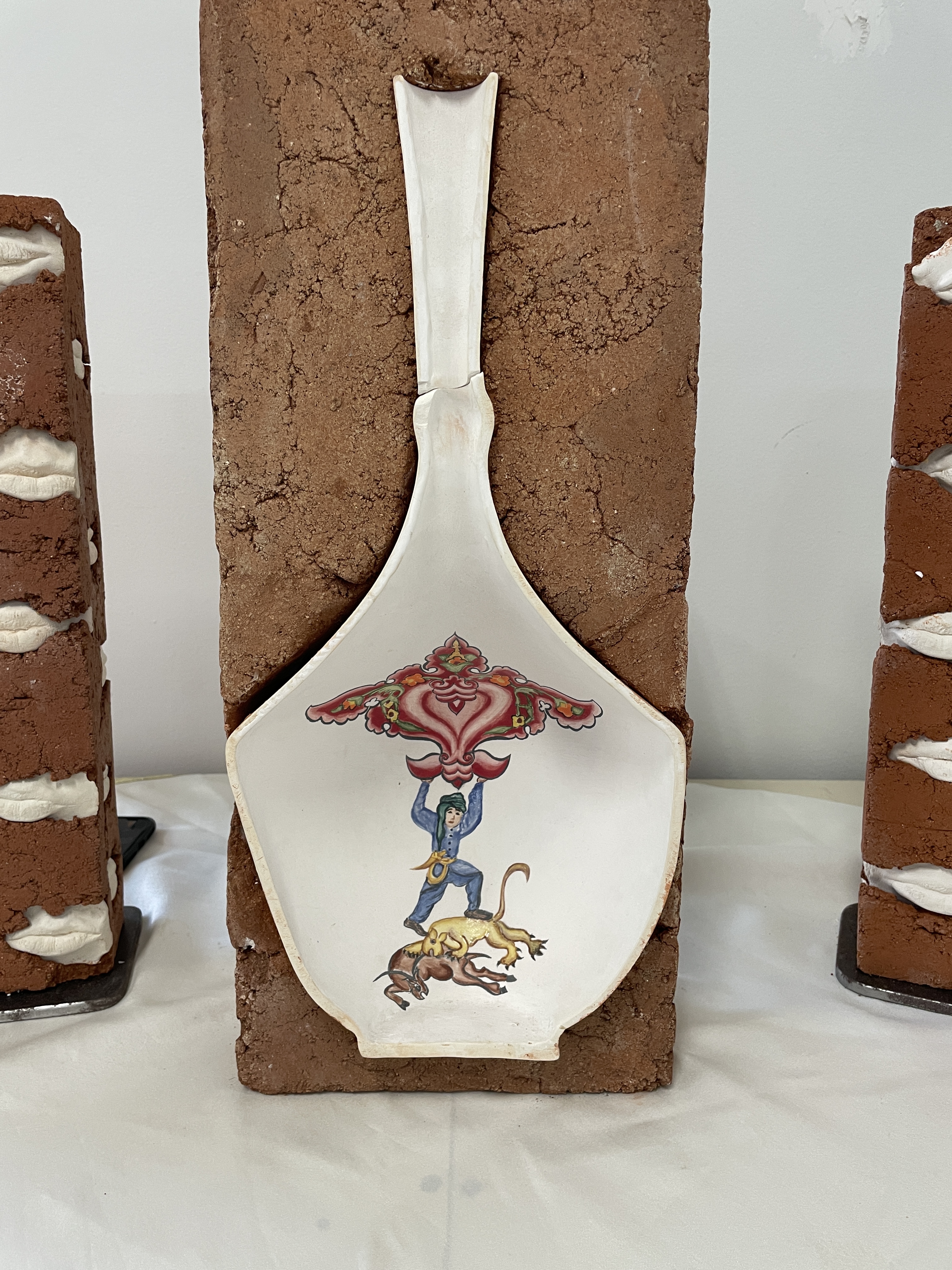
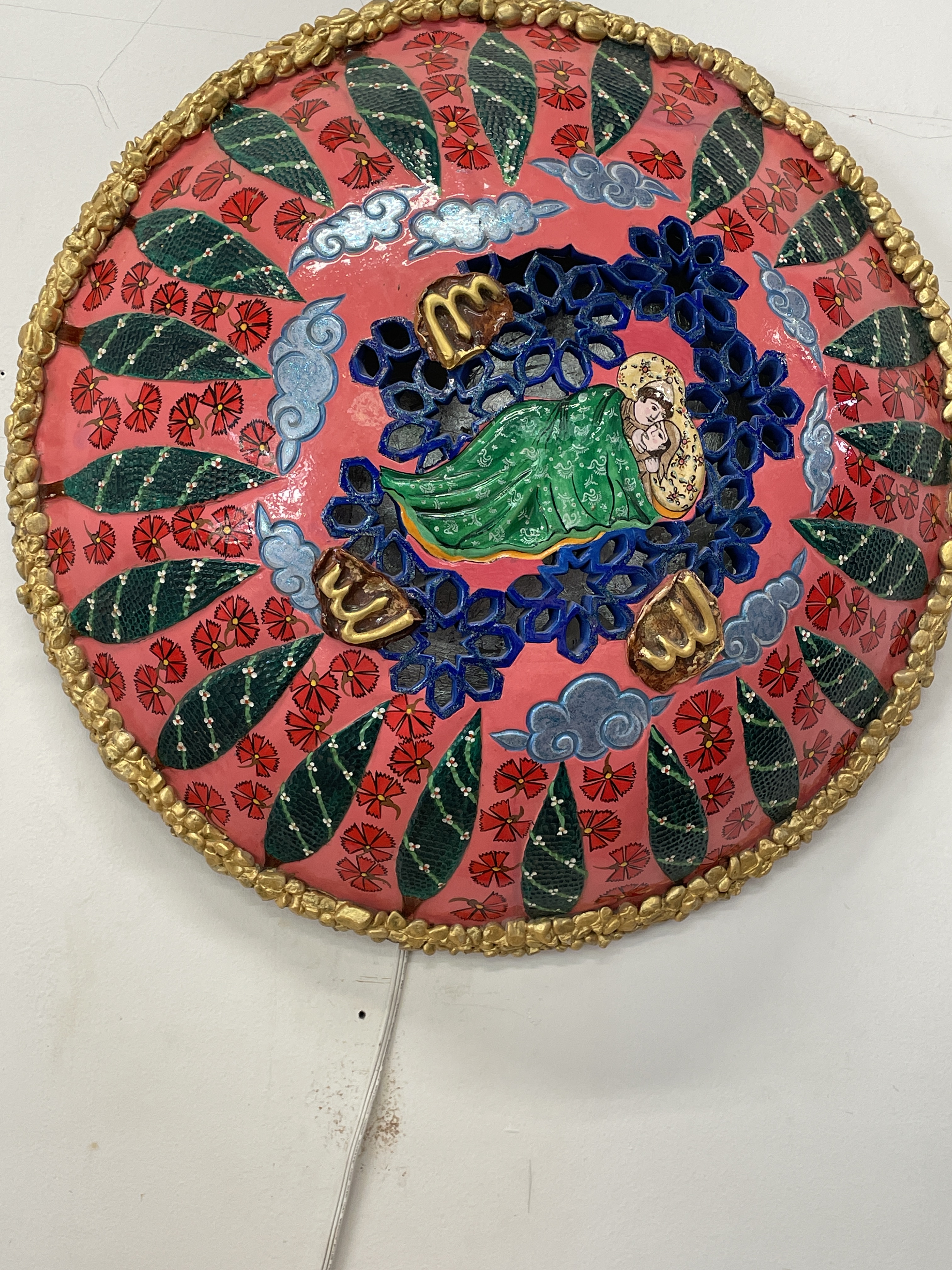
The first place we visited after breakfast was the art gallery/studio and home of Beliz Iristay. Although she does other things, her main medium is ceramics. I had first seen her art on display at the Riverside Museum back in December and posted some of that art in a previous blog. Originally from Turkey, she is married to a Mexican artist. The two met while both were teaching in Istanbul. She has lived also in the US and her artwork has been displayed in many places in the US. She and her husband live in the Valle de Guadelupe near Ensenada, Mexico.

Here are a few of the pieces I photographed in her gallery in Mexico.

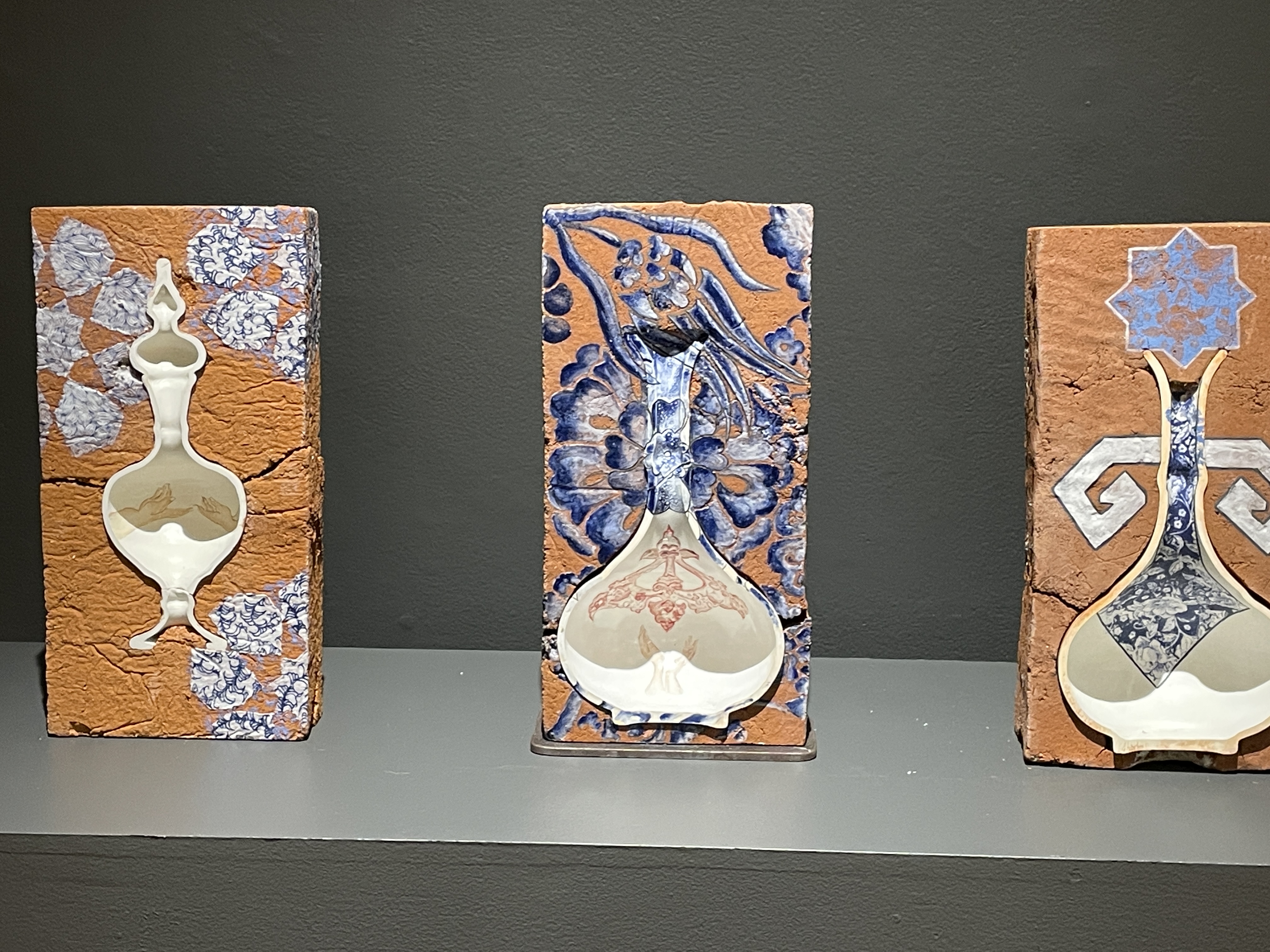
Following is work that was on display at the Riverside, CA Art Museum until last week. The first tells a bit about her and why she produces the type of art she creates. At her studio she repeatedly emphasized that she sees herself as creating feminist art that makes statements about the plight of women throughout the world. At her studio she was creating some large pieces for a new commissioned display that supports what she sees as her feminist goals.

She frequently uses traditional adobe bricks from Mexico made locally where she lives and then transforms them into various works of art often combining the Mexican and the Turkish cultures.

One Book a Week-18: “If An Egyptian Cannot Speak English”, Noor Naga


Identity politics remains at the heart of this unusual novel. Written in three parts, One portrays a “love” affair between an Egyptian American woman who has gone to Cairo to find her Egyptian self and an unemployed, revolution (as in Arab Spring) photographer who alternates between living in a rooftop shack and homelessness. Each vignette starts with a question and alternates between the voice of the woman and the man, expressing their viewpoints on life, love, and their situation. Part Two is the same except without the “headline” question. Part Three is a big surprise–a discussion, written as a play, a critique of the rest of the novel among the author, an instructor, and several “students”.

I loved this book in part because it enabled me to learn a lot about Egyptian cultures, but also because I found it thought provoking and intriguing.

One Book a Week-16, “The Promise”, Damon Galgut


Winner of the 2021 Booker Prize, this novel illustrates the dismal consequences of colonialism and racism. South Africa before and after apartheid comes alive in this story about an Afrikaner family whose matriarch dies young enough to leave her husband with three children, only one of whom is old enough to be on his own. In her dying, she returns to her Jewish roots much to the horror of her husband and many others. Her youngest daughter overhears her dying wish which her husband promises to fulfill even though he has no intention of doing so. This remains an underlying thread, the promise which this daughter never forgets.

The difficult, often prejudiced and unequal, relations between the races underpins the actions of most of the characters, leading a few to greater humanity and kindness, but most into lives of loss, disappointment, and anger.